
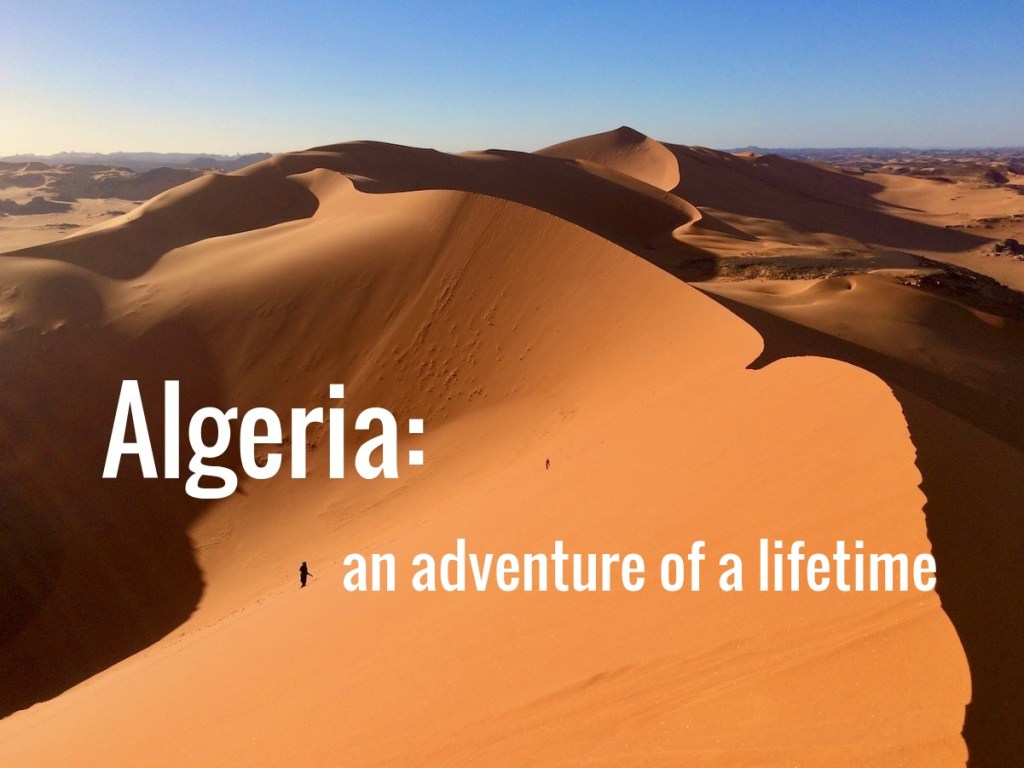
Algeria was for me this unbearable lover, the one we would like to leave, but without whom we cannot live. We fantasize about its mystery, Algeria is oriental, it has the nobility of ancient Rome and the blood of the barbarians, the laughter of the Andalusians, the music of the Tuaregs. She has easy nostalgia, this way of looking at the past, so as not to worry about the future.
– Lilia Hassaine, Soleil Amer
January-March 2025
Algeria is not for the faint of heart. Between a daunting visa process and poor tourist infrastructure, the biggest country in Africa has long been on adventurous travellers’ bucket’s list. I had first booked my Paris-Algiers flight back in 2020, but then Algeria was closed for three years during Covid. Finally, alhamdulilah/thank god, as they say, I am here full five years later for a six-week winter escapade.
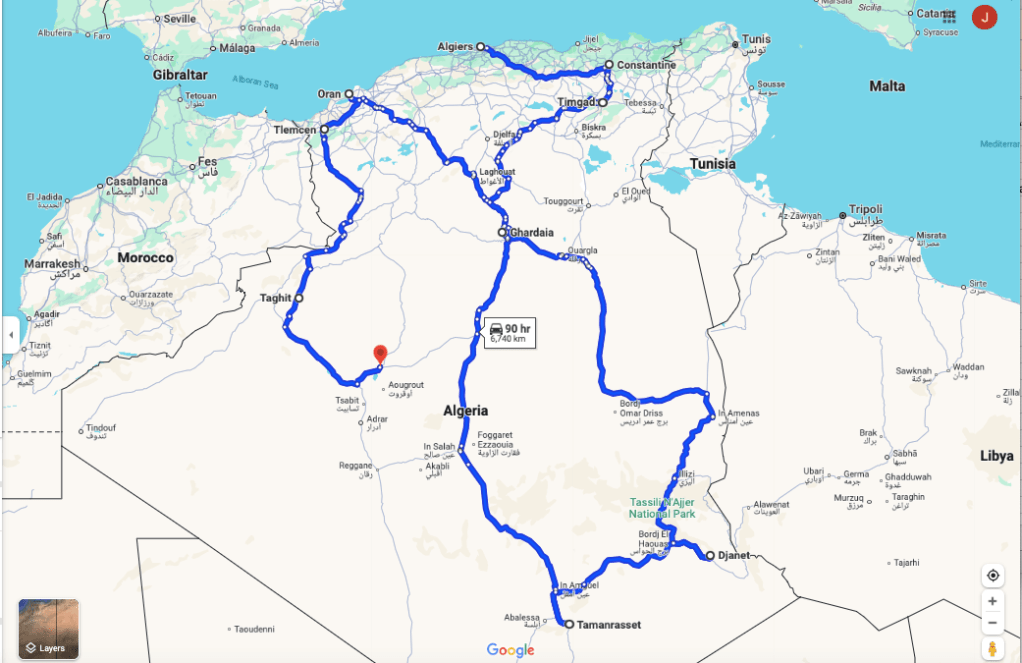
From Algiers, I take a long bus ride to Constantine to admire the famed suspension bridges, and then make my way via Batna to visit the sprawling UNESCO World Heritage Roman ruins in Timgad. After four relaxing days in Ghardaia to explore Mozabite culture, I fly back to Algiers to inquire about my visa extension – in vain. Armed with just the receipt, off I go for a month-long stay in the Sahara and the western coast, from Djanet to Tamanrasset, Oran to Tlemcen, Bechar to Taghit, and Beni-Abbes to Timimoun along one of the grandest desert highways.
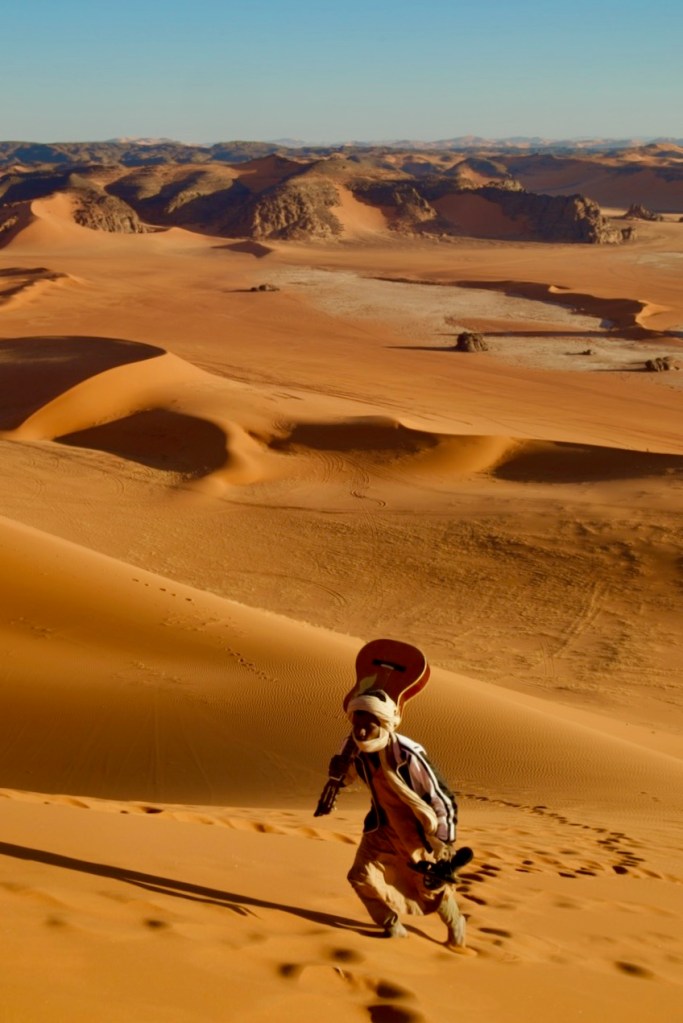
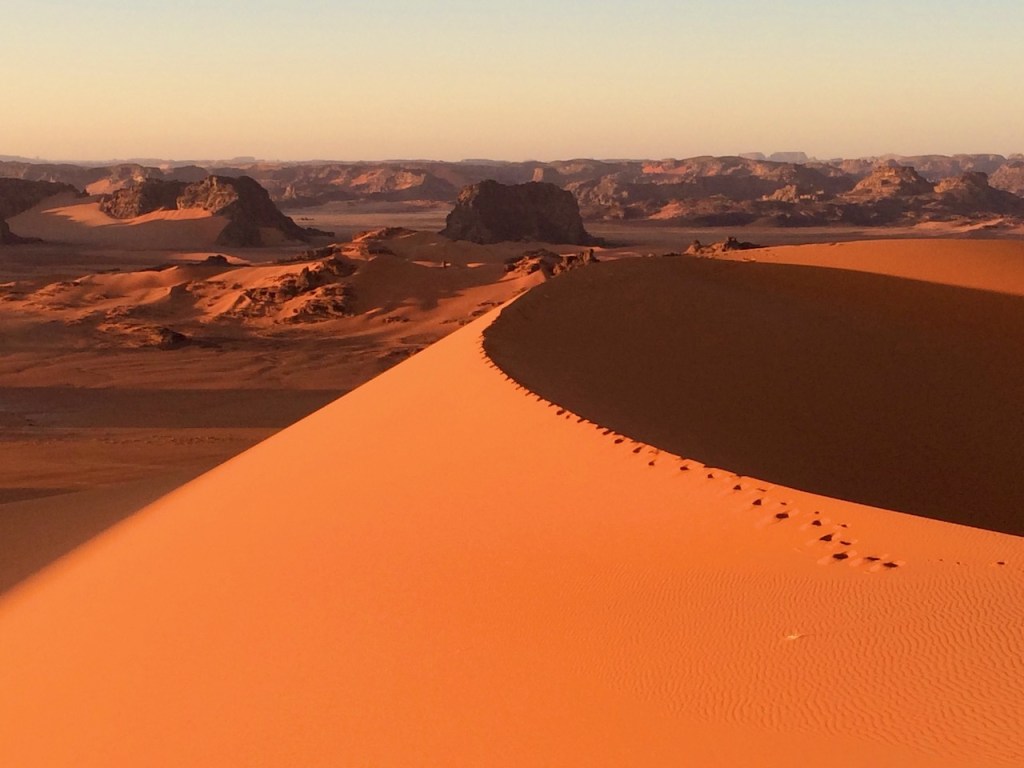
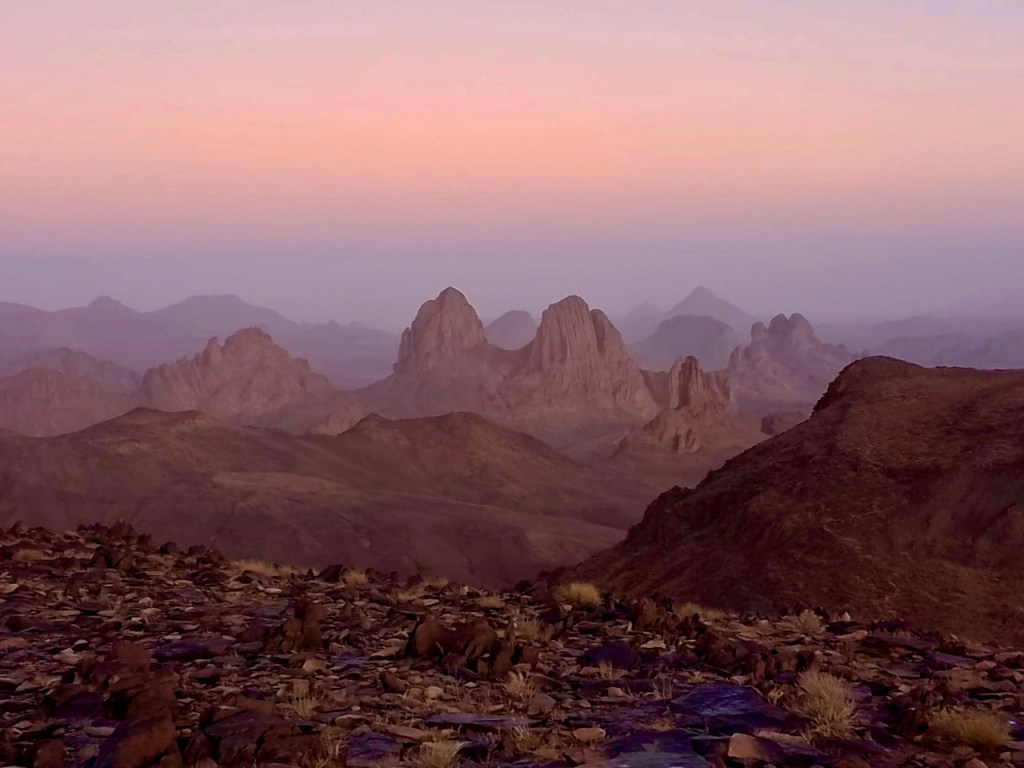
If my DIY itinerary sounds straightforward, it is anything but, for TIA: This is Africa, This is Algeria! 10,000 kms, five red-eye flights, paranoid police checks, mind-boggling bureaucracy, and not-always professional agency services. But the desert beckons me. The trek to Sefar in Tassili National Park is one of the most beautiful I have ever done. Then there is an unforgettable sunset-full-moon-and sunrise combo in Tin Merzouga in Tadrart, followed by an even more breathtaking sunrise in Assekrem at the Hermitage of Charles de Foucauld, and a magical sunset – with a double rainbow to boot – in Taghit amidst the Grand Erg Occidental. Pre-historic rock art, Berber architecture, ksour ruins, Touareg music, and so much more… Albert Camus knows more than a thing or two about the unique beauty of Algeria. Happy is (s)he among the living who has seen such things!

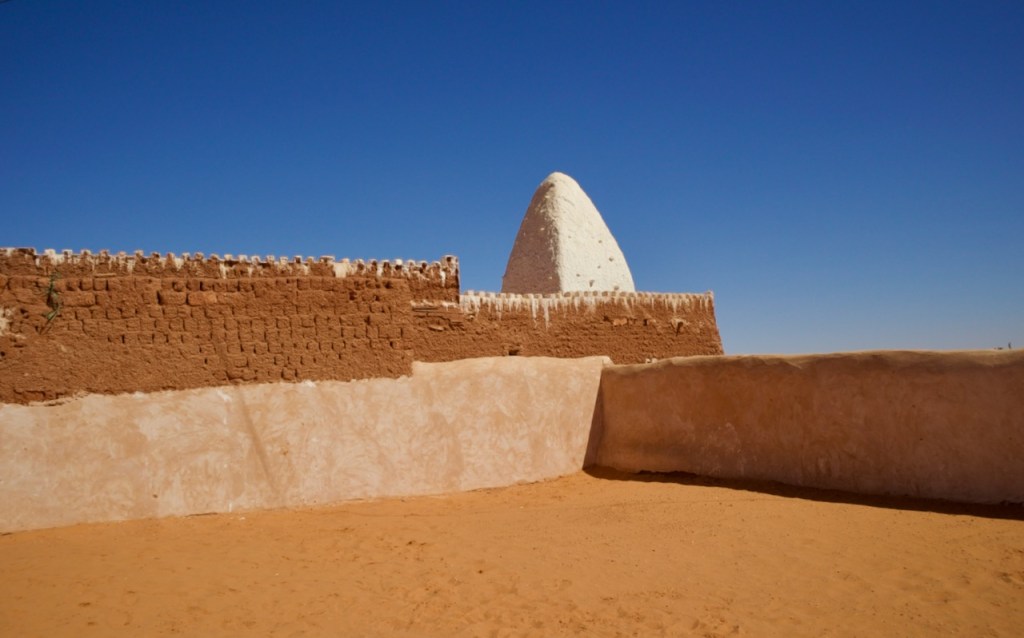

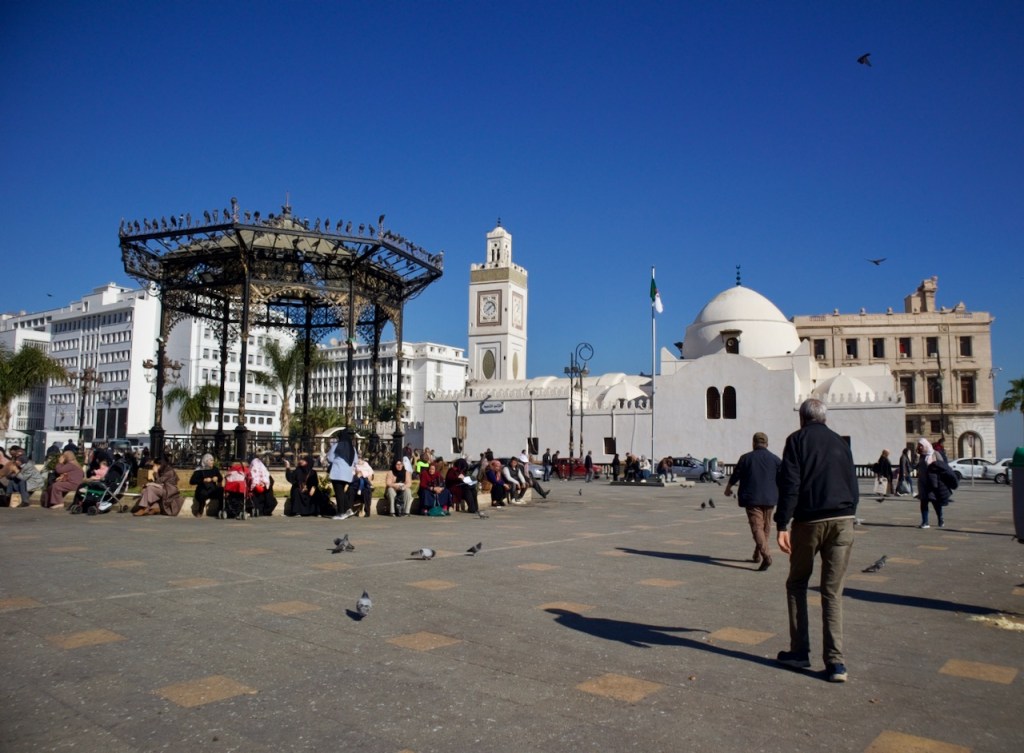
Algiers, Tipaza and Churchell
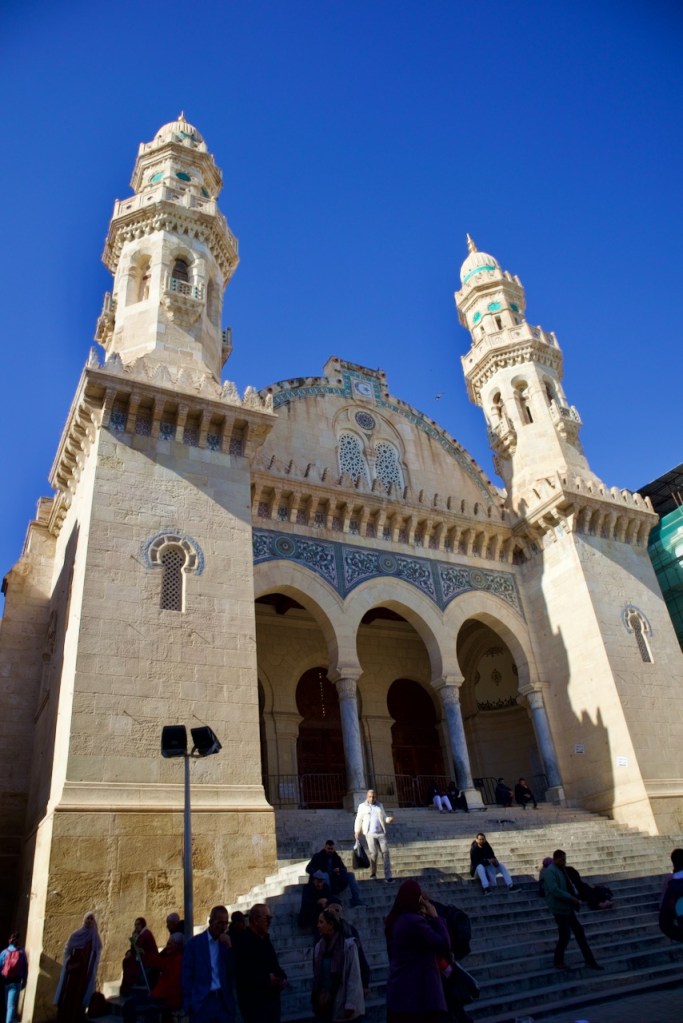
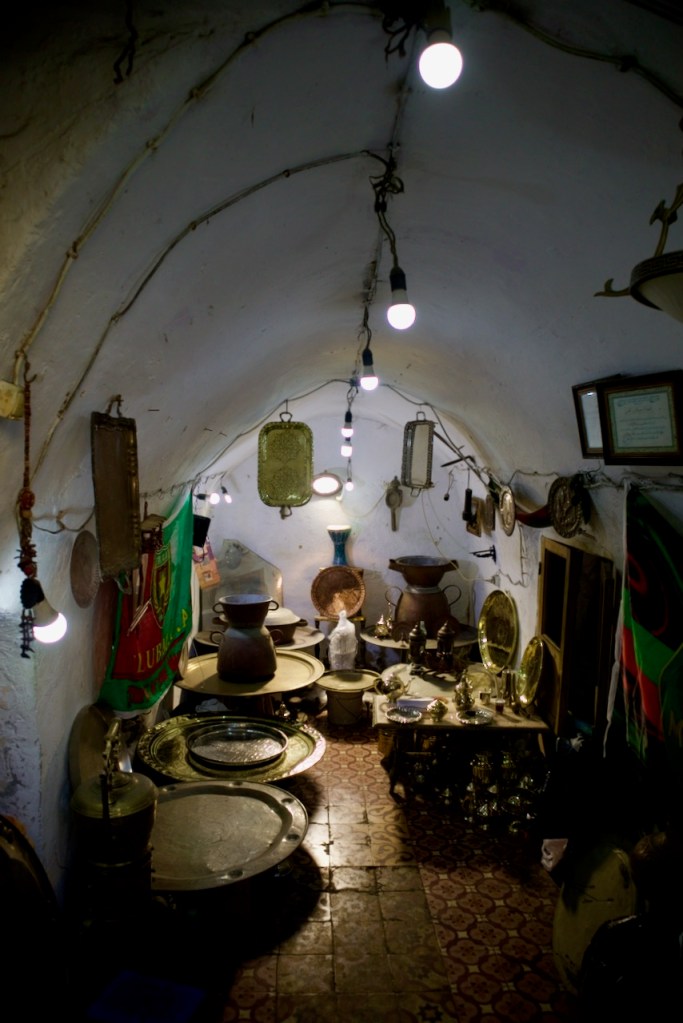
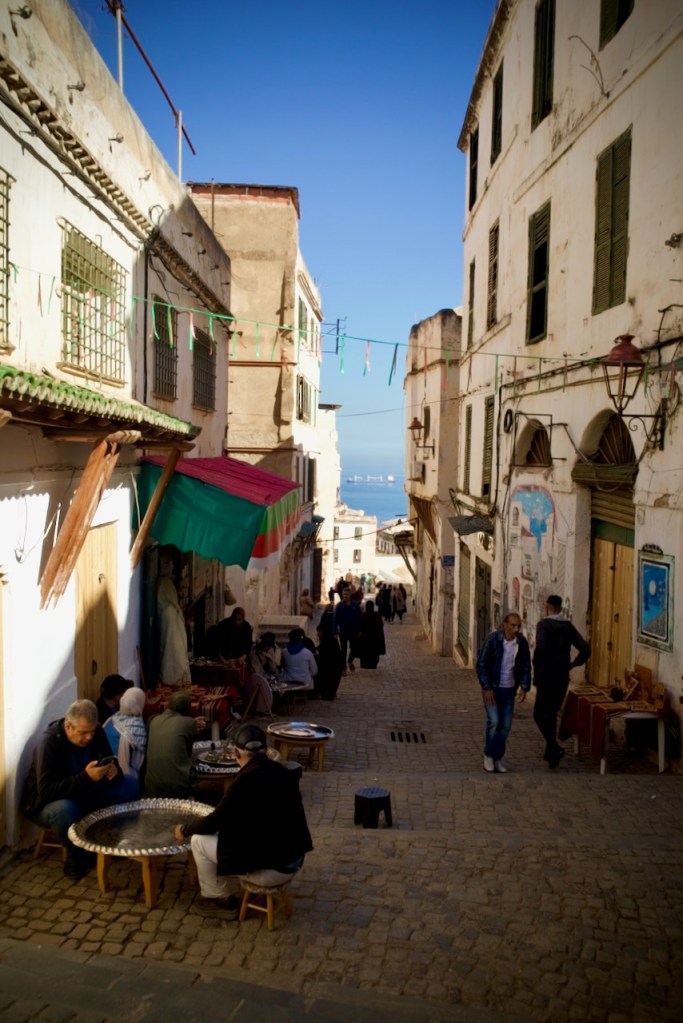
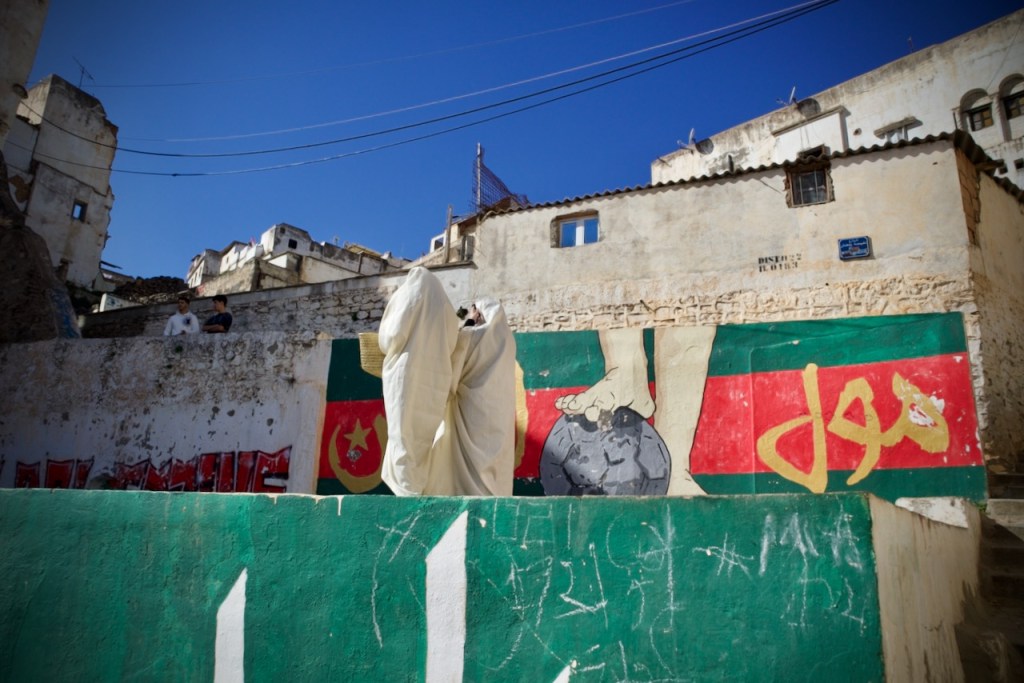
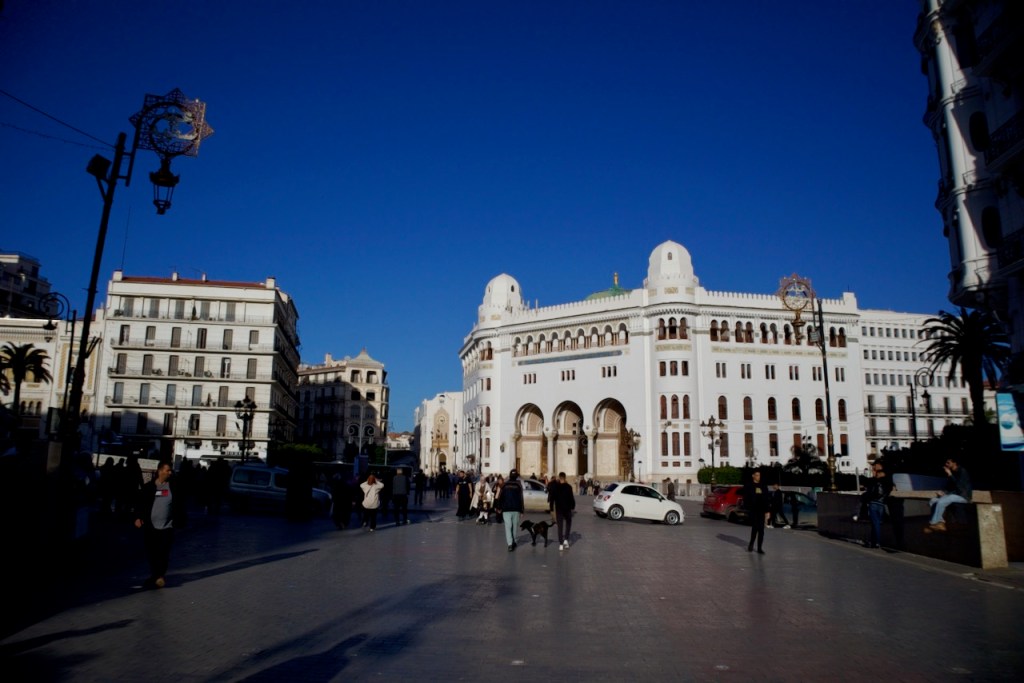
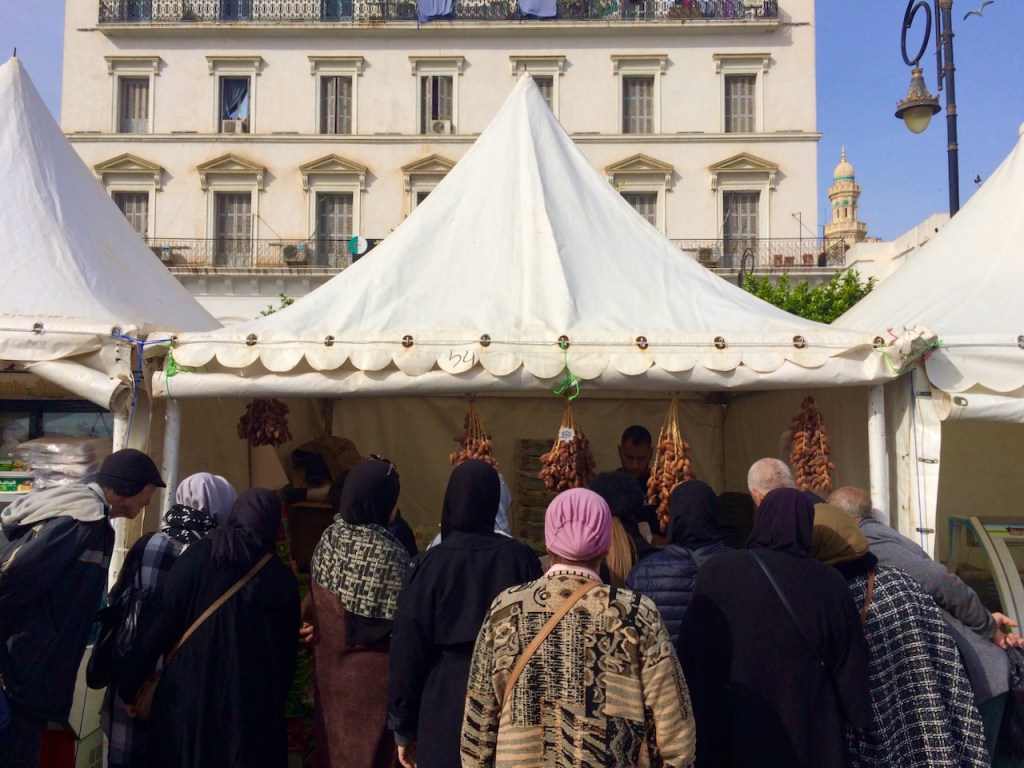
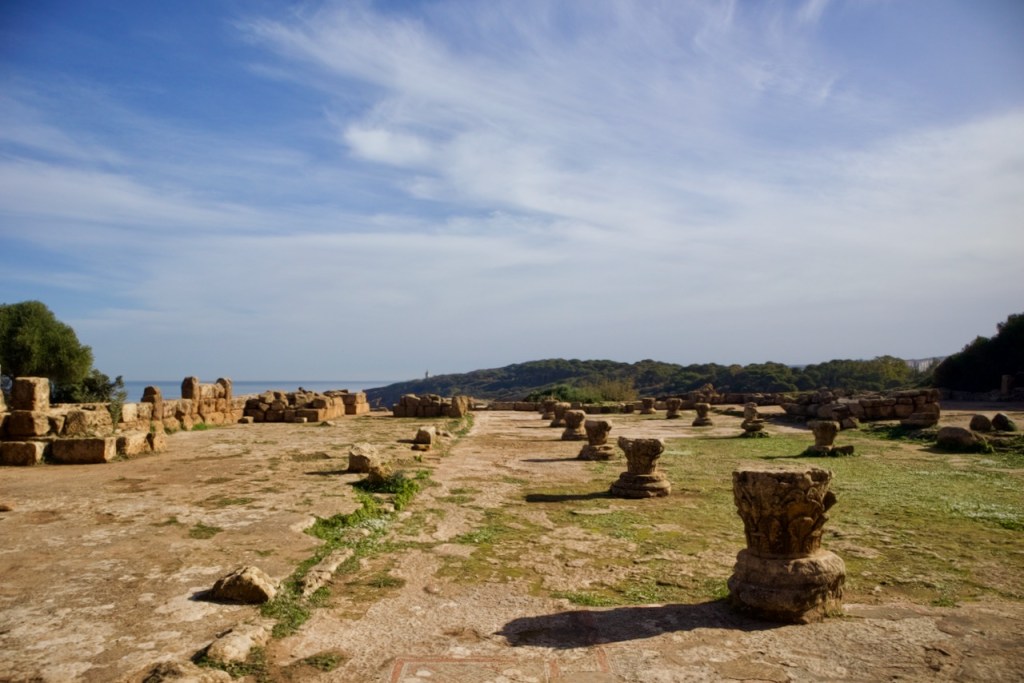
While most travellers zoom through Algiers to visit the Roman ruins in nearby Tipaza before or after a desert stay, I choose Bab El Oued, a working class neighbourhood right by the Casbah, as my base. Arriving on a Friday afternoon, I take a stroll to the Place des Martyrs where the beautiful Ottoman-era Jamaa El Jedid mosque blasts out the call to evening prayer. It was in this first French-army-designed square where over 4,000 Algerians were massacred in 1832 against the plan to turn the nearby Ketchaoua Mosque into a cathedral. Just steps away is the Palais des Rais, also known as Bastion 23, now an arts center, where the Pasha allegedly hit the face of the French general with the move of his fan, unleashing the protracted conflict between Algeria and France. The rest is (very bloody) history!
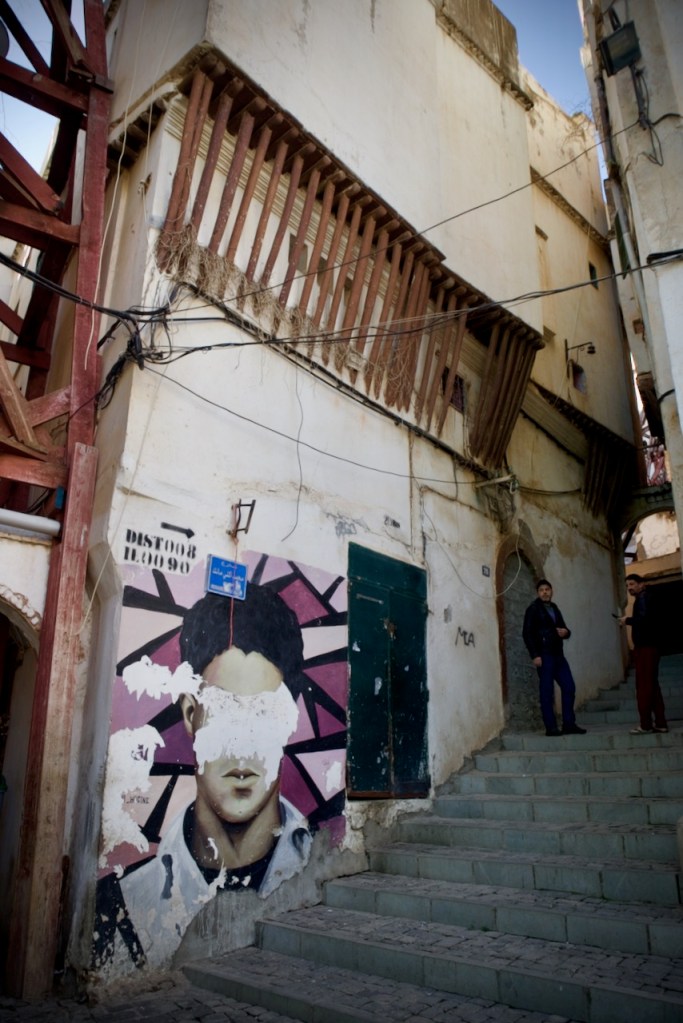
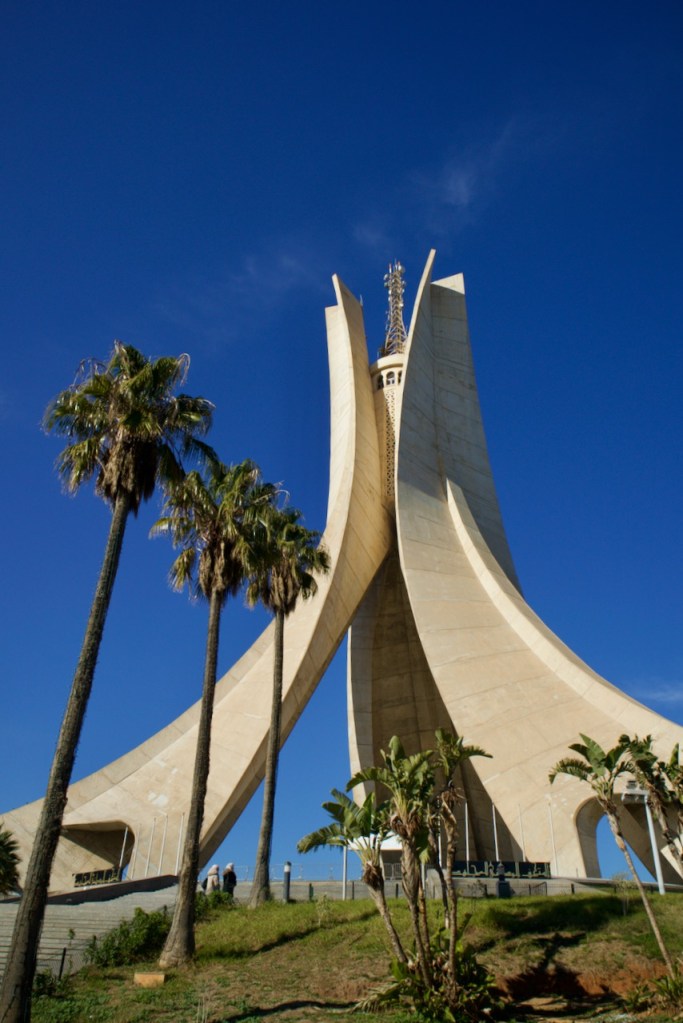
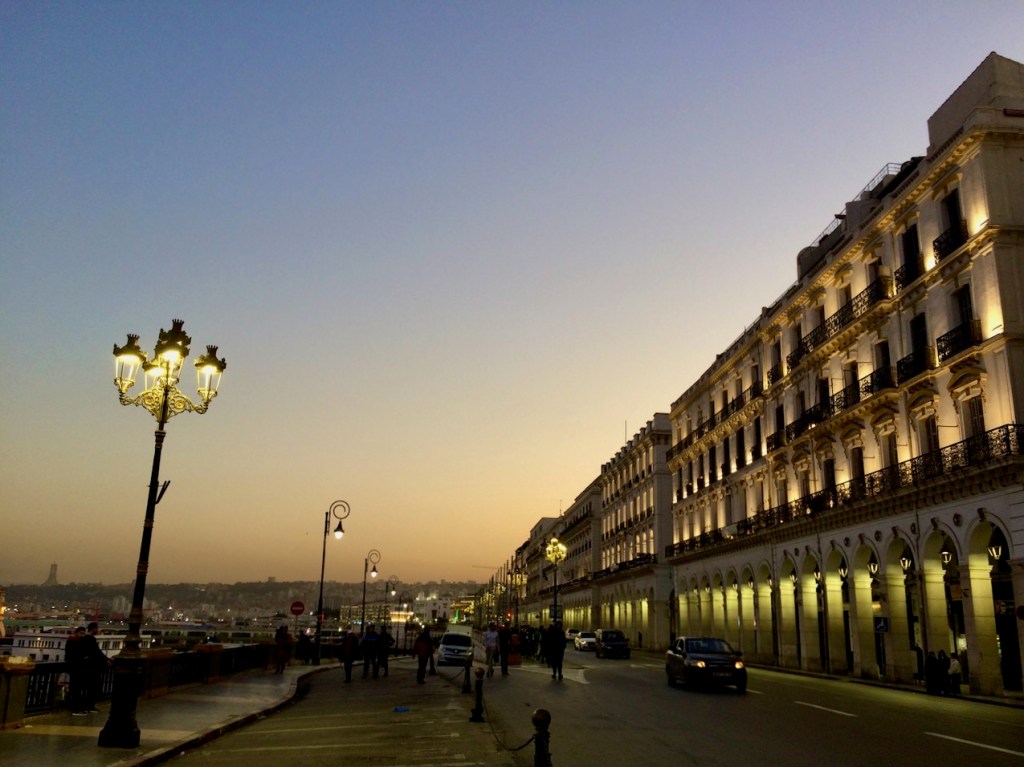
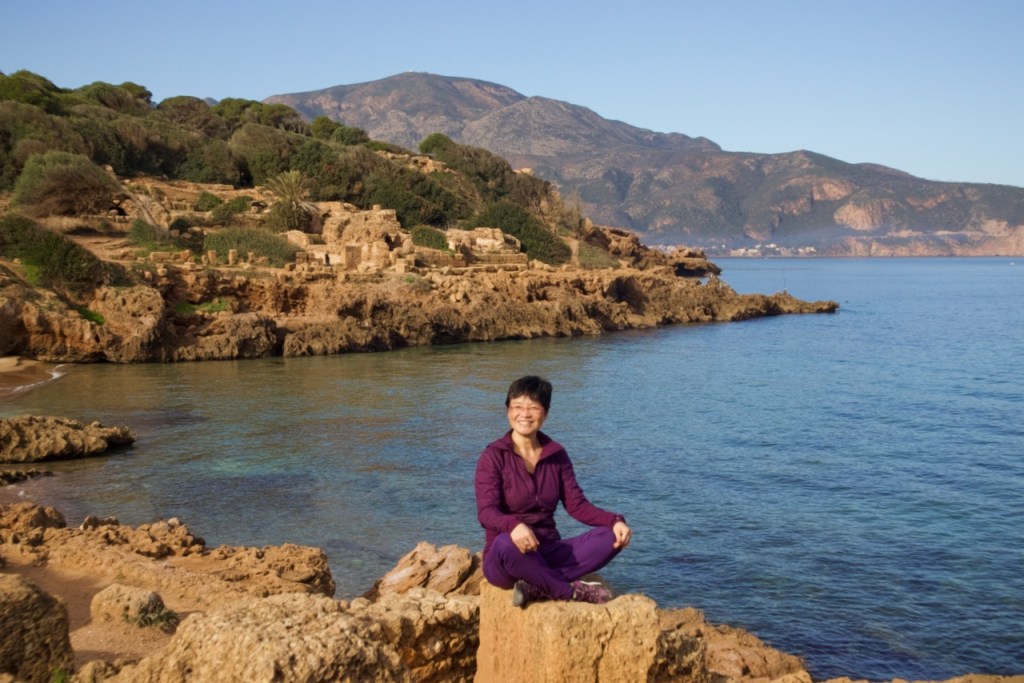
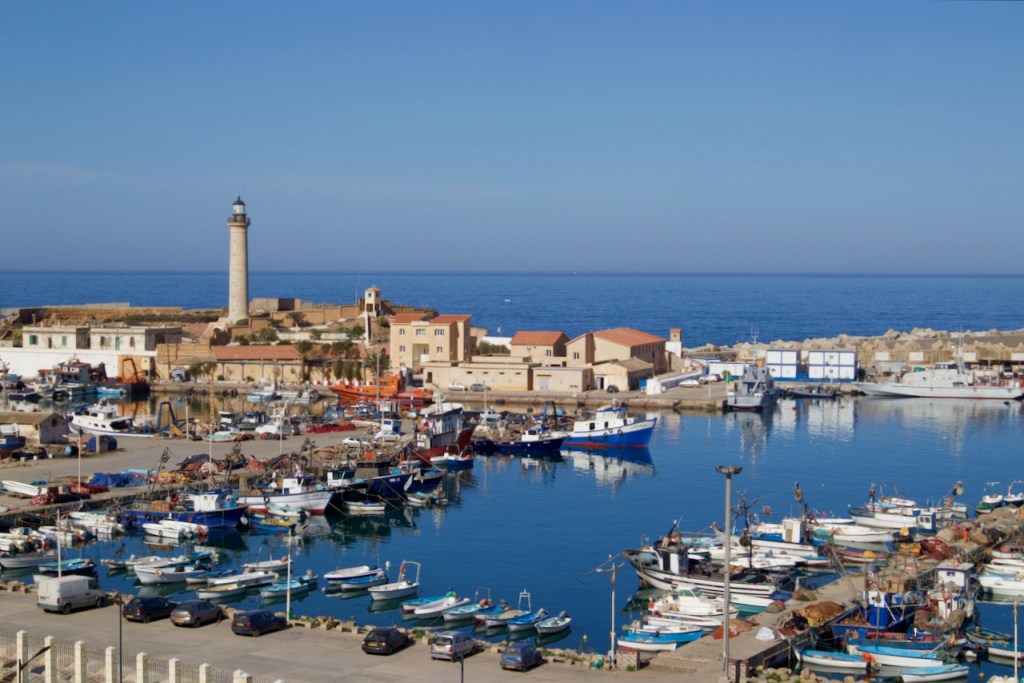
I spend the weekend exploring the dilapidated Casbah full of character, a very-European-looking city centre with a magnificent La Grande Poste and soothing Jardin d’Essai, taking a cable-car ride up to the Monument des Martyrs and the National Museum of the Moudjahid before making a day trip to visit Tipaza and Churchell about two hours on the west coast. Having perused a few books and documentaries to prepare for this trip (Assia Djebar, Le Blanc d’Algerie and So Vast a Prison; Alistair Horn, Savage Battle of Peace; Ted Morgan, My Battle of Algiers; the latest Goncourt Prize, Kamel Daoud, Houris; and Yann Arthur-Bertrand’s magnum opus, Algerie Vu du Ciel), Algiers feels like an open-air museum layered with history where I would love to linger. But I was given only a ten-day visa, so first thing first: locate the Bureau des Etrangers opposite Gare Agha, drop the full application for a 30-day extension (with the form and duplicate copies of tour confirmations, certificat d’hebergement, bank statements, visa and passport pages, and THREE photos), and take the next bus to wherever in case I have only ten days to visit vast Algeria. East to Constantine and Anaba, West to Oran and Tlemcen, or South to Ghardaia? Vanessa, a fellow Spanish traveler, who has just returned from a week-long trip to Constantine-Timgad-Ghardaia, helps settle the question. Muchissima gracias, that will be my new itinerary!





Daybreak in Constantine and Sundown in Timgad
An impressive town full of history and traditions, set on dramatic cliffs and crossed by seven bridges, Constantine invokes awe even among Algerians. I awake at the crack of dawn, walk towards the Monument des martyrs for a day breaking view of Sidi-M’cid, the second highest suspended bridge in the world over a plunging gorge, and return to the centre to see locals milling about boulangeries for a palmier or croissant over cafe au lait to start a new day…
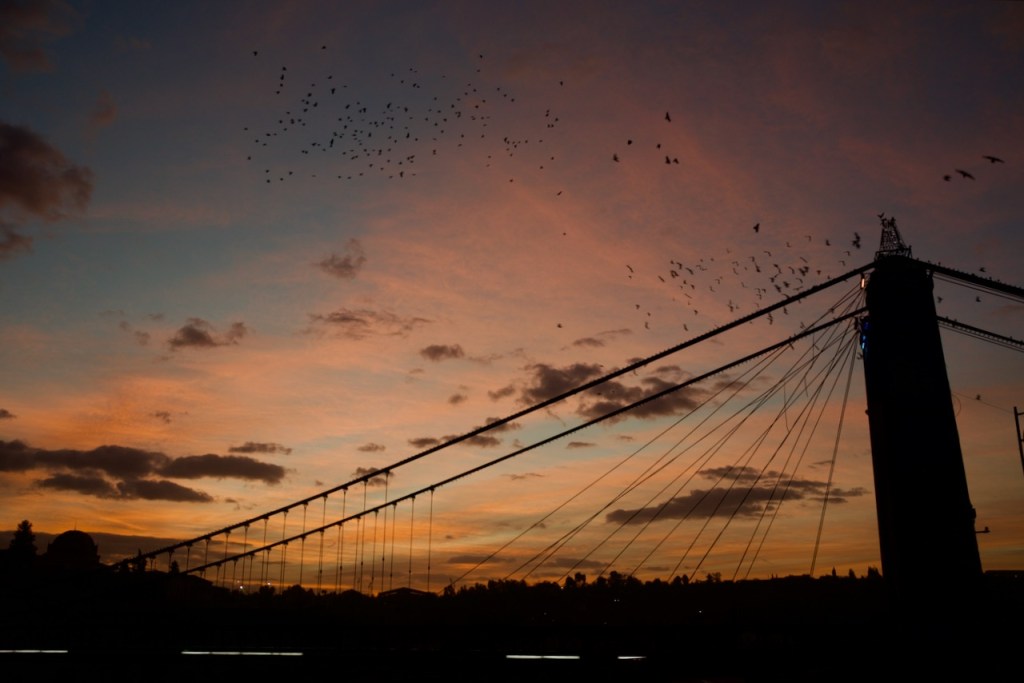

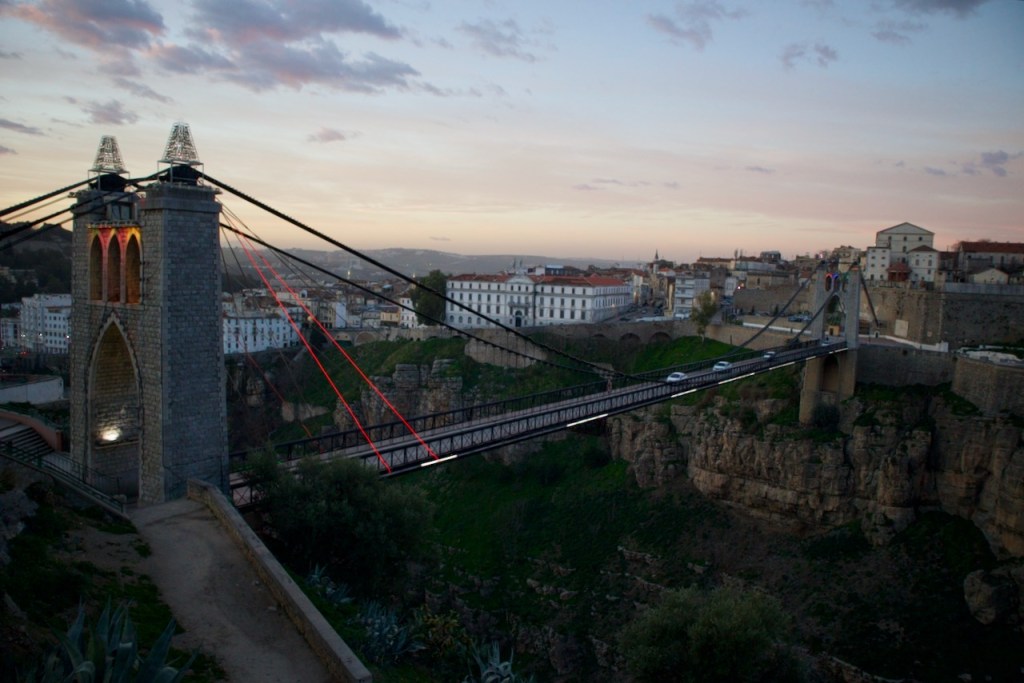
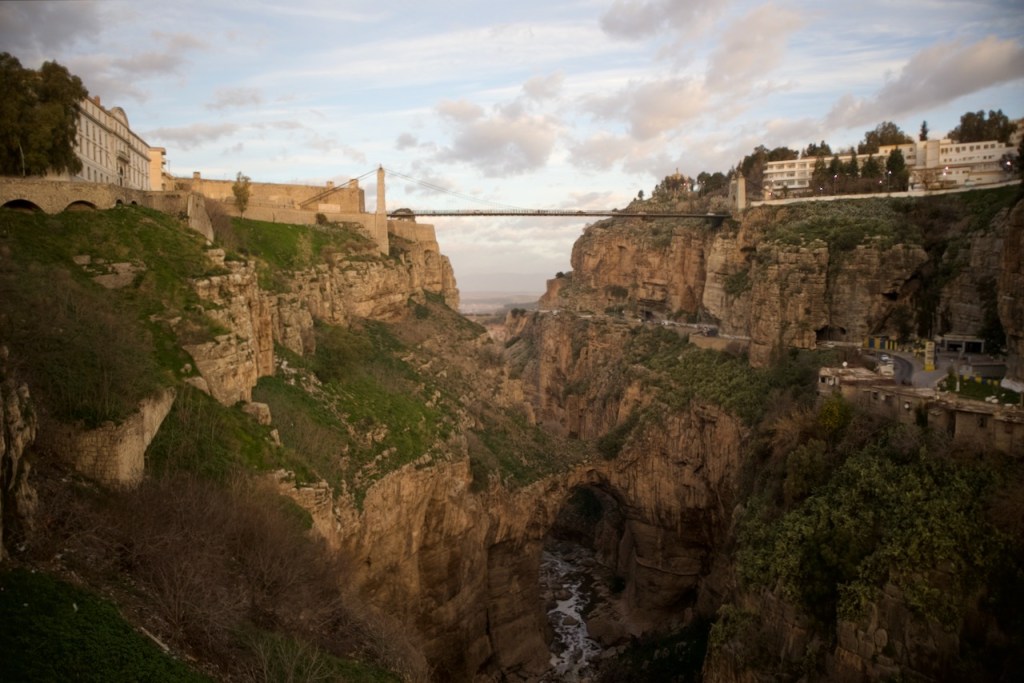
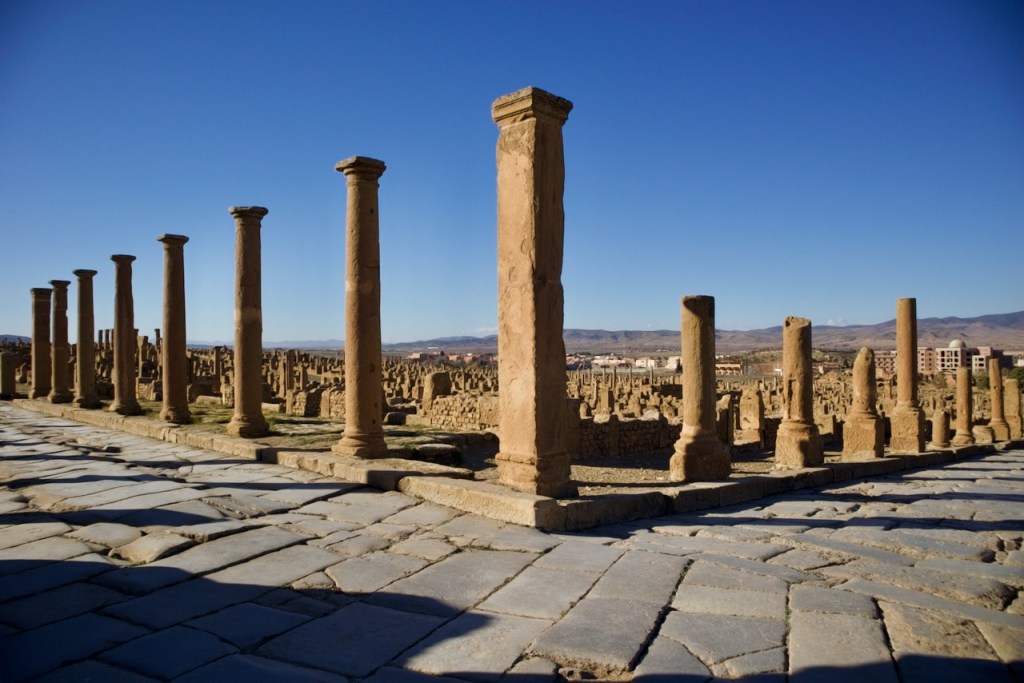
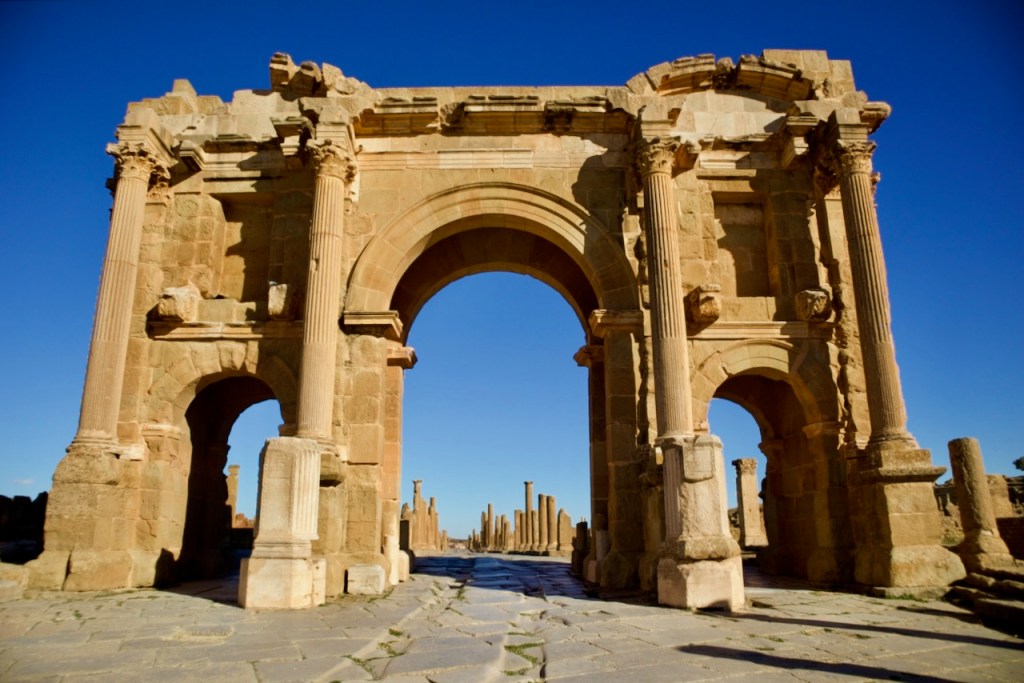
The bus for Batna is over an hour and a half late, hitting noon traffic. By the time I reach Timgad, I have a grand total of twenty minutes to enjoy 2000 years of Roman history before dashing for the last 4pm bus back to town. The wise accept the present rather than complain, according to the Tao Te Ching. Everything, everyday is a bonus in Algeria!
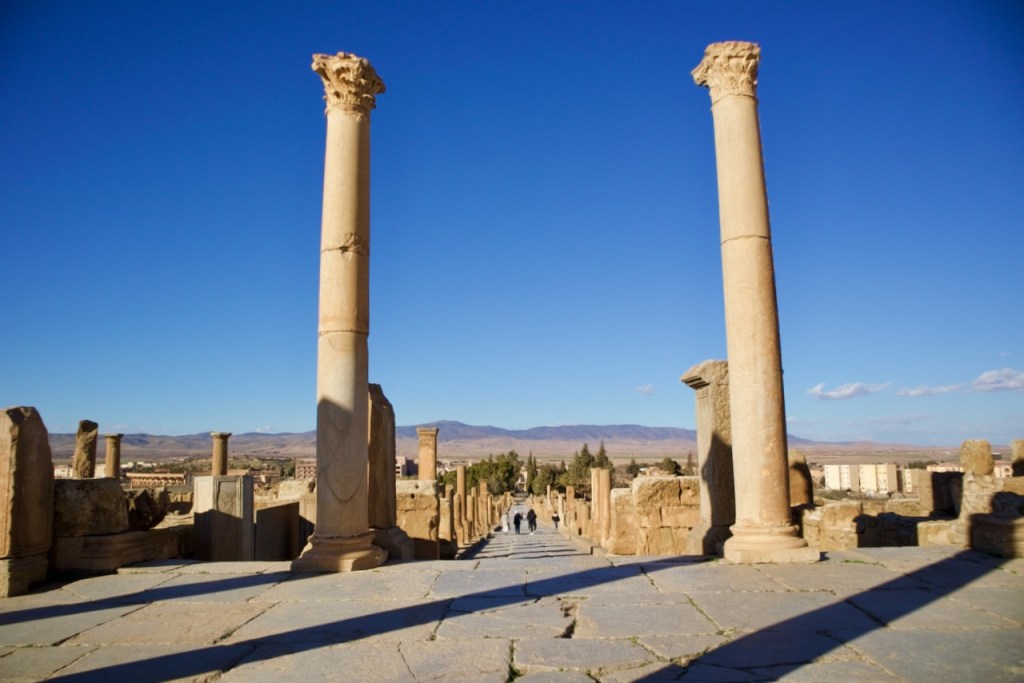


The Pentapolis of Ghardaia in M’Zab Valley
The temperature plummets in Batna and I hunker down in a tiny local joint – in the salon familial reserved for women and families – for a typical chorba/soup-veggie stew dinner till the 8pm bus to Ghardaia. I ask a fellow passenger to dial the hostel number that Vanessa has passed on to inform Nadir, the English-teacher manager, I’m arriving tomorrow, inchallah, at 6am. When I show up at eleven in the morning, some fifteen hours later, Nadir is clearly worried. I thought you were lost! he says. By now, Day 5, I have learned to give up all expectations. Surrender!
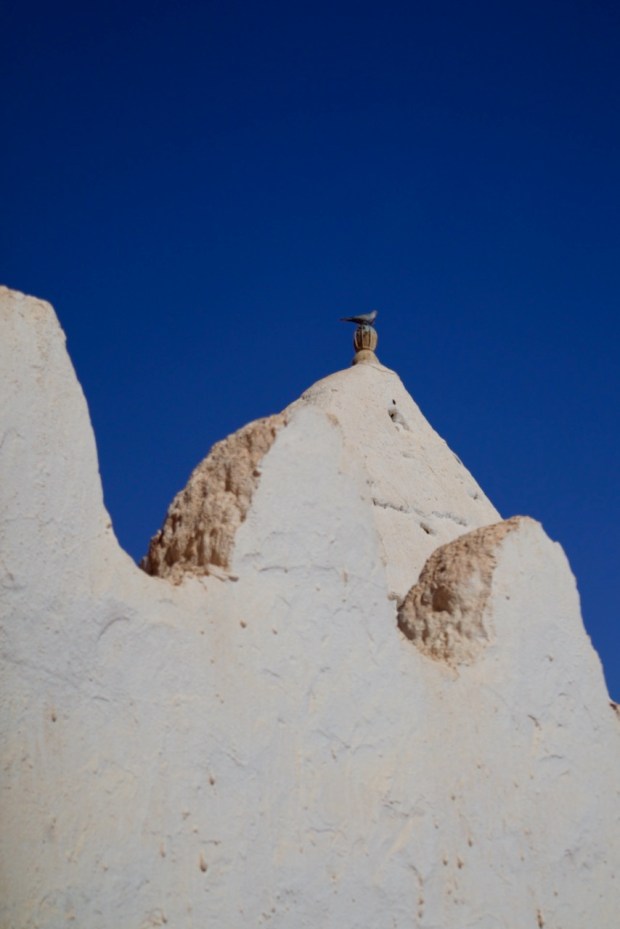
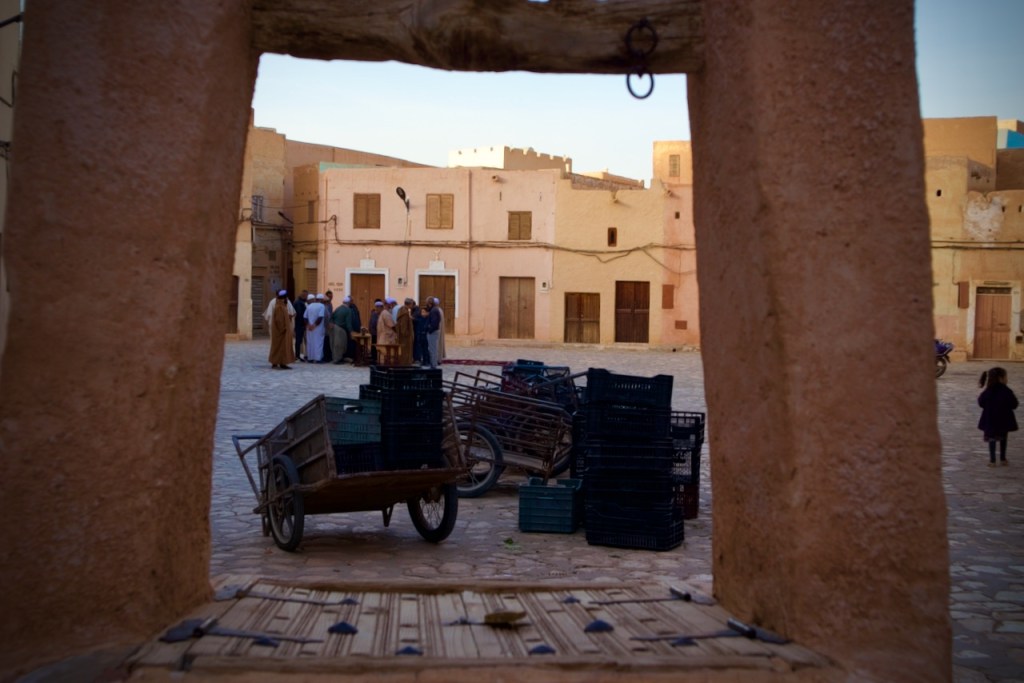
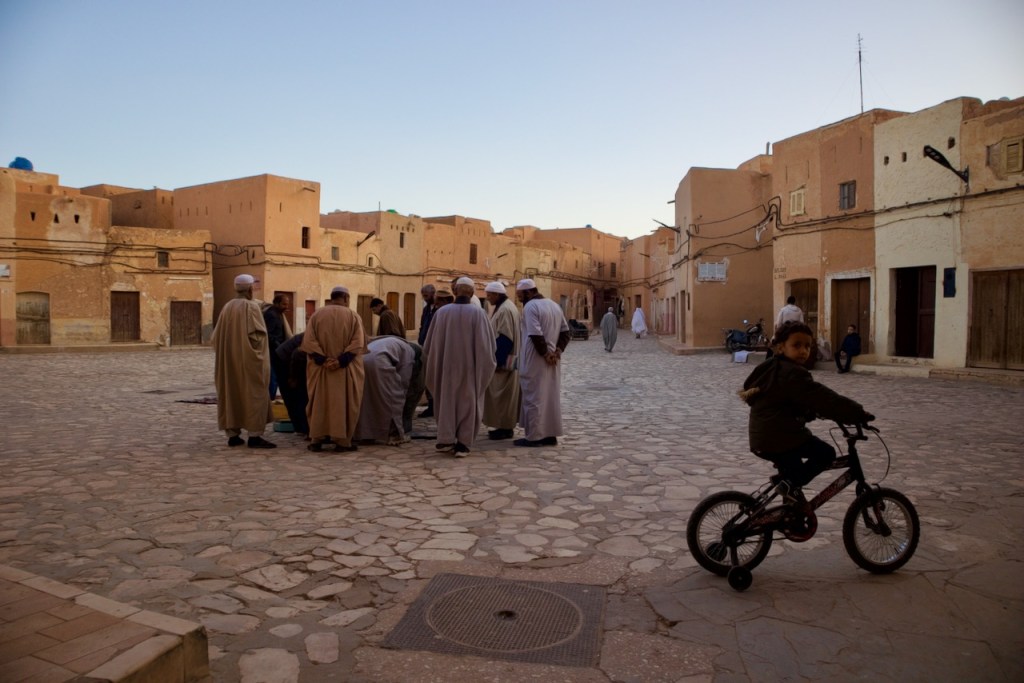
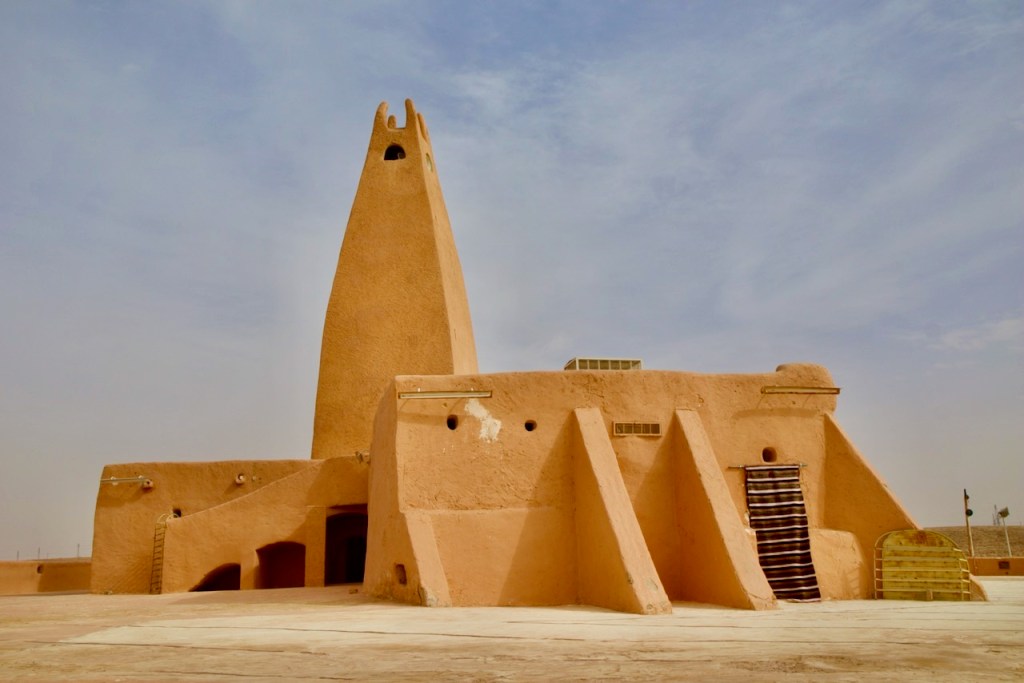
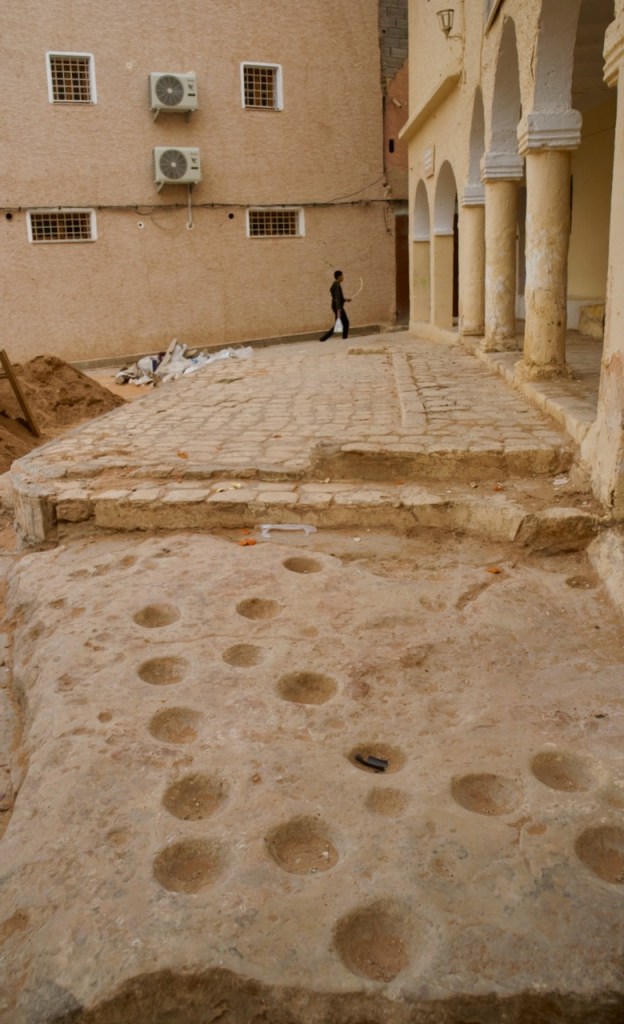
There is no place like the picturesque MʾZab Valley, a 10km-long oasis in the Sahara, made up of five walled towns established by Mozabite Berbers in the 11th century after a devastating fire destroyed their homeland in North Africa. Each of the five fortified towns – El Atteuf, Bounoura, Ghardaia, Beni Isguen, and Melika – has a miniature citadel, dominated by a mosque with the minaret doubling as a watchtower. The unique architectural system designed for communal living while keeping family privacy, protected by Unesco, is a photographers’ haven.
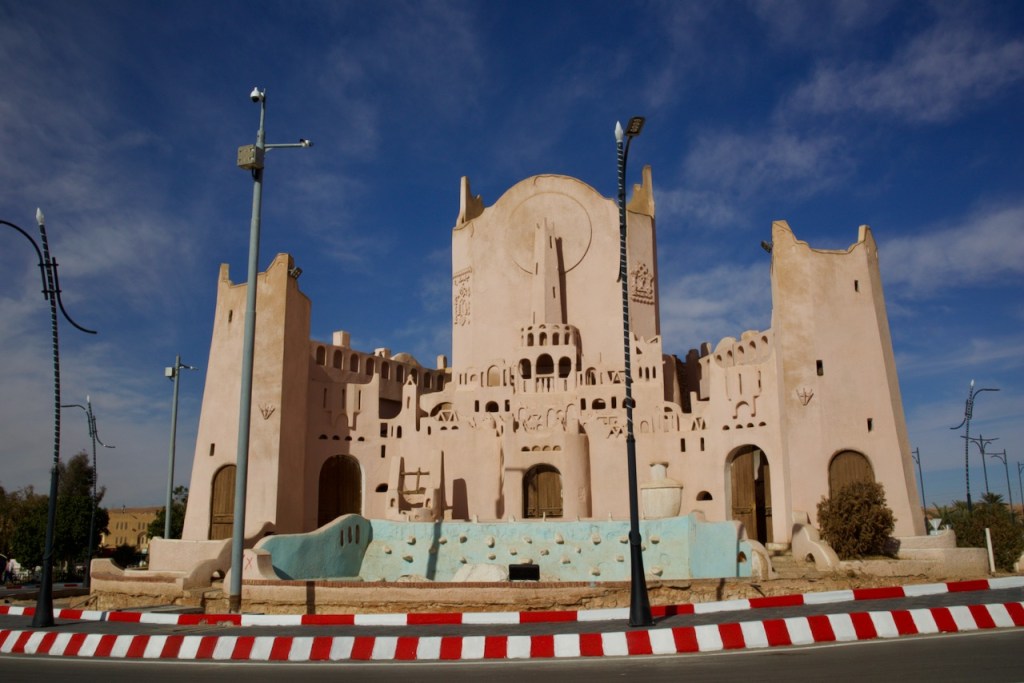
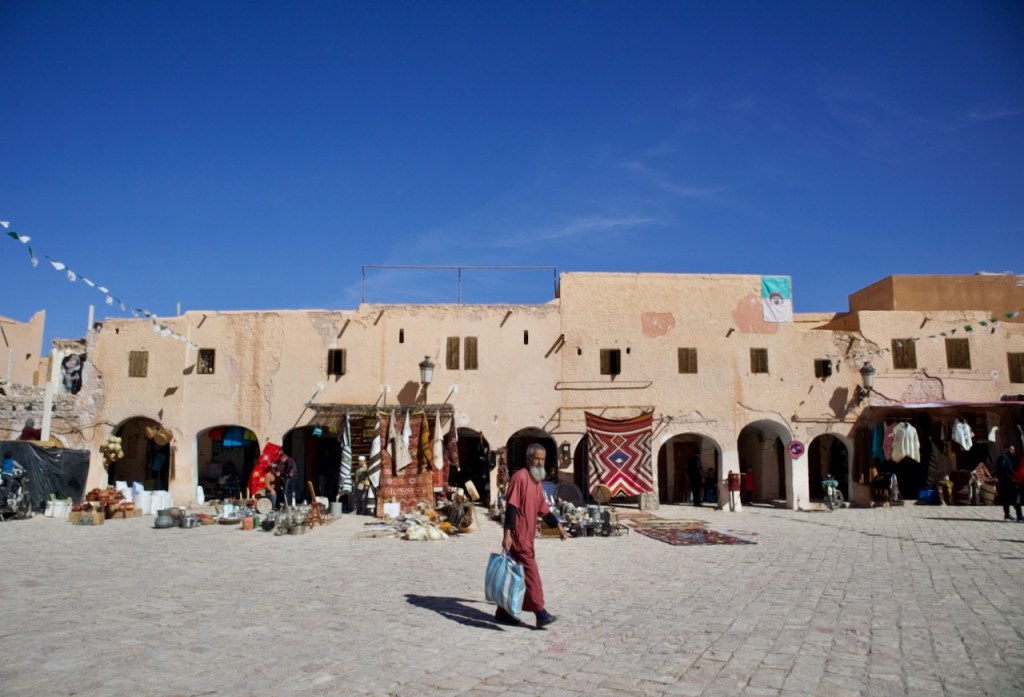
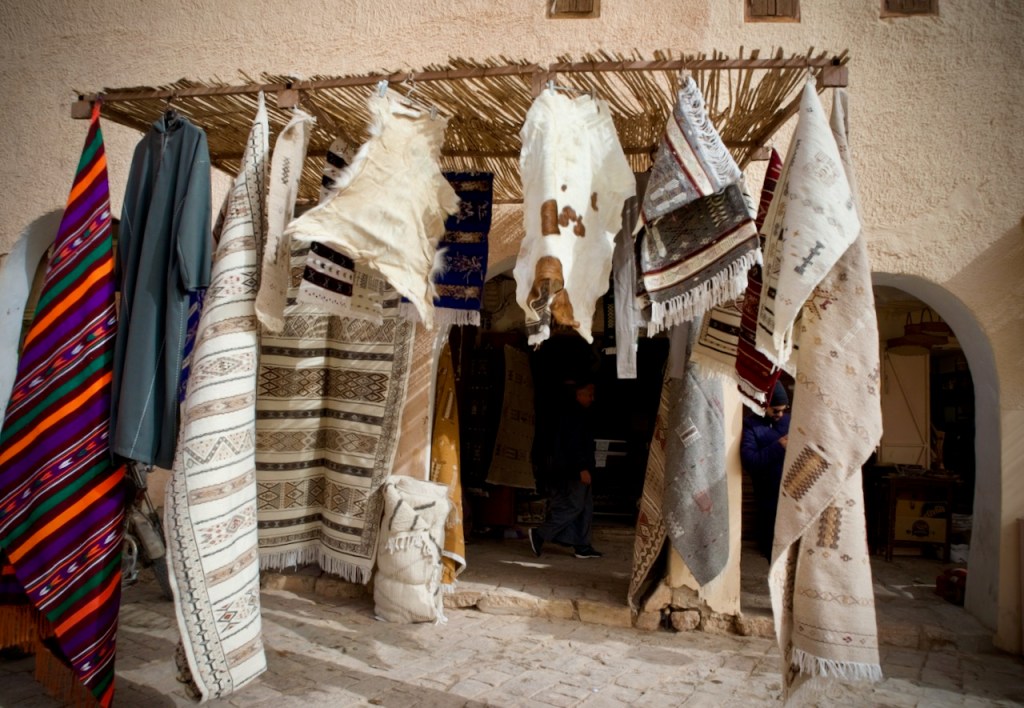


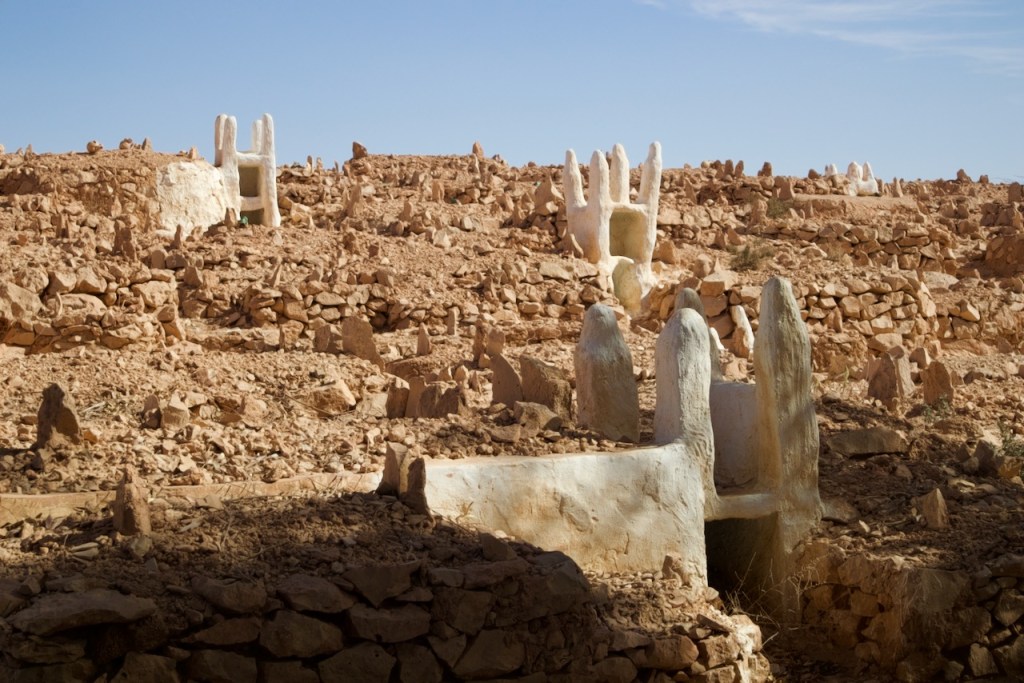
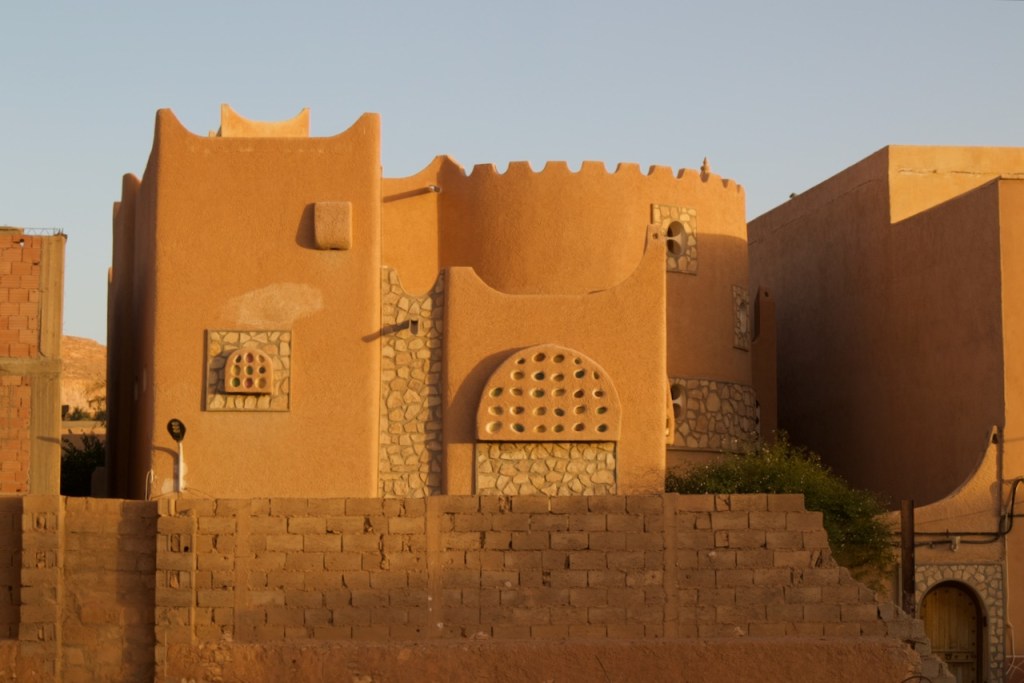
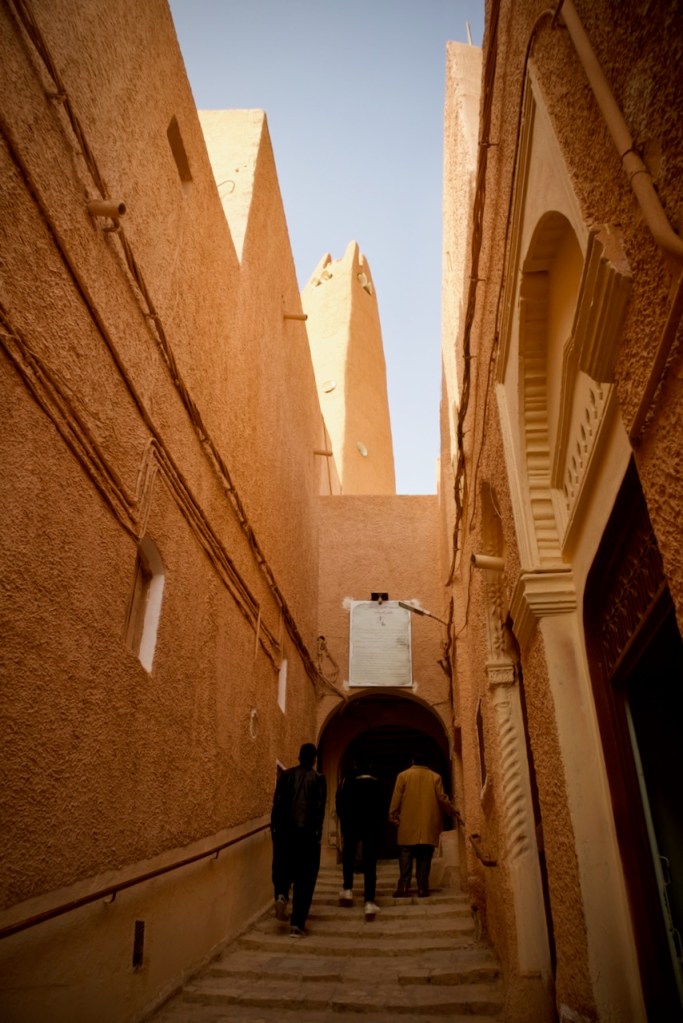


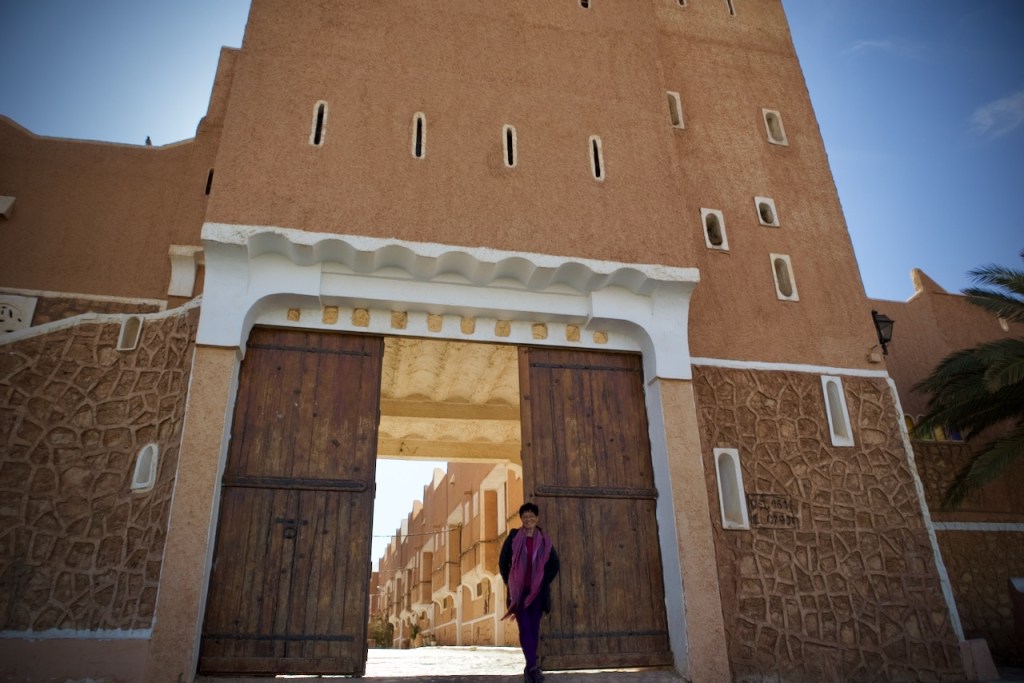
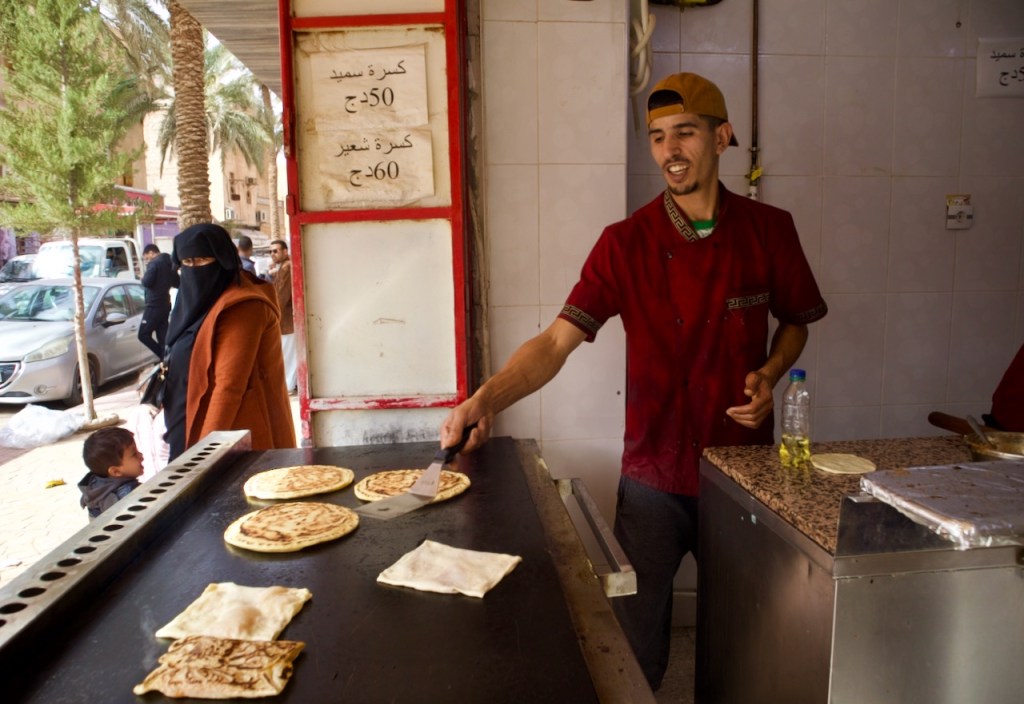
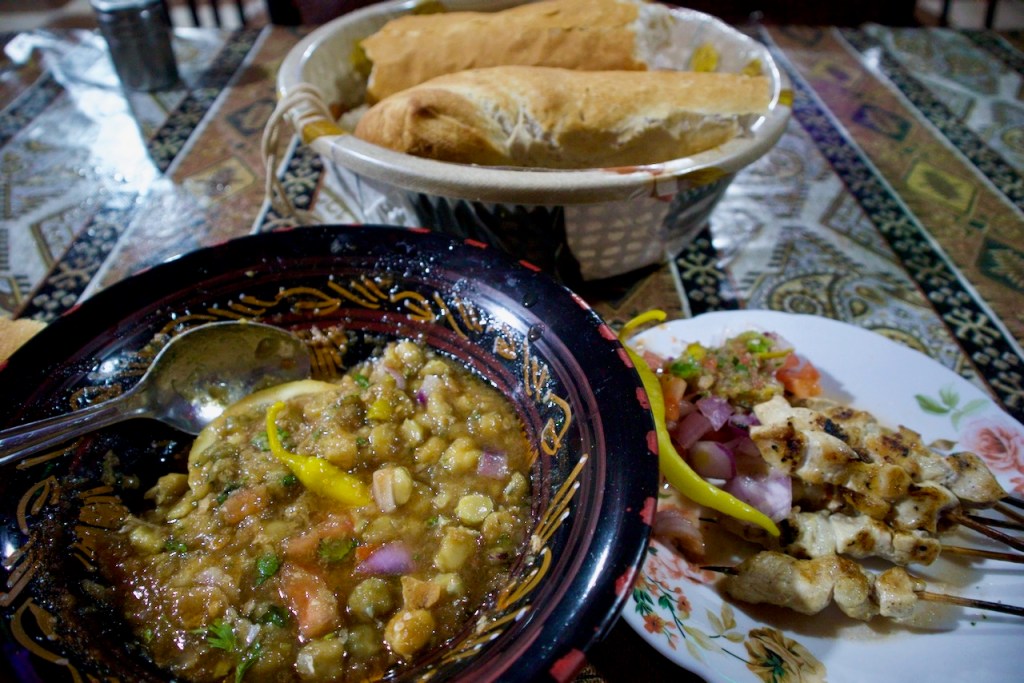

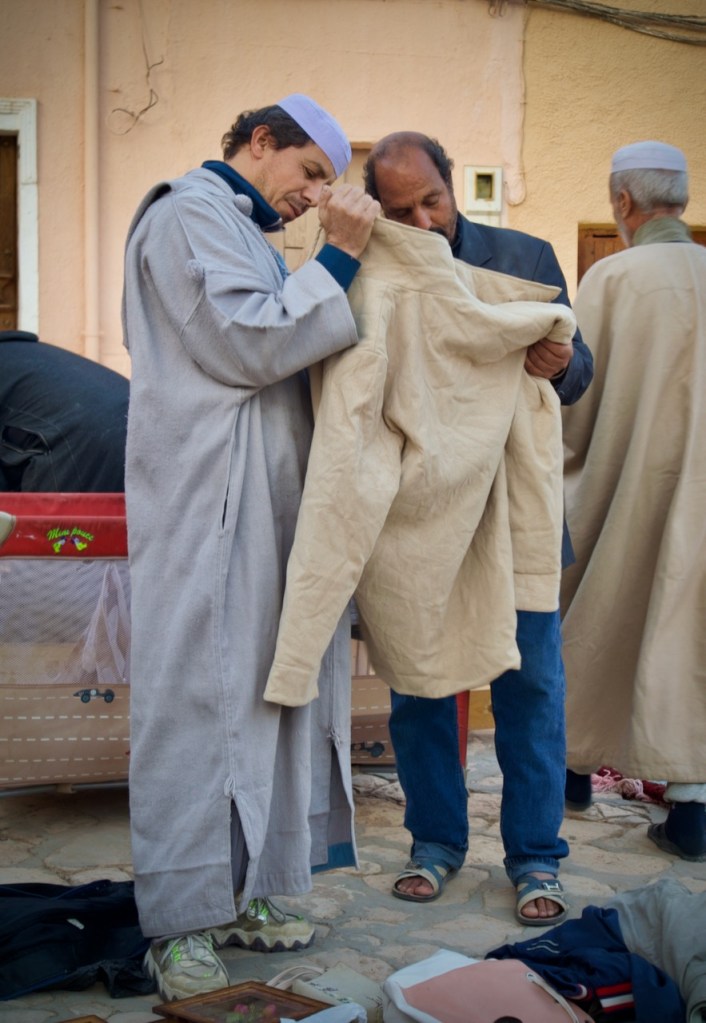
The first iconic view of Beni Isguen, the most enigmatic village with pastel coloured homes and an old mosque perched on top known for her conservative traditions, is unforgettable. Haji, an old guide, takes me through the web of alleyways in an hour-long tour, blurting out years and dates faster than I can note. El Atteuf was built first, then Bounoura in 1046, Ghardaia in 1053, Beni Isguen in 1321, and Melika in 1555! Fully covered married women – with only one eye exposed – come and go, disappearing quickly in the labyrinth. At dusk, men gather at the central square where an animated auction unfolds. How much is the jacket? one asks. 20,000 dinars (0.75 euros), the owner replies. There is some commotion around an old scale and I volunteer to step on it. 43kgs, it’s not working, I say, and the crowd breaks out in a laugh.
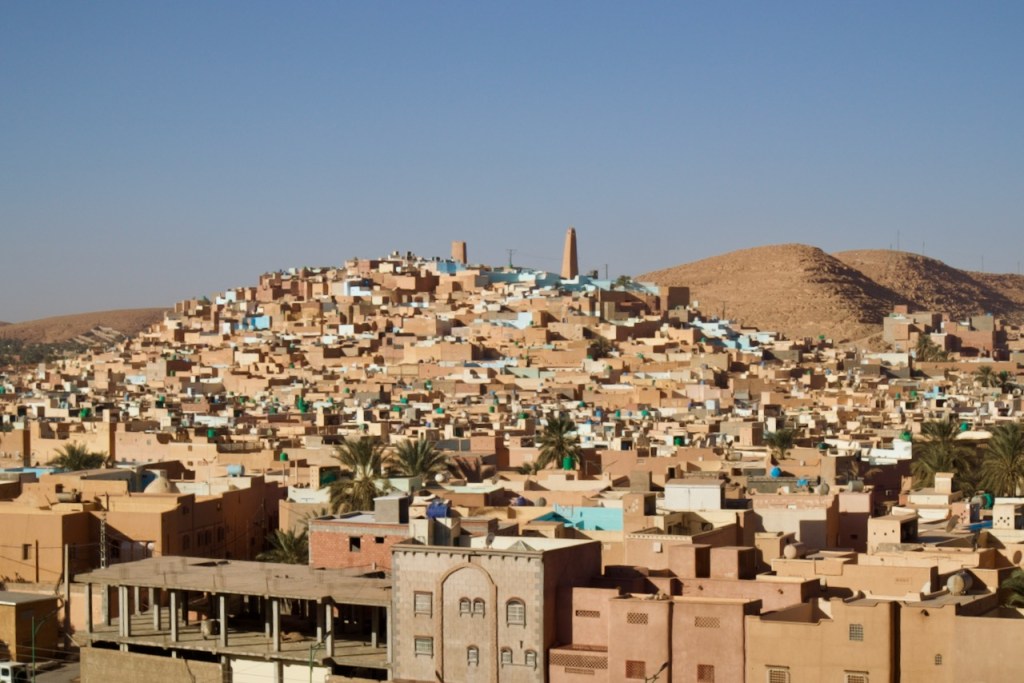
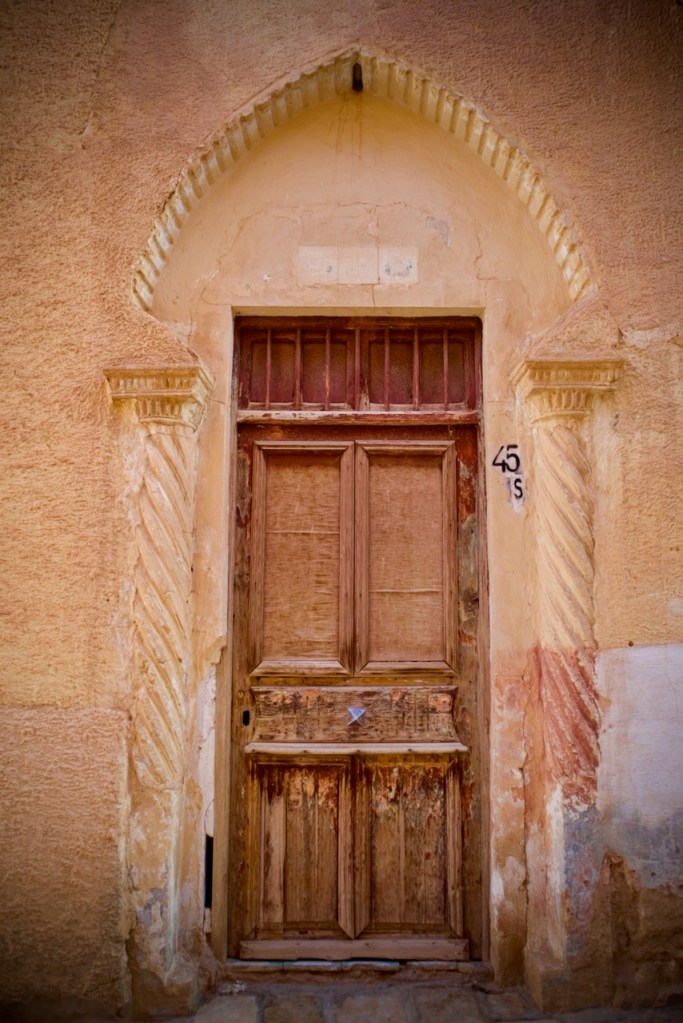
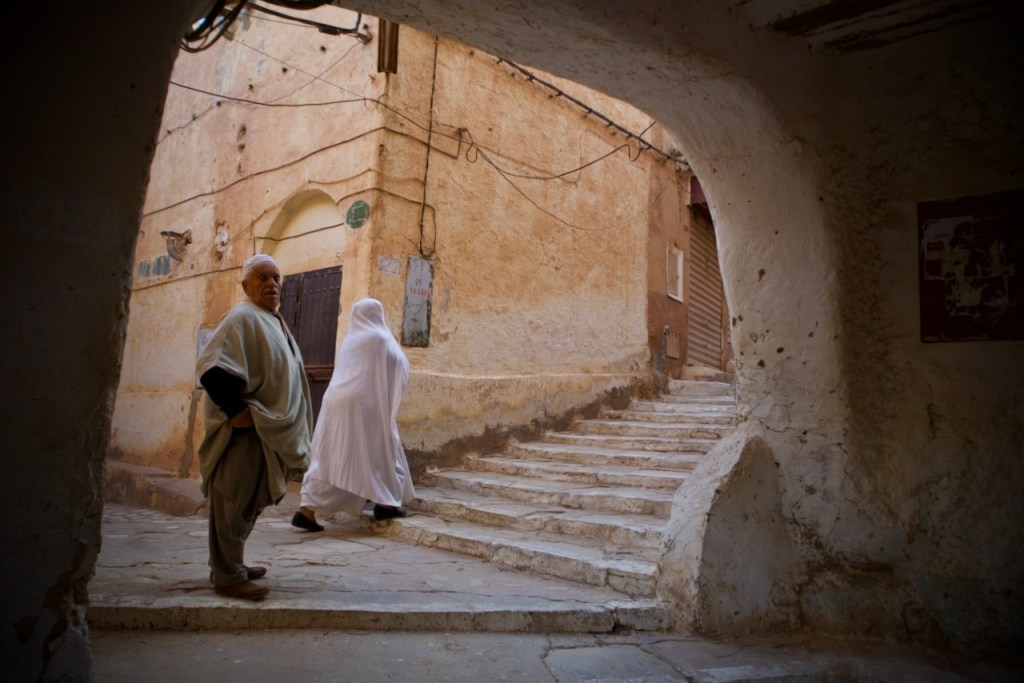

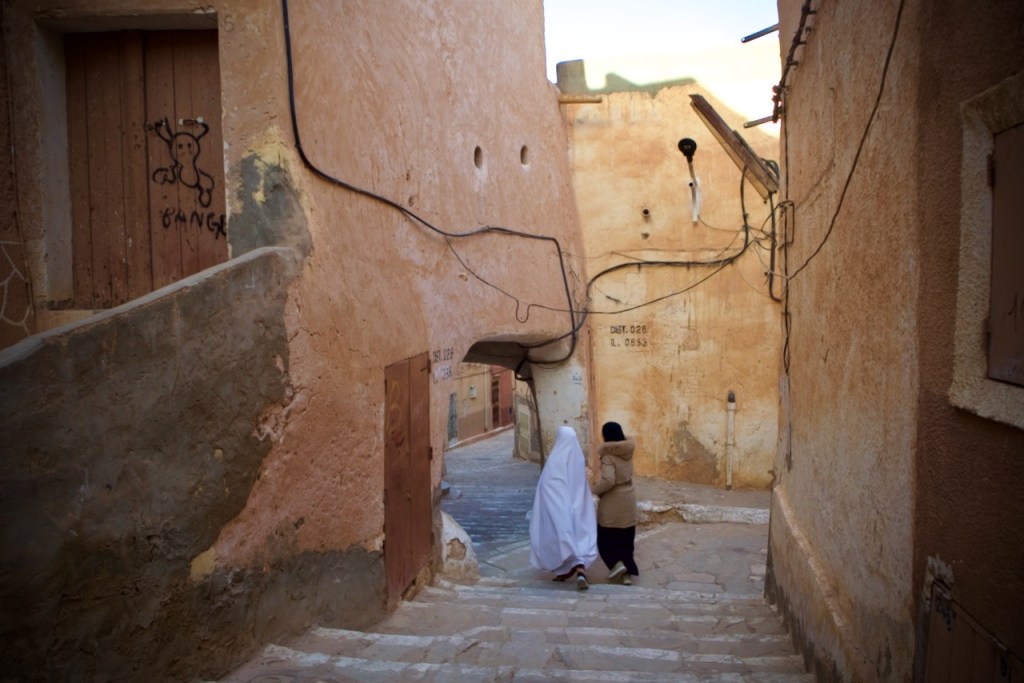


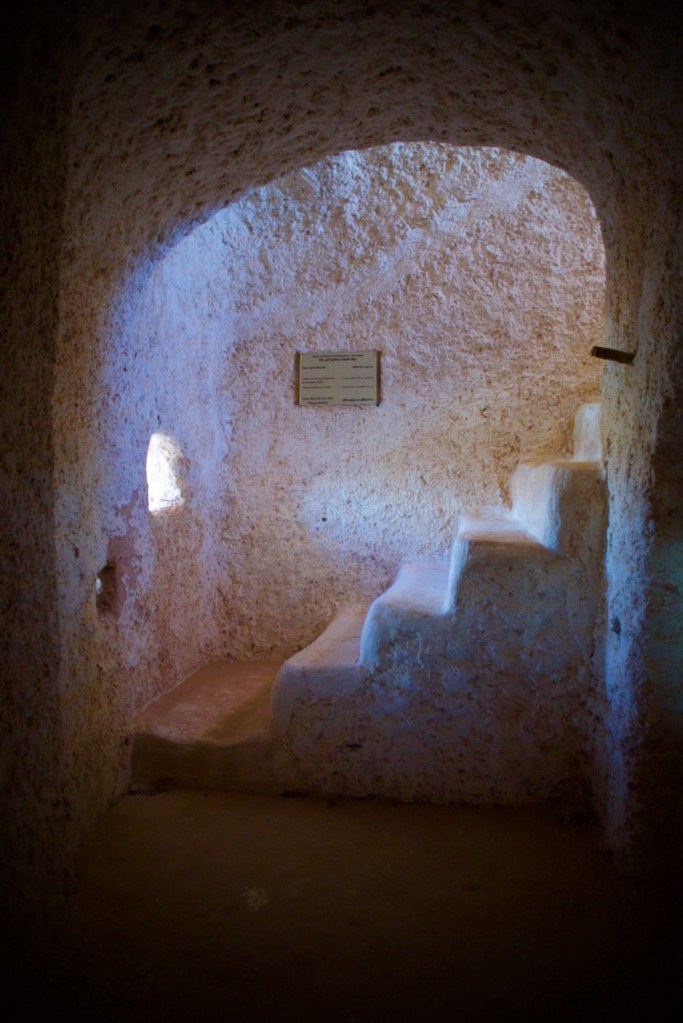

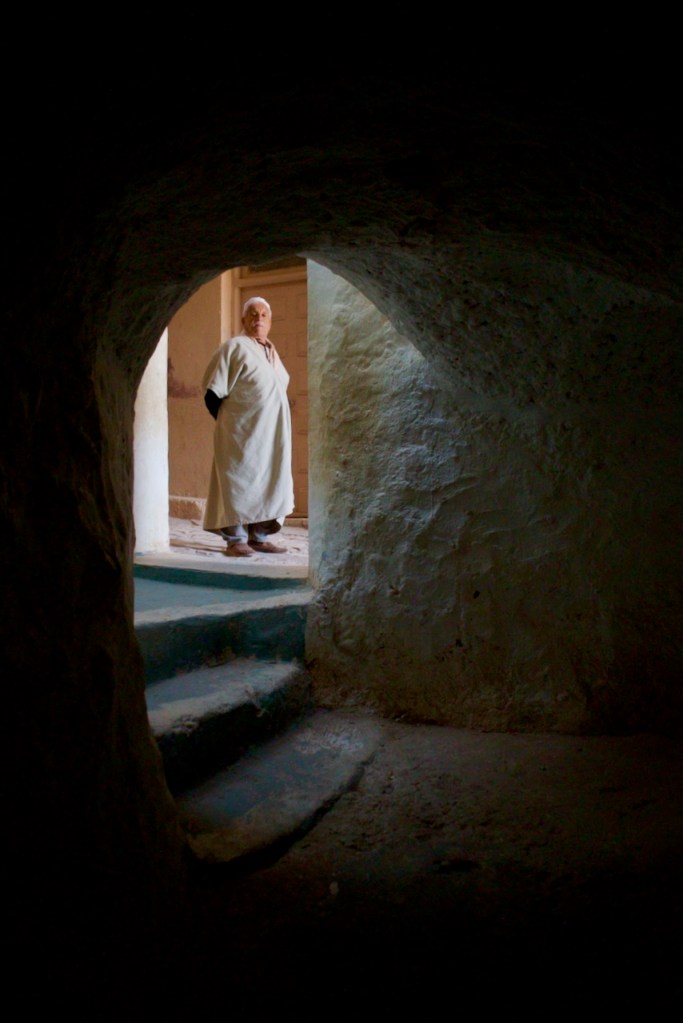

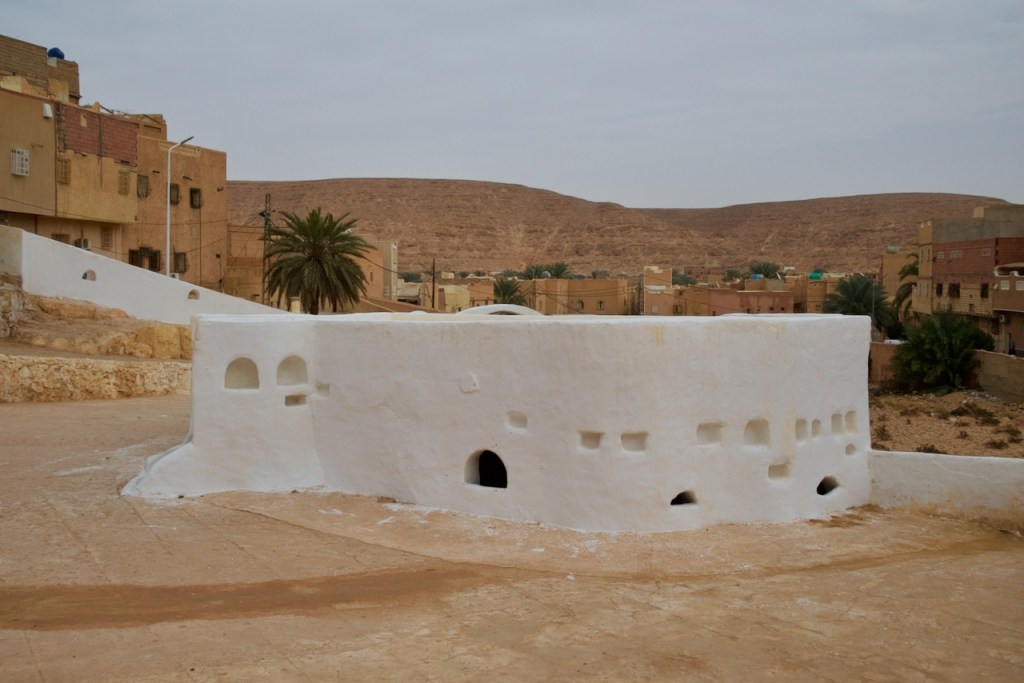
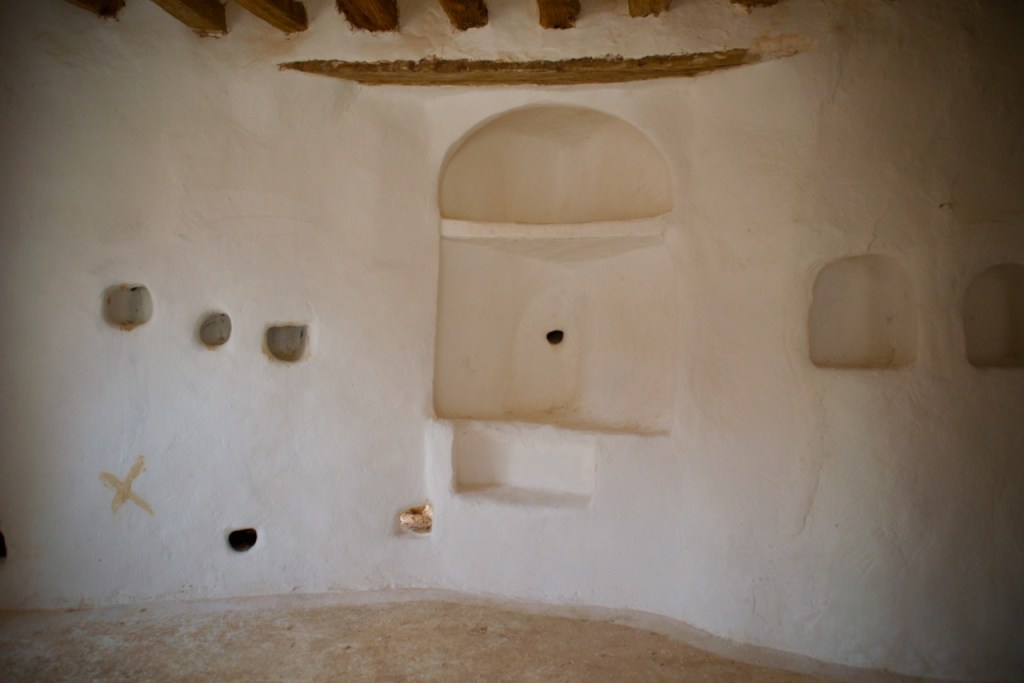
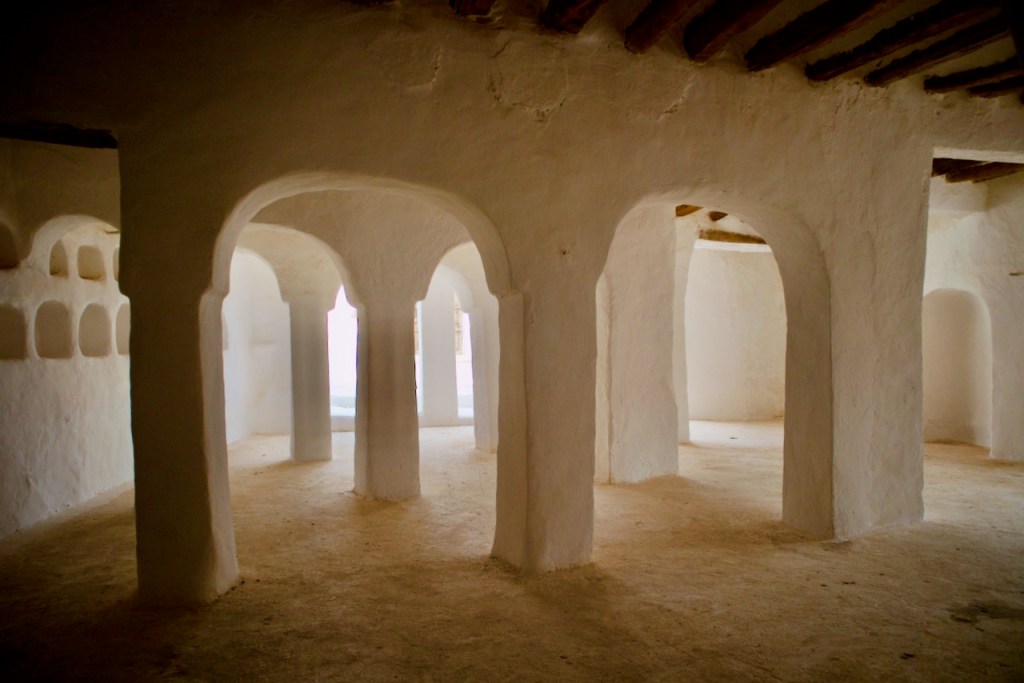
While guided visits are mandatory for Beni Isguen and El Atteuf, one can roam more or less freely in other villages. I take a morning stroll to Melika and then make my way to Bounoura with her stunning old mosque. I keep El Atteuf at the end with the famous Sidi Brahmin mausoleum that has inspired generations of architects from around the world. Built from local materials with stone and lime mortar for walls and pillars, palm trunks for beams, and embedded palm branches for arches, giving each one a different shape, the half underground circular chamber was used for teaching the Koran while an upper room was reserved for the sheikh. The eerily beautiful monument, set in one of the oldest cemeteries, exudes simplicity and transcendence.
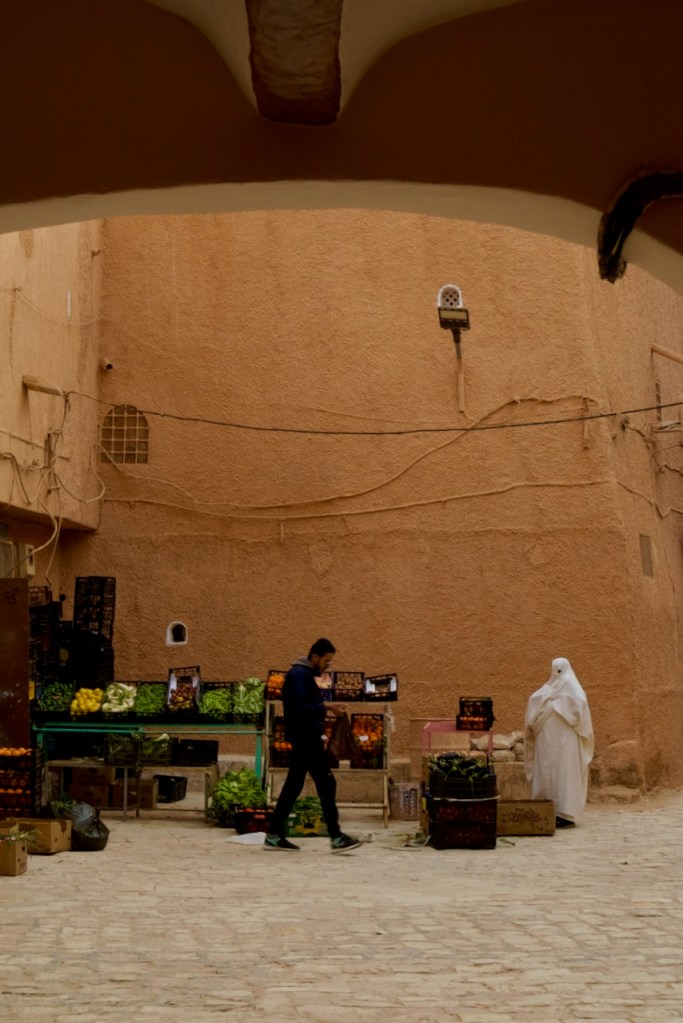
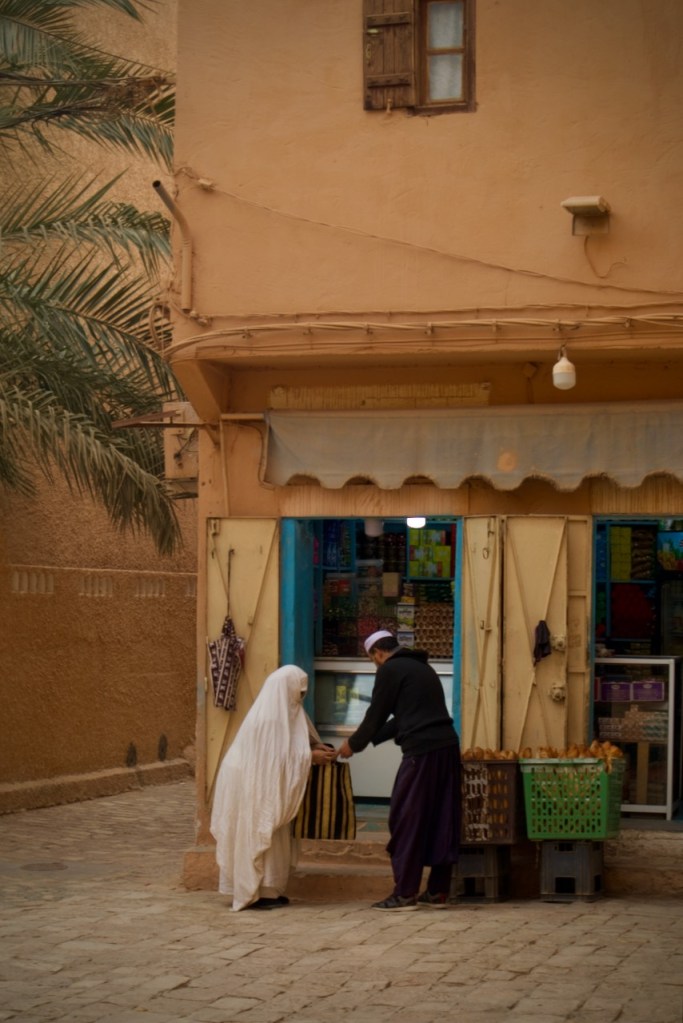
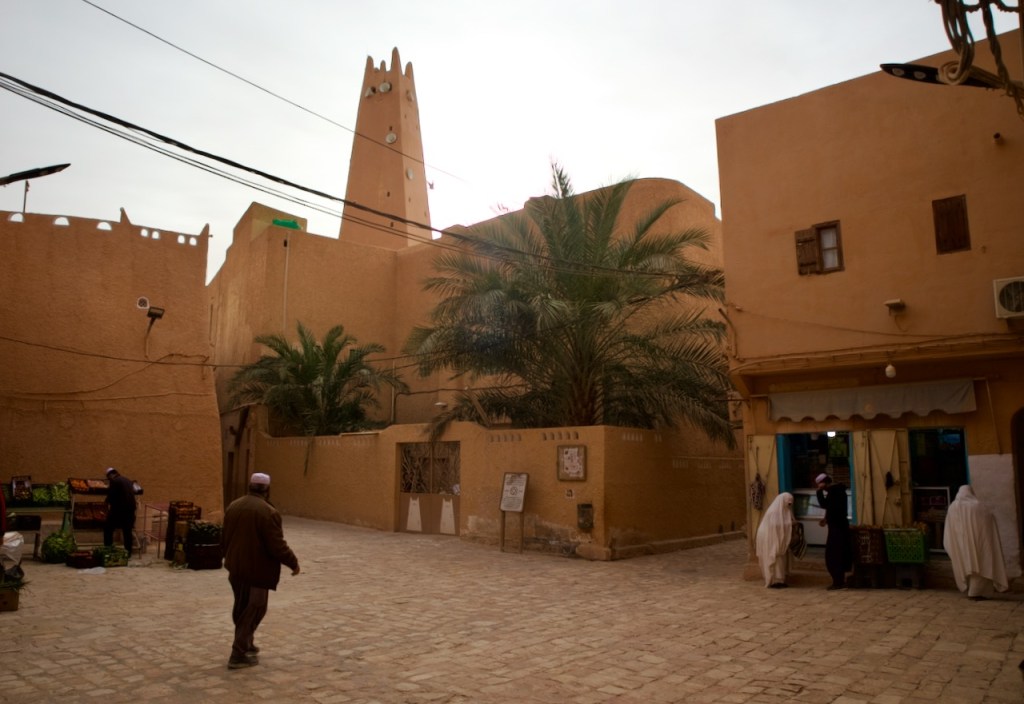
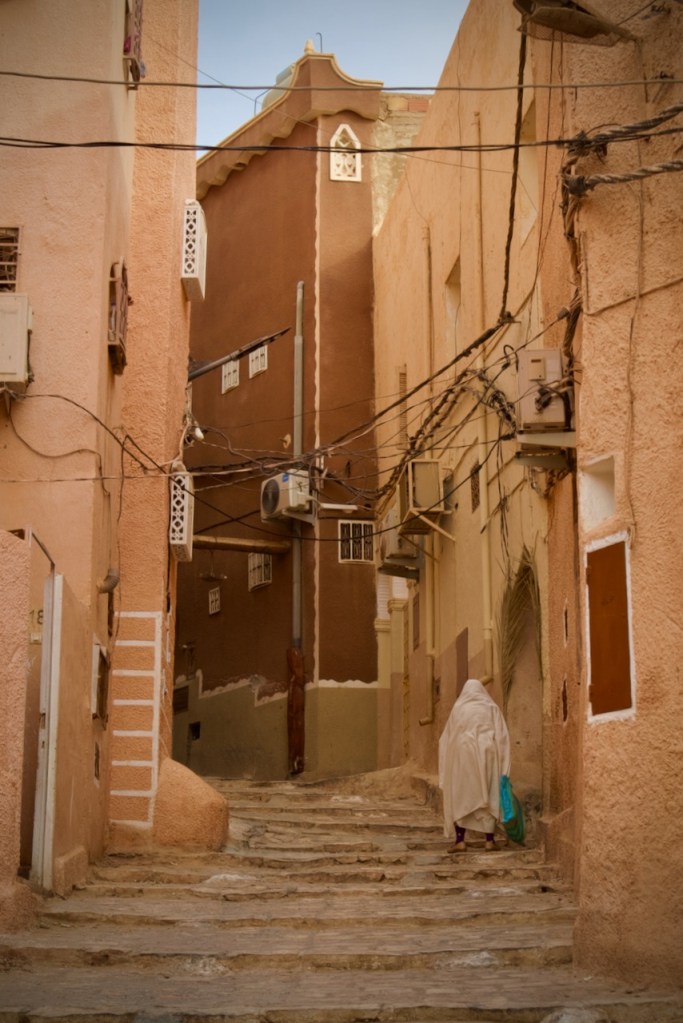







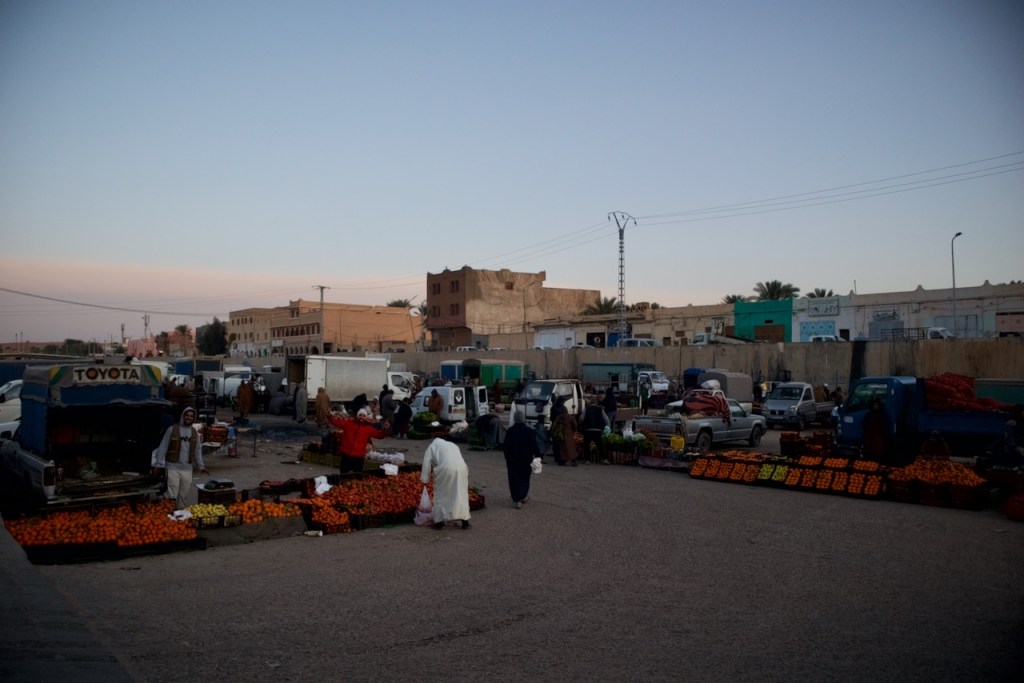
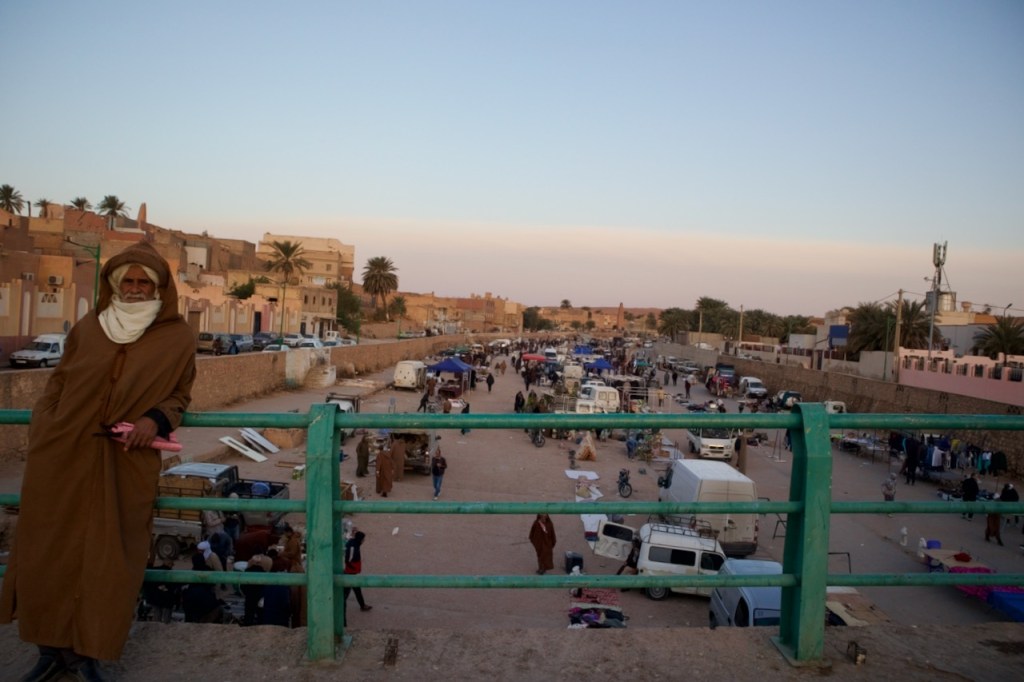
It’s Friday – souk day! Fruits trucks and vendors pull in from near and afar in the dried valley bed. With still time to kill until my flight, I get a (disastrous) crew cut for the upcoming desert stay and then bus to nearby Zelfana to soak off the visa stress, long bus rides, and dusty desert air. The spa is bustling and I get an euro-rub from a masseuse who lights up the whole place with her nostalgic songs and ululation. What an experience – sans photos though!

Djanet, Tassili National Park: Trek to Sefar
Most travellers – time and visa permitting – would go on to Timimoun, only 600 km away, as the gateway to the Grand Erg Occidental. Due to my 10-day visa constraint, I have to take a red-eye flight instead, arriving at the capital at 4am, and then go queue again in the Bureau des Etrangers to inquire about my visa extension. It’s not ready! the bald guy says, reassuring me that I could travel with the receipt. So it’s a go for Djanet for a two-week stay in the desert. I settle for a last comfortable night until I receive an email at 8pm from the agency I had the booked the tours with, now with a new – doubled – price! I call to no avail. TIA: This is Algeria!
Managing to get the agency to stick to the agreed price by noon (whew!), I change my euros into a thick wad of dinars, becoming an instant millionaire. The flight is delayed, arriving in Djanet after two in the morning. Having received no tour program till my arrival in Algiers, I have little clue how everything will unfold. You start walking to Sefar tomorrow! the agency staff says. At eight! Whatever, surrender, remember!
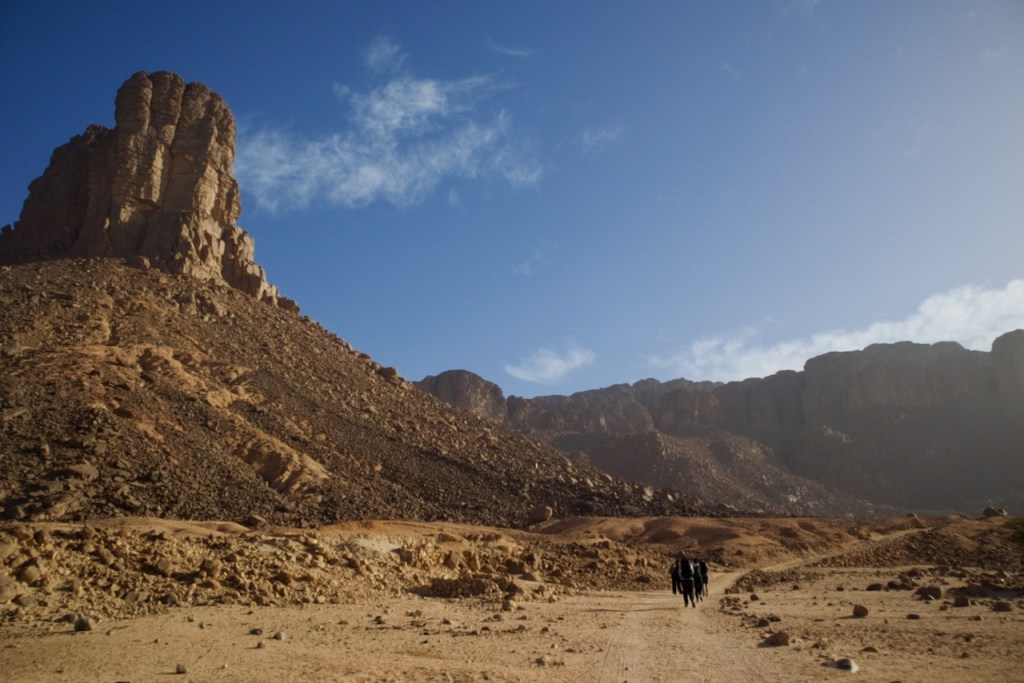
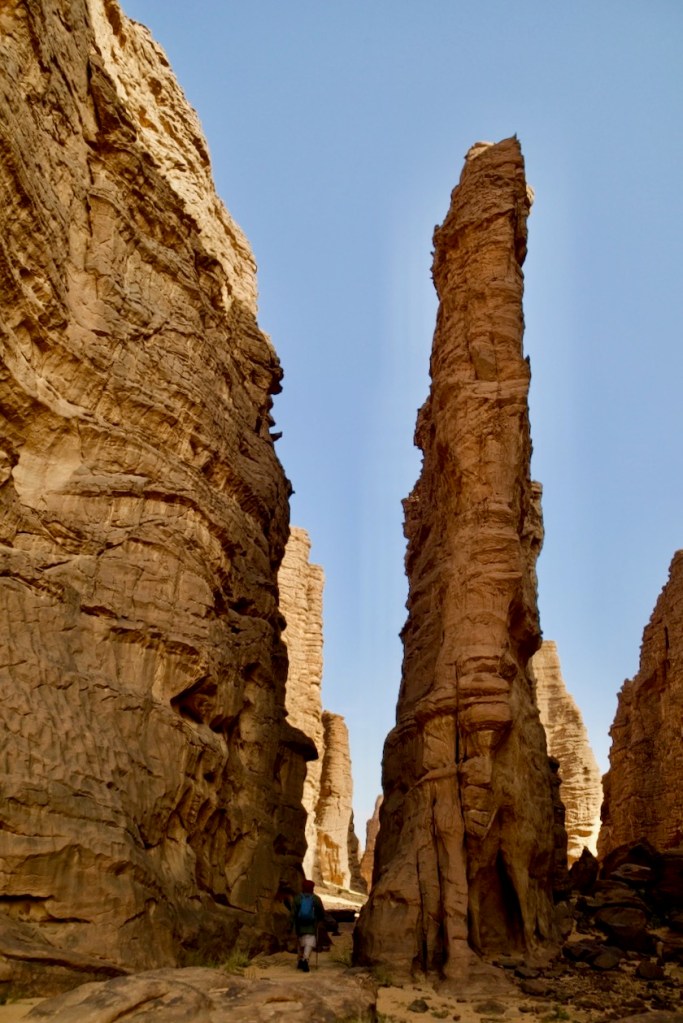
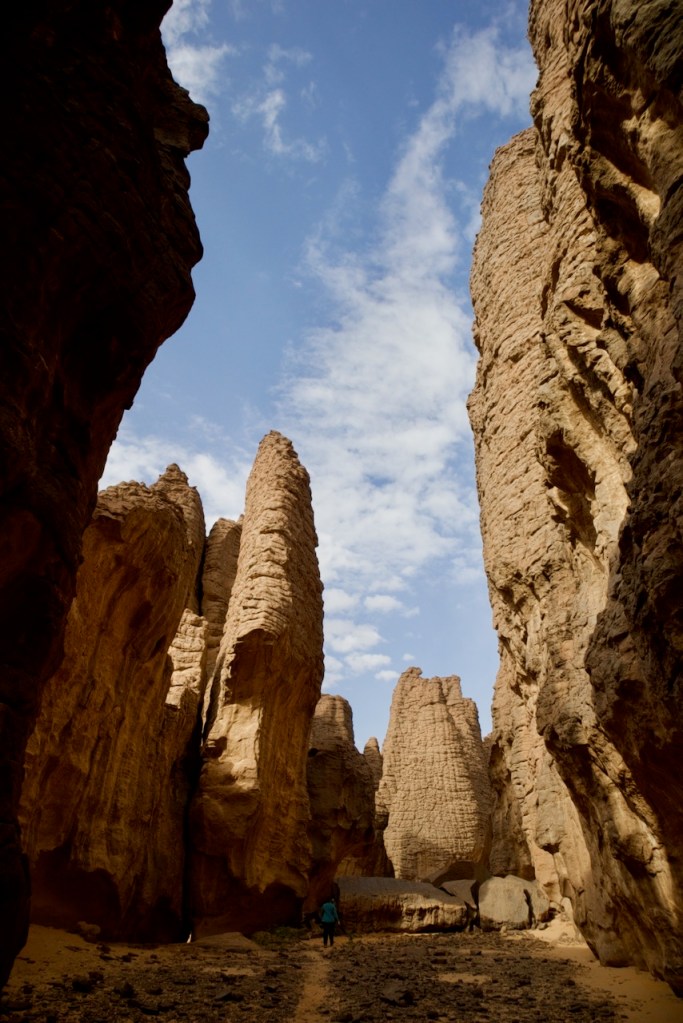
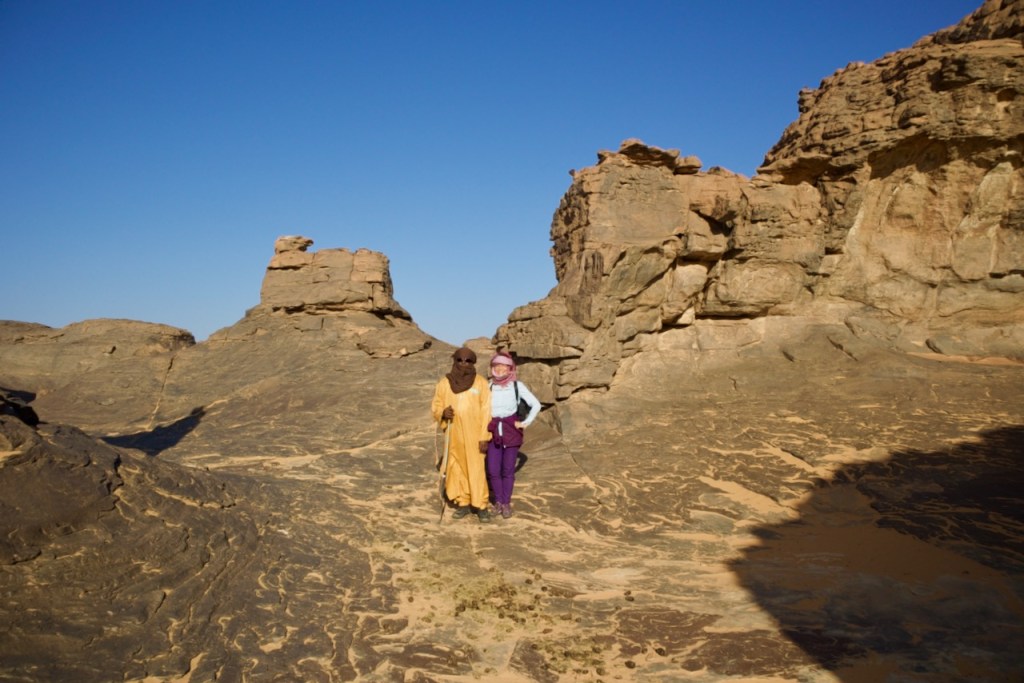
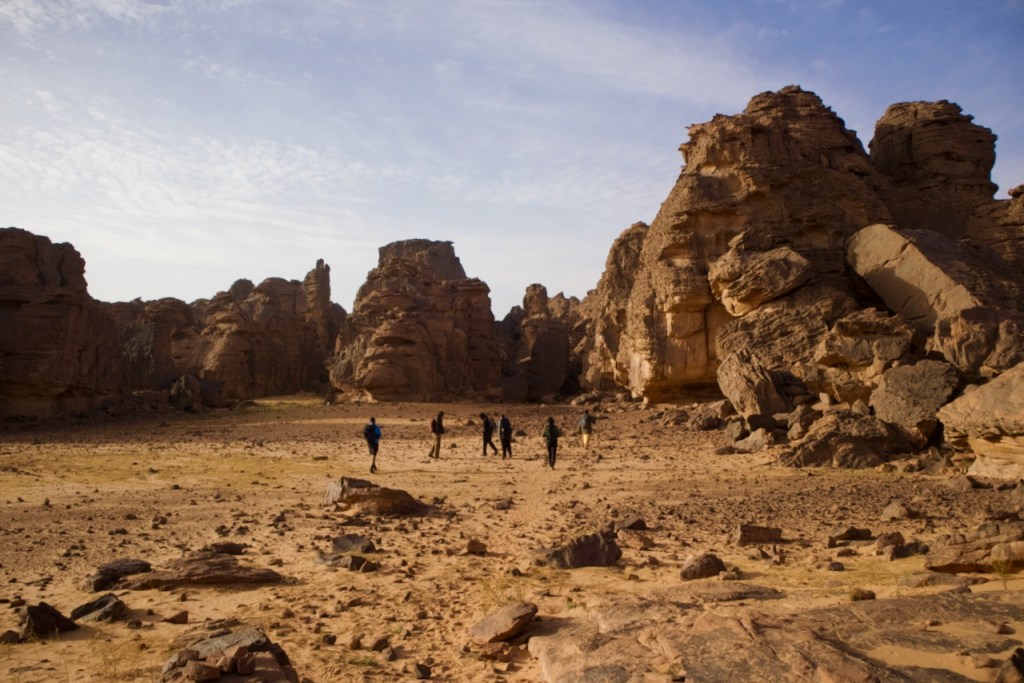
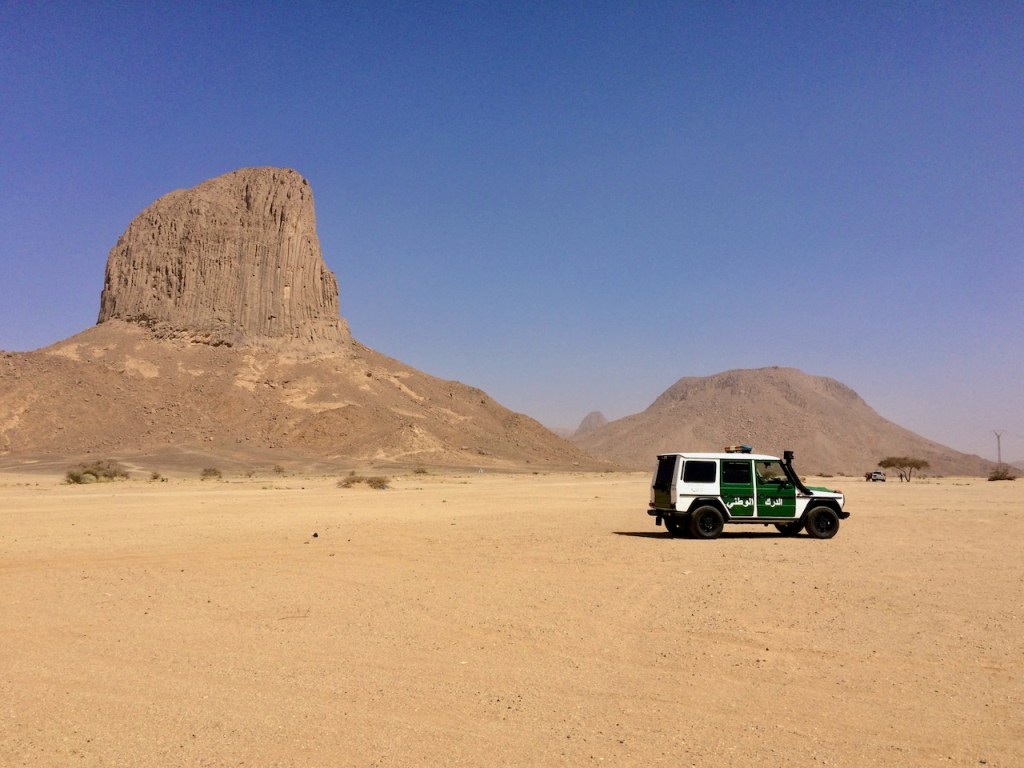
The driver follows an off-piste road for about an hour, and we call it a day, bivouacing in the middle of nowhere in the Sahara at three a.m. When I emerge from my tent at seven, I could hardly believe my sleepy eyes. We are at the foot of a grand 500m rock tower called Akba Tafilalet, base camp of sorts for treks to Sefar. What a glorious beginning!
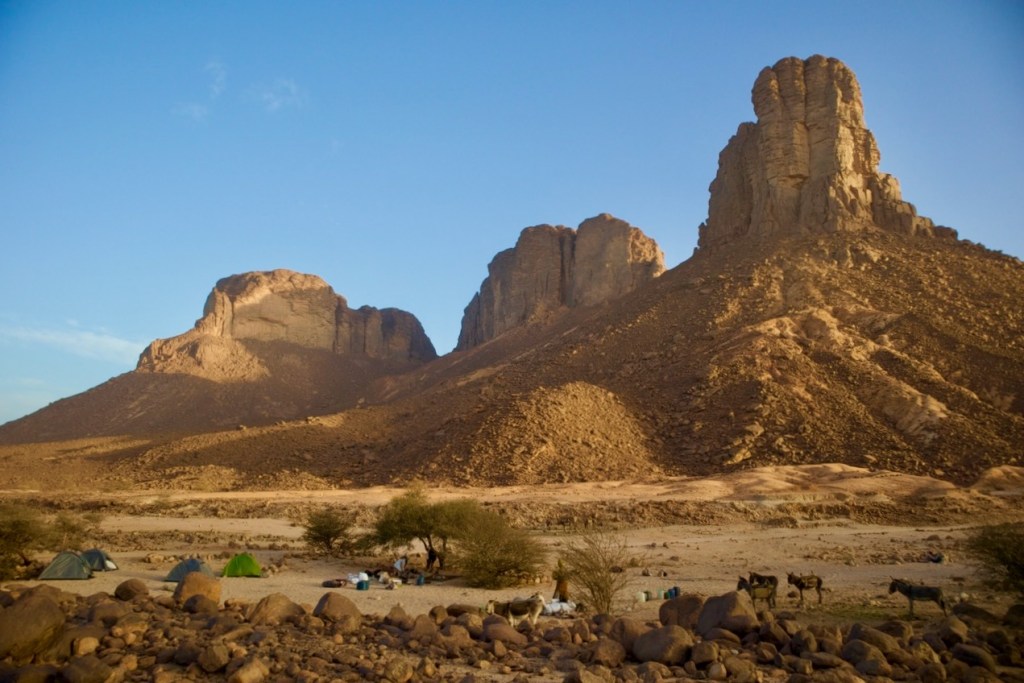
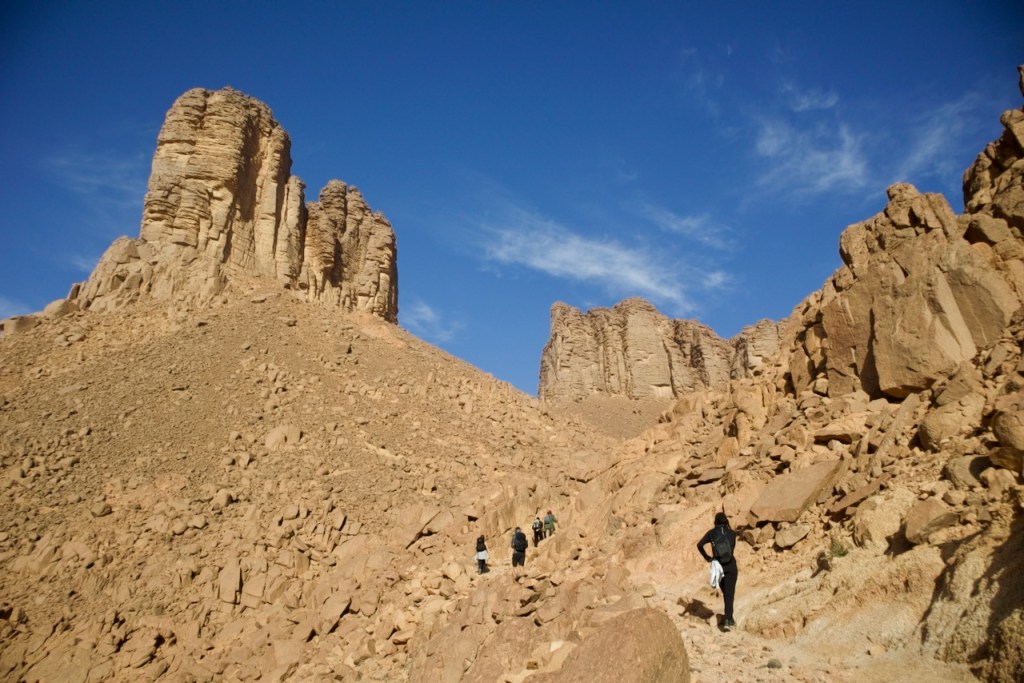
Day 1. Sunny. Akba Tafilalet-Tefete. 6.5 hours, 15km. Bivouac in Tamrift
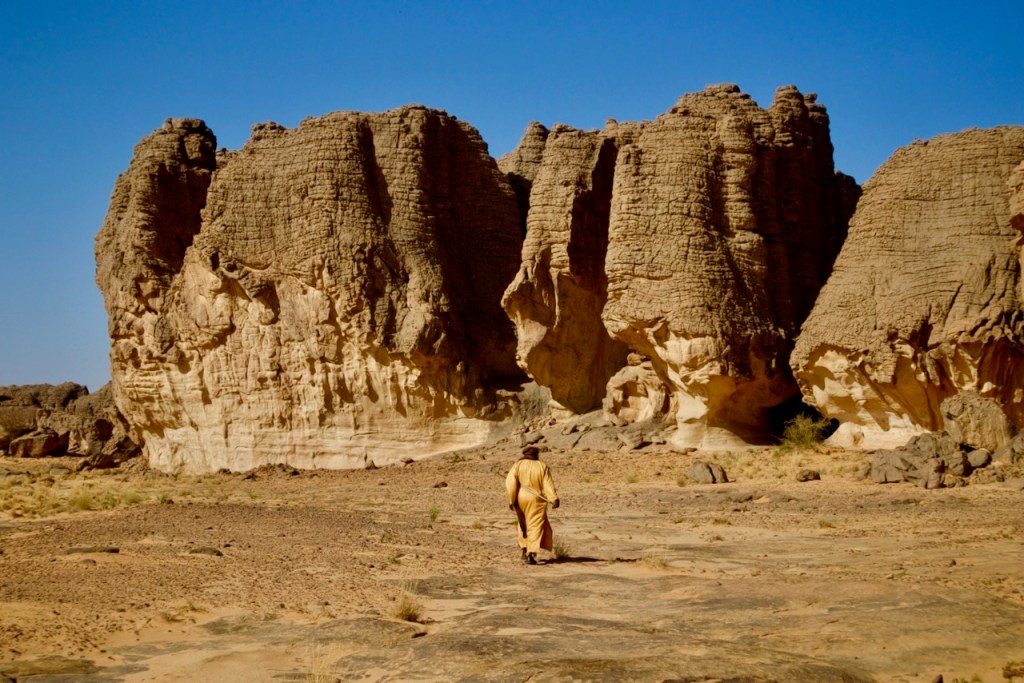
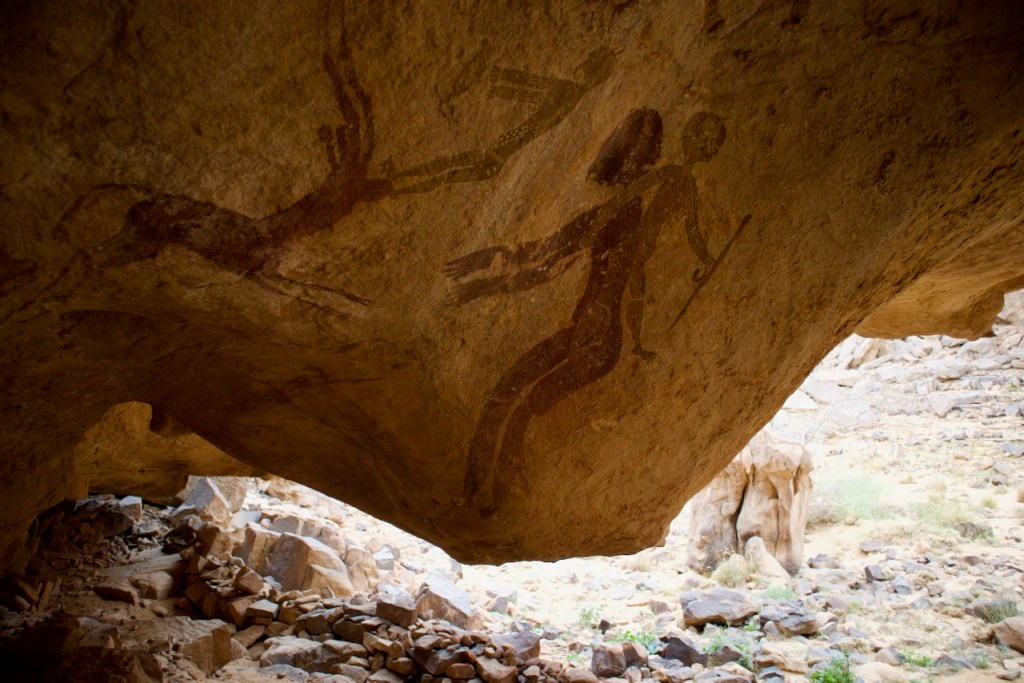
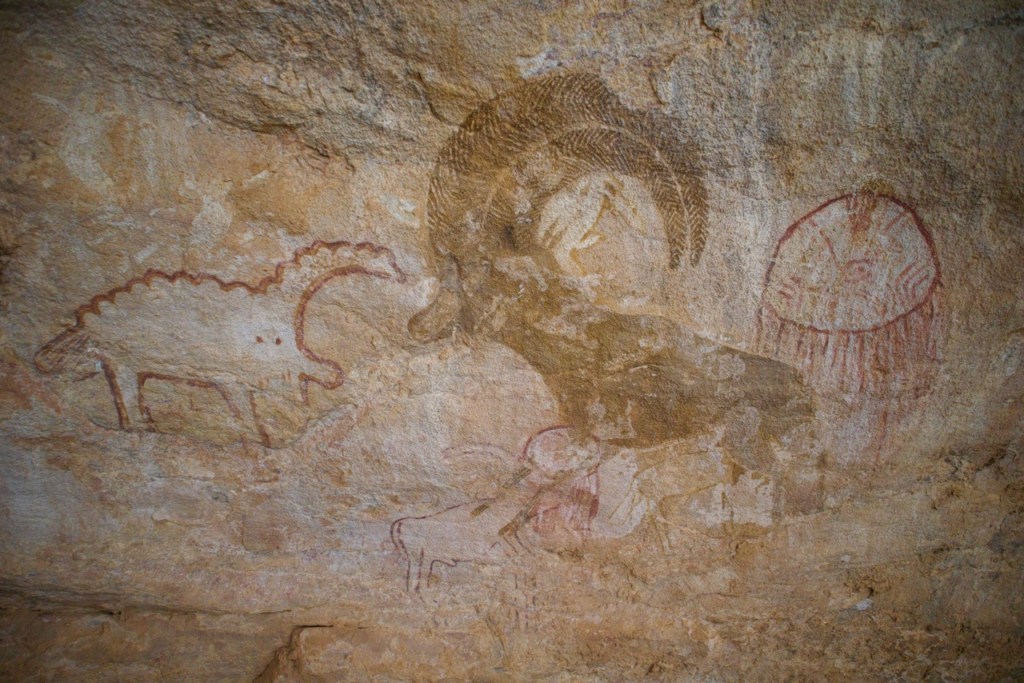
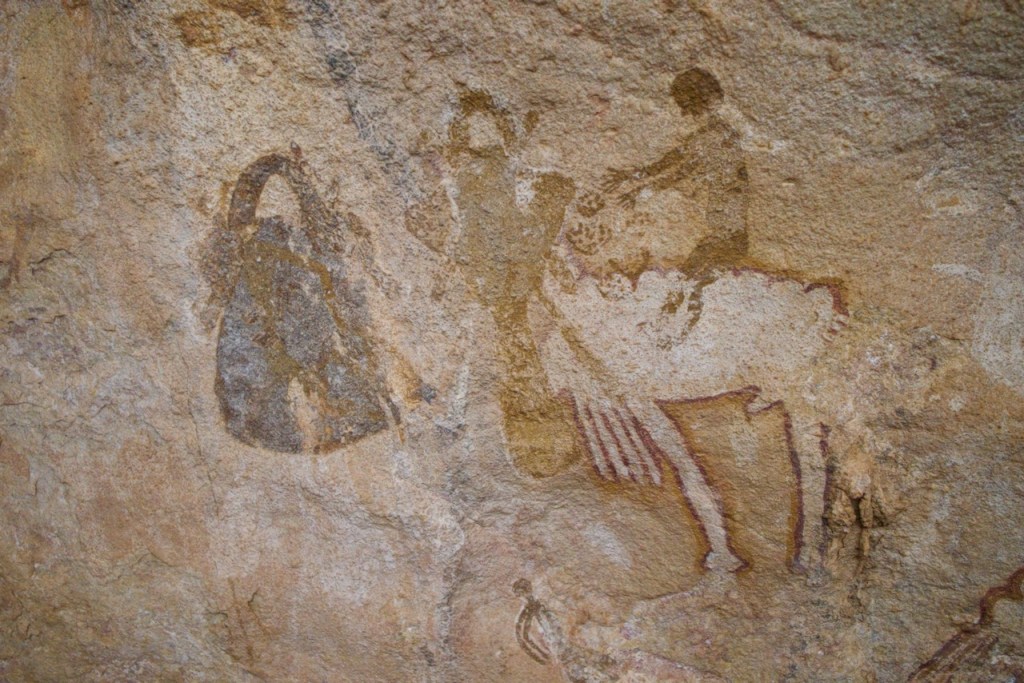
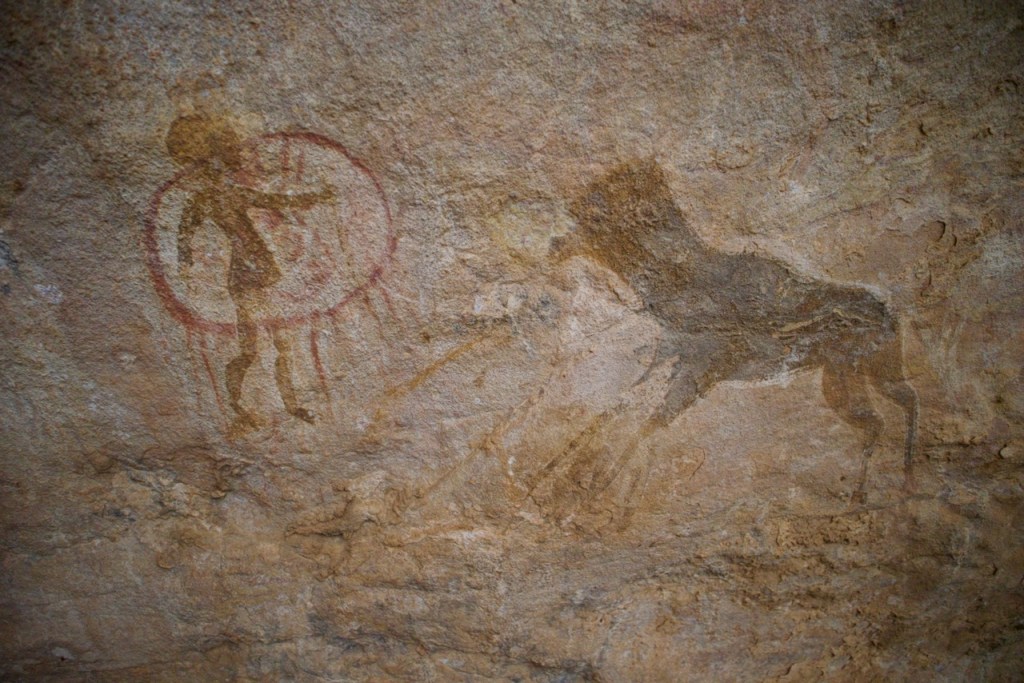
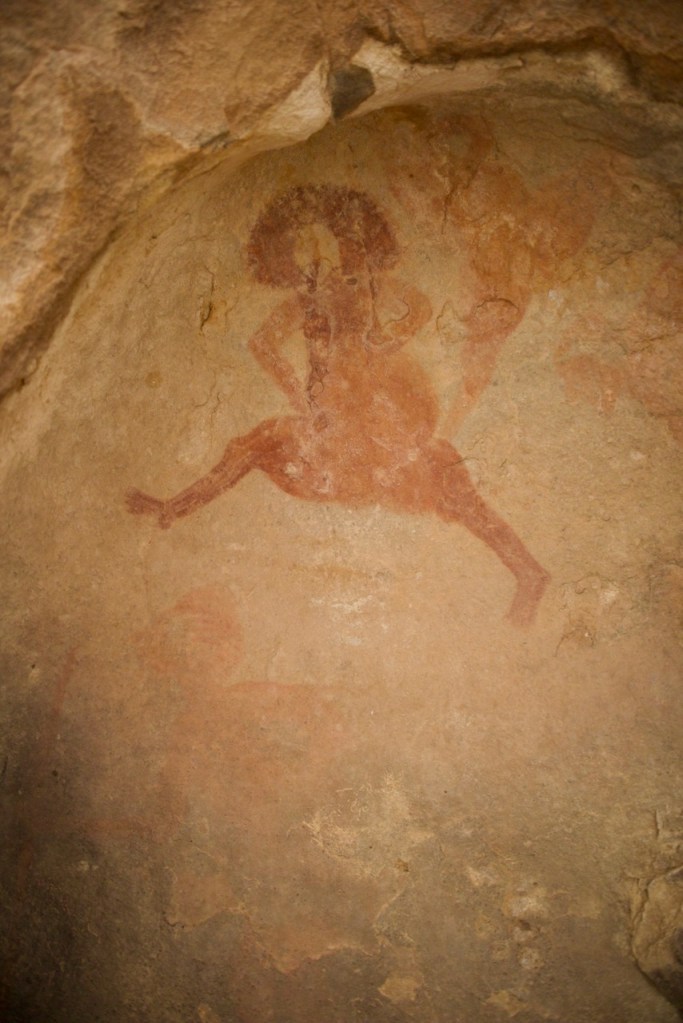
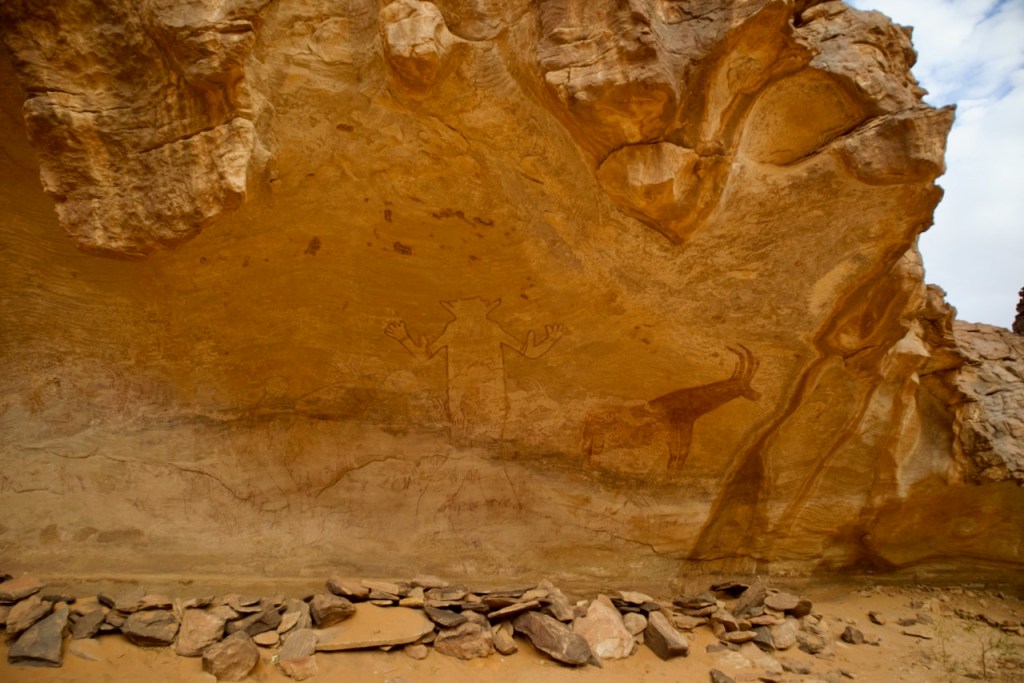
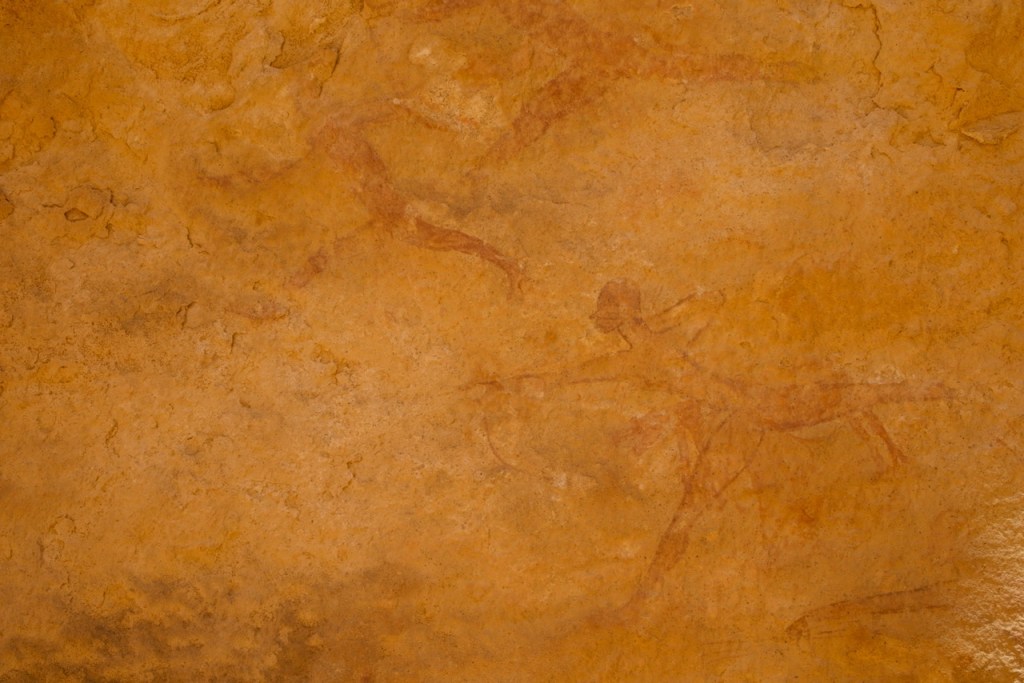
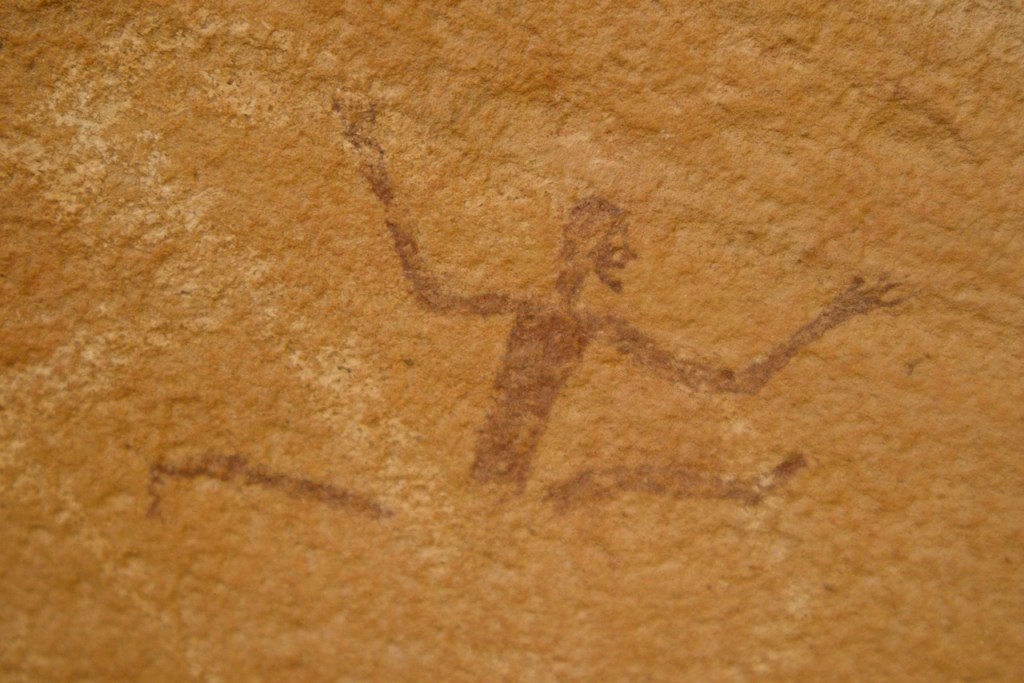
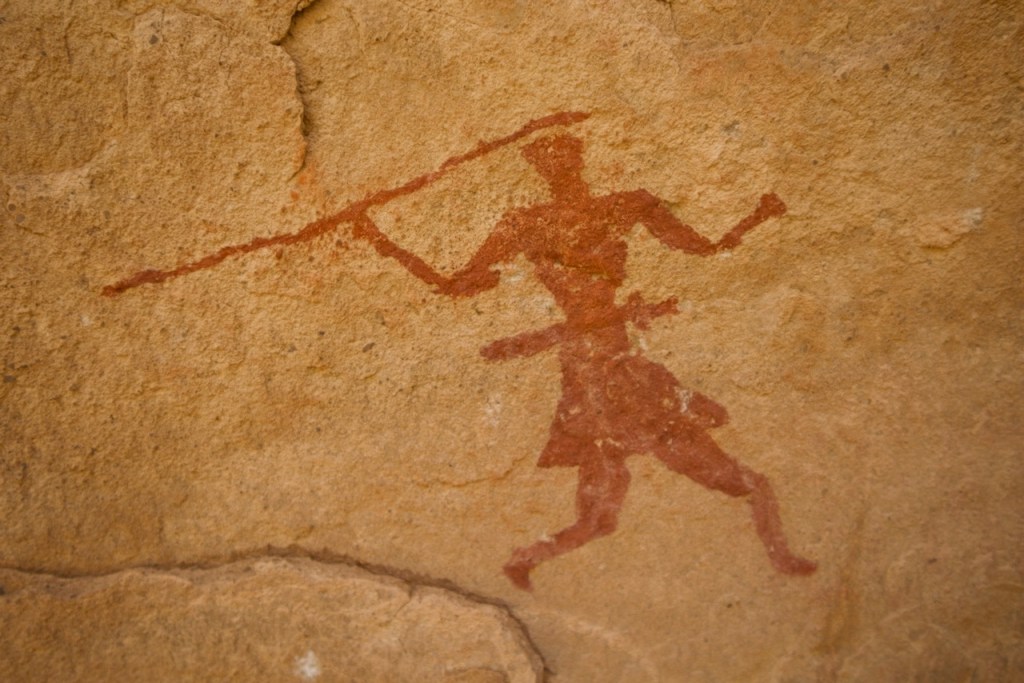
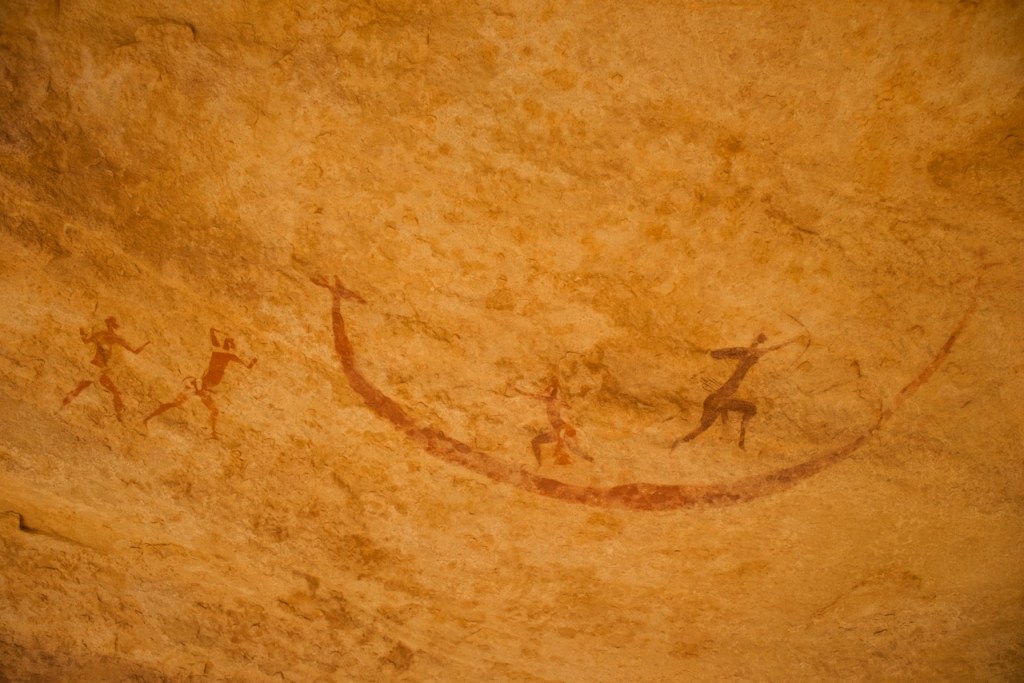
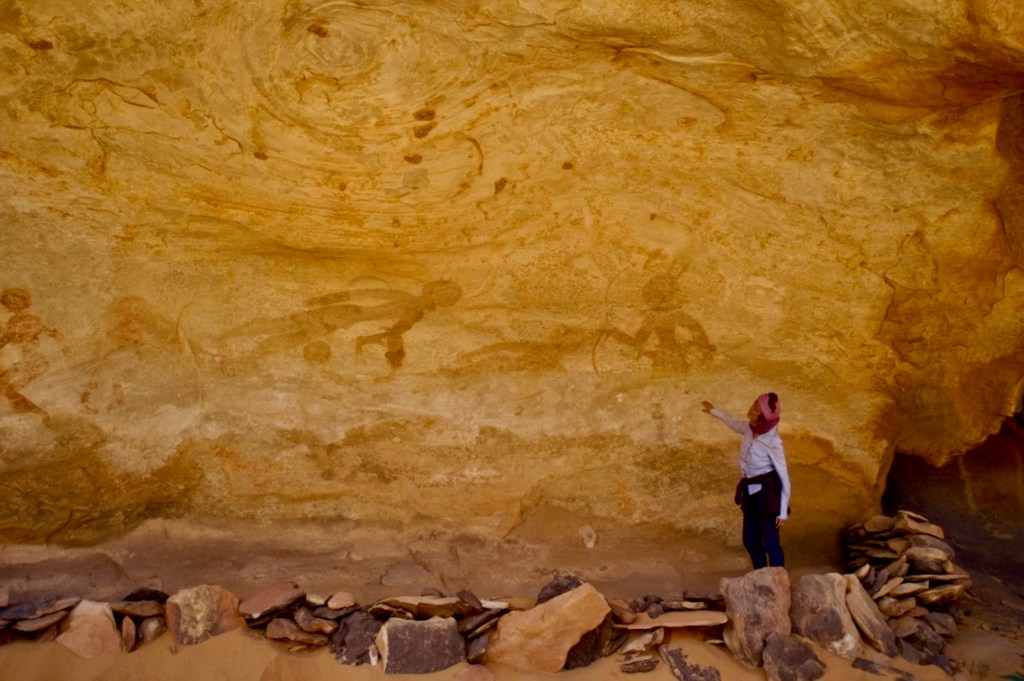
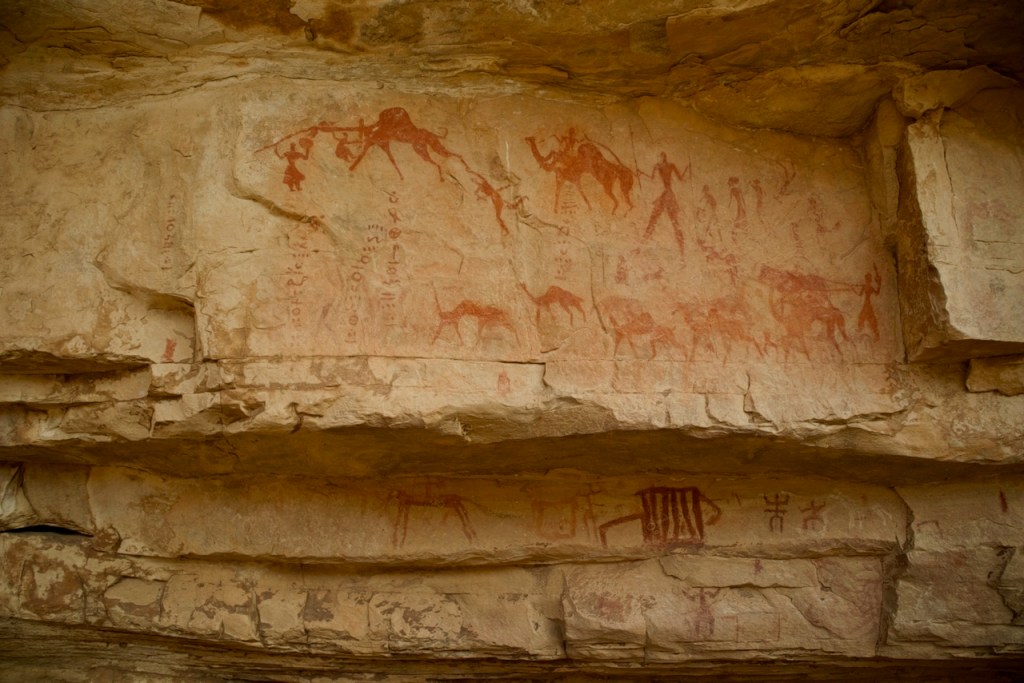
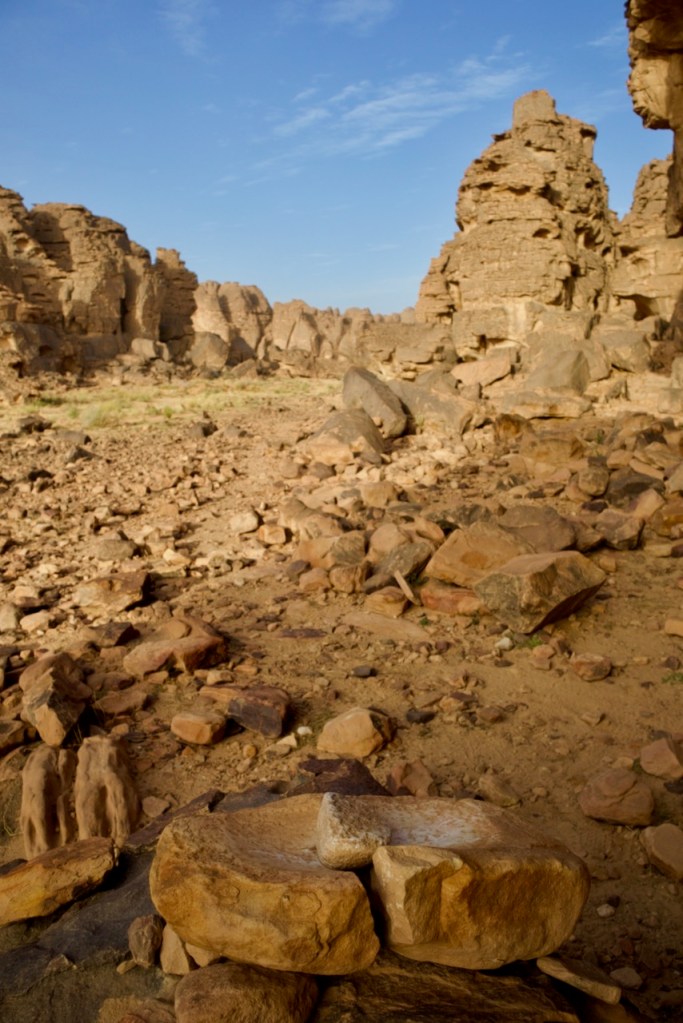
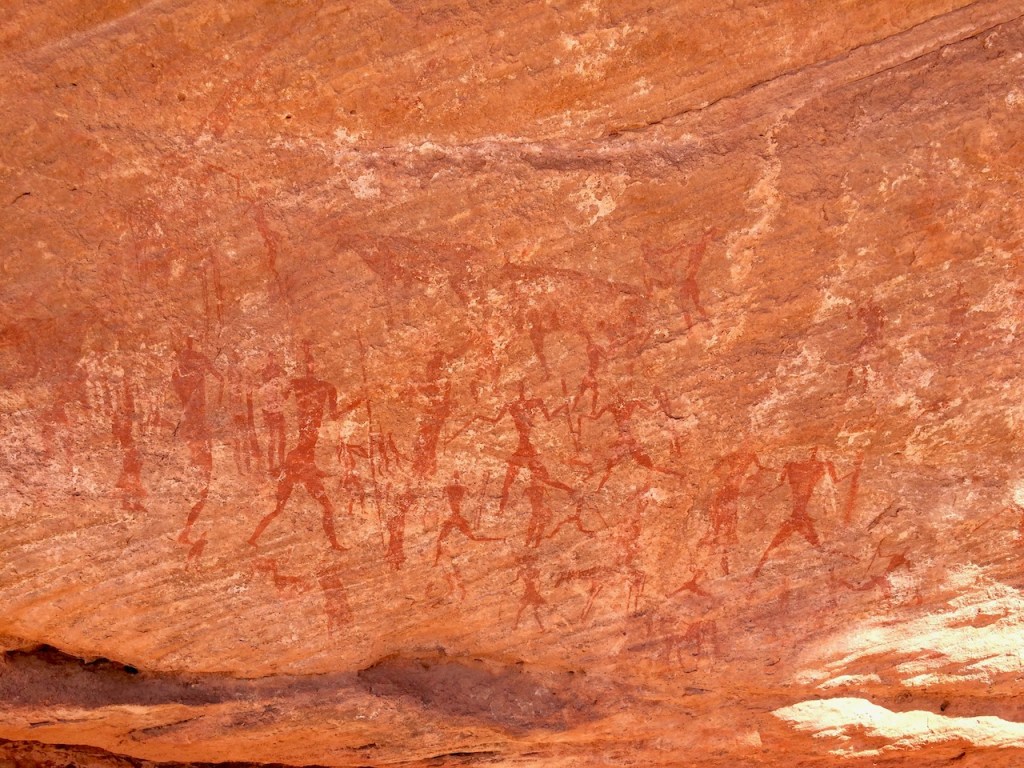
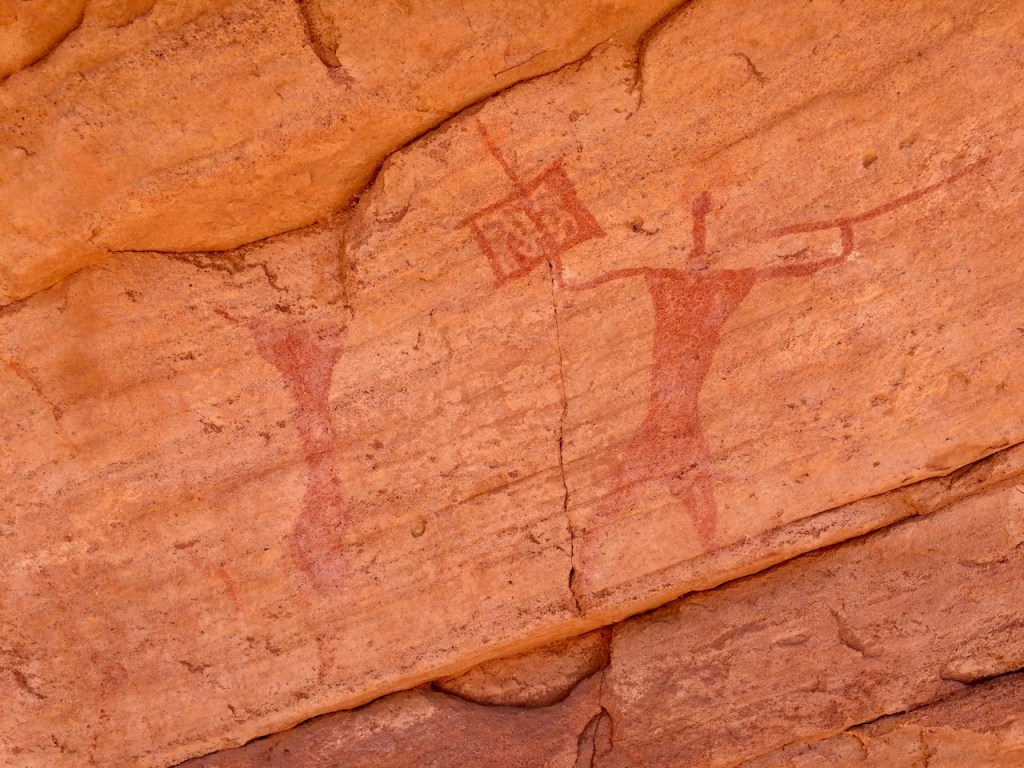
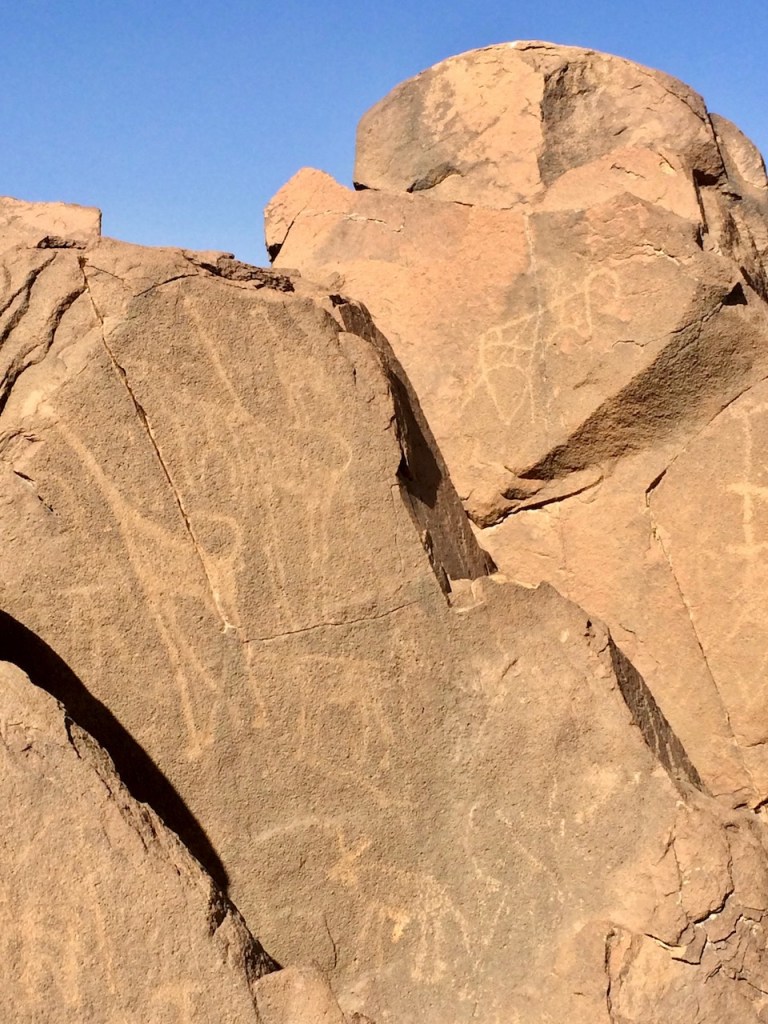
Dating back to 10,000 years, Sefar is the largest ancient troglodyte city as well as the biggest open-air museum n the world with over 15,000 prehistoric rock drawings and engravings, protected as a UNESCO World Heritage site.
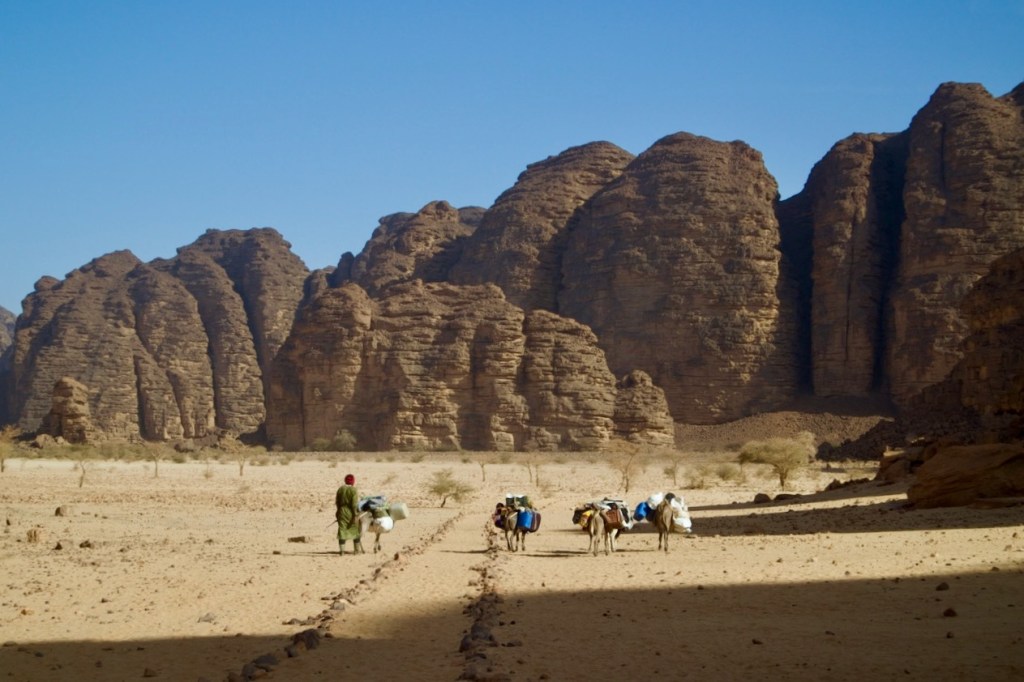
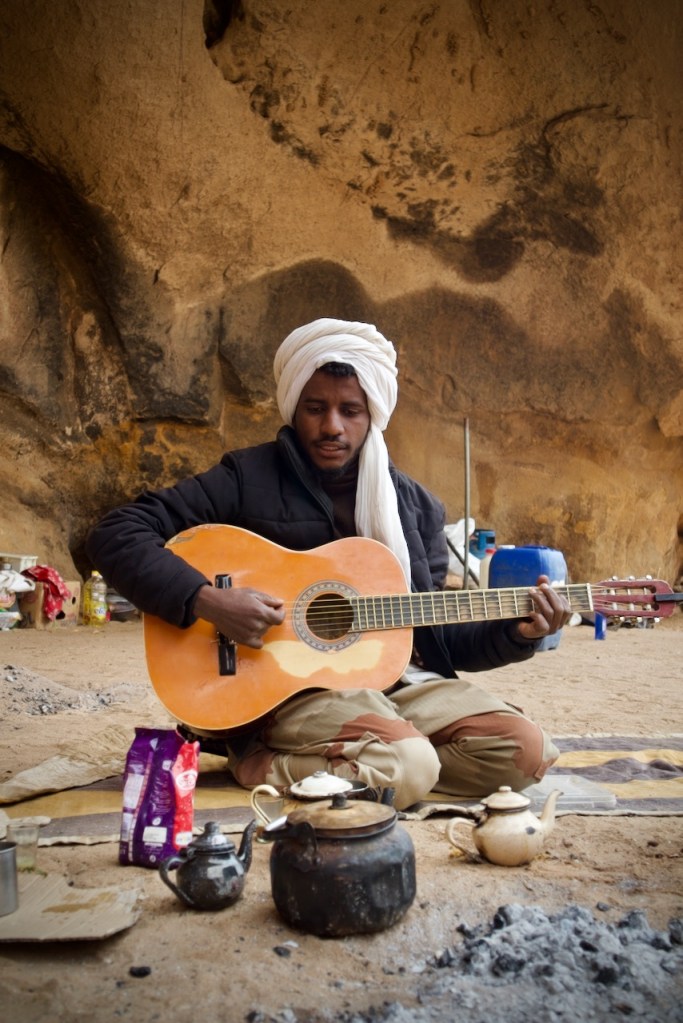
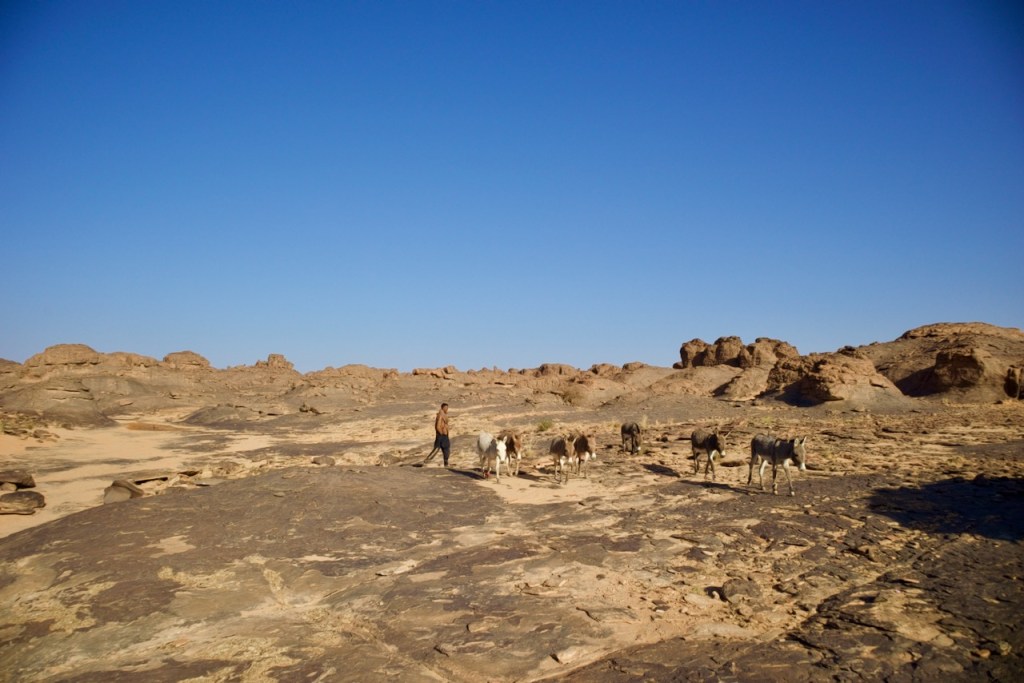
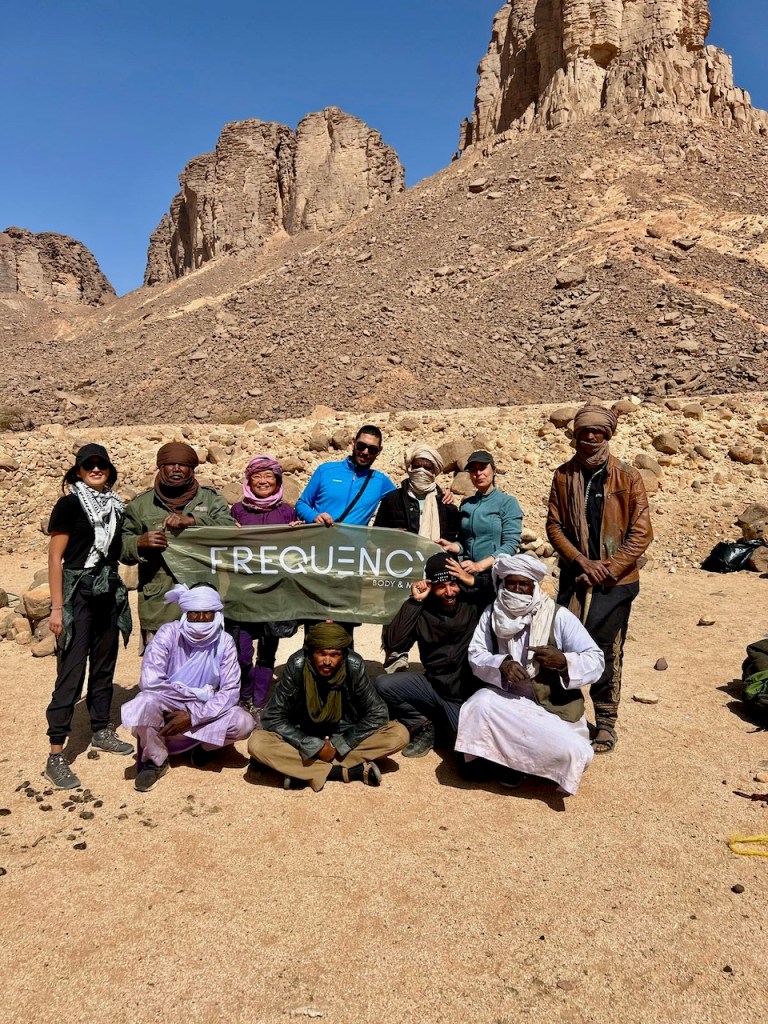
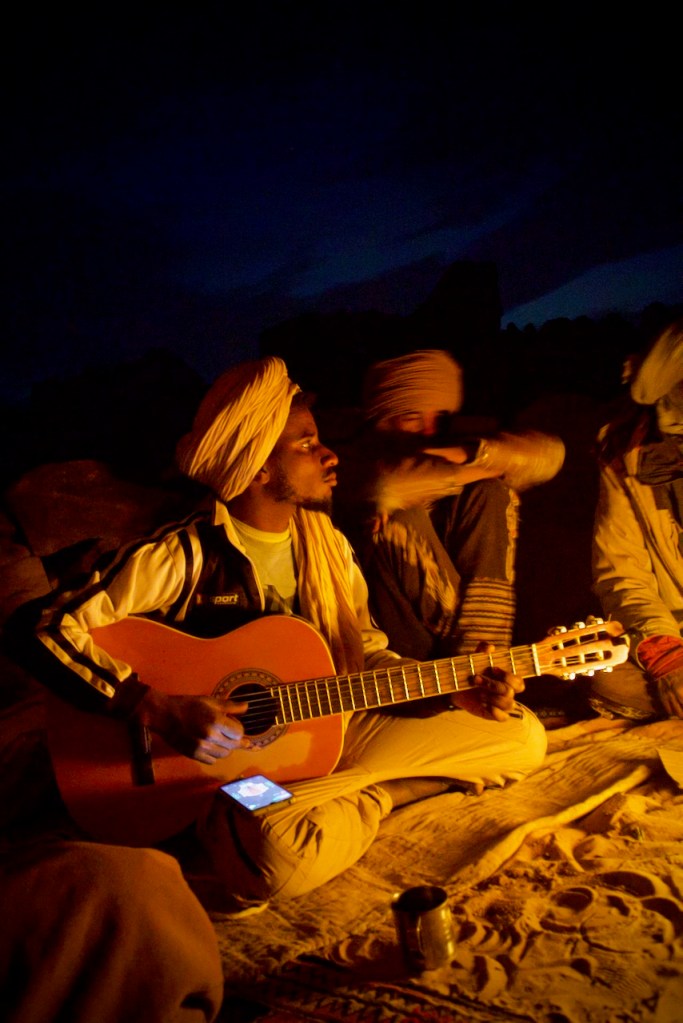
Together with Ali and Mohammed, our guides, Laeid, the chef, Yunus, the musician (included in most tours!), and Mahmood and Moussa, donkey herders, I am accompanied by a group of four Tunisians, led by energetic Wafik. We huff and puff up a rocky path before breaking for lunch. The donkeys – and us – struggle in a particularly steep patch afterwards before crossing an interminable plateau to reach camp in Tamrift. Solan, solan/Slowly, slowly, Ali says.
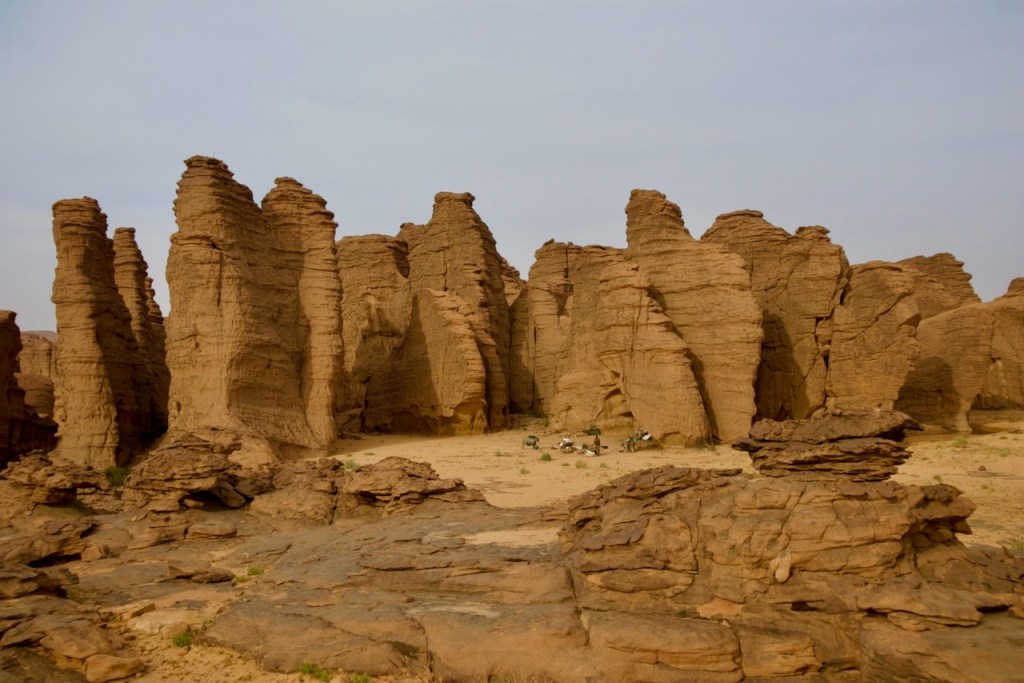
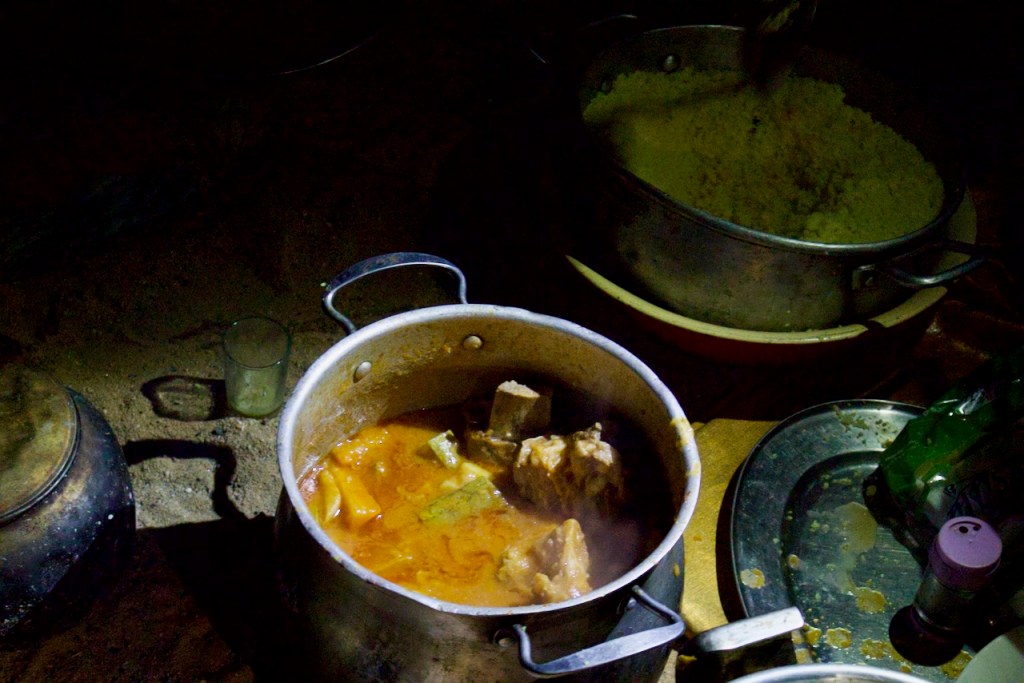
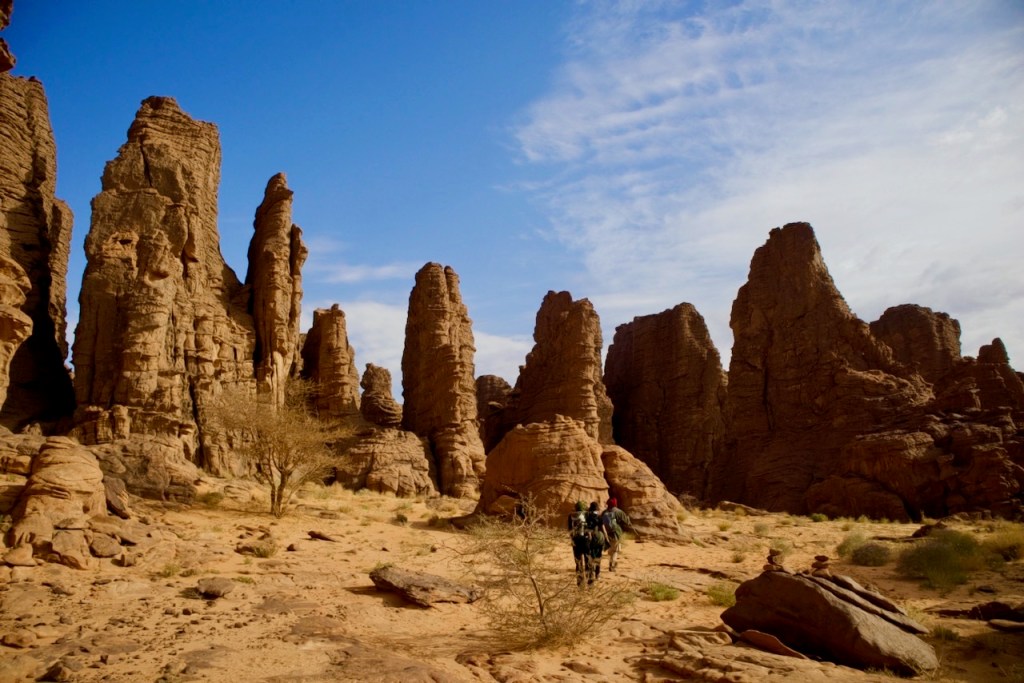
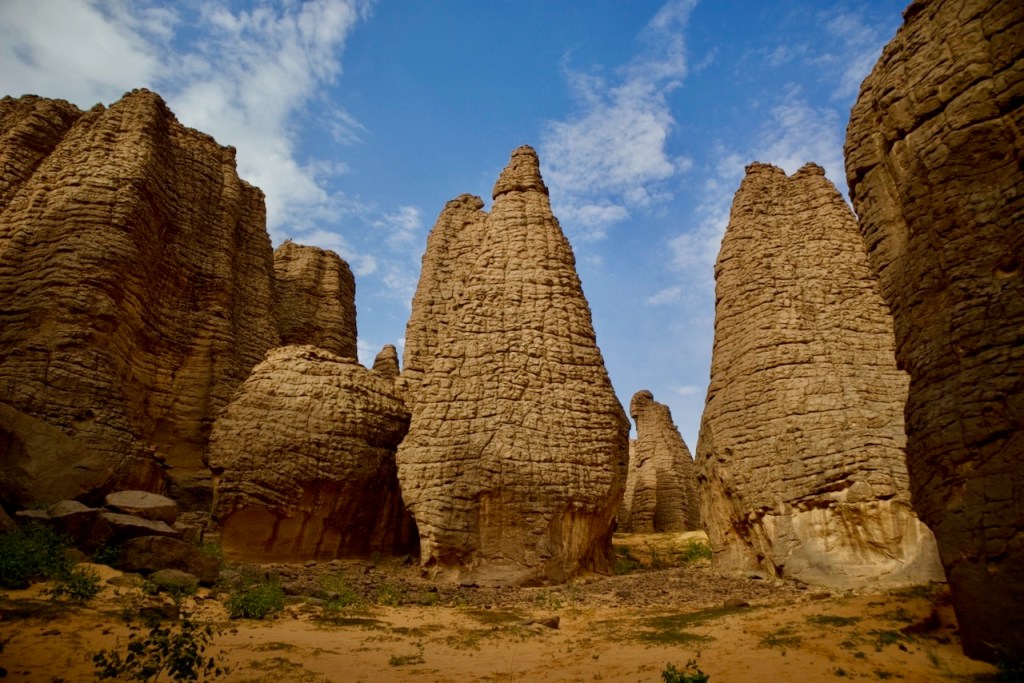
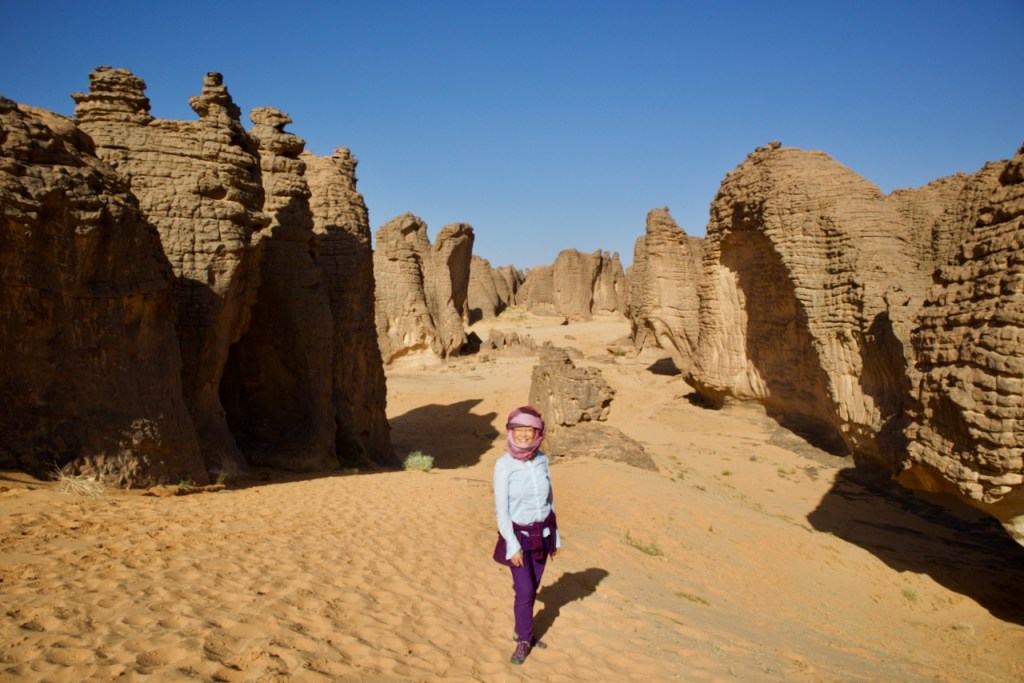
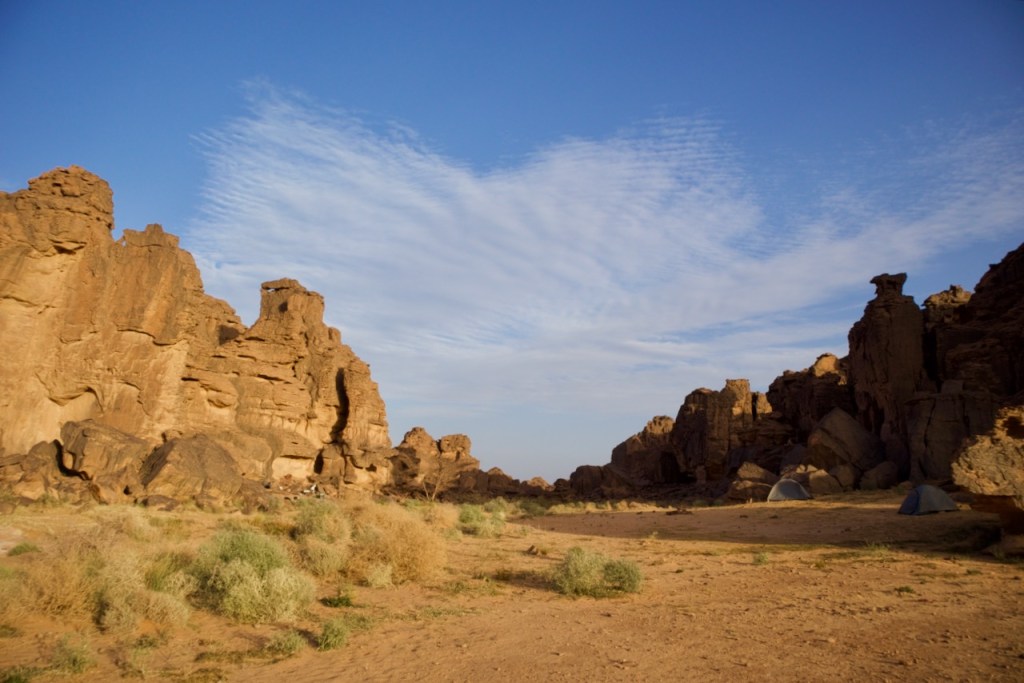
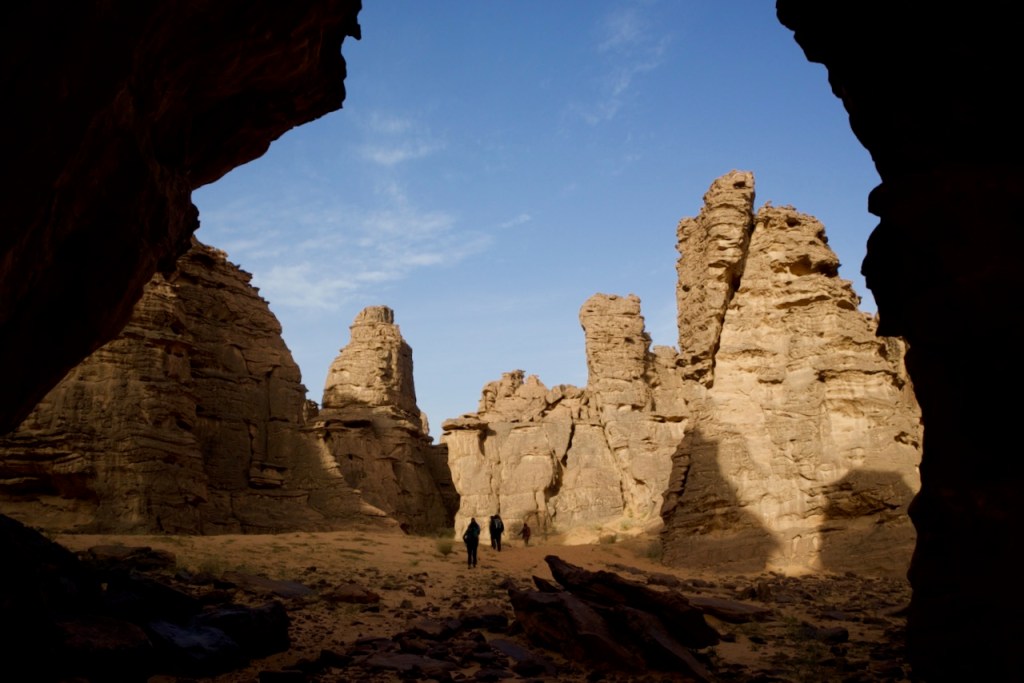
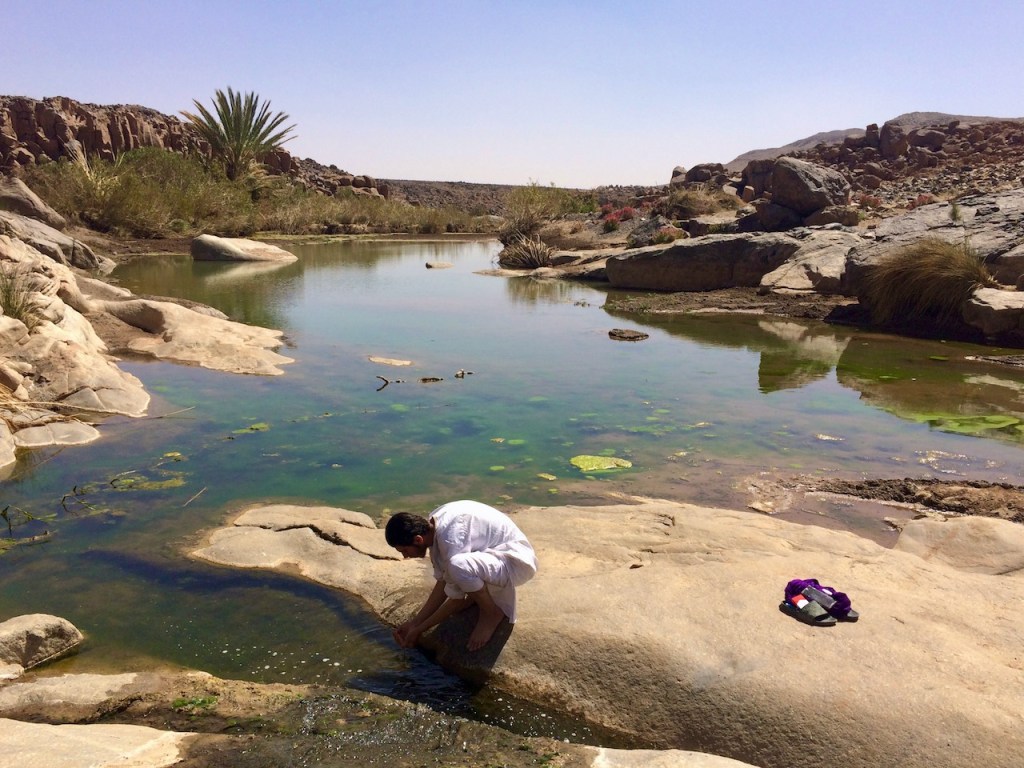
Severely sleep deprived, I was worried all day about having toe cramps. And the second-hand runners that I had bought for the occasion pre-departure – remembering how my last Saharan adventure had destroyed my shoes – are fast disintegrating. Leave your worries here! Mohammed murmurs. When Laeid asks me to hand him my shoes, I feel so grateful and relieved. The campsite is stunning, surrounded by spectacular rock columns with even tiny pools of water nearby. After a frik/barley soup and beef couscous, and a three-minute gazing of the crescent moon and Venus, I fall into oblivion.


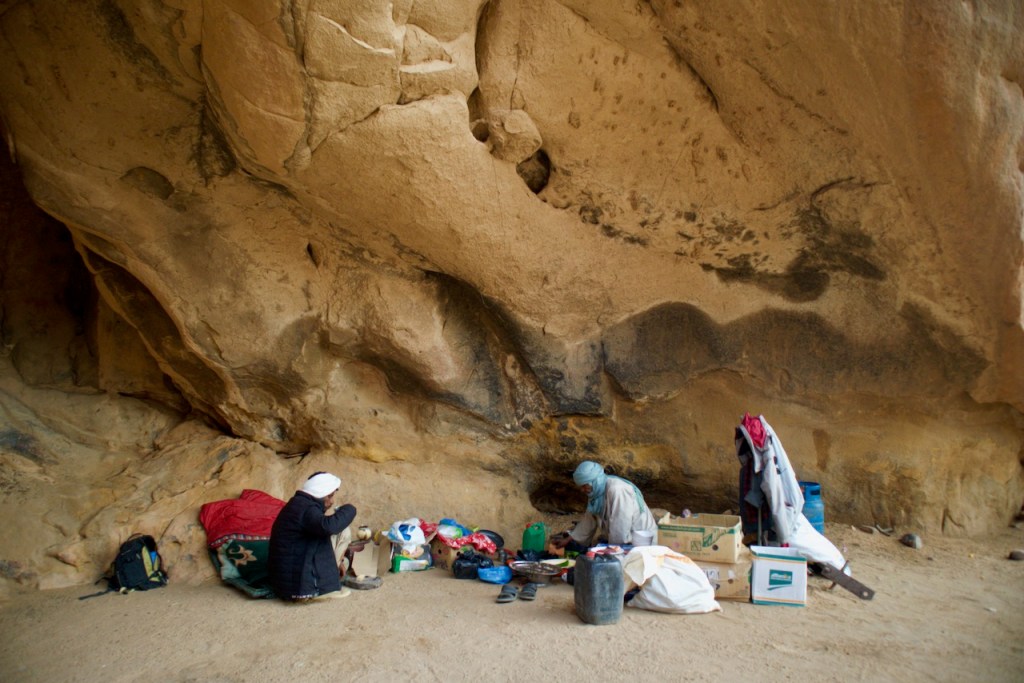
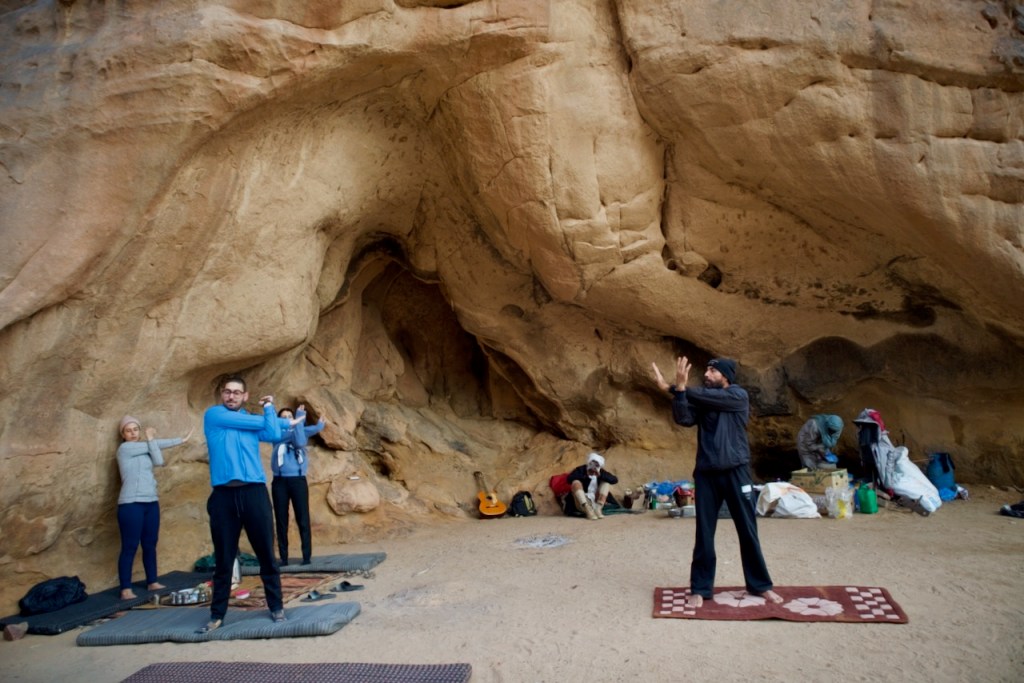
Day 2. Cloudy and Rain! Excursion to Tin Zoumaitec. Bivouac in Tamrit
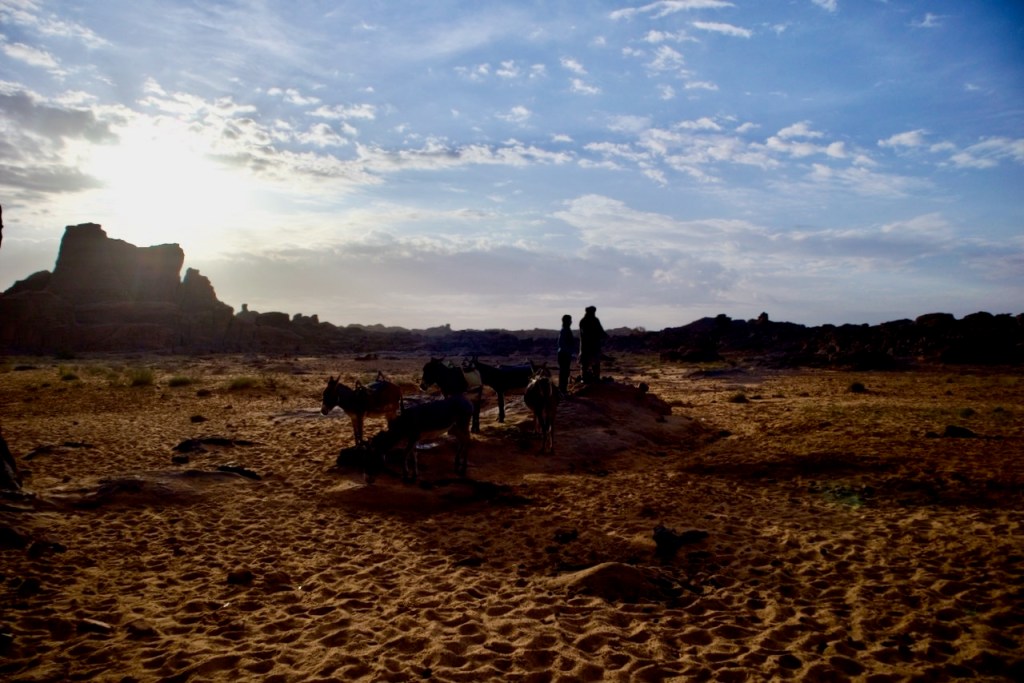
I slept for eleven hours straight and feel recharged to lead a quick yoga session while Wafik does breath work. Danermert/Thank you! I say when Laeid hand me back the perfectly sewed runners the first thing in the morning. Whew, I can continue the trek, and not in slippers! Shortly after breakfast, I hear someone raise the tone – in this idyllic place – and find Wafik talking to our chef and guide about not having enough bottled water and donkeys! Unbeknownst to us, three of our eight donkeys ran away in the night, and Mahmood has taken off to look for the deserters. Where, in this big wild Sahara? I wonder. If they’re clever, they return to the departure point, Wafik says. Unsure whether we could proceed to Sefar, Ali devises a new route to see the spectacular Tamrit Canyon first.
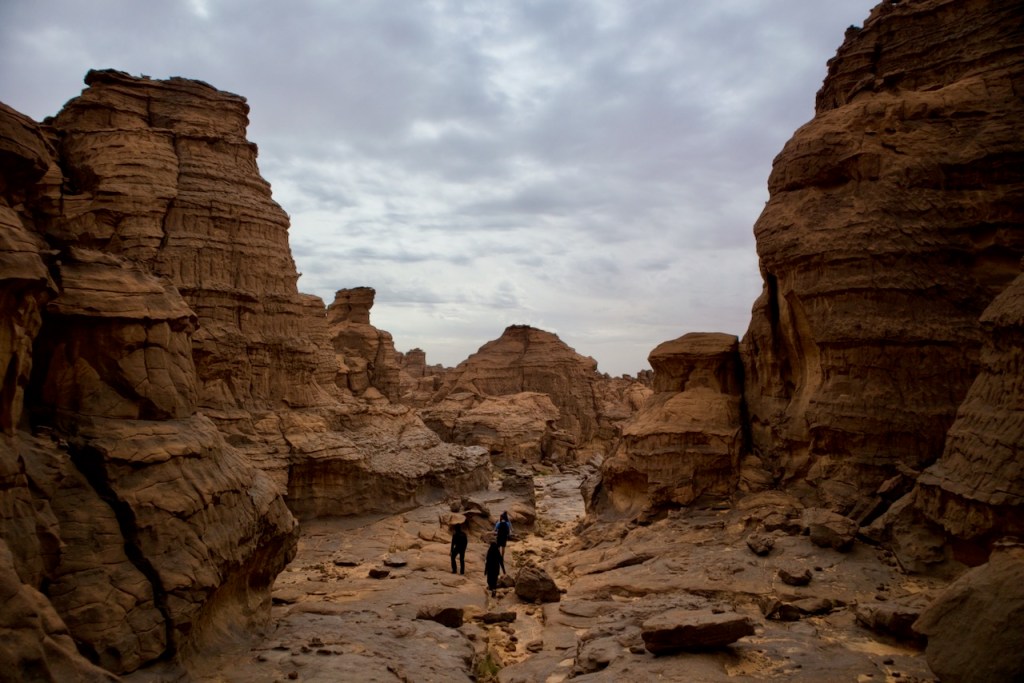
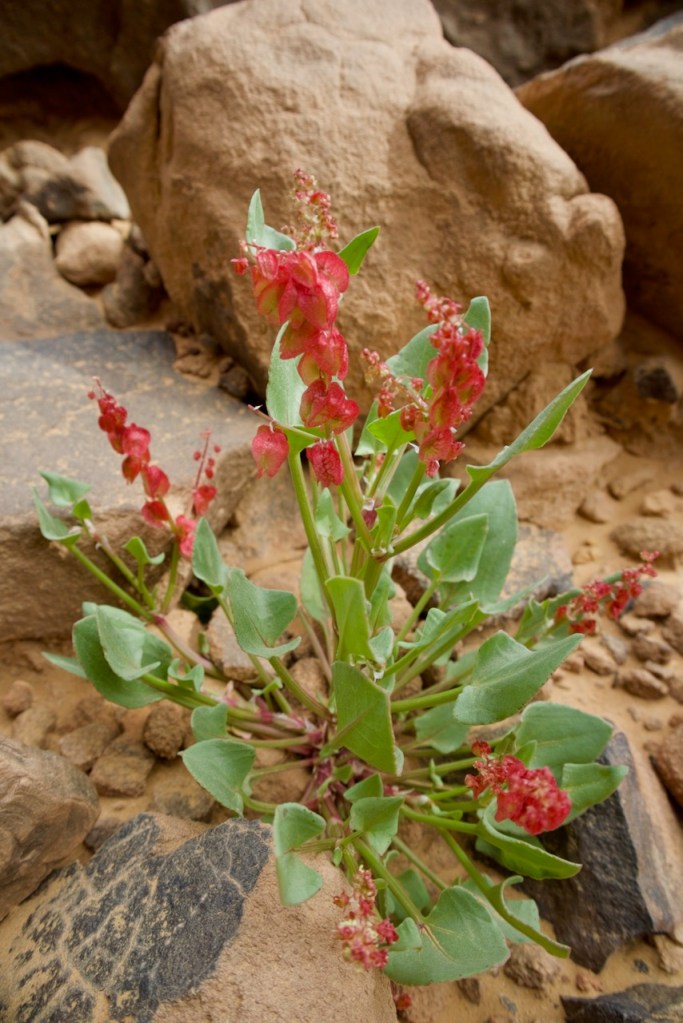
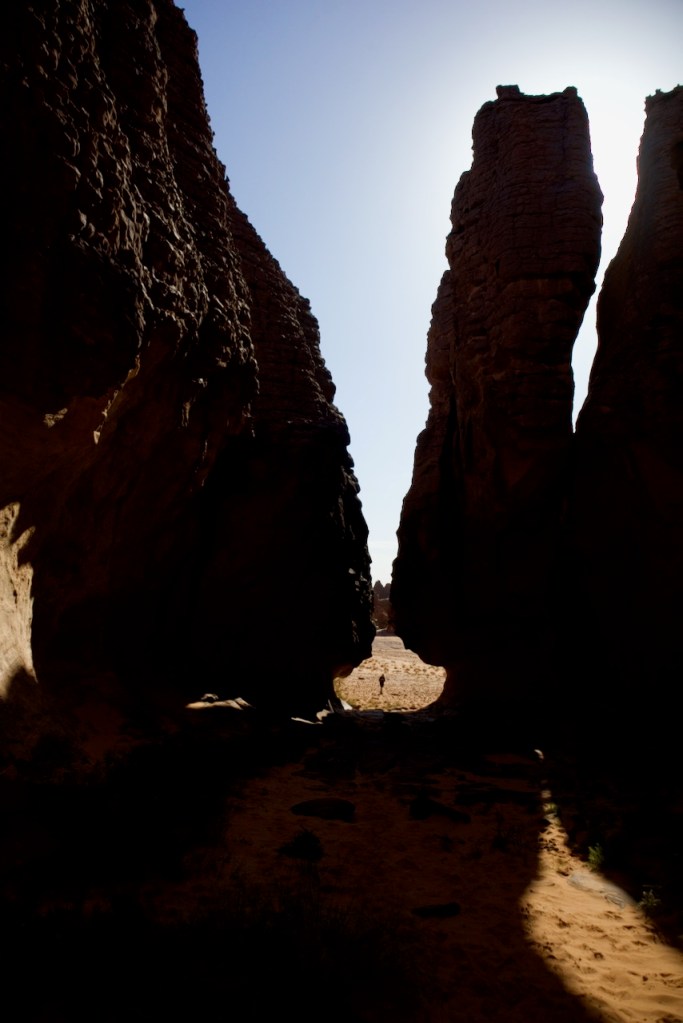
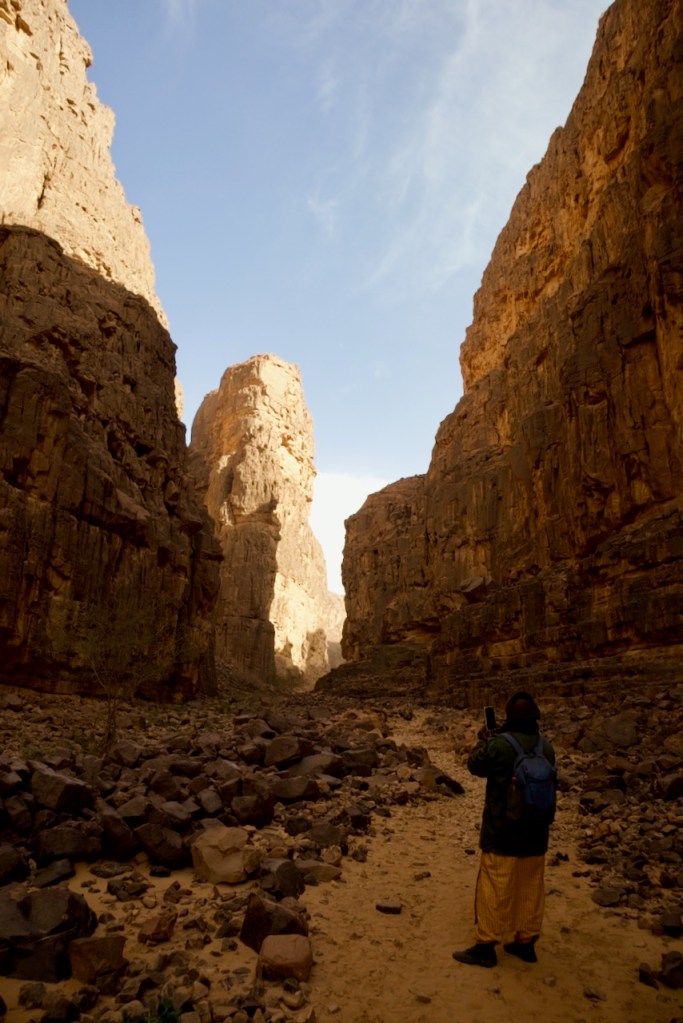
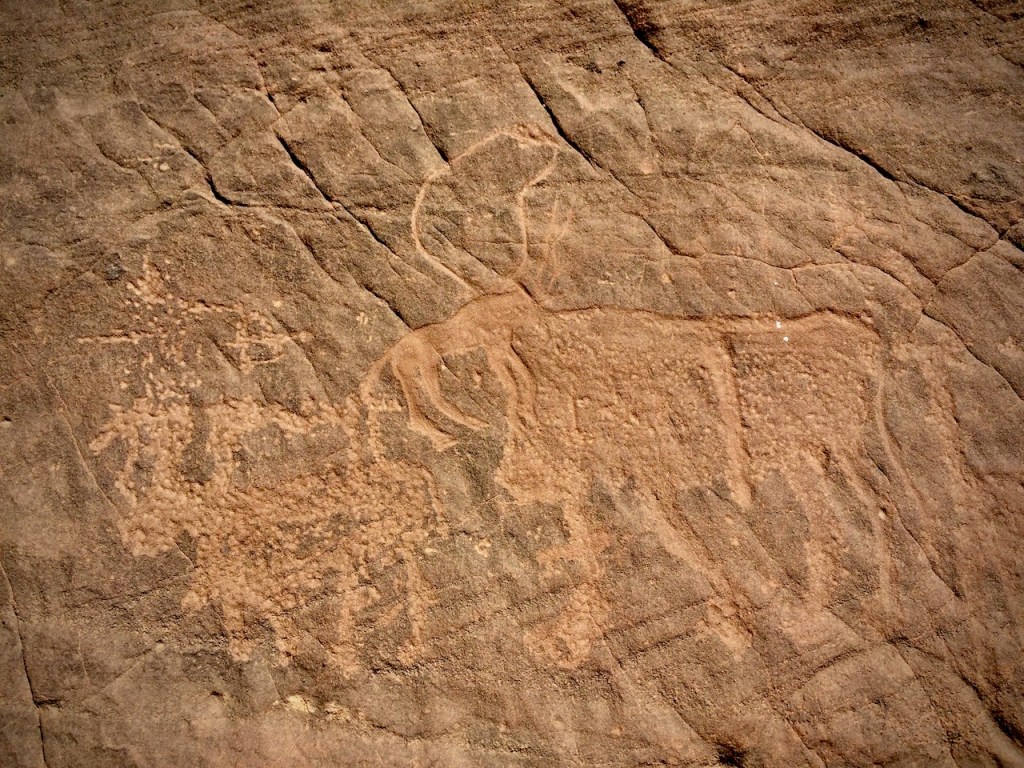
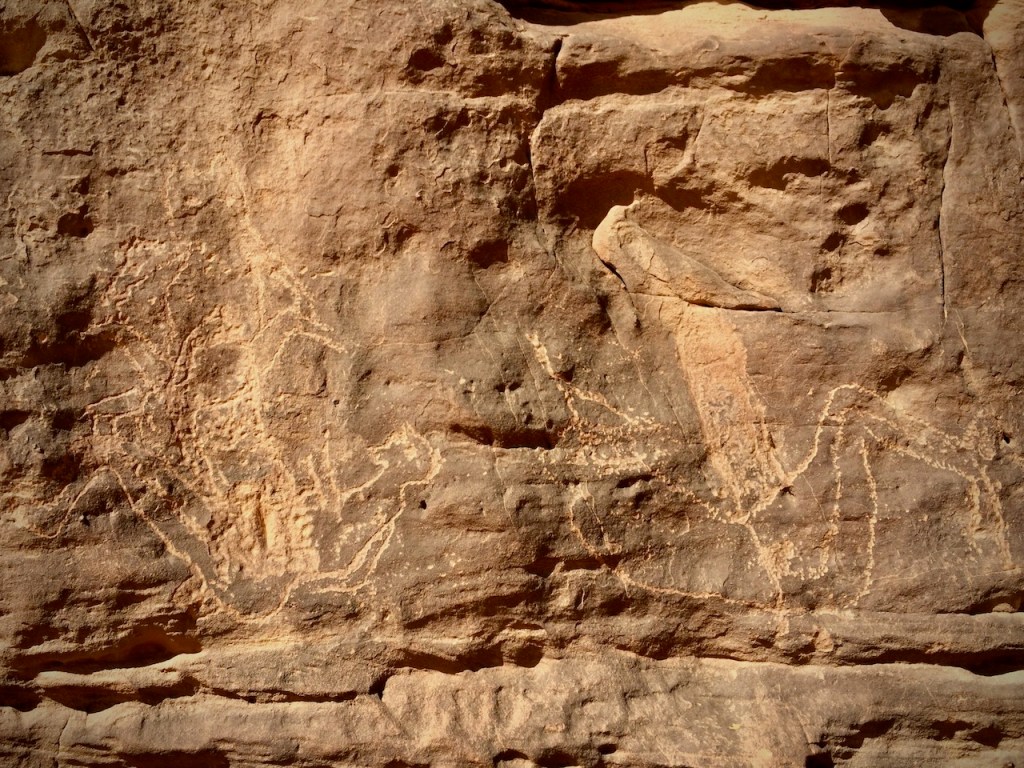
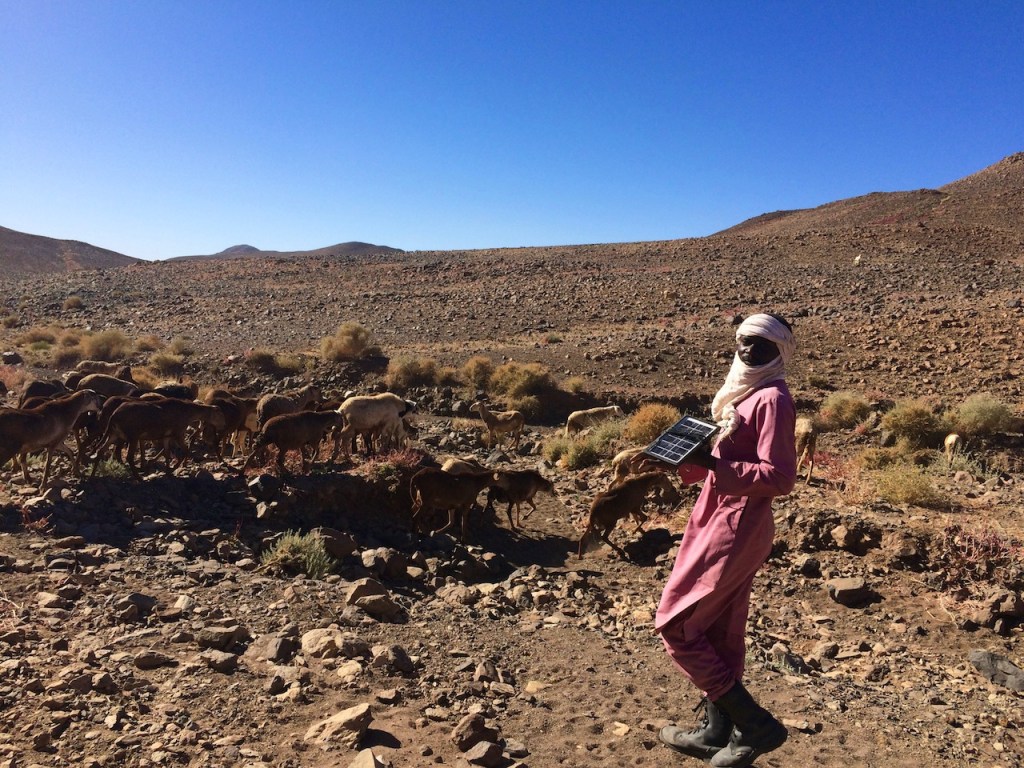
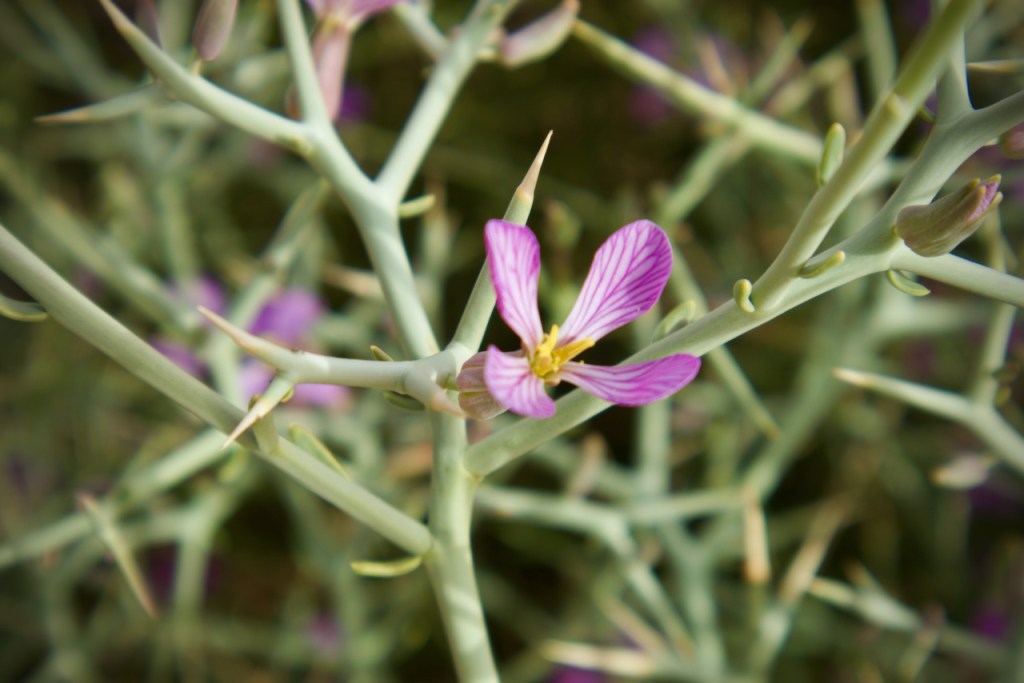
What an enchanting place with desert flowers and scrubs, 2500-year-old trees, rock cathedrals, and a rich collection of rock paintings of women, children with hoopla, cows, goats, snakes. Today, my “worry” is my camera battery that’s draining fast in this spectacular landscape. Somehow I erroneously assumed that there would be a “charging station” provided by the guides at the end of each day, as in safaris in other countries. Ali has a solar panel, but it has been cloudy, and before long, it starts even to rain, in the Sahara! I feel so blessed to be here, never mind the photos, just go with the flow!
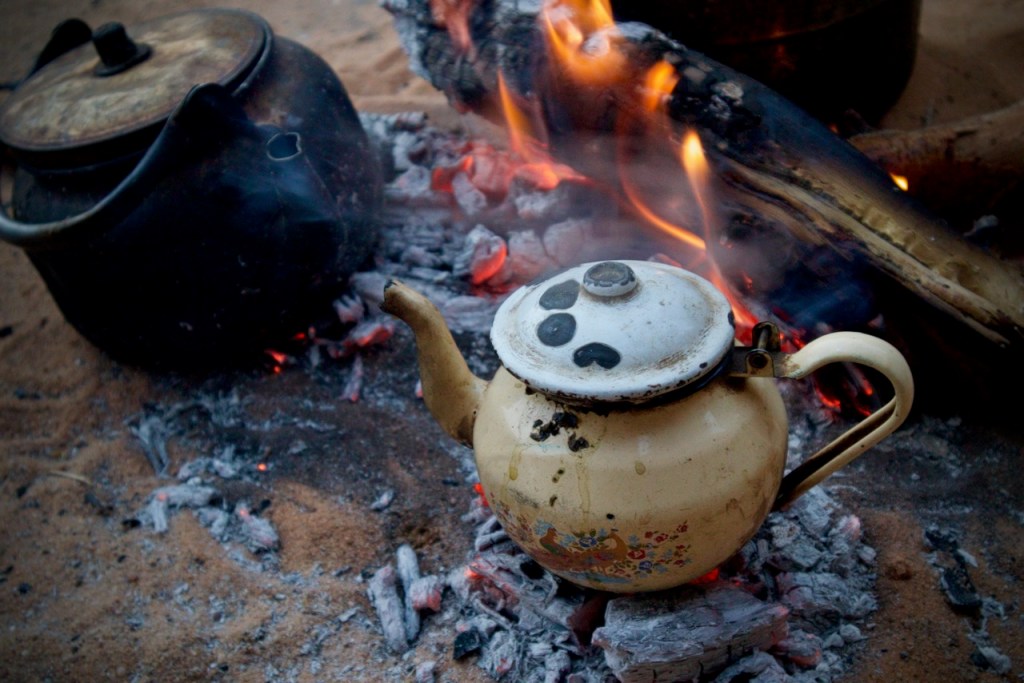
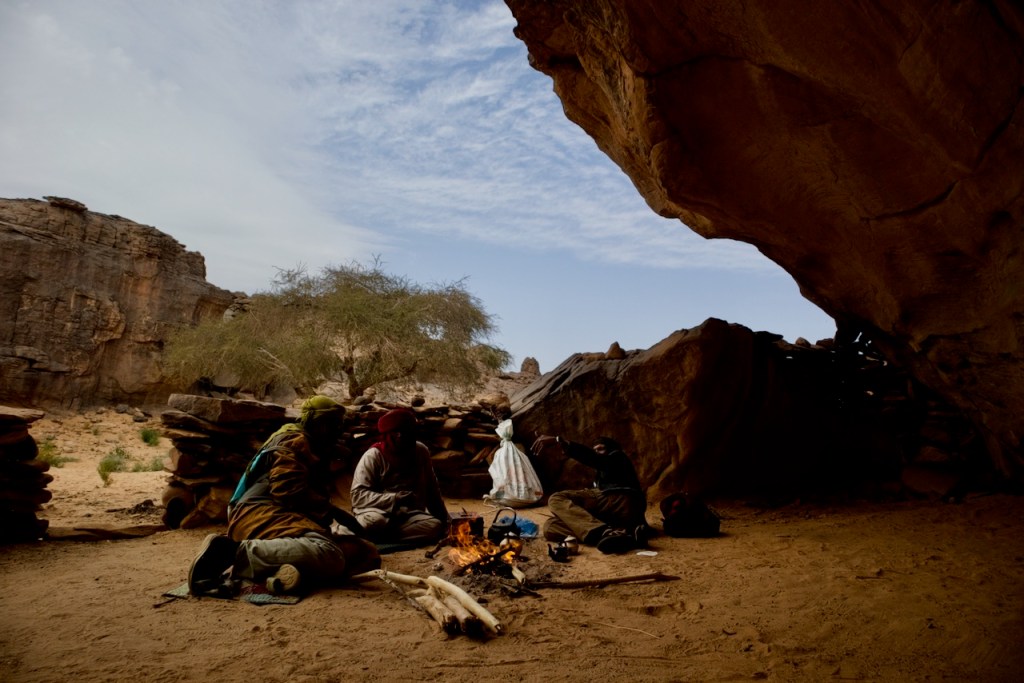
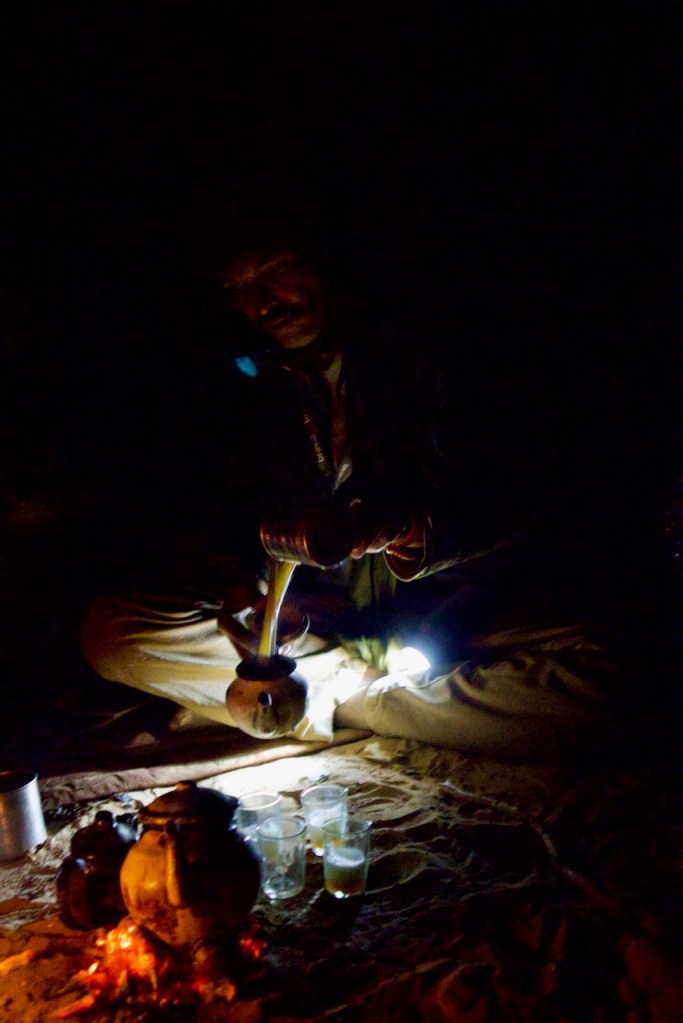
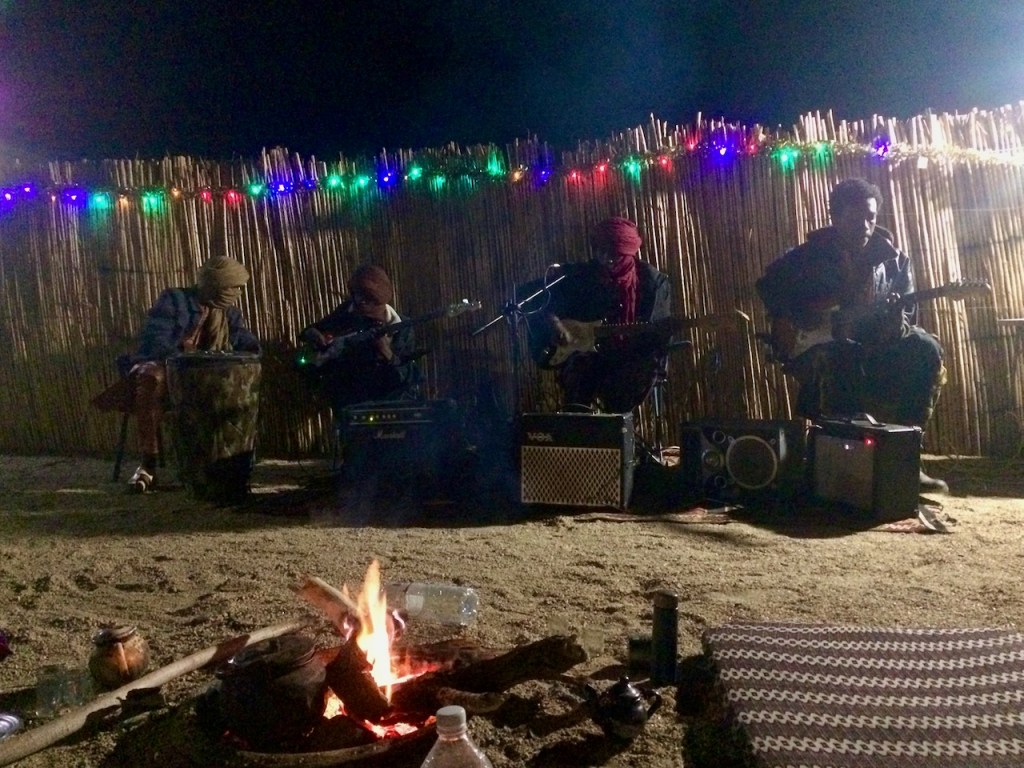
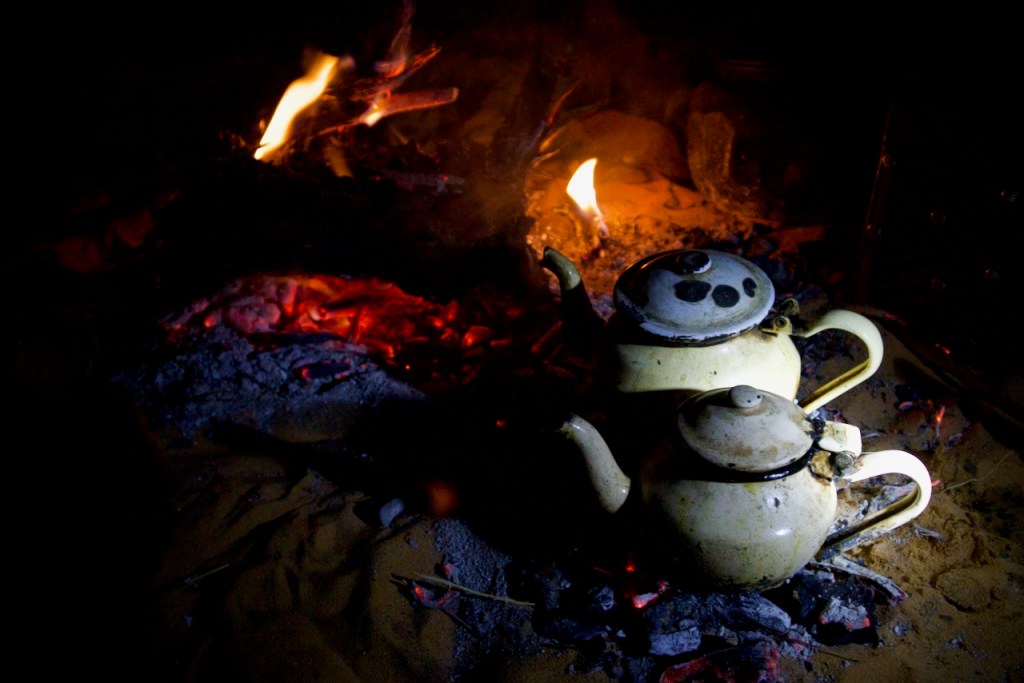
This is an inhospitable place where one can get lost easily. Last year, an American went for a short evening walk never to return, falling to his last resting place. By dusk, we see a dejected Mahmood return empty-handed; the donkeys were even smarter than we thought! We’re staying put in Tamrit for another night and will assess the situation tomorrow morning. I take a cold sponge bath in the nearby pool. Big mistake! We huddle around the fire with thick blankets, enjoying sweet tea and Yunus’ desert blues, learning about the marvels of Tassili from a book that Emna, a Tunisian doctor, had downloaded. When a group of sixteen tired and drenched Algerians arrive with twenty-two donkeys, how we envy them! Never in our wildest imagination could we have thought runaway donkeys would be our make or break to Sefar!
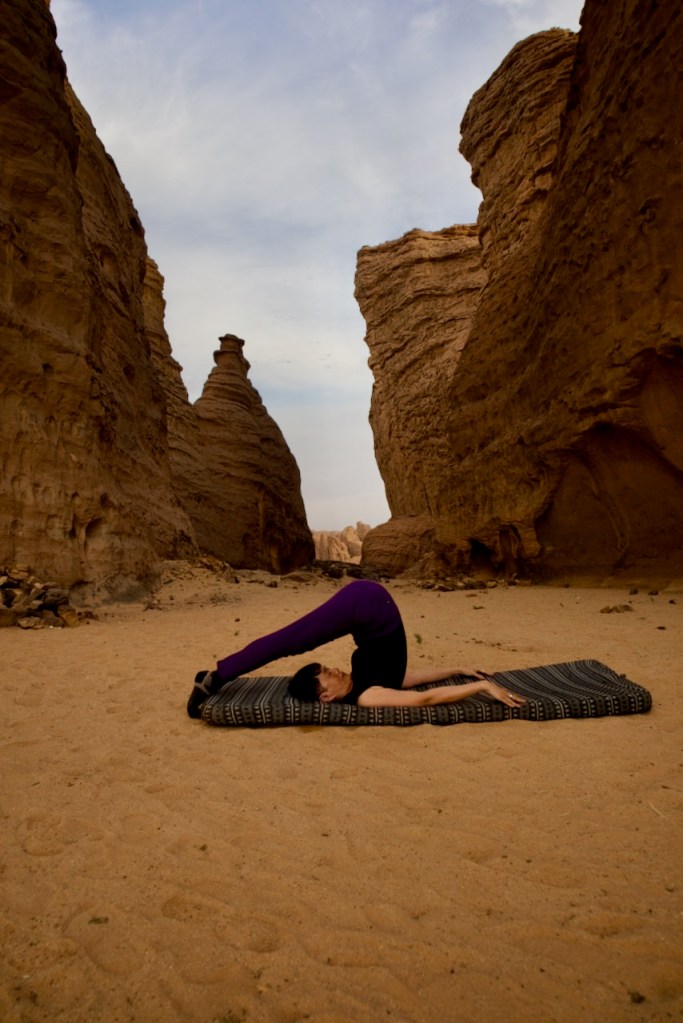
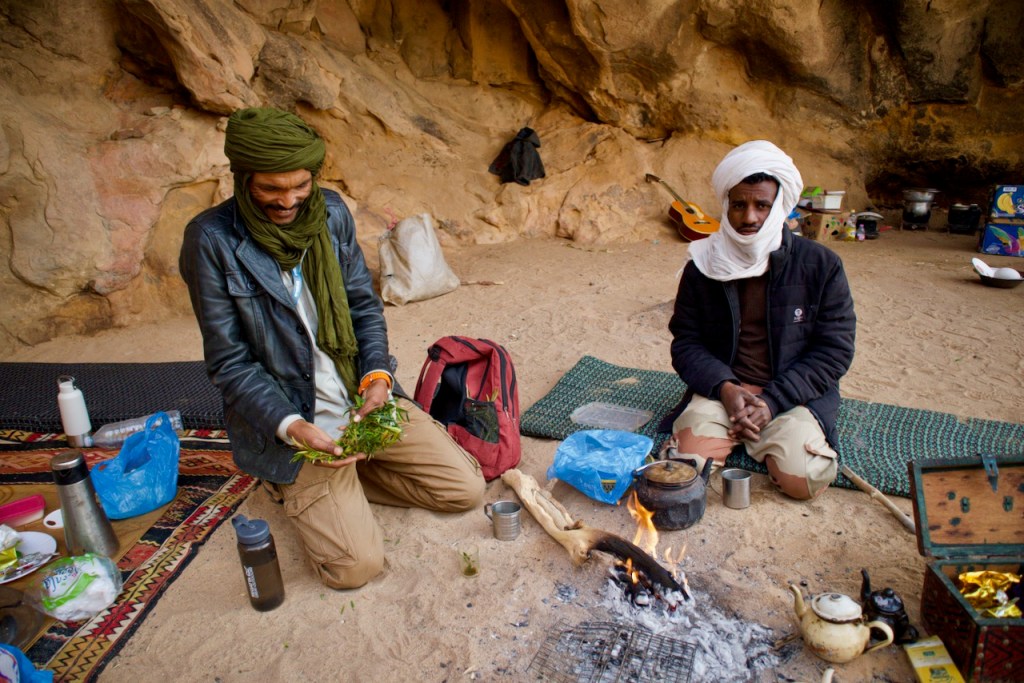
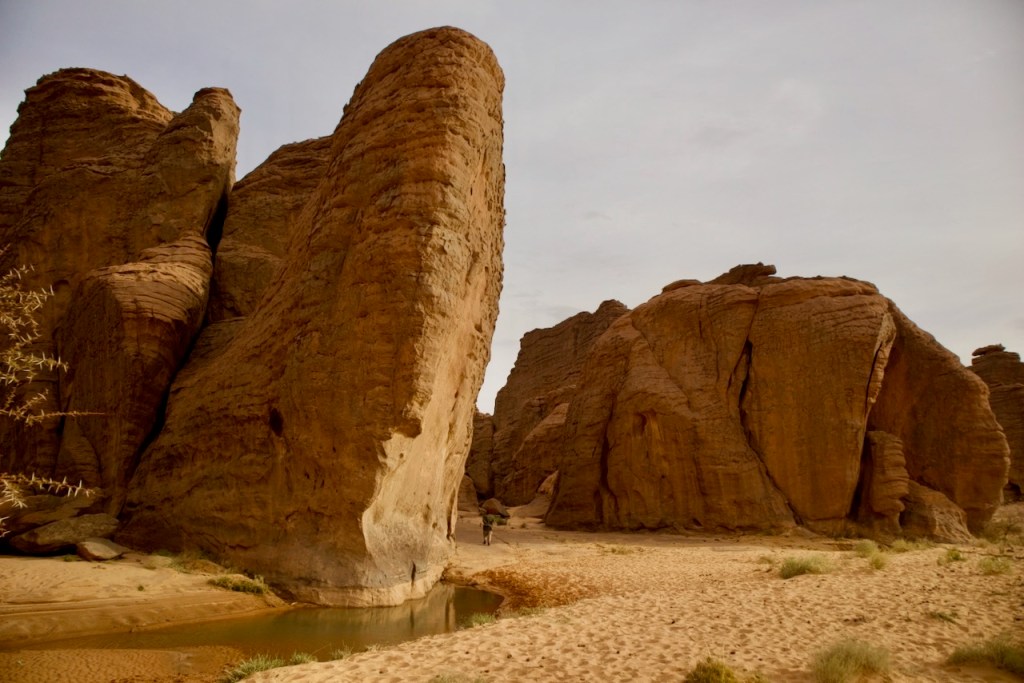
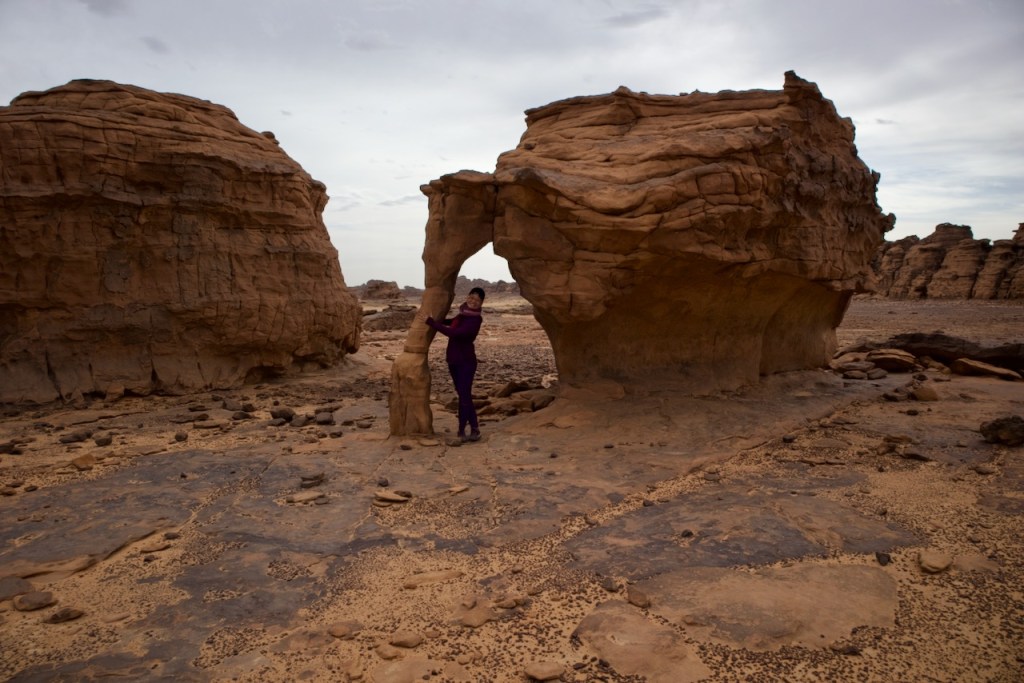


Day 3. Cloudy. Tamrit to Sefar. Bivouac in Sefar
Six a.m. wake-up call by Wafik, followed by morning yoga and breakfast, and departure after eight. Aingafa, Ain Aliwane – where once oliviers bloomed – the Tamrit tomb, and a pause at Ain itinane with gorgeous rock columns. We cross the Etagas Ilyas plateau and take a break in the sprawling plain of Asrire to wait for our donkeys. Mahmood never found his but manages to retrieve two that he had loaned to another group. Onward we go to Tin Tefaltase and Ain Tohami, and reach Sefar shortly after noon.
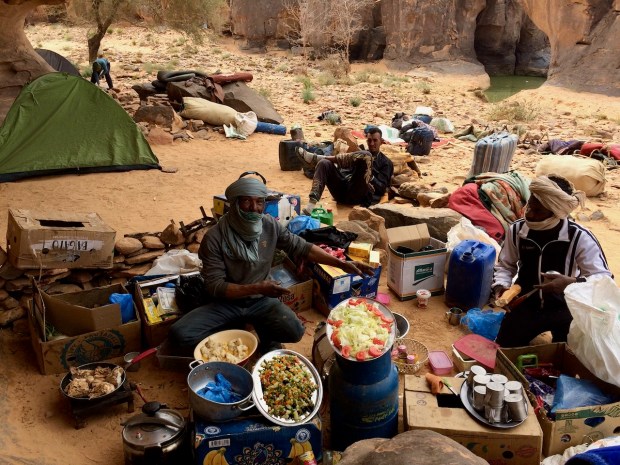
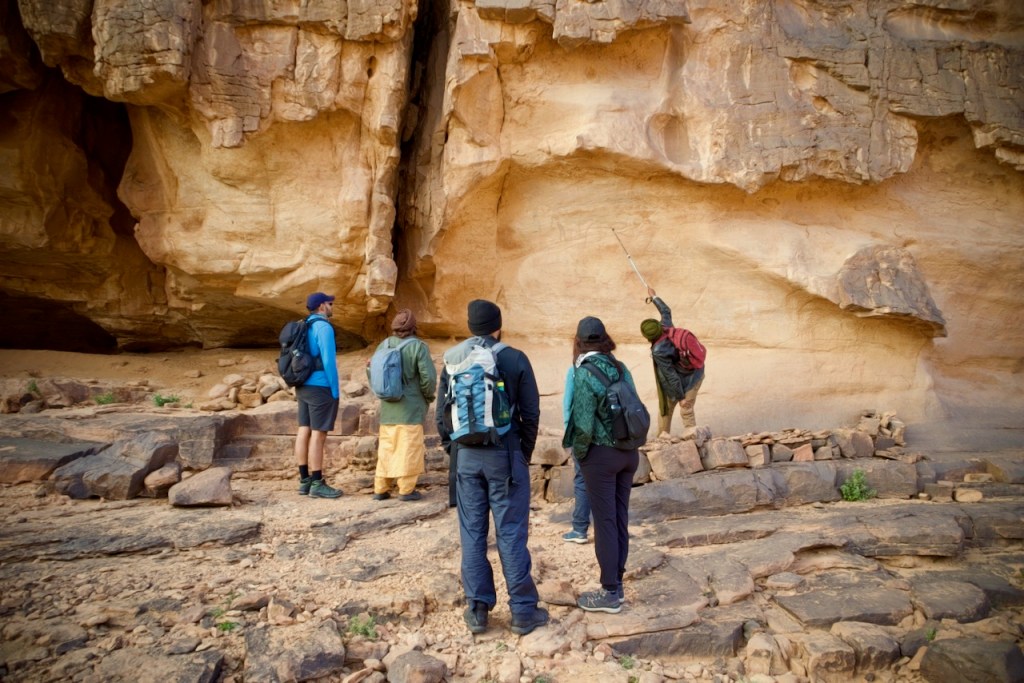
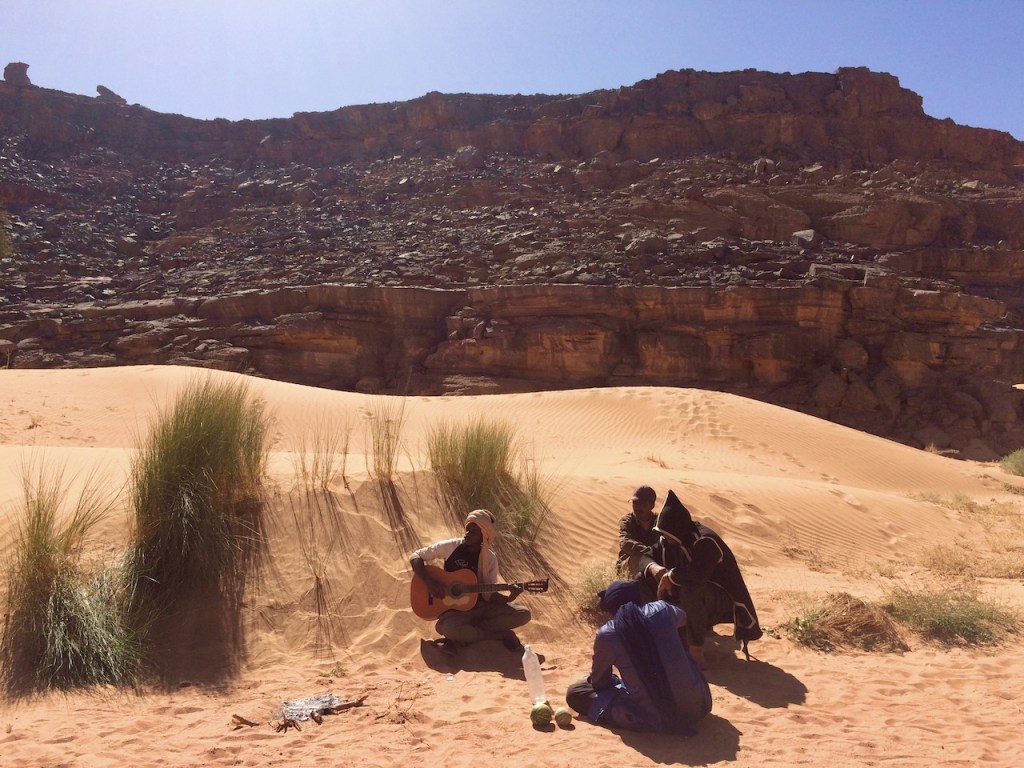
Laeid treats us to a delicious lunch of fried chicken, crispy cauliflowers, and salad before we embark for Sefar Blanc/White Sefar to explore a stunning collection of rock paintings. Cattle herds and hippo, wedding and childbirth, fighting and the iconic Great God. Under a perfectly clear sky with a million stars, Yunus bakes desert bread in the sand, served in pieces soaked in a lentil soup. We enjoy rounds and rounds of ultra-sweet tea and Yunus’ live Touareg blues. My heart is filled with gratitude to be in Sefar, such a unique place. And we have seven donkeys to proceed!








Day 4. Sunny. Sefar to Tin Tazerift. Bivouac in Ain Itinane
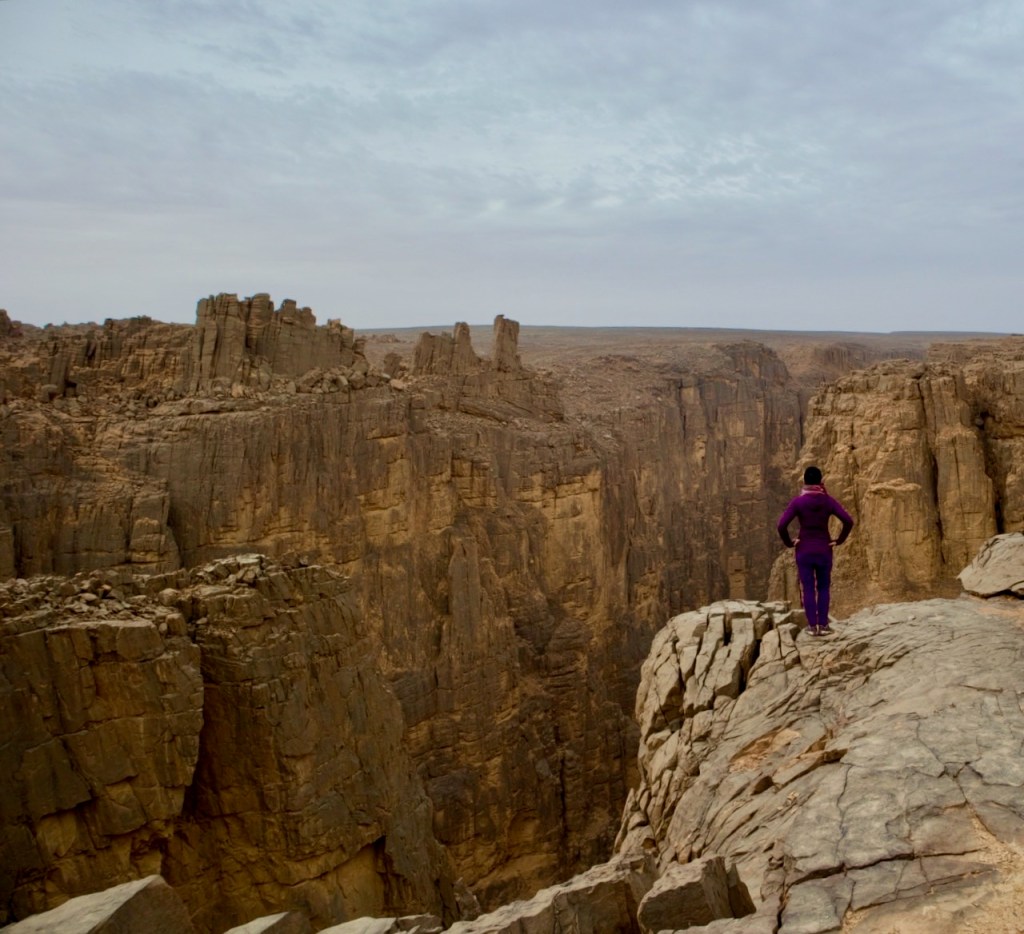
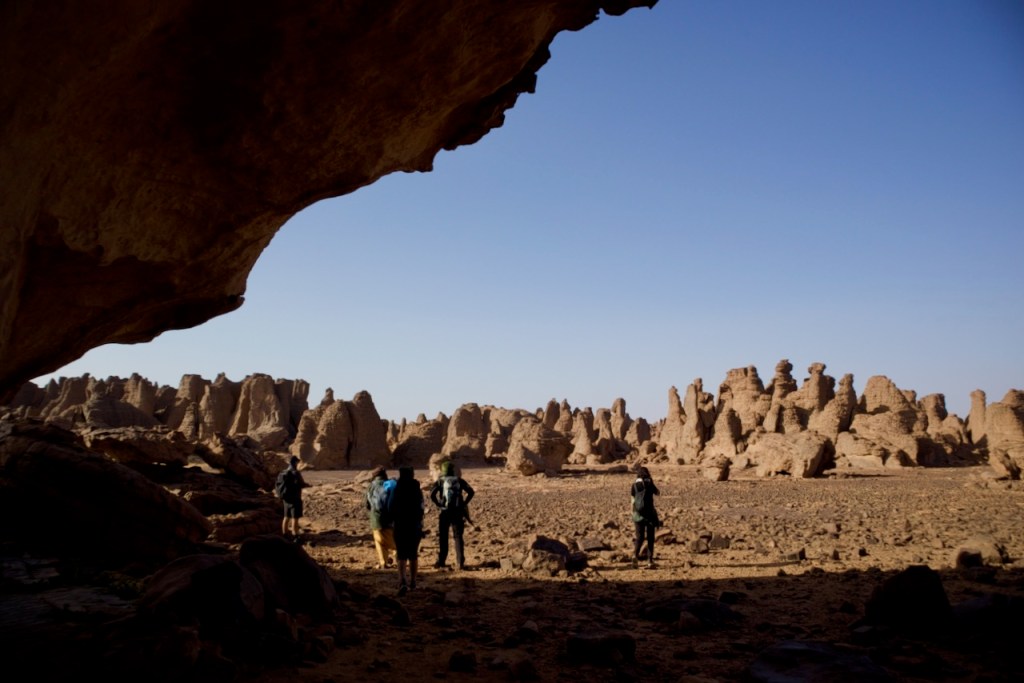
We begin Day 4 with a morning tour in Western Sefar to admire yet another mindblowing collection of prehistoric rock drawings of birds and pigs, music and dance, horses and swimmers! What a landscape with such a mesmerizing variety of rock formations. Finally, the sun is out and the solar panel is working! I take a two-hour-long nap – recharging my battery – after a big serving of fries and veggie stew at lunch. Reluctantly, we leave Sefar and return to Ain Itinane, crossing a plain that resembles Dante’s Inferno. If not for the clouds, we could almost see Libya, Ali says. The end is already near…

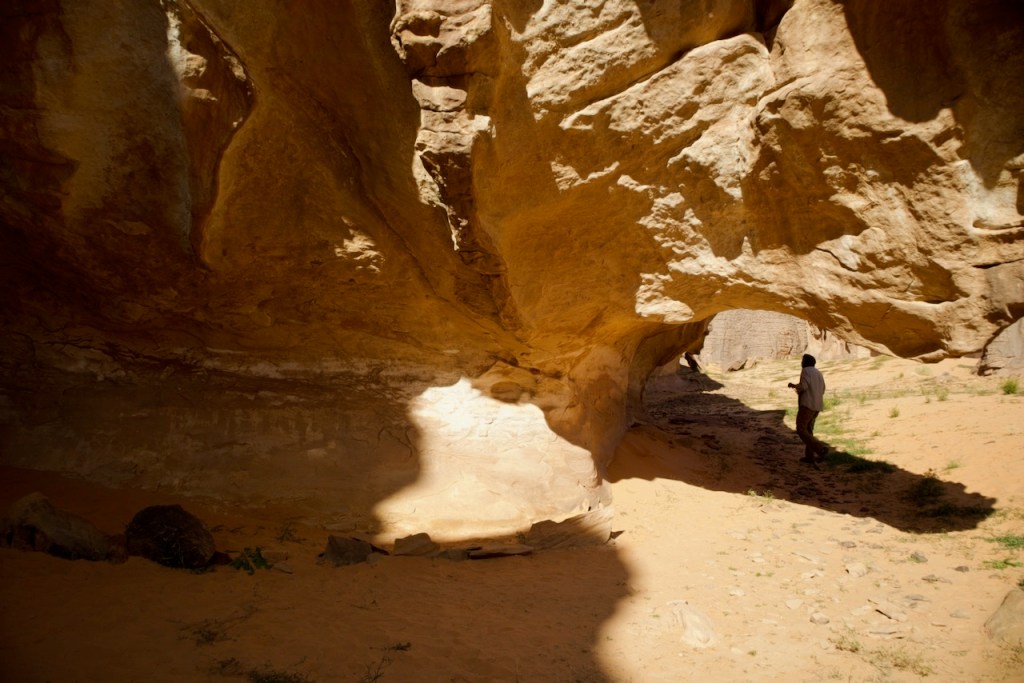
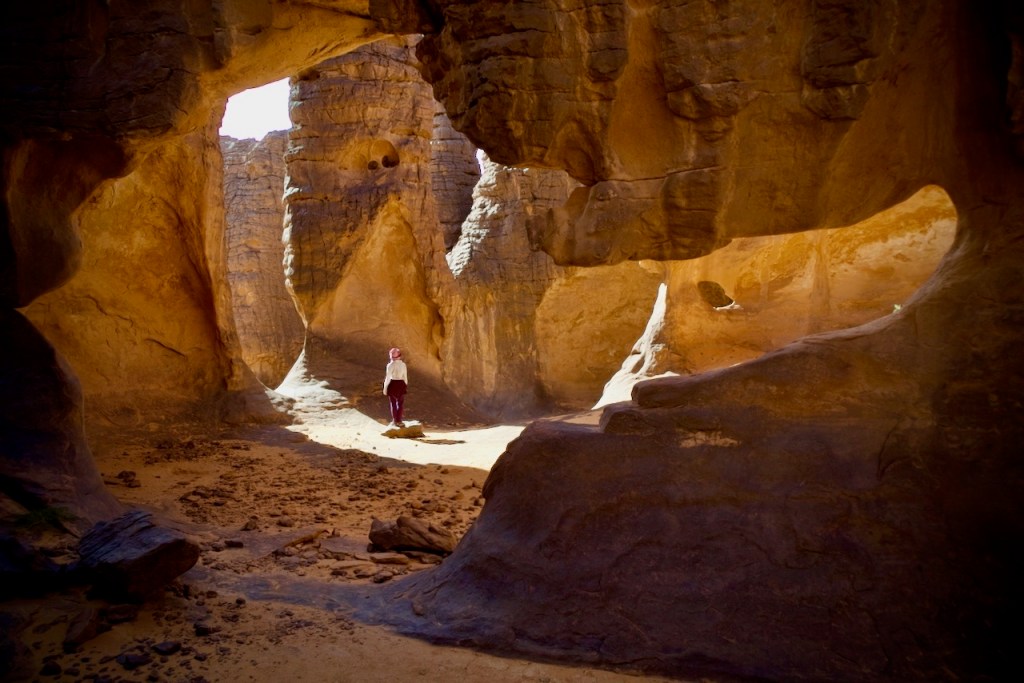
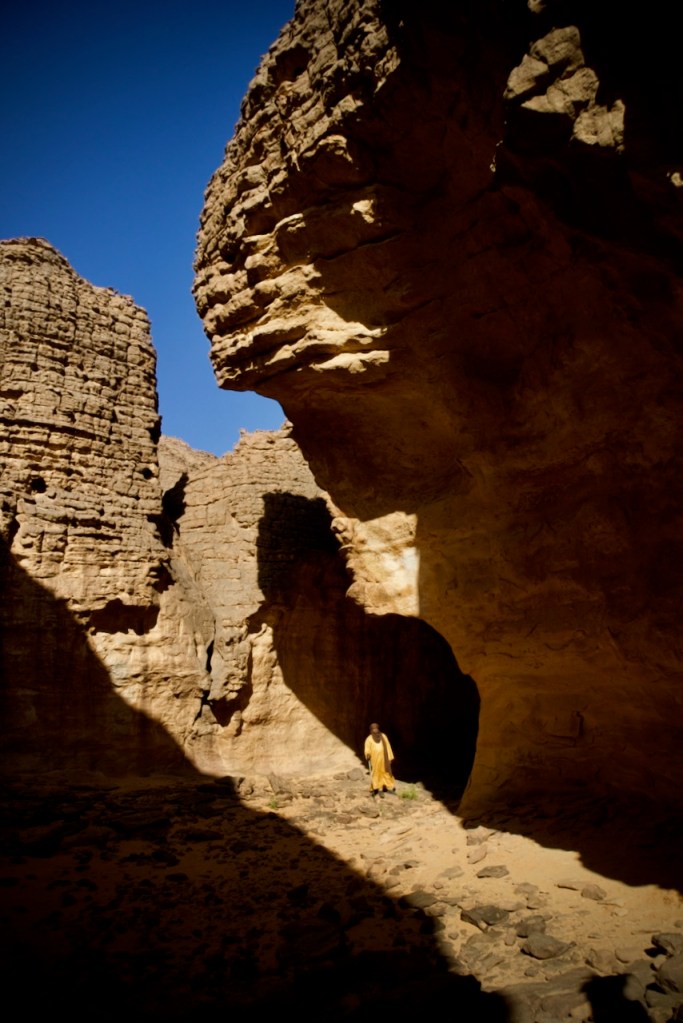
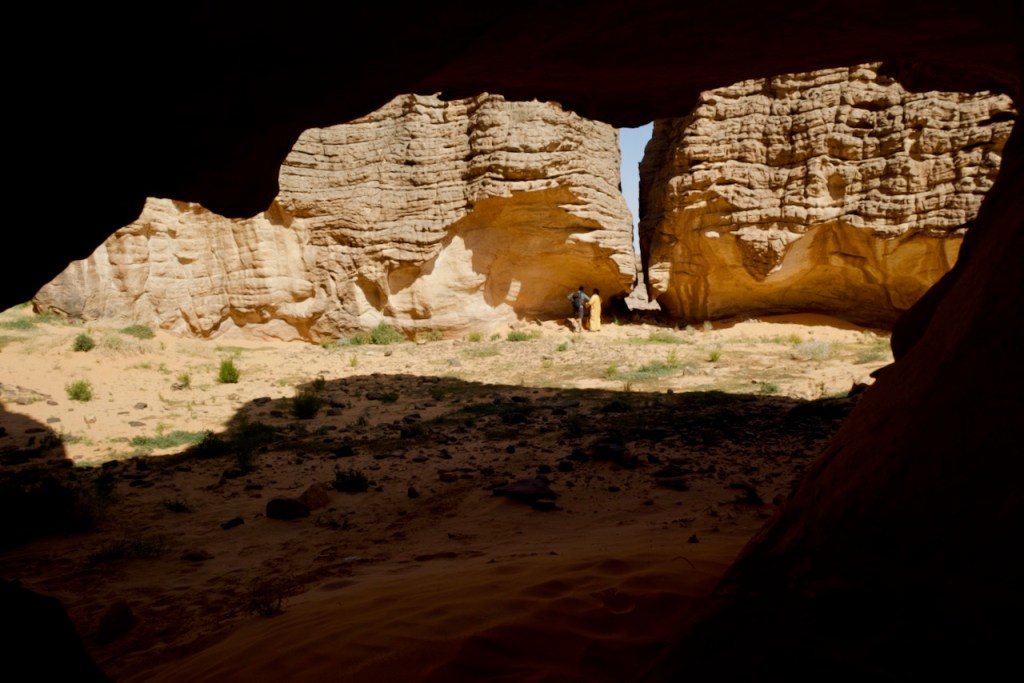

Day 5. Sunny. From Ain Itinane to Ingharbane. Bivouac in Tefeste
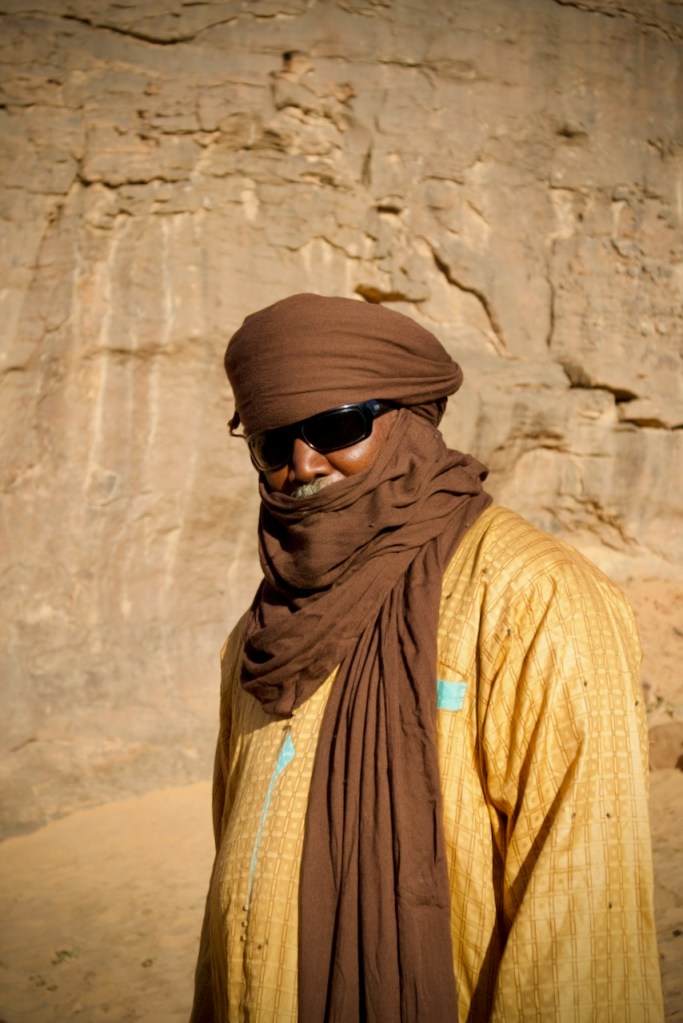
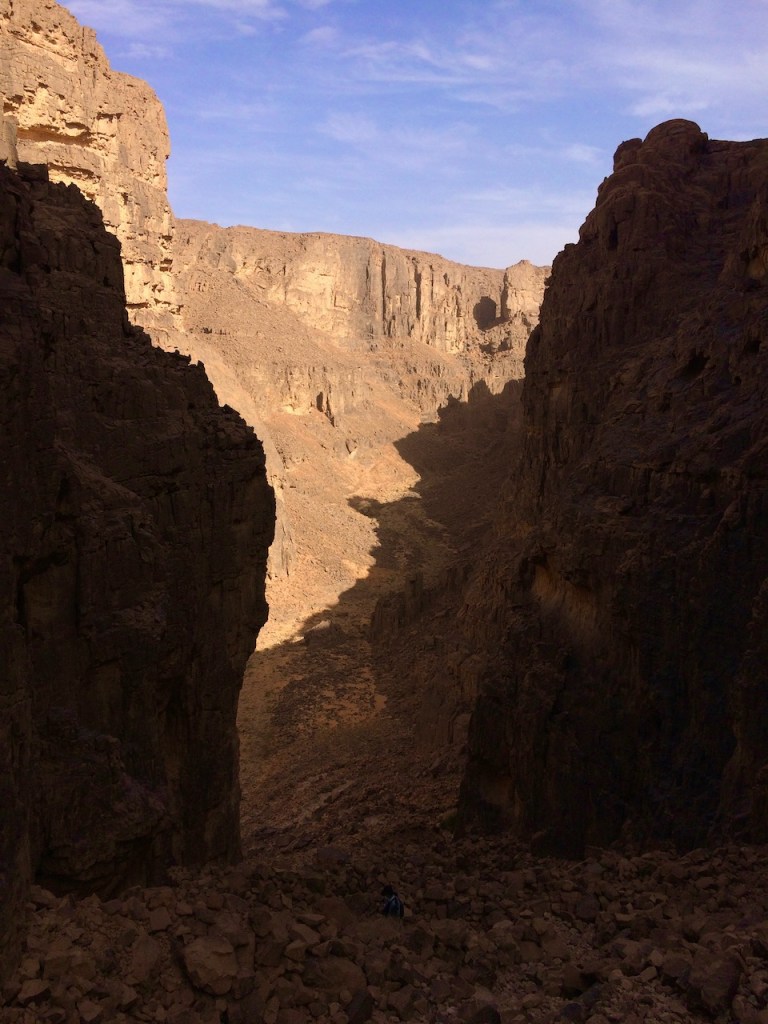
What a pleasure to hear birds and crickets chirping as we start our trek back, crossing a volcanic plain for the entire morning before making a steep descent to Tefeste. We were here, you don’t remember? Ali asks. It amazes me to see how he knows each twist and turn like the back of his hand. Solan, solan, he says again and again, reassuringly, as we approach a second, less hard, descent. Ikimasho/let’s go, he says in Japanese, regaling me with tales of his trekking career, serving clients of all nationalities. Finally, we arrive in Ingharbane, meaning red rocks, used in wedding make-up, he explains.
A few last rock paintings, Laeid’s barley soup, Mohammed’s bitter sweet tea, and Yunus’ lingering notes. So did you enjoy our company? Dr. Taki asks after dinner. Totally unhoped for! I reply. The quiet Tunisian doctor who has already scaled Kilimanjaro and trekked to Everest Base Camp, hides well his adventurous heart. We spend the last evening sharing our travels exploits in this other-worldly place deep in the Sahara.


Day 6. Windy. Tefeste to Akba Tafilalet. End of Trek
It’s a windy morning and my nose keeps running. The end is near and our breakfast discussion turns spiritual. Why are we here? What gives us meaning? How do we learn to let go of our attachments, to be really free? What does the desert teach us?
It’s only an hour long descent back to Akba Tafilalet where everything began six days ago. When we wait for our jeeps, Sayda, a Tunisian telecommunications engineer, told me she was lost for more than half an hour the day before. Instead of panicking, she climbed up the hilltop and waited until she heard the voice of Mohammed. If I could do this trek to Sefar, I told myself, I could do everything else, she says.
Yes, the desert offers us so much: from patience to humility, kindness and generosity, silence and stillness, solitude and timelessness. Even rare moments of transcendence. For me, the Sahara holds all her paradoxes and secrets, for those who take time to listen. Solan, solan. What seems nothing but sand contains everything about life’s essence…
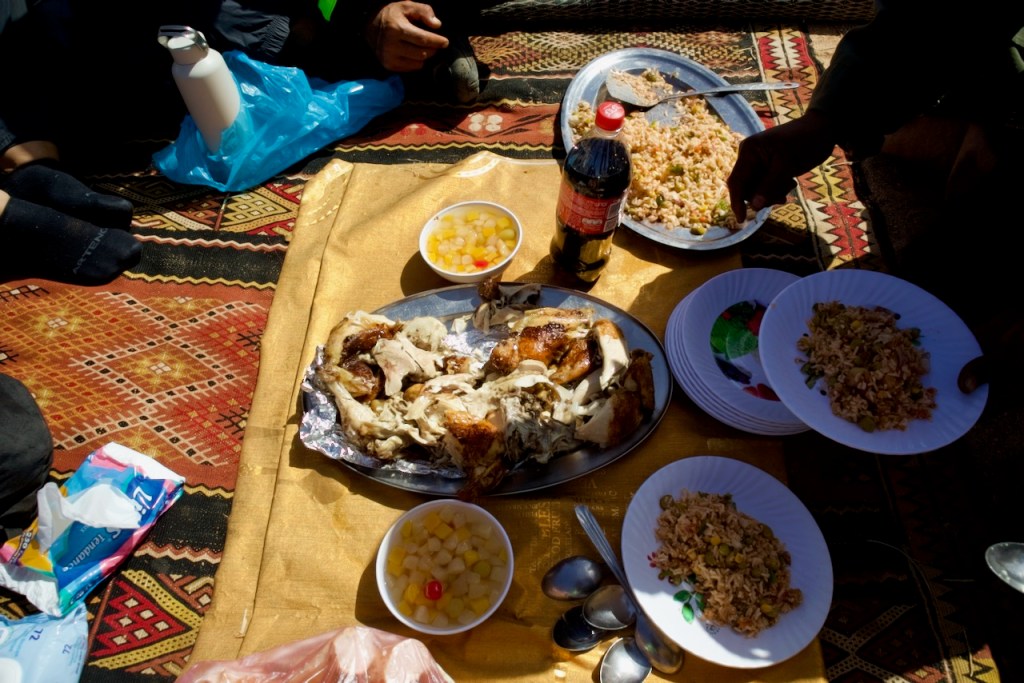
Tour 2. Day 1. Windy. Tadrart: Bivouac in Adelati
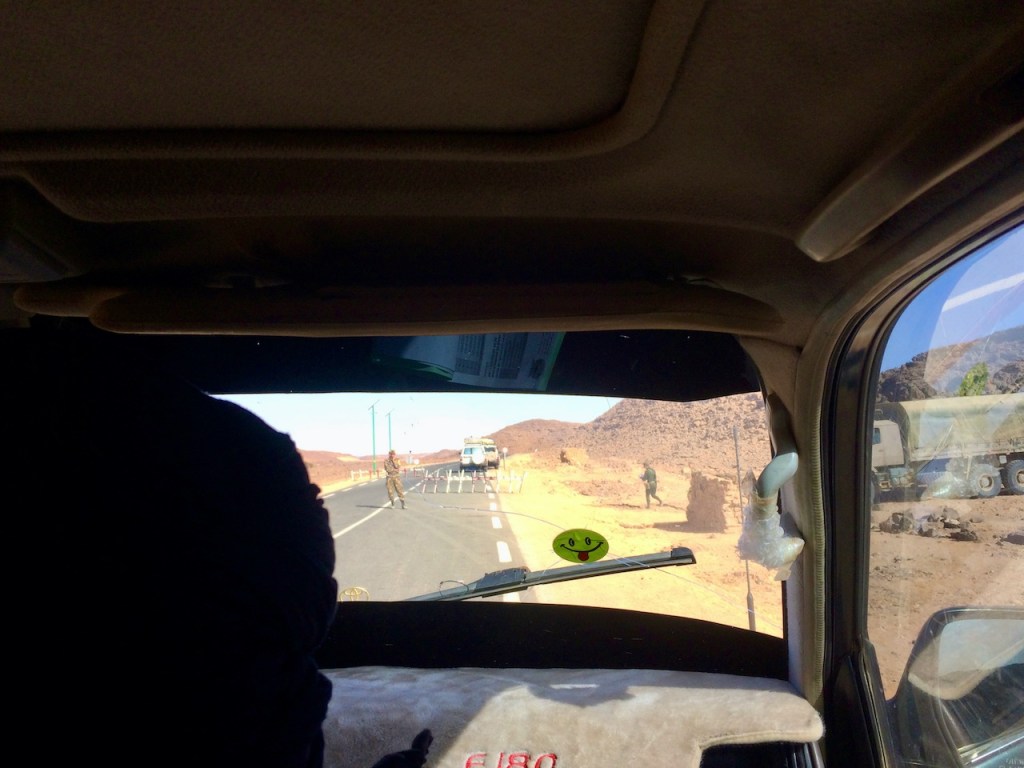
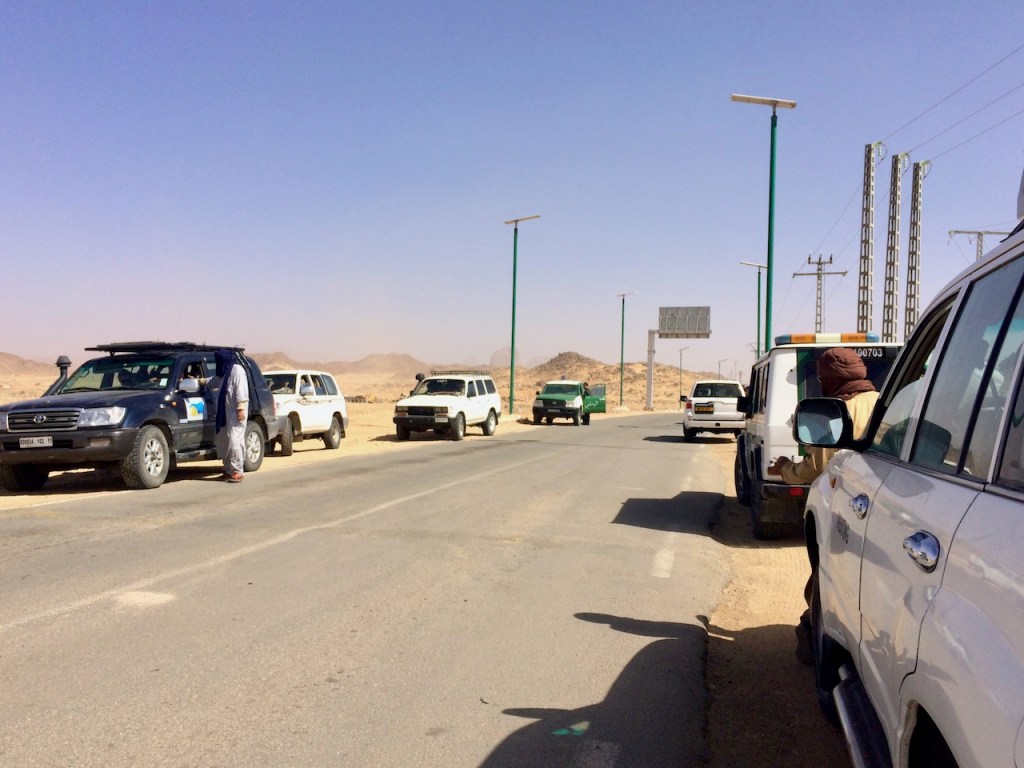
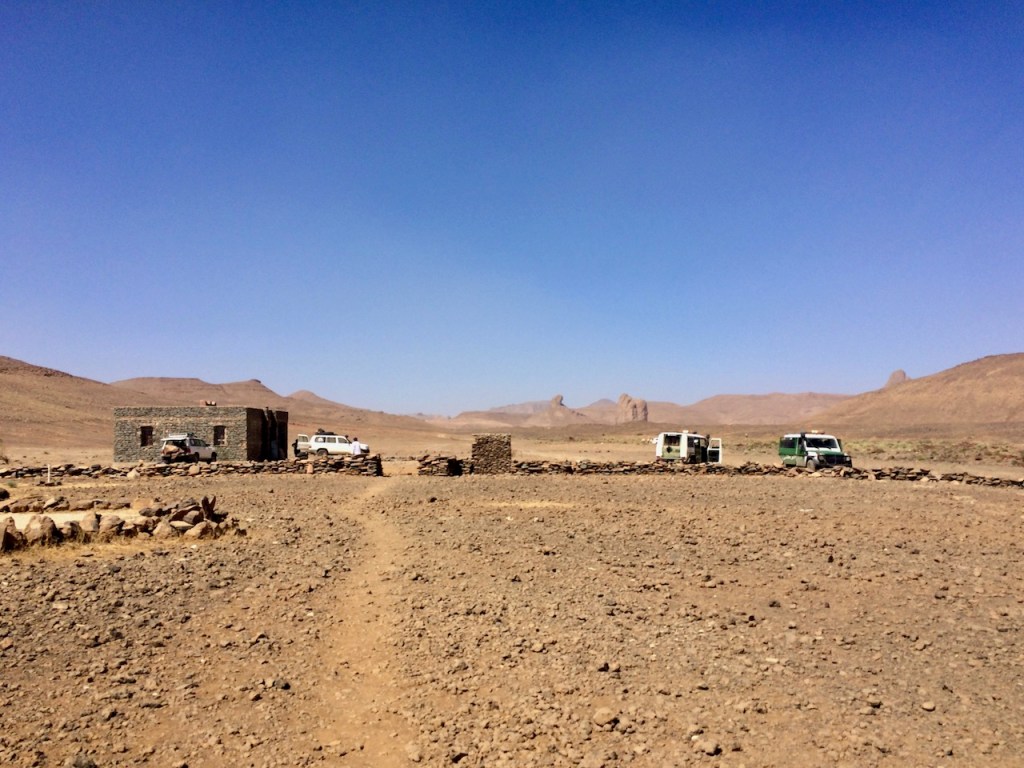
You will start your Tadrart tour now, com’on, the others are waiting! the agency staff says, ready to scoop me up in her jeep at the Akba Tafilalet camp. Thanks to Ali who insists I share a farewell lunch, I get to say goodbye to the whole team. A quick shower in the Djanet camp while charging my devices, I dash off to another five-day tour by jeep to Tadrart, with a French Algerian family. Our new team consists of Ahmed the guide, Merut the chef and Sidi the sous-chef, Yunus again the musician, and drivers Abdul kader and Kader. We pass the first police checkpoint at about 20km from Djanet, followed by a second one before the entrance to Tadrart. If you feel dizzy following my adventure so far, imagine my confusion and exhaustion. But, TIA: This is Algeria. Surrender and take what is offered!
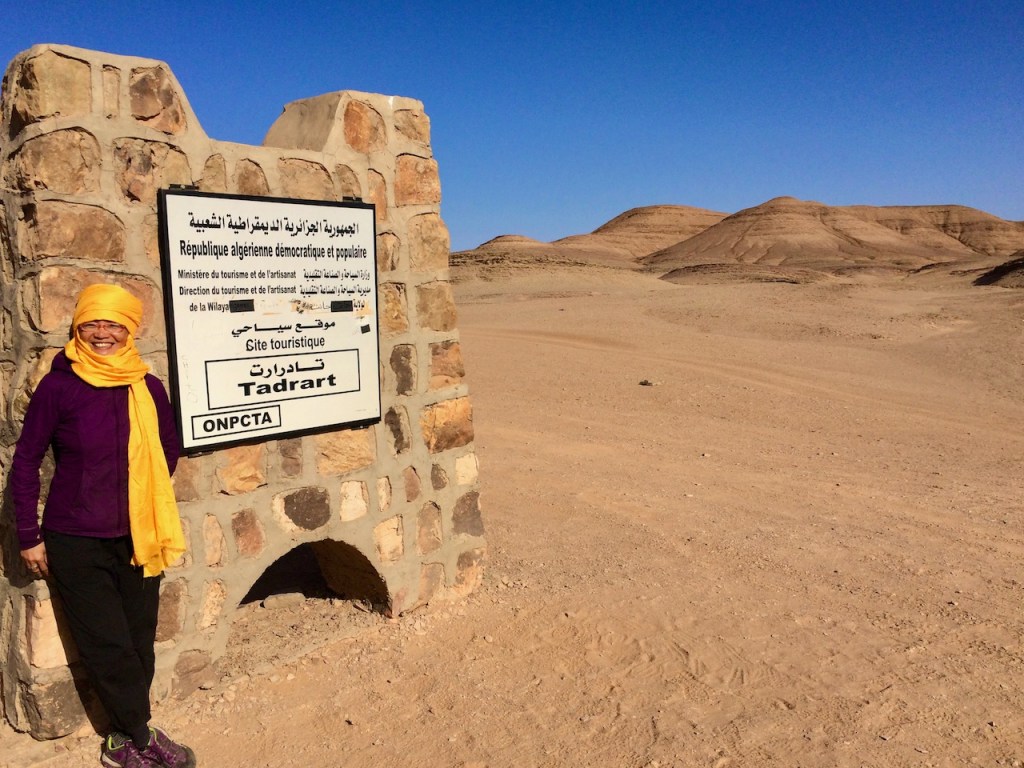
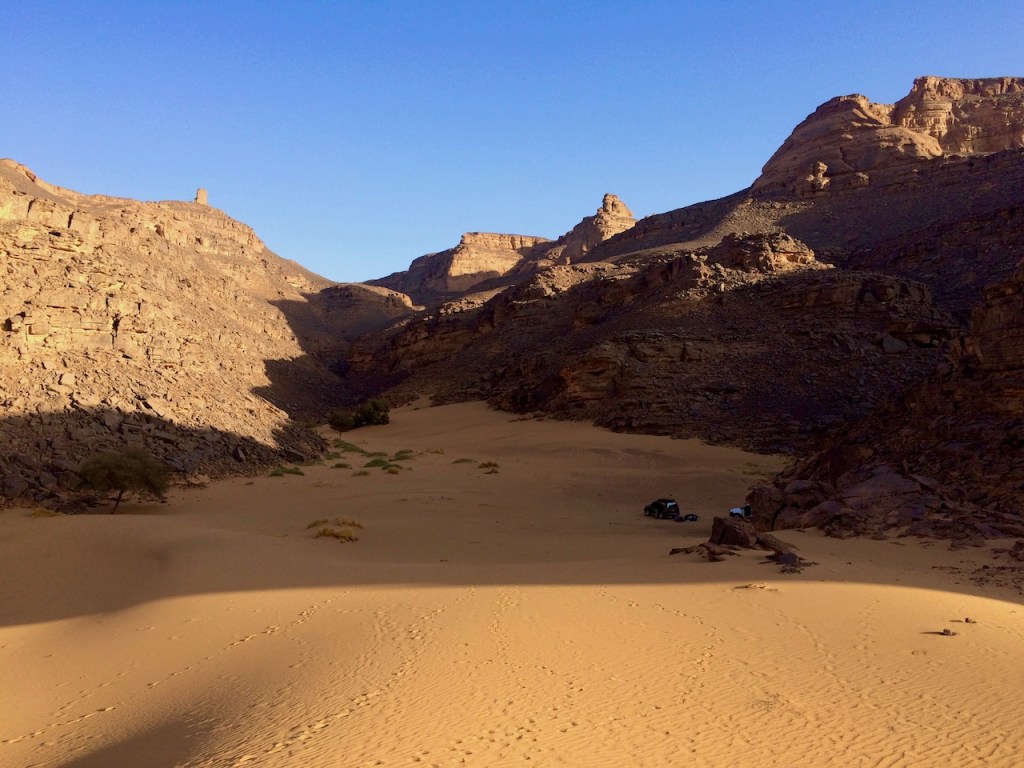
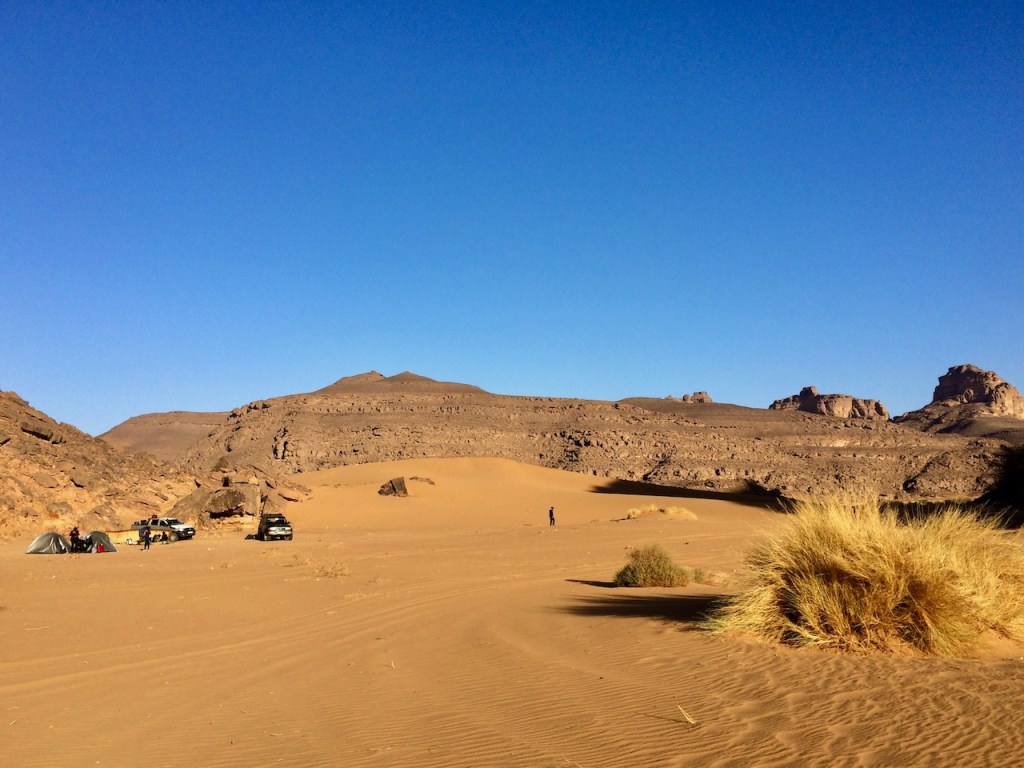
Day 2. Sunny. Tadrart: Tissetteka–Indjaren. Bivouac in Tin Tehak
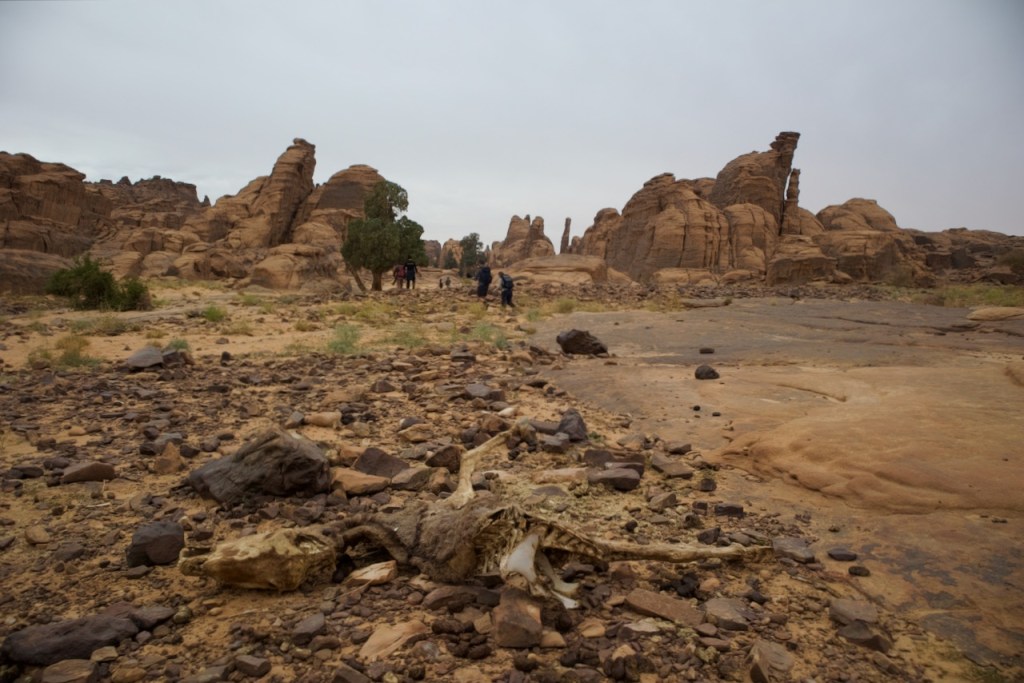
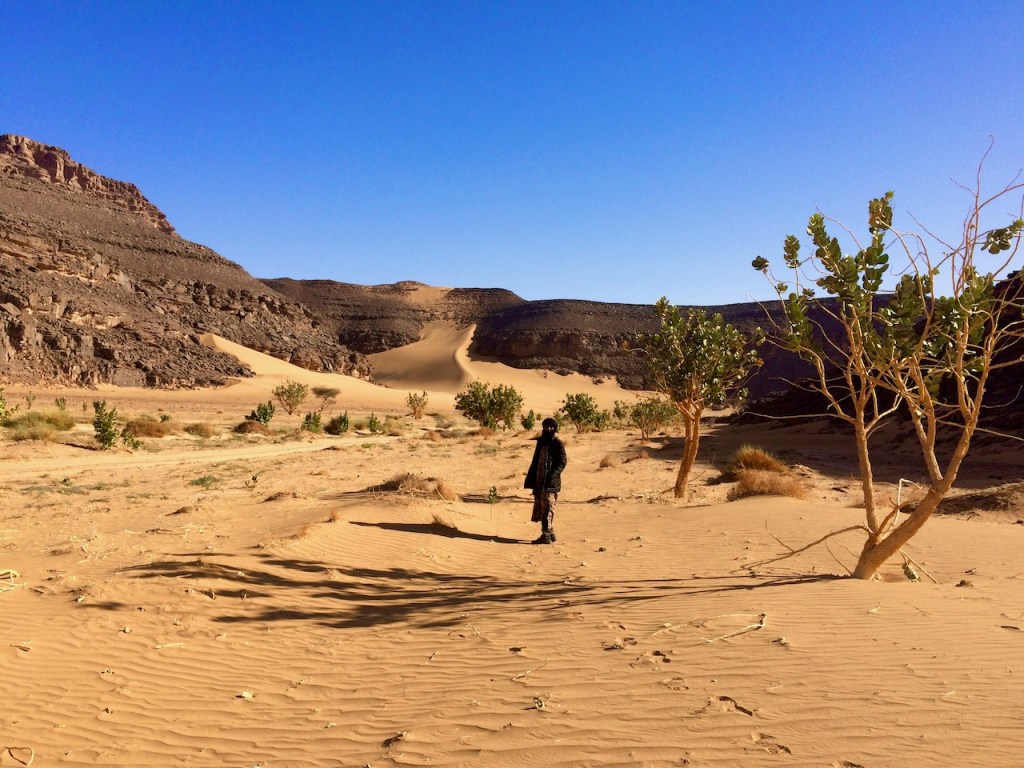
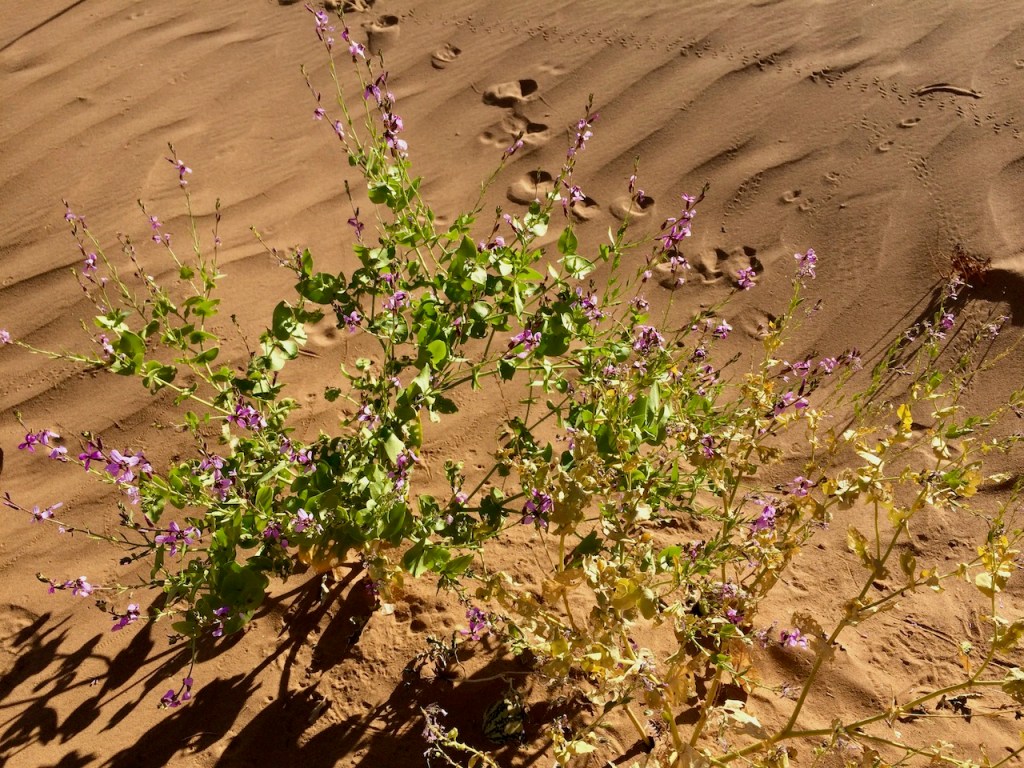
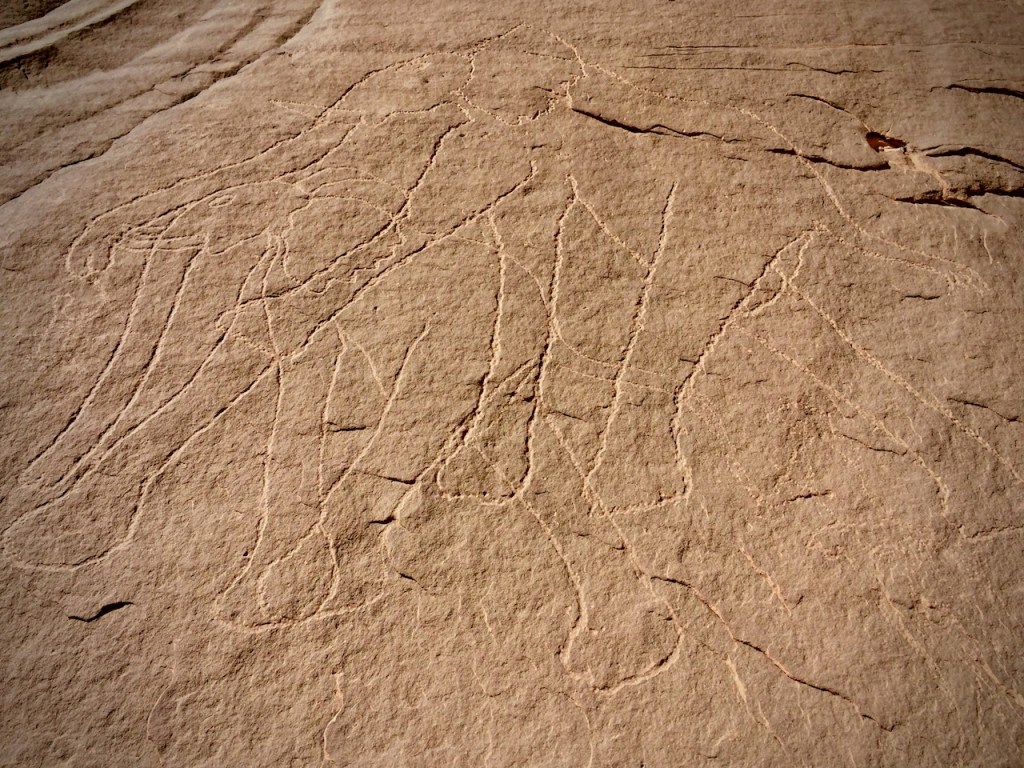
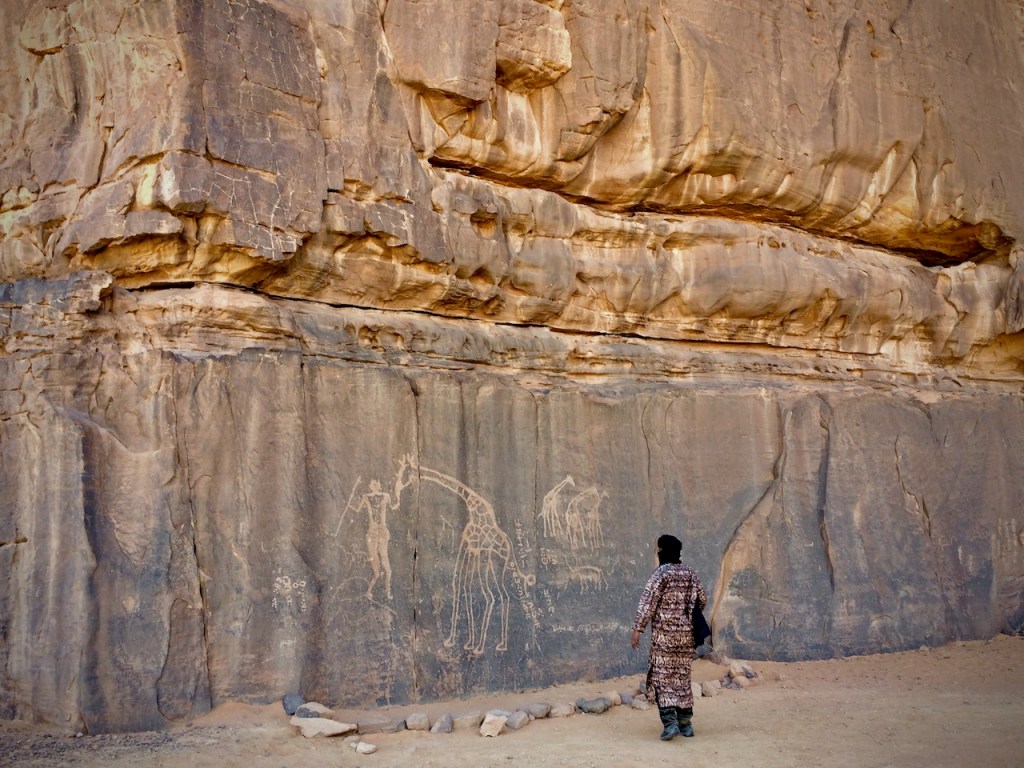
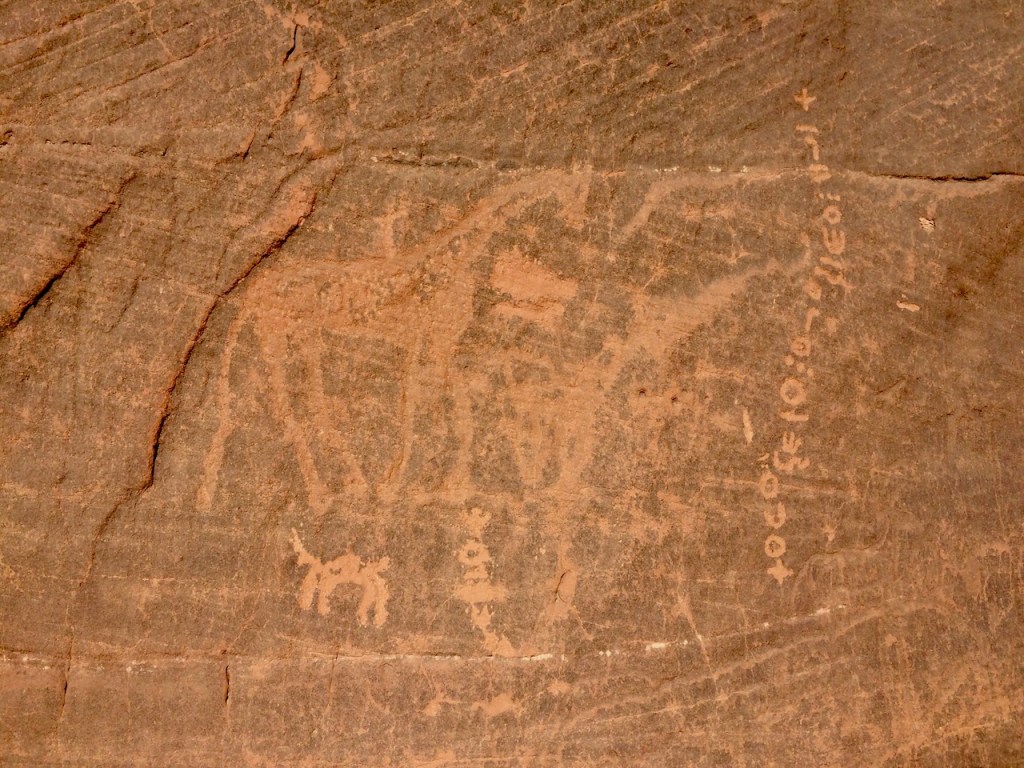
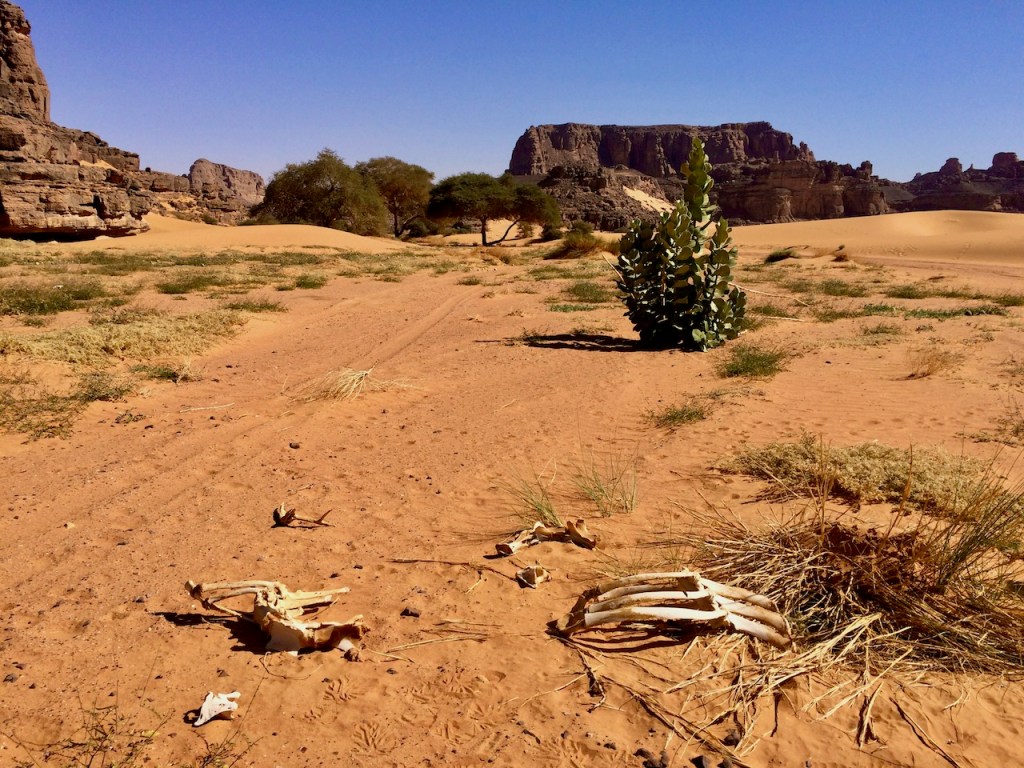
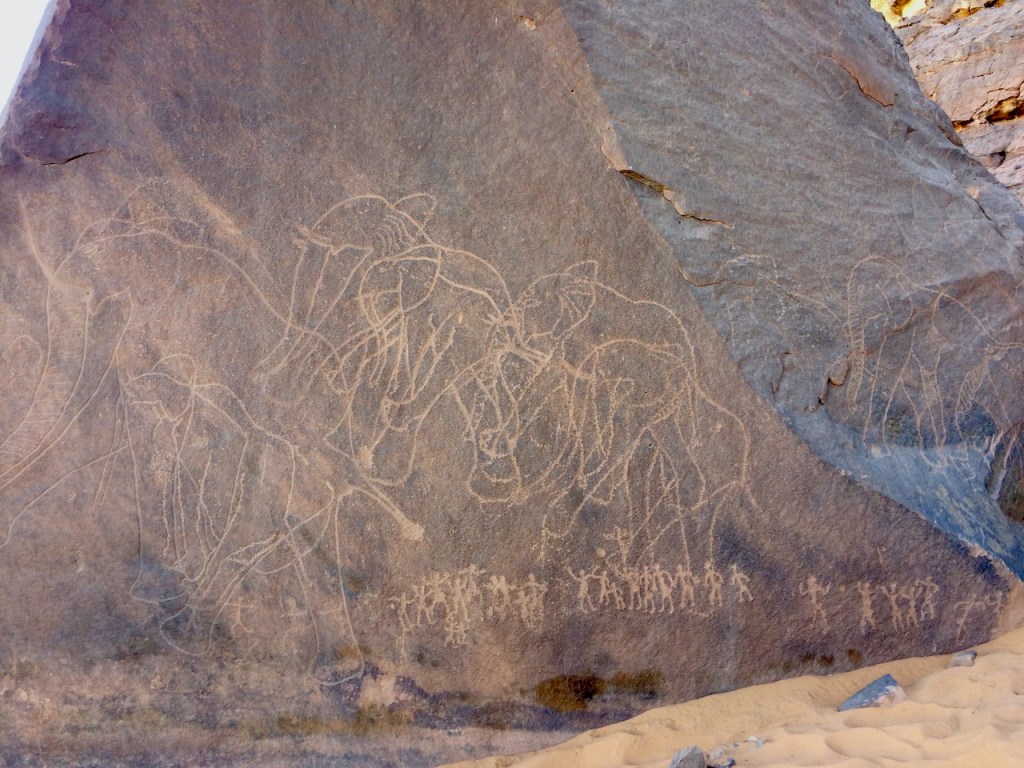
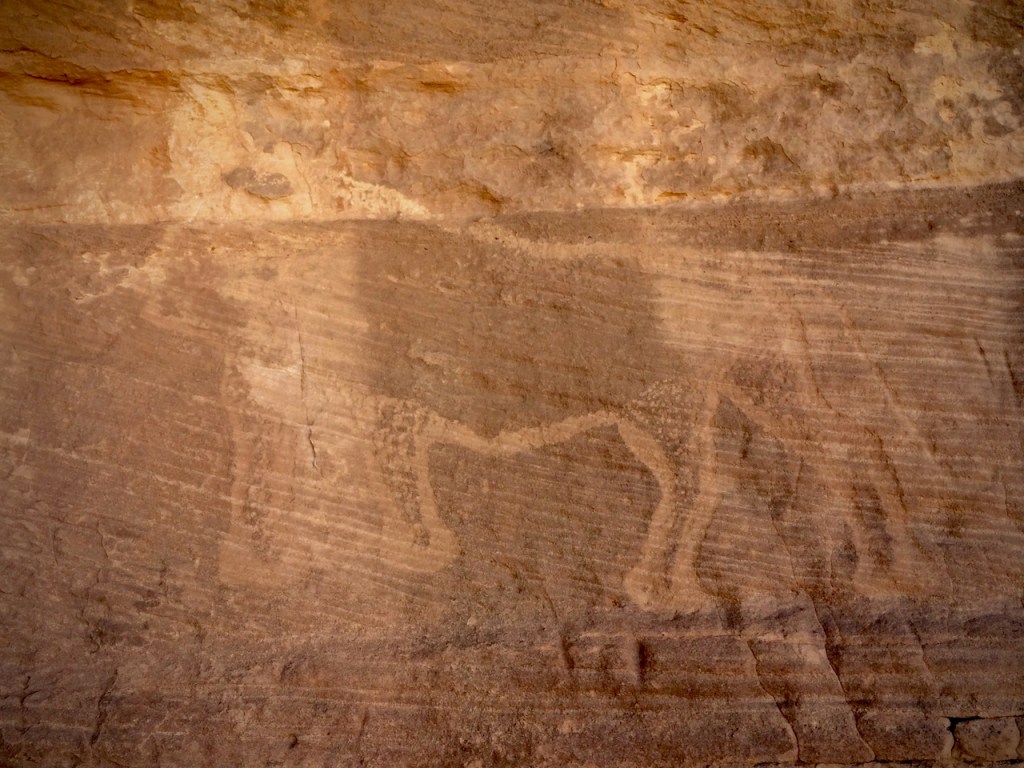
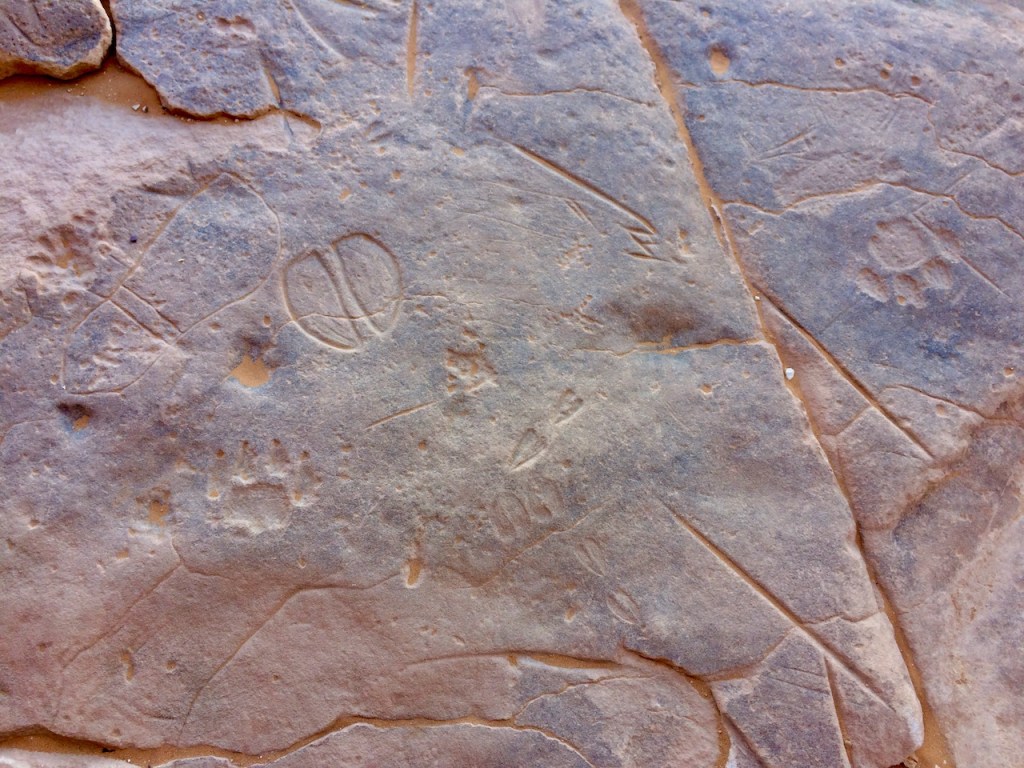
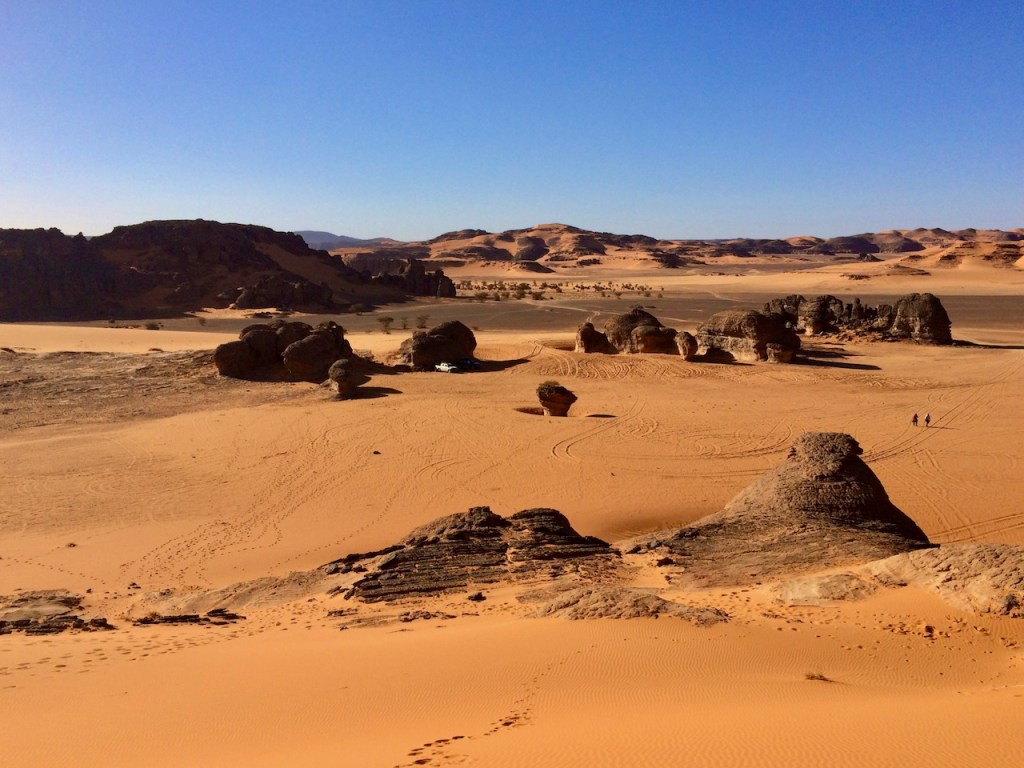
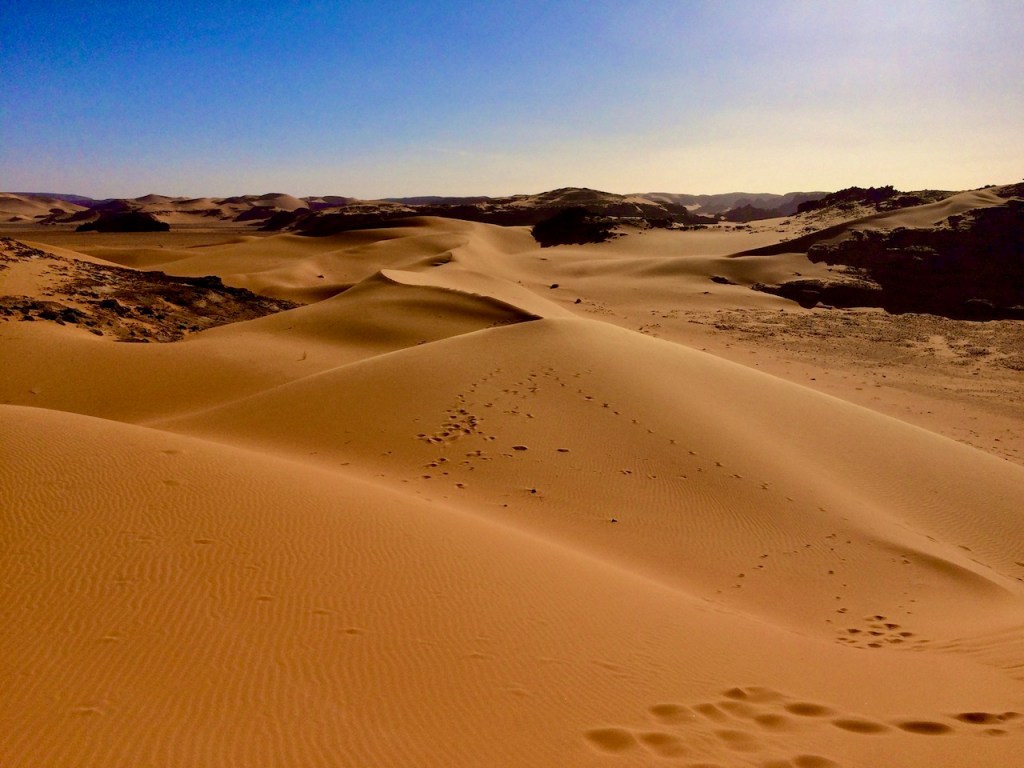
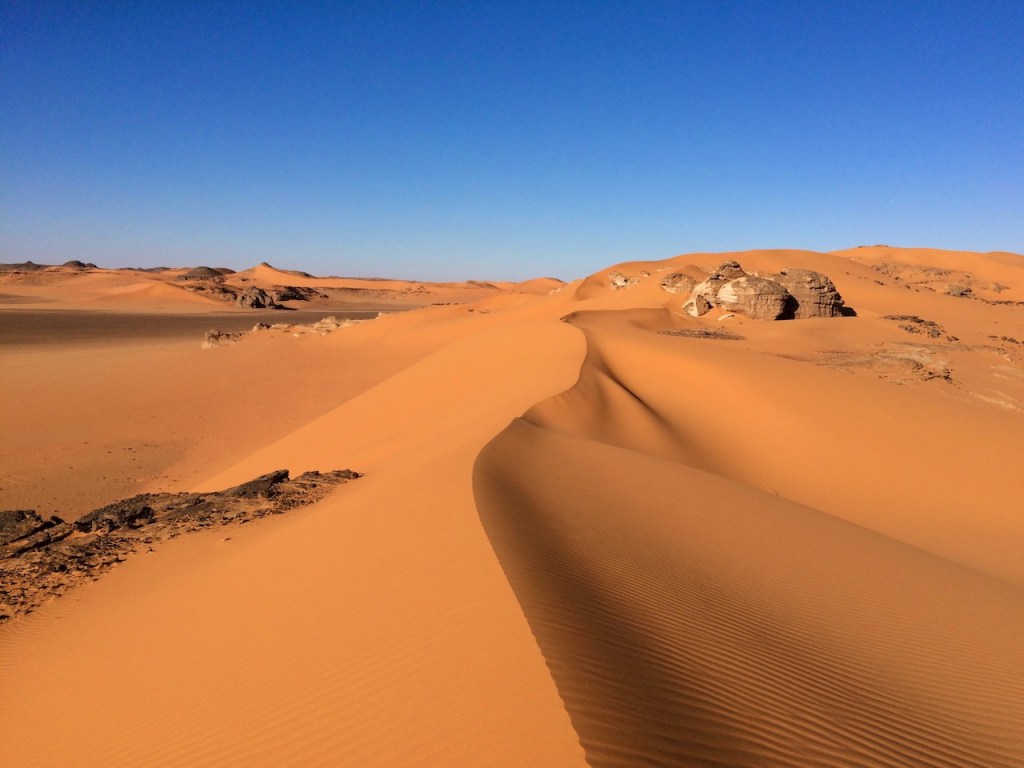
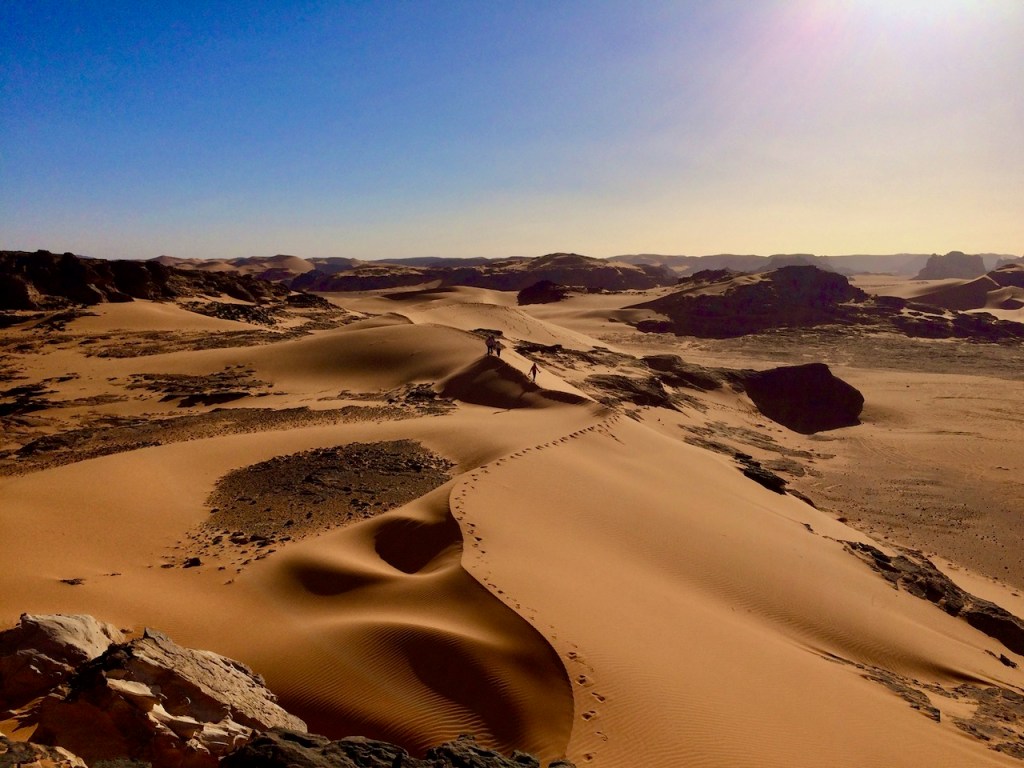
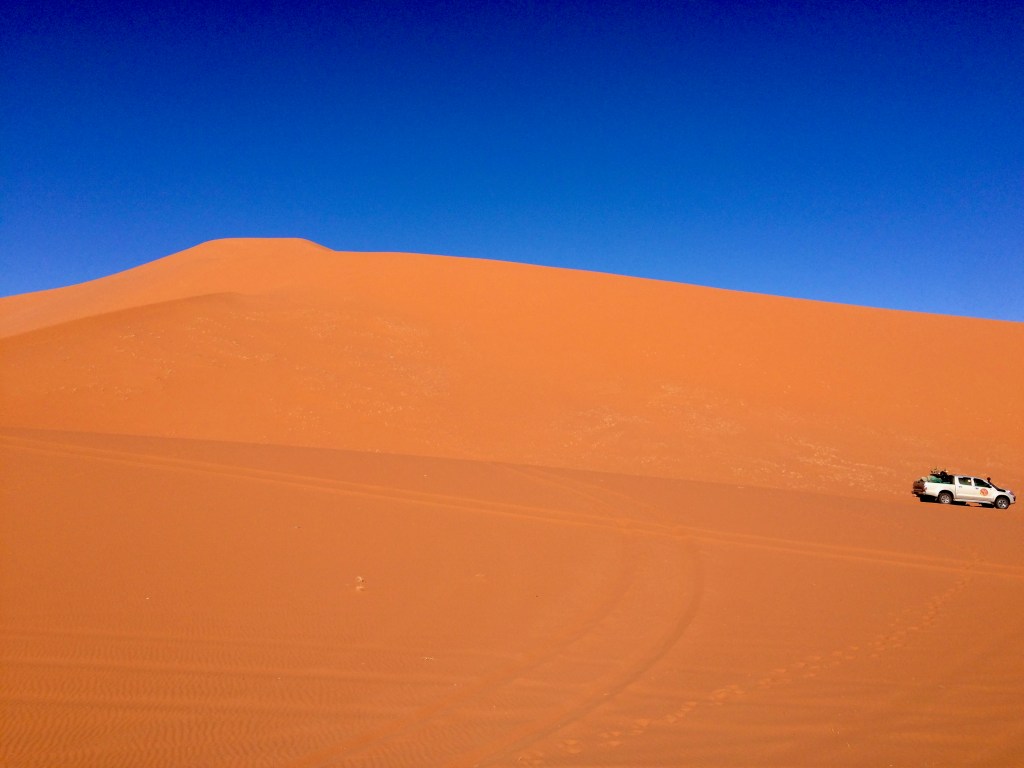
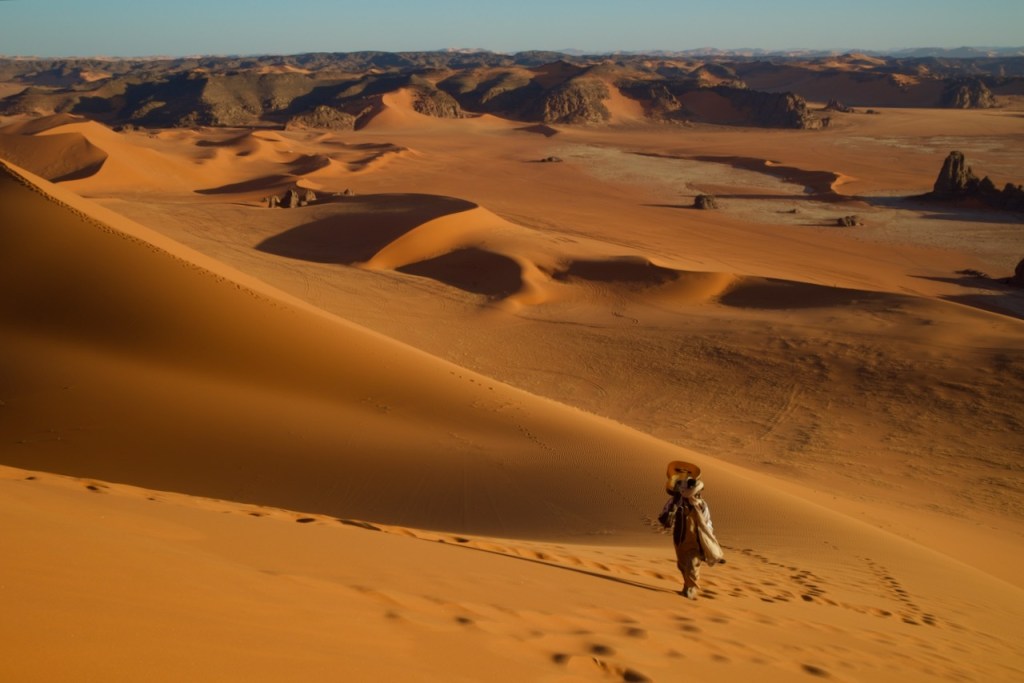
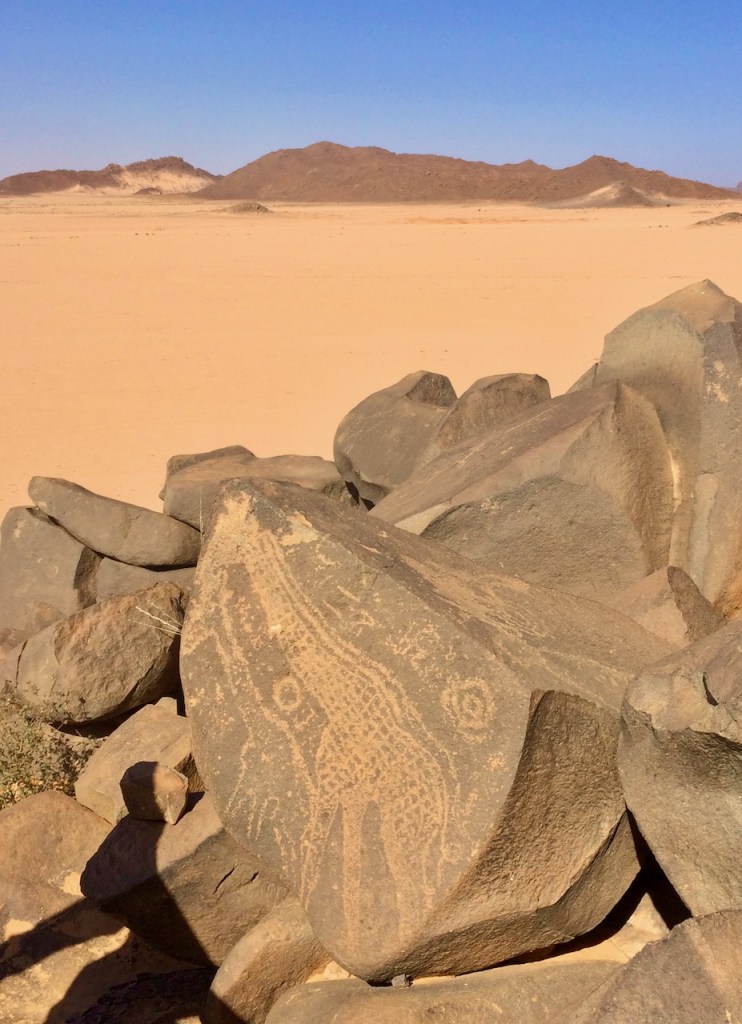
Ten a.m. start for the Algerian French family who is here in the desert to relax – what a change from the trek! In the morning walk, Ahmed shows us desert “melons”/citrullus colocynthis (inedible!), kalatropis trees (toxic!), and fresh camel foot prints (as well as carcasse!). We see giraffe paintings and carvings of elephants, turtles, and scorpions. After lunch, we drive through impressive dunes and stop at a lion carving with vivid scratch marks and animal footprints. Arriving at camp at four, we fool around the dunes baking in the Saharan sun as a quasi-full moon rises…





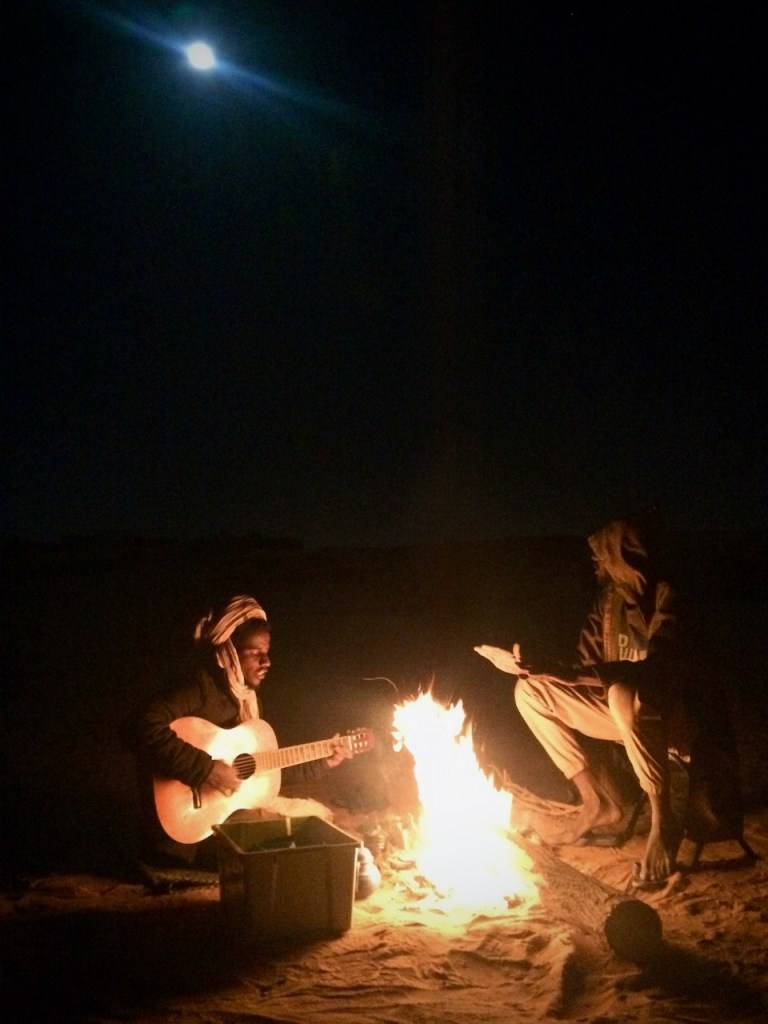
Day 3. Sunny and Full Moon. Tin Tekah to Tin Merzouga
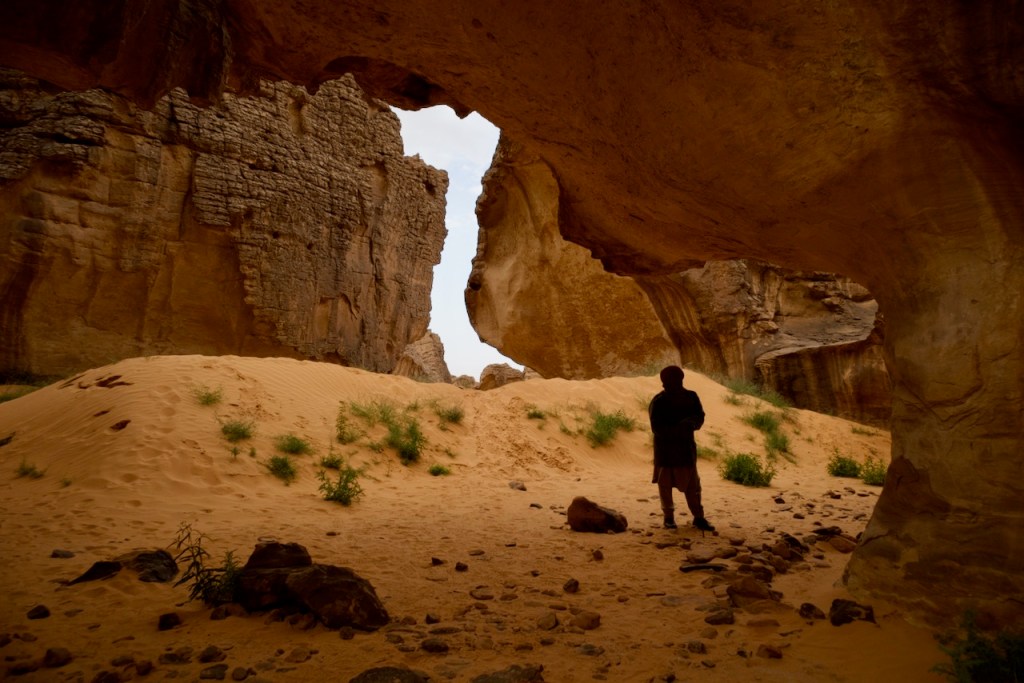
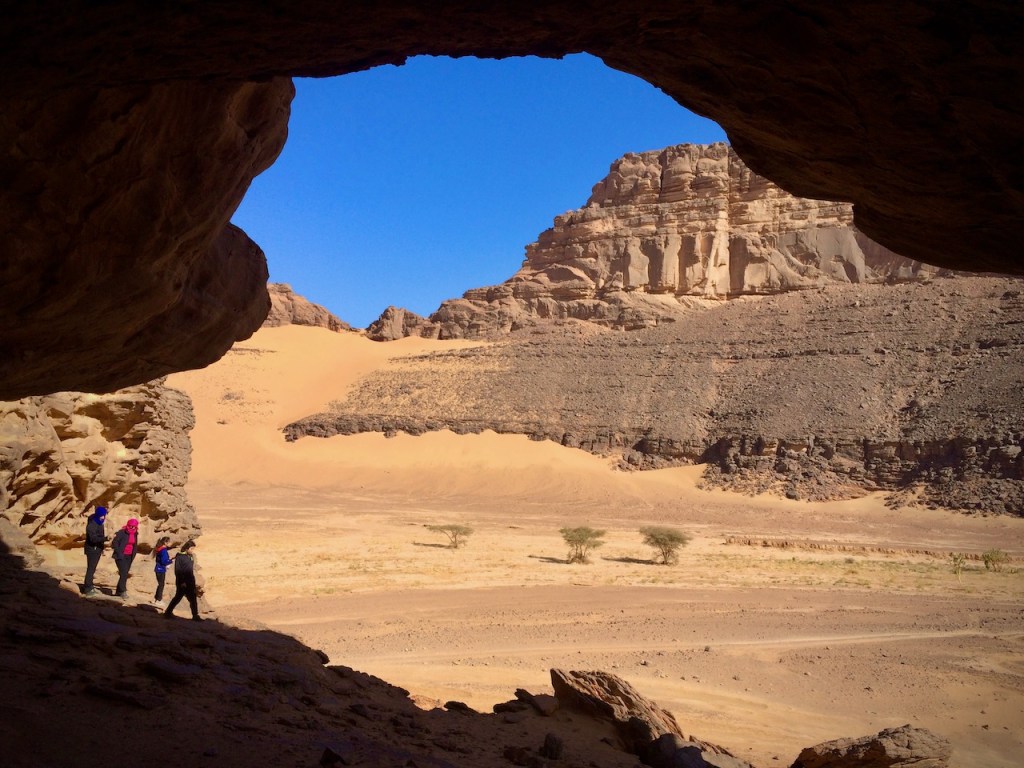
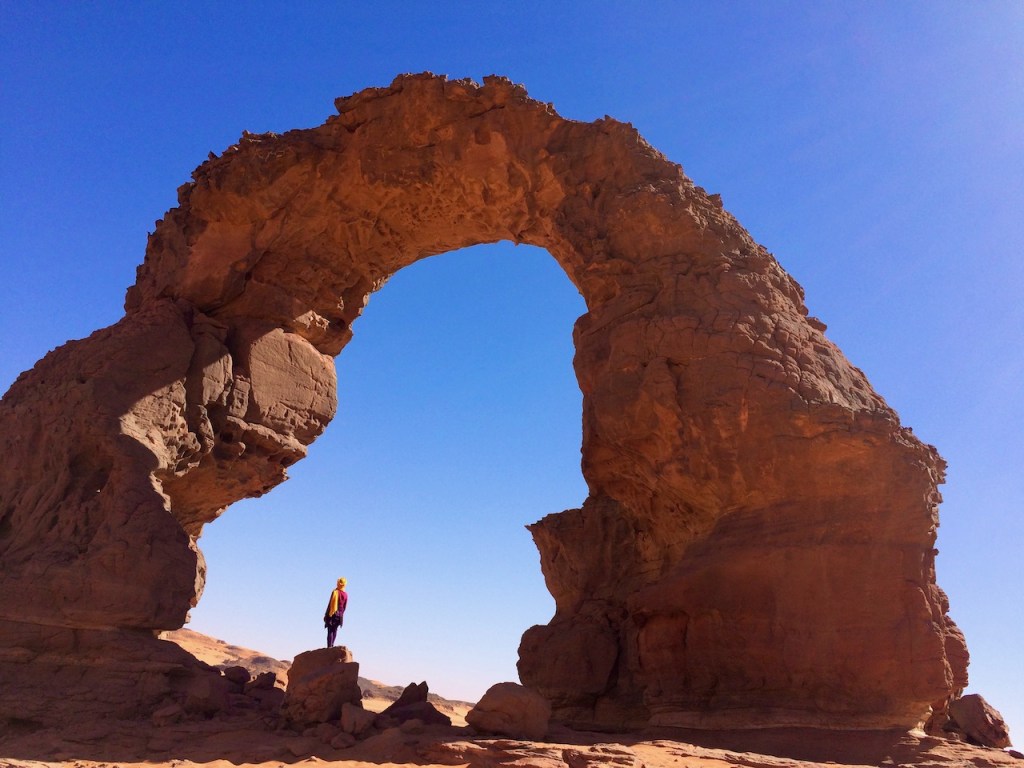
The night was freezing, but then we start to peel off layers by nine in the morning. Ahmed takes us for an hour-long stroll to an arch in a scenic area known for red rock and sand. My eyes are not big enough for this immense desert tableau with such rich prehistoric art, towering rock columns, and a volcanic terrain. Do you want to walk – just you and me – to Tin Merzouga? Ahmed asks. NO, thank you, I reply. It’s three p.m. under the blazing sun!
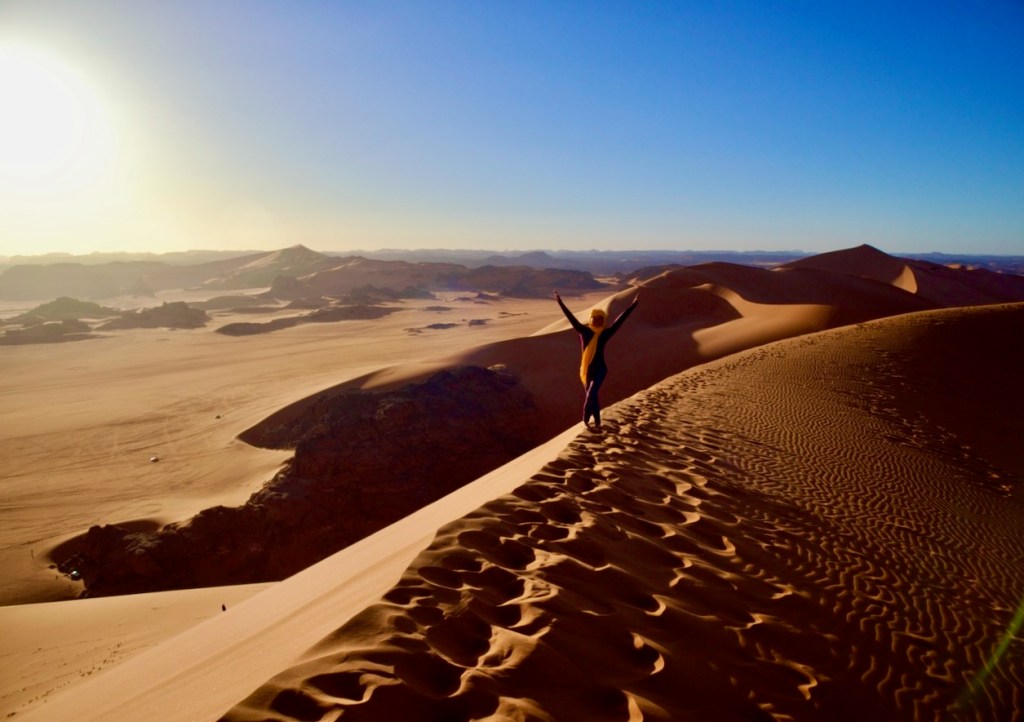
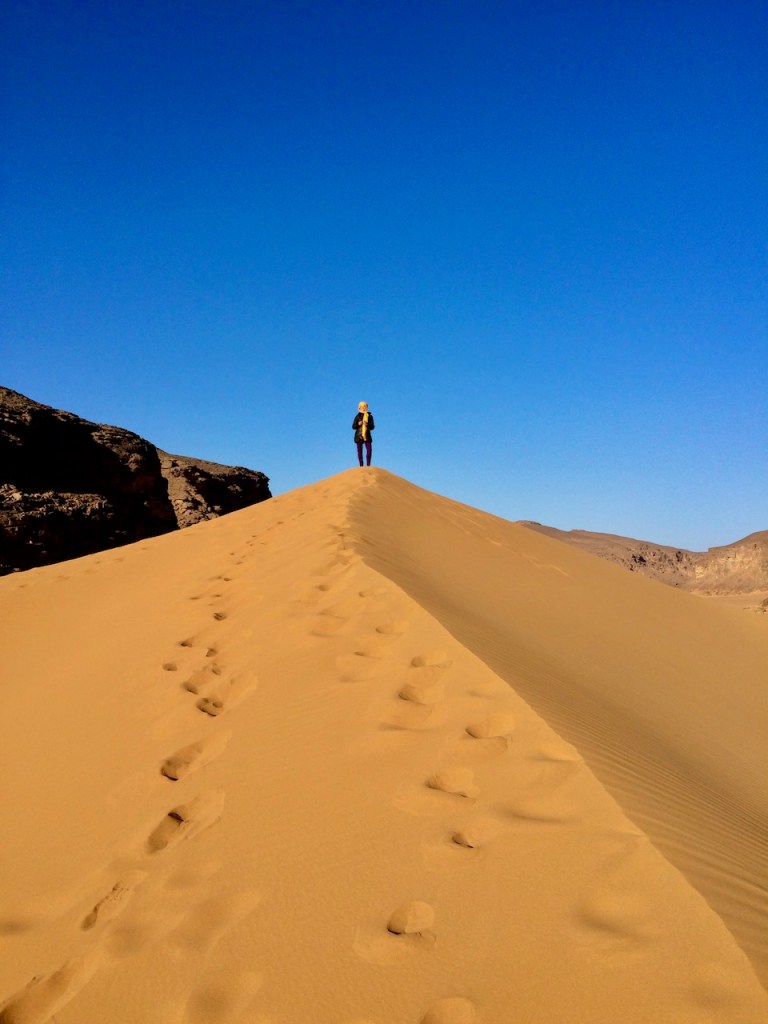
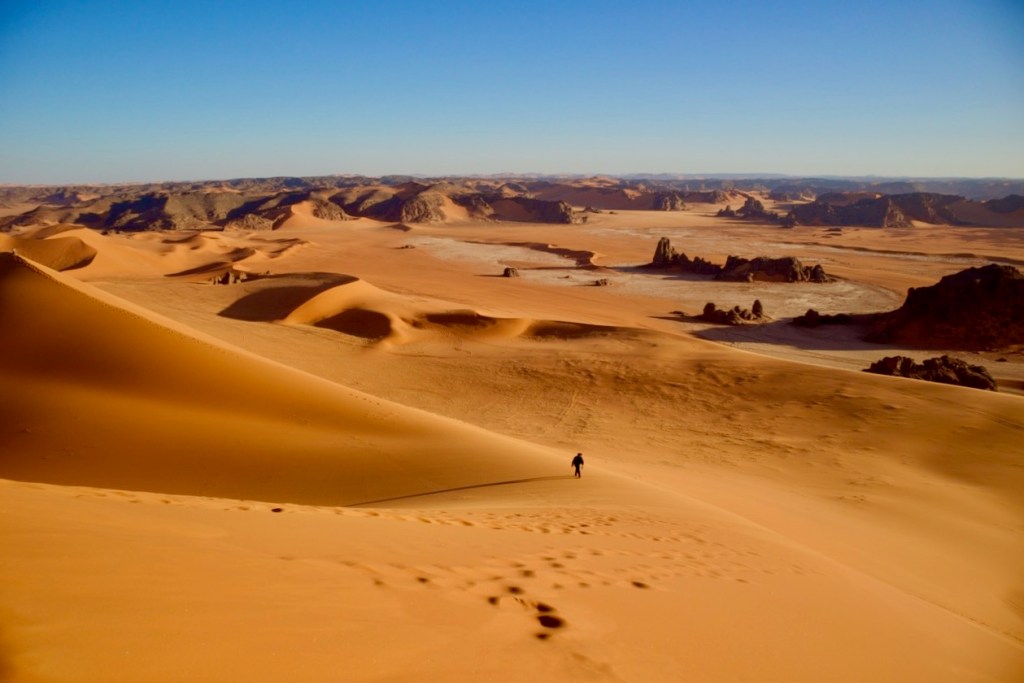
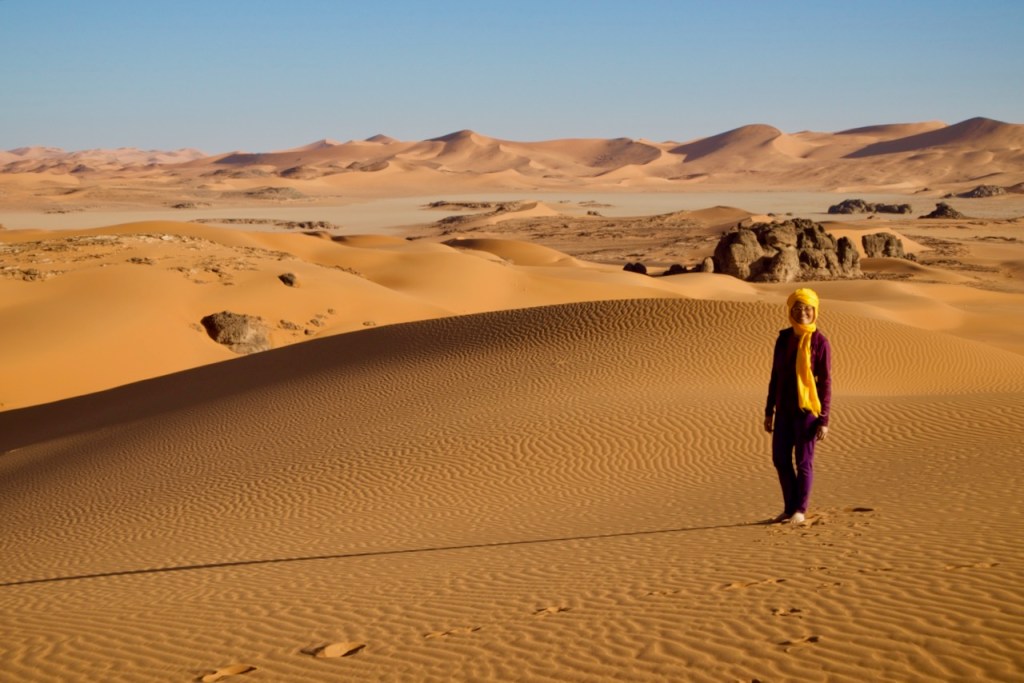
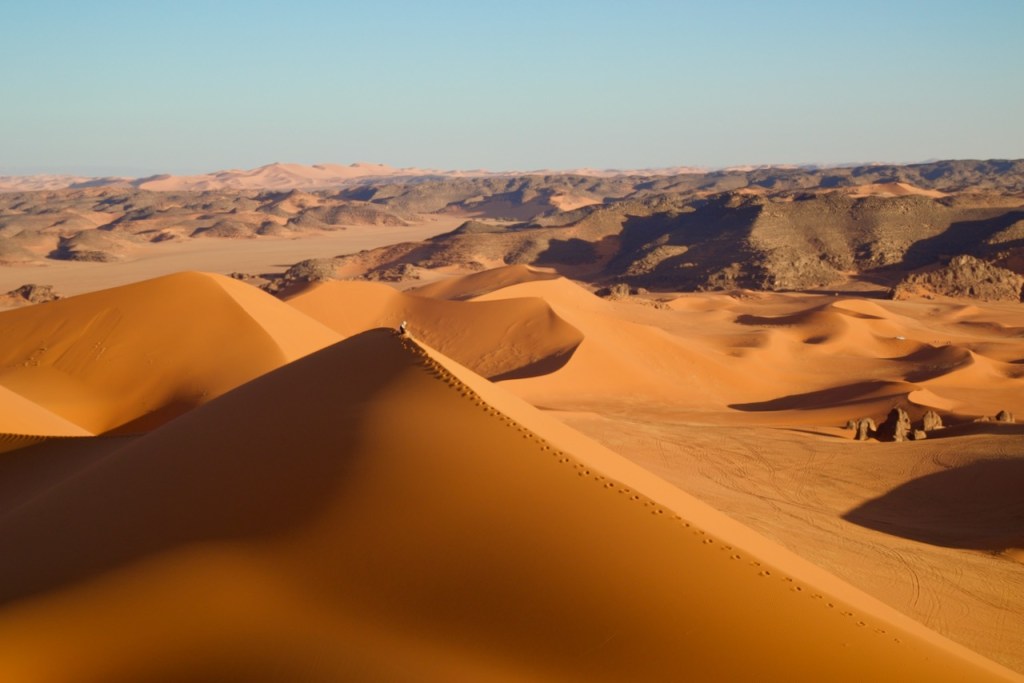
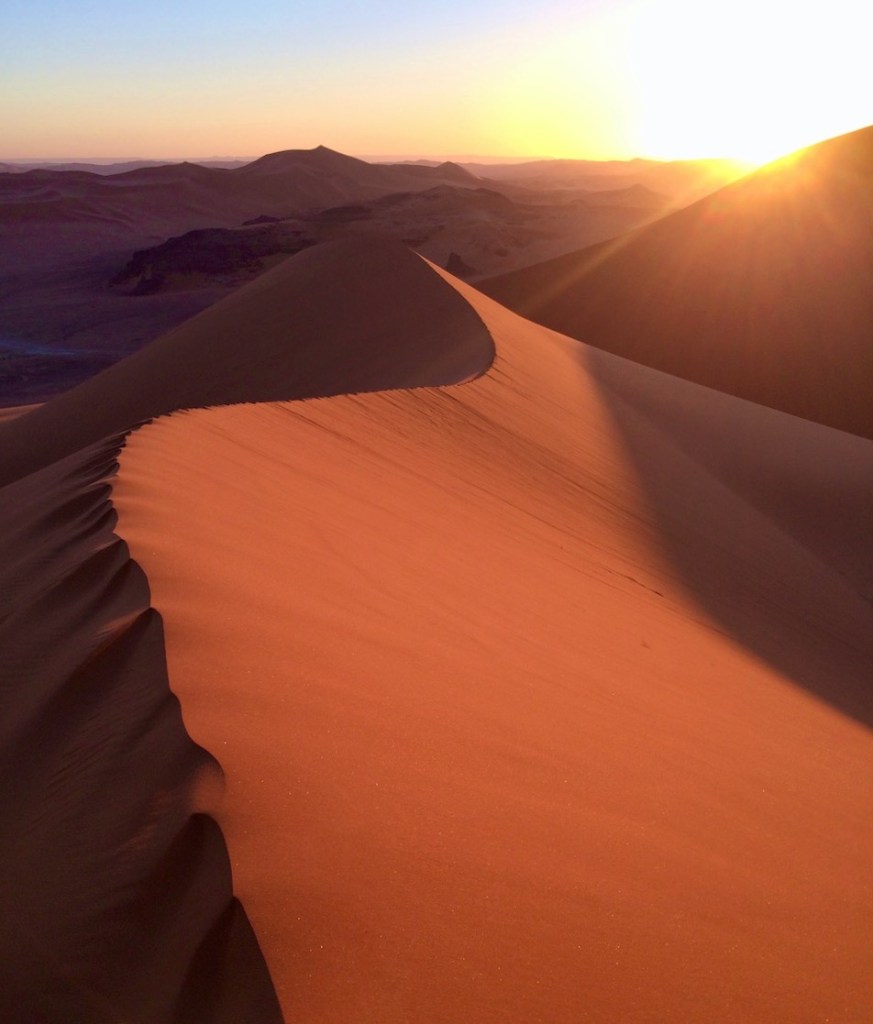
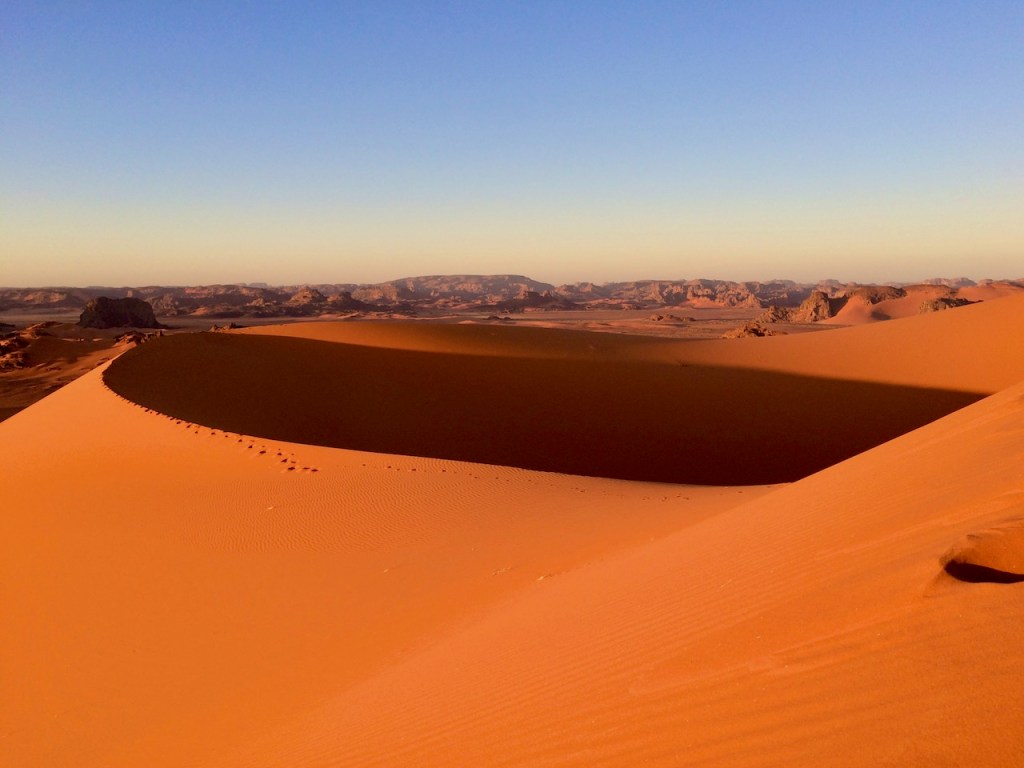
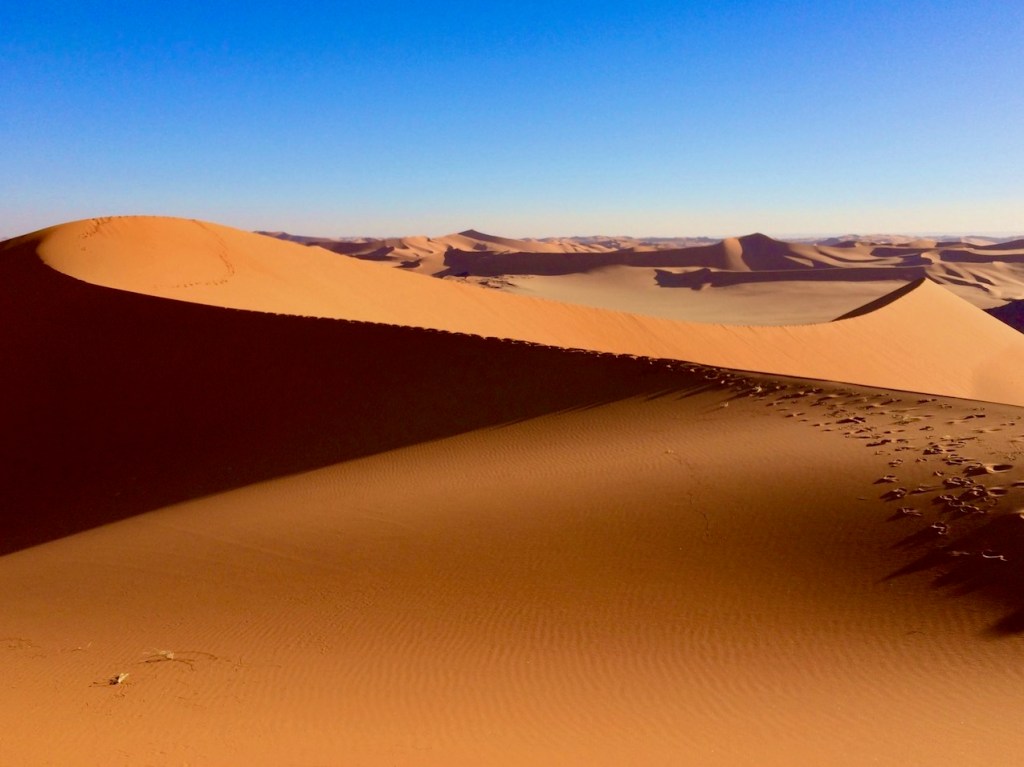
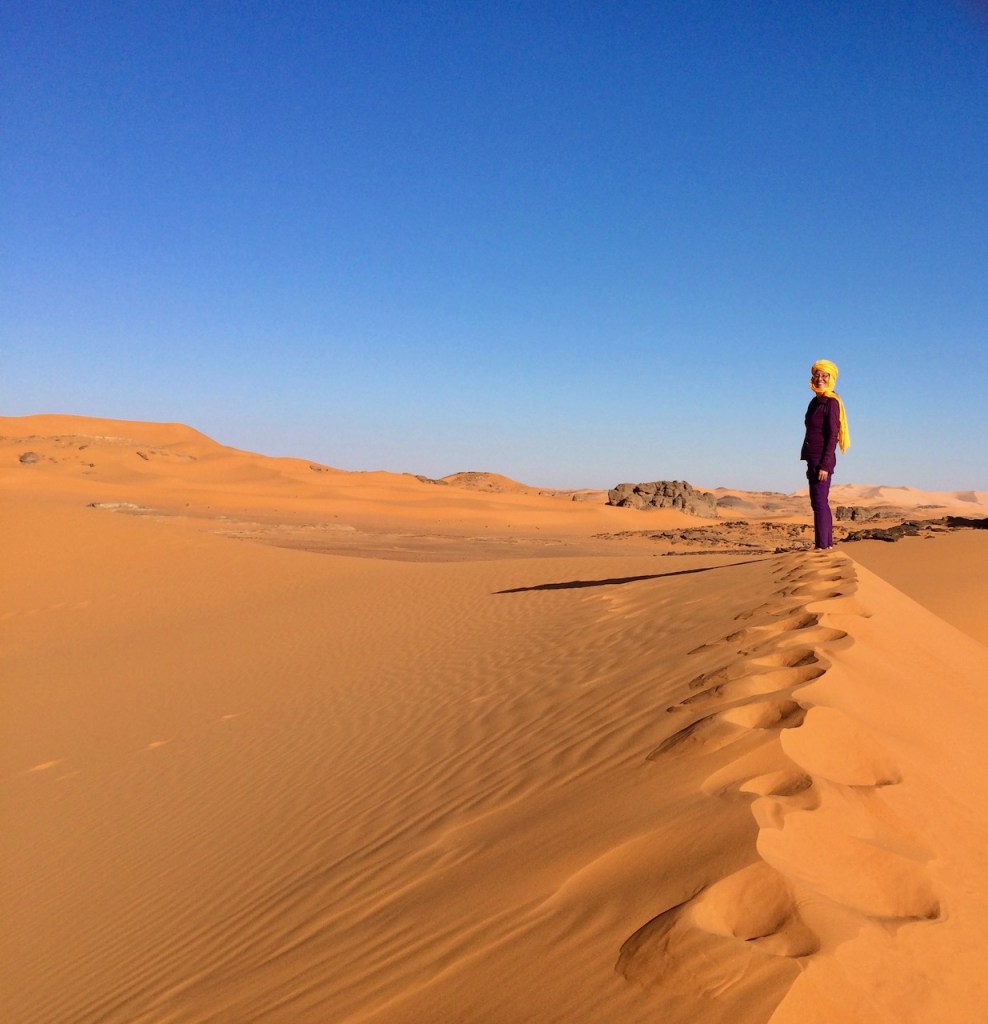
Among the first to arrive at camp, we excitedly head to the giant dunes. The family decides to take the left deceptively easier variant while I tackle the crest, arriving at the top at four thirty p.m. What a view, with the immense plain, resembling Dante’s inferno, stretching to the horizon. The setting sun is ahead, the rising moon in my back, and golden sand all enveloping. All of a sudden, I hear Yunus’ tunes before he dashes towards us! The sun dips lower by the minute as a small crowd gathers for an eternal sunset. The colours begin to fade, and then a full moon graces us with her majestic presence lighting up the whole place. What emotions!


Day 4. Sunny. Bivouac next to the desert highway RN3!
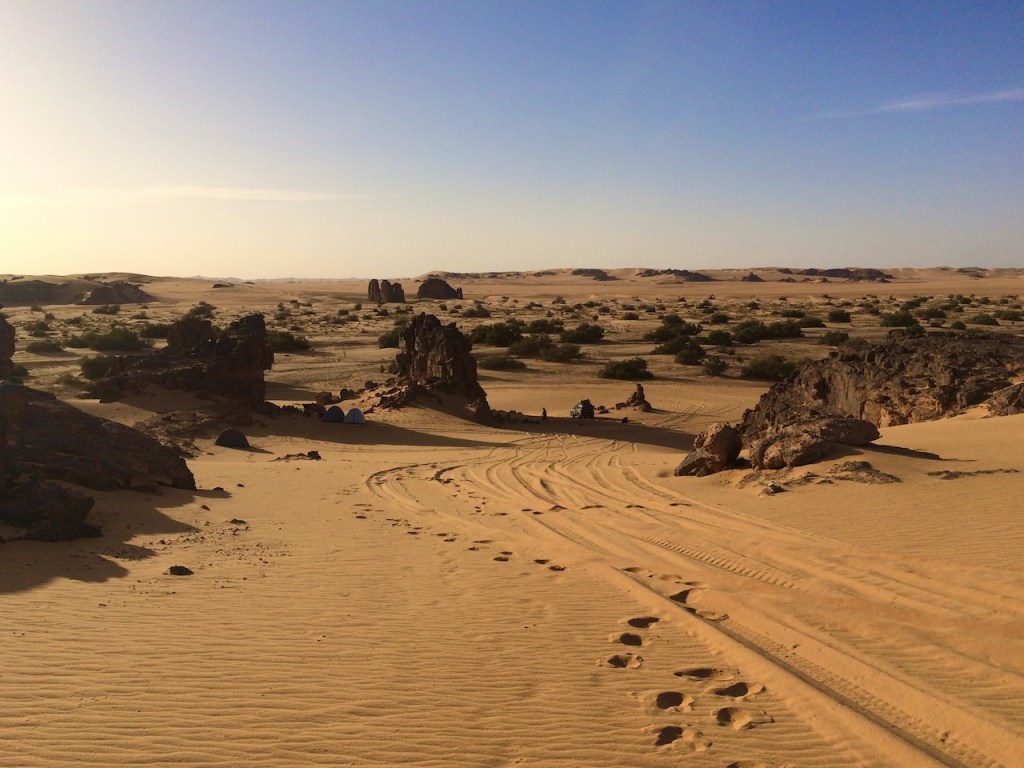
To wake up or not – for a sunrise in the Merzouga – that’s the question! At six a.m, Ahmed knocks at my tent and shows me the way to a dune to the left with a perfect opening for viewing. The wind is blowing and I haul myself up the slippery slope, arriving just in time for the first beams at seven. What joy and happiness with the silence and solitude that only the Sahara knows. A full week here by now, everything from the dry wind to the red dunes, the immense sky and the dancing stars, the exotic music and the addictive tea, is intoxicating. Alas, I have to descend to camp for petit-dej.
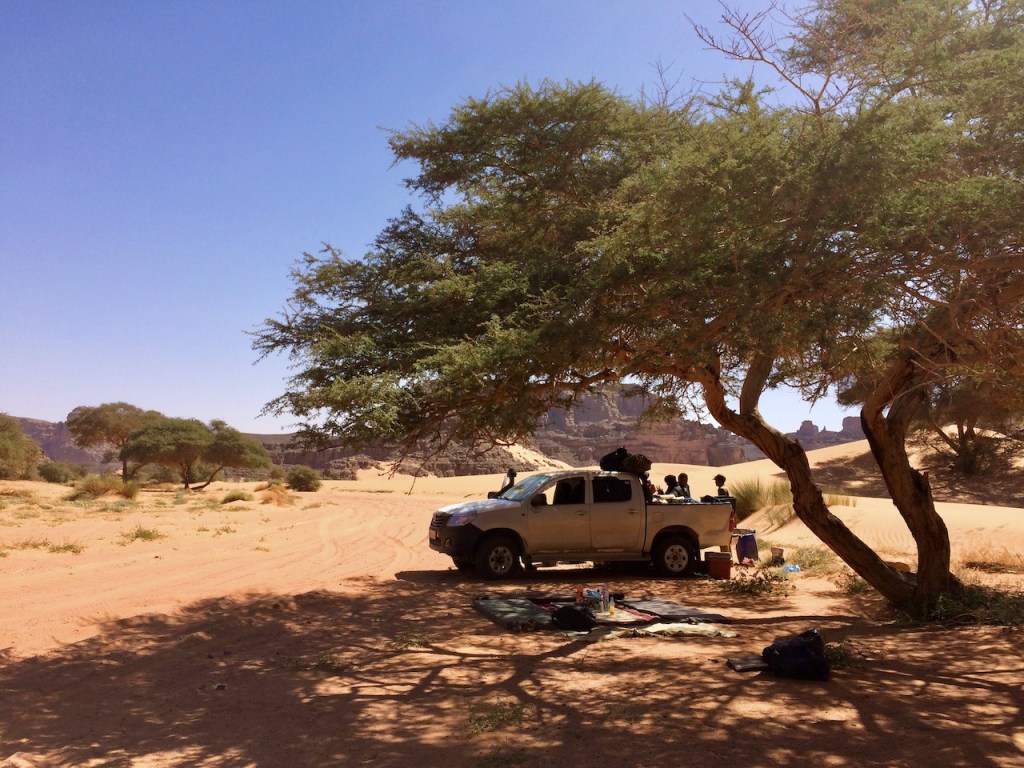
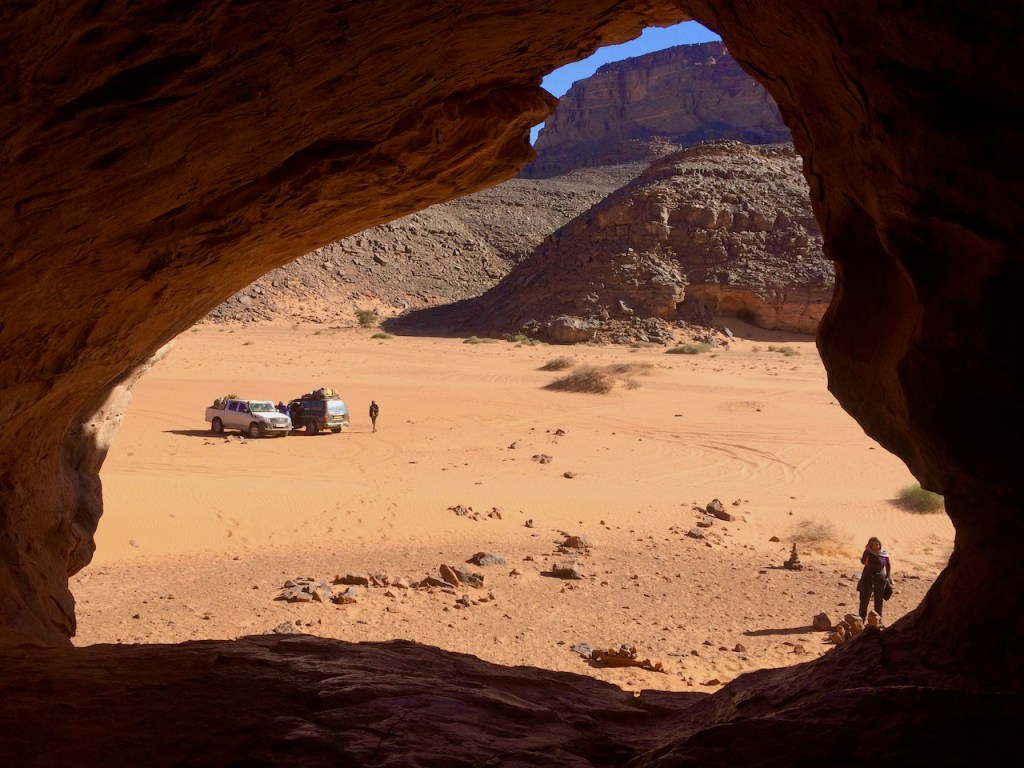
The rest of the day is more pit stops for rock paintings and carvings until I see on my offline map that we exit Tadrart, as our jeeps pull into a shadowy patch right by the highway. What’s this? Rafik asks the driver. We’re returning to Djanet tomorrow, Kader says. What? Our tour is supposed to last for 6 days! Rafik insists. What ensues in the long evening is some sort of Algerian-French mini-drama, about who’s right, who’s wrong, how many days should our tour be, what we will be doing in the two remaining days, whether we should just return to the Djanet camp – within an hour’s drive – NOW, for a hot shower and warm bed, ask for a partial refund, rebook the return flight to Algiers… The guide and drivers take off to get signal to call the agency while the chef serves us coffee and cookies at seven p.m. to calm our nerves in vain. All of a sudden, the accumulated discontents of the past days all pour out: the loud music, not-so-nice young drivers and their unsafe driving, the same salad-and-soup, and a depressing guide. TIA: This is Algeria. I have paid for two tours totalling twelve days, supposedly first five in Tadrart, followed by seven in Sefar. But nothing is according to the programs! Take it or leave it! Finally the jeep returns. Oh, it’s just a miscommunication between the owner and the driver, so we’re told. All is well, or so it seems. It’s past nine, and Chef Merut makes us a delicious soup and Ahmed prepares soaked pasta Touareg style. The plan is to stay in the desert tomorrow (not a difficult thing to do here!). Ten p.m. nights out. Ahmed’s bag is way too close to my tent, making me very nervous. I ask Rafik and Meriem, s’il vous plaît, make sure he is not sleeping next to me!


Day 5. Sunny. Tegharghart
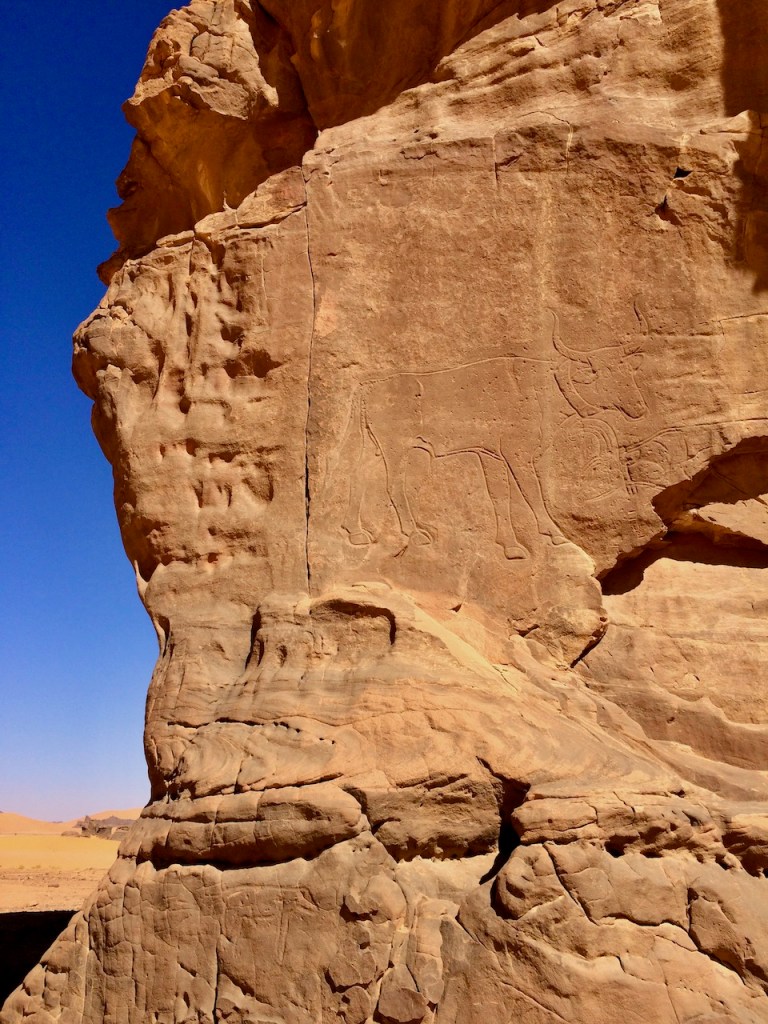
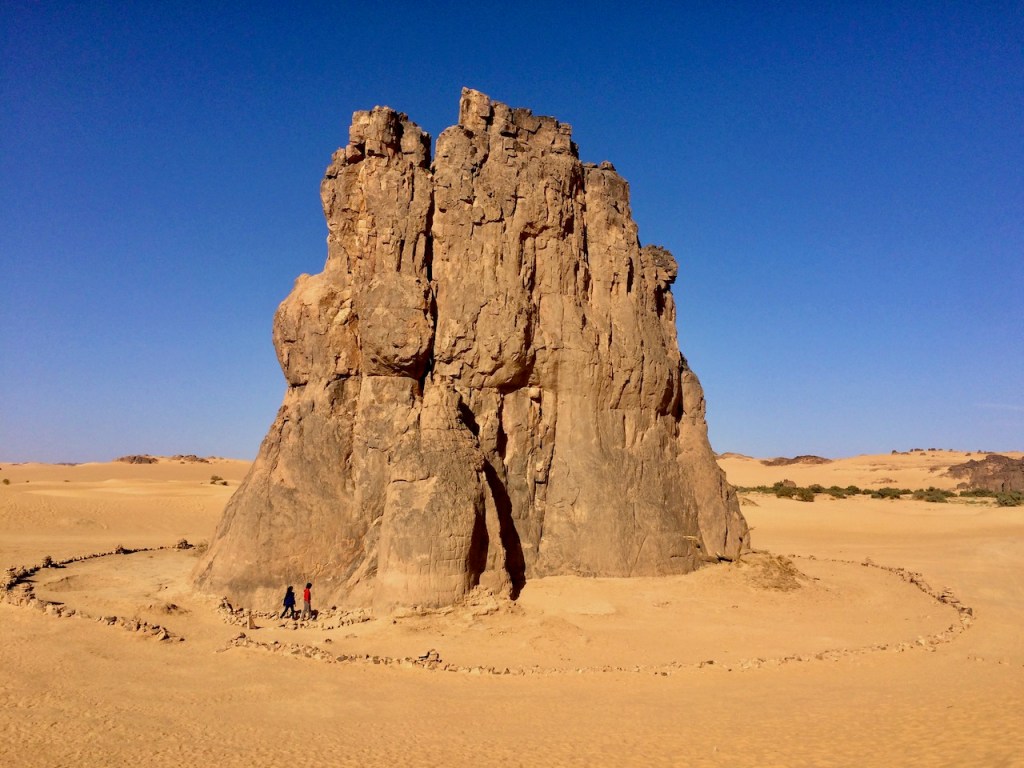
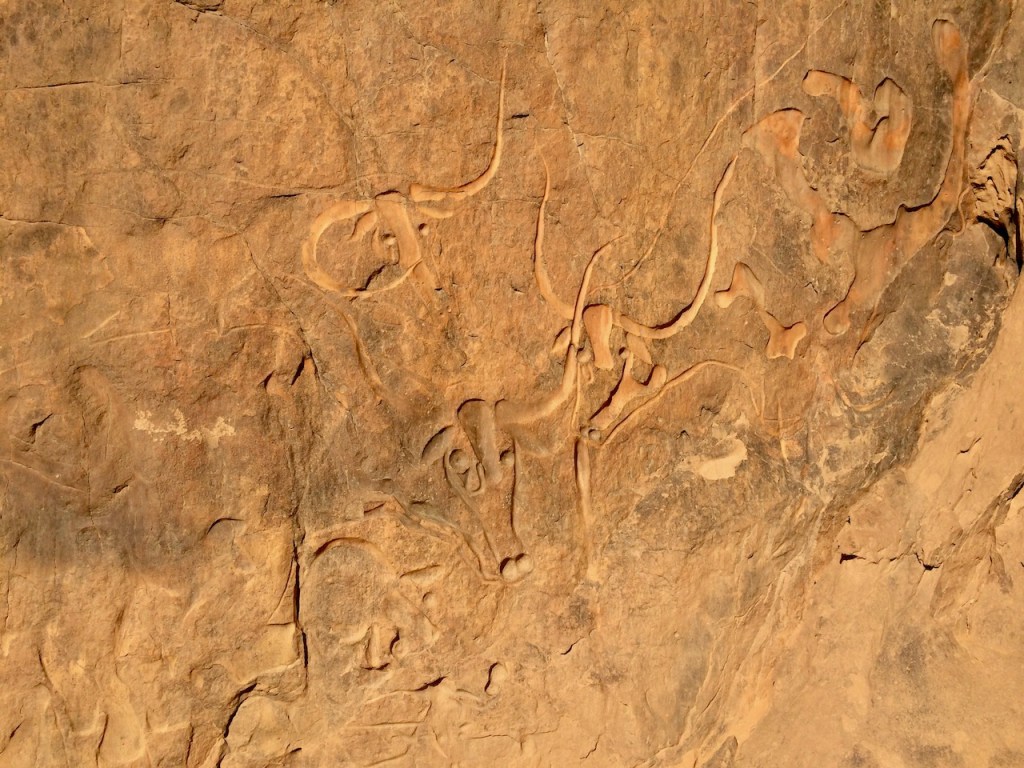
We pull into the Tegharghart Park and make a pit stop to view some rock carvings of giraffes and elephants. Finally, we reach the iconic Crying Cow rock engraving and break camp in the nearby dunes for one last bivouac. Djanet is only 10km away and we could have easily used a hot shower, but Ahmed insists that we stick to the program, aka camping, probably out of fear of being grilled for managing our tour so poorly. In the grand scheme of things – in the Sahara – none of this really matters. We all enjoy one last fabulous sunset, a delicious couscous lovingly prepared by Merut, and the desert tour is over.

Day 6. Sunny. Tegharghart to Djanet. End of Tour
I awake excited to pack my bag to return to camp in Djanet on Valentine’s Day. No! We will lunch here, Ahmed insists. That’s the program! What’s the hurry? There’s no such thing called time wasting in the desert. Time is infinite – irrelevant here. Just be patient, let life unfold in its proper order. Everything is always fine! And so we have lunch and drive back to camp. I have never felt as unkempt in my life and stay in the shower for a long while. Then I wait for the driver to finish his nap until almost 6pm when Ahmed brings me for a 5-minute tour of the bustling Djanet souk, followed by a bonus buffet dinner to prevent our further complaints…
Having booked my out flight according to the agency’s suggestion, I end up having four free days in Djanet to unwind from the intense desert experience. As tour groups come and go each day, I meet interesting travellers and get to enjoy fabulous end-of-tour concerts and some of the best meals like mechoui lamb cooked in a sand pit included in other agencies’ programs. A sandstorm from the south envelopes Djanet in a thick veil of dust. I stay put in a hut, remembering the debilitating chest infection I suffered from the Harmattan winds in my last African sojourn. The Touaregs are one of the strongest people on earth, with such patience, implacability, and resilience. My flight to Tamanrasset is coming up, and I still don’t have police clearance, required 72h in advance to visit Assekrem. Alhamdulillah, Yassine, the Ghardaia hostel owner who lives in Tam, helps me find a last-minute private tour with my dwindling dinars…



Tamanrasset: Assekrem
Seven hundred kilometres to the west of Djanet lies Tamanrasset, famous for the Ahaggar National Park, the Charles de Foucauld hermitage, as well as prehistoric rock art. But the area is too close to the Niger and Mali borders, and foreigners are allowed only to access Assekrem under police escort. News of a Spanish tourist being kidnapped the week before my departure caused alarm, and Tam was closed. But then I saw tourists on my Ghardaia-Alger flight originating from Tam, so it’s a go!
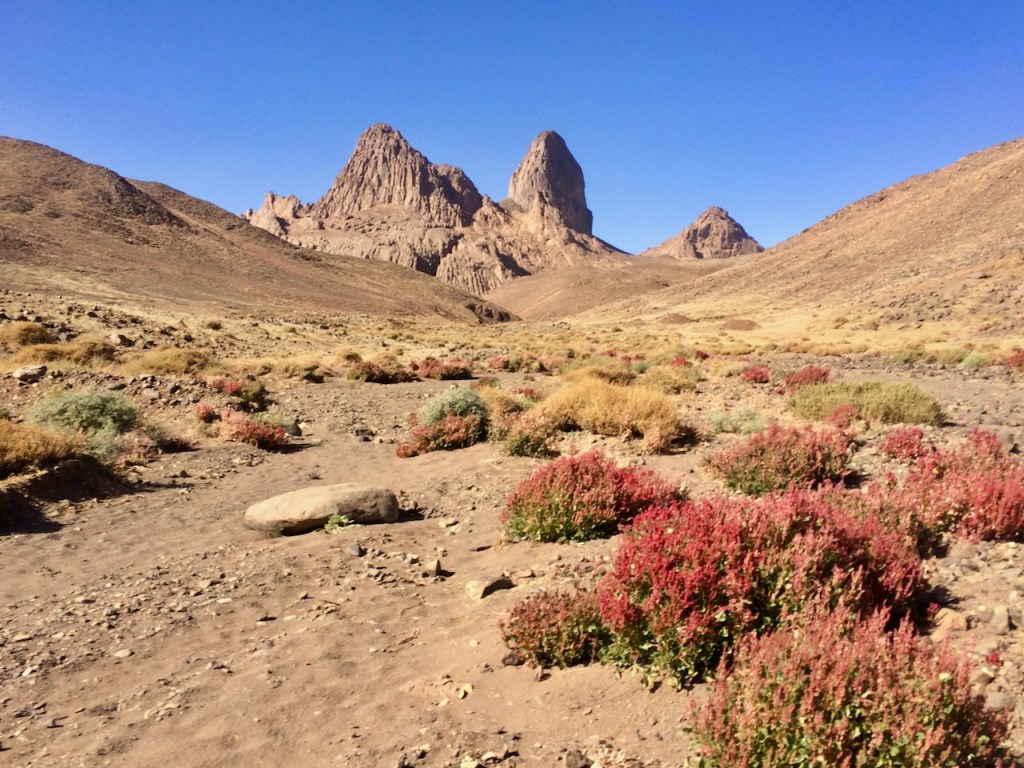
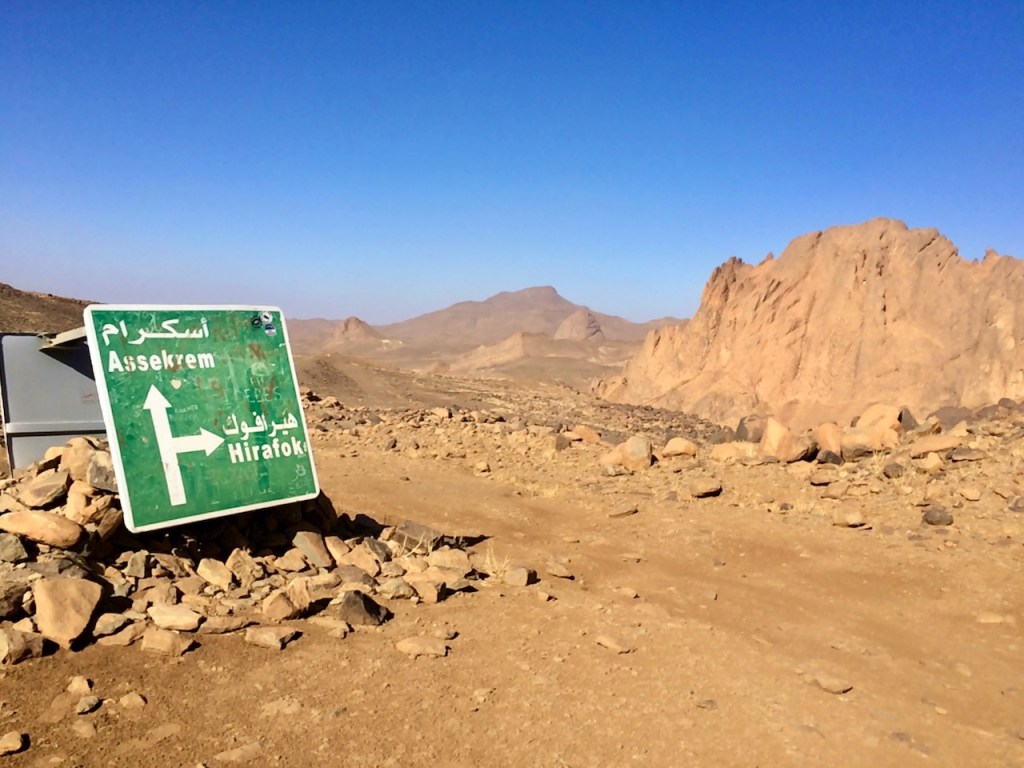
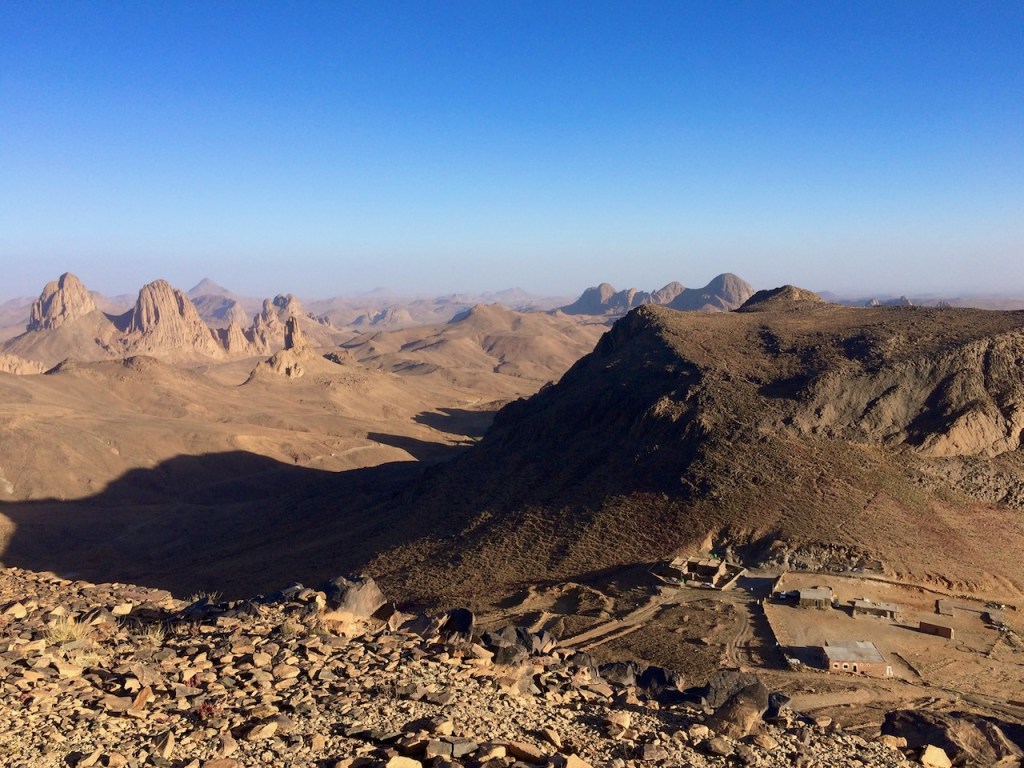
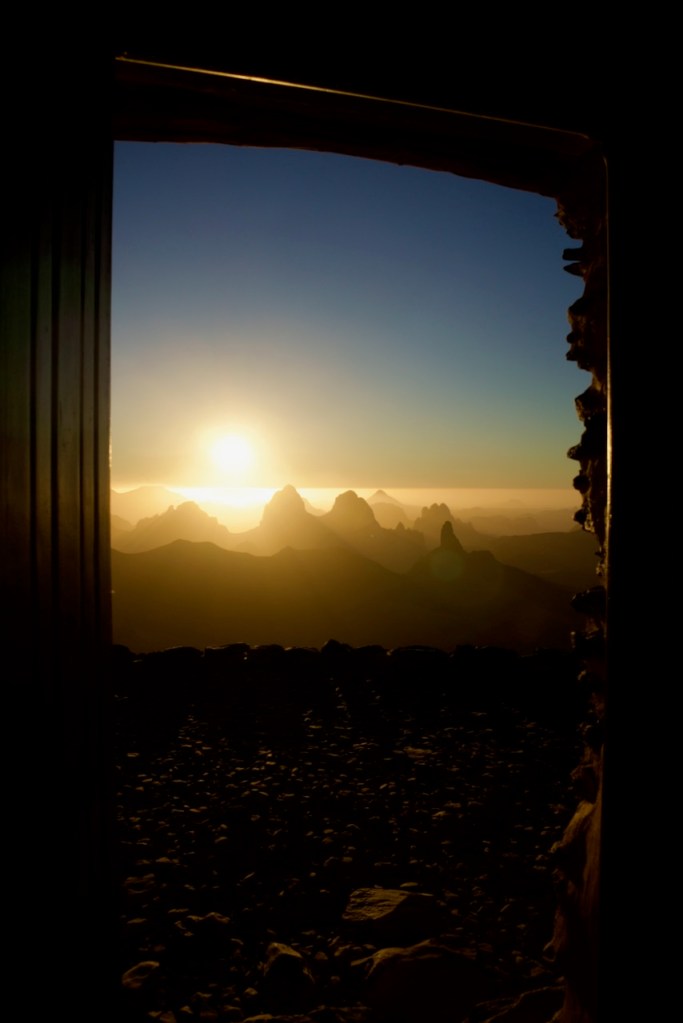
The flight from Djanet to Tam departs three hours late, arriving at seven in the morning. Another exhausting desert white night. We, four foreigners with clearance papers, wait for about an hour for police escort and proceed to our hotels for a brief rest before the tour begins. Eric and Rick, two adventurous Dutch travellers, and I follow a classic 2-day Assekrem itinerary, beginning with a delicious lunch stop in Guelta d’Afilal – a rare lake in the desert – before driving off-piste for about two hours through a scenic volcanic landscape up the plateau. The draw here is the million-dollar sunset and sunrise view of the photogenic Hoggar mountains from the secluded hermitage at 2,800m. Alas, my camera battery charger is broken after too much jiggling in and out of the solar panel (never surrender your camera gear!), and each photo could be the last. Braving the freezing wind and cold at dawn, I walk up the hermitage to catch the first rays over the entire Hoggar. For a moment, I understand why Father Foucauld chose this spiritual spot. What amazing energy here, I hardly want to leave! The second day program is chill, with a long lunch break, rock art viewing in Ezernene, quick and dirty laundry, and a 30-minute freshening up to get ready for yet another bleary-red-eye flight. Goodbye, Algerian police, or so I thought!



Oran and Tlemcen
The plane from Tam touches down in Oran at four a.m. and I arrive in the city centre in the dead middle of the night to find the hotel locked with no response to my pounding. A moment of panic sets in until I find a nearby alternative. Lo and behold, the guard opens the door! Shukran, shukran, shukran!
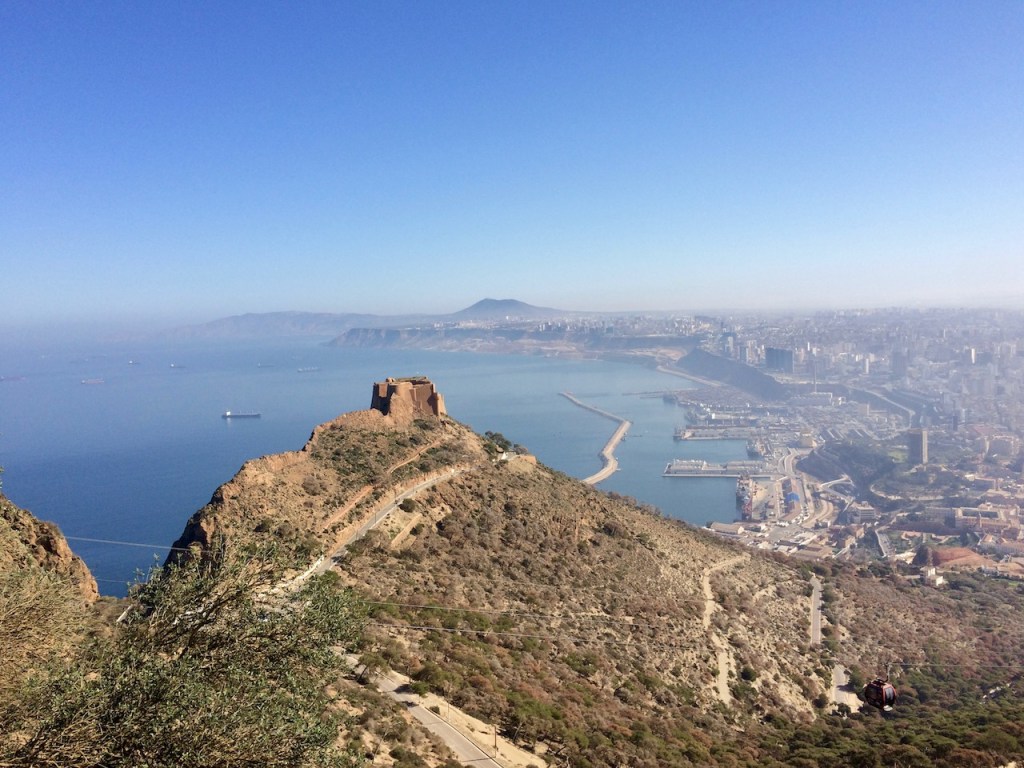
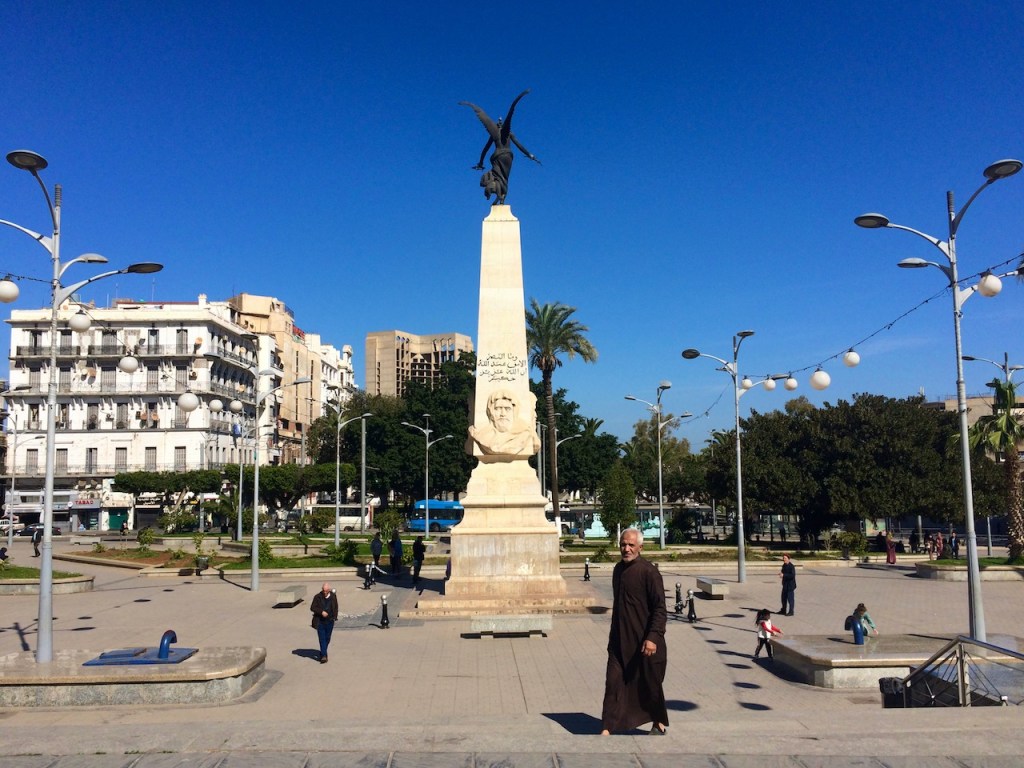
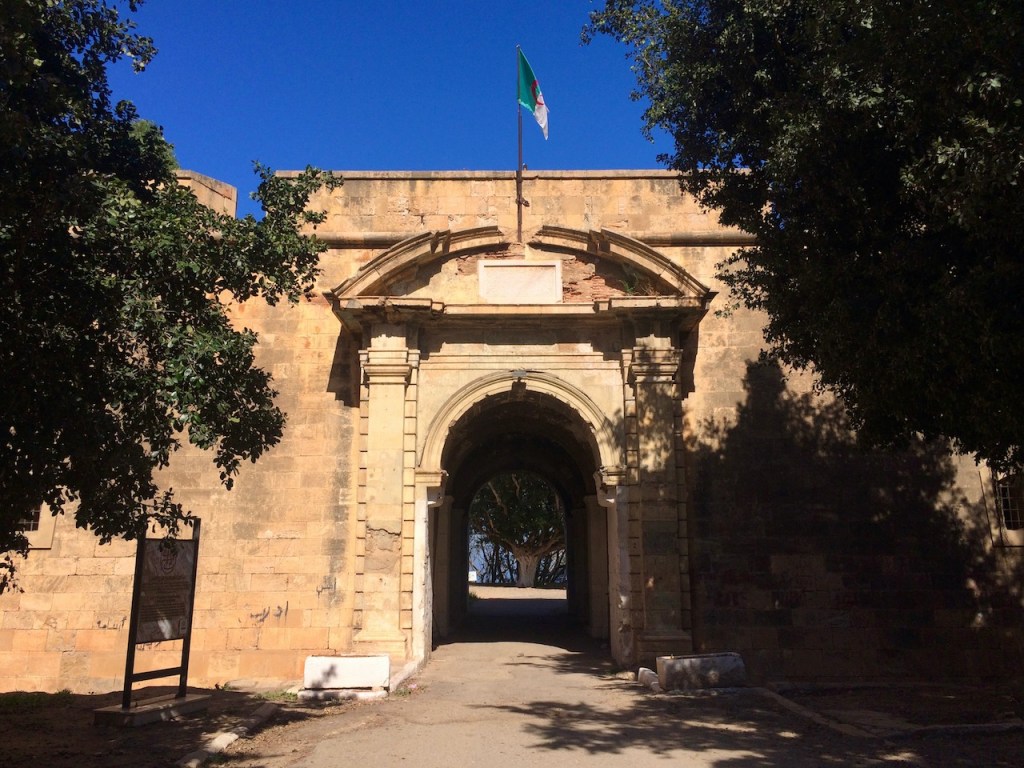
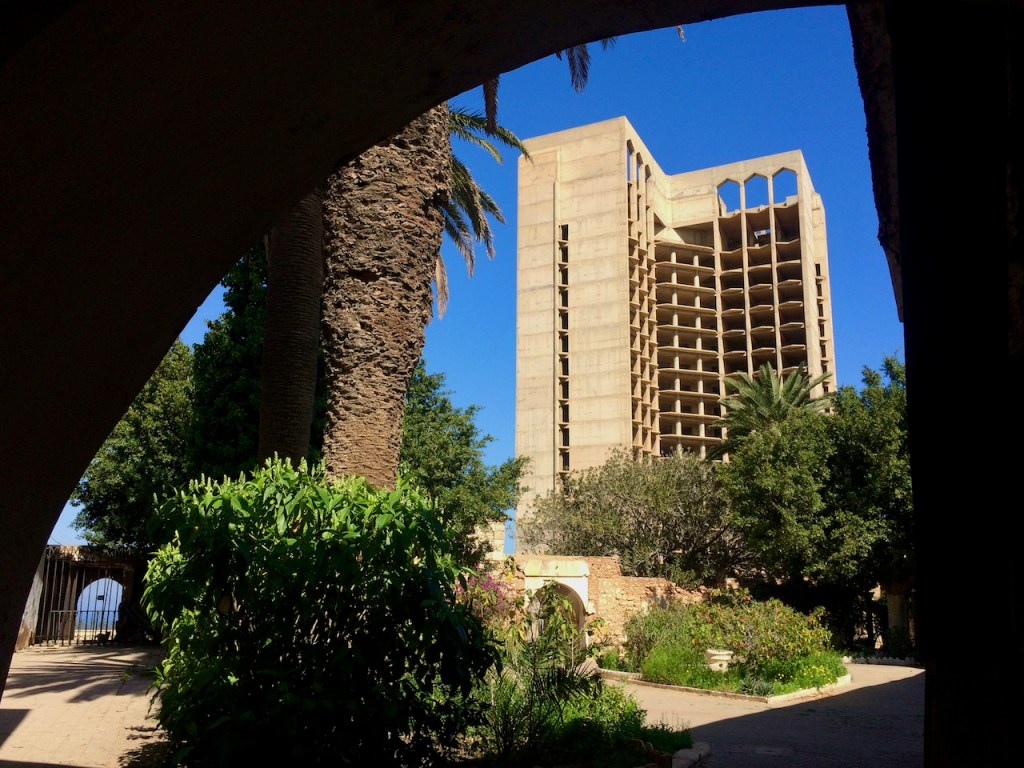
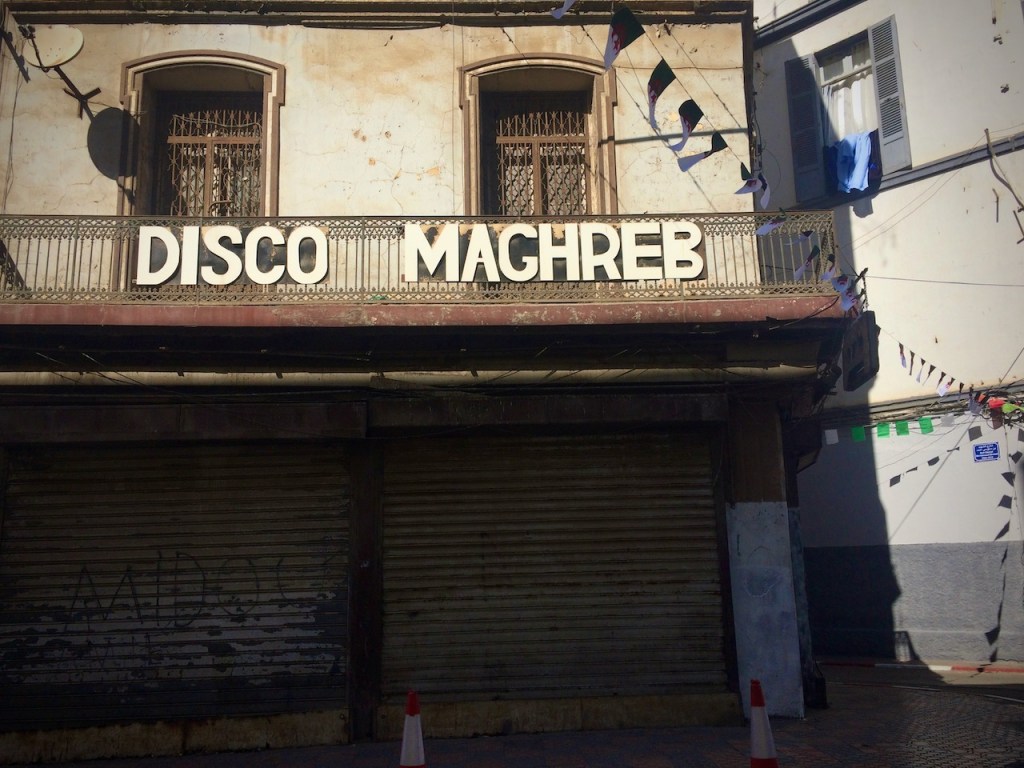
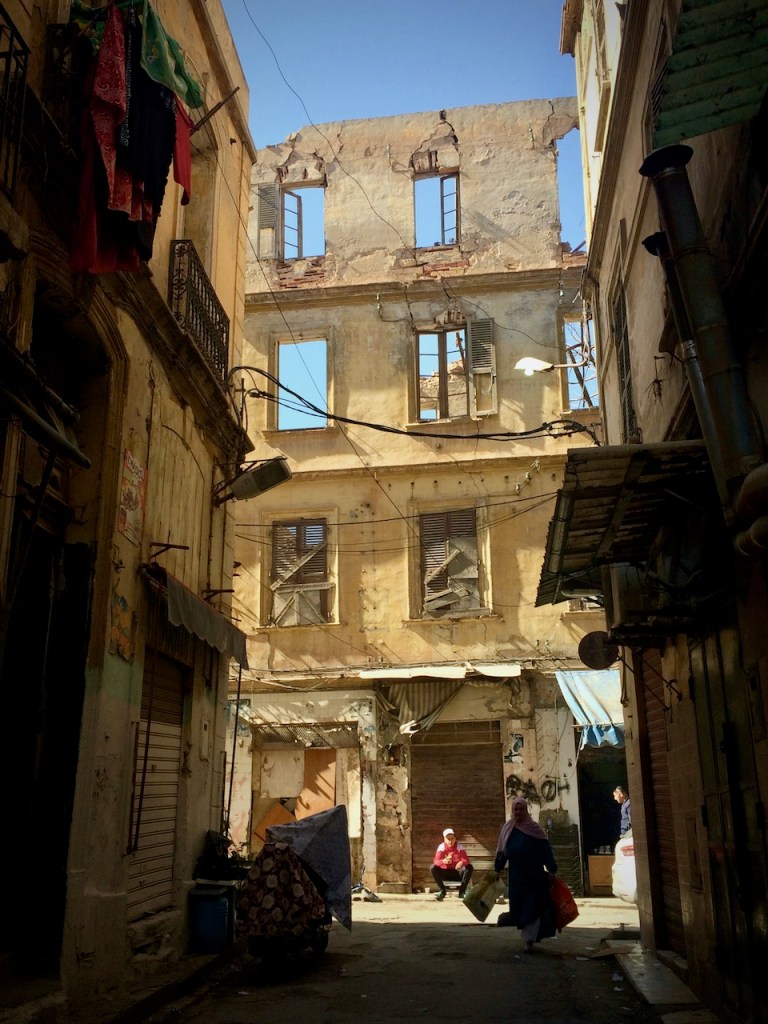
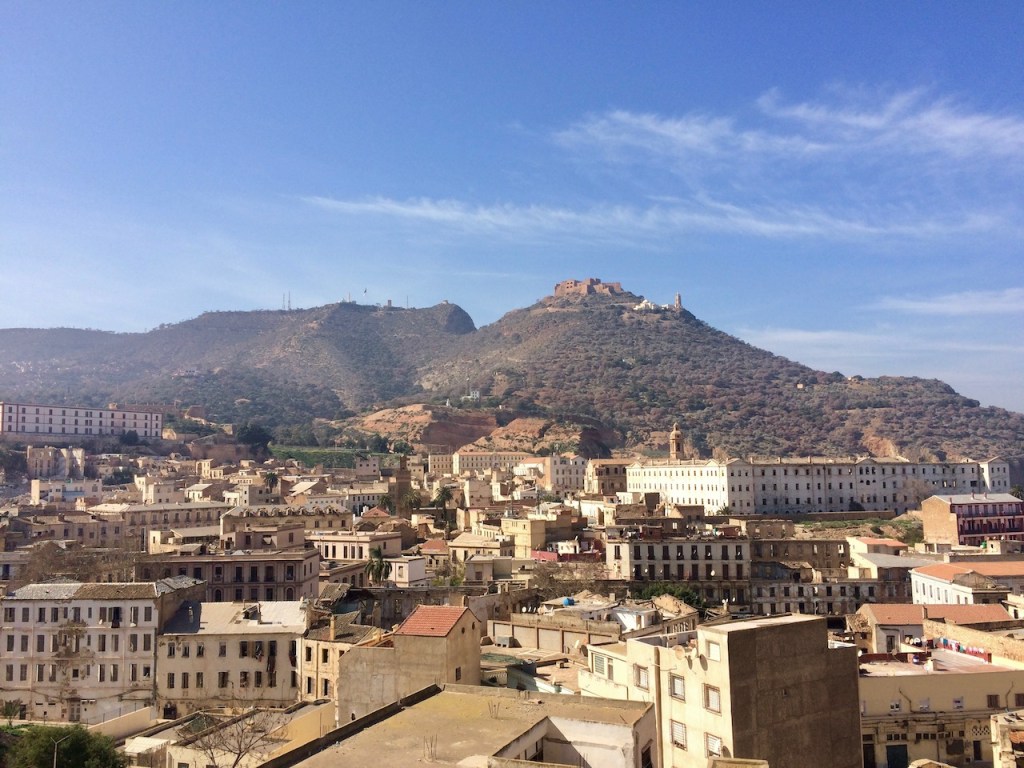
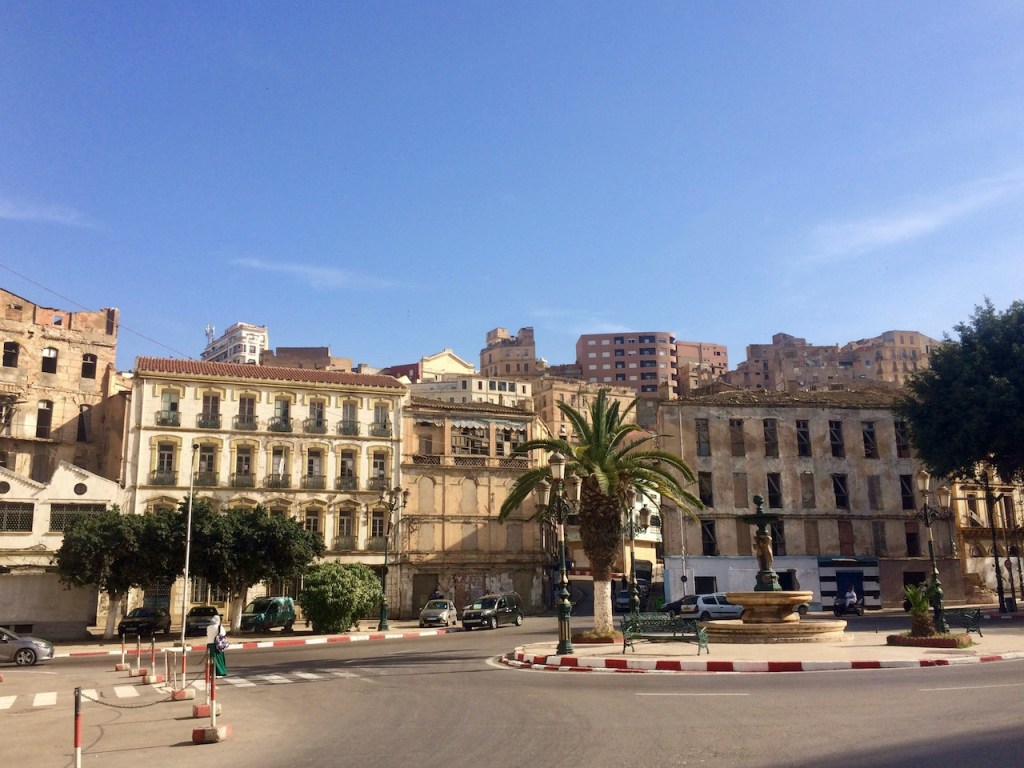
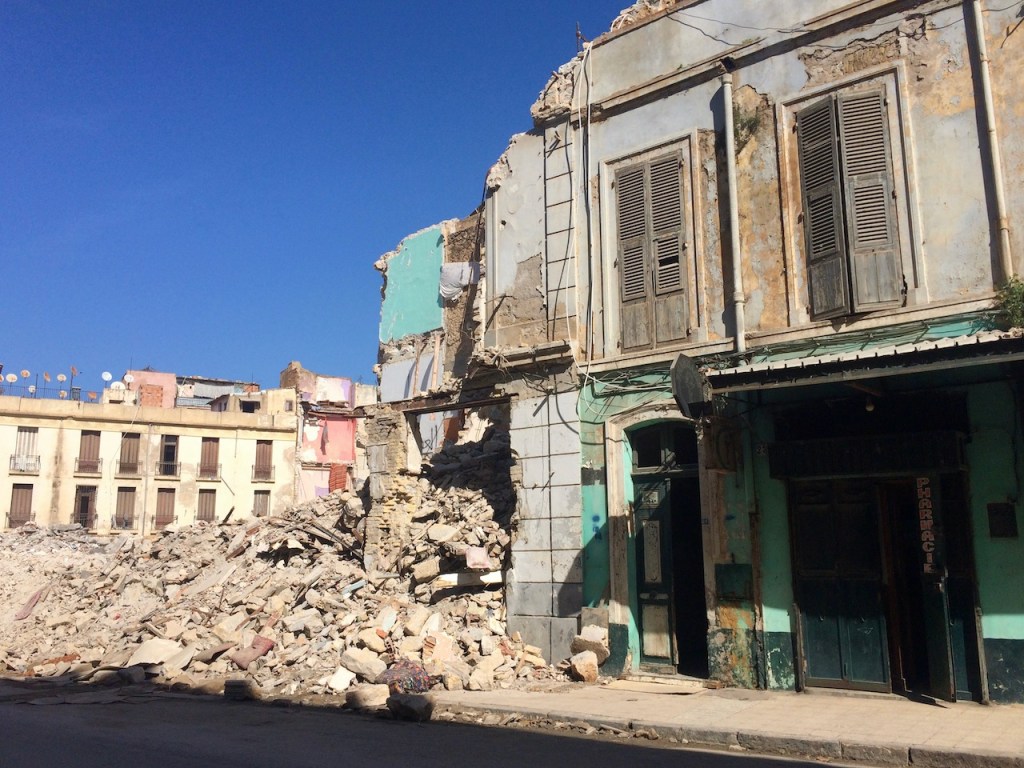
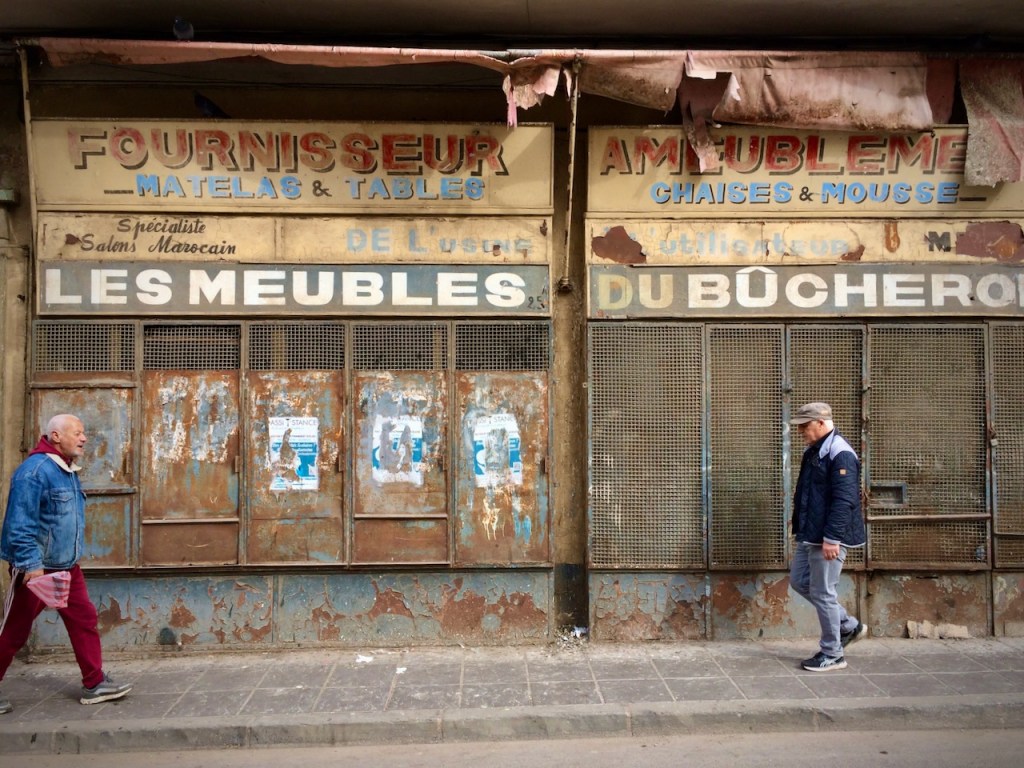
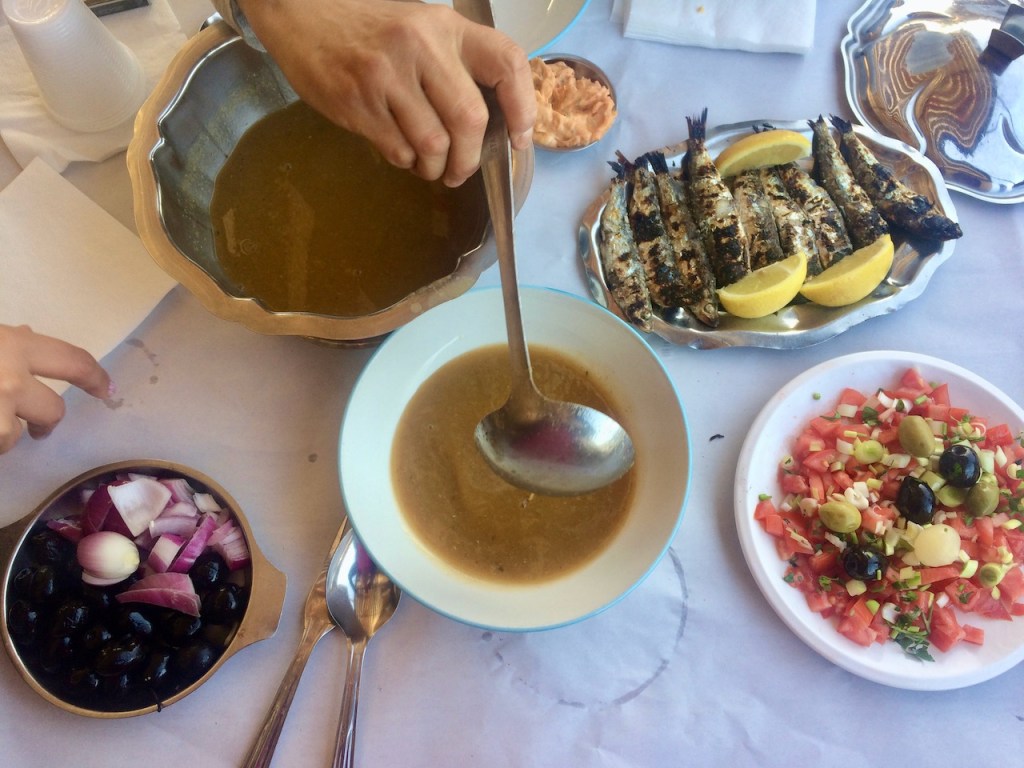
Oran is the most beautiful city in Algeria, I have often been told. After a few hours’ rest, I take a leisurely cable car ride up to the Spanish Fort Santa Cruz for a sweeping view of the bay. Then I walk to Palais du Bey that must have seen her more glorious days. I am snapping shots of Art Deco buildings not far from Place 1er Noviembre, the main square, when I meet Mina, an Algerian French, who kindly chaperons me to the Derbe Quartier, once the Jewish area prior to 1967. The rundown district, though not necessarily unsafe, makes such a pitiful sight. And the nearby former European quarter, left in a state of disrepair since independence, is the eye of a real estate development storm, Dubai-style, according to a 2030 government plan, Mina explains. I follow Mina’s nostalgia to the seafront for grilled sardines, and then we stroll along the Oran waterfront to sip sweet mint tea.
I have been trying to get my camera battery charger fixed before returning to the bigger dunes. Amar, an Algerian American professor of history teaching at a university in Relizane, takes me to a “reparation” store in Oran centre, and a young wizard manages to weld a new connector within minutes, giving the charger – and me – new life, for a bill of two euros, parts, labor, and taxes inclusive!
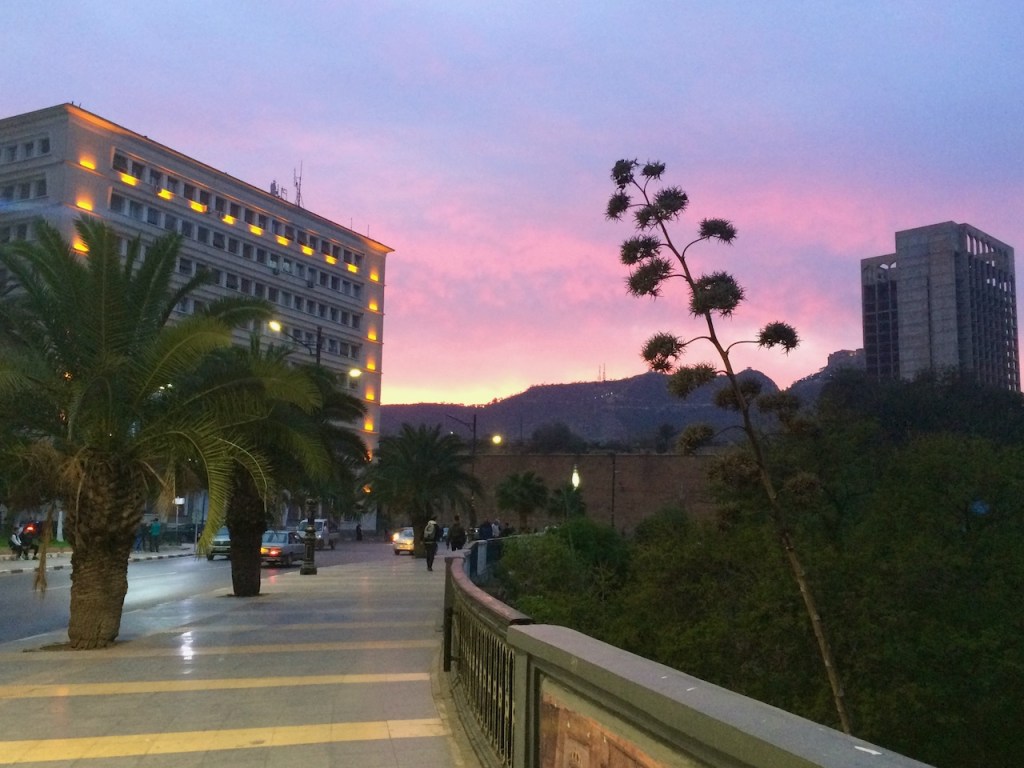
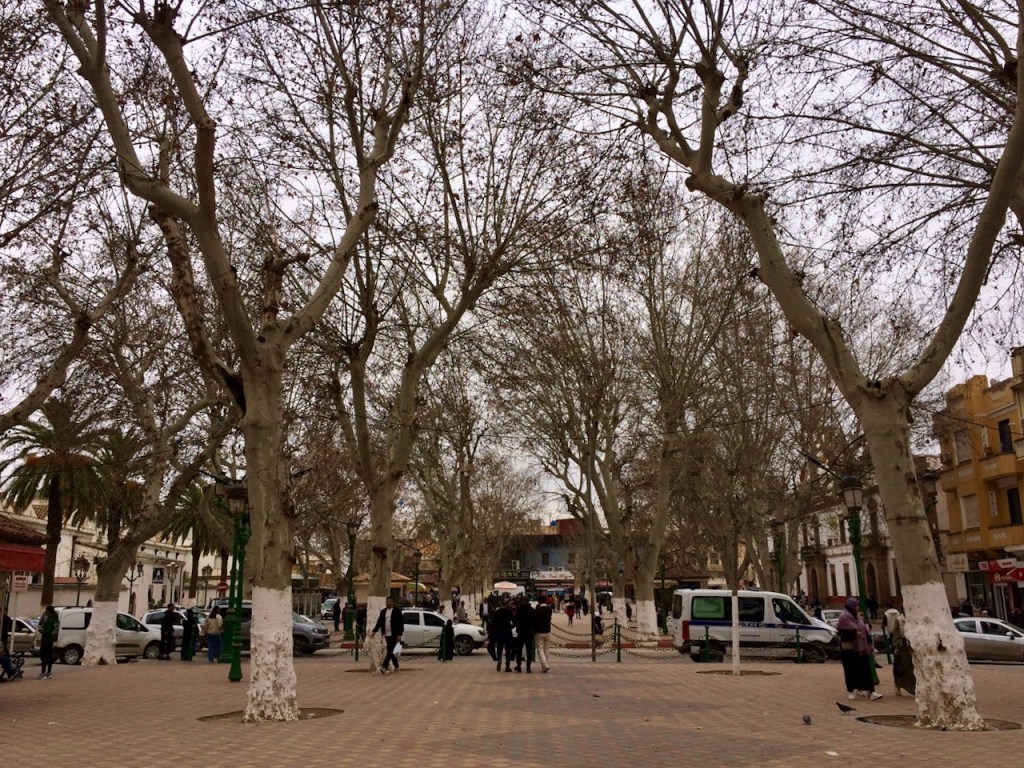
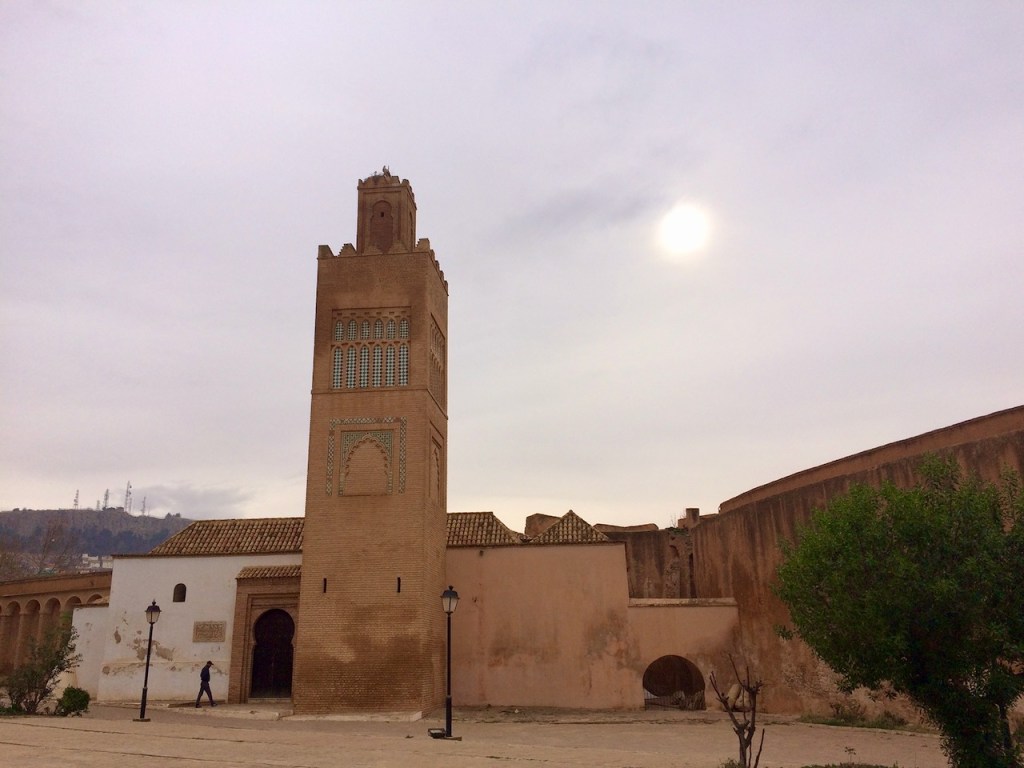
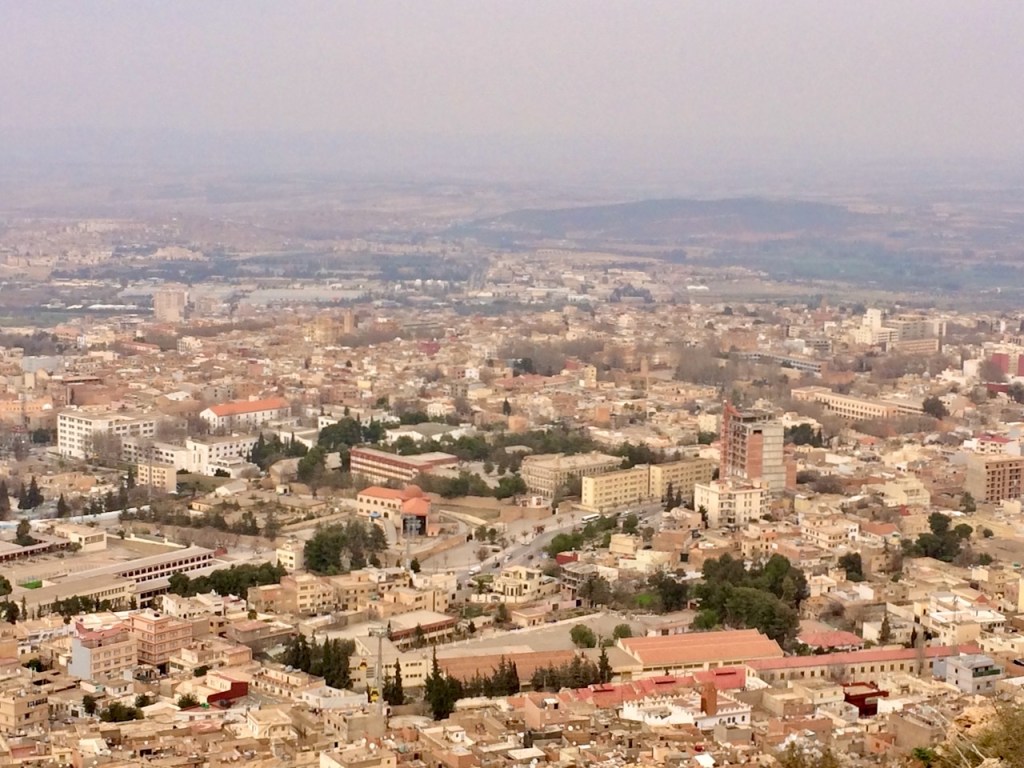
Tlemcen is only two hours away. The capital of the Abd al-Wadid kingdom from the 13th to the 15th century with exquisite Moorish buildings from the Grand Mosque to the El Mechouar palace, the small vibrant city is a pearl of the Maghreb. From Place d’Independence, I meander through narrow streets crowded with shops and cafés before taking a cable car up to Lala Setti for another pretty sunset.




Grand Erg Occidental: Taghit to Timimoun
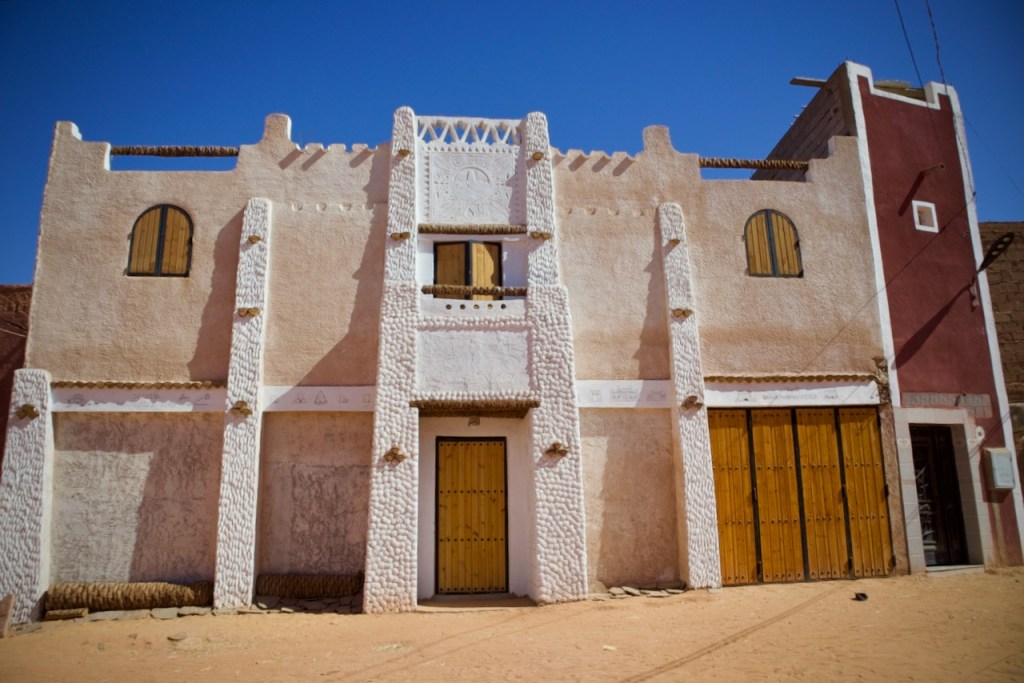
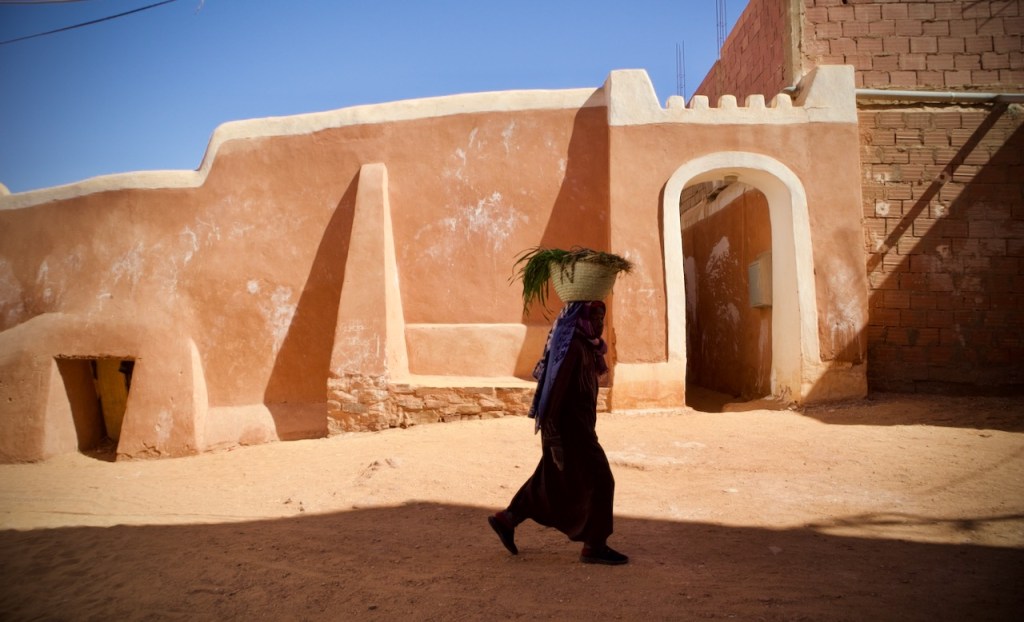
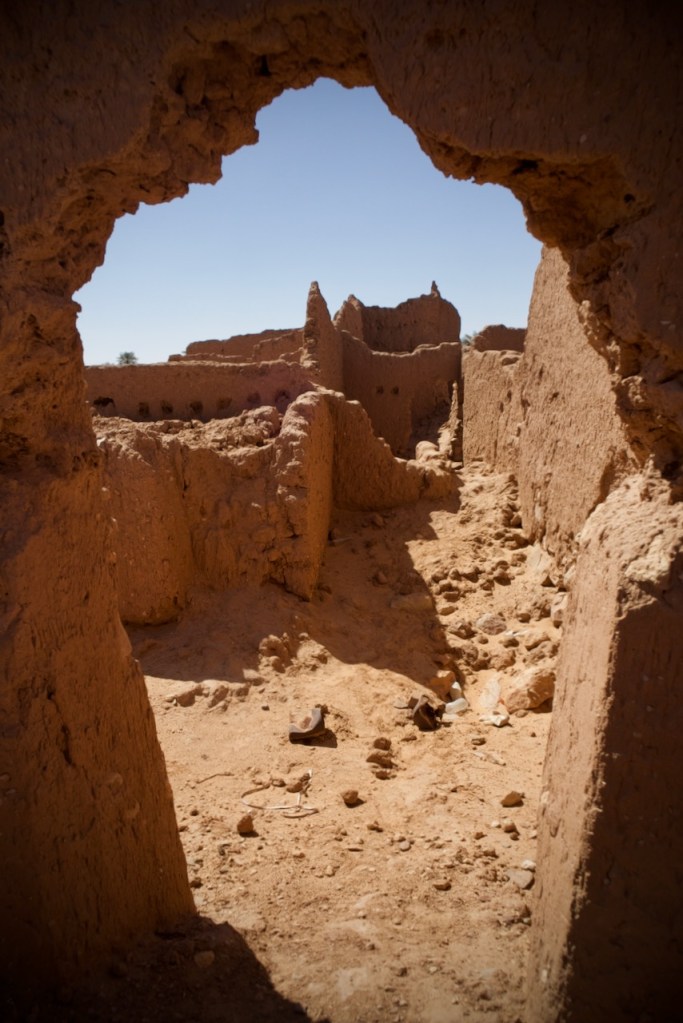
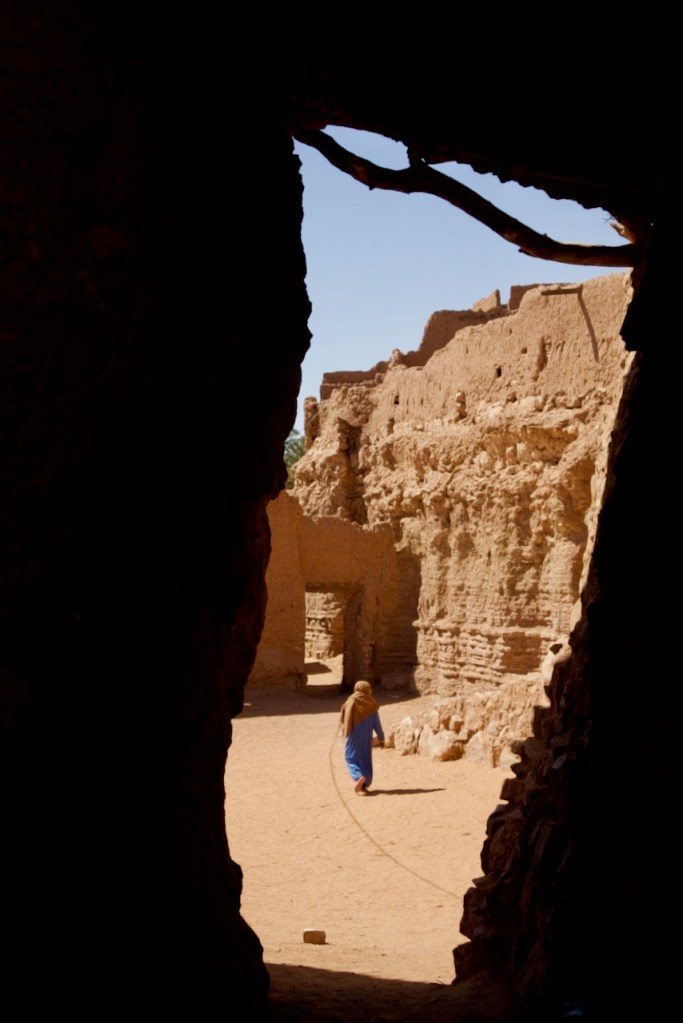
No adventure in Algeria is complete without heading to the Grand Erg Occidental in the Saoura region along the Ksour road from Taghit to Timimoun. Once very prosperous at the crossroads of civilizations, the fortified villages of Berber architecture are marked by traditional ocher houses and ksars built on rocky spurs, offering stupendous views of the highest dunes of the Sahara.
From Tlemcen, I take a seven-hour shared taxi ride to Bechar, arriving just in time to catch the last four p.m. bus to Taghit. One of the most beautiful oases in the Sahara, the small town with an old ksar, palmeraie, and red toub houses is nestled in dunes that stretch for over 600 km. I zigzag my way up the golden dunes behind the hotel to find a double rainbow making a grand sunset entrance! Alas, the sacred silence is broken by tourist motor squads. Some people come to the Sahara for solitude, and others for entertainment!
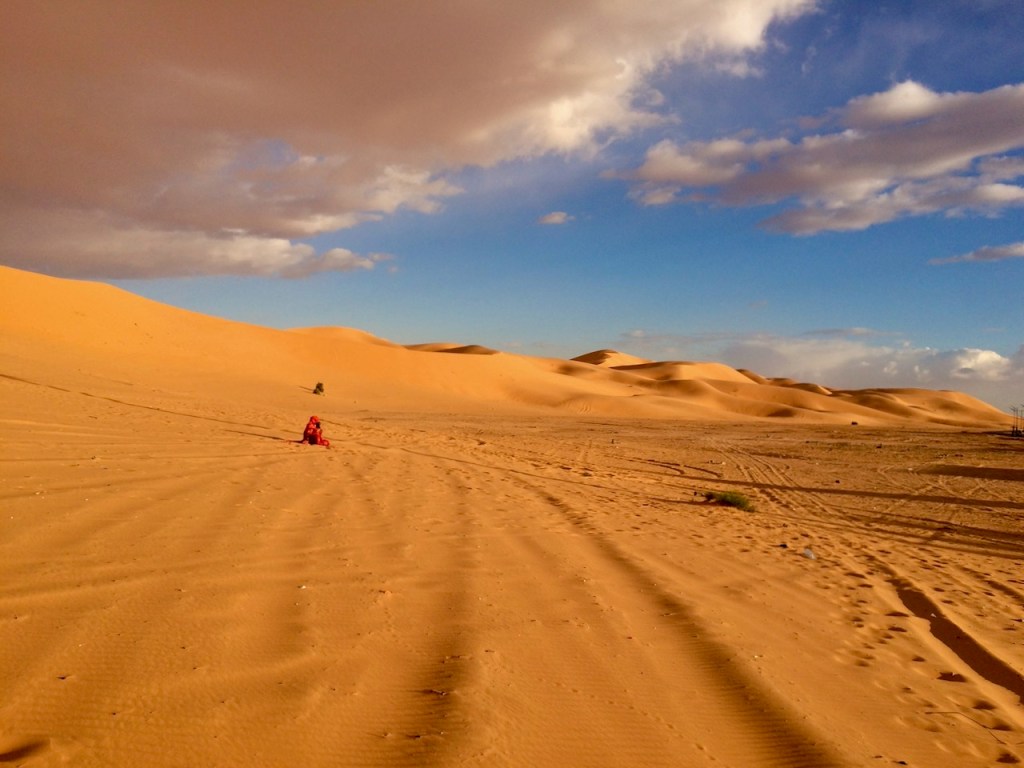
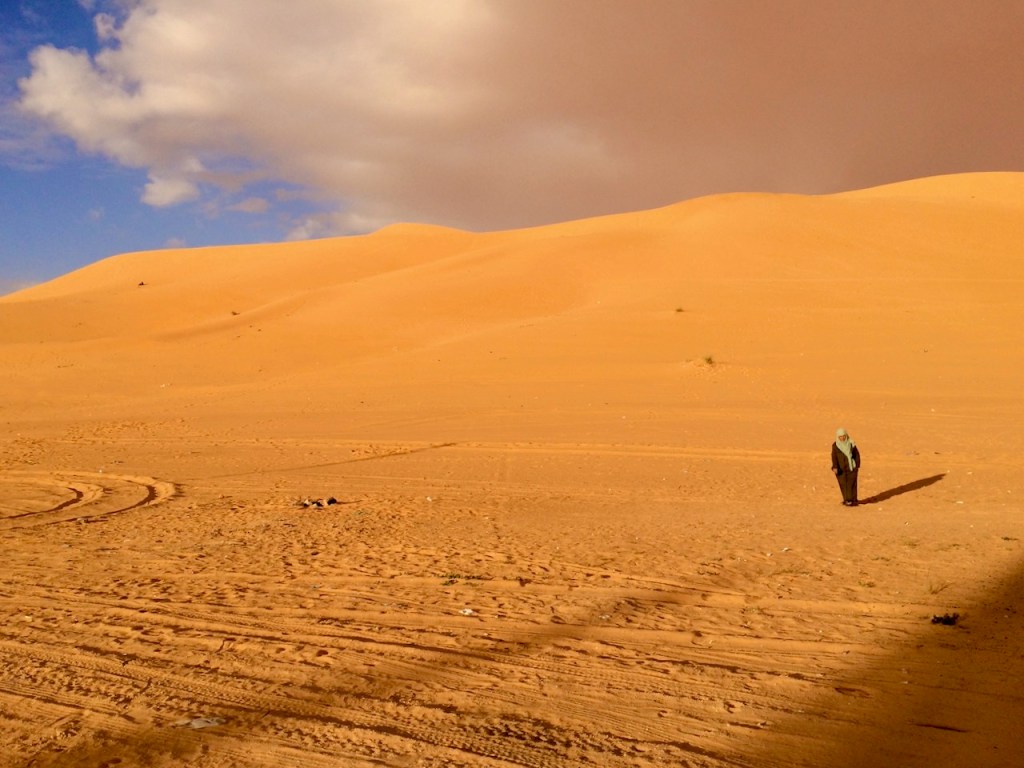
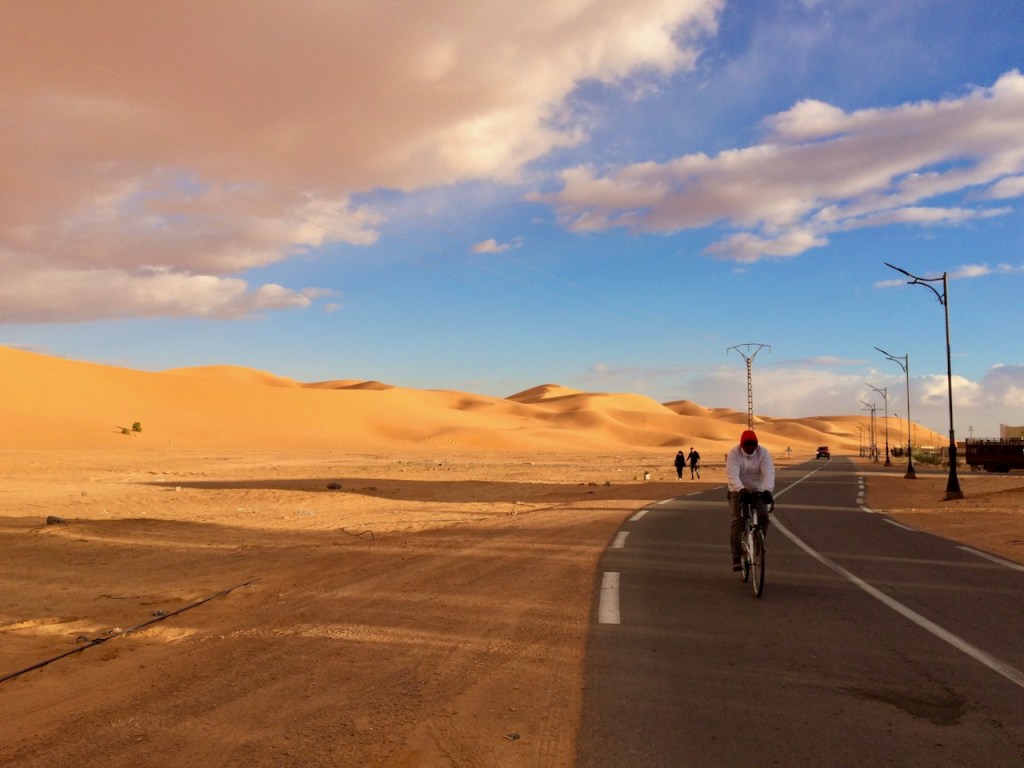
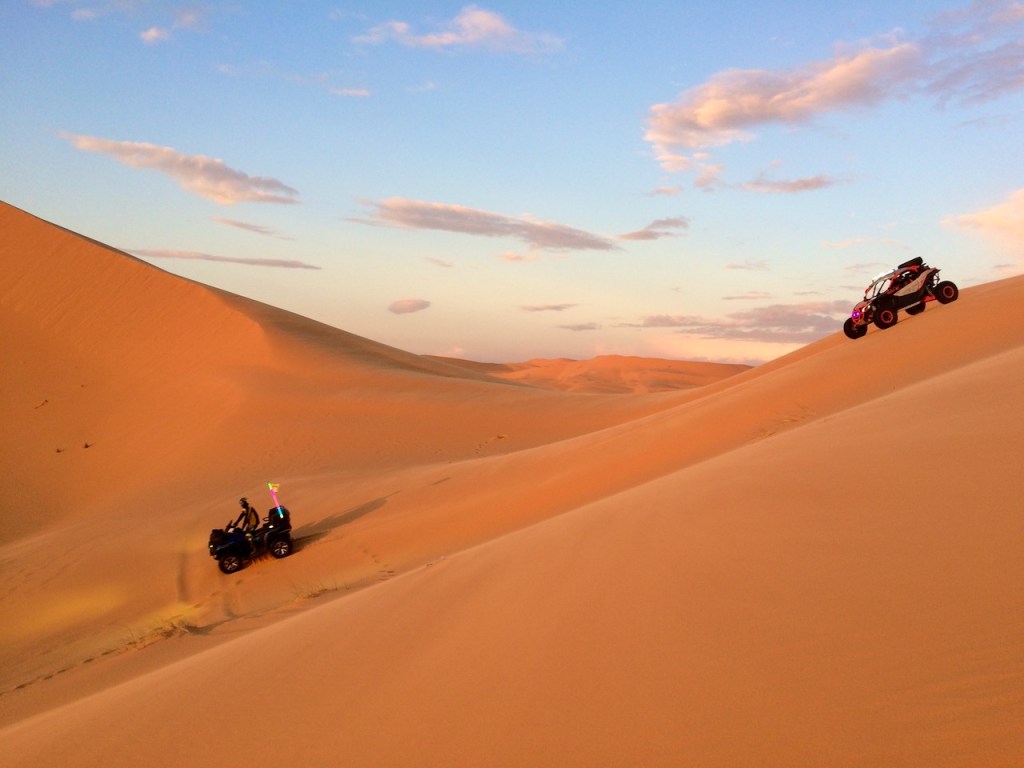

There’s only one daily bus departure to Beni Abbes, I was told, at five or six or seven in the morning no one knows. I stand in the dark along the main road not being sure whether the bus has already left until it pulls in by the mosque at twenty minutes past seven. Known as the Pearl of the Saoura with a scorpion-shaped palm grove and dunes so huge that one could apparently ski down, Beni Abbes is a desert haven. You could walk – or drive – for miles to fill your heart’s content!
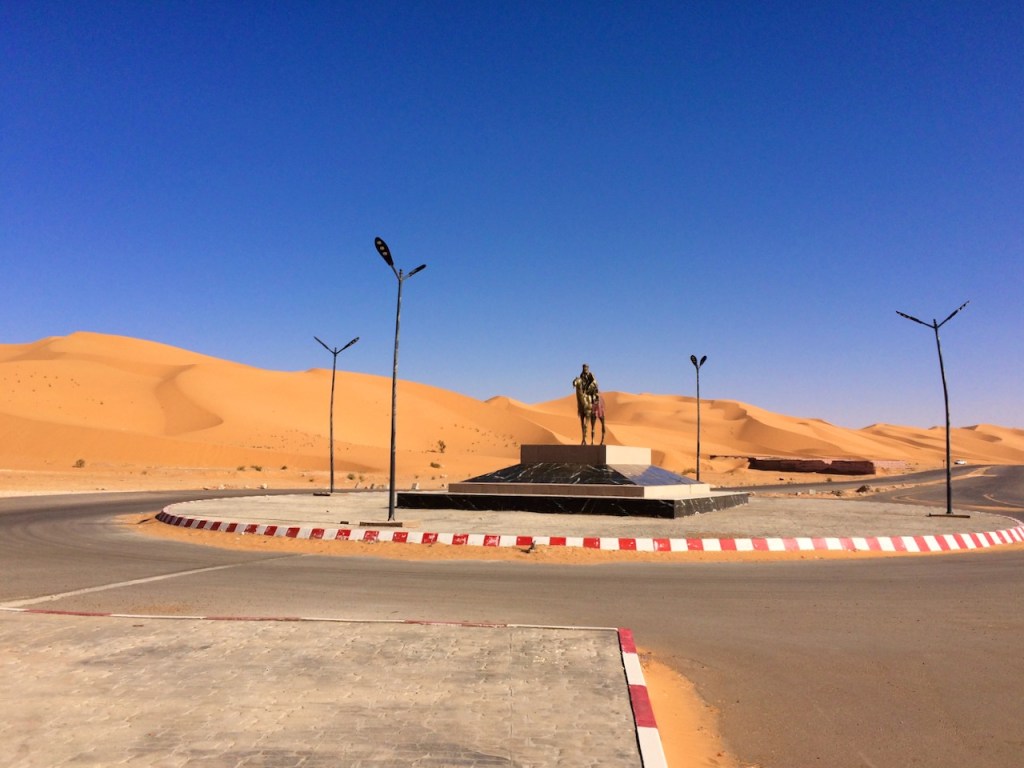

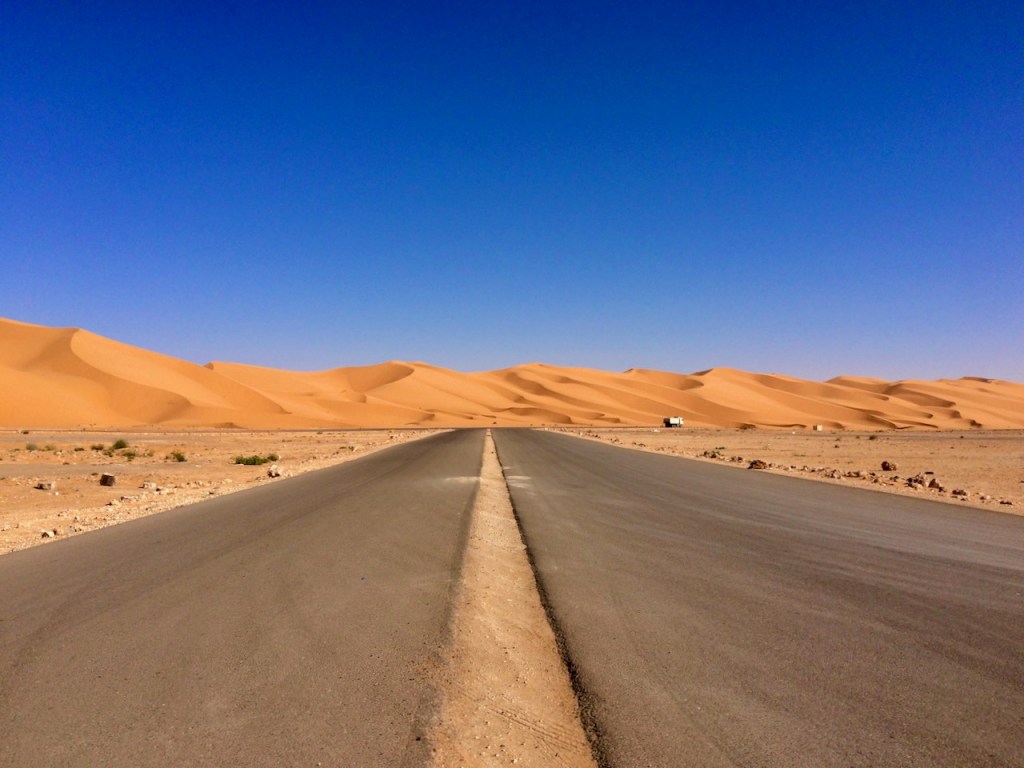

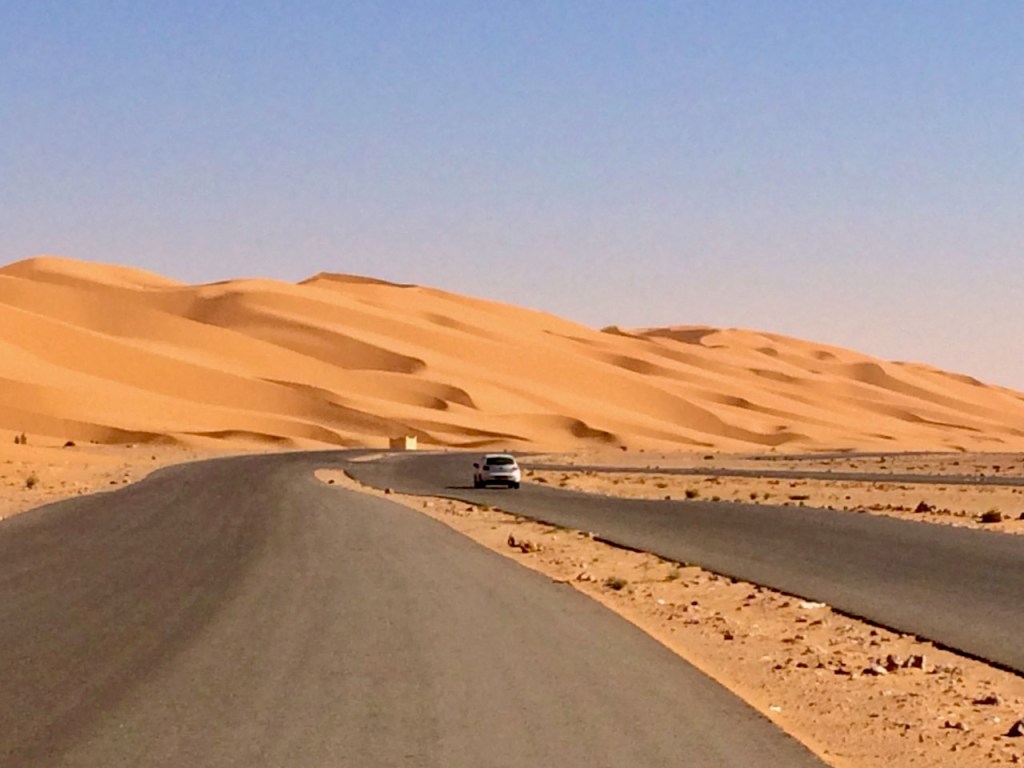
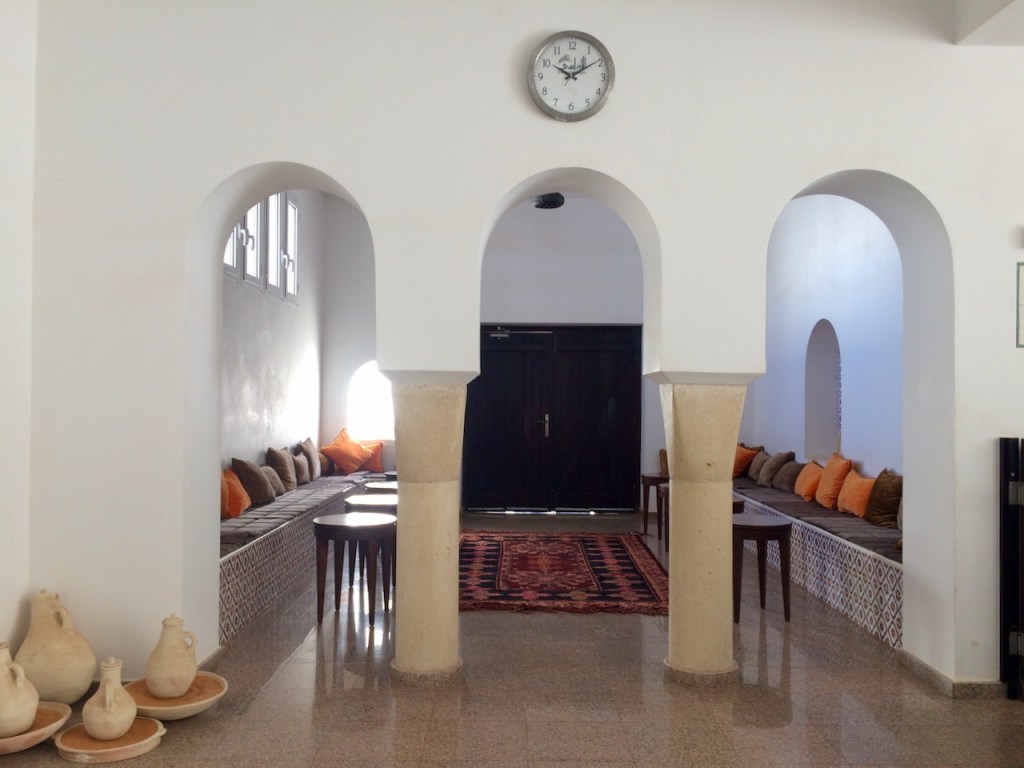
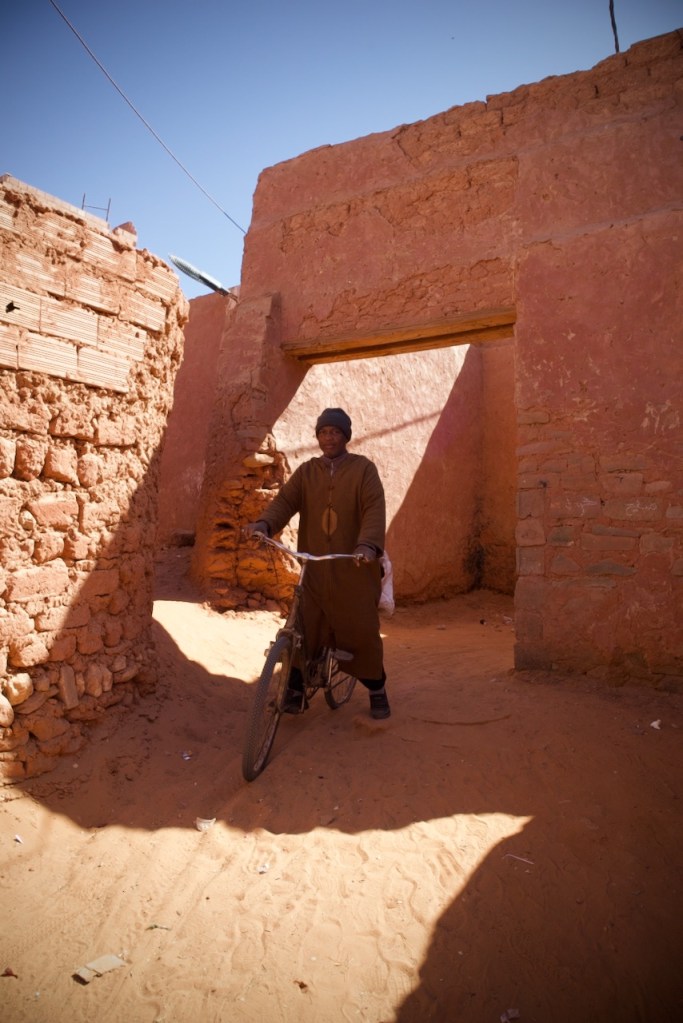
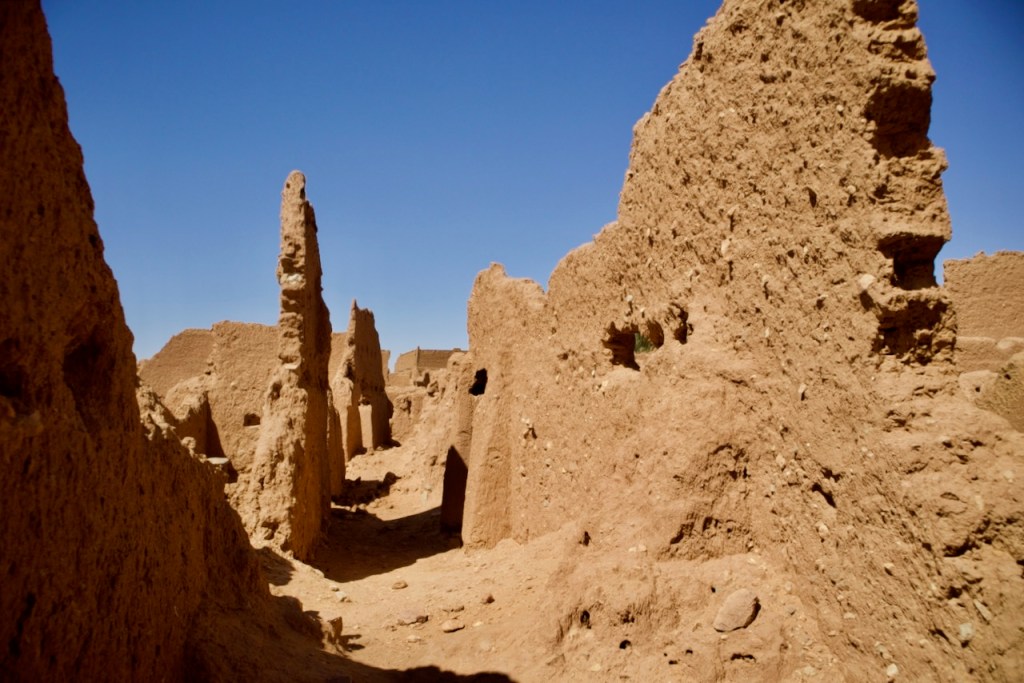
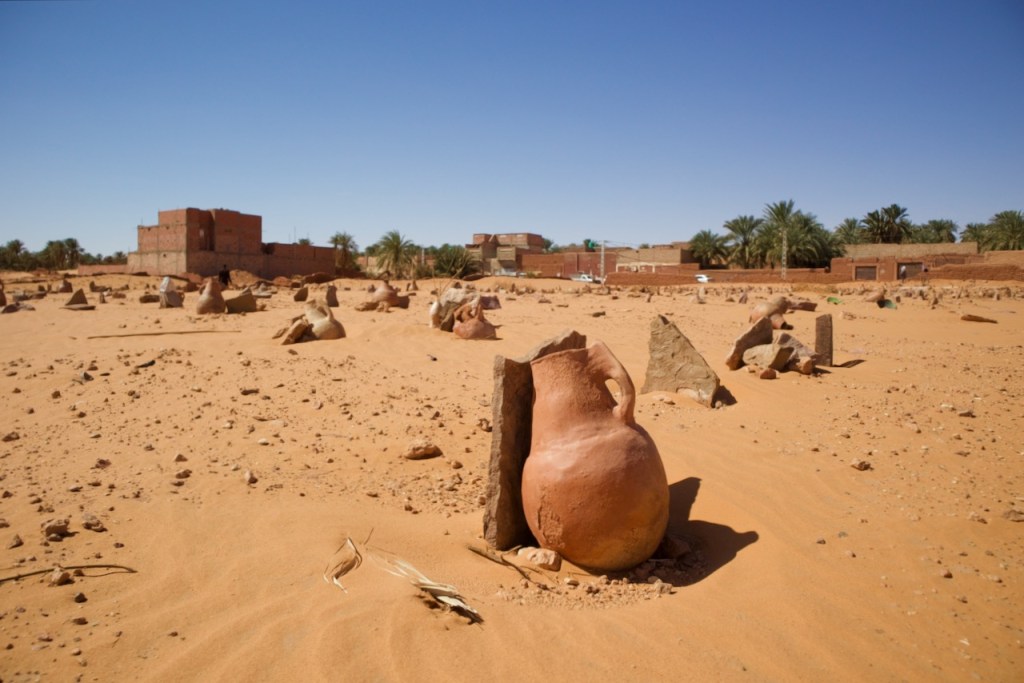
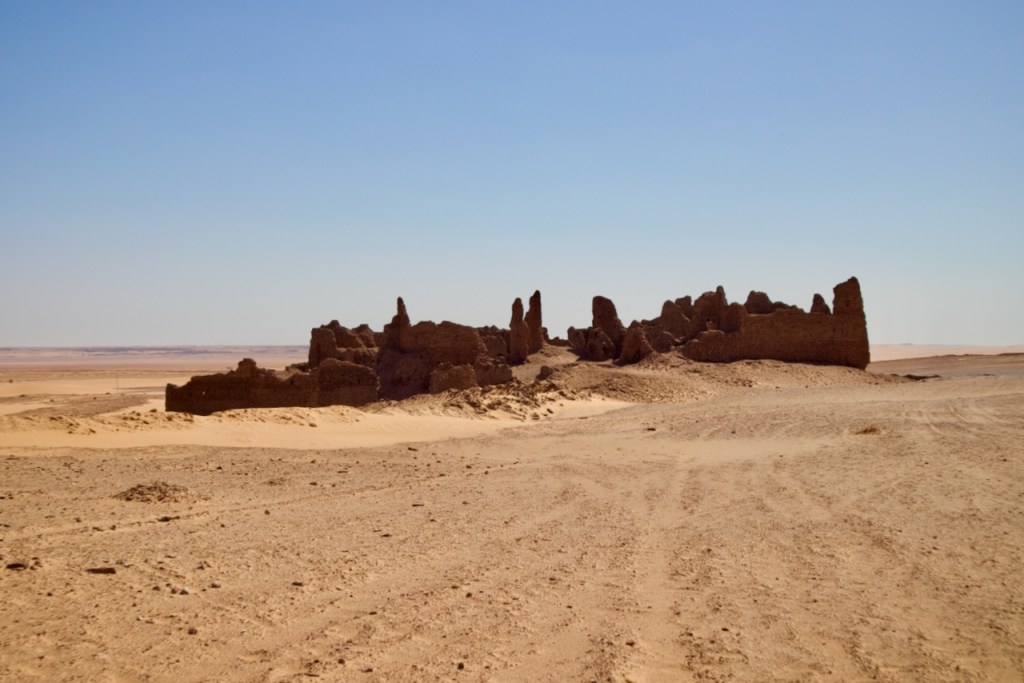
The jewel of this great desert road for me is Timimoun with a string of lush oases all around, punctuated by old ksours, palm groves, and small lakes in grand dune backdrops. As the bus pulls in the station, I am intercepted by a team of plain clothes police. Where did you come from? Where are you going? Where is your hotel? Give me your passport! Deja vu! What a blessing to be able to explore freely the old town with traditional houses and mosques before taking a shared taxi to Oued Said on market day and lose myself in the hunt for ksour ruins…
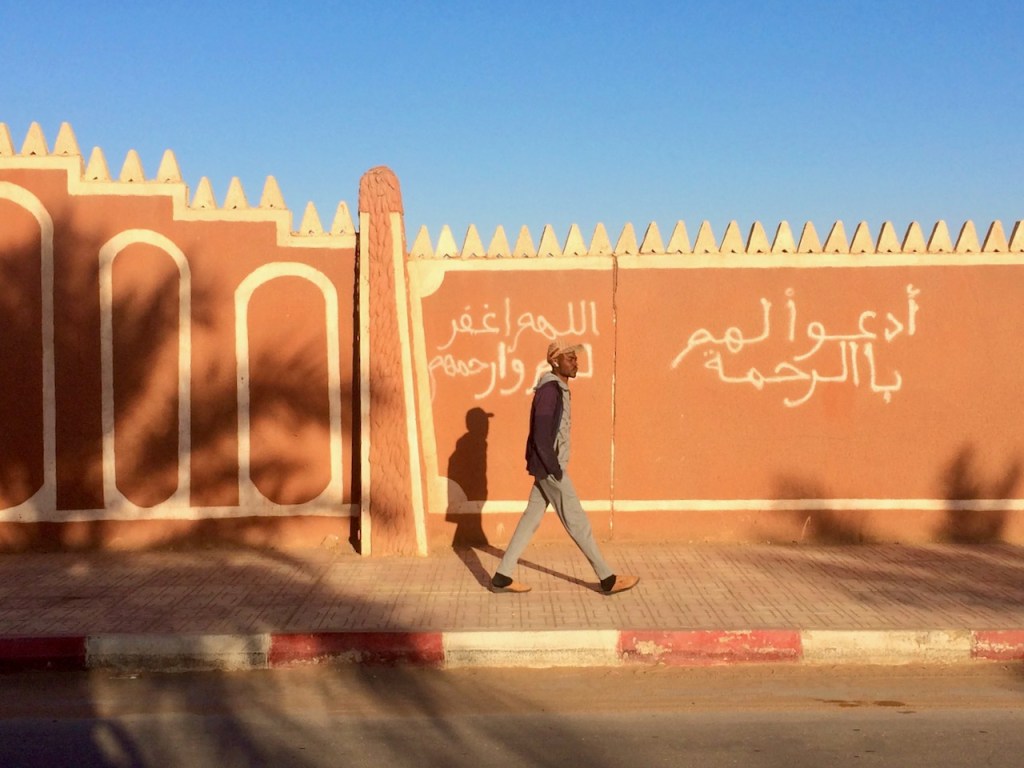
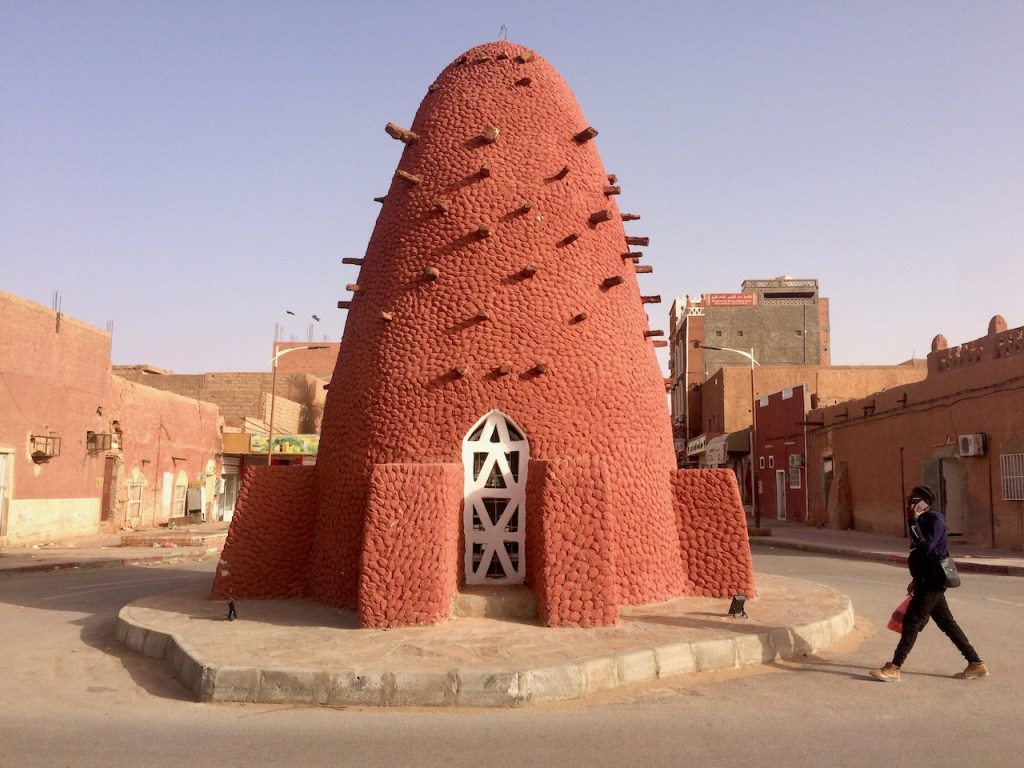
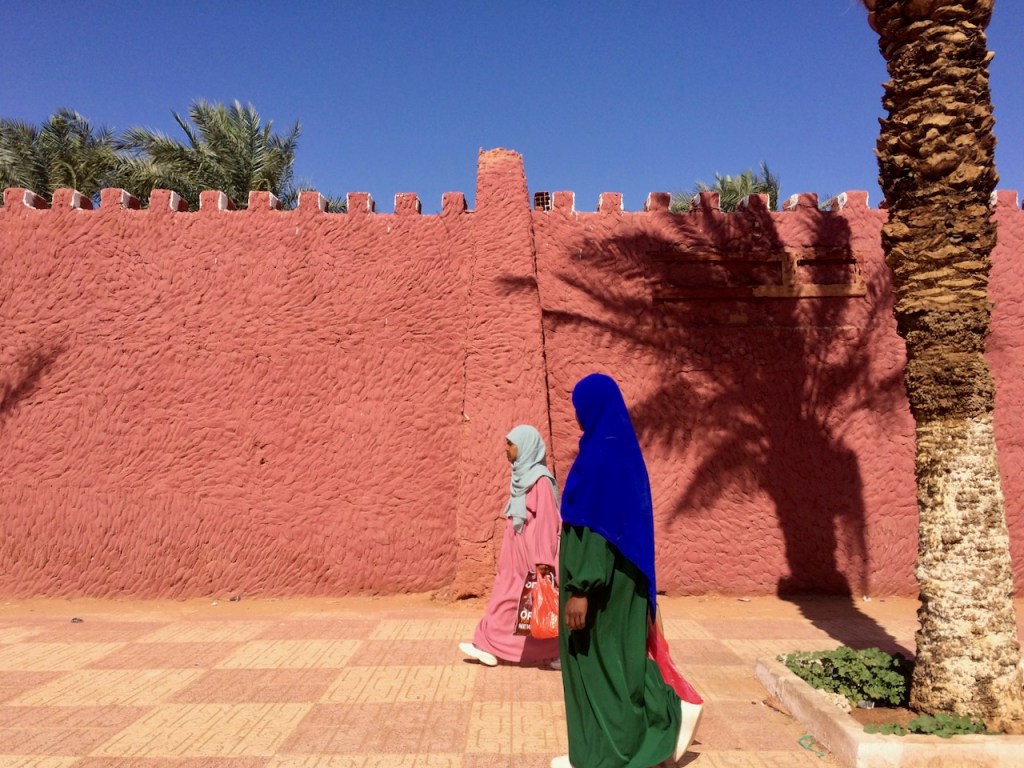
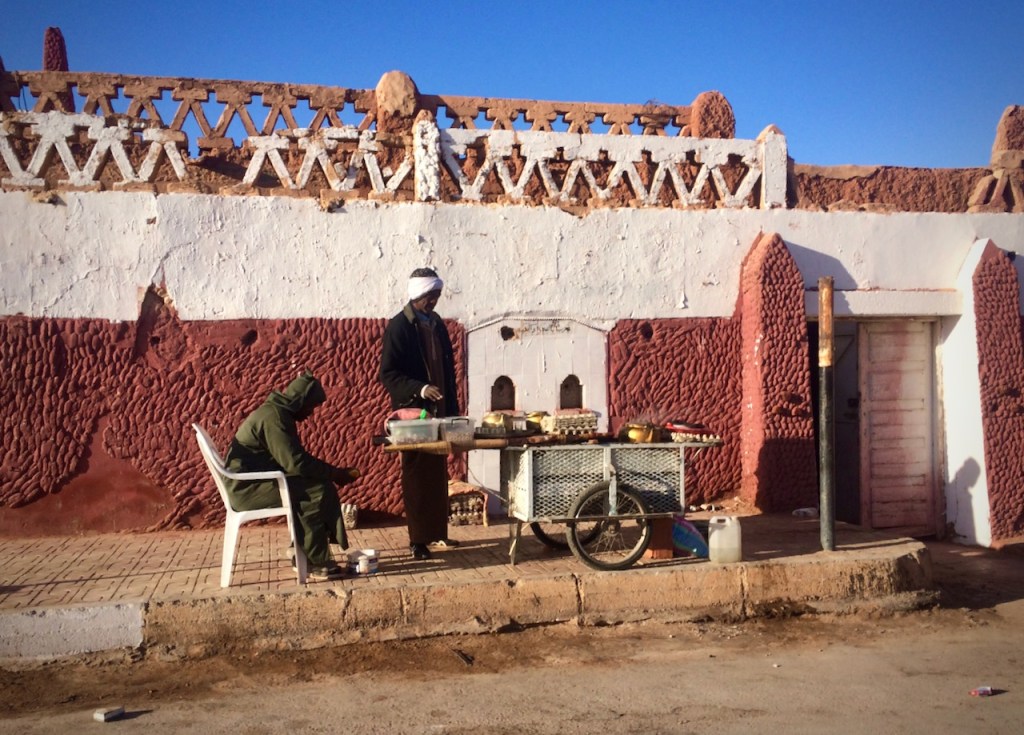
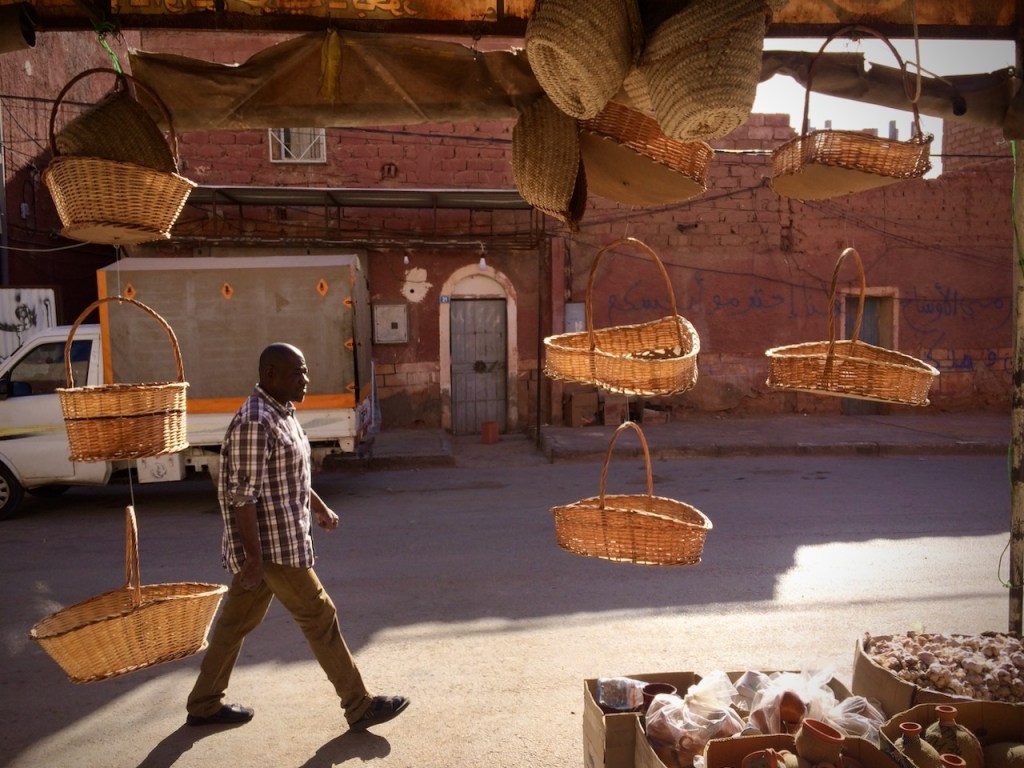
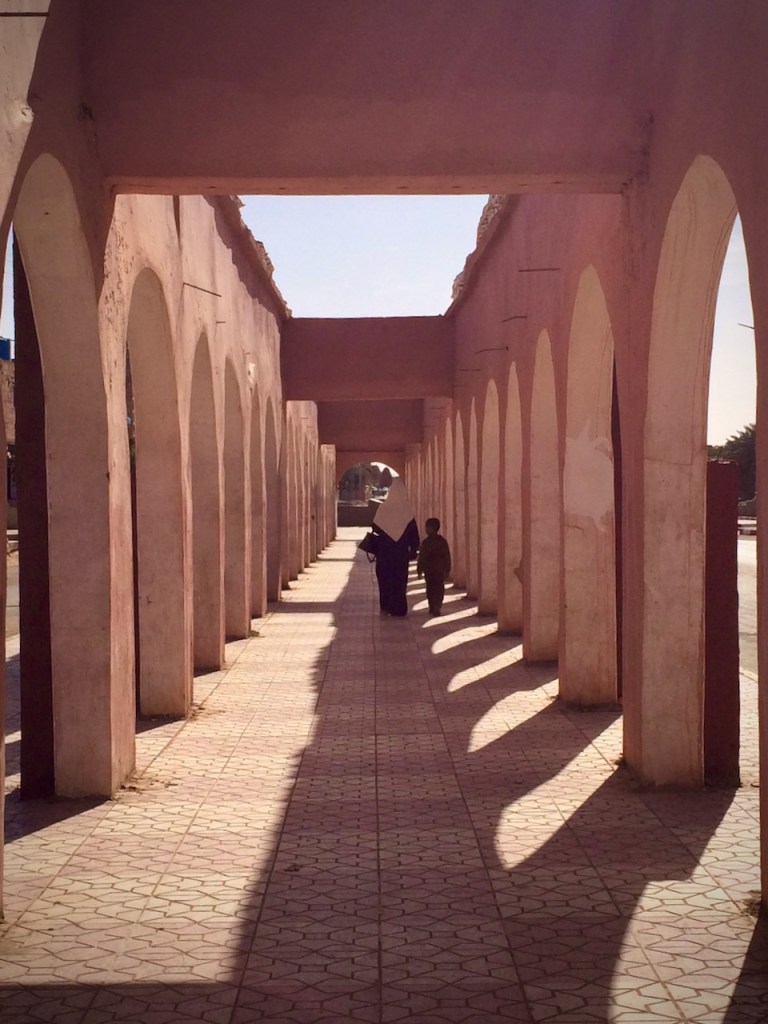
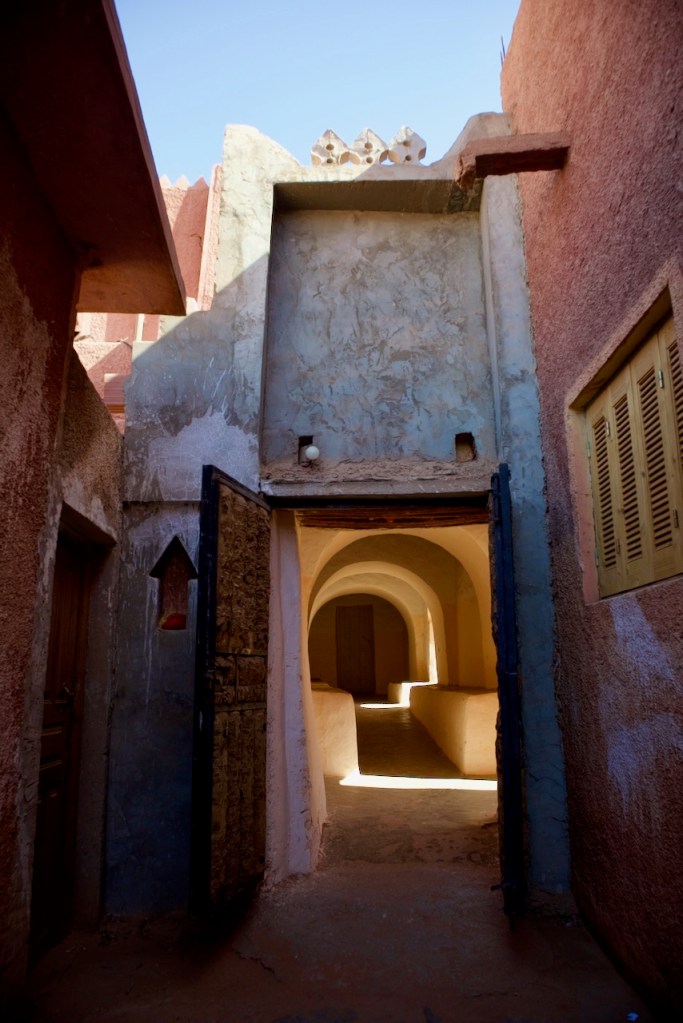


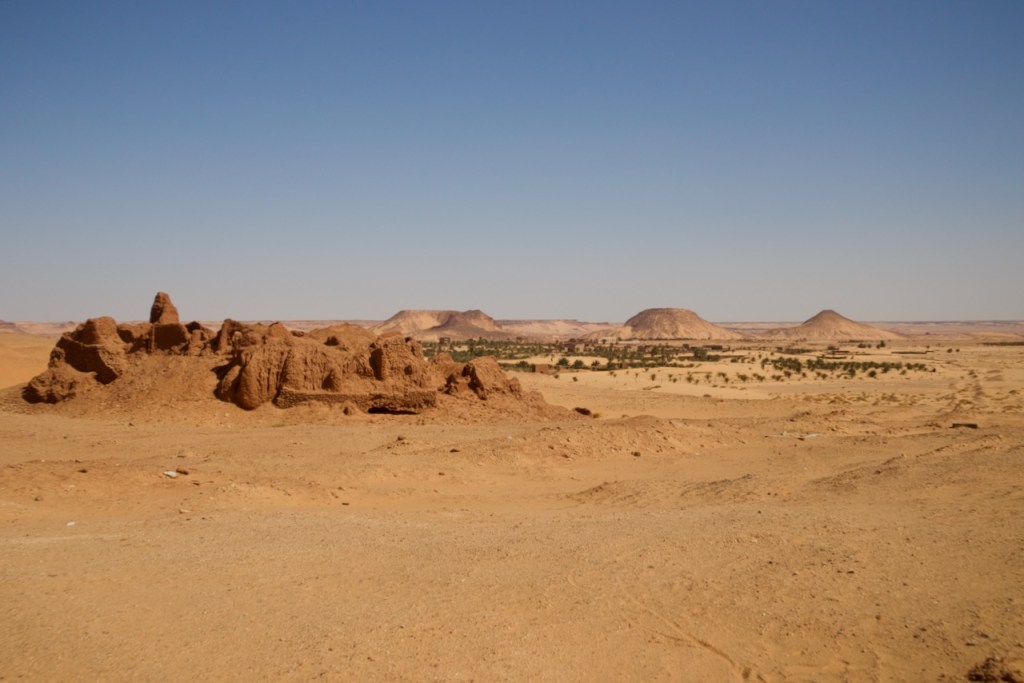
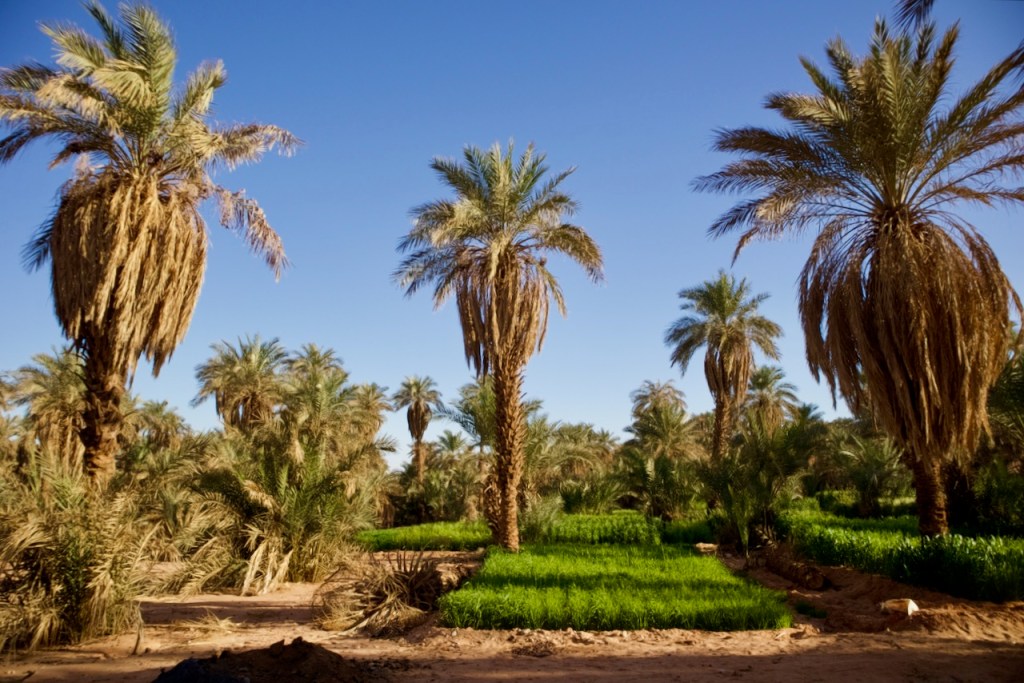
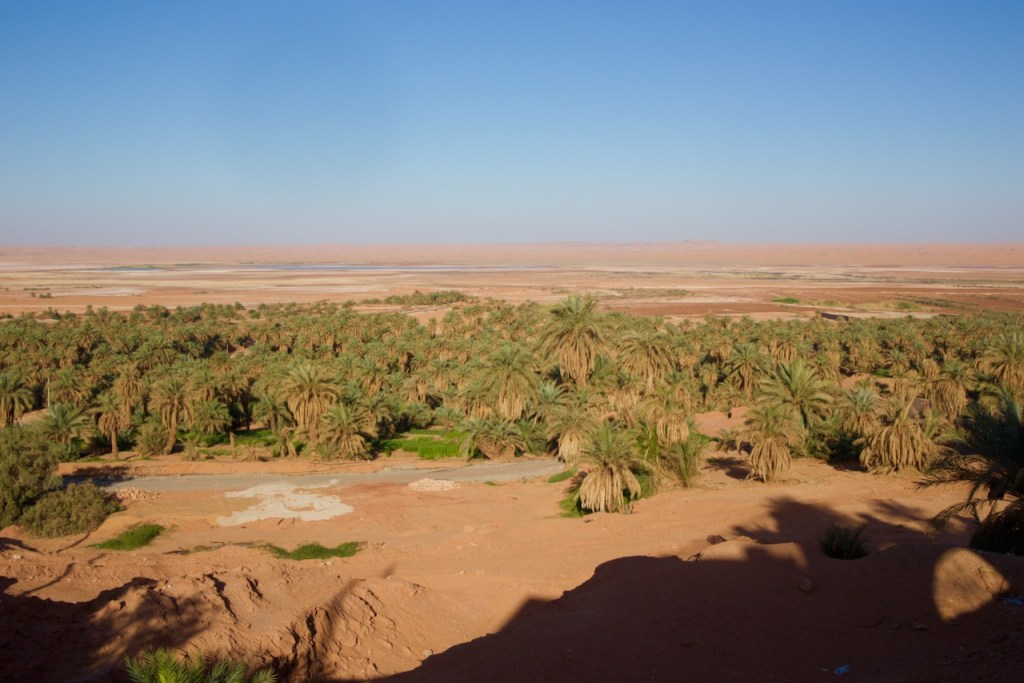

My visa is running out and I take one last red-eye flight back to the capital, returning to the Bureau des Etrangers a third time. Have you paid your stamp duty? the bald guy in the office asks. Where? There! he says, pointing out the door, with neither name nor address. I walk to another government building to get those stamps and return hopefully. Come back tomorrow! now the bald guy says. I look incredulous – pissed – and refuse to leave. Show me your return ticket! he asks now. But when’s the visa expiry date? I ask. March 3, he replies. But that’s not 30 days! I argue. It is what it is, he says. I go to a nearby hotel to book my departure flight – now with prices tripled due to Ramadan travels – and return. Come back tomorrow. It’s an exception! he says. Finally, after some five weeks, I get my visa extension stamp. Life is too short to deal with visa hassles. But you can always subcontract the problem by booking an expensive tour package. Or, better still, ask any Algerian contact to provide a “certificat d’hebergement”. Check the “multiple entry” box and hope they give you a three-year stamp. Bonne chance!
The Kabylie: Bejaia and Tizi Ouzou
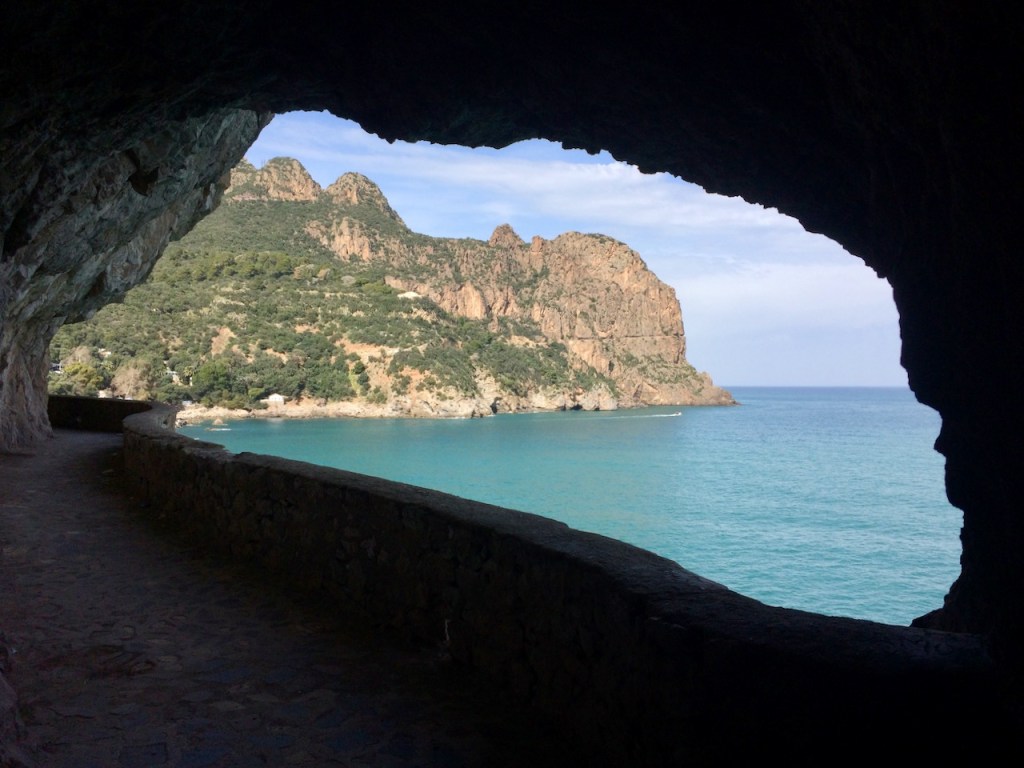
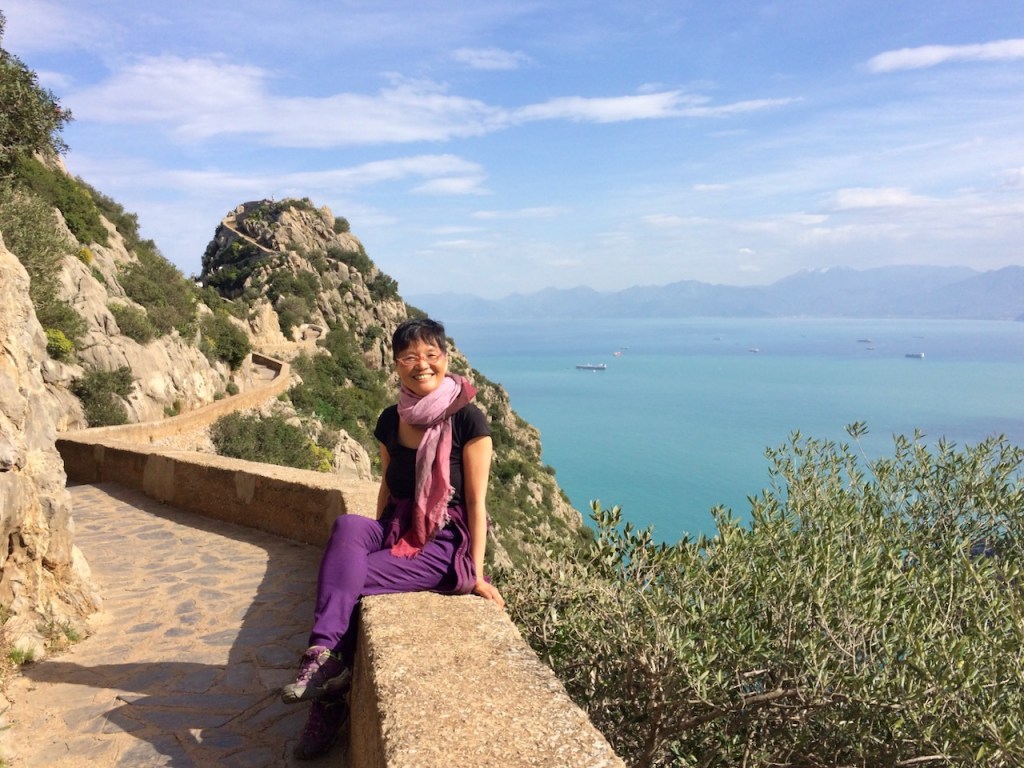
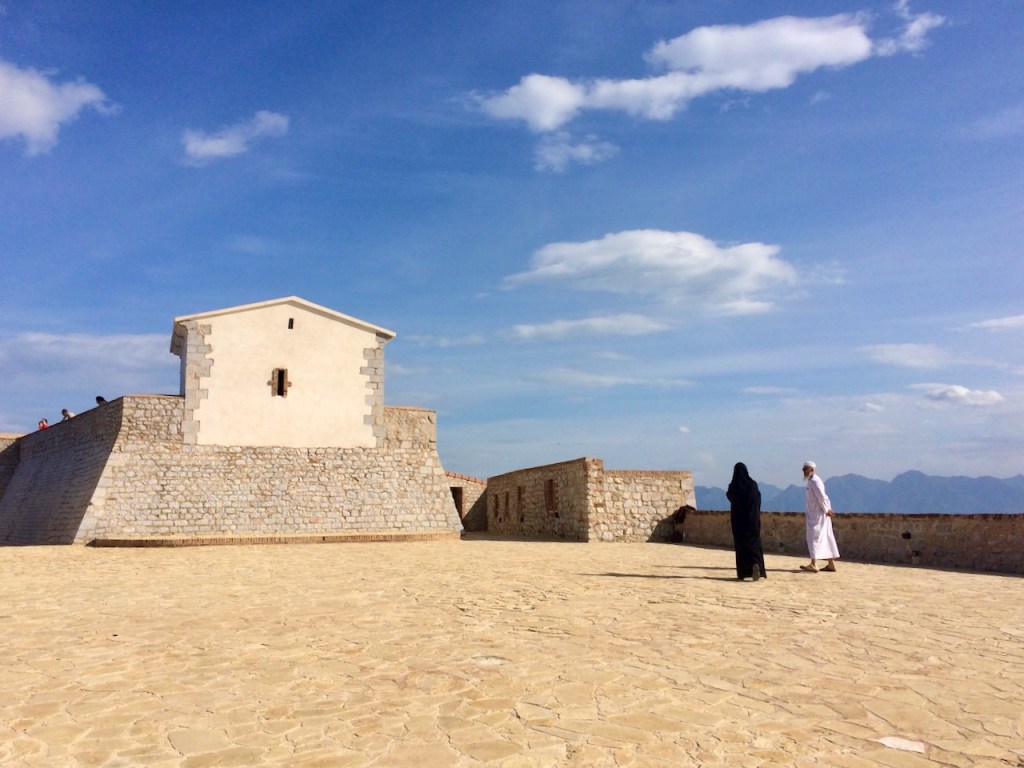
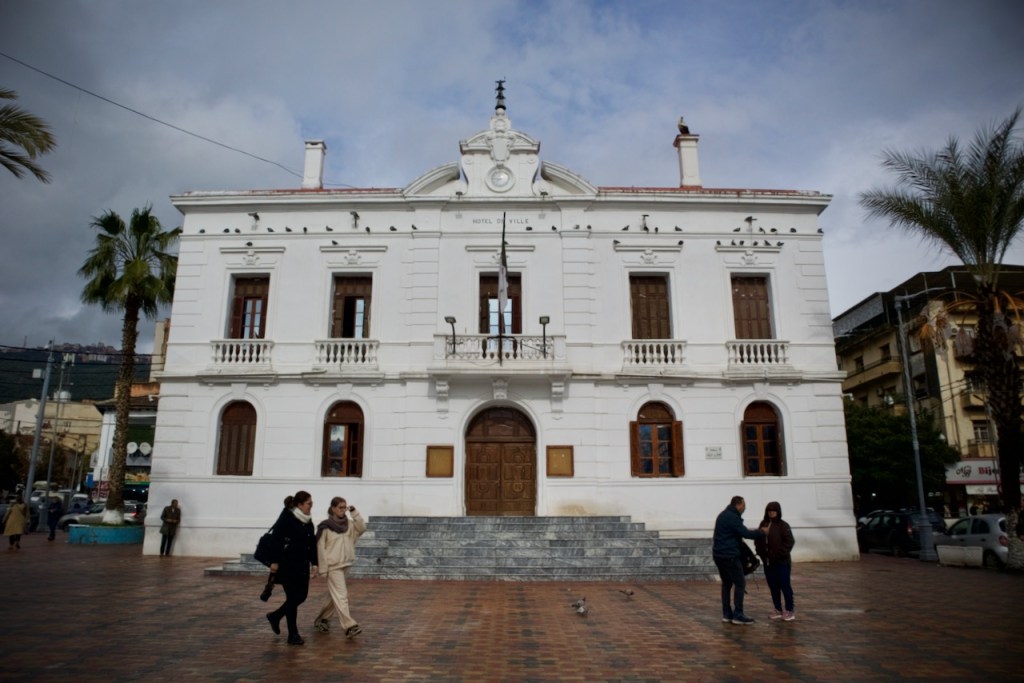
With a few remaining days, I make one last trip to Bejaia and Tizi Ouzou in the mountainous coastal region, the homeland of the Kabyle people. Bejaia is an absolute jewel, with a stunning coastline, ultra-friendly people, and plenty of beautiful places to visit. From the city centre, I take a taxi to Cap Carbon, walk to the Aiguades, and then hitch a ride to the Pic des Singes. There is one last climb up to Mt. Gouraya. Do it! a local resident says when he sees me dragging my tired feet. He’s right. The stupendous view over both Bejaia and the other coast is worth the sweat. Tizi Ouzou is a bus ride away. I can imagine the spring colours in the hills and all the trekking possibilities. For now, I am content to just look at the map.
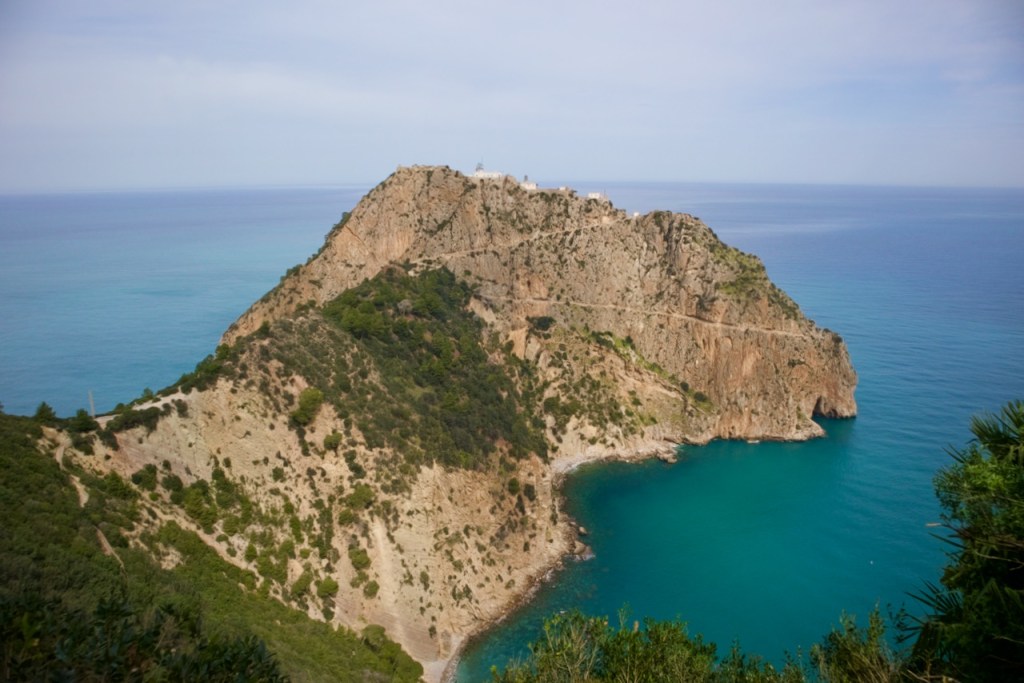

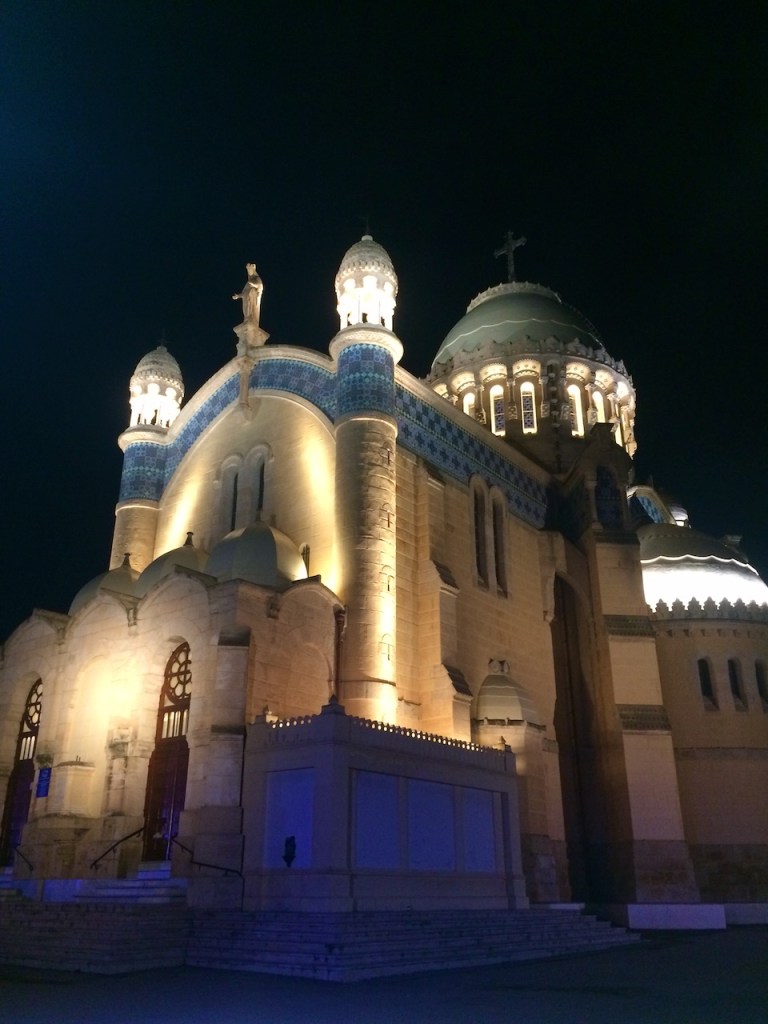
It’s Ramadan. Everything is closed and springs to life at dusk. An influencer staying next door takes me for a tour in the Casbah by night – en direct – where we stroll through old mosques and hammams and where Ali Lapointe and Omar succumbed to French forces in the Siege of Algiers during the War of Independence. Some artisans are still labouring at this hour while residents prepare for mammoth portions of fast-breaking meals for the following day. The night is still young in Algiers. There’s always time for a magnificent night view of Notre Dame d’Afrique Basilica, a symbol of of peace between two cultures and religions…
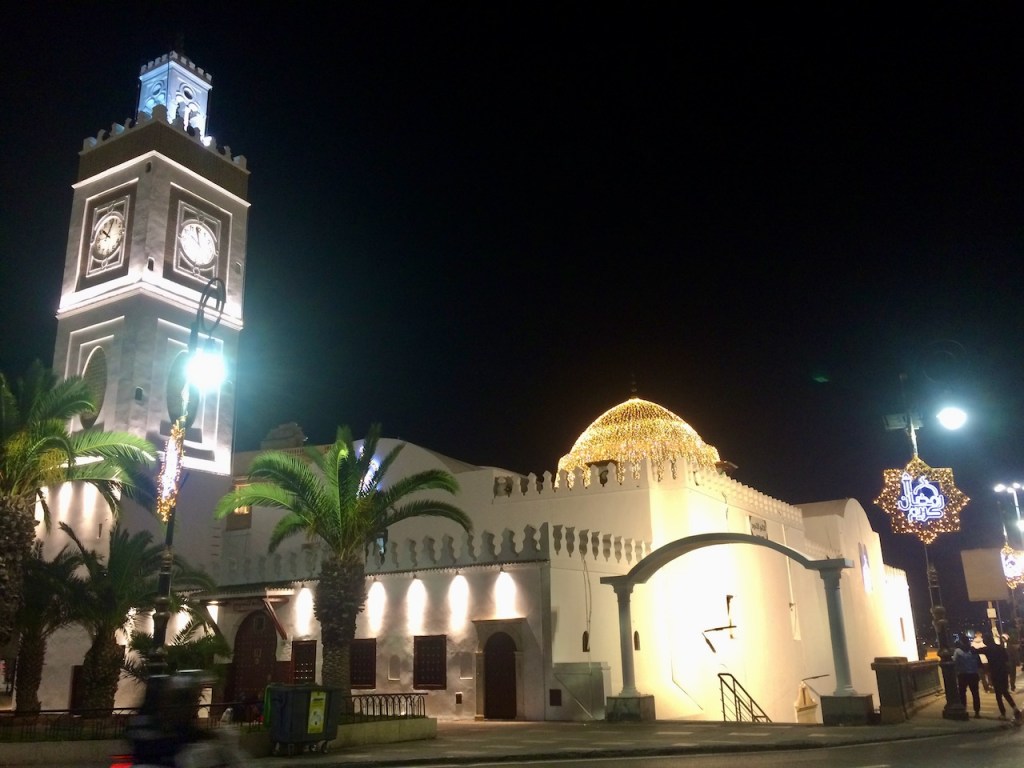
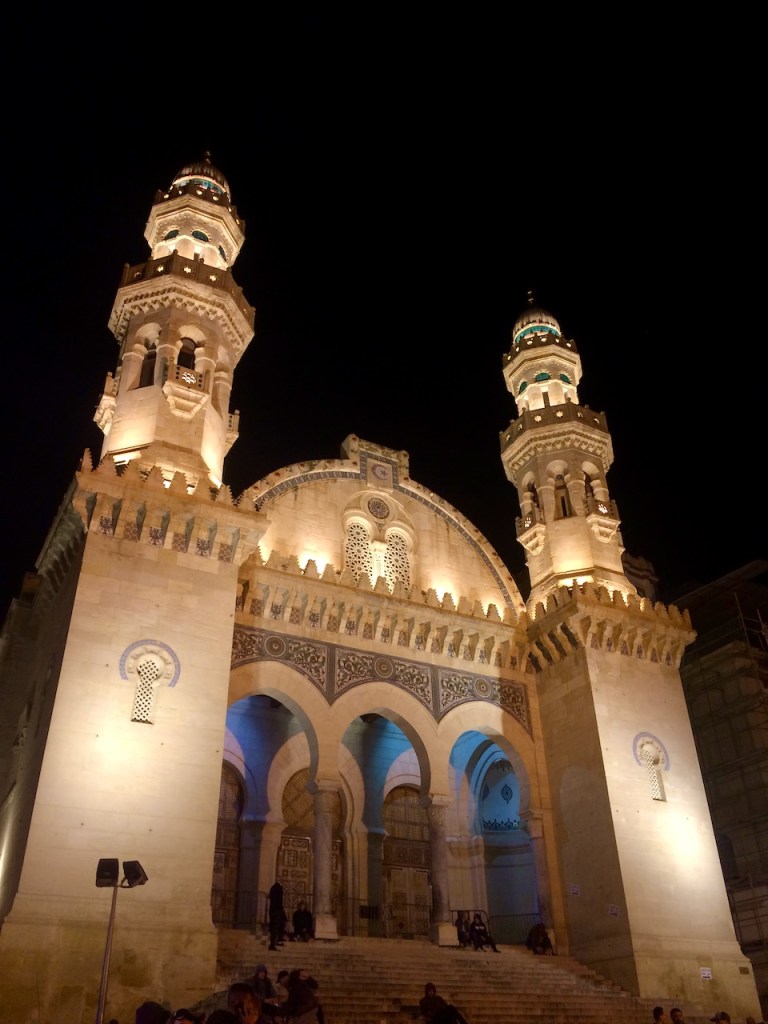
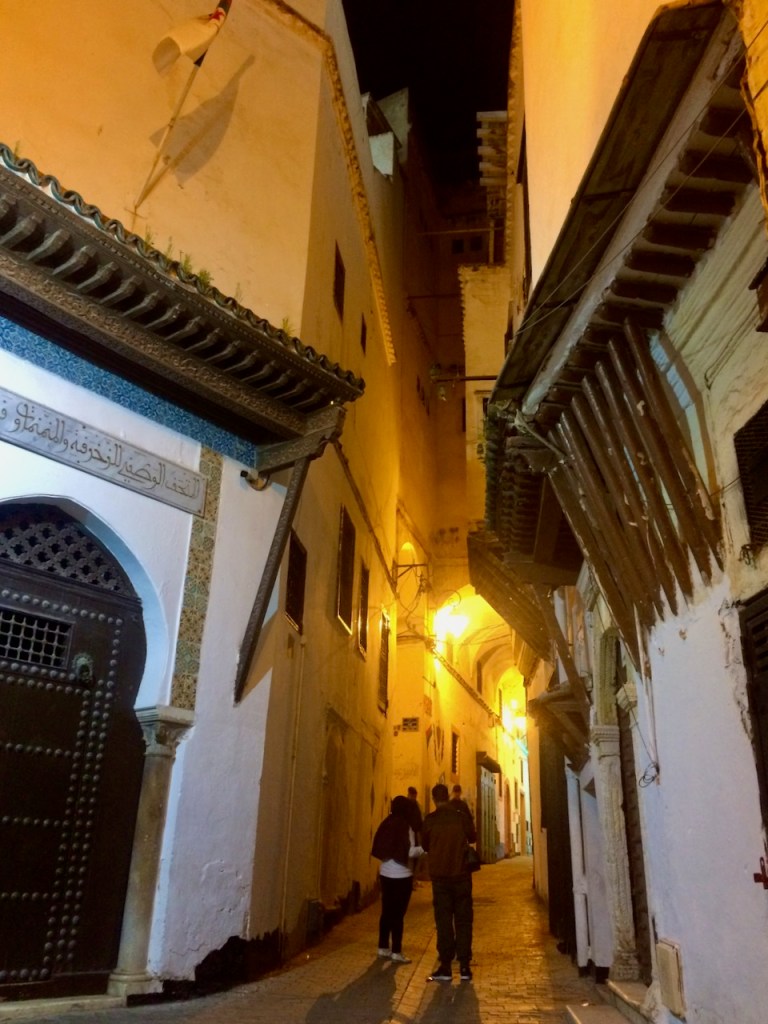
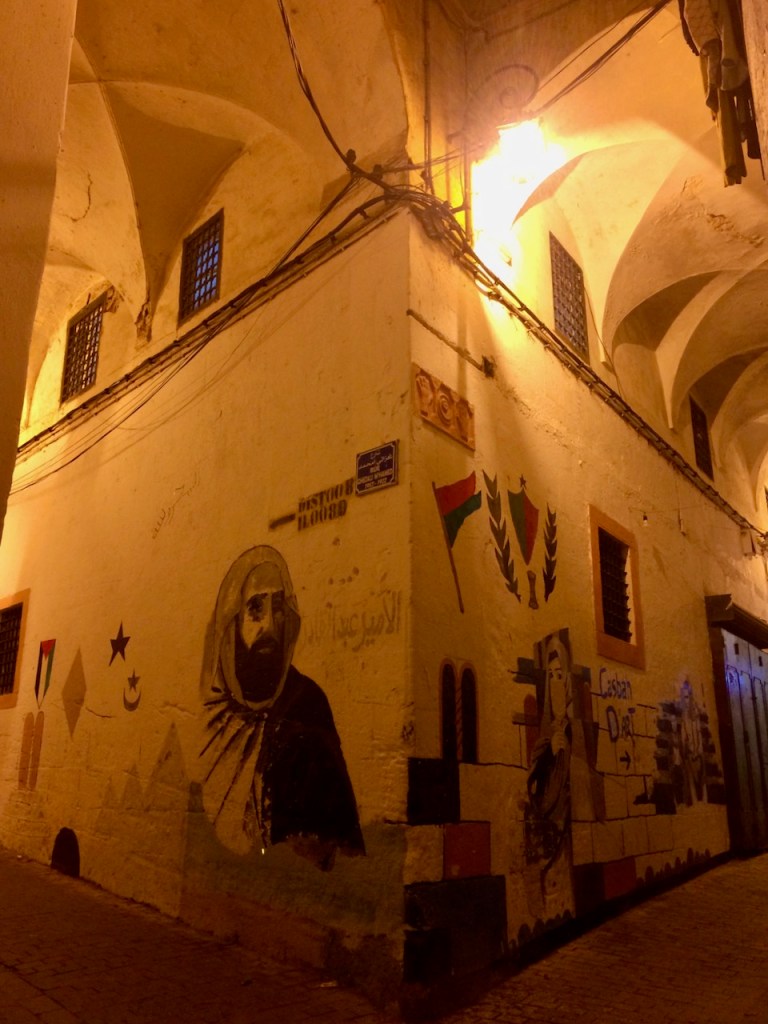
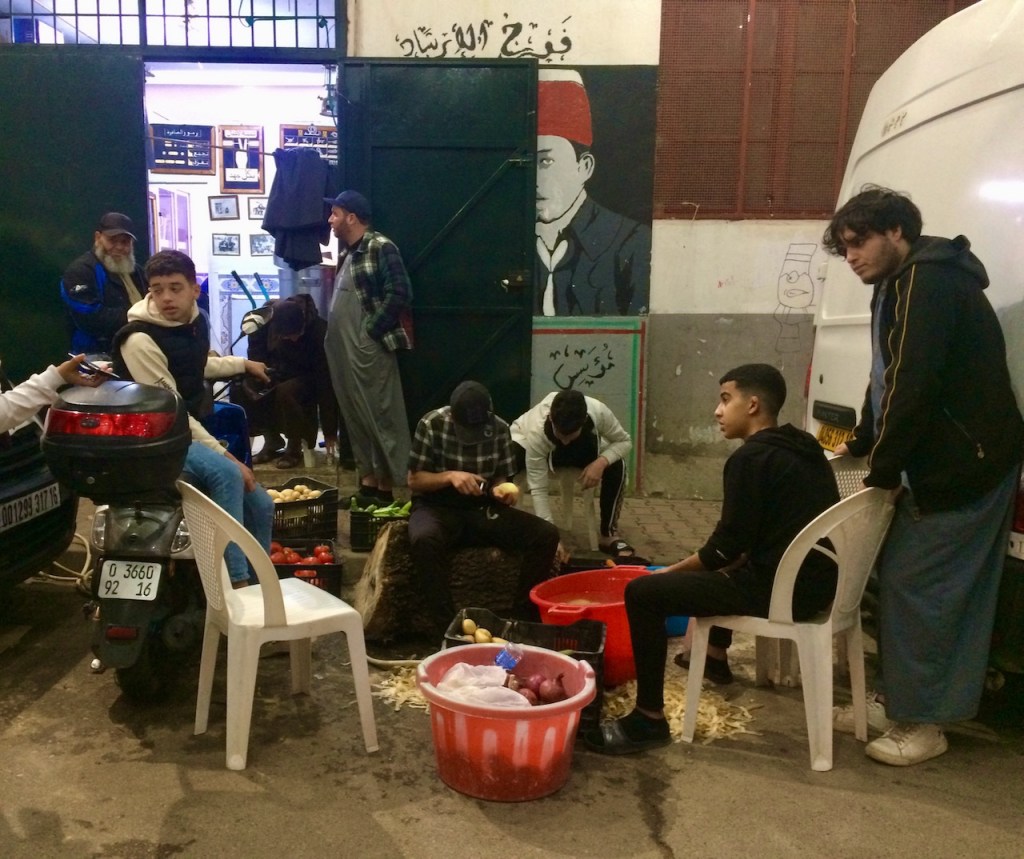
Casbah by night. Algiers, Algeria. 2025.
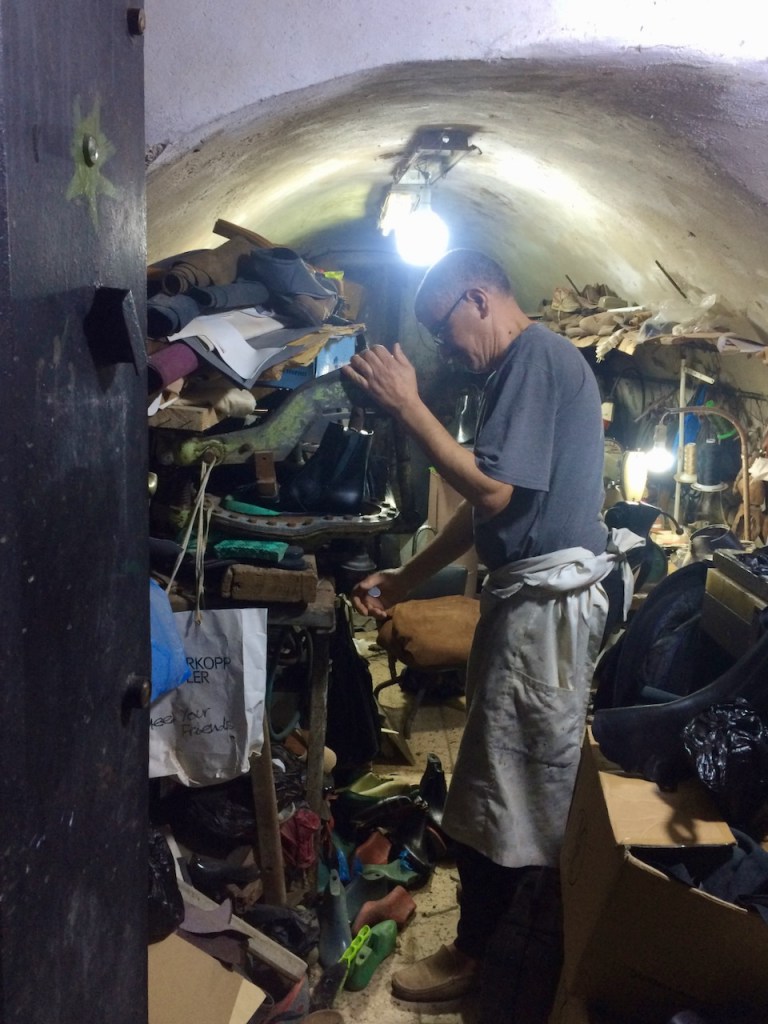
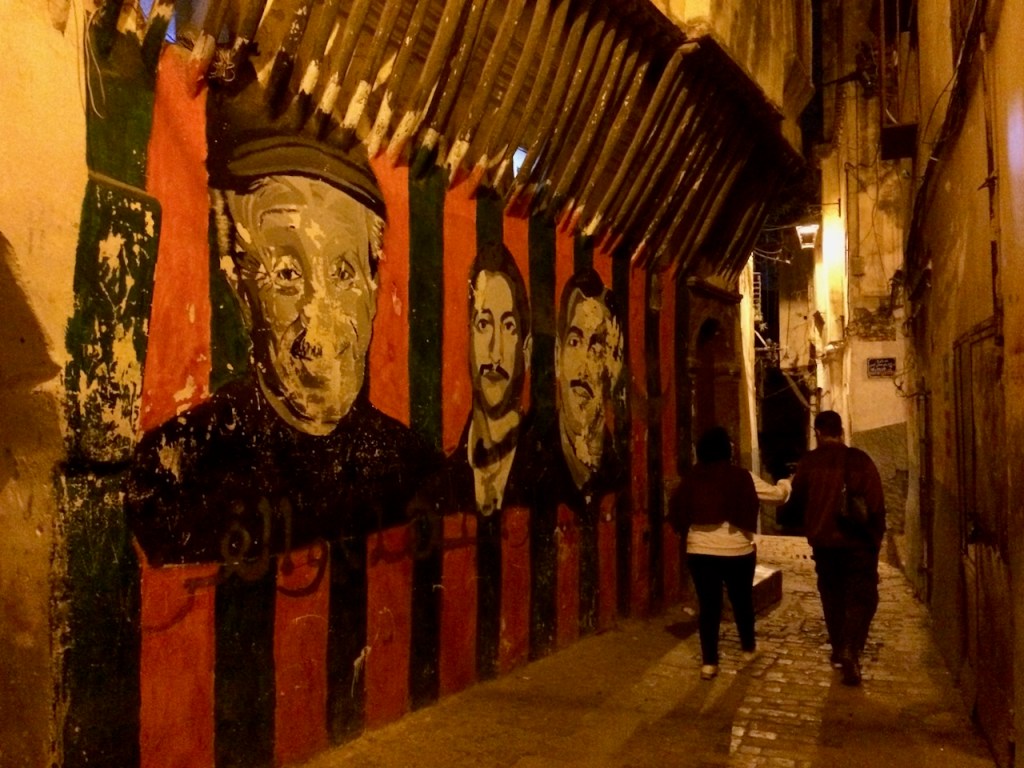
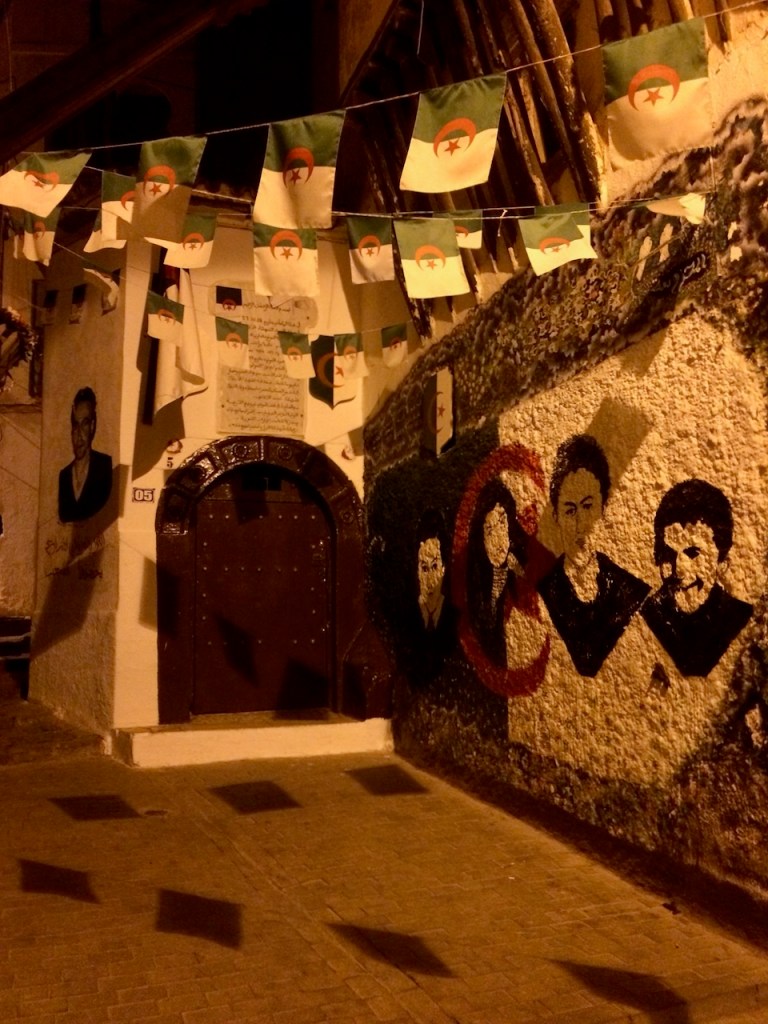
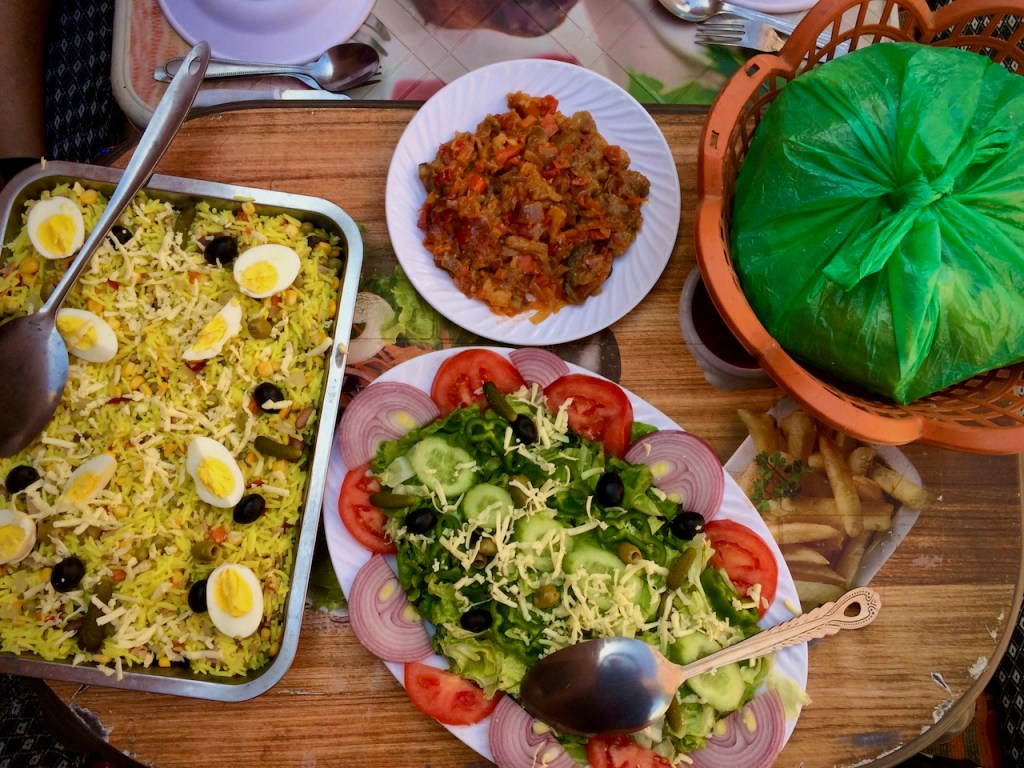
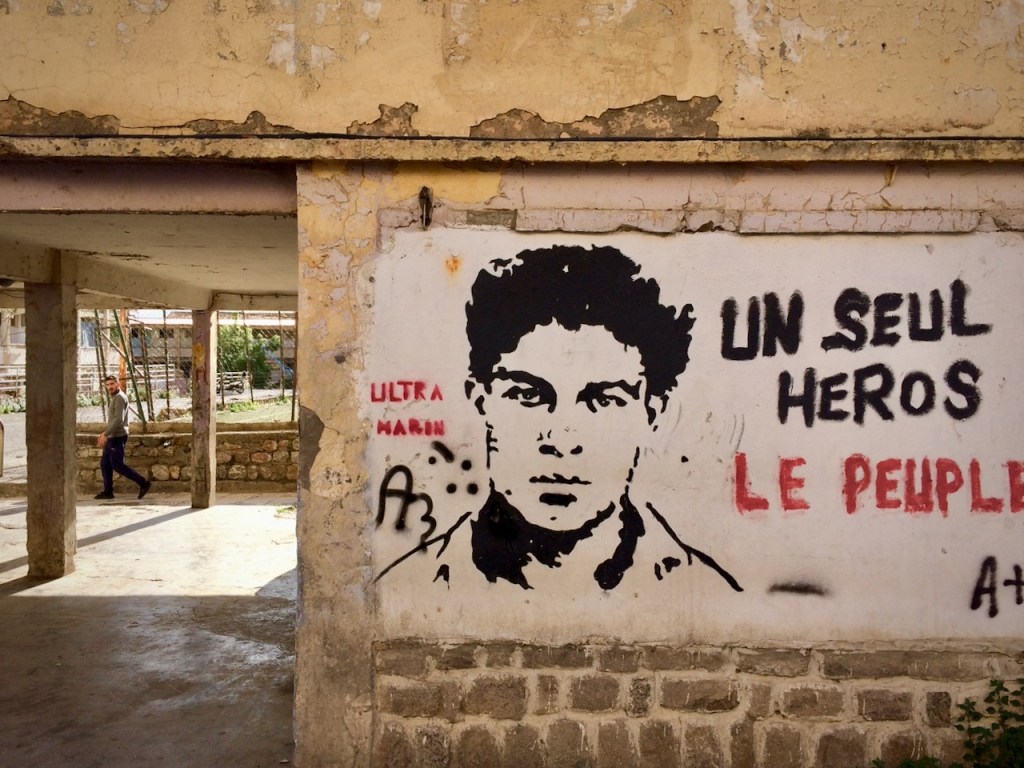
Decades of underdevelopment post-independence have left many parts of the country in a state of disrepair, making the litter, dilapidation, and unfinished phantom housing estates not the most appealing sight. Corruption, high youth unemployment and low salaries, bureaucratic red tape, travel restrictions render Algerians desperate to leave. Fast food culture has taken over in part due to widespread poverty. Between the visa challenge, unprofessional tour services, paranoid police checks, vast distances requiring long rides and night flights, and poor food in general, this is one of the most challenging and exhausting – but also most adventurous – trips I have ever done. The exceedingly warm, generous, and welcoming Algerians, however, more than make up for any frustration. This trip of a lifetime would not have been possible without the help of so many total strangers coming to my rescue. Saha!
Postscript: Several travellers have reached out to inquire more about visa procedures. Here’re my two cents as of March 2025. Unless you come from visa-exempt countries or have special connections, most foreigners have the choice of 1) DIY: bring all the required documents (check your local Algerian consulate website) and apply at the consulate at least several weeks pre-departure. The bottleneck is usually the certificate of accommodation. The “easiest” way, I was told, is to ask an Algerian resident to help provide the certificate legalized by a local city hall. Short of that, you can book hotels online – and then cancel if wish – or contact hotels directly to provide the document. Note that a booking of six weeks at one place may raise suspicion – my error – and so I suggest that you contact two to three hotels in different cities if you plan for a longer stay. Ask for “multiple entry” and you may be lucky enough to get a 3-month or even 3-year visa. Alternatively 2) if you are heading to any southern destinations – Tamanrasset, Illizi, Tindouf, Adrar, Bechar, Timimoune, Djanet, Bordj Baji Mokhtar, Beni Abbes, Ain Salah, Touggourt – you can book a tour through a travel agency which can issue a document that allows you to get a visa on arrival up to 30 days. Note that VOA visa costs about 140 euros for 15 days and 350 euros for 30 days. Depending on the agency, they may require you to book everything else – in addition to your desert tours – for the entire duration if you plan for a longer stay, which is why I opted for the DIY option. Visa extension is cheaper but cumbersome, costing 20 euros for each 15-day period. Below are budget hotel and agency whatsapp contacts, some of which provided me with accommodation certificates for free and other assistance. Recommend (no commissions taken)!
Algiers: Hotel Nelson +213 556 02 71 81 (a well-run budget hotel in vibrant Bab El-Oued)
Constantine: Grand Hotel +213 31 87 22 01
Ghardaia: Menara Mayotte +213 696 56 57 58 (a modest hostel but Nadir bends over backwards to help!)
Oran: Hotel Khalid +213 41 33 26 28
Tlemcen: Hotel Islam II +213 655 47 98 49
Bejaia: Hotel La Bravoure +213 541 79 32 88
Travel agencies: Vortex on Facebook (family-run, based in Algiers) and Mouflon (very professional, based in Tamanrasset. Owner: Adnan: +213 662 36 19 90). FYI: group tour rate to the south start at about 40euro/day/person without return airfare (this is what Algerians pay). Private tours start at 100-150euros/day/person. Negotiate, hard!

Not Algeria, no. Never again. We must forget Algeria. This is something that requires enormous effort.
– Alice Zeniter, L’Art de Perdre
All Content © 2026 by Jennifer Chan
 Jennifer Chan Photography