

If only we knew what it is to be bound to a place…
If only memory, or hope, or regret
could one day block our country from its path.
– Nazik Al-Malaika
November 2025
Mesopotamia, Babylon, Samarra, Ashura, Kish, Ur, Hatra, Akre, Erbil, Lalish, the Tigris, the Euphrates… All exotic names that conjure such fascination in the minds of explorers and writers. Iraq is the cradle of civilization and has over 10,000 heritage sites, home to the world’s first complex urban societies of the Sumerians, Babylonians, and Assyrians, and birthplace of major innovations from writing to agriculture. Unfortunately, geopolitics also gave her plenty of bad press: Saddam Hussein, weapons of mass destruction, ISIS, and extremist militias. Few people have not heard of Iraq, albeit not always in the best light.
I have just completed an amazing tour of nearby Syria, and cannot resist hopping on a plane to visit Iraq. After the visa rules changed, with a visa to Kurdistan no longer sufficient to visit Federal Iraq, I applied for a pricey evisa (USD150) that allows me to visit both parts of the country, and land in Baghdad. I ask Hayder, a telecommunications businessman sitting next to me, how best to get to the city centre from the airport. Taxi, of course, he replies. But I heard that one could get to this Abbas Ibn Firnas Square by minivan first, and then careem/uber to town, I explain. You can come with me in the taxi and then it’s closer to the centre, he proposes.
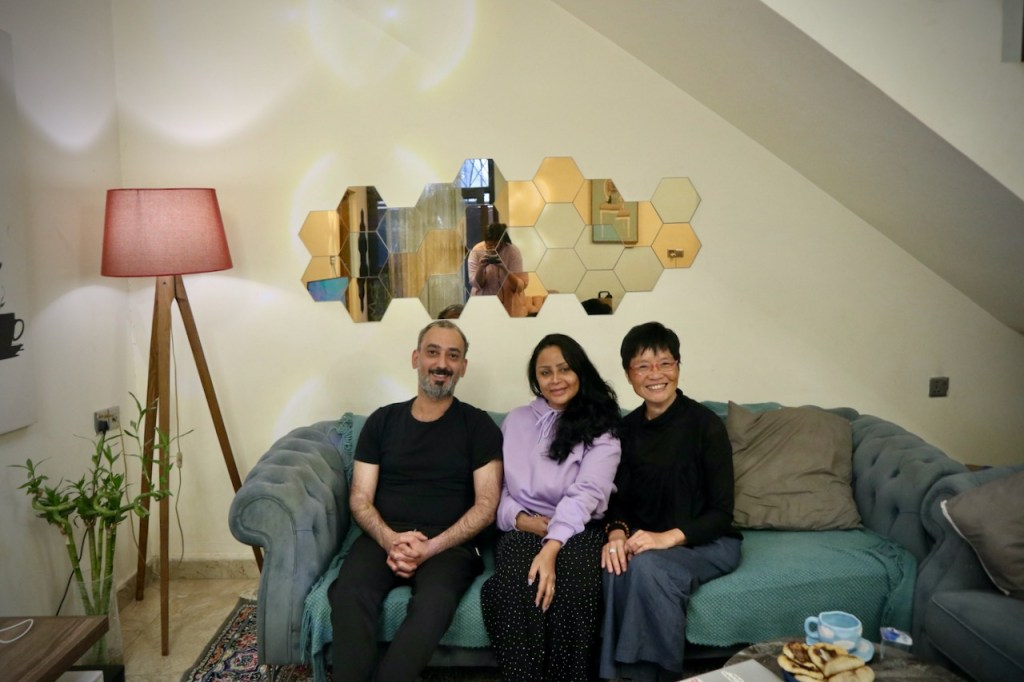
And so begins my adventure, at the home of a lovely family where I take the first portrait in Iraq, that of Hayder and Askeen, and taste my first cup of aromatic Iraqi tea. Little would I know these first hours of a totally serendipitous encounter would set the tone for the rest of my two-week stay, as an exercise in trust and surrender, opening up myself to the generous spirit of the Iraqi people.
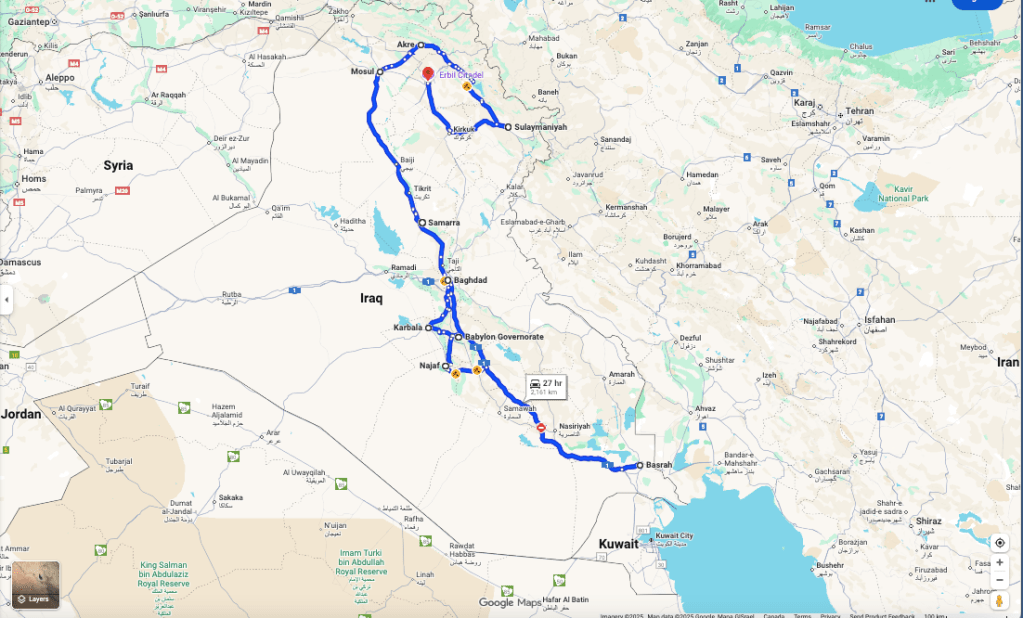
From Baghdad, I board the seven pm non-express train to the southernmost city of Basra and make my way through the length of Federal Iraq and Kurdistan – 1000km in all – through the Mesopotamian marshes and the ziggurats, the holy cities of Najaf and Karbala, the mythical sites of Babylon and Samarra, before arriving in Mosul and crossing over to the ancient Kurdish towns of Amedi and Akre, visiting the Yazidi holy temple of Lalish, and ending in the crown jewels of Sulemaniya and Erbil. What a whirlwind adventure, not knowing everyday where, how, and whether I would end up in my destination, but somehow the whole trip goes smoothly, despite the long distances and gruelling schedule, thanks to many total strangers coming to my rescue. It has been a humbling and thrilling journey.







Baghdad: Yesterday and Today
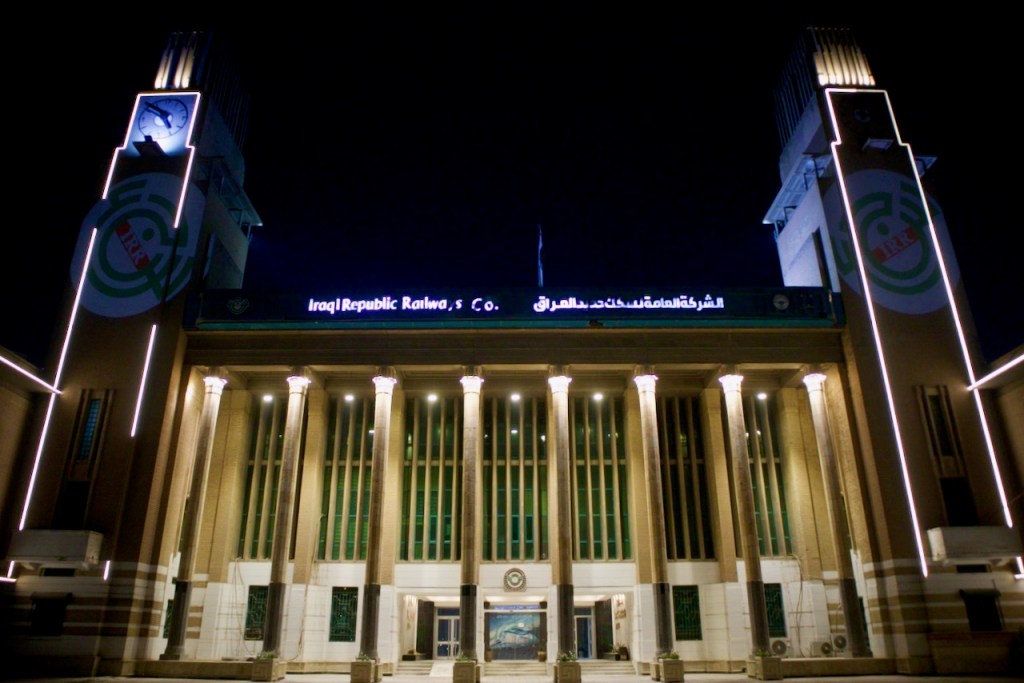
First thing first: I need to get some local cash. Hayder kindly asks his staff, Aqwer, to take me to an exchange where for five hundred US dollars I receive close to three quarters of a million Iraqi dinars! Traffic is notoriously bad in the capital, and Aqwer’s car breaks down right in front of the Baghdad Central Station. A security check later – the first of many to come – I find myself in a grandiose but empty building and head directly to the Train to Basra counter. Visa card only, the woman says. Fantastic, I thought. For a change, I could use my credit card, so uncommon in this region. But the staff seems barely know how to operate the terminal, sliding the card in and out and tapping it nonstop, to no avail. Mohammed, a Basran returning home, volunteers as my interpreter, but cash it will have to be after all. How much money you got in your wallet? he asks after our tickets are issued. What a question, so many dinars I could barely count! After being lost in translation for some long minutes, I realize he is cautioning me not to put all my money in one spot. Money in bag, in bag! he repeats. The Iraqis are so fraternal even towards foreign tourists that you cannot help but love this country. I take a few shots of the stately station, the “crown jewel” of Baghdad, built by the British in 1953 and renovated during the American occupation in the 2000s, before finally making my way to the city centre.


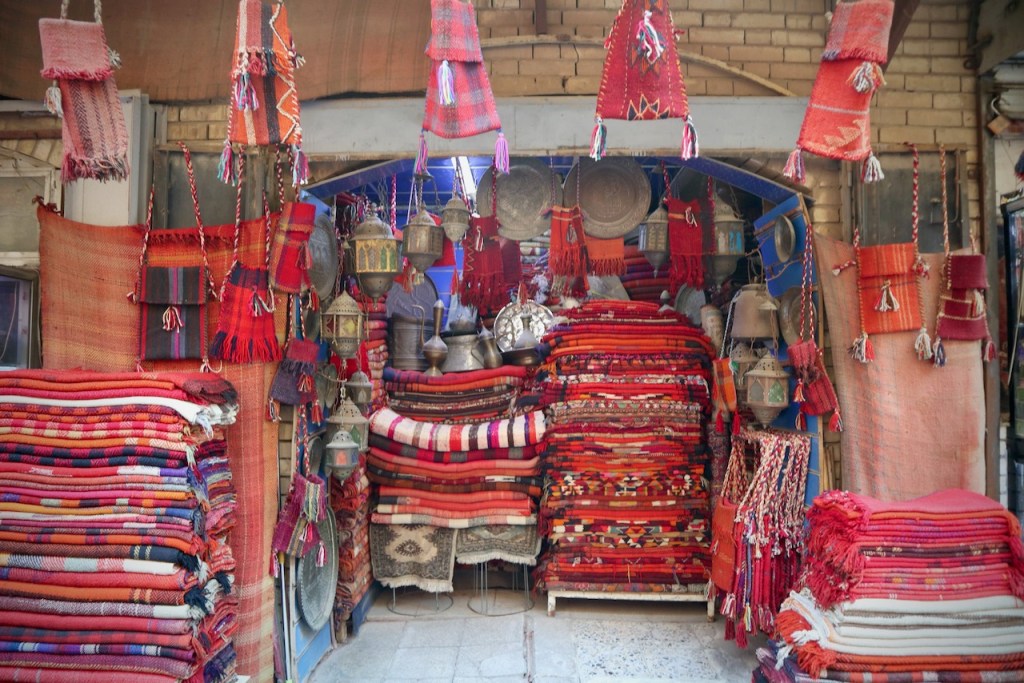
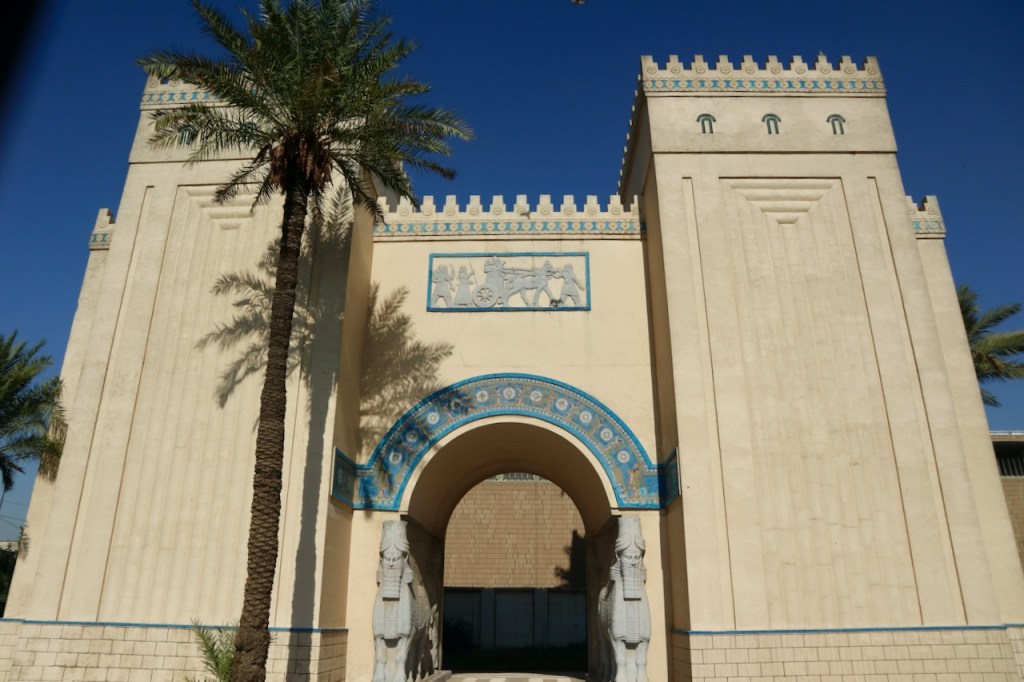
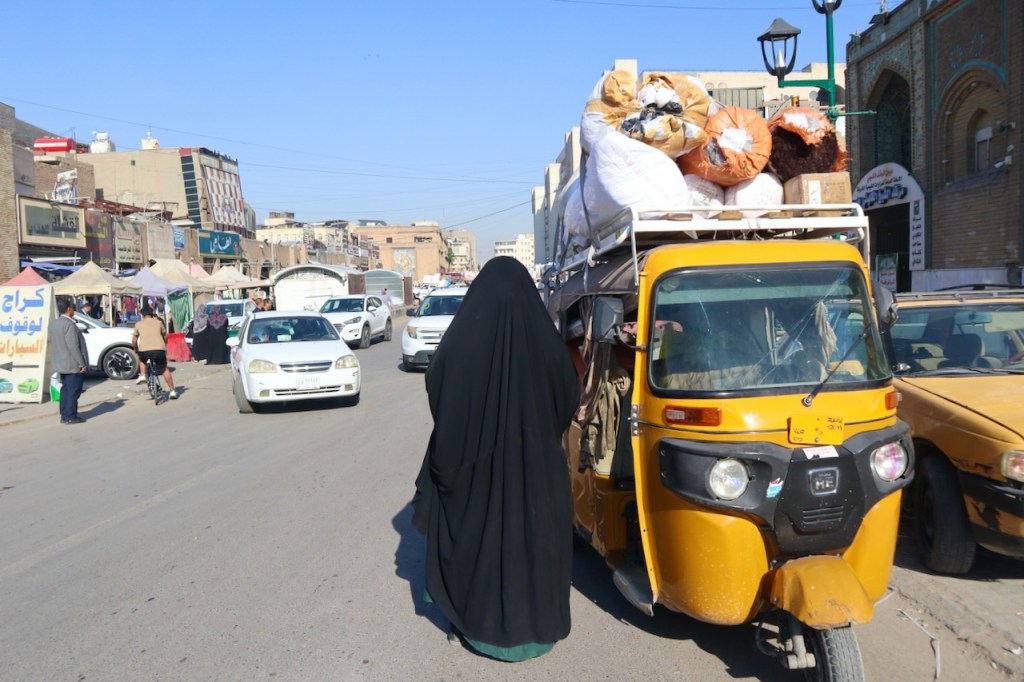
The list of sites to see and things to do is long in the big and busy capital: the museums and mosques, the souks and squares, the famous cafes and popular streets, and so many monuments from different eras. I walk towards the National Museum – closed! – and console myself that I will see Babylon, Kish, Samara, and Hatra on site. The sprawling souk is just minutes away, through an old neighbourhood with traditional architecture, with the old Islamic Al-Mustansariya School flanking one entrance and a magnificent old mosque on the other. It is midday and the souk is bustling with porters shuffling all things Made in China back and forth in a backbreaking timeless ritual. I find a quiet spot to take a rest, not having slept a wink for the past twenty-four hours since I left Syria and Lebanon, and lugging my 6kg pack through downtown Baghdad. A kind carpet merchant hands me a bottle of water. Welcome, welcome! he says.
I continue on to the Al Rasheed neighbourhood filled with exquisite Ottoman buildings and turn into the packed Al-Mutanabbi street famous for books and all things intellectual. The late afternoon sun shines the best spotlight now on this beautiful historic area under rehabilitation. With the legendary Shabandar café, one of the oldest tea houses in Iraq, at one corner, another heritage building next, an Ottoman clock tower in a quiet park in front of the Tigris River, and an upstairs modern cafe and art gallery, I soak everything in, my first impressions of Baghdad, old and new.

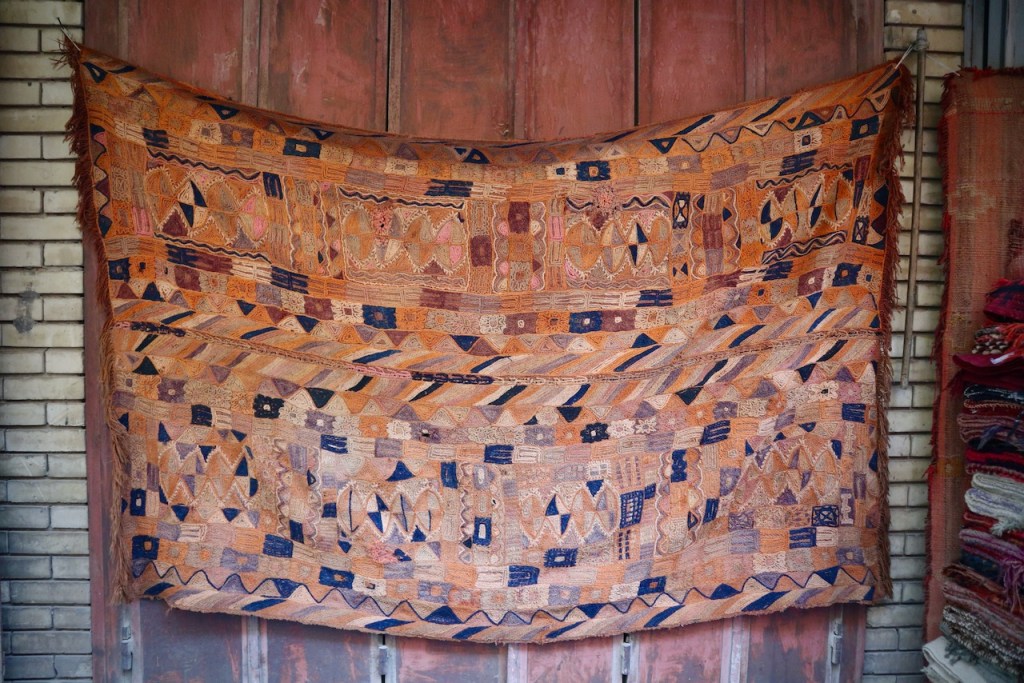


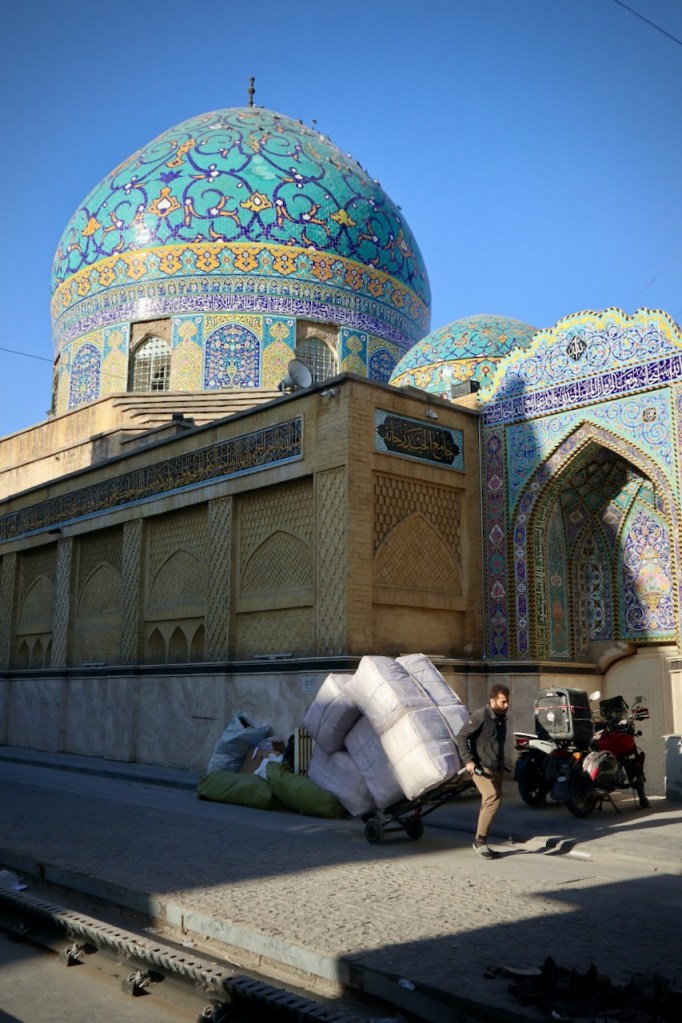

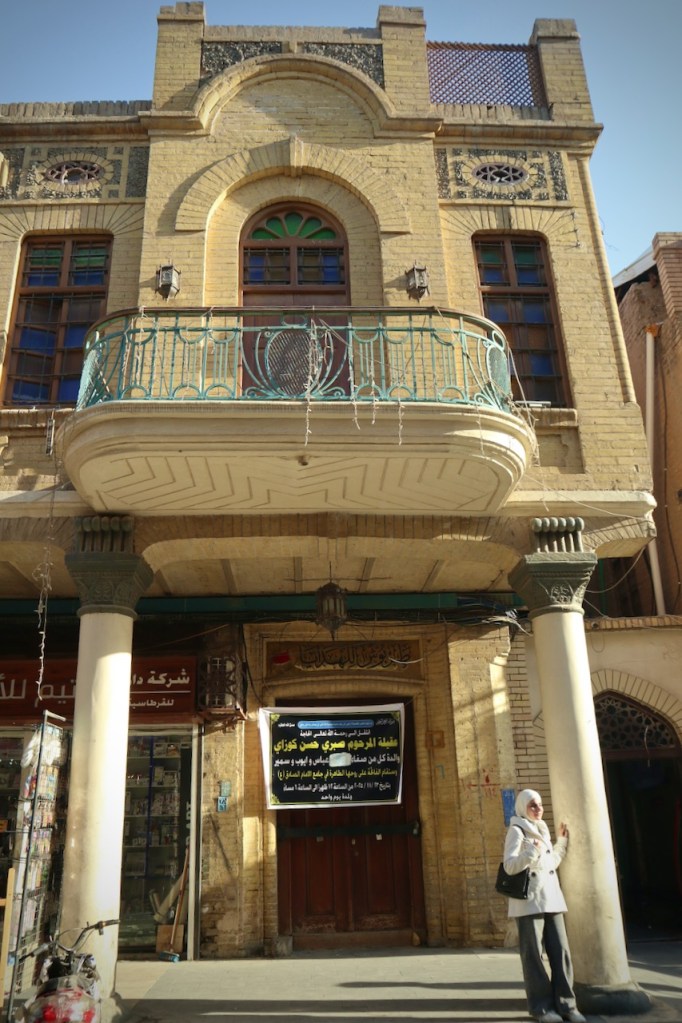

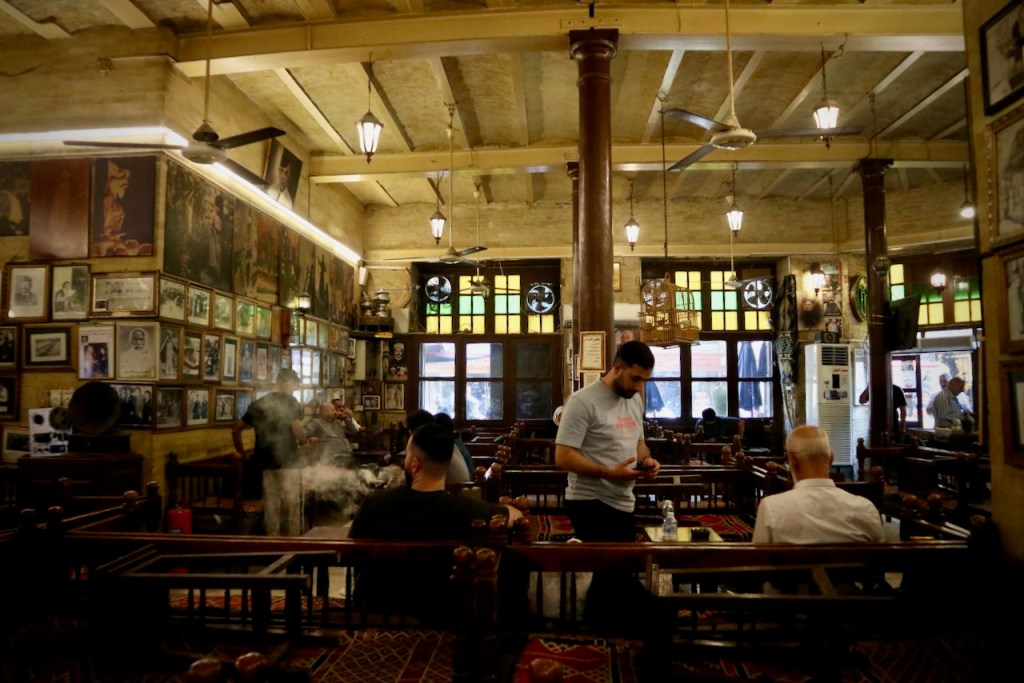


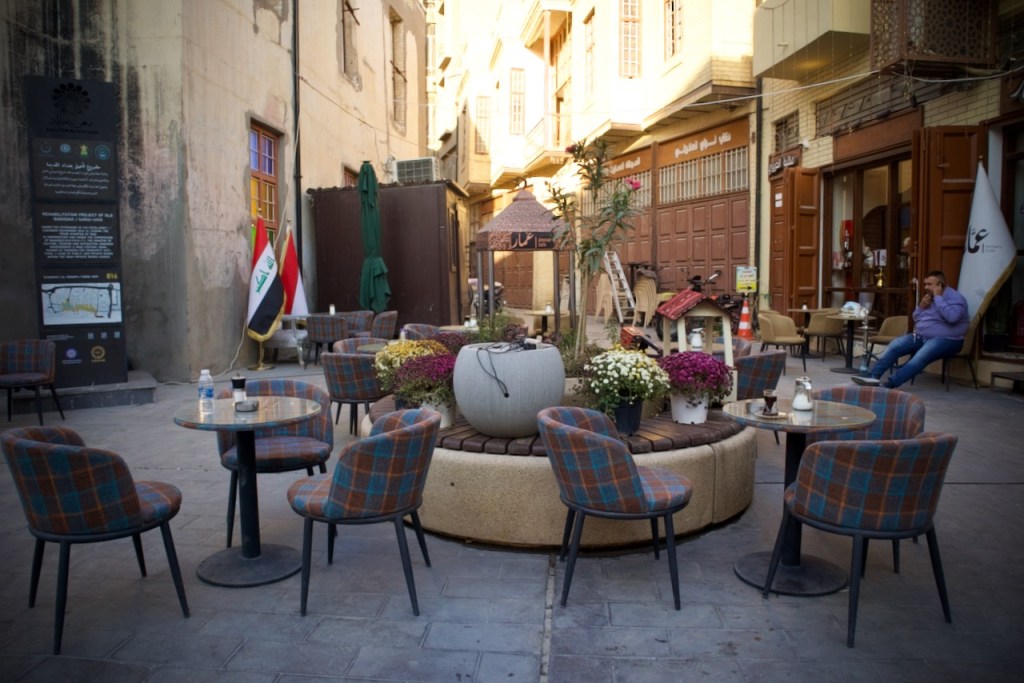
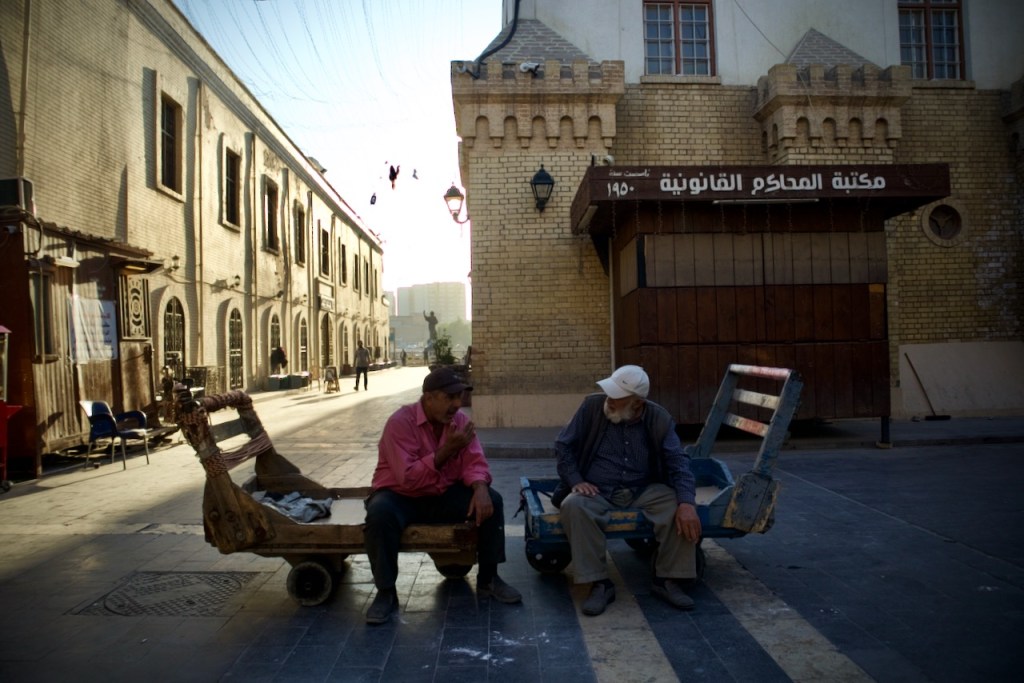

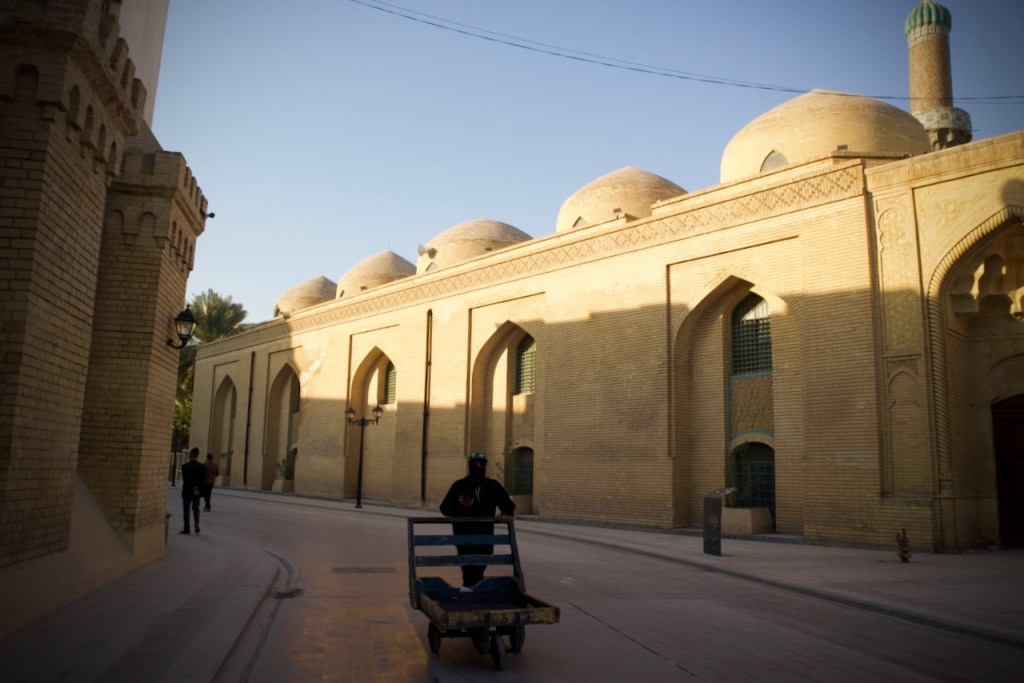
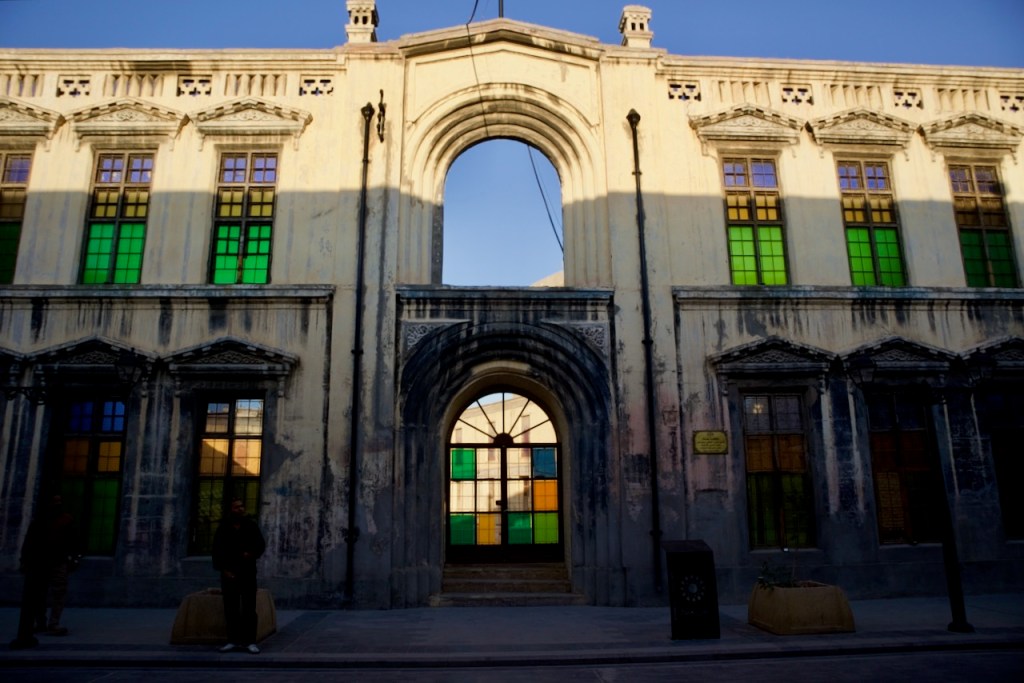

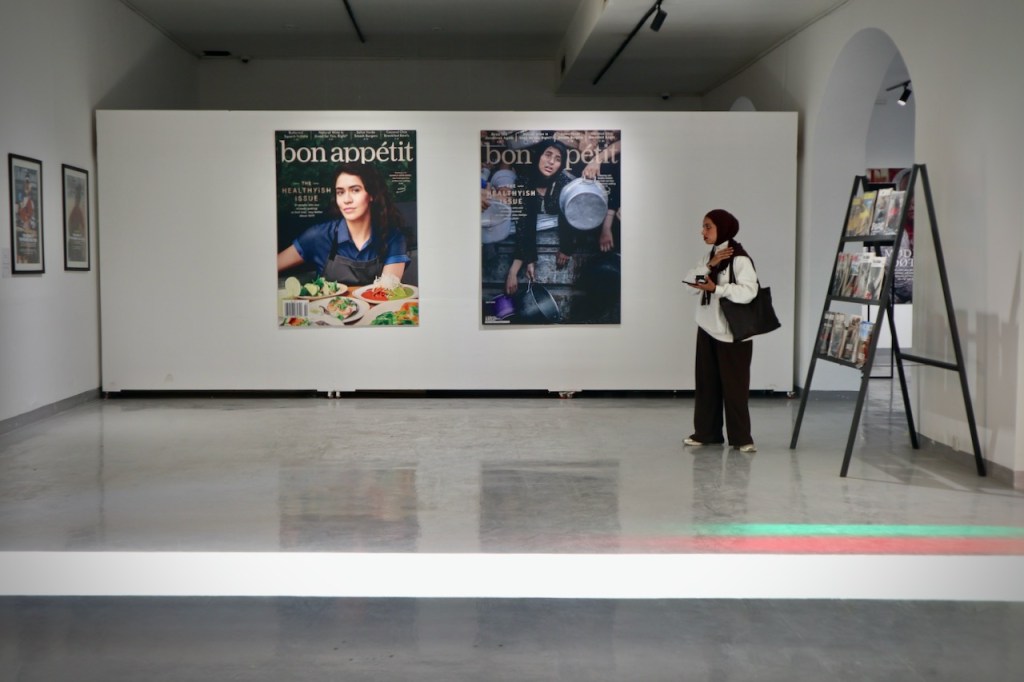
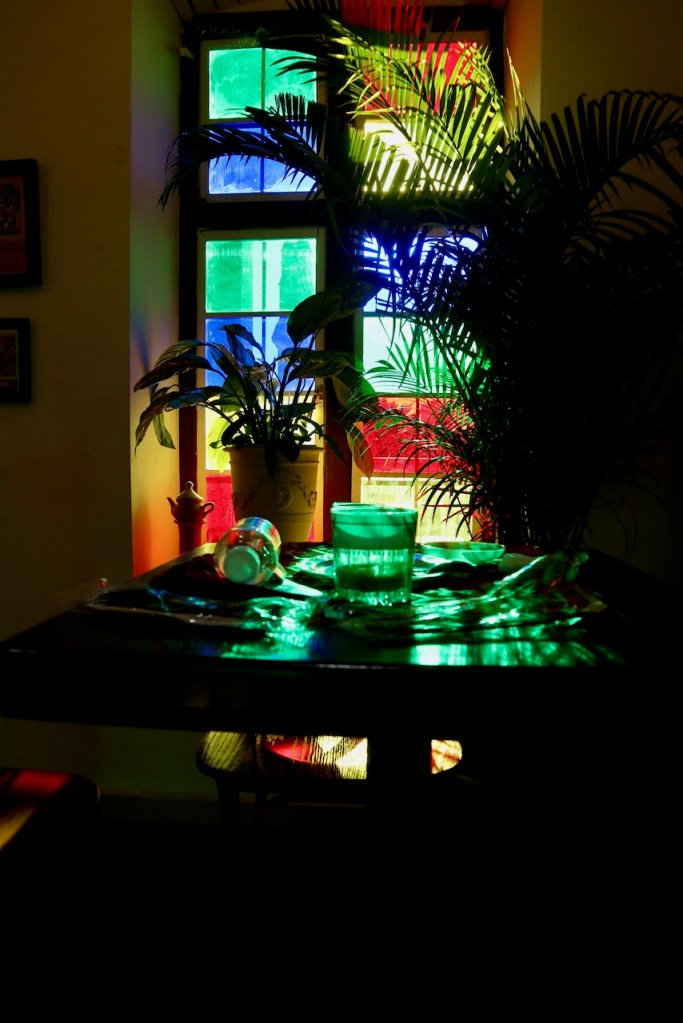
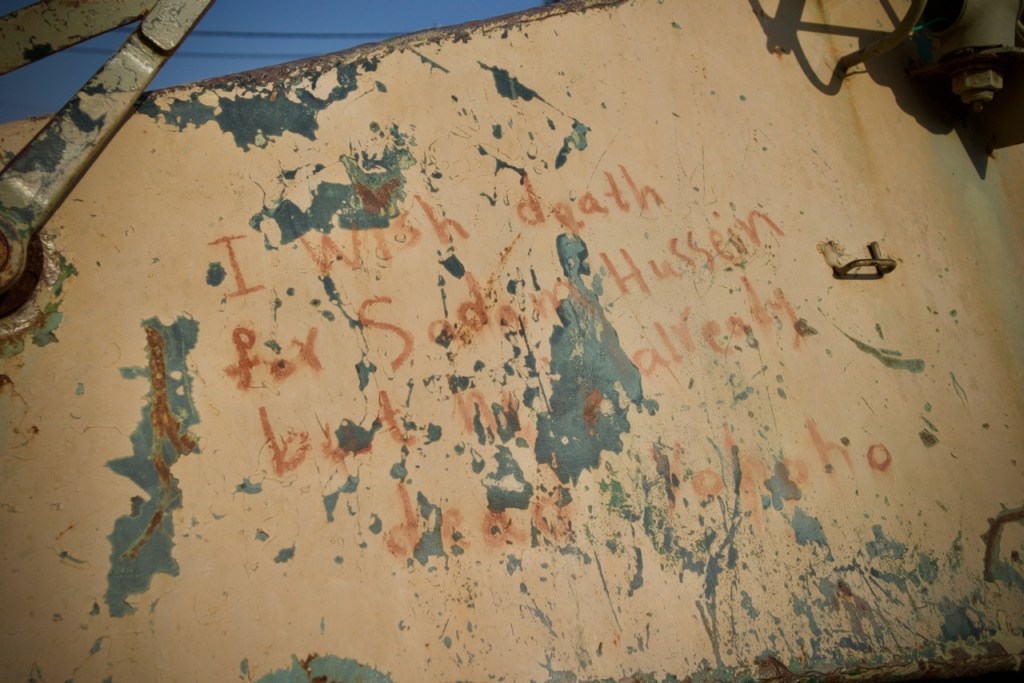
The Freedom Monument, a mural depicting the 1958 Revolution, in the Tahir Square is now cloaked in golden. I hurry towards the Firdos Square where Coalition forces toppled Saddam’s statue in 2003. Only the base is left now, almost unnoticeable if one is not too mindful about the historical strike that changed the course of Iraqi history. Then I look up and see Palestine Hotel, ground zero for war reporting during the US invasion, standing right by Ishtar Hotel, one of the most popular western-run hotels in Baghdad built by an American firm founded by none other than Gropius Walter, the founder of Bauhaus, and another base for Western journalists since the first Gulf War in 1991. Walking along the river, I pass through more abandoned hotels and buildings minutes away from mushrooming skyscrapers in the latest real estate boom driven by international developers, local housing shortage, and money laundering. My short day tour of Baghdad leaves me curious for more, but I must make my way back to the Central Train Station in time for my evening non-express bound for Basra.


Basra Crude
Unless you are an oil worker, Basra might not be the destination of choice in your Iraq itinerary. A fellow traveller I met in Algeria recommended the night train from Baghdad. More comfortable, he wrote. So with the excitement of a child, I board the old wagon after a lengthy security check and share a compartment with Suna. I could barely keep my eyelids open in our few minutes of conversation before crashing for a fitful sleep of ten solid hours until the train pulls into Basra station at 5:00 as scheduled. Just as I wonder what I would do at this wee hour, Suna asks me to follow her in her ride home and then instructs her Careem driver to bring me to town. Don’t worry! Murtadha, her driver, says.


I have no idea where we are heading in the dark of night, but our first stop is a bakery, then a tea joint, already open and welcoming the regulars. Murtadha orders an omelette breakfast while we wait for the tea to brew. Soon, the tea master also brings me a piping hot noomi basra chai, known for its dried lime flavour and healing properties. What a great start of an impromptu tour of Basra!


Finally, the day breaks and we cruise through downtown to Old Basra, with canto ambient music. Choose your favourite singer, Murtadha asks, setting the youtube channel on his dashboard. Here I am, on my second day in Iraq, in an unknown city with a driver I just met, going with the flow…
Basra is one of the best cities to see a rare collection of shanasheel architecture in the Middle East. Famous for its elegant style with carved wooden window screens, balconies, and large courtyards, many heritage houses are in danger of complete collapse. Eleven houses are currently being rehabilitated along the historical Al-Ashar Canal that is also being repaired. The first rays of the sun descend on the roof, then on the balcony, making these houses irresistibly photogenic.


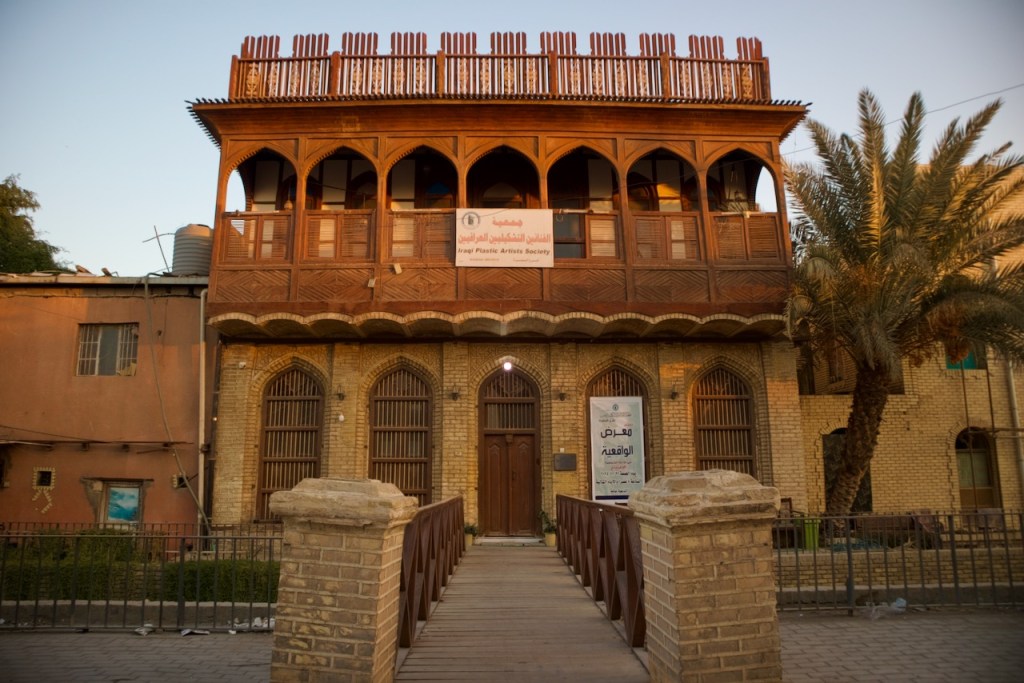
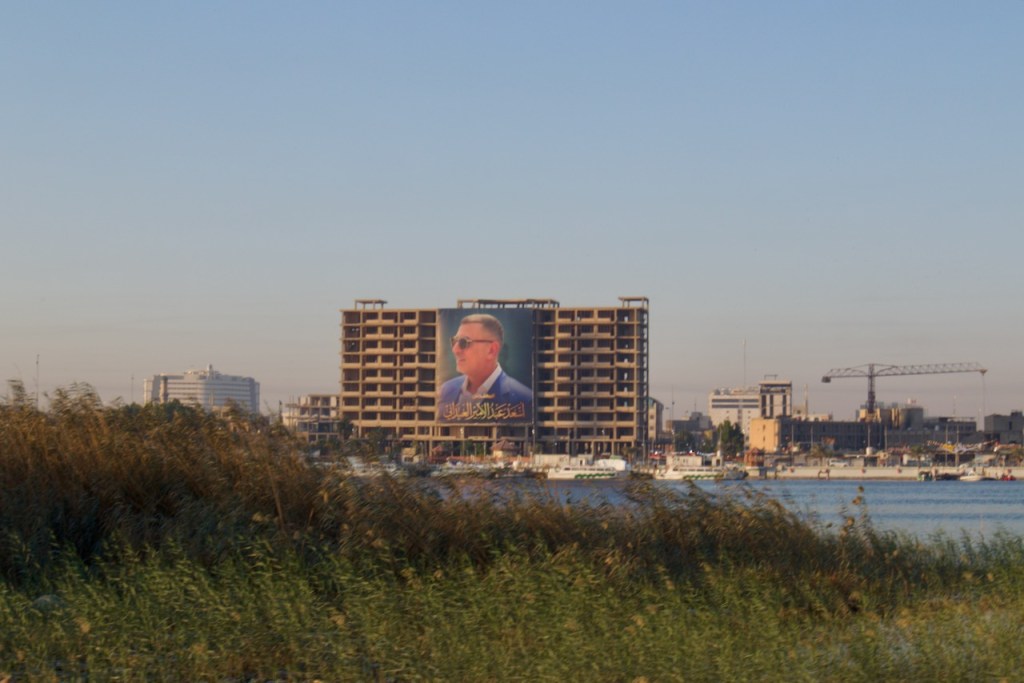
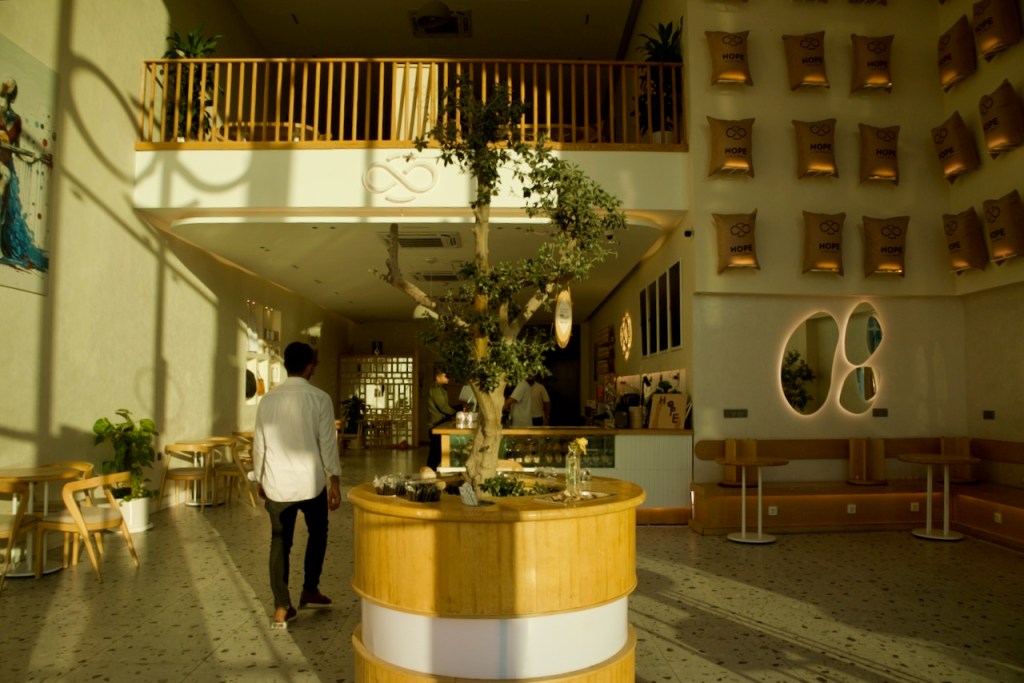
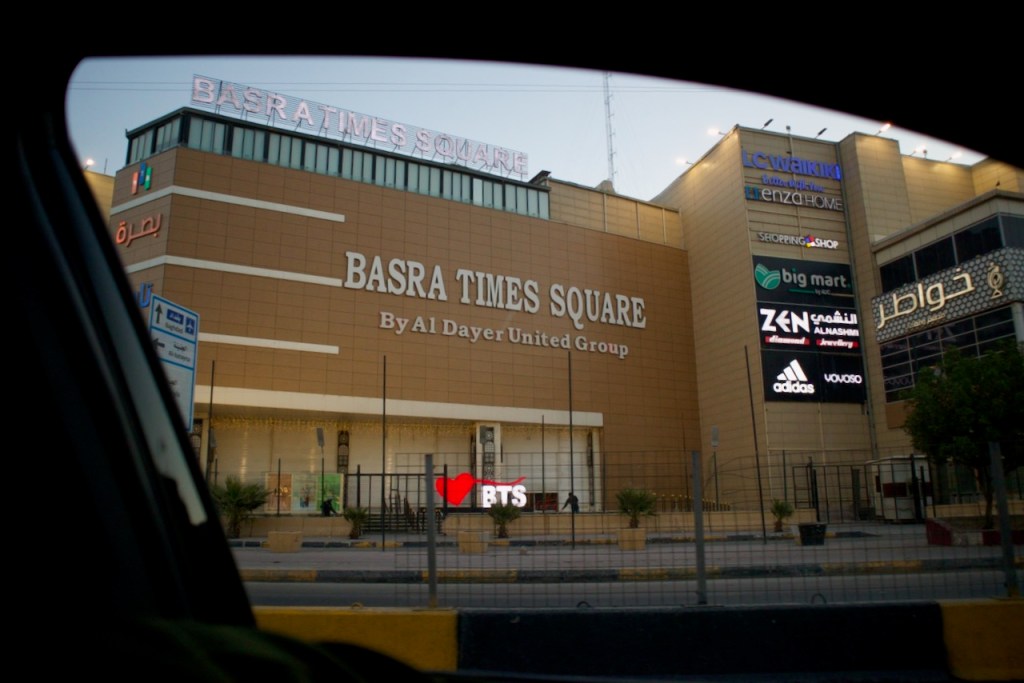
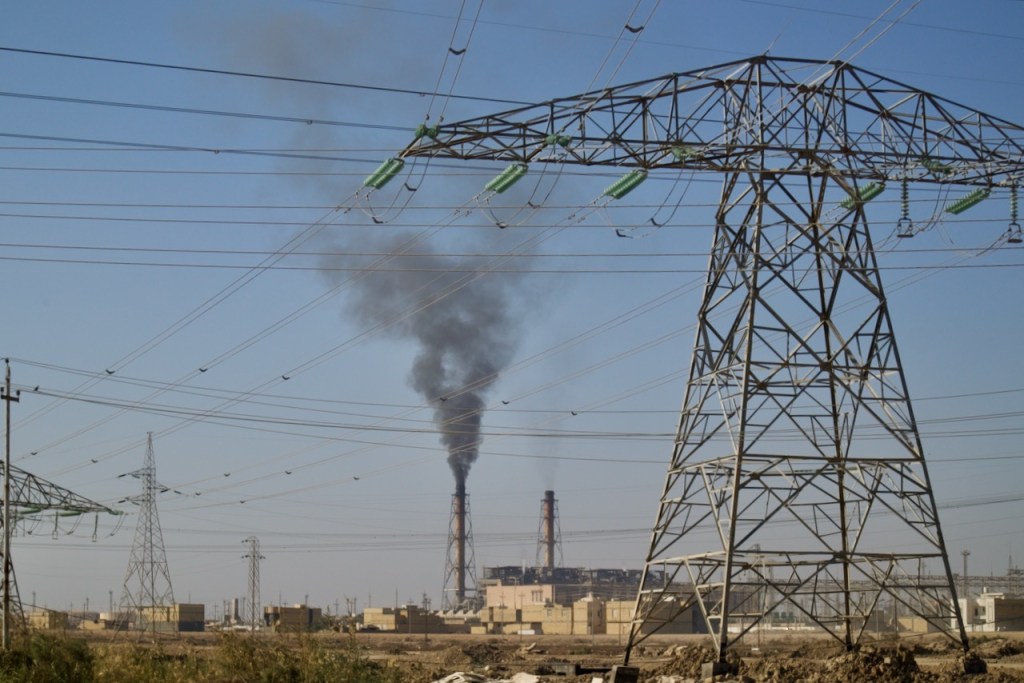
Other than these famous traditional Arab homes, I know little else of this southern city. A native son, Murtadha gives me an essential tour, along the Shatt Al Arab River and across the Italian Bridge, following the corniche. Basra, old and new, with all the telltale signs of an oil town – from the spaghetti highways to booming real estate, modern cafes, and shopping malls. Being so close to Iran and with a significant migrant labor community from South Asia, especially Bangladesh, Basra feels open and multicultural. Almost all of Iraq’s supergiant oil fields can be found near here. It is both a blessing and a curse, Murtadha laments. While oil brings in development, the benefits have not been equally shared. Where is all the money? Murtadha wonders. A mechanical engineer by training, he moonlights as a Careem driver to save up money to buy his own place and go travel in Europe. I have learned more in my two short hours with him than I would have otherwise in days. What an unforgettable morning!

Drought in the Mesopotamian Marshes
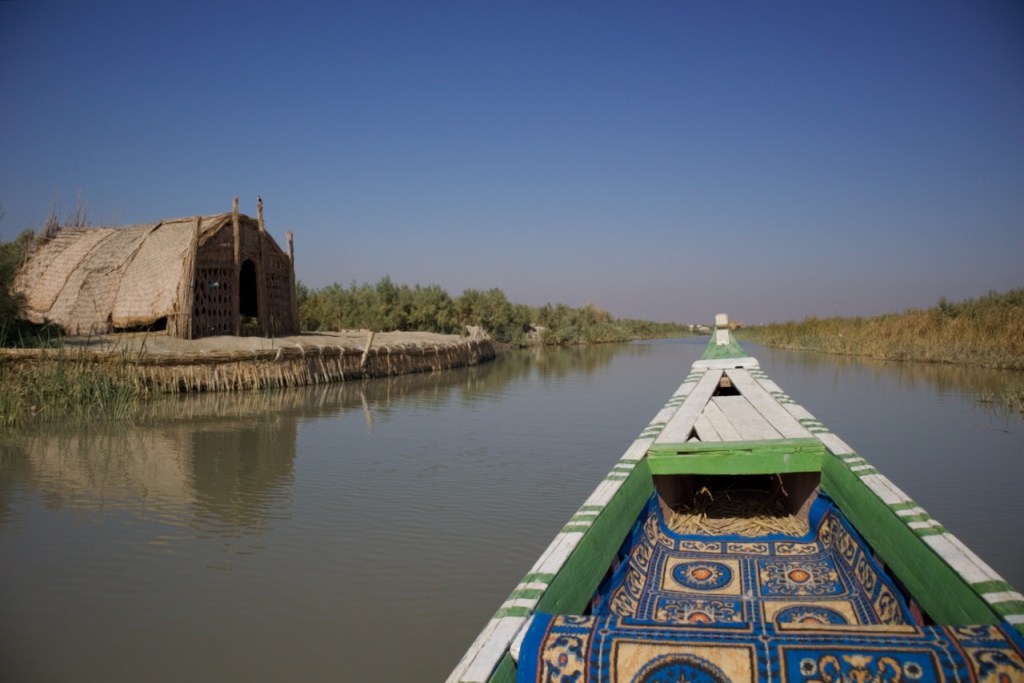
After one last glass of pistachio creme and orange juice, I say goodbye to Murtadha as he drops me in the garage for shared taxis bound for Chibayish. Experiencing the Mesopotamian Marshes on a local canoe is a must in any visit to Iraq. Occupying an area of over 10,000km2, the Marshes form a unique wetland ecosystem, an aquatic landscape in the desert, housing many different species of plants and animals including a large population of water buffalos, sustaining the livelihood of Marsh Arabs communities who live in traditional sarifa houses made entirely of reed. Punished by the former Iraqi President Saddam Hussein in the 1990s by draining the marshes, now they experience severe droughts, caused by a combination of climate change and the reduction of water flow from upstream dams in neighbouring Turkey and Iran. Majid, a soft-spoken young son of a longstanding Marsh Arab family, welcomes me to his canoe and showcases his proud home. Once the transit hub for many migratory birds from Siberia to Africa, the marshes now see far fewer herons, pelicans, and flamingos. It is such a peaceful morning, watching locals fishing and buffalos grazing. A timeless experience in an endangered land.


Ziggurat of Ur
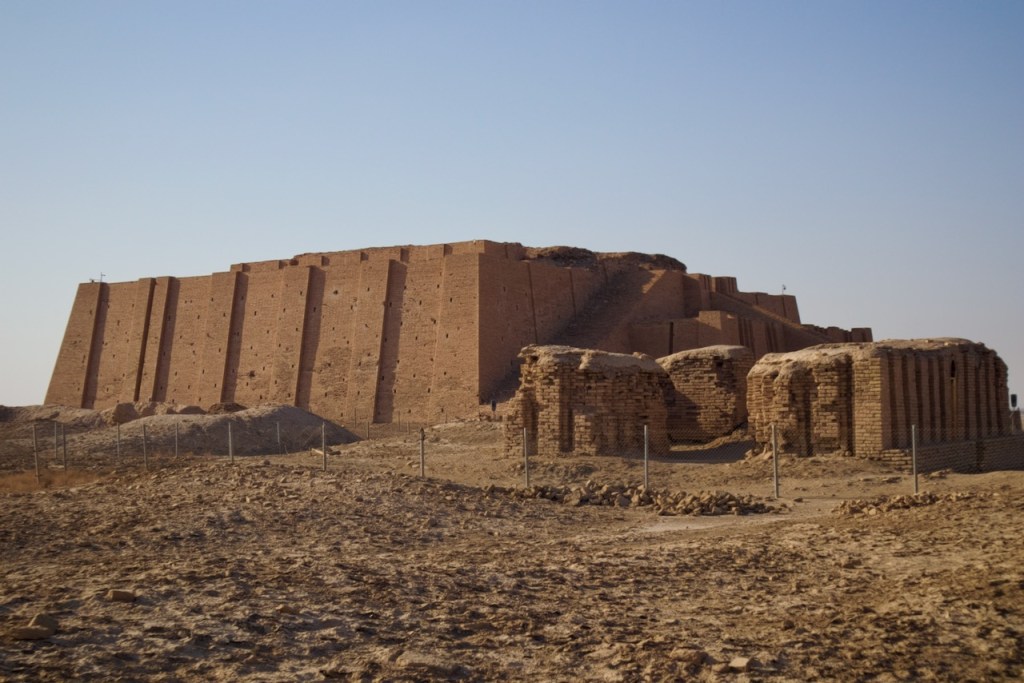
Modern-day Iraq was the capital of powerful Sumerian dynasties, home to the first known civilization and city-states, and Ur was one of the oldest cities in the world (3800 BC). Ziggurats were parts of temple complexes that served as administrative centres as well as shrines of the the patron moon god, Nanna. Built with a mud brick core, the ziggurat of Ur is one of the best preserved in the region. Older than even Babylon and believed to be the birthplace of Abraham, Ur attracts many visitors. But the nearby town of Nasiriya hosts the American-built maximum-security Al-Hoot prison, filled with ISIS fighters today. With such tight security around, it is a quick in and out visit before I hop on the next shared taxi bound for Najaf.


Celebrating Fatima’s Birthday in Najaf
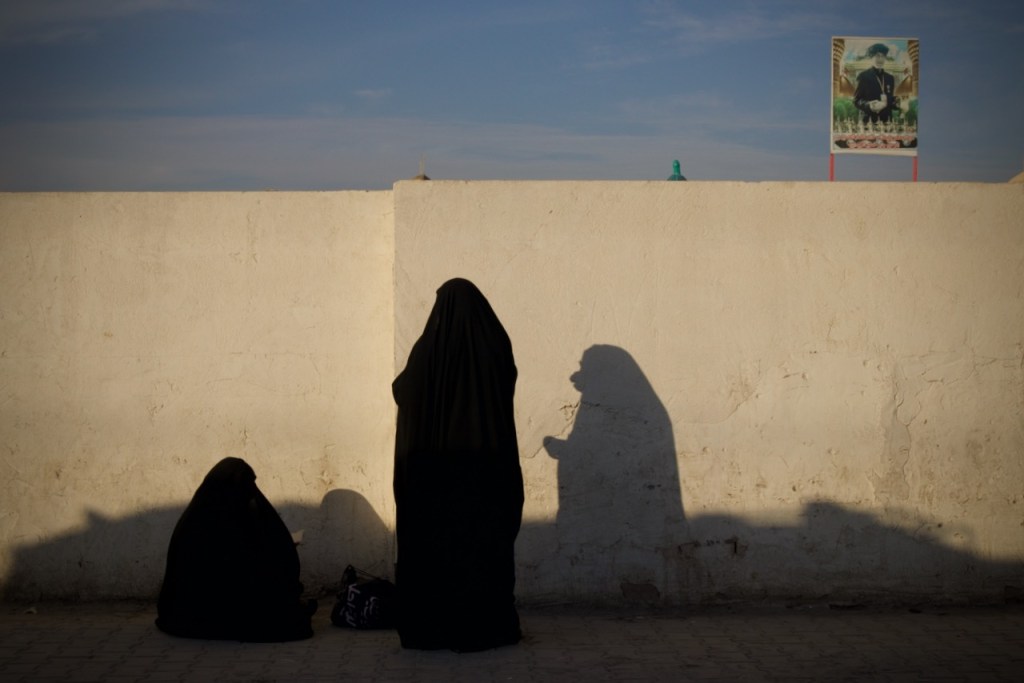
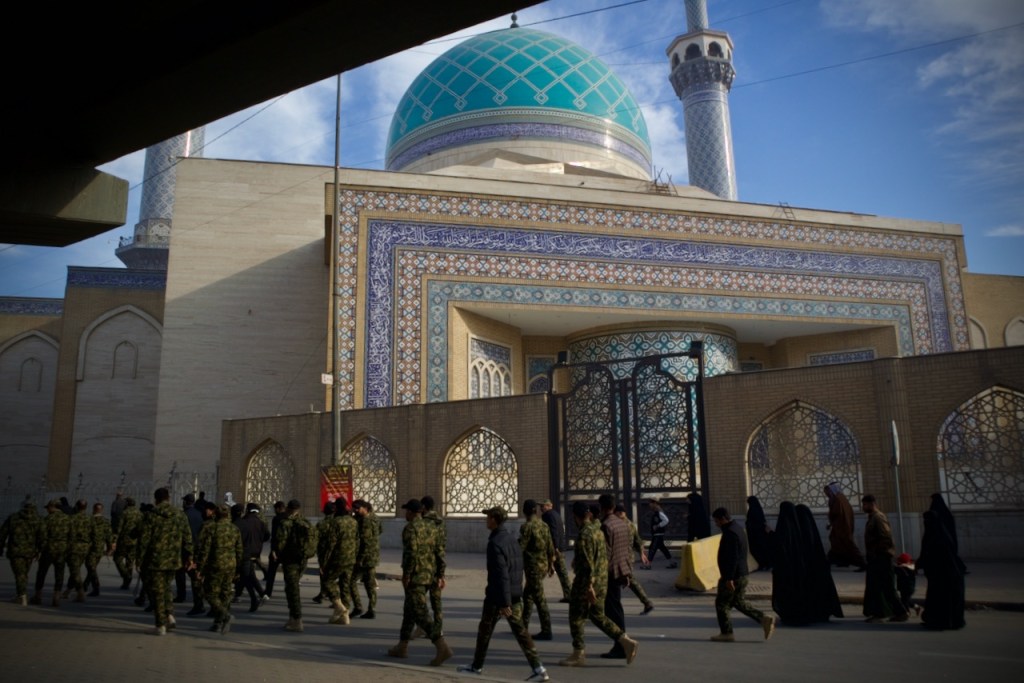
Night has already fallen when the taxi stops at the entrance of the Immam Ali Shrine. Being completely clueless on how to navigate the protocol of entering this holy site as a non-Muslim, I just follow the crowd. After visiting Afghanistan six months earlier, I have left my abaya at home, not thinking I would be visiting another Islamic country so soon. I pack all things black in my capsule travel wardrobe, hoping that my discreet attire would pass the test. I make it past the first entrance for women before being stopped, first for my pack that I have been lugging since arrival in Baghdad, then for my missing abaya, and then for my camera. Fourth time lucky, I gain access to the inner shrine. What commotion! The crowd is massive and the queue to the innermost sanctum daunting. By then I am thoroughly depleted and just want to find somewhere to crash. We are full, so full! hotel after hotel shuts the door. Like thousands of other pilgrims, I find a corner in front of the shrine to lie down, but the cold floor seeps into your bone. No way I could spend the night like this, so by one in the morning, I check in the hotels again until a kind receptionist allows me to spend the night in the lobby couch. After a red-eye flight and an Iraqi Railways sleeper, anything would do really. I sink into oblivion till six in the morning, ready to move on to Babylon. Didn’t they say: a good traveler has no fixed plans?


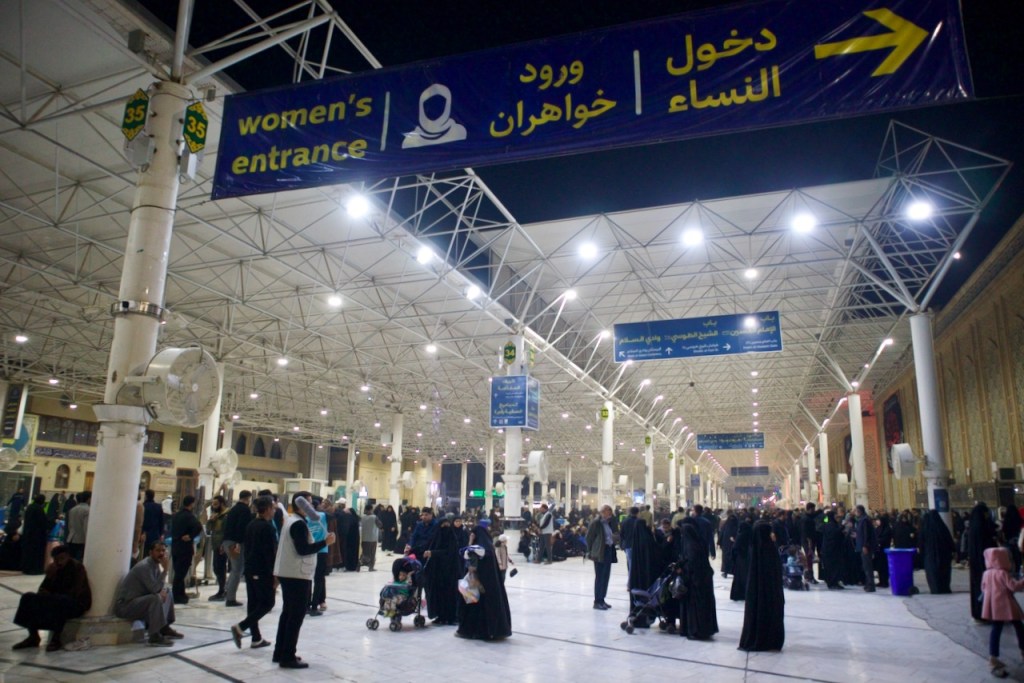


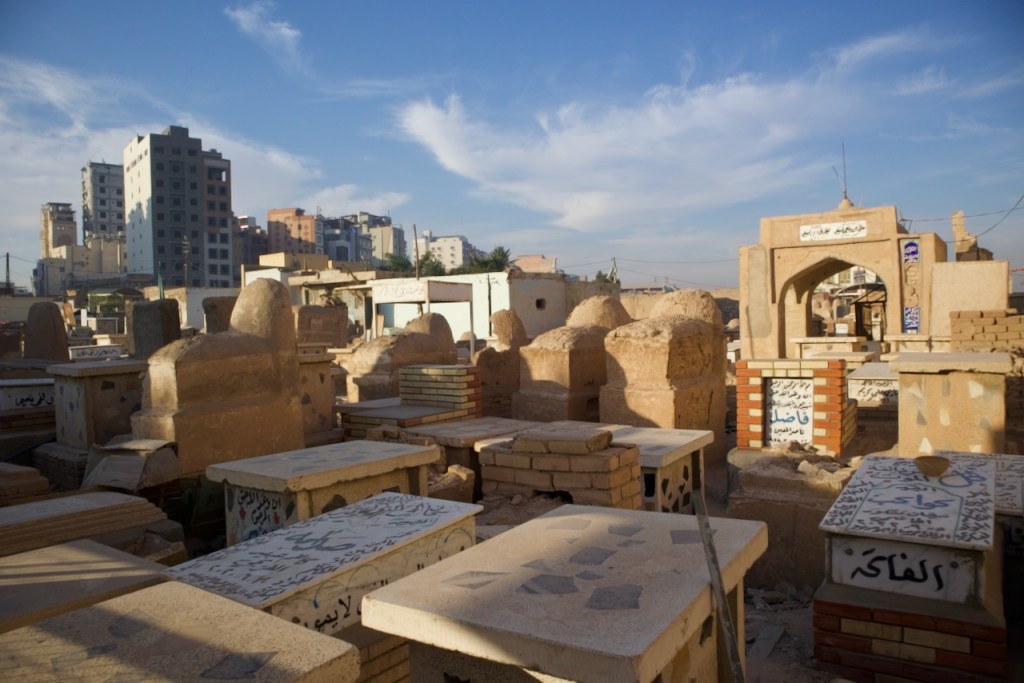
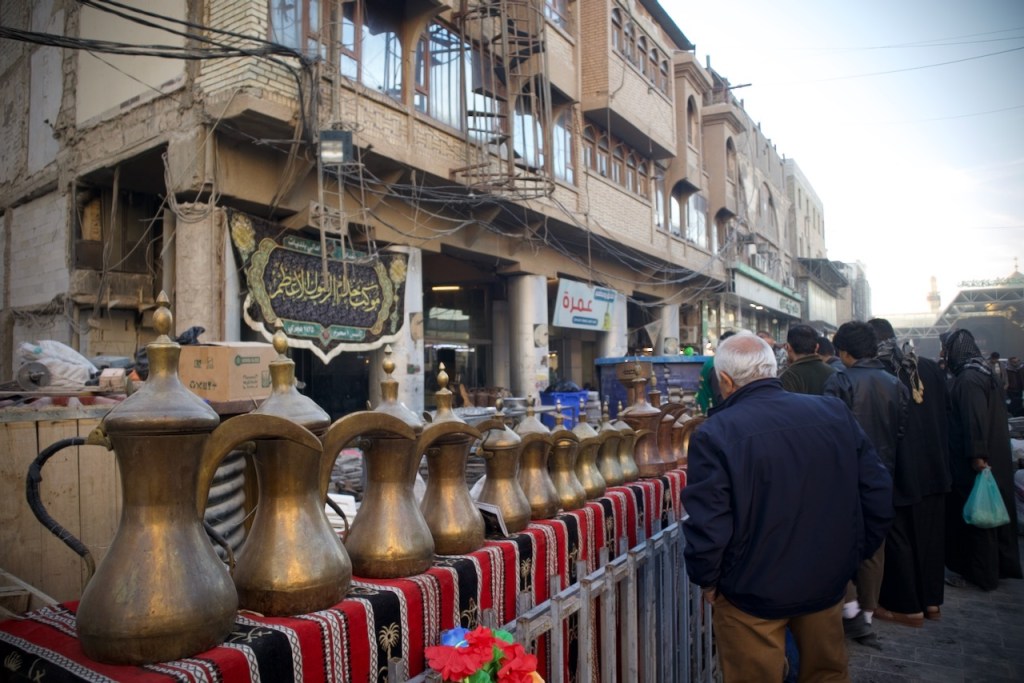
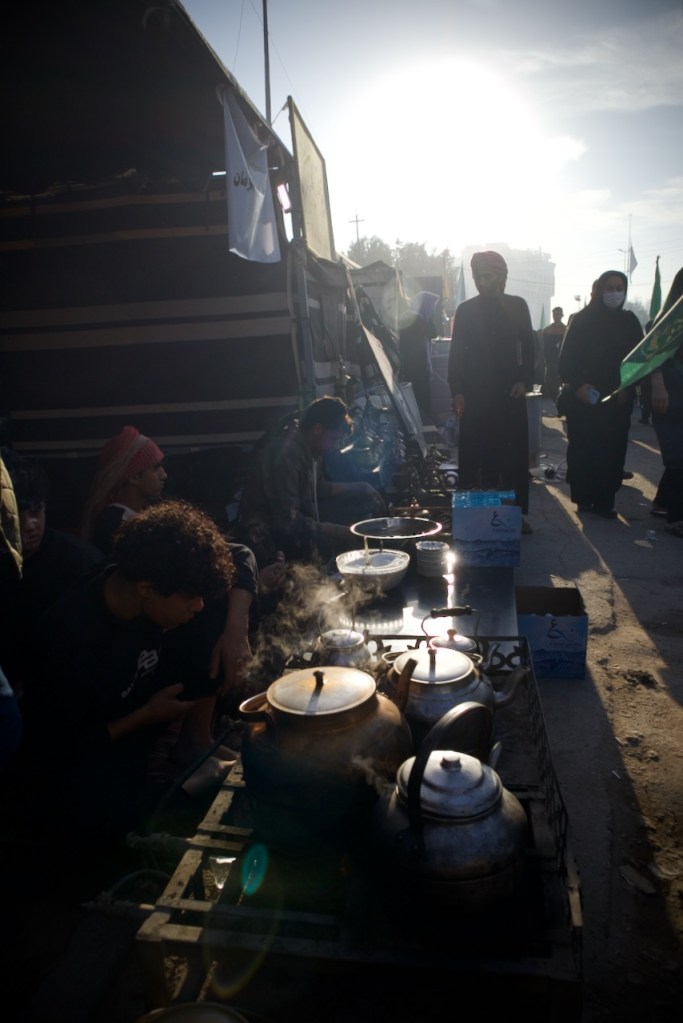
The morning in Najaf turns out to be one of the most photogenic moments in my entire trip. I venture into the sprawling Wadi-e-salam cemetery, a UNESCO World Heritage site and home to over six million souls, and walk back towards city centre. In this early morning hour, entire crews have already set up makeshift kitchens to brew large pots of tea and make giant vats of rice and stews to cater for a sudden influx of pilgrims. It’s the Prophet’s daughter, Fatima’s birthday! I finally learn. No wonder. What celebrations!



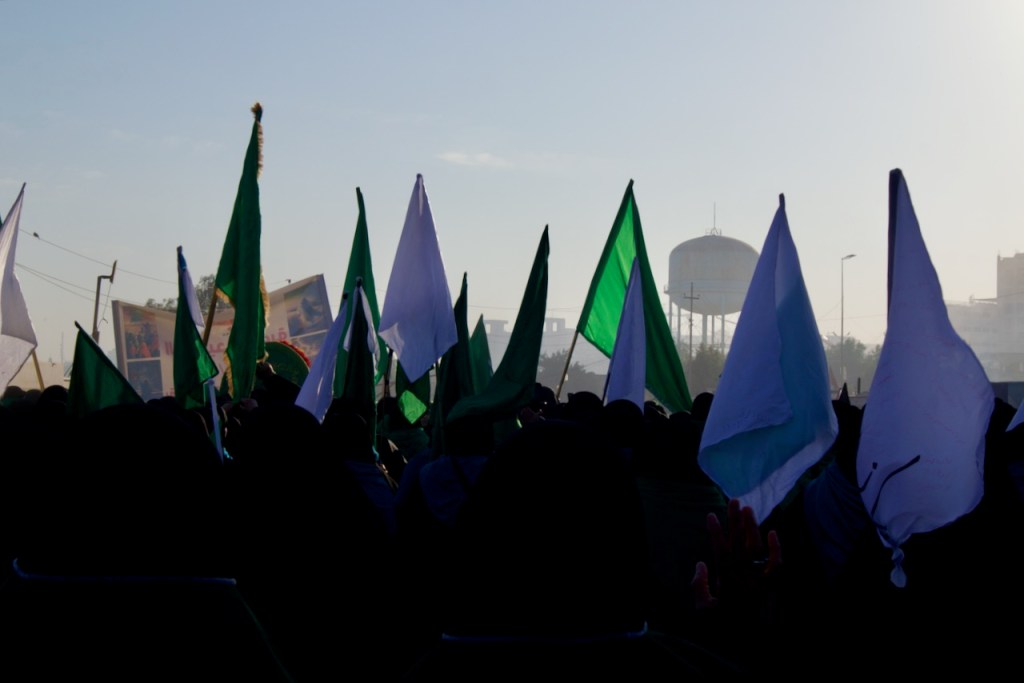
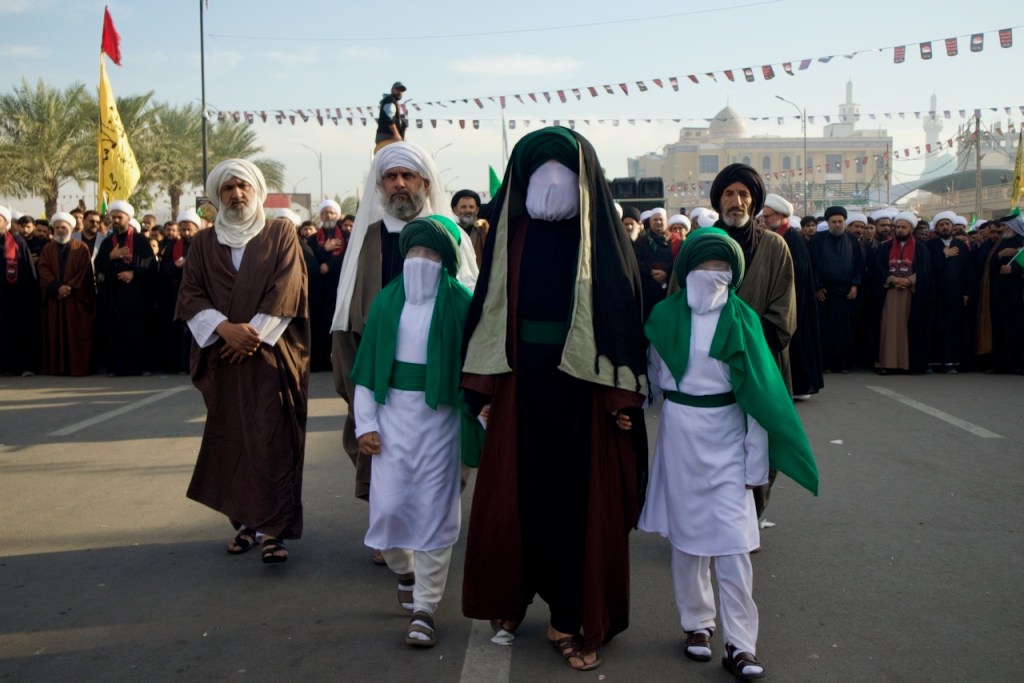

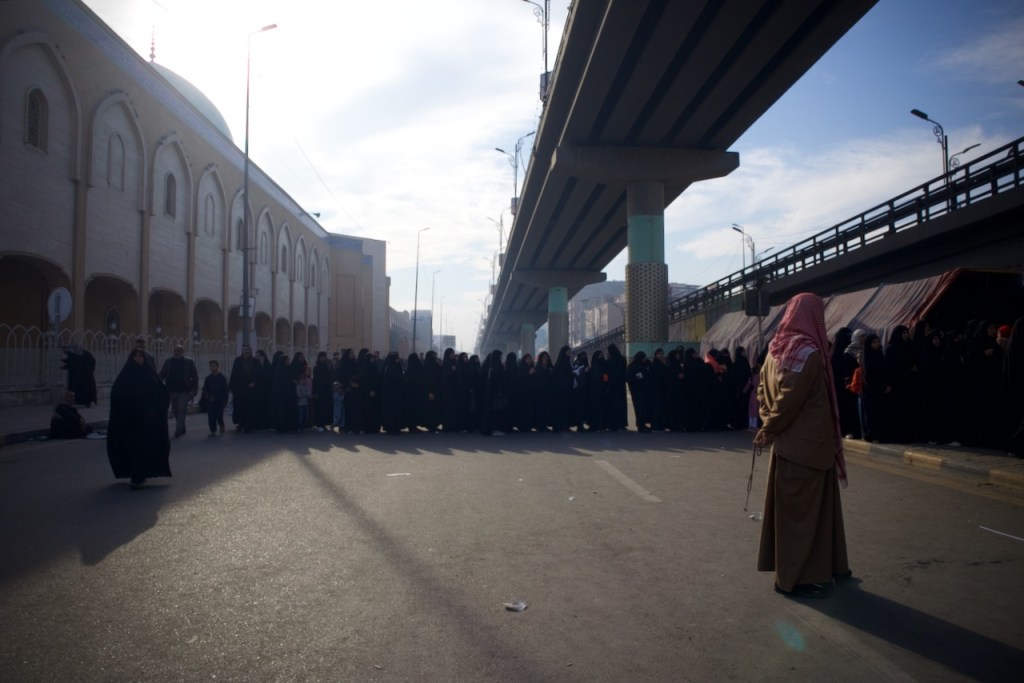


I swiftly marched to Babylon
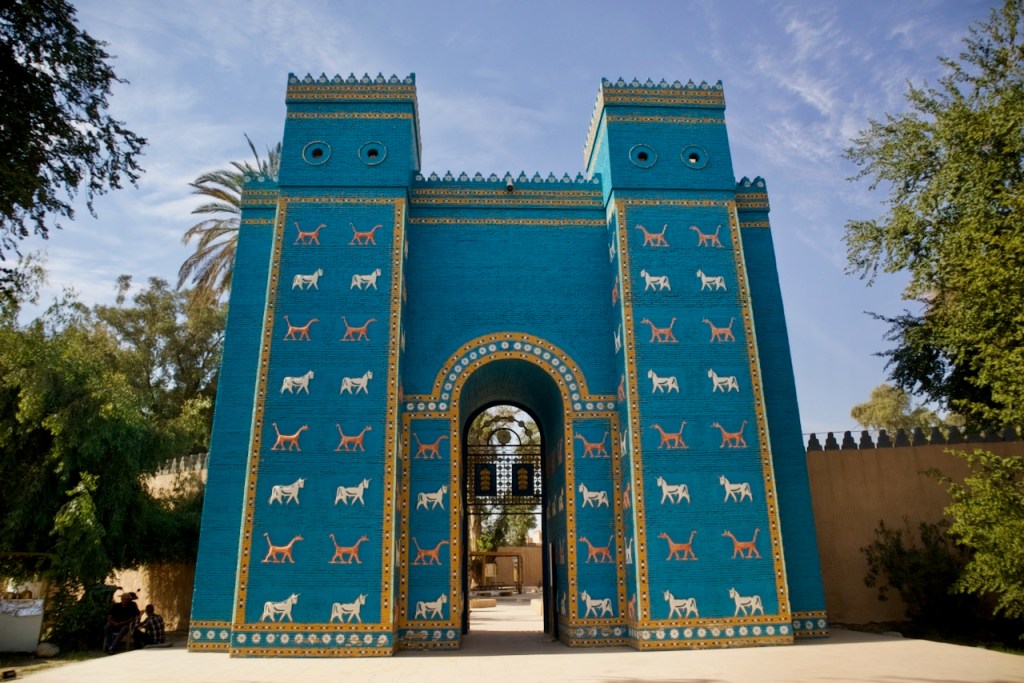
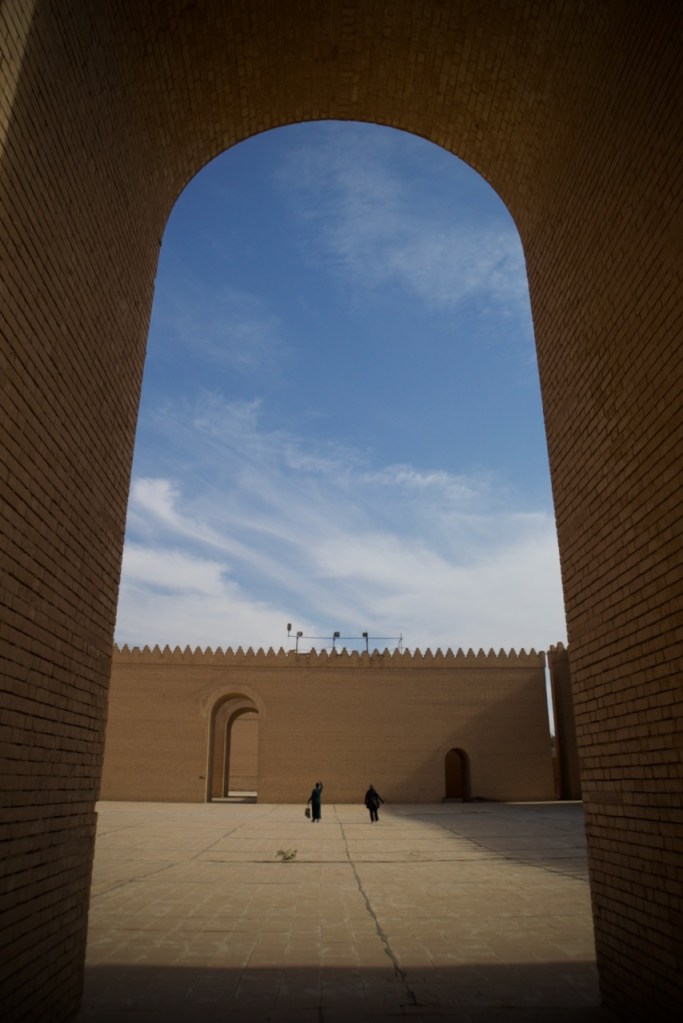
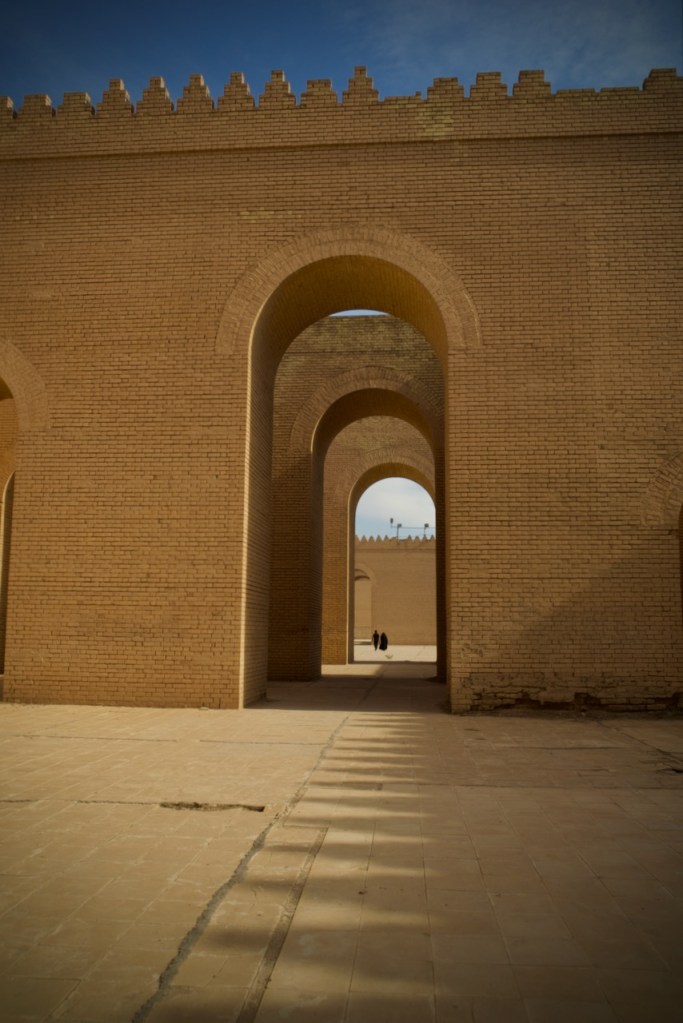
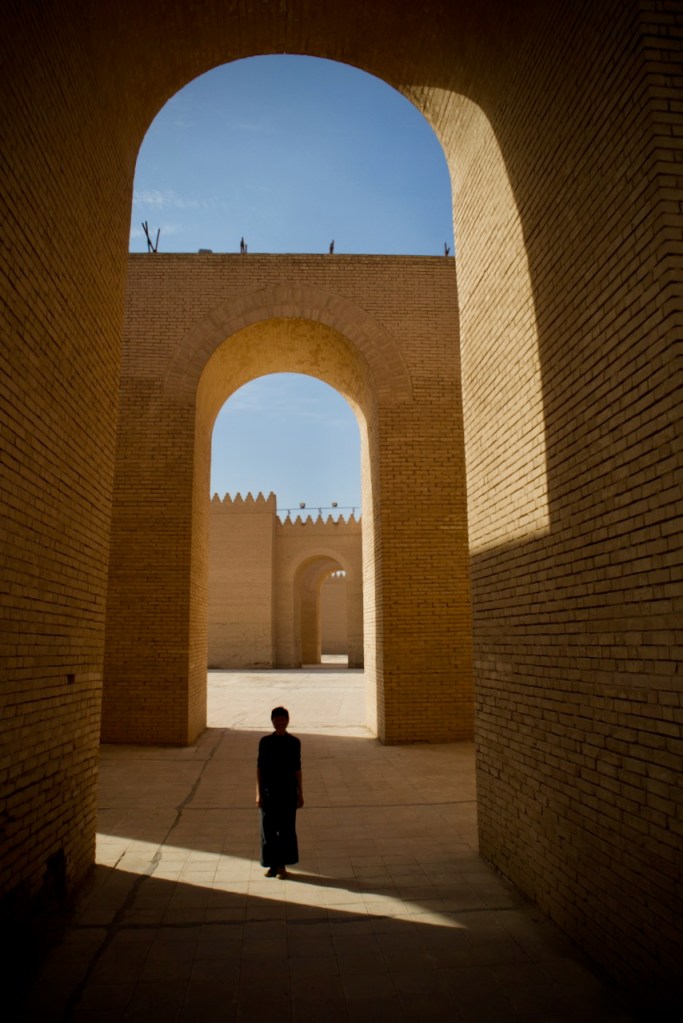
The Hanging Gardens and the Tower of Babel, the lion statue and the Babylon dragons, and the legendary Ishtar Gate that leads one to the palace. The ancient capital city and kingdom of Babylon is sheer magic, especially for Saddam Hussein. During the 1980s, the megalomaniac former dictator rebuilt parts of the site with new bricks bearing his name before constructing a massive, luxurious palace for himself right by the ruins. Then, following the 2003 US invasion, American forces used the site as a military base, causing further degradation. And to this date, the real Ishtar Gate remains in Berlin (taken there in 1918!). All these controversies aside, the site is a photographers’ delight, with its tall walls and overlapping gates, empty squares and intersecting lines, complex labyrinths and processional ways, as the sun casts moving shadows across multiple planes…

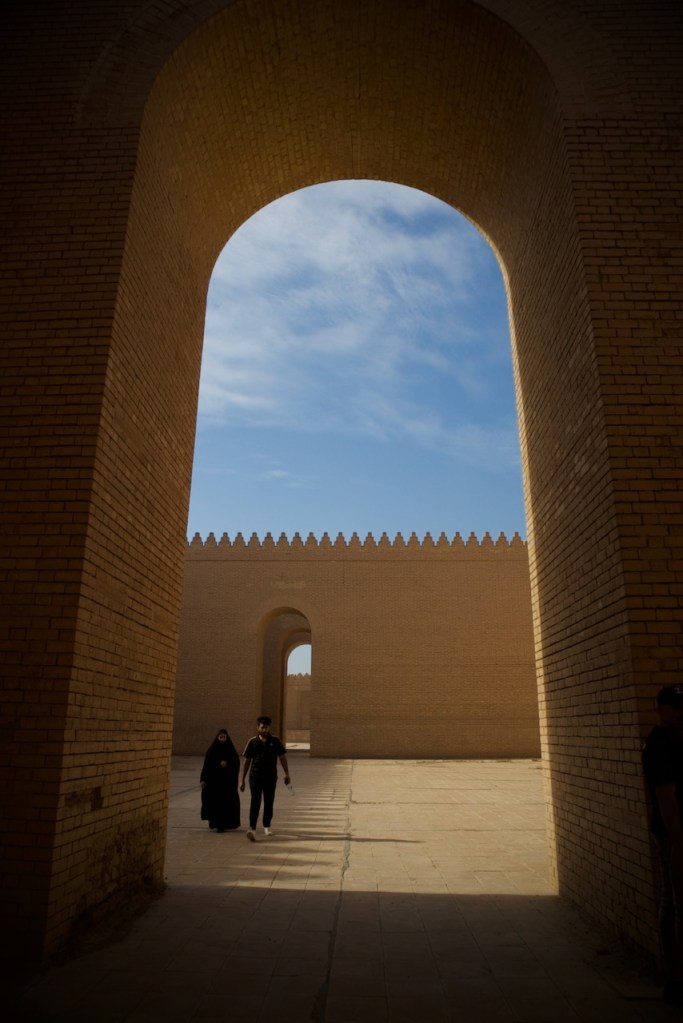






Ziggurat of Kish: Shhhhh
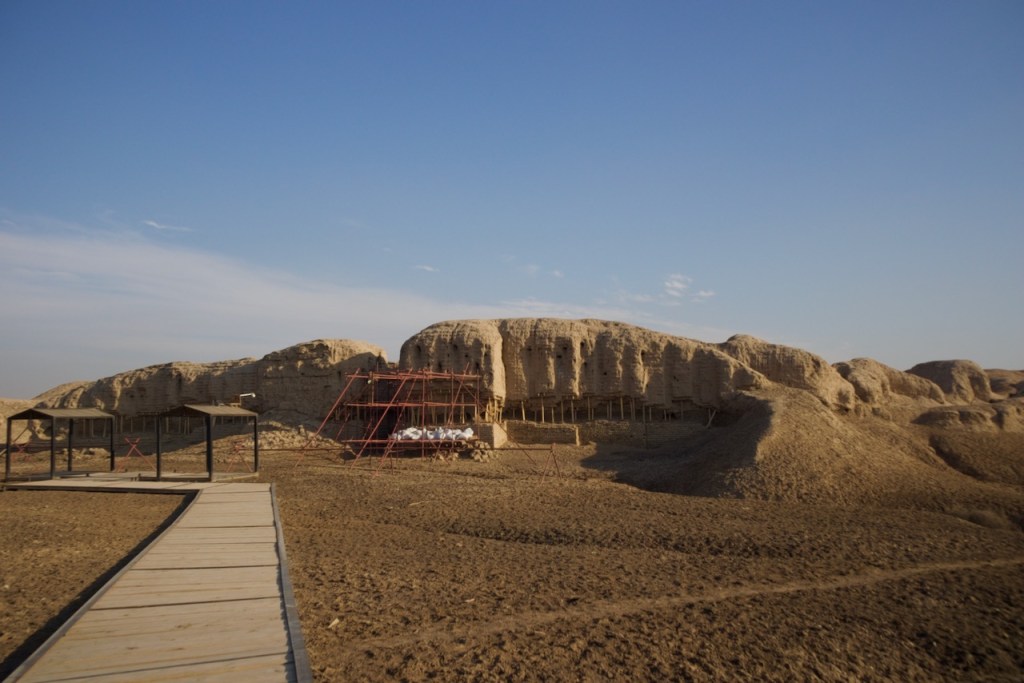
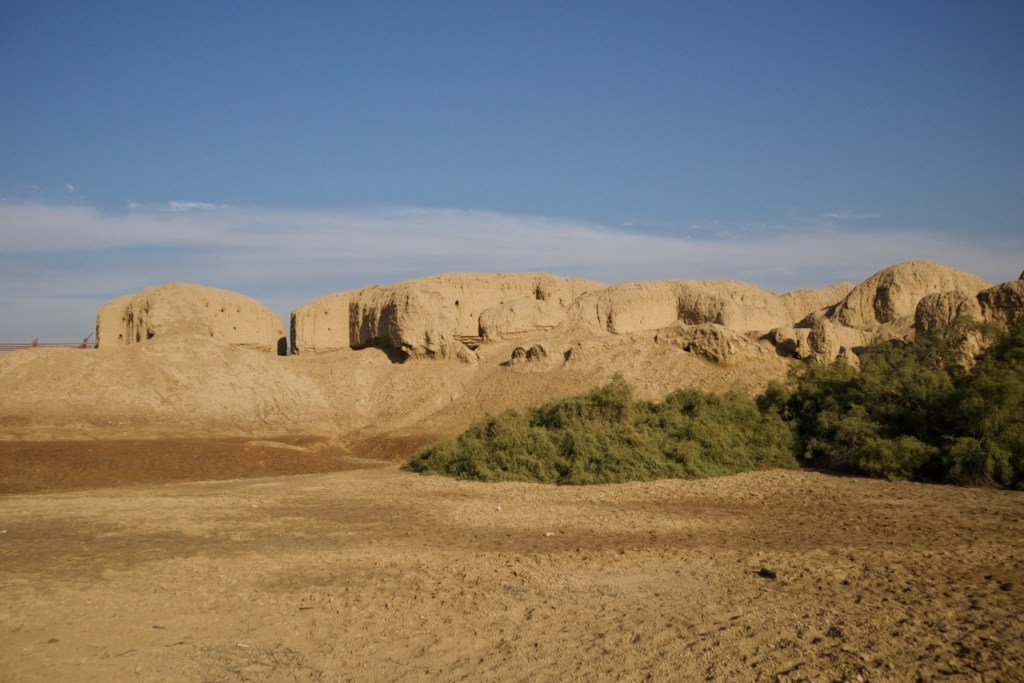
Nearby lies another ancient city of Kish, supposedly even older than Babylon. With ziggurat structures, temples, and palaces similar to those in Ur, built over 3400 years ago, it is a hidden gem for history buffs to get a glimpse of one of the world’s earliest cities, a place where civilization as we know it began. The off limit ruins today do not resemble much. This is a palace, our latest excavations! the guard says, pointing to a sandy pit. No photos!


Karbala: Between the Holy Shrines
Learning from my Najaf experience, I head to the Imam Hussein Shrine in Karbala with neither pack nor camera but with an abaya loaned by the entrance guards. Mourning for Hussein is considered to be a source of salvation in afterlife in this holy site for Shia Muslims, but the deafening lamentation is something reserved for the most faithful. I retreat to my hotel early, ready to call it a day for my extremely brief pilgrimage.


I will Go to Samarra and there…
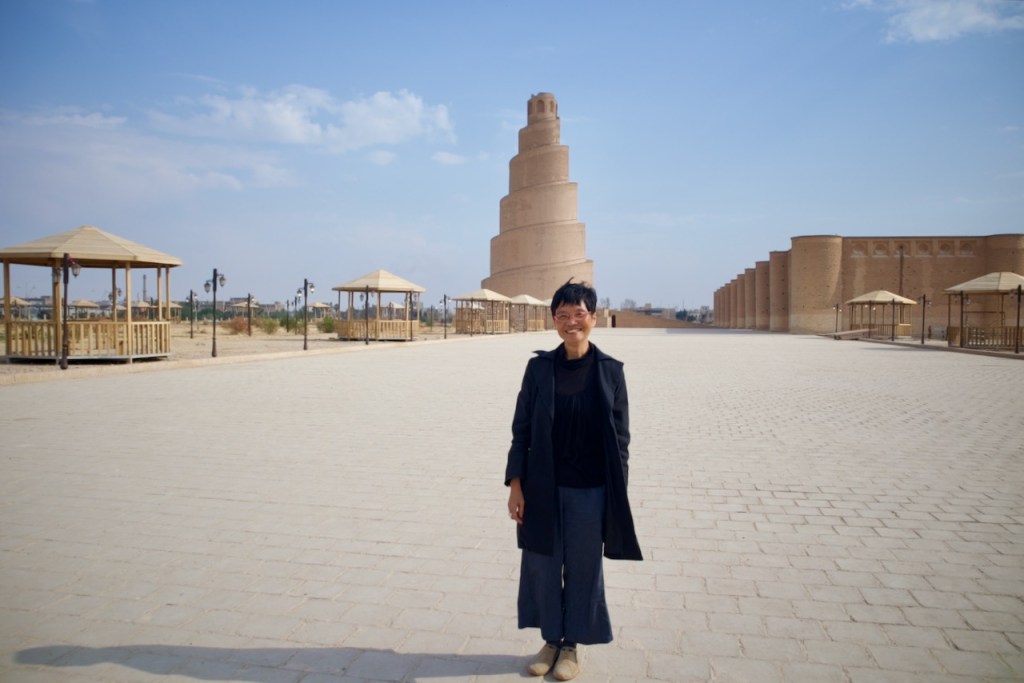
I have no appointment tonight, but I will go to Samarra and there… A long ride from Karbala to Samarra via Baghdad brings me to the iconic site, the former capital of the Abbasid Caliphate from the 9th century and home to one of the most jaw-dropping spiral minarets in the Islamic world. Unfortunately, the 9th-century Great Mosque is off limit, but you can snap a quick iconic shot. Imad and Jabra, visiting from Baghdad, give me a lift to nearby Qasr Al-Ashiq/the “Lover’s Palace.” Oh, but I love you...

Hatra in Danger
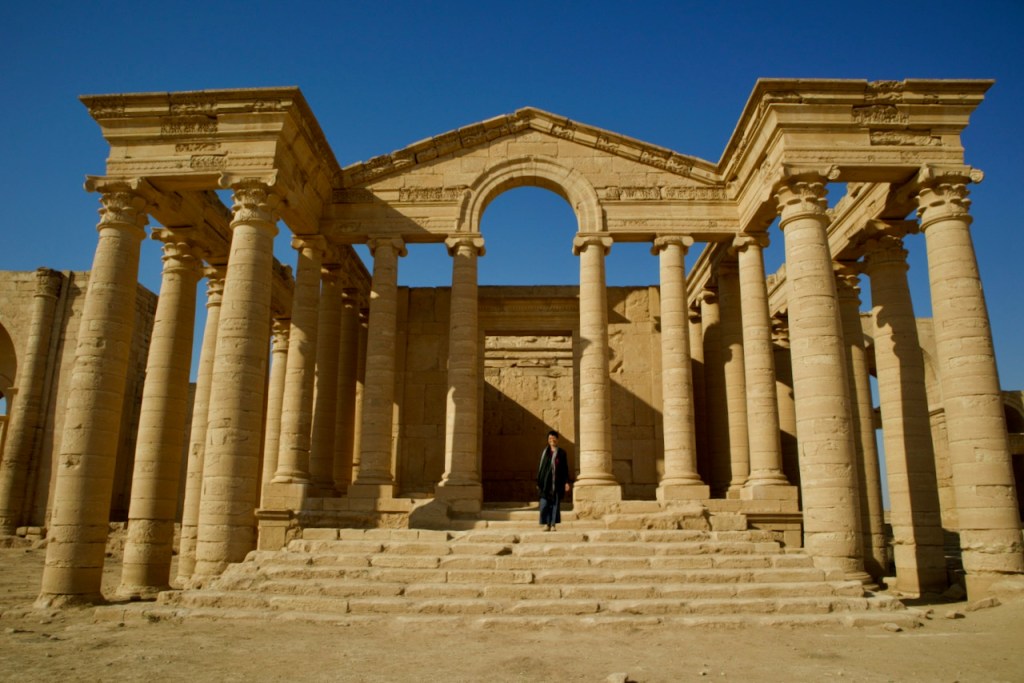
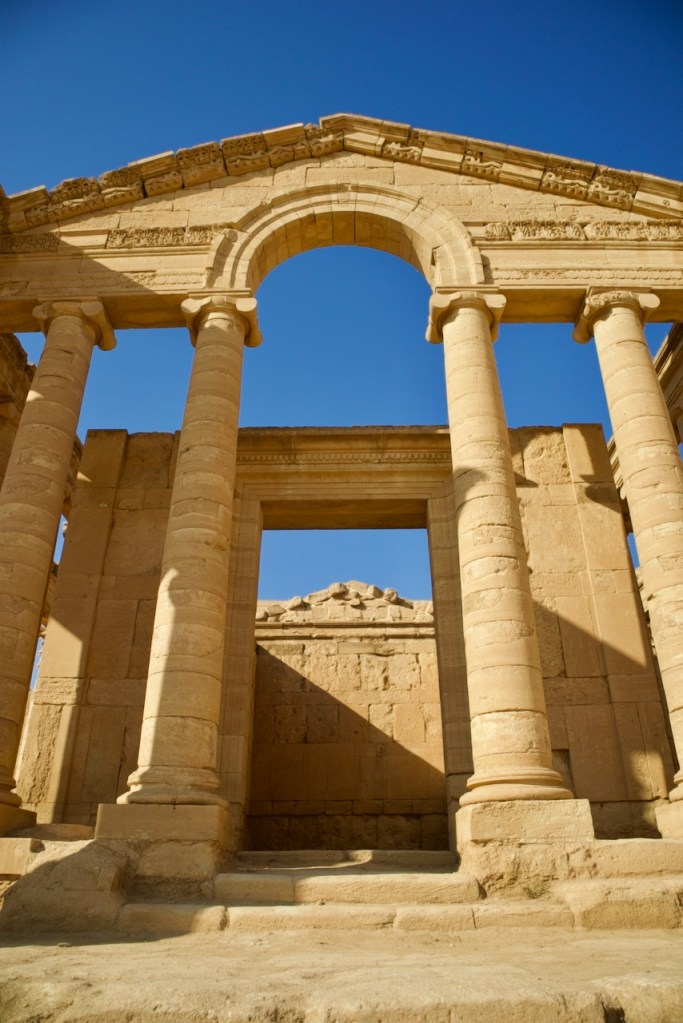
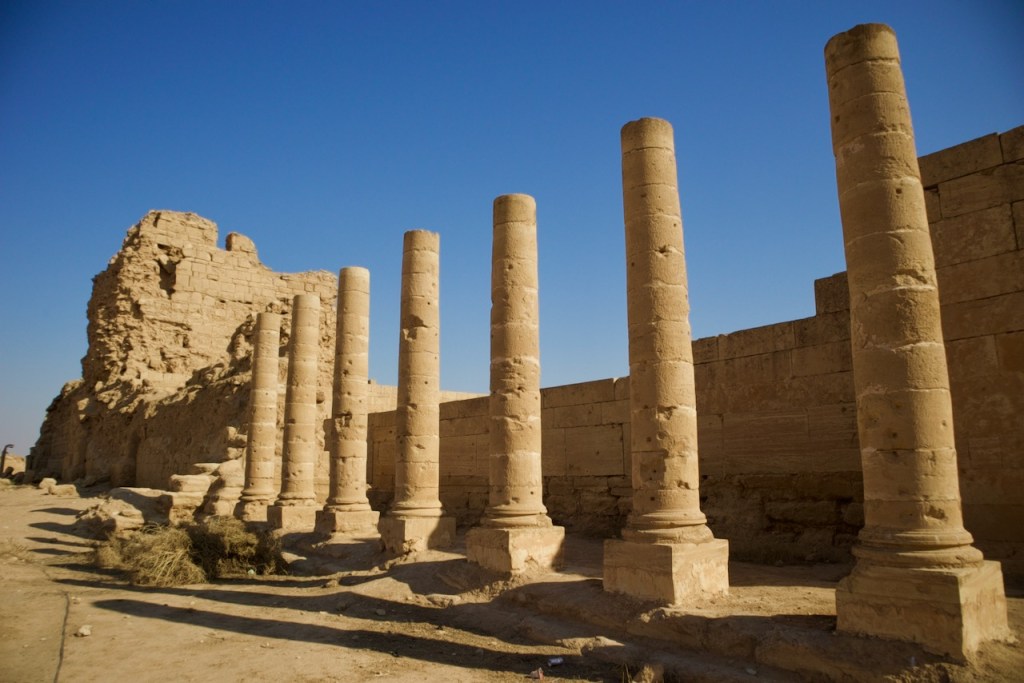
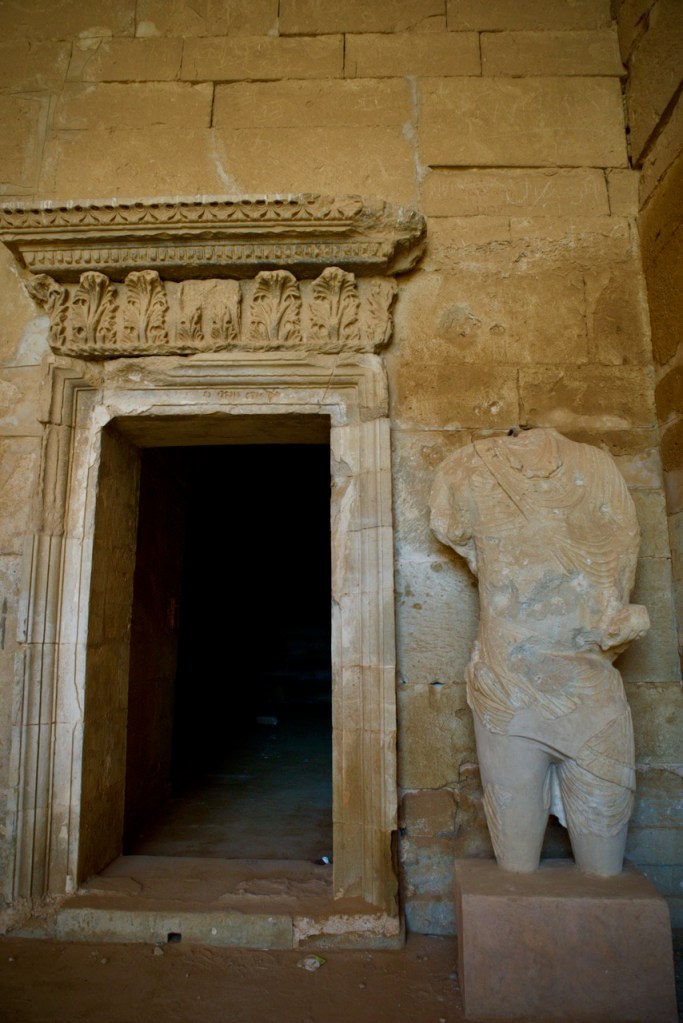
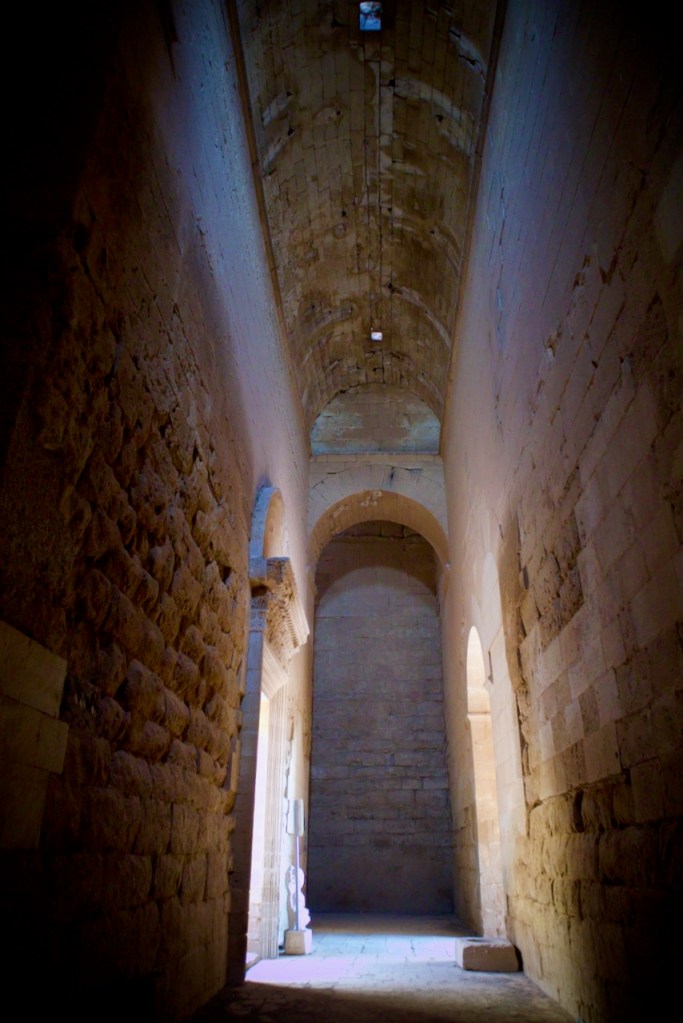
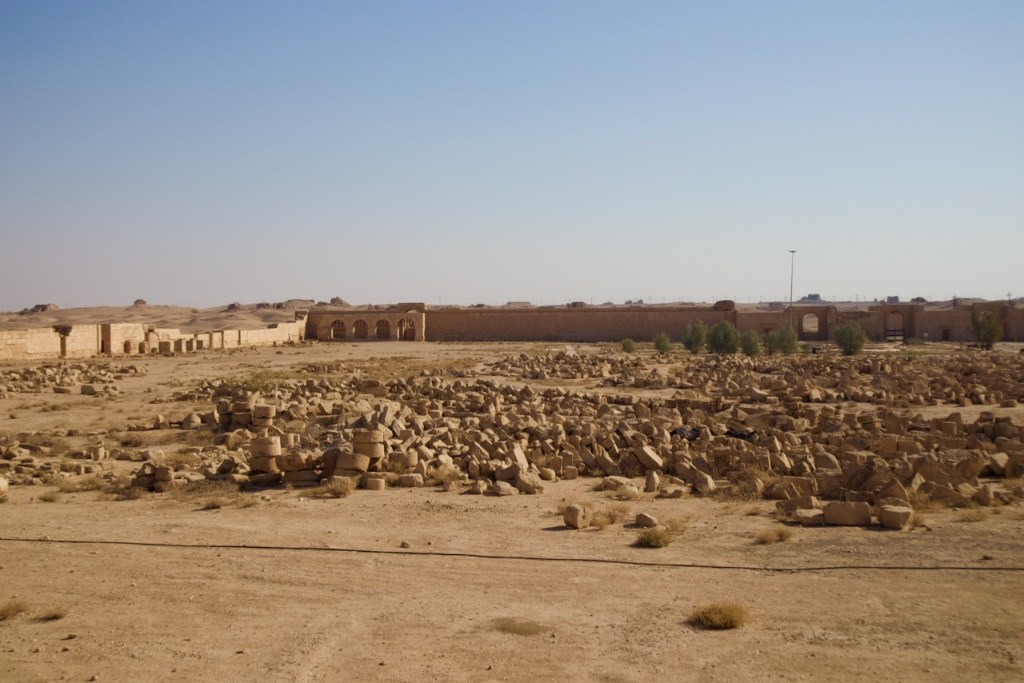
One of the most stunning sites to visit in Iraq, a 2,000-year-old fortress with layers of Mesopotamian, Persian, and Greco-Roman influences, located right in the middle of the desert, is also the most inaccessible. The region being controlled by Shia militias, all traffic to and from Hatra is tightly monitored. A visit requires a pre-purchased ticket at the Tourist Office in Mosul and private transport, about an hour and half away. The UNESCO World Heritage site, once a caravan city located between the Roman and Parthian empires, boasts well-preserved temples and vaulted chambers, high walls and defence towers, decorated arches and numerous iwans/rectangular halls, elaborate sculptures and statues. Unfortunately, ISIS used Hatra as a training camp in 2014-2015 and smashed statues and sculptures with sledgehammers and firing assault rifles at its walls. The sorrowful sight of headless statues and bullet ridden facades reminds one of the continuous vulnerability of heritage protection in Iraq today.







Mosul Streets I walk
Finally, I make it to Mosul, my last stop in Federal Iraq, in the most challenging taxi ride yet. The not-so-honest driver from Samarra drops me in the middle of nowhere, asking me to change to “his brother’s” cab while charging me double the fare before “his brother” stops in Mosul outskirts. Thankfully, Mustafa, a soft-spoken engineering student, comes to my rescue. Are you hungry? he asks. Let’s have some sweets! All I want is to head to the hotel, but Iraqi hospitality is impossible to turn down. We have baklava and pizza – in that order – before he orders a taxi on his Bally app bound for Hotel Kahramana.
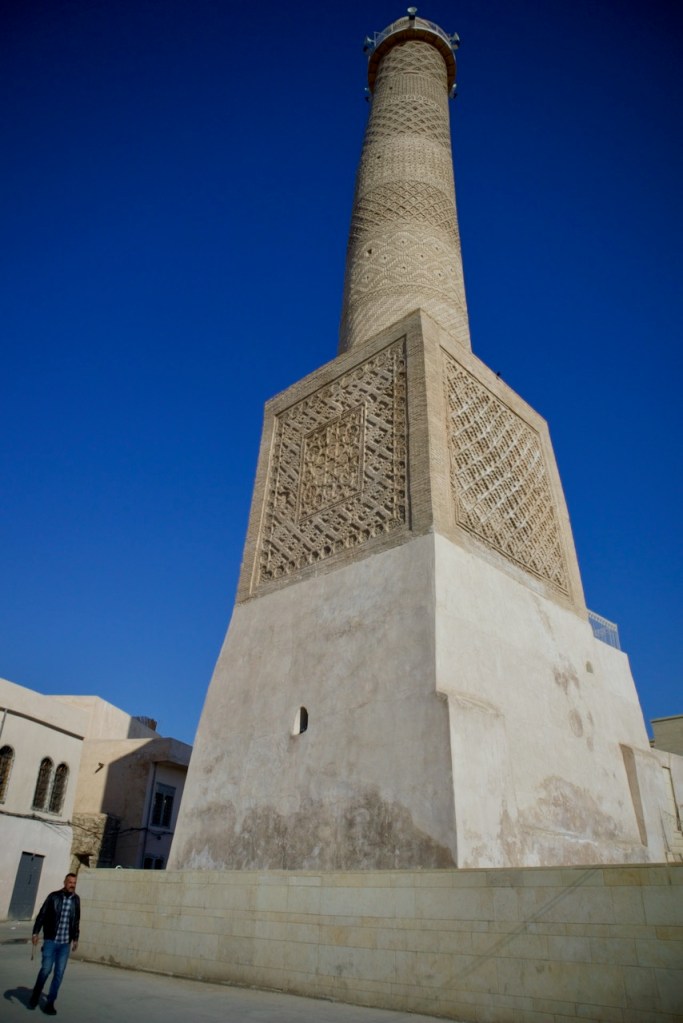
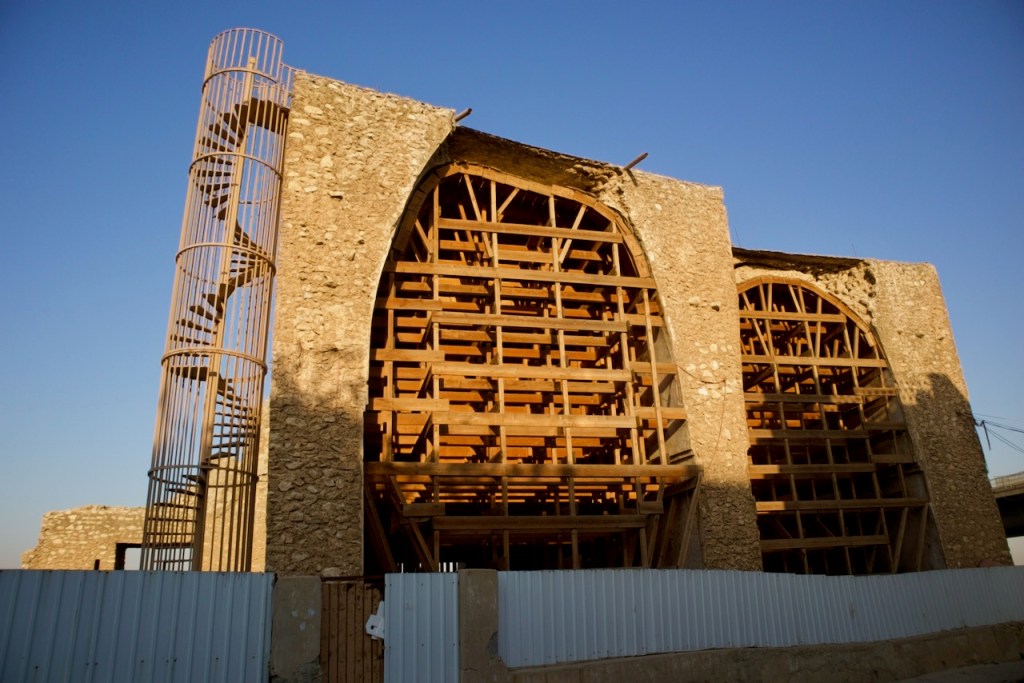
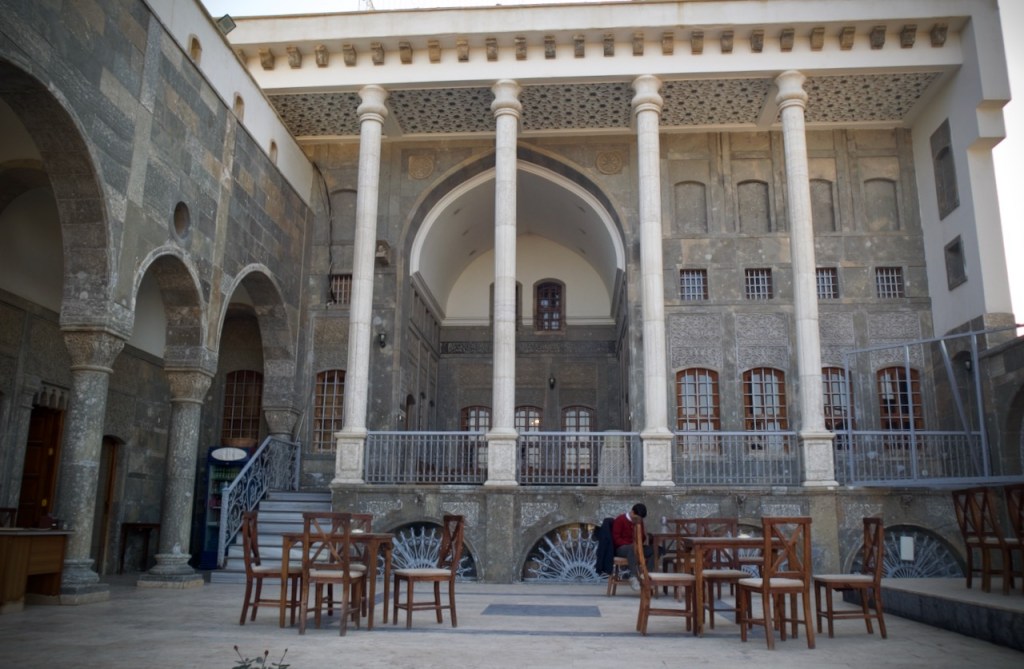
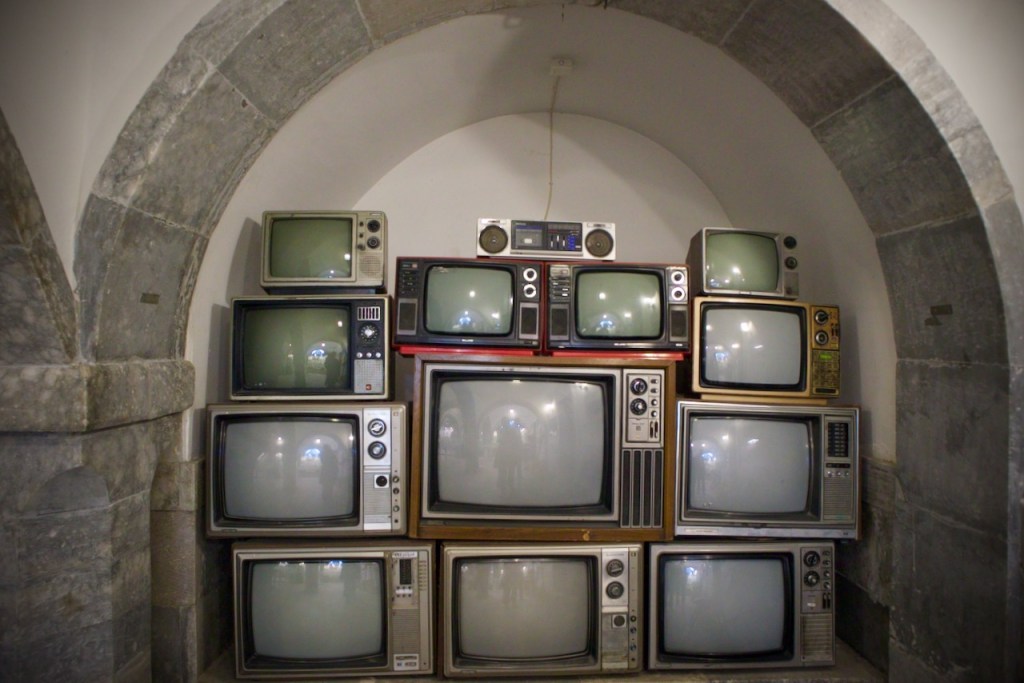
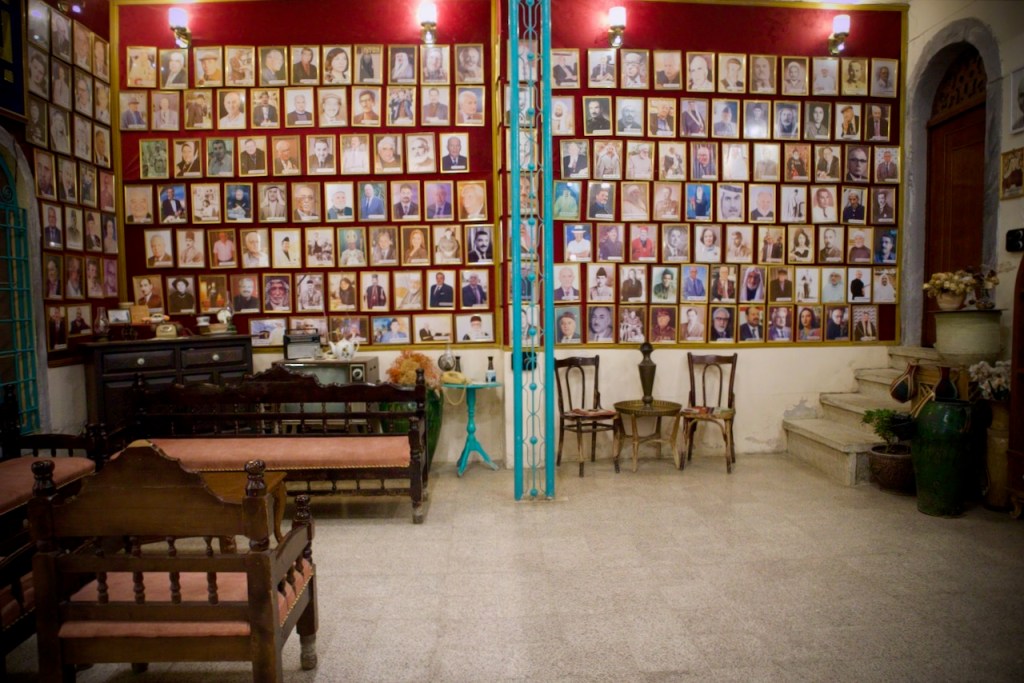
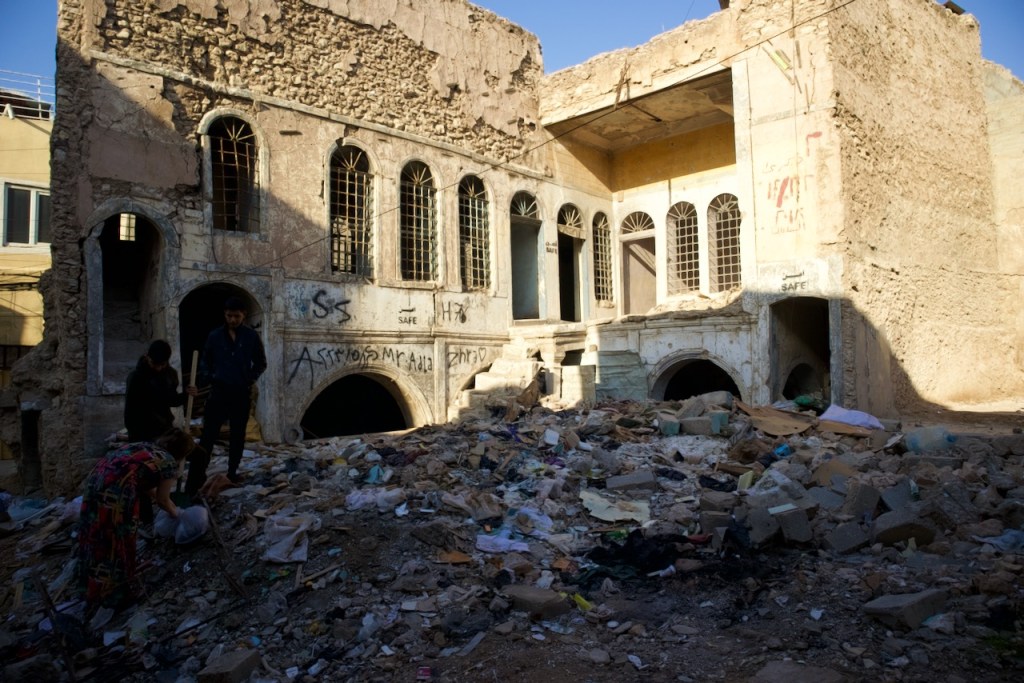
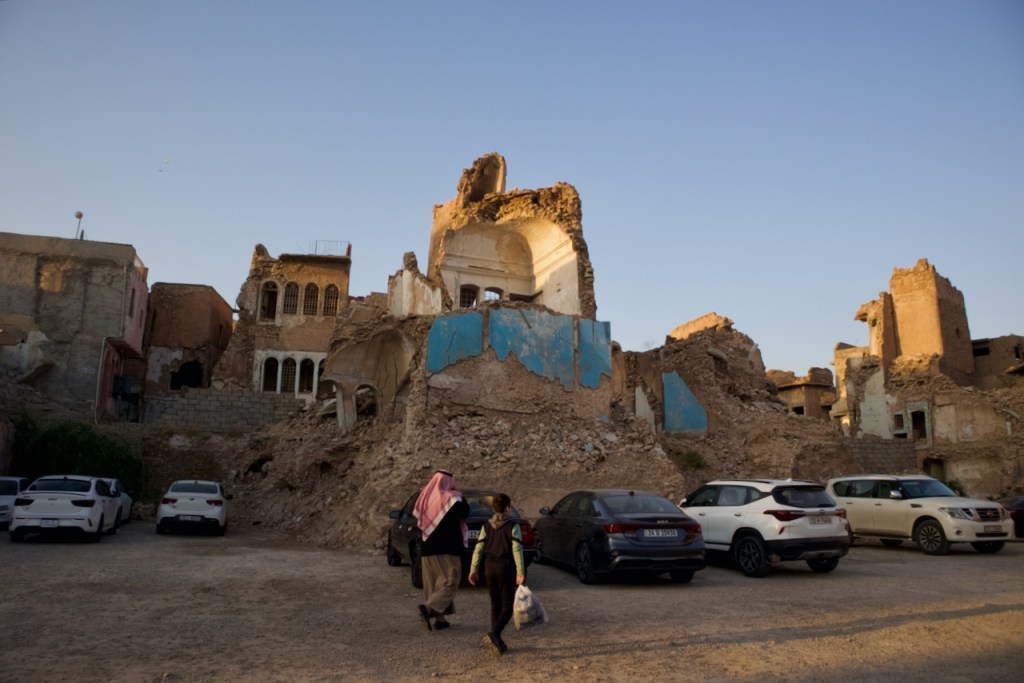
With roots stretching to more than 6,000 years BC and as the location of the mighty Neo-Assyrian empire over 3,000 years ago, Nineveh in today’s Mosul was the largest city not only in Mesopotamia but also in the world. One can feel the legacy of the rich cultural mosaic where Arabs, Kurds, Turkmen, and Armenians, and many religions have long co-existed. Walking the streets of Mosul feels like time travel, with remains of Nineveh wall fortifications on one corner and an old church next before stepping onto the ruins of ISIS destruction. Along the Tigris river, I chance upon the Mosul Heritage Foundation housed in a magnificent former home where Wafiq, a civil engineer involved in UNESCO “Revive the Spirit of Mosul” project, welcomes guests to the Culture Club for a reading of a translated copy of Edgar Allan Poe’s The Masque of the Red Death. While the capture of Mosul by ISIS between 2014 and 2017 has left a trail of devastation, Mosul is steadfast in rebuilding. As I write, the Iraqi government has just announced the launching of a major reconstruction and heritage revival initiative, dubbed the “Mosul Pulse” project, to revitalize the historic neighbourhoods of the war-battered old city. No, this isn’t Mosul, no, this isn’t us! as the local residents proclaim.










Amedi on a Mountaintop
Time to cross into Kurdistan!I have heard from fellow travellers about these ancient Kurdish towns and holy cities up north that are not always easy to reach. Crossing from Mosul to Duhok feels like stepping into a different country. All of a sudden, you see mountains and gorges, with greener pastures and deeper canyons. Built on the top of a mountain with incredible views of the region, Amedi is a 5,000-old historical village, believed to be the home of the Three Wise Man who made a pilgrimage to Bethlehem to see Jesus Christ after birth. From the Great Mosque, I walk to the historic Mosul Gate with a sweeping view of the valley and wander through the souk. After the bustling cities of Baghdad, Basra, and Mosul, and the massive pilgrim crowds in Najaf and Karbala, quaint Amedi feels like a slice of heaven.


The Refuge of Lalish
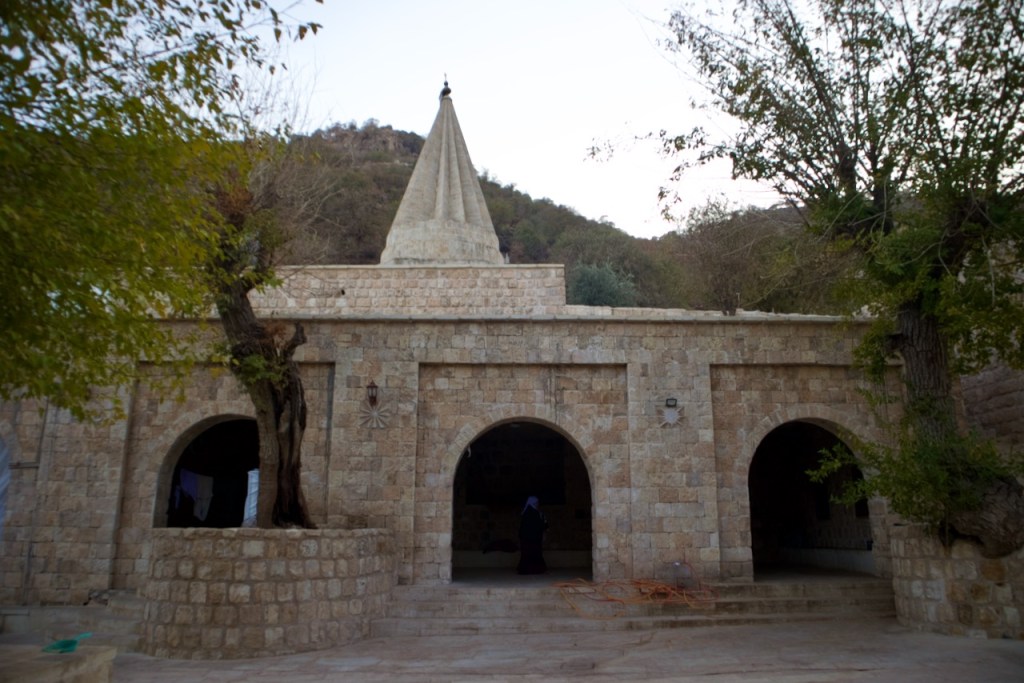
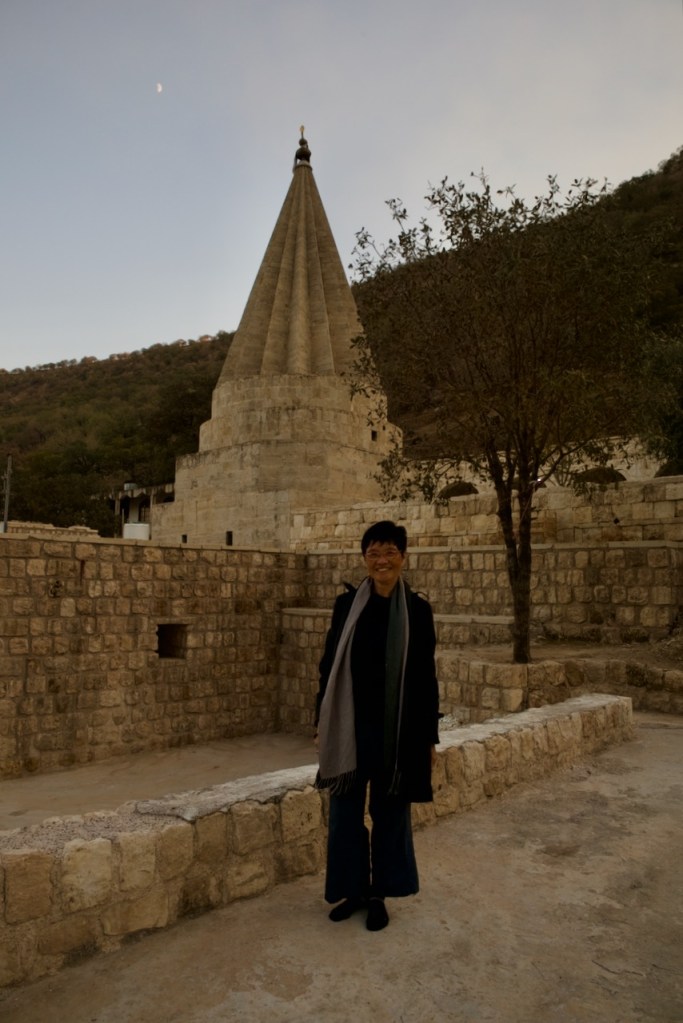
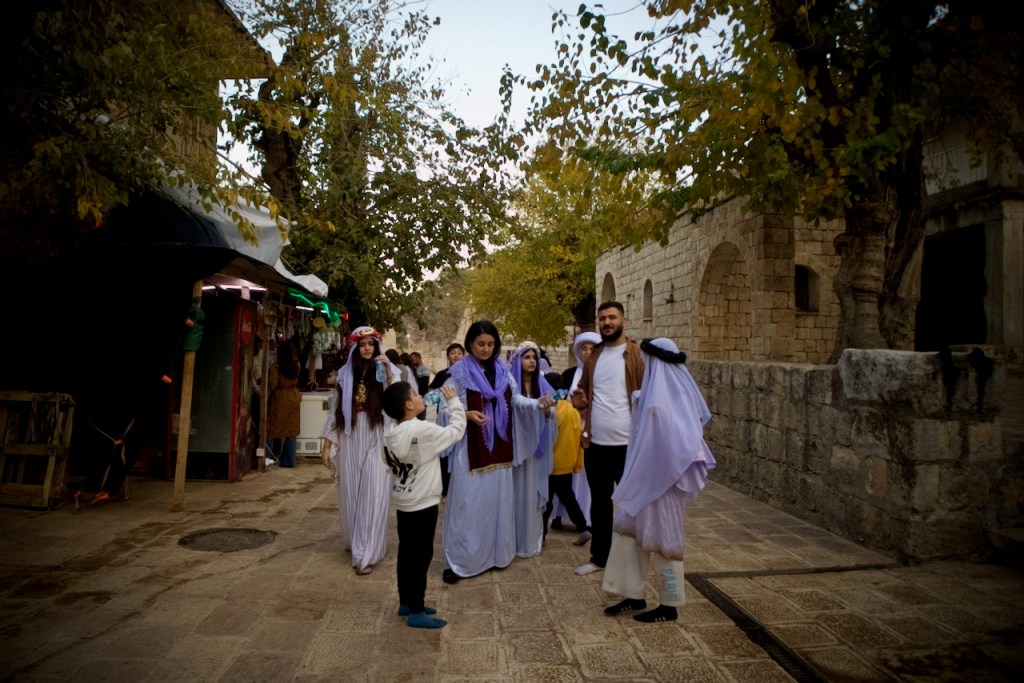
My first encounter with the Yazidis, an indigenous religious group in Kurdistan, happened before arriving in Lalish when I read the gut-wrenching The Last Girl: My Story of Captivity, and My Fight Against the Islamic State by the Nobel Peace Prize laureate, Nadia Murad. From Sulav, I get a ride with Hama and his college pals hailing from Erbil who have never heard of Lalish. It’s holy, I tell them, and manage to convince them to join me. Arriving just before sun down, we remove our shoes and follow the pilgrims up the path to the temples where the conical towers house a 4000-year-old spring, and represent the rays of the sun. The very place where we stand now was where the Yazidi communities sought refuge after ISIS militants captured Sinjar in 2014. Only God lives in the valley, they believe, so no one else should dwell in this holiest place. A worshipper can help another’s wishes by untying their knots in silk scarves hung around pillars and trees. Next time come prepared!


Akre: the Pearl of Kurdistan
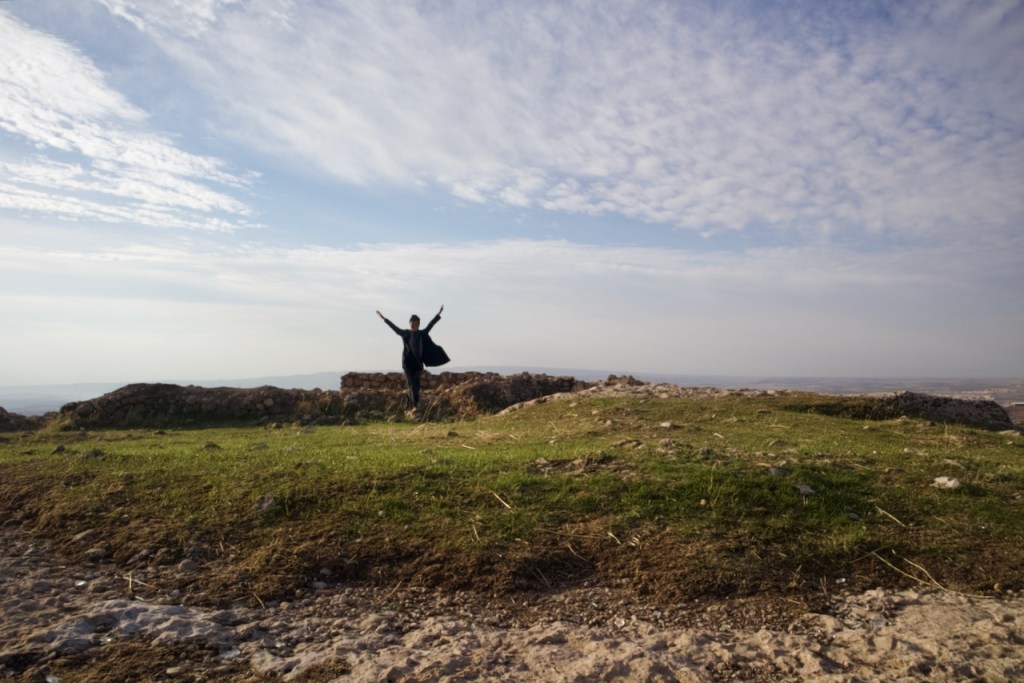
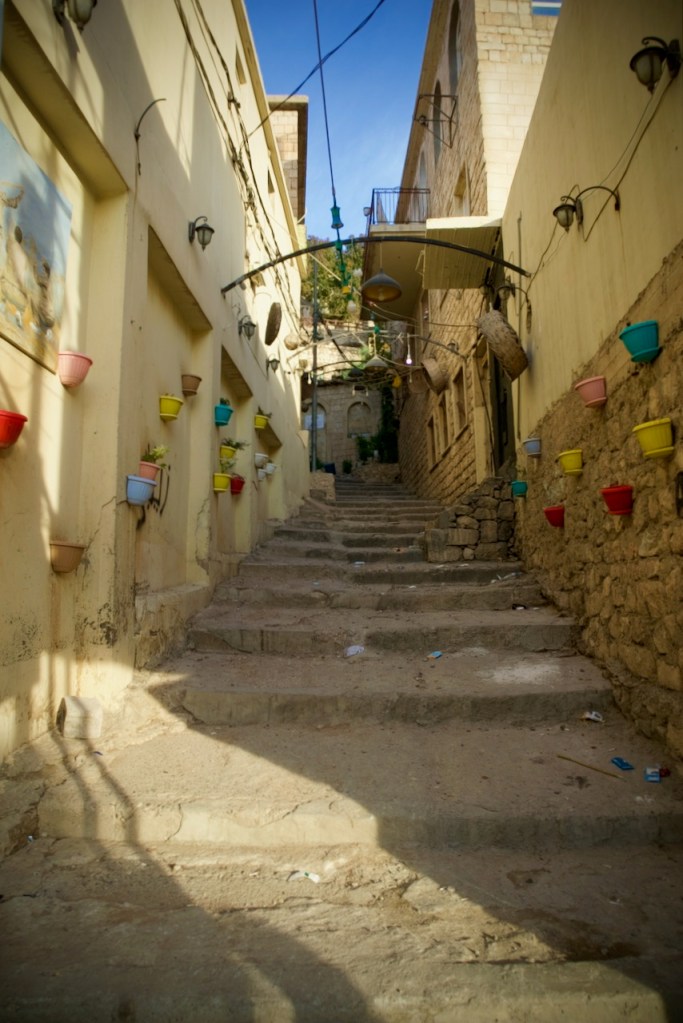
From the great mosque and the main square, I walk up the Akre castle at eight in the morning, being treated to one of the most stupendous views in this journey. The Ottoman fort itself is little more than some scattered ruins, but the breathtaking view from the heights of the old city helps one appreciate the grandeur of this 2500-year-old city where Jews, Christians, and Muslims have long lived together.
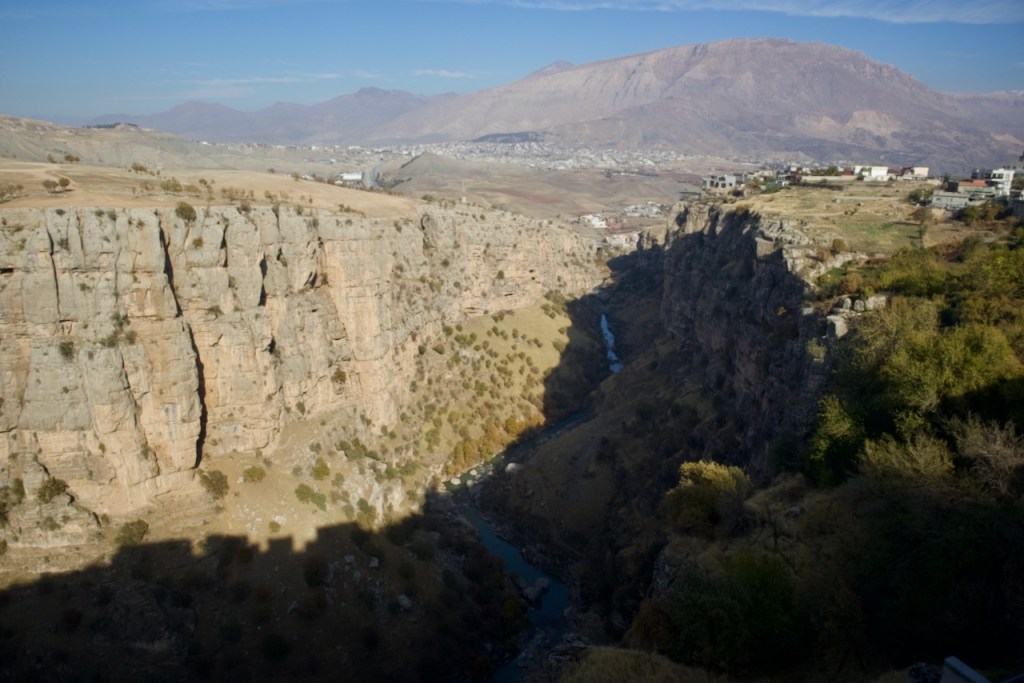
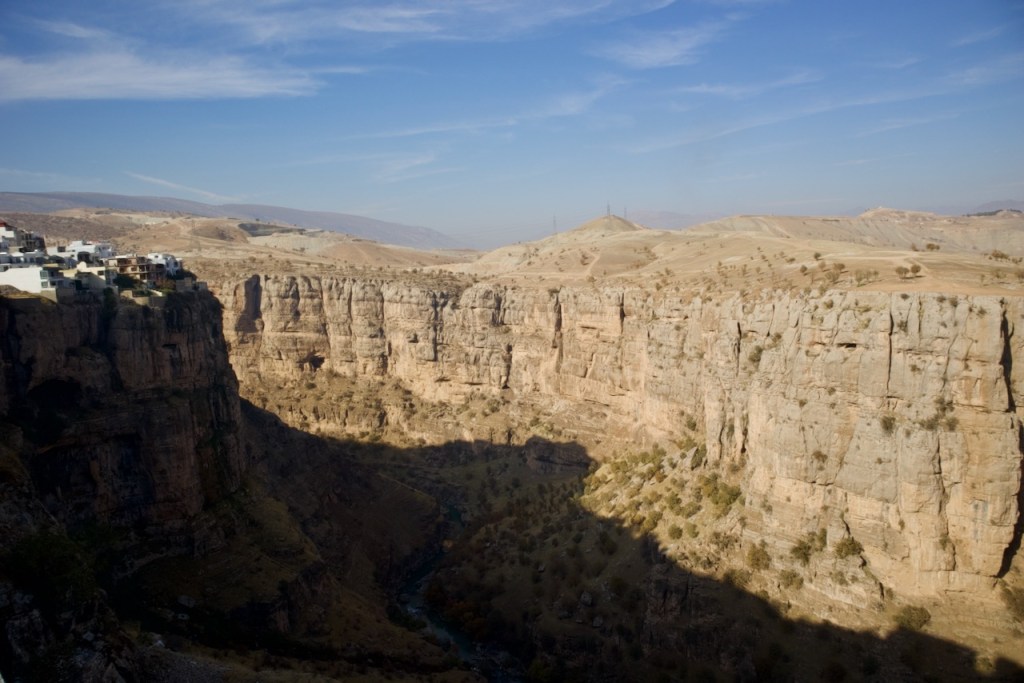
From Akre, I continue on to Soran and Rawanduz along a scenic gorge to find a village set on top of a striking canyon. This is a popular spot for local tourists to come chill by the many waterfalls or enjoy a picnic by the river. It looks like an idyllic region worthy of more exploration.





Sulemaniya by Night
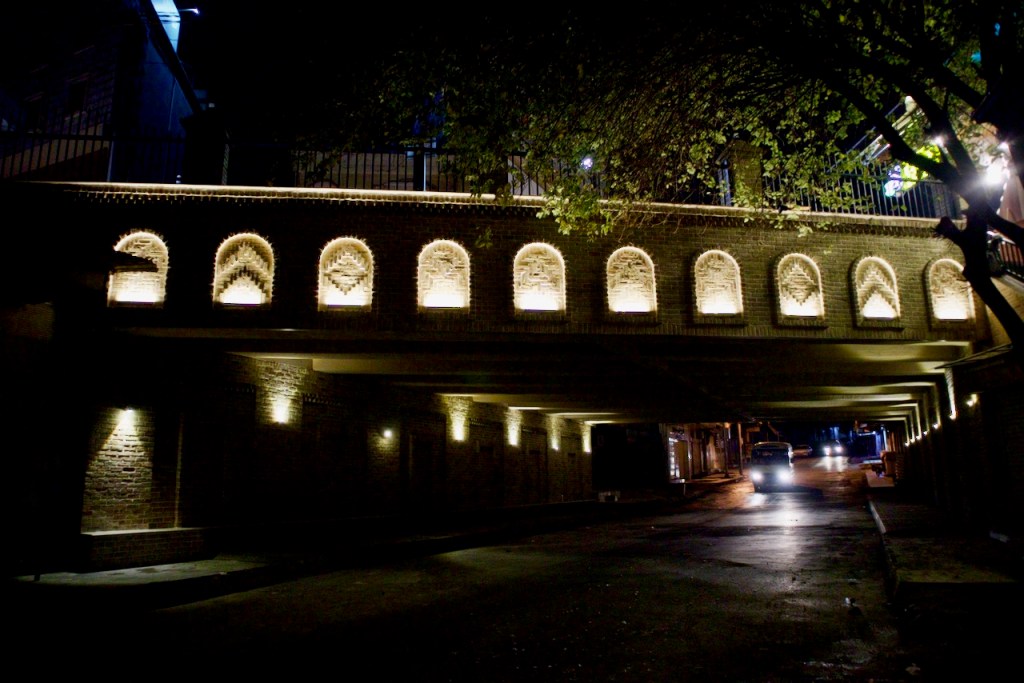
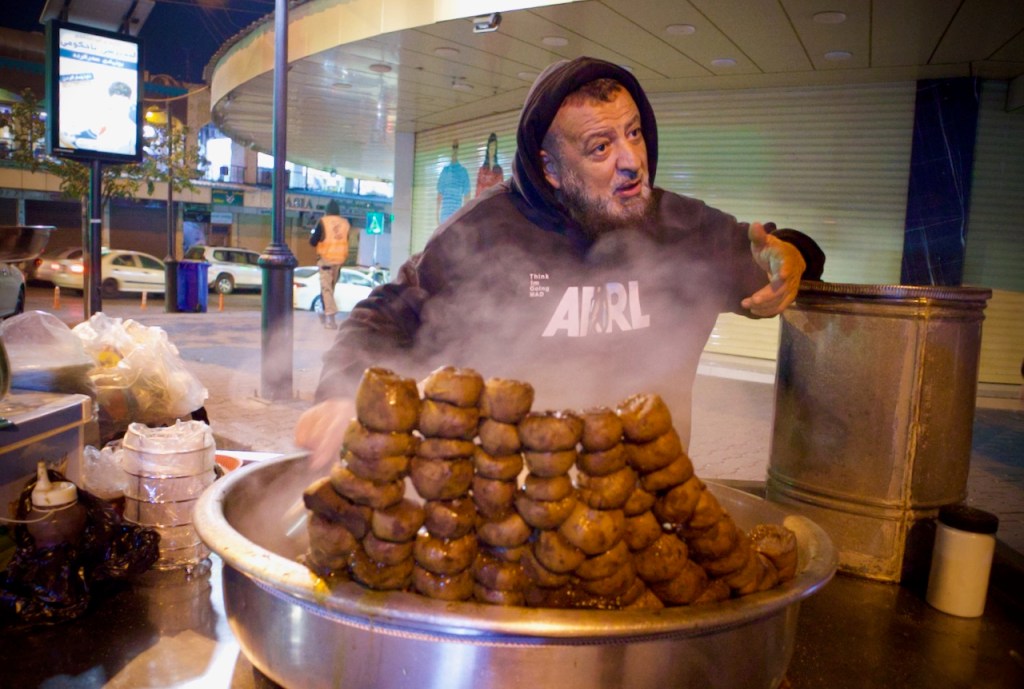
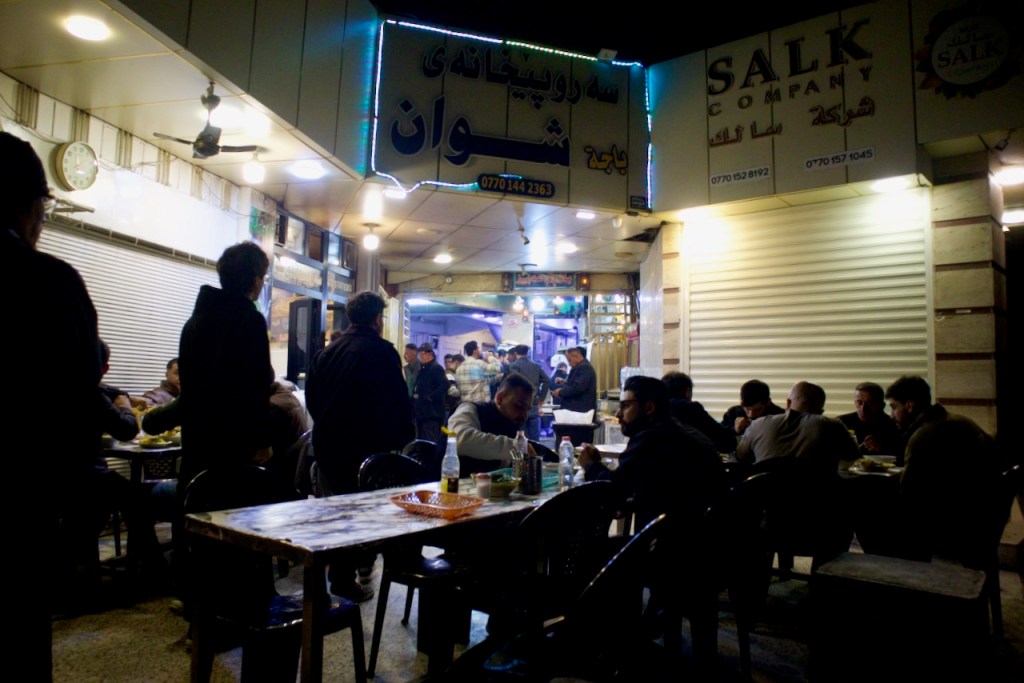
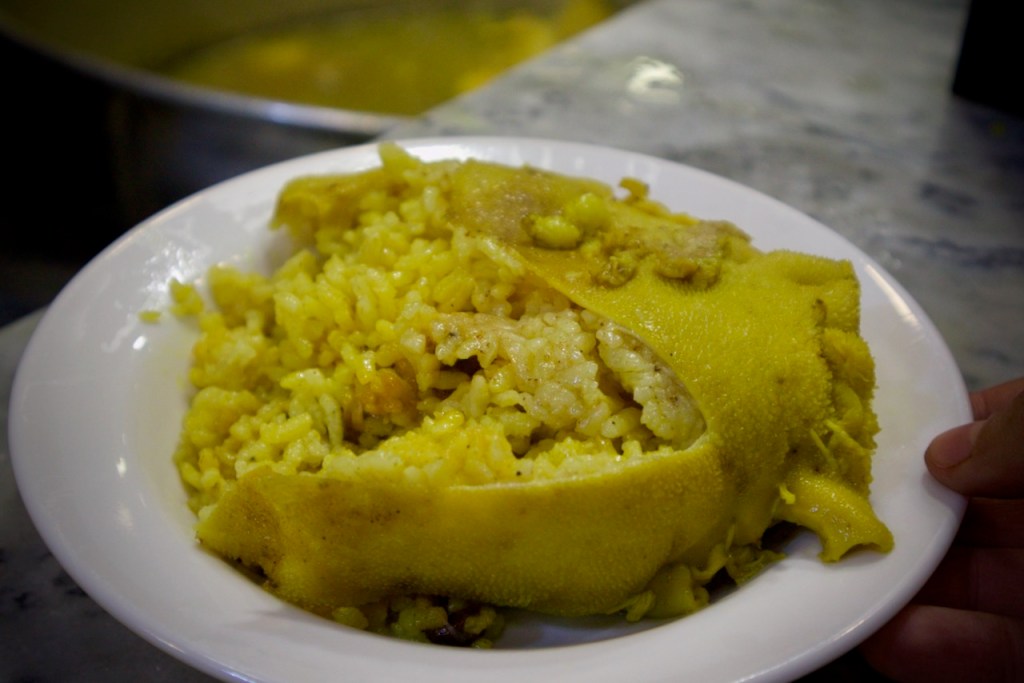
I linger too long in beautiful Akre and enchanting Rawanduz to find myself in the garage for Sulemaniya after dark where I meet Hiroki who recently overlanded from Iran. One month, six countries from Uzbekistan to Afghanistan, Iran, Iraq, Syria, and Lebanon, with a minimalist budget. A la japaonaise. Come join us. They want to meet you, he asks, when we finally arrive in the city. His Iraqi friend in Beirut has connected him with three young Slimeni students. My legs can barely stand, but venturing into the famed Sulemaniya bazaar by night with locals is an invitation I could not resist. And so Shad, Sara, and Amir give us an essential noctural tour of their beloved city, beginning with a traditional winter treat of boiled radish, followed by a rich banana nut shake, then moving on to a more serious local delicacy of spiced rice stuffed in sheep stomach skin at a popular joint opened from midnight till four in the morning. Here, you must try this! is Shad’s refrain, showing us all varieties of street food even though it is already close to midnight. Tomorrow, you will see many books on this street, as our city is famous for art and literature, he adds. We pass through the historic centre square where a giant photo of that same place decades earlier taken by none other than his uncle is hanging. Hiroki and I have planned to go to Halabja the next morning, but Shad thinks we need to stay at least one more day. There is so much to see!


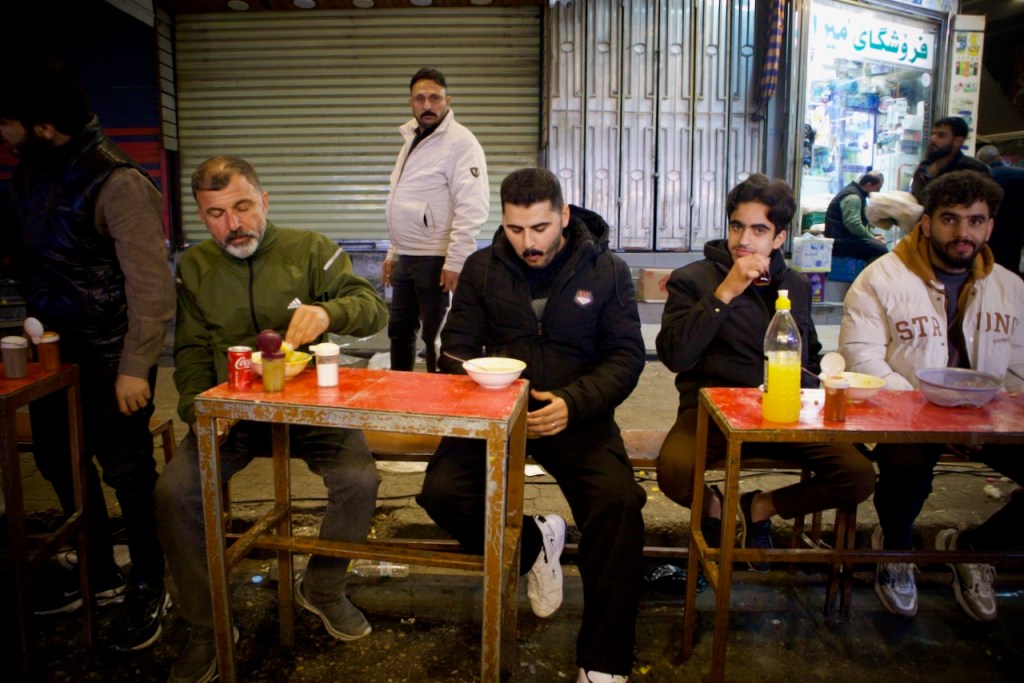

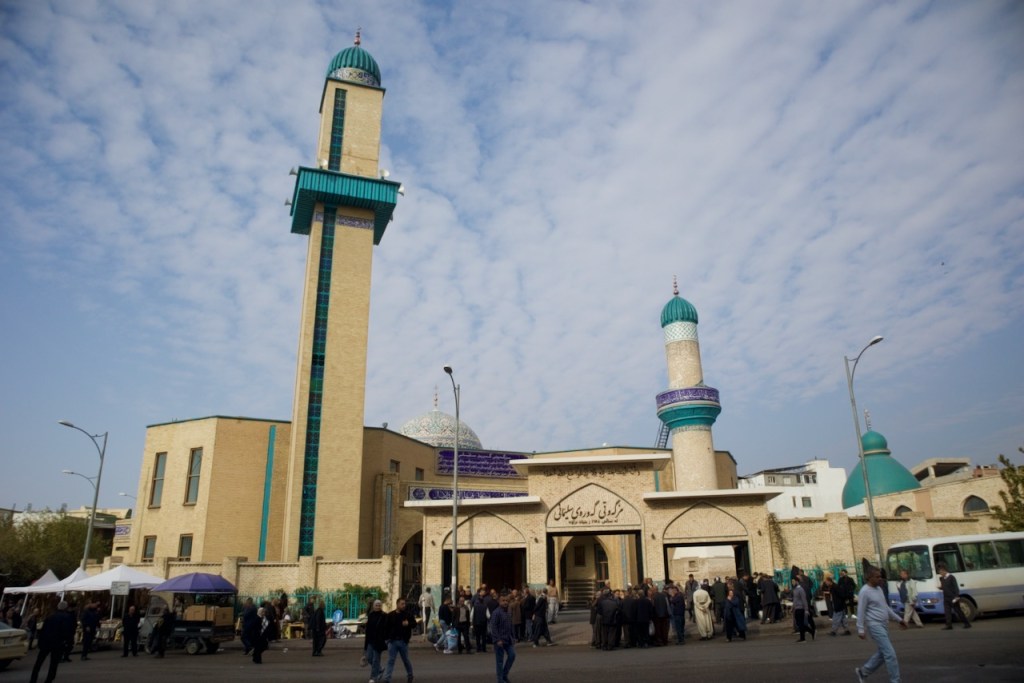
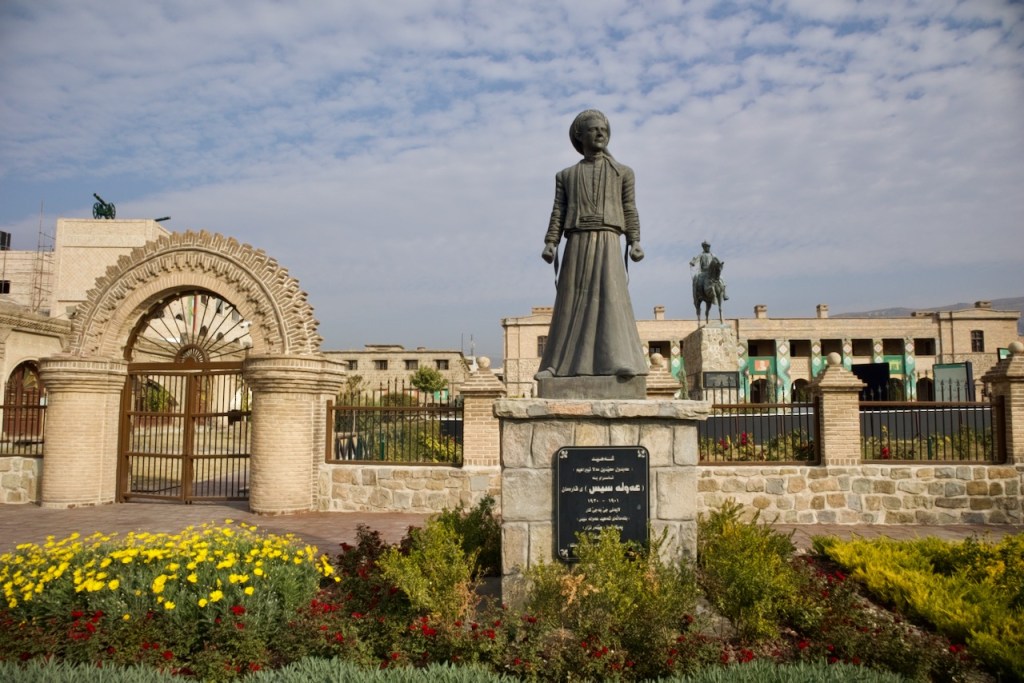
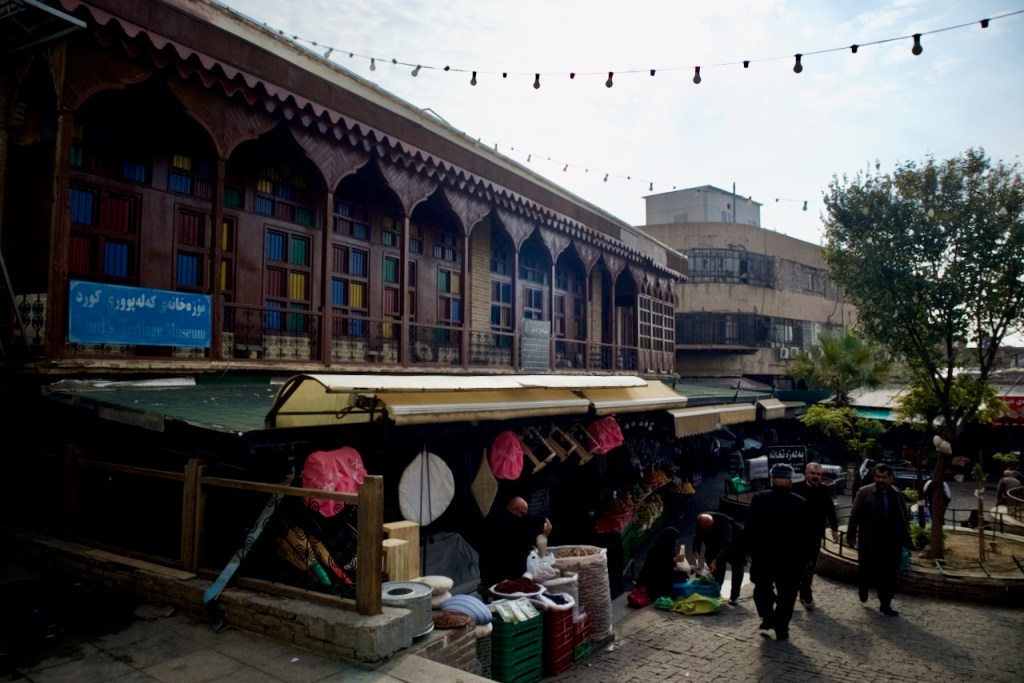
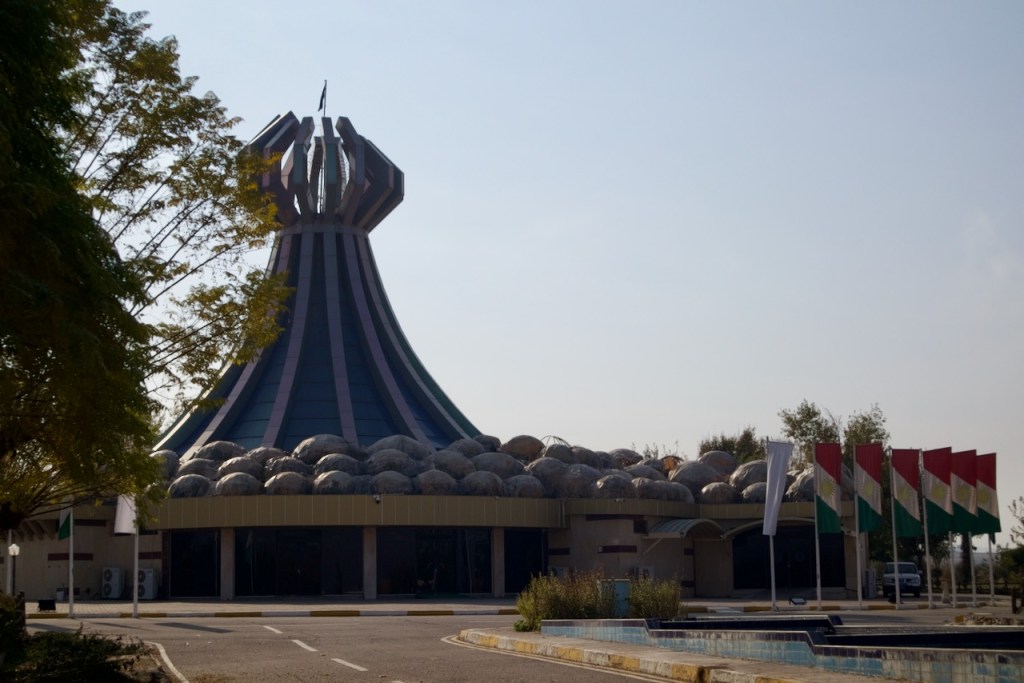
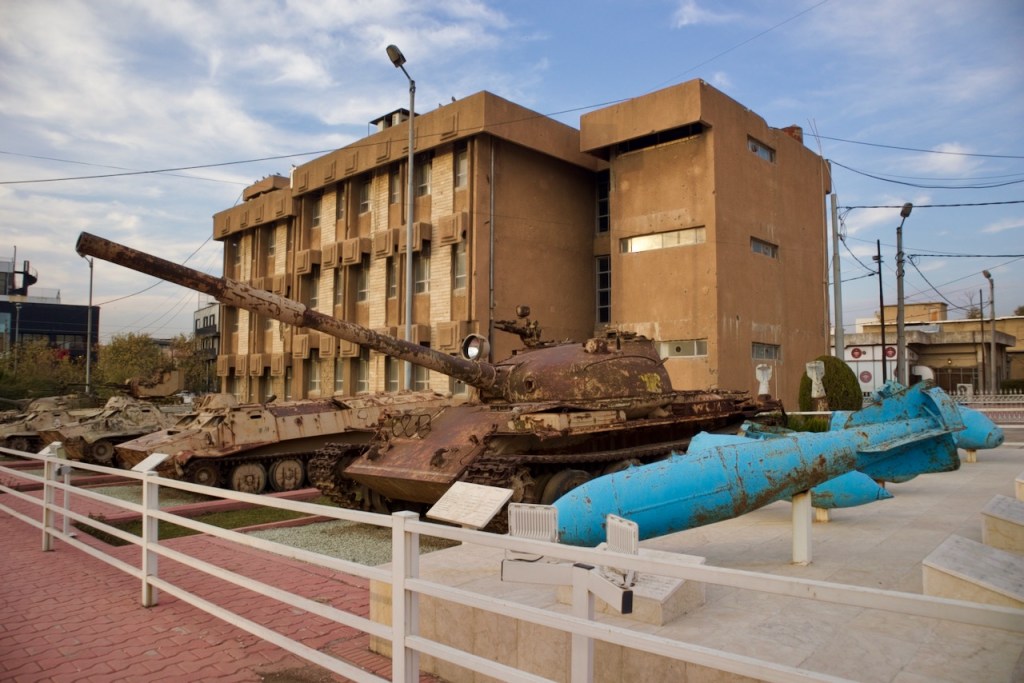
Shad is right. The bustling bazaar area around the Great Mosque alone merits more exploration to get a pulse of Kurdish life. Then there are the museums and famous eats, and excursions to nearby mountains, lakes, and caves. For now, we take a minivan to Halabja to visit the Genocide Monument where the guard has gone for a nap. A few minutes stretch to close to an hour until a local visiting journalist calls him to come to duty. In 1988, when the Iranians took over Halabja during the Iran-Iraq war, Saddam Hussein organized a massive attack with the use of chemical weapons in response, killing thousands of people, mainly Kurds, within seconds. It is a sad site and chilling reminder of the brutality of the ancien regime. By the time we beat Sulemaniya traffic, we arrive at the Amna Suraka Museum/Red Prison to find her doors closed. Between 1979 and 1991, Saddam Hussein’s secret intelligence service used the facility as their headquarters and centre for torture and imprisonment during the al-Anfal Campaign, as the attempted genocide of the Kurdish people. Today, the pockmarked buildings and military equipment in the Heavy Weaponry Square serve as an educational tool about the Kurdish people’s struggles for autonomy.



Full Moon in Erbil
I save Kurdistan’s crown jewel for the last, arriving in Erbil with a mixture of exhaustion and exhilaration. Having traversed the length of Iraq over a thousand kilometres, I am happy to put down my pack for a while to enjoy this great ancient city. Circumambulating the majestic citadel, Erbil’s heart and soul, feels like an appropriate gesture, paying respect to the cultural pride of the Kurds. Years ago, while I was writing a book on human rights in Japan, a Japanese lawyer contacted me about an asylum case of a Kurdish militant. Together with four Canadian friends, I started the “Group of Five” asylum application for Ahmed. Lo and behold, before the protracted process ended, he found happiness by marrying a Japanese and building a new life there. I feel like coming full circle, finally being in Kurdistan, this land that I had only heard and read in those thick legal papers years ago.
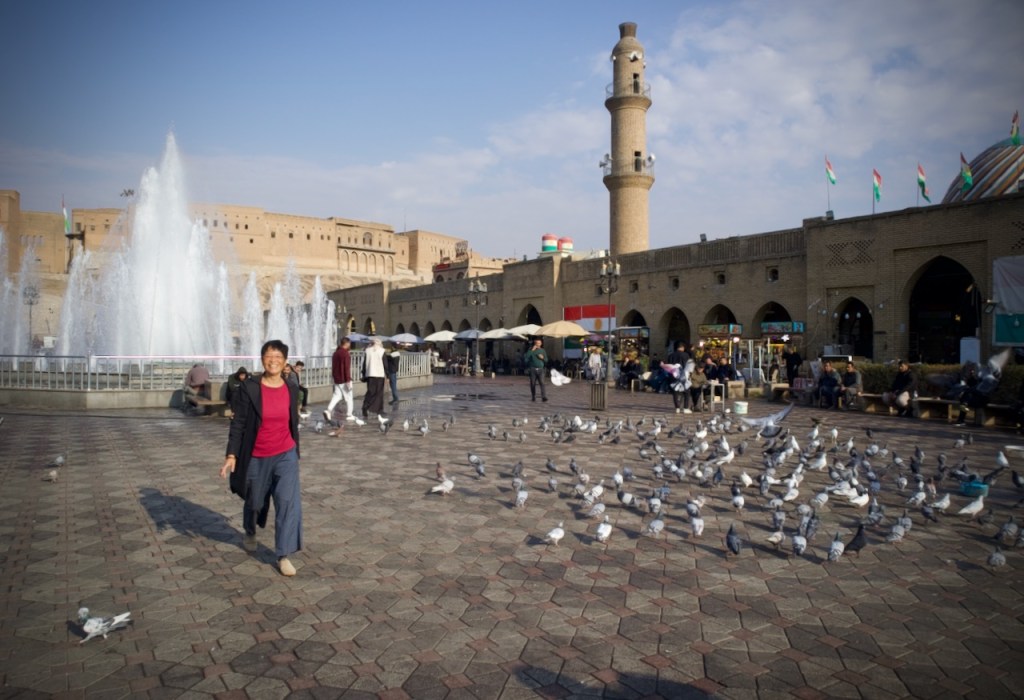
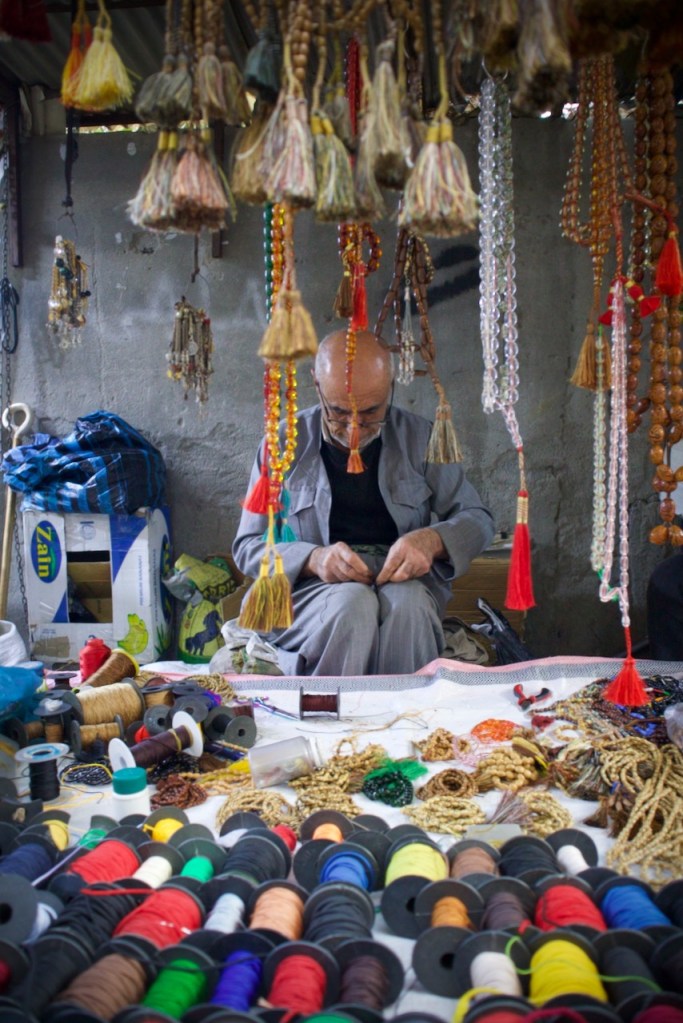
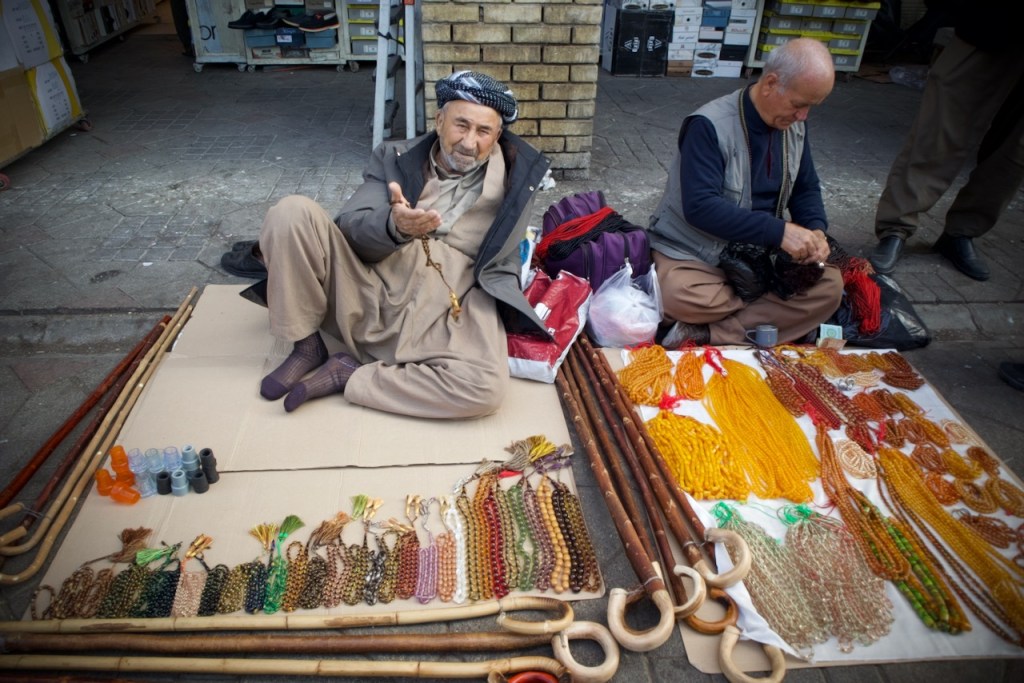
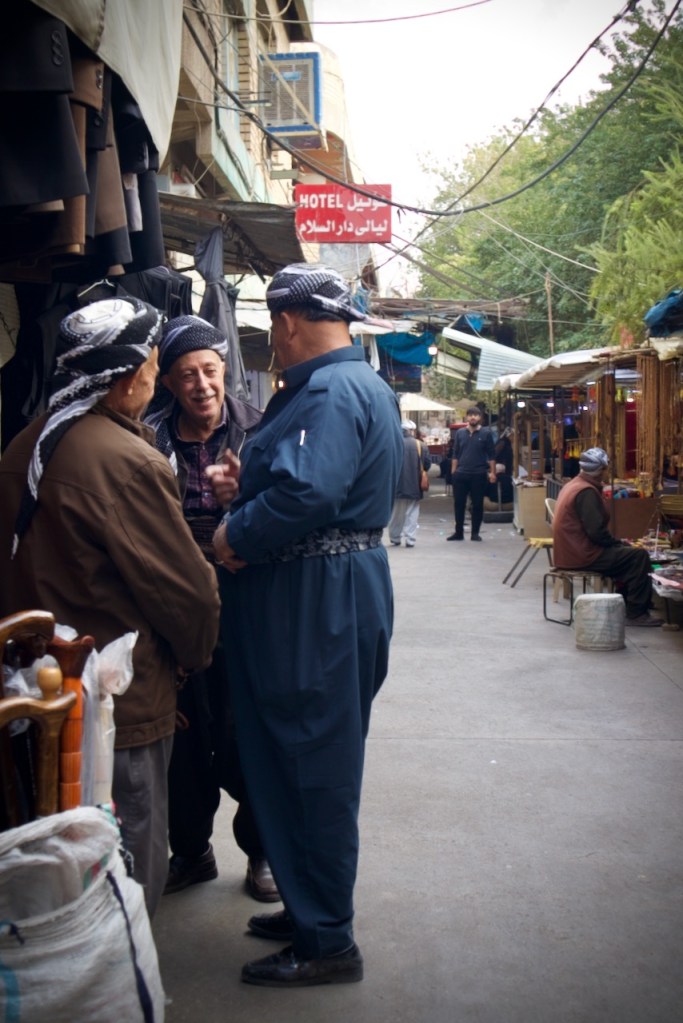
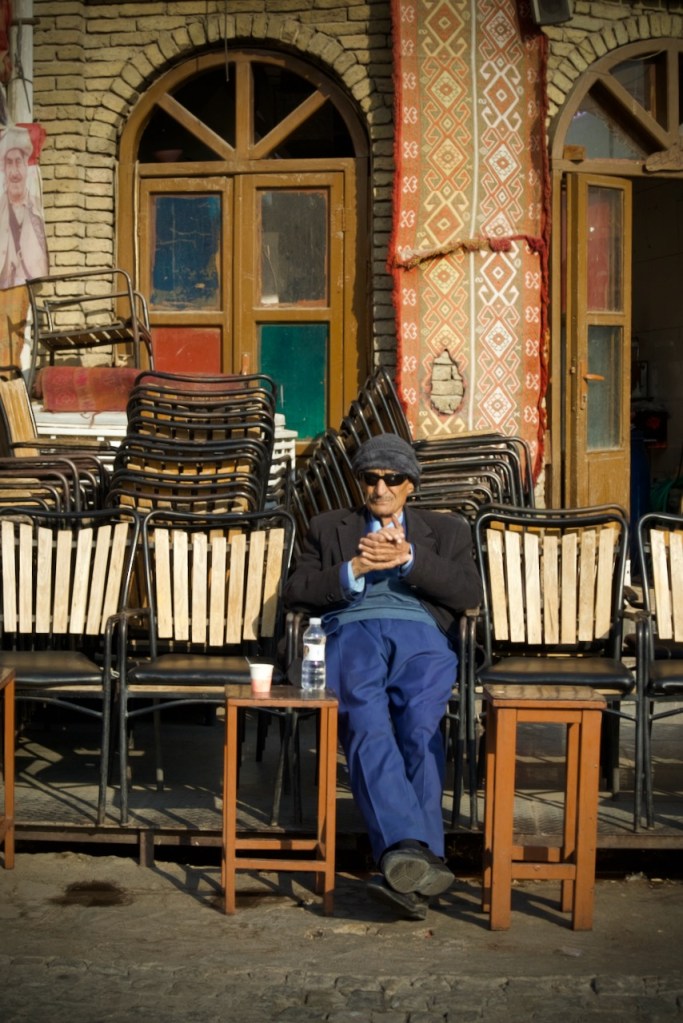
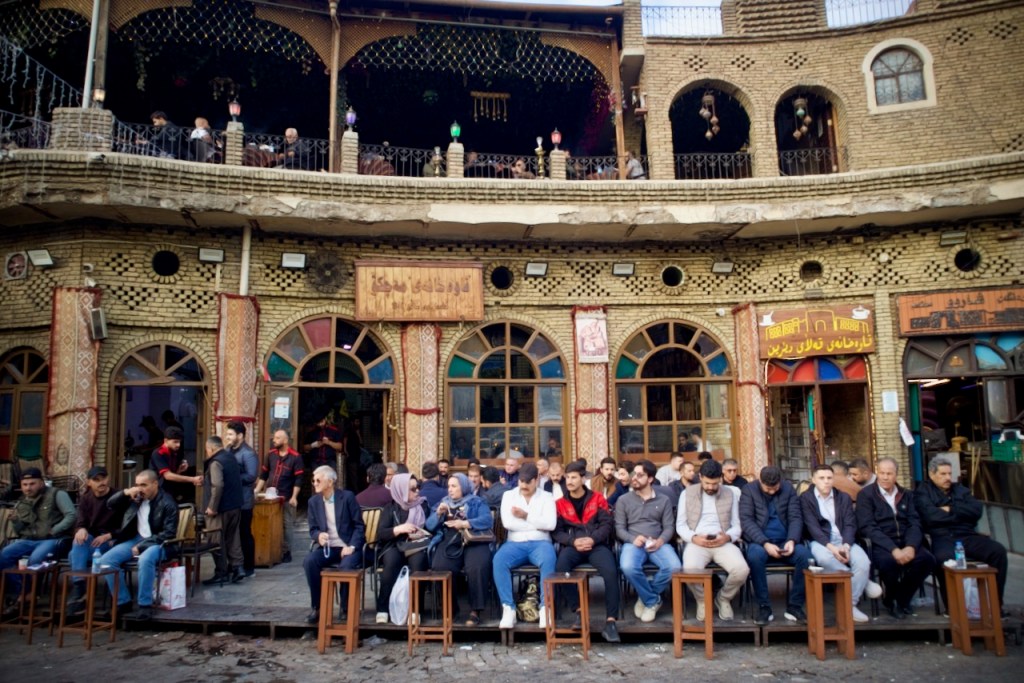
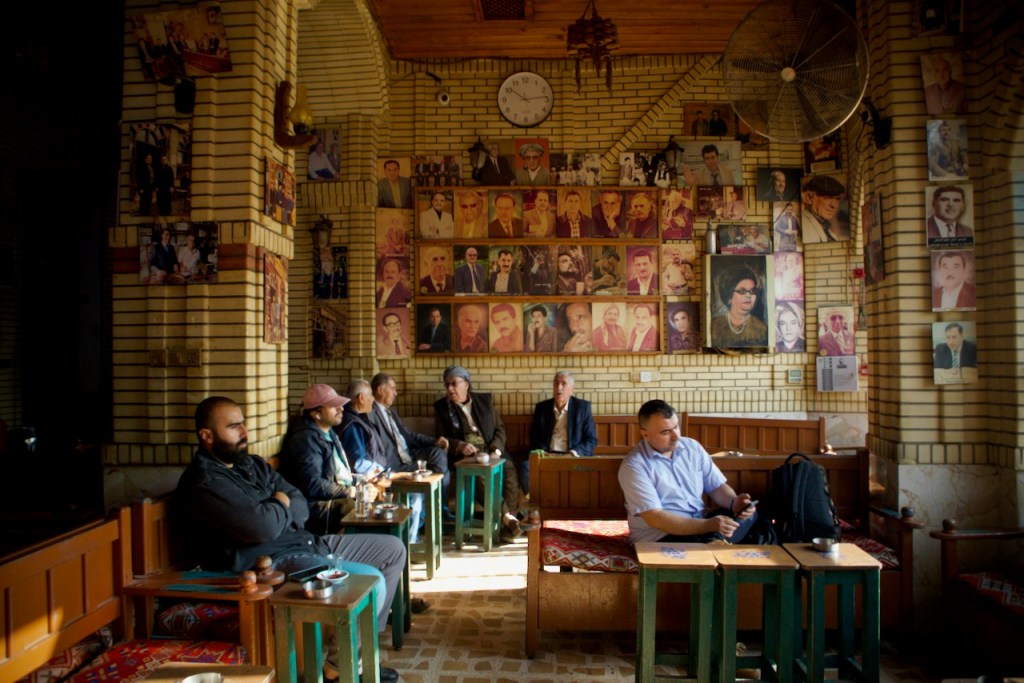
Erbil’s citadel is magnetic, pulling life to its very center. I never tire of venturing into the nook and cranny of the 700-year-old Qaysari bazaar, feeling its pulse through the famous cafes and workshops, restaurants and hotels, perfumers and tailors, dealers and money changers. It is as if time has stood still, with generation after generation of merchants and traders passing through, trying to make a fortune. Then there is the old Arab quarter, in ruins, not far from modern shopping centres, and the Christian quarter further in Ankawa. As night falls, the citadel shifts in moods and colours, as locals sit in neatly arranged chairs to enjoy tea and shisha, ice-cream and cakes, and trade the latest gossips. As I pen these last notes, a December full moon rises high, casting a bright light on the crown jewel, leaving a lasting memory on my extraordinary adventure.




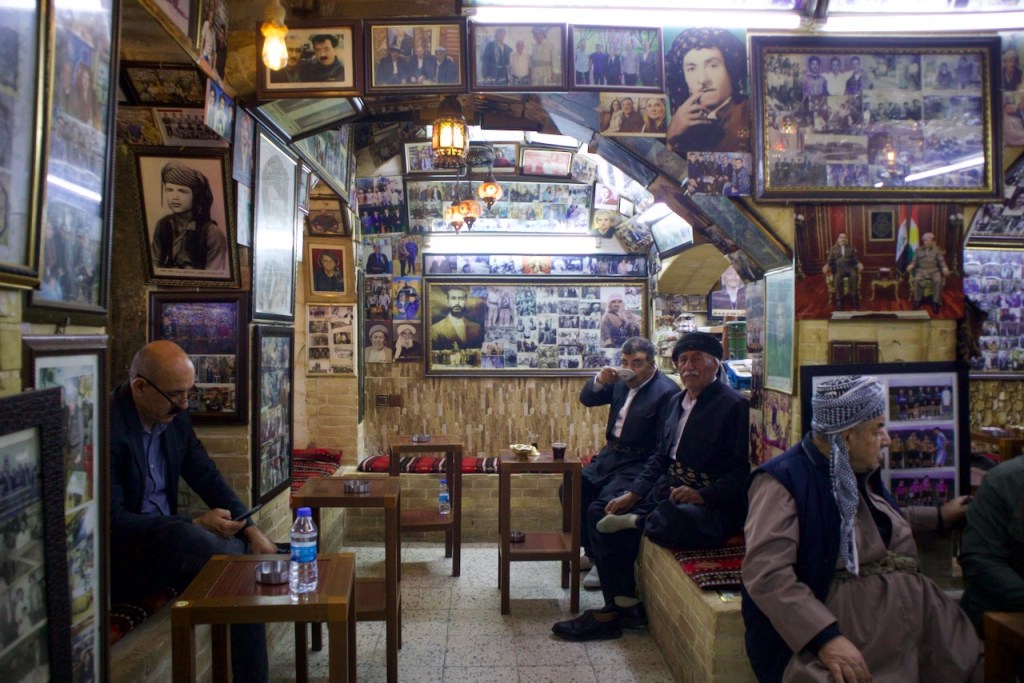

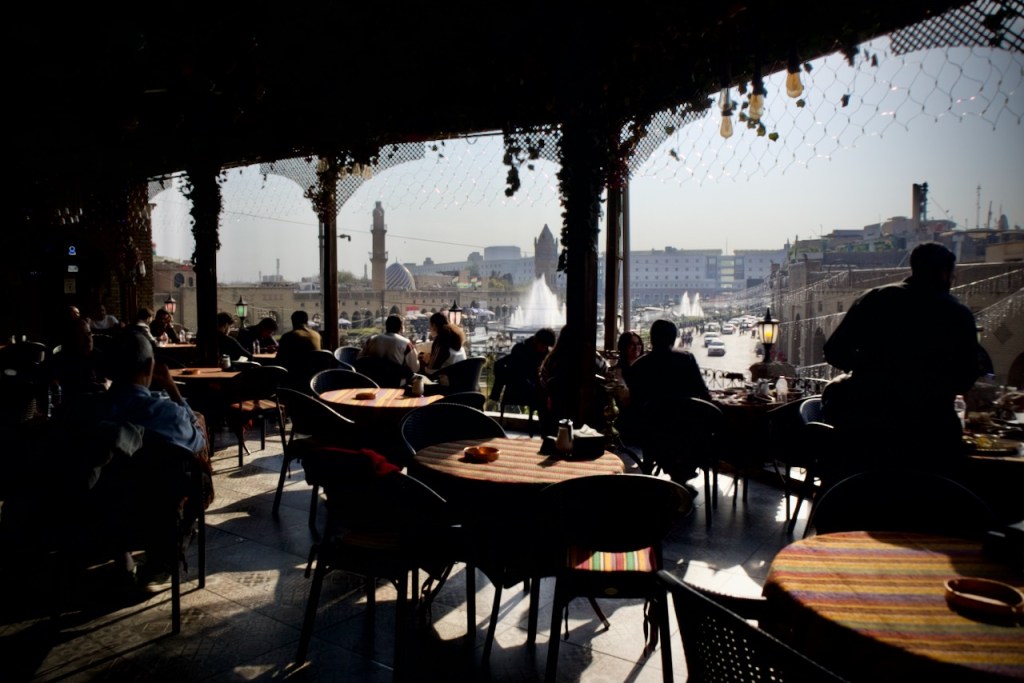
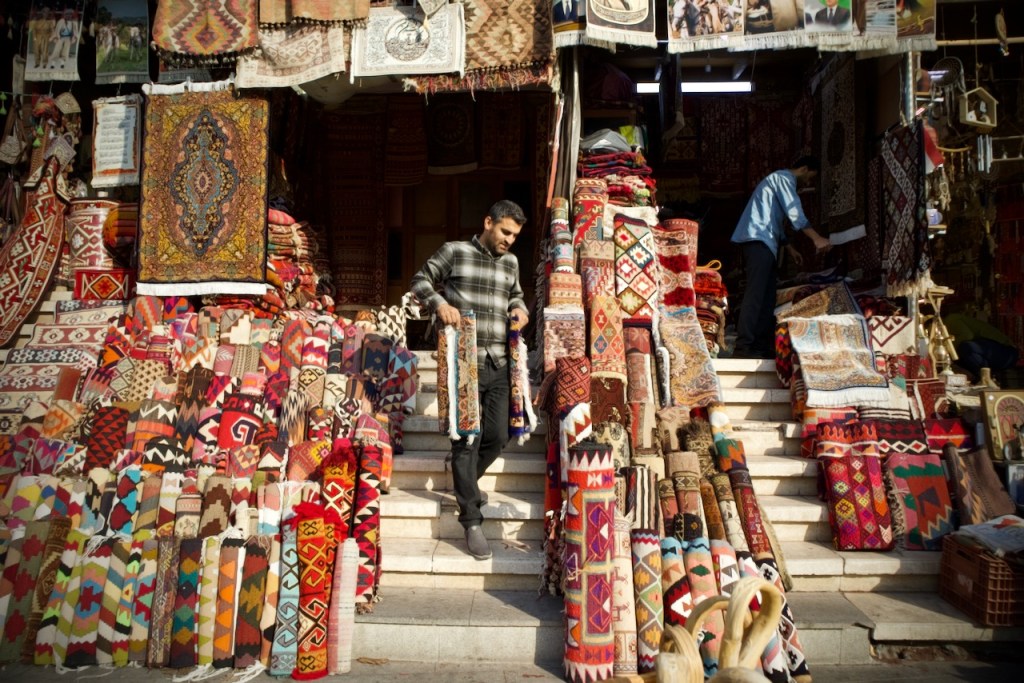


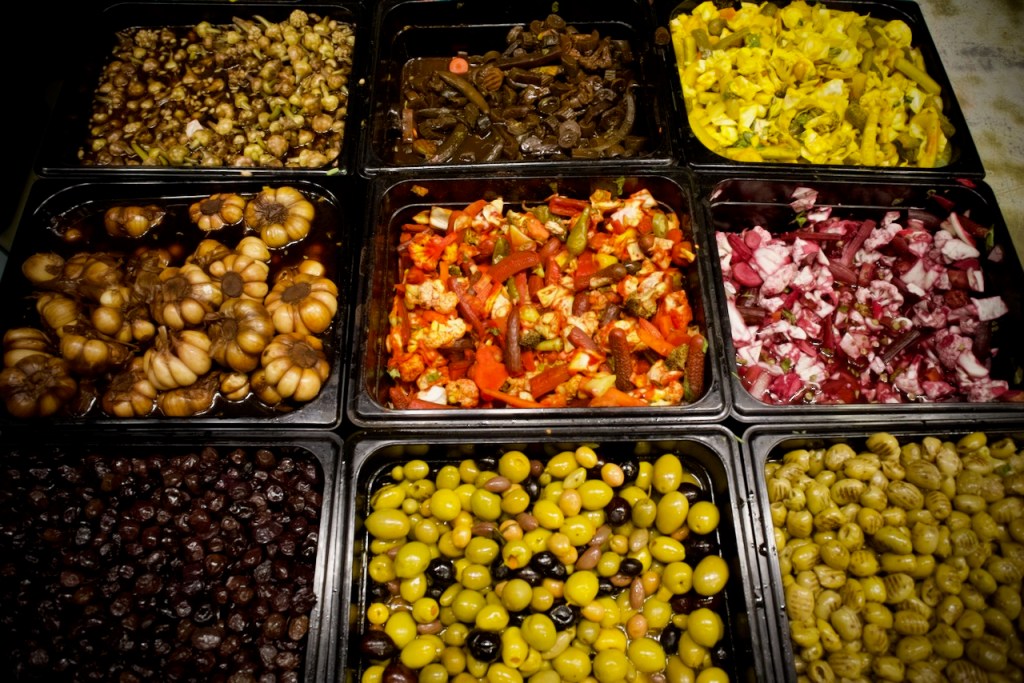
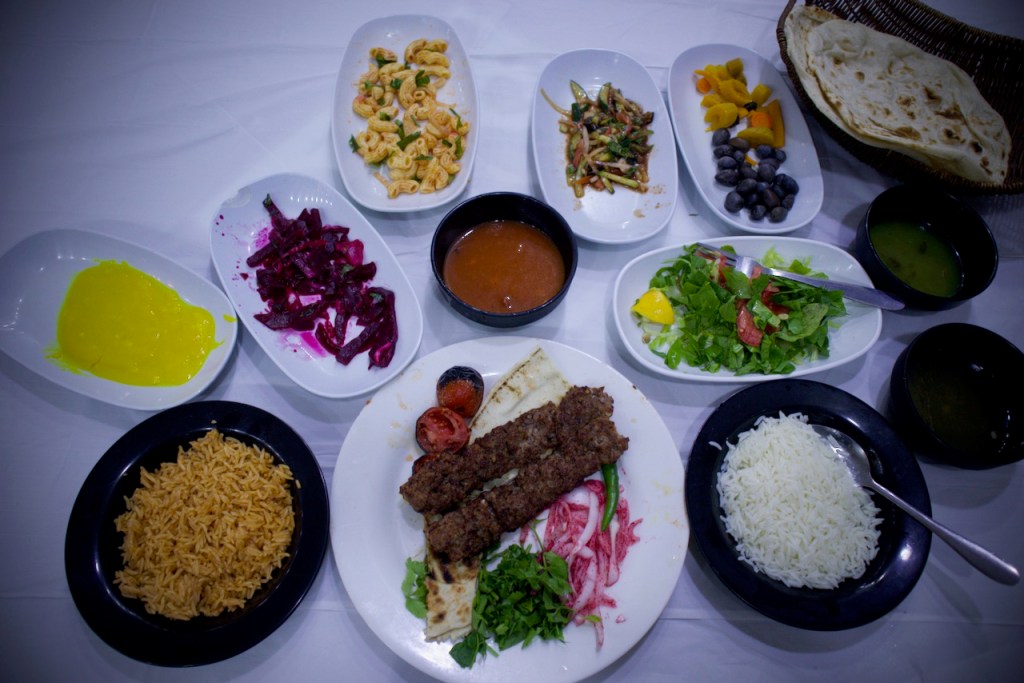
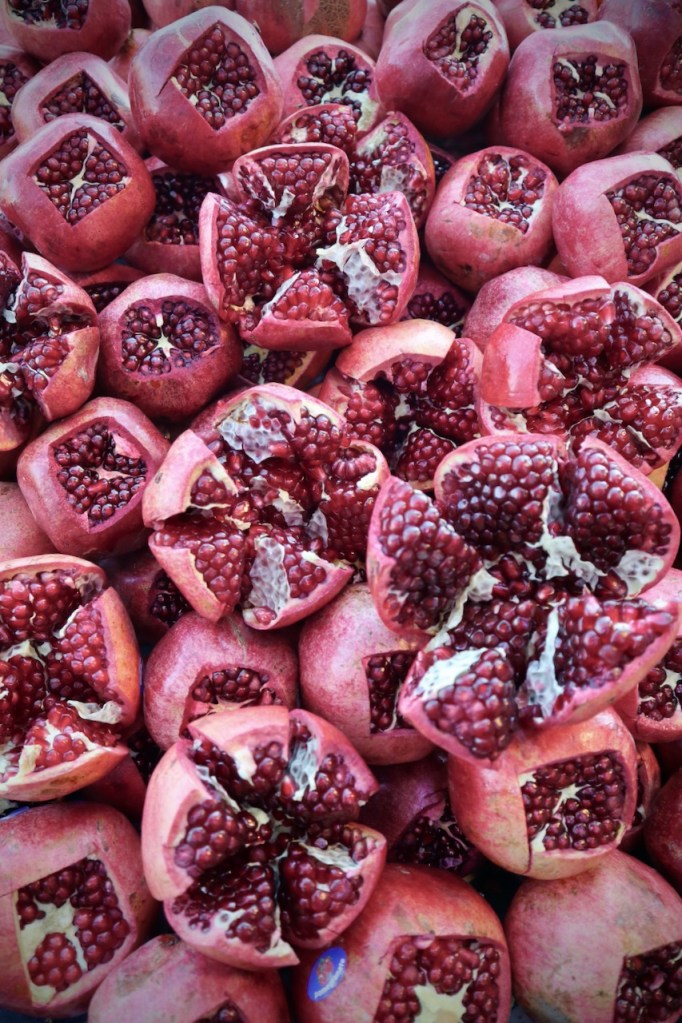
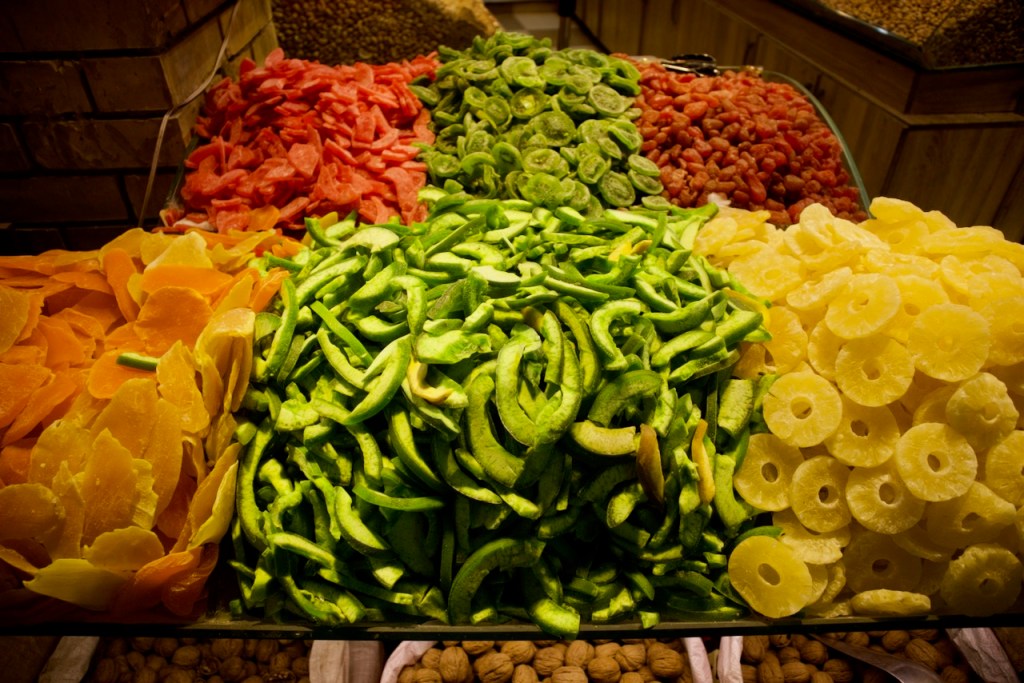
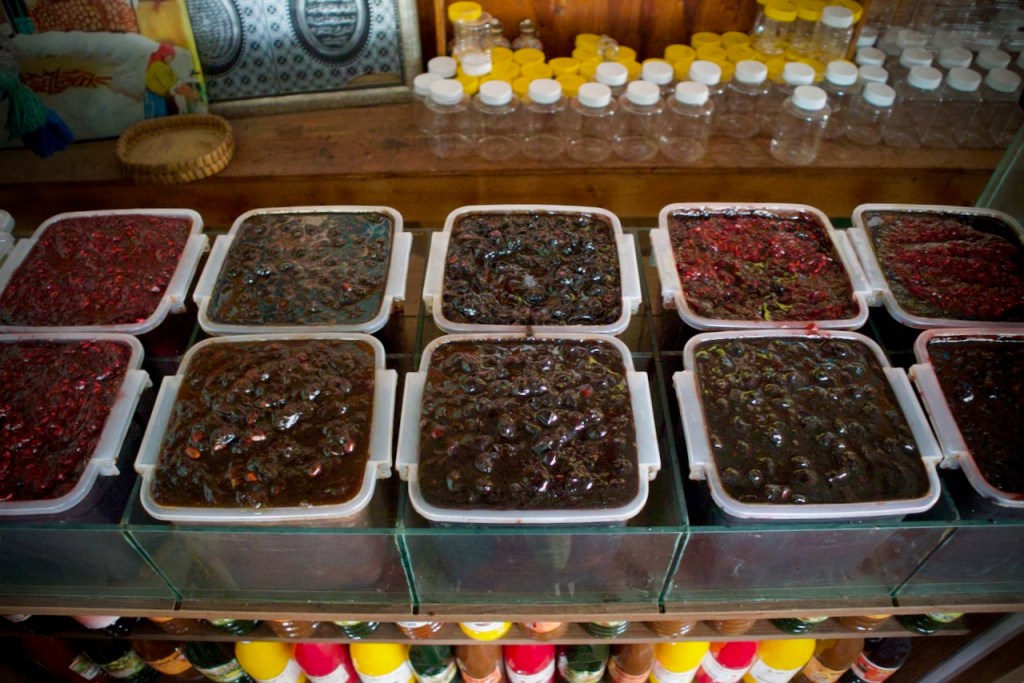
A great joy of traveling in Iraq is to sample its rich mixed flavours from simple oven baked fresh breads to elaborate full course meals, all watered down with aromatic Iraqi tea. From dolmas to kebabs, quzi (slow-roasted lamb with rice) to kubba (bulgur shells with spiced meat), tepsi Baytinjan (eggplant casserole) to samti freshly grilled fish, Iraq is a paradise for food lovers. Strawberries and pomegranates are both in season, giving me plenty of joy and energy boost.
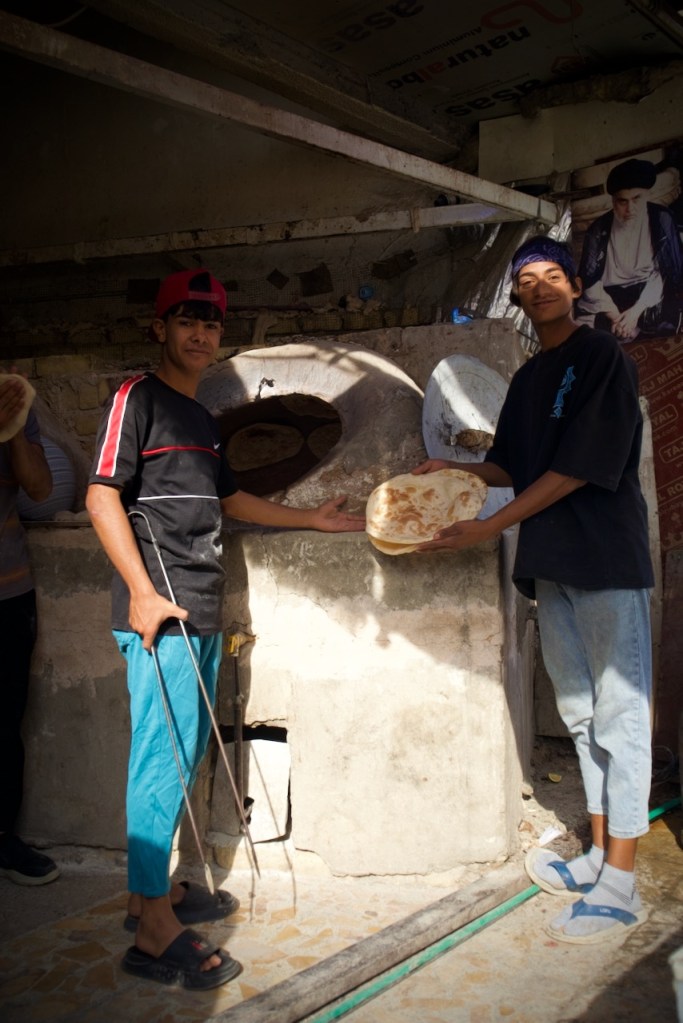









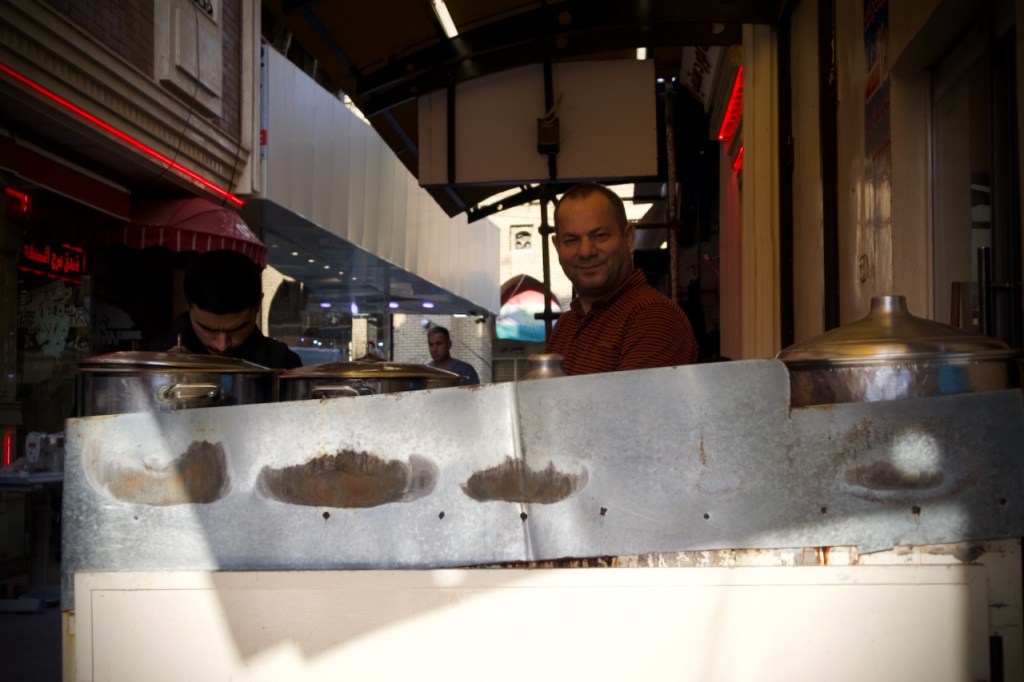
The country has endured so much. Six wars! Murtadha said. Imagine we didn’t have those wars, where would Iraq be today! Indeed, with such industrious and generous people, the country would have been sheer heaven. Despite the legacy of war, these descendants of powerful civilizations of the Sumerians, Akkadians, Babylonians, Assyrians, Parthians, and Abbasids are a resilient bunch. They are the most loving people I have ever met. More than the UNESCO World Heritage sites and scenic spots, it is the serendipitous encounters and fleeting moments of sharing with the ultra-friendly locals that make my journey unforgettable. With my heartfelt gratitude to Hayder and Aqwer, Suna and Murtadha, Imad and Jabra, Mustafa and Hama, Hiroki and Shad, Sara and Amir, and countless others who showed me the way and accompanied me in this adventure. Shukran and spas!



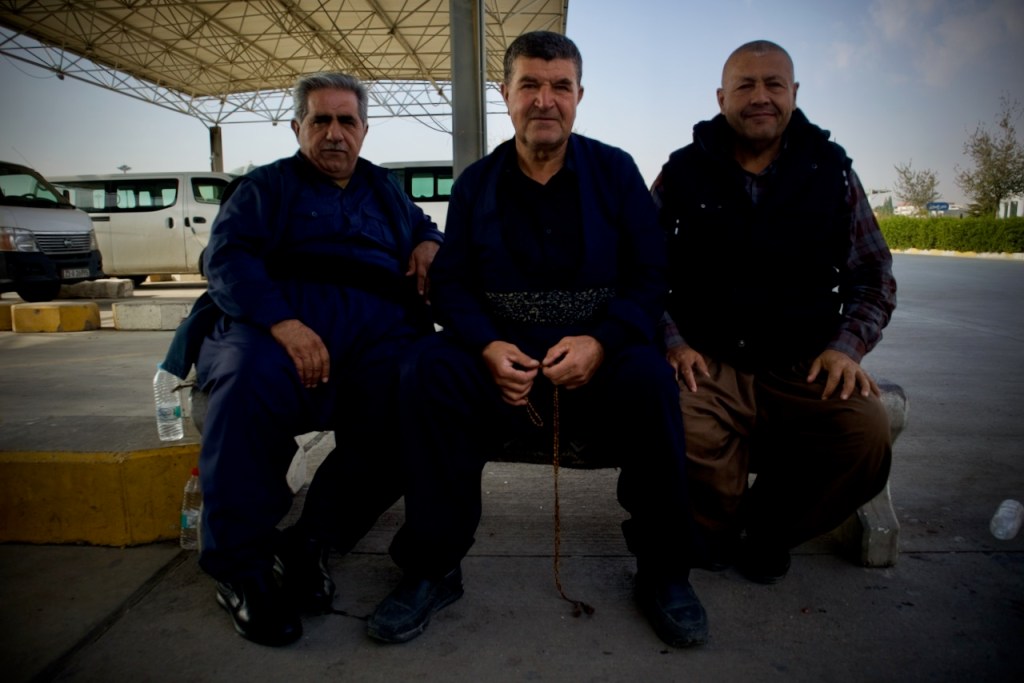

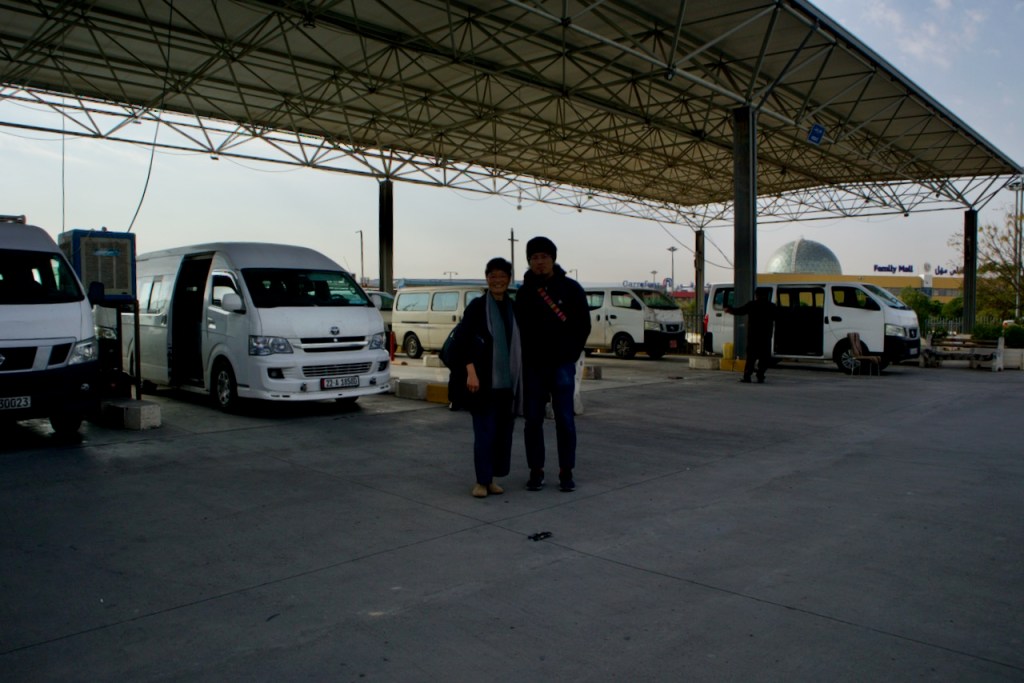

Postscript
Security: There are many military check points throughout Iraq, but I experienced no security issues.
Visa: If you plan to visit both Federal Iraq and Kurdistan, ensure you have the proper evisa for both that requires one to land in either Baghdad or Basra Airports. A visa to Kurdistan will not give access to Federal Iraq, and overlanding from neighbouring countries to Kurdistan first will not “activate” your evisa. To avoid hefty fees post-arrival, make sure you are informed of the latest visa rules. https://evisa.iq/en
We’d see the fragments,
some carved reliefs; we’d wondered
what we’d destroyed, what we’d left
the world – an image of broken rock
in need of a makeshift savior.
– D. A. Gray, Mosul Reflections
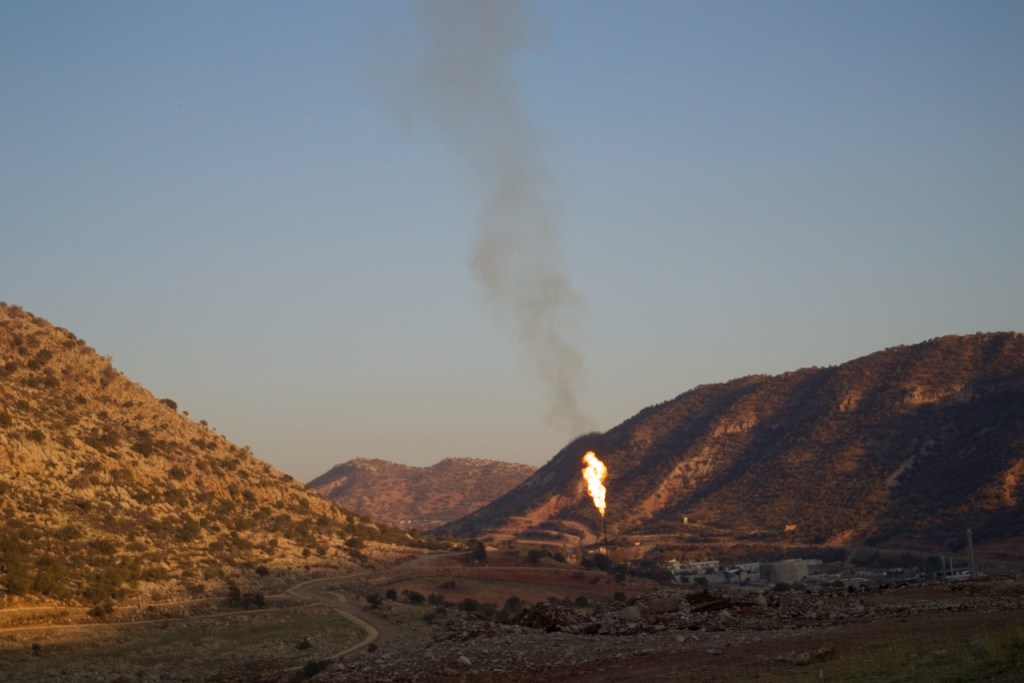

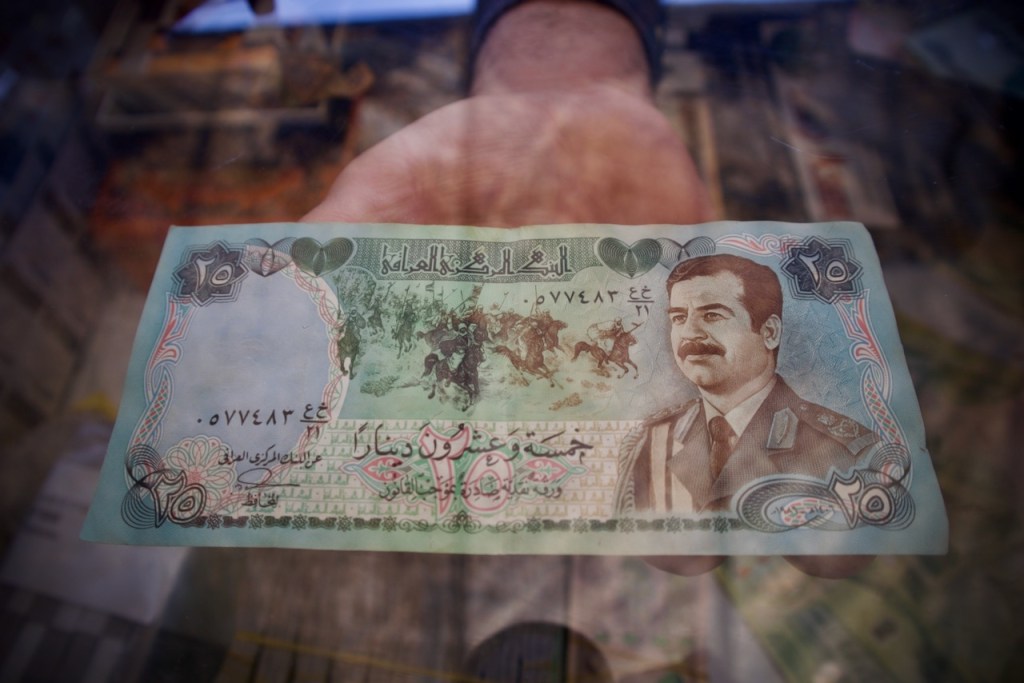

This is part of a seven-country tour in post-conflict societies in the Middle East and the Horn of Africa in 2025 from Syria to Iraq, Saudi Arabia, Libya, Eritrea, Djibouti, and Somalia. A scheduled trip to Yemen as part of this project was cancelled due to renewed conflict in the country at the time of writing.
Syria: on the Road to Damascus
All Content © 2026 by Jennifer Chan
 Jennifer Chan Photography