
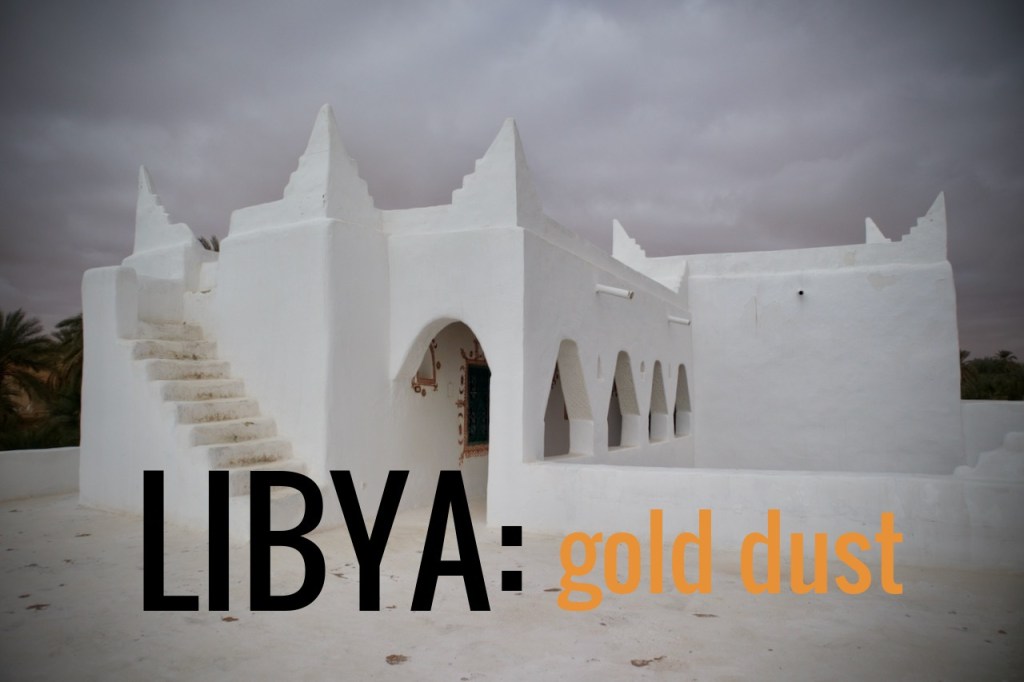
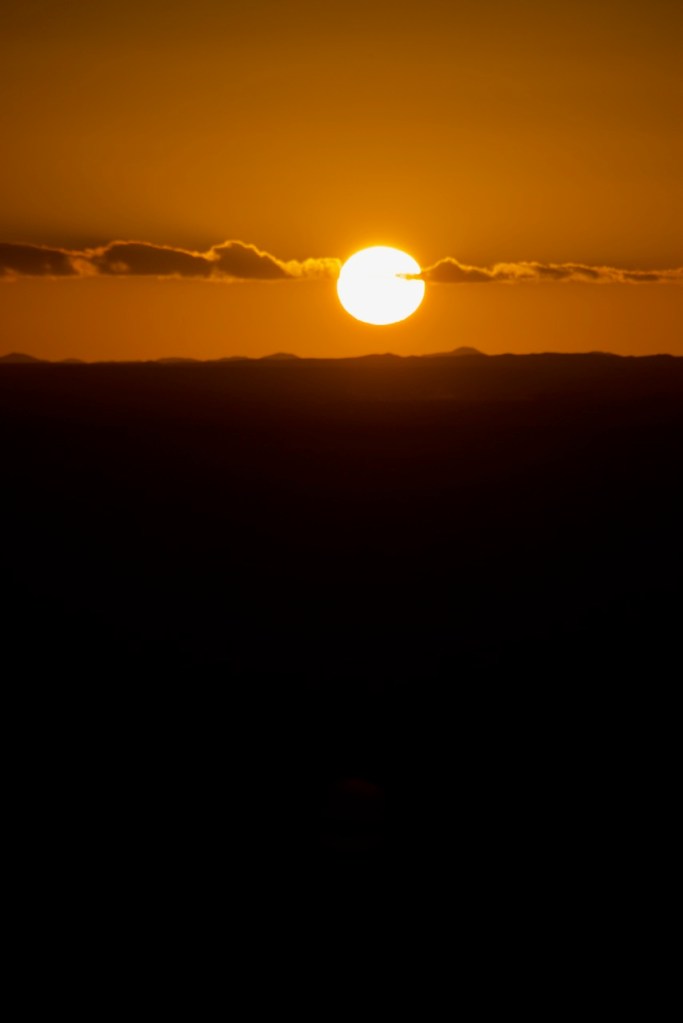
I grew up in the vast expanse of the desert,
in this unlimited emptiness that extends into the infinite,
reaching out to the horizon
where it meets an eternally clear, equally bare sky.
– Ibrahim Al Koni, Gold Dust
December 2025
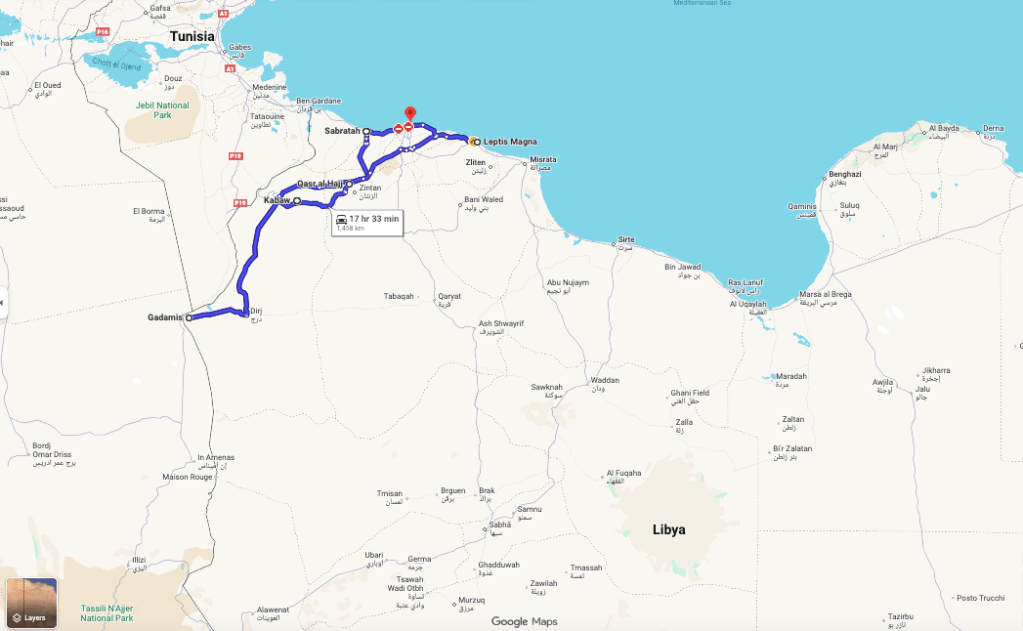
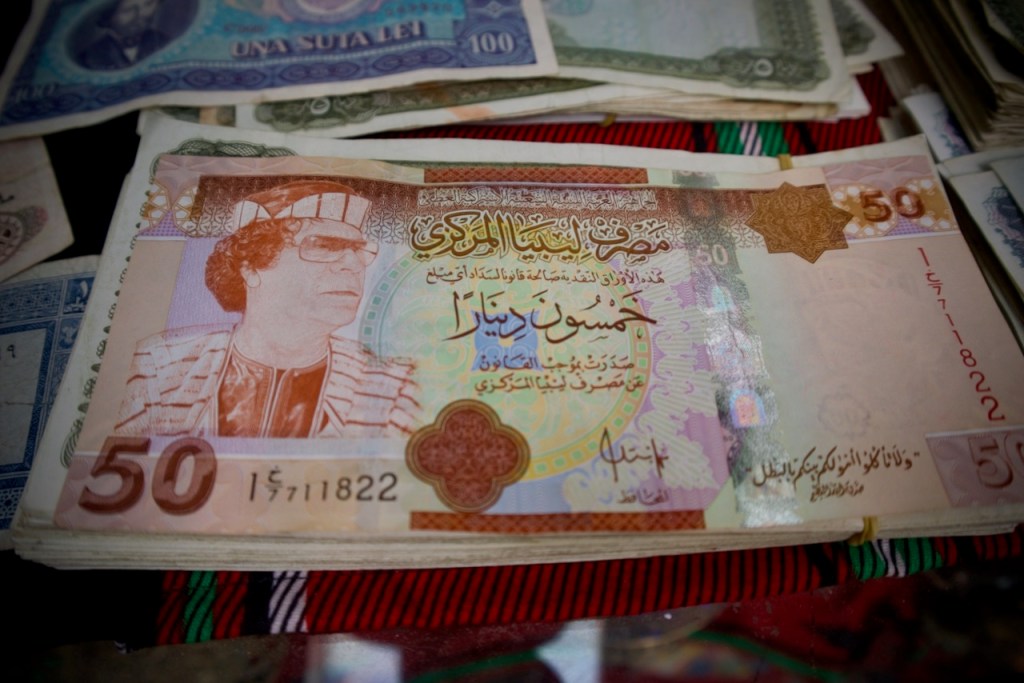
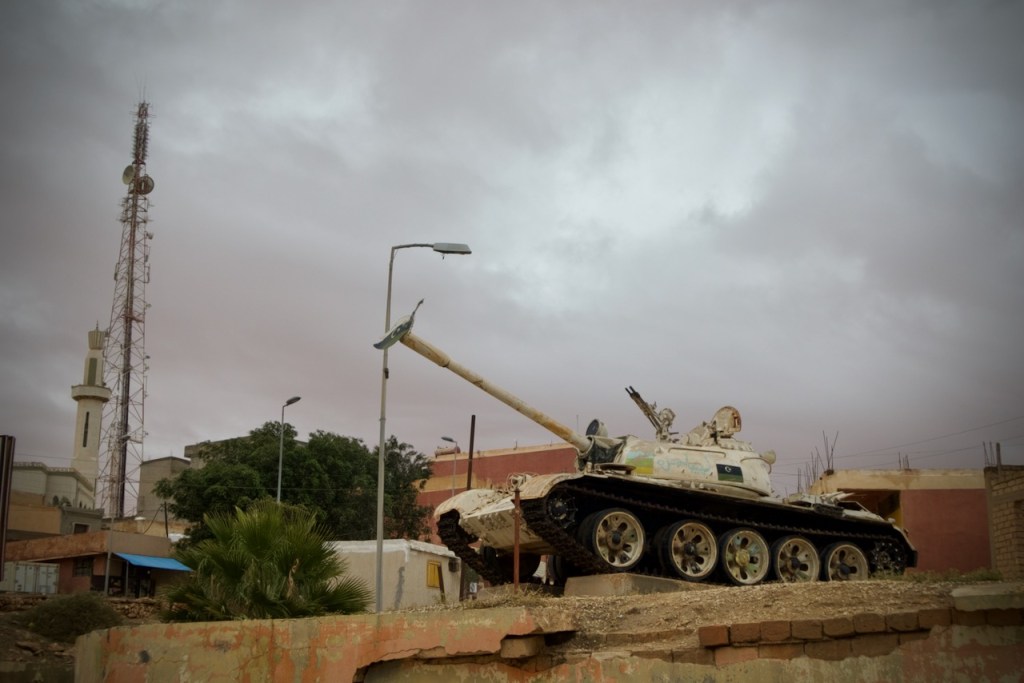
My original plan of beginning a year of minimalist travels across Africa in Libya did not pan out due to Covid restrictions. Five full years later, I find myself once again on the North African coast after exhilarating adventures in Syria, Iraq, and Saudi Arabia. From Jeddah, I fly to Tripoli before making my way to a series of UNESCO World Heritage sites and the towns of Sabratha, Termisa, Kabaw, Ghadames, Naluf, Leptis Magna, and ending in the capital city. Alas, independent travel is currently not allowed. I booked a four day tour with Rozaria Travel with Ali as my guide and Abou as a security detail, not my preferred way to explore this vast and beautiful country with Phoenician towns and Roman ruins, ancient Greek cities and Berber architecture, not counting the colonial legacy of Italy, Britain, and France. And then there is the vast Sahara right across where I was earlier this year in an epic journey to Algeria. Unfortunately, most of this is off limits for both security and budget reasons (venturing further east or south requires a USD600 permit/person and a very pricey tour). For now I am content to take what is on offer and venture into this country that most people associate with one name only: Qaddafi, his brutal 42-year regime, and his dramatic capture in 2011. The rest is history…


From Tripoli to Sabratha
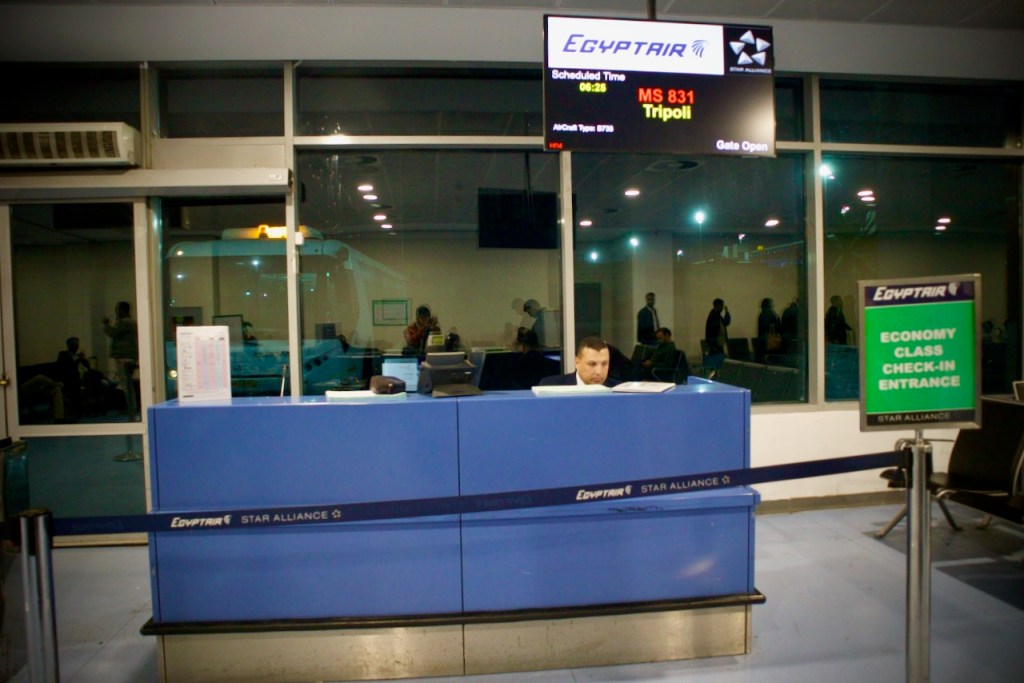
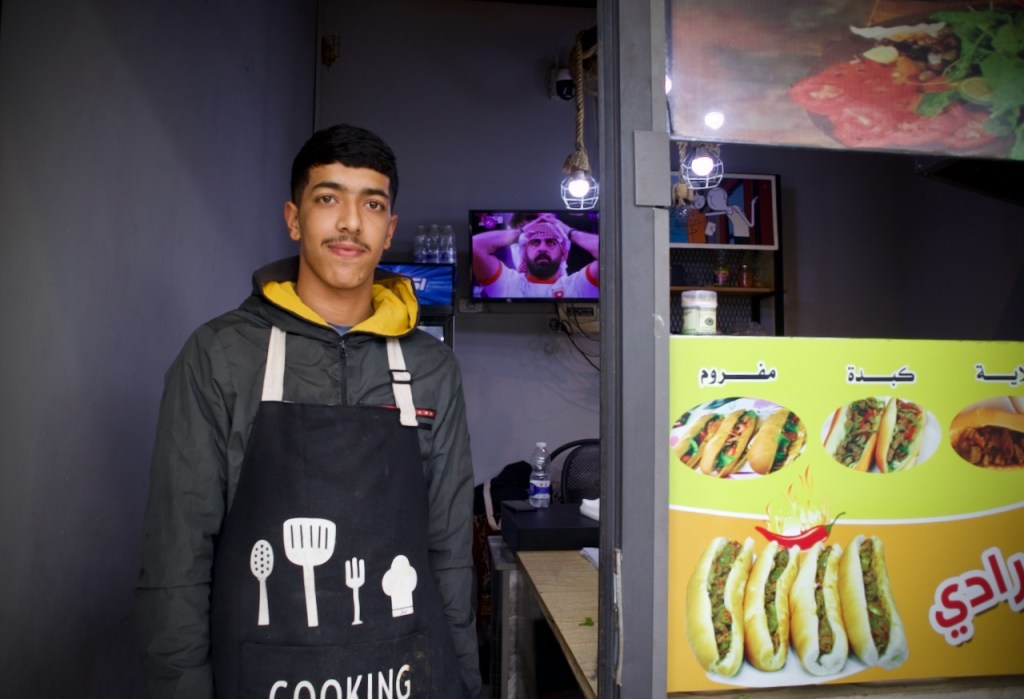
Once I received a letter of invitation from Rozaria Travel, the Libyan evisa (USD63) process was simple, requiring less than 48 hours to issue. Unlike in Yemen where the airport in Seiyun was damaged, looted, and closed, forcing me to cancel my scheduled tour there, everything seems in order and I board Egypt Air bound for Tripoli with great excitement. The international airport has been in disuse since 2014 due to heavily damage from the civil war. I emerge out of the former domestic airport right right within Tripoli city with my guide and security detail in waiting, a new experience. It is Friday, and everything is closed. A quick sandwich breakfast sets the tone for the poor – nonexistent – culinary experience of the next four days (unlike in the tour with Syrian Guides where tasting local treats was a huge, essential part of the cultural experience, meals were not included, an incomprehensible decision by the tour company).
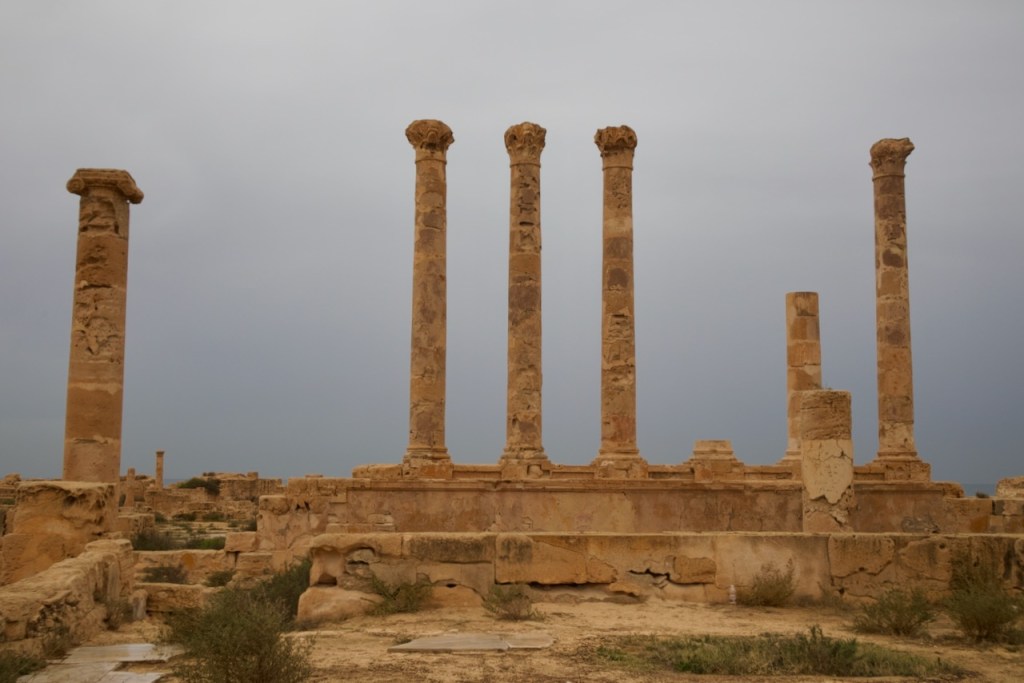
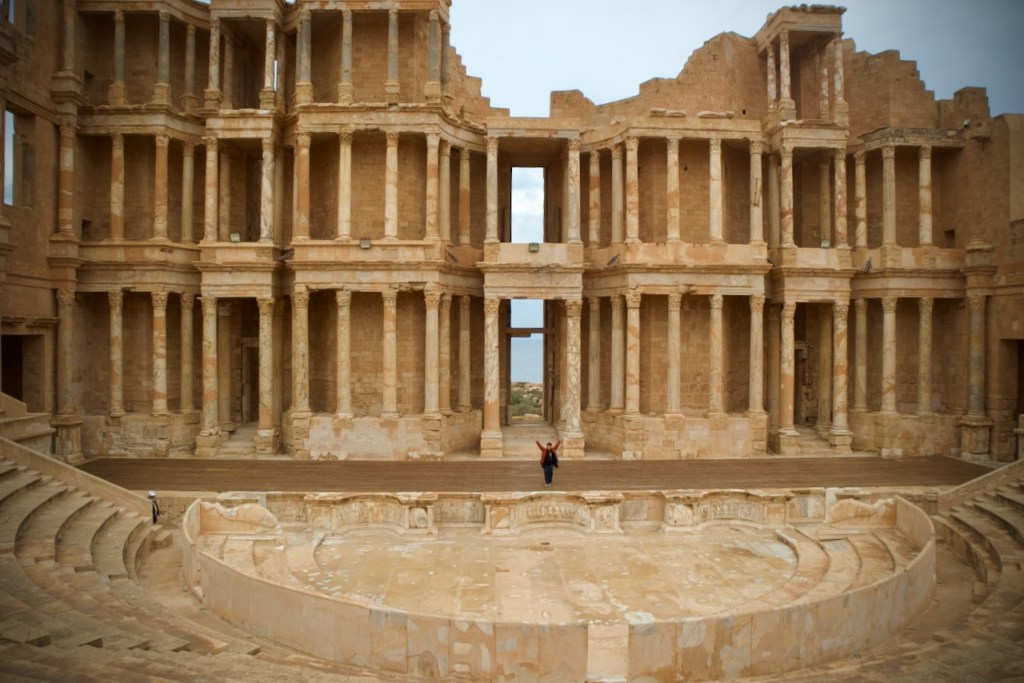
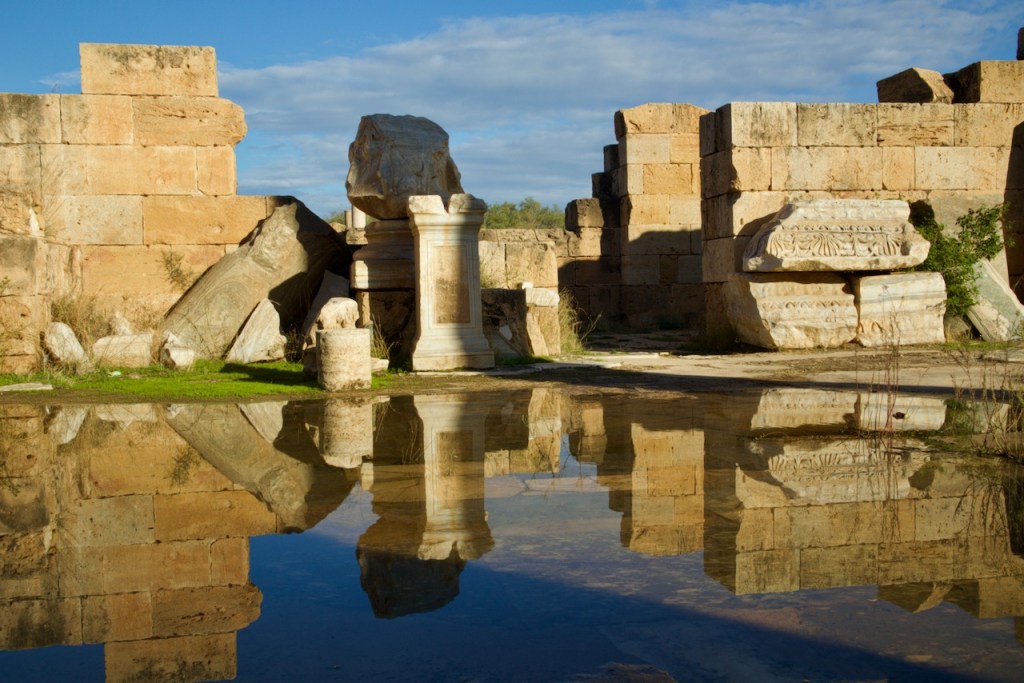
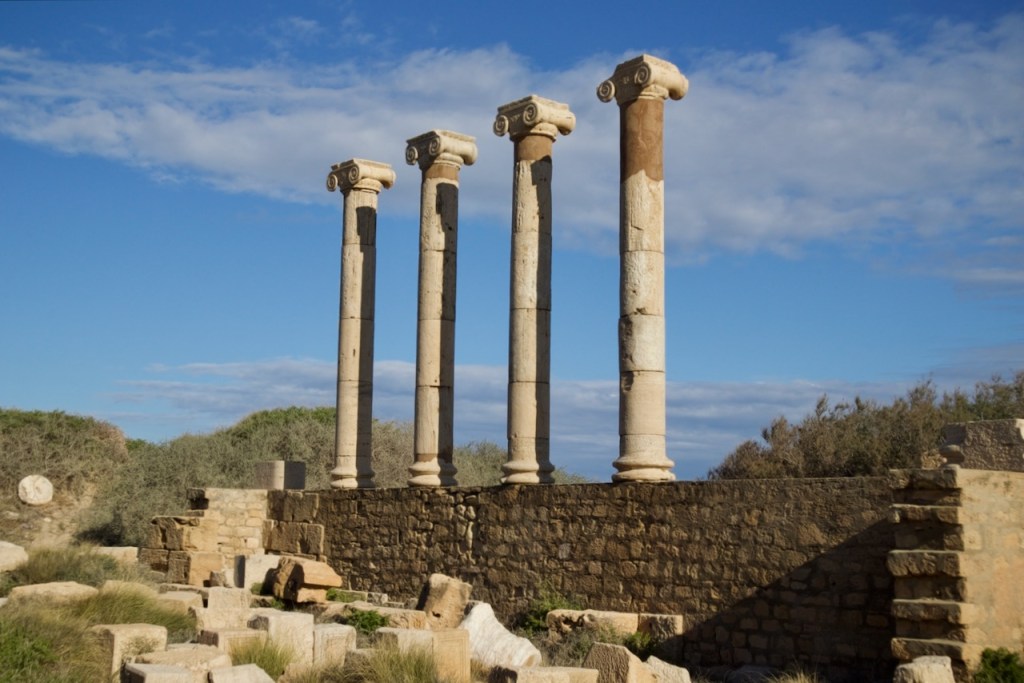
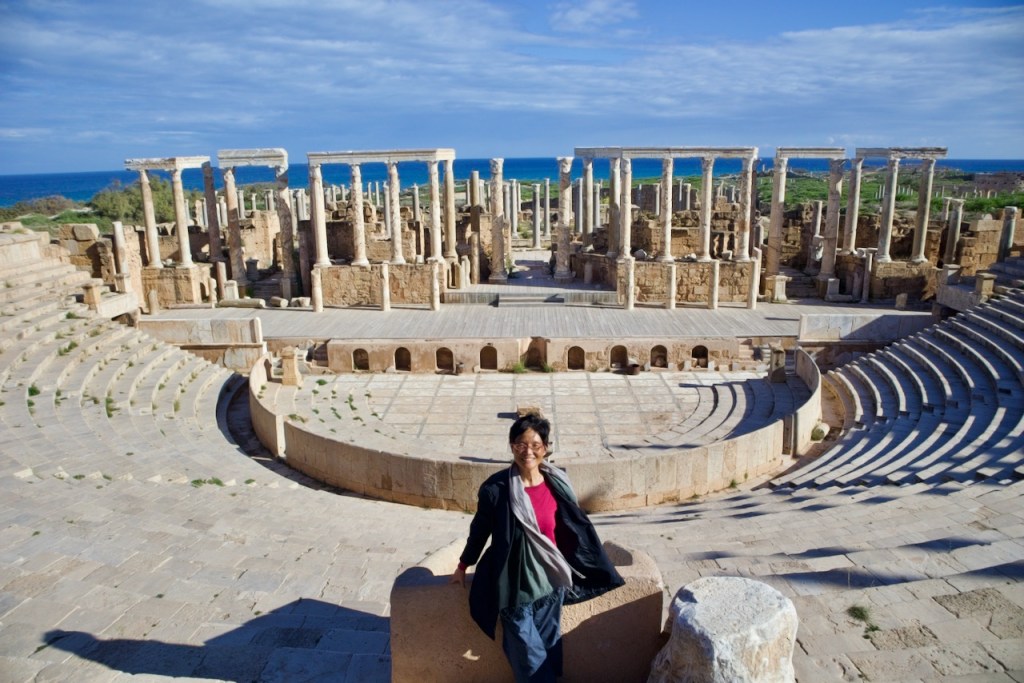
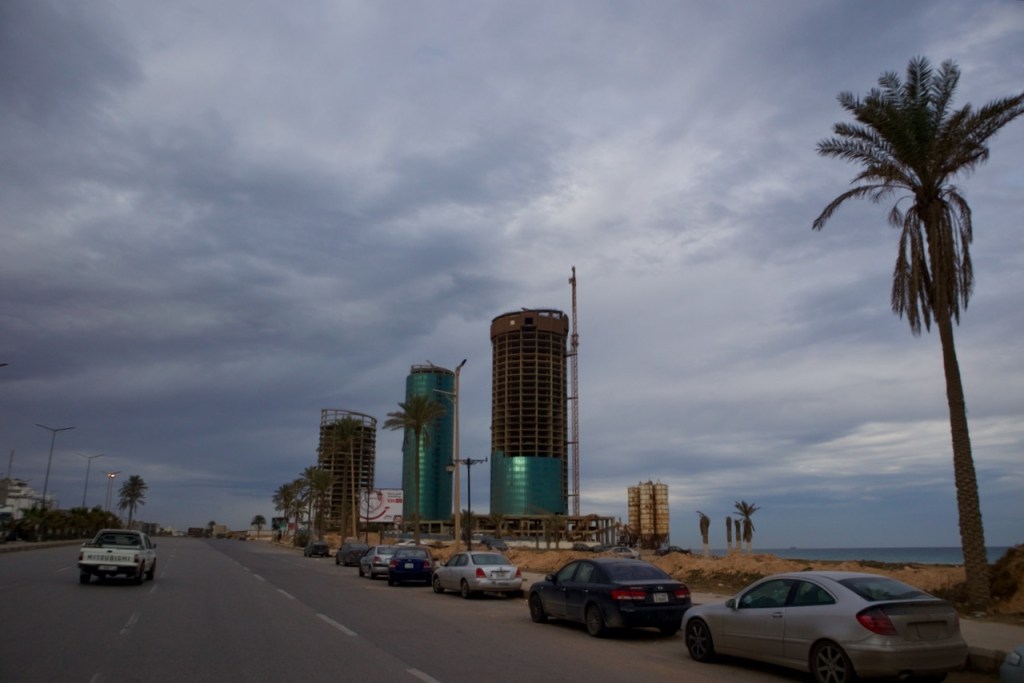
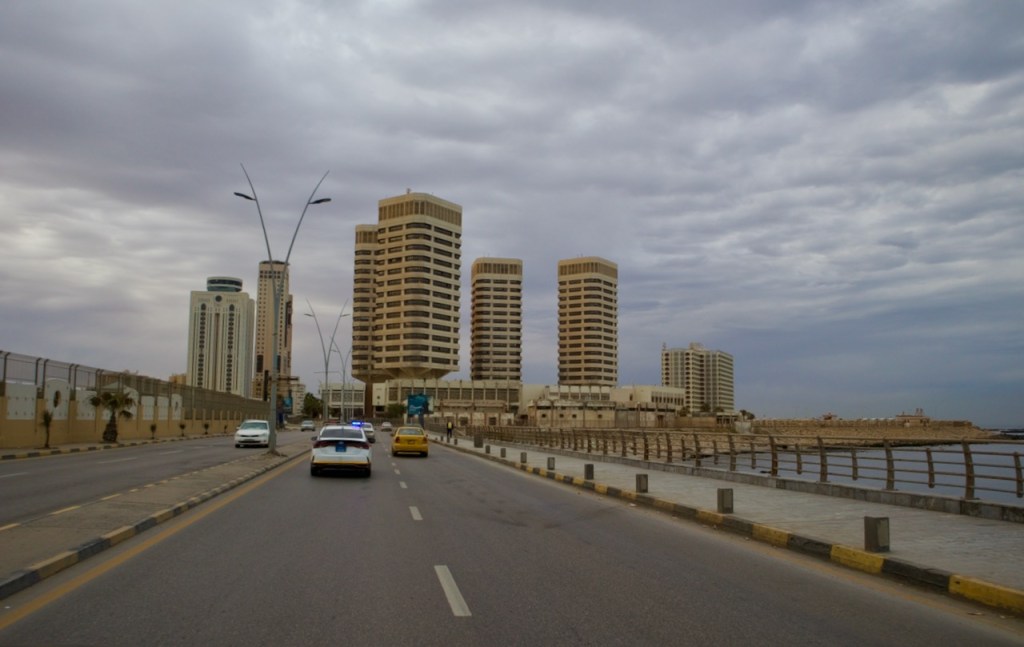
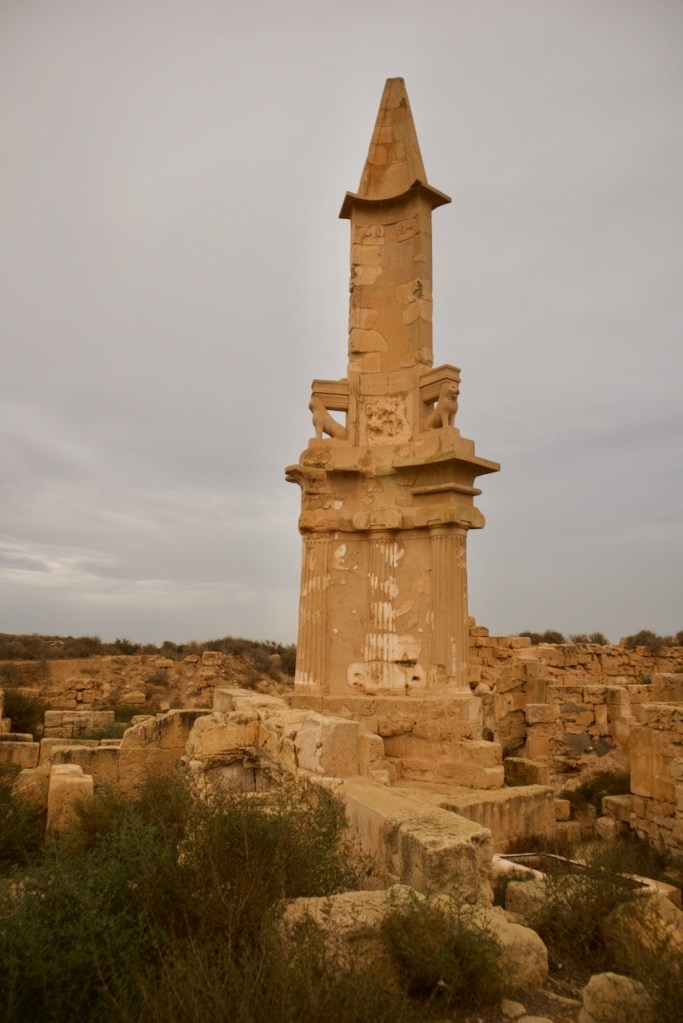
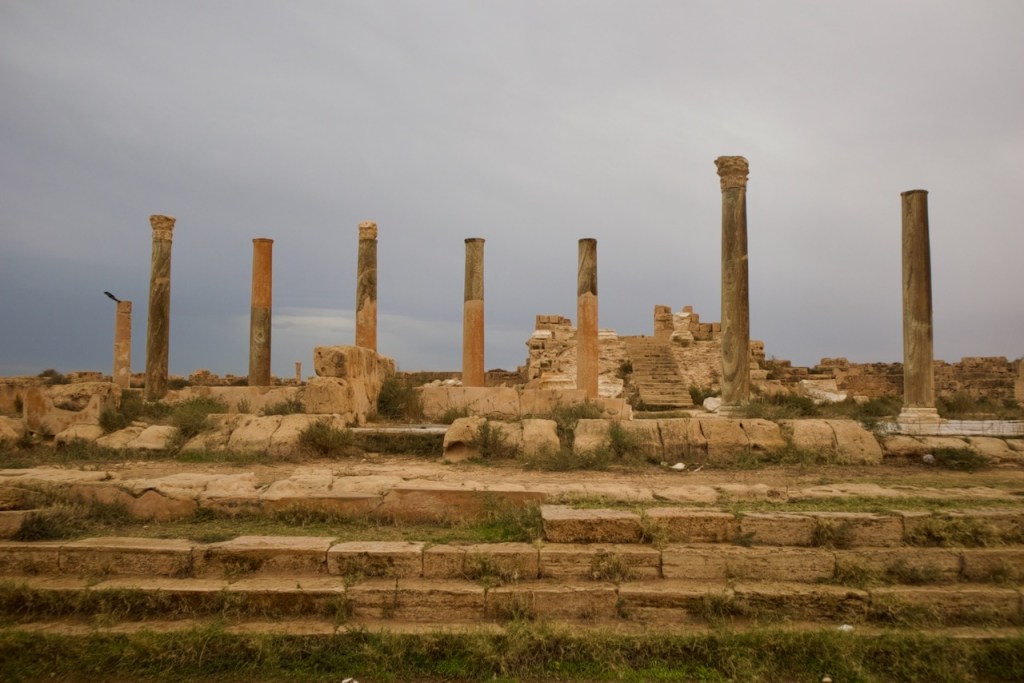
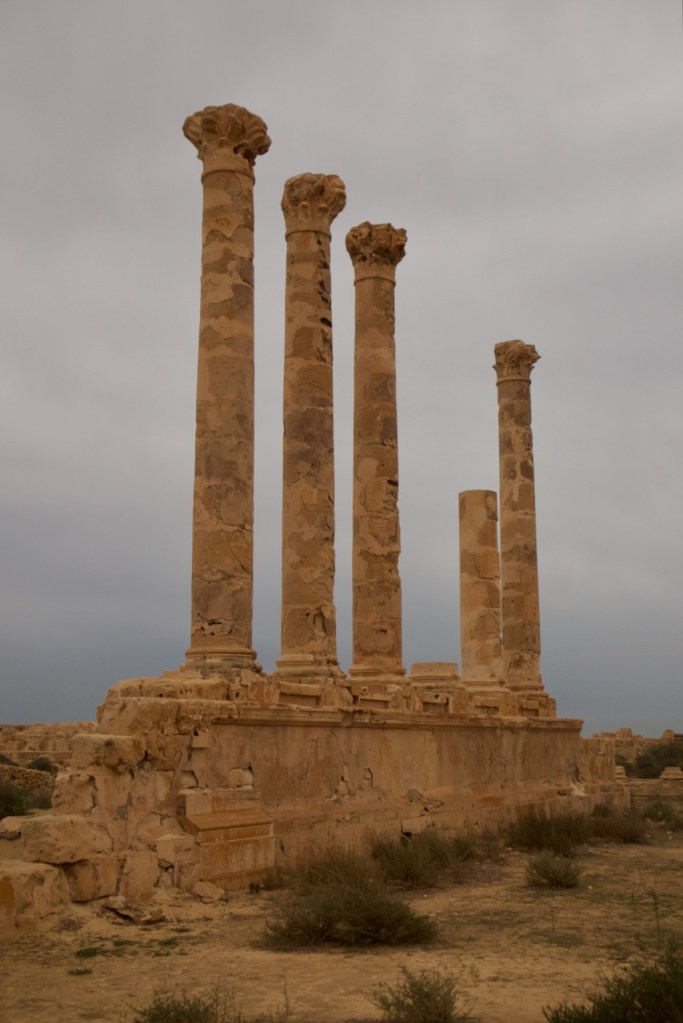
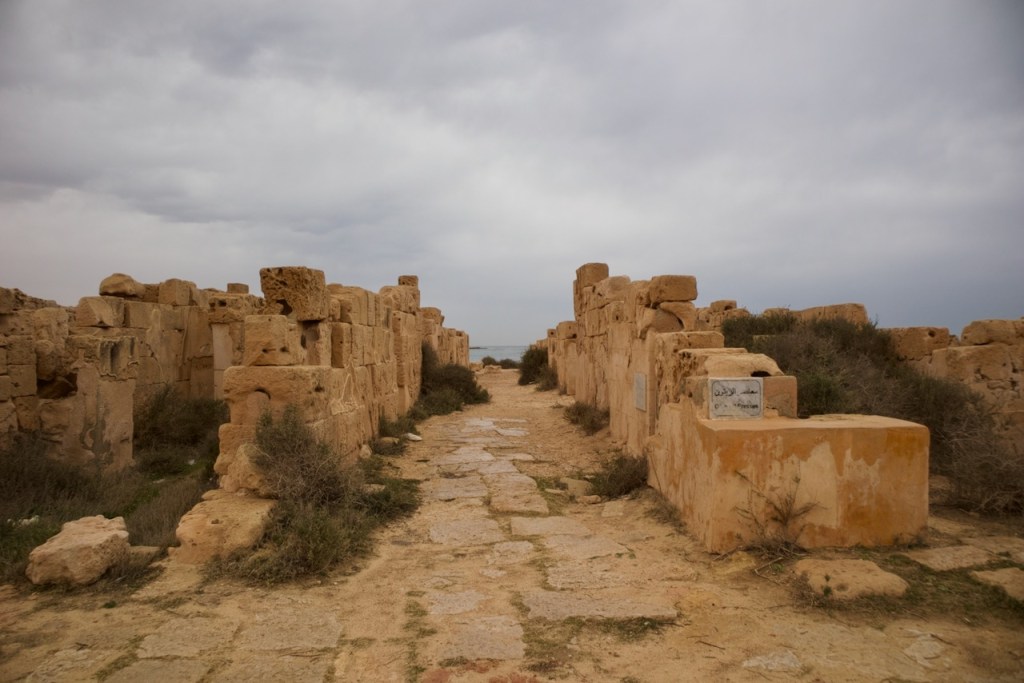
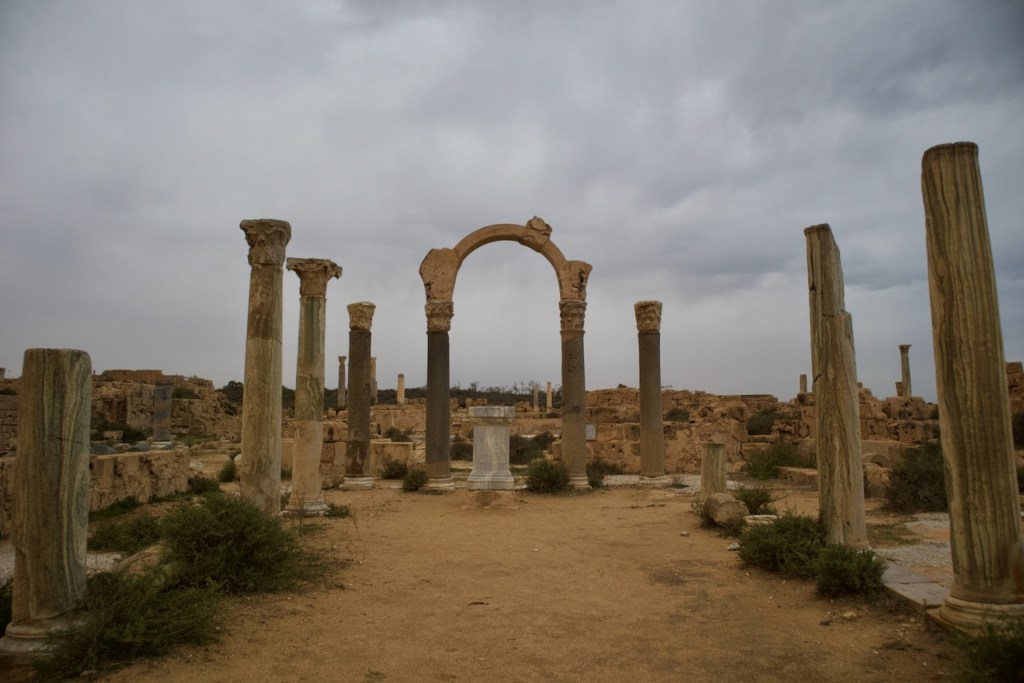
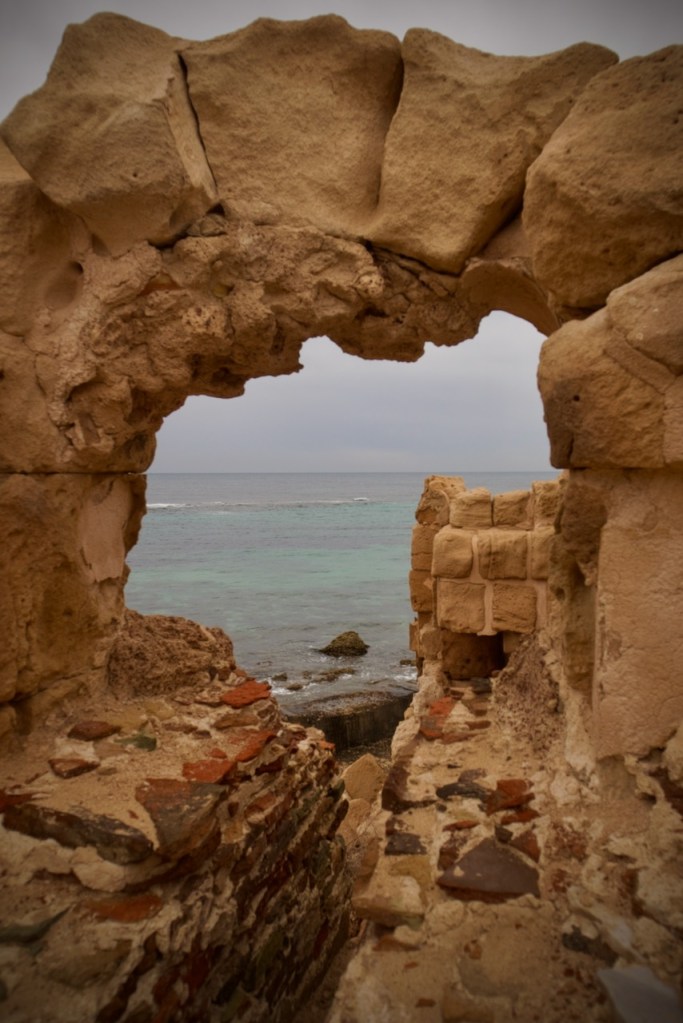
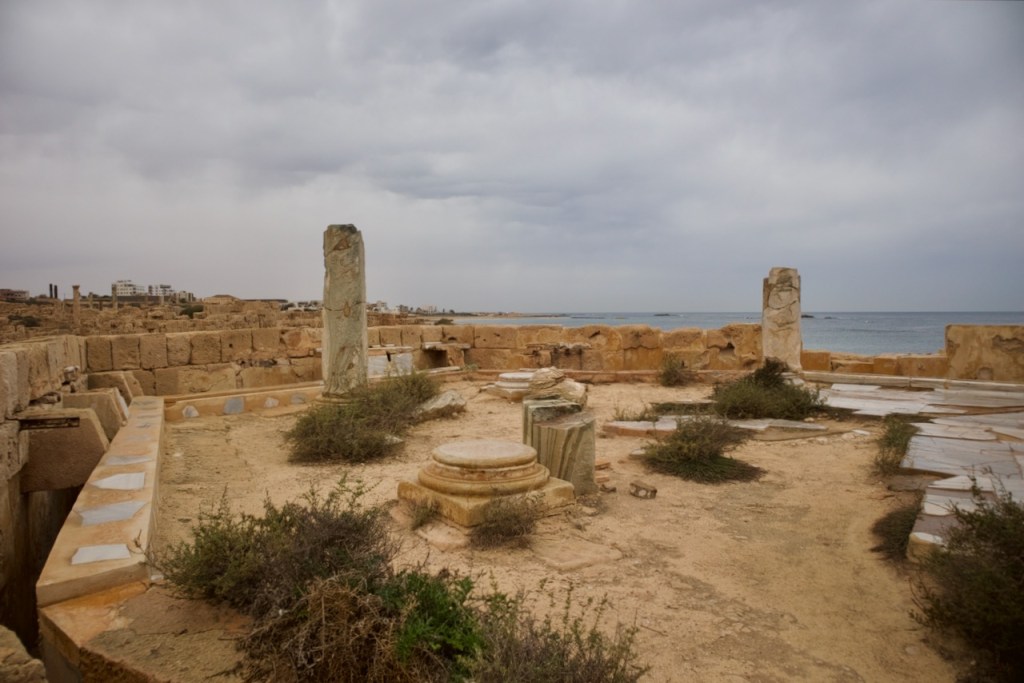
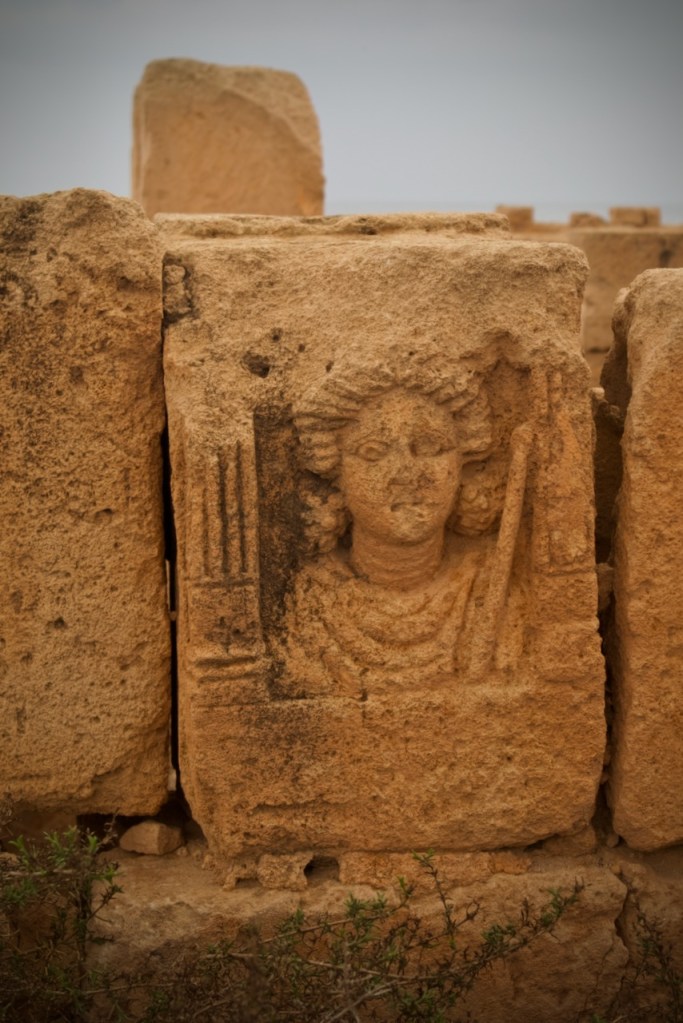
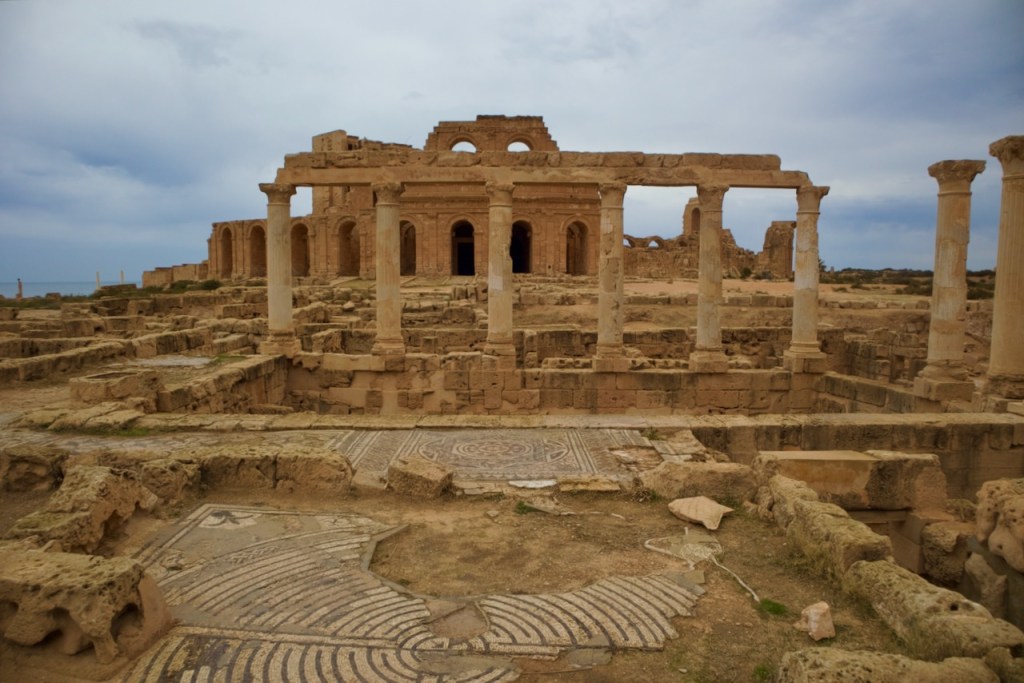
After a month of glorious, balmy weather in Syria, Iraq, and Saudi Arabia, finally the rain and cold are here on the Libyan coast. We cruise through town, passing by the fish market and corniche, and reach the magnificent ruins in Sabratha after an hour and half. Founded by the Phoenicians in the 7th century BC and then becoming an important Roman city before falling into decline after the 4th-century earthquake, Sabratha is one of the best-preserved Roman sites in Africa, boasting an impressive theatre, forum, temples, and thermal baths. Some blue sky would have rendered better photos, but better weather is on its way, I am told. Mufta excuses himself for cutting short the tour by an hour, because it is Friday and he needs to attend to more important things: praying.

Qasr Al Hajj
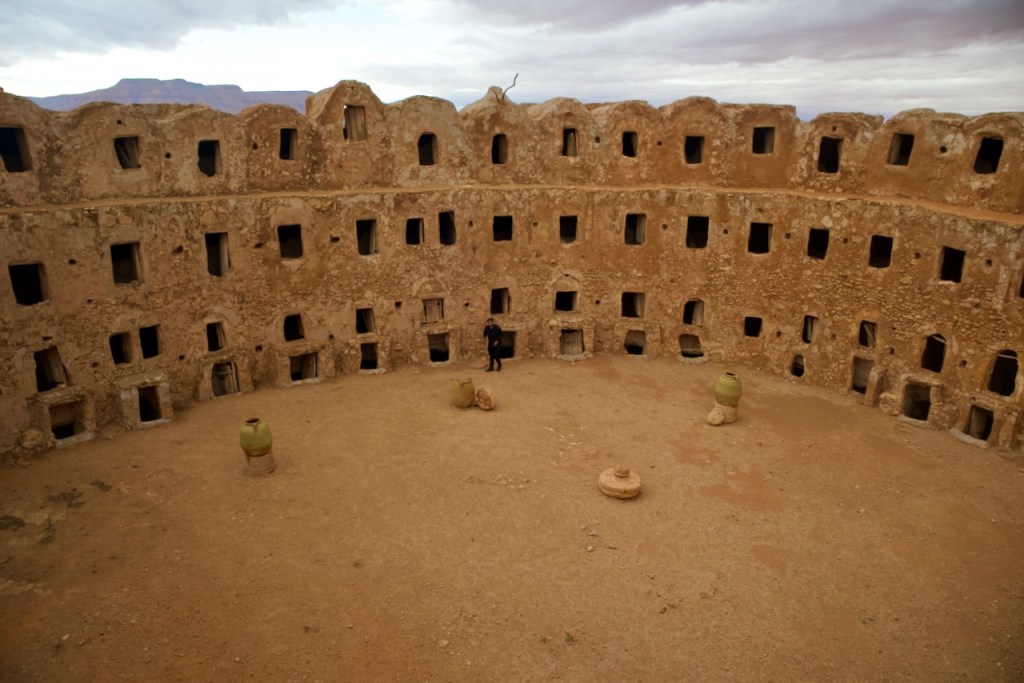
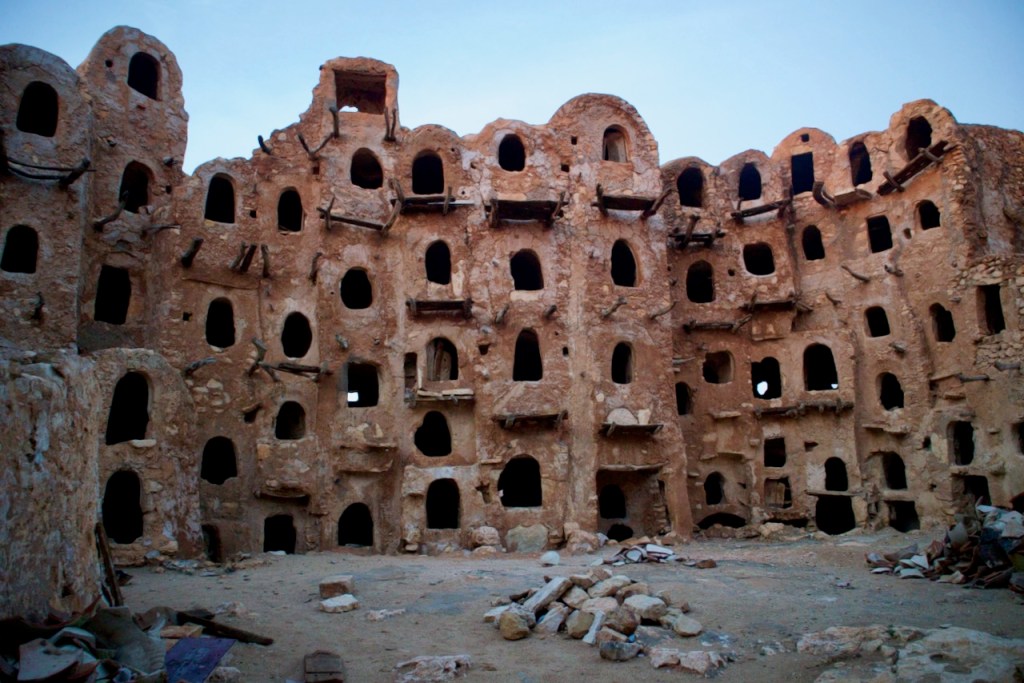
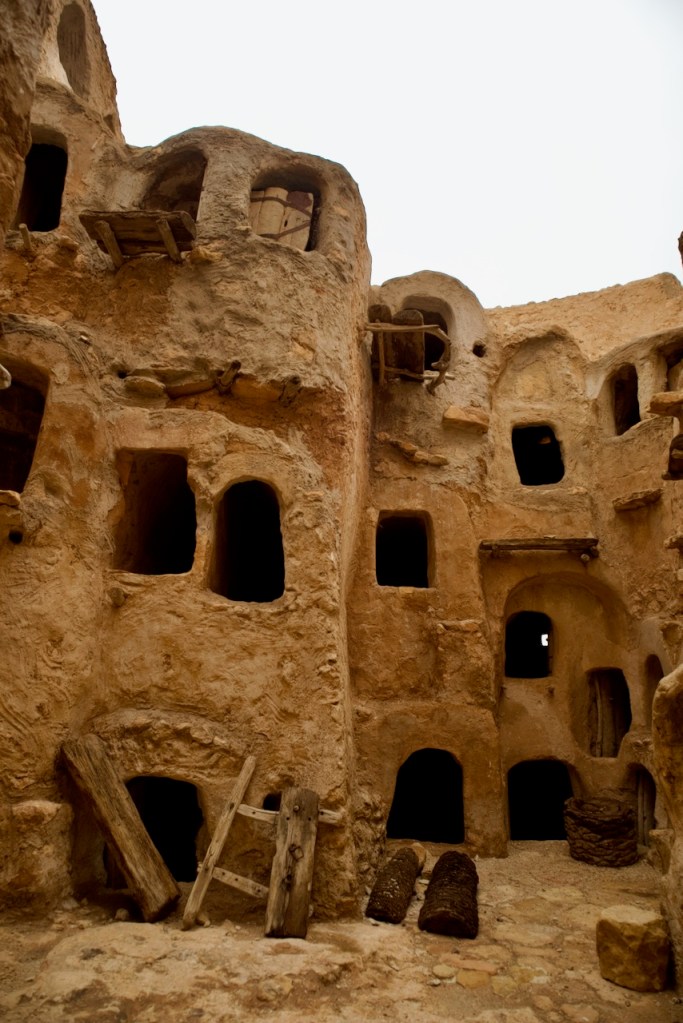
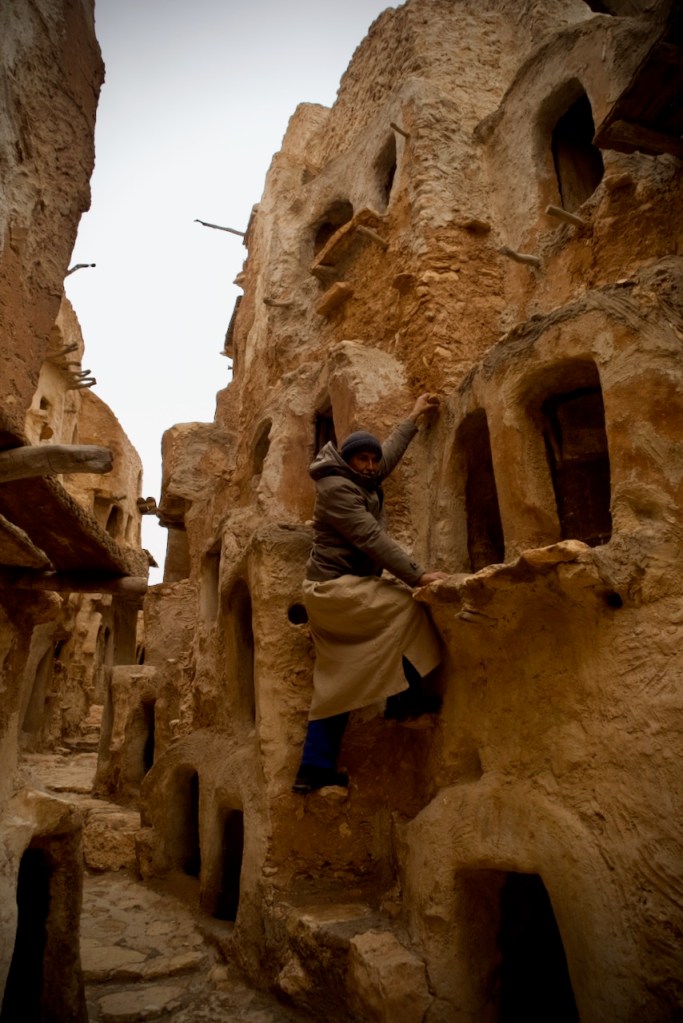
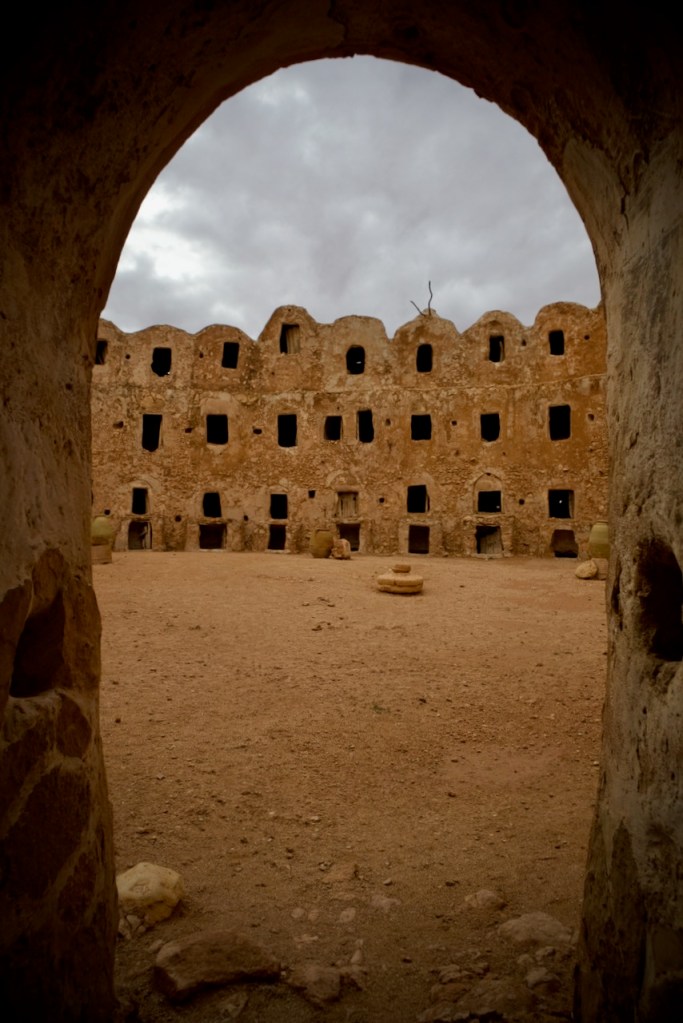
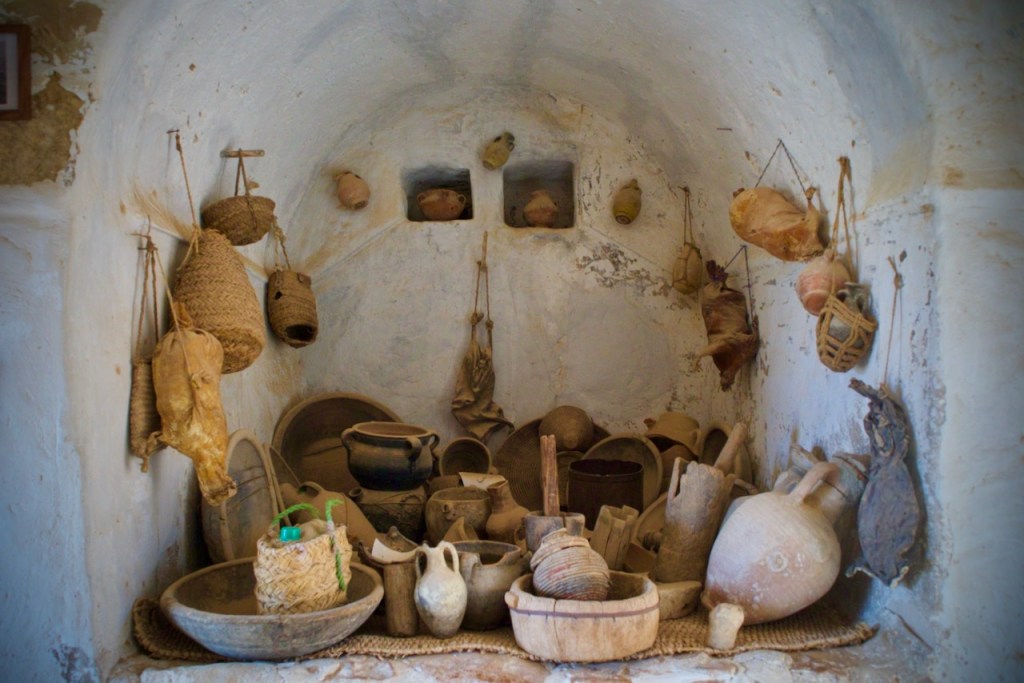
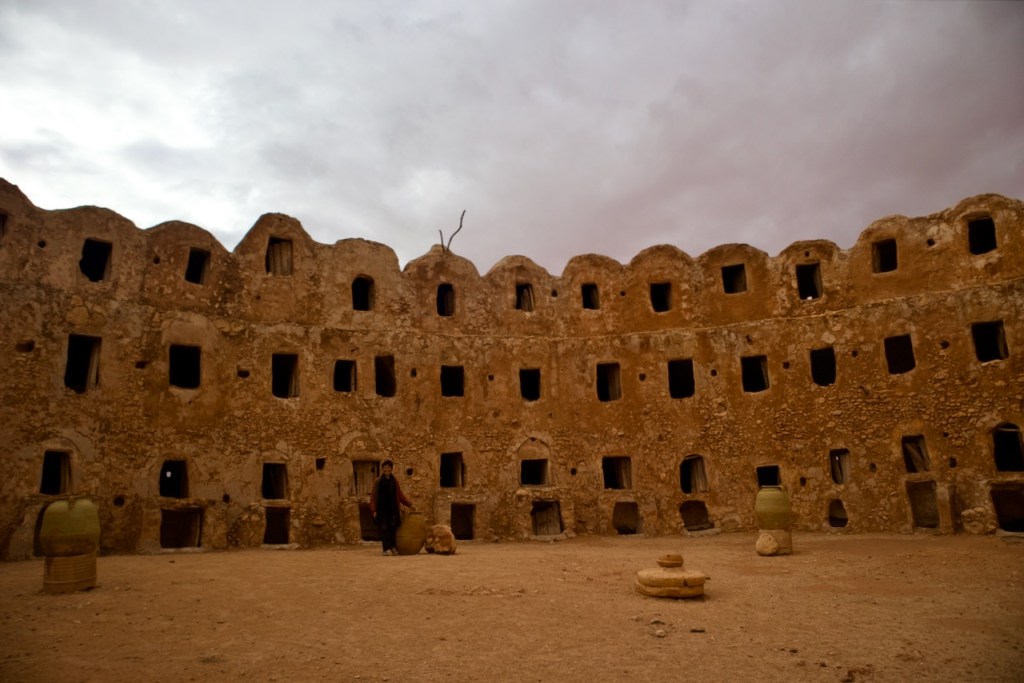
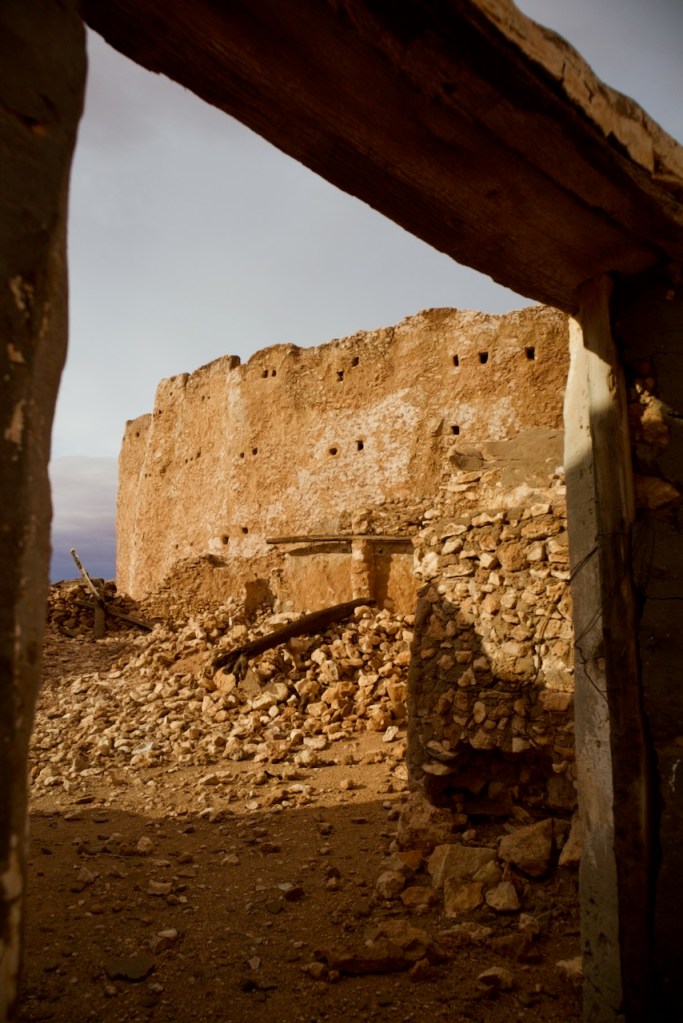
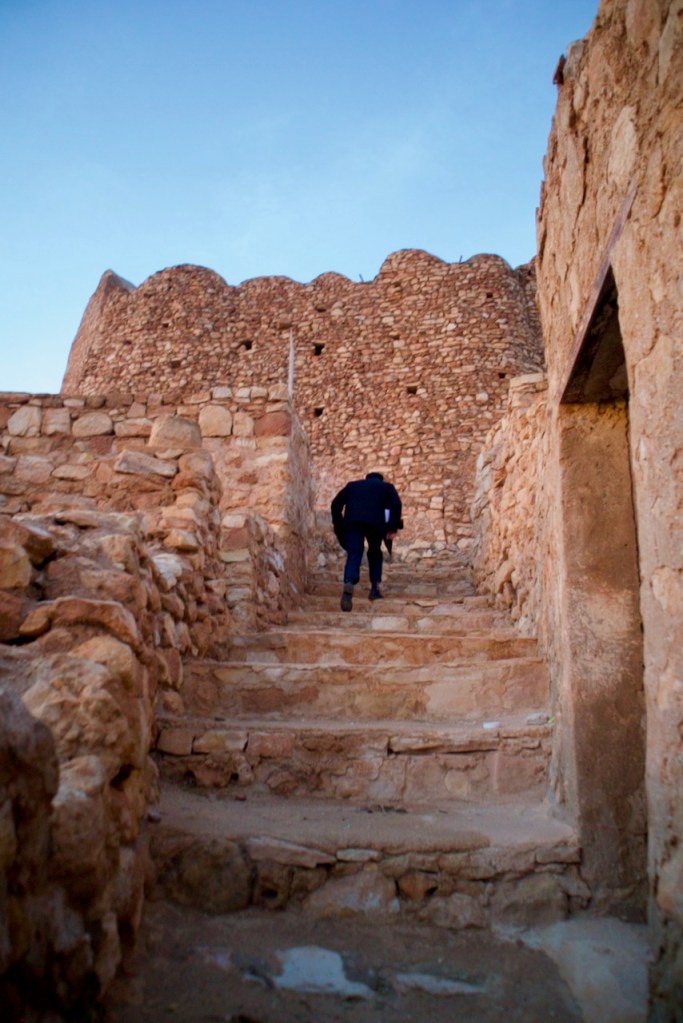
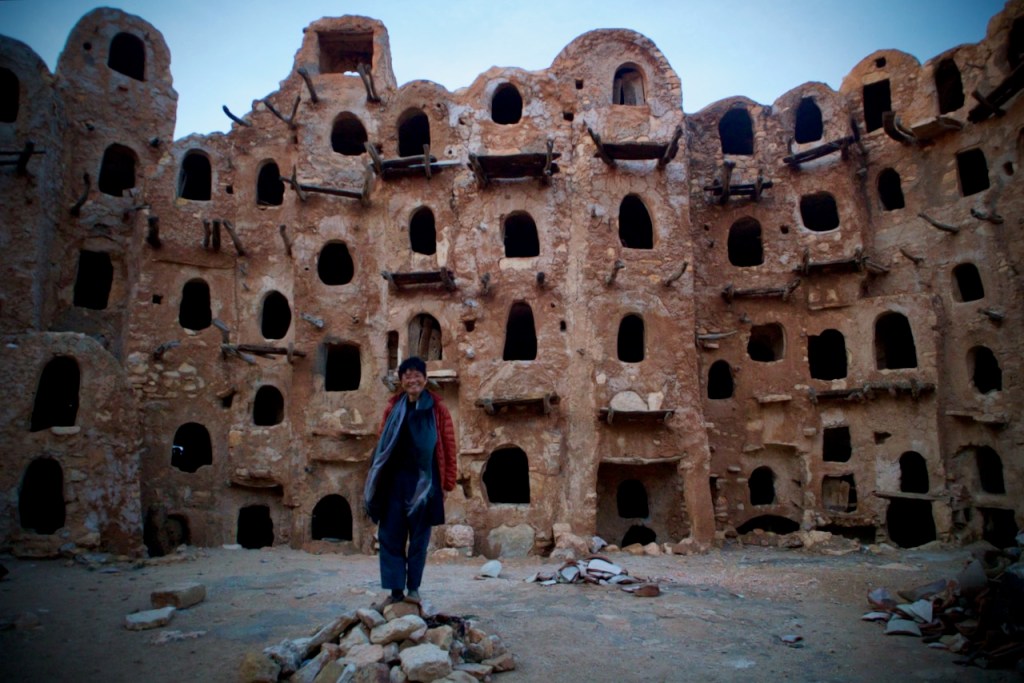
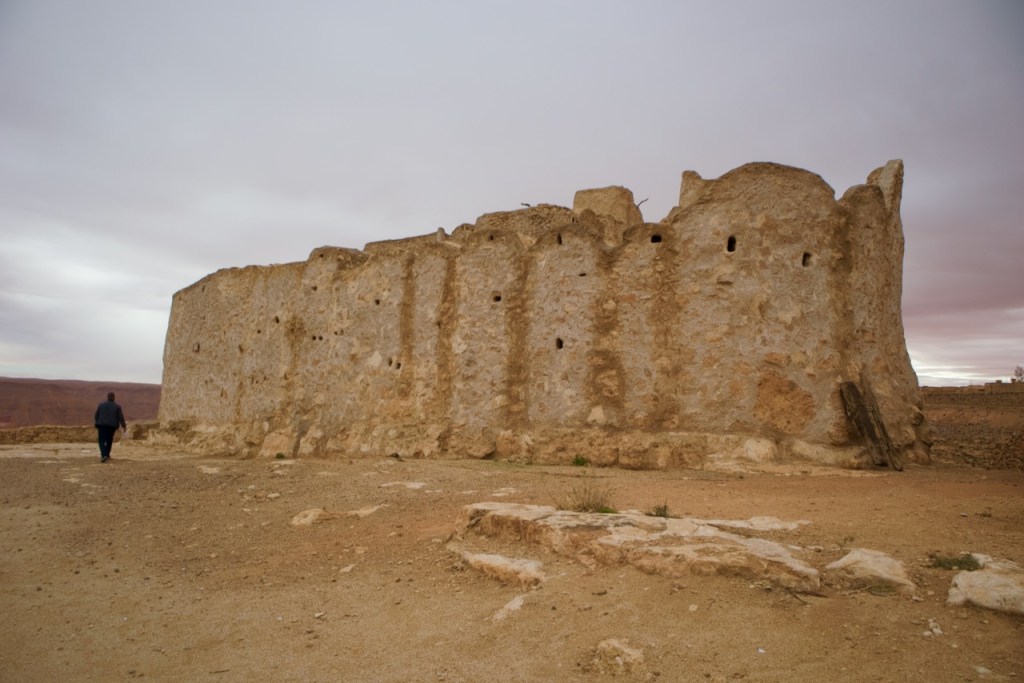
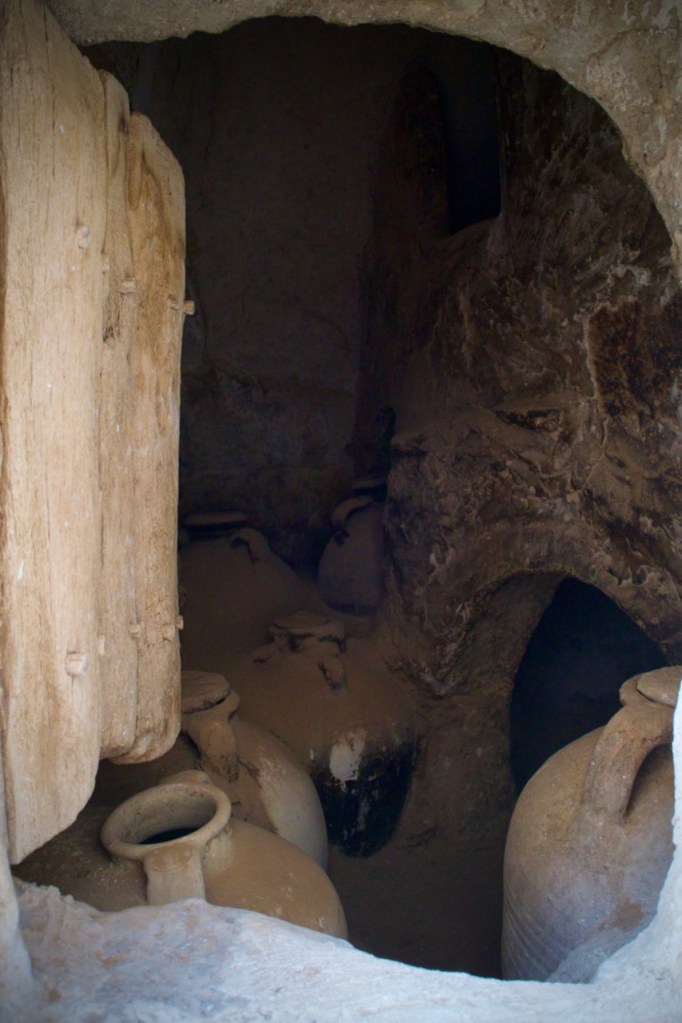
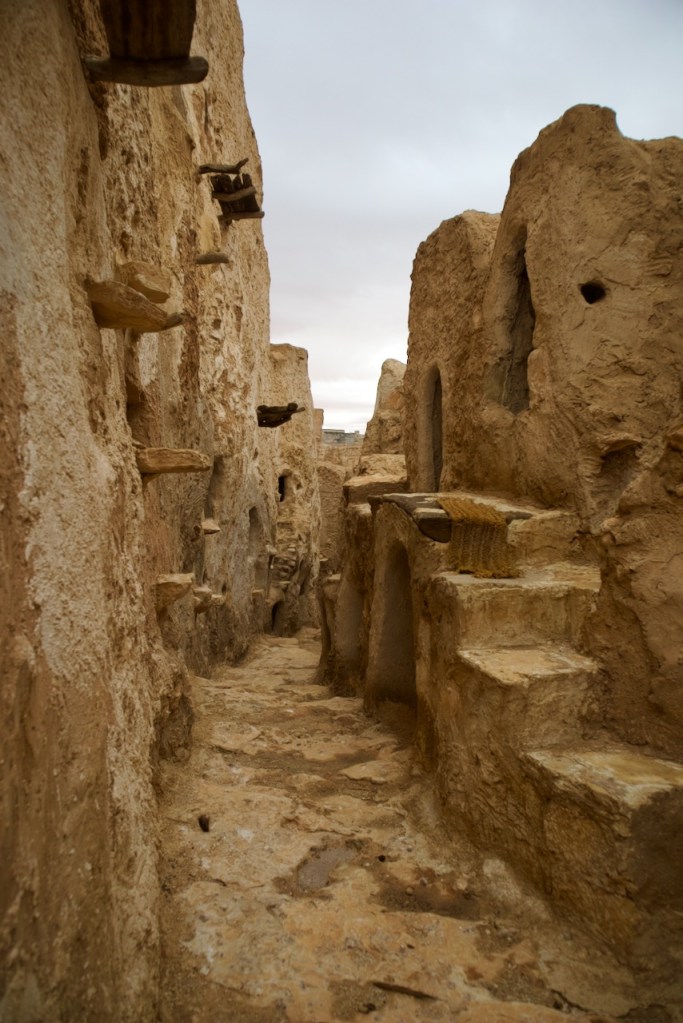
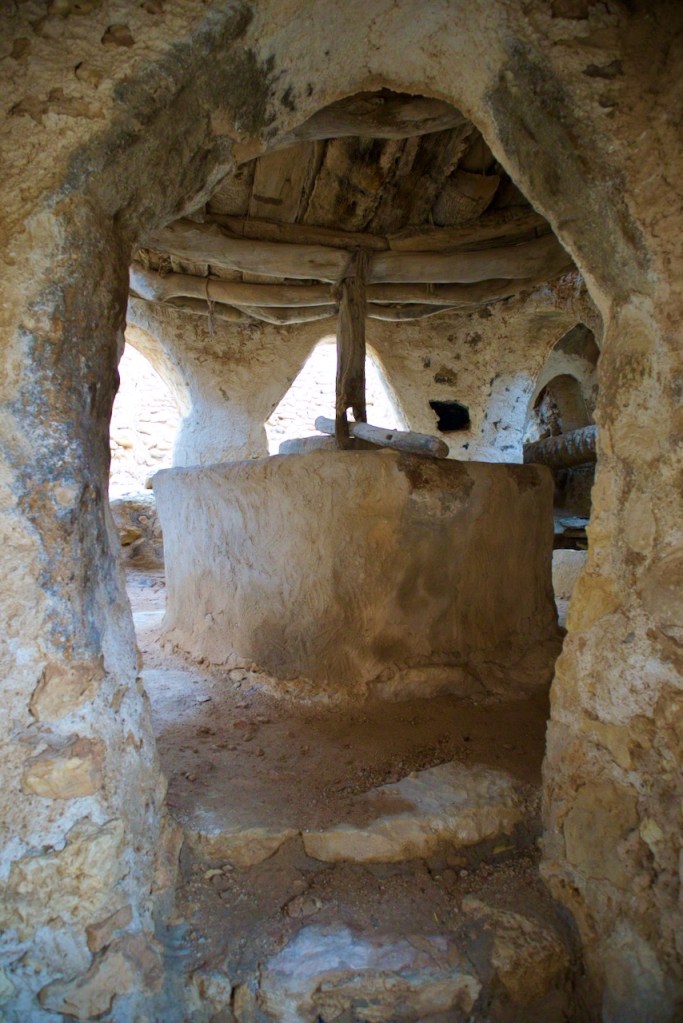
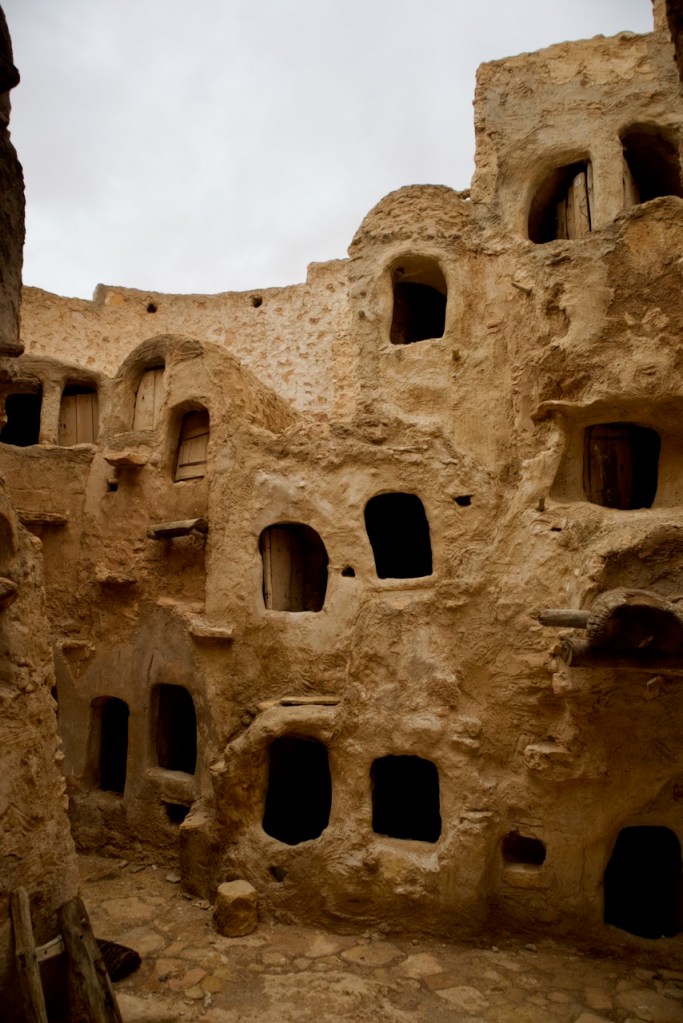
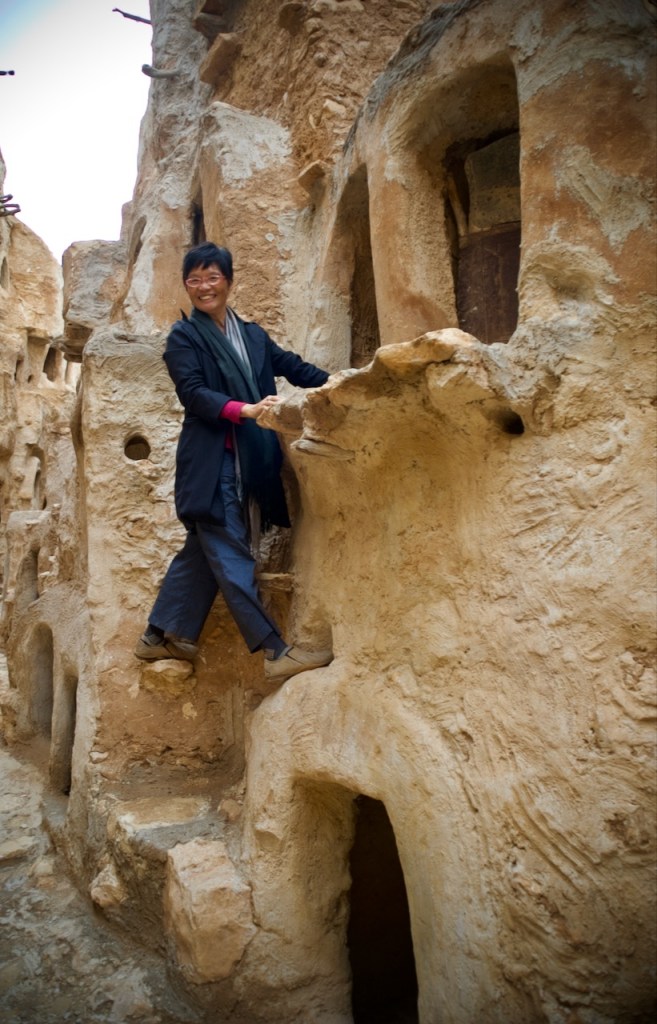
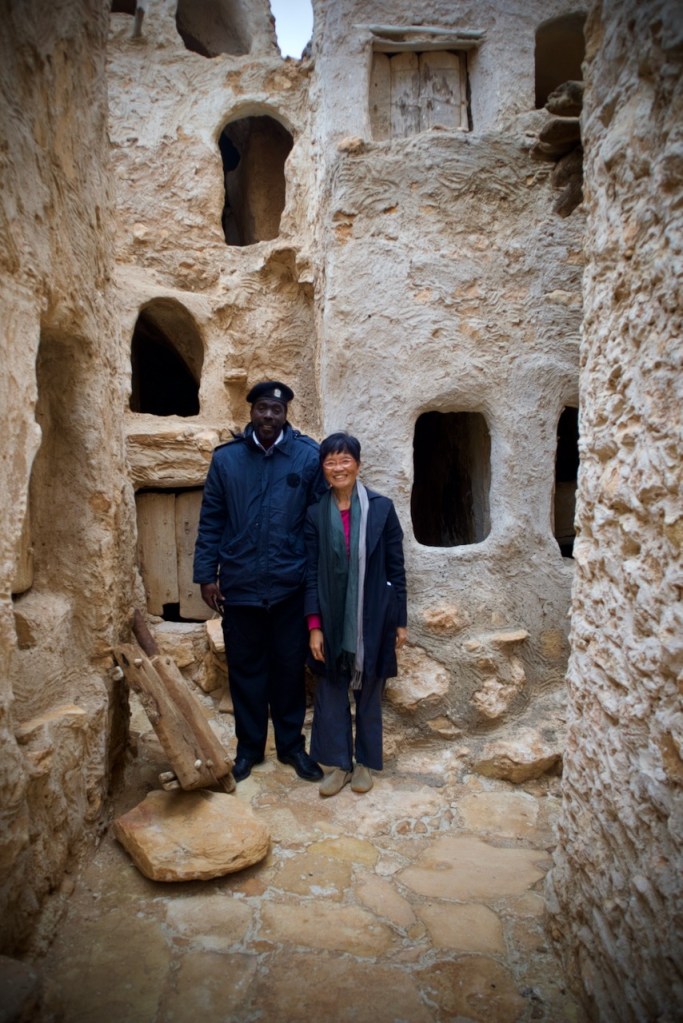
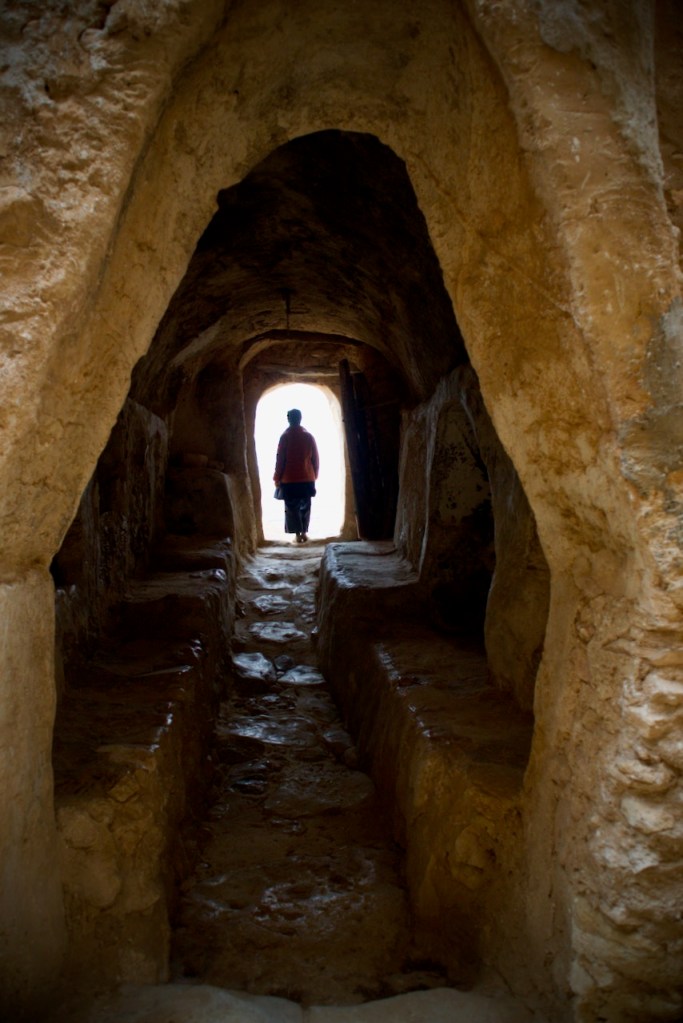
This part of North Africa used to be frequented by trade caravans between the East and West and along the Mediterranean. I had seen highly photogenic granaries and fortresses, built in Berber tradition, in southern Tunisia. Qasr Al Hajj, our next stop, reminds me of these, a stunning 12th-century circular granary, featuring over a hundred storage rooms. I am happy to mount the flight of steps and take a tour for the panoramic view, leaving both my 72-year-old guide and security detail who has been tailing my every step since Sabratha. Only three days left to go, I remind myself, being so glad I ain’t no celebrity. Few things are as precious as the simple joy of roaming freely, UNESCO site or not!

Termisa & Kabaw
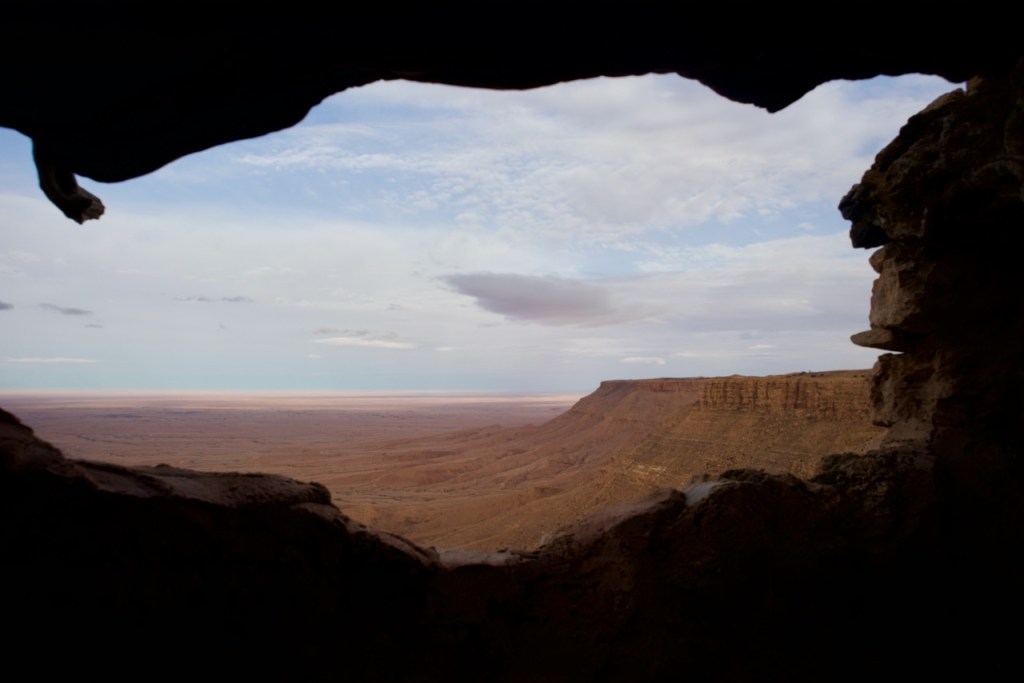
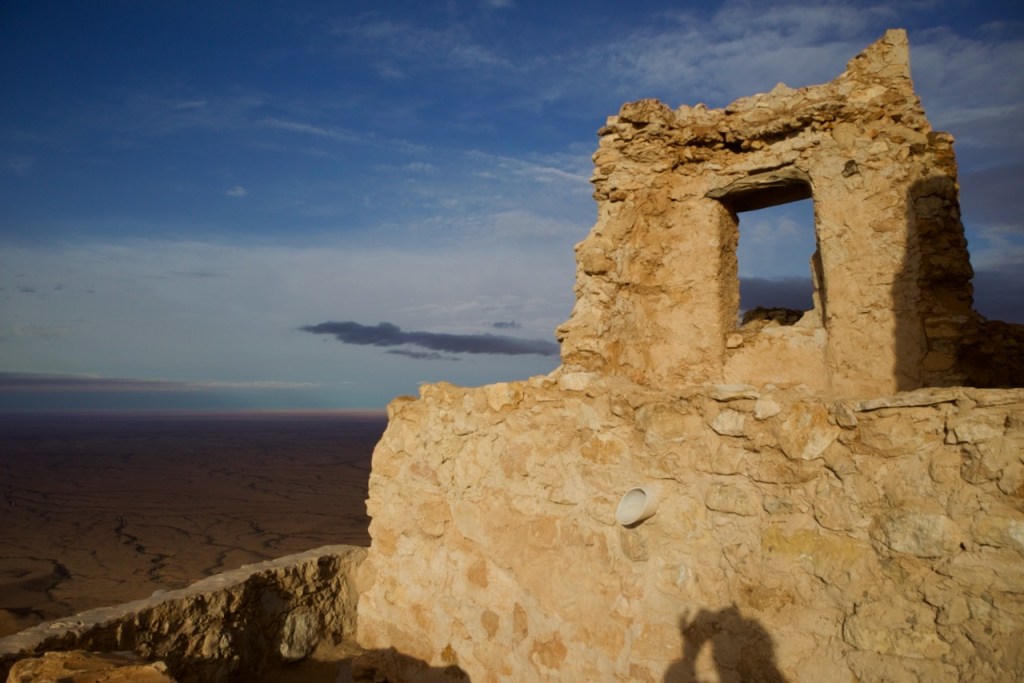
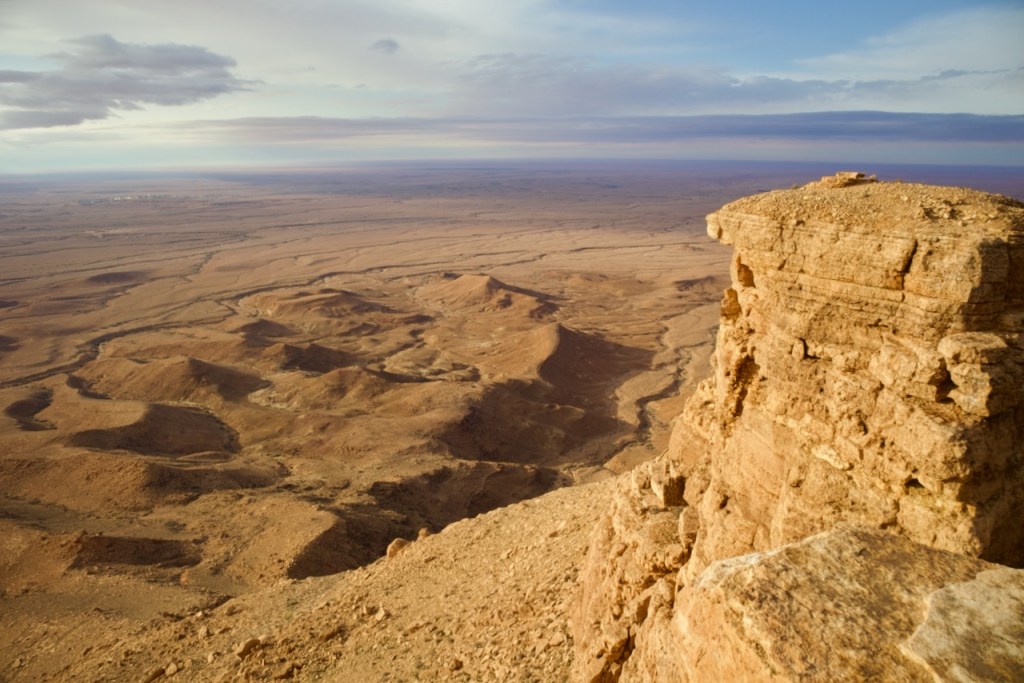
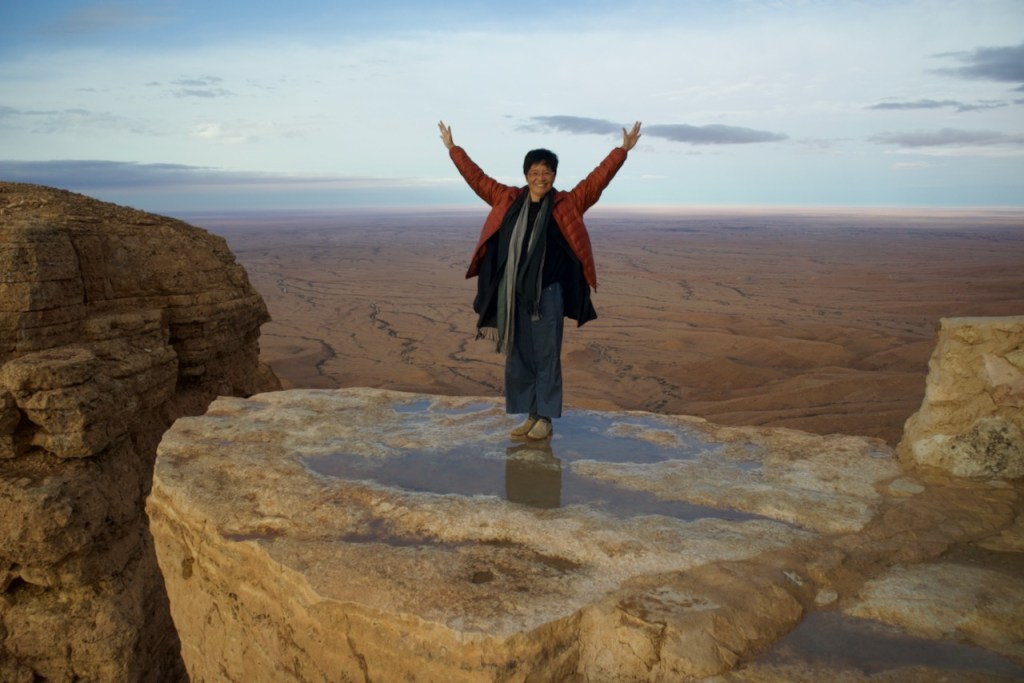
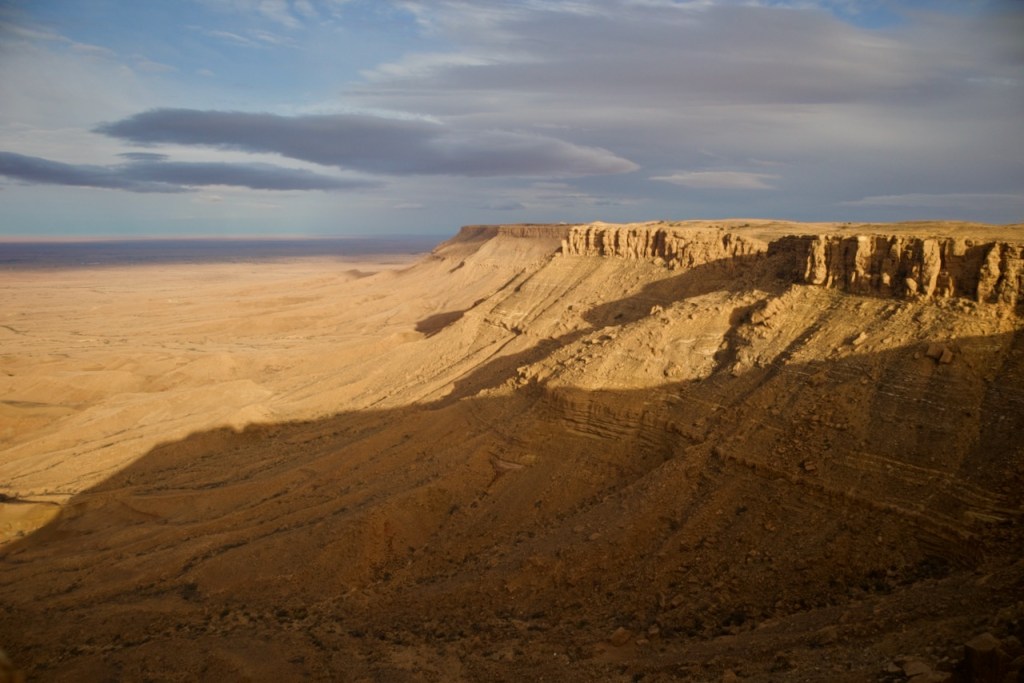
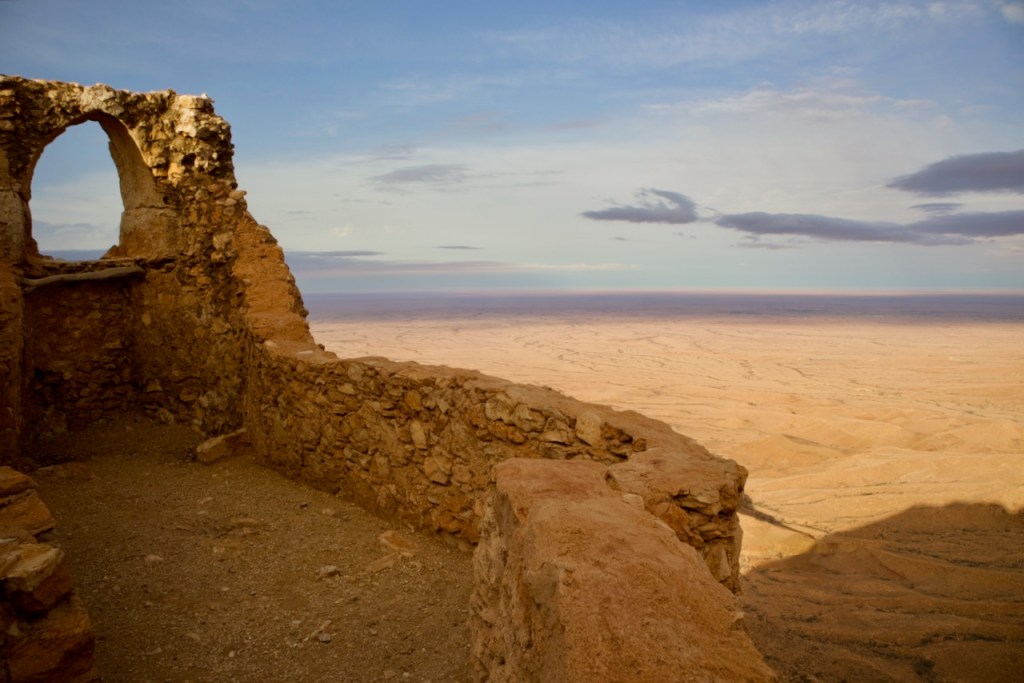
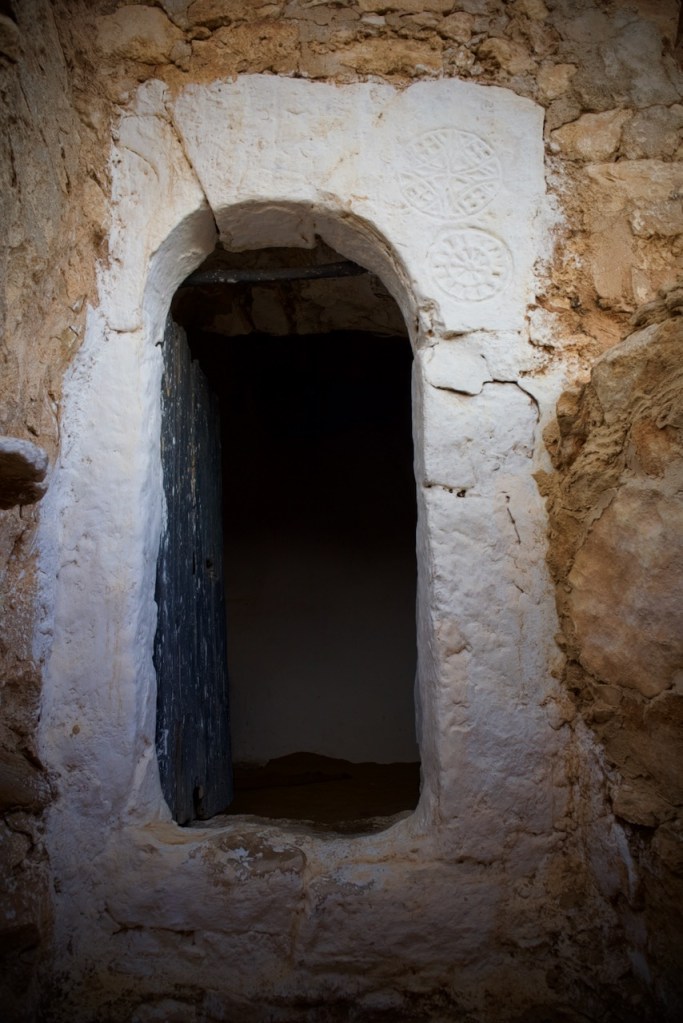
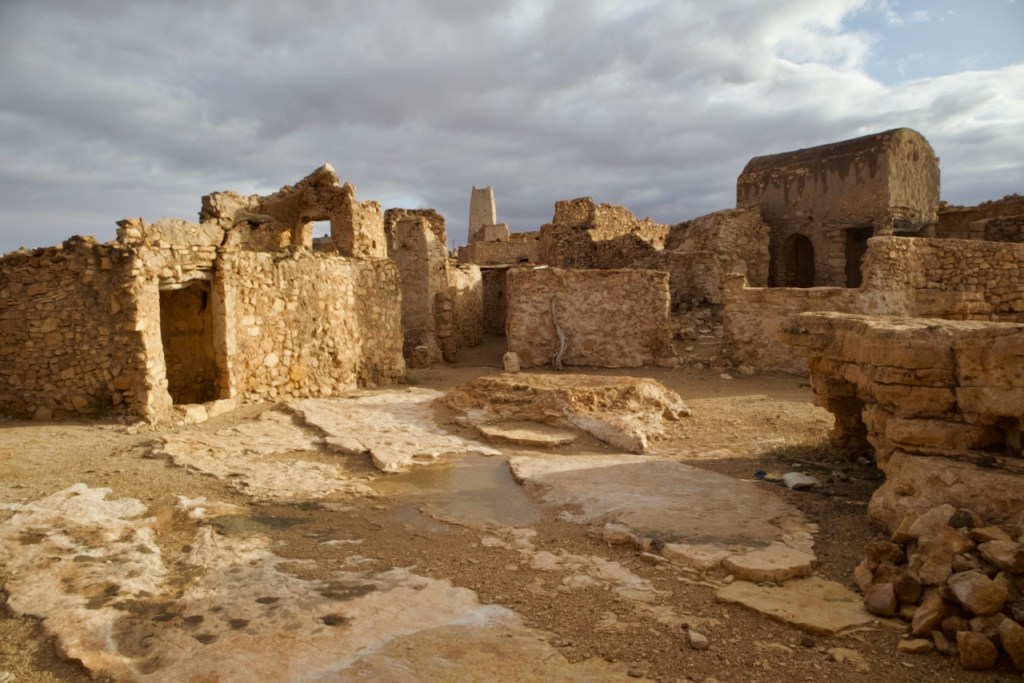
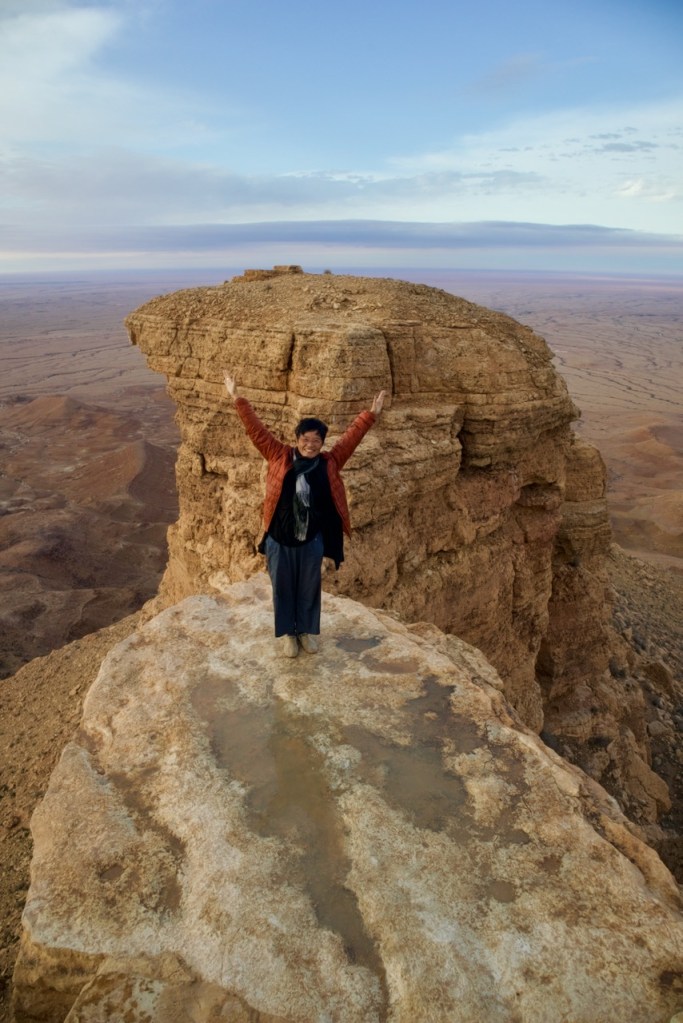
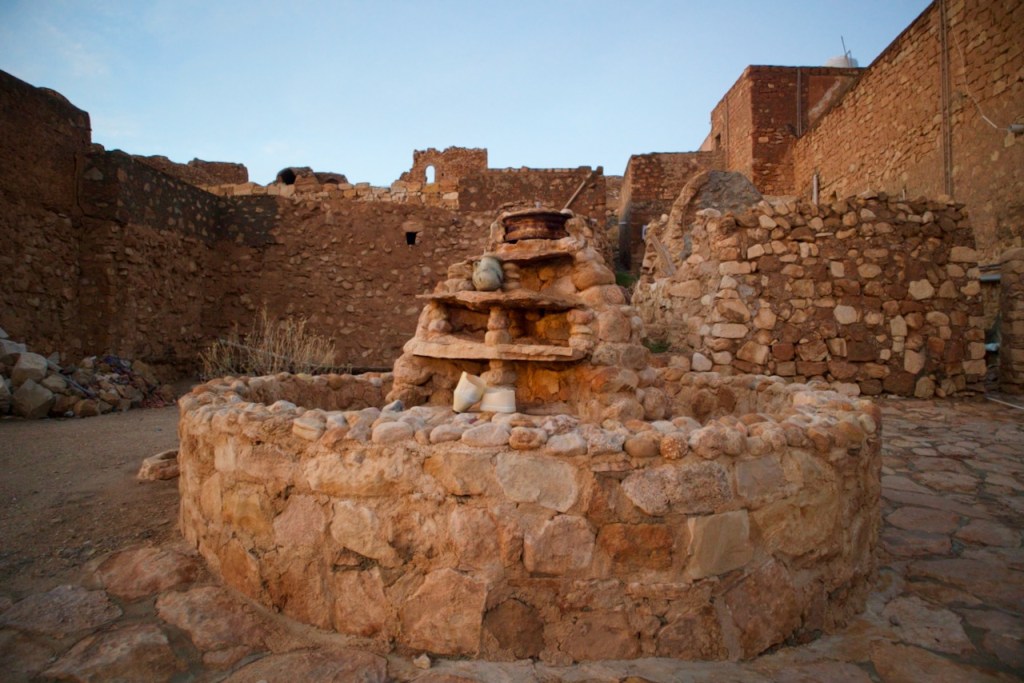
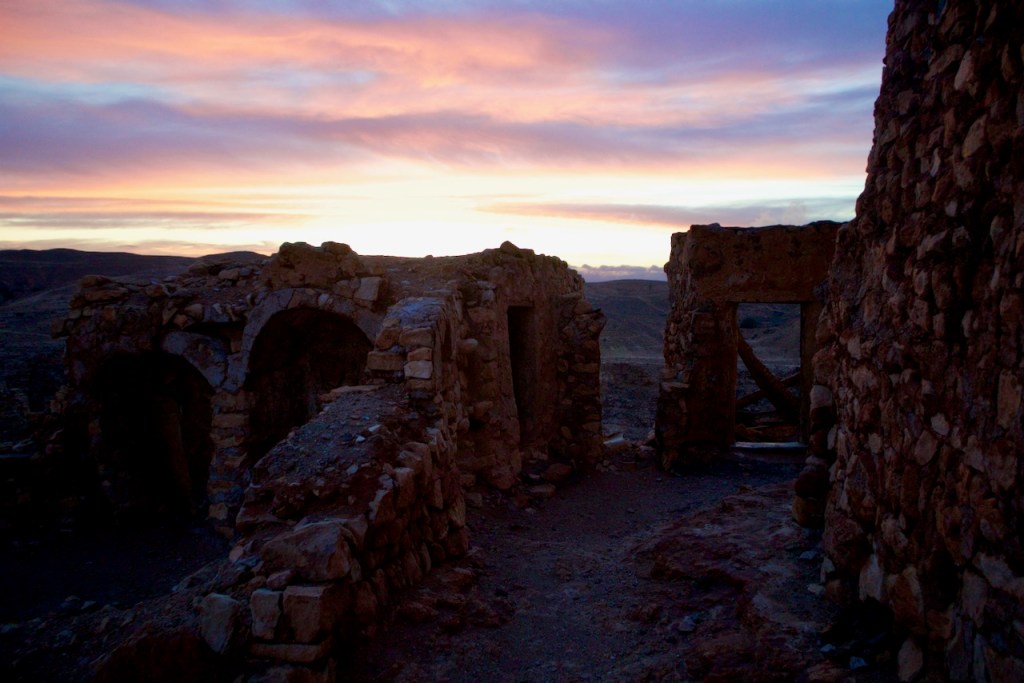
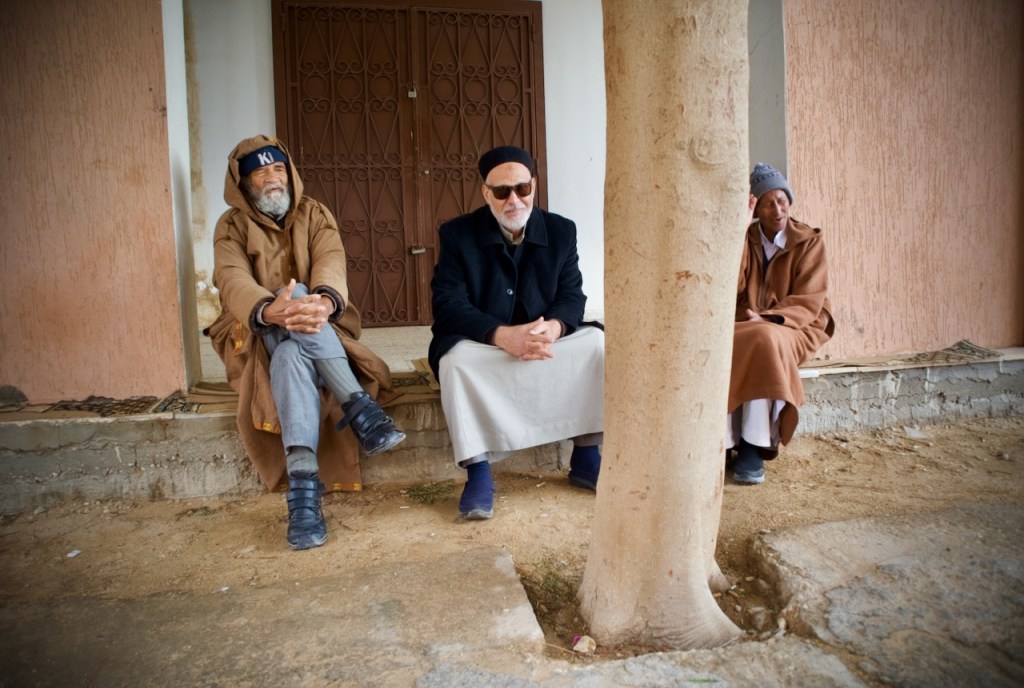
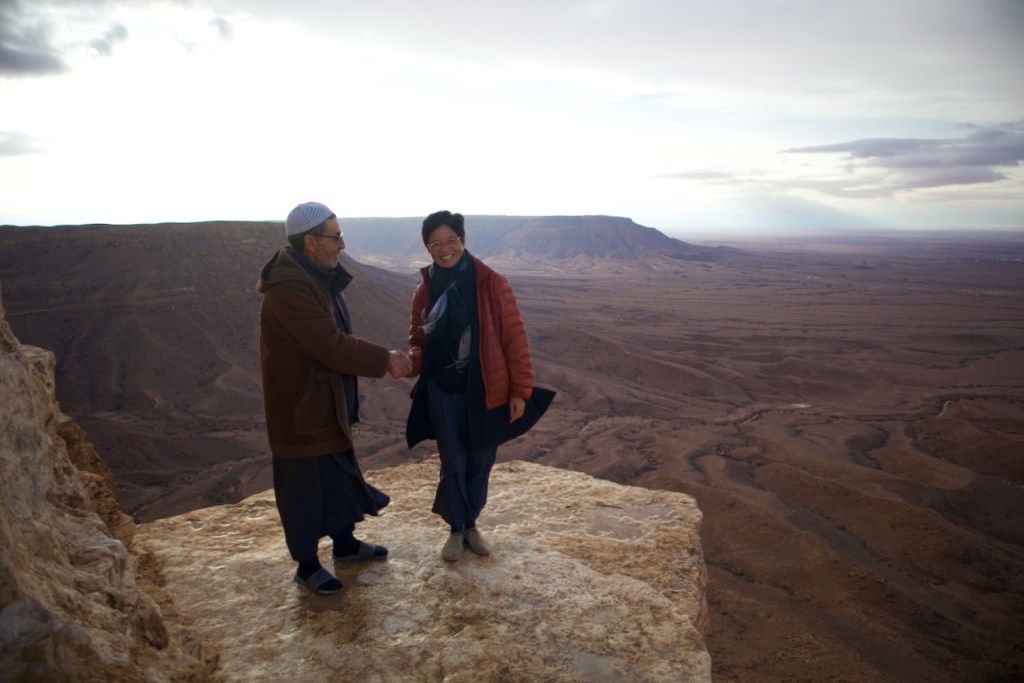
We arrive in Termisa, an abandoned Berber village perched on a clifftop, at the golden hour. Finally, the sky is clearing, and the view over the rugged Jebel Nafusa mountains is jaw dropping. The locals are delighted to see a rare foreigner and we linger around the picturesque rooms, corridors, and synagogue-turned-church-turned mosque. Alas, we have to leave this stunning edge-of-the-world site if we want to arrive in our last destination before dark. Ali, my driver-guide, could not seem to find his way to Kabaw, even though he has just recently come with another group. He gets lost and calls someone for remote directions before I locate it on my offline map. It is a 45, not fifteen-minute, drive, and we arrive Qasr Kabaw fading fast in light. The visit is quickly done, but Ali is gone to a nearby mosque for one last prayer, leaving me shiver in the cold before the guard lets me in his car. Thankfully, the hotel is within Kabaw town and it is time to call it a day. Tomorrow is a long drive down south to Ghadames, the legendary oasis town.


Ghadames: Pearl of the Desert
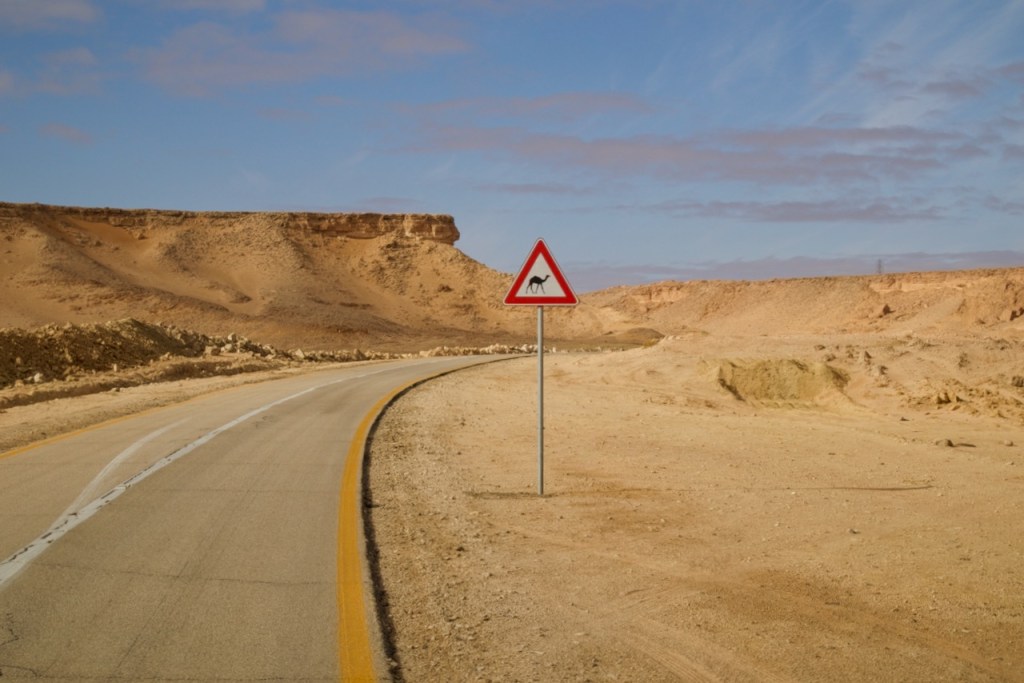
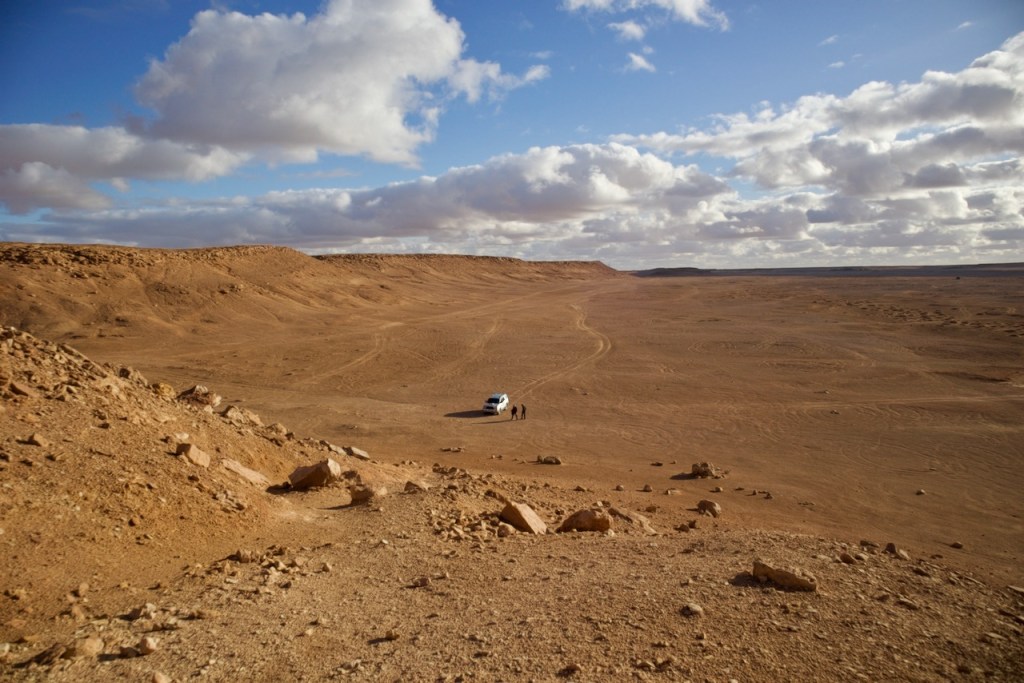
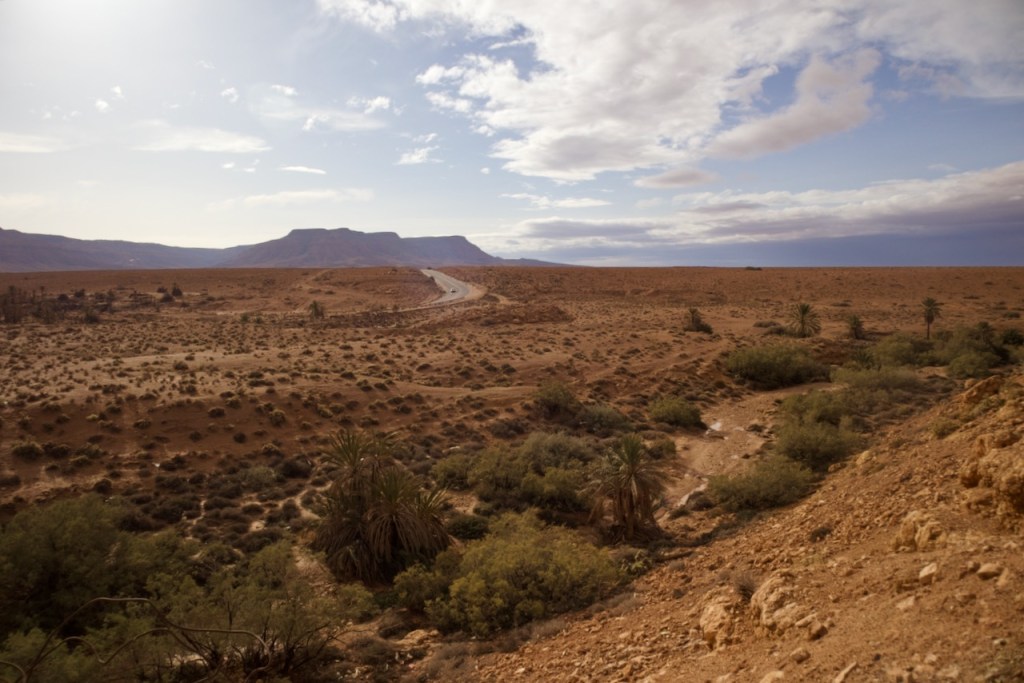
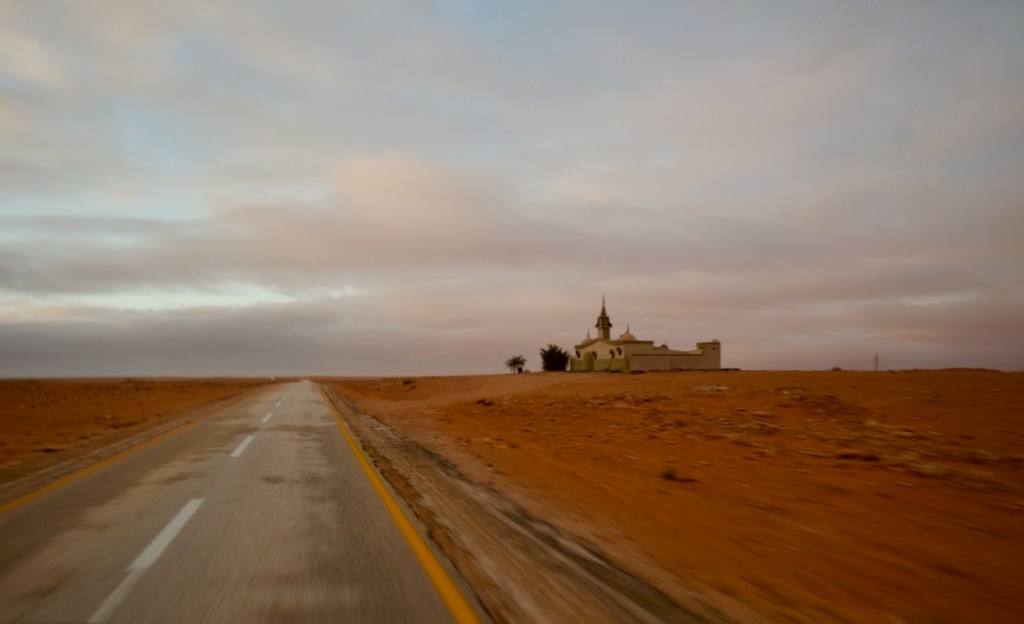
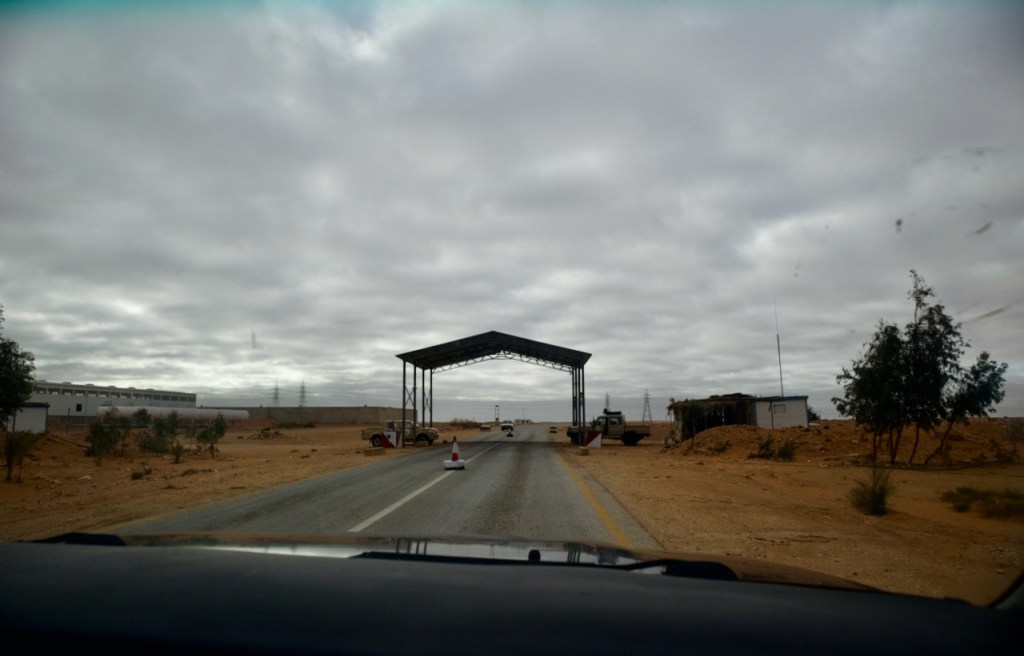
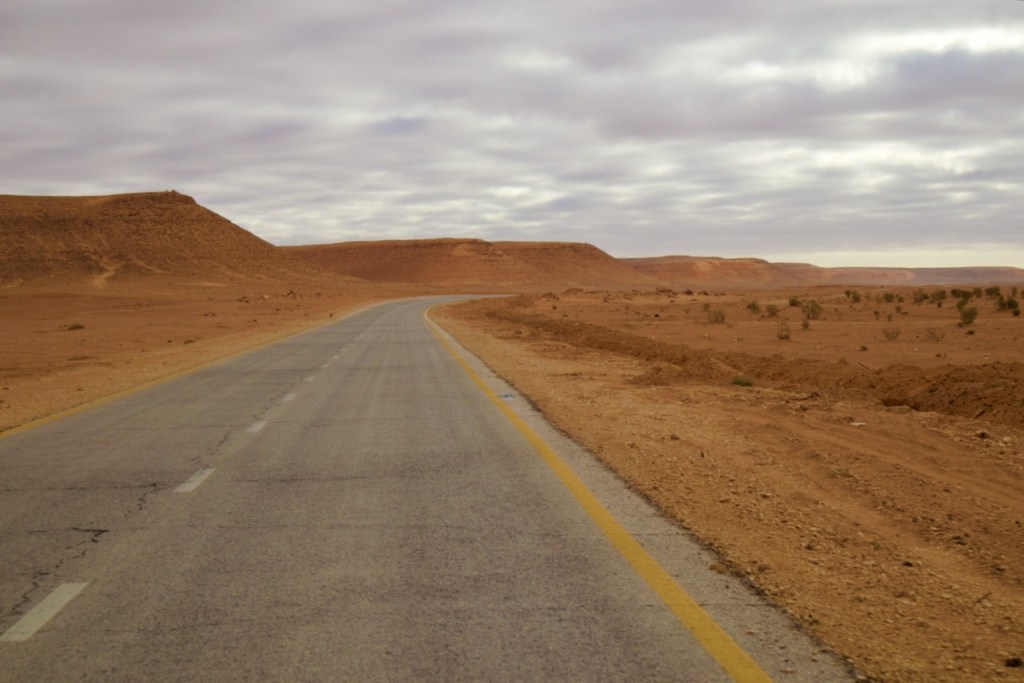
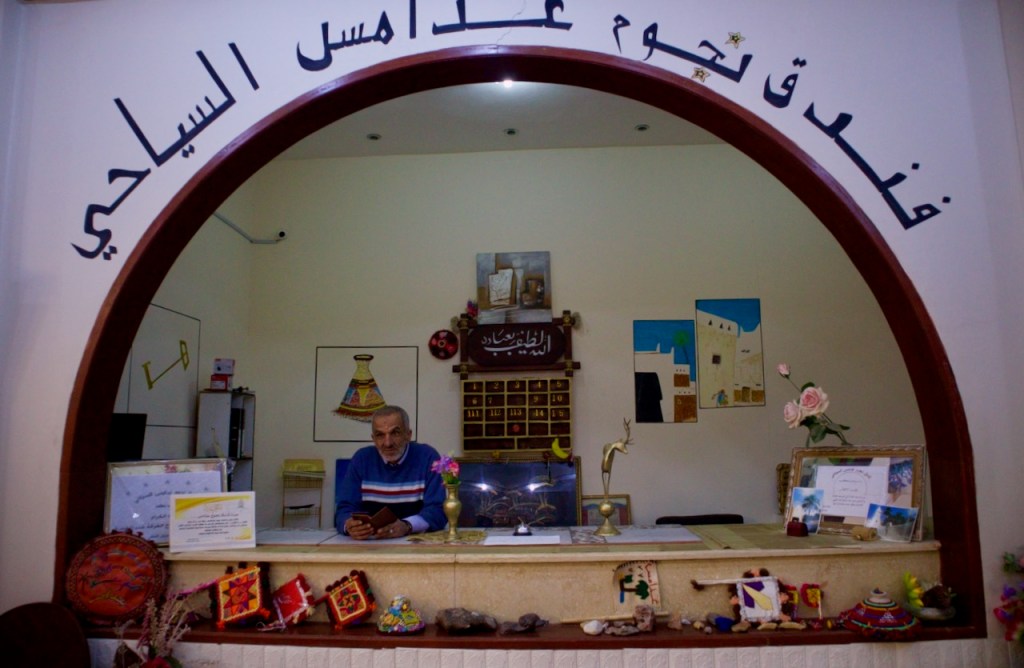
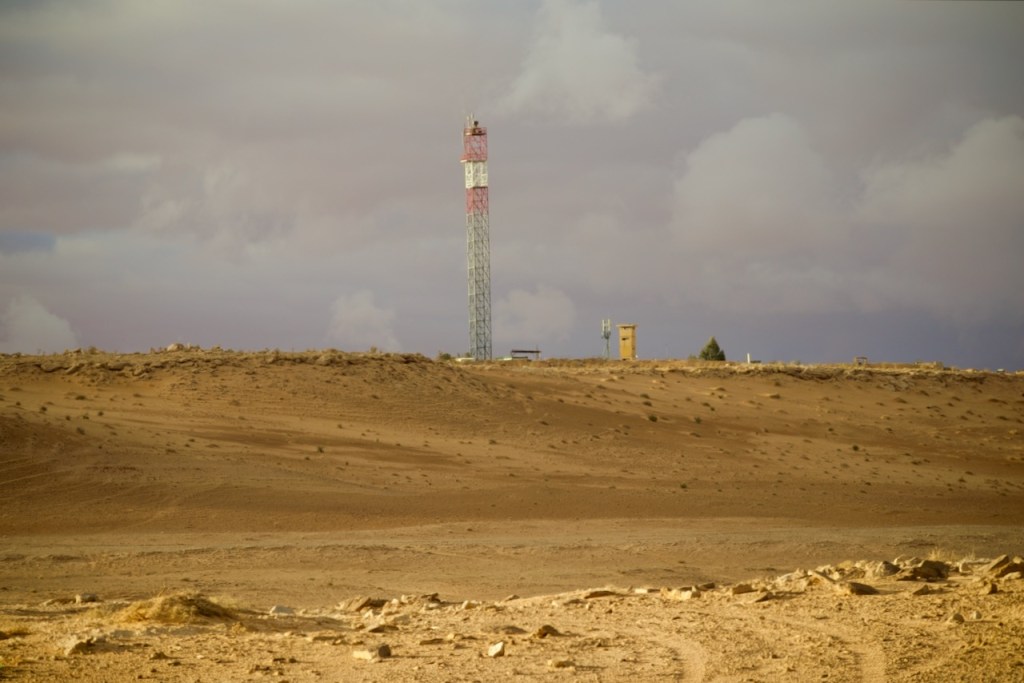
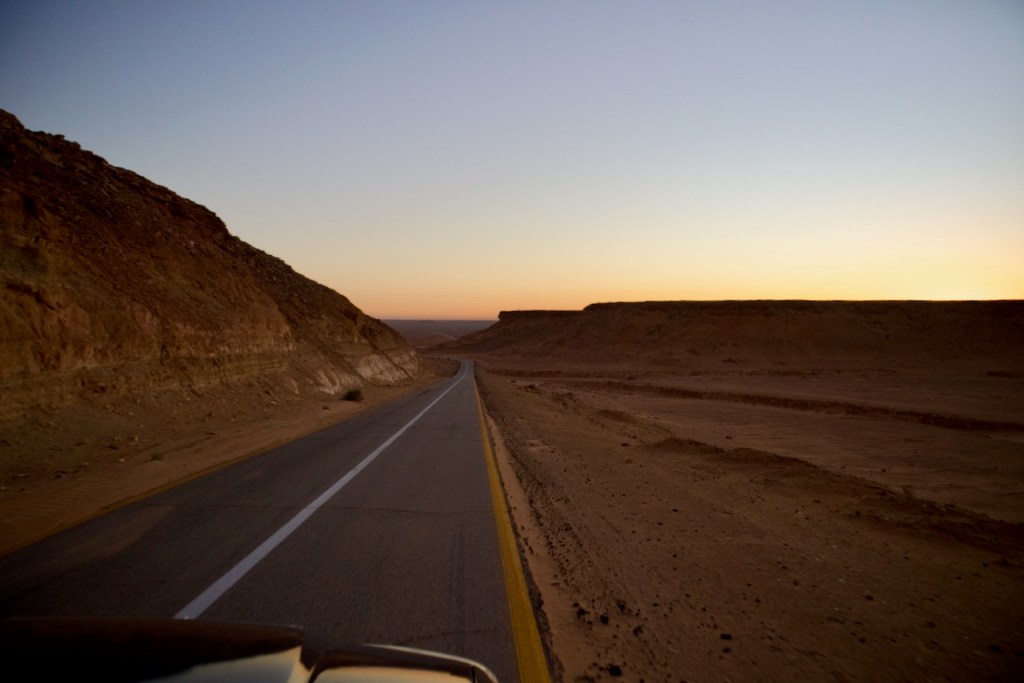
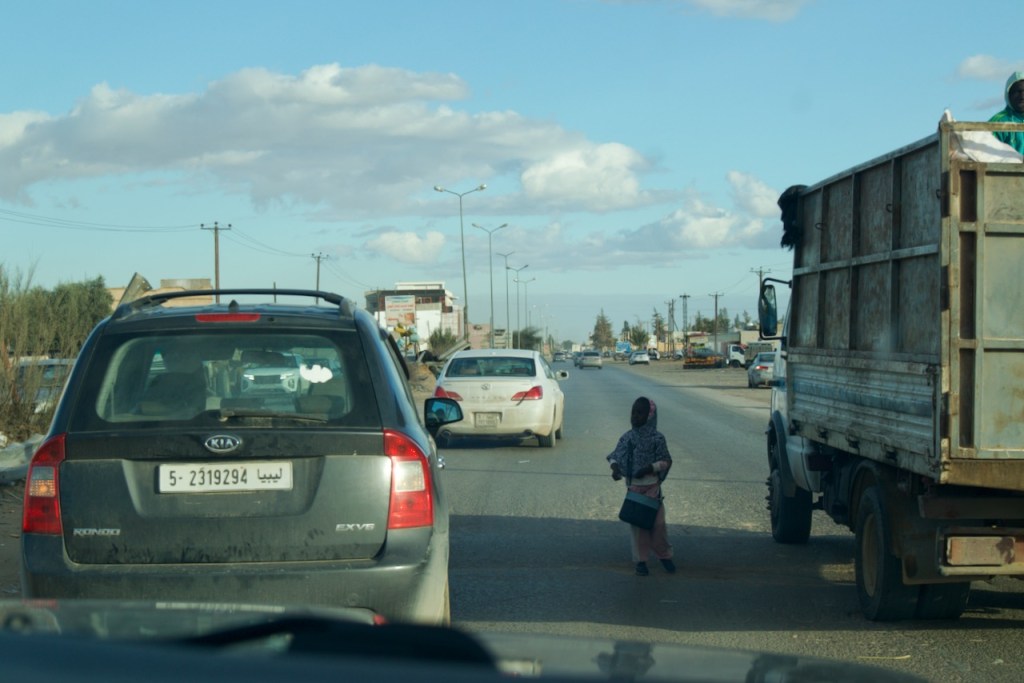
Like so many other businesses in this region, the hotel has fallen into hard times. Where do I find the money to maintain it and do the repairs? the manager laments in the morning. Breakfast – industrial croissant and Nescafe (sorry, no tea!) – is even worse than the sandwich yesterday, and I give up all hope of tasting anything authentically and traditionally Libyan in this tour. The morning scenery along the desert highway is nothing short of spectacular with vast tracts of nothingness. We pass many, many military check points before arriving around 1pm, with prayer stops in between.
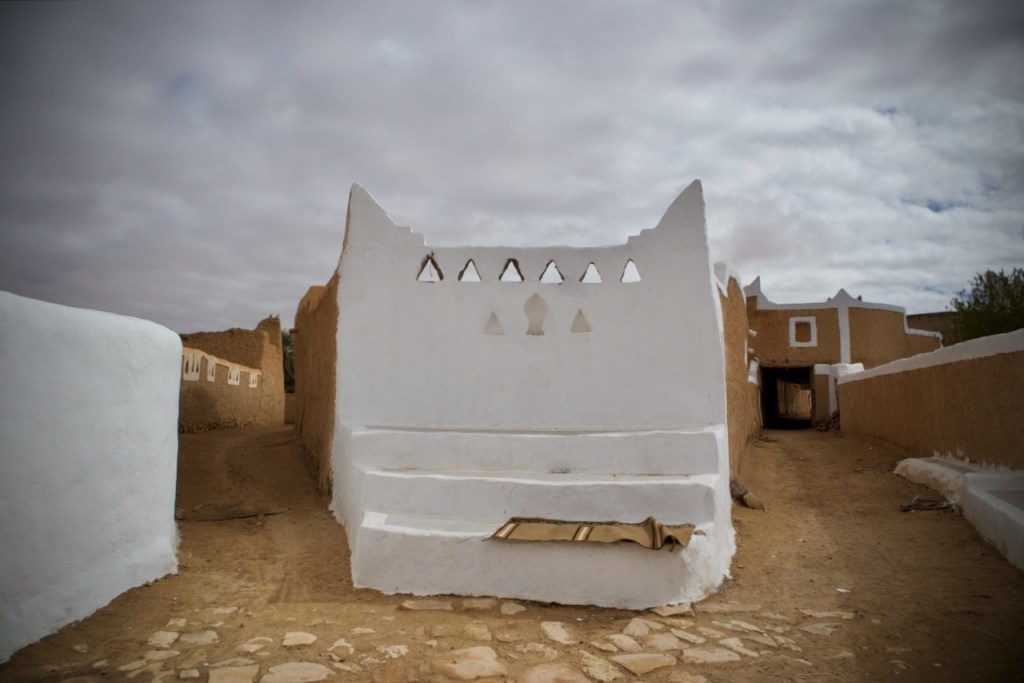
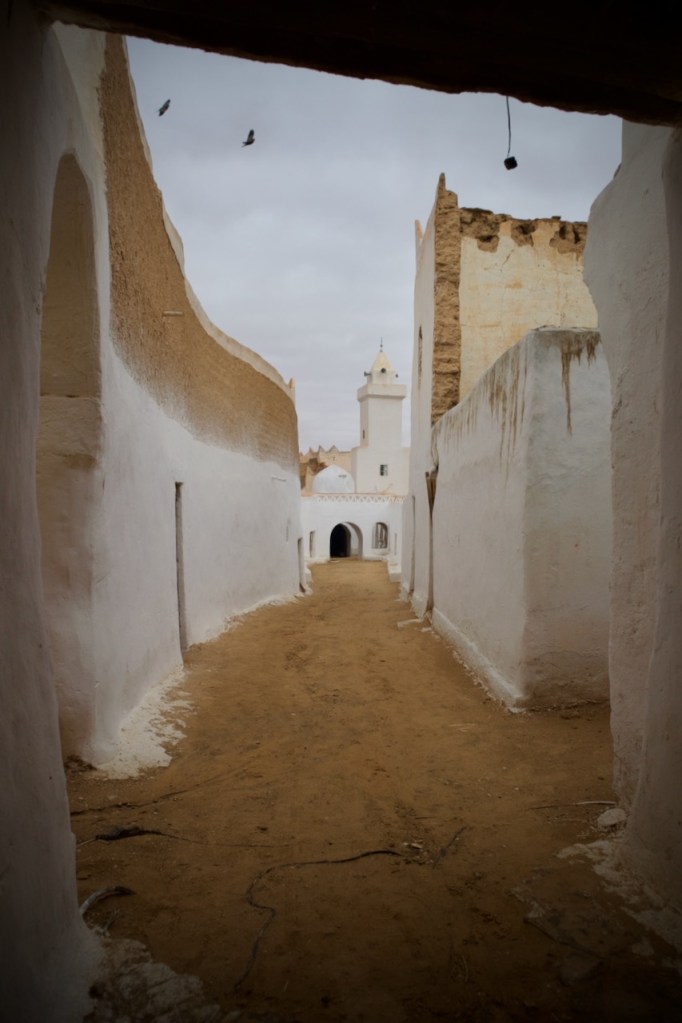
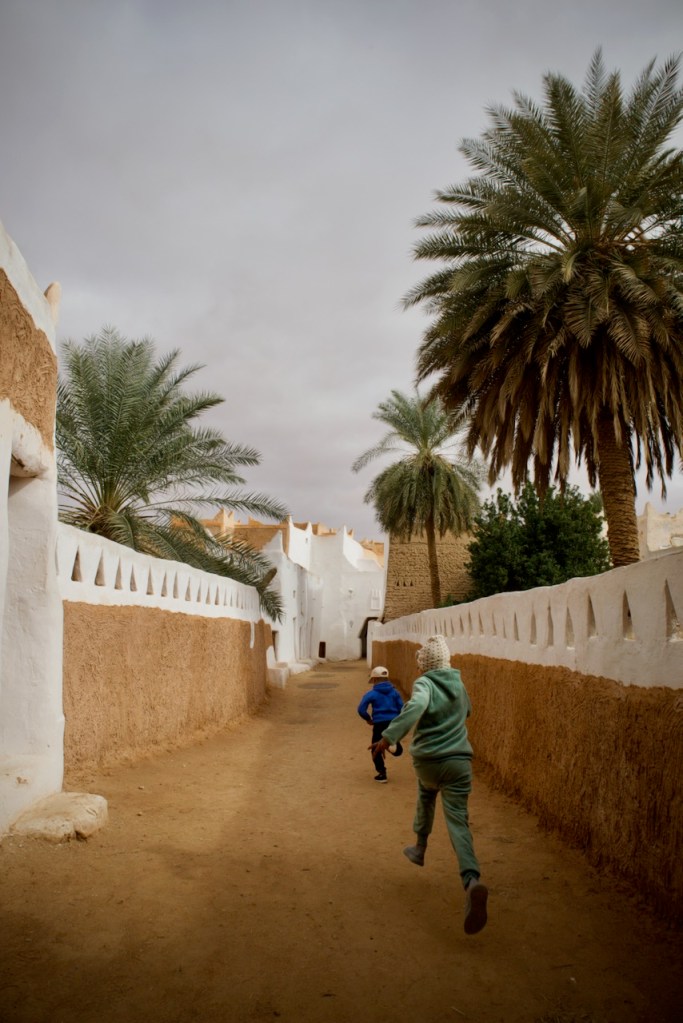
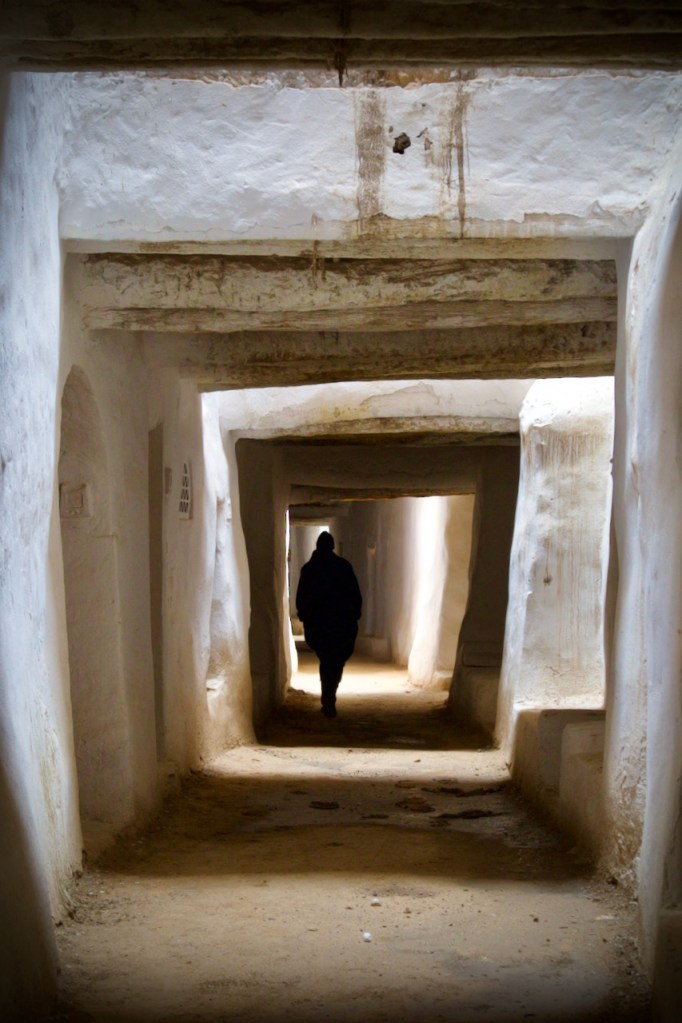
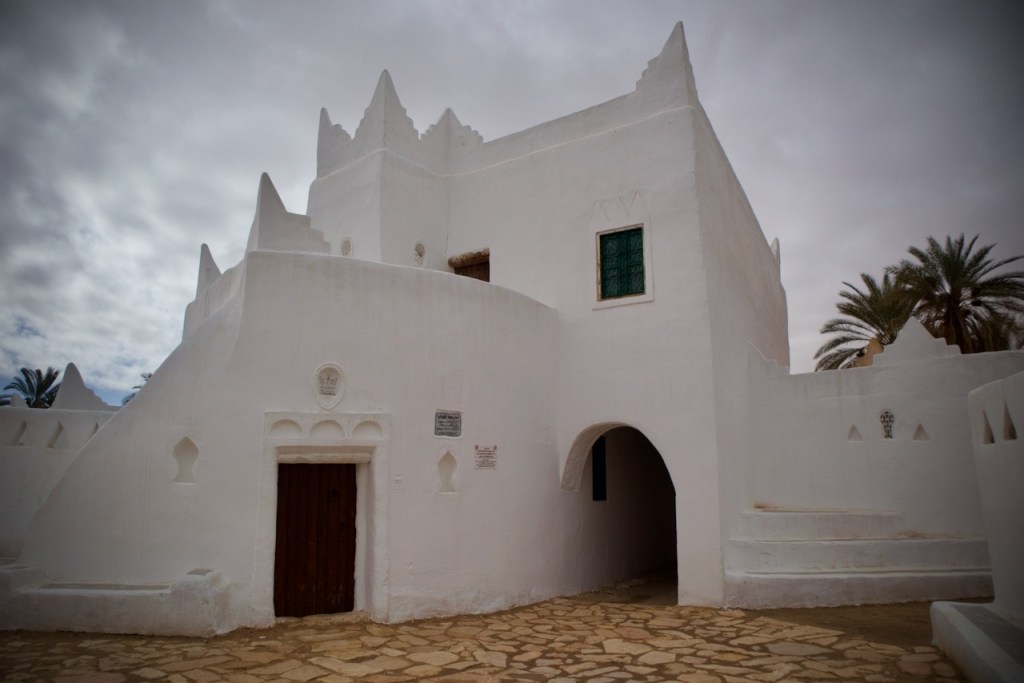
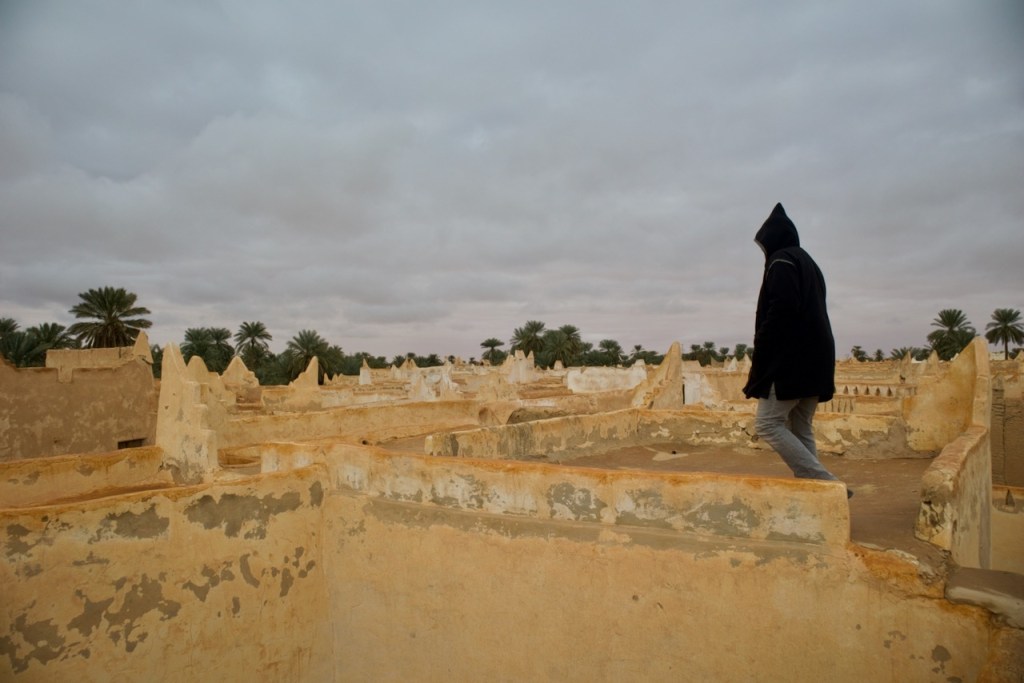
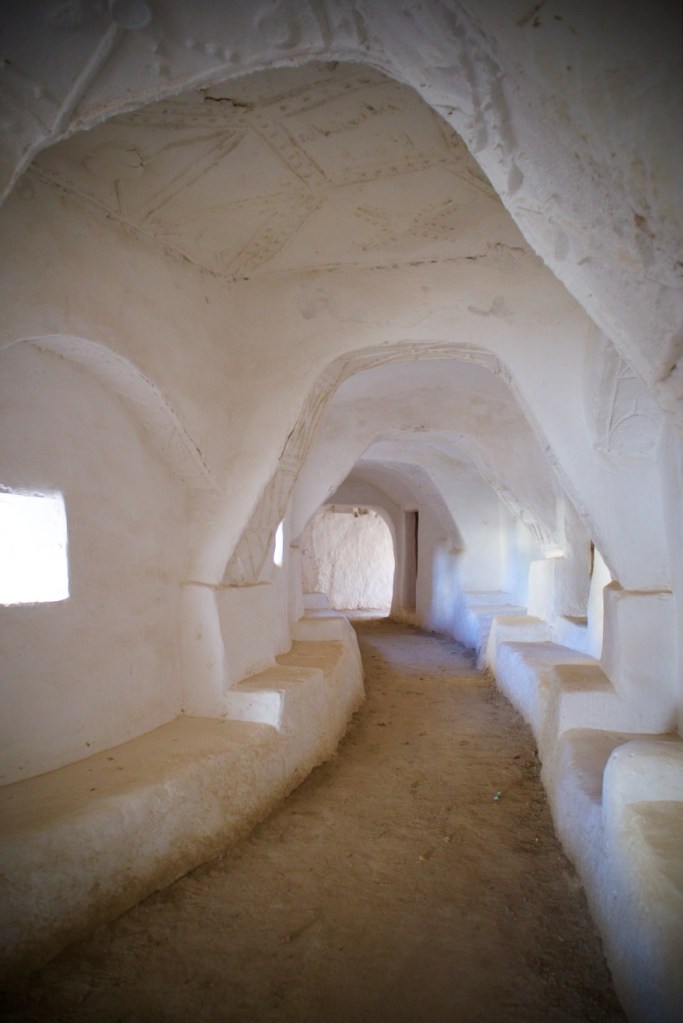
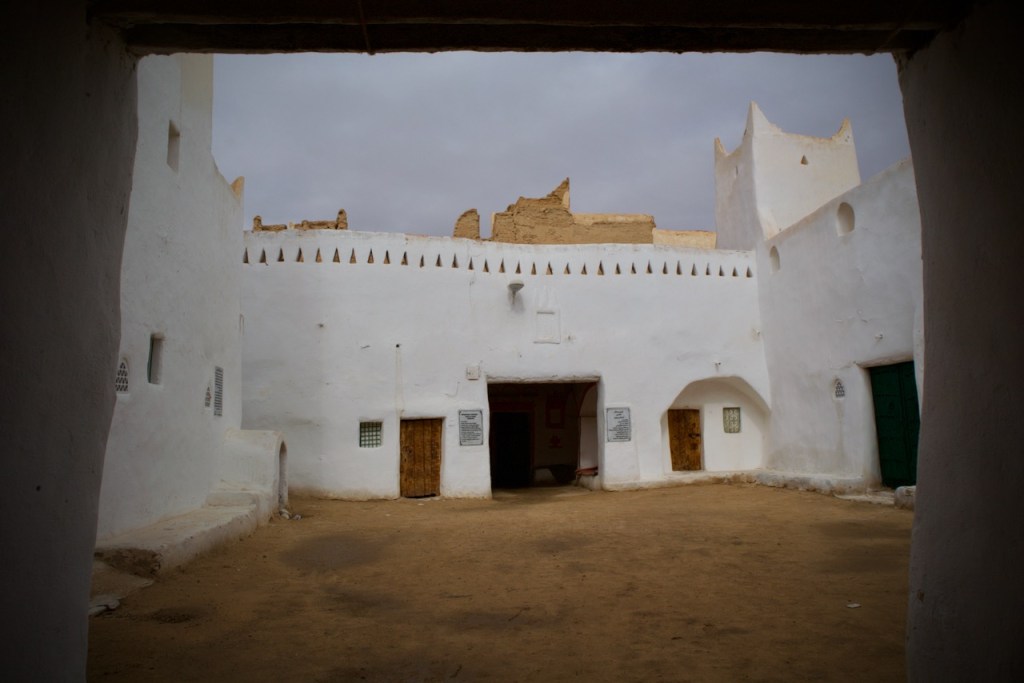
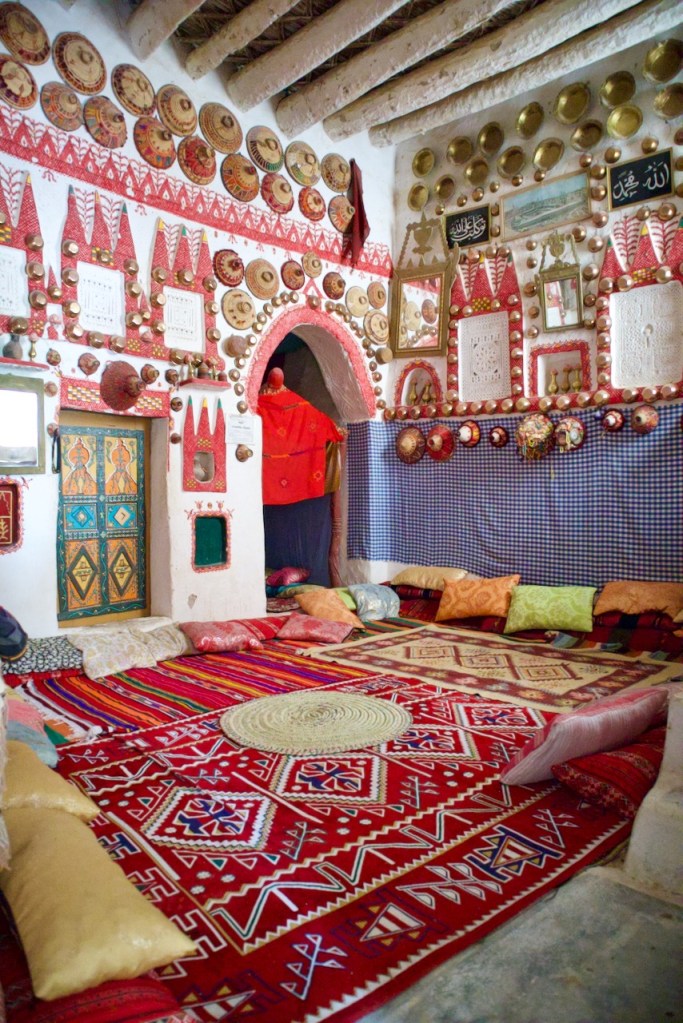
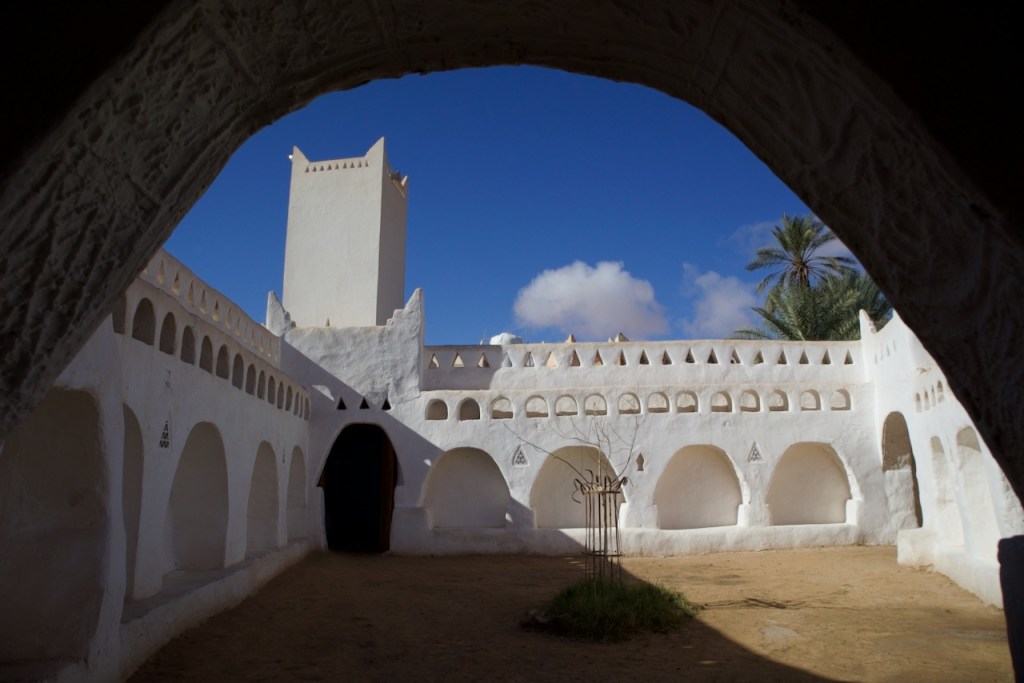
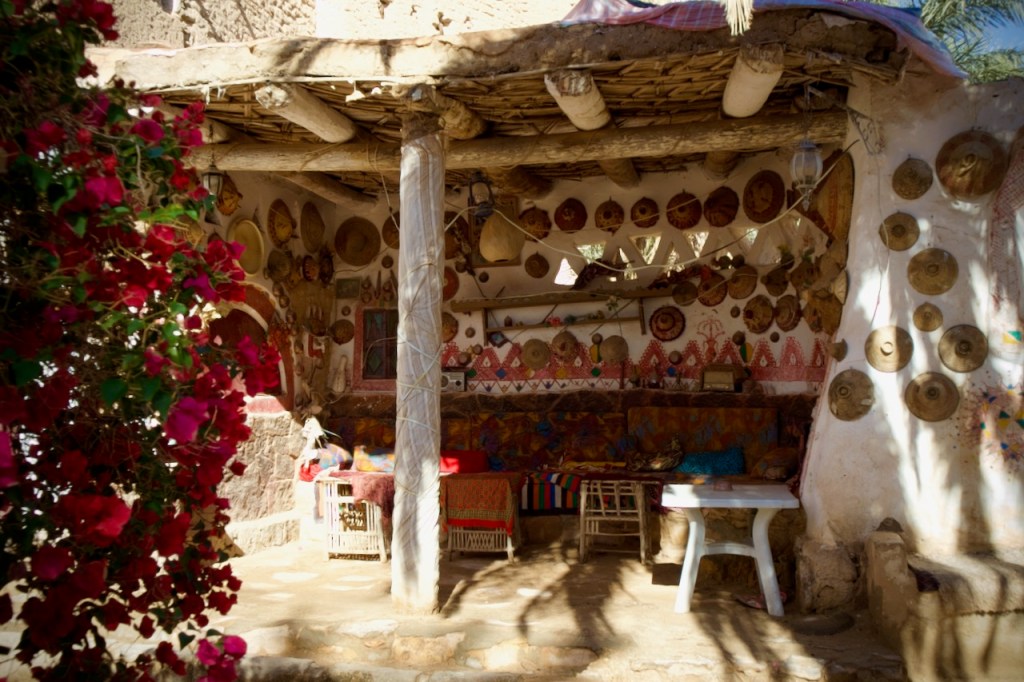
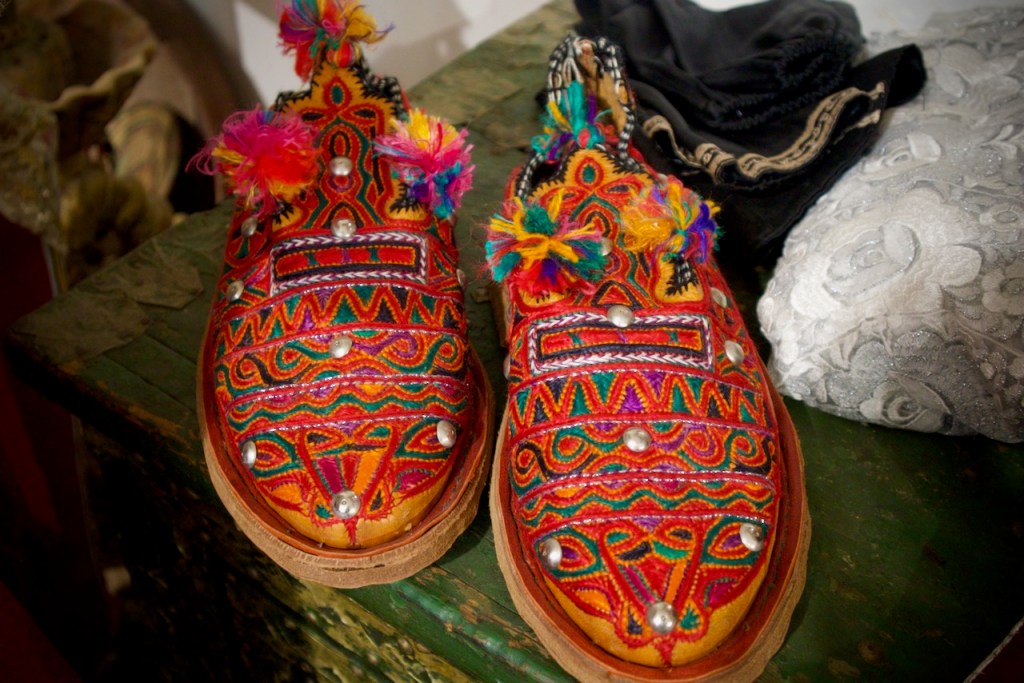
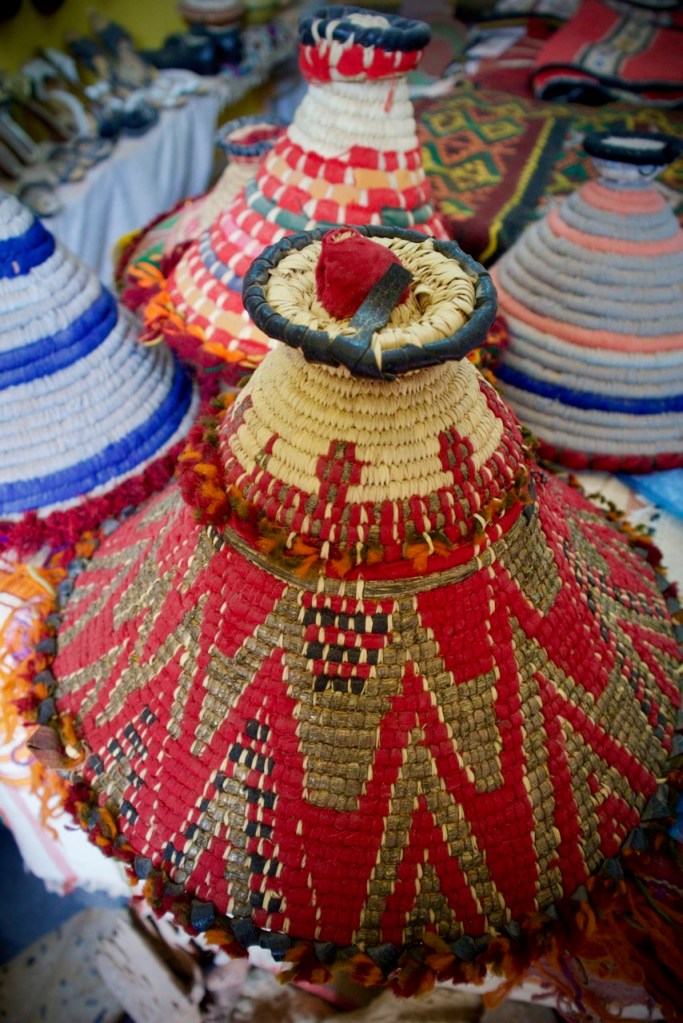
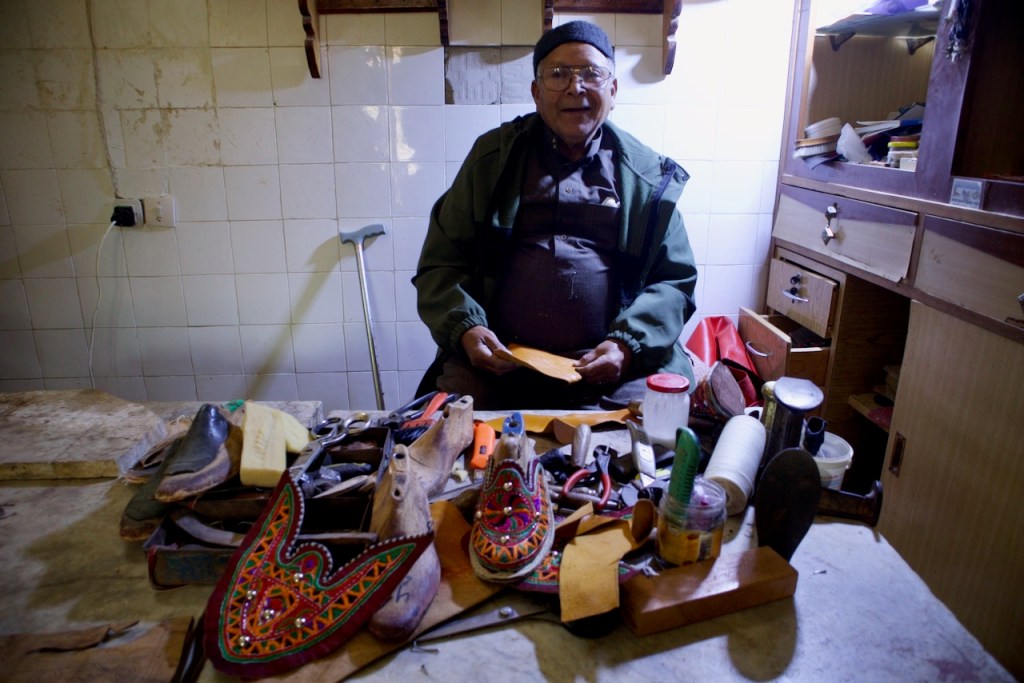
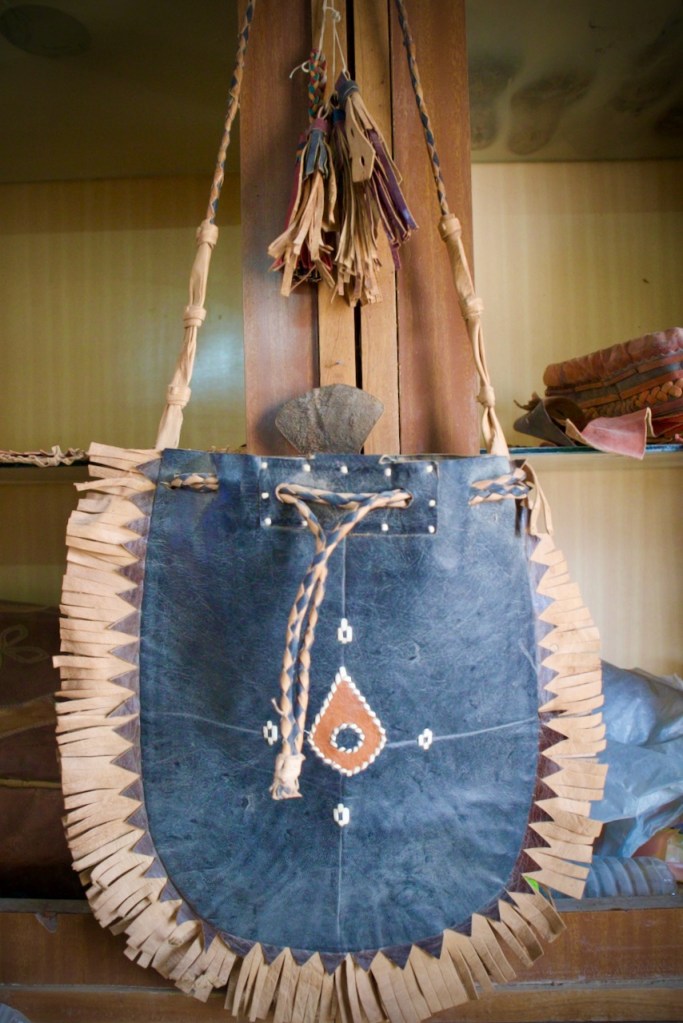
A permanent Roman garrison and then a base for the Trans-Saharan trade until the 19th century, Ghadames was occupied by the Italians from 1911 to 1915 and by the French from 1943 till Libya’s Independence in 1951. The first stop in Old Ghadames is the last shoemaker in town who has been in this craft for over 60 years, making exquisite leather slippers with bright colours and intricate designs aligned with the aesthetic of Tuareg and Berber communities for special occasions like Eids and weddings. The tour takes us then through mosques and squares, an old post office and former schools, a spring water pool and an ingenious water distribution system, former consular residences and bombed buildings, gardens and coffee shops. But the best is the home visit of Abdulrahman, my local guide, with stunning rooftop views. The local architecture is remarkable, characterized by a vertical division of functions with the ground floor for supplies storage; the first floor for family use, and open-air terraces reserved for women at the top. This gem is an absolute photographers’ paradise and my favourite place in the Libyan tour.
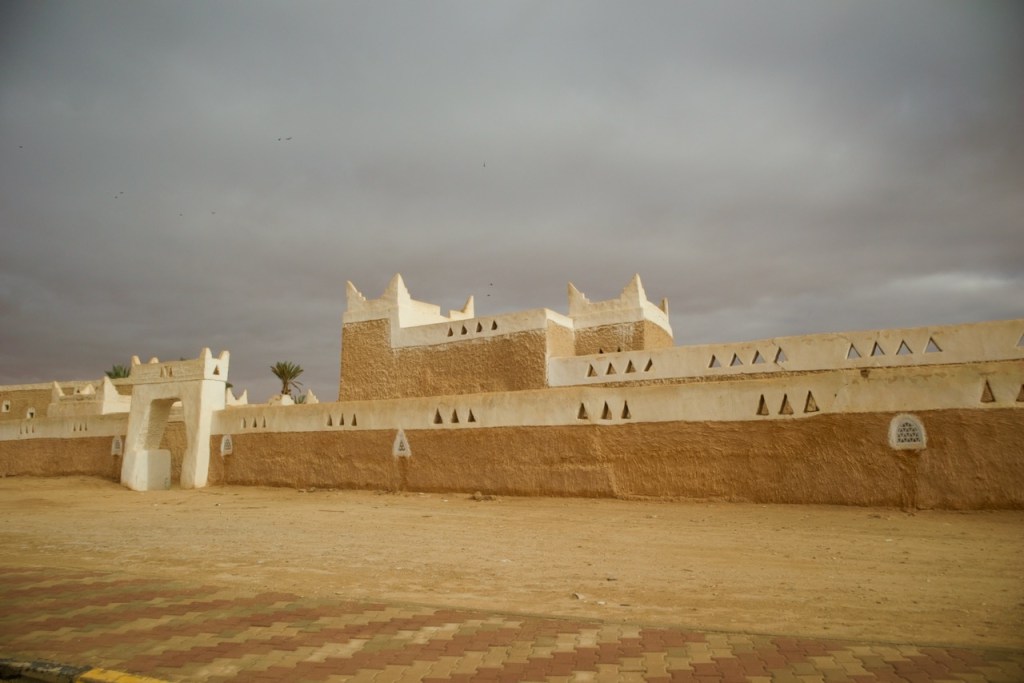
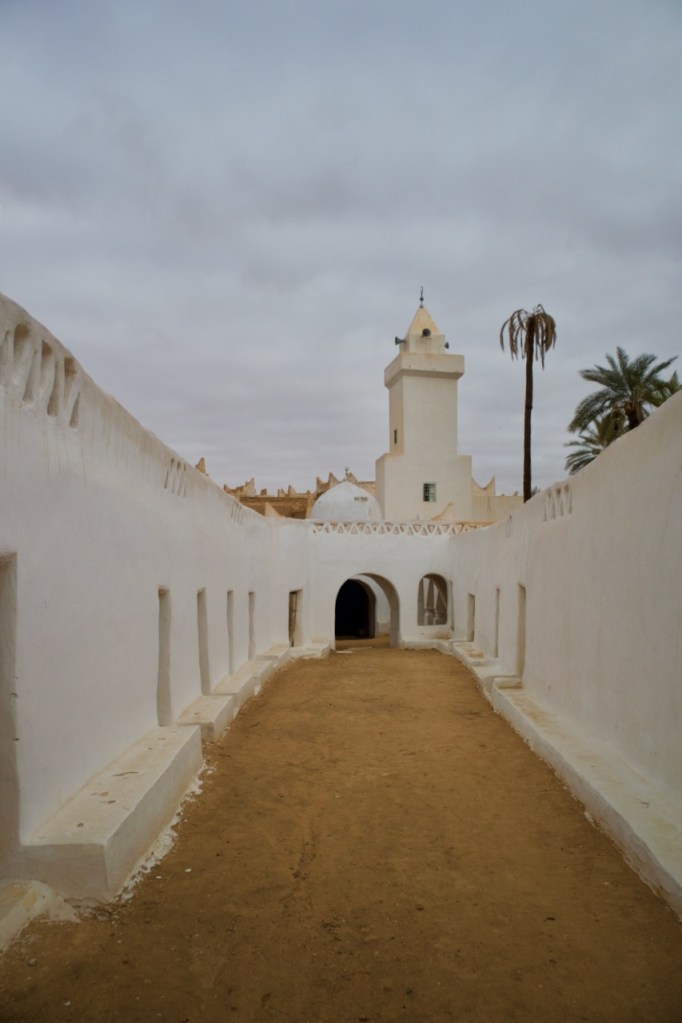
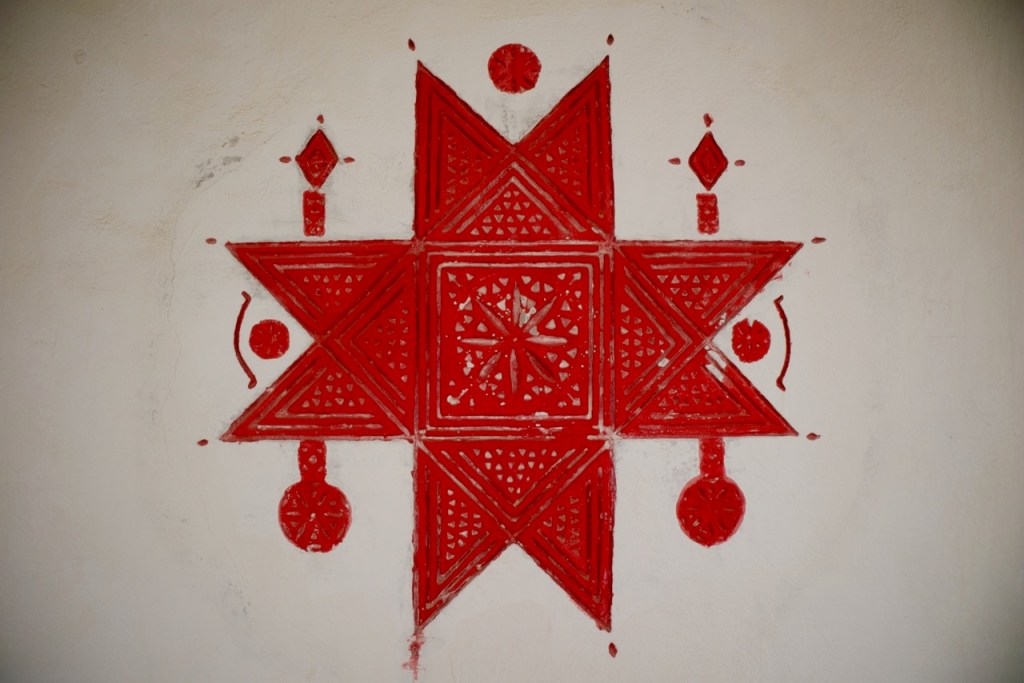
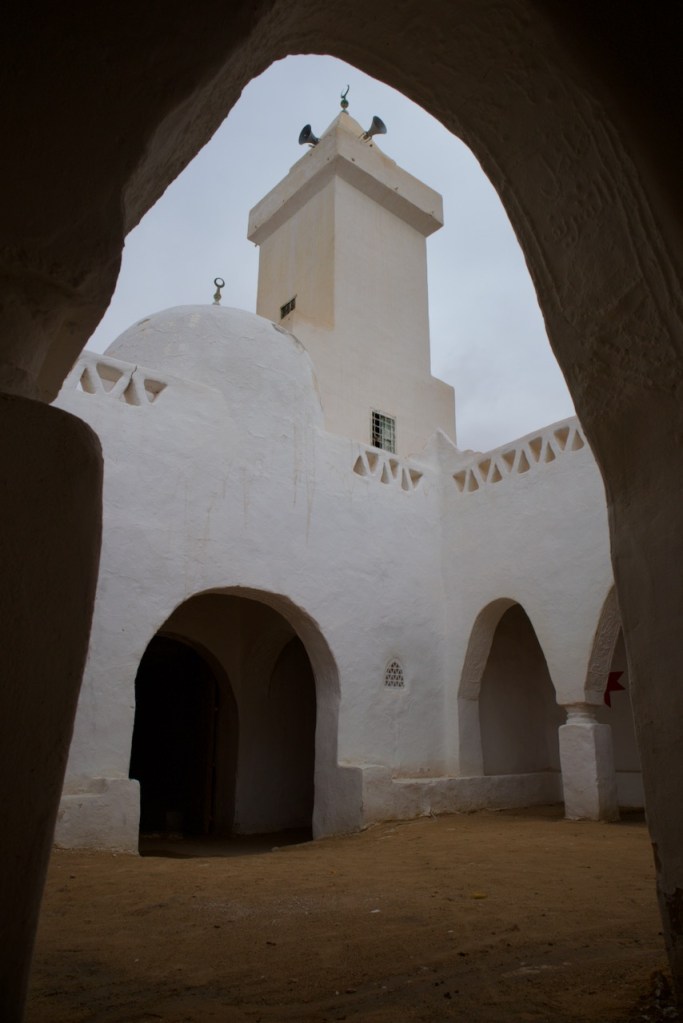
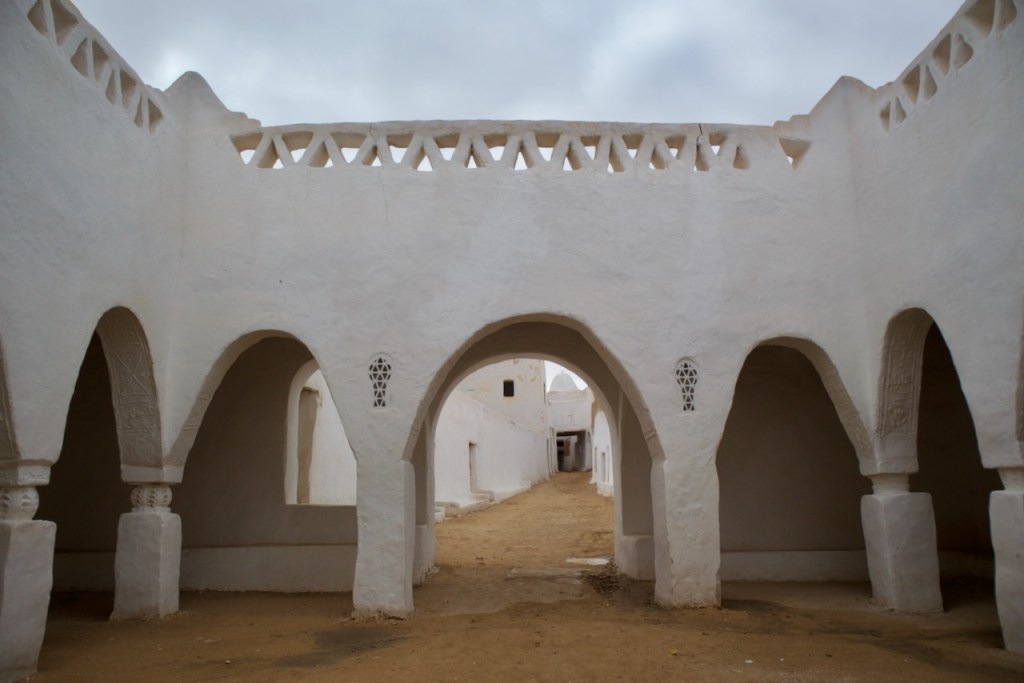
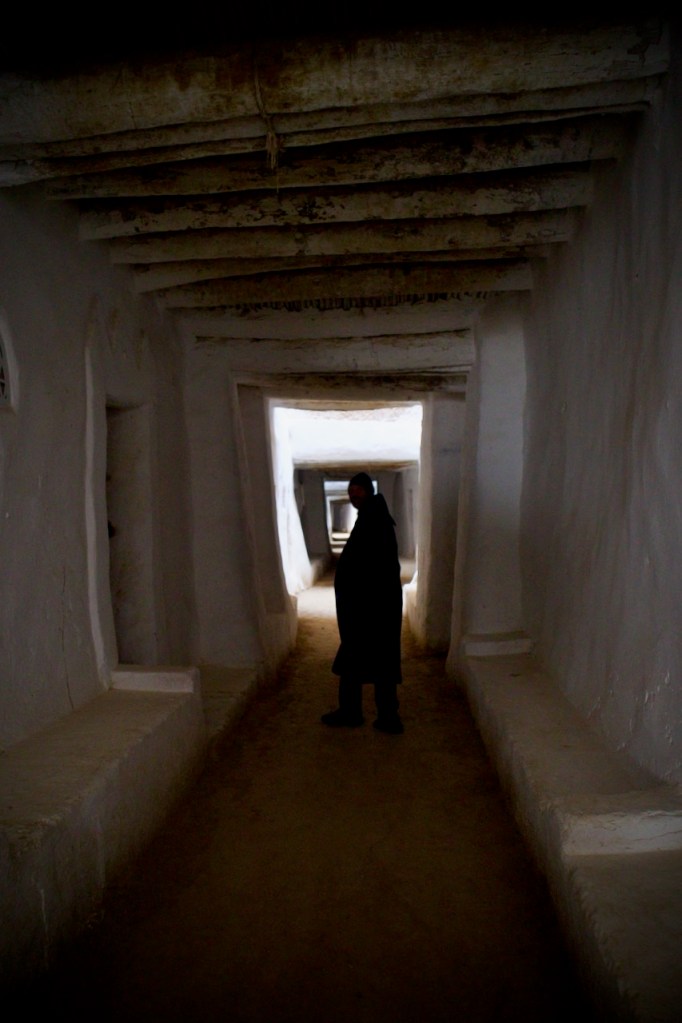
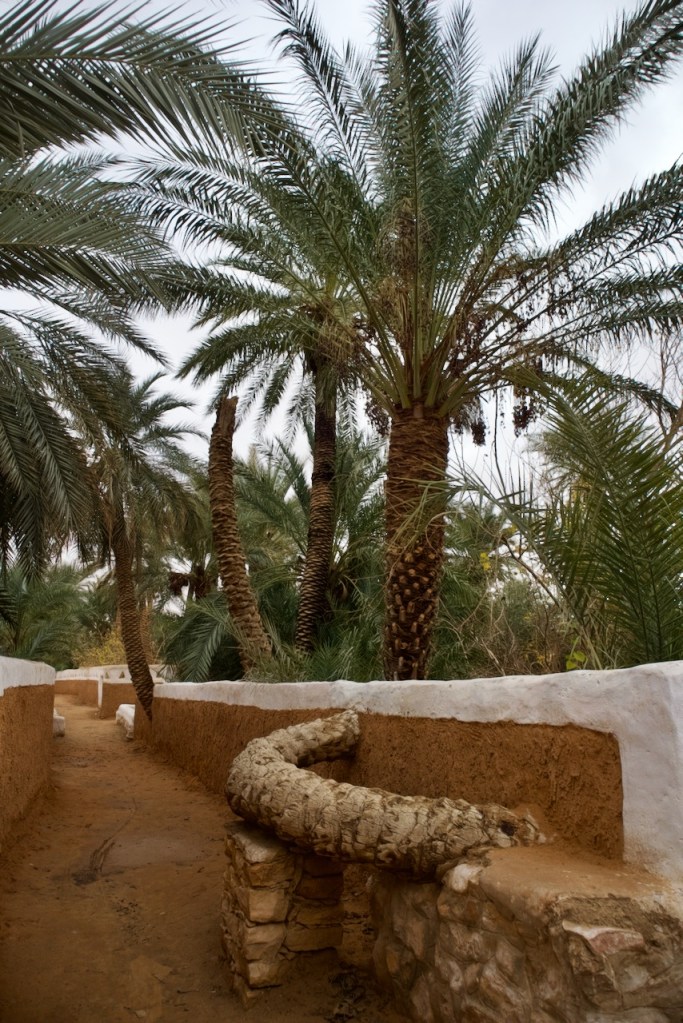
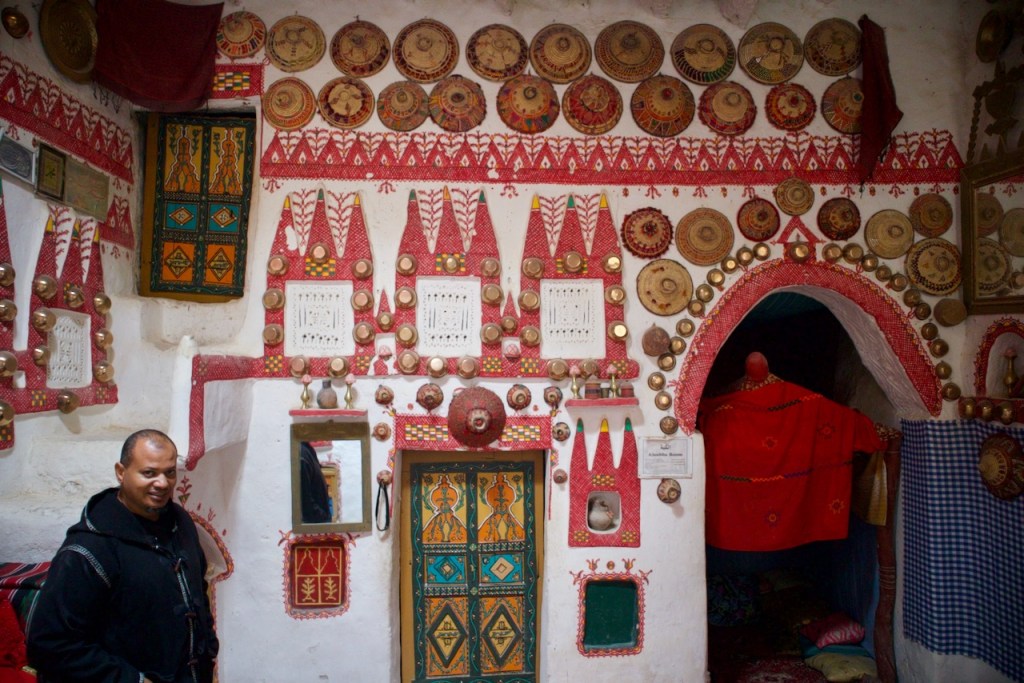
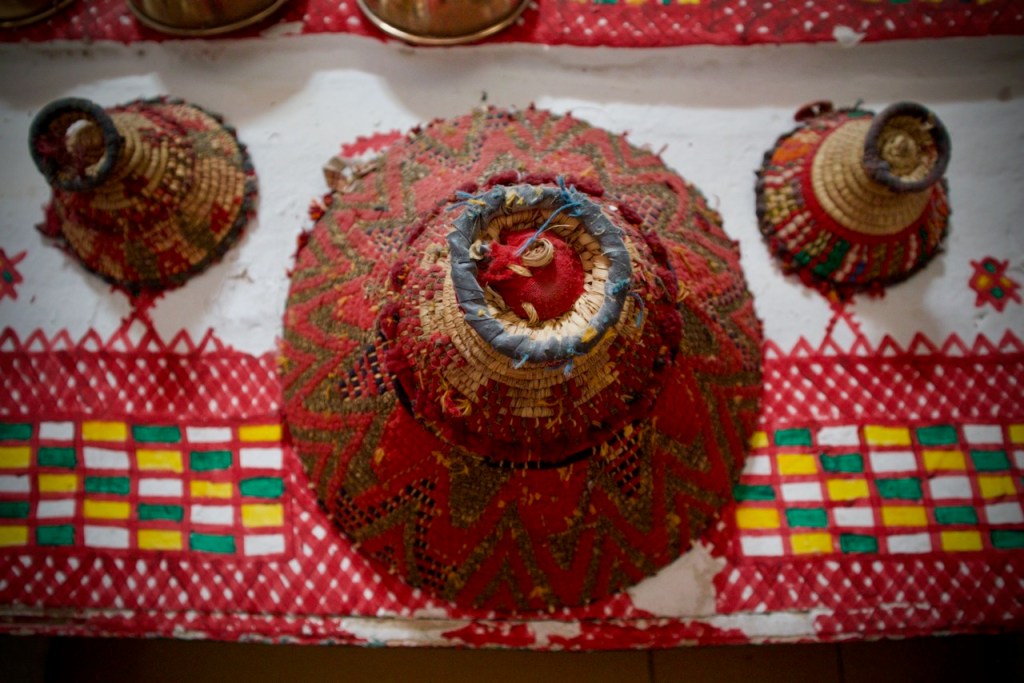

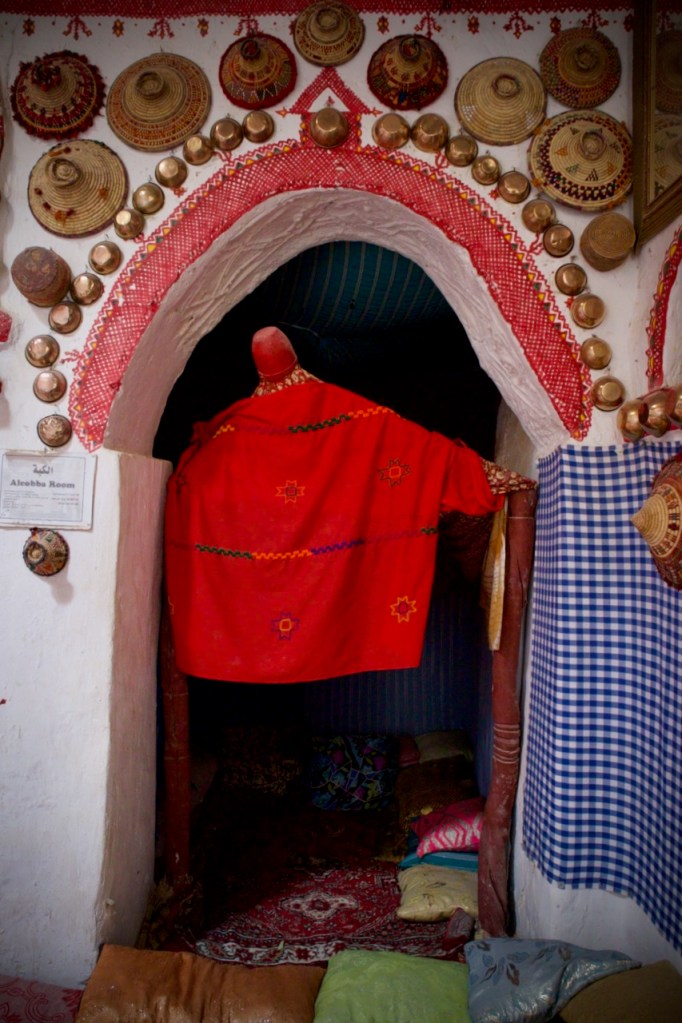
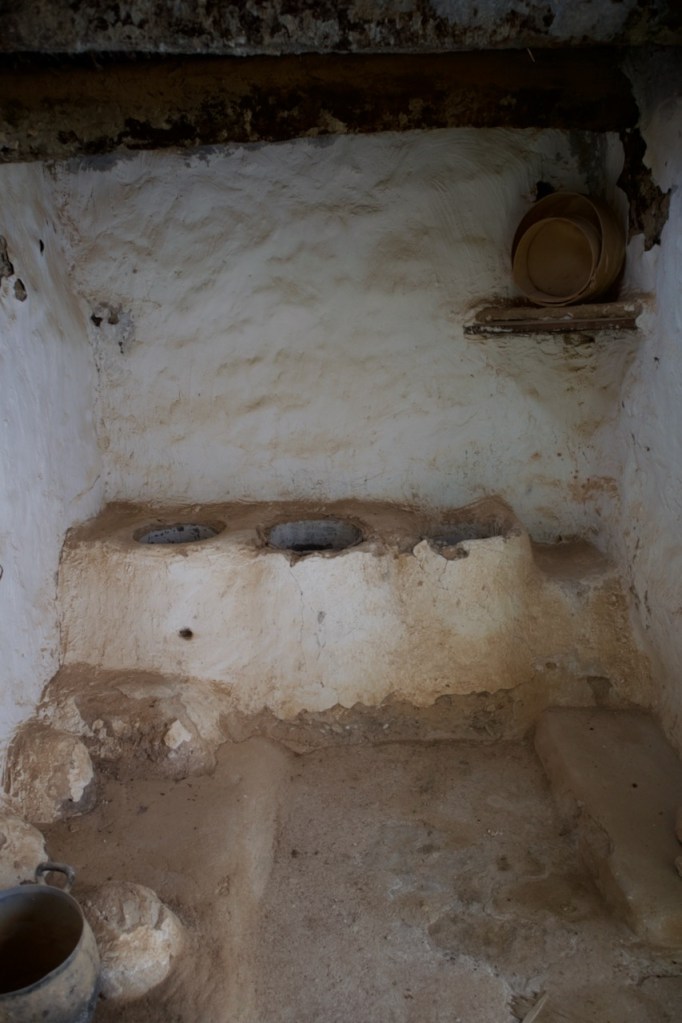
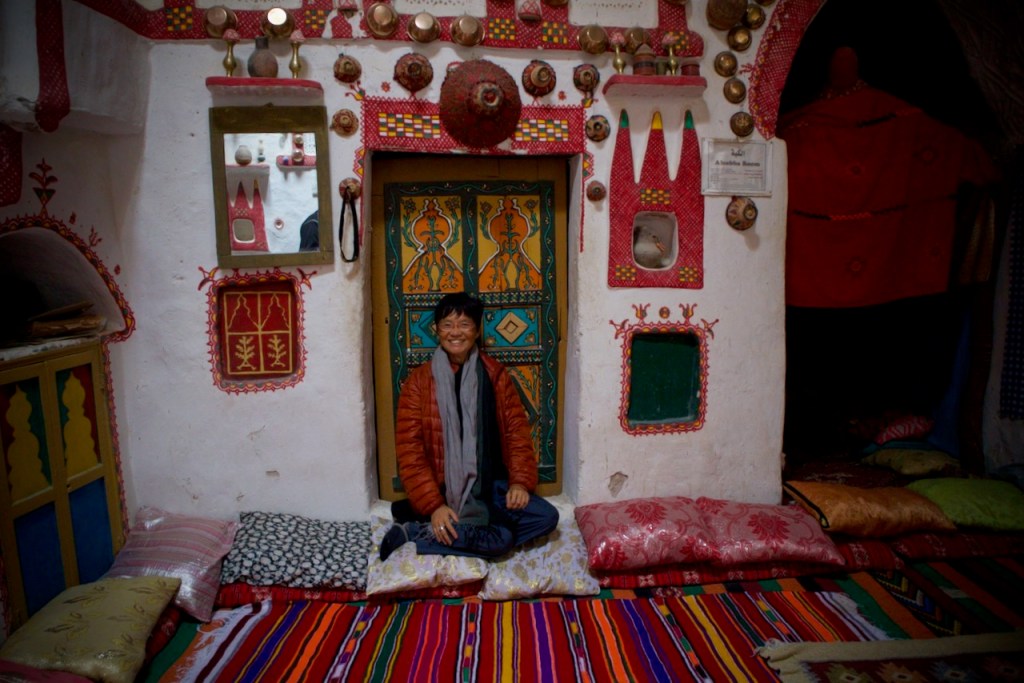
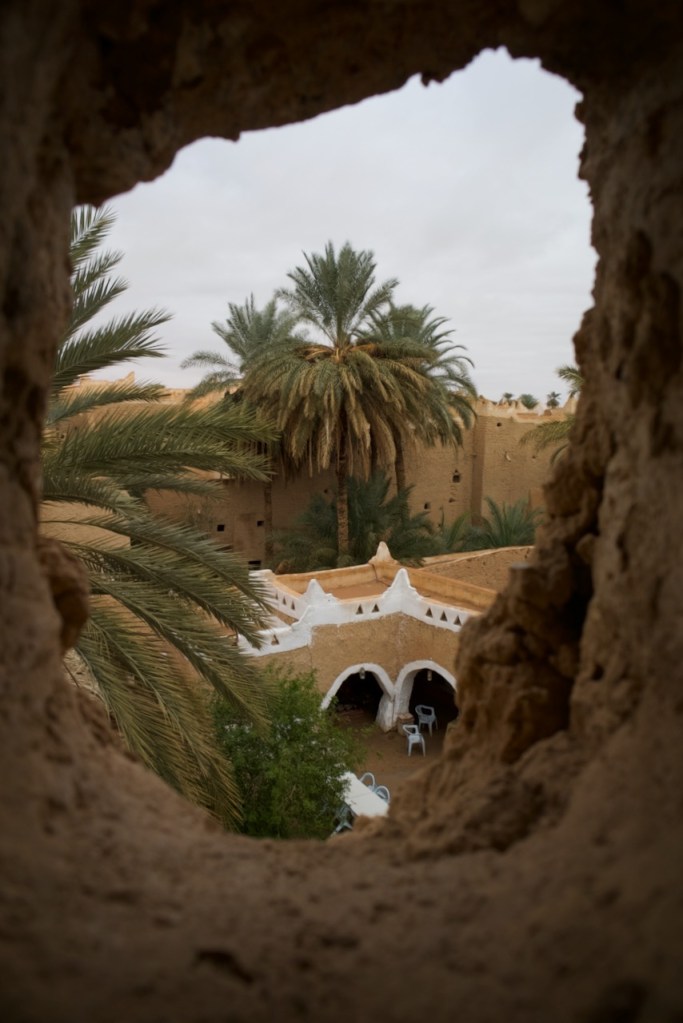

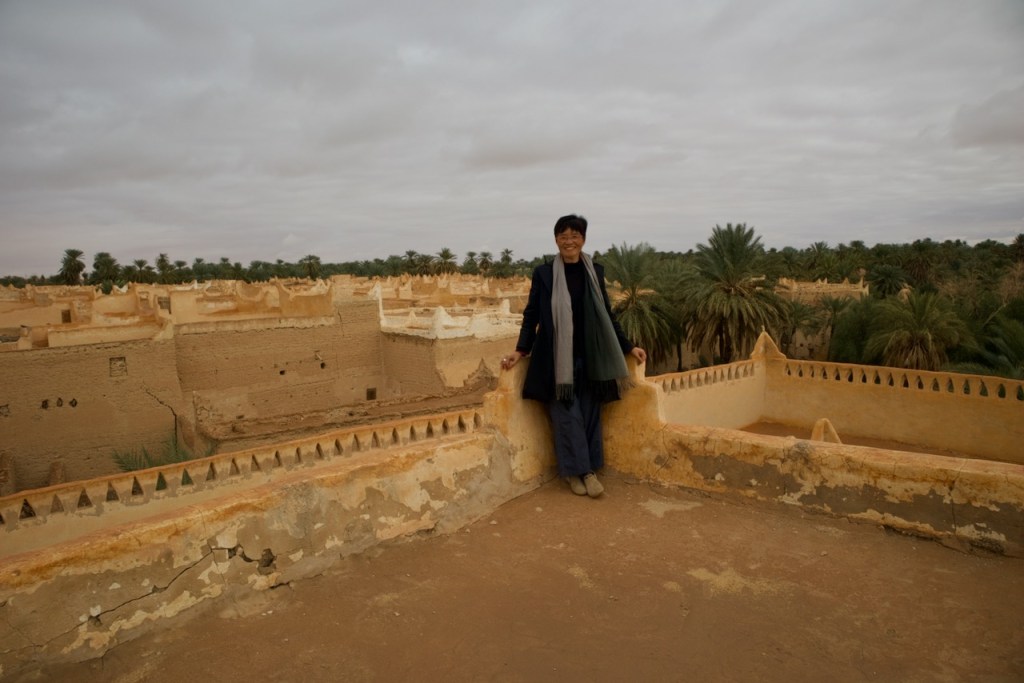


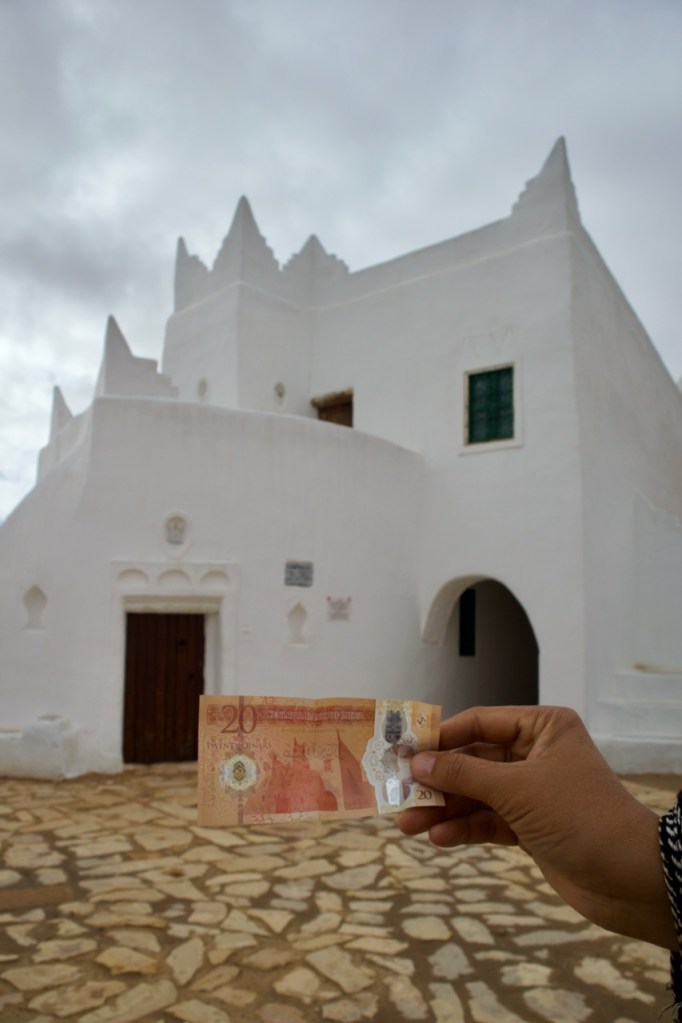
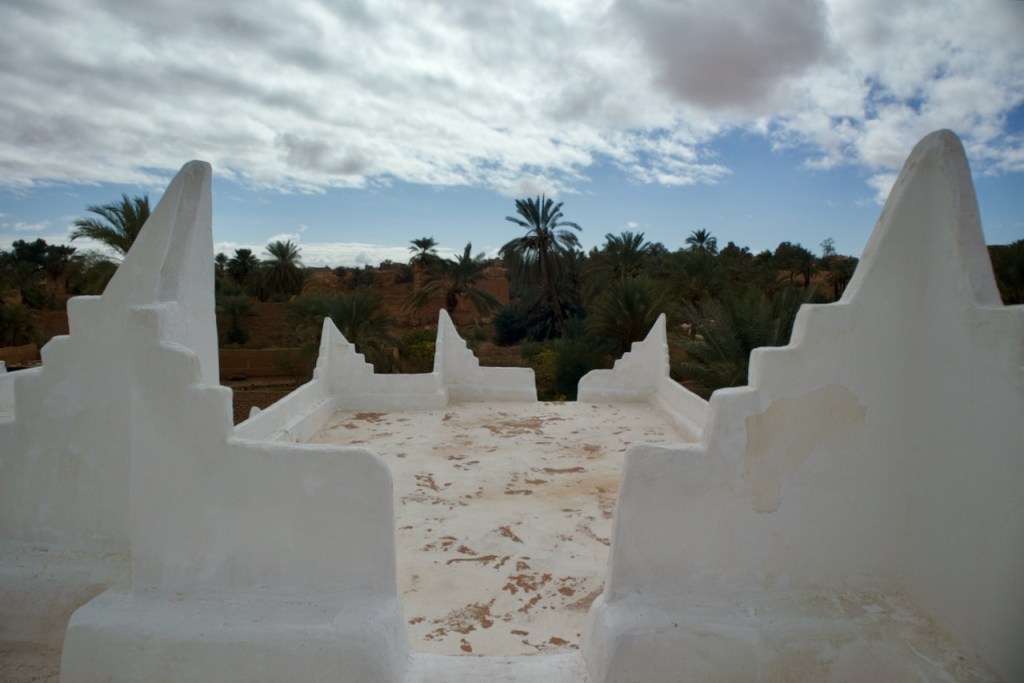
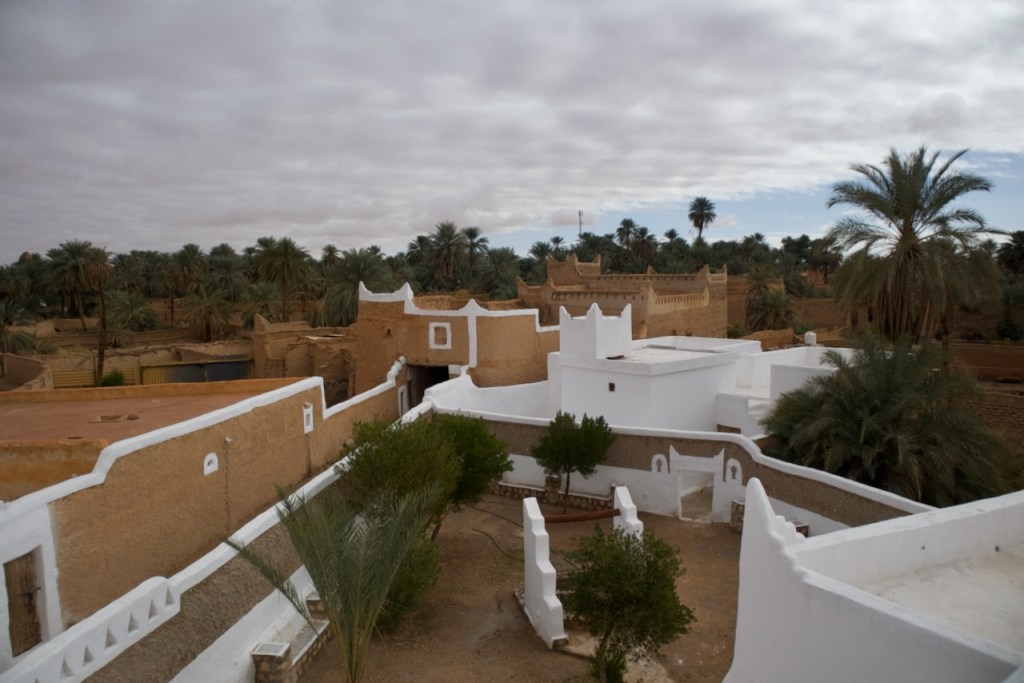

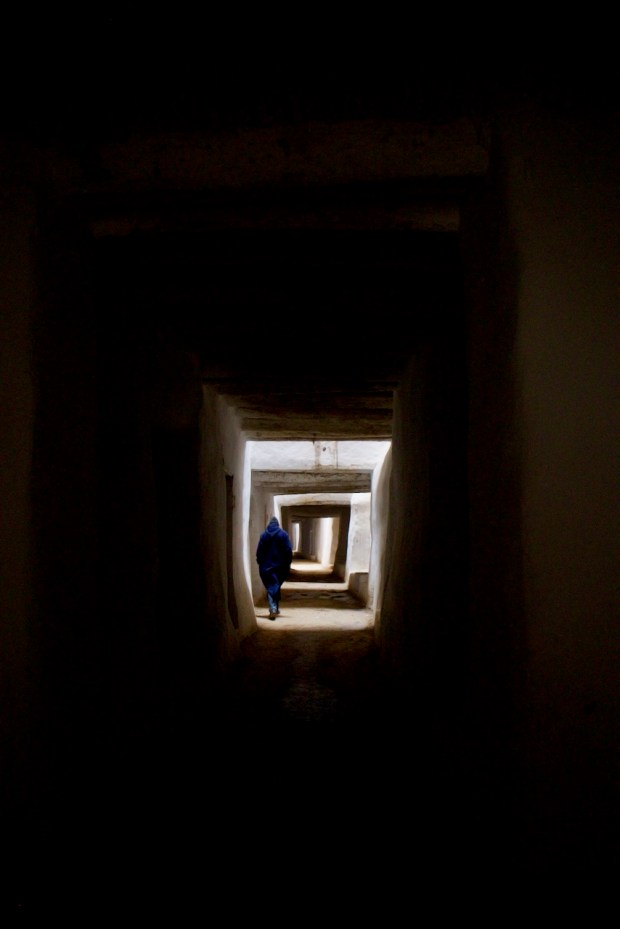
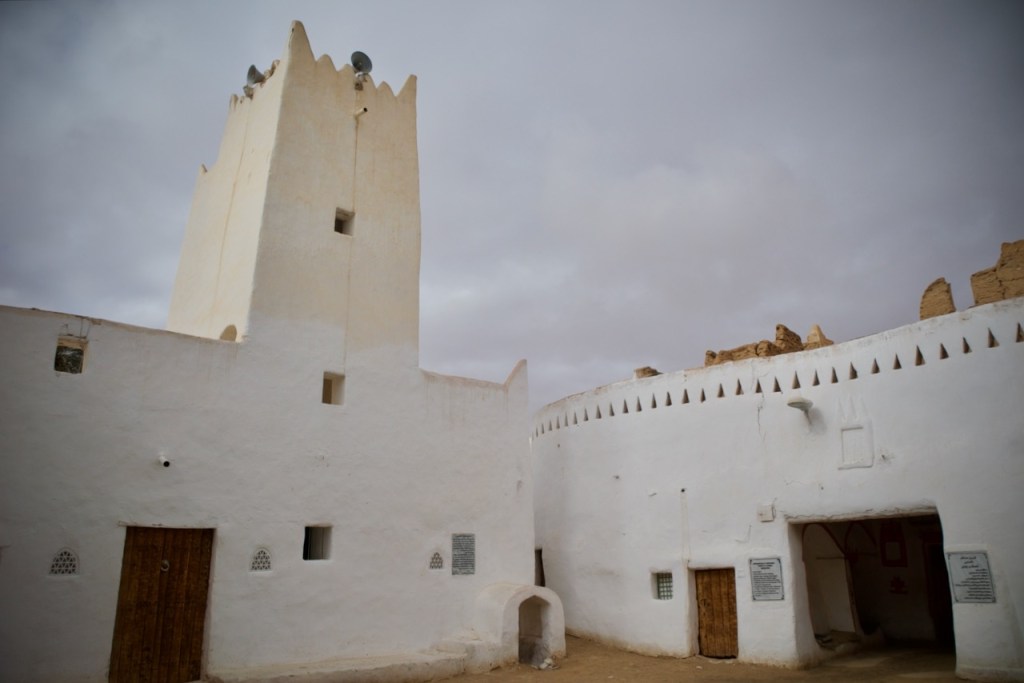
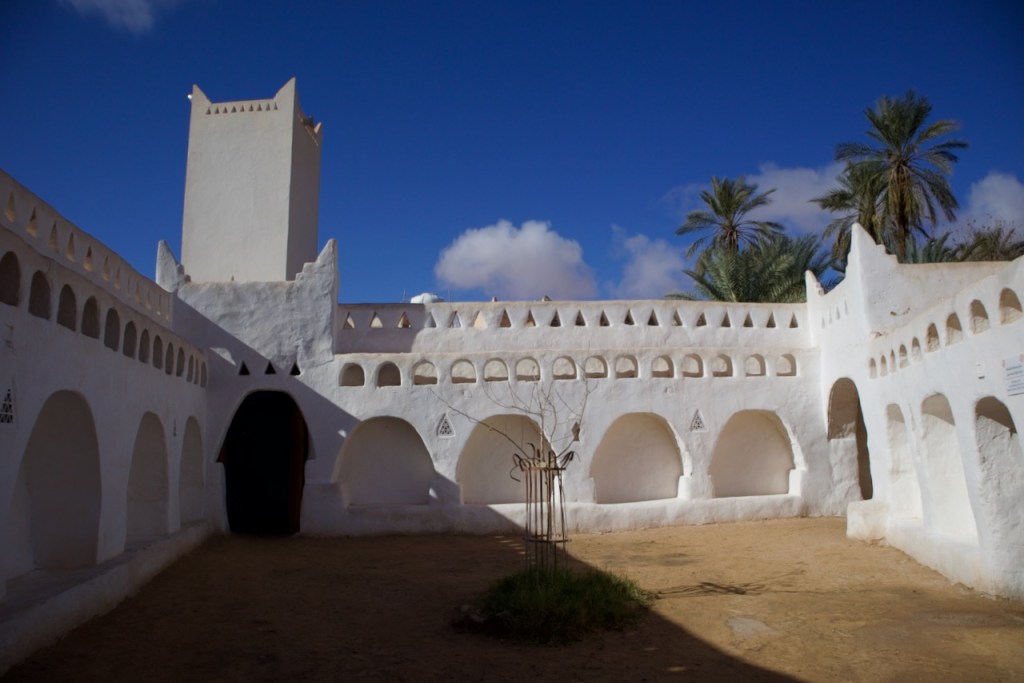
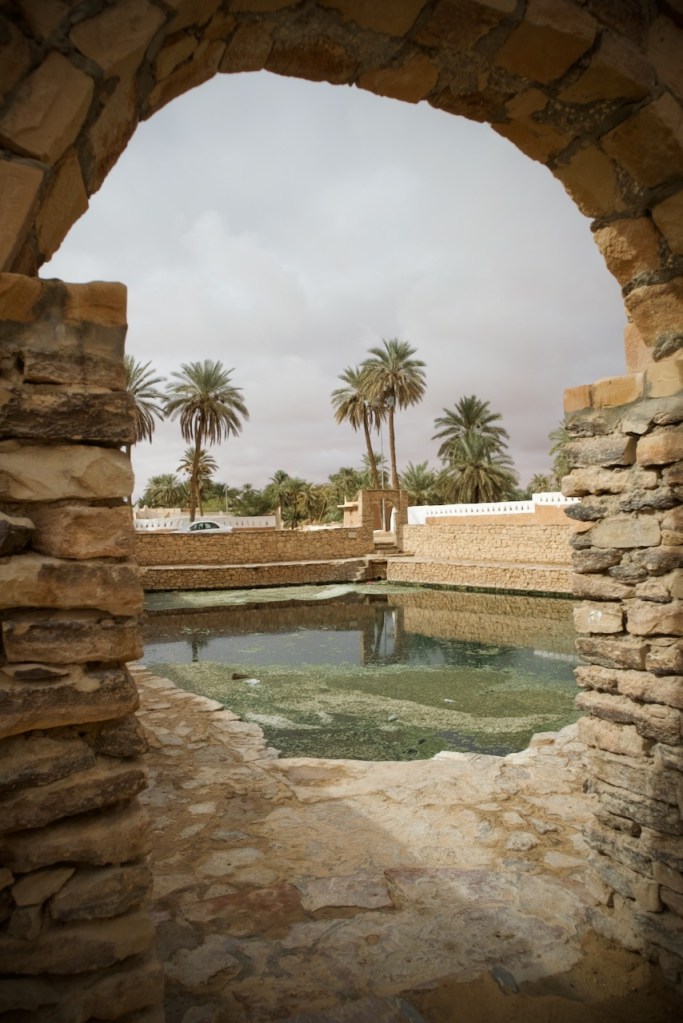
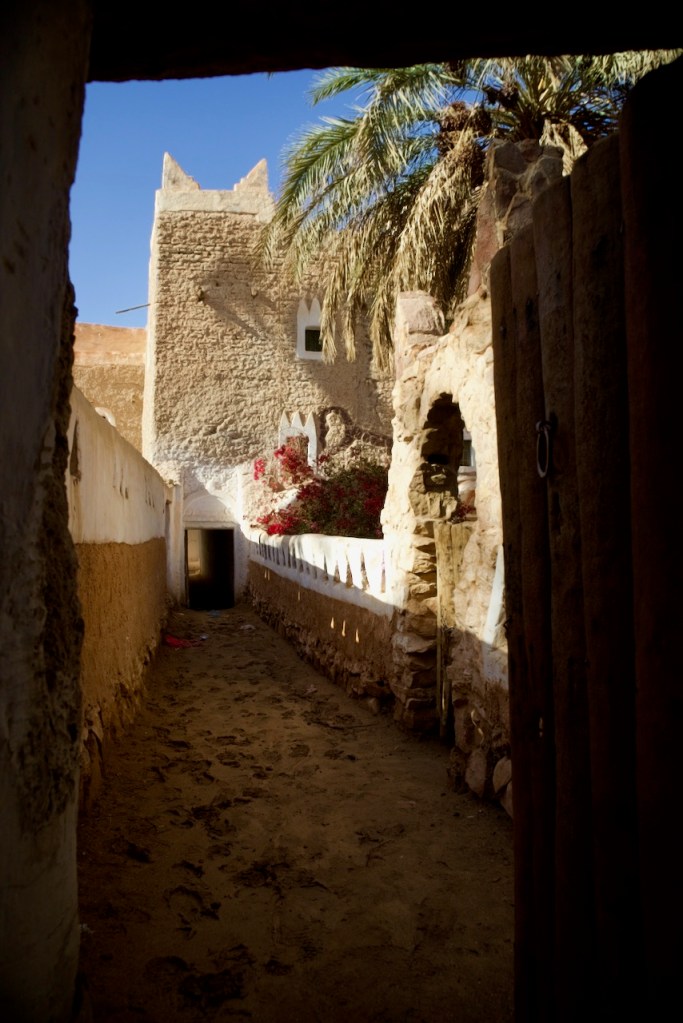
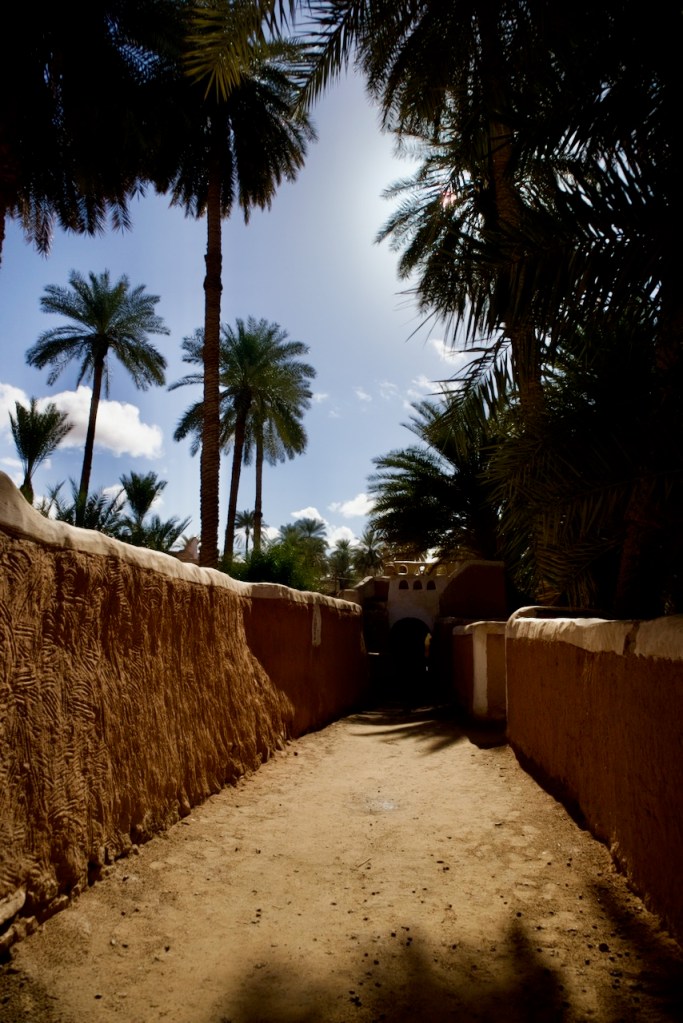
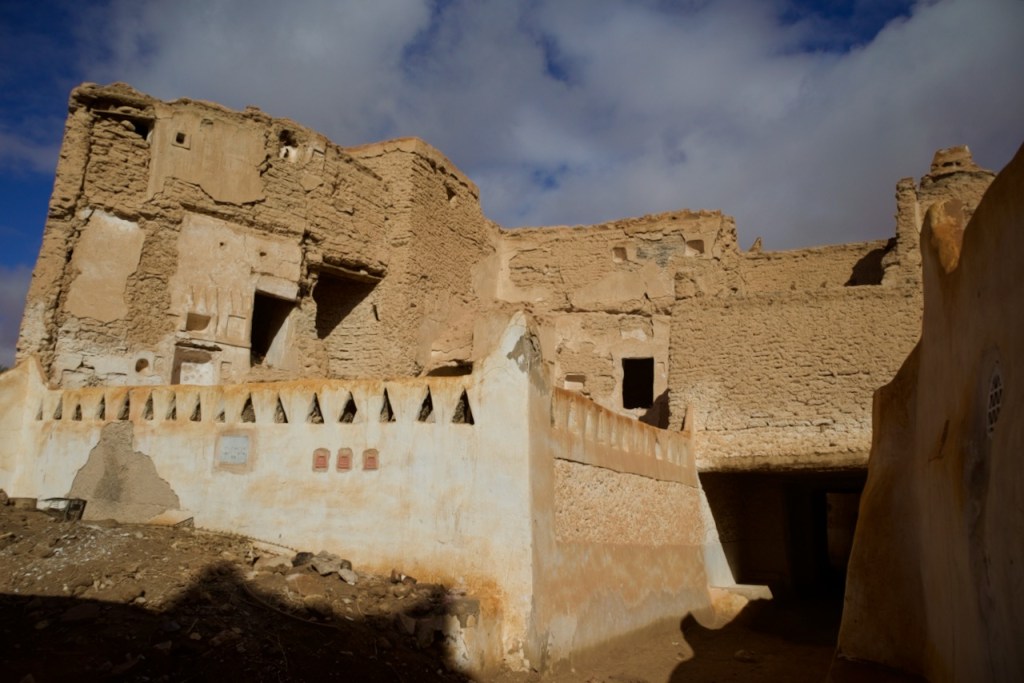
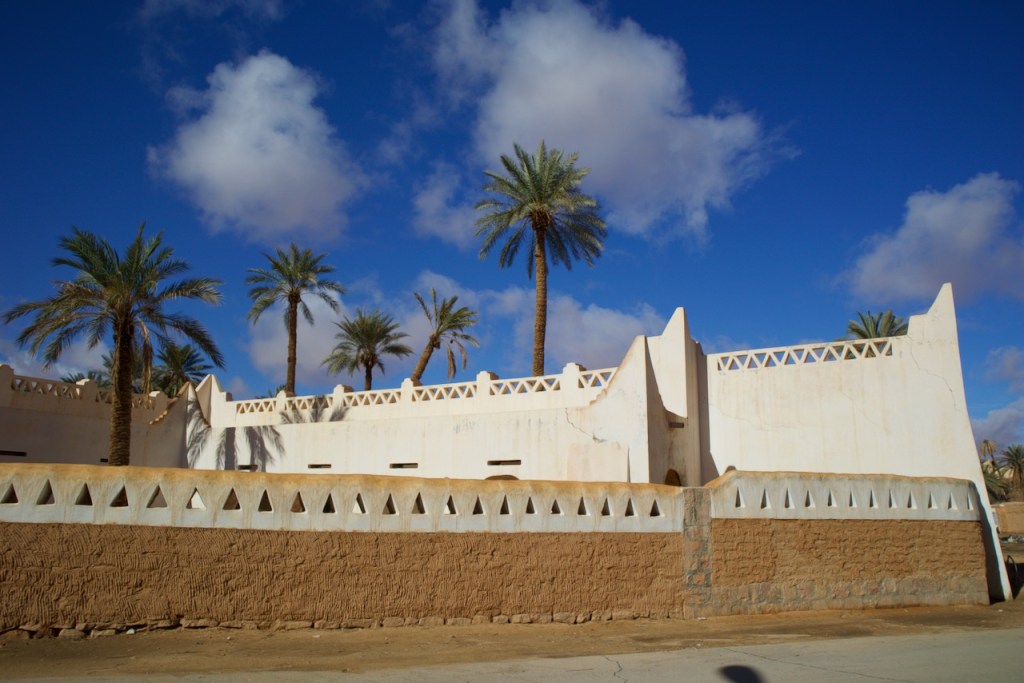
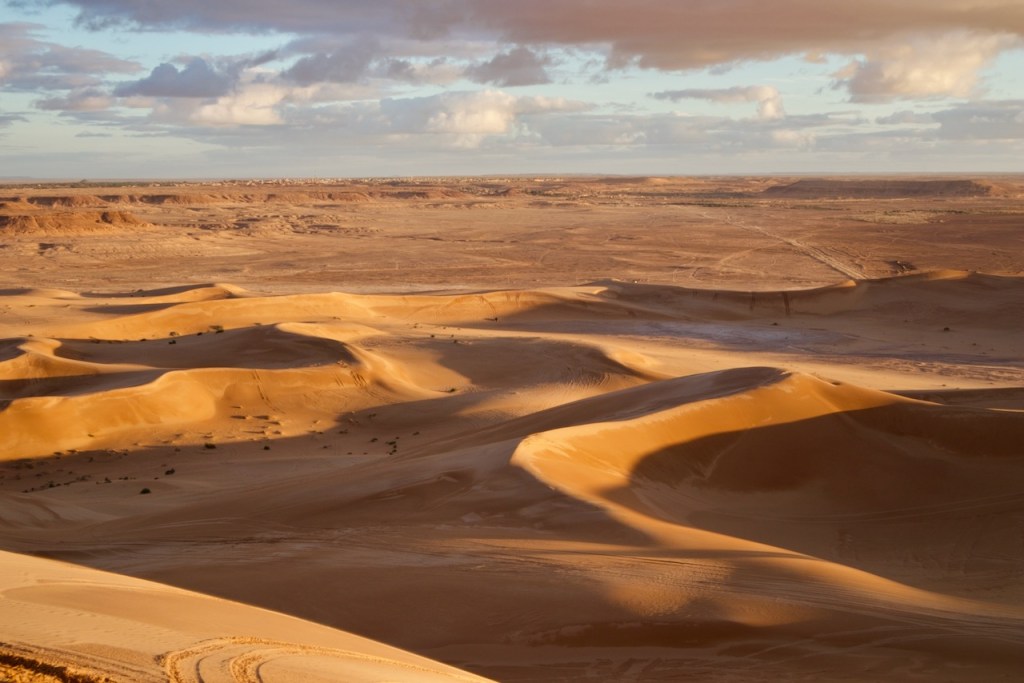
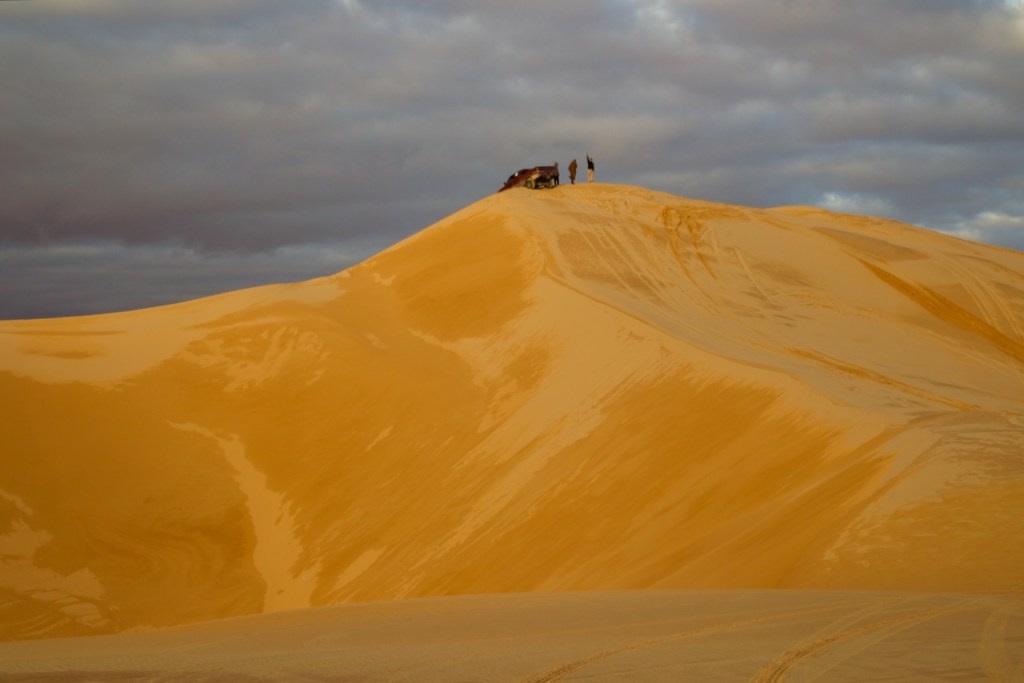
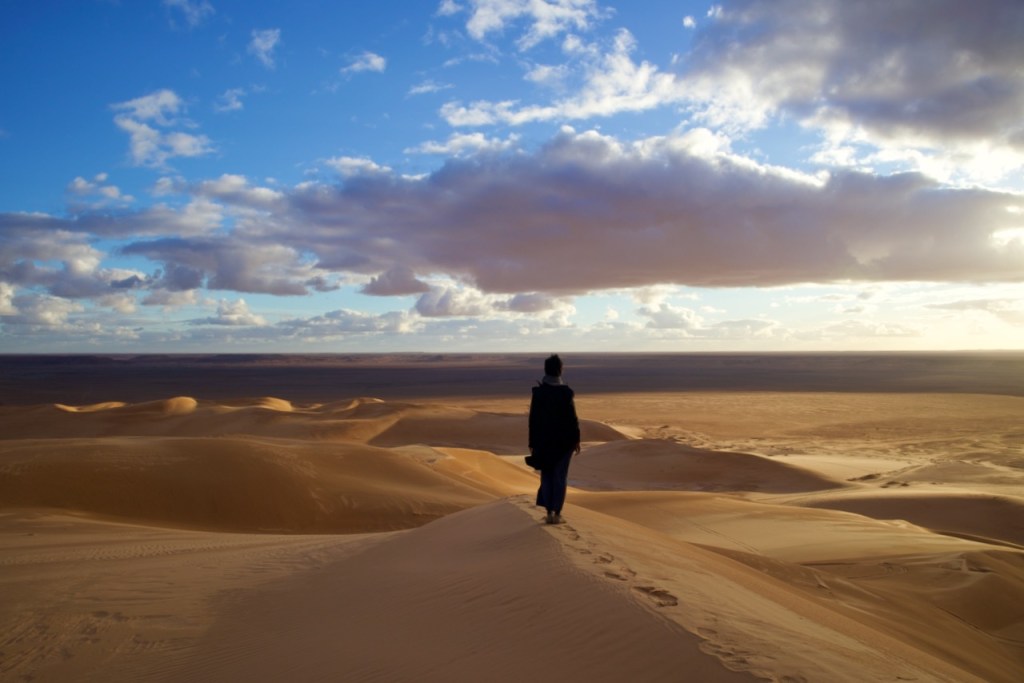
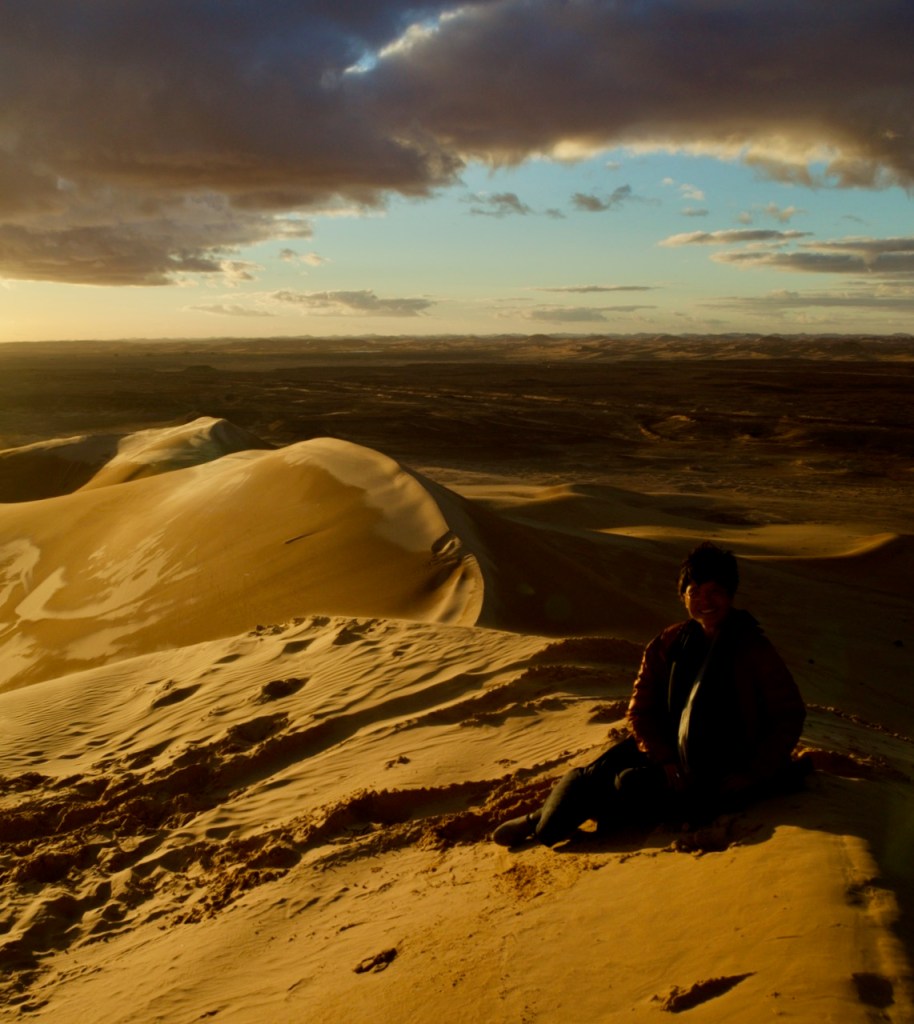
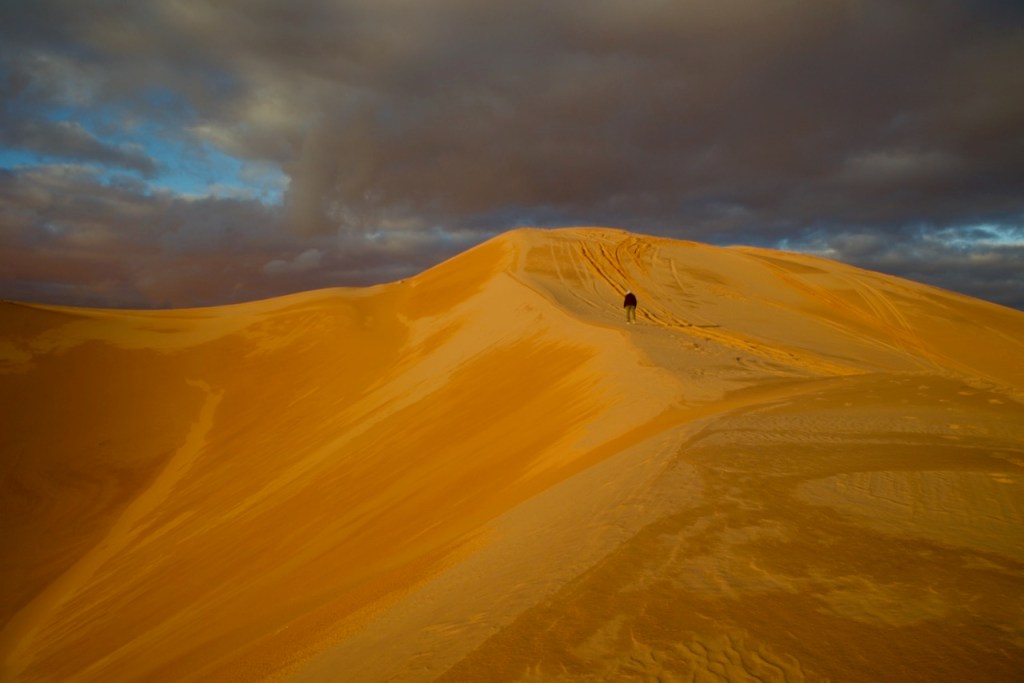
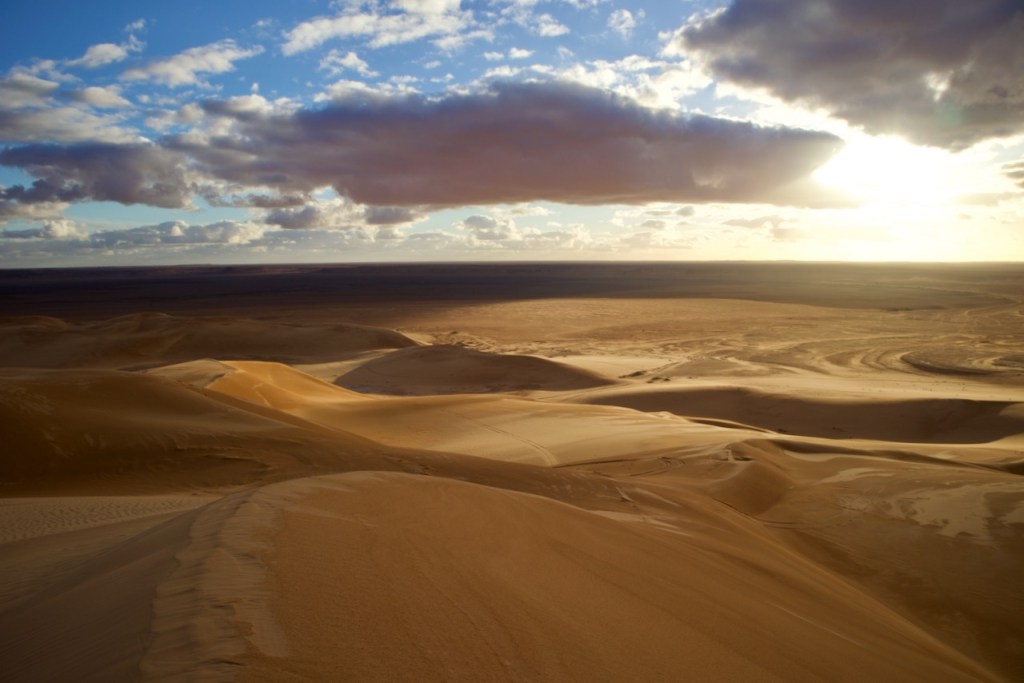
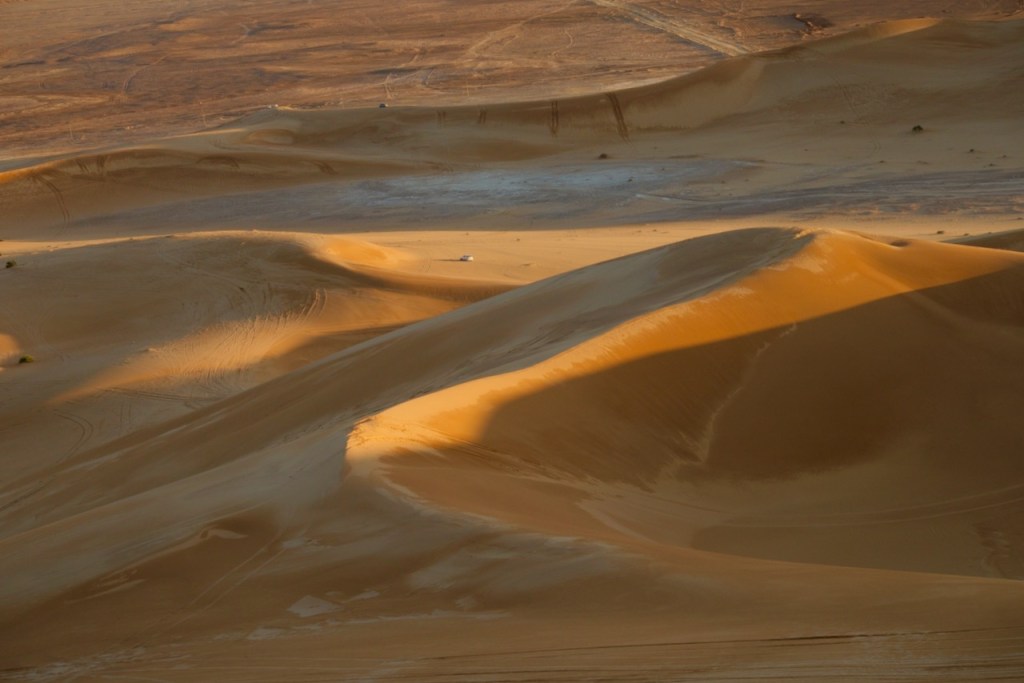
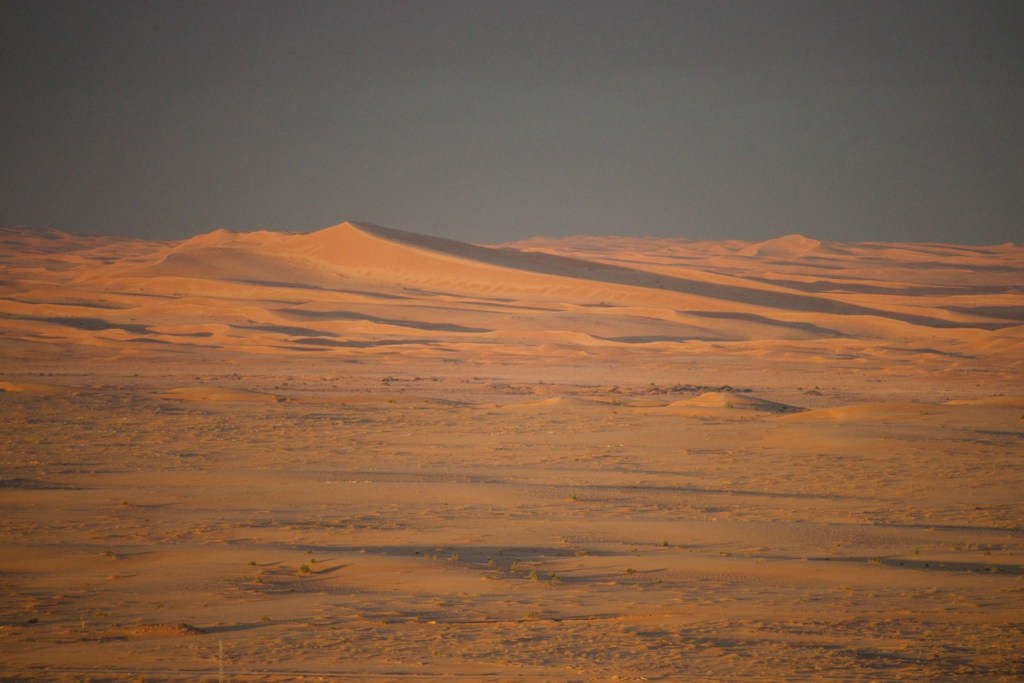
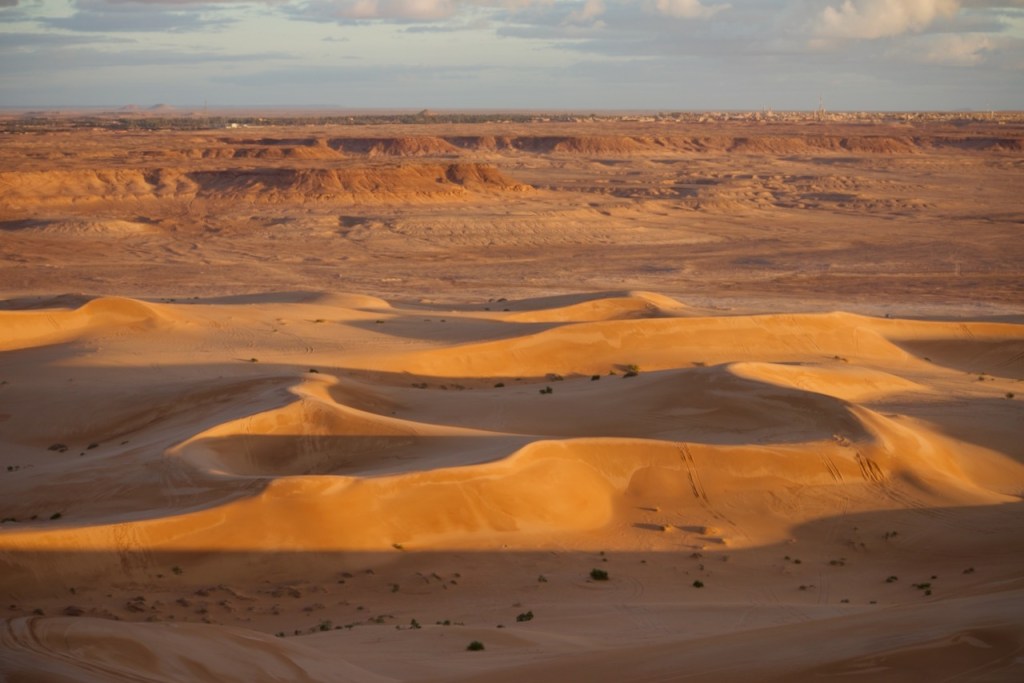
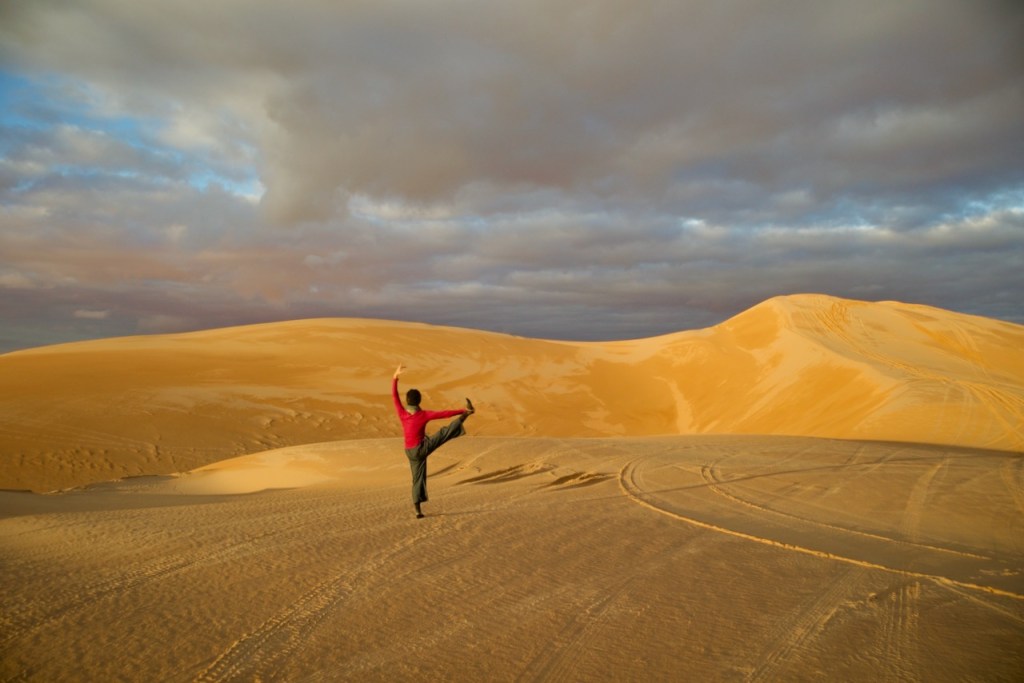
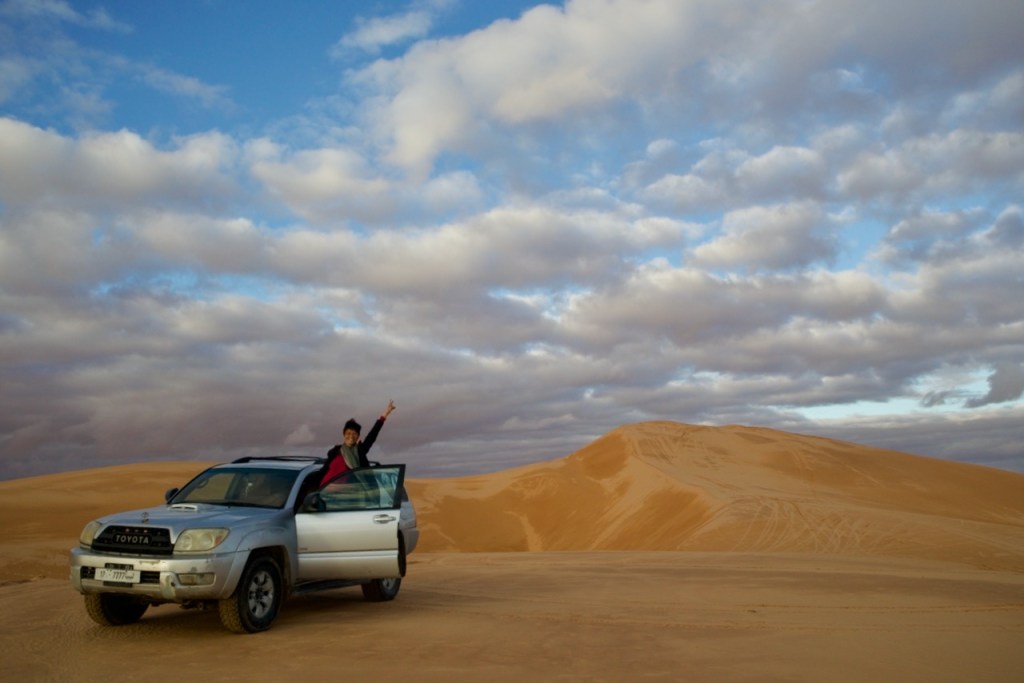
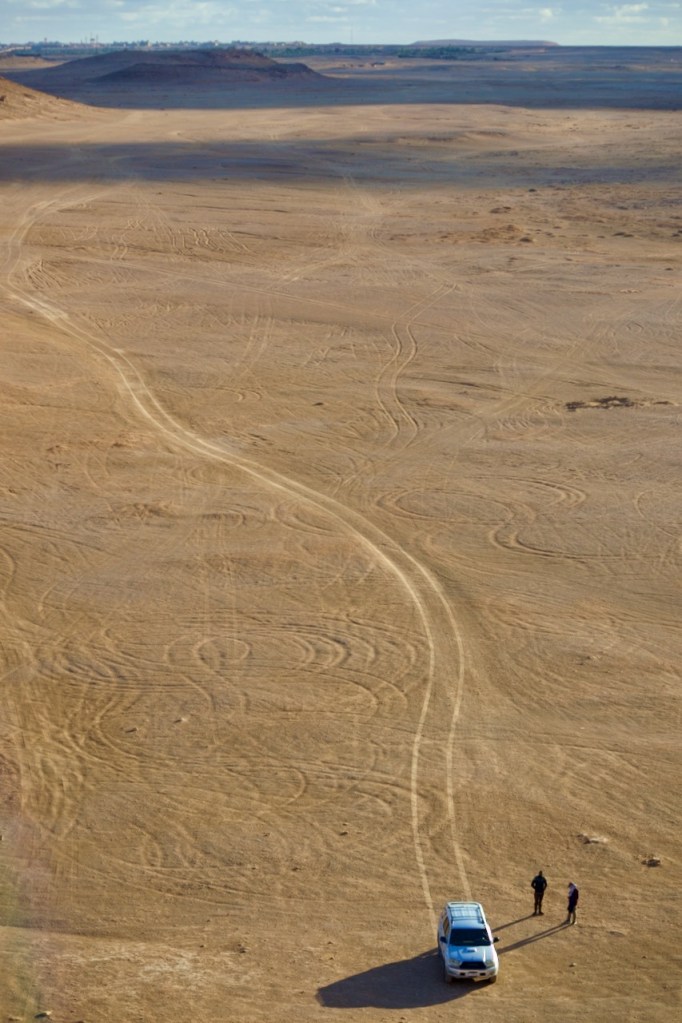
We being in the Sahara, a sunset safari is in order. Have you seen dunes like these? Ali, my guide, asks me. Just across from here, on the Algerian side, I reply. Much, much bigger. Timmimoun, Tassili, and the once-in-a-lifetime five-day trek to Sefar, all the way up to very close to Libya, a totally different experience from a quick-in quick-out hour-long sunset safari where daredevil locals – possibly high on something – rev up their gear to the biggest dunes before dropping off to a precipitous 50 degree slope. This is not the best way to be in the Sahara, and my local desert driver-guide agrees with me. Next time, I can go with him further south to Ghat…
Nalut and Tripoli
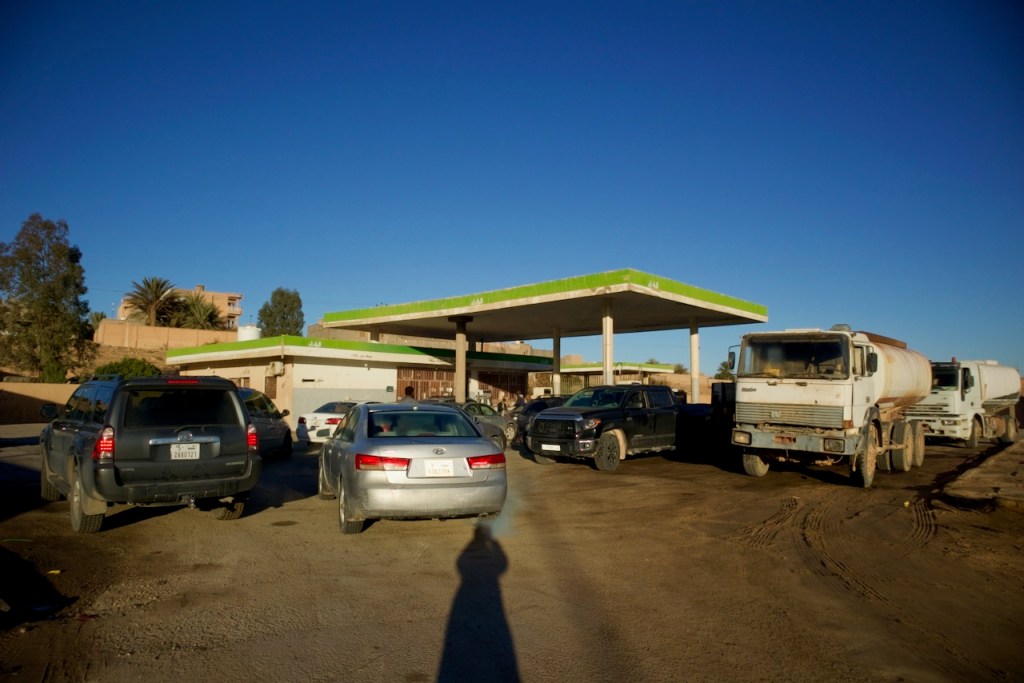
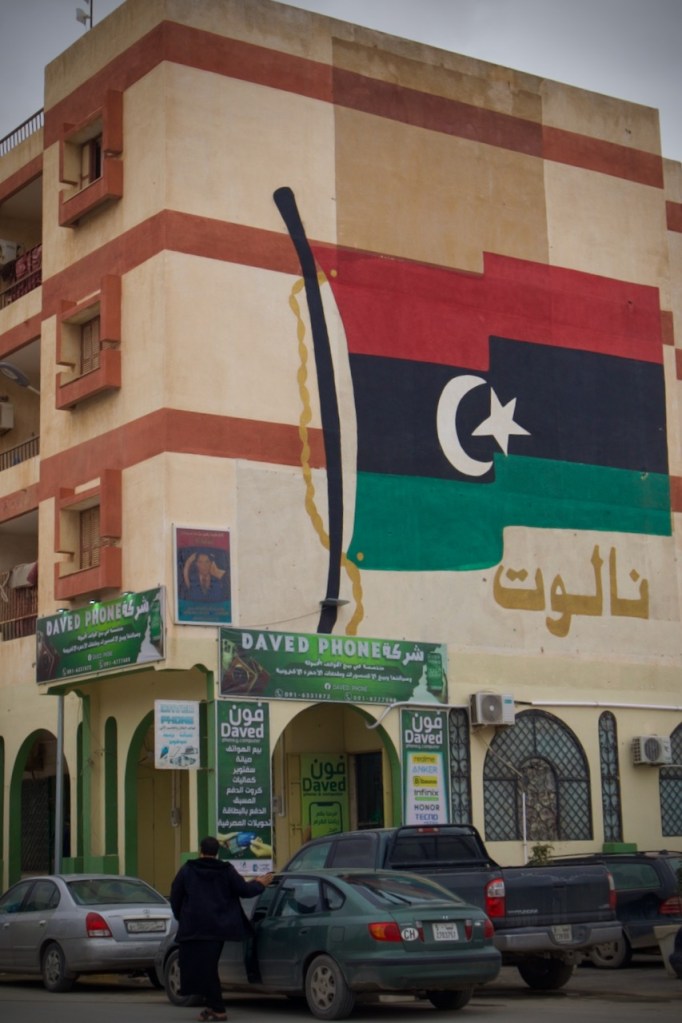
Day 3: we are already on our way back to Tripoli, making a pit stop in Nalut, another magnificent Berber granary. Ali has stomach issues and we are delayed by an hour. The frequent prayer stops only make the journey longer, arriving in the Tripoli at the end of the day by 5pm.






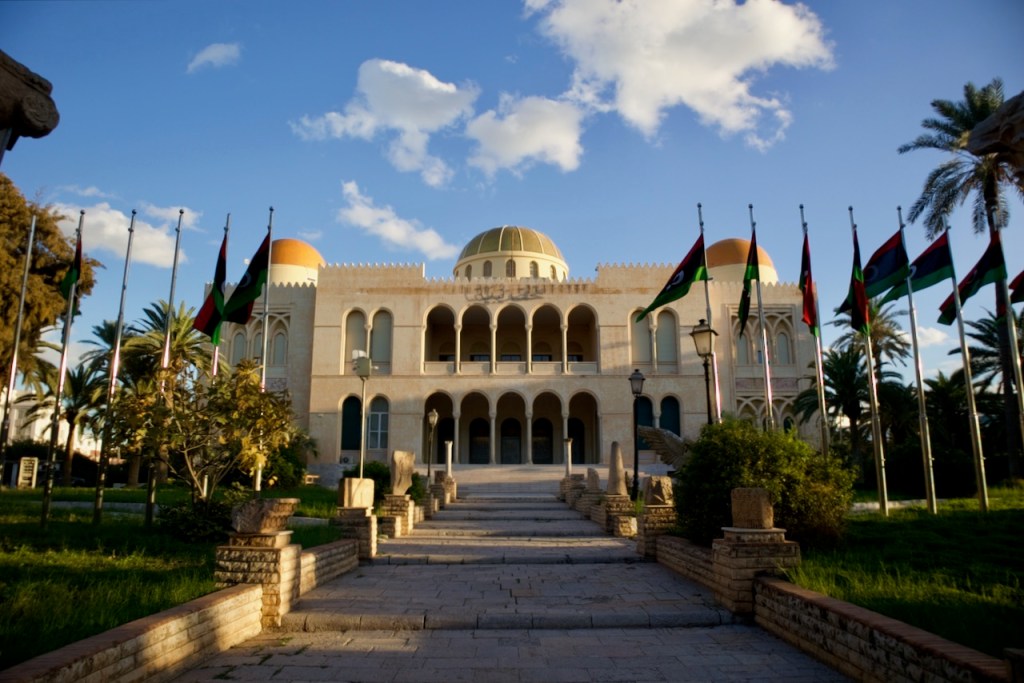
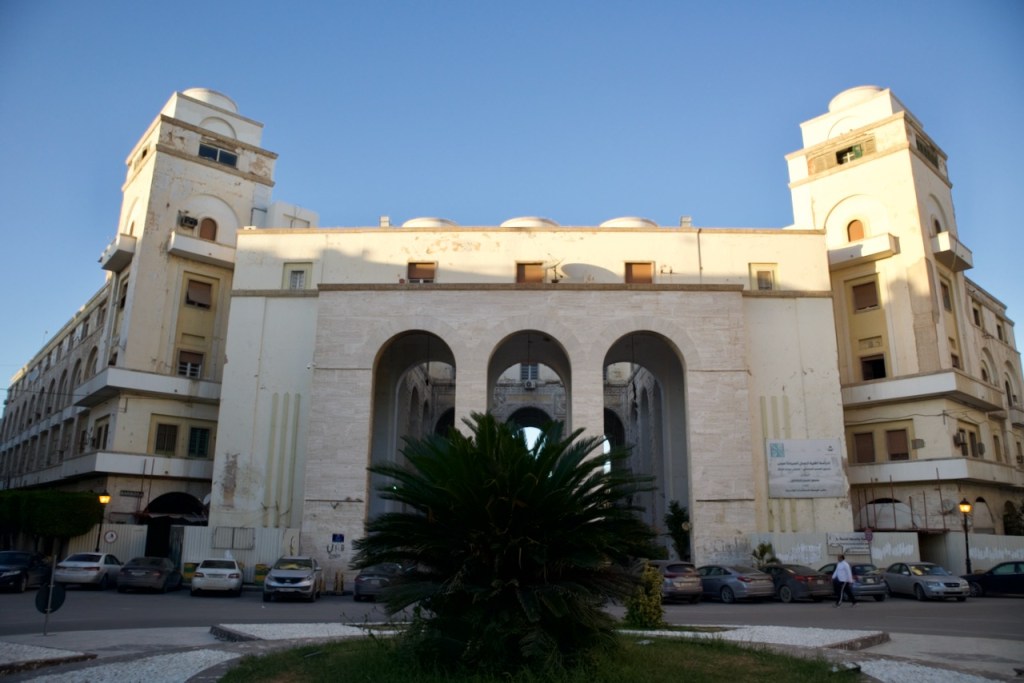
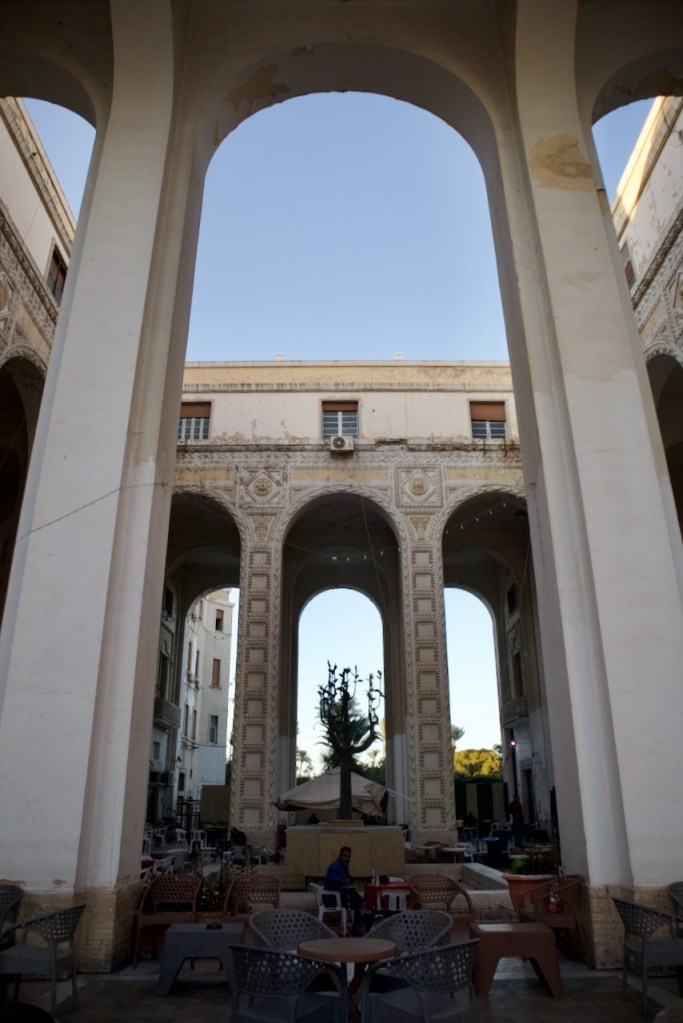
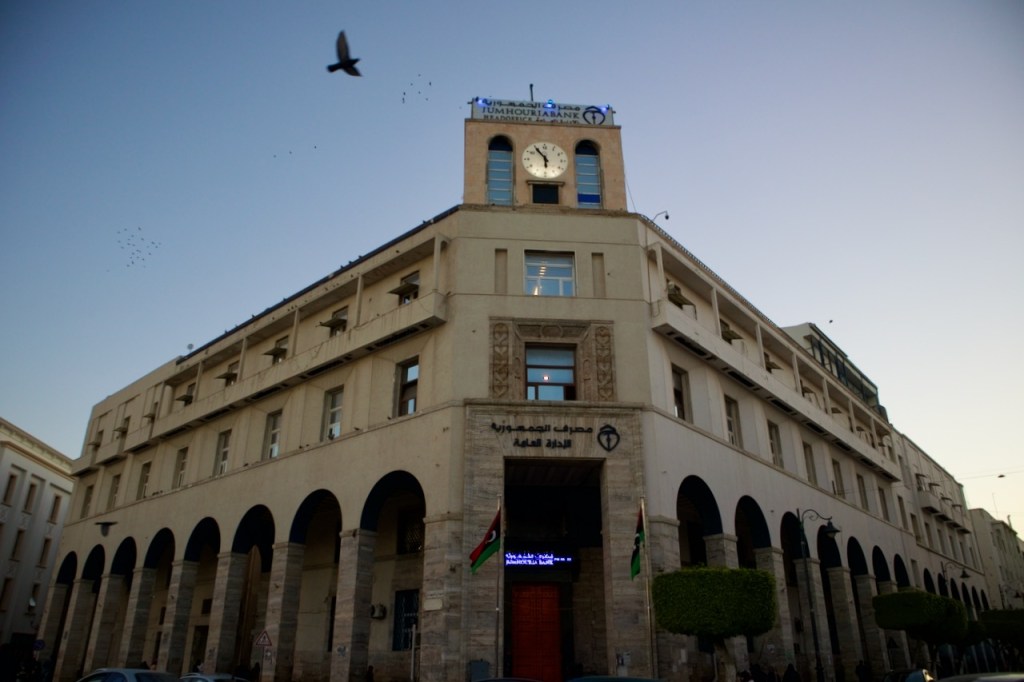
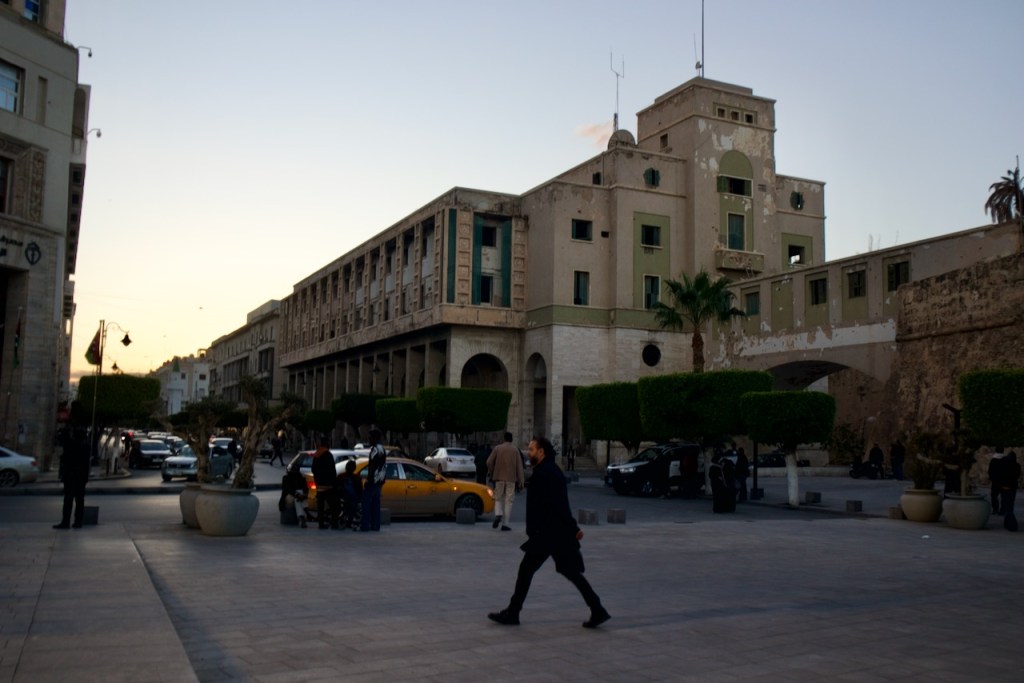
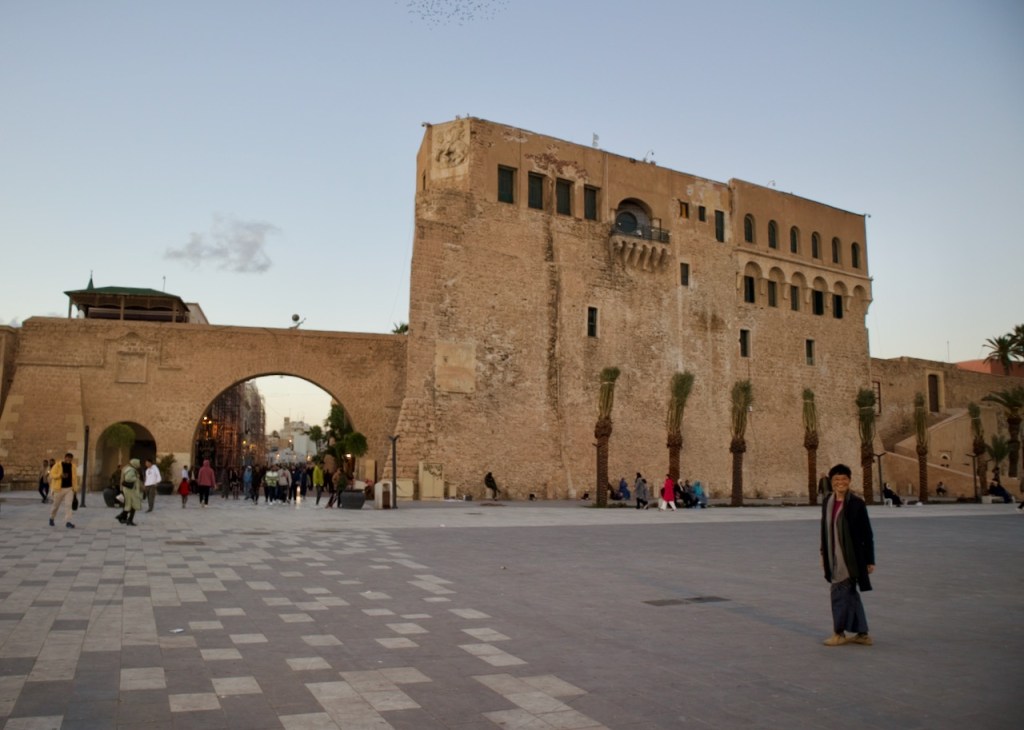
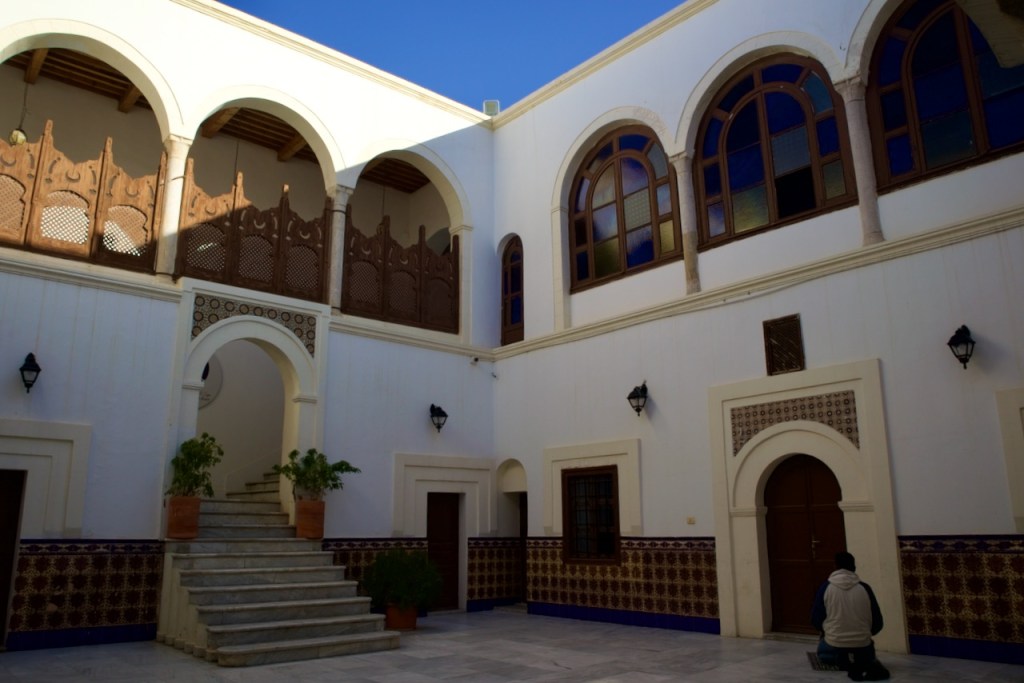
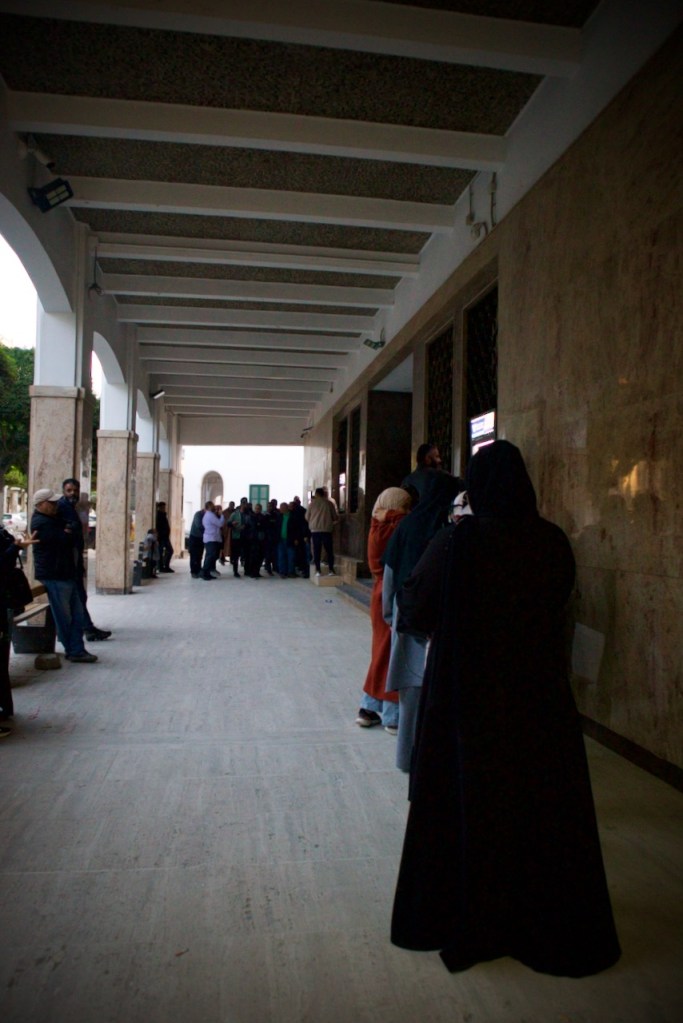
We dash to the Royal Palace, one of the most beautiful in Libya, built during the rule of Italo Balbo in the 1930s. Used first as the seat of the Italian Governor General, and then that of the English Governor during the British Mandate, it became the residence of King Idris Al-Senussi from 1951 to 1964 before it was converted into a public library by Qaddafi. In Algeria Square, I see a building with monumental arches and ask Ali about it. Some old building, he answers. Right then and there, Mahfous, a local retired lawyer, walks up to me and asks, Do you know what this building is? Follow me. Neither my guide nor my security detail is happy about this sudden intruder, but I am delighted to meet the first local in my short stay in Libya. We walk from the Italian neighbourhood, with banks, art galleries, and luxury shops, to Martyrs’ Square where Mahfous shows me one by one the Banco di Roma, the former Governor’s House, the Red Castle, and the National Museum. Just when he is ready to bring me see Old Tripoli, Ali and Abdul say, it’s enough. We have to go to the hotel! It is barely 6pm, and my driver and guard are tired, depriving me of the chance to spend a delightful evening in old town with a highly informative new “guide.” The most important thing is to take care of your driver, Ali said earlier today. I almost burst out laughing. I pay over a thousand dollars for this short tour, and my driver tells me his rest is my priority. His age, stamina, and aggressive driving leave much to be desired, but tomorrow is my last day. There is light at the end of Libya!
Leptis Magna
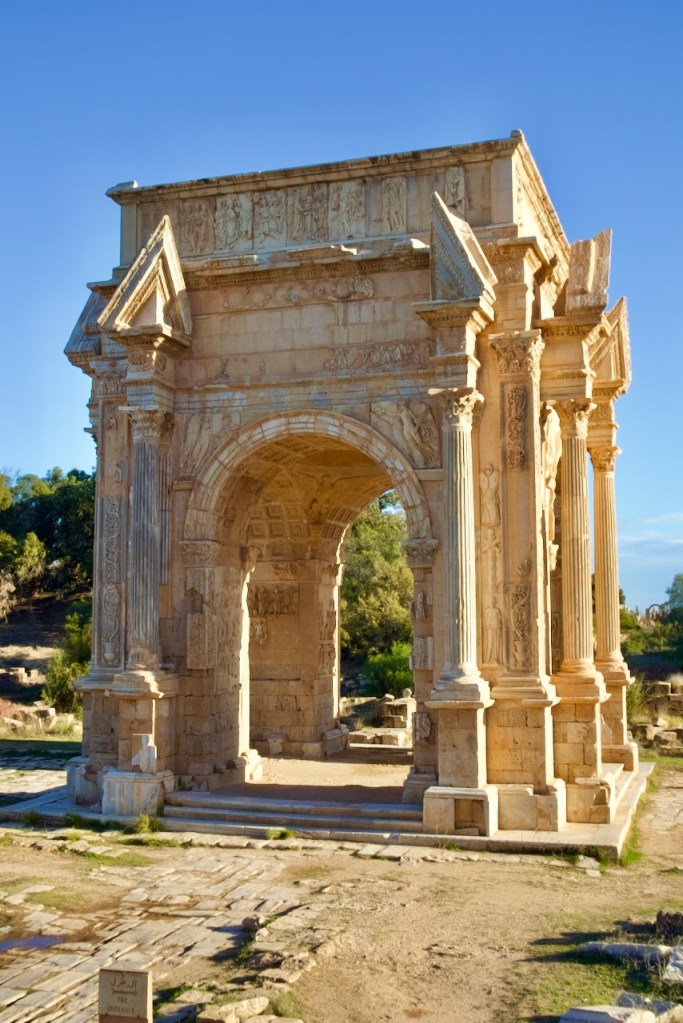
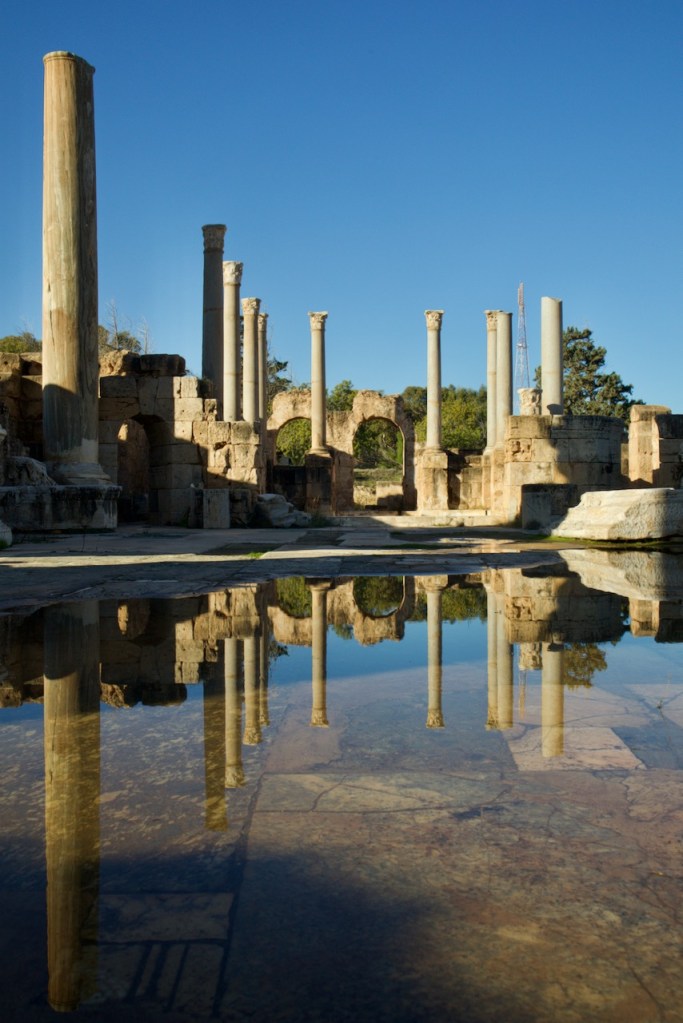
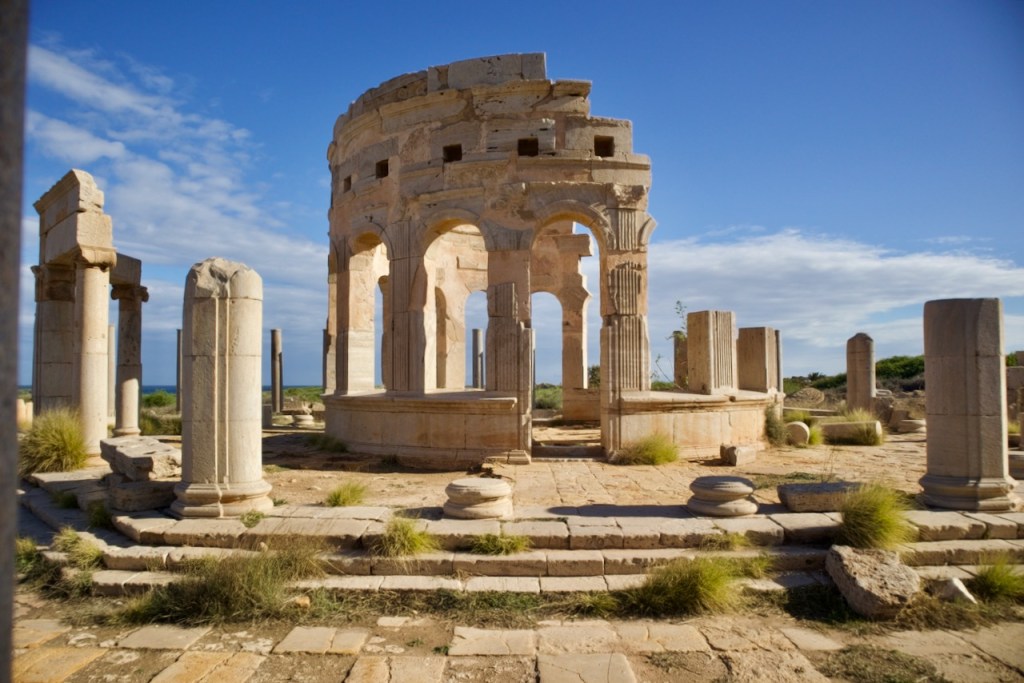
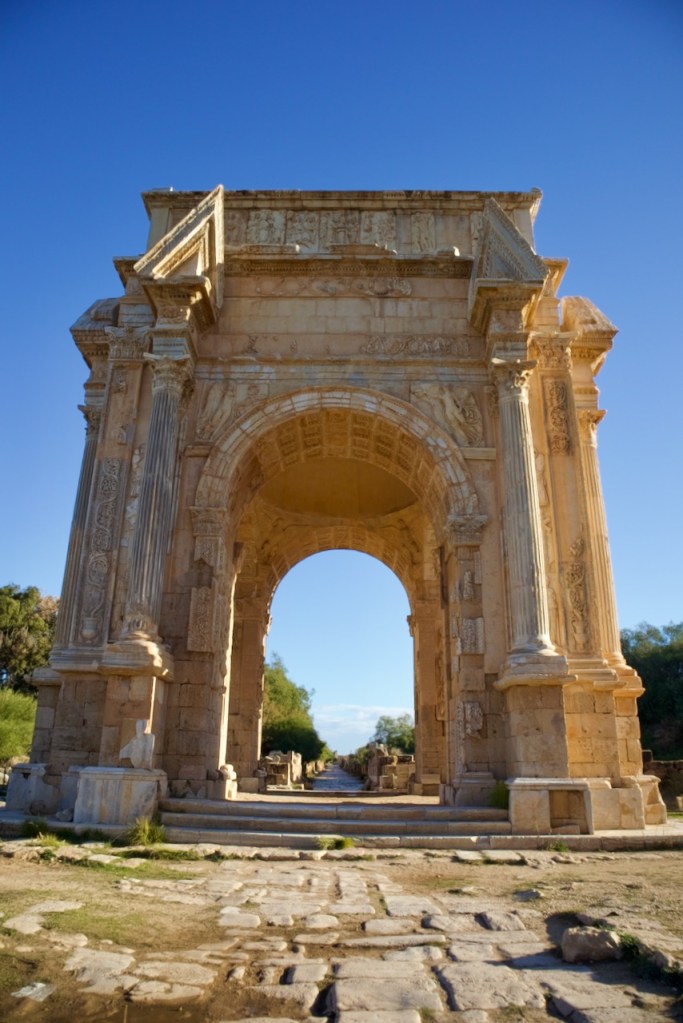
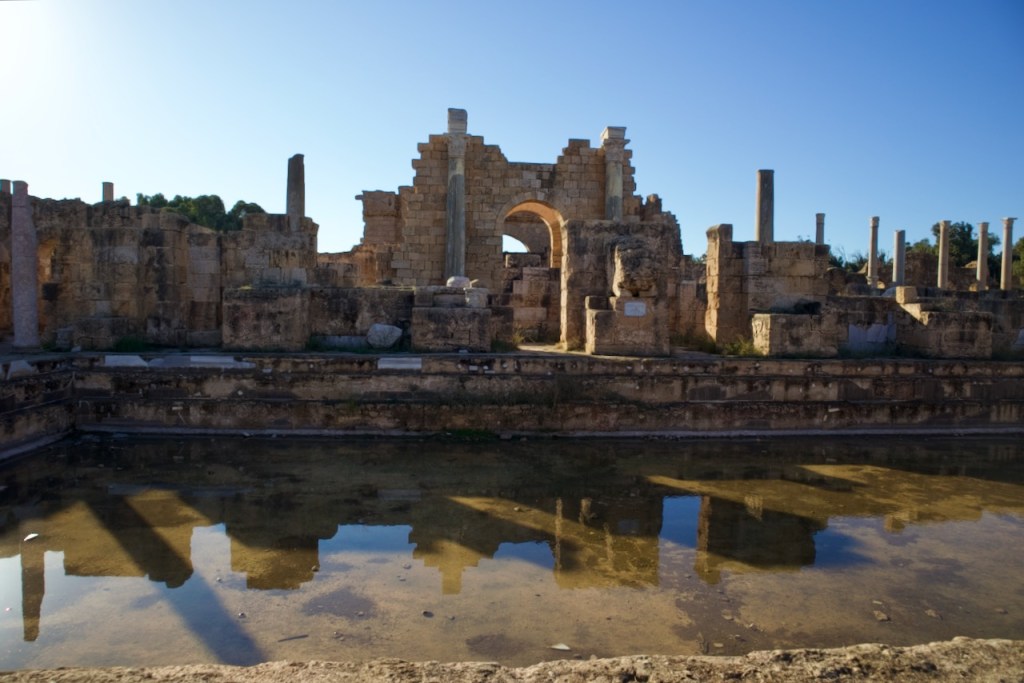
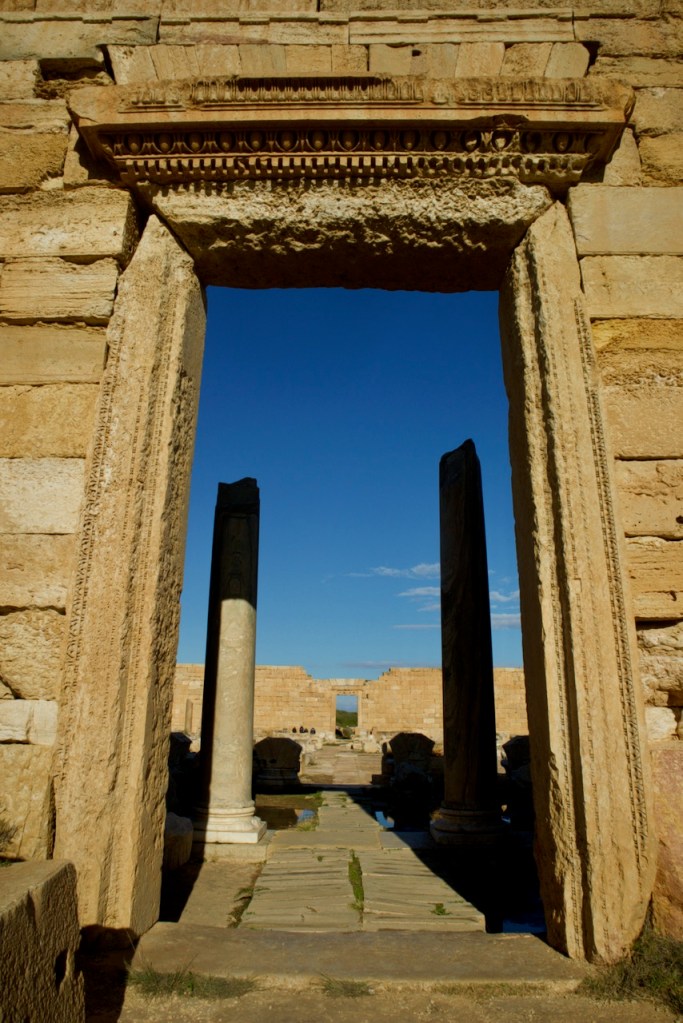
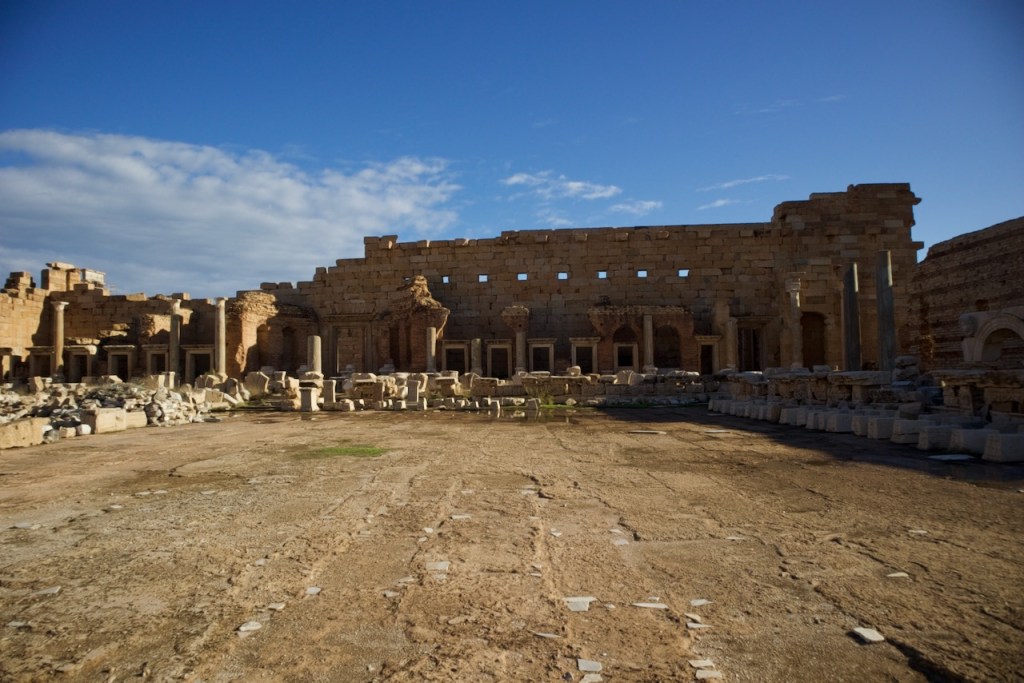
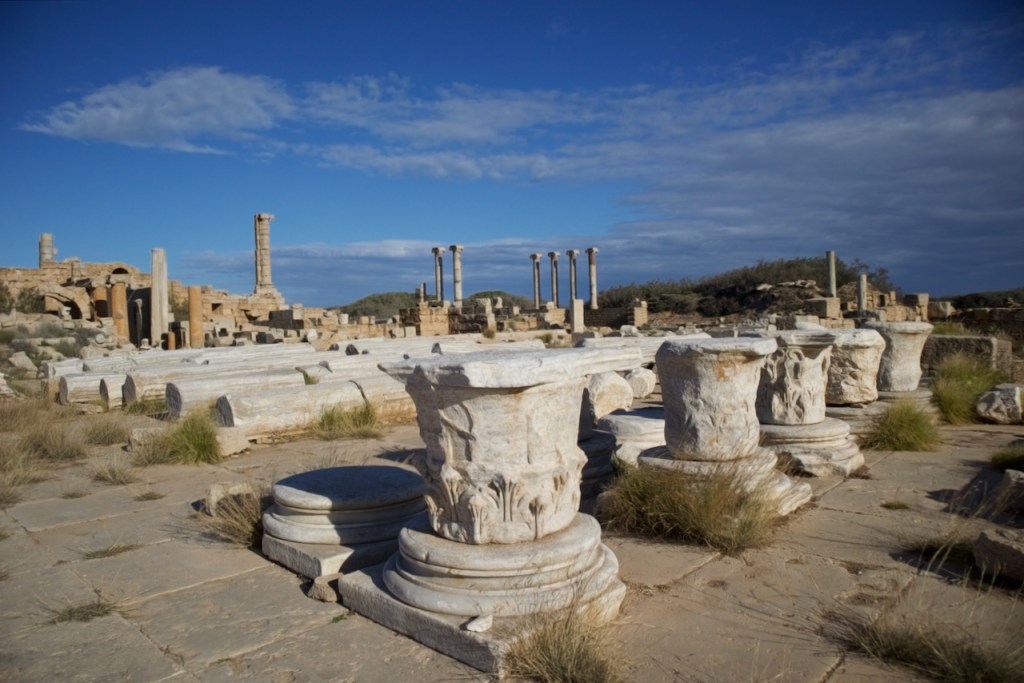
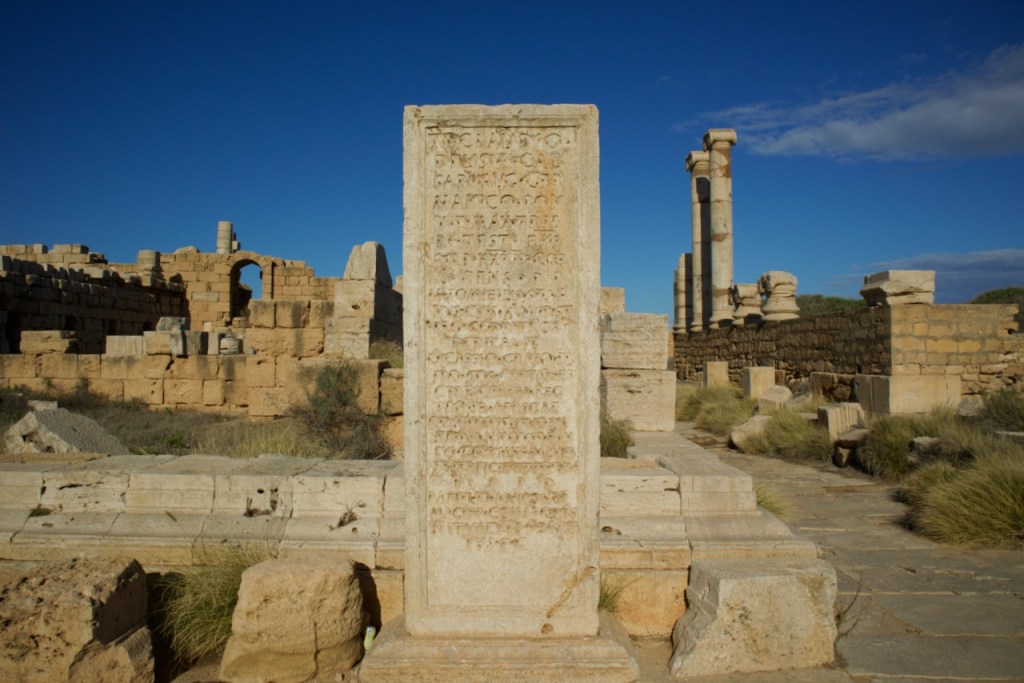
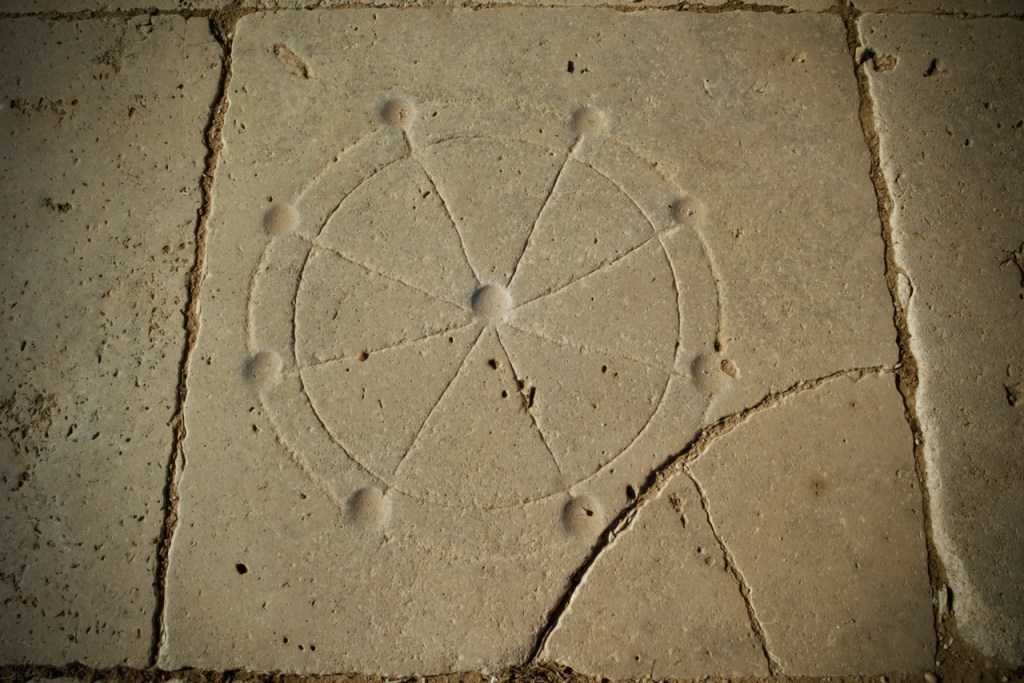
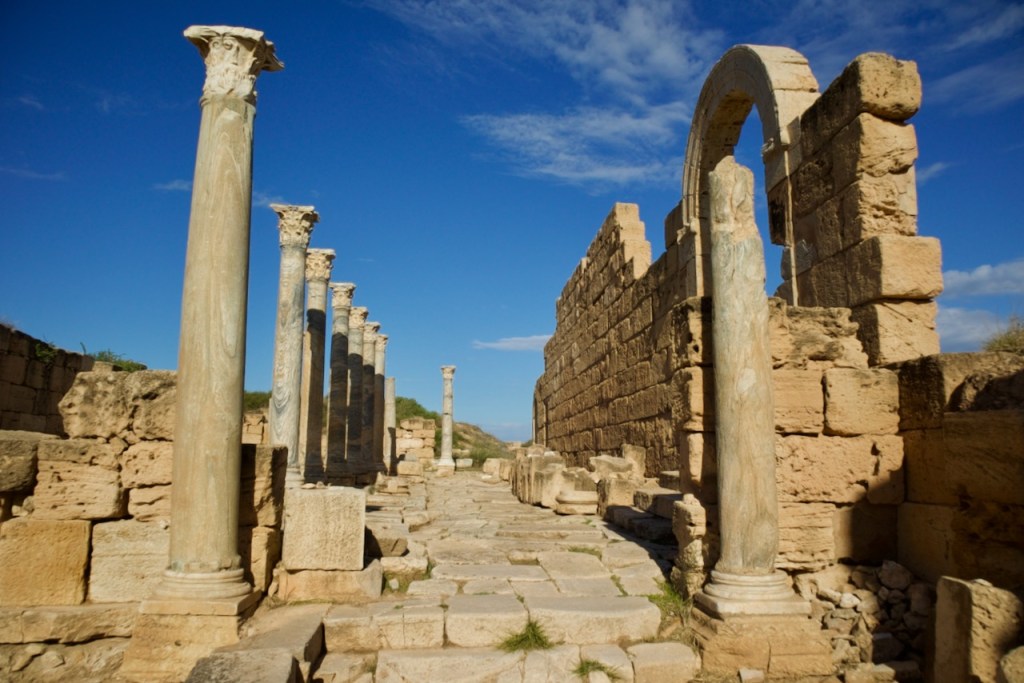
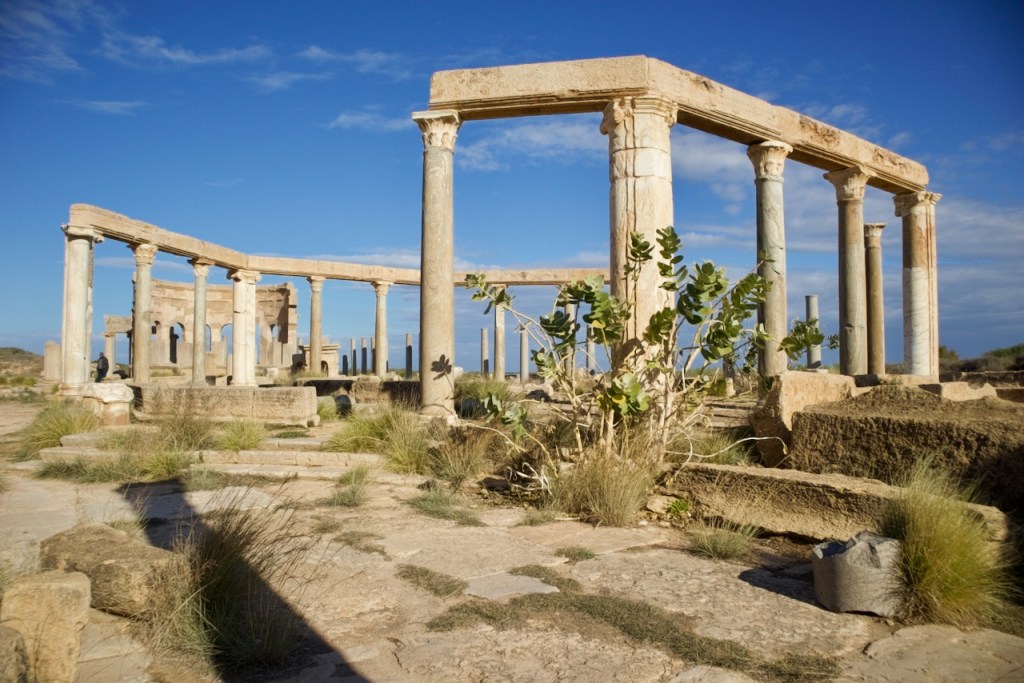
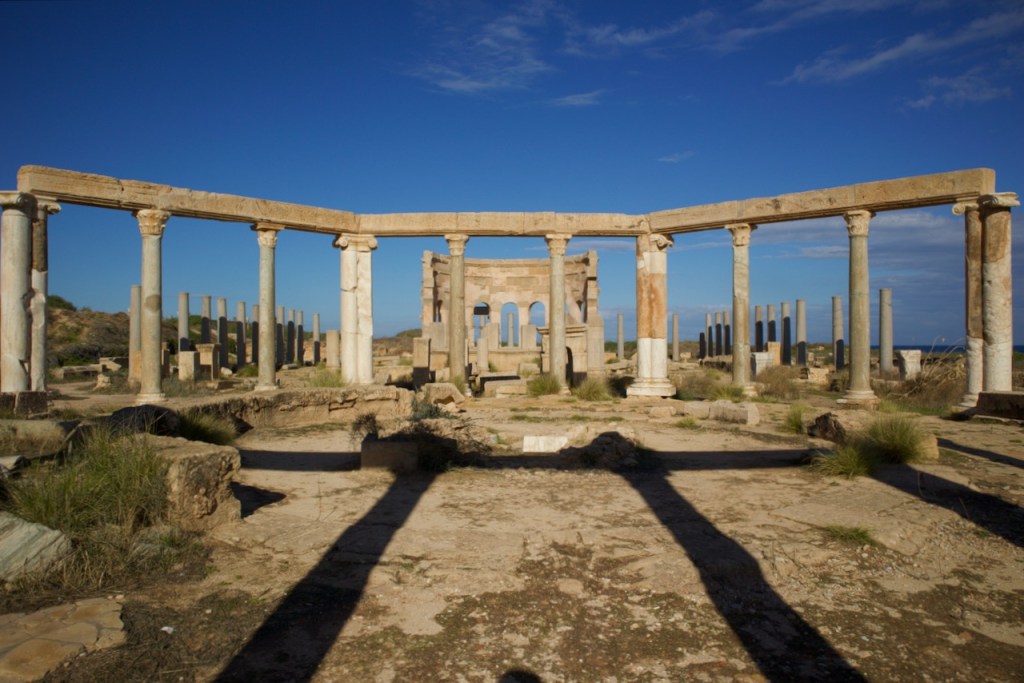
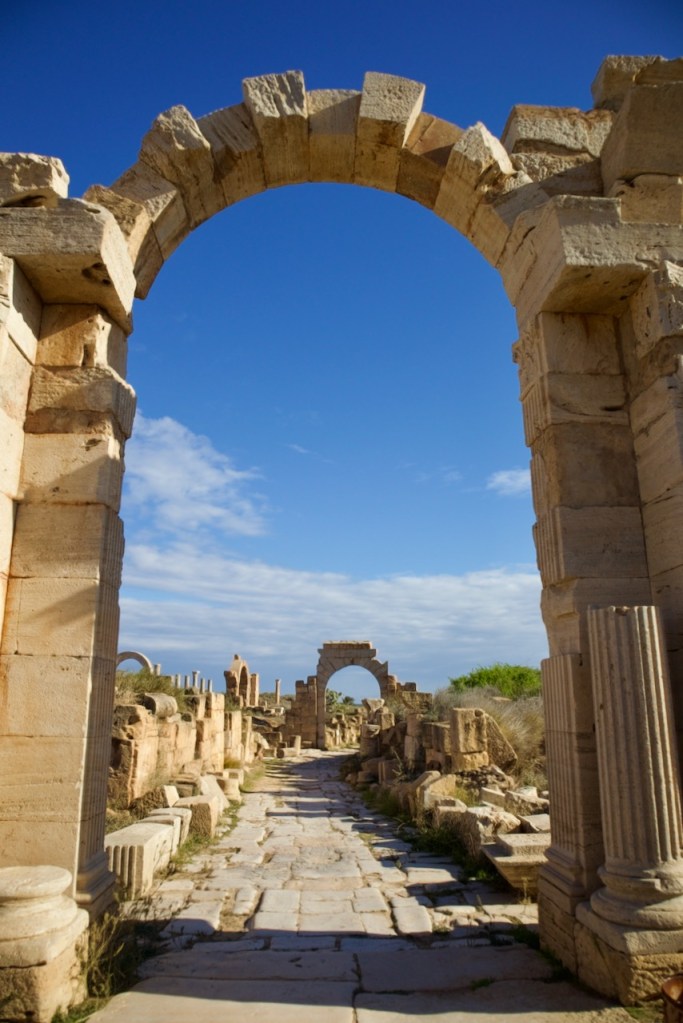
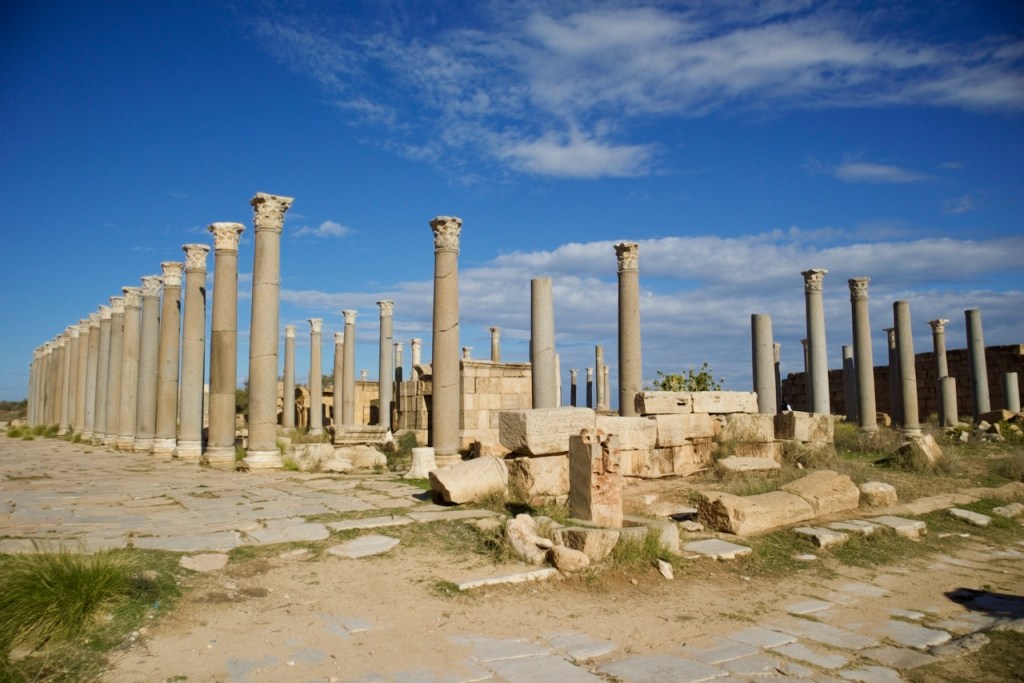
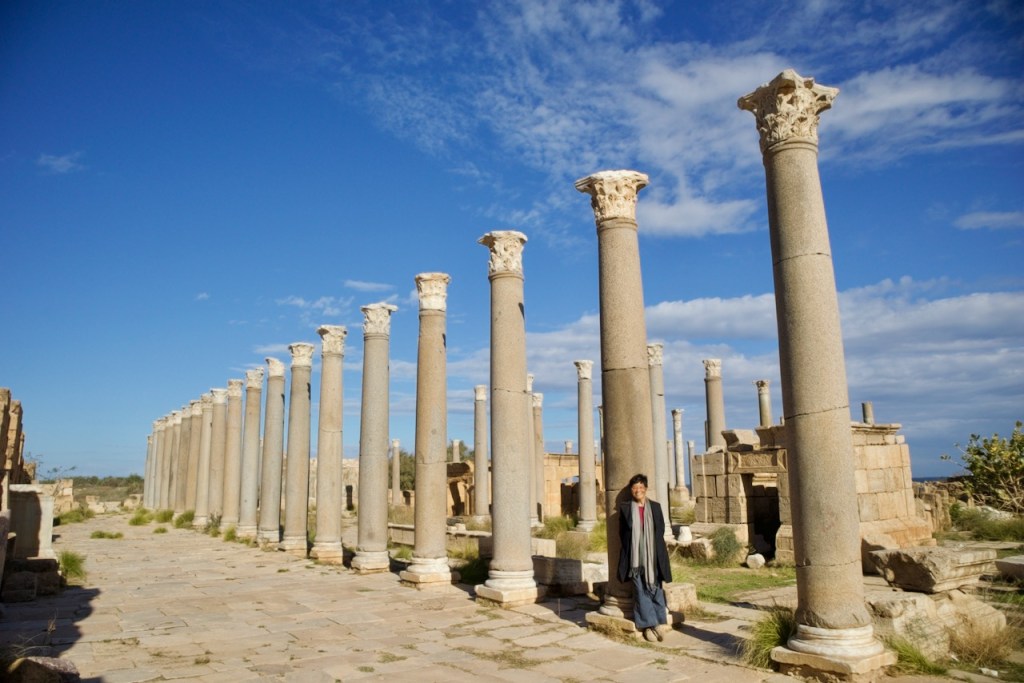
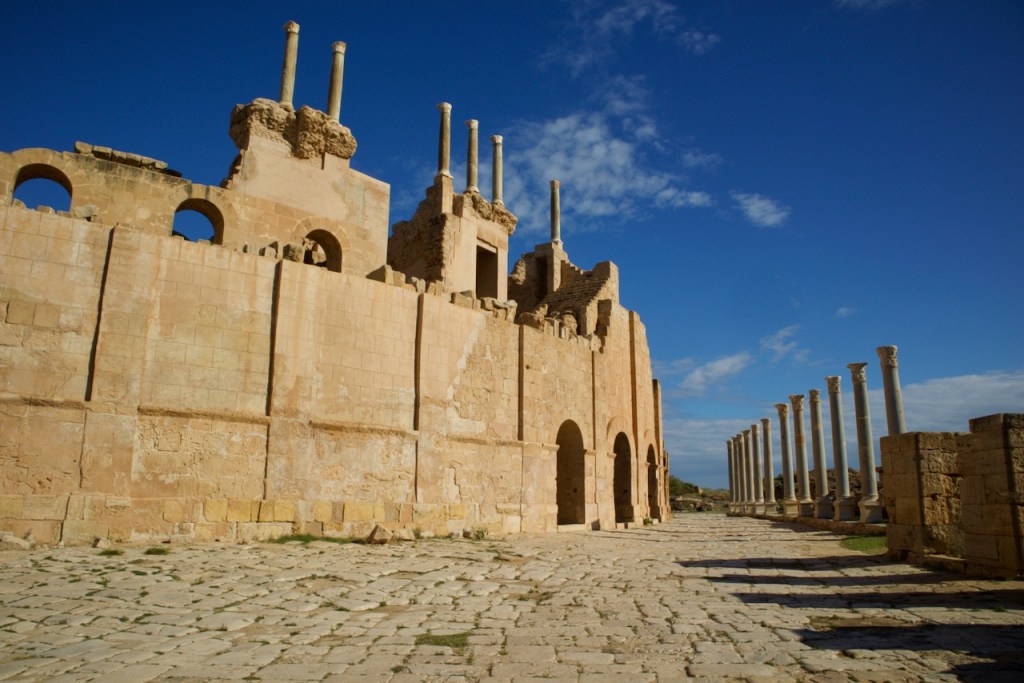
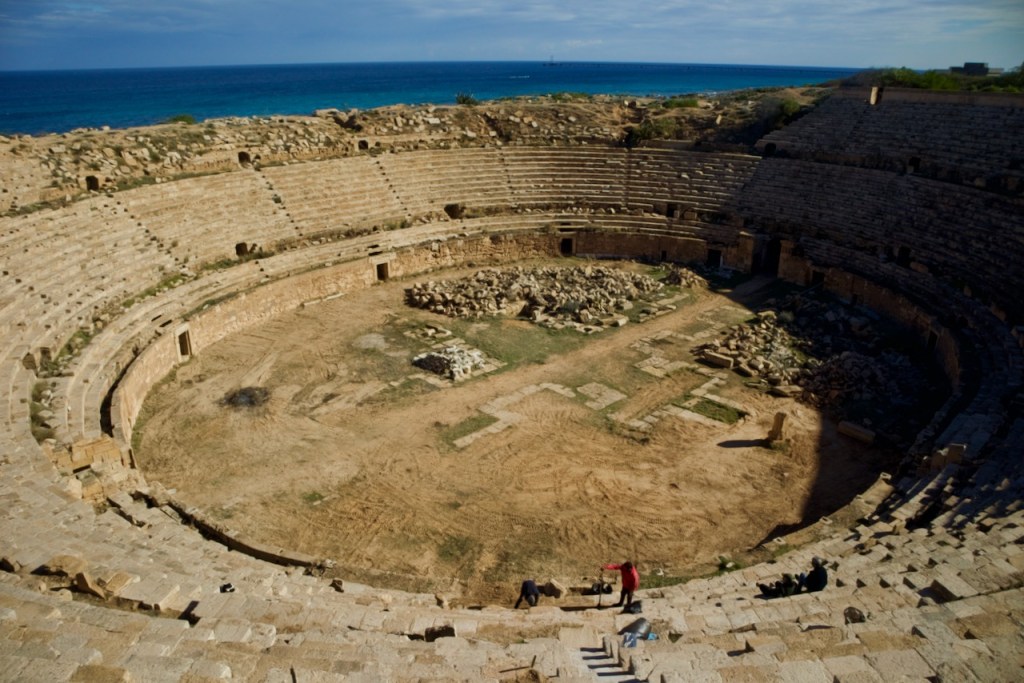
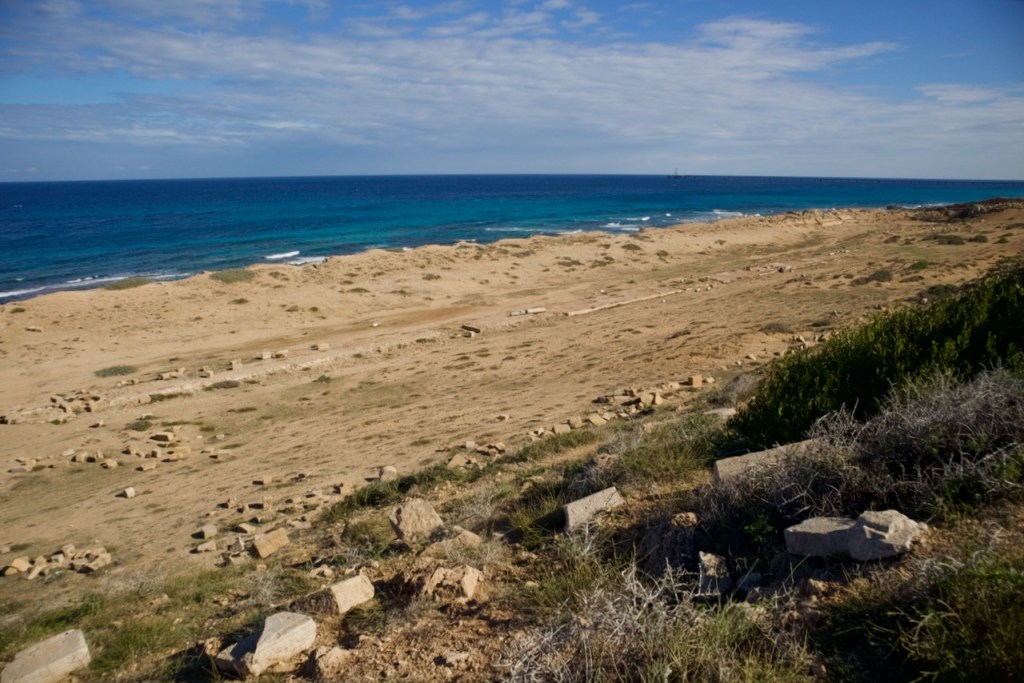
The best for the last: the glorious Leptis Magna. Founded as a Carthaginian city in the 7th century BC and abandoned around 7th AD , the city was well preserved, being buried beneath layers of sand dunes before being unearthed by Italian archaeologists in the 1920s. It was one of the leading cities of Roman Africa and a major trading post, especially as the hometown of emperor Septimius Severus, rivaling Carthage in Tunisia and Alexandria in Egypt. The sprawling ruins are among the best-preserved Roman sites in the Mediterranean. Finally, the sun is back!

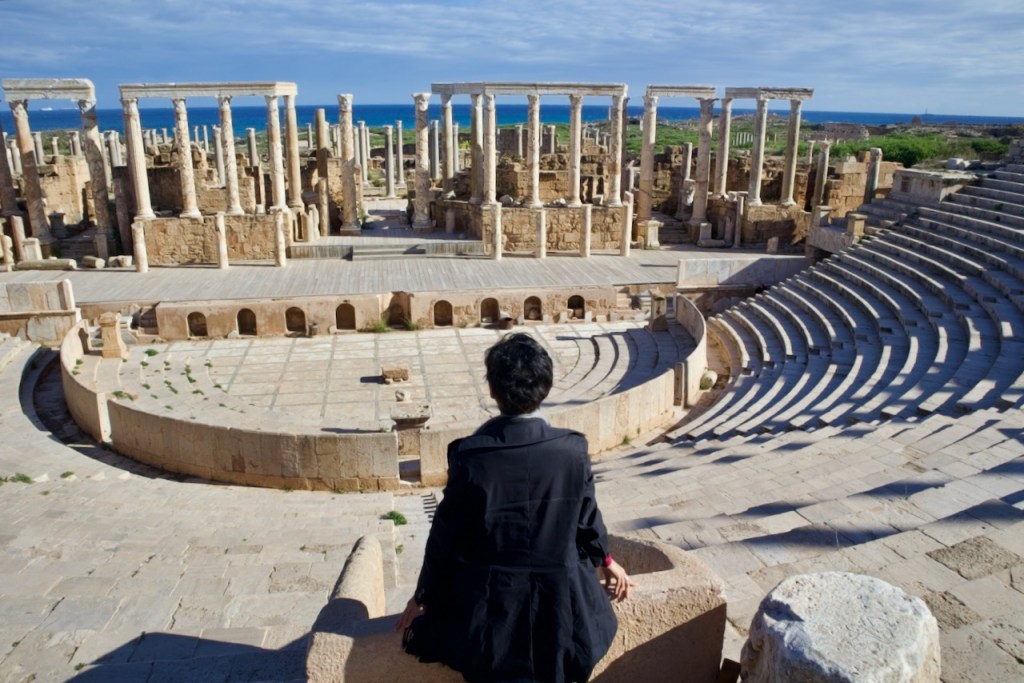
Tripoli: Old & New
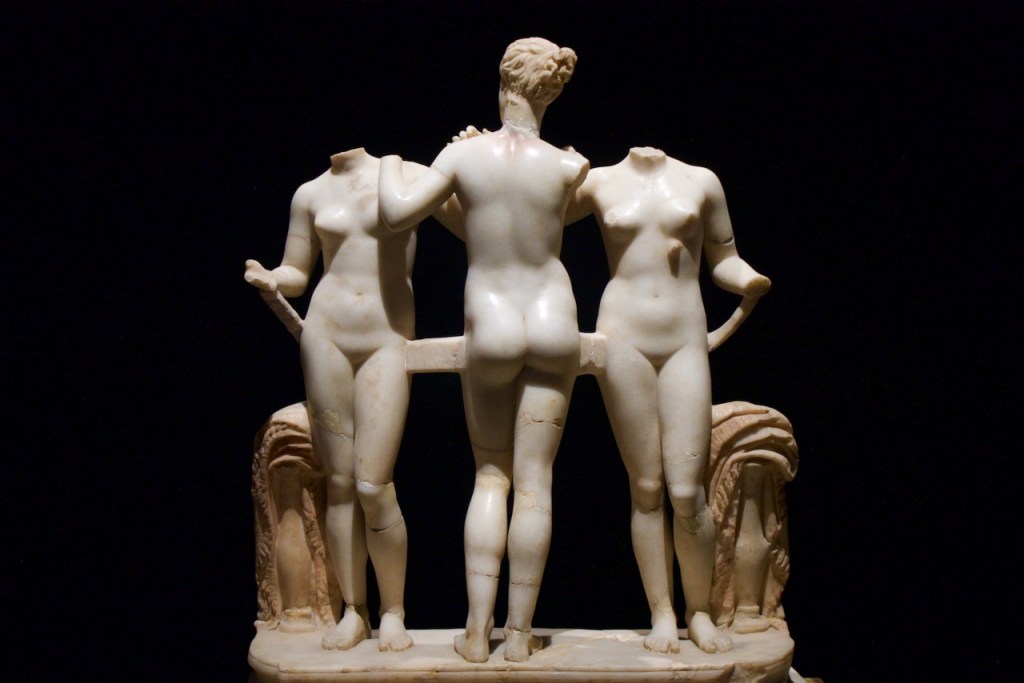
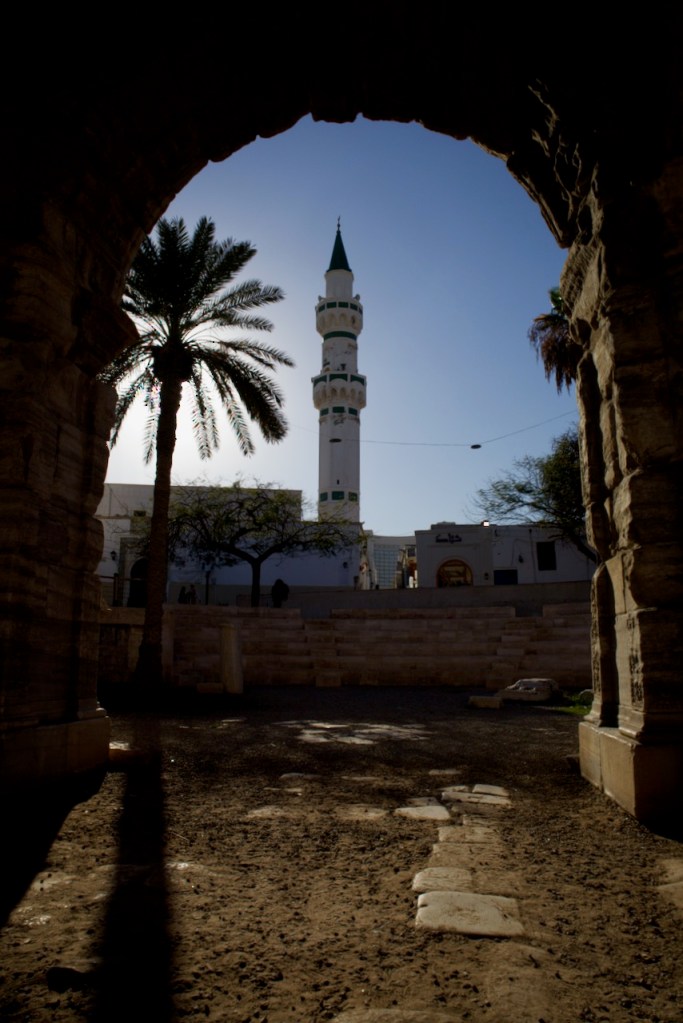
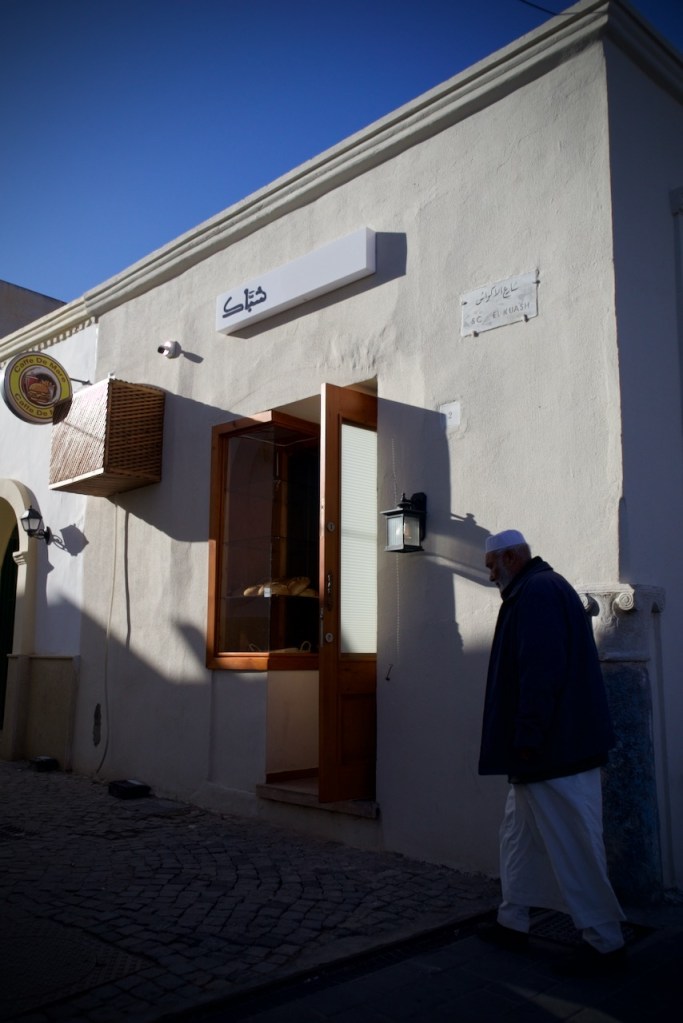
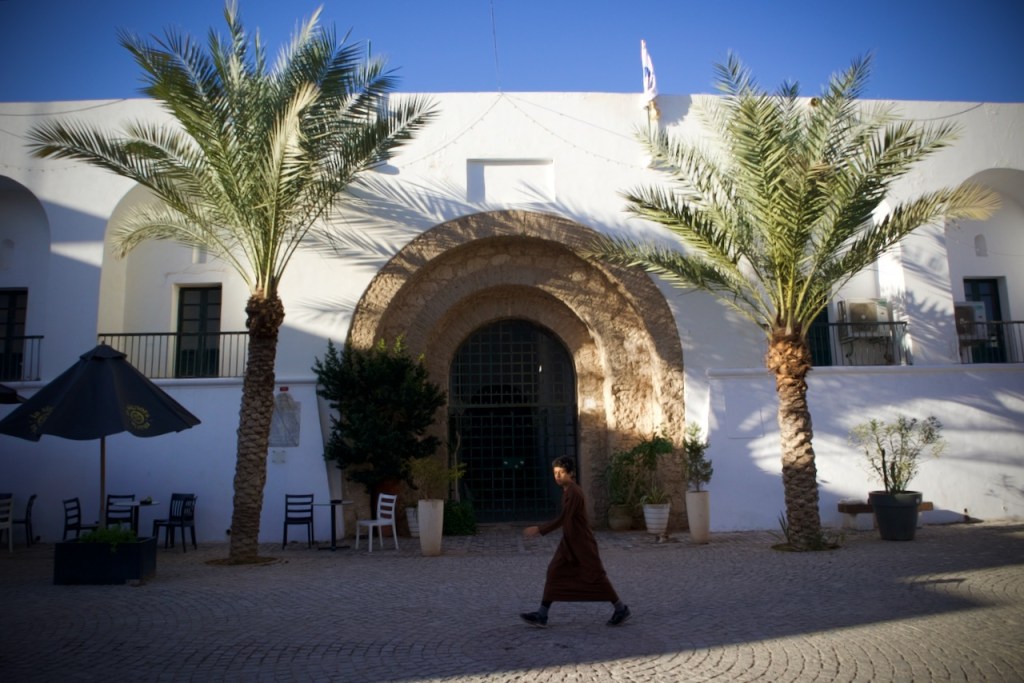
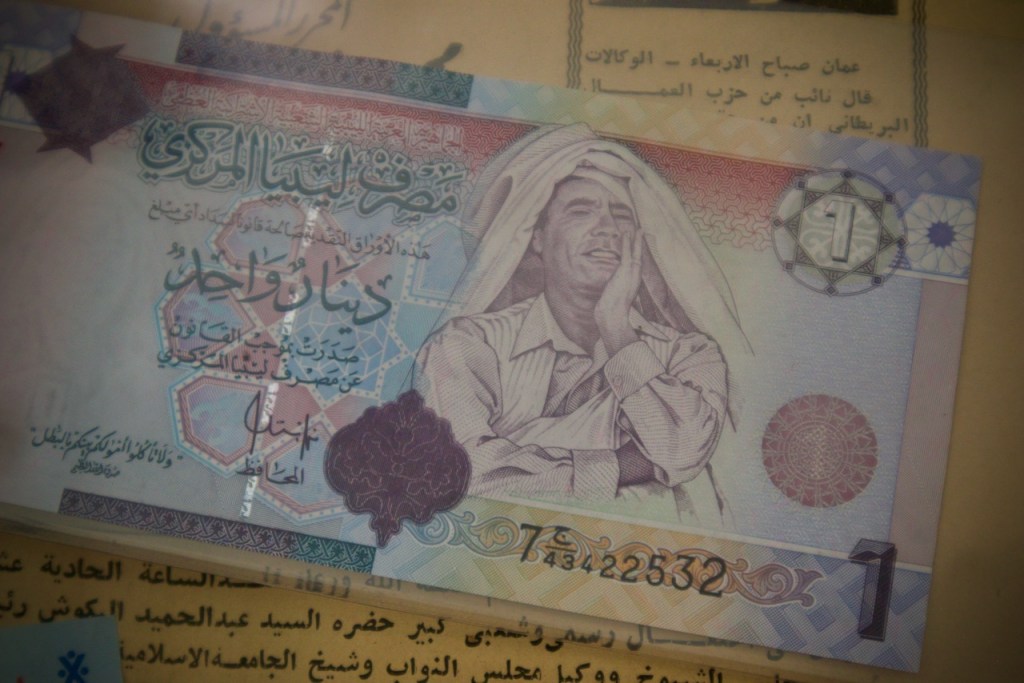
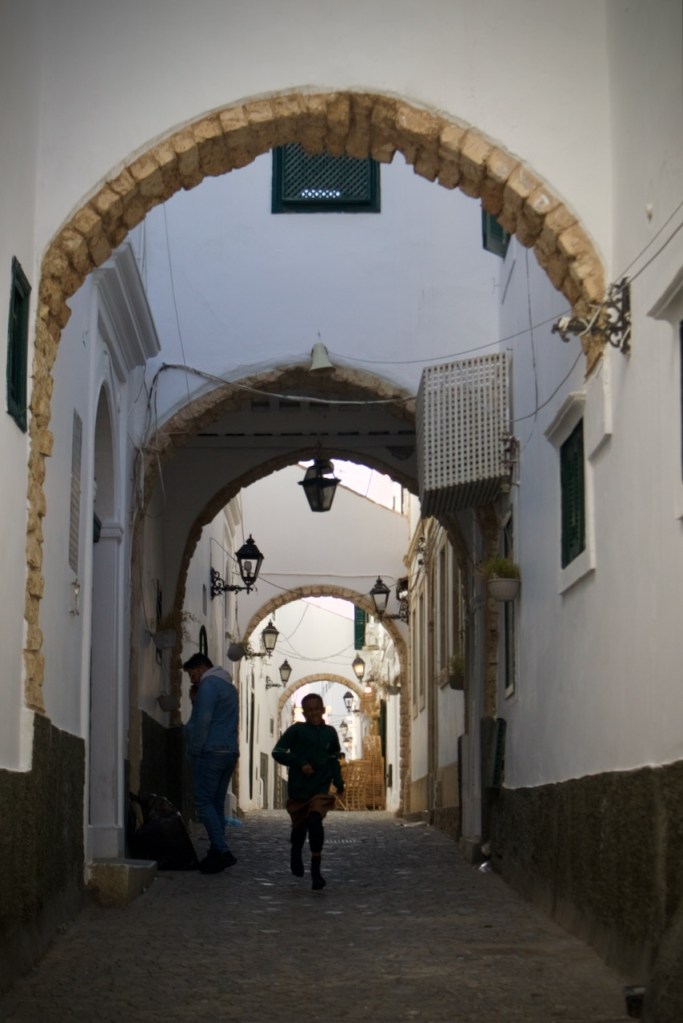
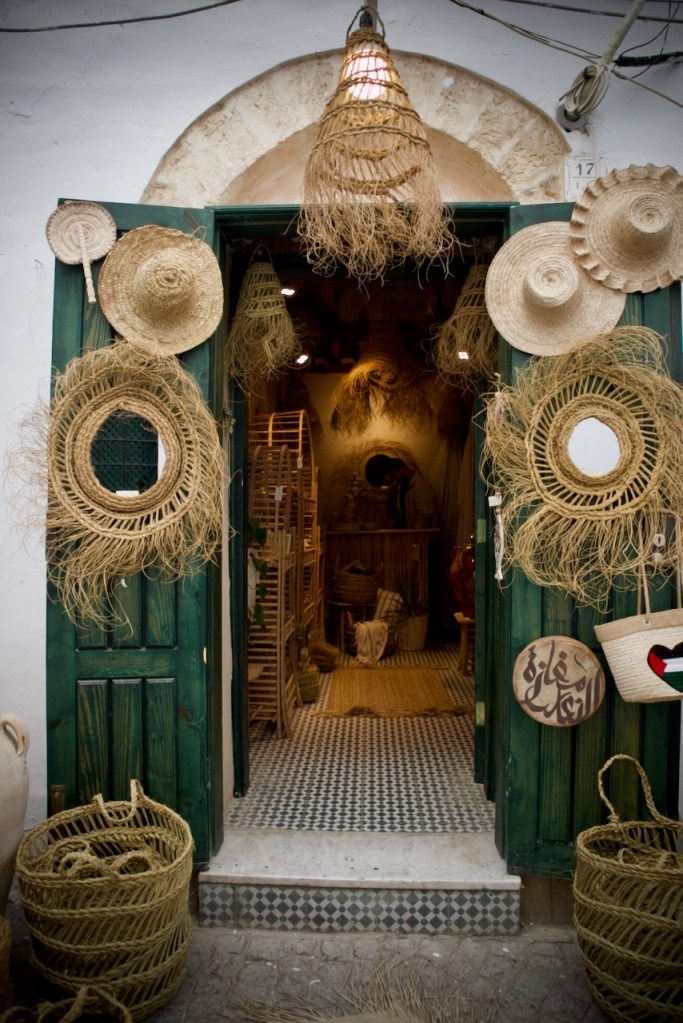
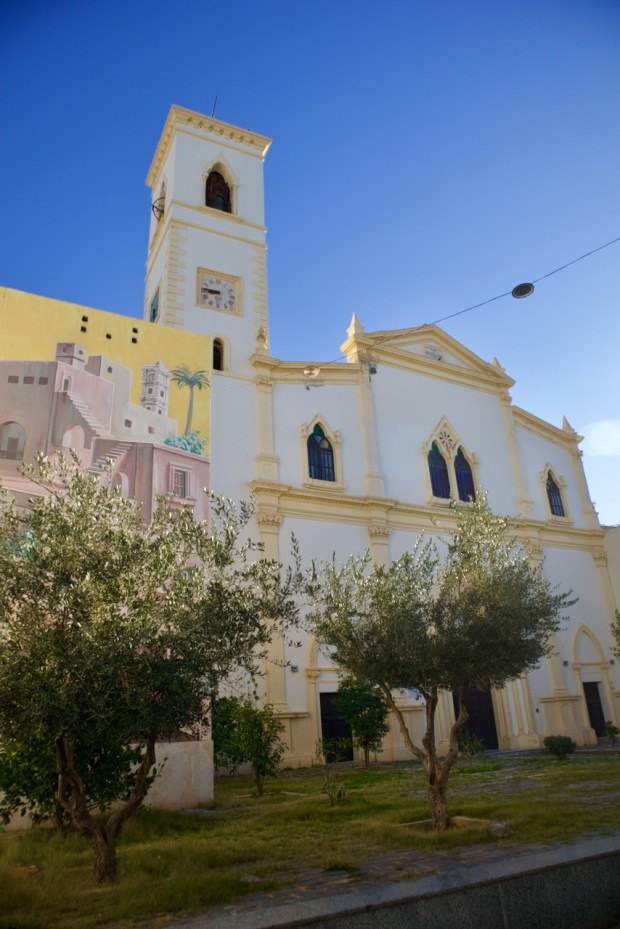
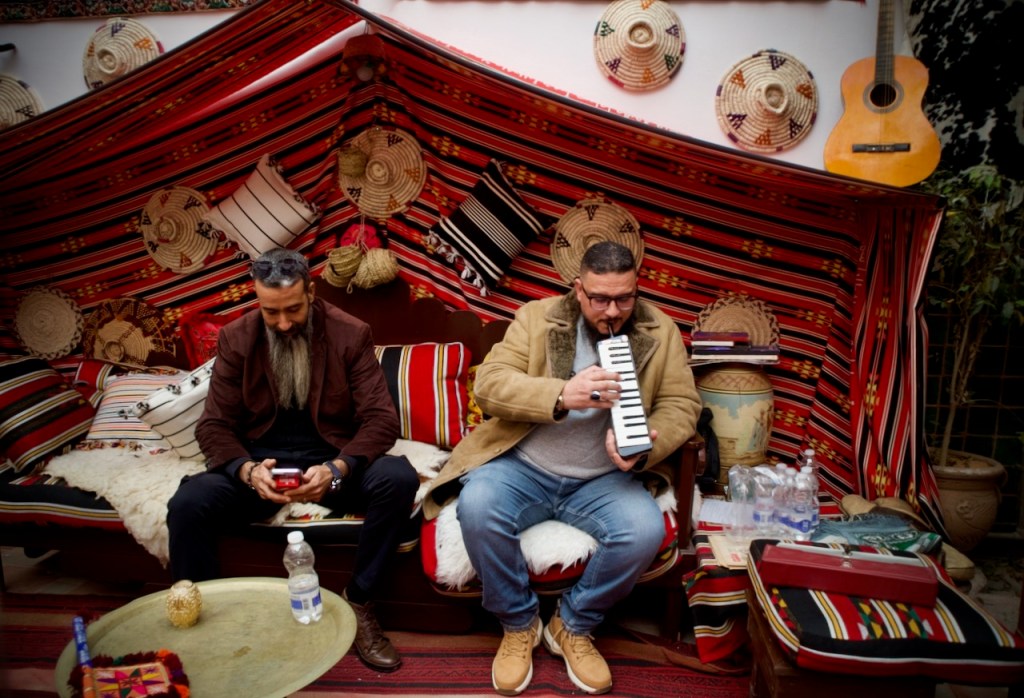
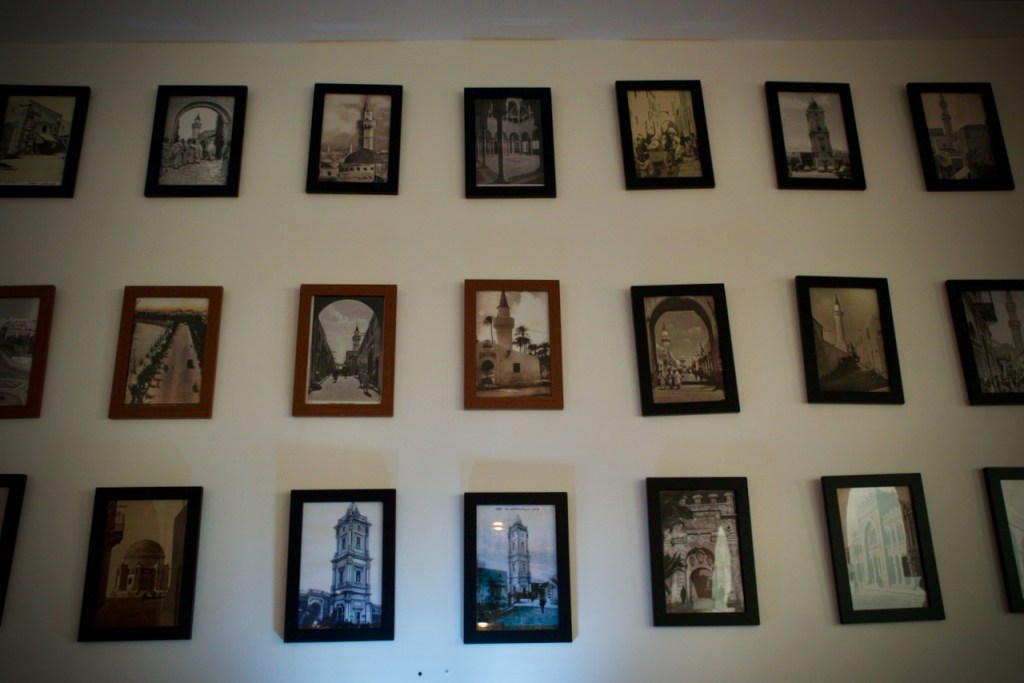
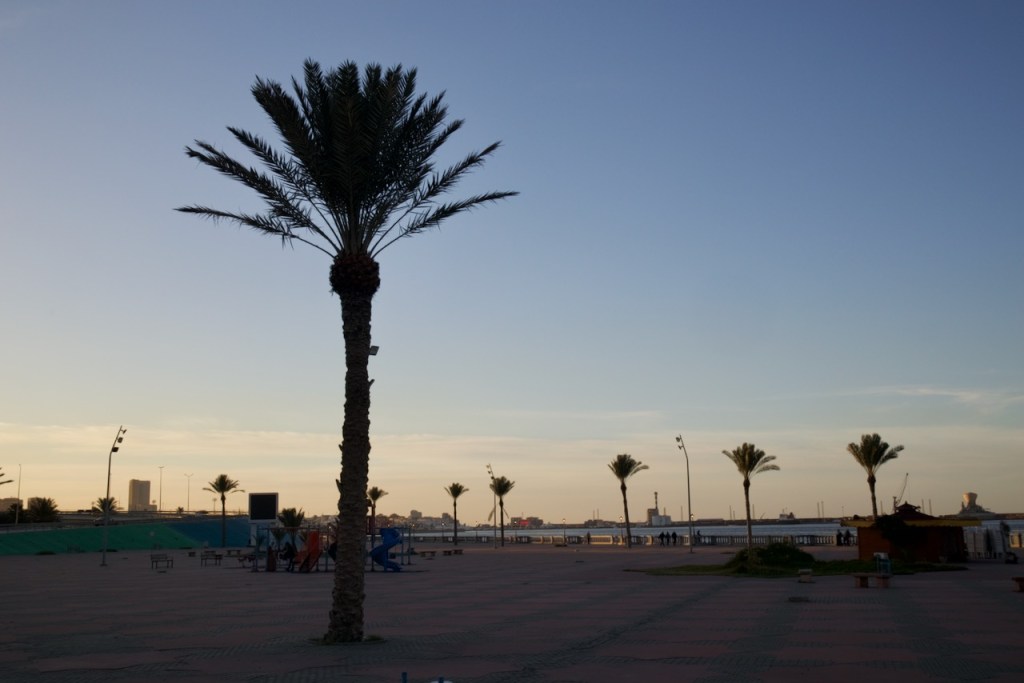
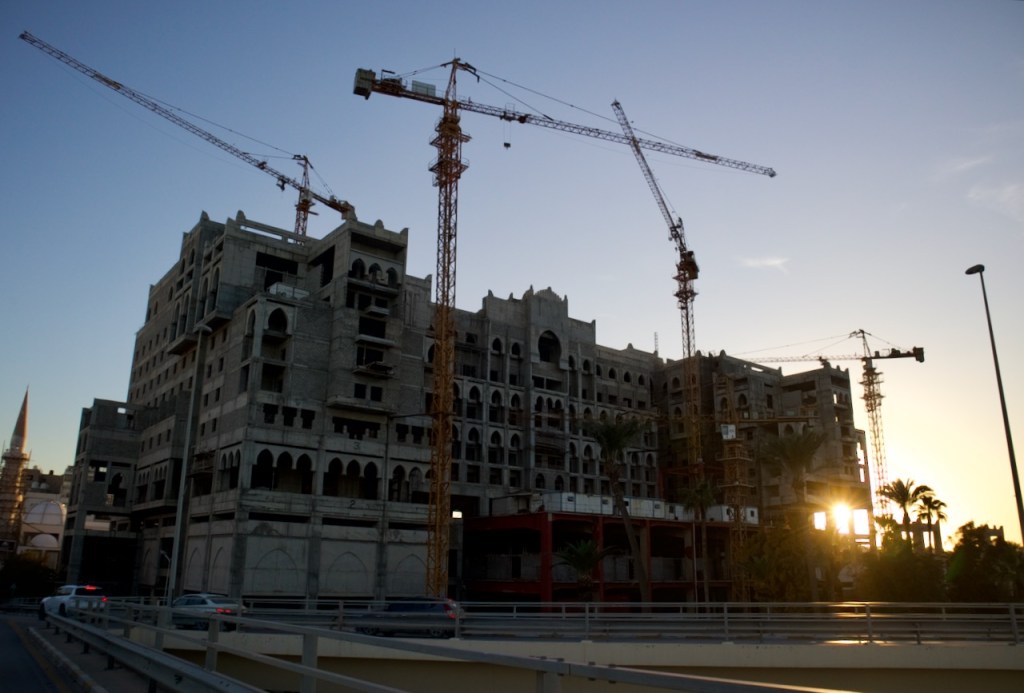
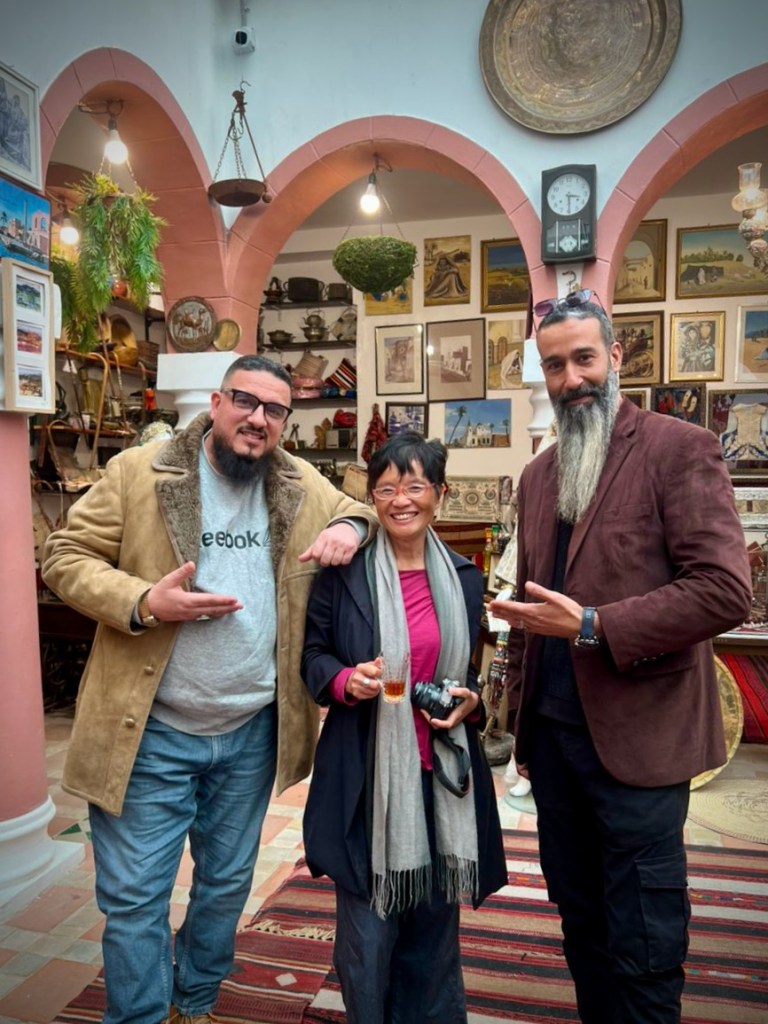
The National Museum is just re-opened and is a real delight. Abou is still tailing my every step, through each sculpture and mosaic, from the Pre-Islamic room to the Civil War. For a few minutes, he loses me, taking selfies, and looks panicked. What an experience trying to outmaneuver your security detail! Finally, last stop on the itinerary: Old Tripoli. I walk through her narrow alleys, passing through the Darghout Mosque, the Arch of Septimius Severus, the souk, the former Banci di Roma and French consulate, Turkish prison, harem-turned cafe, and Santa Maria Church. There is great commotion in town, as the Libyan government has just announced the closure of the black market. Five days! the dealers are told before they tighten their act and declare all cash. Along the French Street, I hear some notes and venture into Antique Origins to find Hisham, the co-owner, playing a small accordion. What a treasure trove here! Victorian chests and oriental rugs, Ghadames shoes and Libyan paintings, Qaddafi memorabilia and antique jewelleries… Come this way, Hisham says, and shows me a pair of exquisite Thai/Cambodian bronze statues. When are you leaving? he asks. Tomorrow, I reply. Time to go, Ali, my guide says. Maybe this is what life looks like after a four-decade-long authoritarian rule. Fear, paranoia, control…

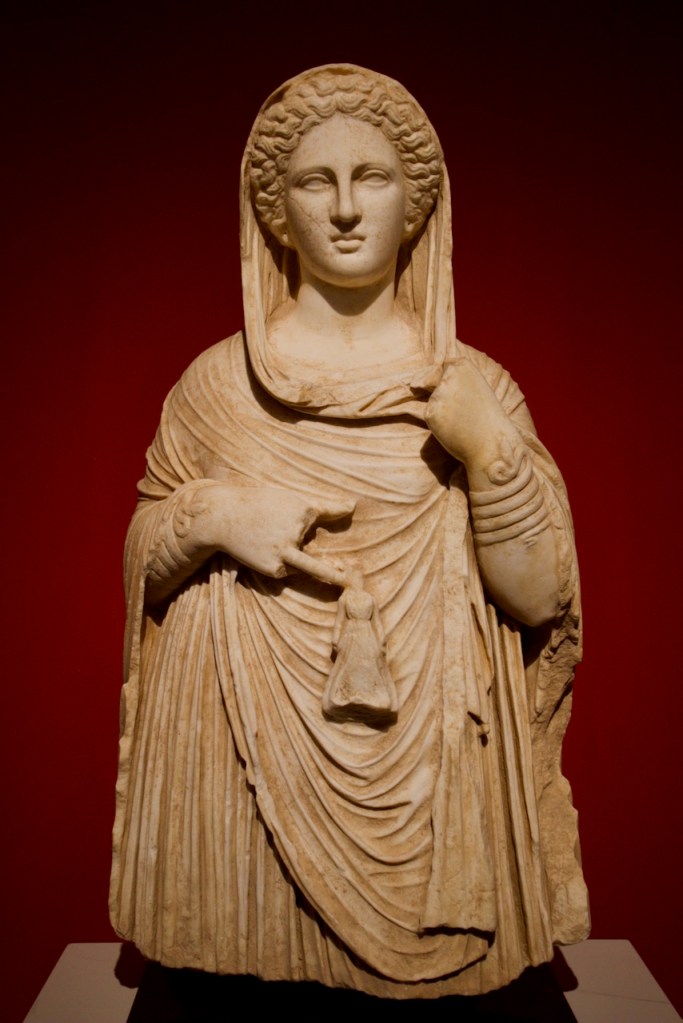
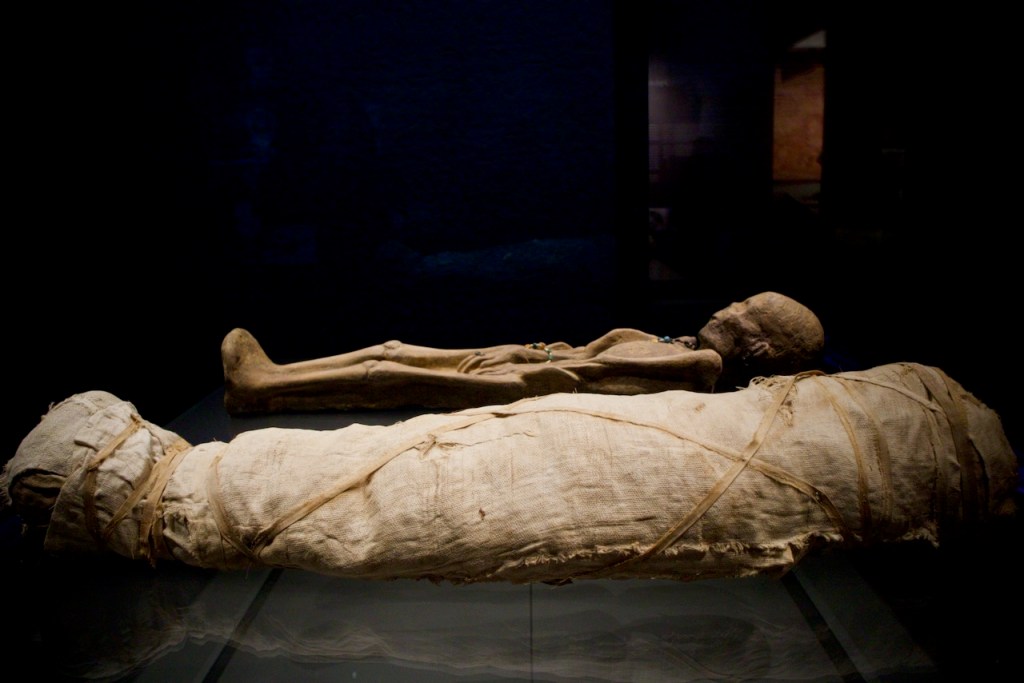
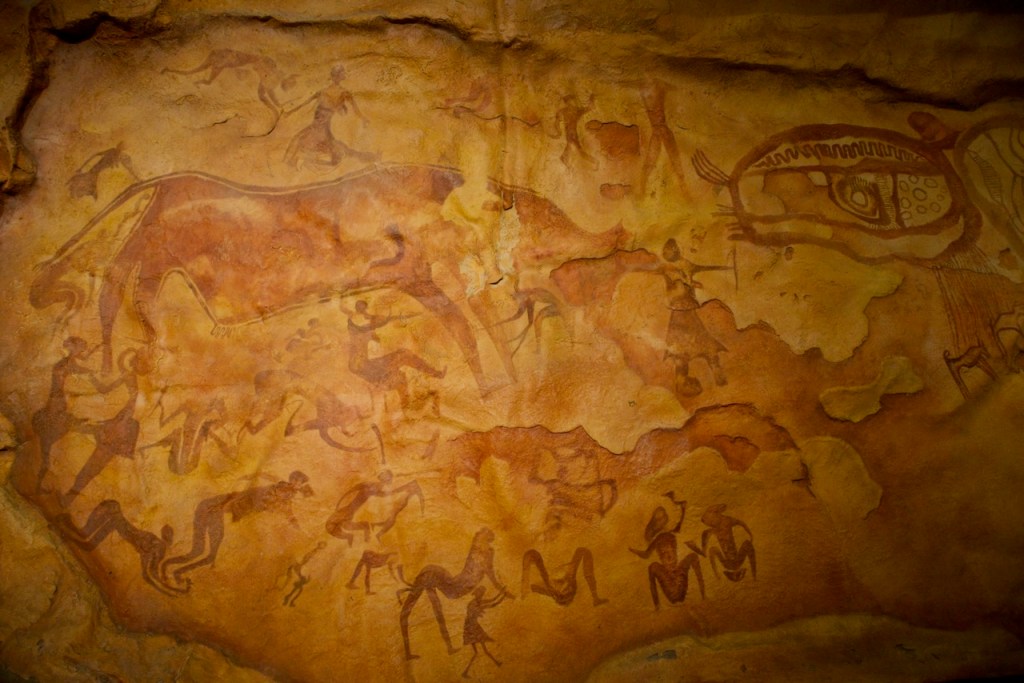


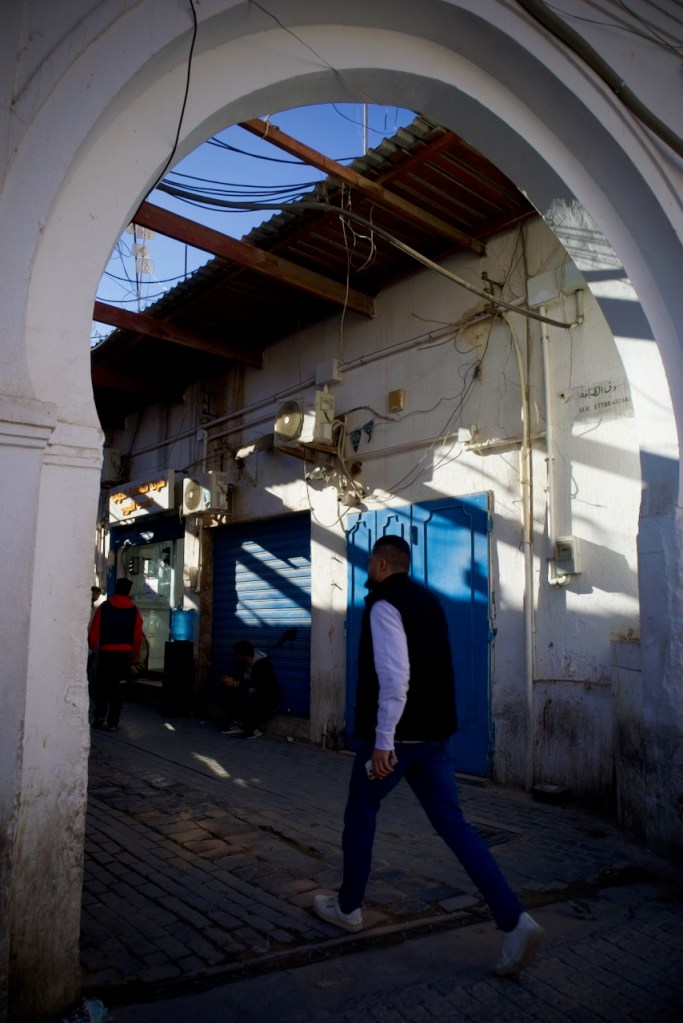
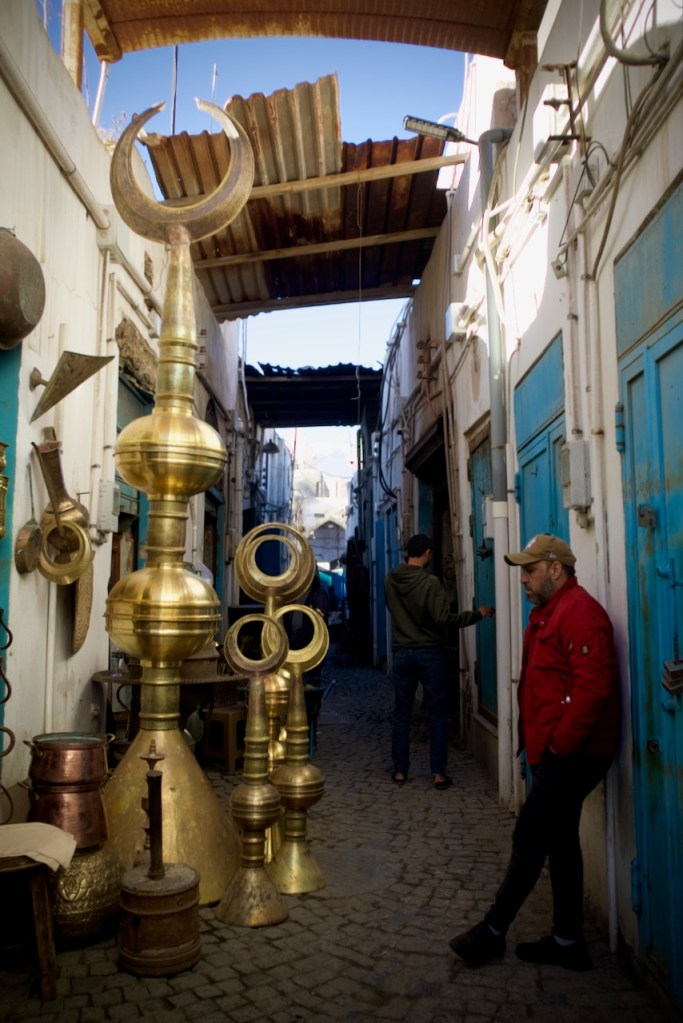
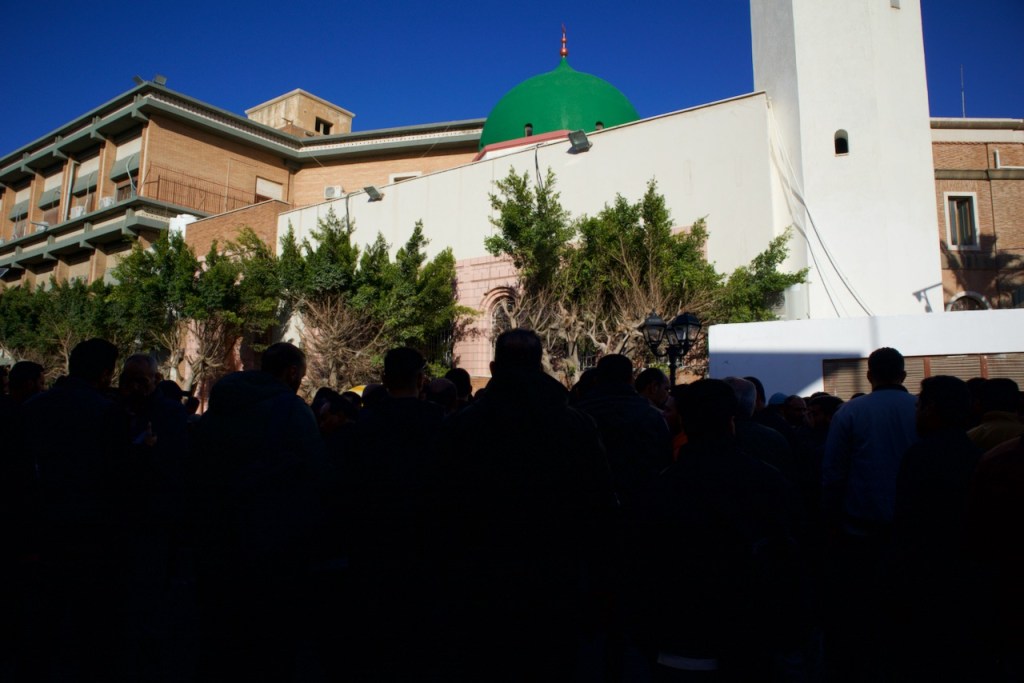

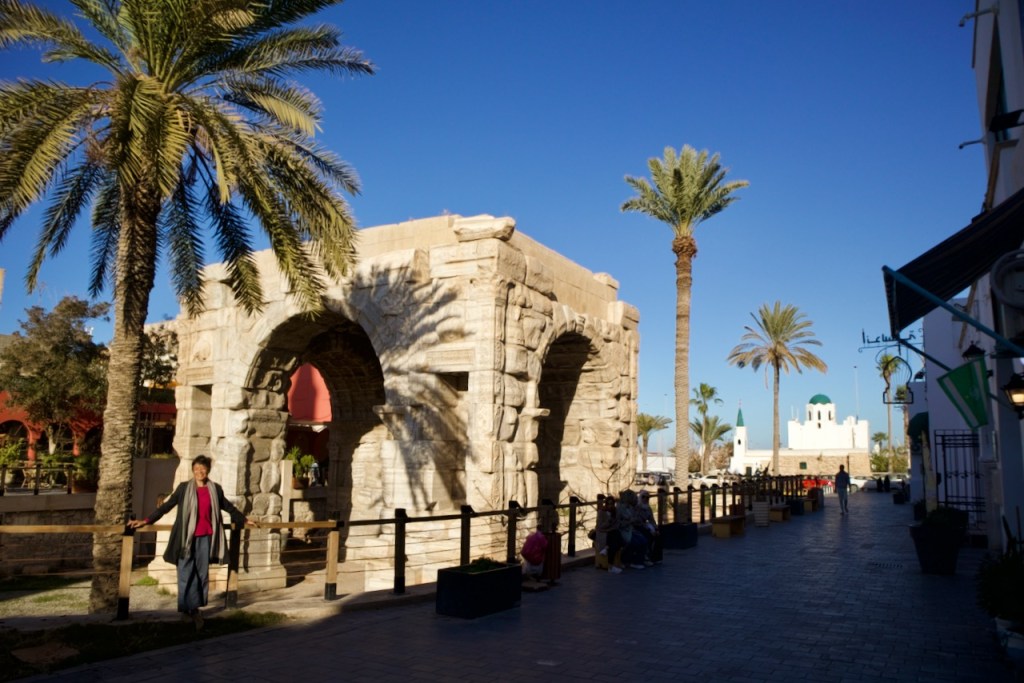
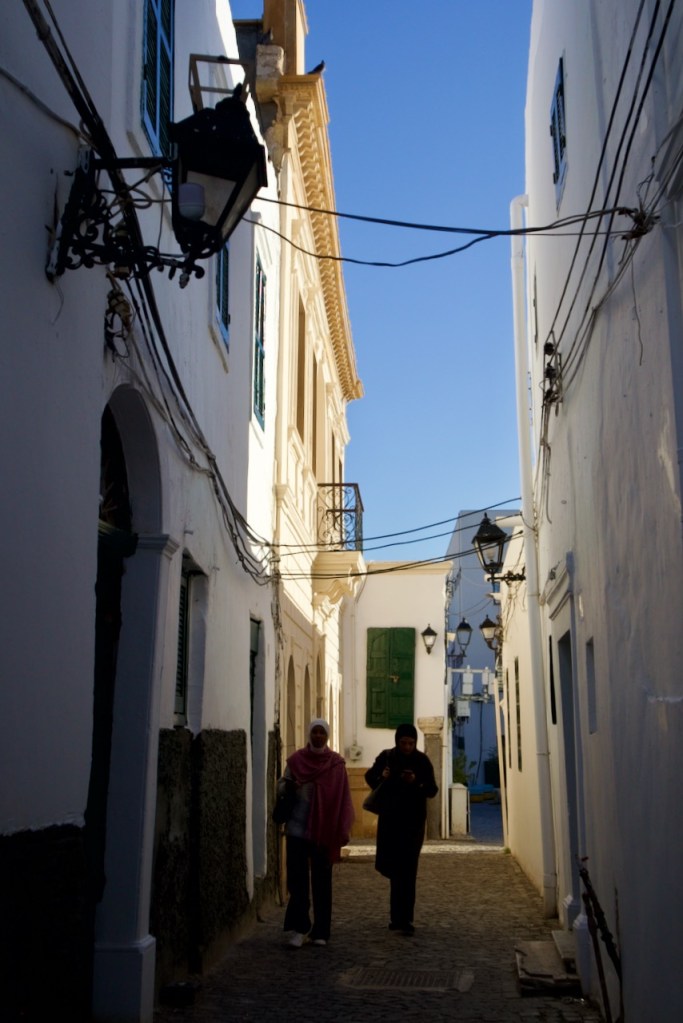
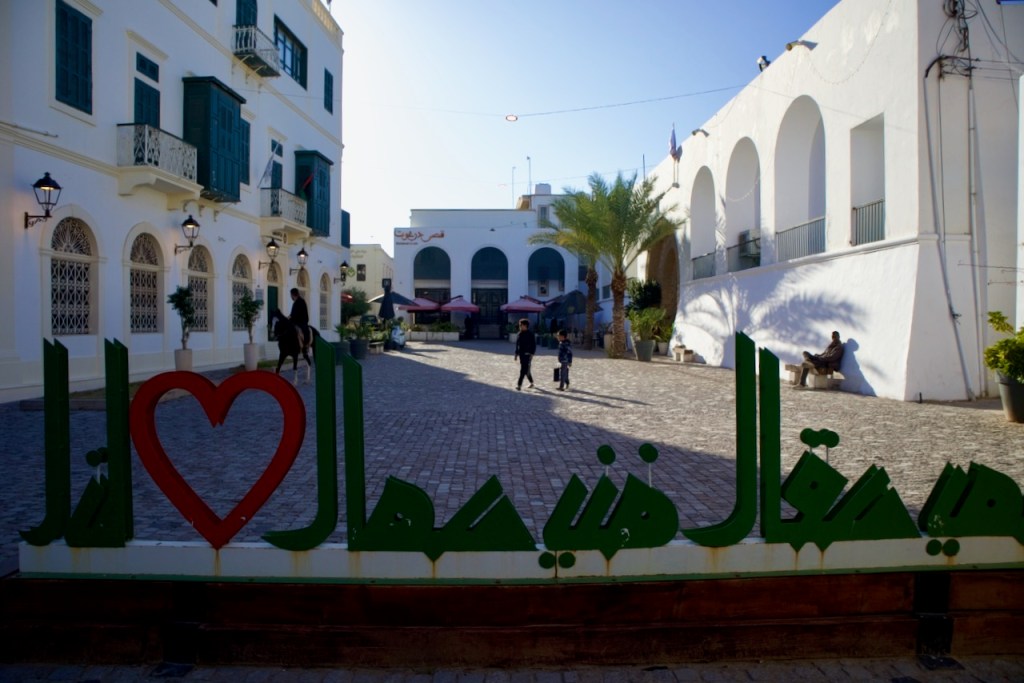
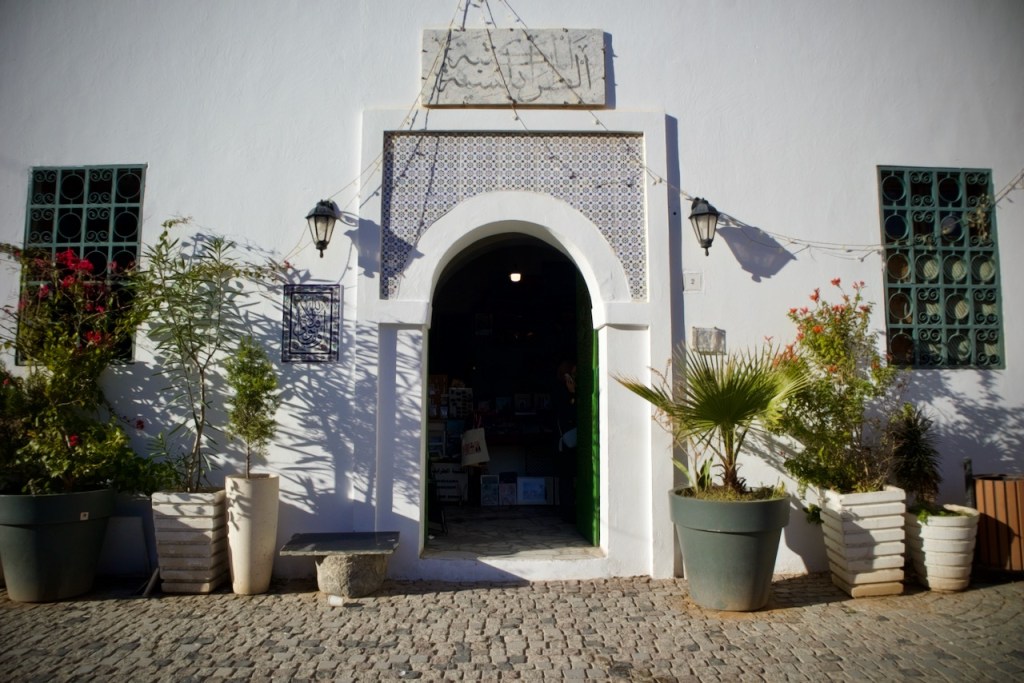

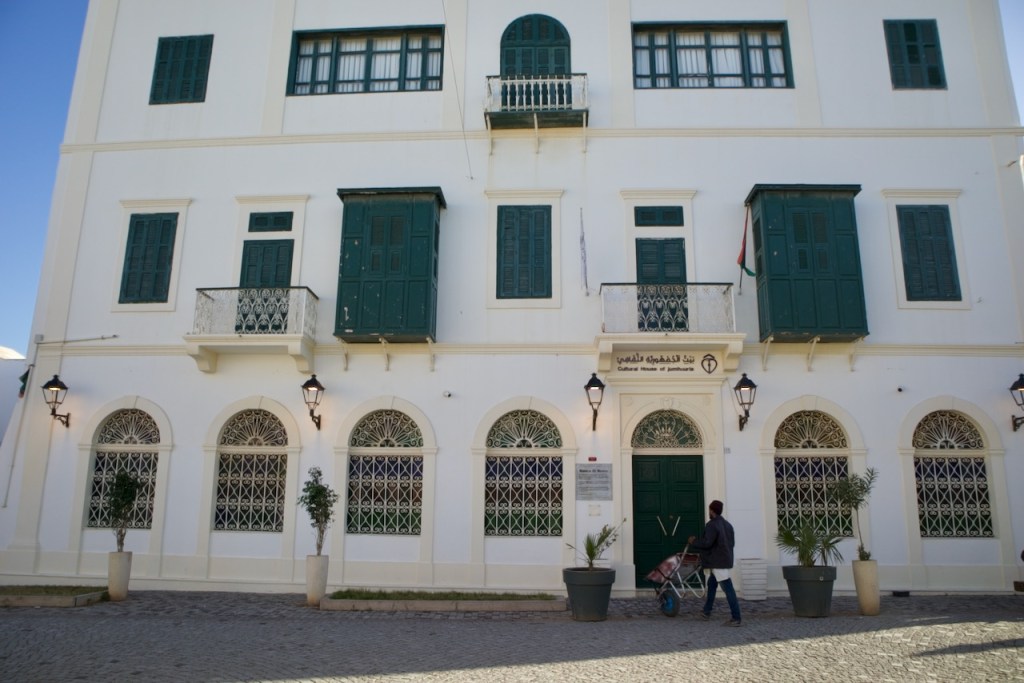
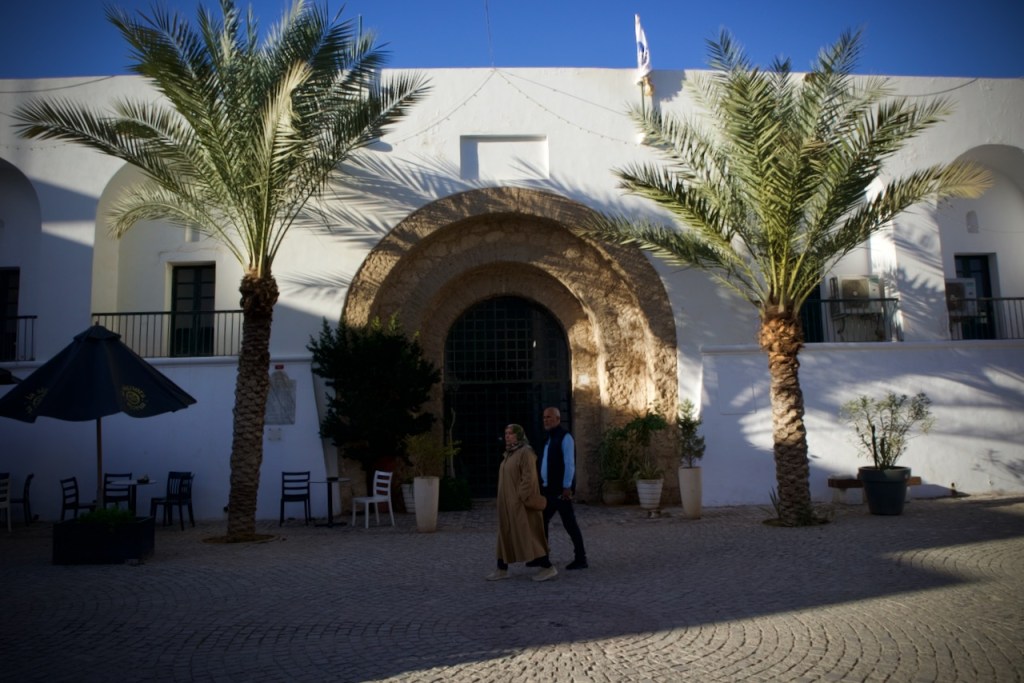
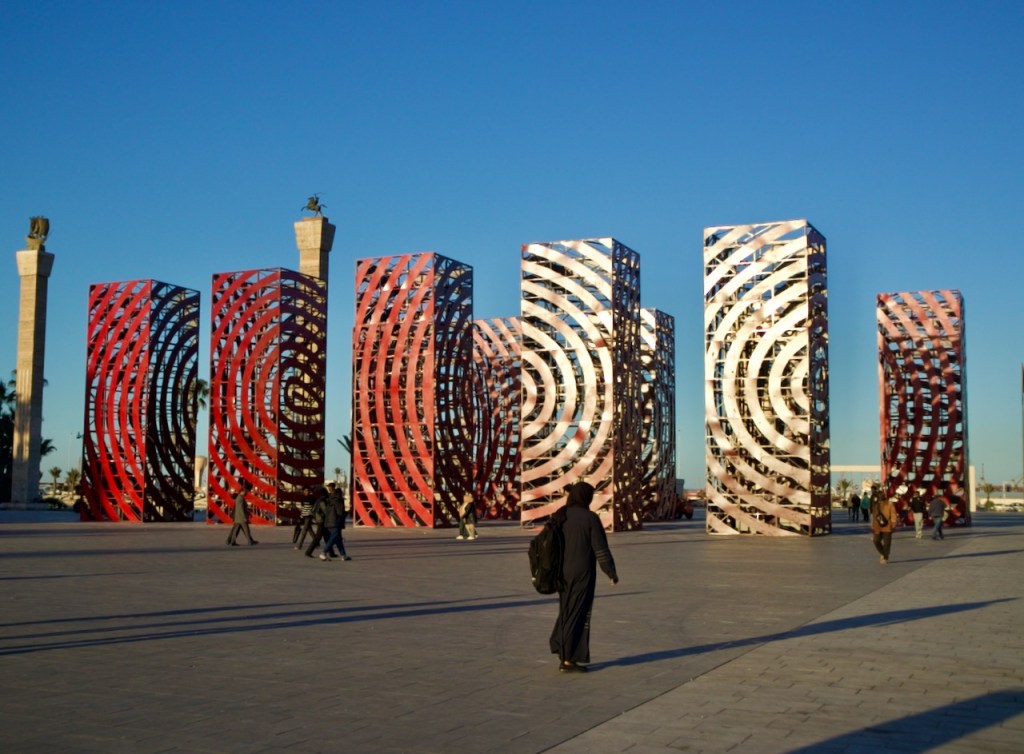
I would have preferred to stay longer, sans guide and security, to linger and take more documentary portraits of warm and charming locals and explore exquisite colonial architecture. The Libyans have endured so much – through colonization, authoritarian rule, and bloody civil war – and countless stories of their lived experience remain to be told. Libya, unfortunately, has also become an epicentre of a migrant crisis. Refugees from various African and Middle Eastern countries find their way to Tripoli as a transit point before making it to Europe, often risking their lives in the dangerous Mediterranean passage. Alas, a short organized tour allows neither time nor space not to gather their stories. Let’s hope that the road brings me back to Libya.
And then there is always the Sahara, beckoning me…

This is part of a seven-country tour in post-conflict societies in the Middle East and the Horn of Africa in 2025 from Syria to Iraq, Saudi Arabia, Libya, Eritrea, Djibouti, and Somalia. A scheduled trip to Yemen as part of this project was cancelled due to renewed conflict in the country at the time of writing.
Syria: on the Road to Damascus
All Content © 2026 by Jennifer Chan
 Jennifer Chan Photography