

If we dare to write about the remains of a homeland
that is scattered in pieces and in decay
in decadence and disarray
about a homeland that is searching for a place
and about a nation that no longer has a face
– Nizar Qabbani
November 2025
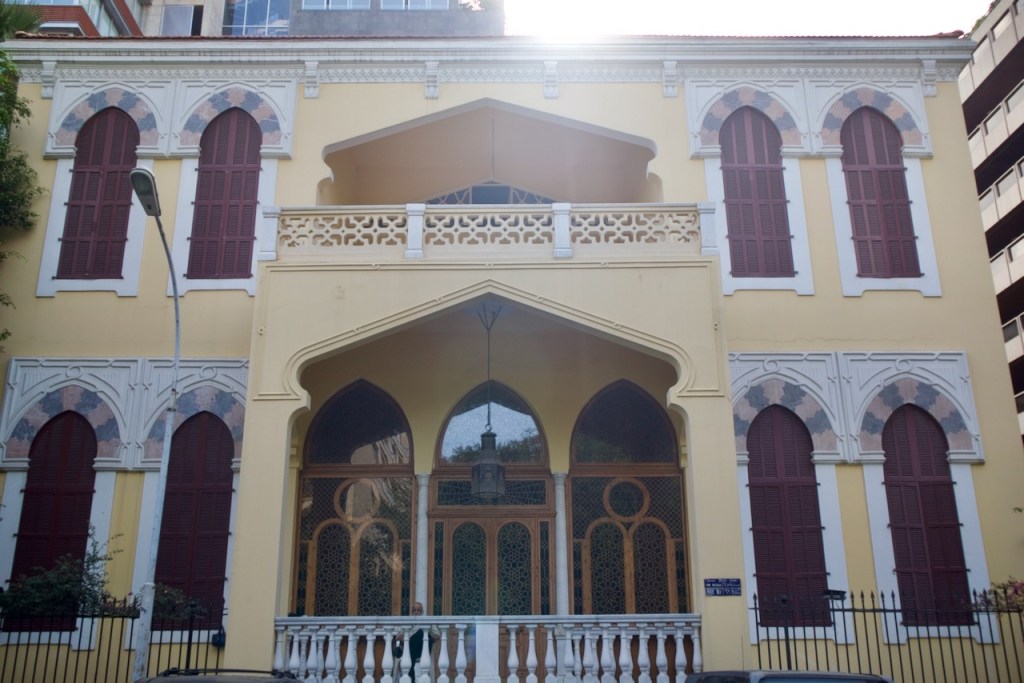
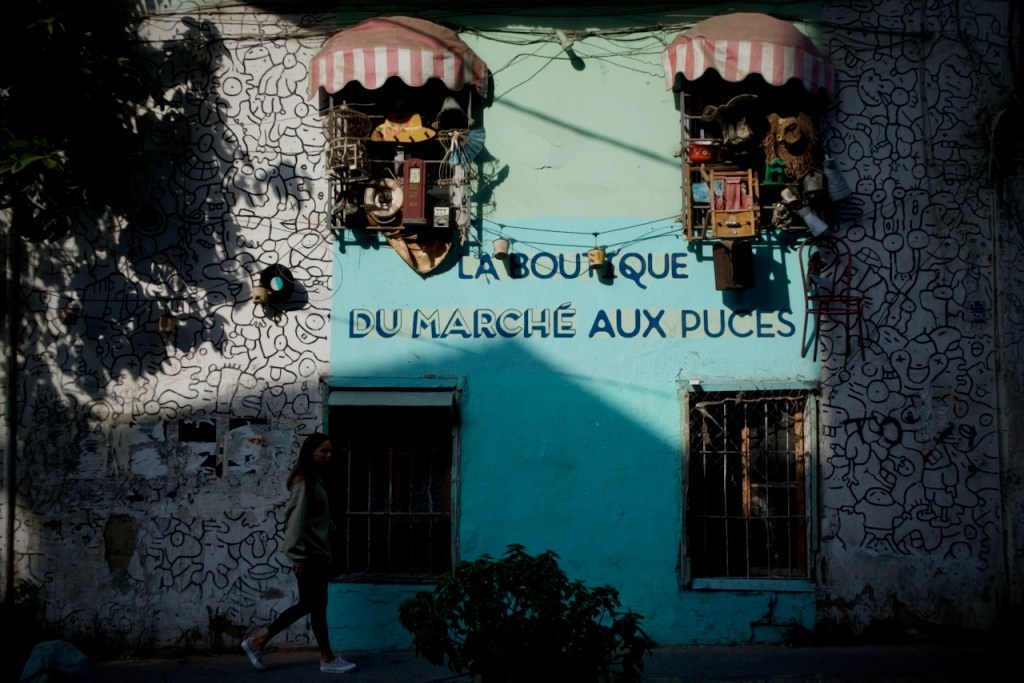
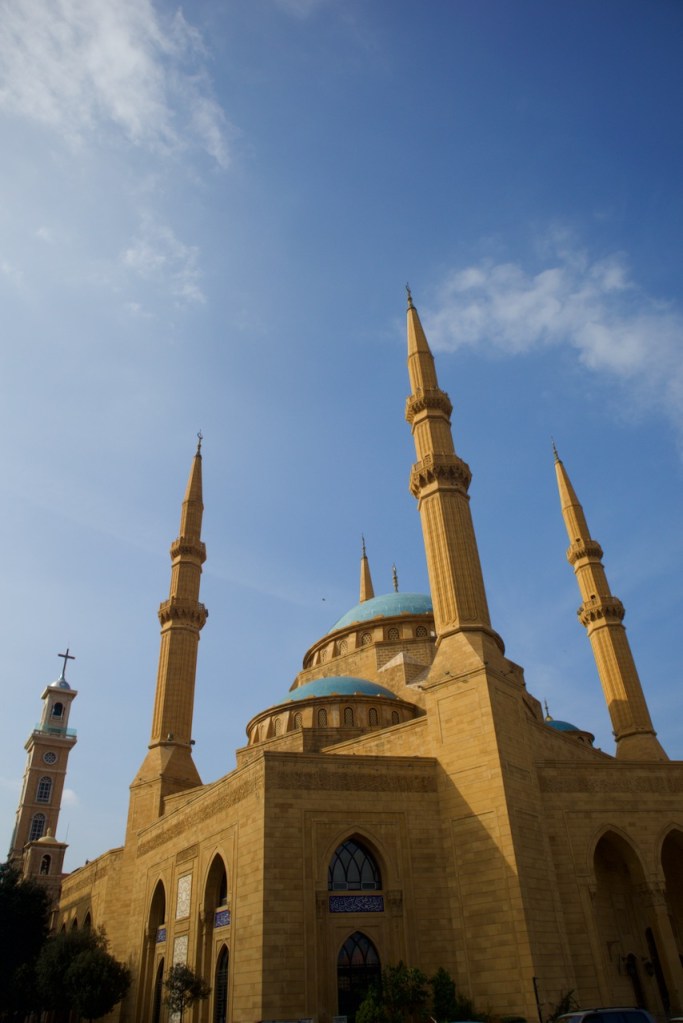
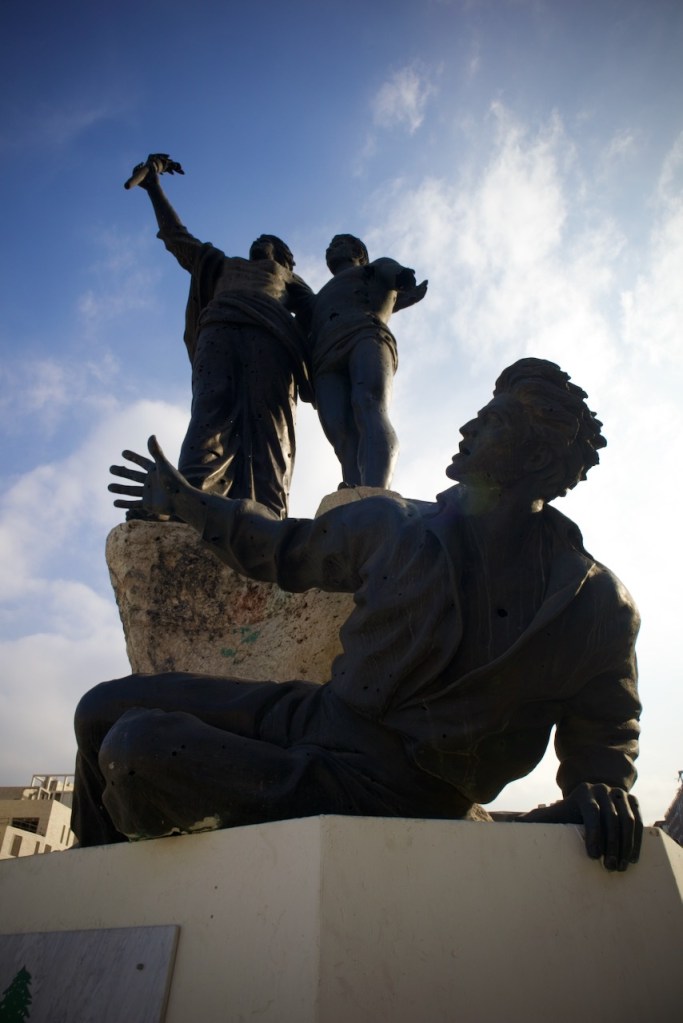
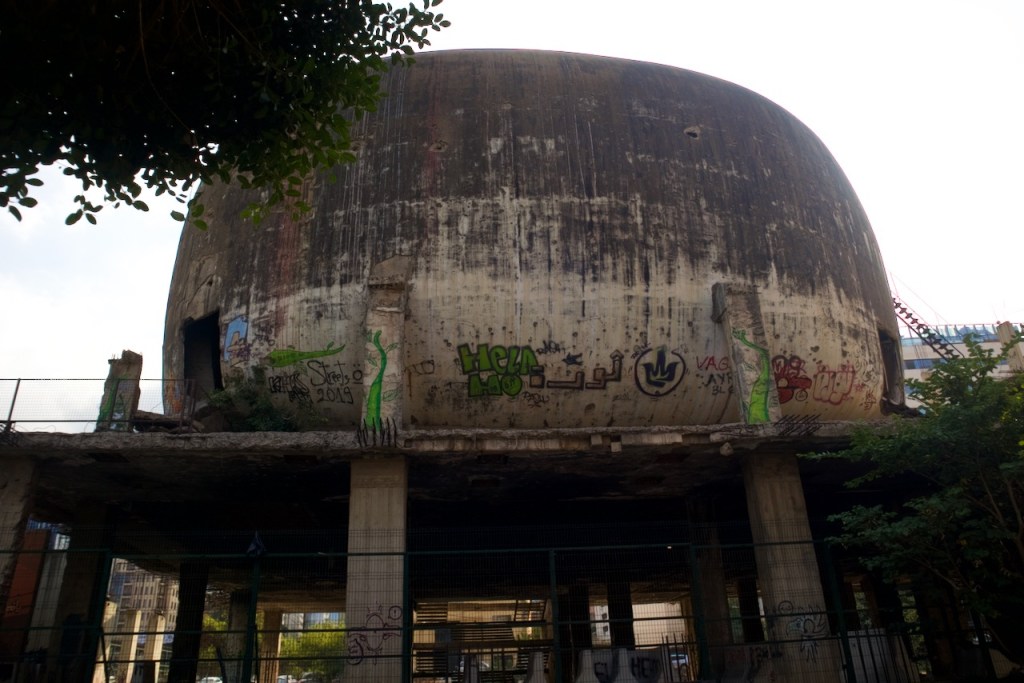
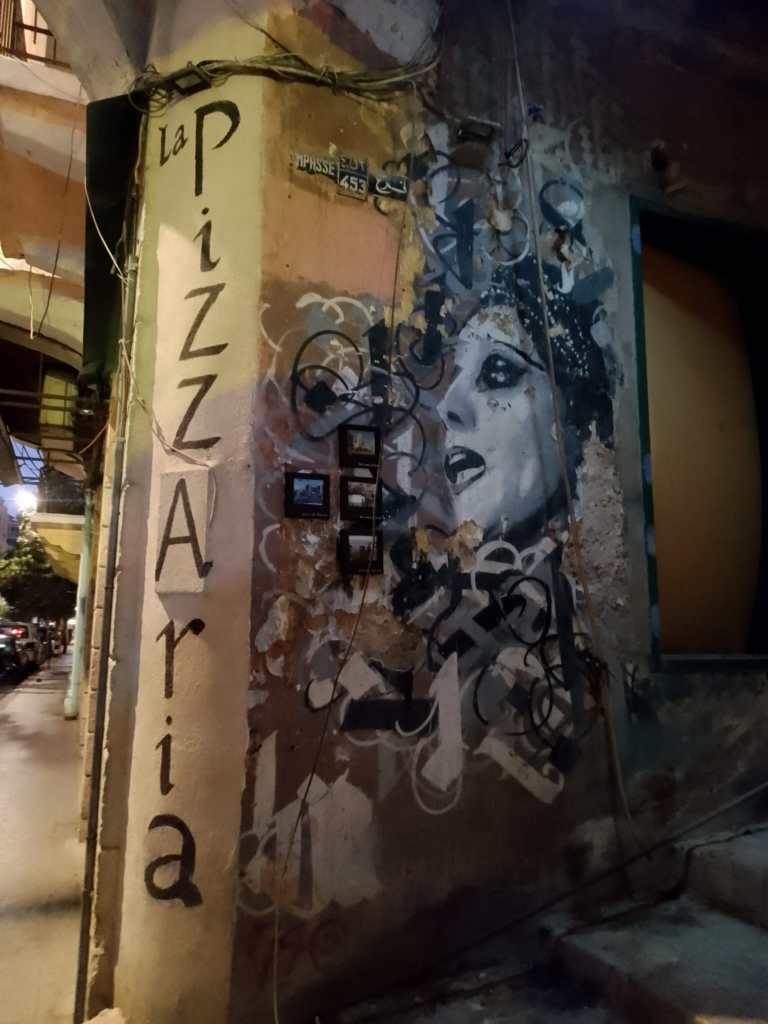
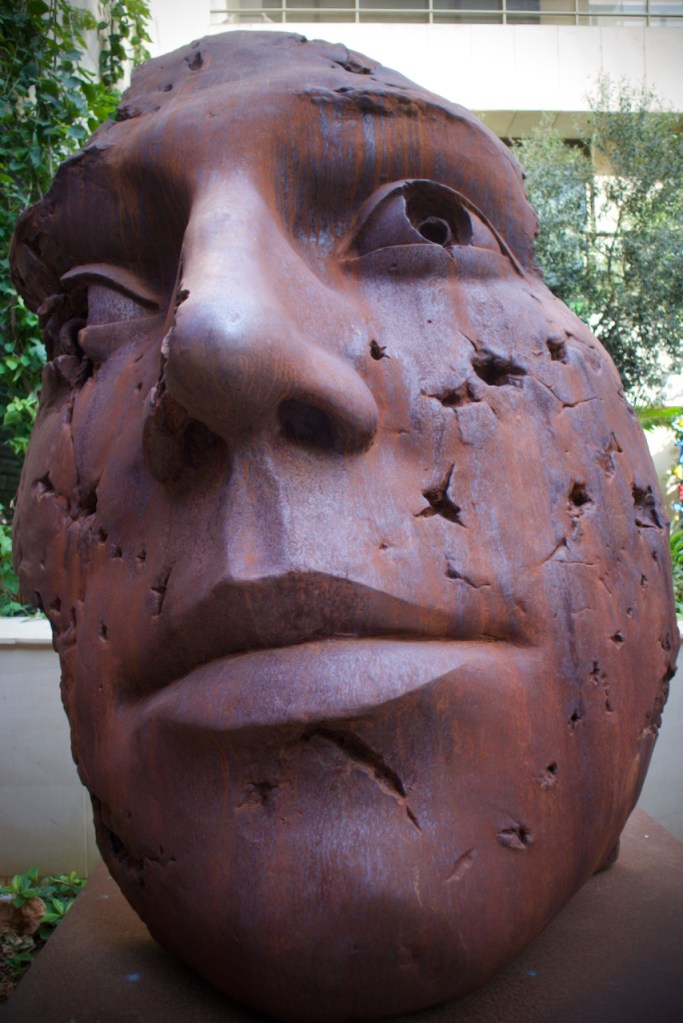
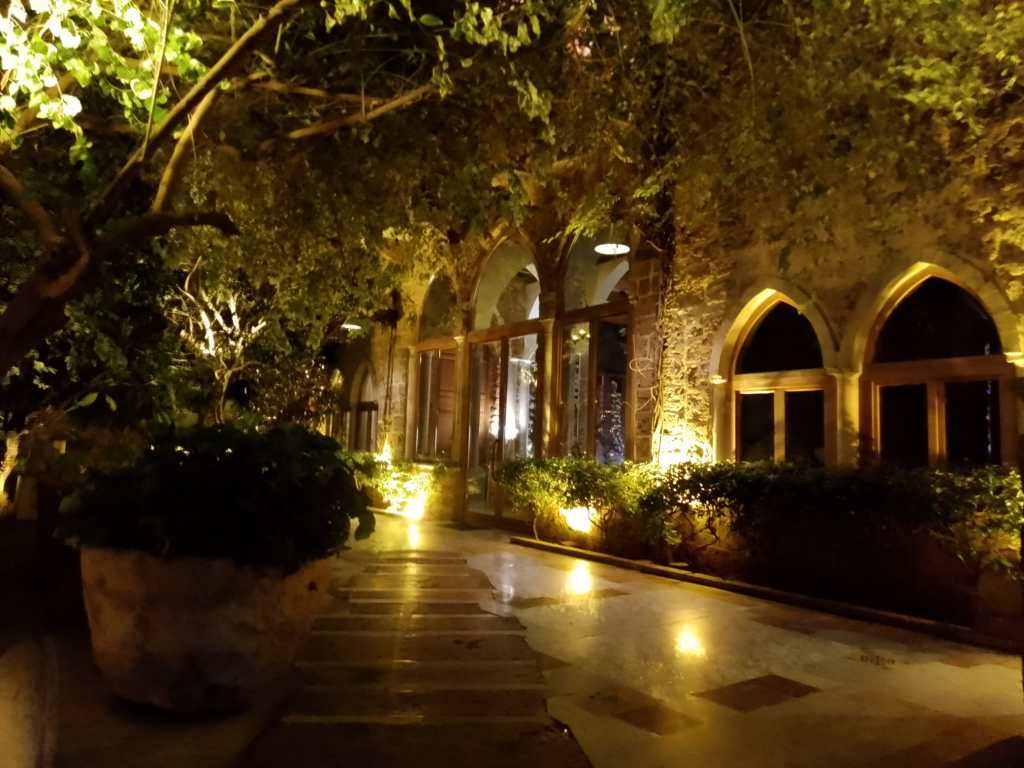
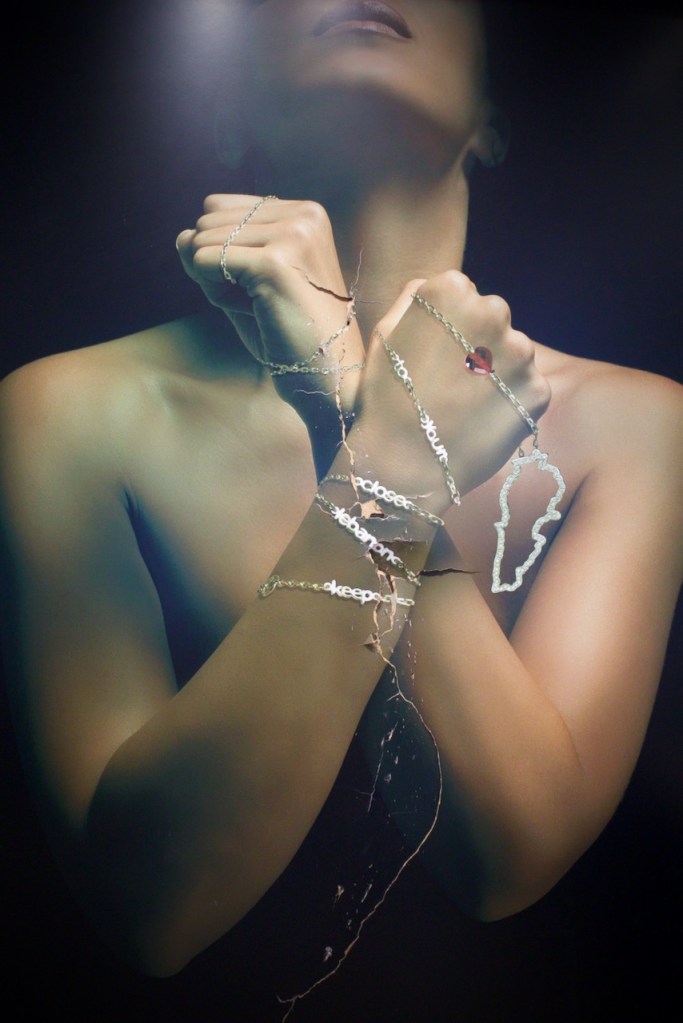
I was in the Bekaa Valley in Lebanon for a documentary photo project on Palestinian and Syrian refugees in 2018. Syria was just across the mountains, so close and yet so faraway. The civil war was still raging then; it was not the most prudent thing to overland. Seven full years later, the road takes me back to this beautiful but troubled region. I arrive two days early before my tour in Syria begins so I could revisit Beirut, this gem of a city in the Middle East. From Gemmayze, Beirut’s Soho, I retrace my steps from the bohemian neighbourhood to the city centre, passing through charming cafes and trendy bars, the grand Mohammed Al Amin Mosque and the bullet-riddled Martyrs’ Square. The economic crisis has worsened still since my last visit. Hyperinflation now requires merchants to have bill counting machines. One euro gets you 100,000 Lebanese pounds, and a taxi ride sets you back a million! I imagine locals dedicating entire rooms to store their rapidly devaluing bills. In addition to pockmarked buildings from the civil war era, the cityscape is now dotted with plenty of unfinished building projects like the Four Seasons and the Hiltons. As if life was not hard enough, bombs fell in Beirut centre as part of the fallout of the Israel-Palestine conflict before the ceasefire was implemented just a month earlier. Beirut feels enveloped in some passing cloud of doom that no glitzy nightlife or nonstop flowing booze could gloss over…



On the Road to Damascus
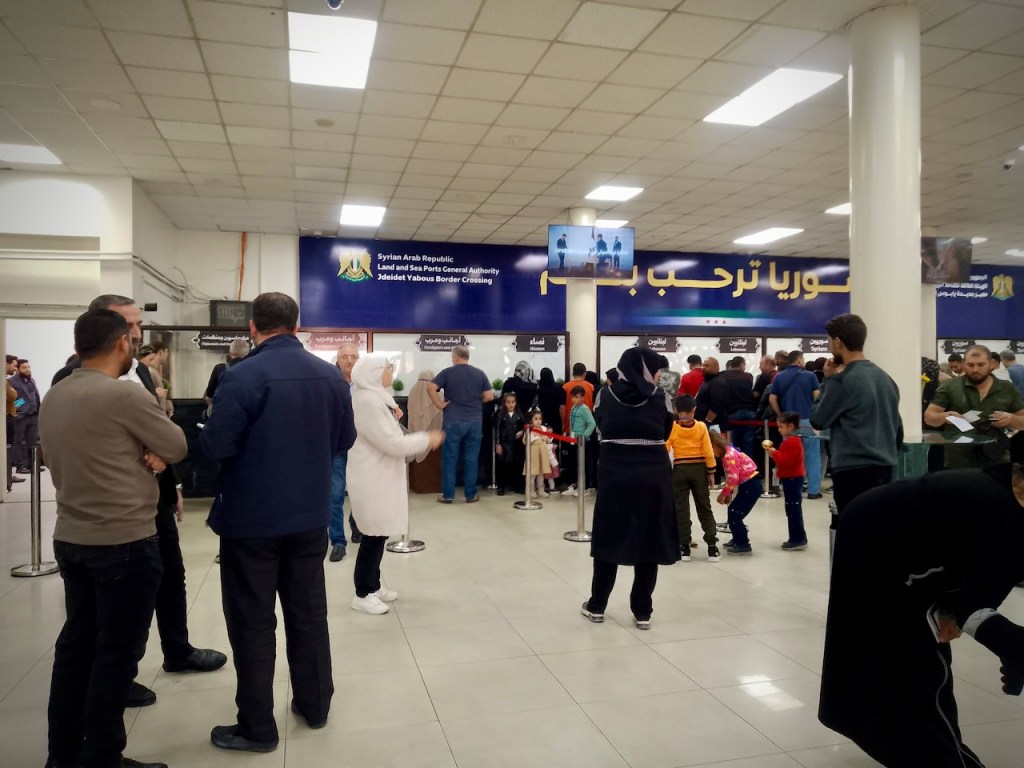
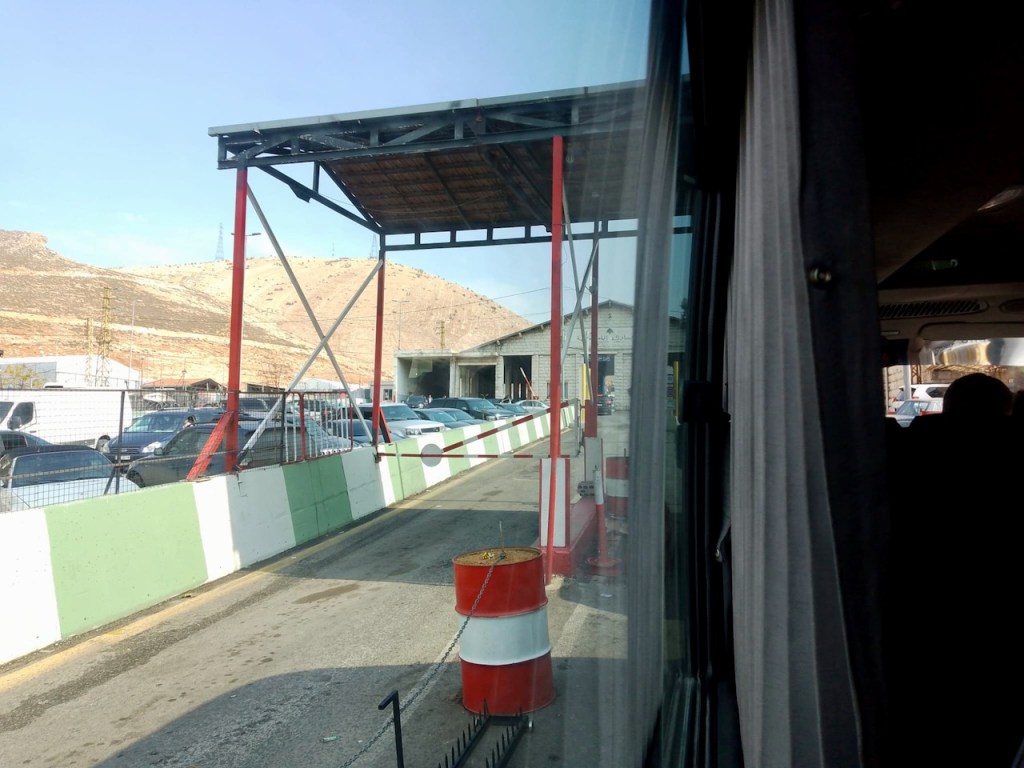
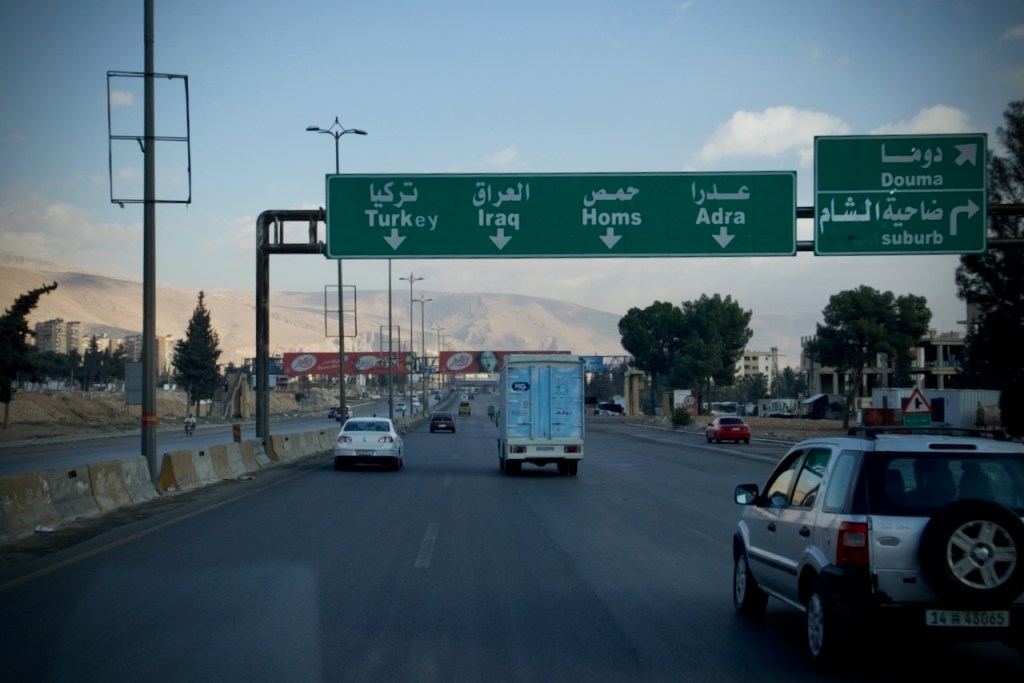
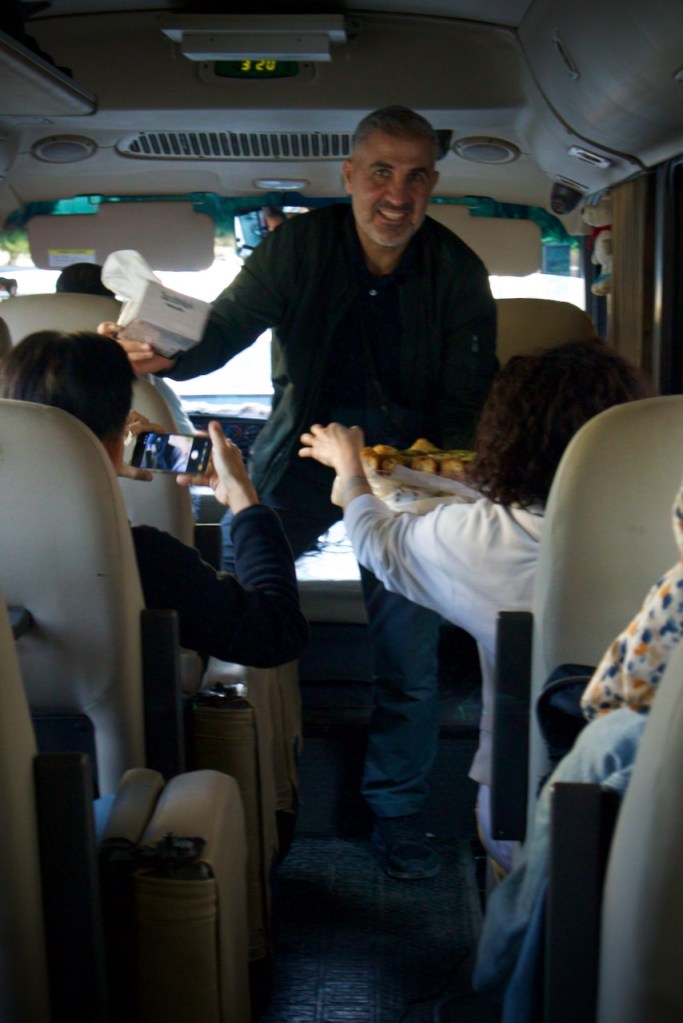
It’s time to cross the border. After the kilometre-long no man’s land, we arrive at Syrian immigration. There is palpable excitement in our group, hailing from Asia, Europe, and North America. Syrian Guides, our tour company, has pre-arranged the paper work for our visa on arrival (US75 for EU passport holders) that takes about an hour. Everything seems in order except a border agent mumbles jumbles something, a question apparently about any alcohol possession. None whatsoever, our guide responds. Don’t you worry! I know where to take you tonight, Bashar says to us, smilingly, when all is cleared. Finally, we are on the road to Damascus!
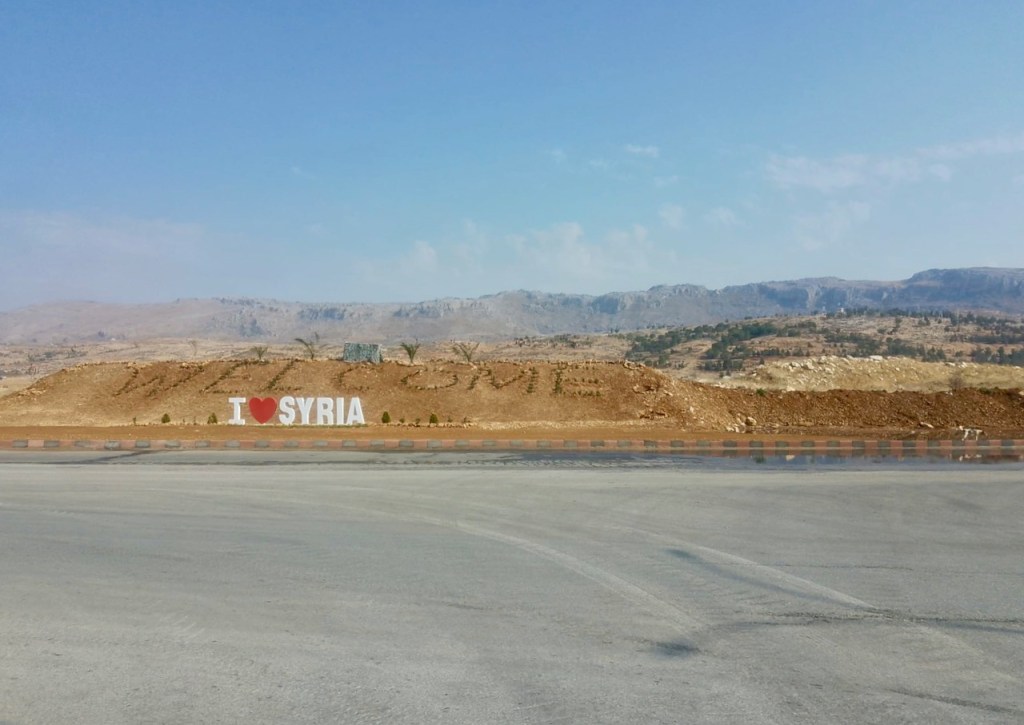
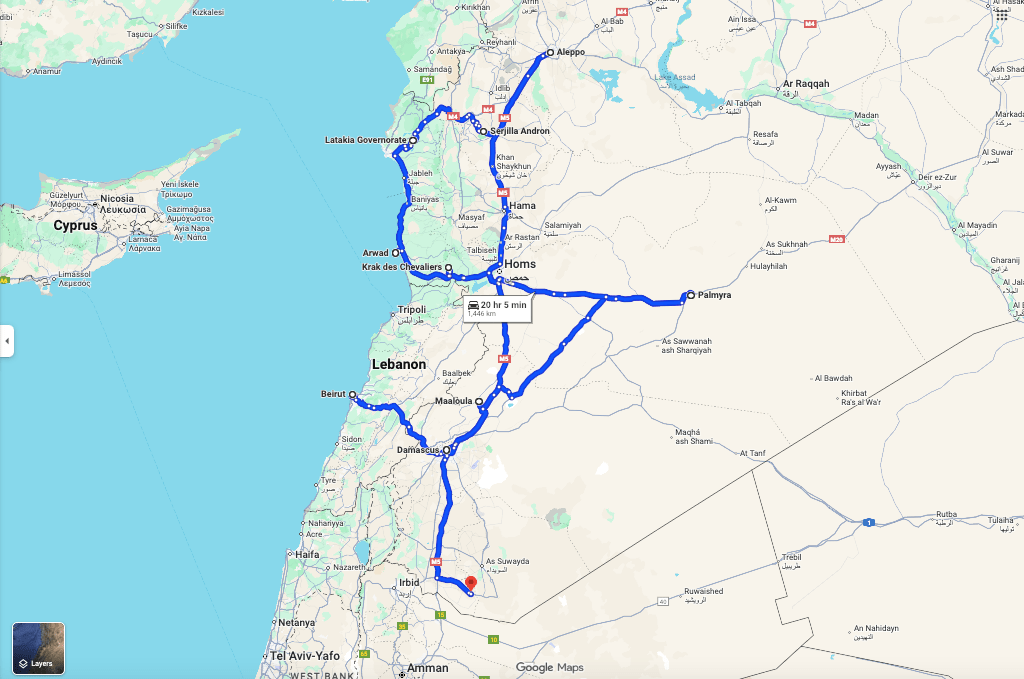
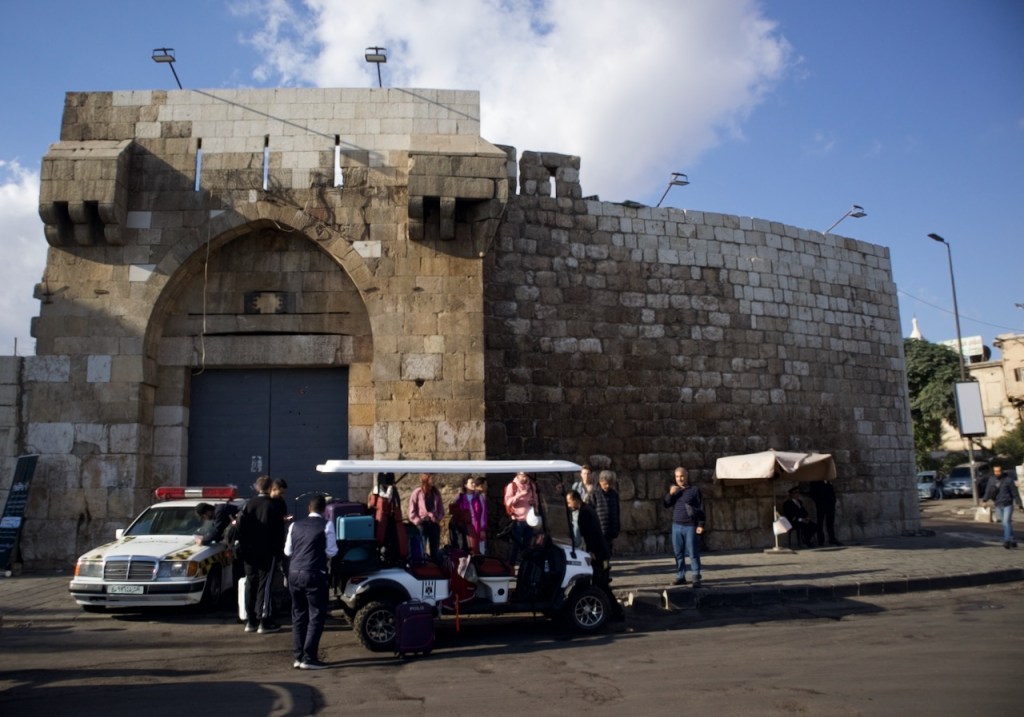
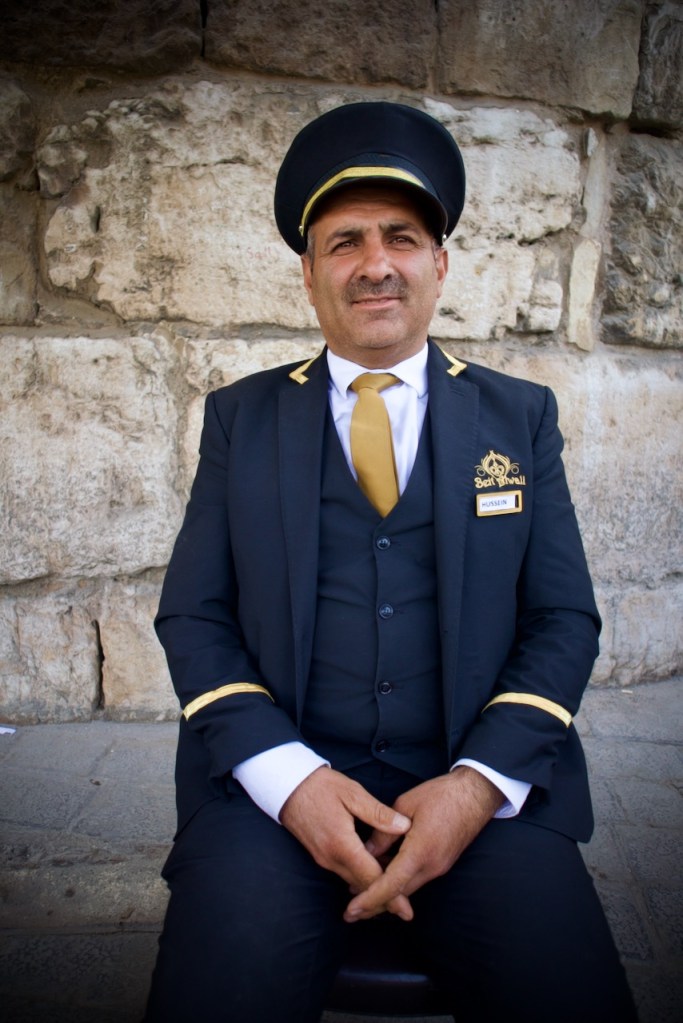
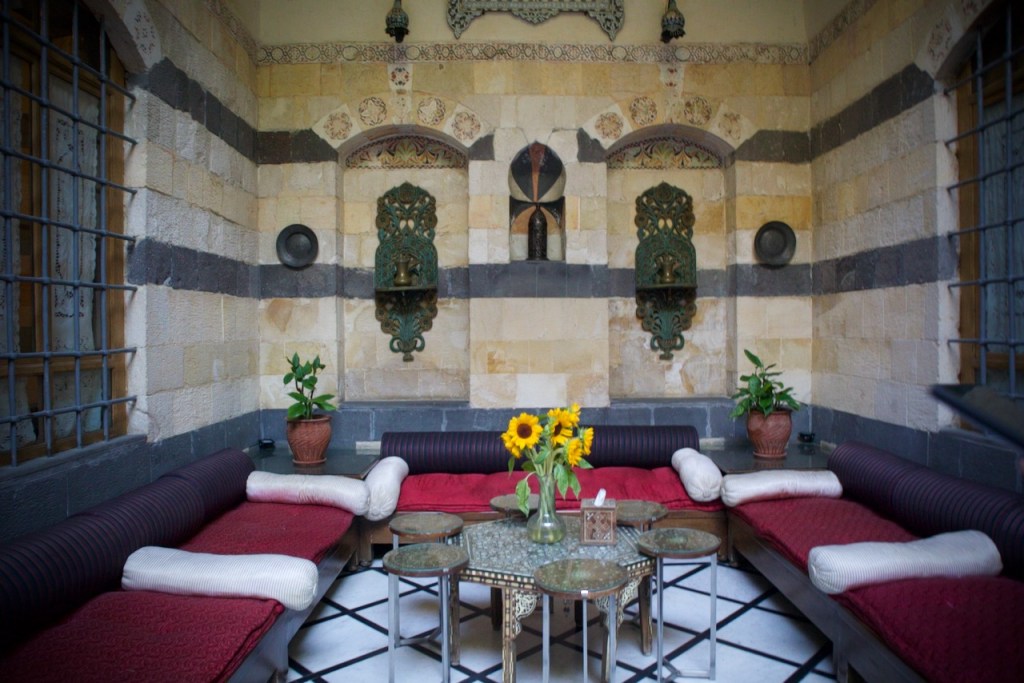
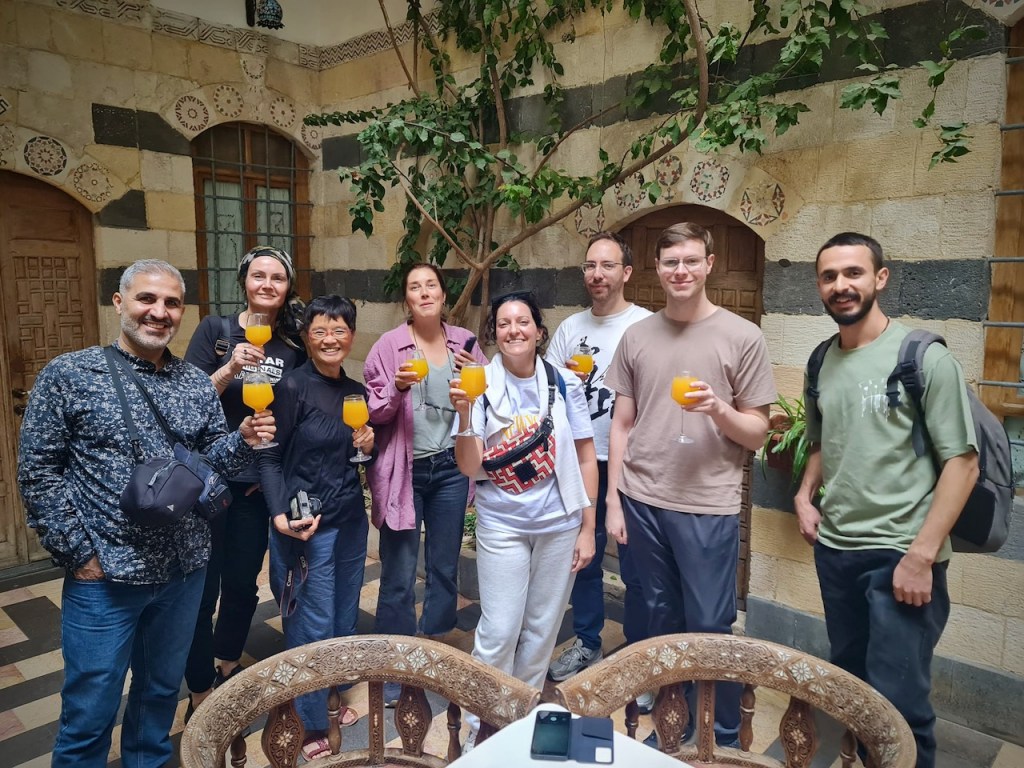
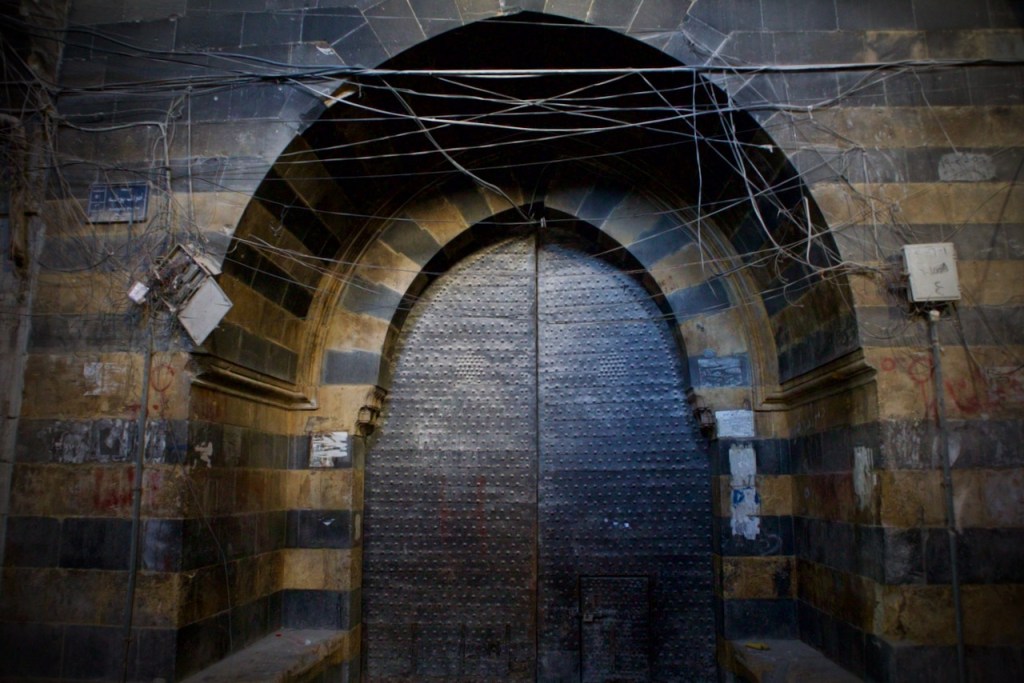
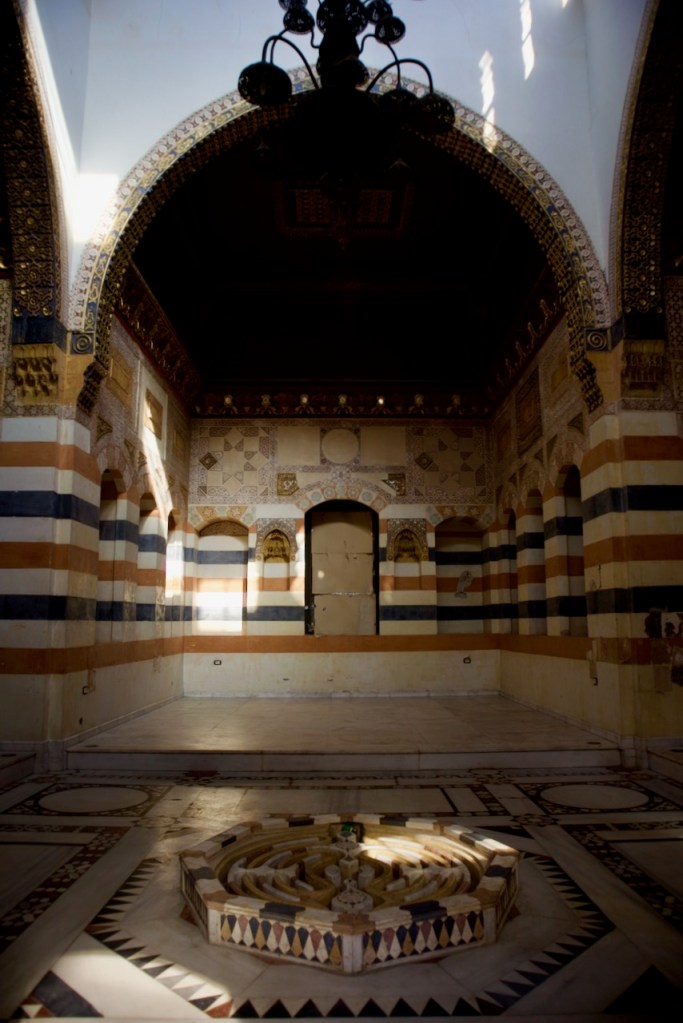
From the border, it is merely a 30-minute drive to the capital. Our van pulls into an impressive Roman gate, Bab Touma, where an impeccably dressed parking valet, Hussein, greets us. Marhaba/Welcome! We enter the magical old city of Damascus on foot, through her meandering alleys, to arrive at Beit al Mamlouka, a 400-year-old Damascene House turned hotel. I have to pinch myself to believe I am finally in Syria.
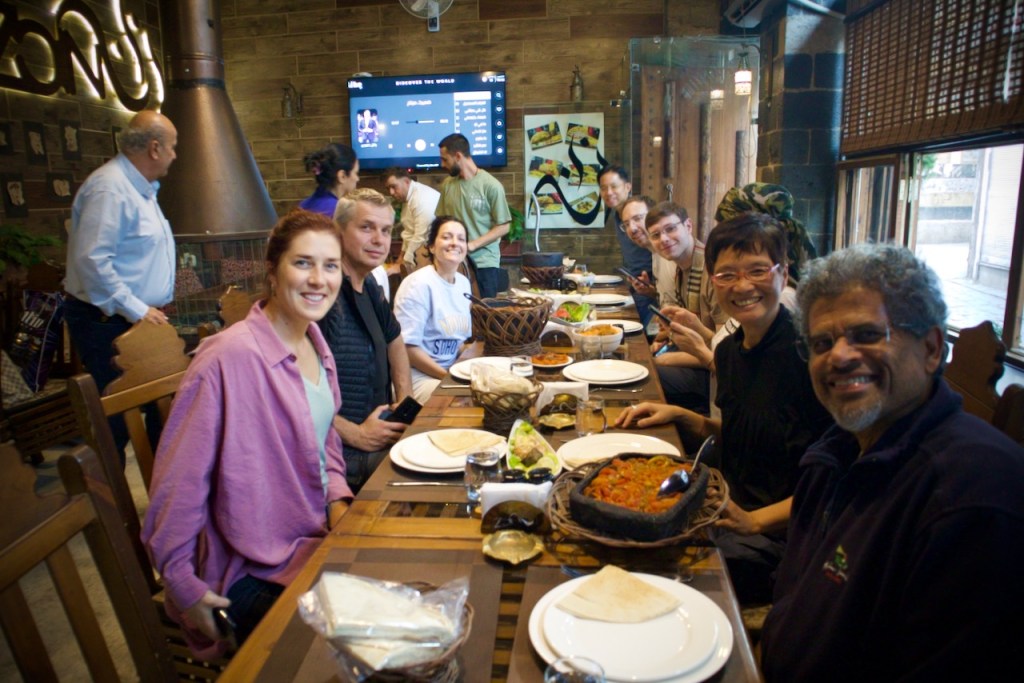
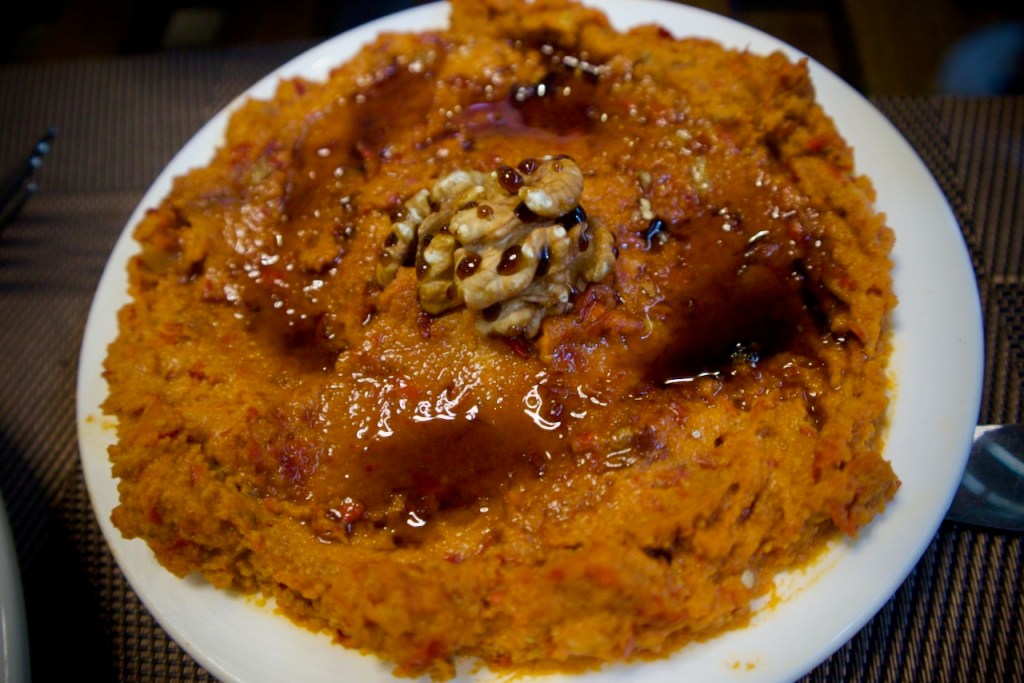
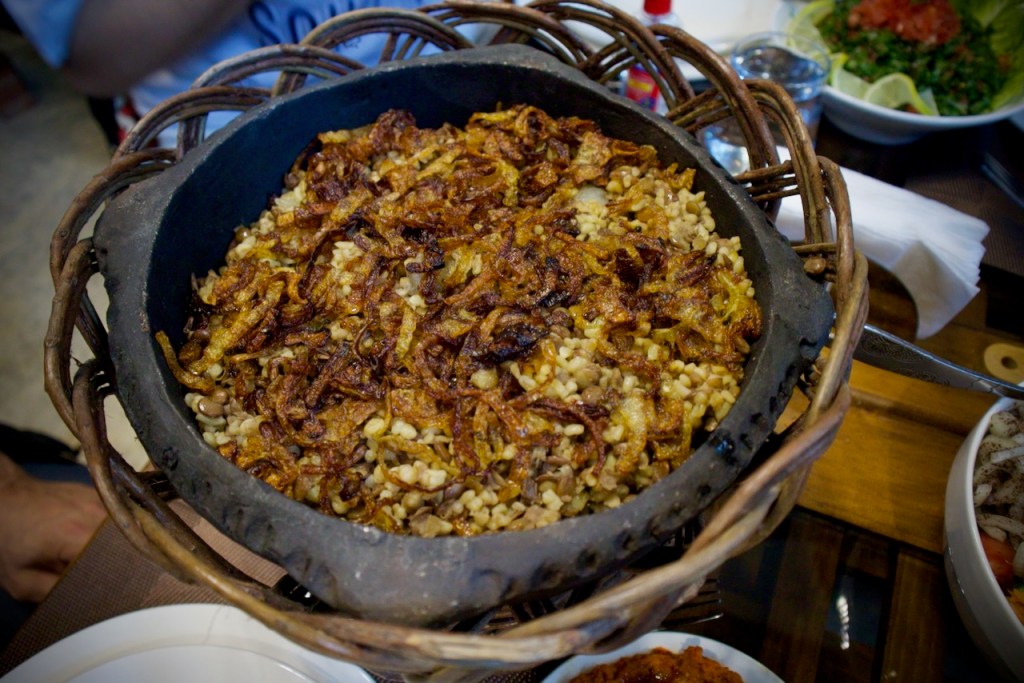
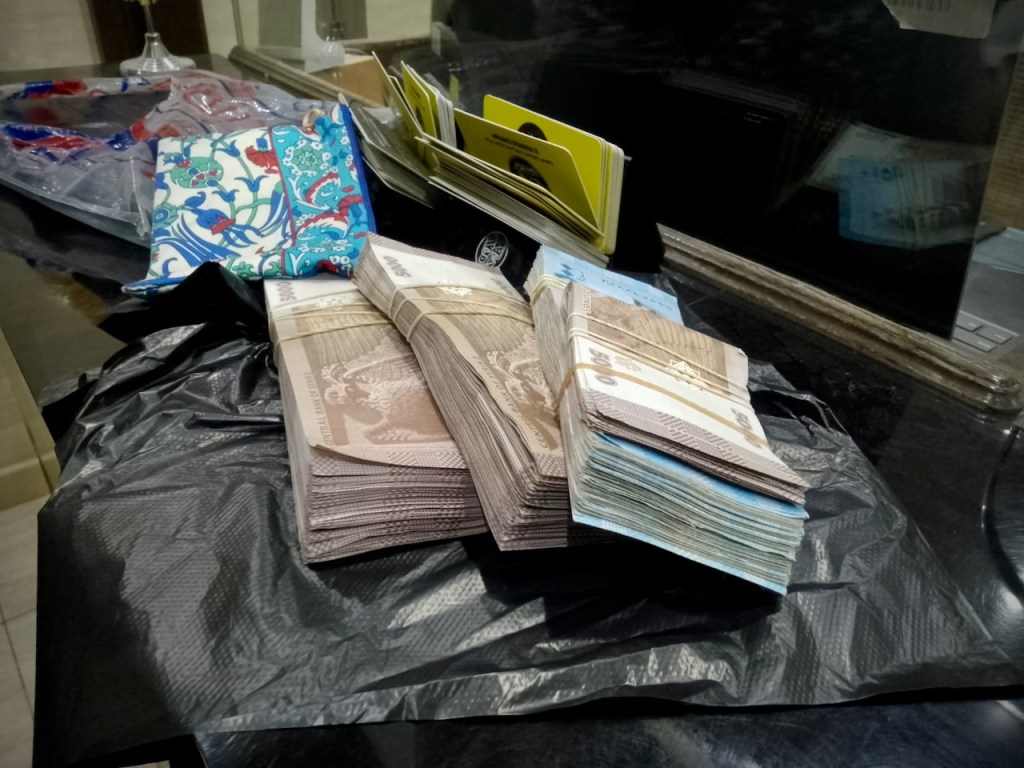
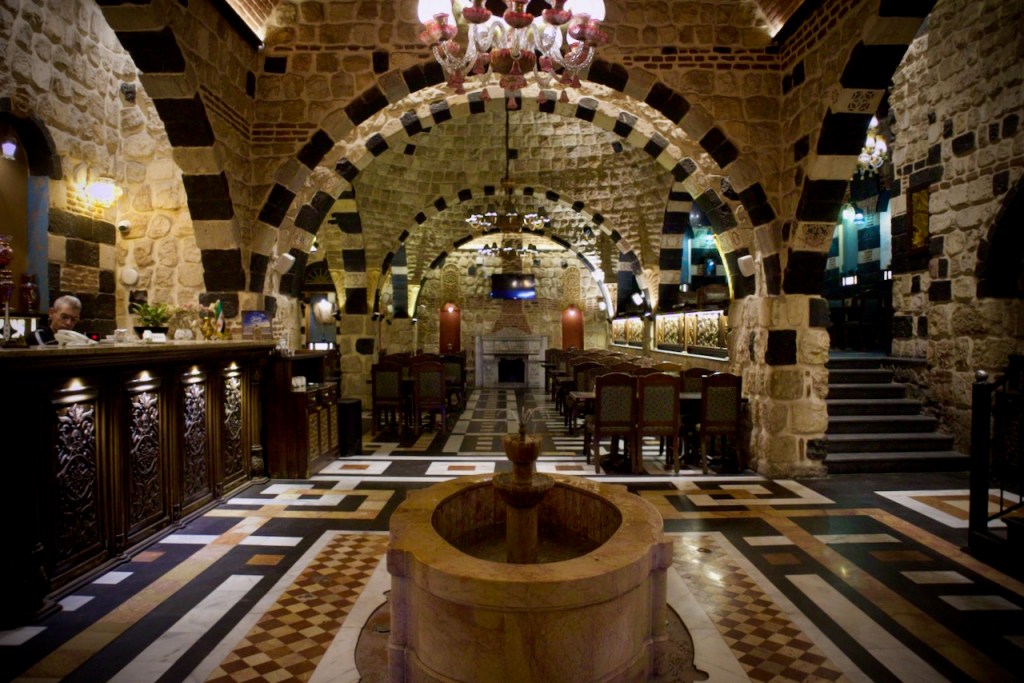
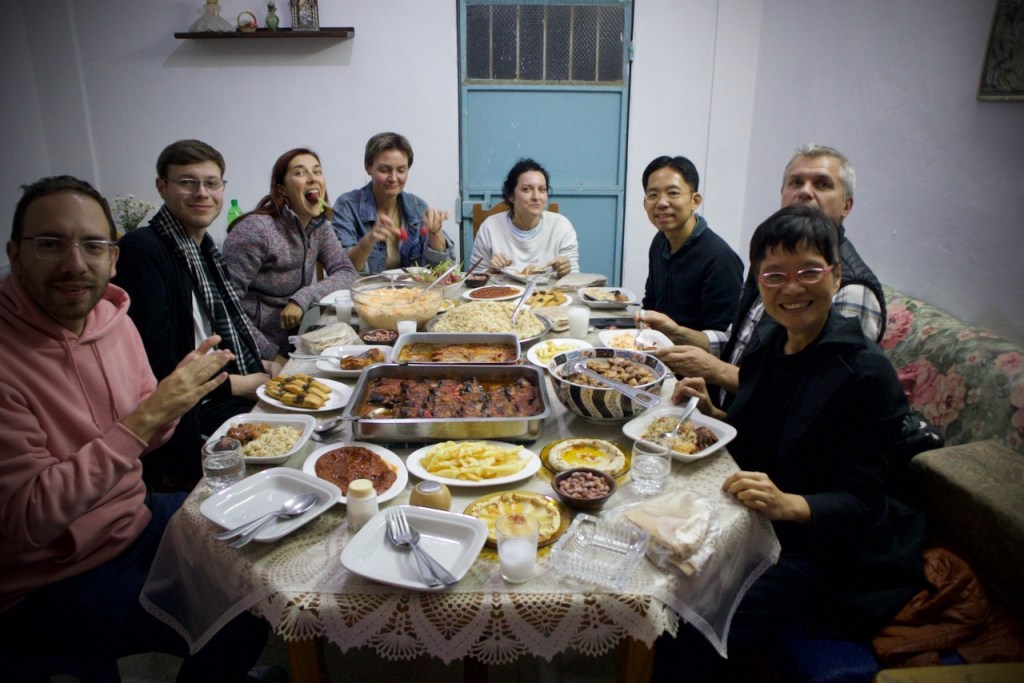
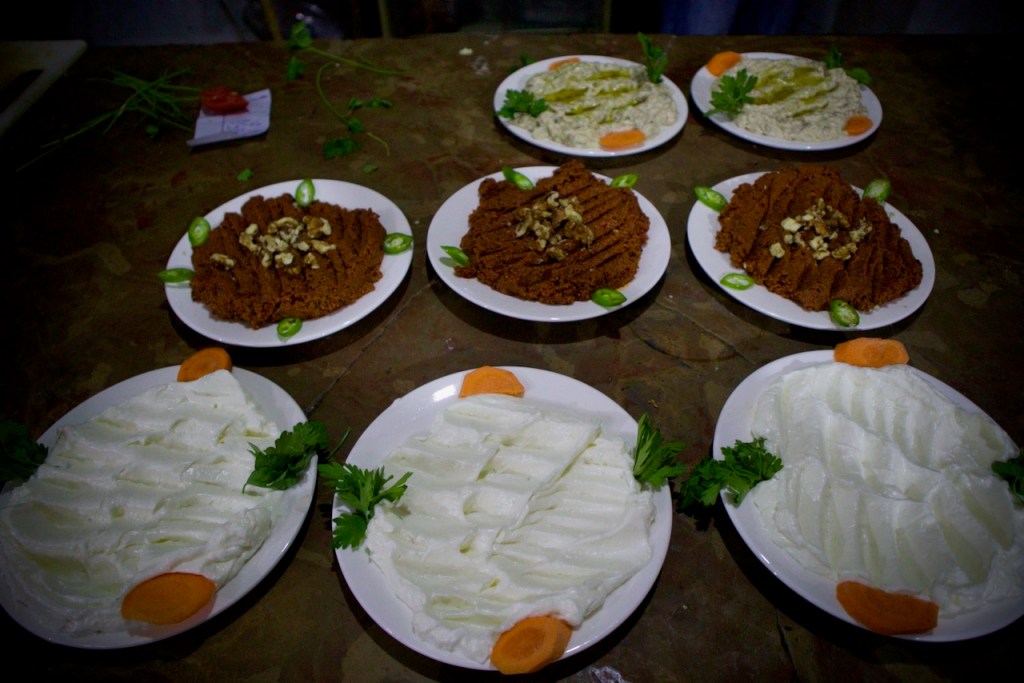
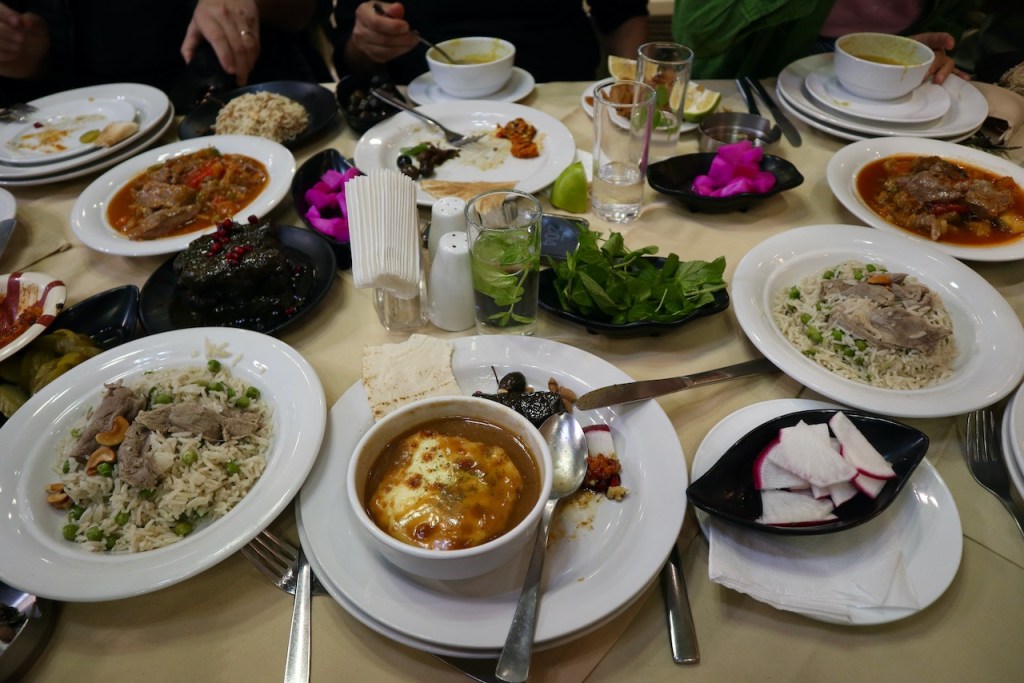
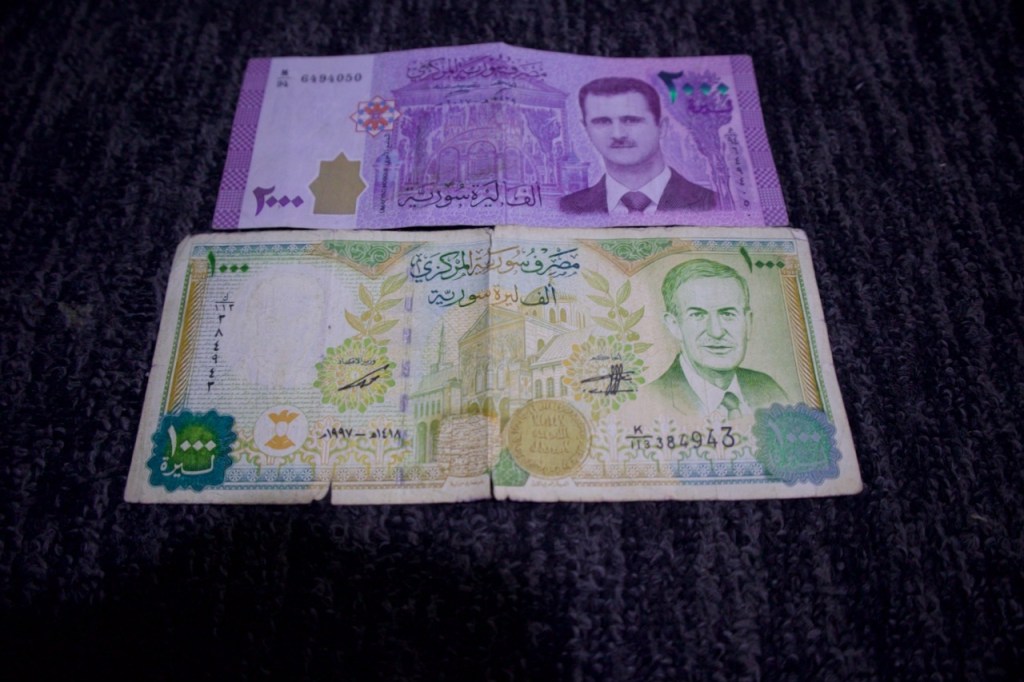
A welcome drink later, we head to Zan, a family owned traditional restaurant run by Abo Karam, for our first Syrian feast: a classic spread of hummus, baba ghanoush, and muhammara, made of roasted red peppers, walnuts, and pomegranate molasses, followed by generous portions of bulgur/cracked wheat slow cooked in a clay pot and spiced chicken rice. Night falls fast, we go to the exchange to get some local currency. Today’s rate is 11,000 Syrian pounds to a US dollar. A hundred dollars give you a big bag of bills worthy of millions. Our little brains and tiny wallets being so unaccustomed to so many zeros, how much is this again? would be the refrain for the rest of our ten-day stay.
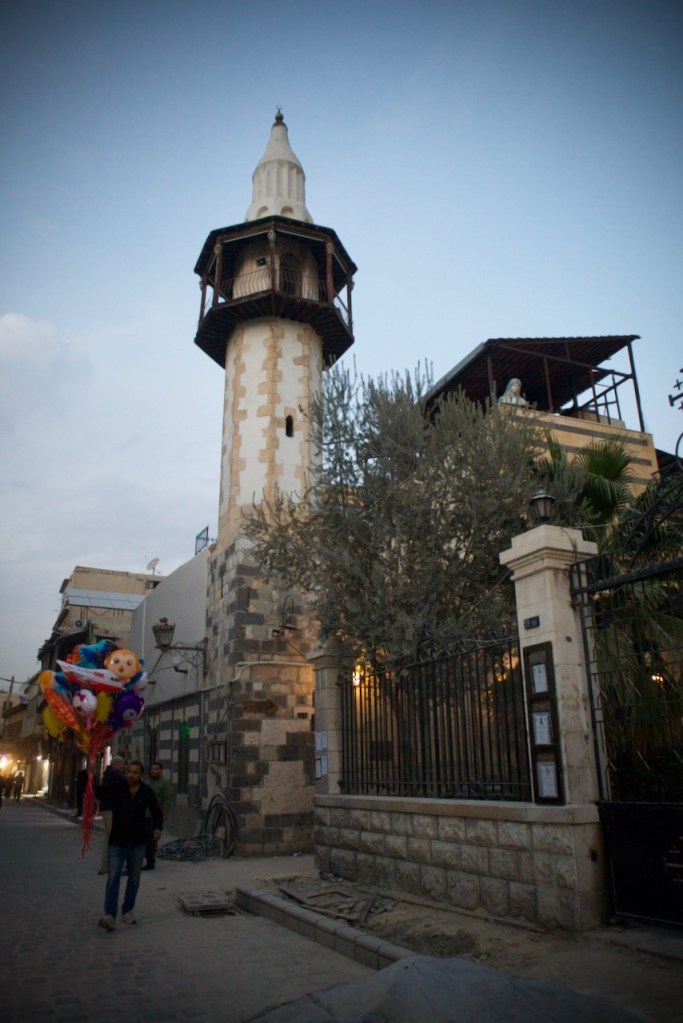
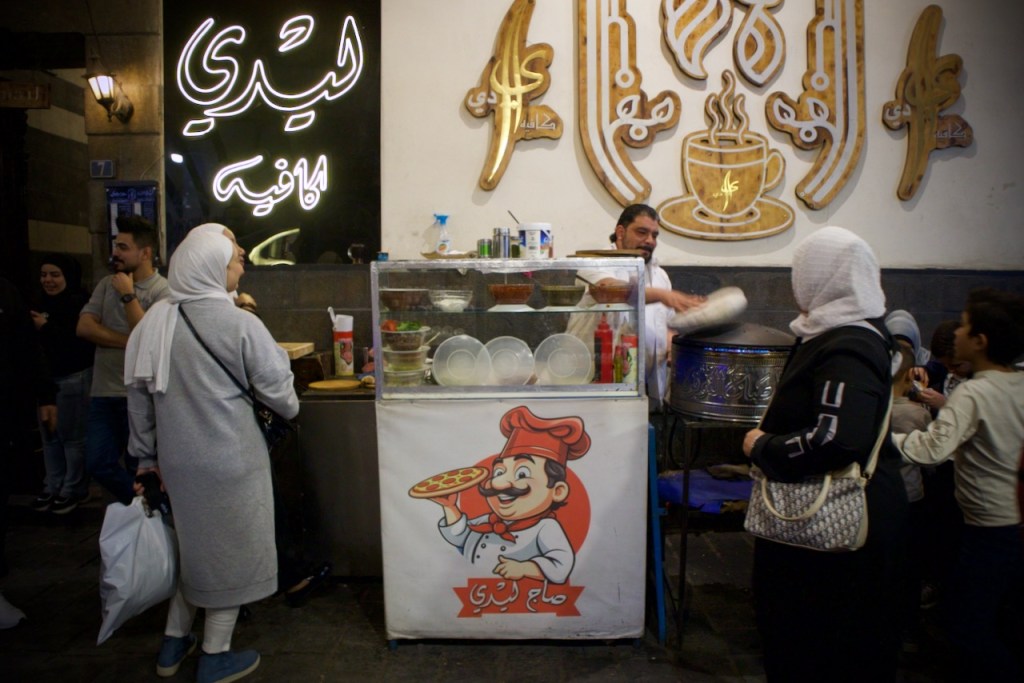
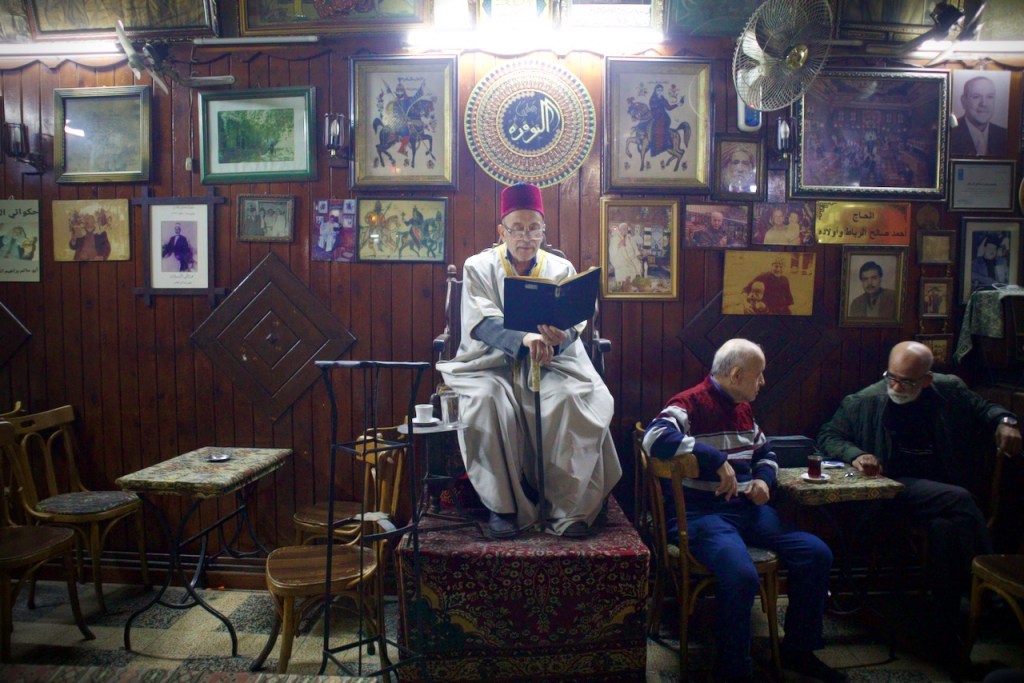
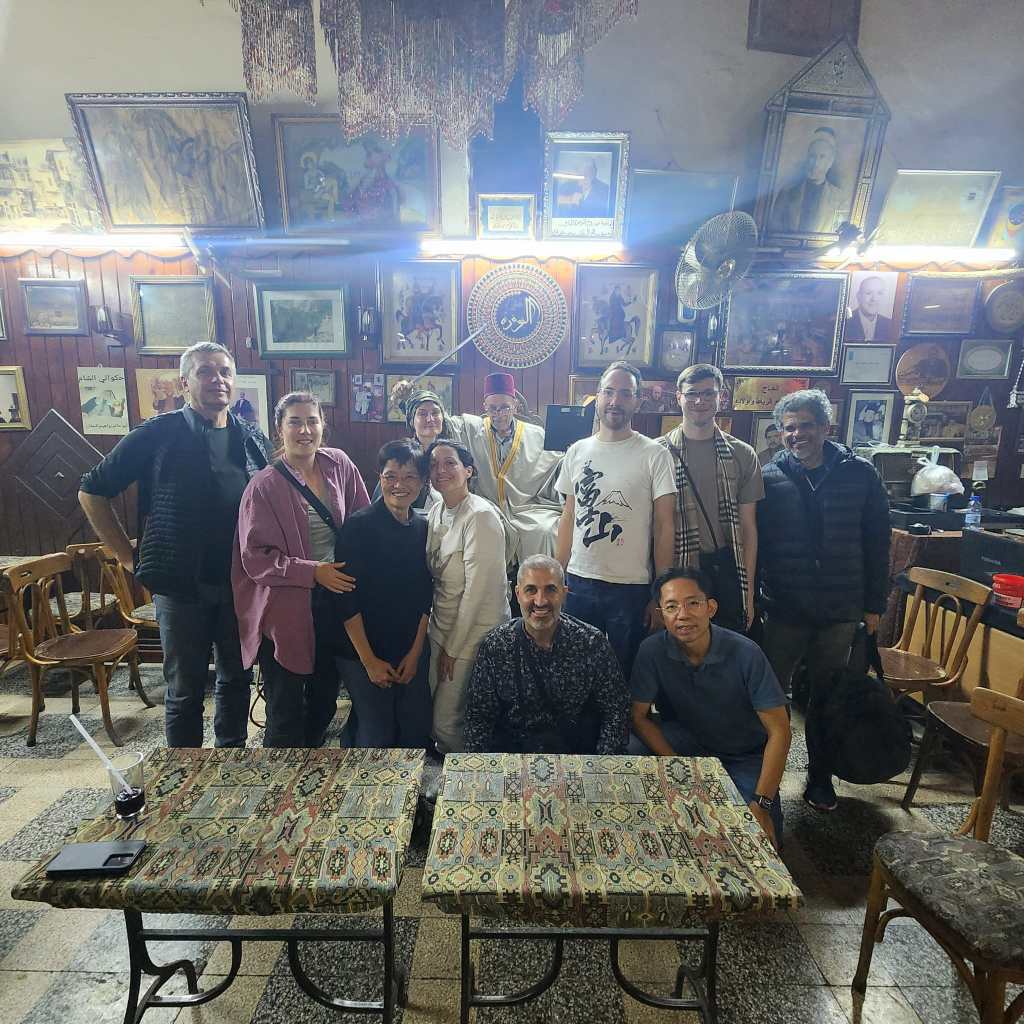
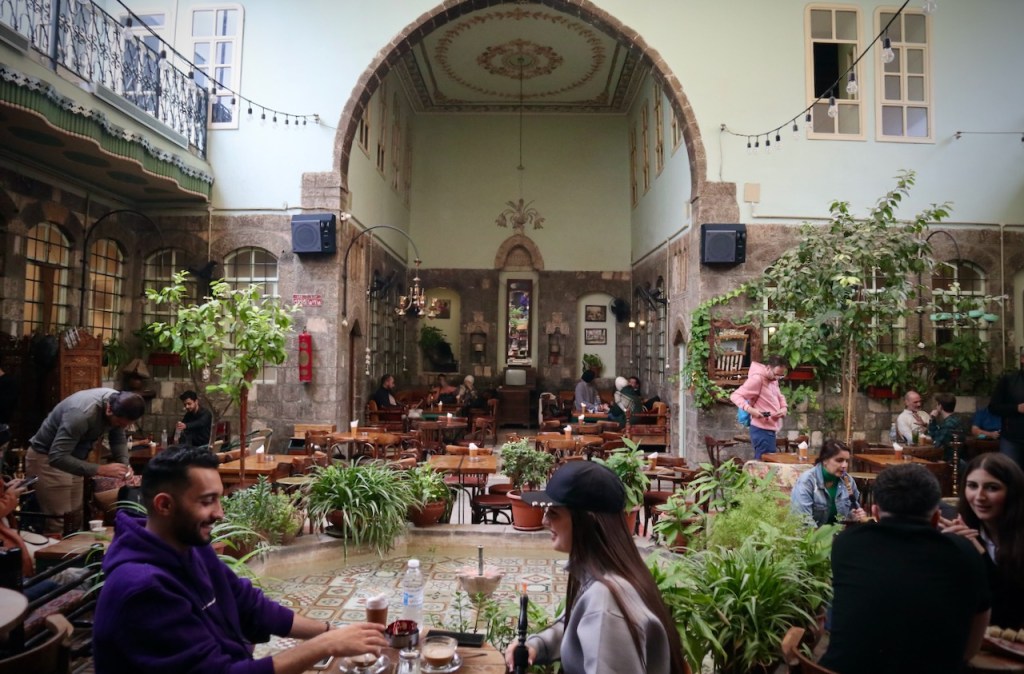
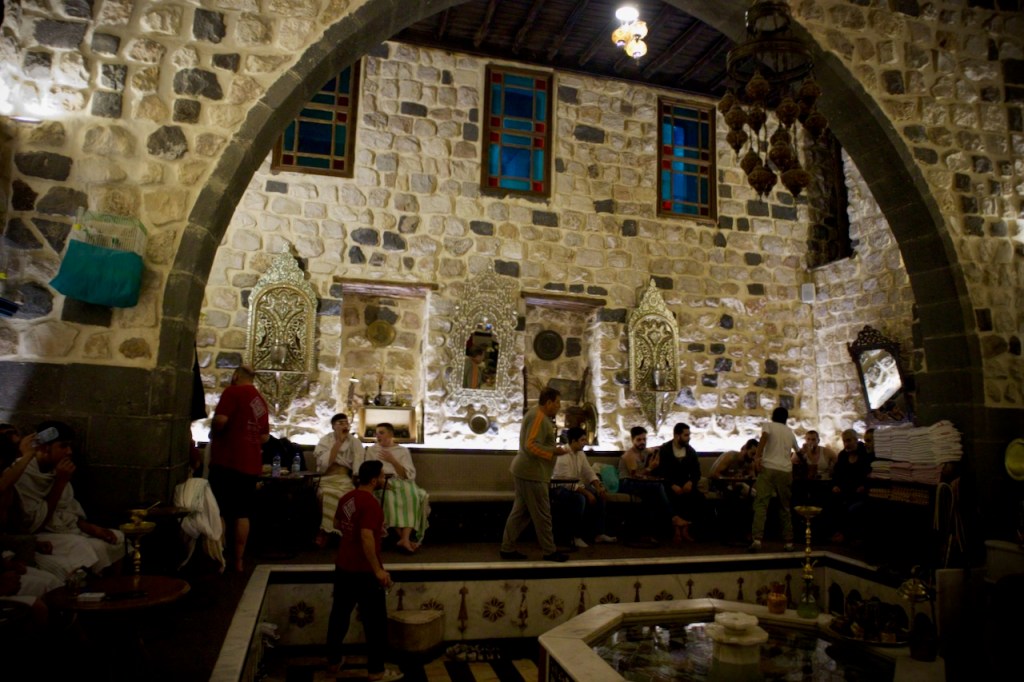
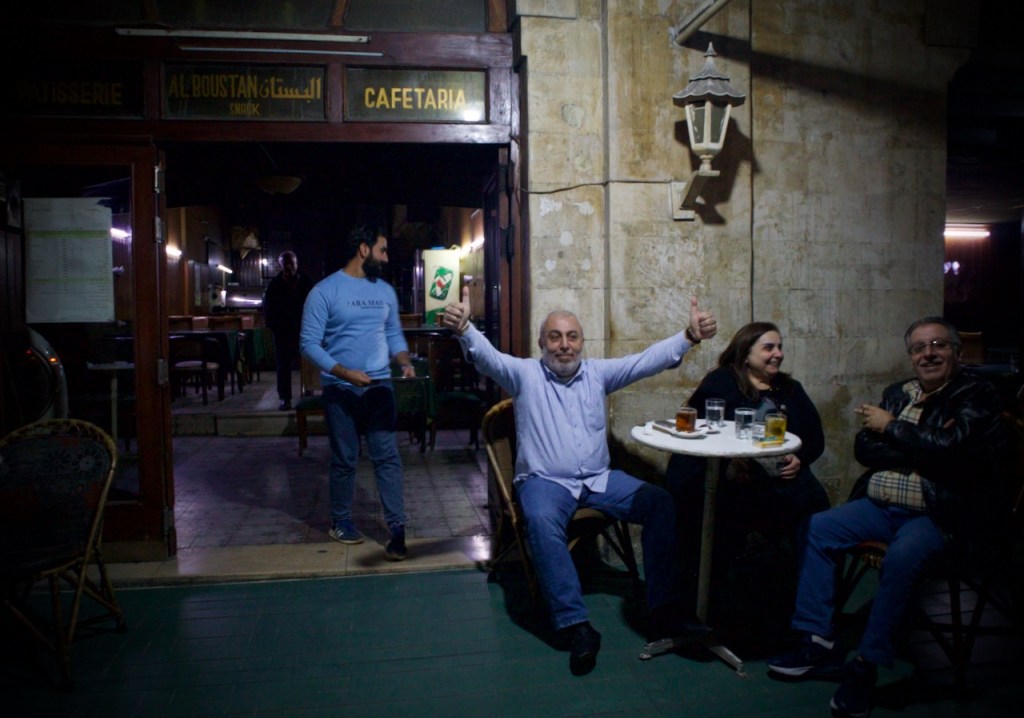
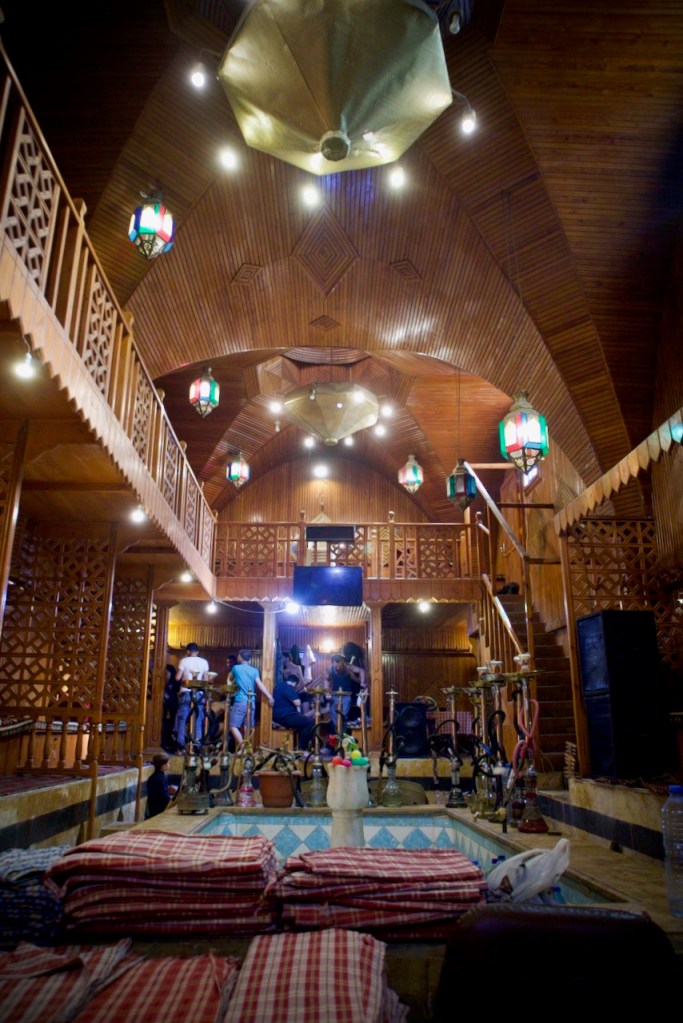
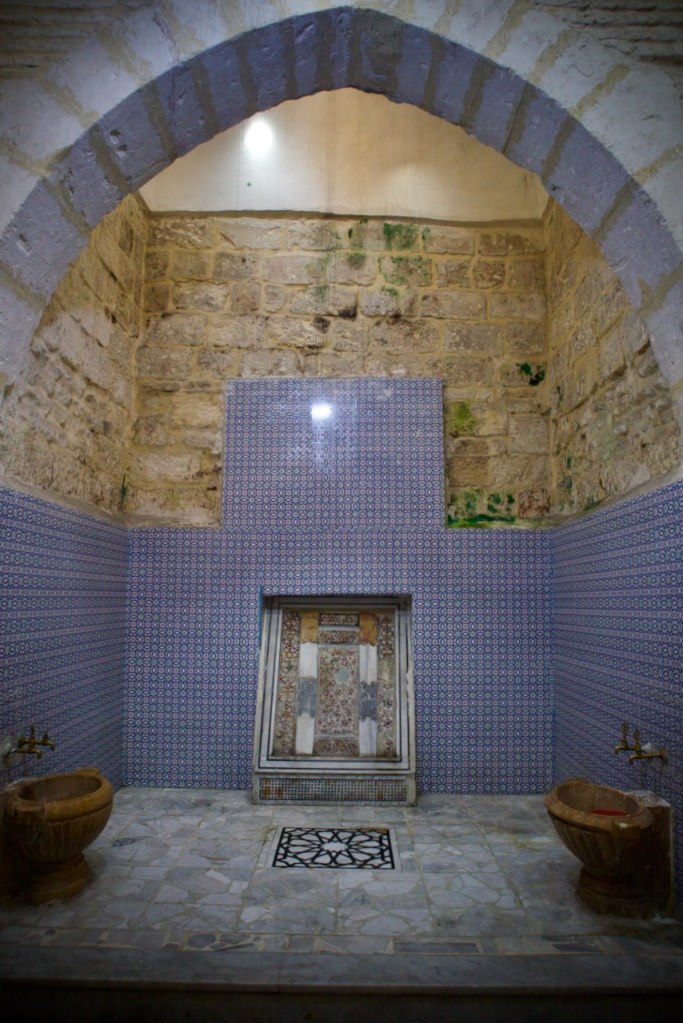
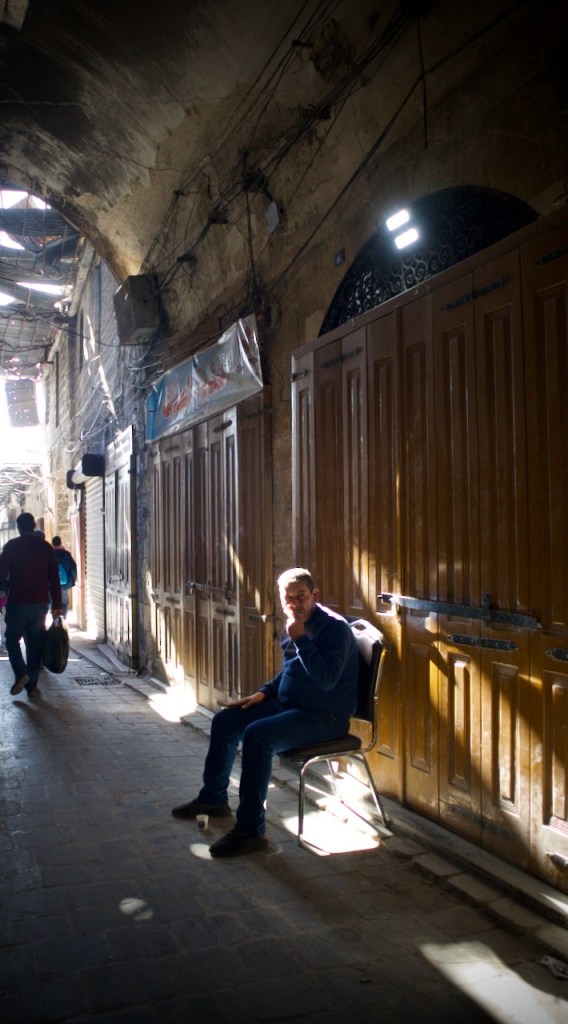
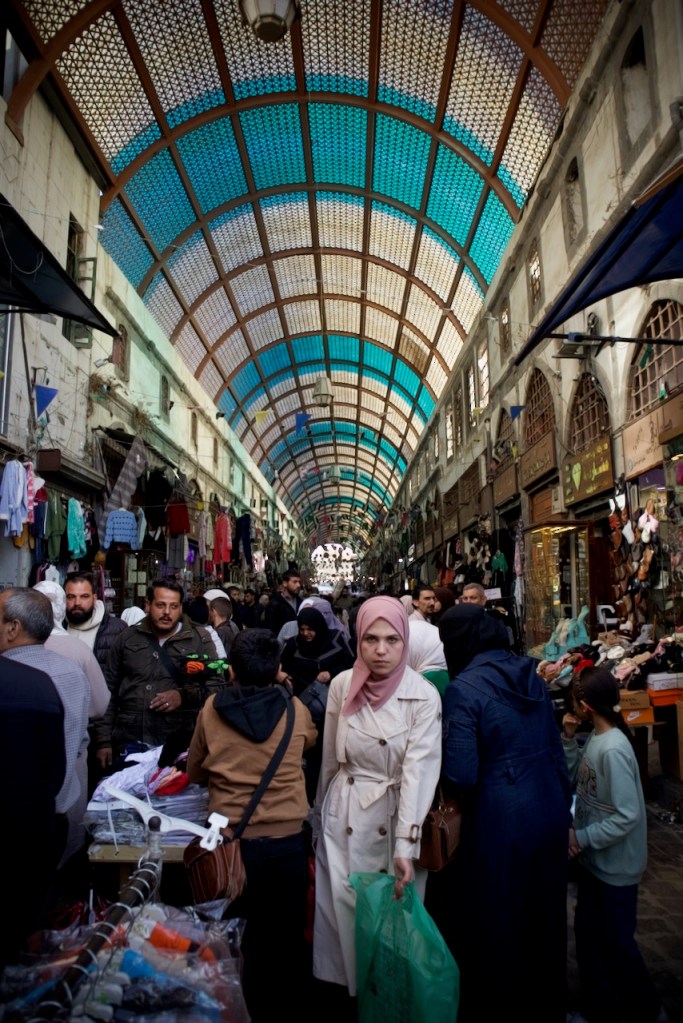
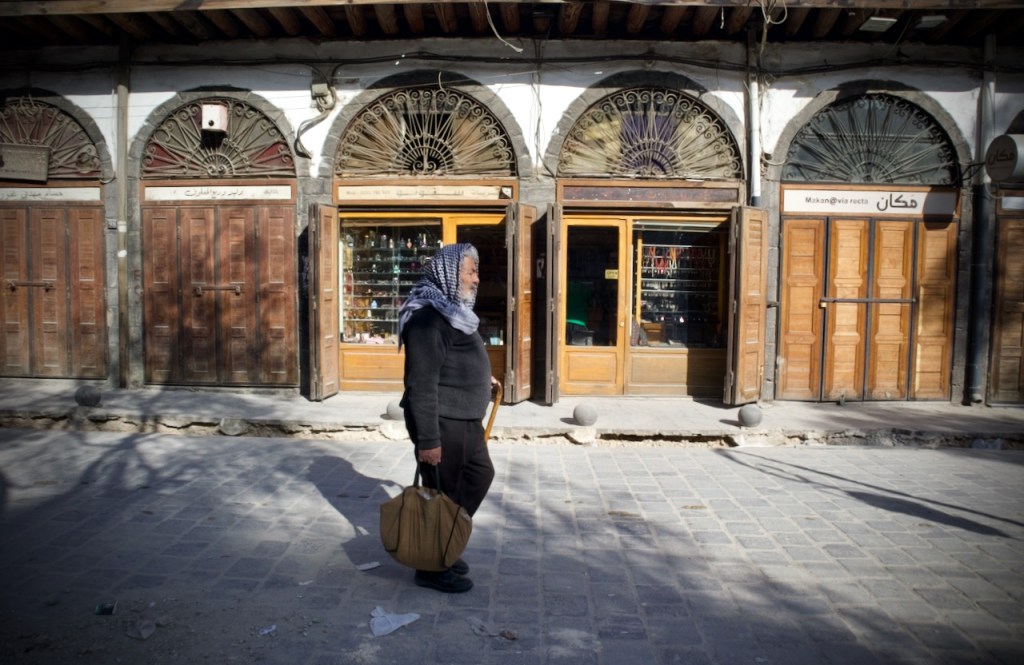
The food street and souk are teeming with locals. What a pleasure to see the Damascene going out, enjoying drinks and shisha, sweating out in a hammam, tasting whatever that is left of the good old life. It used to be much more crowded and places open till later, Bashar says, before the new government puts in stricter rules about everything. Our long first day ends in a charming 500-year-old cafe, Al Noufara, where Ahmad Allaham, the one-and-only remaining storyteller, tells ancient tales in classical Arabic from the 12th century with his magic wand. The audience oohs and awws, chiming in: How does she look like? And then, and then?… It reminds me of Place El Fna in Marrakech where gifted storytellers enthral a captivated audience with a similarly rich oral tradition. The night is still young; a few of us go in search of a bar with live music. I am floating; everything feels like a dream…




Damascus: Ten Thousand Years of History
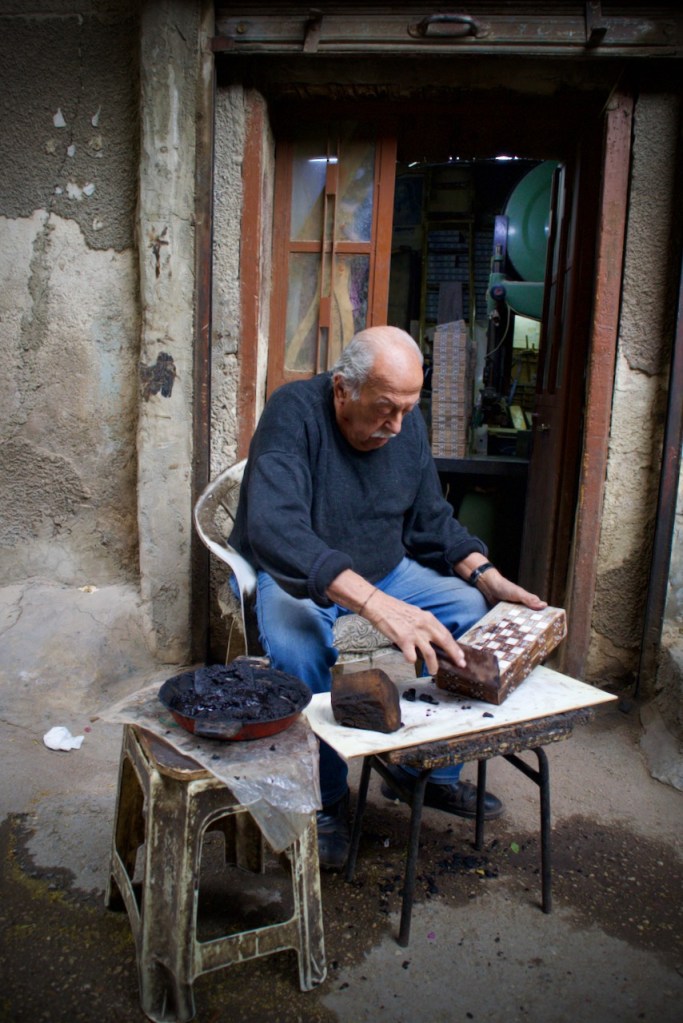
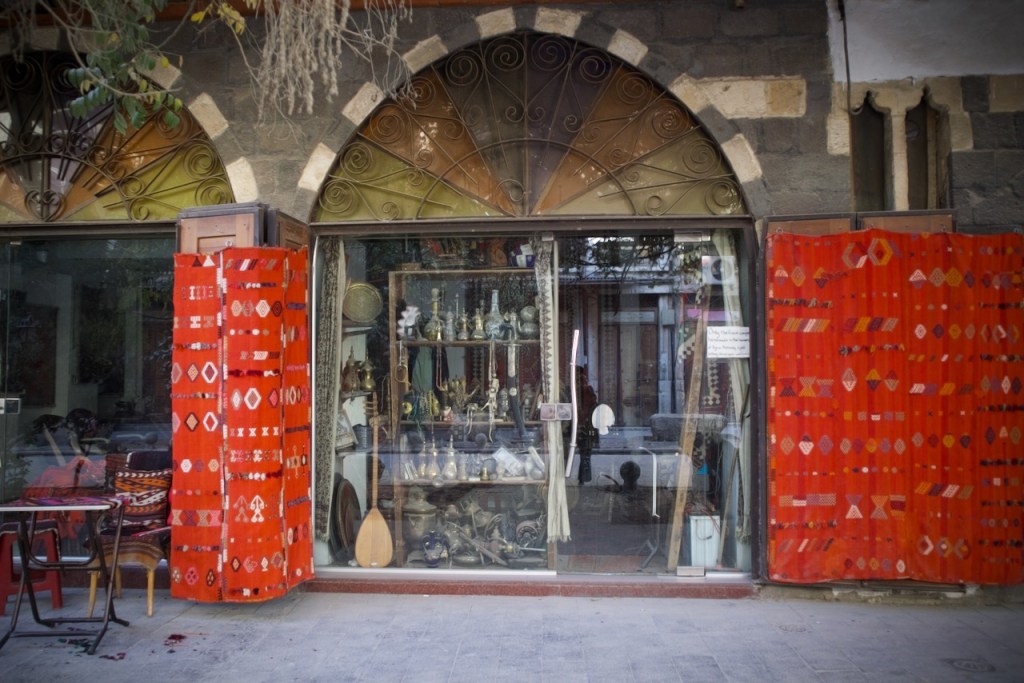
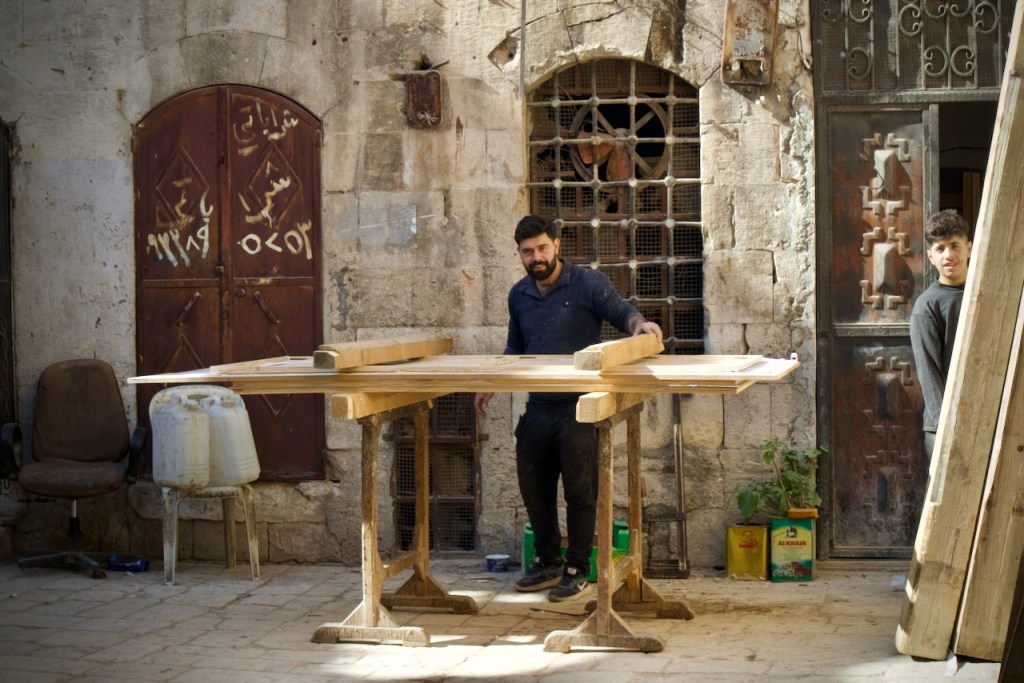
We begin our tour of the rich capital city by visiting Abu Toni, a mosaic master. Pioneered by George Bitar in 1869, Damascus mosaic is renowned around the world for their intricate designs and colours, mixing complex geometric shapes like squares, hexagons, diamonds, and triangles, and inlays of ivory, camel bone, and mother-of-pearl. The process of this dying craft seems mind bogglingly complex and time-consuming at our age of speed and convenience, but what refinement. Imagine the joy of owning a Damascene mosaic chair and/or desk. Maybe inspiration comes faster!
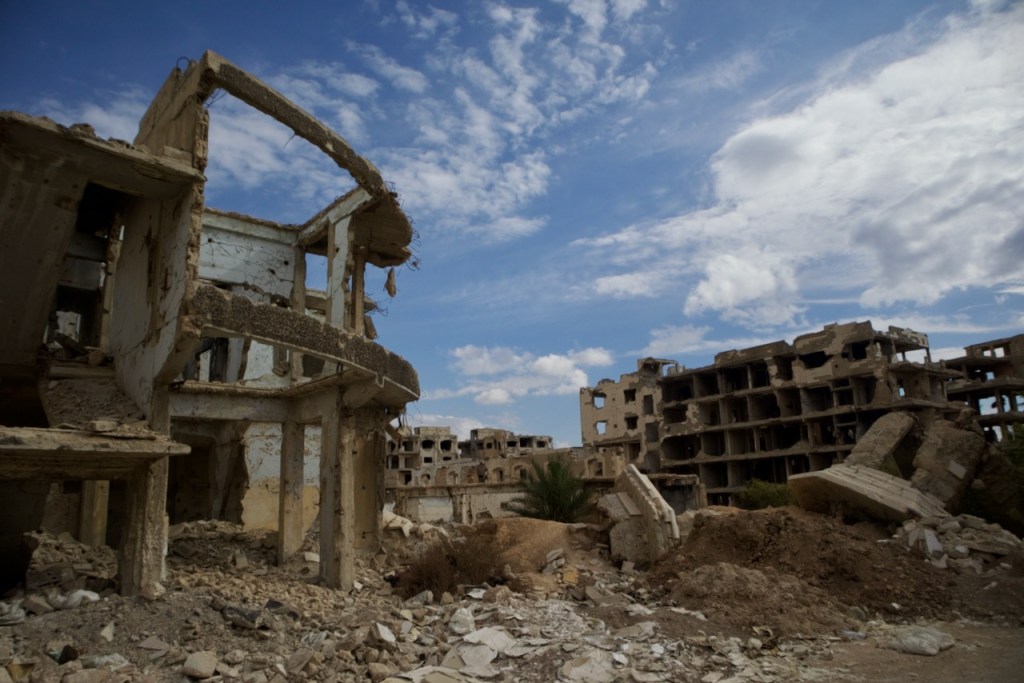
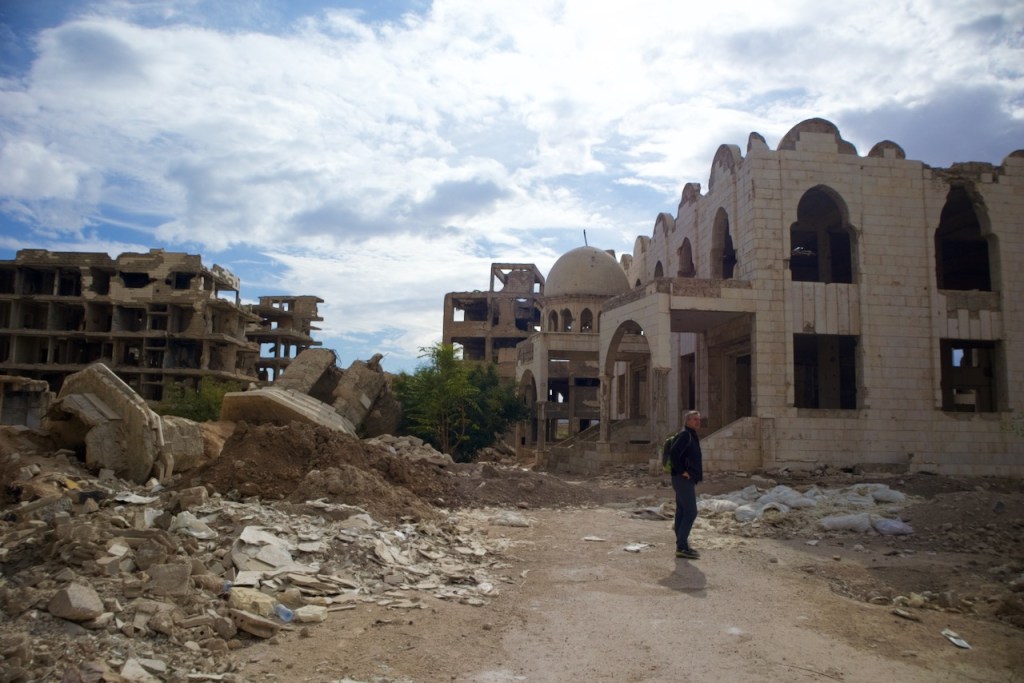
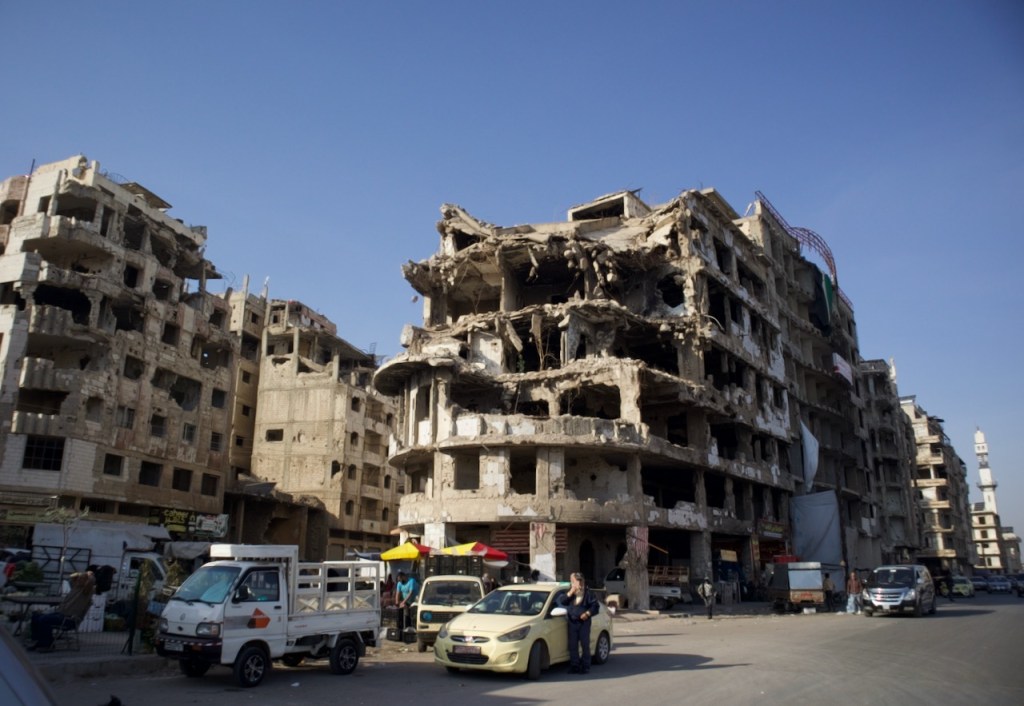
Damascus is famous for many things including the historic Via Recta, the main east-west Roman road mentioned in the New Testament where St. Paul was asked to go to find a disciple named Ananias to restore his sight after his vision on the road to Damascus, and St. Anania Church where Ananias baptized Saul. Then we head to the desolate October War Panorama that commemorates the memory of the 1973 war between Egypt and Syria against Israel, looted after the fall of Assad. The damage pales compared to the massive destruction in the city’s outskirts. As the frontline between Syrian government forces and rebels during the civil war, the Jobar neighbourhood still looks apocalyptic today.
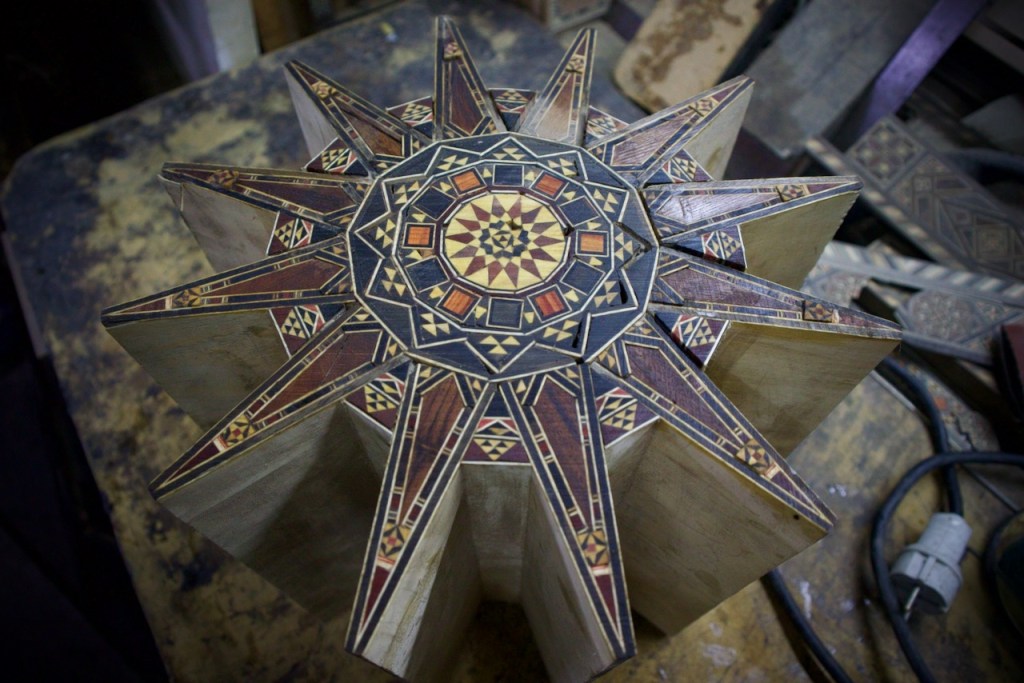
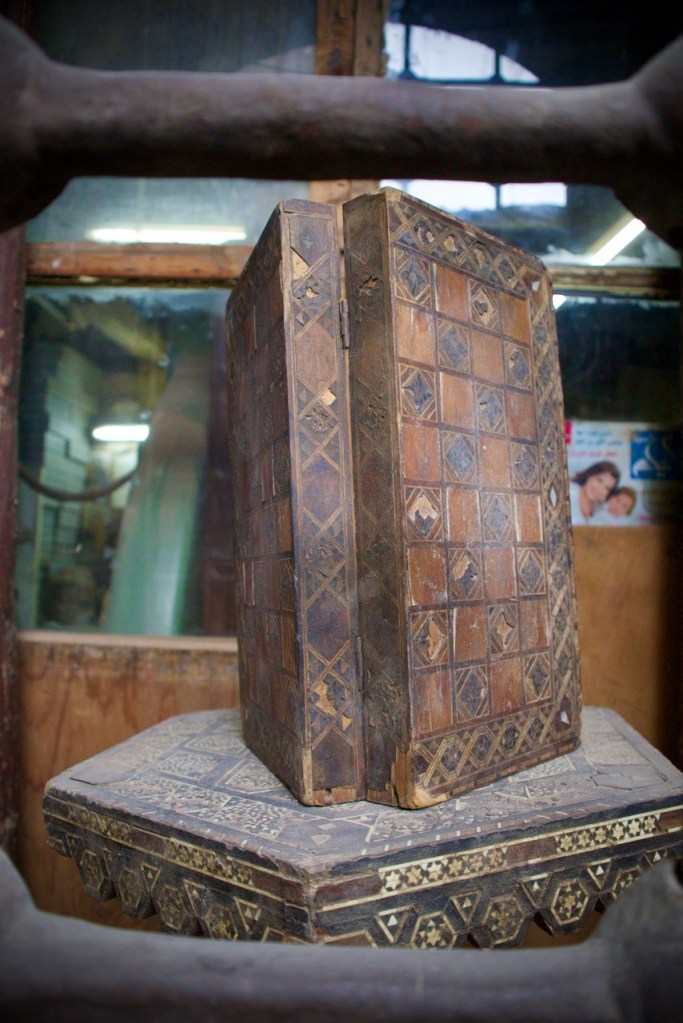


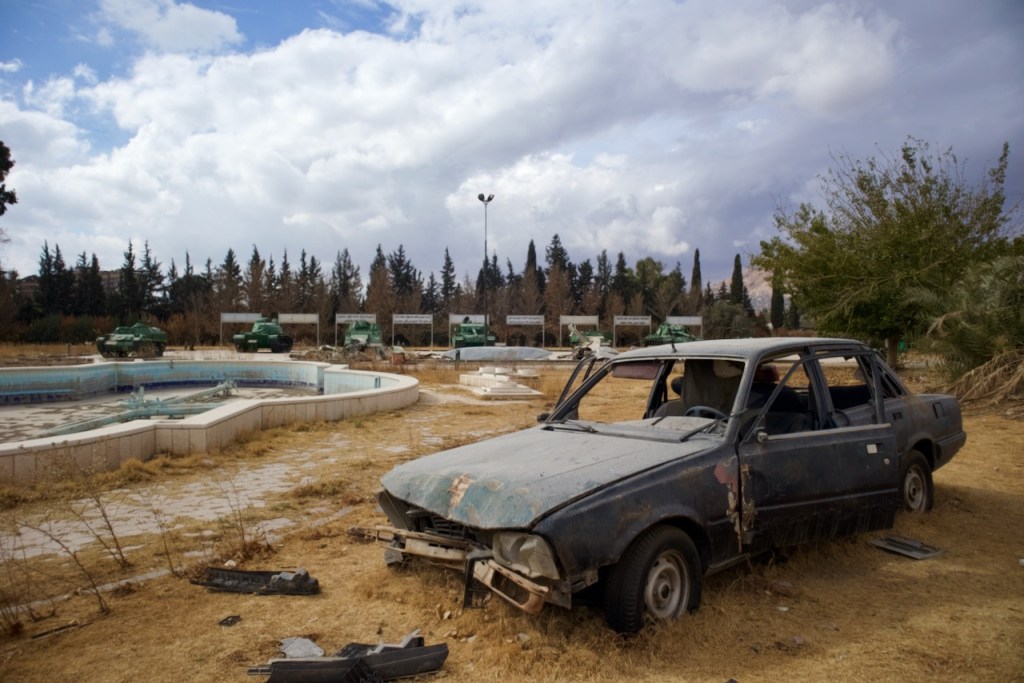

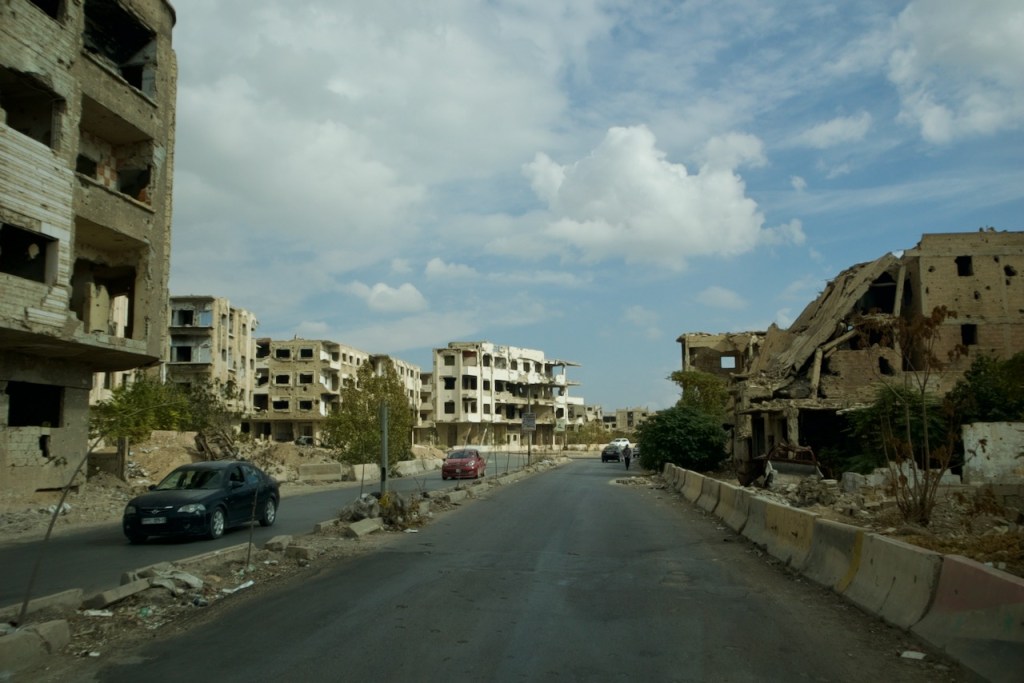
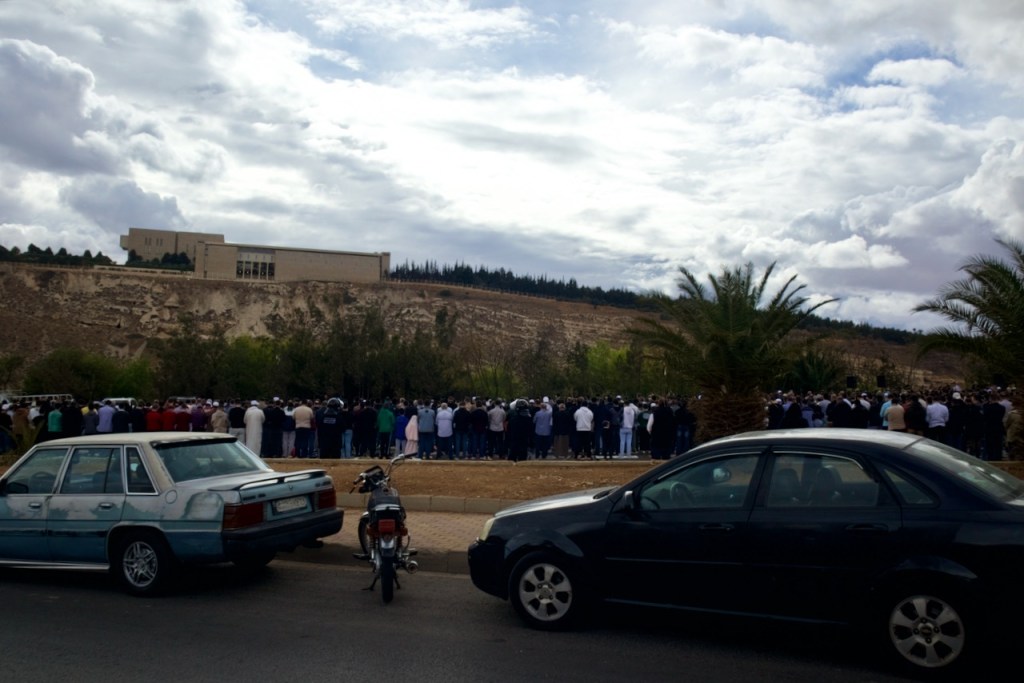
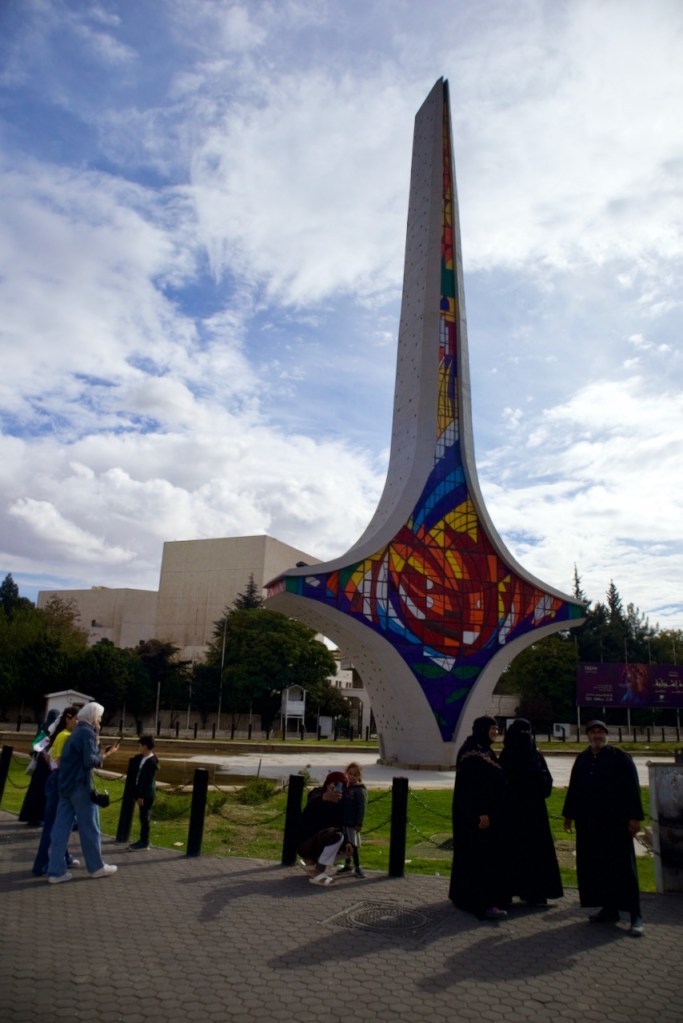
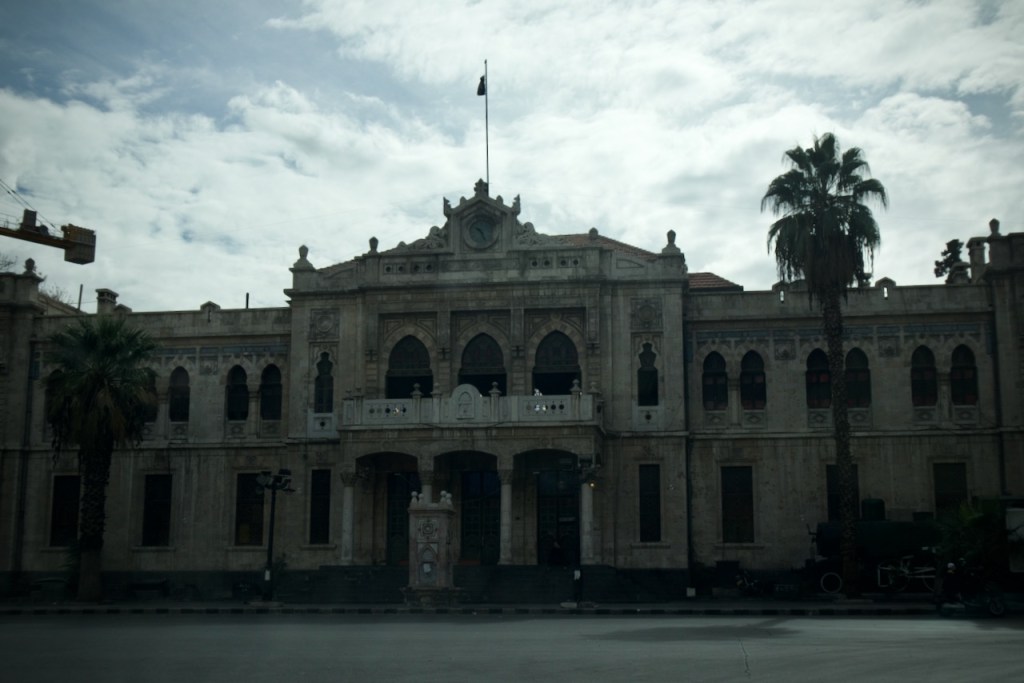
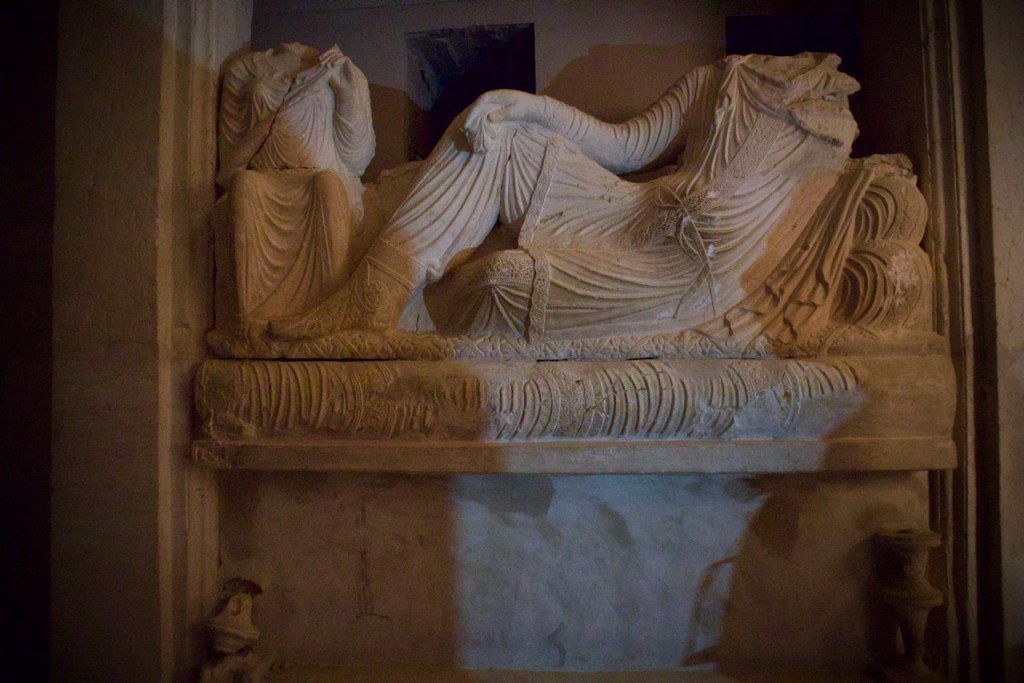
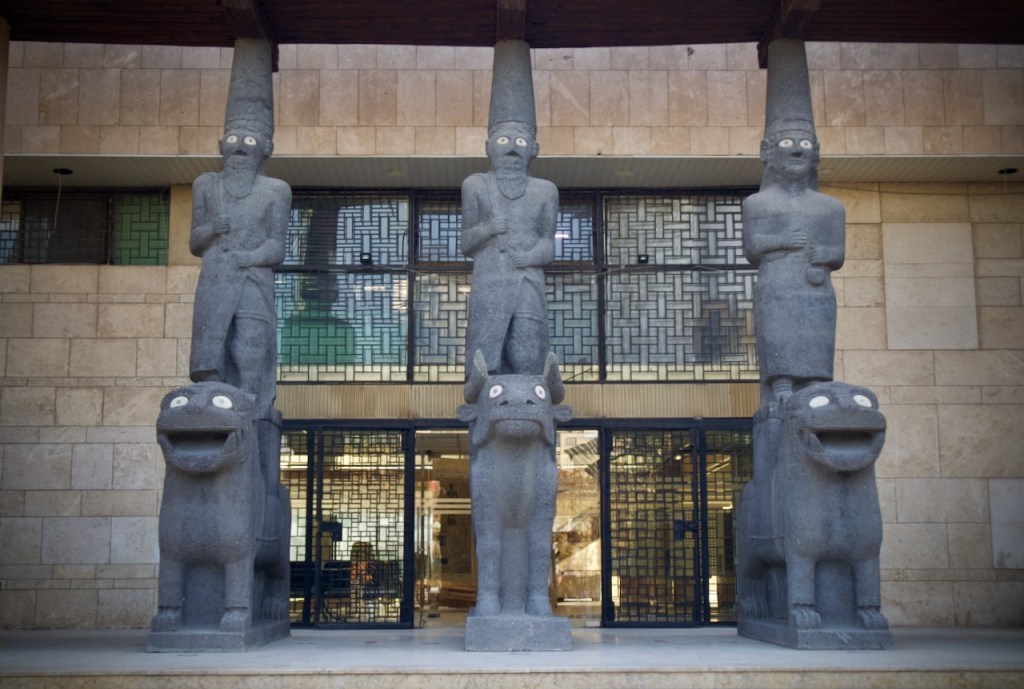
A quick tour of the city then takes us to the National Palace in front of which faithfuls pray for Allah and some much needed rain; the Hejaz Railway Station, built around the 1900s, once connecting Turkey, Syria, Jordan, and Saudi Arabia for Haj pilgrims; the former private residence of Bashar Assad; and finally the National Museum that unfortunately is closed due to the theft of six Roman-era marble statues just a few days before our arrival. Desperate times call for desperate measures. Conspiracy theories abound: Syrians in need of quick cash, smuggling mafia, or something more sinister?


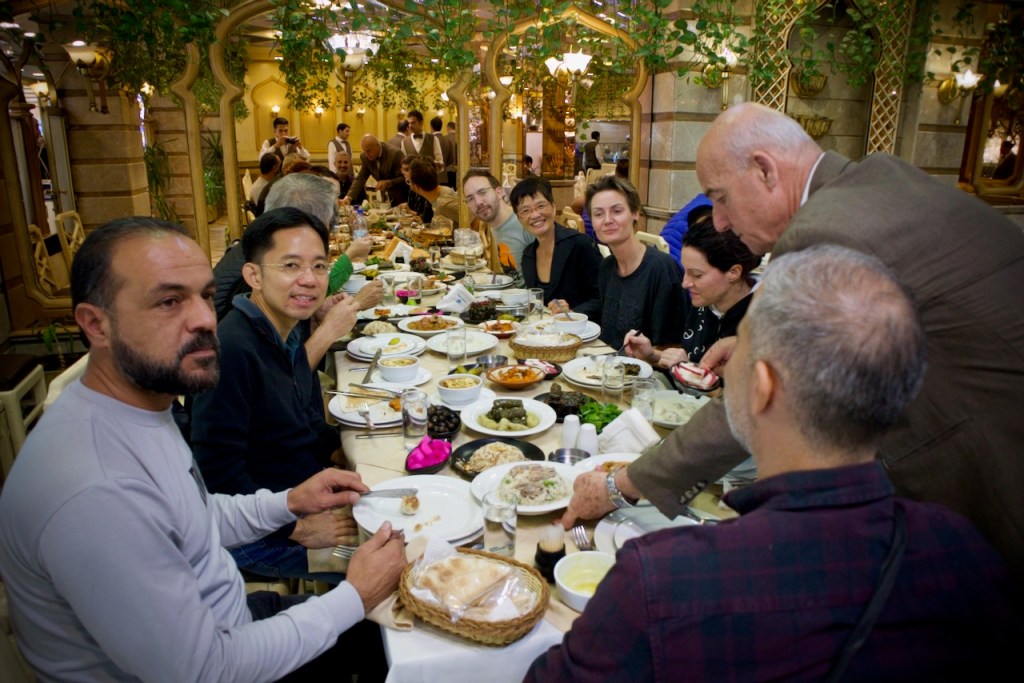
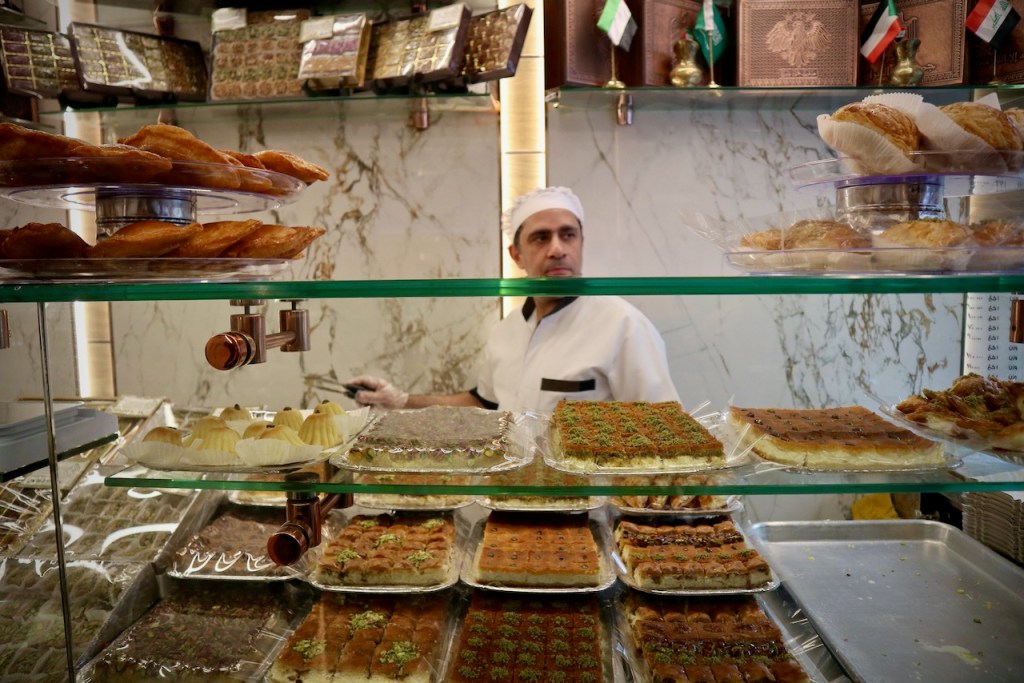
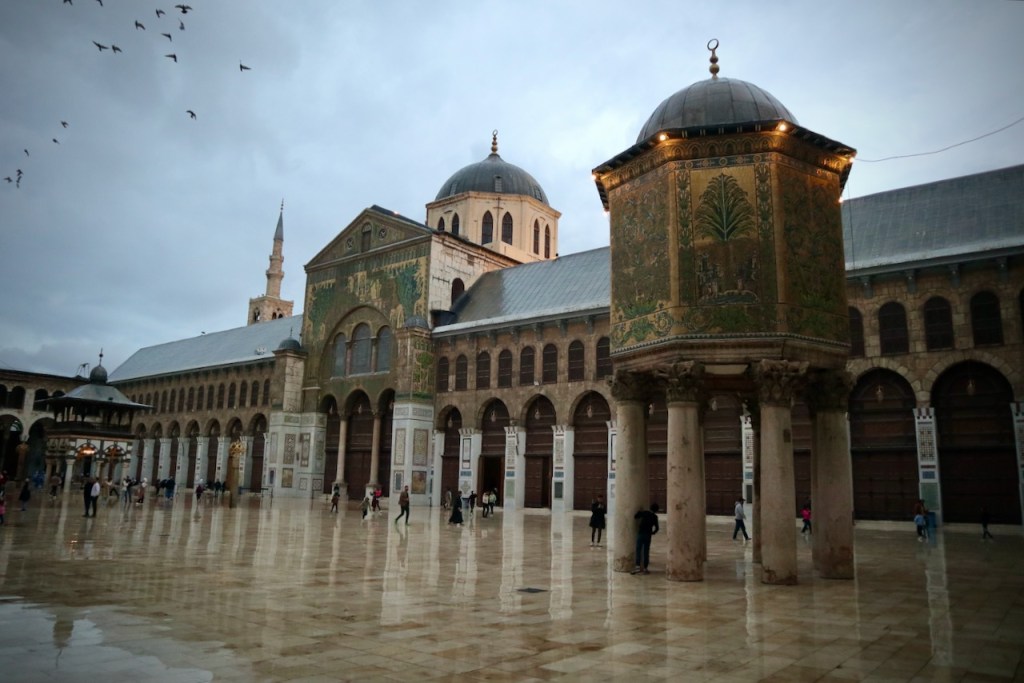
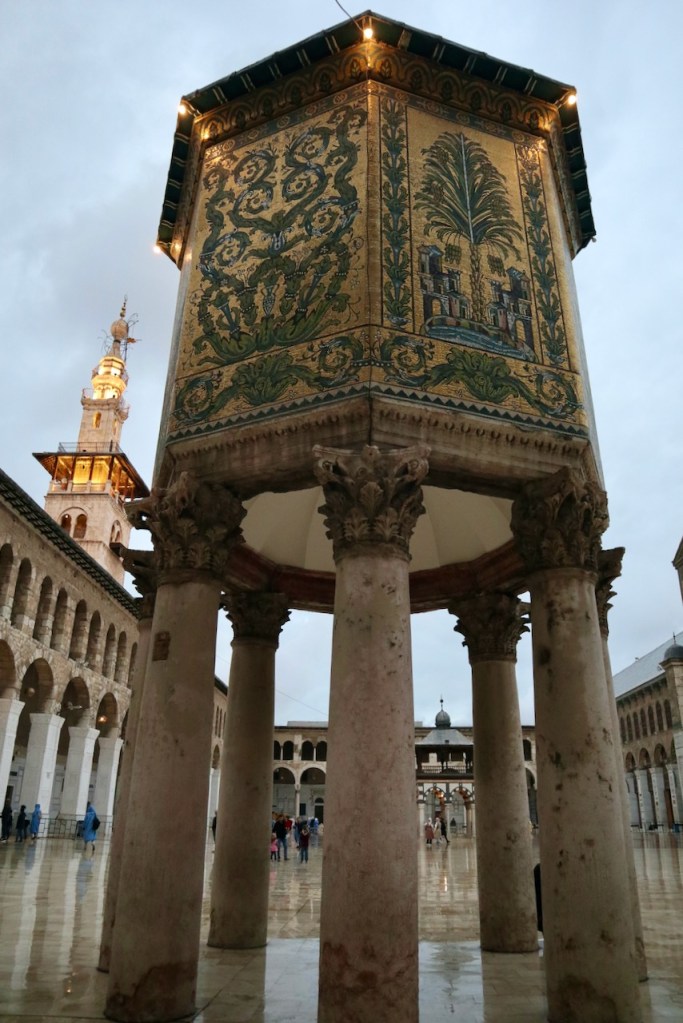
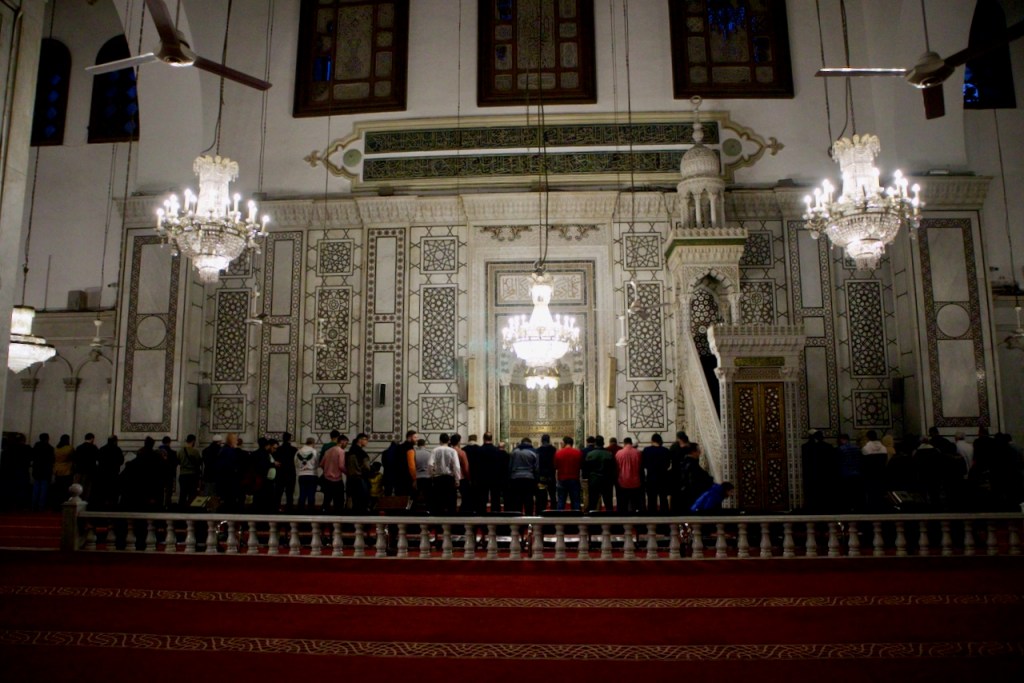
Lunch is served at the classy Al Kamal Restaurant where waitors in formal attire regale us with more delicious Syrian dips and soups, mouth-watering dolmas and stews, followed by very decadent local sweets. Damascus still has so much to offer: the Via Recta Hotel, the exquisite former home of artisan George Bitar, the charming Qishla Cafe where you want to linger without the cares of the old/new regime, the historic Jewish quarter, and the Umayyad Mosque where dusk light meets marble floor reflections with the background chants of Friday evening prayer. Allahu Akbar/God is the greatest. Rain is finally upon us! The evening suddenly turns chilly. Hammam, anyone?




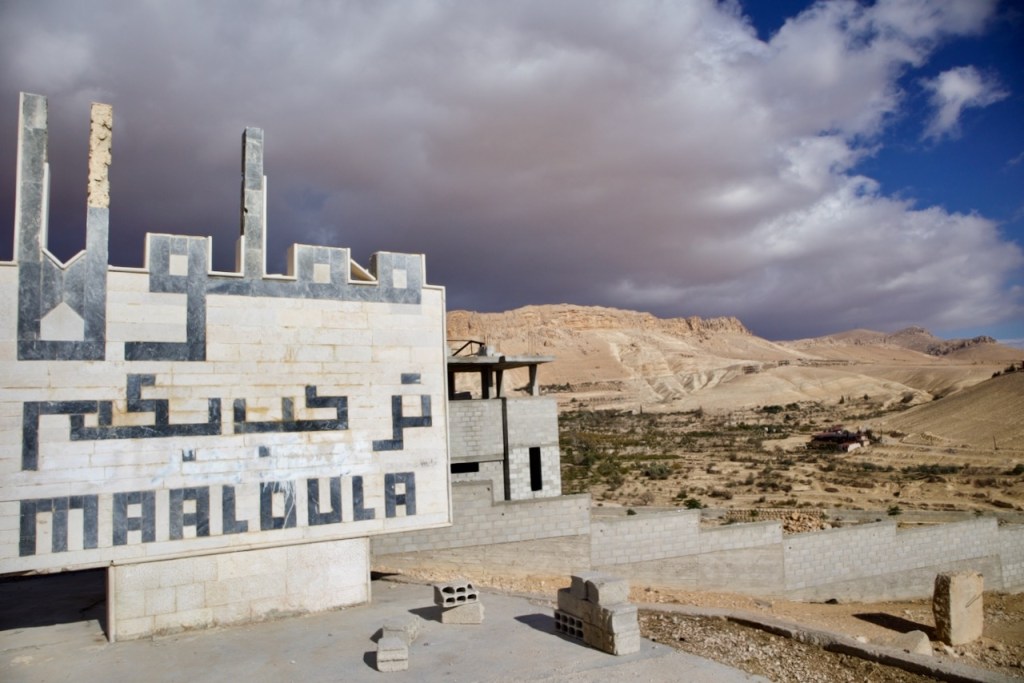
Maaloula: Ancient, Sacred and Strategic
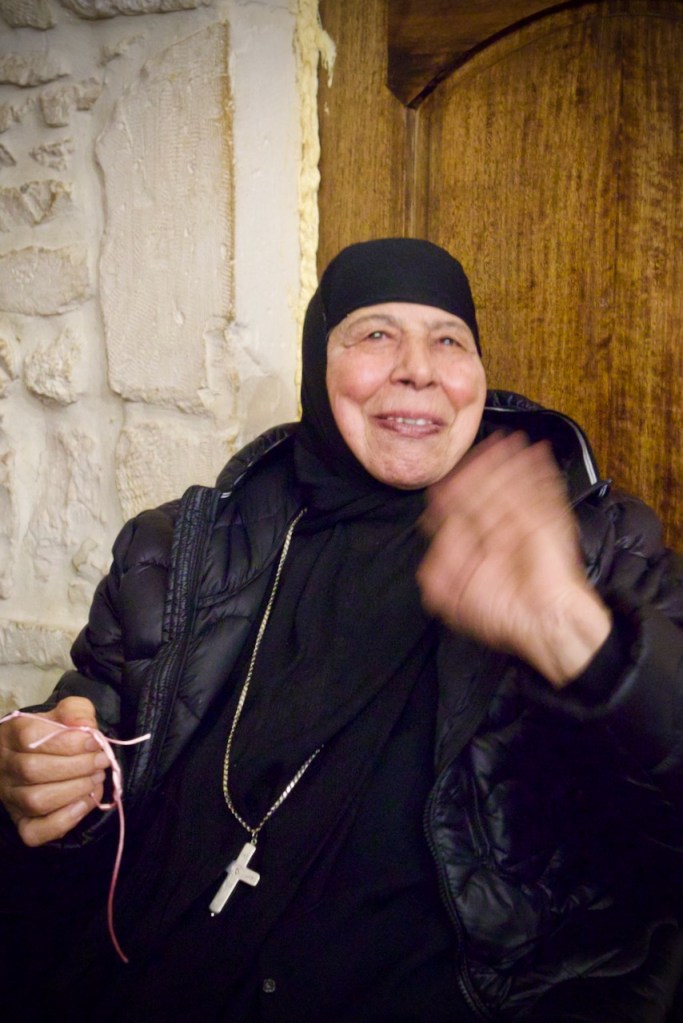
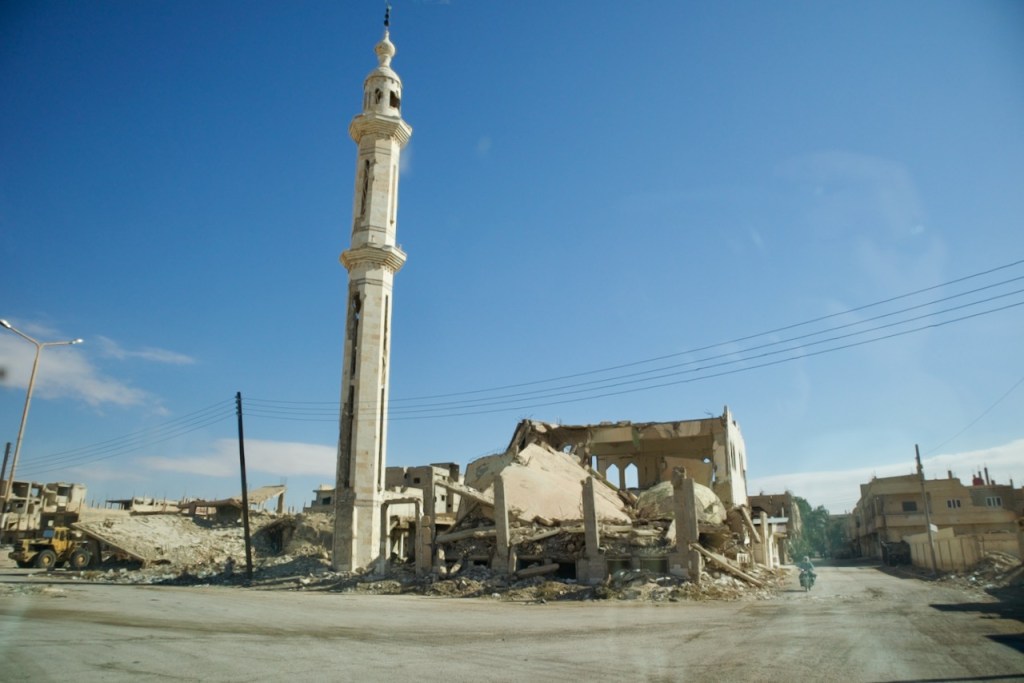
Set in a valley in the dramatic Qalamoun mountains, Maaloula is famous as one of the last places where the ancient Aramaic language used by Jesus is still spoken. It is home to important Christian monuments like the St. Sergius Monastery and the Saint Takla Monastery. Unfortunately, its strategic location was also the target of two suicide bomb attacks in 2013 when al-Nosra front rebels took control of the city for six months. Today, the decimated 5-star Safeer Hotel looks eerily straight out of a Hollywood film set. We follow a narrow path to the Saint Takla Monastery to meet Sister Takla who was kidnapped during the civil war before making our way to the 1500-year-old Mar Musa Monastery near the town of Nabk. The stunning 11th and 12th-century frescos with biblical scenes of Christ’s baptism and the Last Judgment are such national treasures.

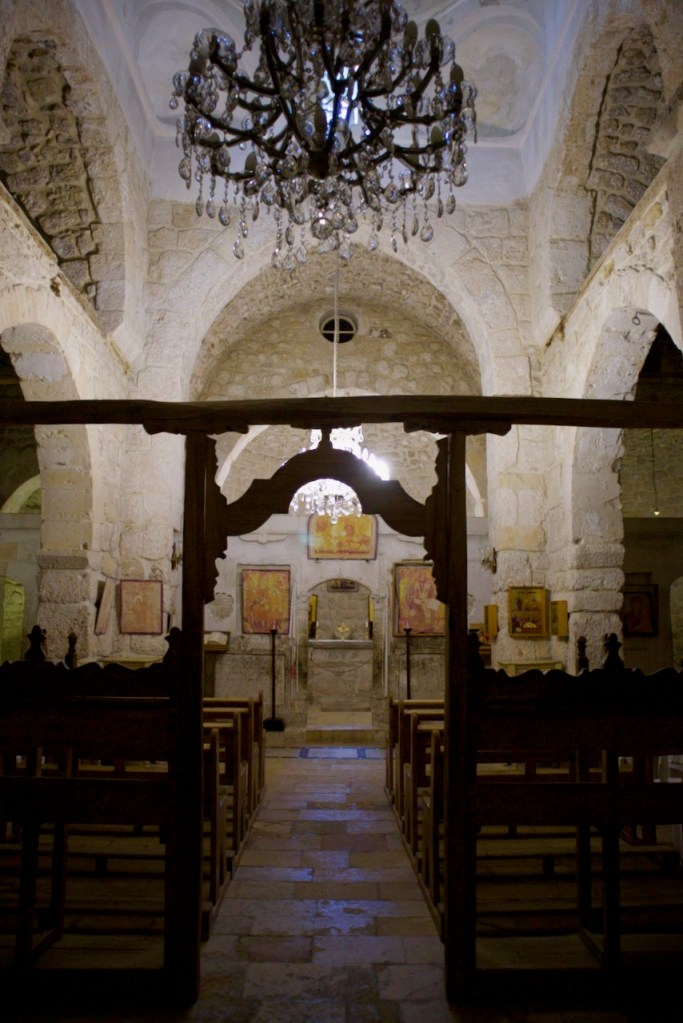

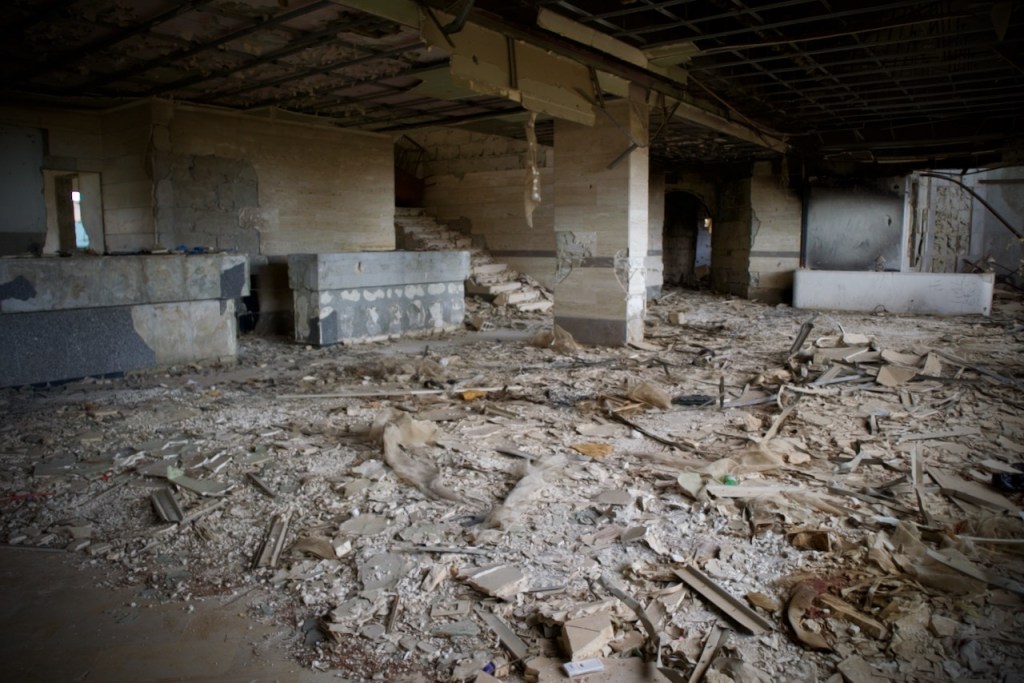

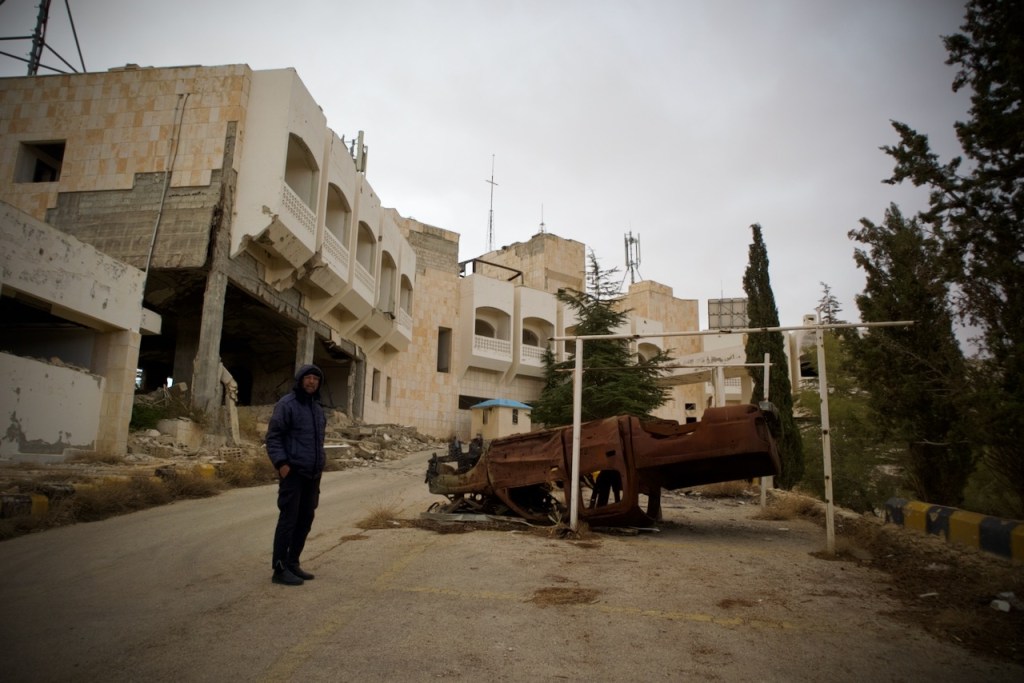

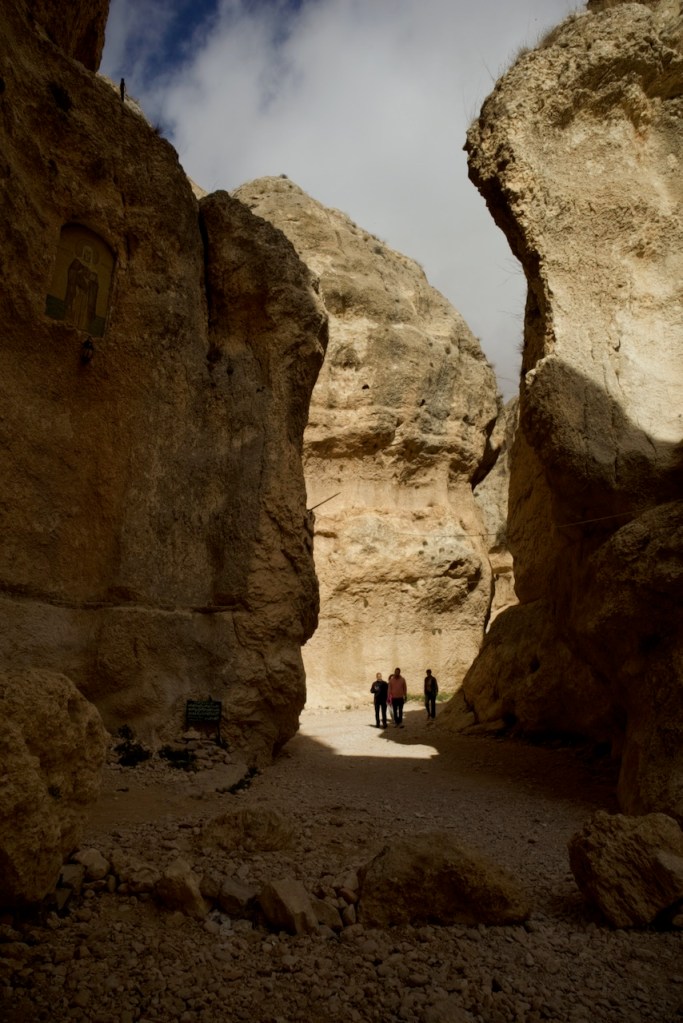


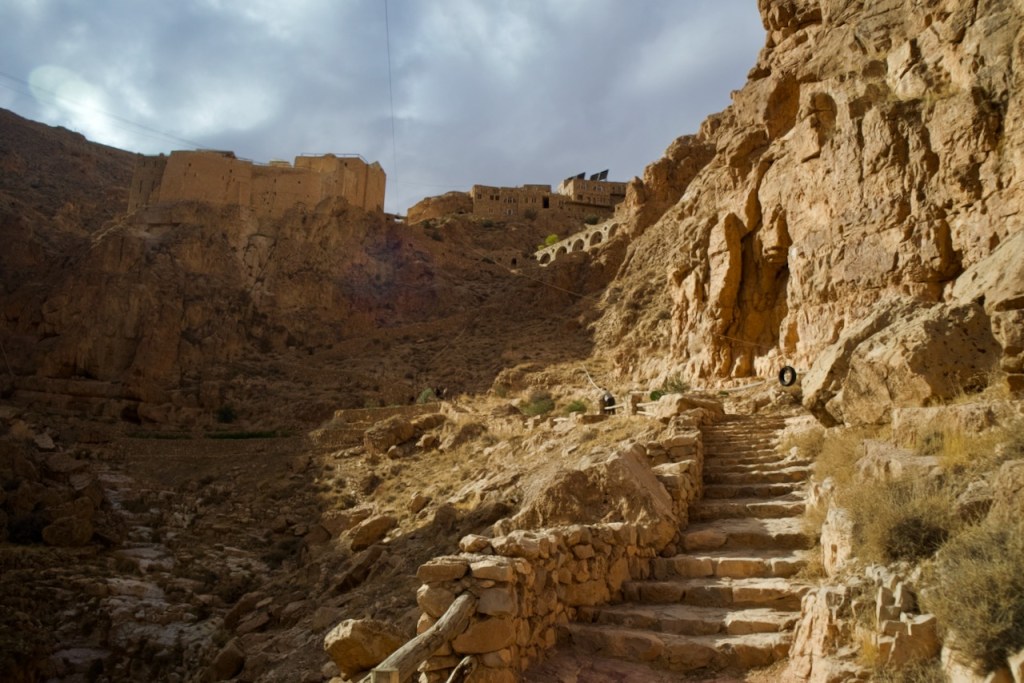
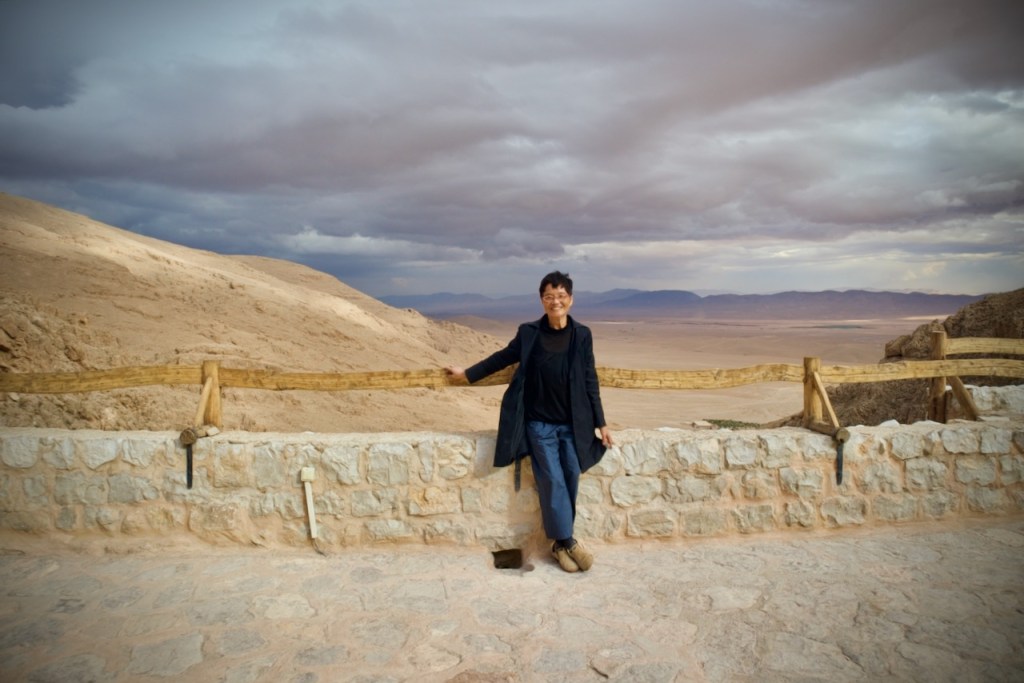
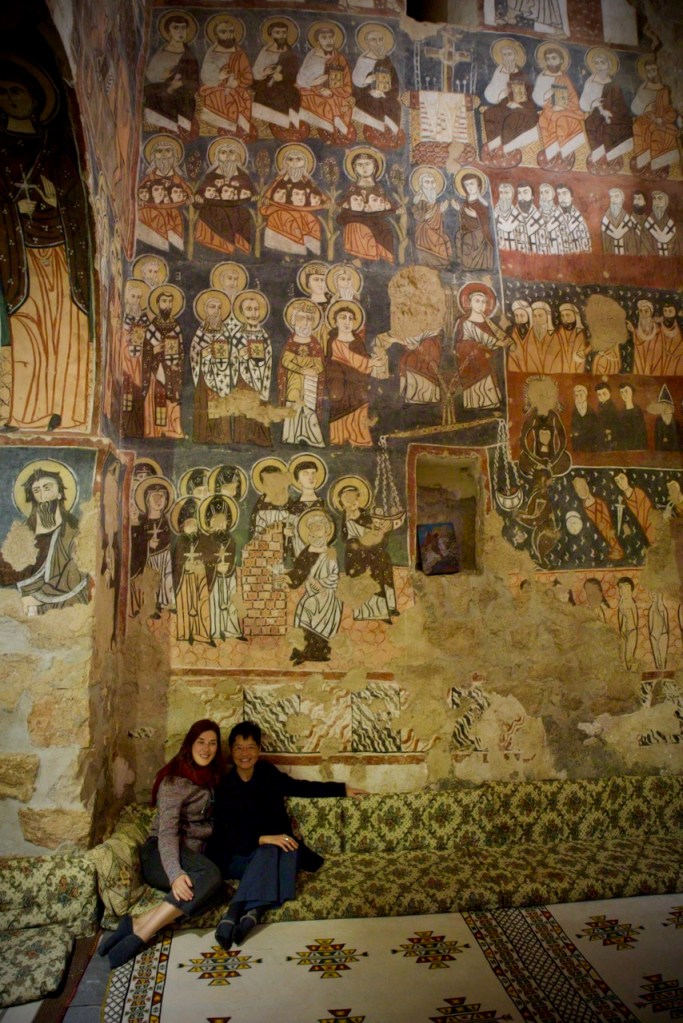
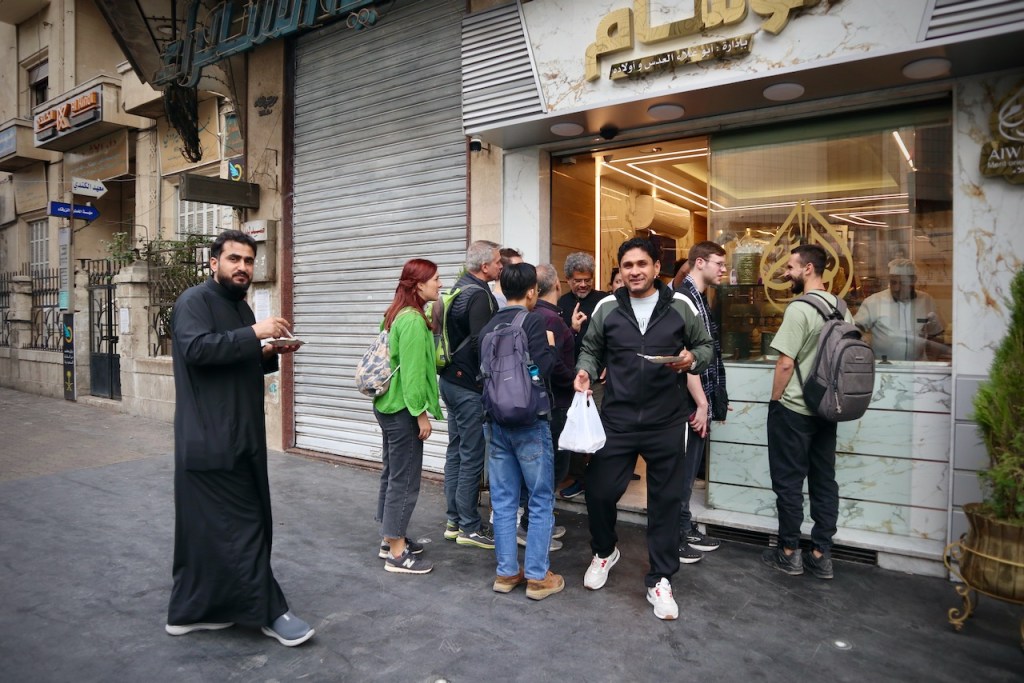
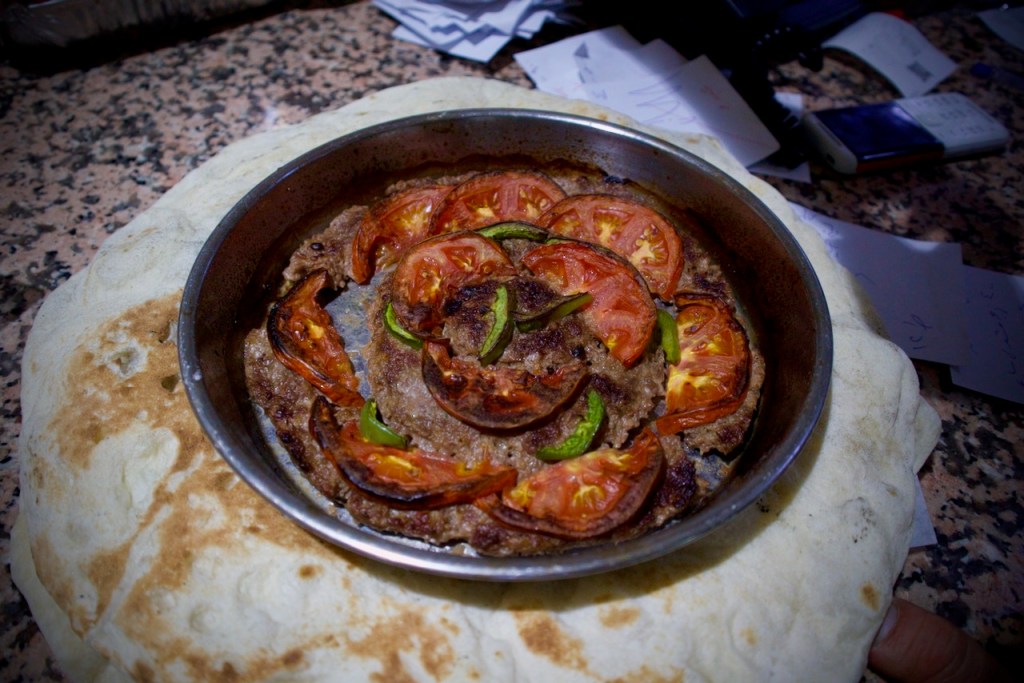
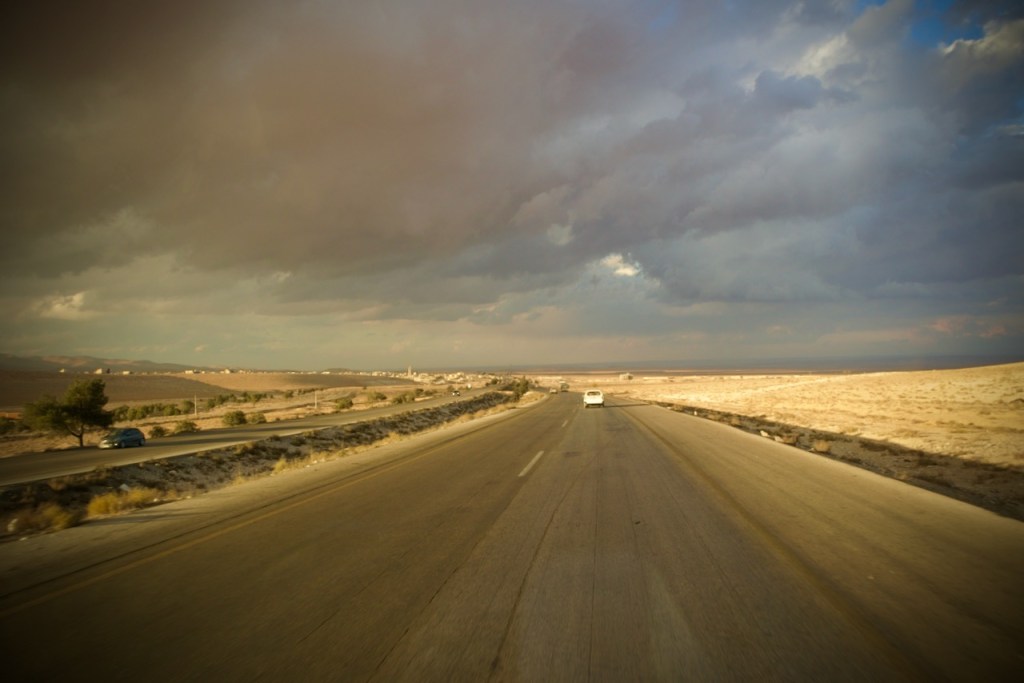
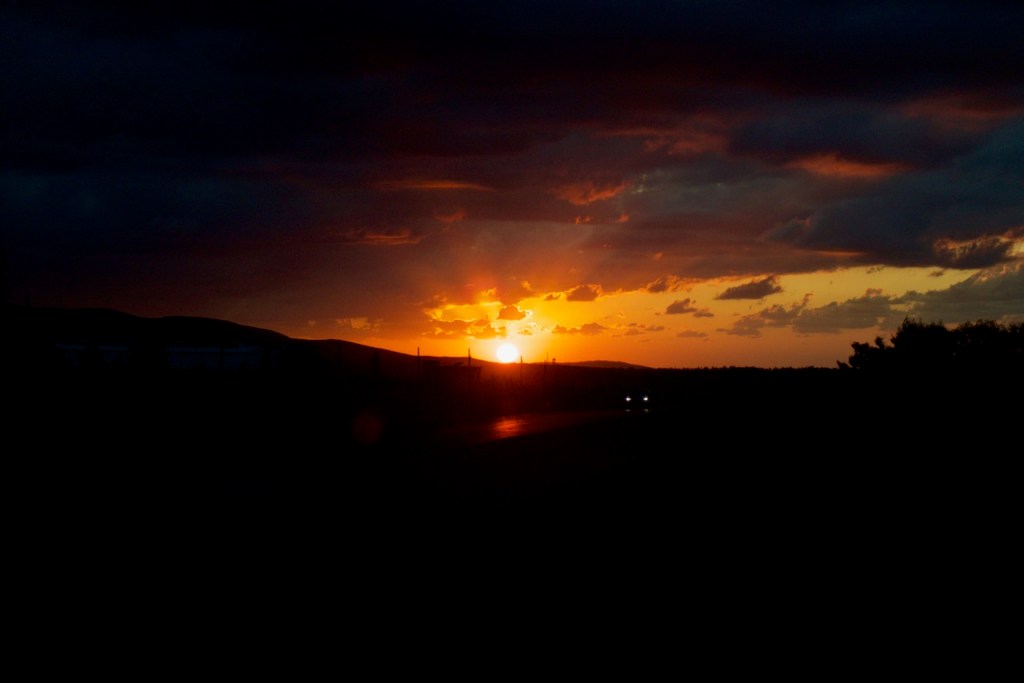
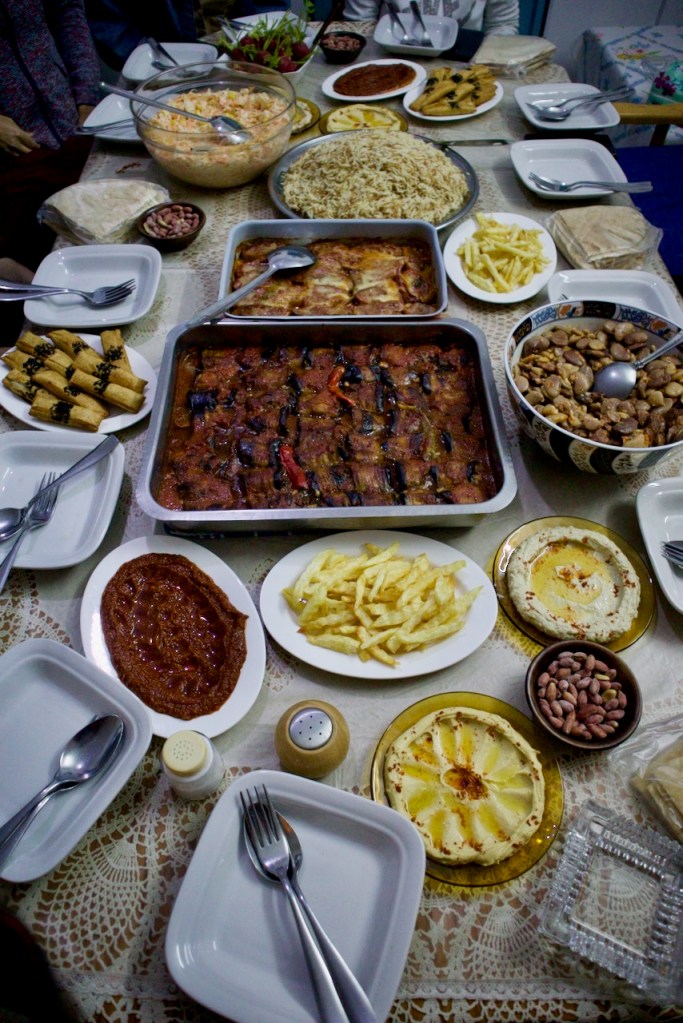
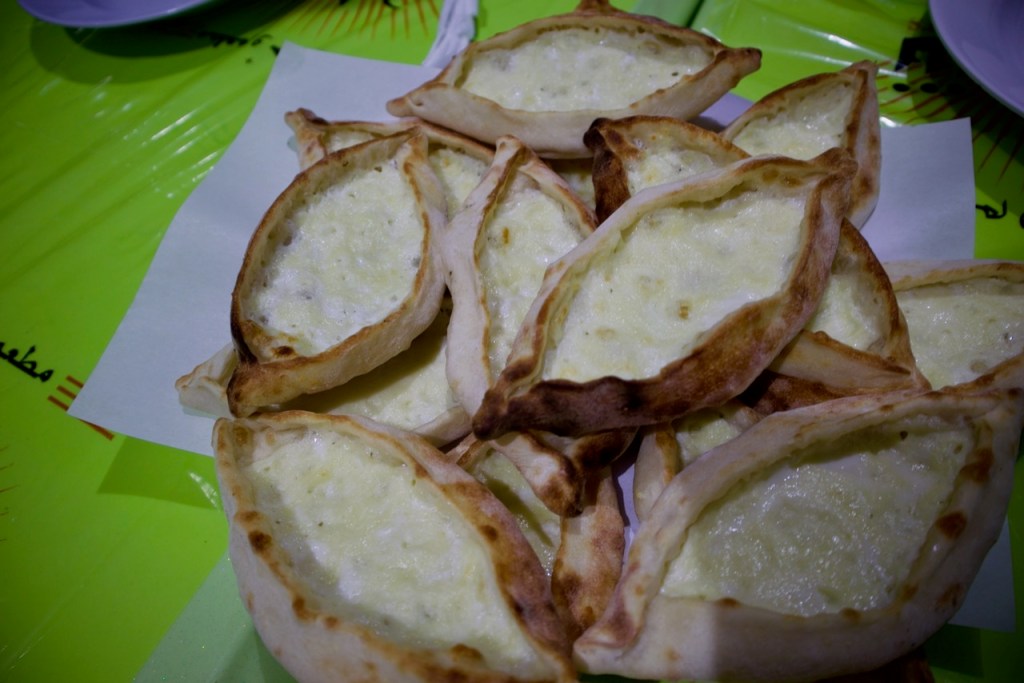
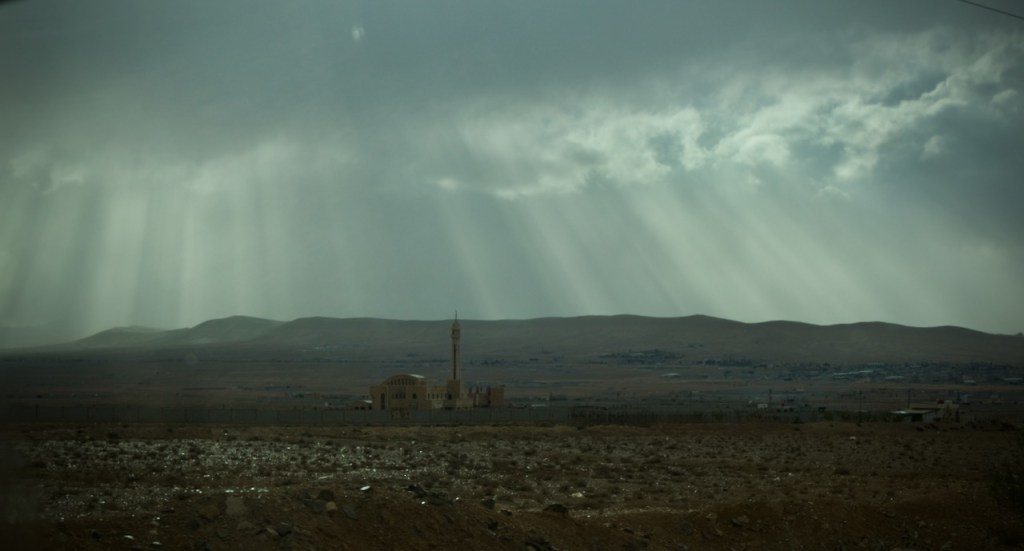
After a pit stop at Shuwaa Sweets for a quick bite, we drive towards the Christian Valley. The afternoon light is sublime, even dramatic – complete with a rainbow, crepuscular rays, and a glorious setting sun – so befitting to our visit to the holy sites. When we finally arrive chez Enam, a feast is spread before us: more dips and salads, beans and cheese rolls, baked eggplants and chicken rice, all made with hand-me-down recipes and loads of love.
Over sweets and tea, I ask the Syrians what their wishes were. My husband, Enam says, I want my husband back. Disappeared by the regime of Assad père, he was never seen again, leaving her to fend for their children alone. Freedom, Bashar responds. Unity, Sarea says. And I want to travel, too, he adds. Go work abroad, our driver, Mohammed, replies. Peace is priceless; it makes all our life dreams possible.



Palmyra: Still Standing Strong
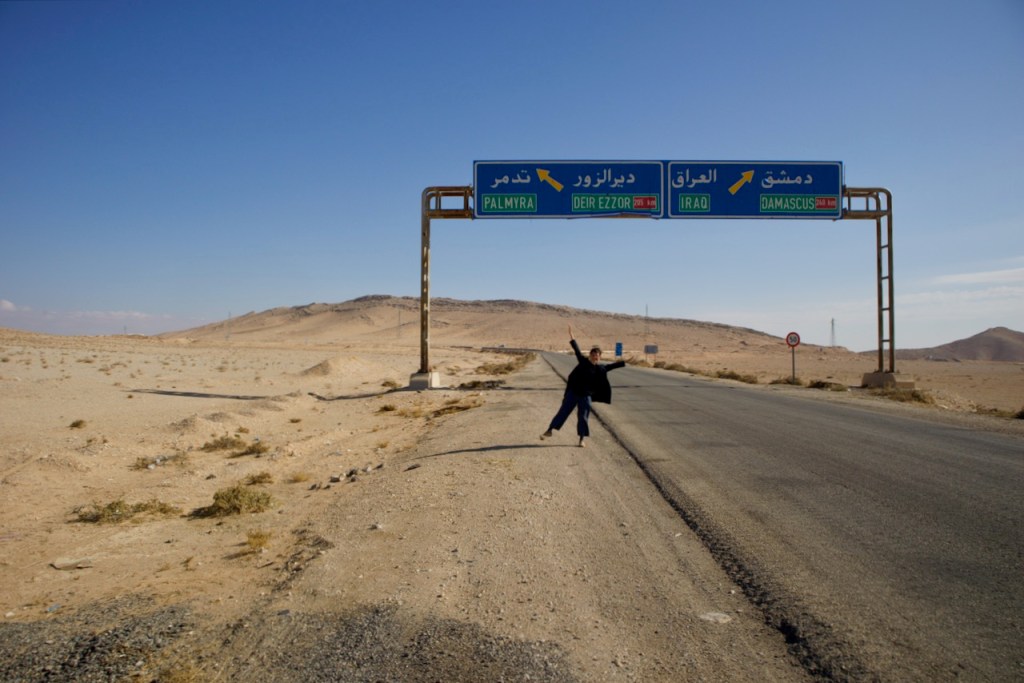
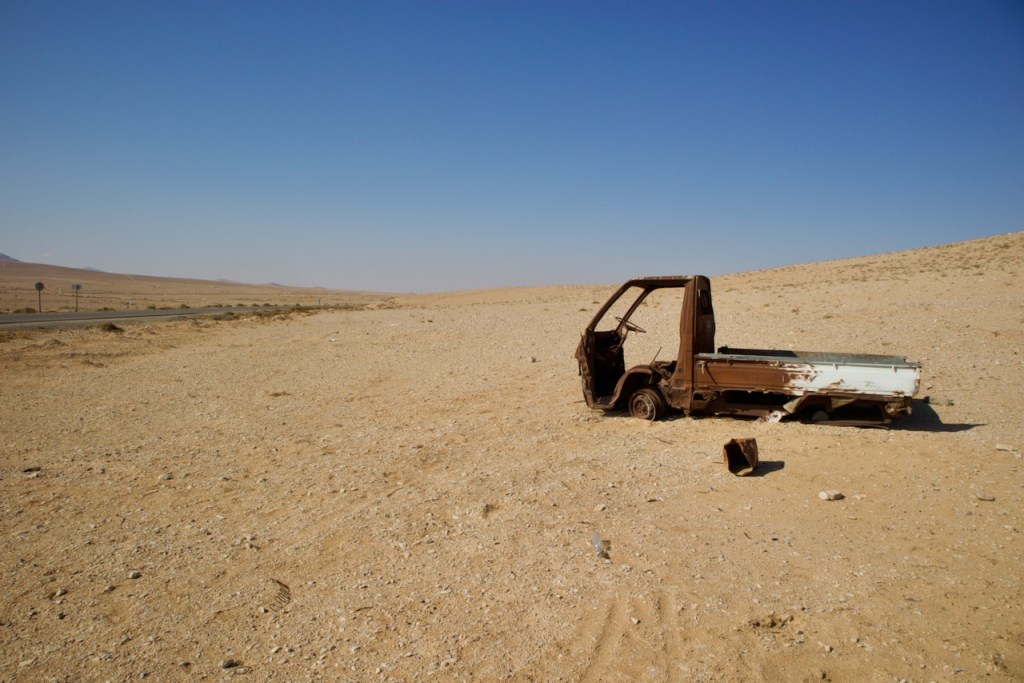
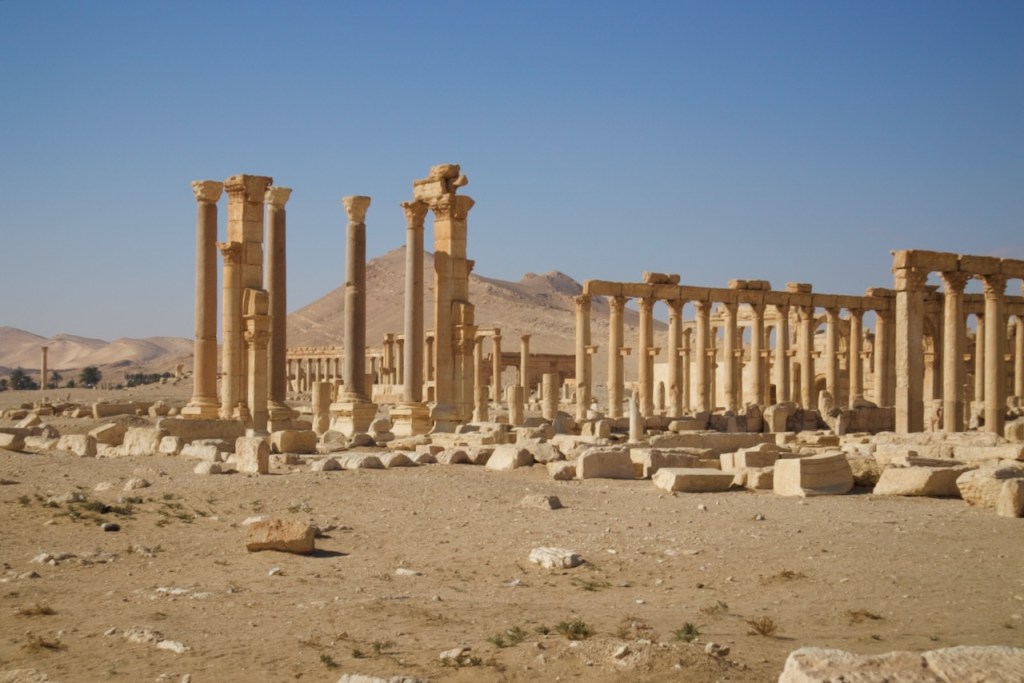
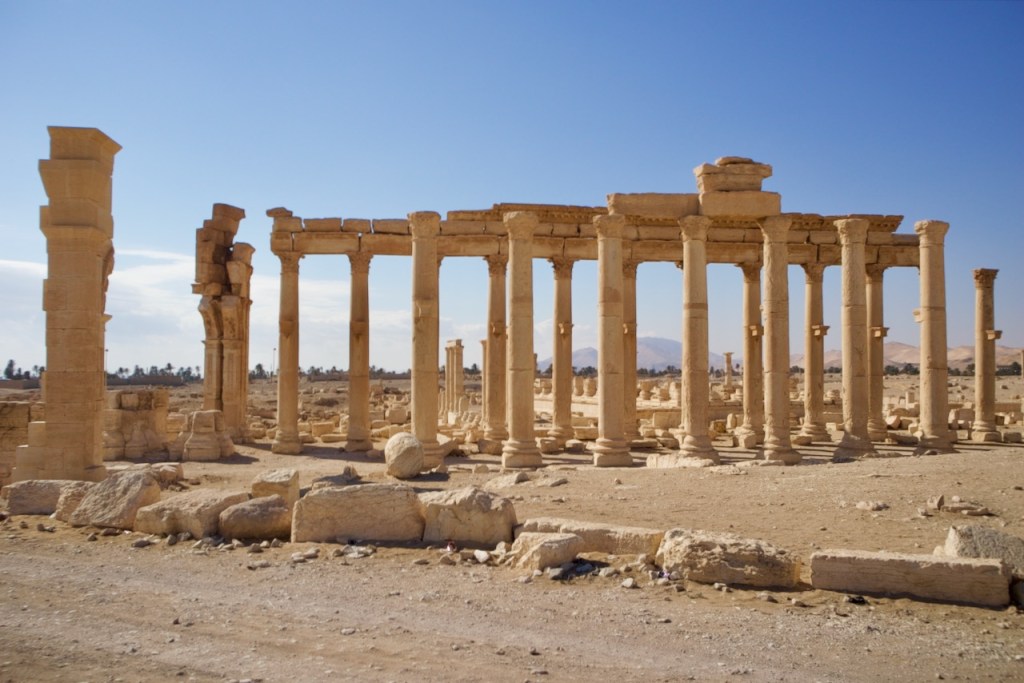
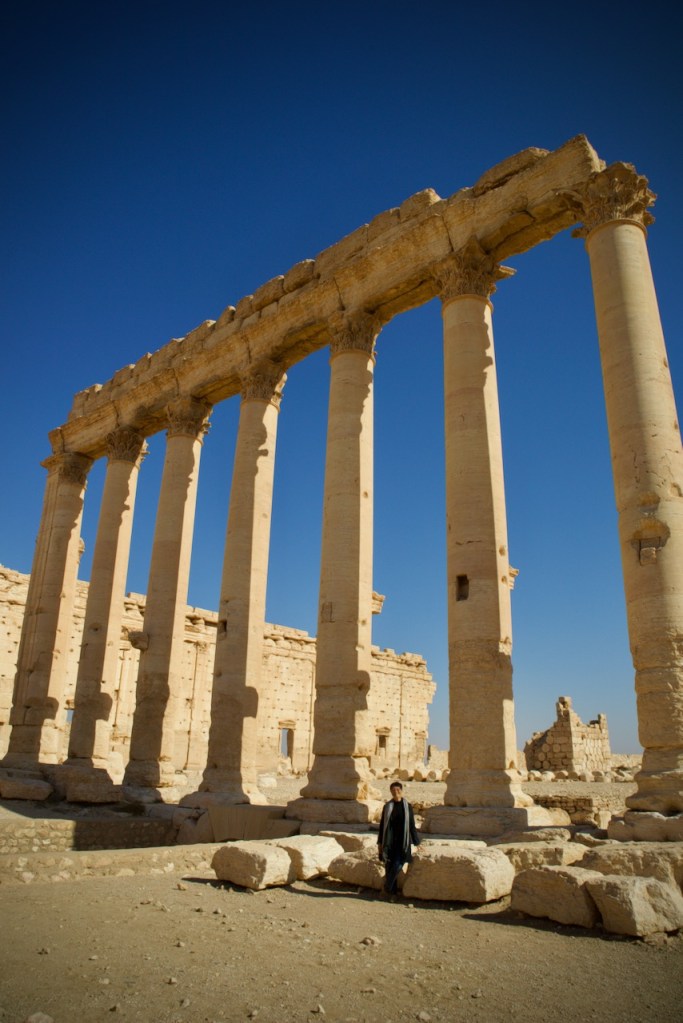
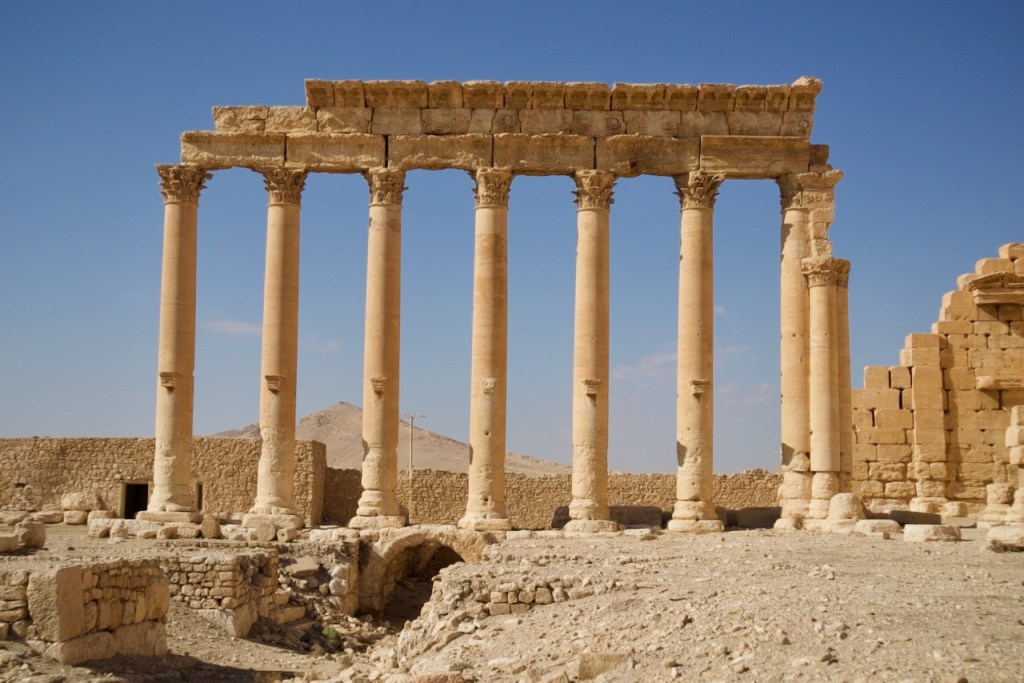
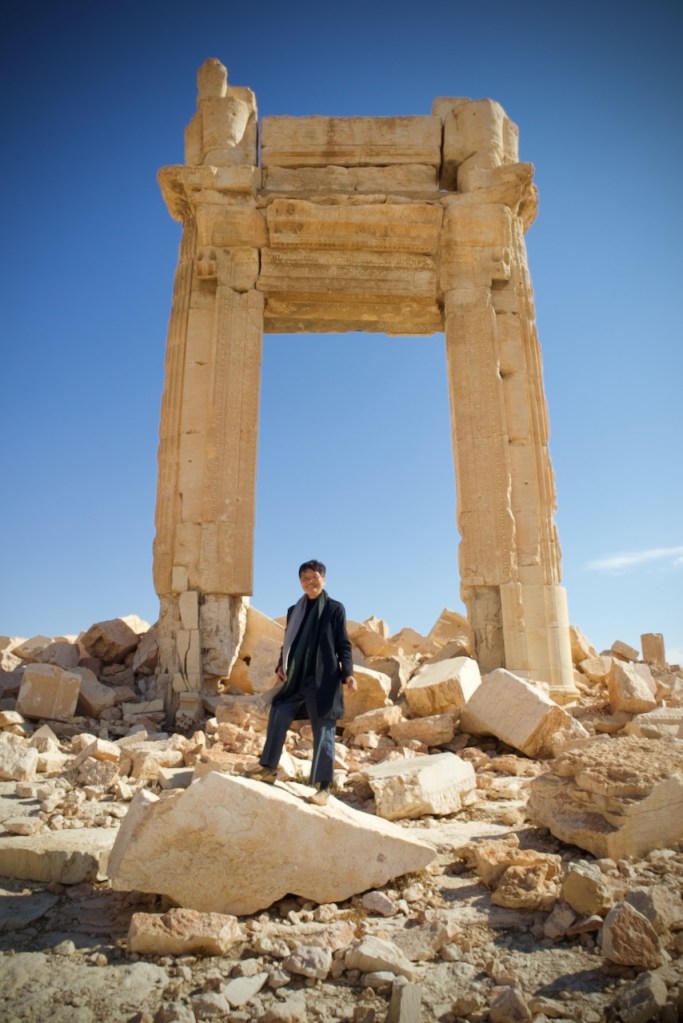
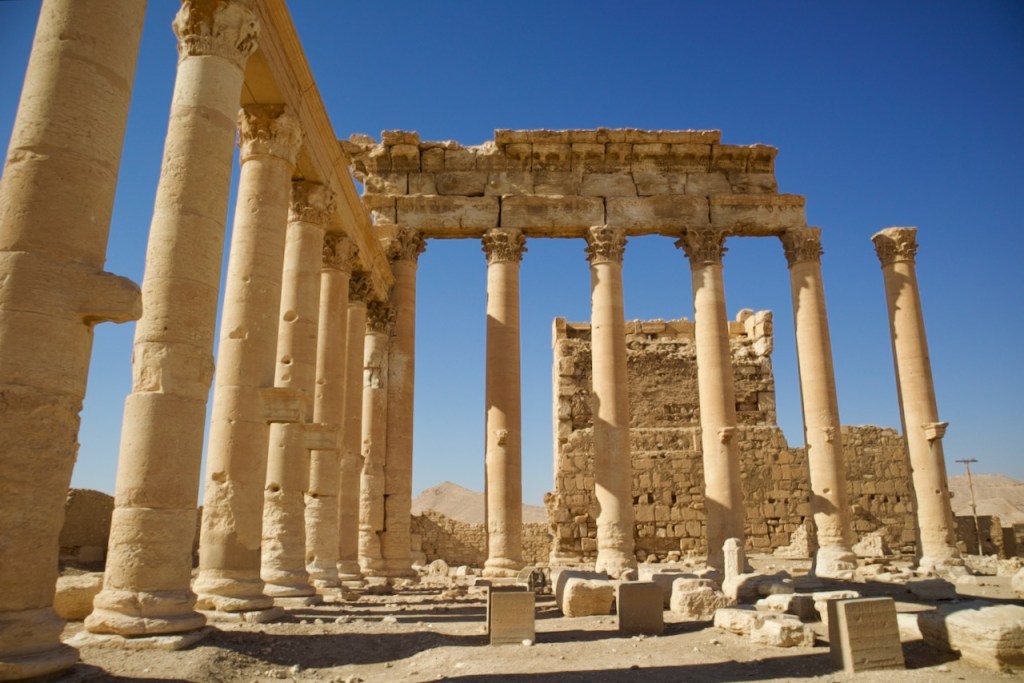
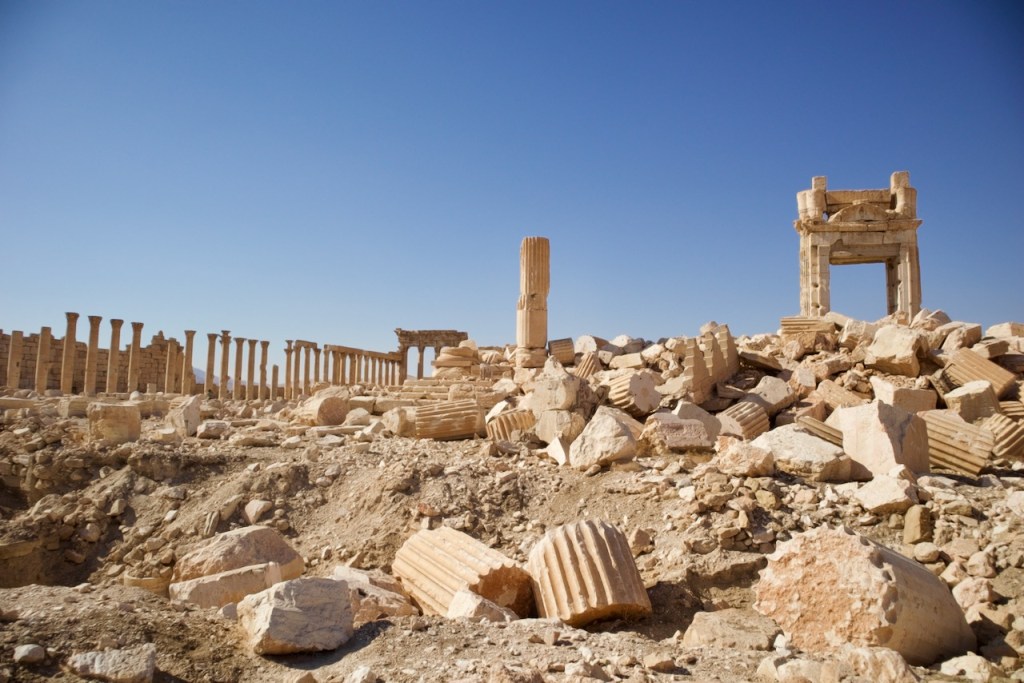
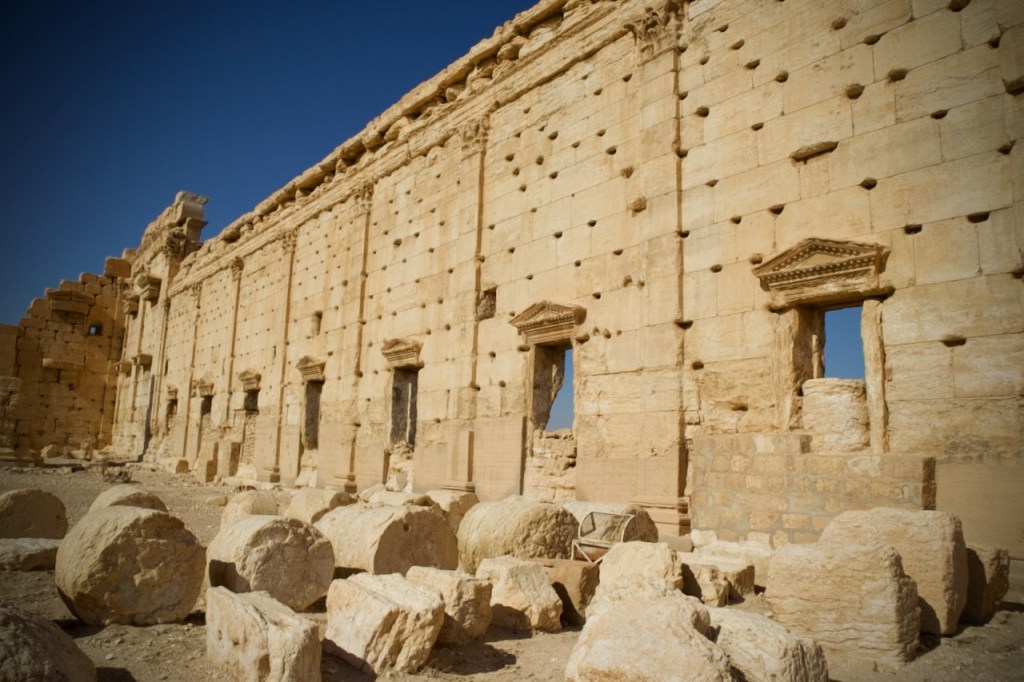
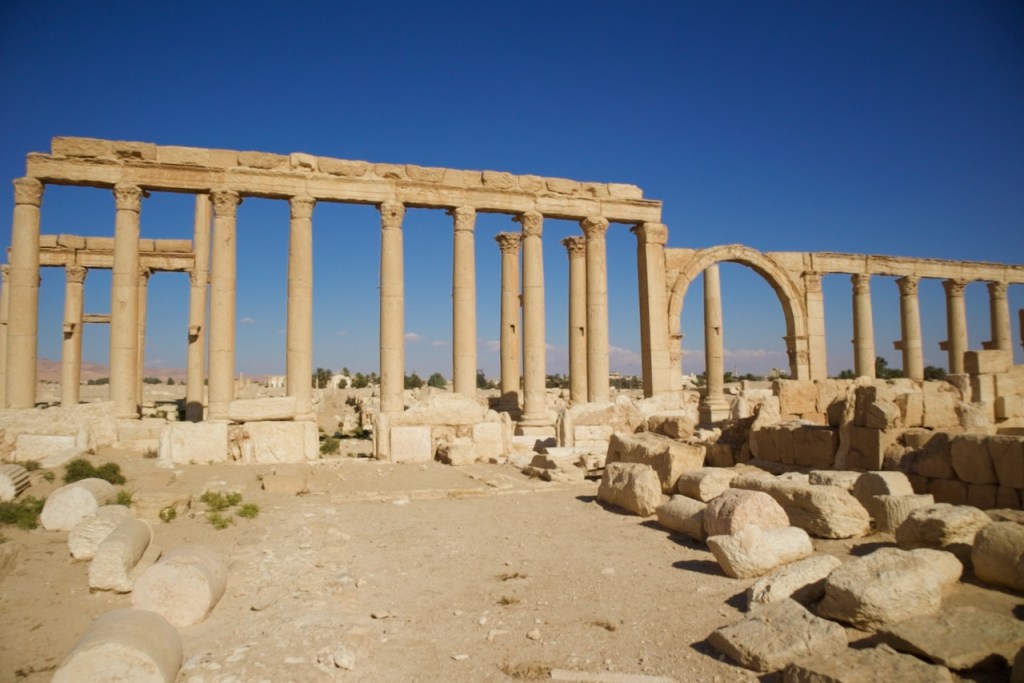
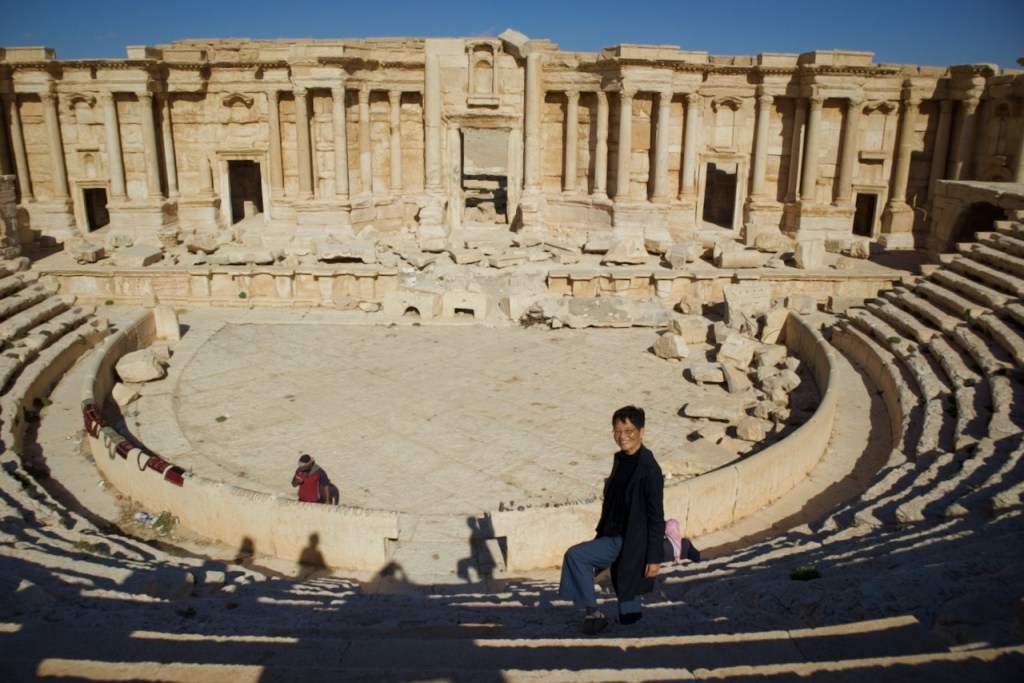
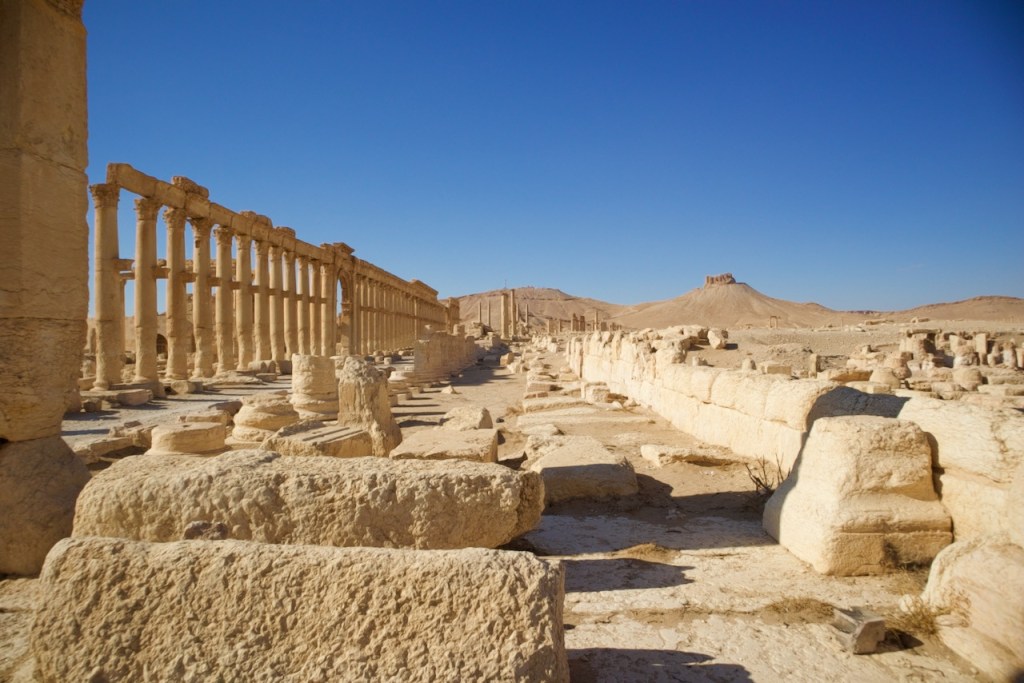
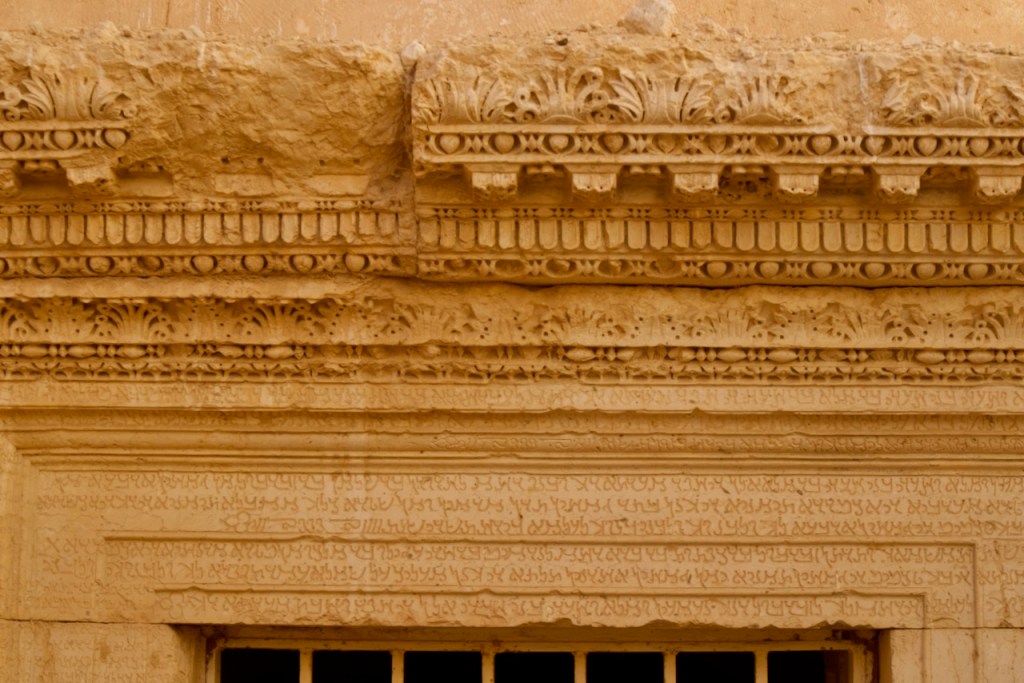
No superlatives seem enough to describe the magnificent sprawling ruins of Palmyra. “Bride of the Desert” and “City of Palms”, this once major caravan city along the Silk Road has stirred the imagination and attracted adventurers, writers, and photographers from around the world. The massive Temple of Bel and a long colonnaded street, baths and a theatre near the agora, Byzantine churches and temples, monumental gates and epic tombs, all in Greco-Roman styles with Persian influences, leave one breathless. Unfortunately, ISIS came here twice, in 2015 and 2016, blowing up, among other treasures, the Monumental Arch, once the gateway to Palmyra. What an unforgivable crime!
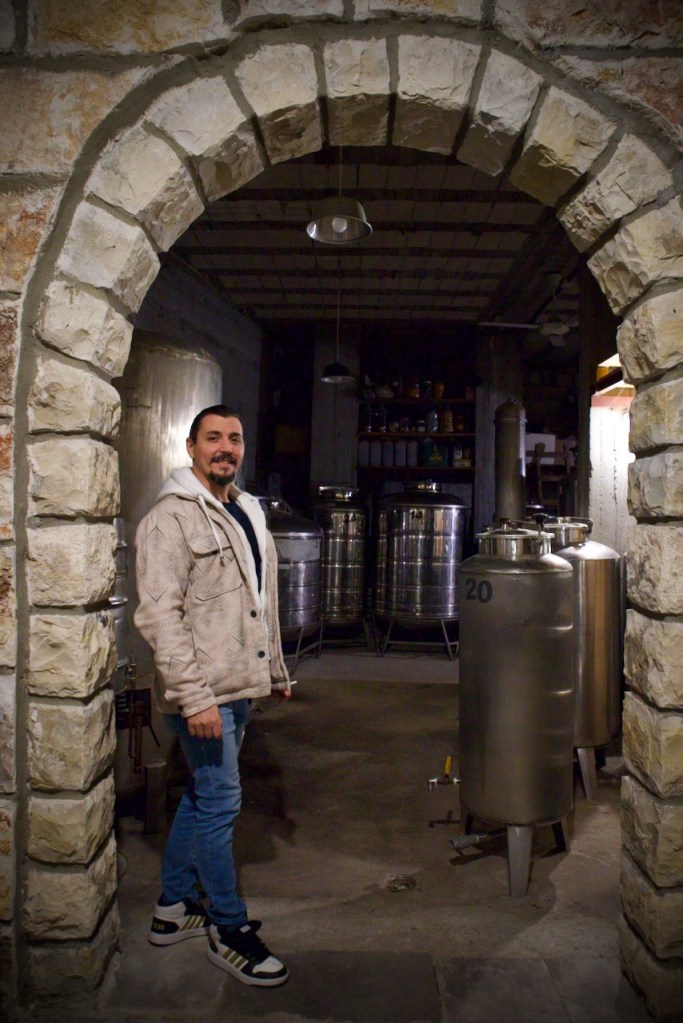
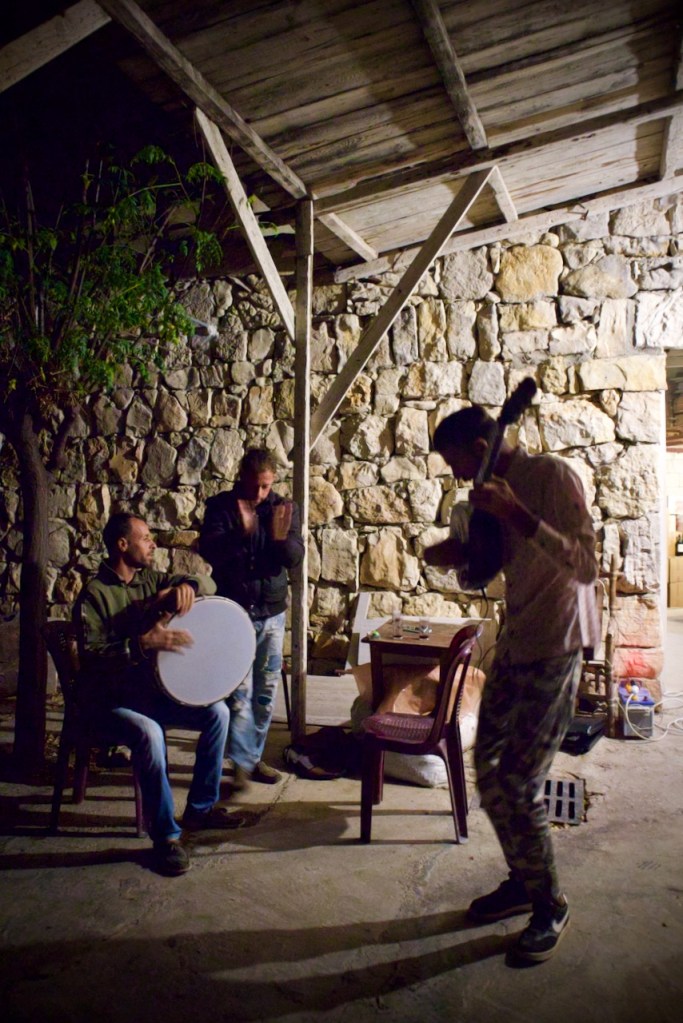
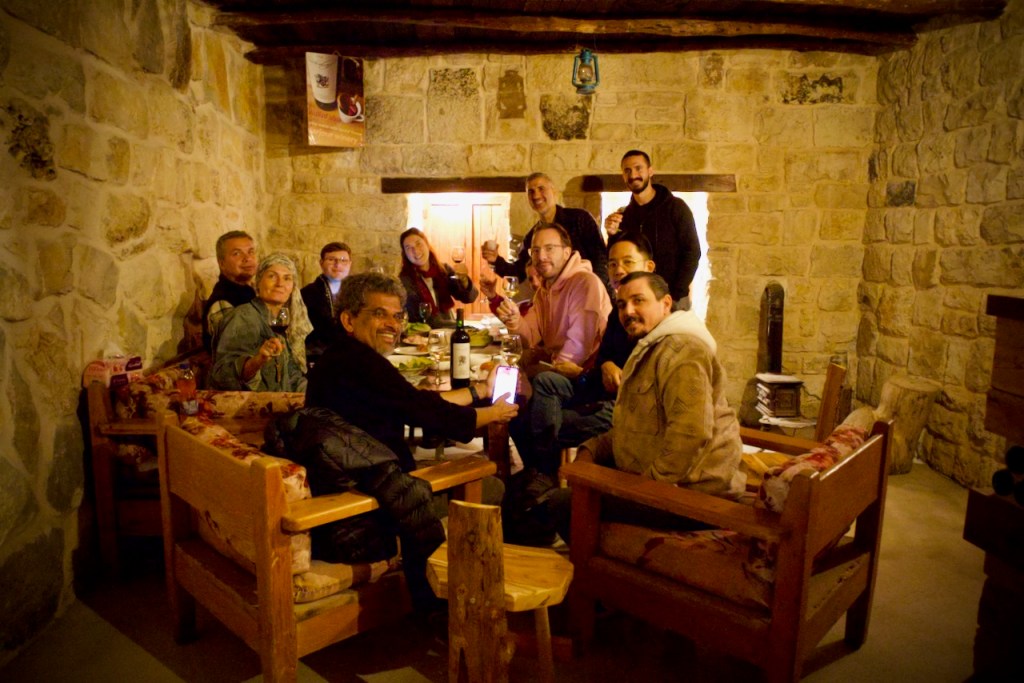
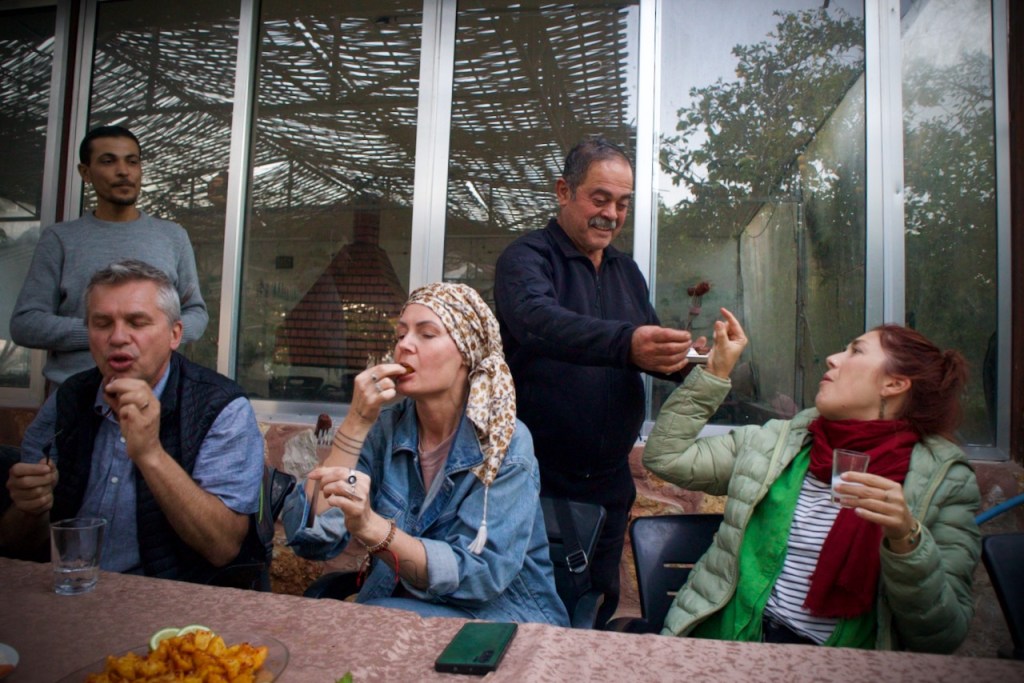
After a hearty bedouin lunch, we head to Jarjour Winery. Imagine all the political and religious red tape that Shadi, the young owner, has to navigate under the new regime. Tonight, the aromatic Chardonnay is still flowing, and we are joined by Badia, Mohammed, and Fadi, three talented musicians from a nearby village, who grace us with exotic local tunes to which we move and flex our body. What a marvellous way to end another extraordinary day in this rich land of history, culture, and pleasure!








Krak des Chevaliers and the Western Coast
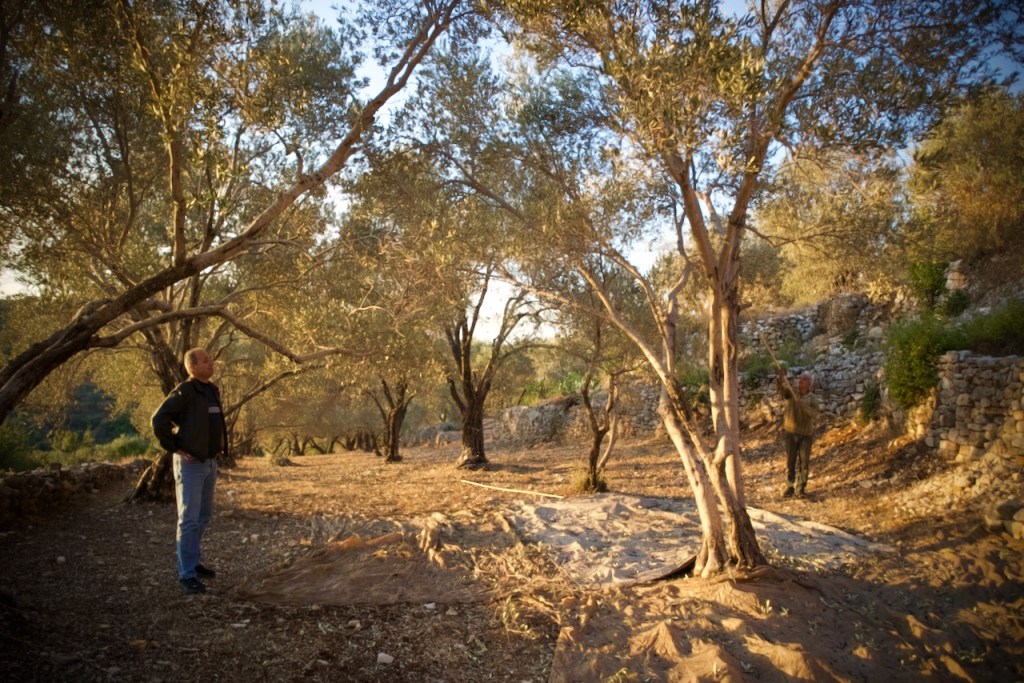
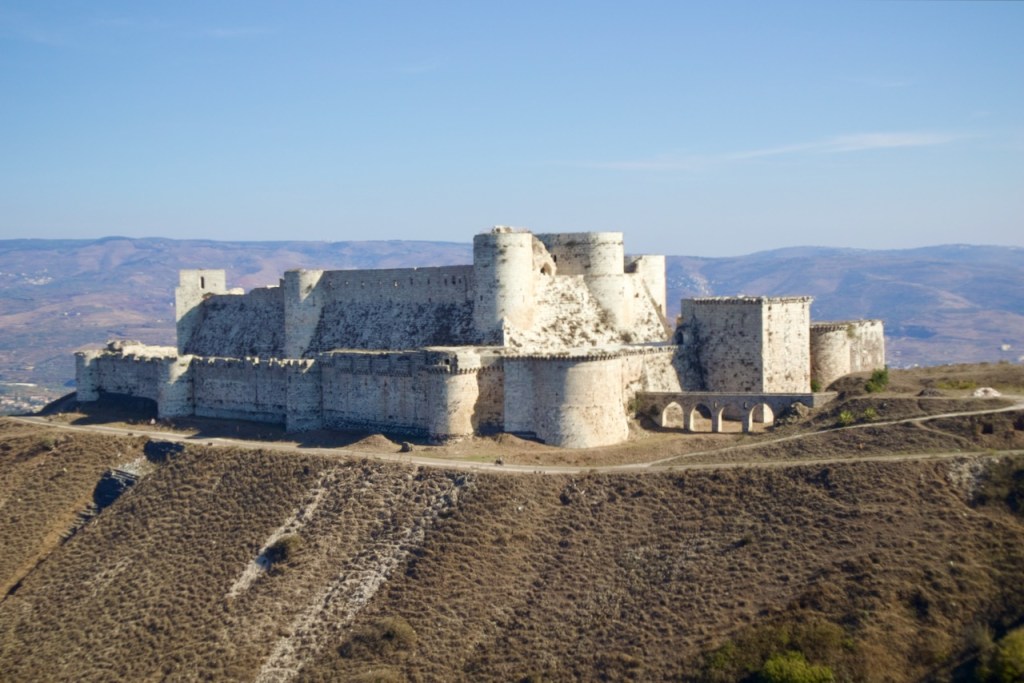
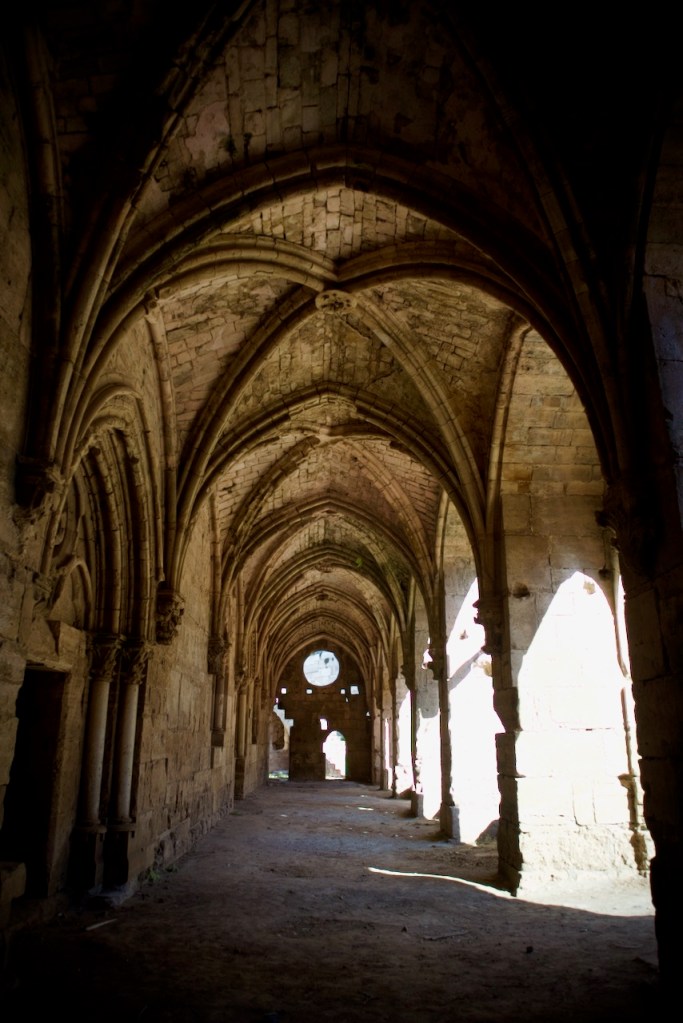
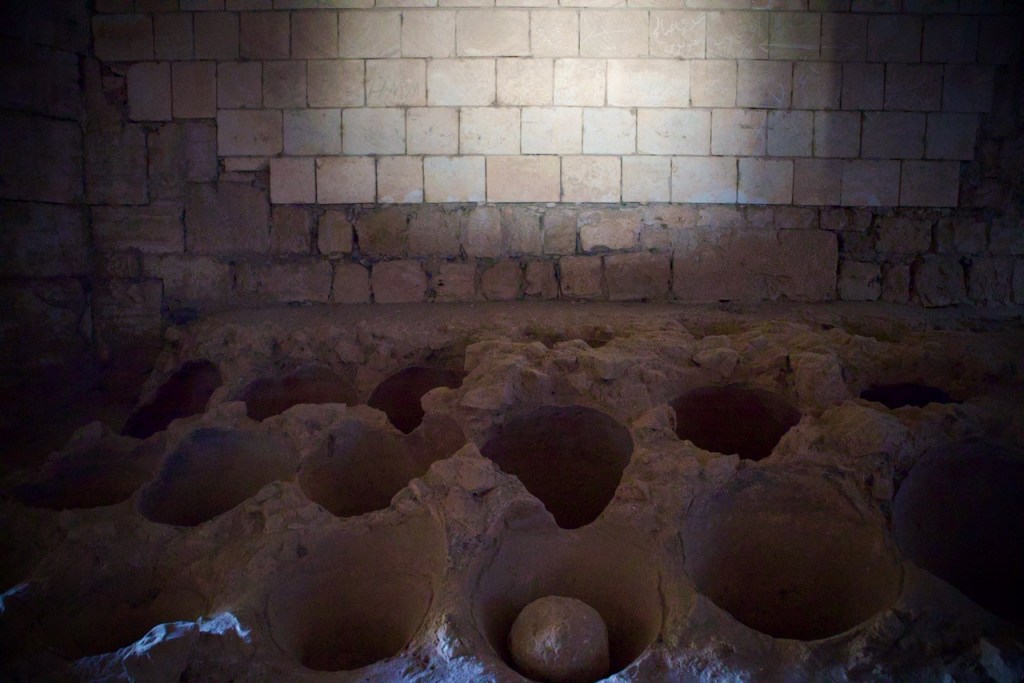
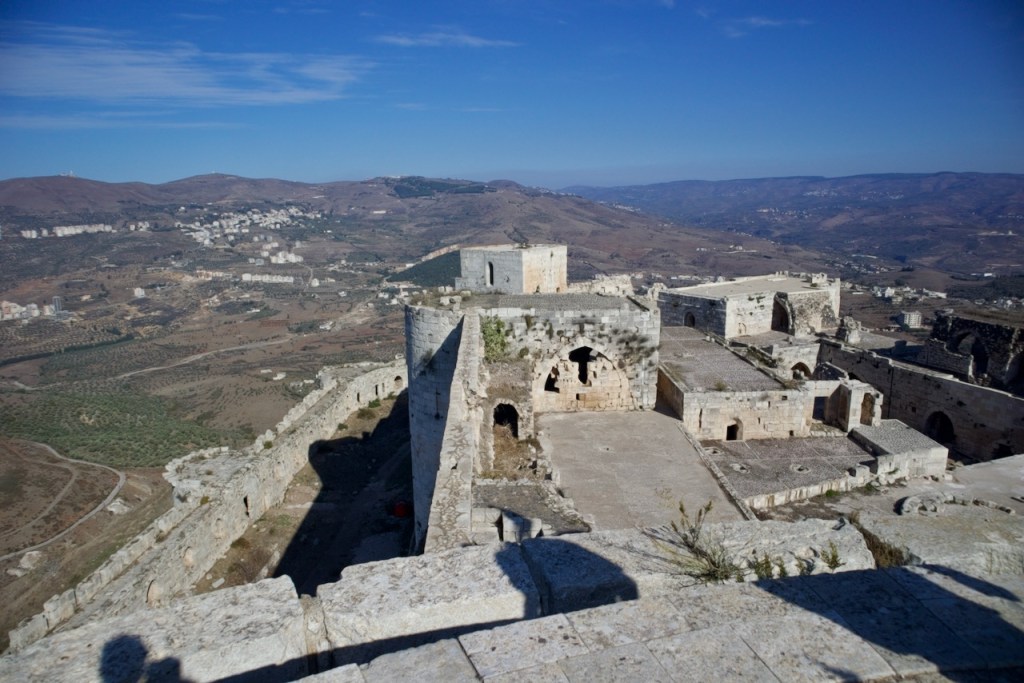
In this glorious morning amidst olive groves with mountain views, we say goodbye to our winery host to visit one of the best preserved medieval castles. Built by the Hospitaller Order of Saint John of Jerusalem in the 12th century and then further constructed by the Mamluks in the late 13th century, Krak des Chevaliers/Fortress of the Knights is an archetype of fortified architecture during the Crusader period with magnificent views. As we step into the stable and climb the defence towers, it feels surreal to imagine these very same places being occupied by rebel forces for two full years between 2012 and 2014 as a command centre and a transit base for fighters entering from Lebanon. There is always a secret path in a medieval castle!


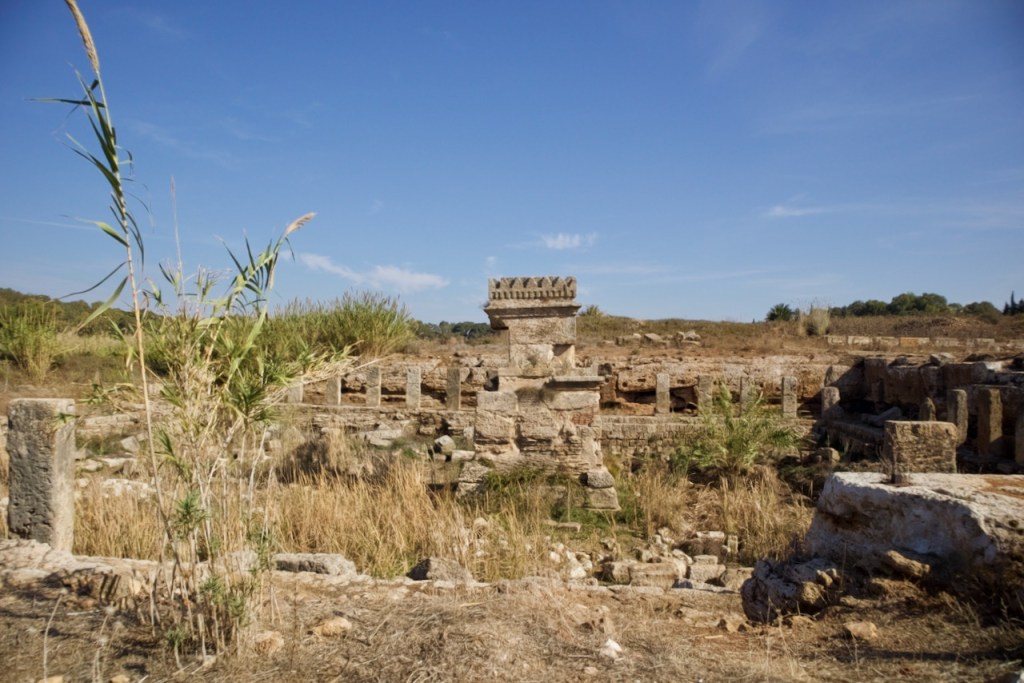
From there, we drive to Amrit to admire the Phoenician temple of Al-Maabad from the 6th century BC. The site being off limit just a few weeks before with military presence, we follow Bashar cautiously before hearing gun shots in the distance. Totally unperturbed, our Syrian guides soldier on while we exchange glances. Such sounds being so “normalized” in Syria, they could be for a wedding or drill practice in the nearby military camp. Nothing transpires during our short visit, but on our way out, I am told to stay clear of the shack stocking some ancient jars in case of surveillance cameras and… We hasten our steps to a nearby pre-Olympic Phoenician stadium where empty bottle trash – once filled with smuggled fuel from Lebanon during the civil war – litter the heritage site.


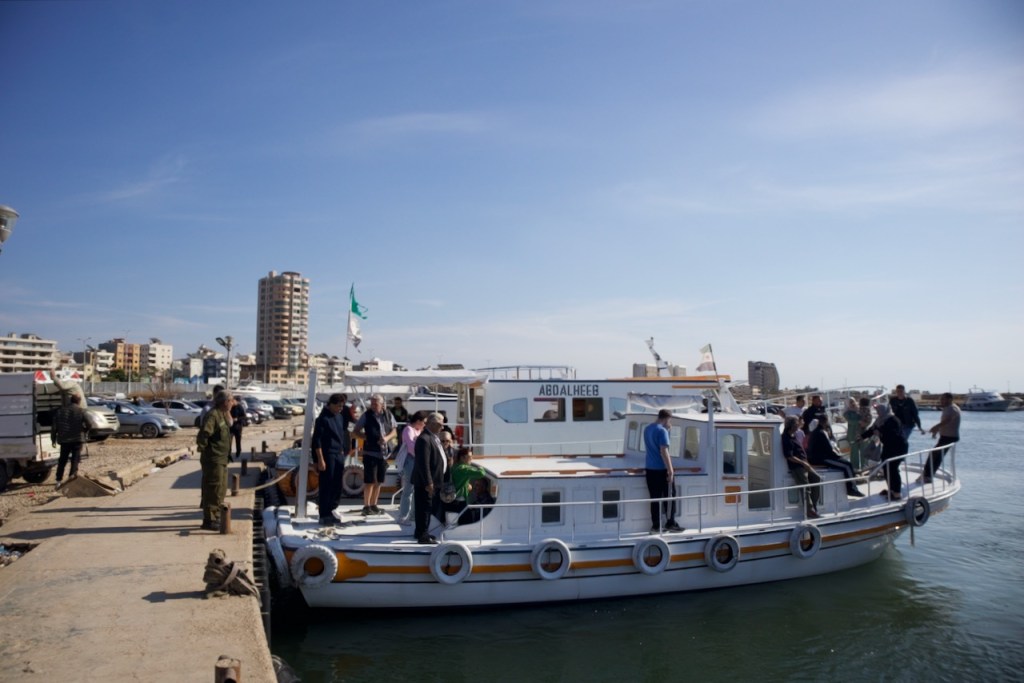
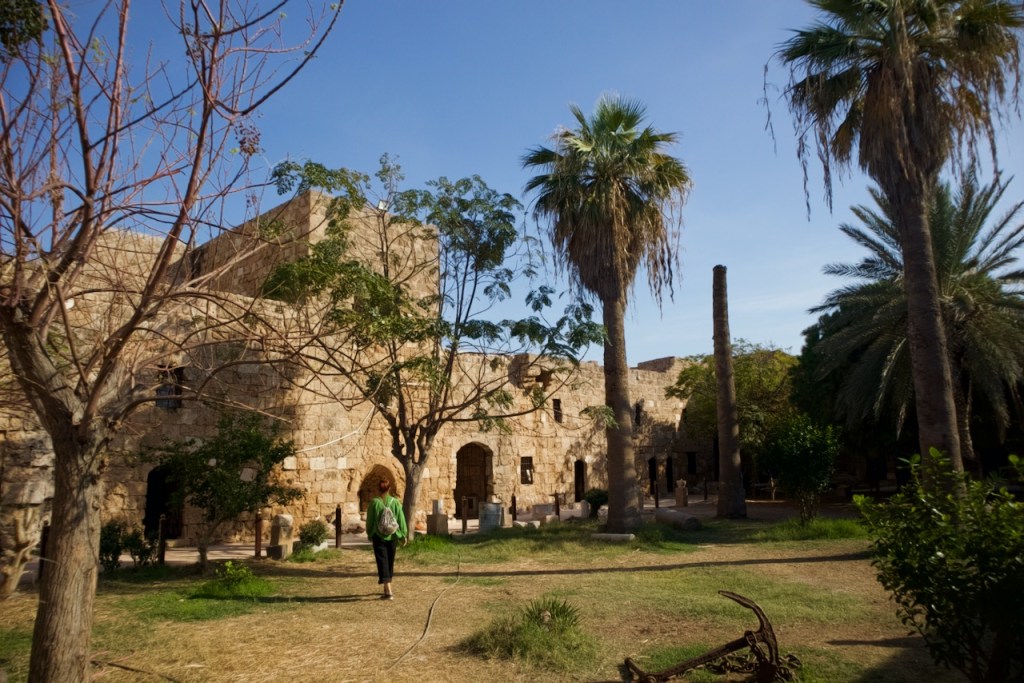
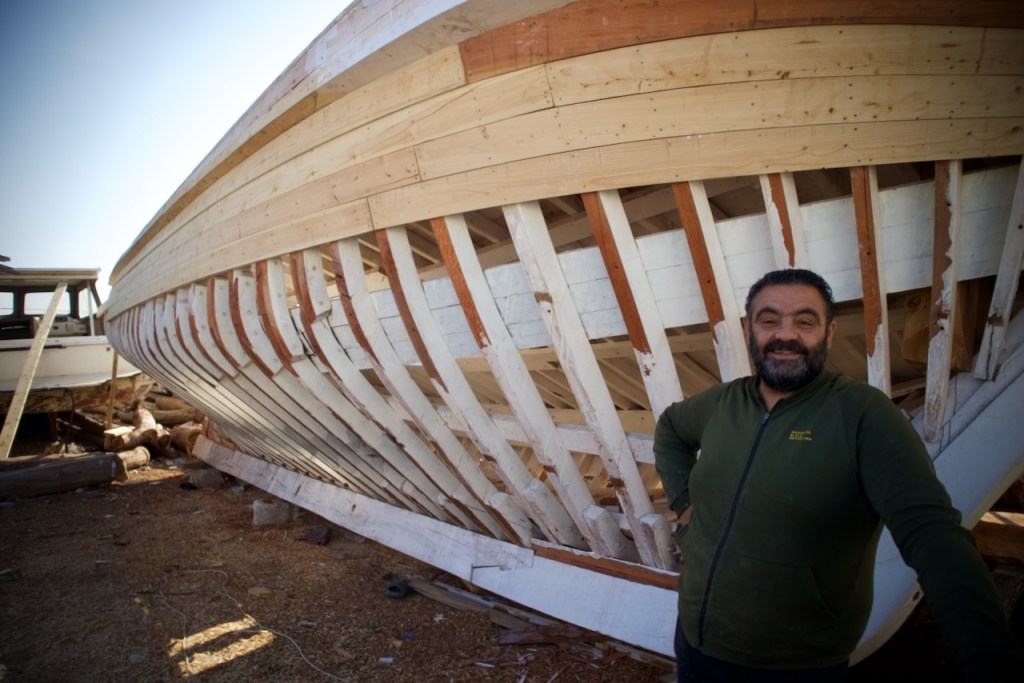
Time for a ferry ride to explore the only inhabited island in Syria. In this glorious afternoon, families are out and about on Arwad island. Adorned by old Phoenician walls and a fortress, the quaint little island boasts also of a ship building tradition. We meet Khaled, a master ship builder who could deliver a job done in under a month. How sea worthy is it? someone asks half jokingly but gets no reply.
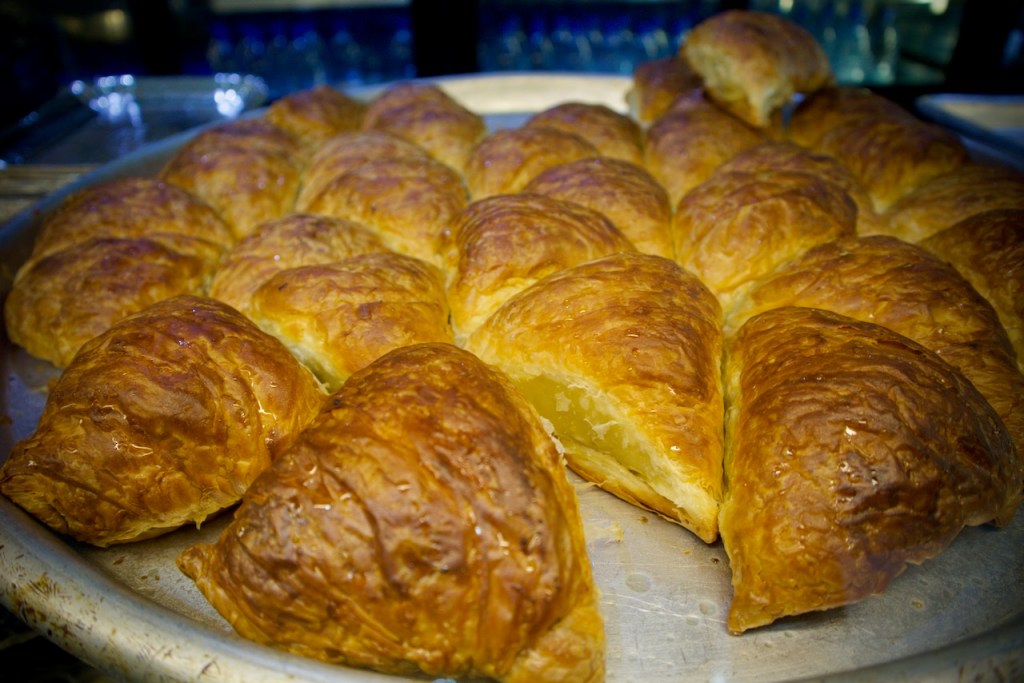
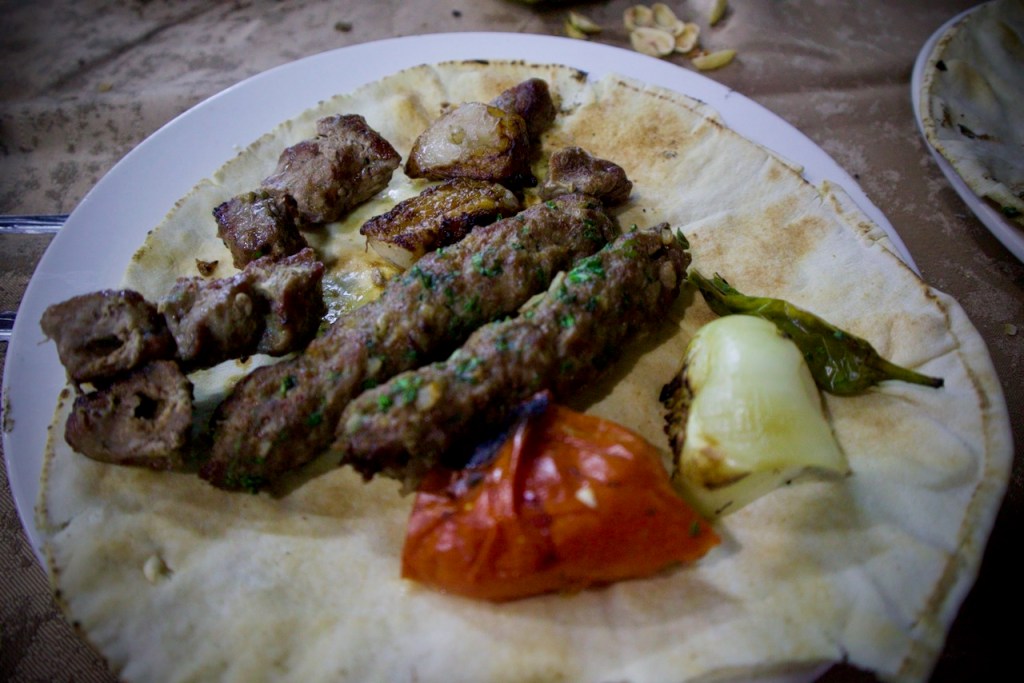
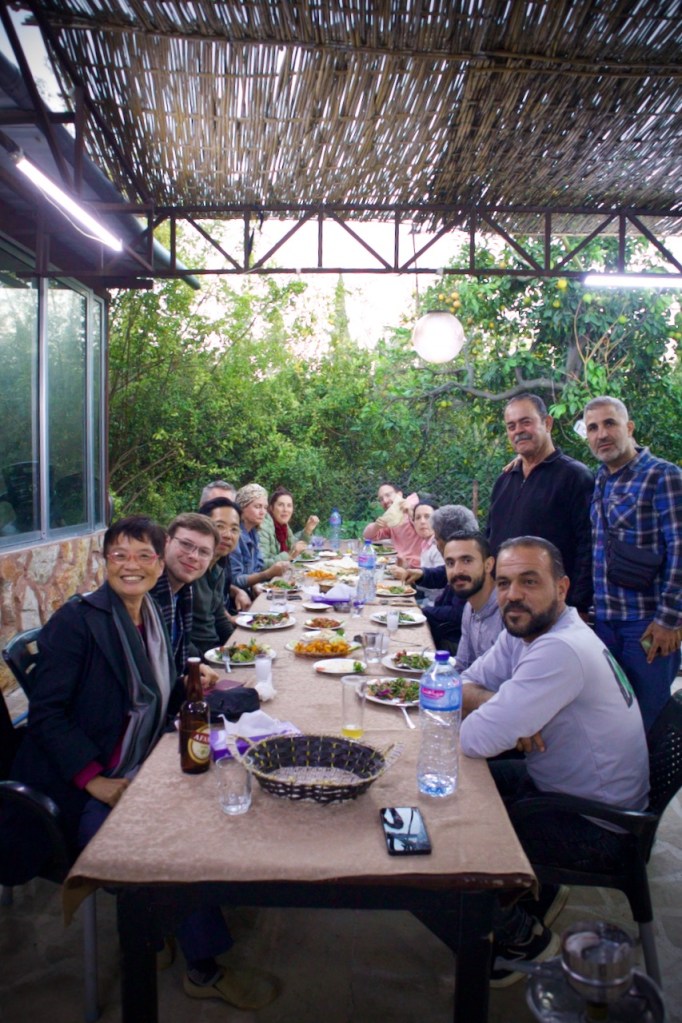
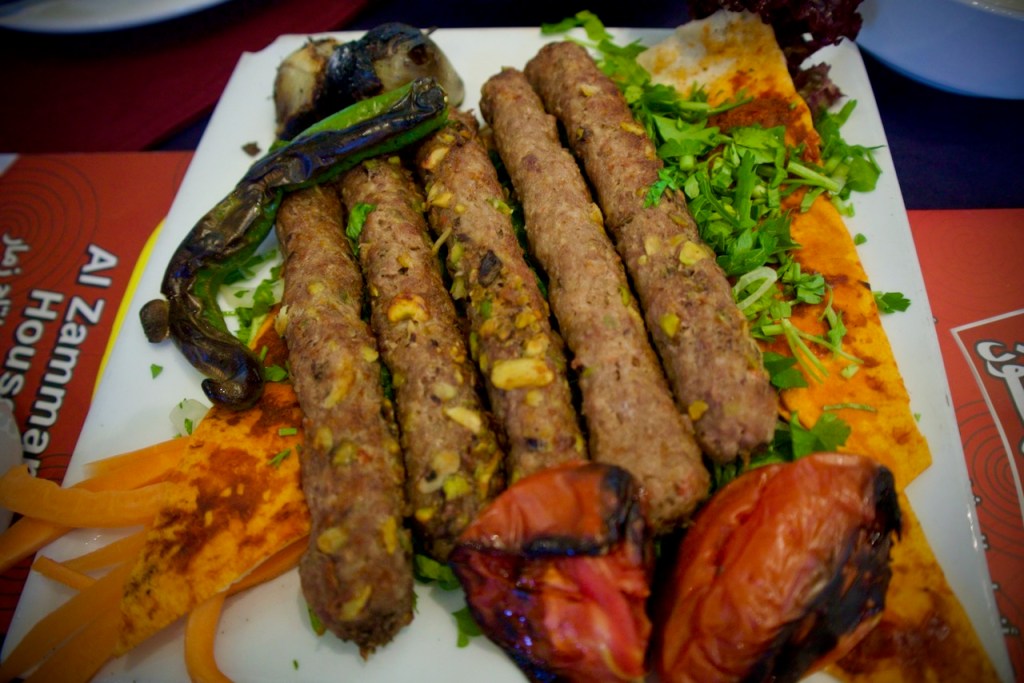
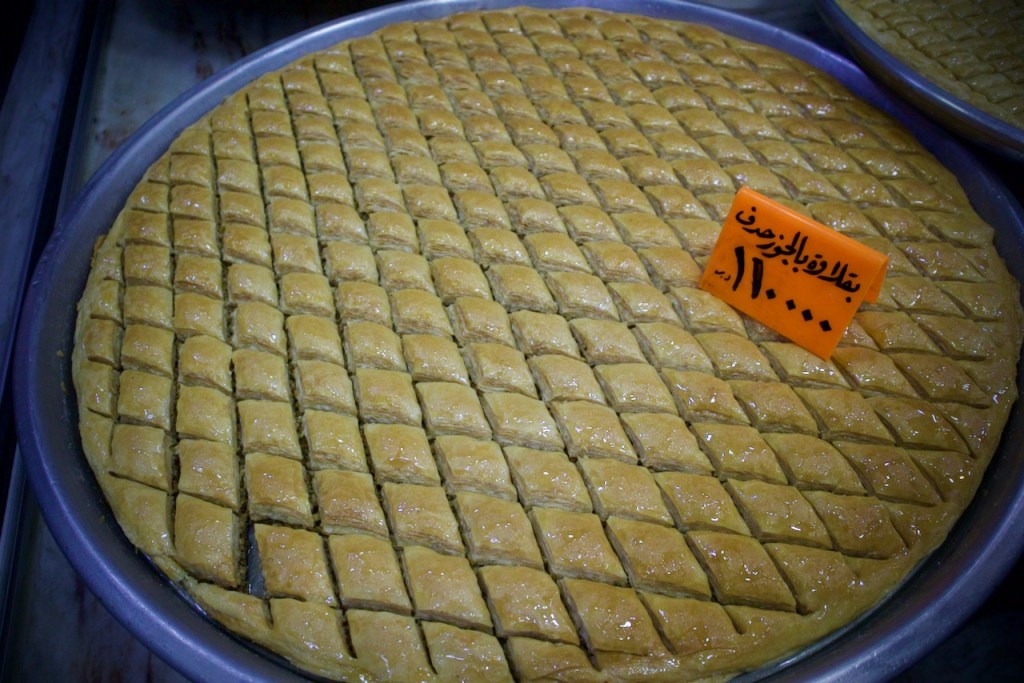
The sea always makes one hungry and the wait is long at Abo Sofwan Restaurant, as everything is made to order and grilled to perfection. I could hear moans of pleasure when chef owner Mohammed finally brings out a plate of piping hot little sausages. Legend has it that his mom used to bake fresh breads and filled pitas out of the tandoori oven for the Syrian diaspora in the US. Before the civil war, you could hardly find a table without reservation. Tonight, we are the only patrons. Everything is so fresh and straight from the garden, a secret to Syrian culinary success. After a meaty lunch-dinner, a few of us crave desserts, and Bashar and Sarea bring us for an evening stroll in downtown Latakia, passing through enchanting old cafes and the lively American Street, and tasting the famous local treat, kunafeh, made of gooey, melted cheese sandwiched between two layers of shredded phyllo dough and soaked in an orange blossom syrup that is sure to send everyone to bed with sweet dreams.




Ugarit Kingdom, Saladin Castle and Apamea
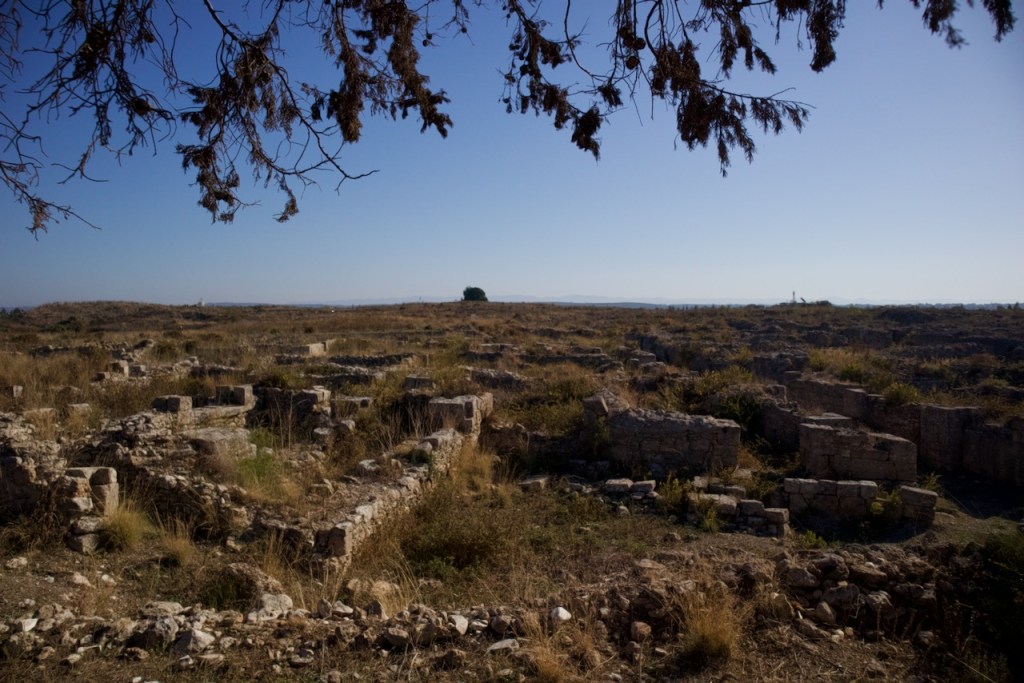
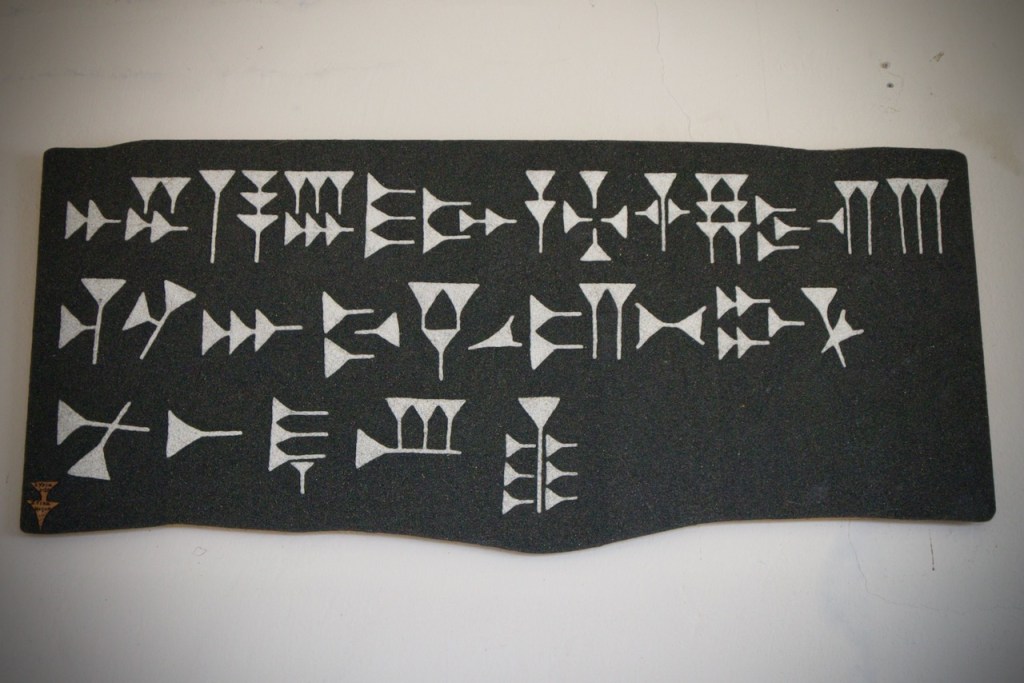
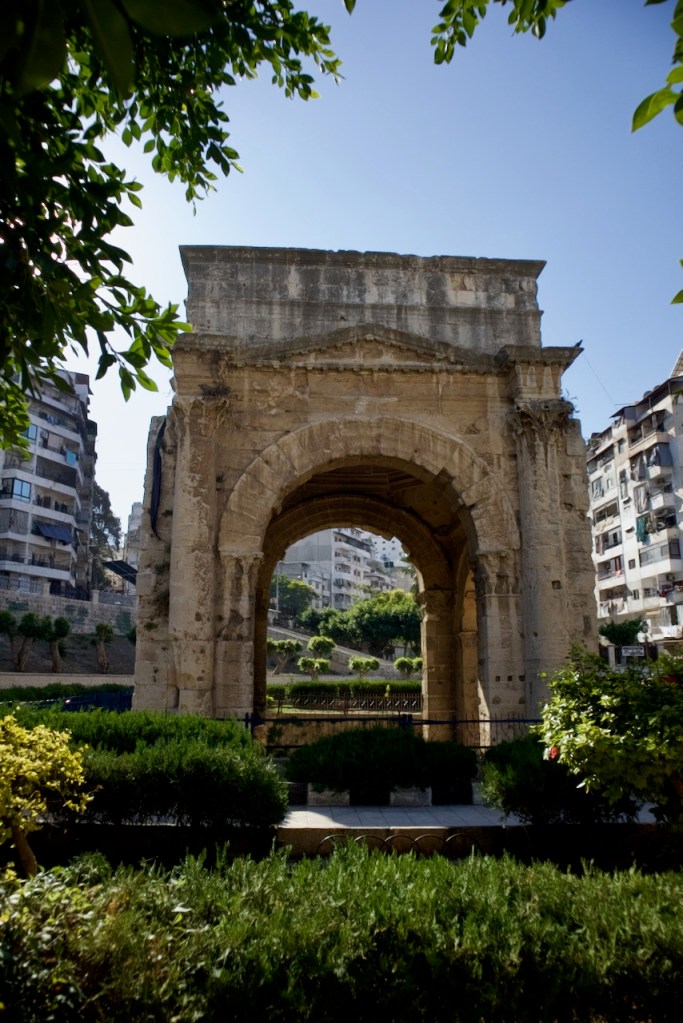
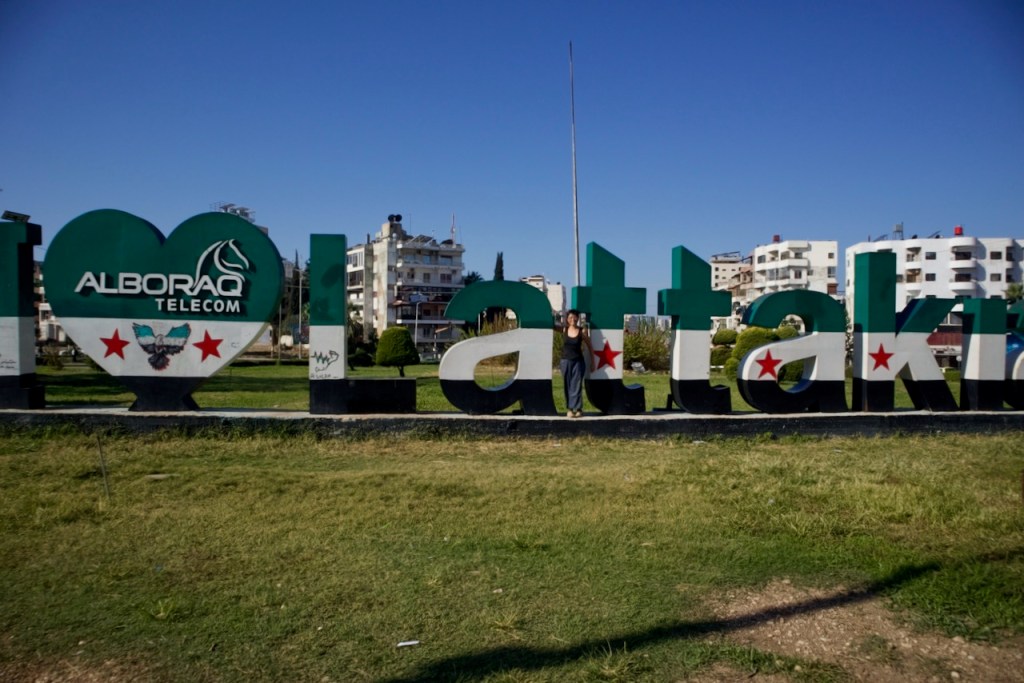
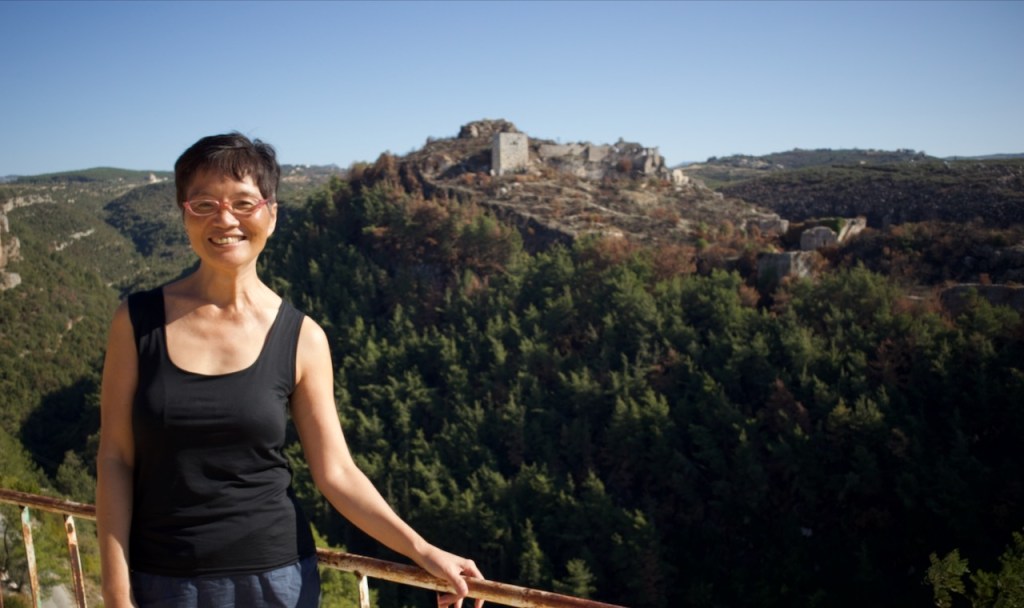
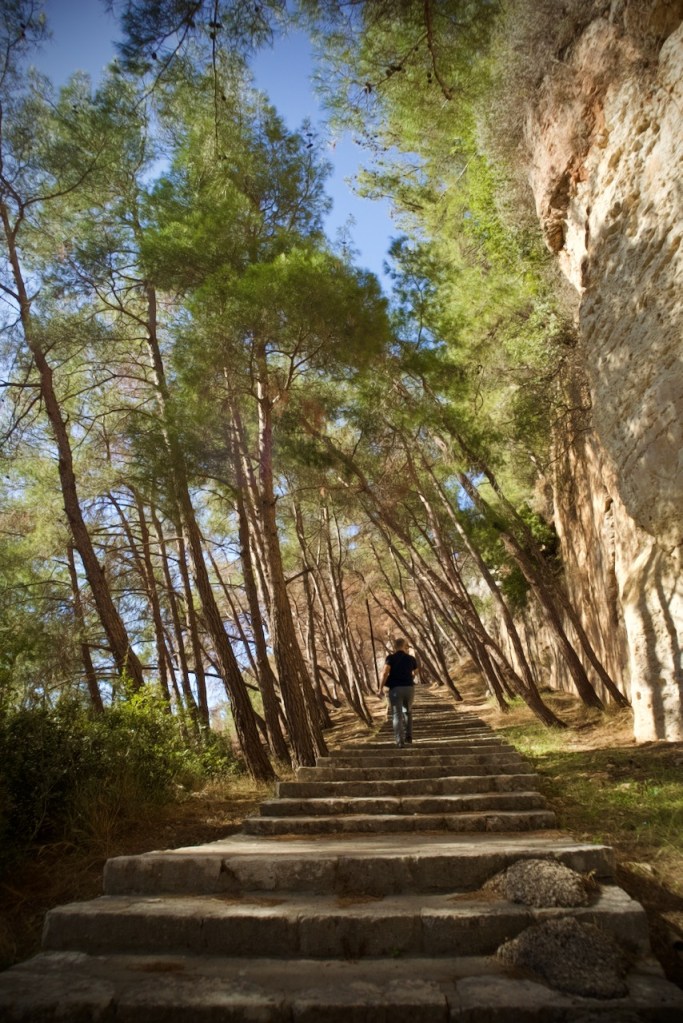
We start a brand new morning learning the roots of Latin alphabets in the ancient kingdom of Ugarit just outside of Latakia. Discovered in 1928, the site, with the ancient cuneiform texts, helps us understand the standard order of letters still used today. We make a pit stop to admire a Roman Victory Arch in the city centre before driving east to the magnificent Saladin Castle set in a cedars grove. The site is officially closed due to restoration and a recent fire, but Zuher, the guardian, who lives nearby welcomes us to his treasure. The mosque and the minaret, the stables and the baths, the church and the chapel, the towers and the palace, and the iconic needle bridge… one by one he walks us through layers of Byzantine, Crusader, and Ayyubid history. As our tour wraps up, he regales us with a love song and an ode to the poet with his deep, billowing voice through the echo chamber of a large cistern. With guardians like Zuher, there is hope for the safeguard of Syrian heritage.
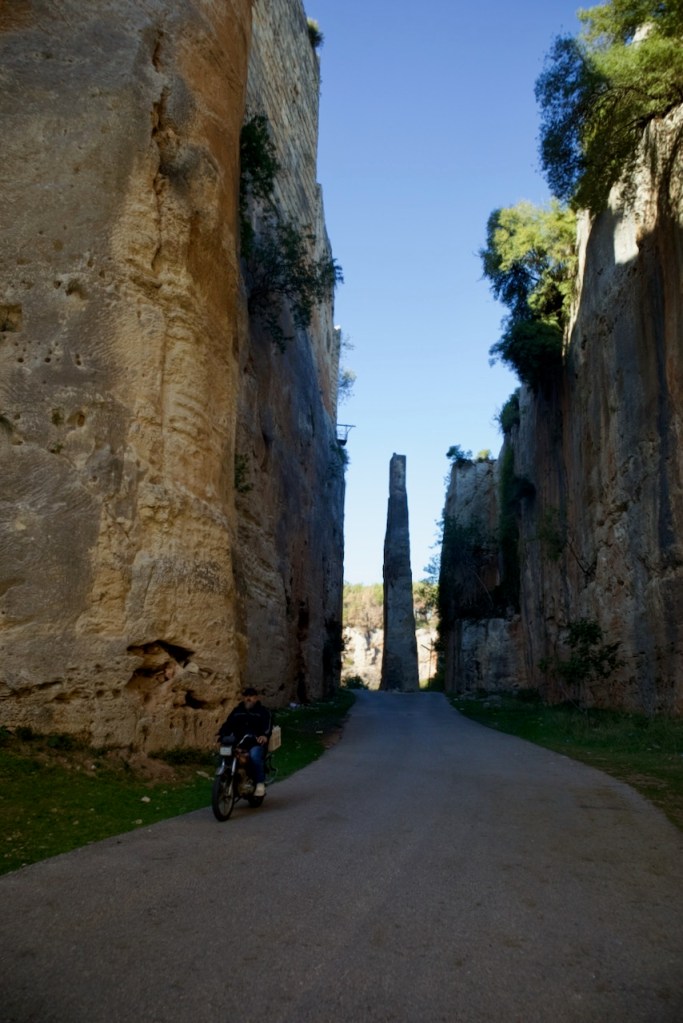
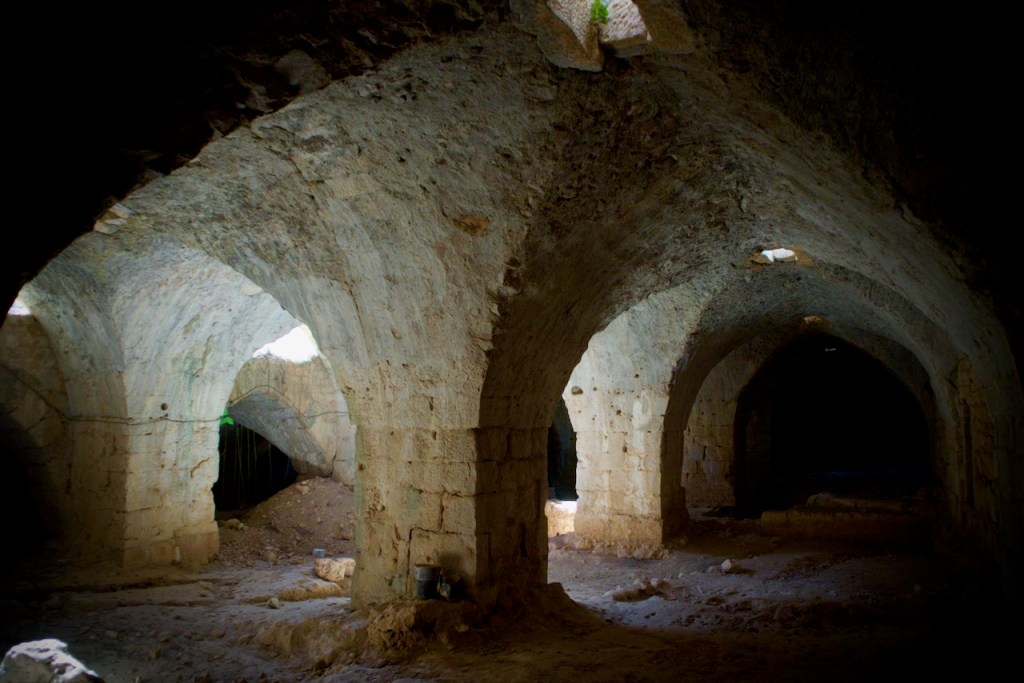
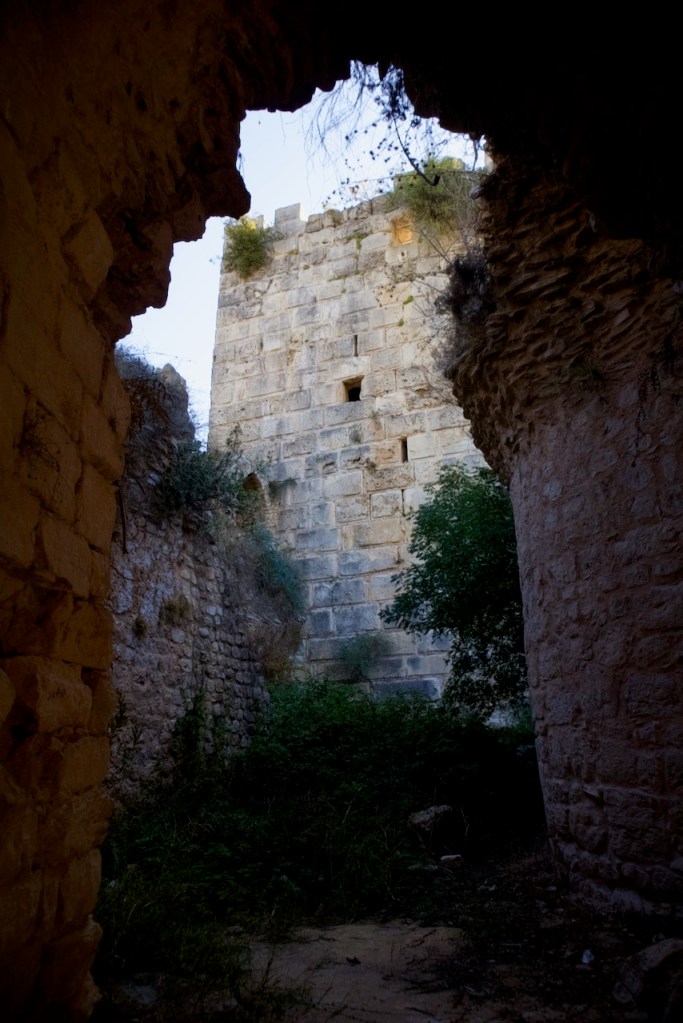
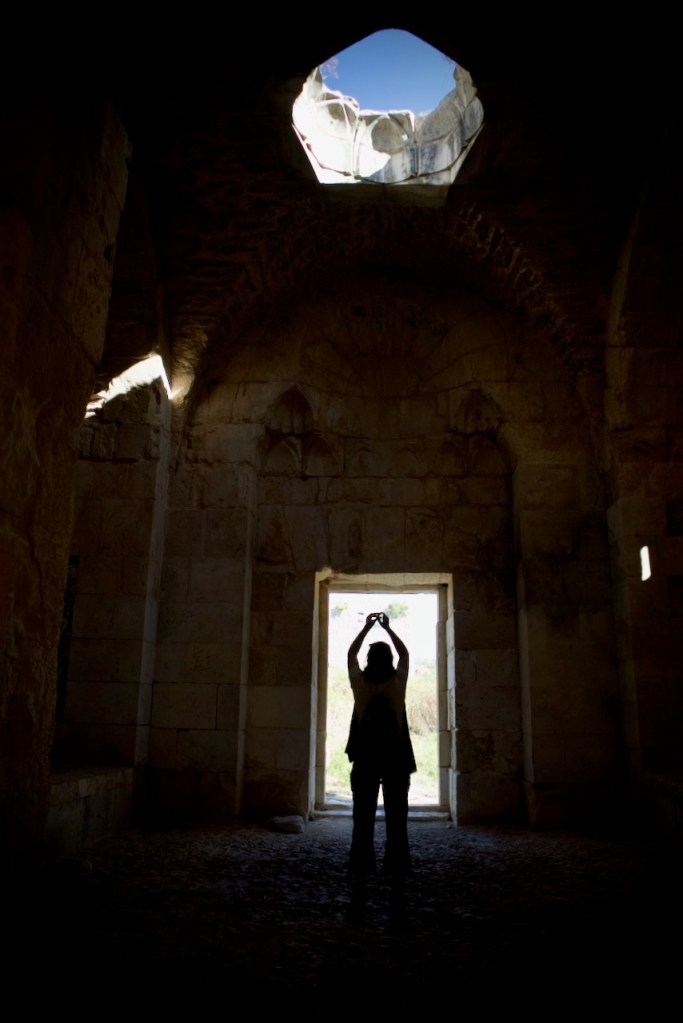
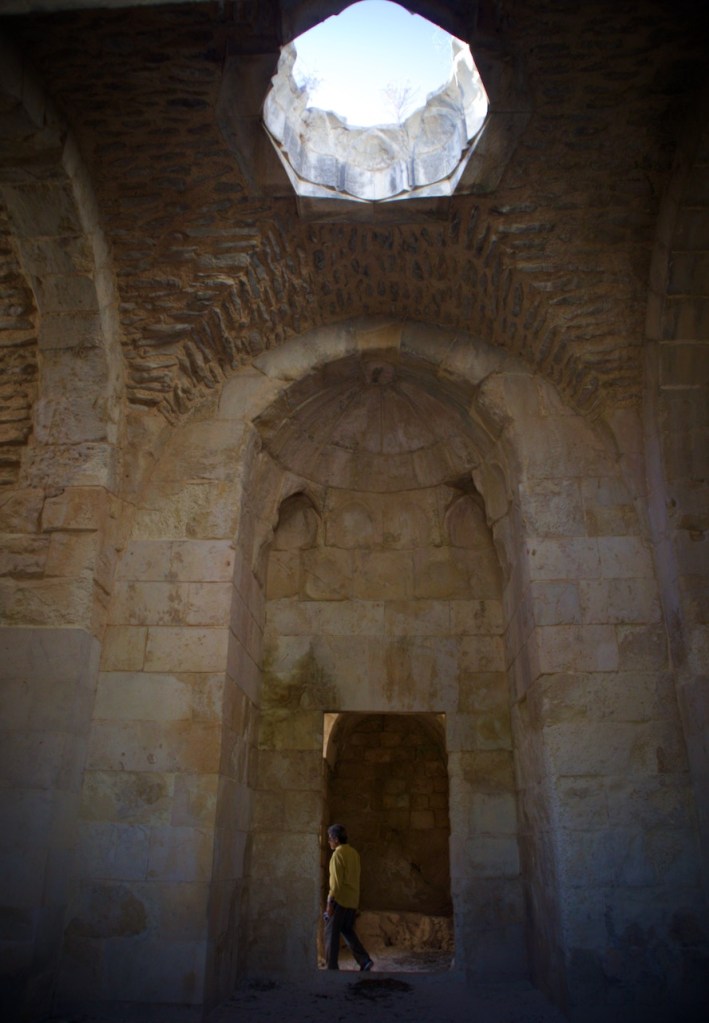
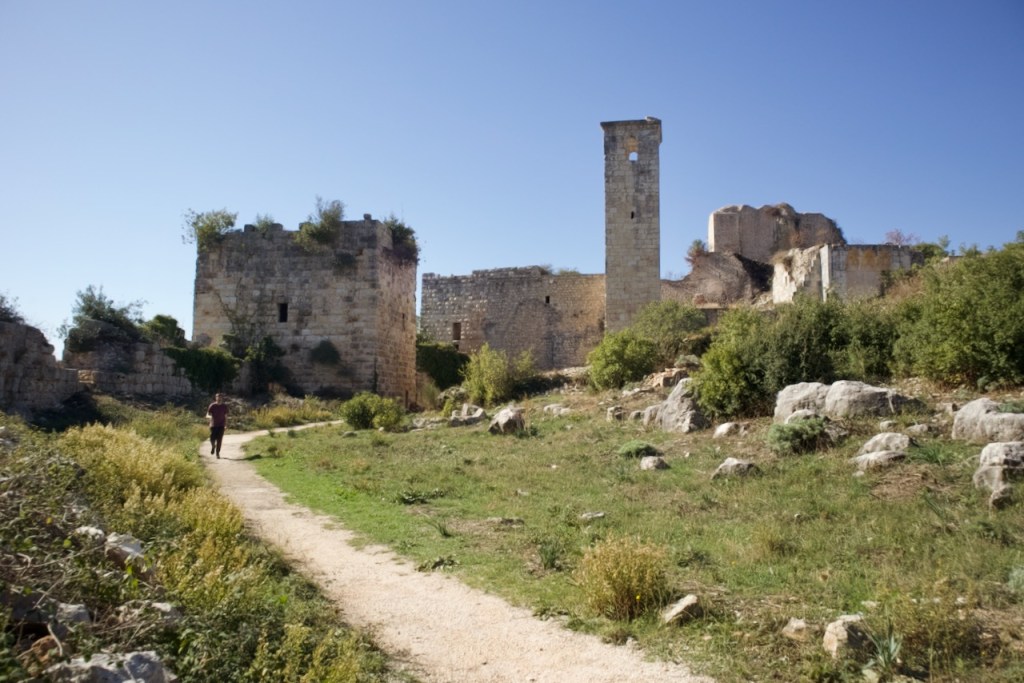

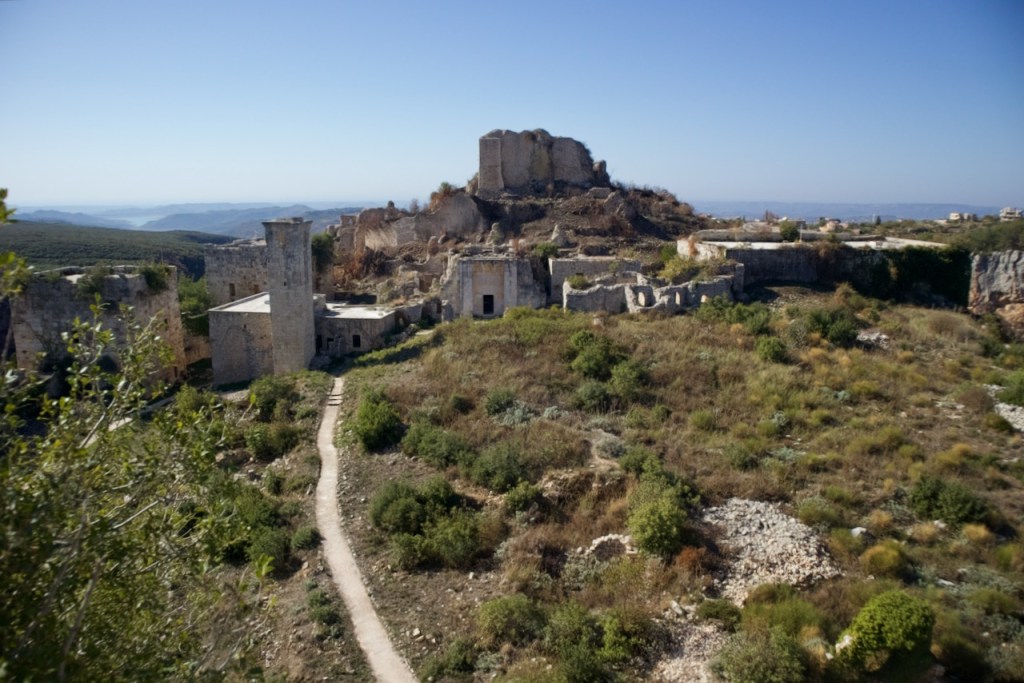
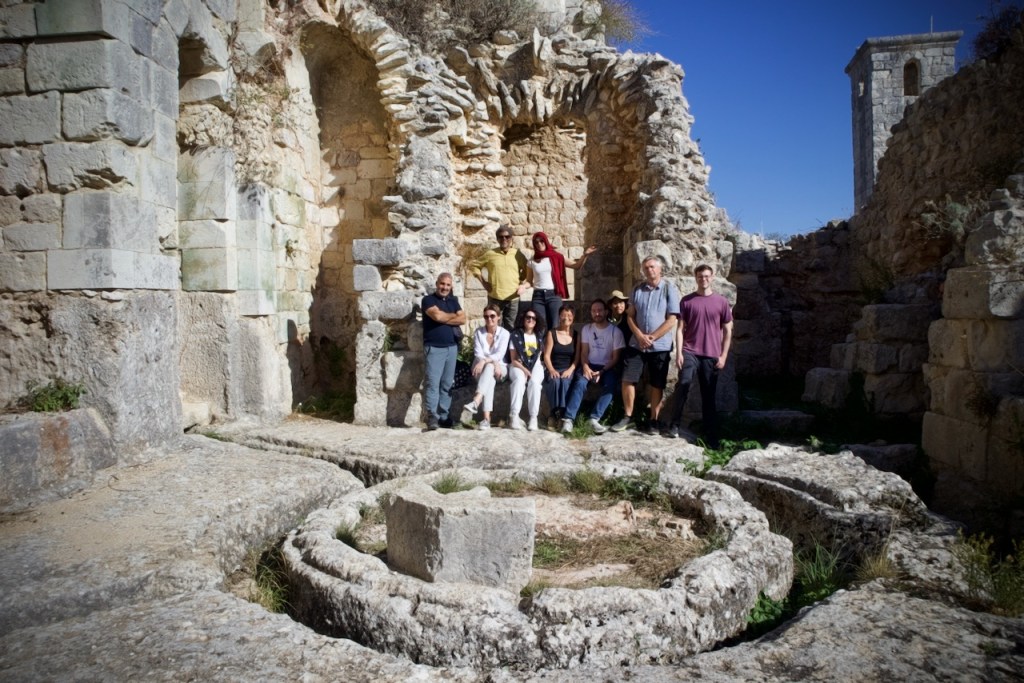


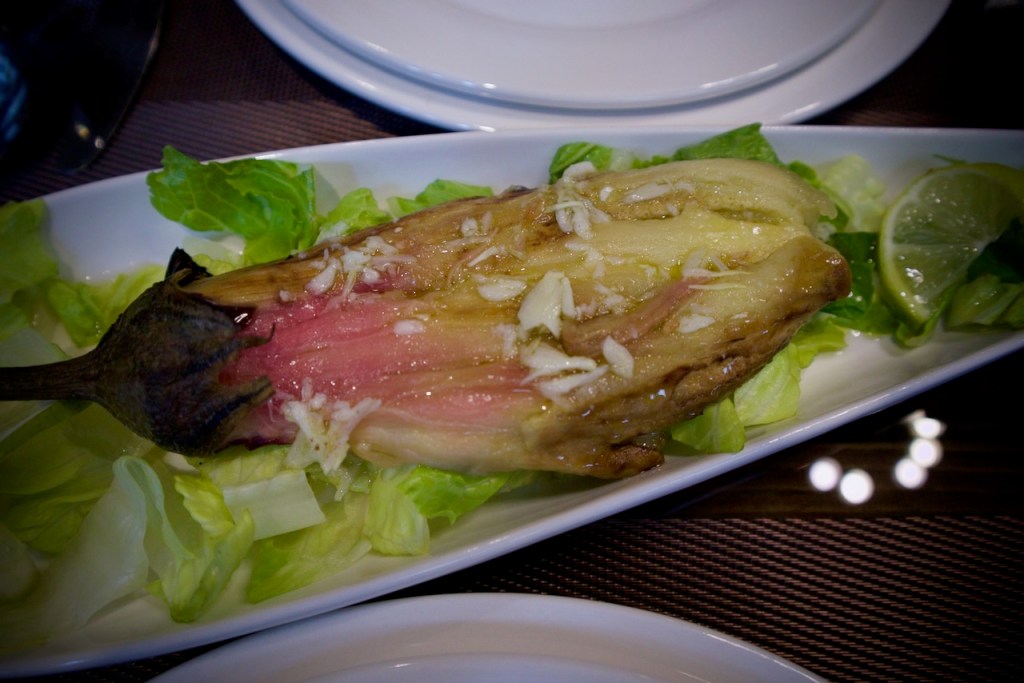
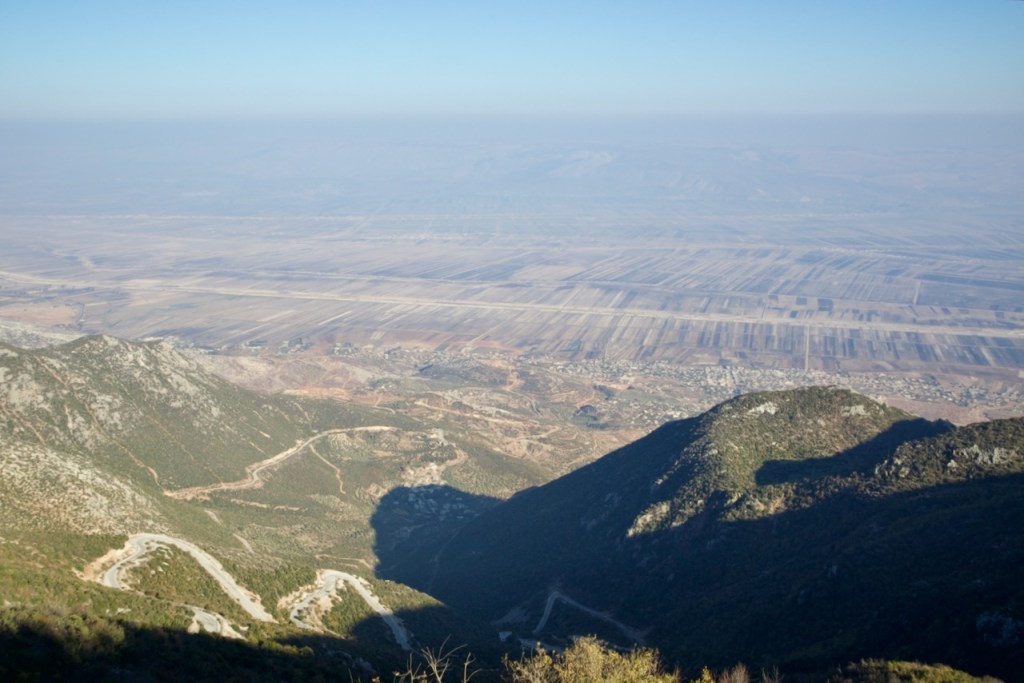
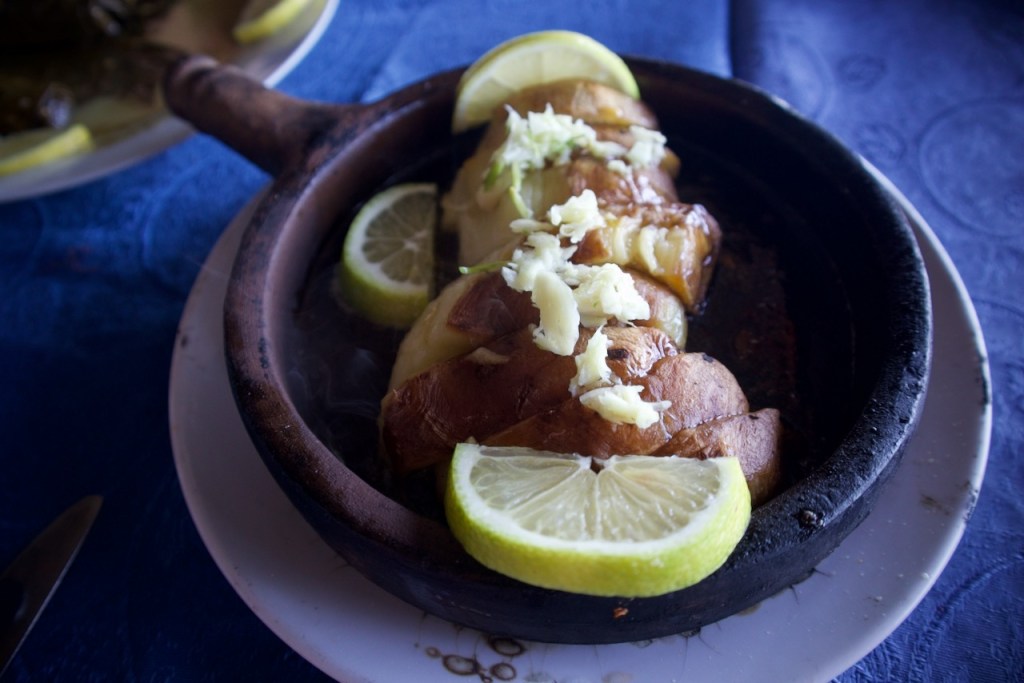
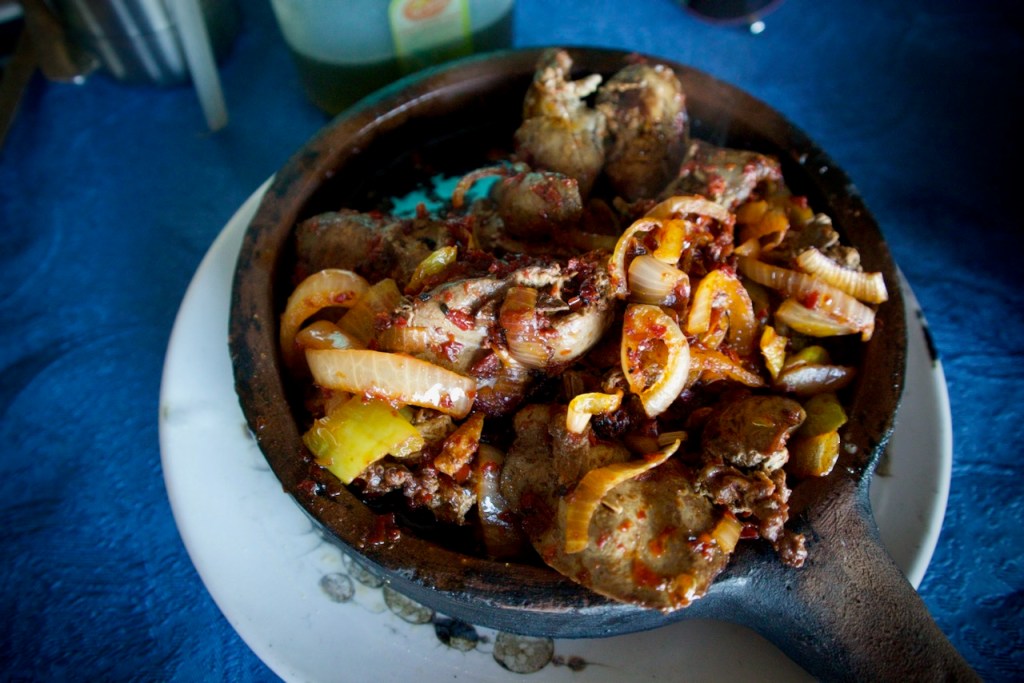
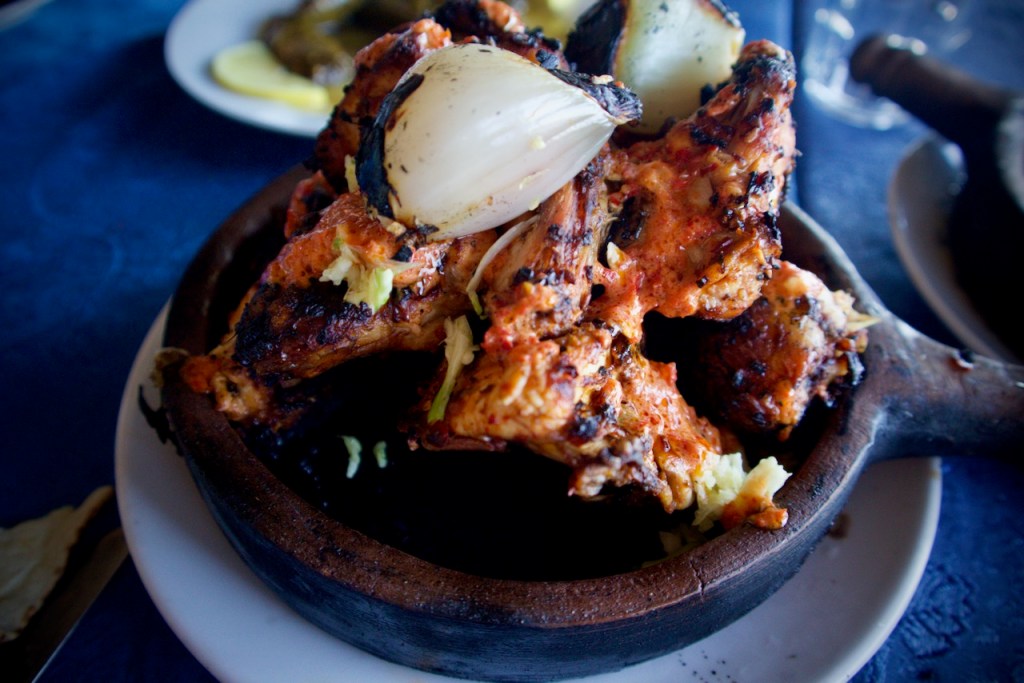
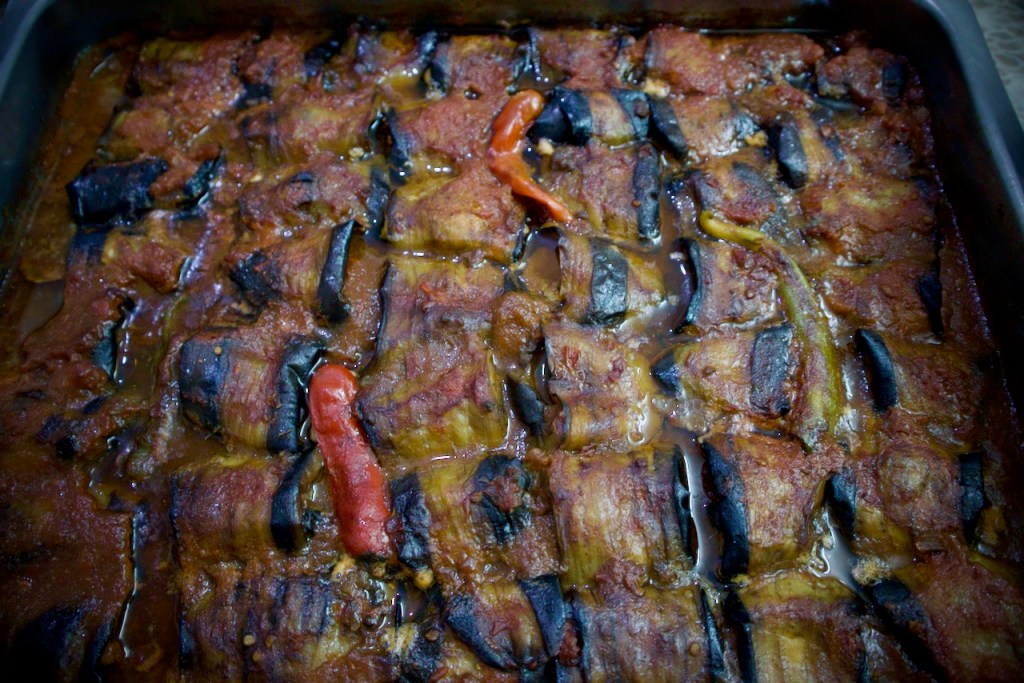
Our van snakes the way up the mountain until we reach the discreet Mt Virgin Restaurant. The view of the sweeping valley below alone is worth the stop, but the surprise is in the unwritten menu. Nihad’s mom used to run this popular place until she falls ill, and now the proud son continues to churn out traditional food in clay dishes: eggplants the Syrian way, fully chargrilled and aromatic, served with a dash of fresh garlic and lemon; sauteed liver with plenty of herbs and onions; tandoori chicken with a creamy garlicky dip. We are in heaven. Thank God Michelin has not discovered his talents and poached him to serve at a Four Seasons!
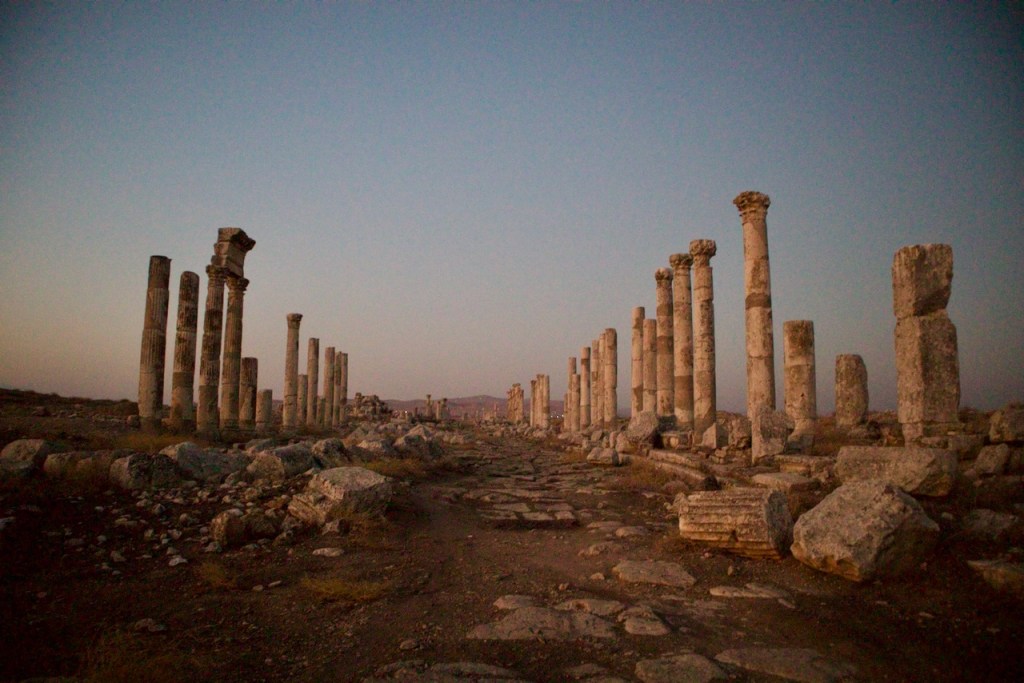
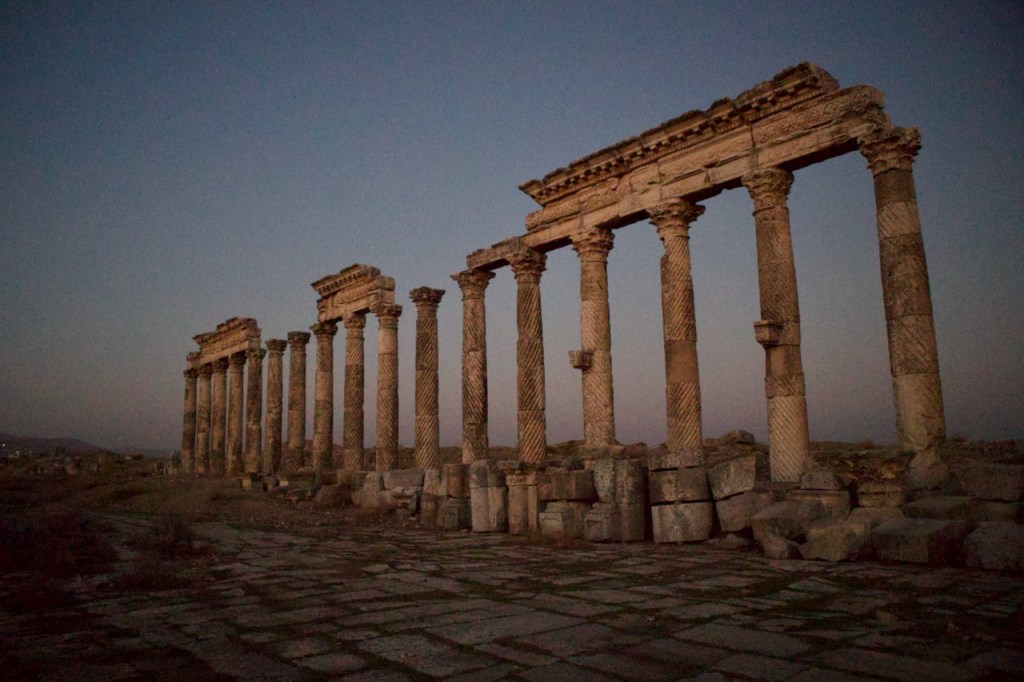
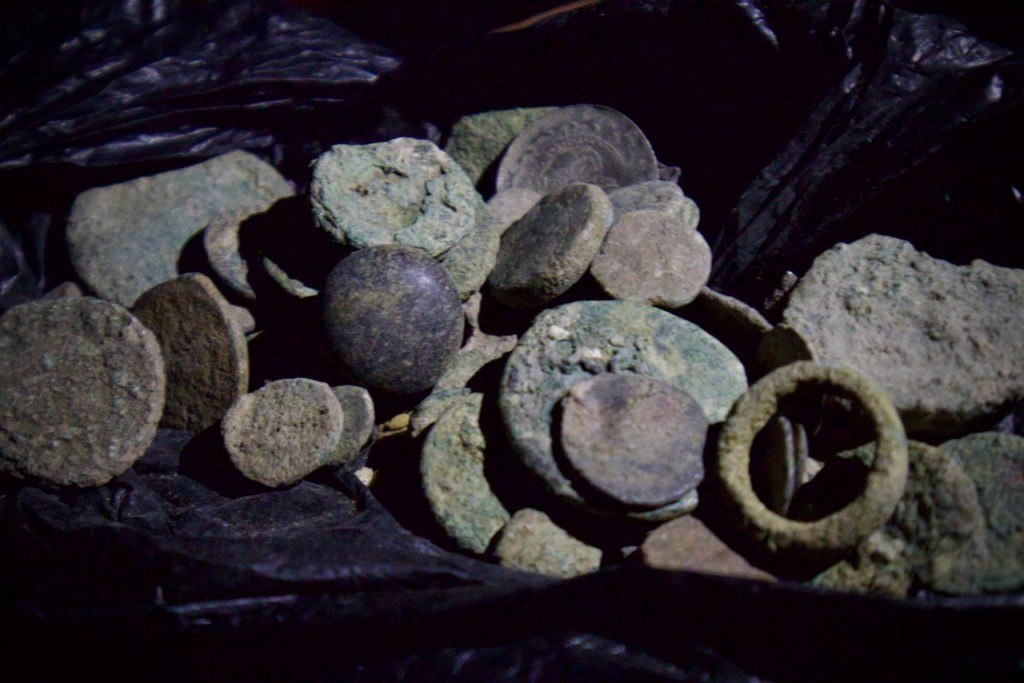
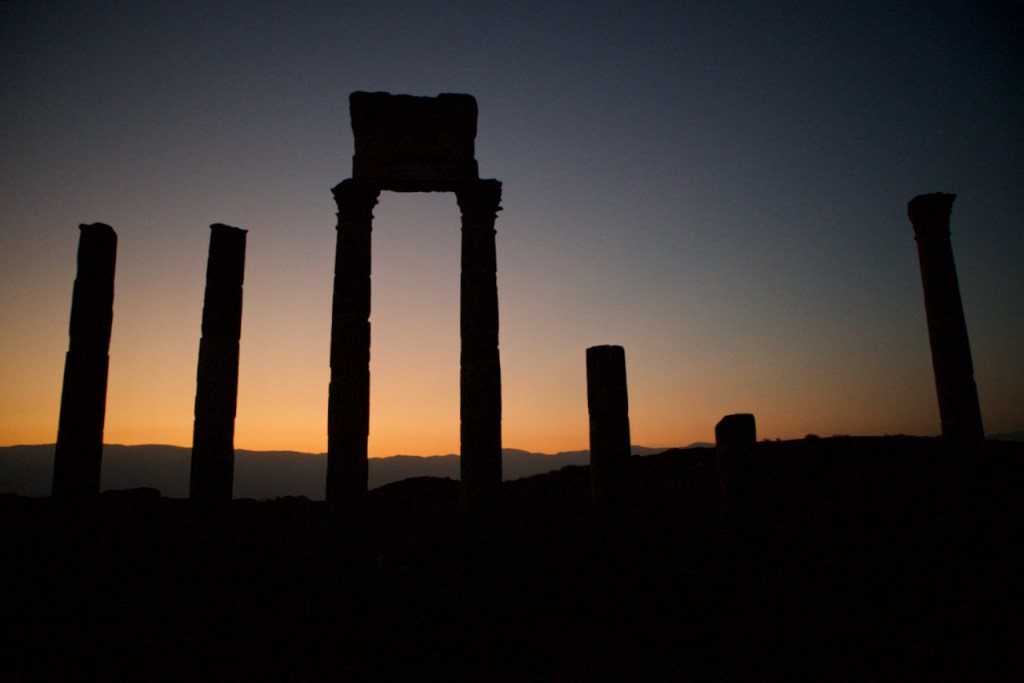
Too much good food and we arrive in our last destination of the day just before dark to see the magnificent Roman columns cloaked in pink and crimson. An ancient Greek and Roman city founded circa 300BC and abandoned by the 13th century, Apamea is known for one of the longest colonnaded streets in the Roman Empire – almost 2km! – and the largest amphitheaters of antiquity. In the quasi anarchic state post-Assad, locals have been digging hard and deep like amateur archaeologists, making over 2,000 pits around the site, to find – and sell – coins and statuettes. I hope no foreign tourists have the vanity of owning a piece of Roman antique and/or then resell to dealers in Paris, London, or Berlin, succumbing to the temptation of such windfall acquisitions. Antiquities are considered state property and their exports are strictly prohibited under Syrian national law, even if x-ray machines at the Damascus airport fail to sound an alarm. How do I rebuild my house? a local rebukes when challenged by our guide. Looting, burglaries, and smuggling have been so rampant since the fall of Assad that theories of justice in Philosophy 101 come back to mind. When – if ever – is it just to steal? No doubt these are hard times for many Syrians still reeling from a major national trauma, but ethical questions remain.

The Battle for Aleppo
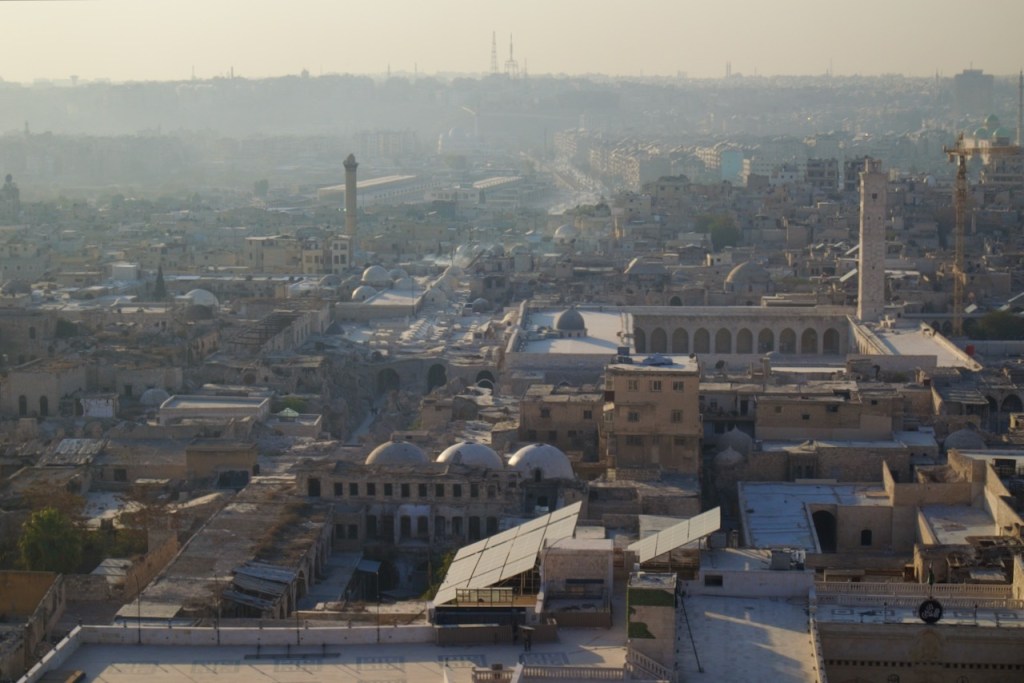
Finally, we reach Aleppo, one of the oldest continuously inhabited cities in the world dating back to 6000 BC. A Silk Road trading hub and strategic military centre, the city is known for many things: a grandiose citadel, sprawling souks, traditional architecture, Aleppo soap, and her Levantine cuisine. We begin our tour at The Baron, the first five-star hotel in the Middle East who counted the who’s who on her dignitary list: Mustafa Kemal Ataturk, King Faisal of Iraq, Gamal Abdel Nasser, Theodore Roosevelt, David Rockefeller, Charles de Gaulle, Lawrence of Arabia, and Agatha Christie, just to name a few. Damaged by years of war and the devastating 2022 earthquake, the sorrowful looking building now awaits a loving buyer to bring back her former glory.
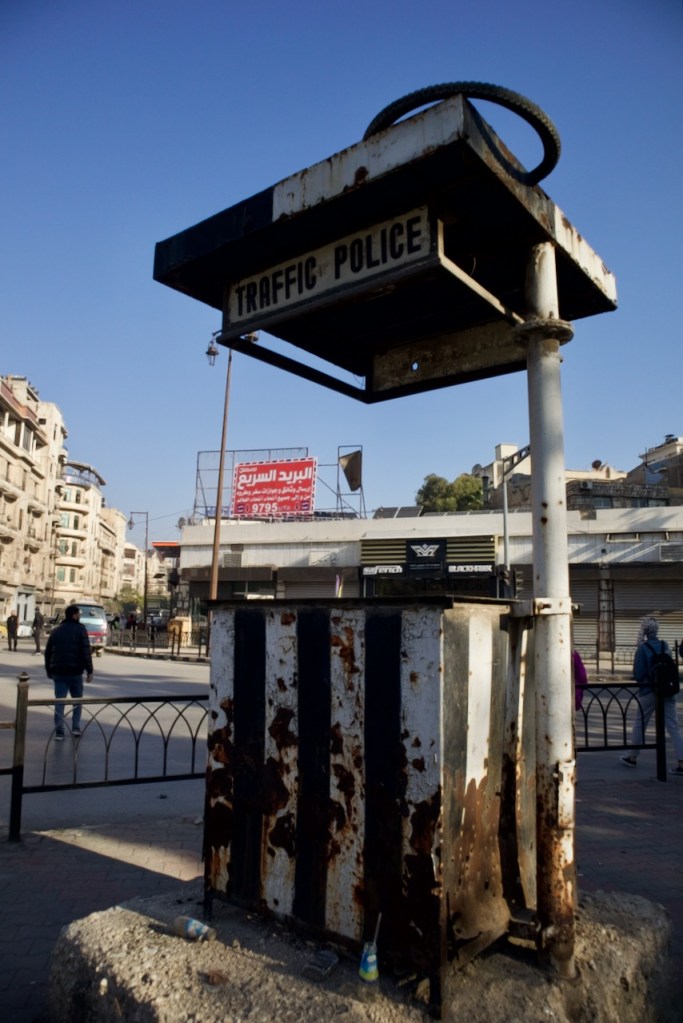
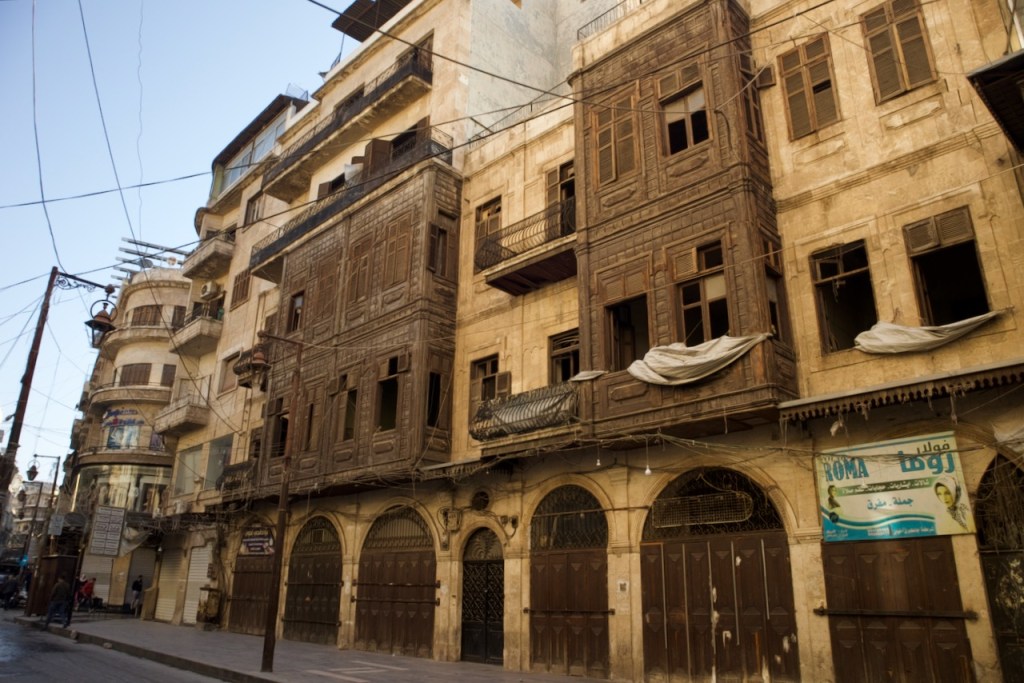
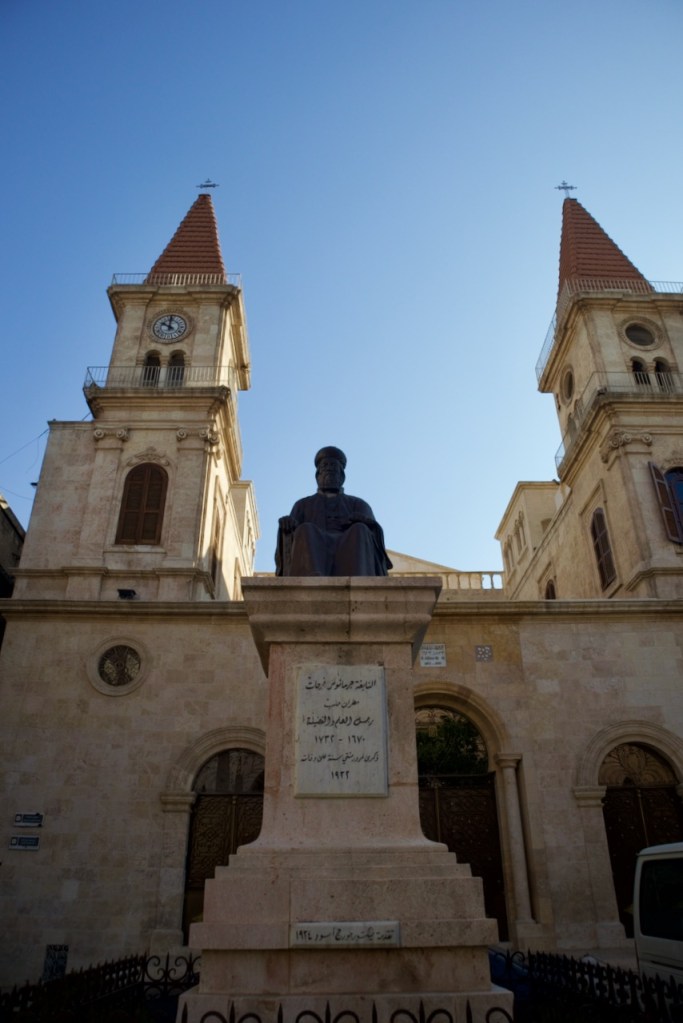
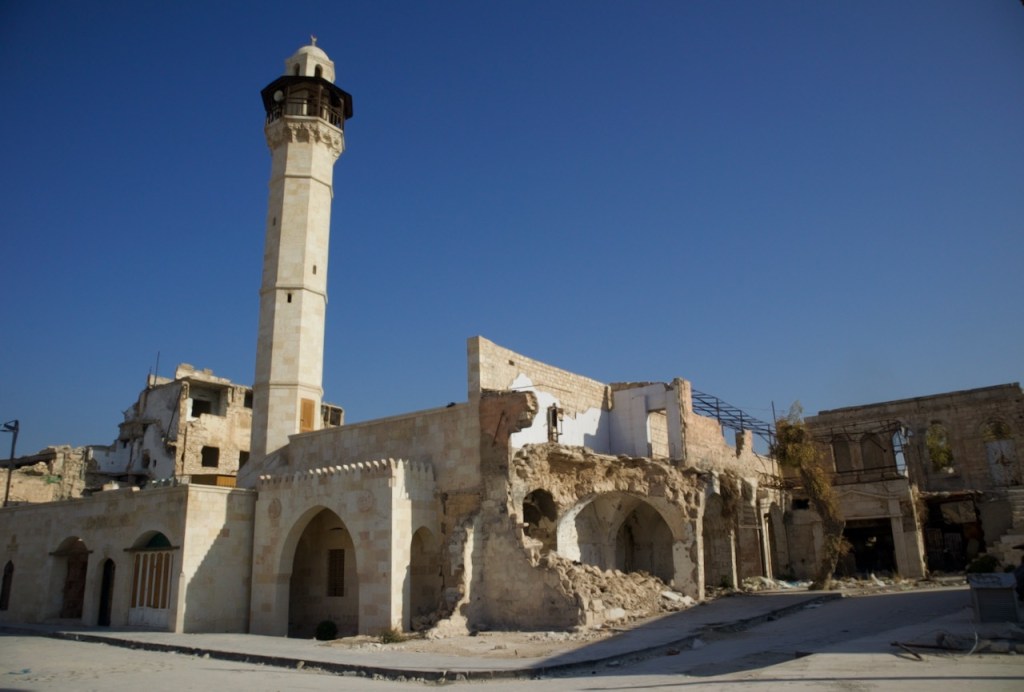
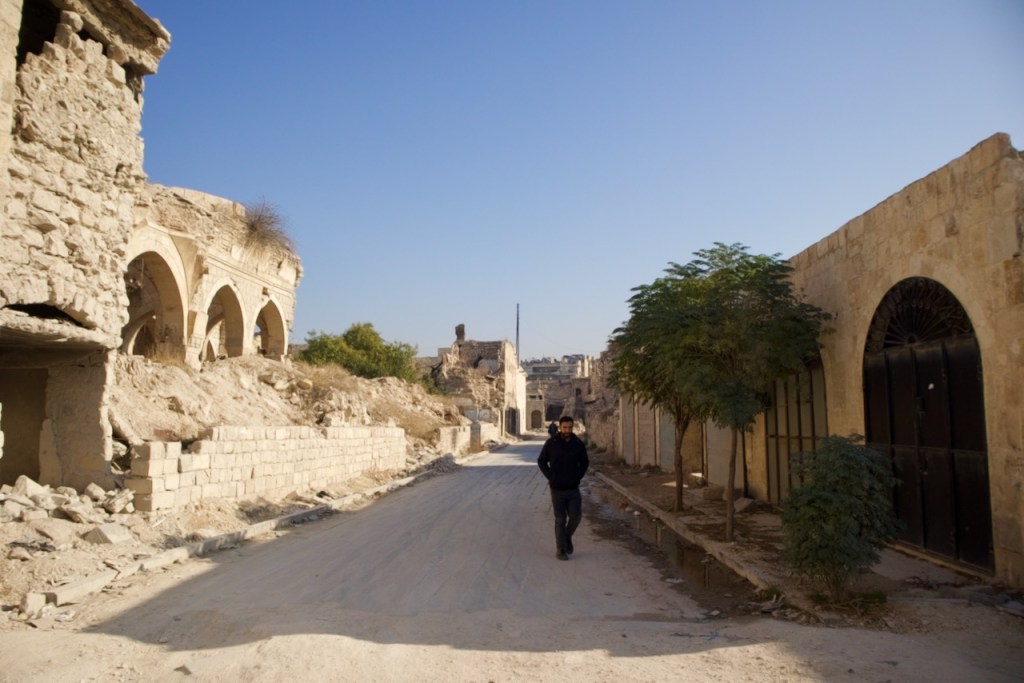
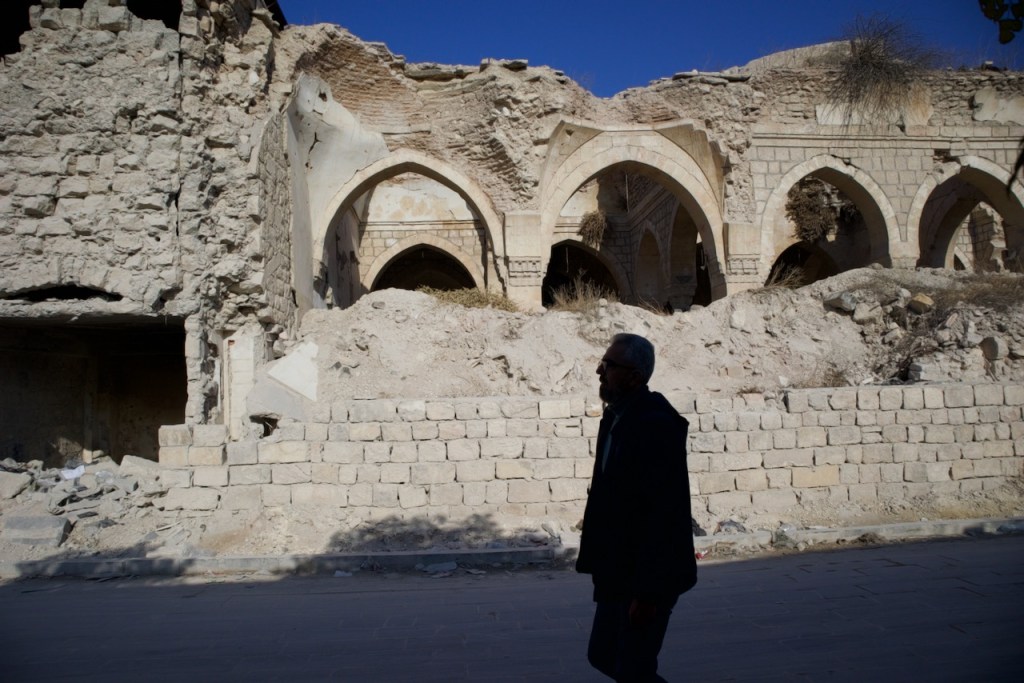
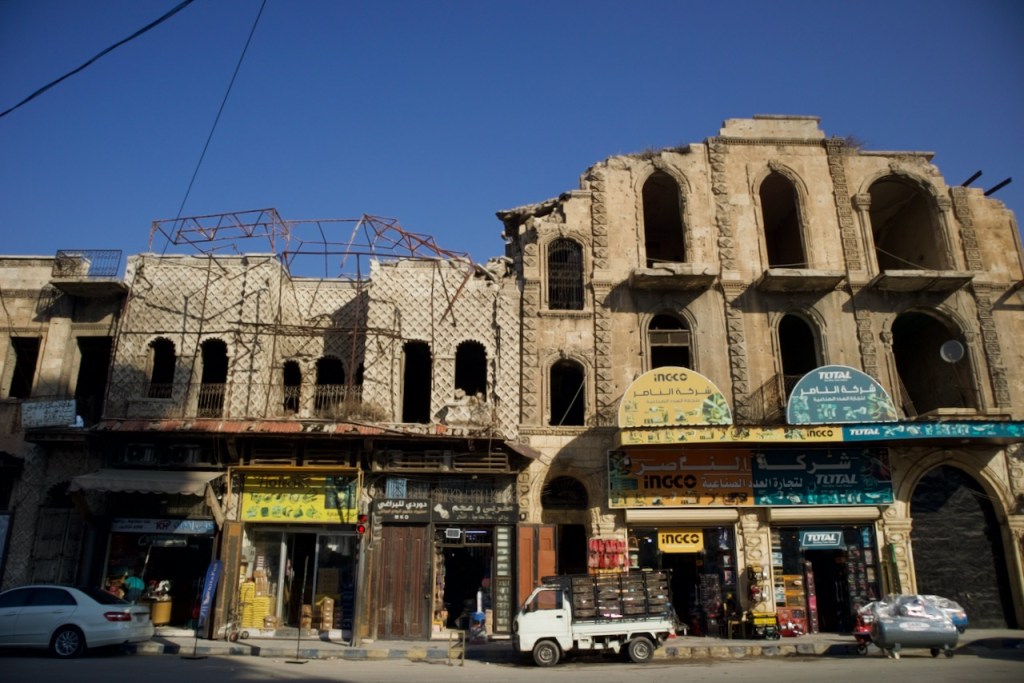
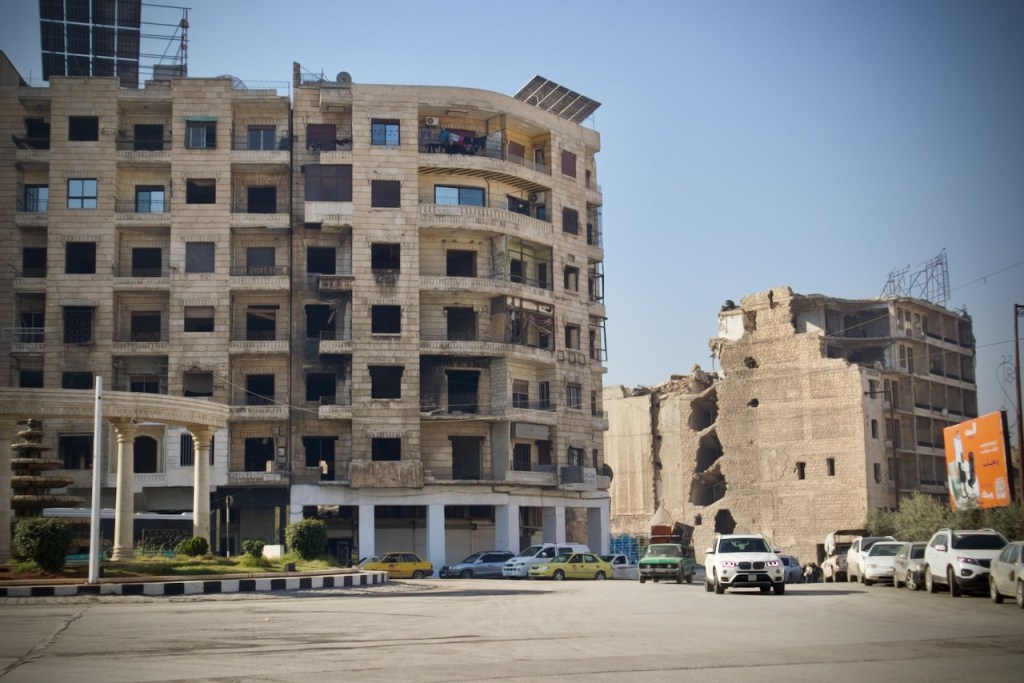
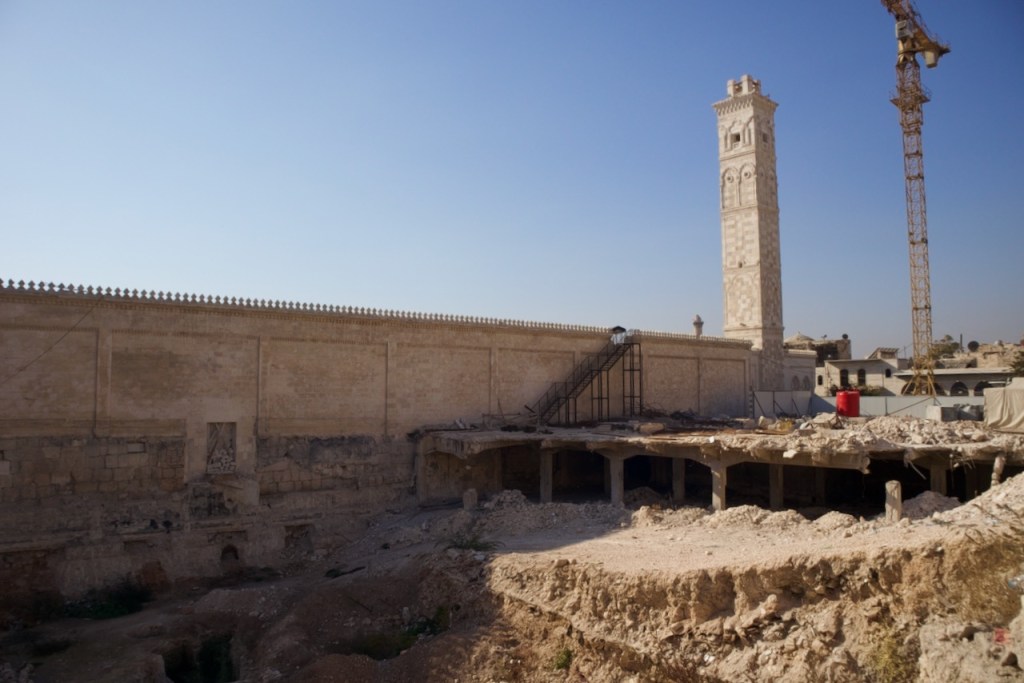
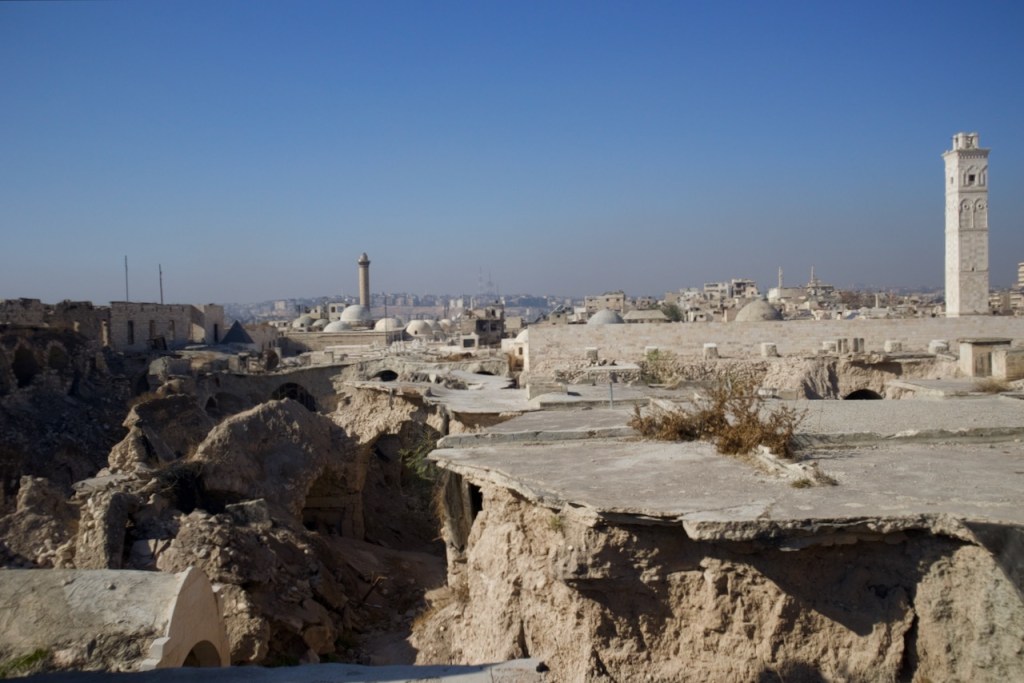
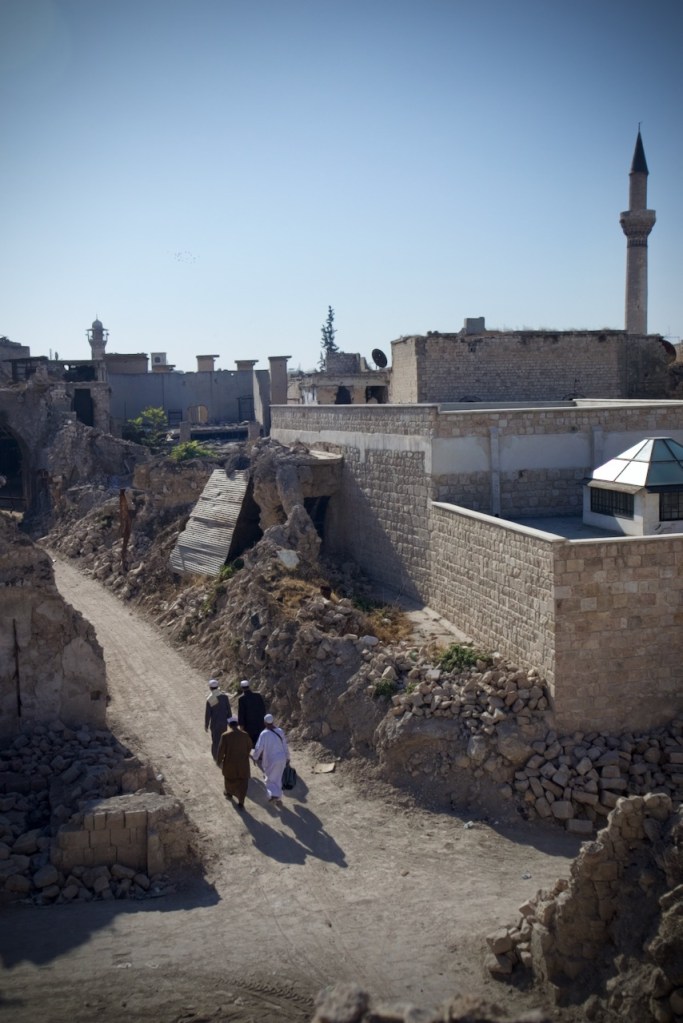
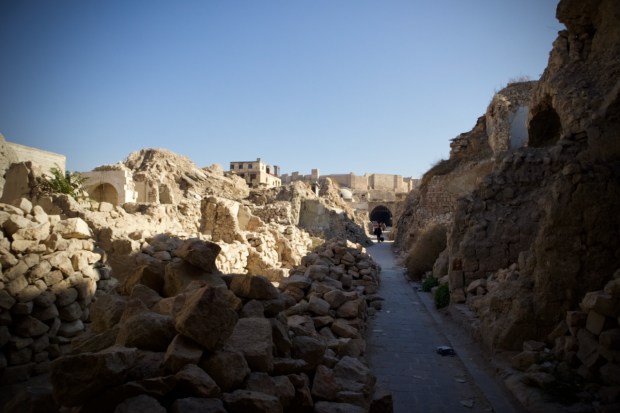
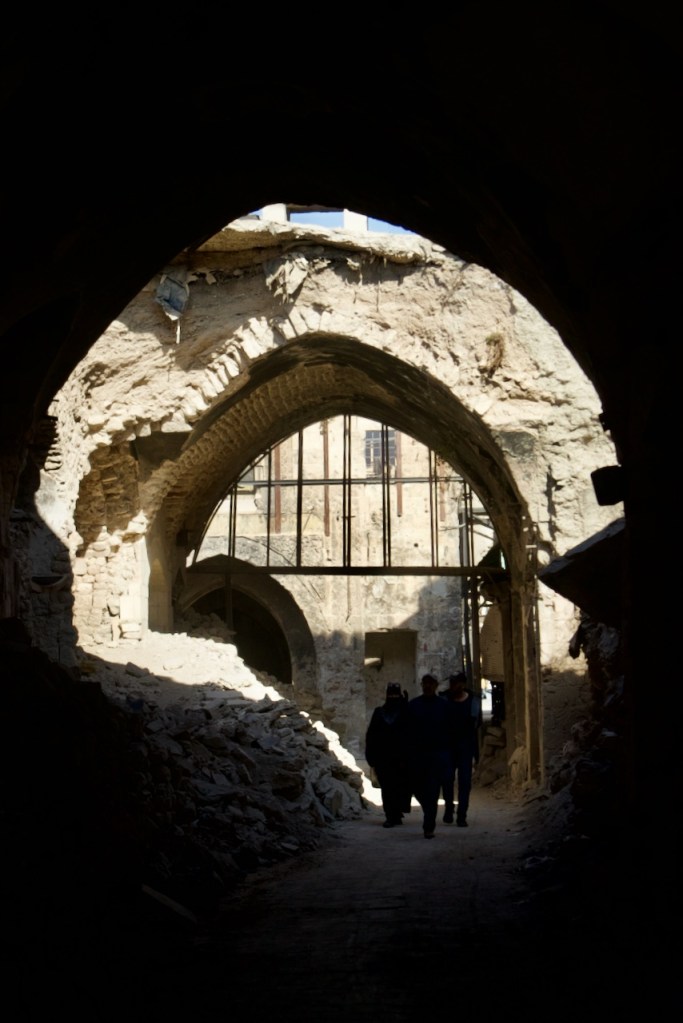
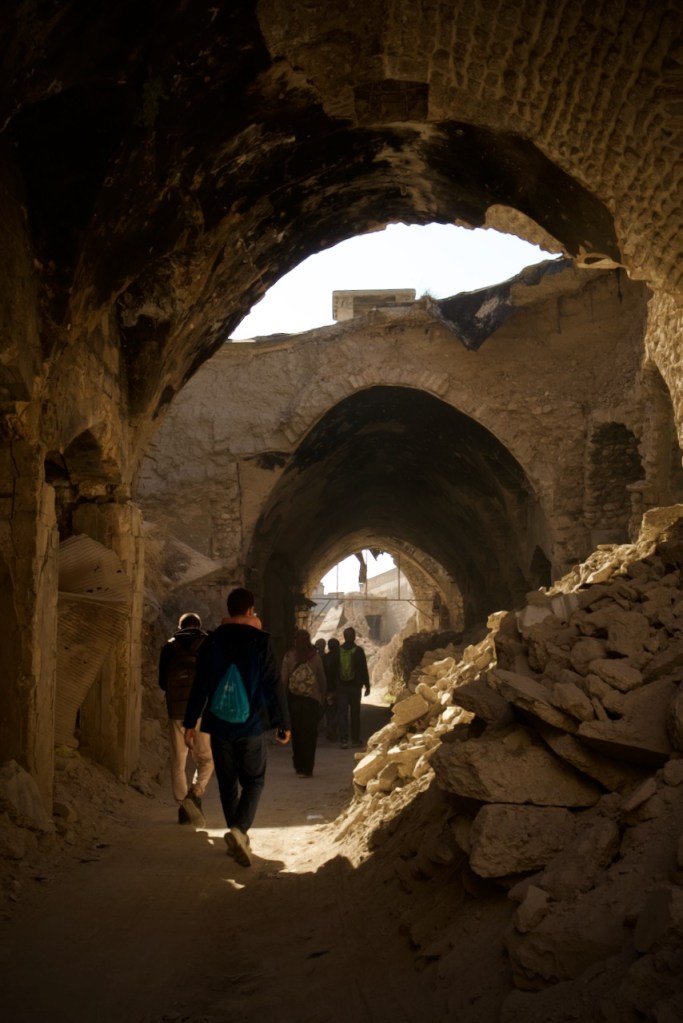
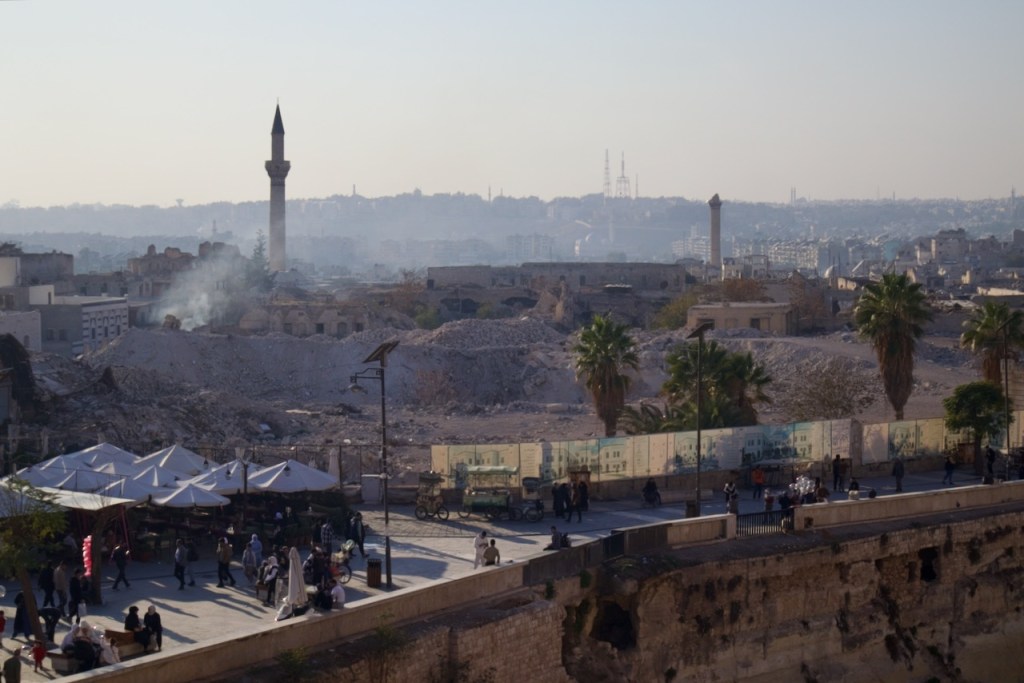
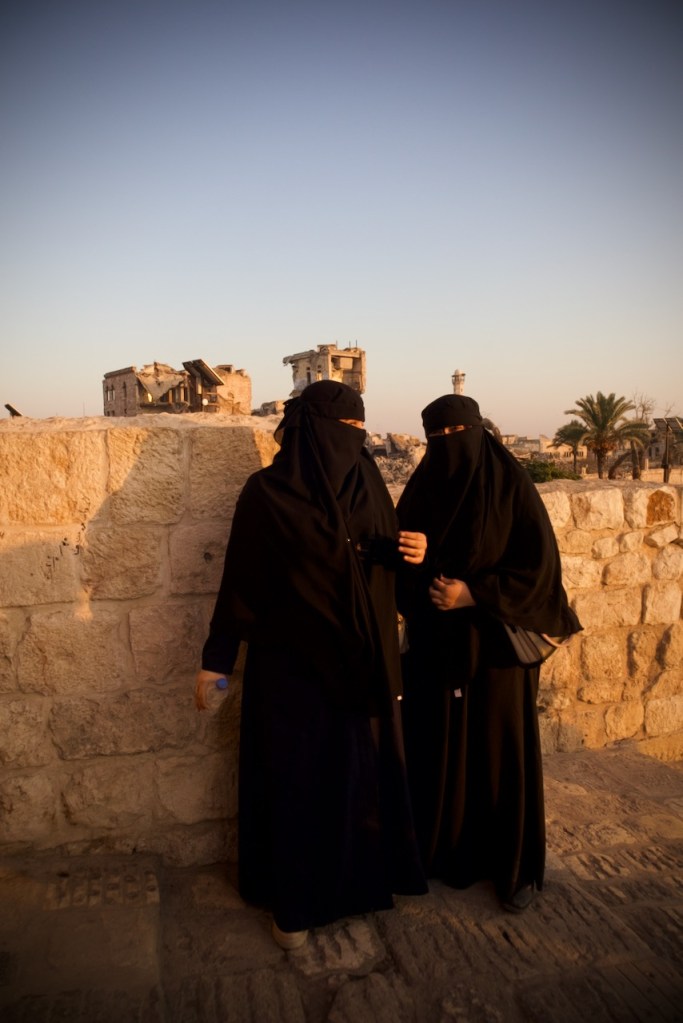
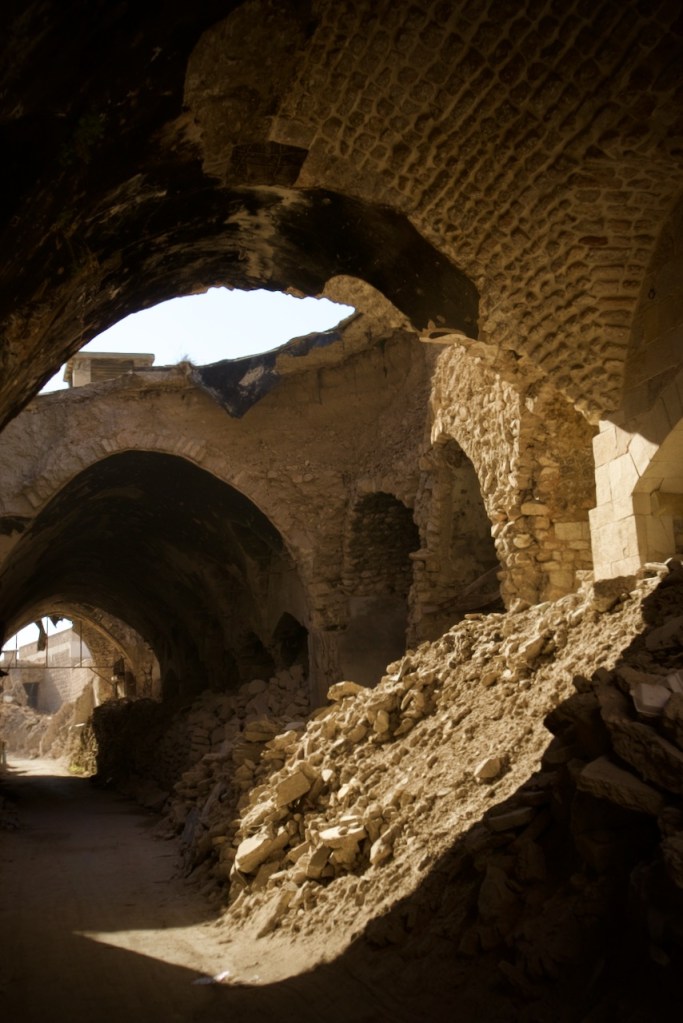
The National Museum is closed, so we move on to admire beautiful Ottoman-era mansions in an old neighbourhood dating back to the French mandate. We could not enter the Maronite Cathedral, extensively damaged during the civil war, but are happy to see it fully rebuilt and once again standing strong. A stroll through the quiet narrow alleys of the Christian quarter with an orthodox church here and a chapel there feels surreal, as three underground bombs exploded right by Hatab Square a decade ago in this frontline neighbourhood during the battle for Aleppo between 2012 and 2016. Whoever takes Aleppo wins the war, Bashar explains. What we read in the news headlines those years ago are now in front of our very eyes. Over 60% of the old city was damaged, with about 30% destroyed. Sparked by shelling, a fire in 2012 tore through the souk, destroying over a thousand shops. Standing on top of the ruins, gazing through the craters and holes, we are speechless to witness such devastation. But the soul of the city is clearly still there. Brick by brick, shop by shop, Aleppo is rebuilding.



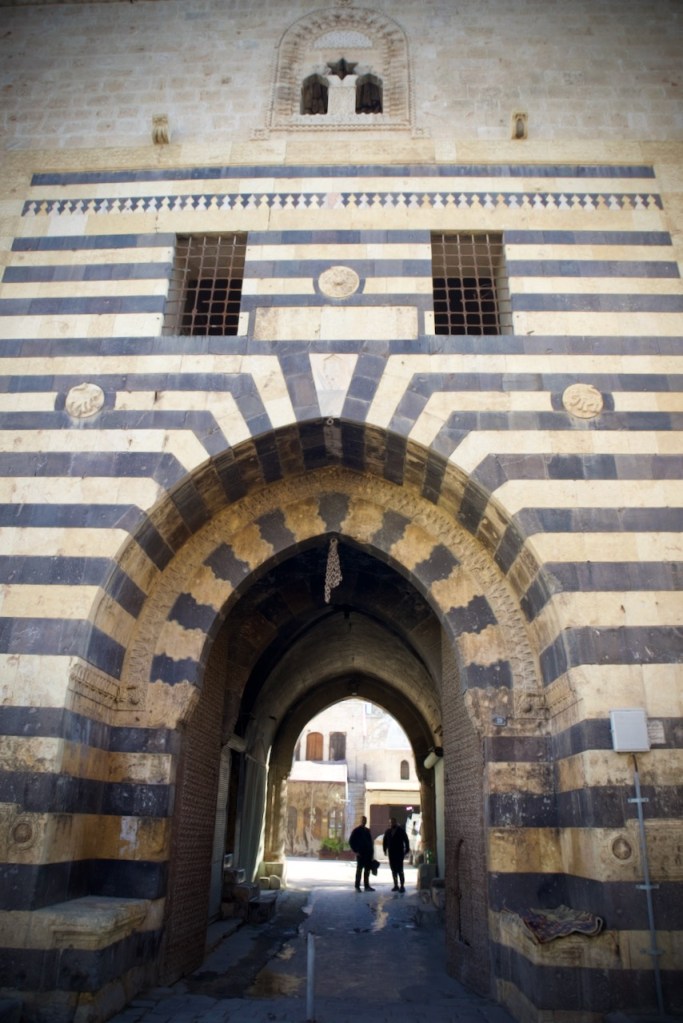
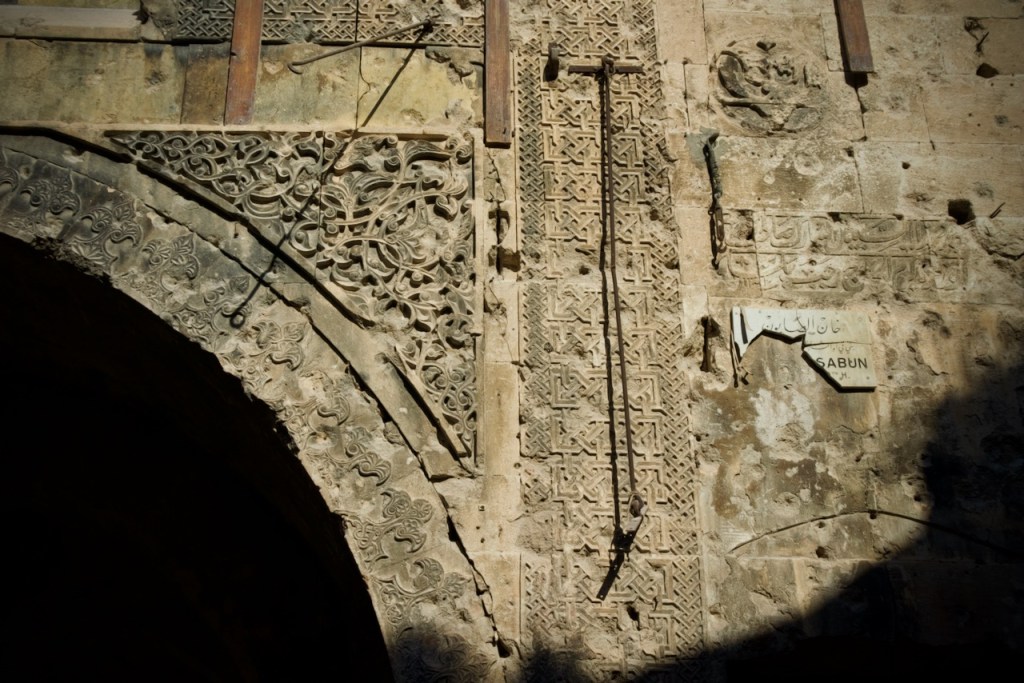


Among many things, Aleppo is famous for being the birthplace of the oldest soap in the world. Made from just four ingredients: olive oil, bay laurel oil, water, and lye, the 100% natural soap is suitable for face, body, and hair. Forget once and for all other chemical and carcinogen filled soaps, shampoos, and conditioners. The Al Joubaili Soap Factory, functioning for over 800 years, is now back in full swing after halving its production during the civil war. Orders from around the world trickle in, and our group is busy stocking up these heavy bricks as a unique Syrian and Aleppo gift.
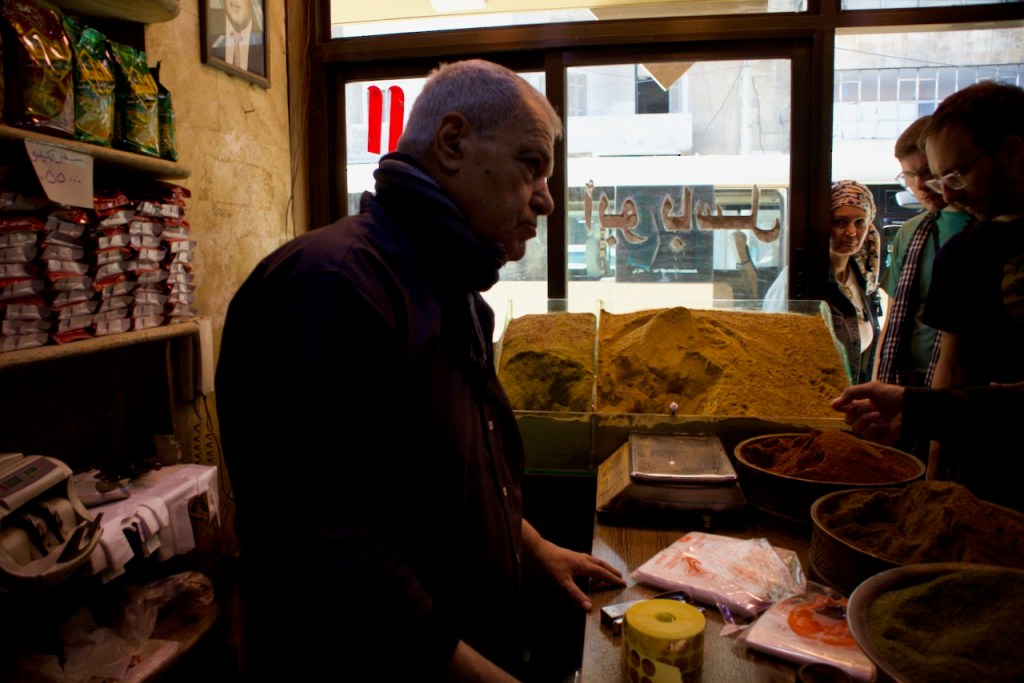
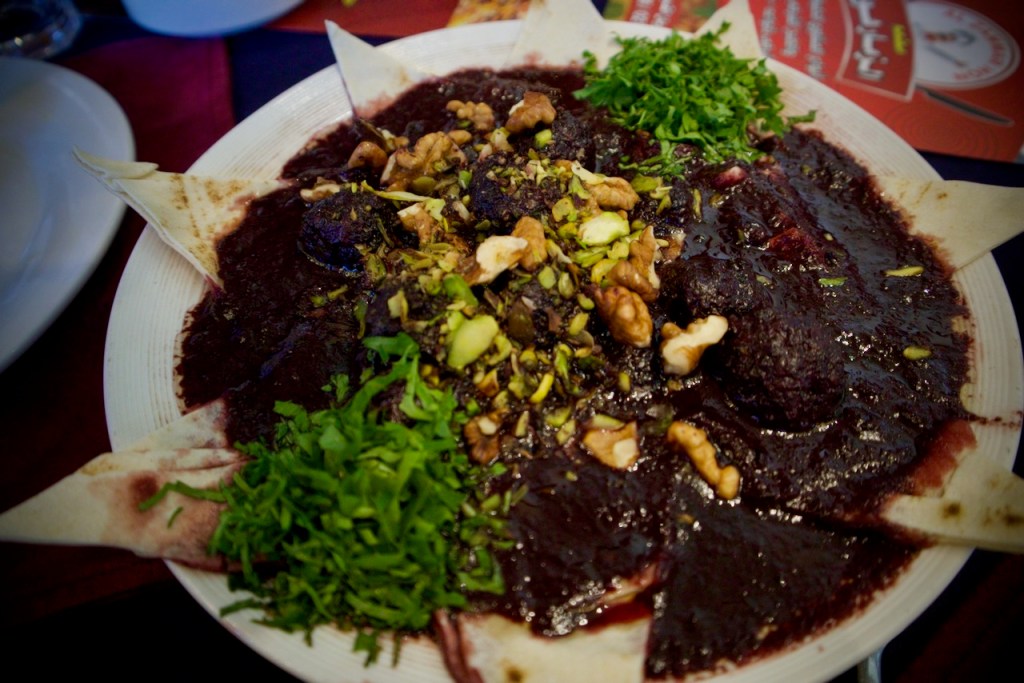
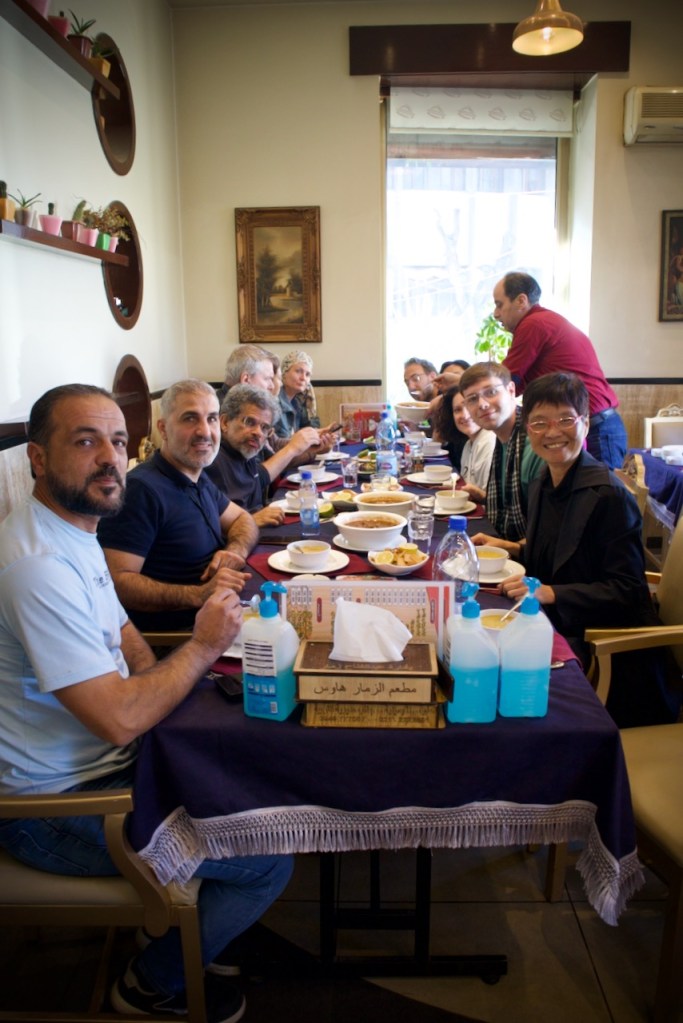
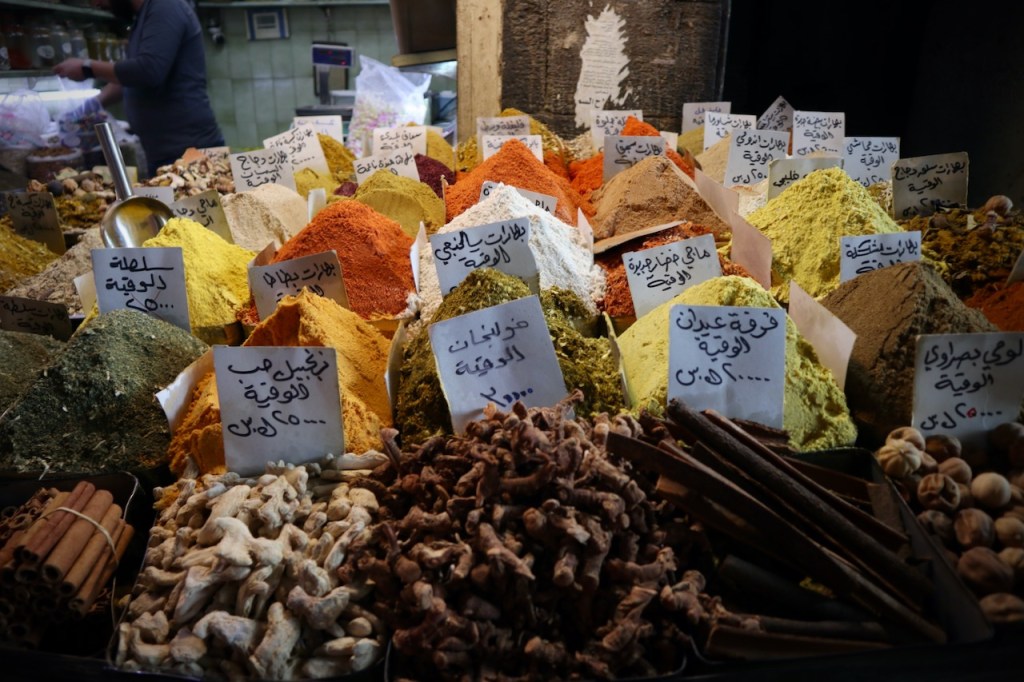
Time to get some spices, too, for the city is also renowned for Aleppo pepper and so much more. Now we are ready to taste famous local cuisine at Al Zamar: kibbeh (seasoned mixture of minced lamb and bulgur wheat) many ways, cherry kebab, baba ghanouj, and an assortment of scrumptious dips. Impossible not to love Aleppo!
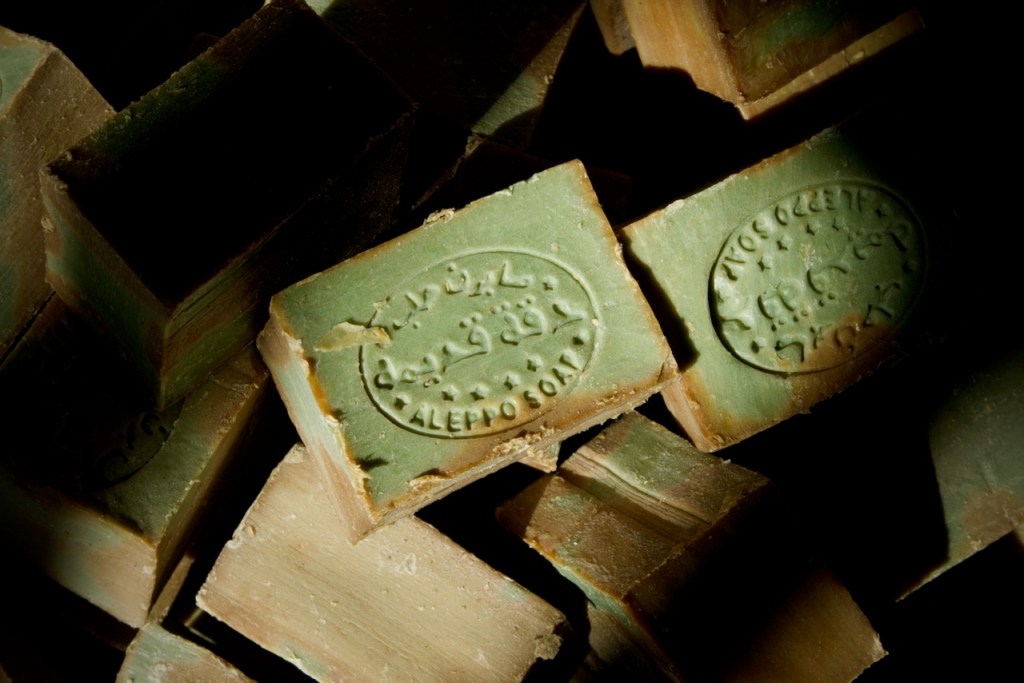
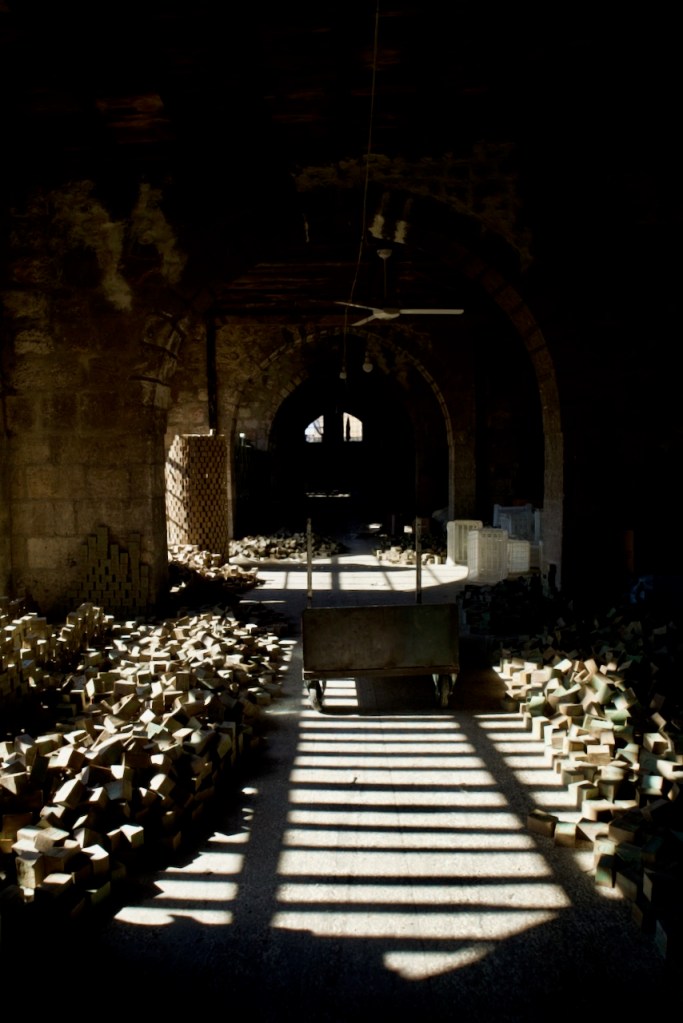
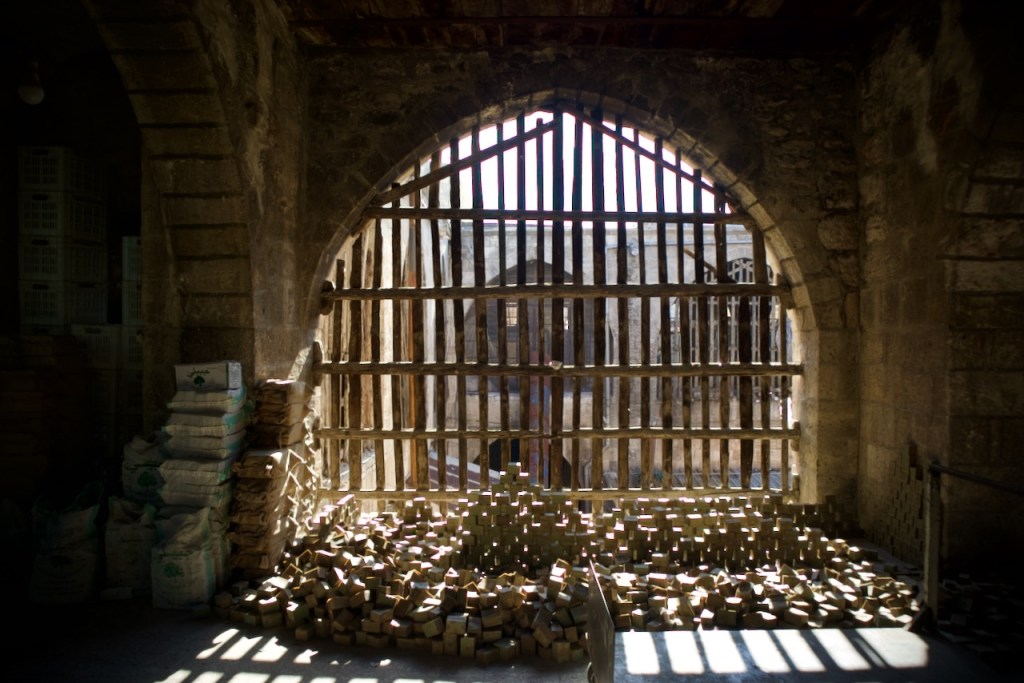
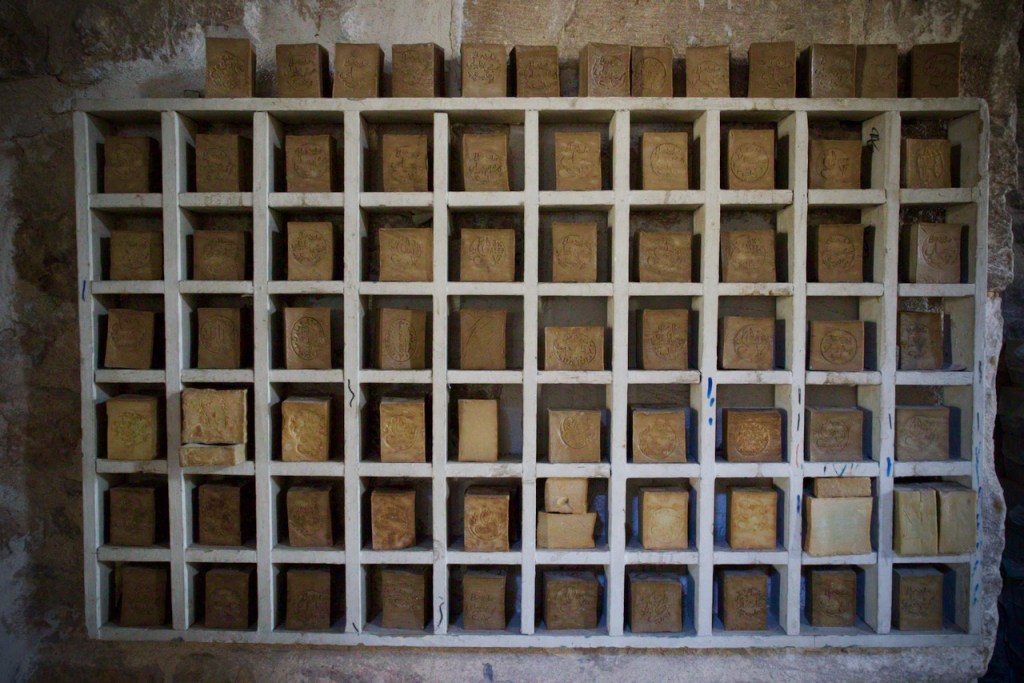

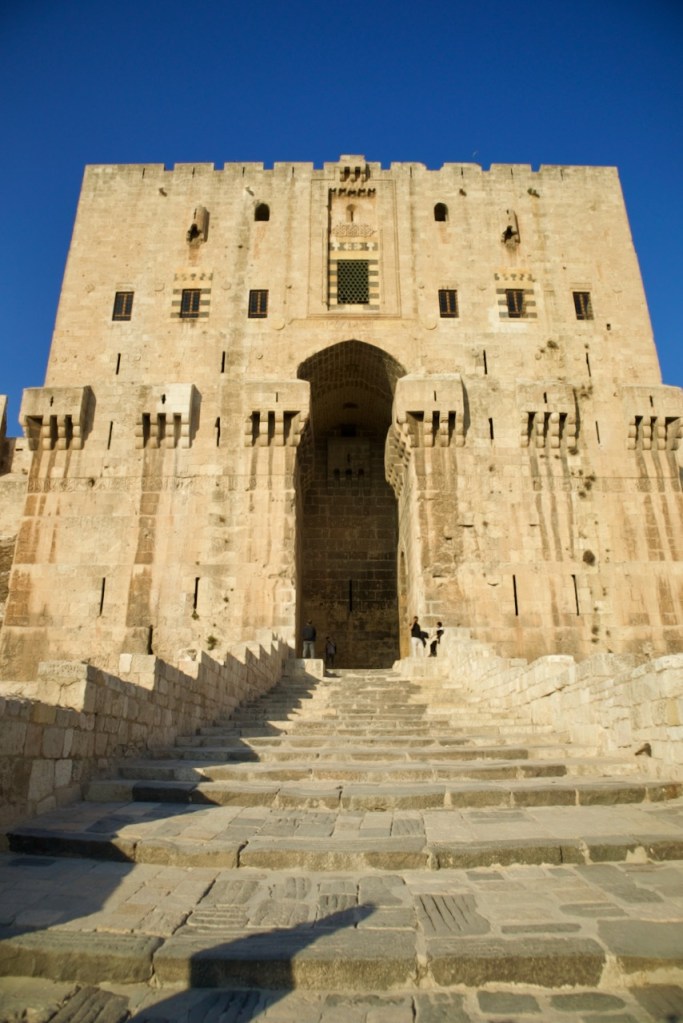
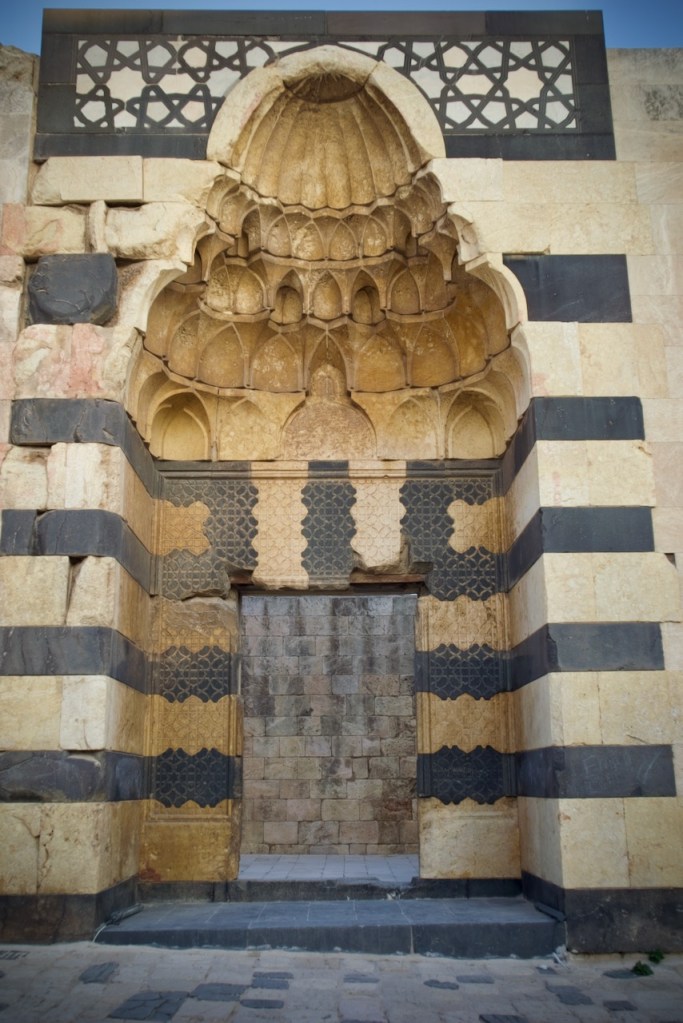
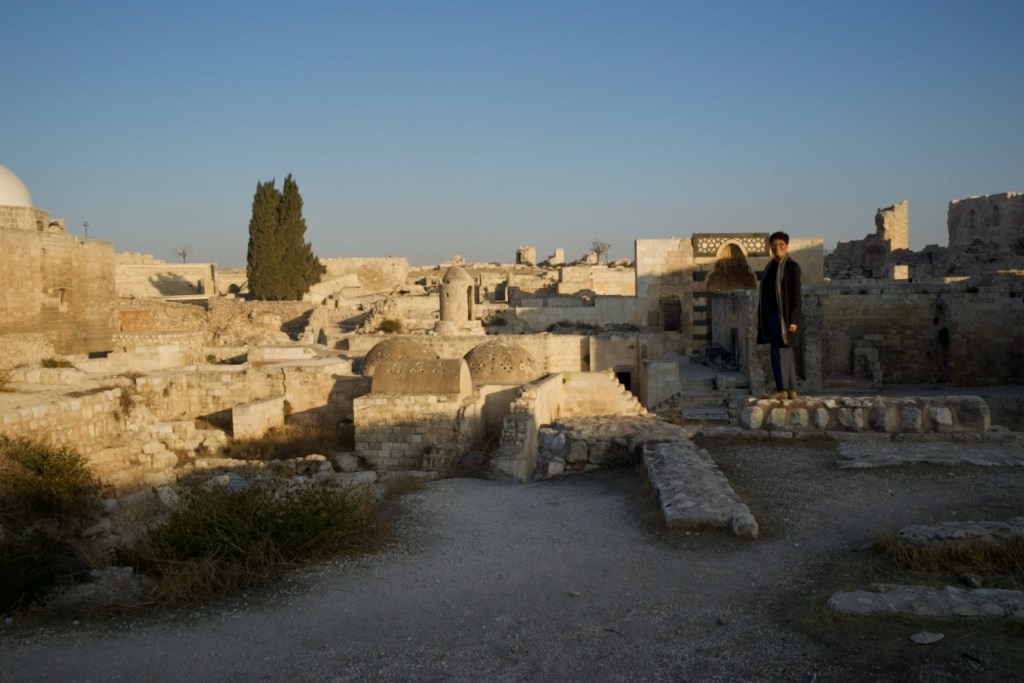
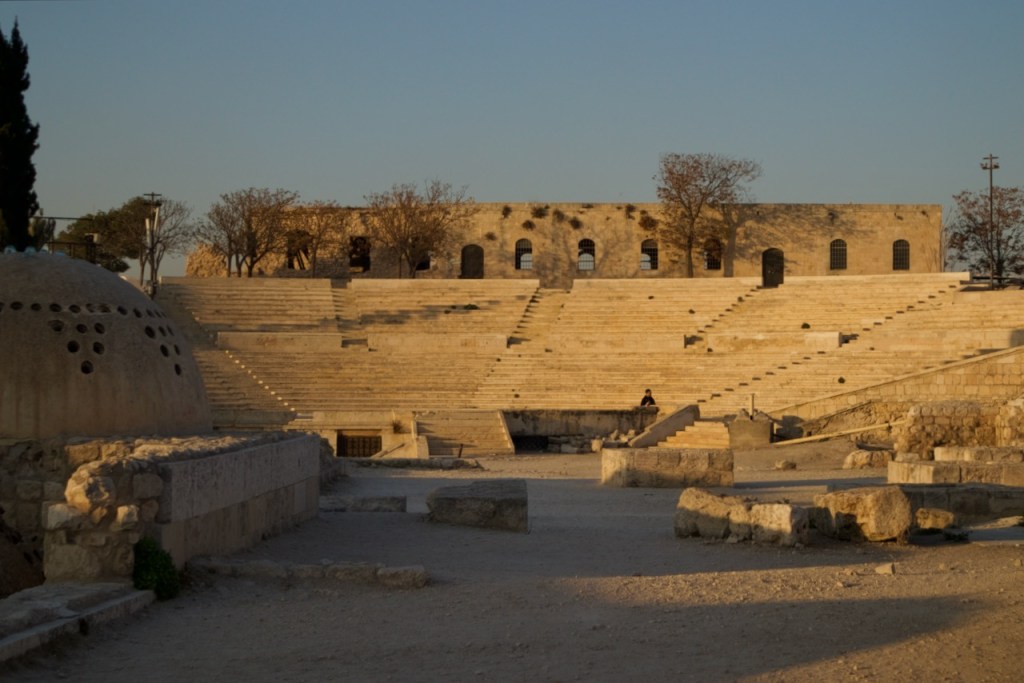
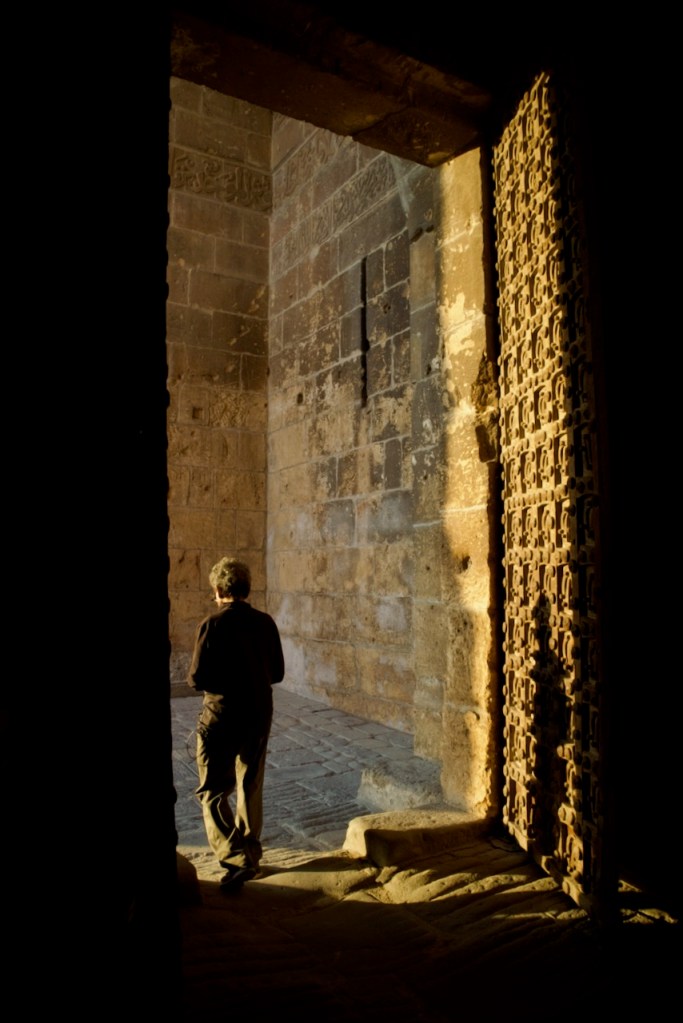
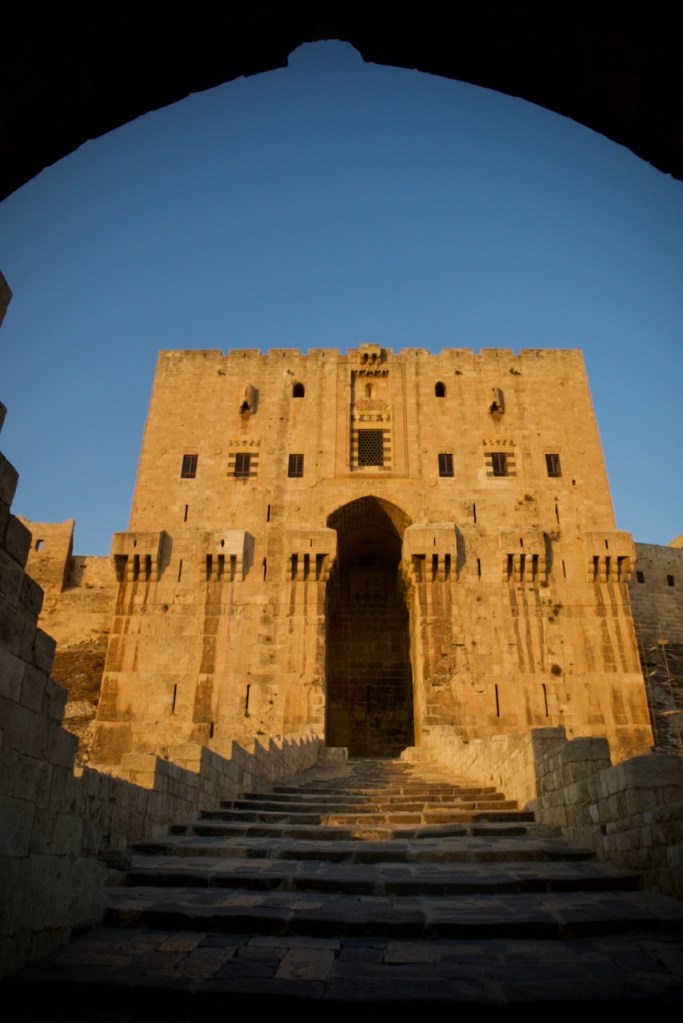
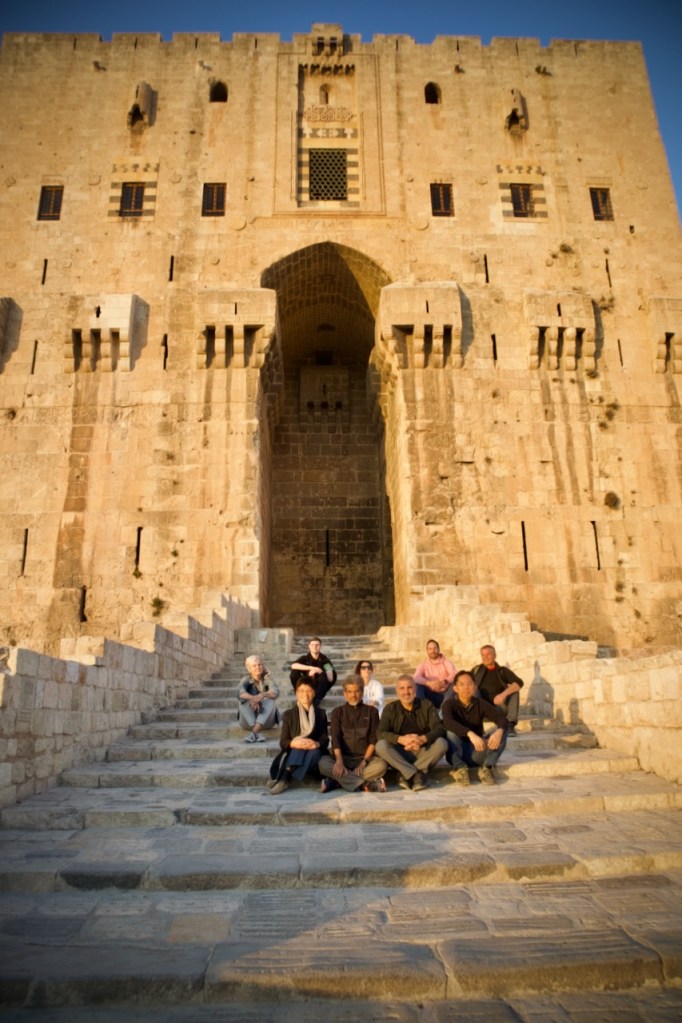
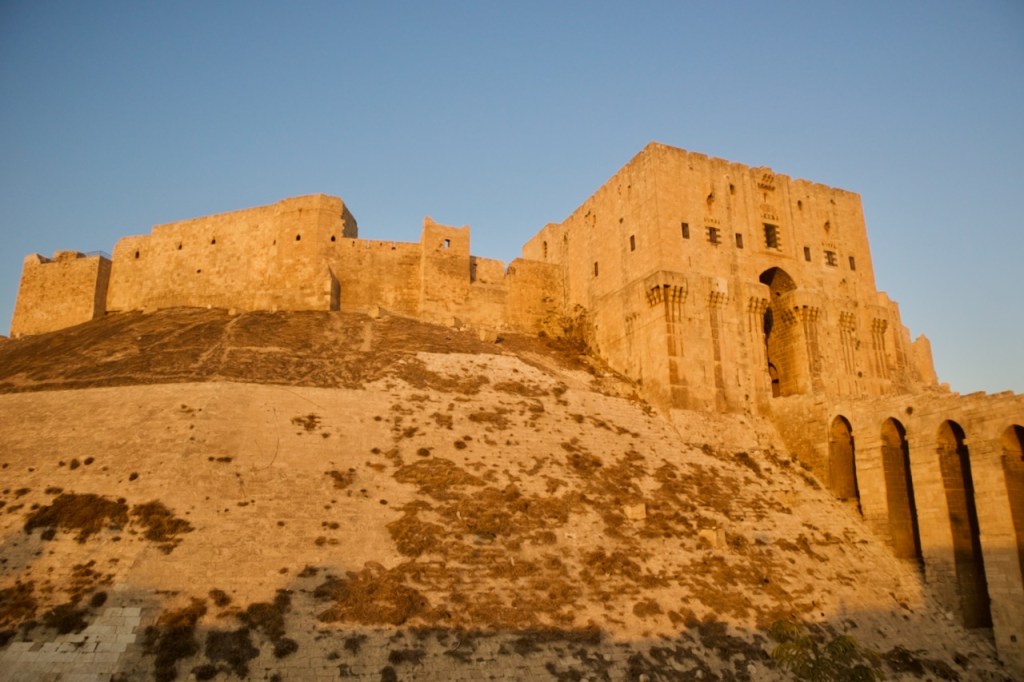
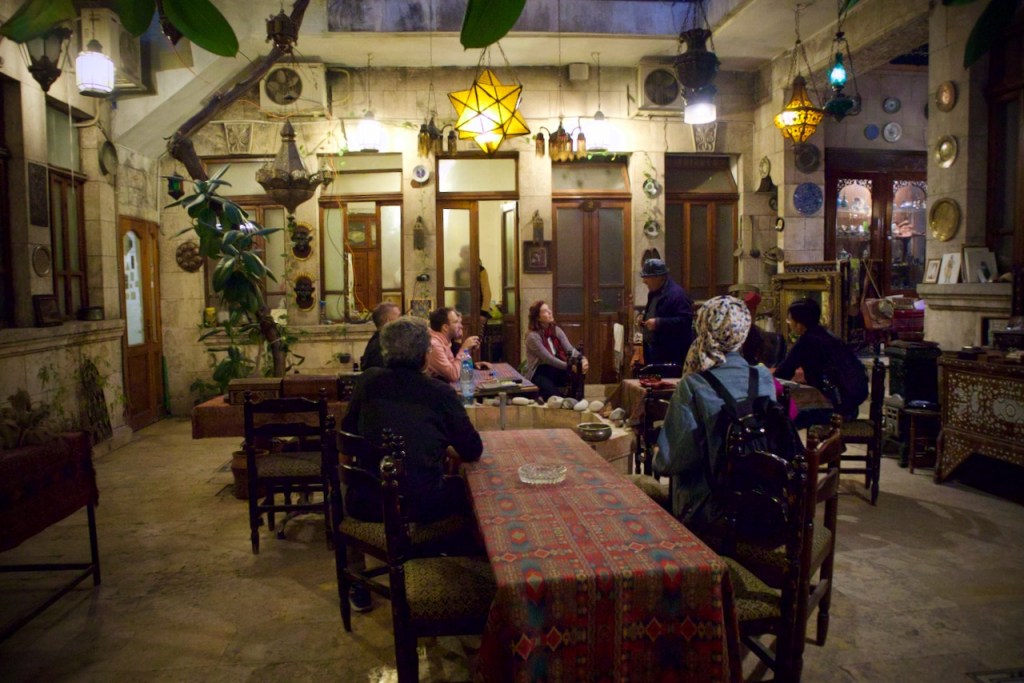
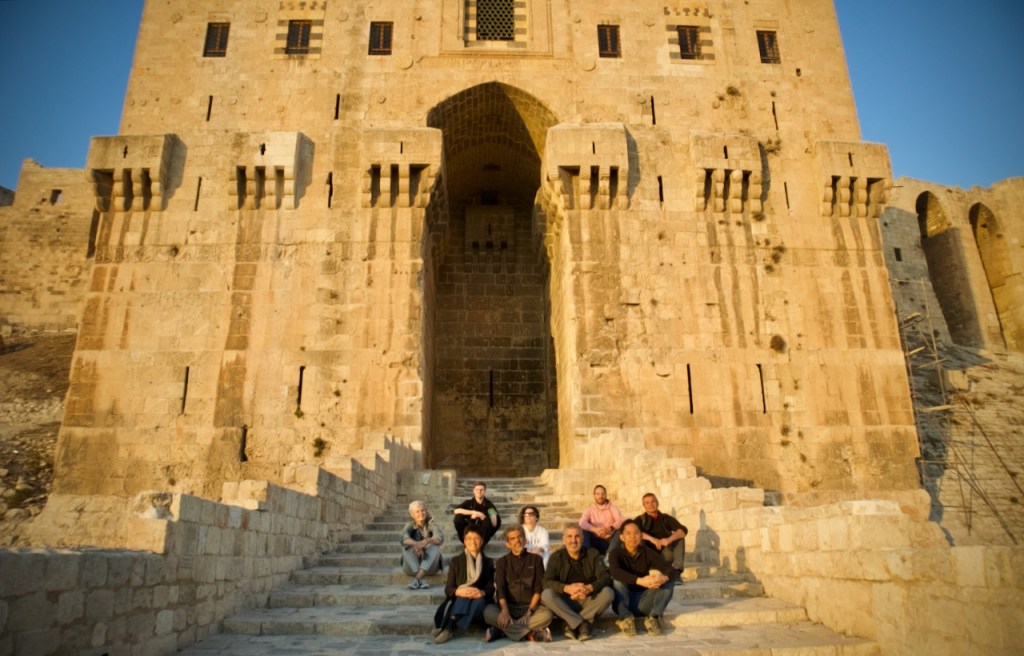
After our luscious lunch, we reach the citadel at four in the afternoon when visitors are piling out, leaving the entire castle for our private tour. What a privilege! One of the oldest and largest in the world, used for military purposes for over 5000 years including during the liberation of Aleppo in 2016, the fort once again stands strong despite the devastating impact of the civil war all around. As the sun sets, drawing increasingly heavy shadows across the Roman baths and the amphitheatre, finally descending on the entrance steps, I feel in awe of this old city, her resilient residents, and indomitable spirit. We end our long, unforgettable day in the beautiful home of Abdul, Bashar’s professor in tour guiding. Multilingual and multicultural, he is Aleppo soul incarnate, taking part in his role in rebuilding his native city by welcoming tourists to his beautiful place.






Idlib, Serjilla, Hama and Homs
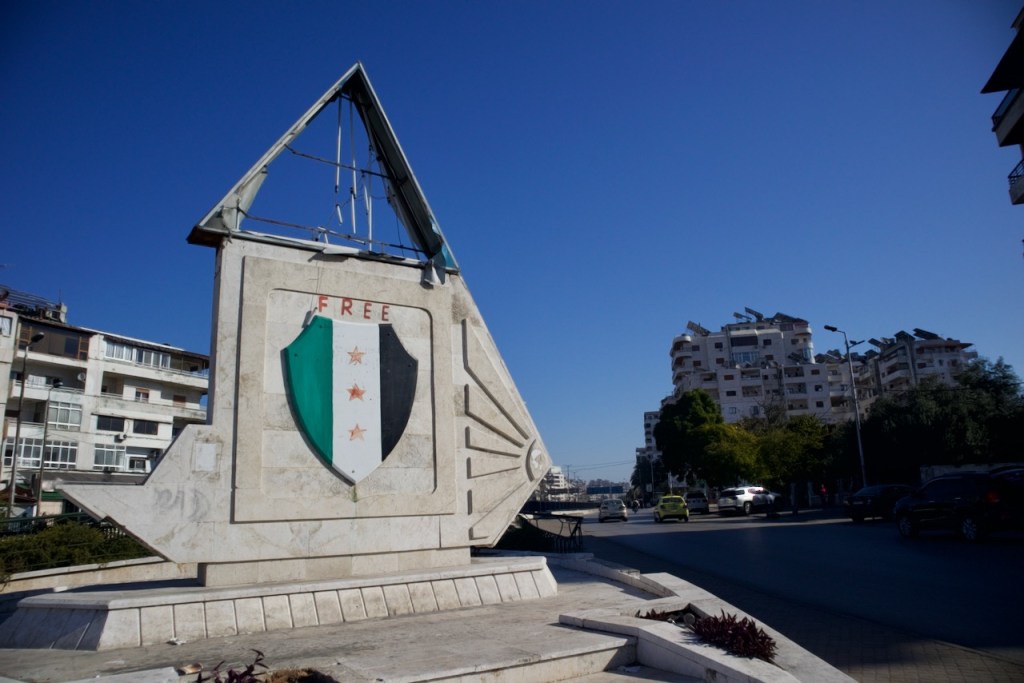
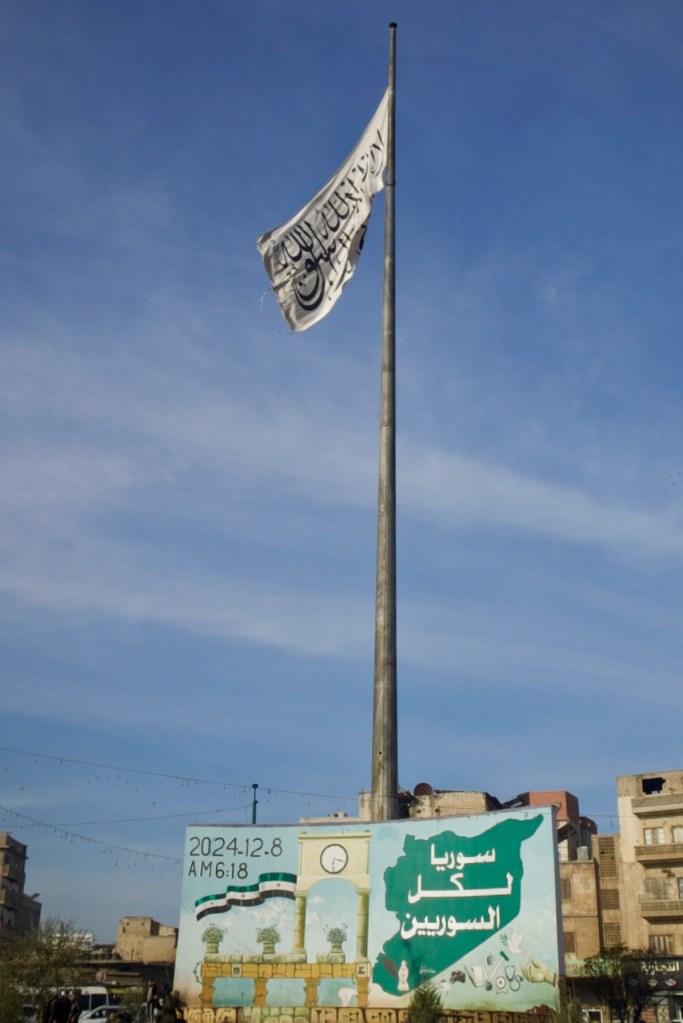
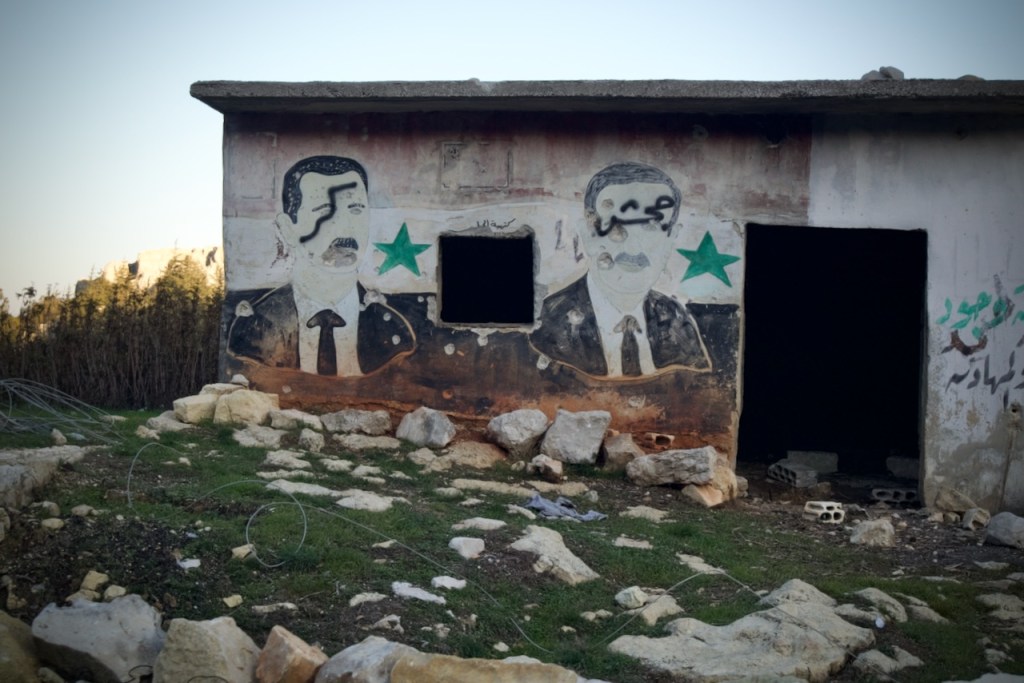
There is still so much to see and cover in rich and inexhaustible Syria. We begin a new day in Idlib, the once liberal city that has become a conservative stronghold, where a Taliban flag flies high in a pole marked by the date and time when the Assad regime fell. On December 8 2024, at 6:18am, the radio announced: Damascus is without Bashar Assad. And that’s that, the end of a long era and the harbinger of many uncertain changes.
We cruise along the M5 frontline highway between Homs and Damascus, witnessing destruction village after village before we reach Serjilla, a UNESCO World Heritage site. One of the 40 ancient villages collectively referred as the “Ancient Villages of Northern Syria,” Serjilla is exceptionally well preserved as a testimony to rural life in late Antiquity and the Byzantine period. Founded in 473 BC and then slowly abandoned in the 7th-10th centuries due to shifting trade routes after the Arab conquests, it was a prosperous town that thrived on the cultivation of grapes and olives. With a villa here, a basilica there, residential houses and a bath, and a big olive press, the sprawling ruins are an absolute photographers’ paradise.
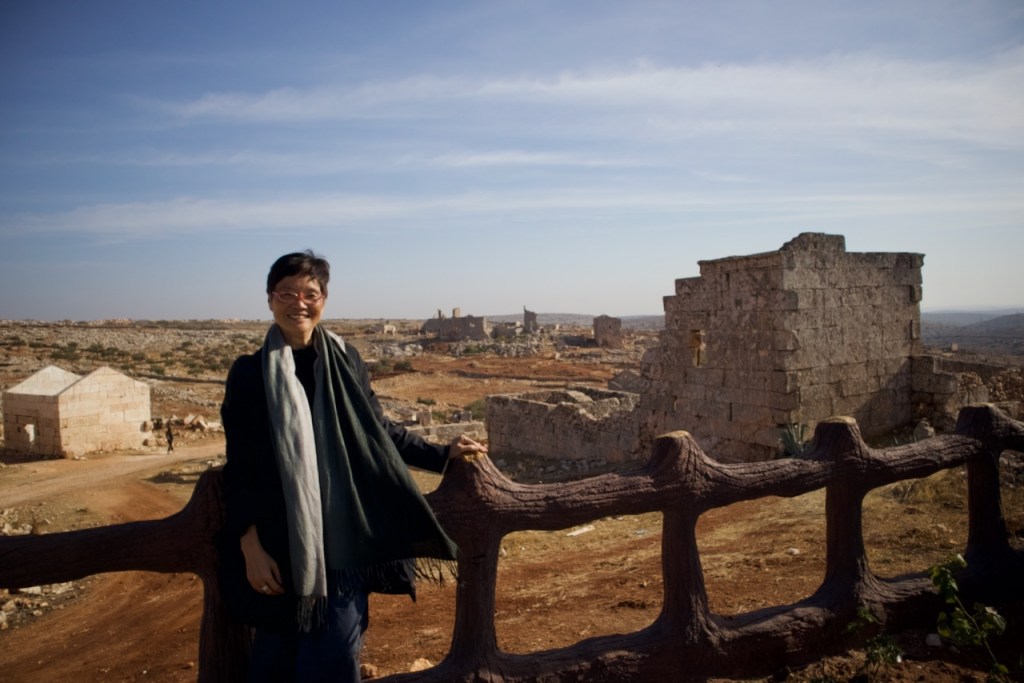
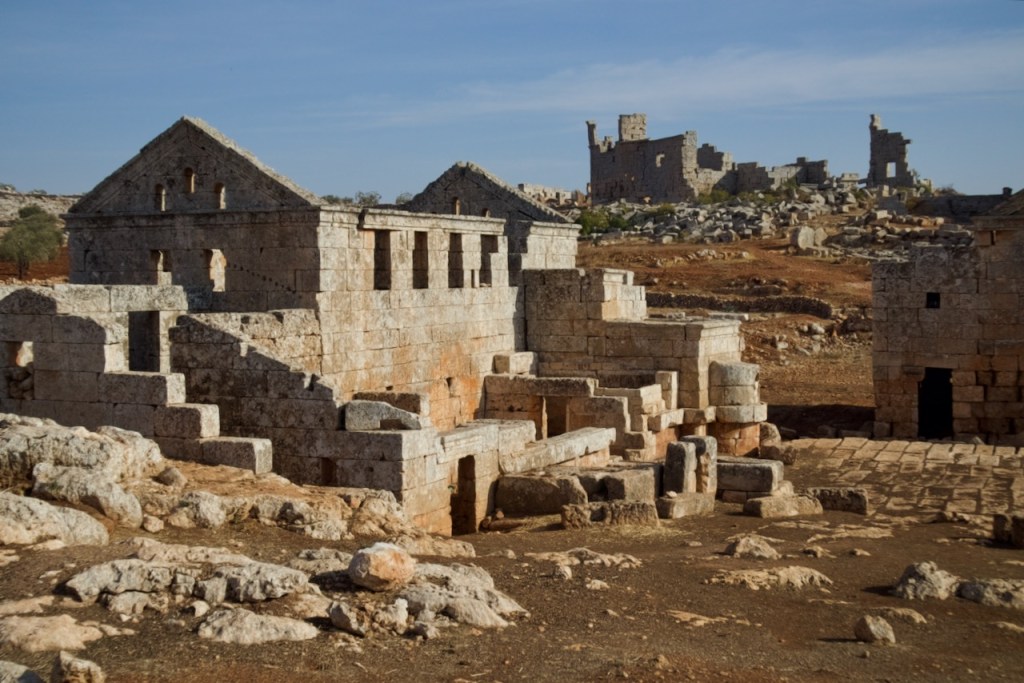

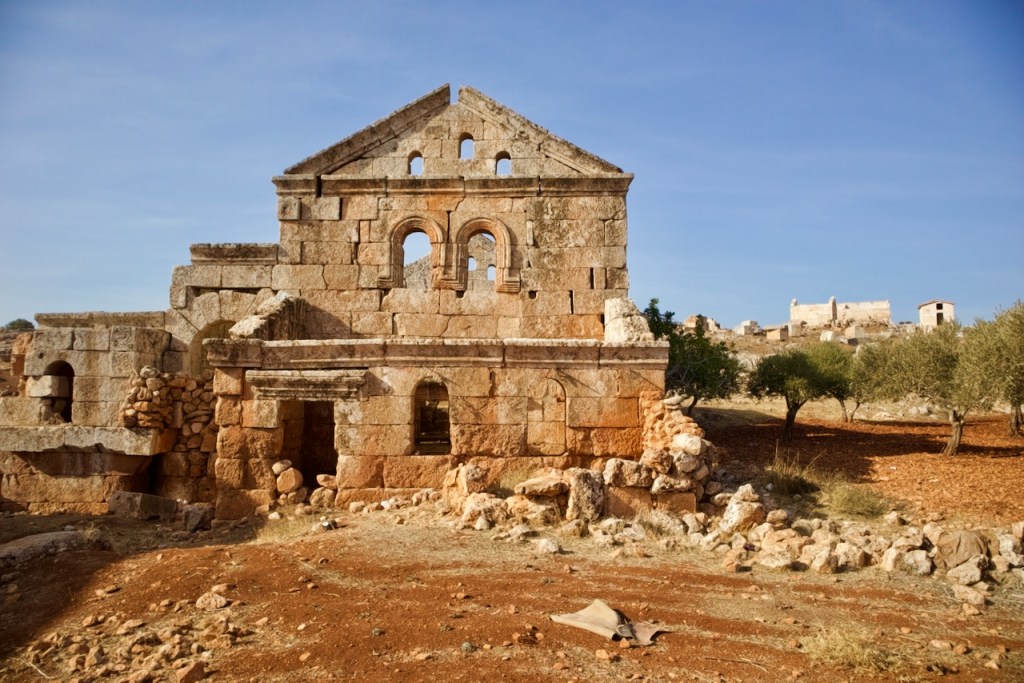
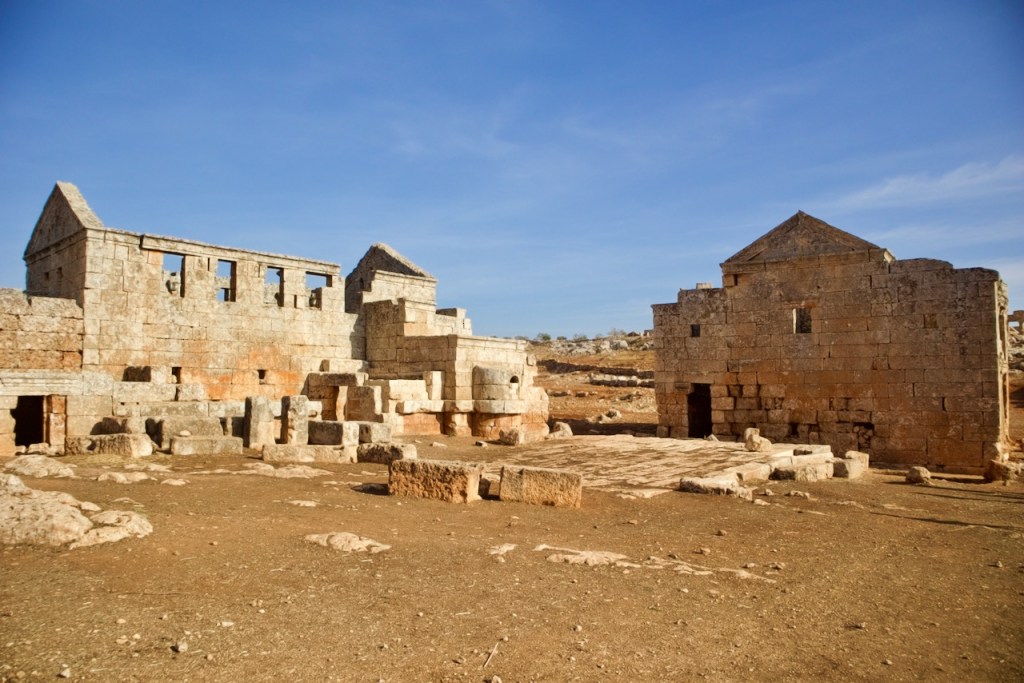
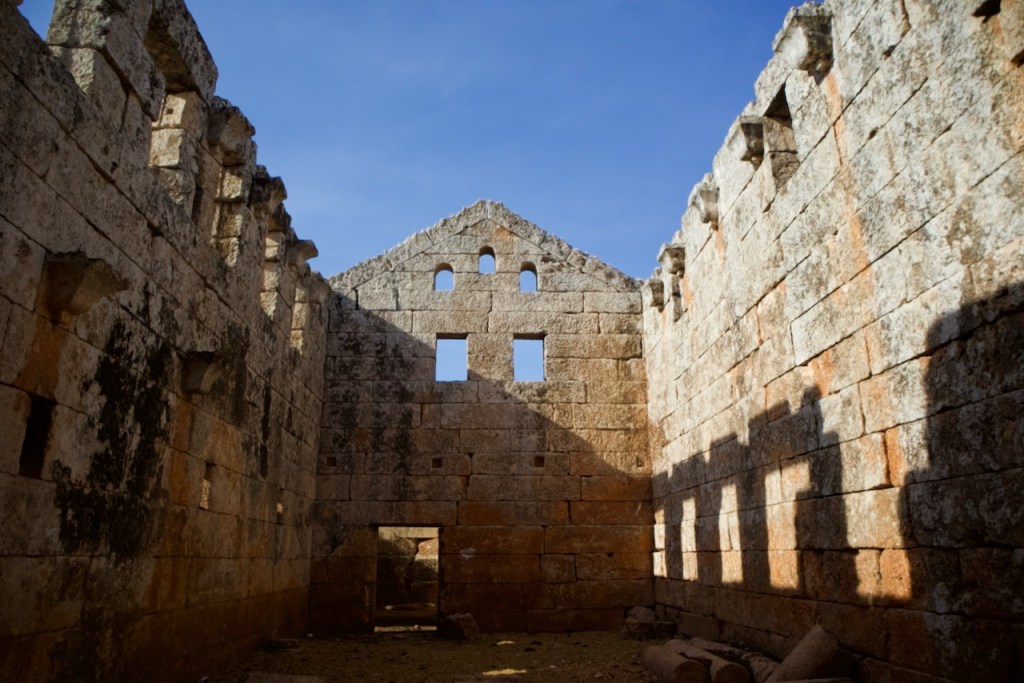

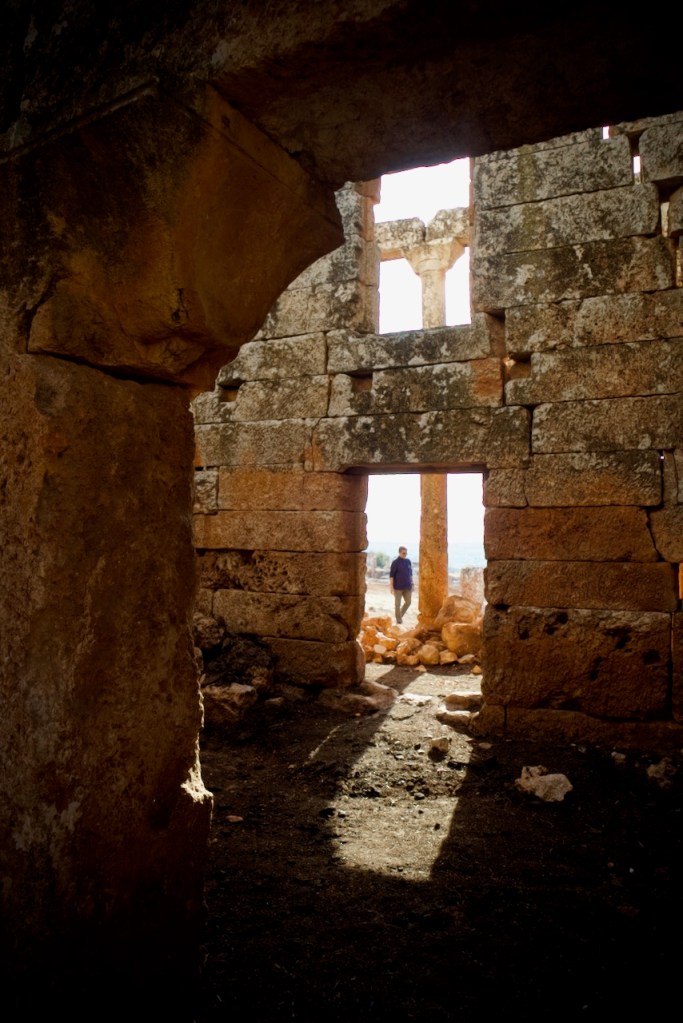
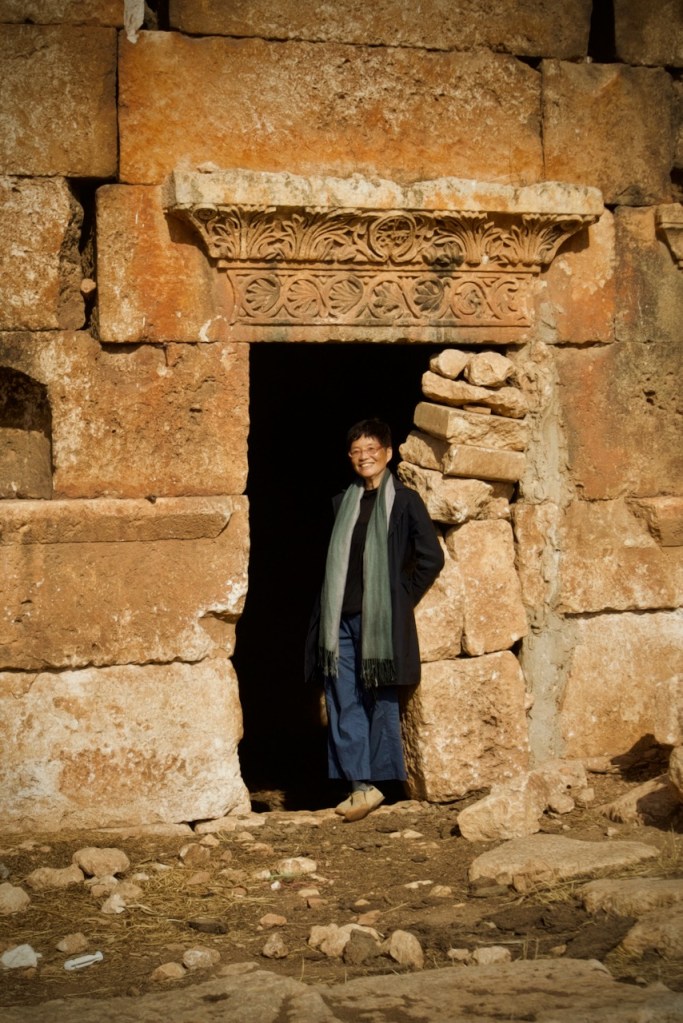
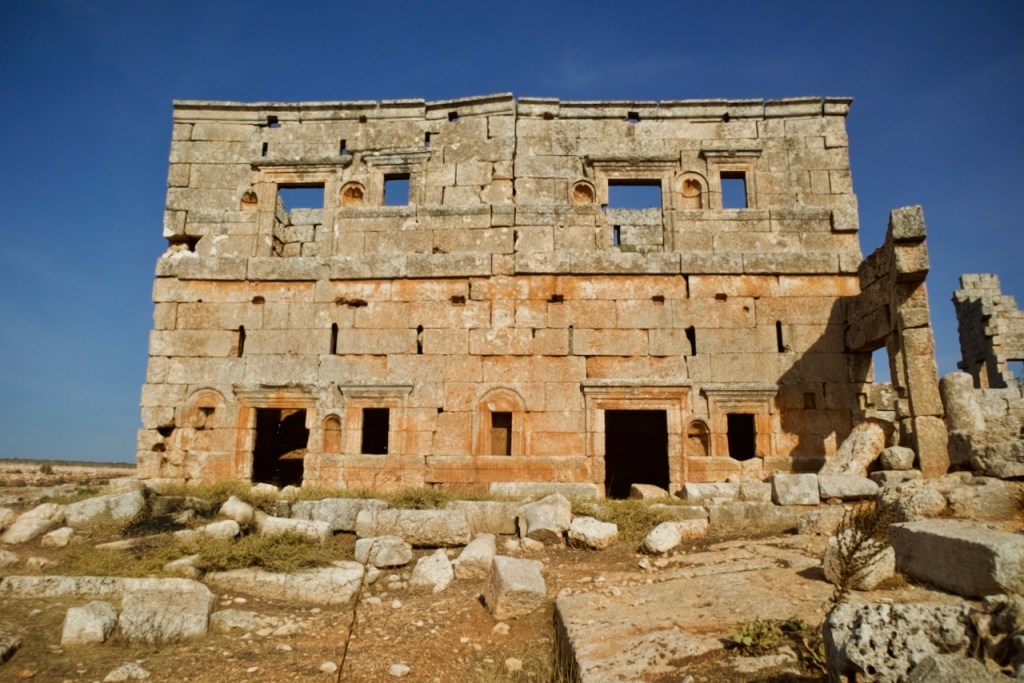

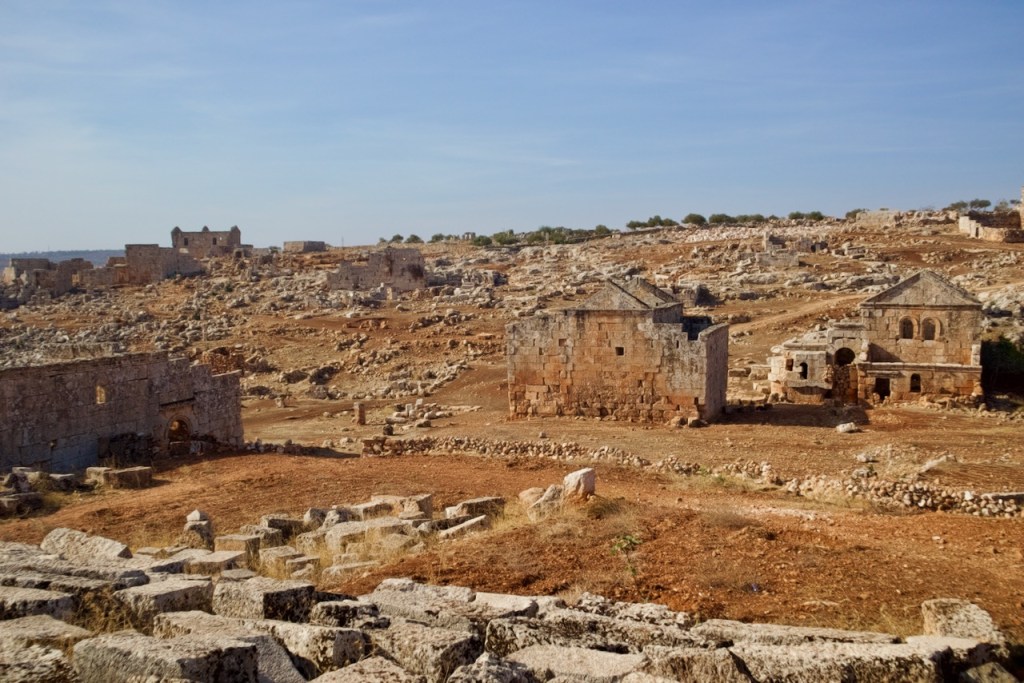

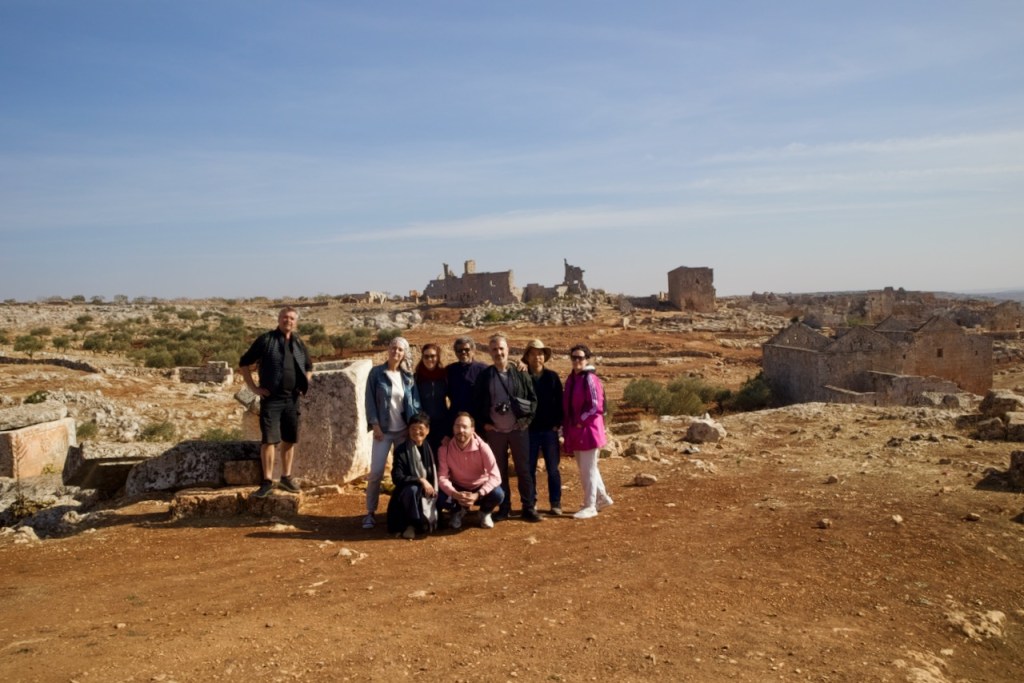
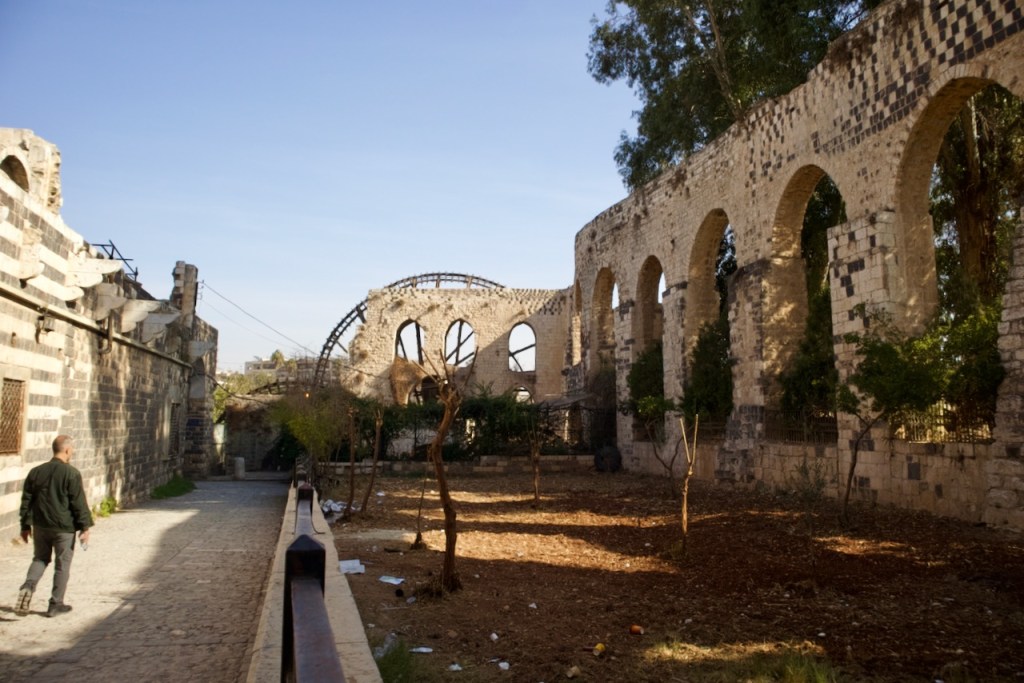
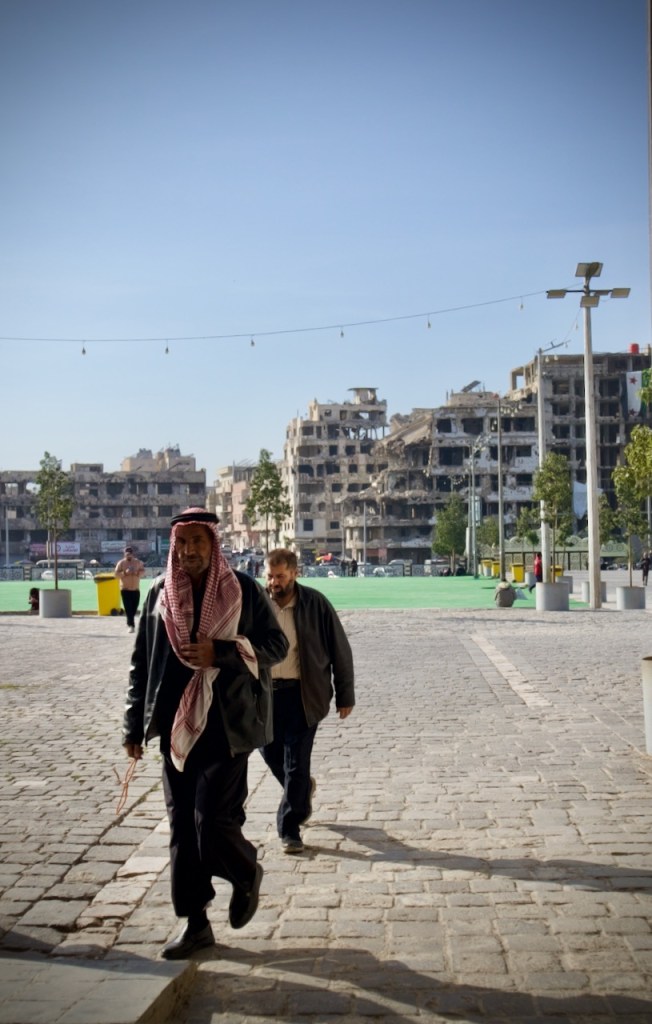
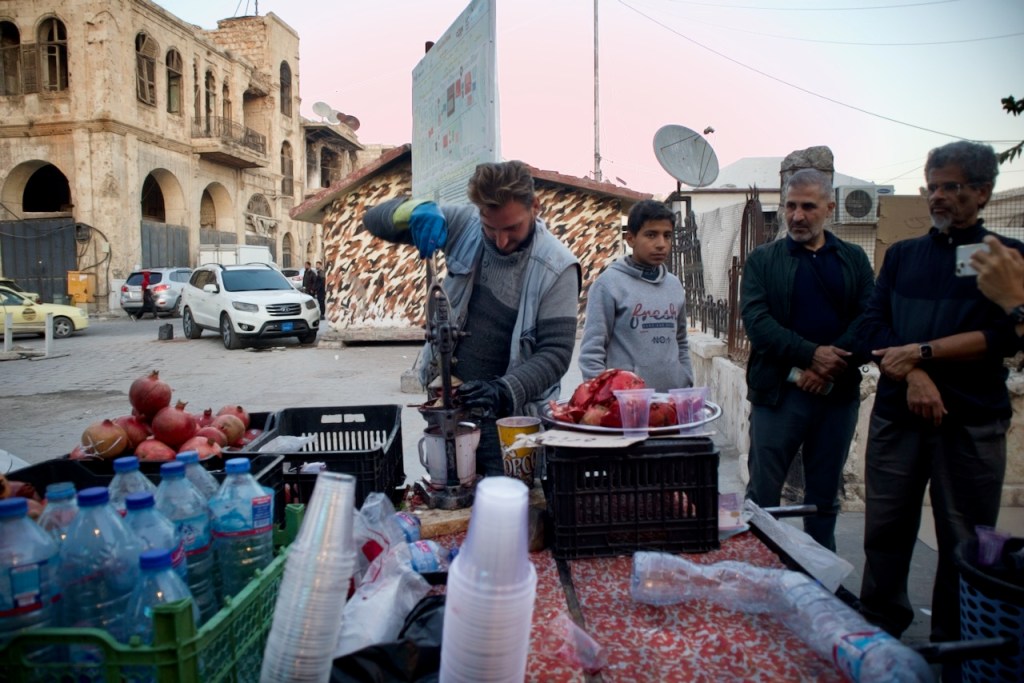
Two more stops before lunch/dinner: Hama, famous for a series of seventeen norias, medieval water-raising machines for irrigation, and Homs, the vibrant city and birthplace of the Syrian civil war. Sadly, over 40% of Homs was destroyed, including part of the bazaar, one of the liveliest souks in all the Middle East. In the Great Mosque of Homs, a new rule relegates women to a tiny section in the back, causing indignation in our guides. Change is no doubt coming with the new government, in which way few could yet tell.






Bosra through the Eras
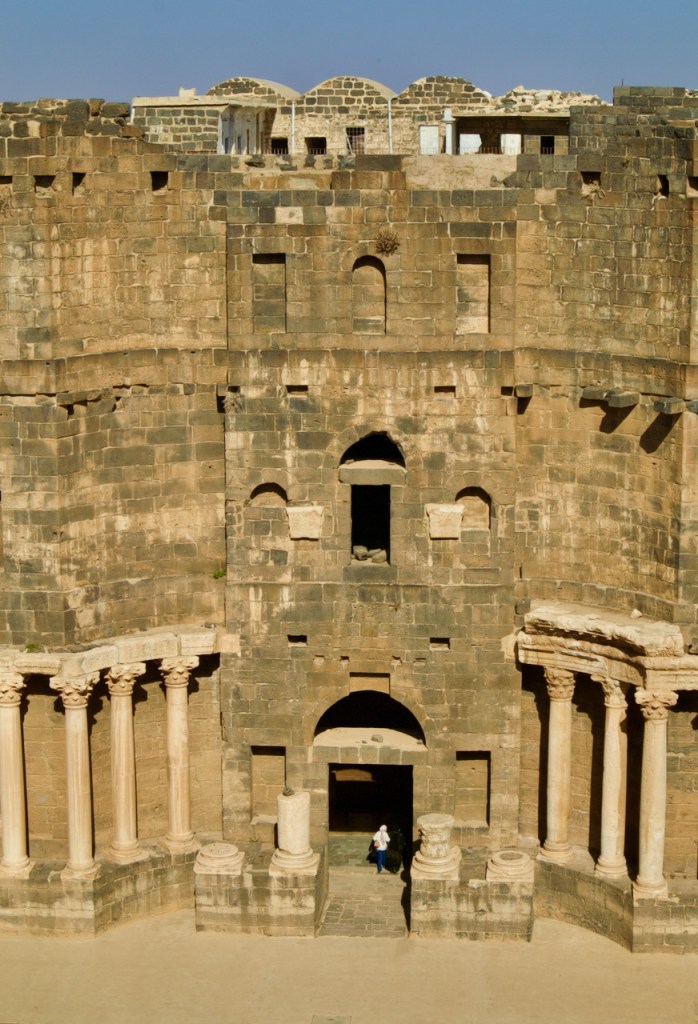
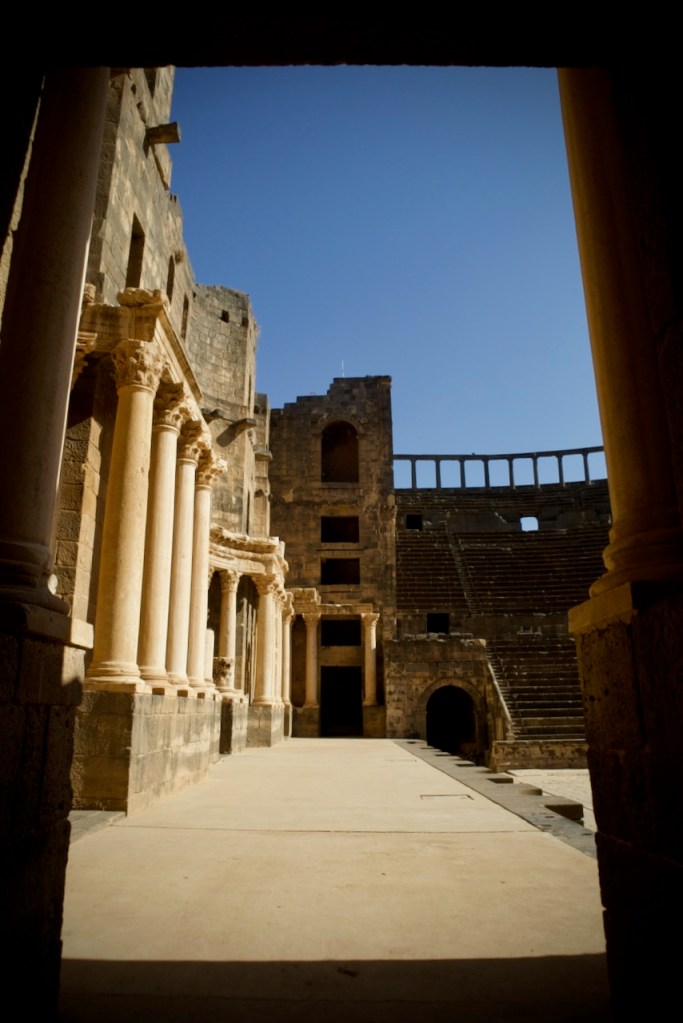
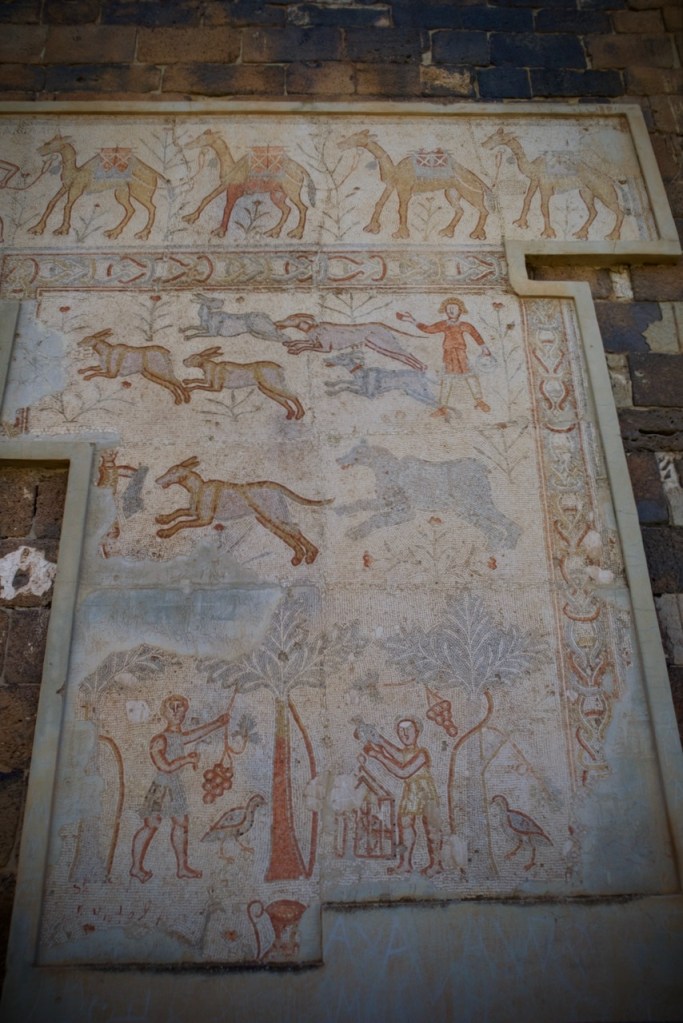
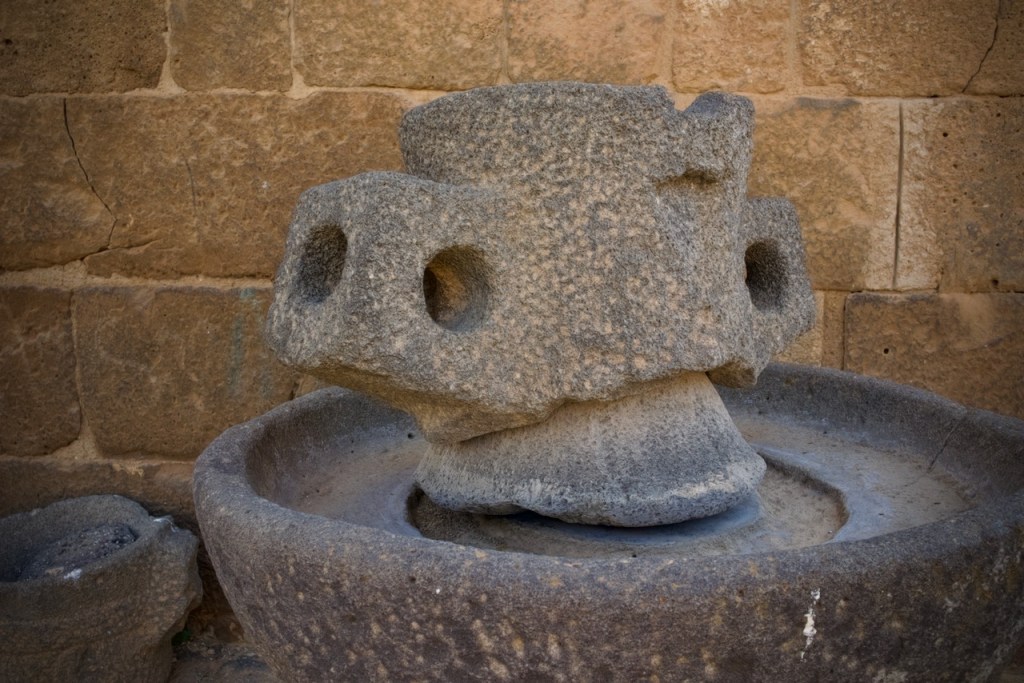
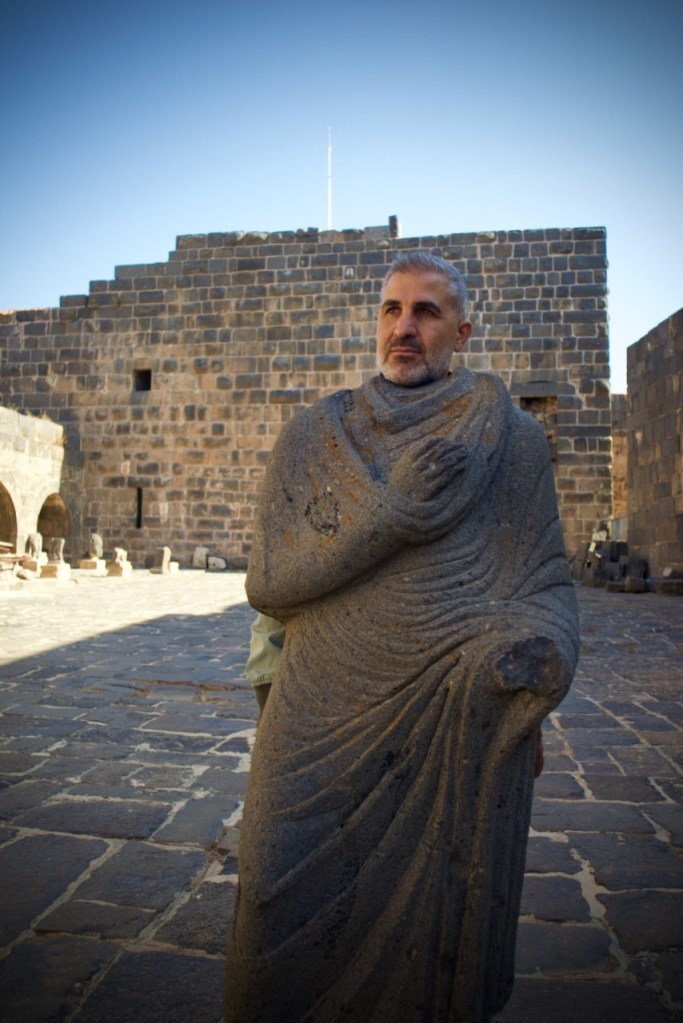
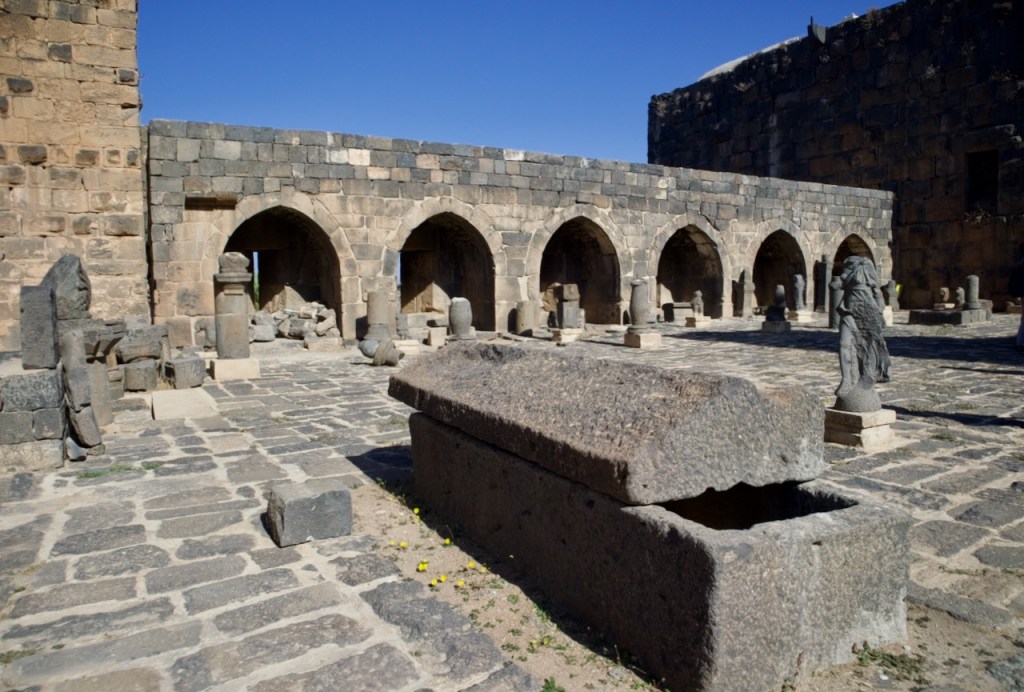
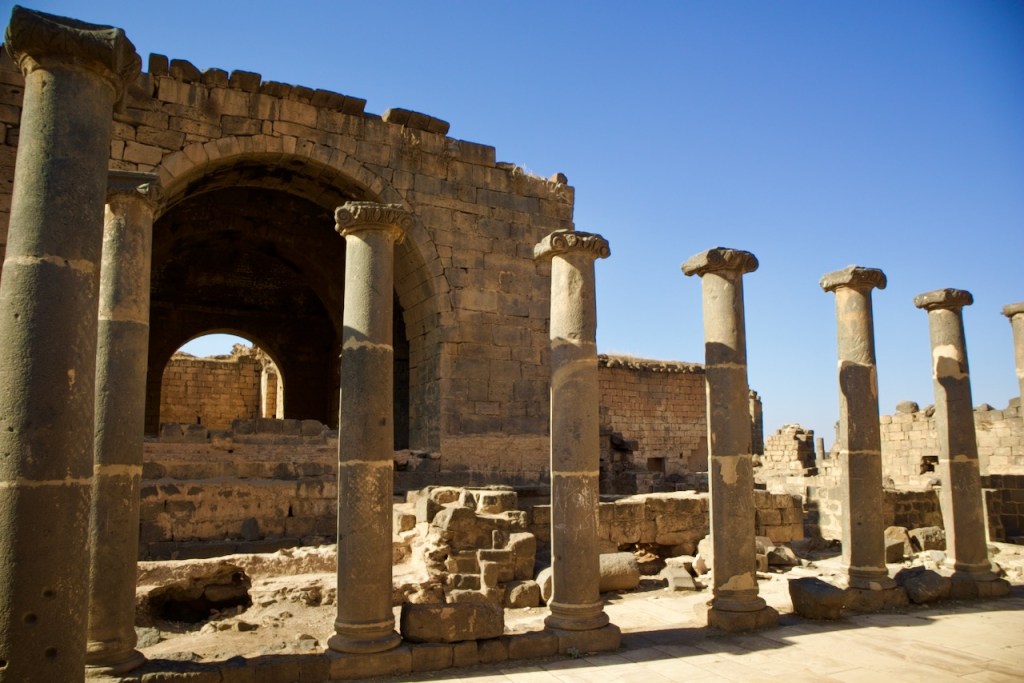
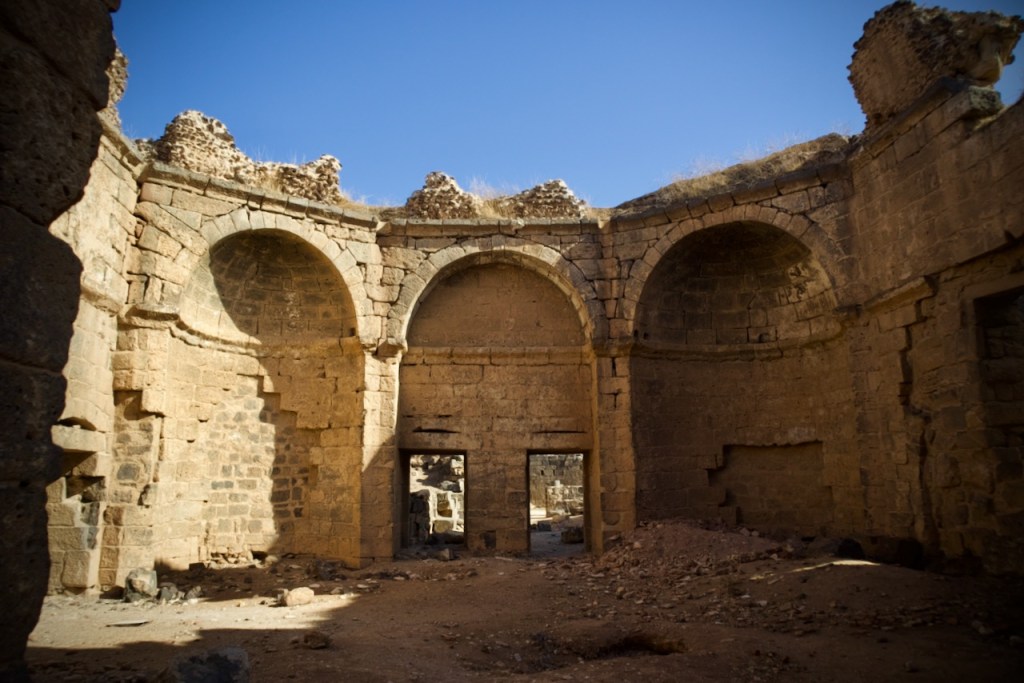
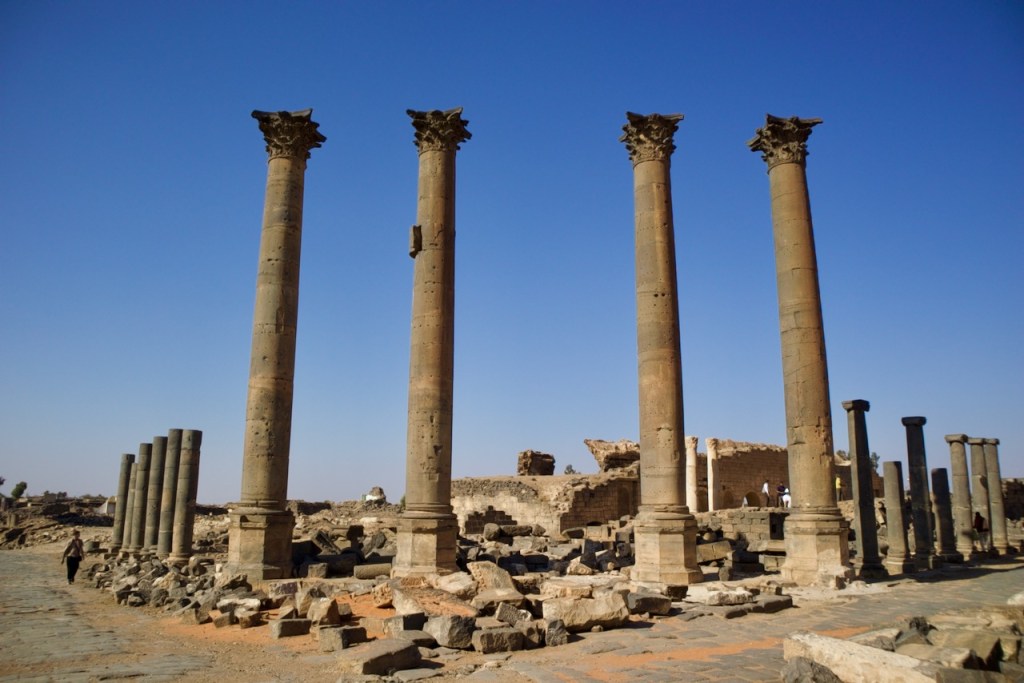
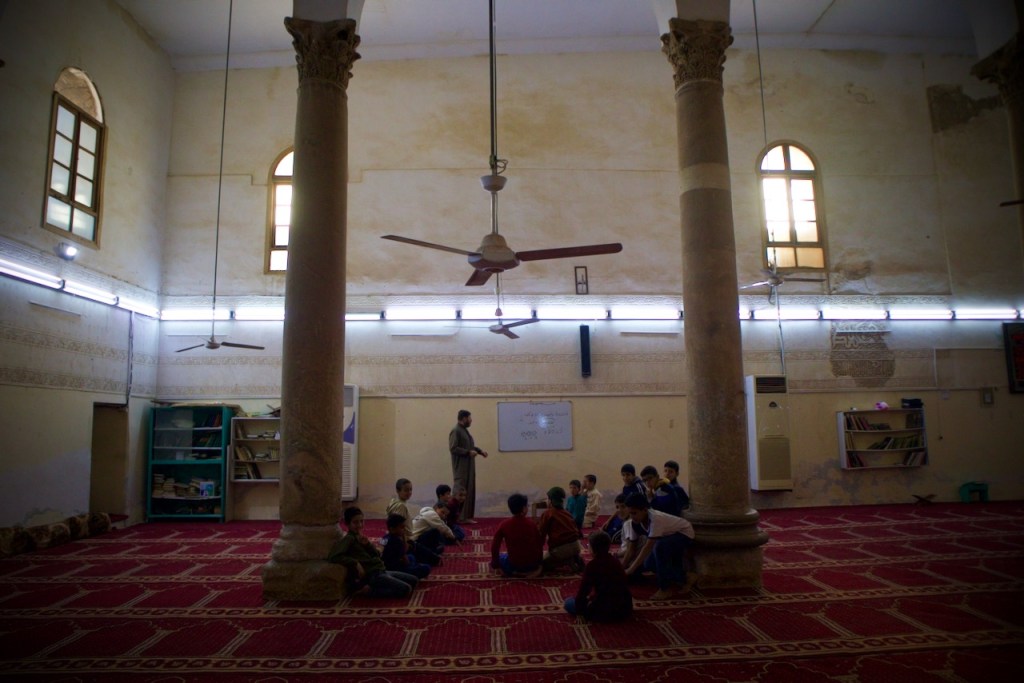
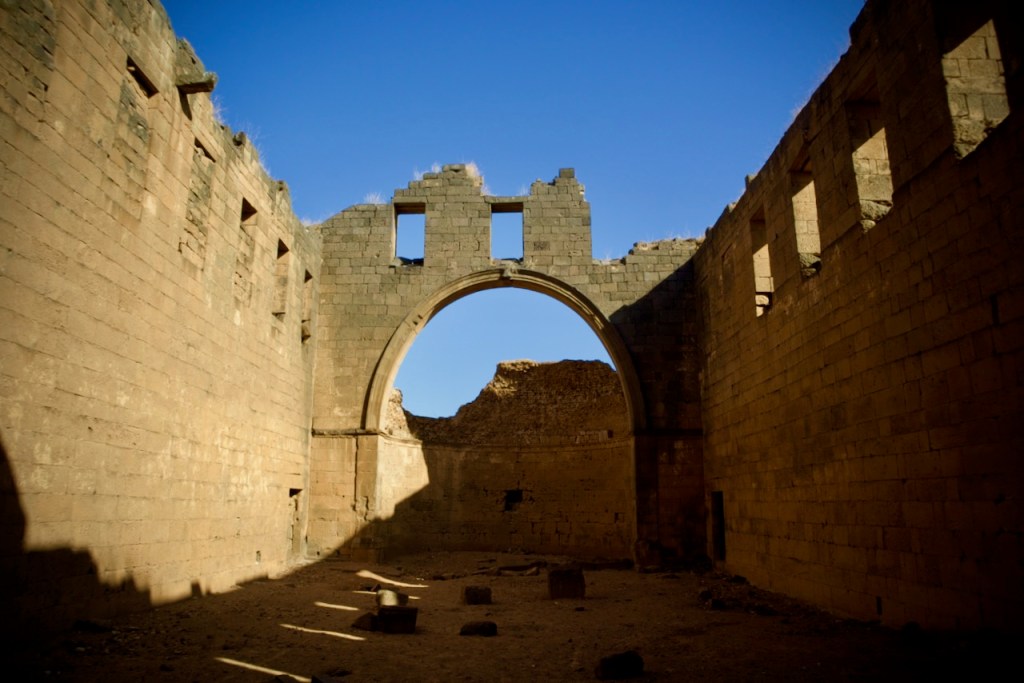
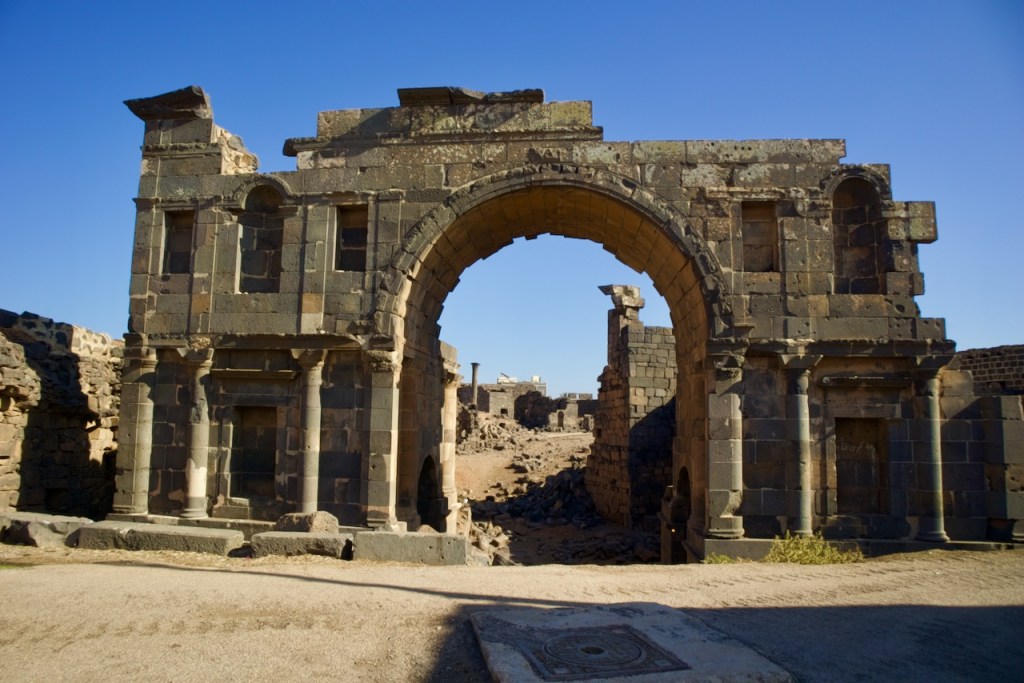
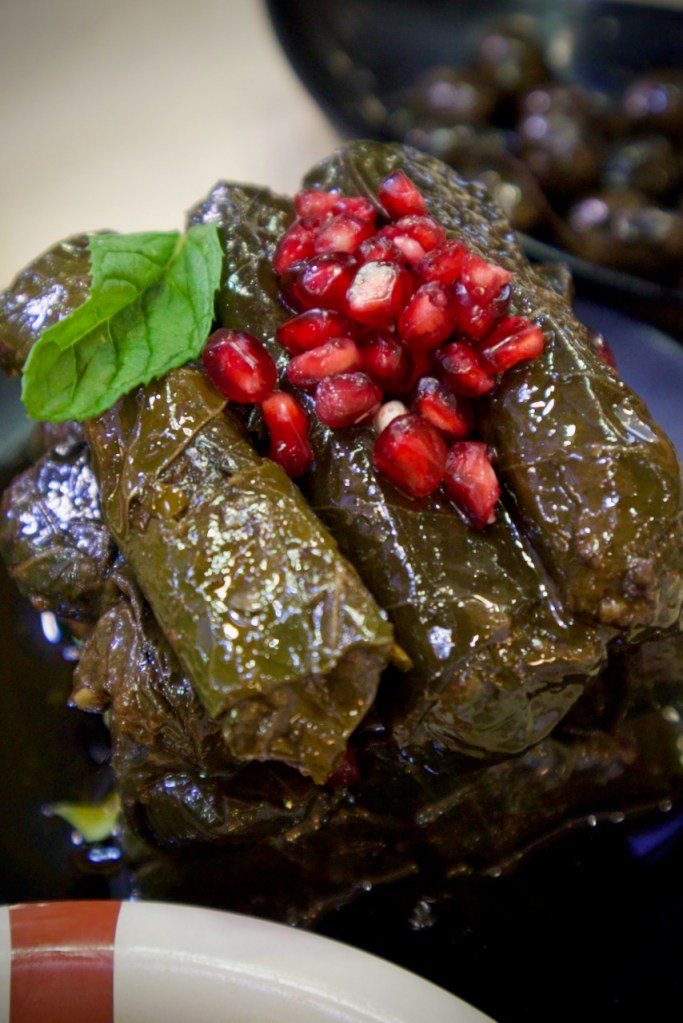
Any tour to Syria would not be complete without a visit to the magnificent site of Bsora, a 3500-year-old ancient city two-hour drive south of the capital. We pass through the Hauran plain, famous for her fertile soil, wheat production, and tasty tomatoes. The main draw here, the spectacular 2nd century Roman amphitheatre, is a sight to behold. Then there are temples and churches, baths and mosques, all built from solid black basalt stones from Nabataean, Roman, Byzantine, and Muslim times. Once again, we have the luxury of having the entire site to ourselves before sitting down to a tasty Bosran lunch with a new variety of fried kibbeh filled with pomegranates. What a discovery!







Back on the Road to Damascus
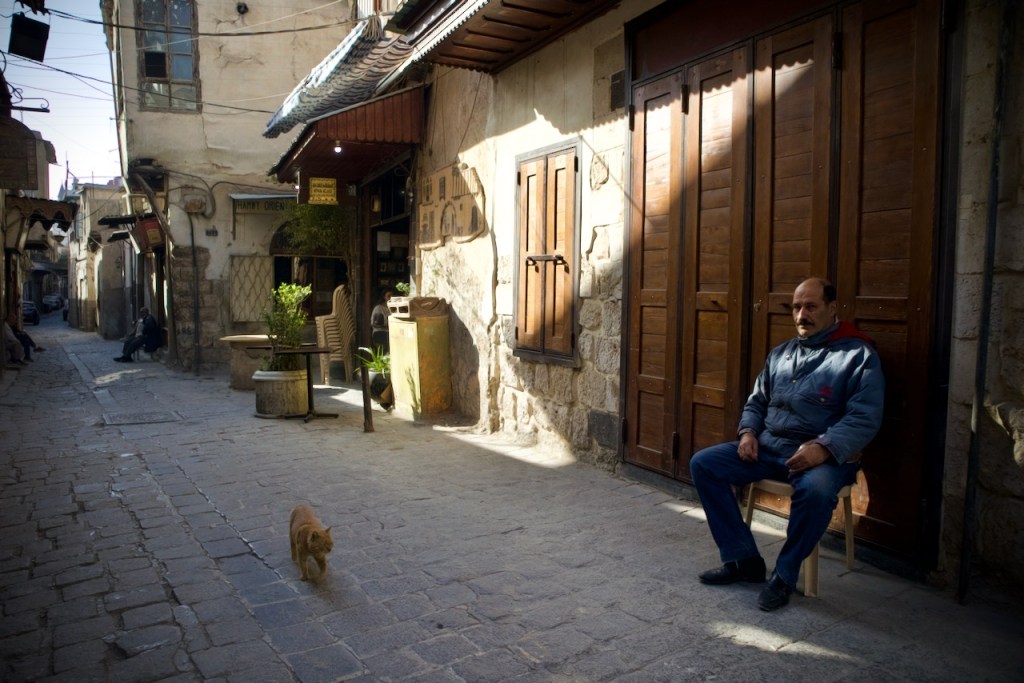
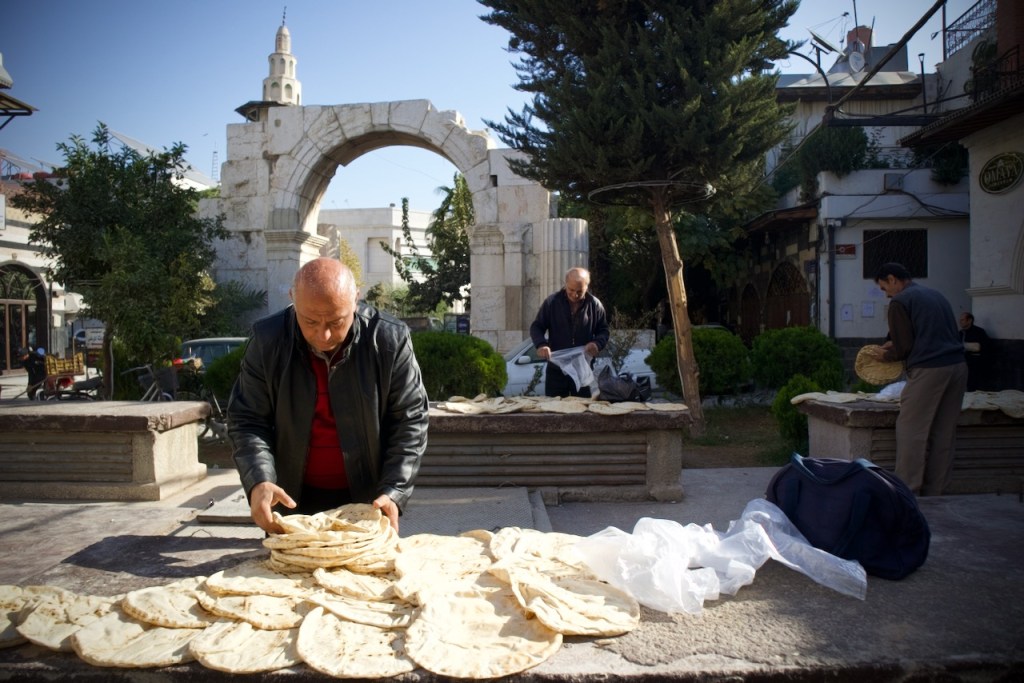
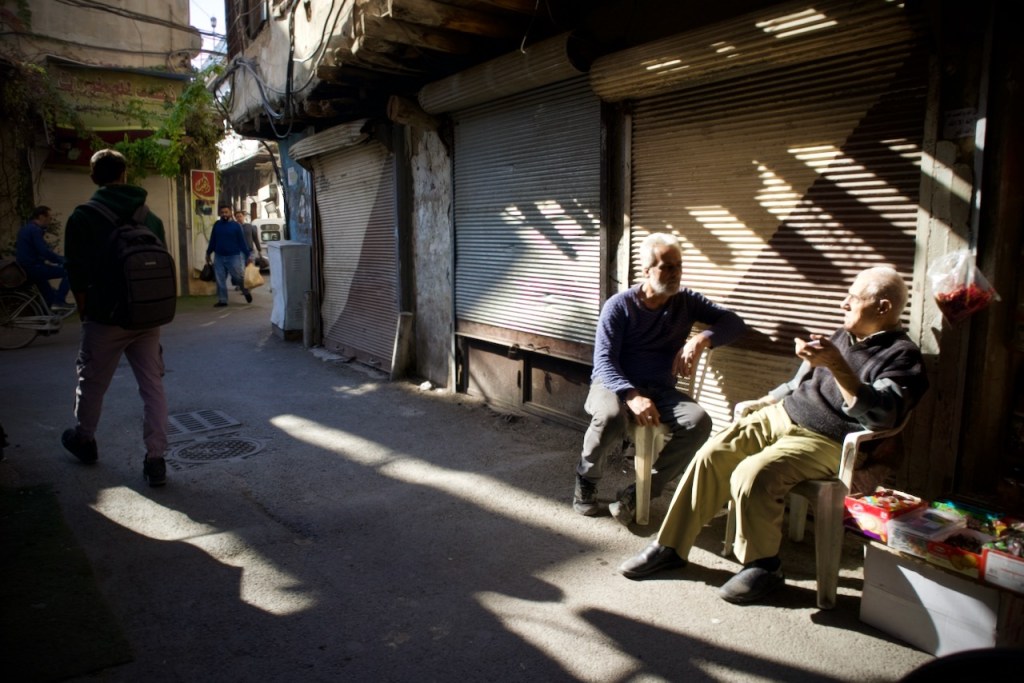
After nine full days on the road, the end is near. We spend our last morning soaking up all things Damascene. This is my favourite activity to see a city slowly awake and follow the rhythm of local life, with artisans already busy at their crafts and residents go about their new day. One more Damascene house, the magnificent Beit Farhy Al-Moalem where gold coins once filled its fountain, and another caravanserai, then we are off to the souk for souvenir shopping. Rose eau de cologne, spices, nuts, moasic… everything to our heart’s content before we bid farewell to our beloved guides – Bashar and Sarea – and driver, Mohammed, all models of Syrian generosity and hospitality.
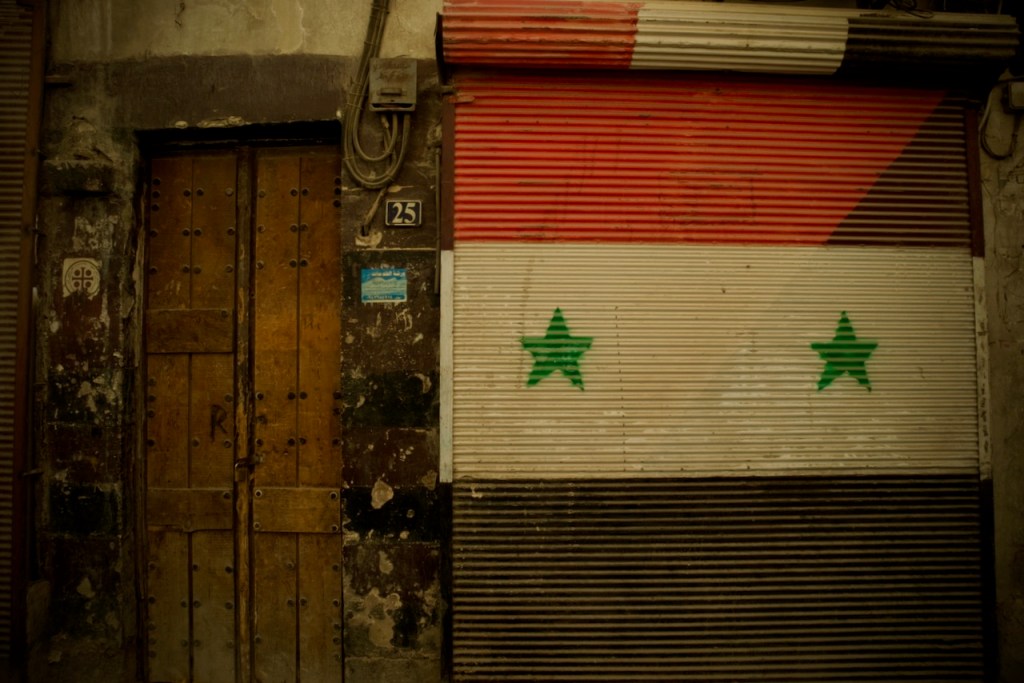





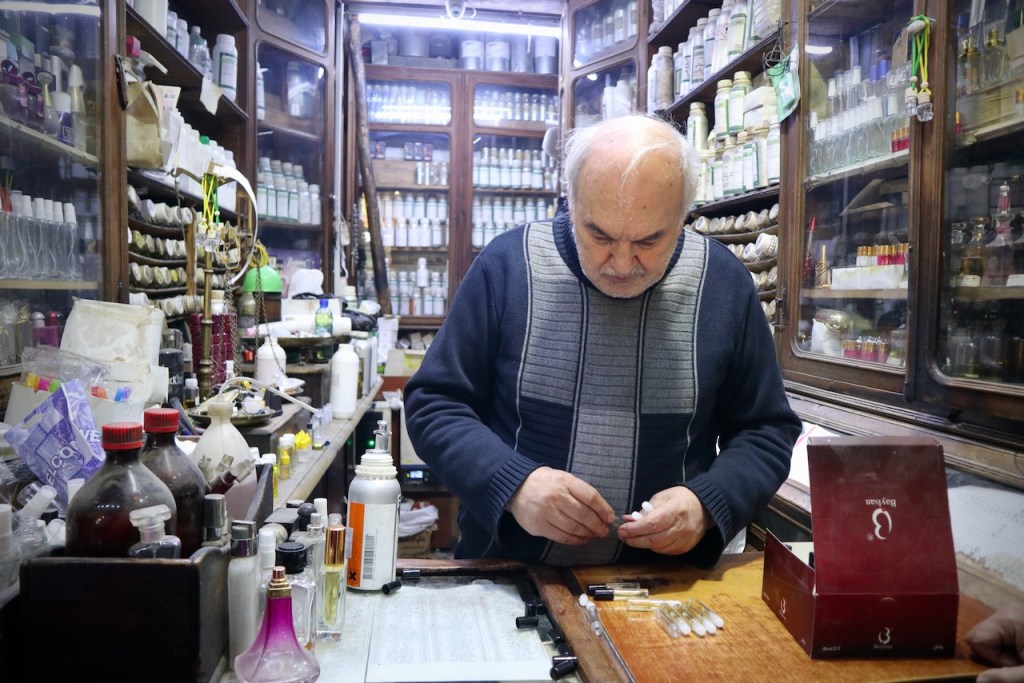
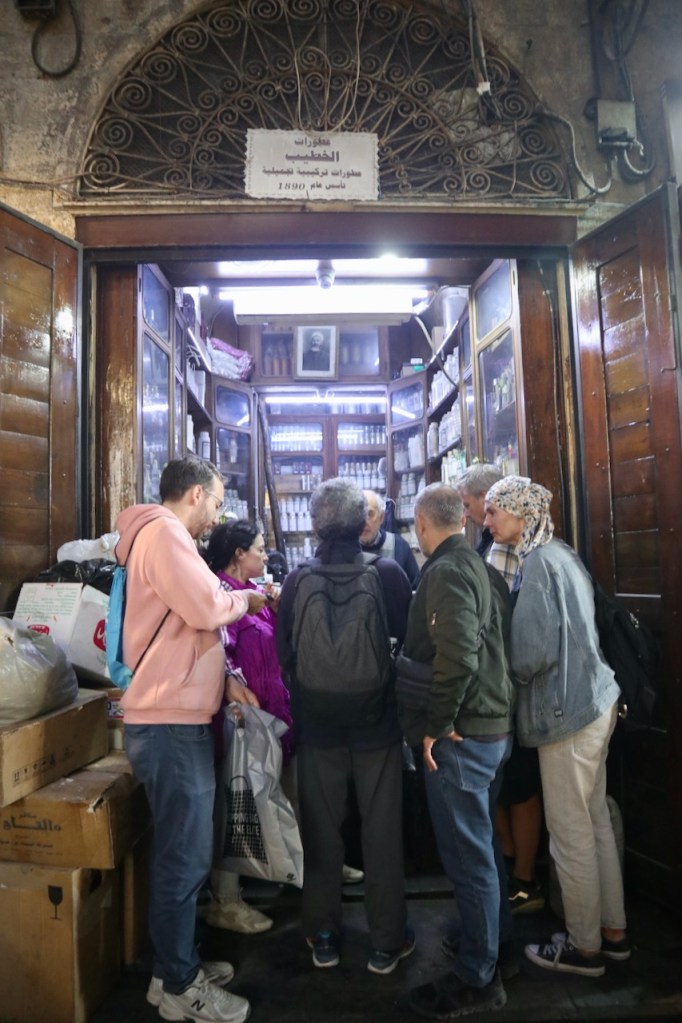
Words fall short to fully capture the intense experience of this five-star tour with Syrian Guides, a 100% locally owned and run tour company started three short years ago. More than the UNESCO World Heritage sites and the cities, Bashar and Sarea open us to the extraordinarily complex layers of cultural, economic, political, and religious history of their country, and the fast changing landscape of Syria today. I usually travel independently, preferring freedom of schedule and movement, lingering behind to take photos, but I am so glad to have opted for this extremely affordable and professional tour that gives me within ten short days a crash course on this gem of a country. Is it safe? you may wonder. We passed many military check points, but never experienced any security issues. My heart aches to see all the destruction and the lingering impact of the brutal civil war. Syrians deserve better. From age-old traditions to vibrant art and a rich cuisine, the country should be on the bucket list of all adventurous travellers.
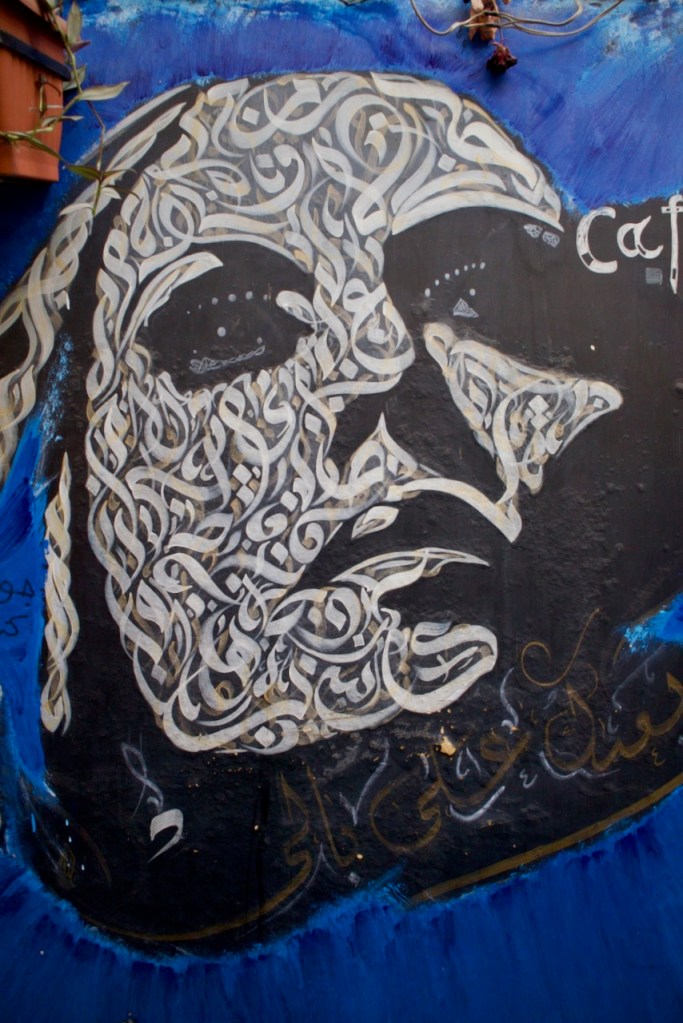




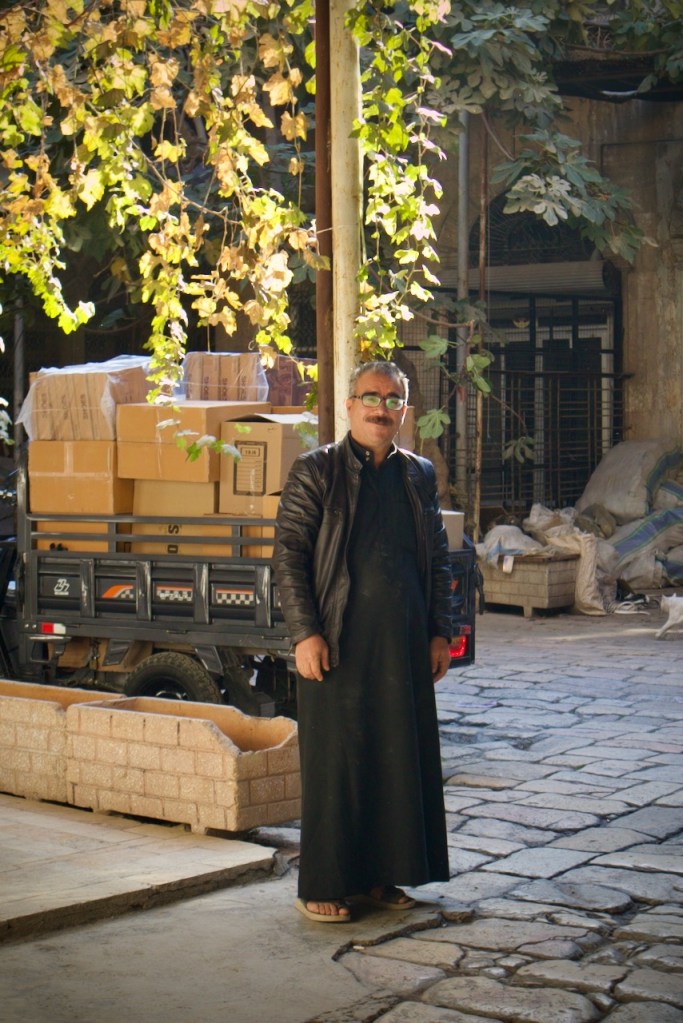
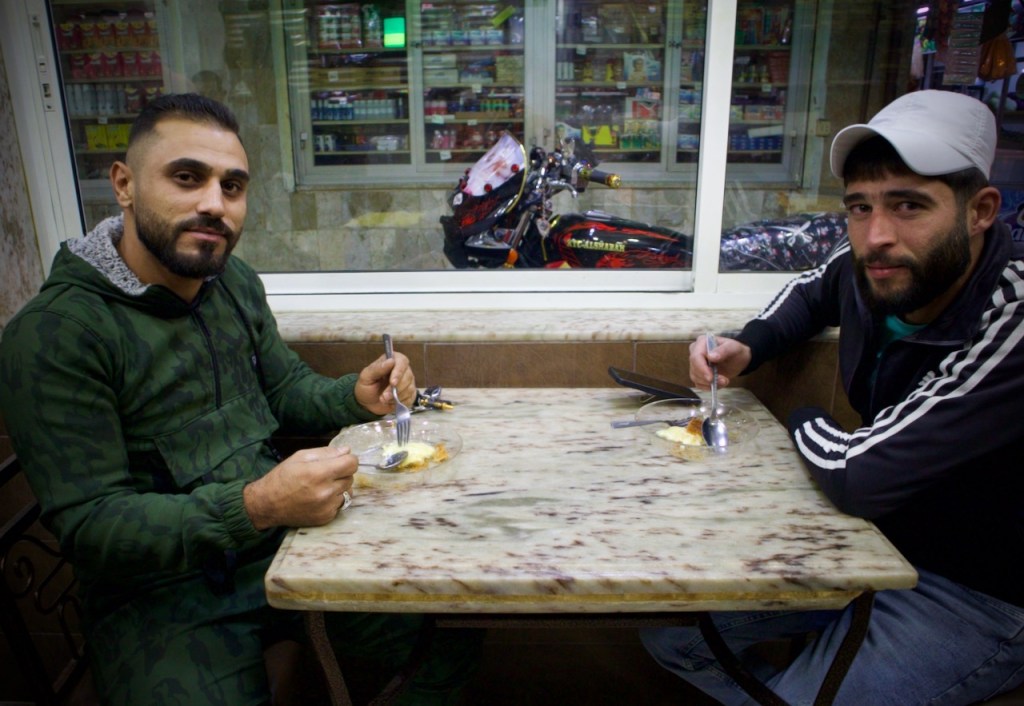
As always, the biggest pleasure is meeting locals, especially in the post-war context, to see life resume its beautiful course despite all. I remain in awe of the Syrian spirit, her beauty and resilience in the face of continuous hardships. Raising the standard of living should be on the top of the priorities. A teacher earns roughly USD50 per month, I am told, and others maybe between USD100-150 while utility bills skyrocket. Many refugees remain abroad, but some like Rakan whom I met at a Damascene cafe have chosen to return. It’s home, no matter what, he says. While nothing could bring back Enam’s disappeared husband – as well as hundreds of thousands of Syrians who perished during the long regimes of Assad, père et fils, as well as the civil war – let’s hope that the dreams of Bashar and Sarea will come true. Freedom, unity, and peace for Syria.


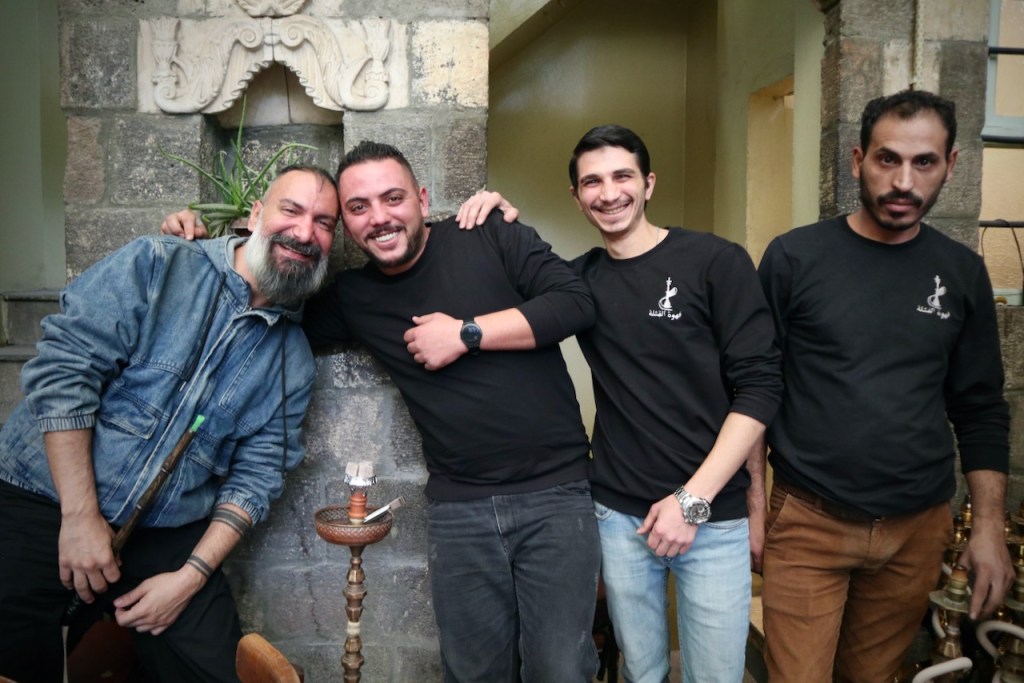
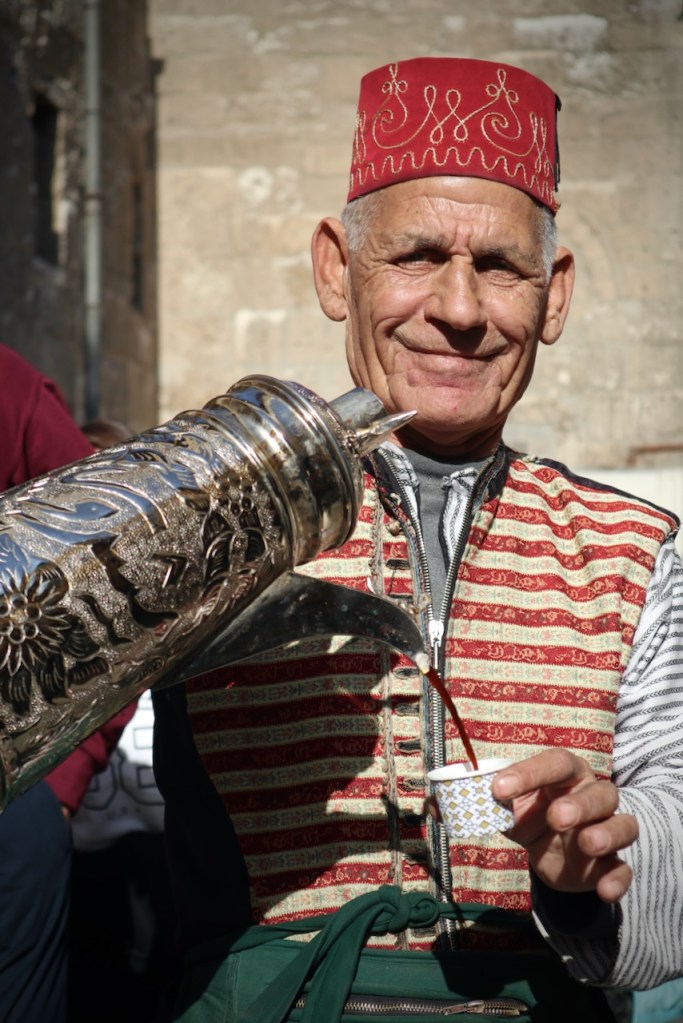
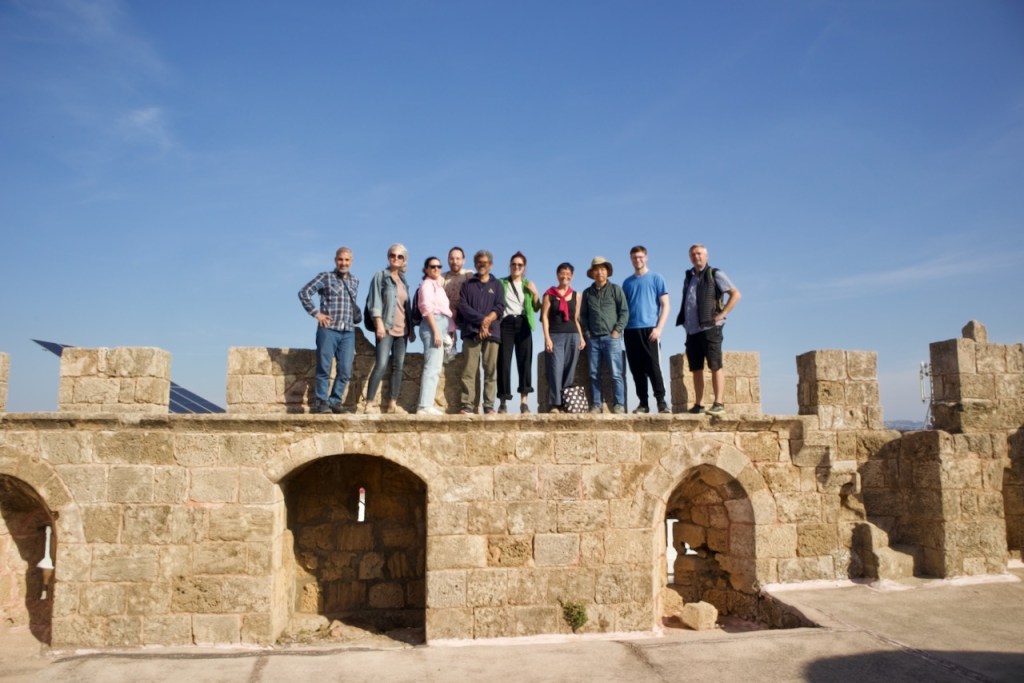
My heartfelt gratitude to Bashar and Sarea – both Syrian spirit incarnate – for the incredible journey you generously shared with us. And thanks to my lovely travel companions: Gabor, Clay, Livia, Renatas, Villy, Lee, and my two dear friends – Vesna and Nanthi – who took the plunge in joining me to Syria. What an unforgettable adventure!
Pour mes amis francophones, la Syrie est un pays sûr et magnifique à visiter. J’espère que ce blog vous donnera envie d’y aller bientôt! Les guides francophones sont disponibles pour les circuits de groupes ou privés avec Syrian Guides.
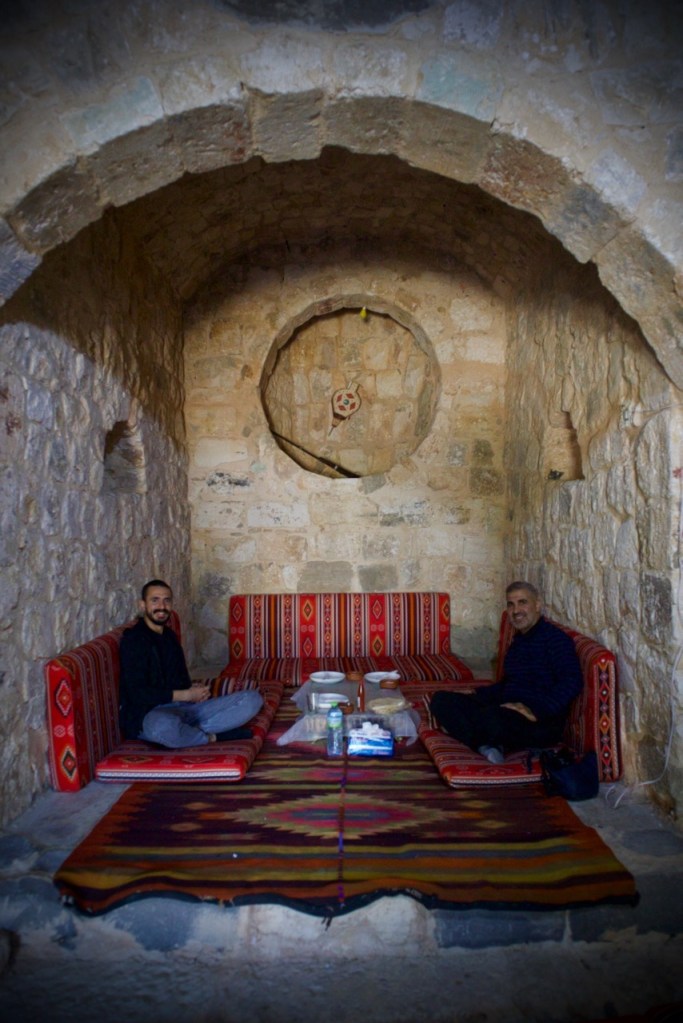
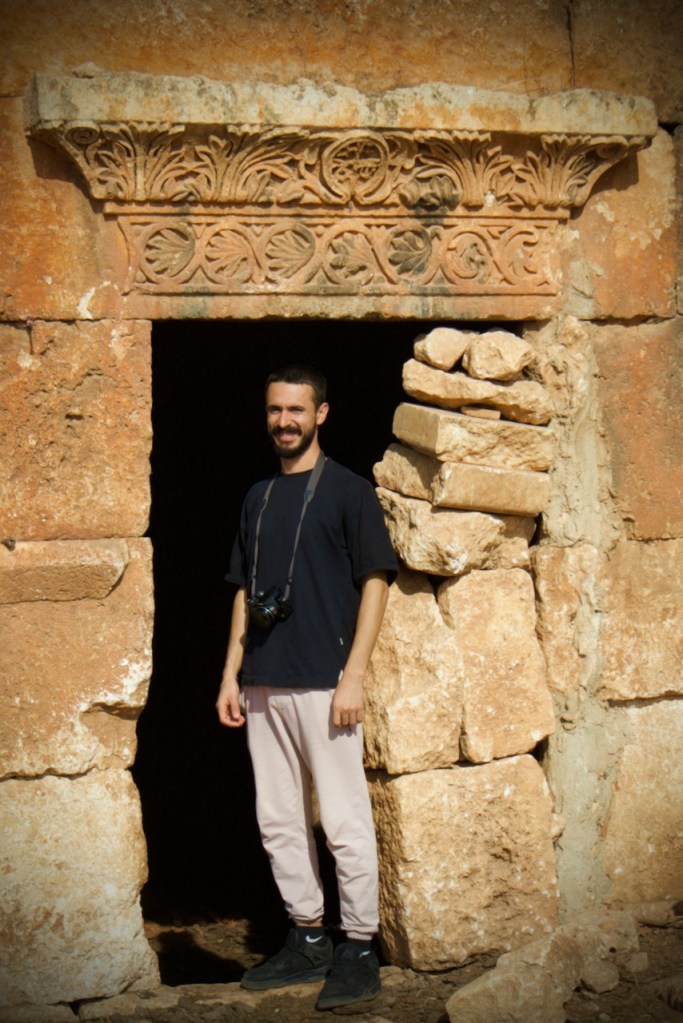


The war had ended the way it ended. The defeats and victories felt much like a dream dreamt in the depths of time… Suddenly, as happens after a storm, everything in the world fell quiet, and over the plains of noise, a lengthy calm reigned, very lengthy.
– Haidar Haidar, The Silence of Fire, set in Damascus 1969


This is part of a seven-country tour in post-conflict societies in the Middle East and the Horn of Africa in 2025 from Syria to Iraq, Saudi Arabia, Libya, Eritrea, Djibouti, and Somalia. A scheduled trip to Yemen as part of this project was cancelled due to renewed conflict in the country at the time of writing.
All Content © 2026 by Jennifer Chan
 Jennifer Chan Photography