
Why I love Uzbekistan so dear,
Its beauty fills my eyes with cheer…
Ask me why the sun shines bright,
Or why fields of white unfold in light,
Every stream and every tree
Whispers ancient truth to me.
– Abdulla Oripov
September 2026
En route to and returning from Turkmenistan, I have the luxury to revisit Uzbekistan. From Shymkent, Kazakstan, I cross over to Tashkent, the bustling capital city with a mosaic of history, and take a first class Uzbek train worthy of a Swiss express to Bukhara. After a four-day whirlwind tour of Turkmenistan, I re-enter Uzbekistan through enchanting Khiva and retrace my steps to Samarkand. To be able to visit Uzbekistan once in life is lucky, twice a privilege, and thrice a blessing beyond measure! A sublime tapestry of ancient ruins and Silk Road oases, picturesque mosques and exquisite palaces, towering minarets and turquoise domes, colourful bazaars and open-air museums, desert hospitality and timeless traditions, Uzbekistan is the crown jewel of Central Asia.
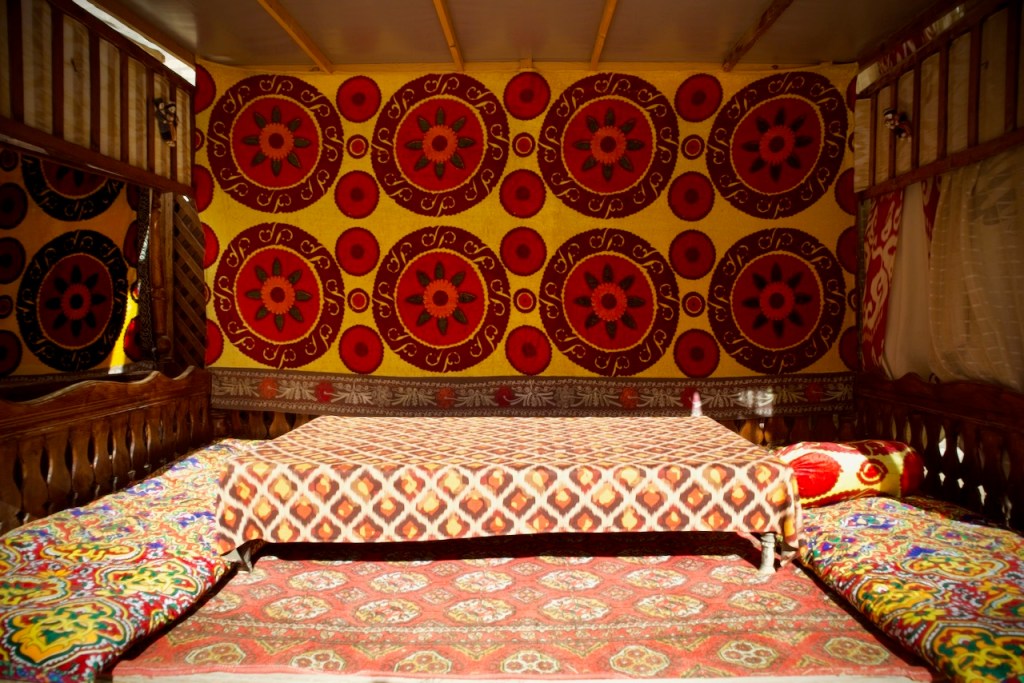
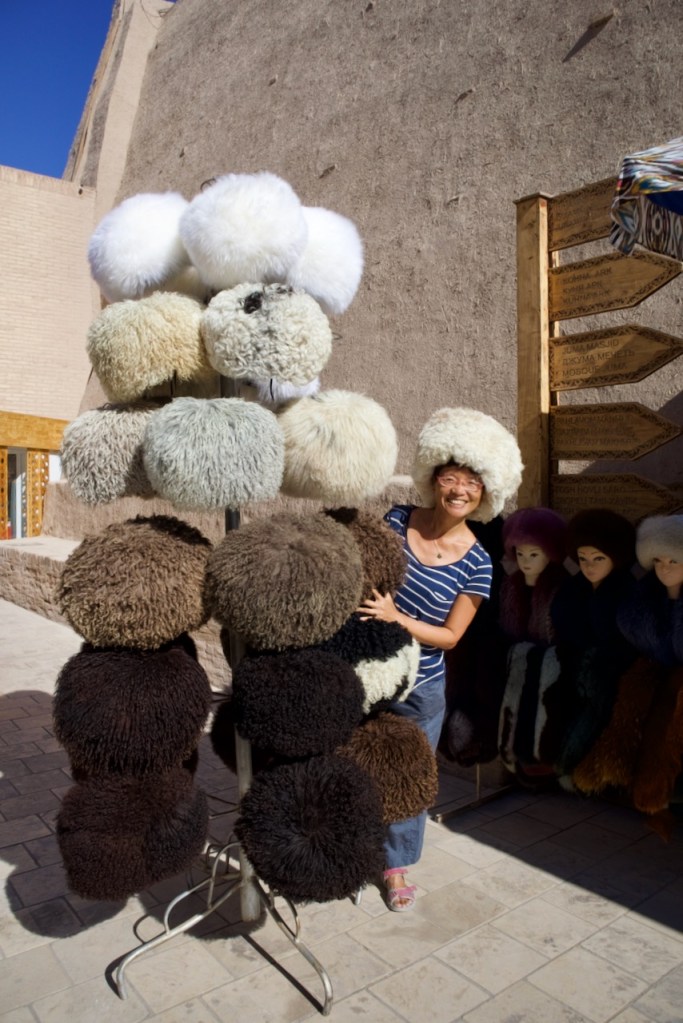
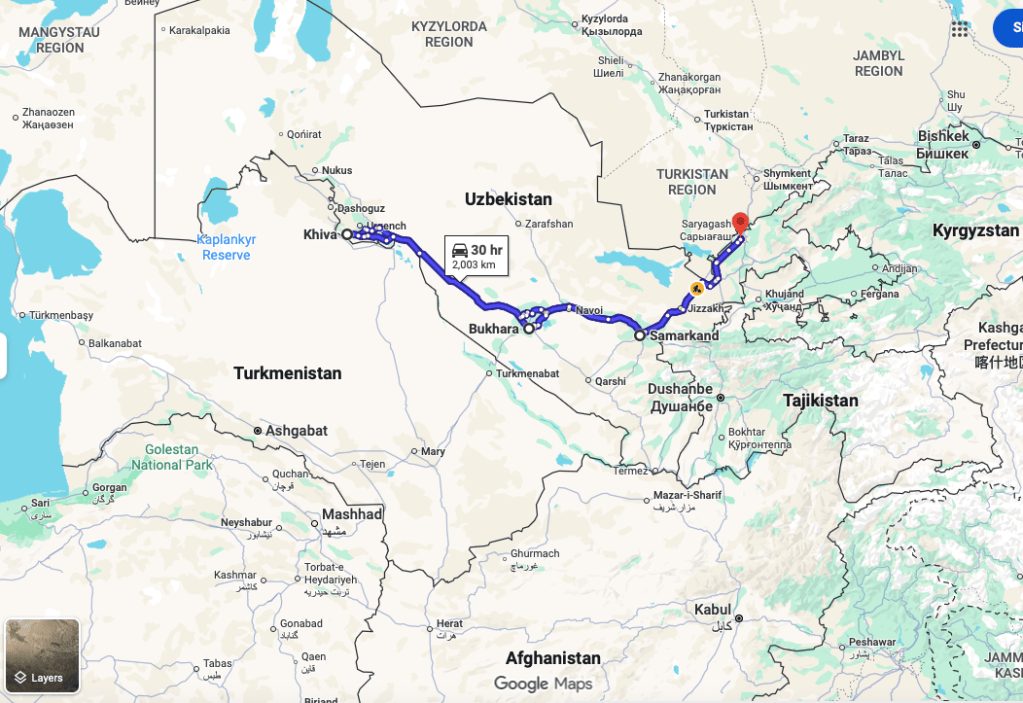
Tashkent: Gateway to Central Asia
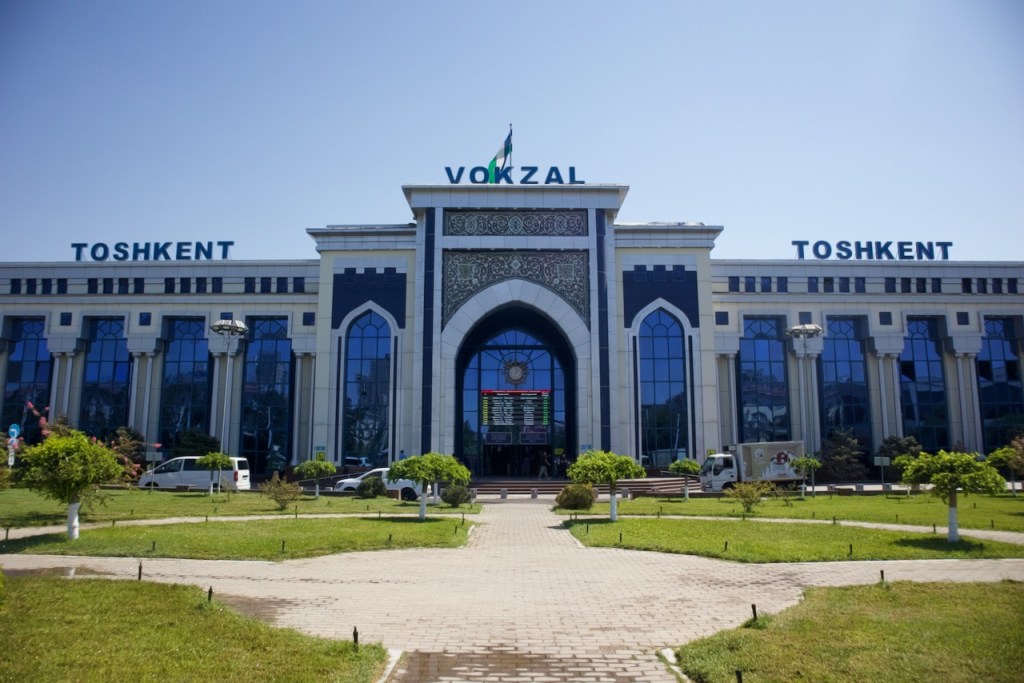
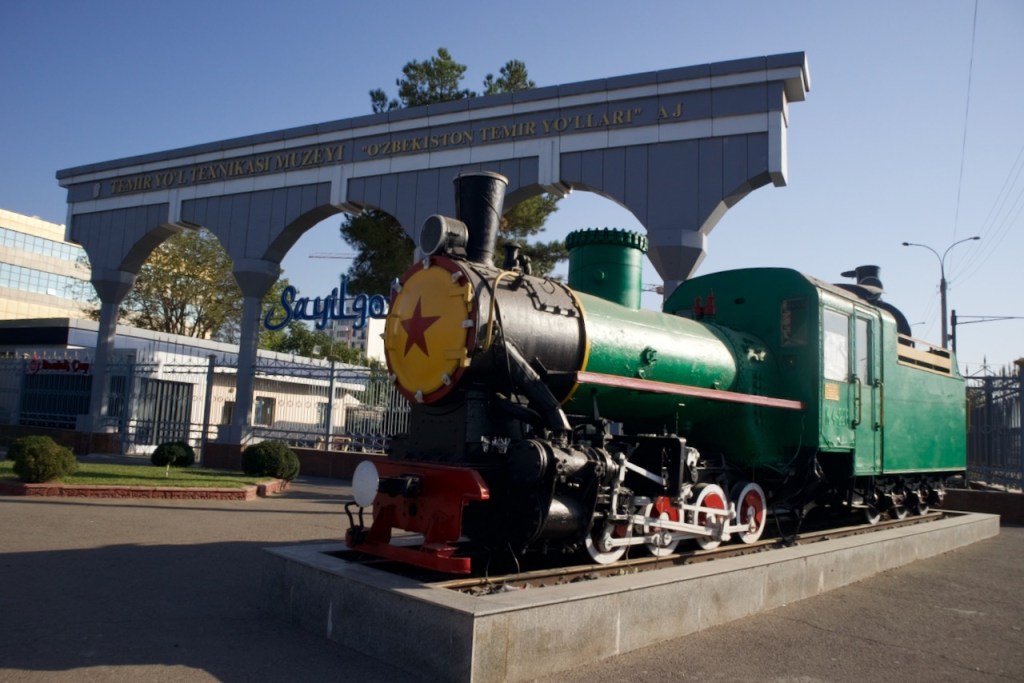
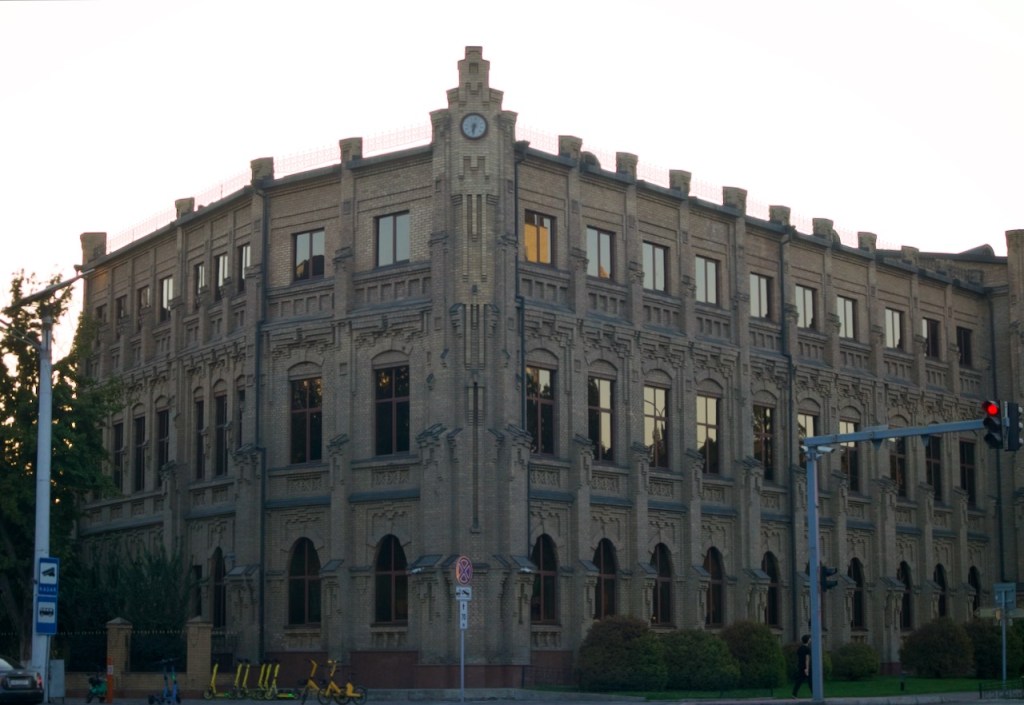
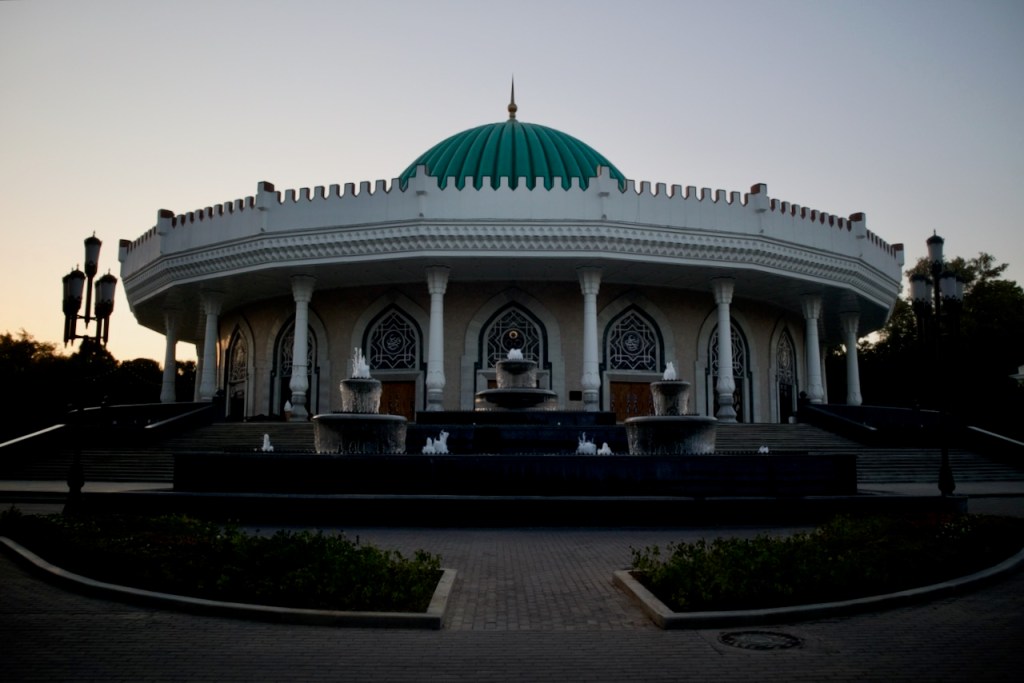
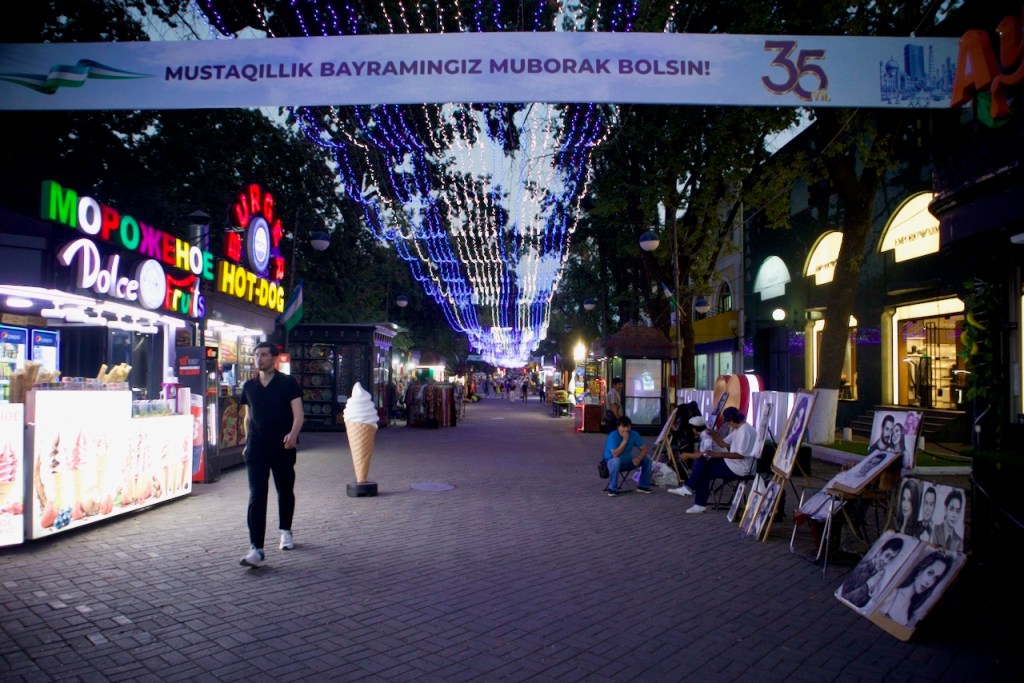
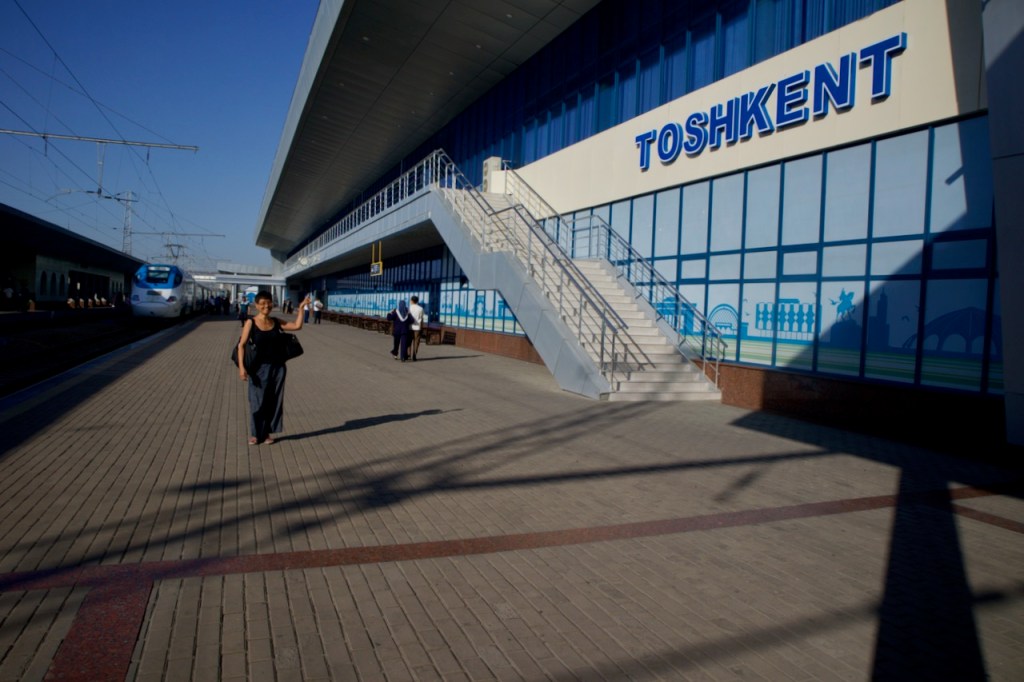
In my last visit to Central Asia in the summer of 2011, I spent some time in Tashkent, awaiting my visa for Russia, after overlanding from Kyrgyzstan to Tajikistan along the legendary Pamirs highway from Osh to Dushanbe. I remember the grand central station and the wide boulevards, museums with exquisite art and textile collections and the bustling bazaar. This time I am mainly passing through, en route to Turkmenistan, and find the capital surprisingly pleasant and modern.
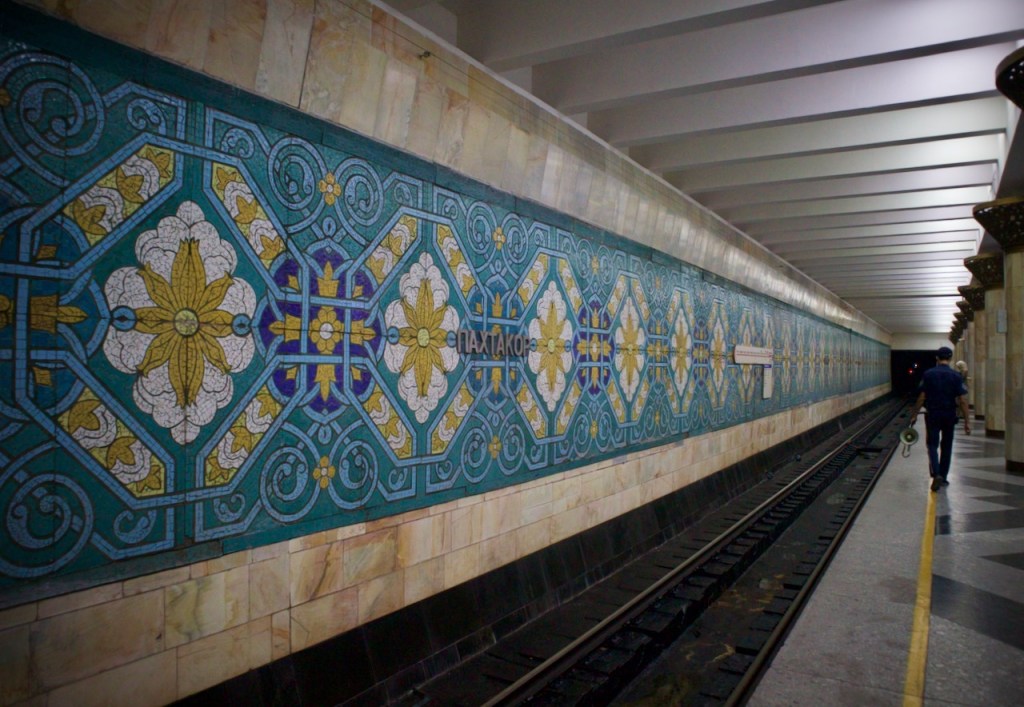
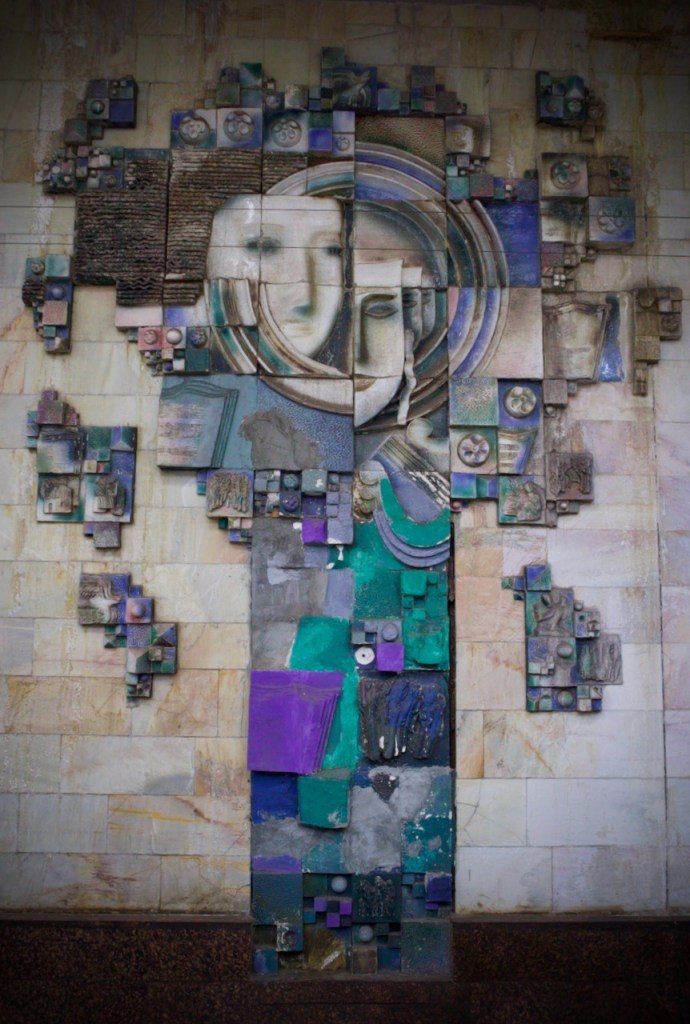
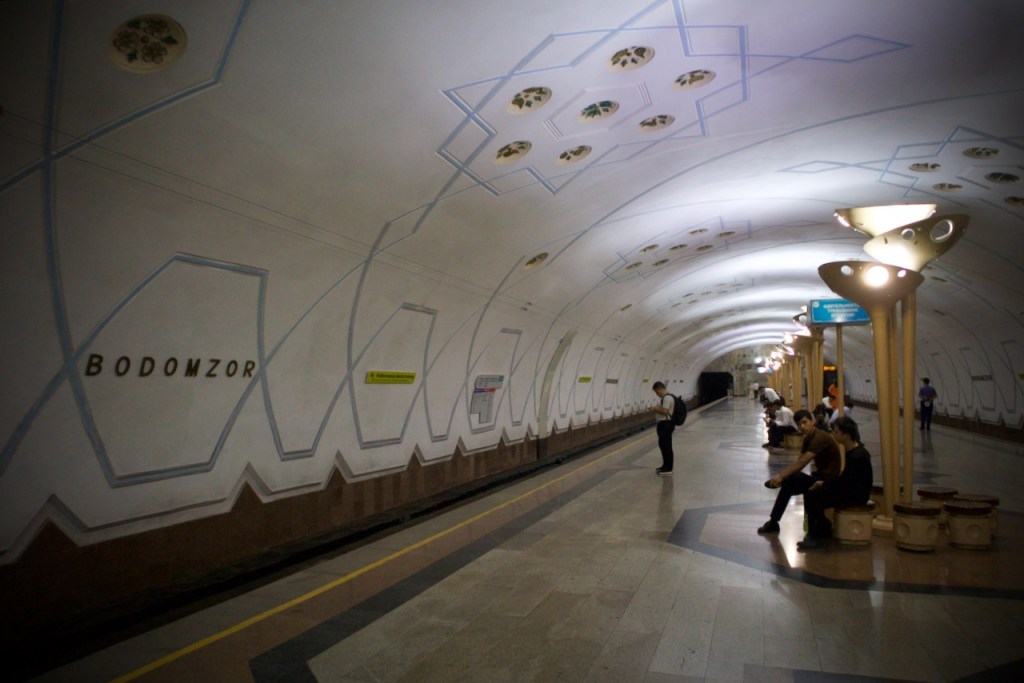
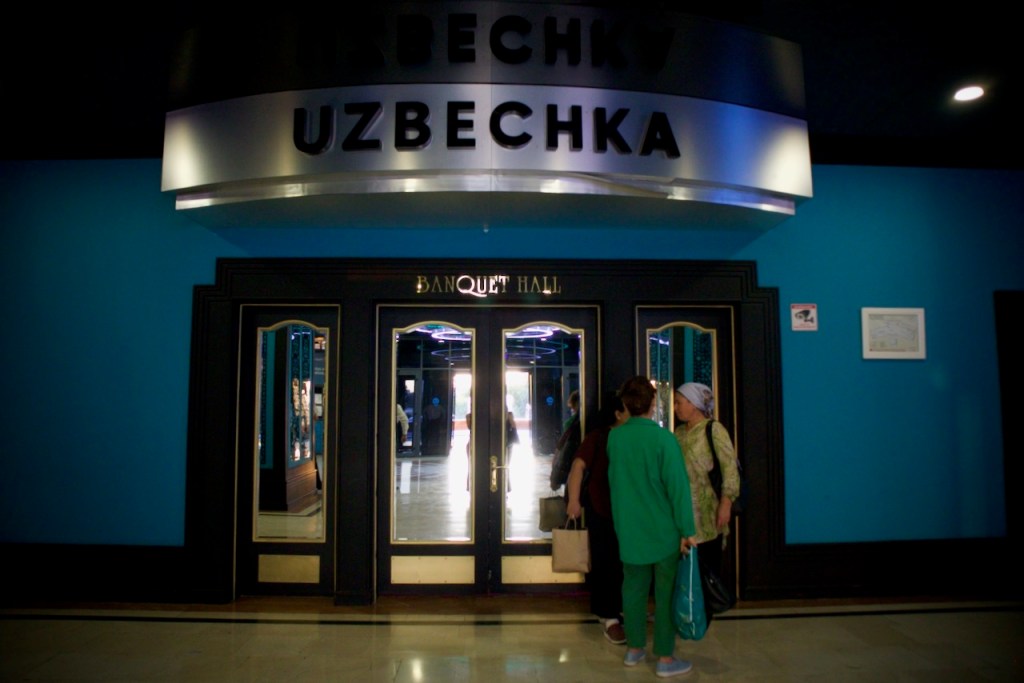
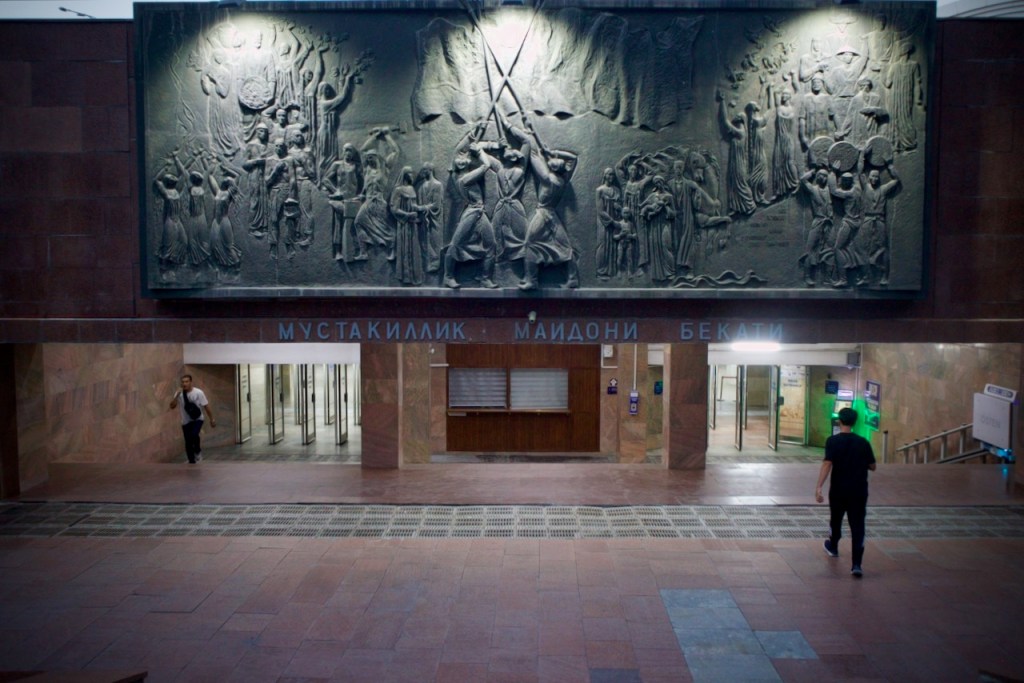
From the train station, I take the Tashkent subway known for its museum-like architecture. Each station features a unique theme, using local materials from marble to carved alabaster: cosmonauts in Kosmonavtlar, epic poems in bas-relief in Alisher Navoi, Dali-esque panels that honor the famous Uzbek poet Gafur Gulom, lanterns in Yunus Rajabiy, and blue tile cotton mosaics in Paxtakor. Nothing was spared to create stunning underground “palaces for the people” that doubled as Cold War military bunkers.
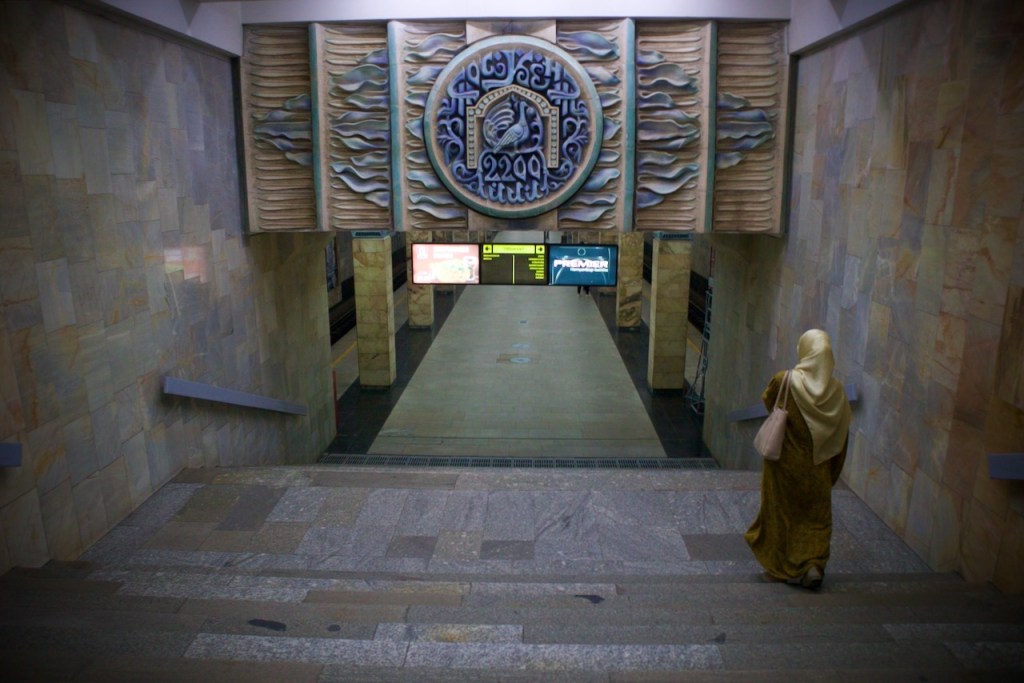
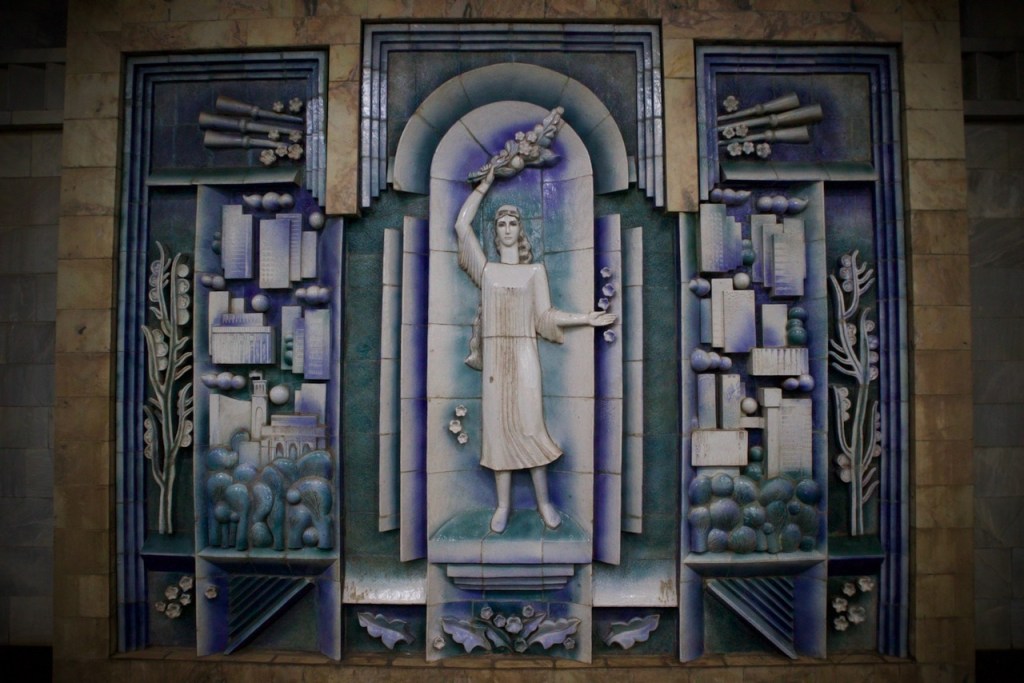
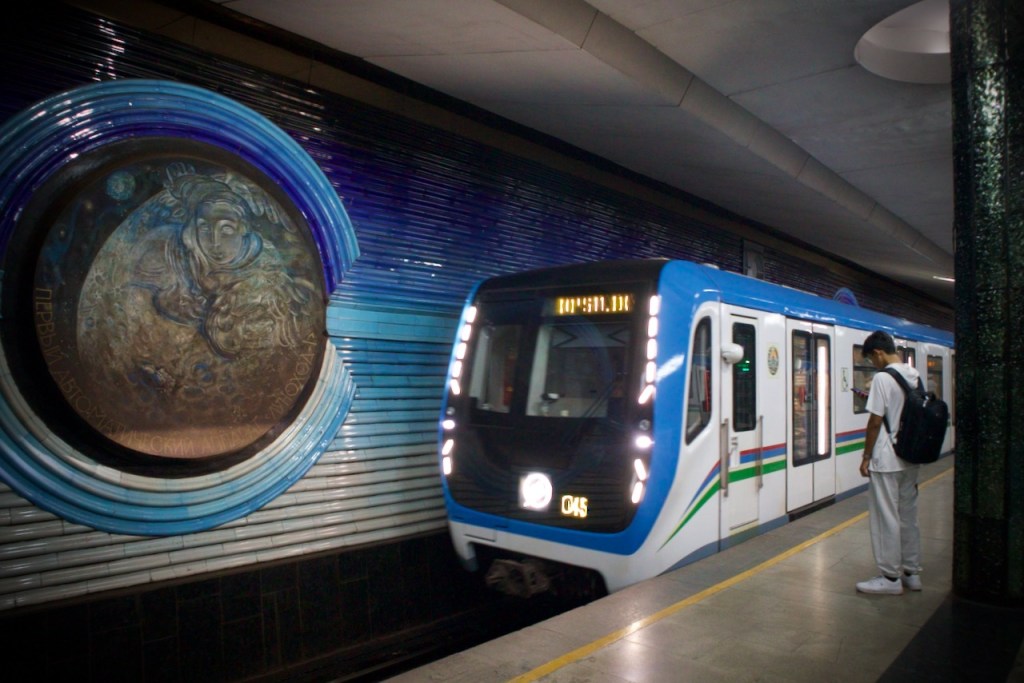
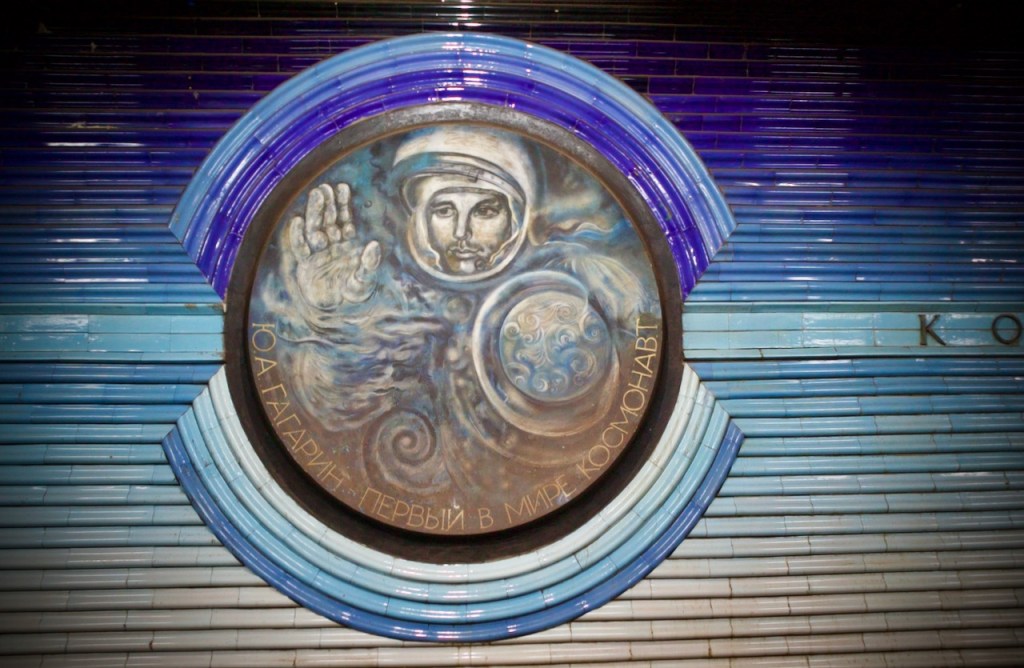
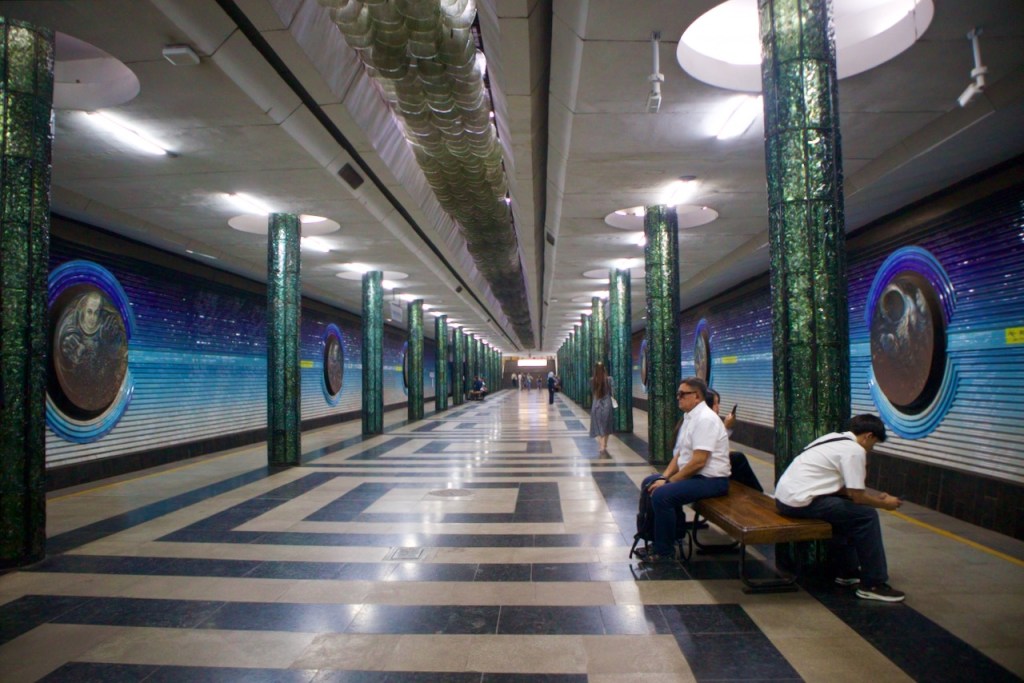
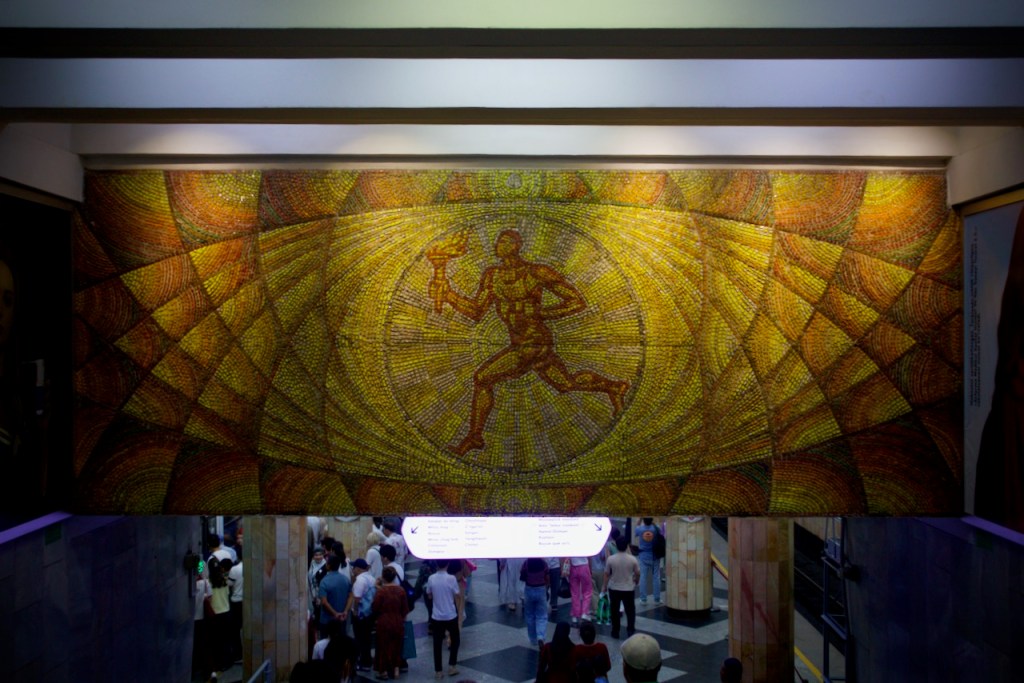
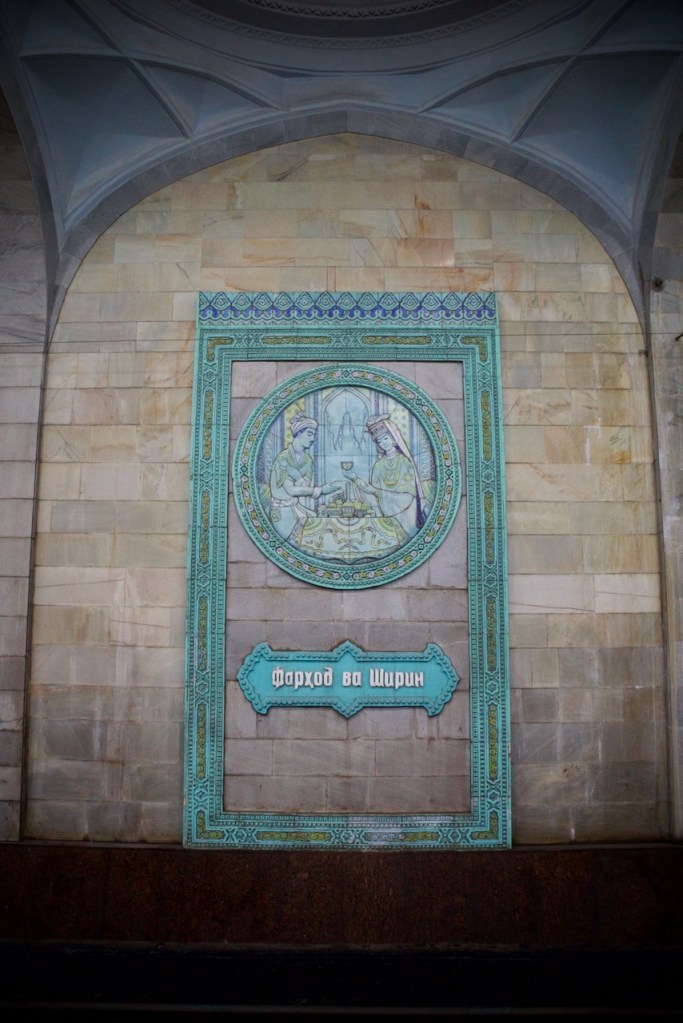
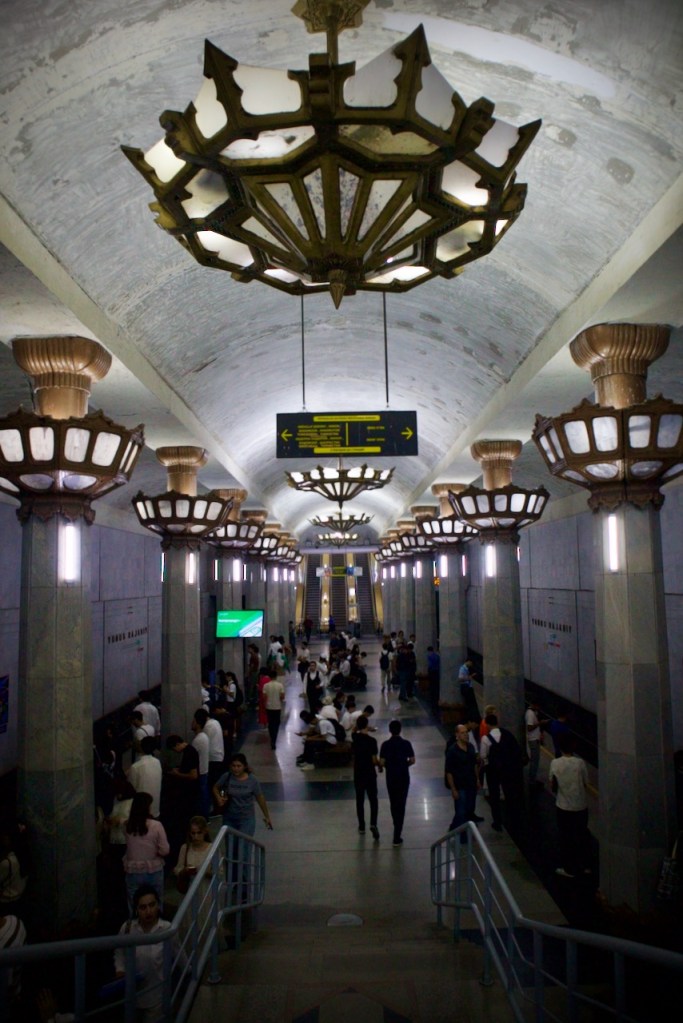
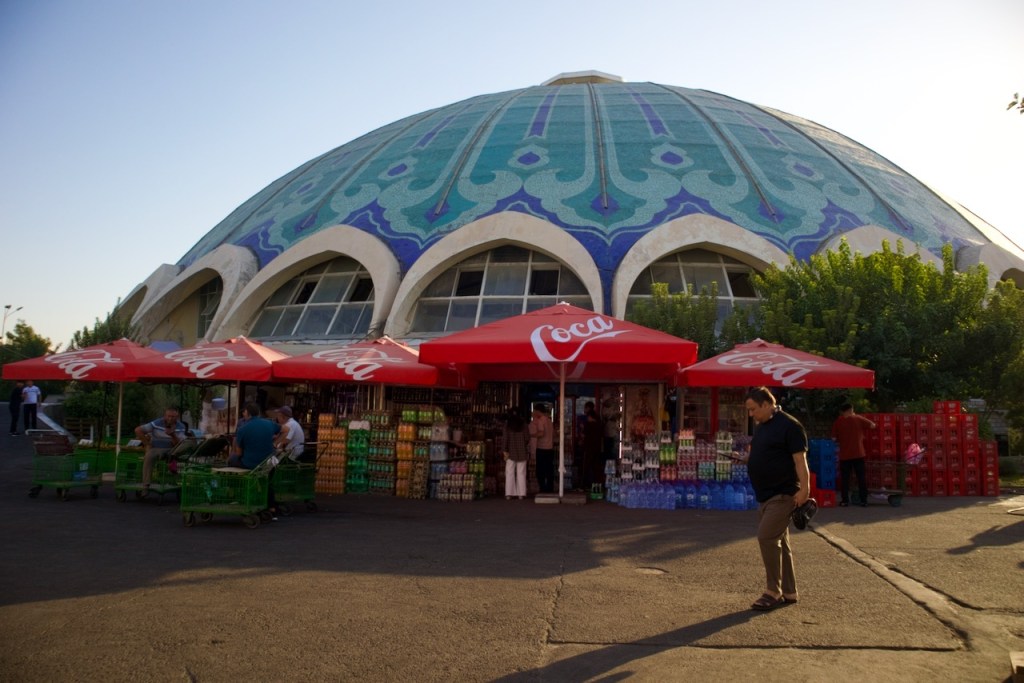
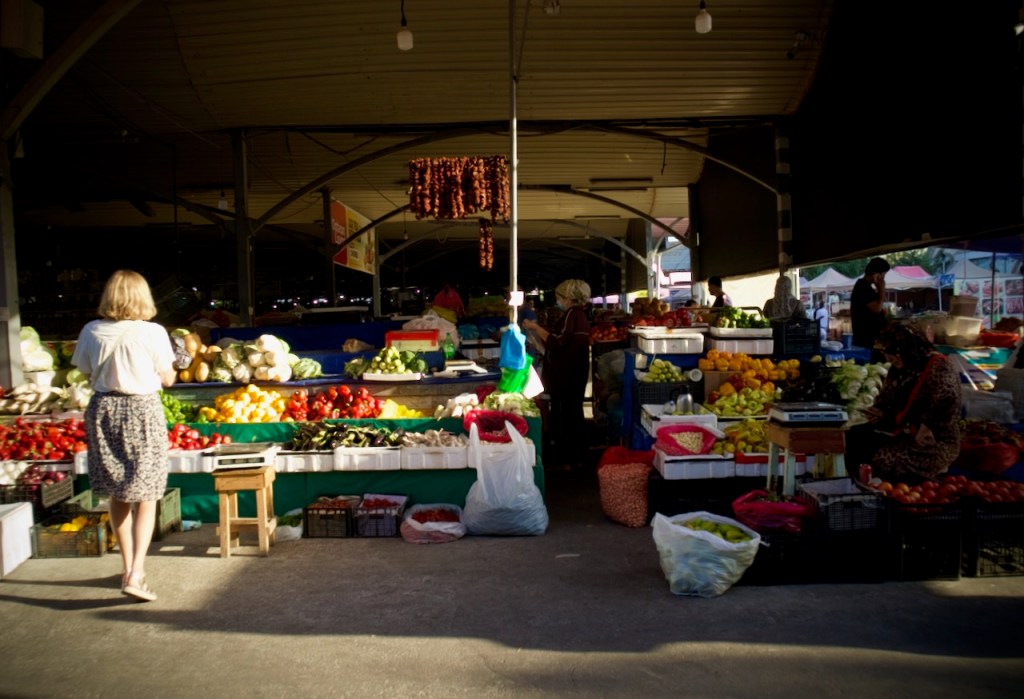
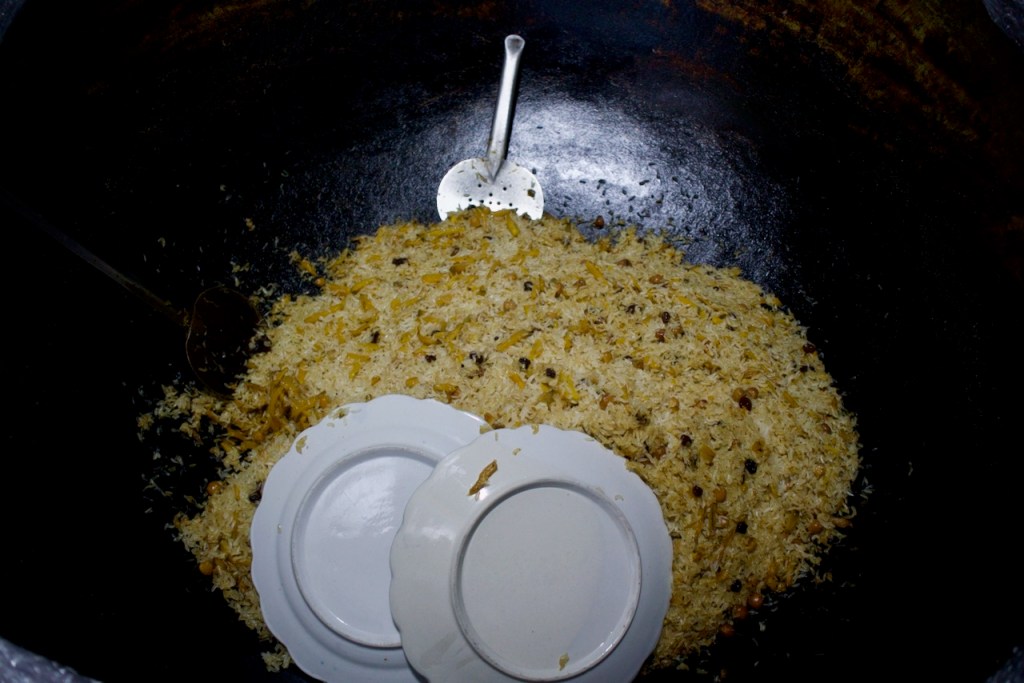
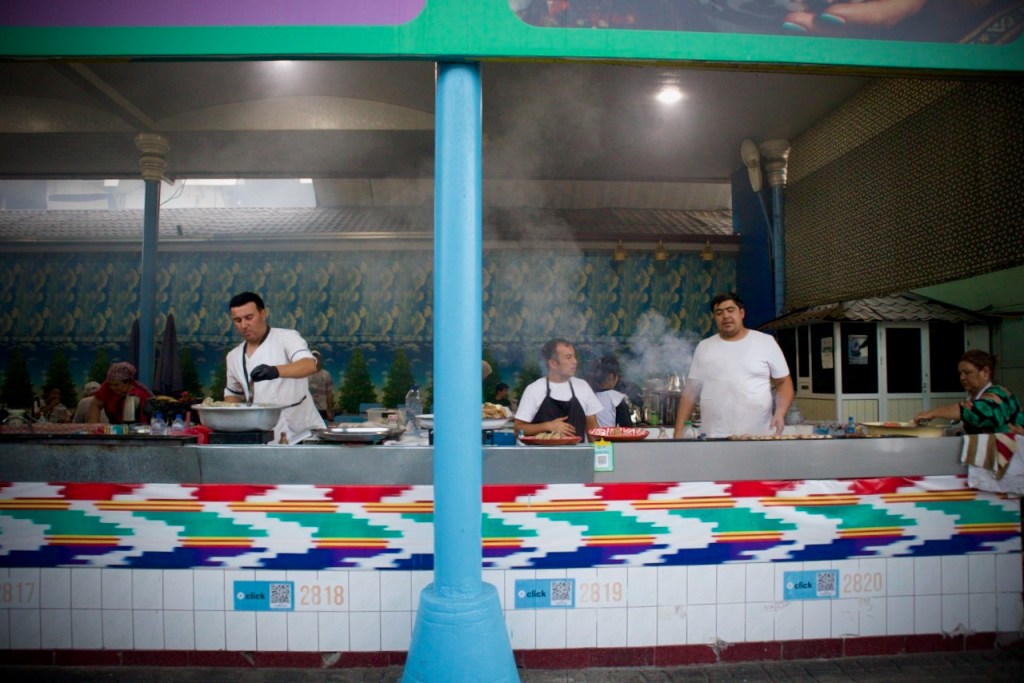
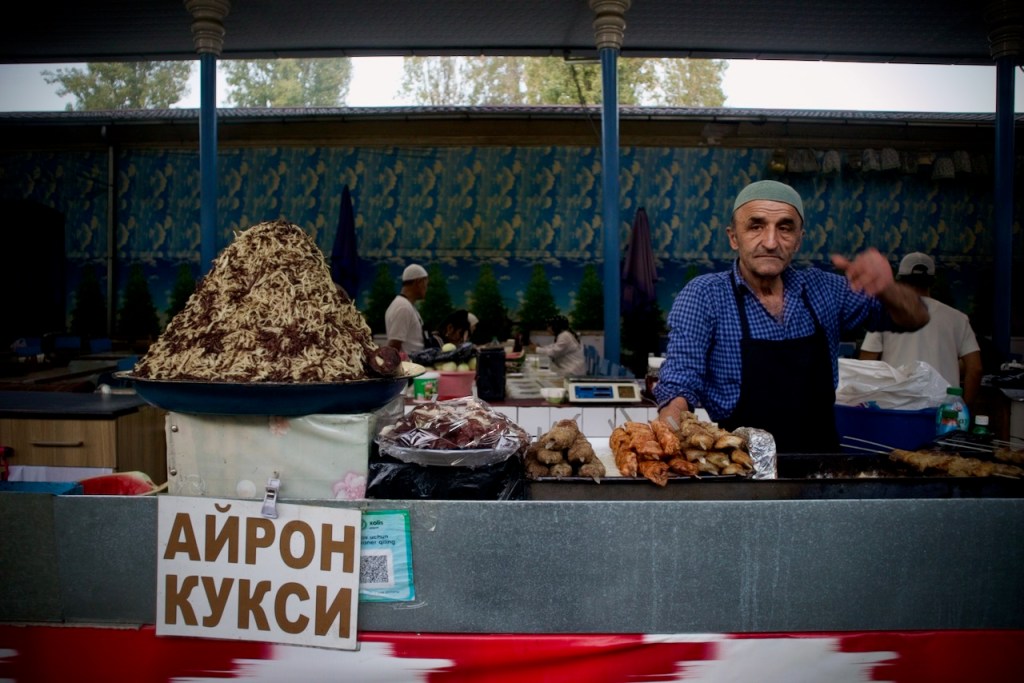
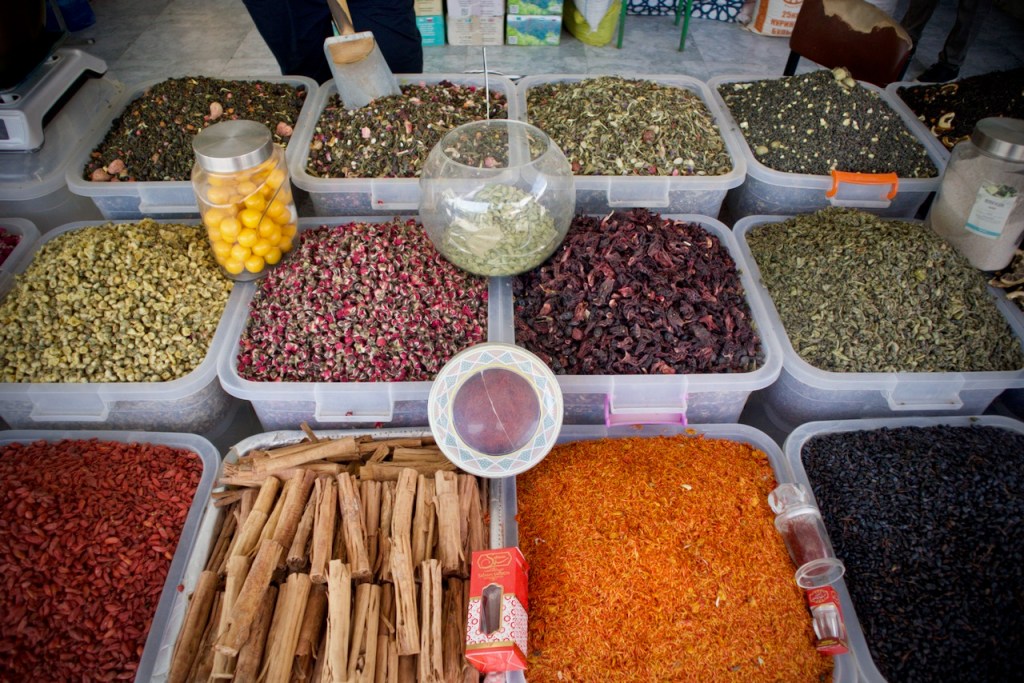
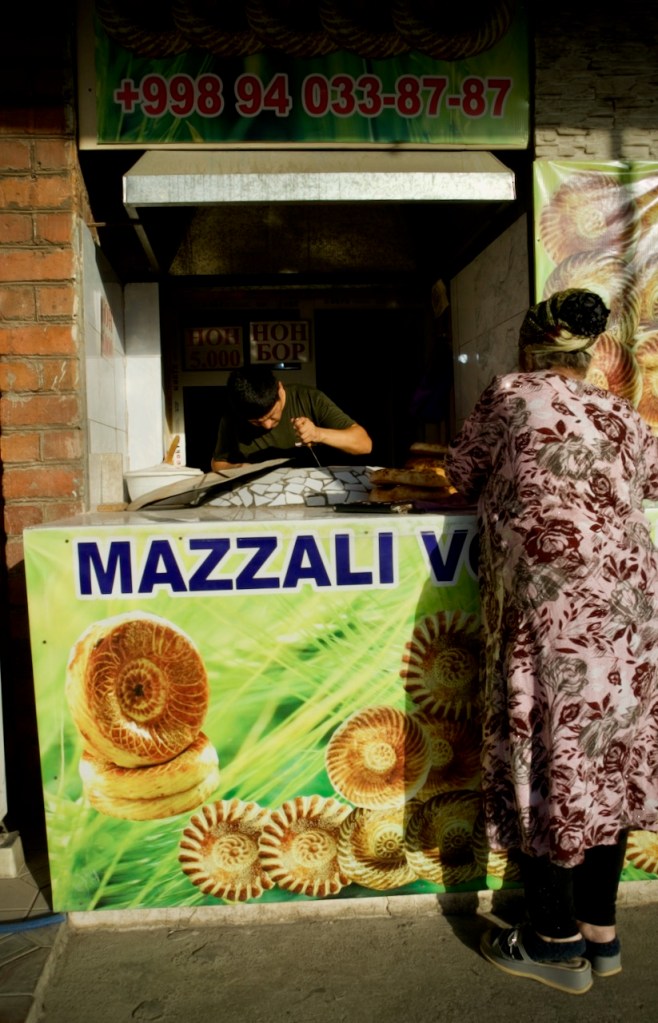
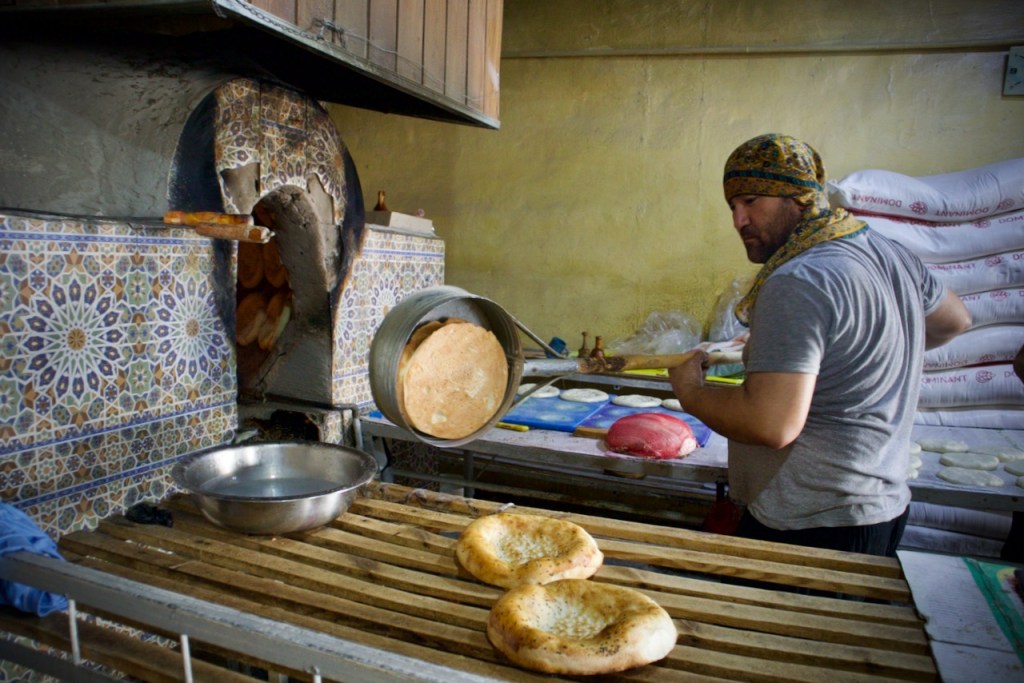
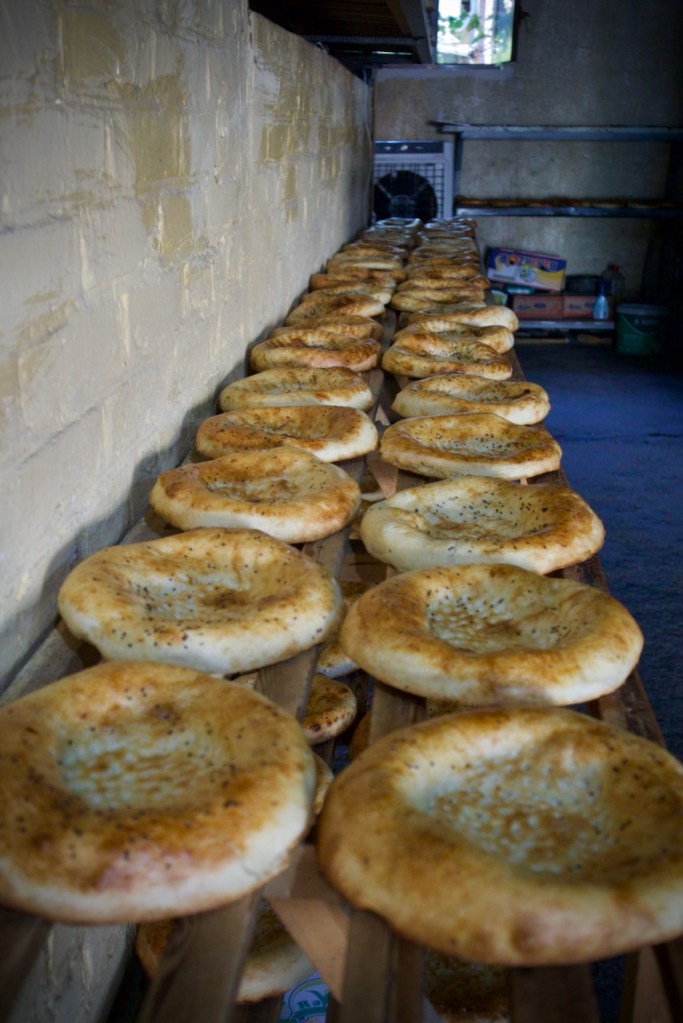
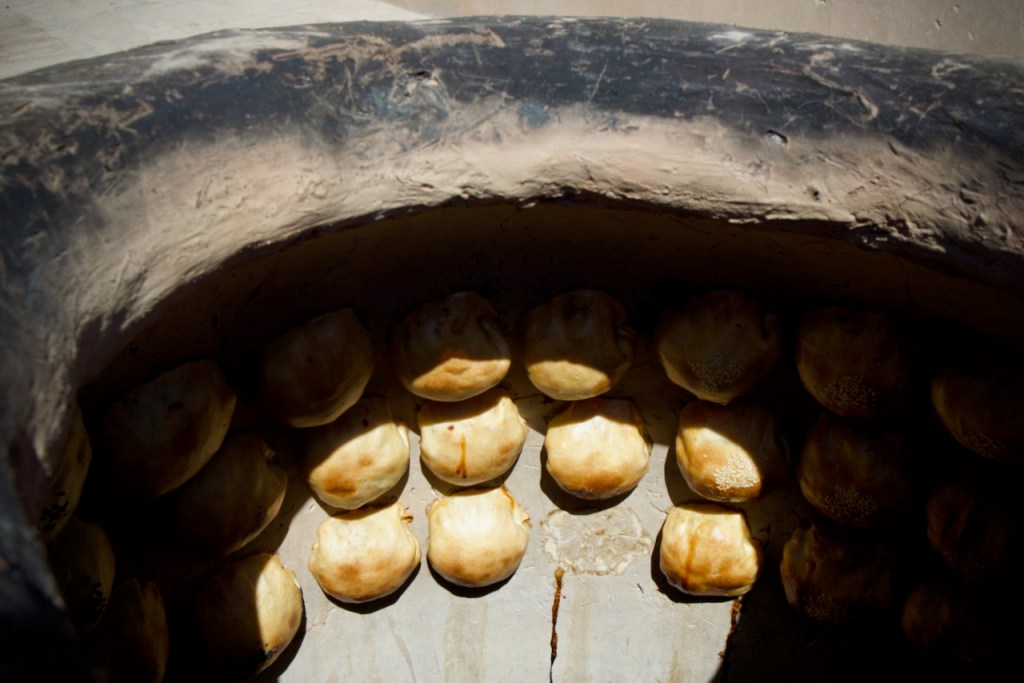
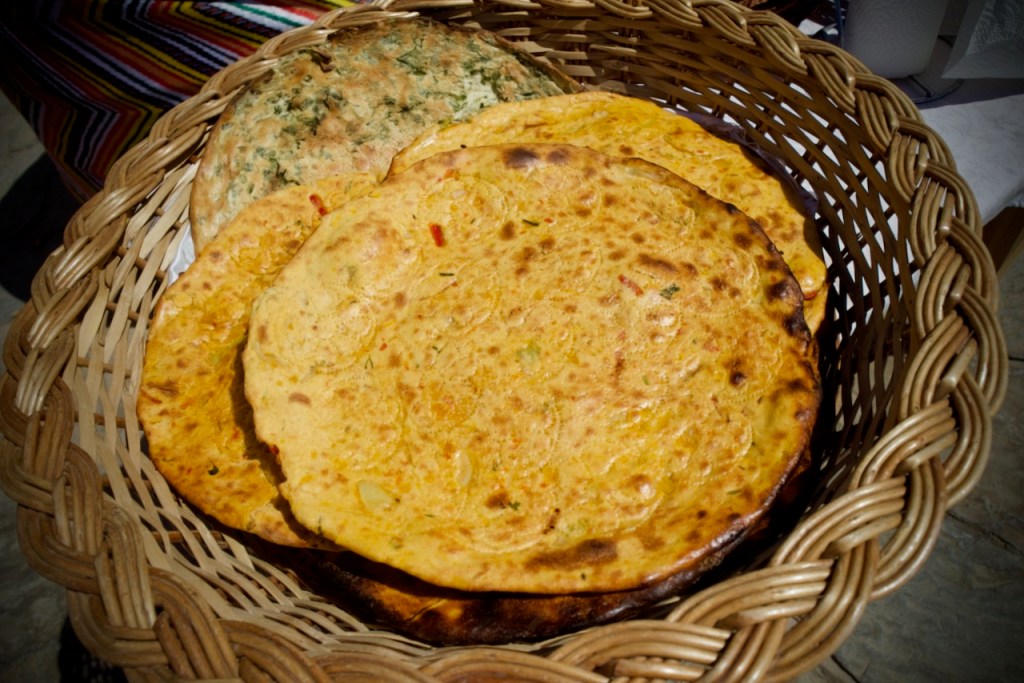
I get off at Chorsu, a dream bazar where you can find everything from fresh non straight out of a tandir to abundant fruits in season and plenty of cheap eats from plov to khasip, sausage stuffed in sheep or lamb intestine. The Hazrati Imam Complex located in the cultural heart of Old Tashkent is just a short walk away. Though not be as famous as the Registan in Samarkand or the madrasas in Bukhara, the 16th-century Timurid-style tilework and minarets are no less impressive.
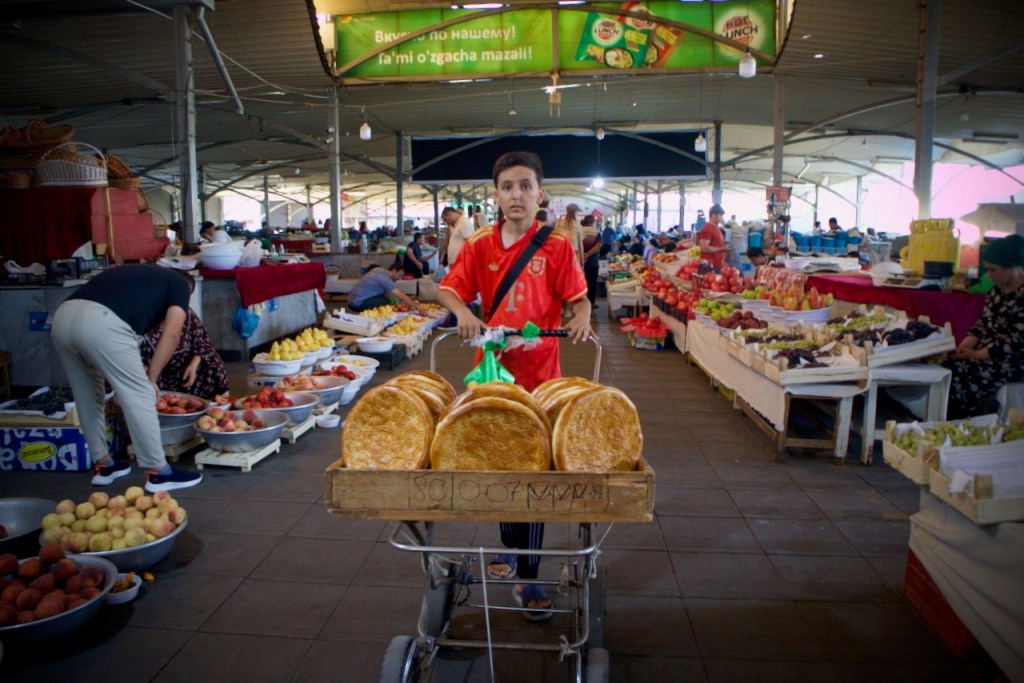
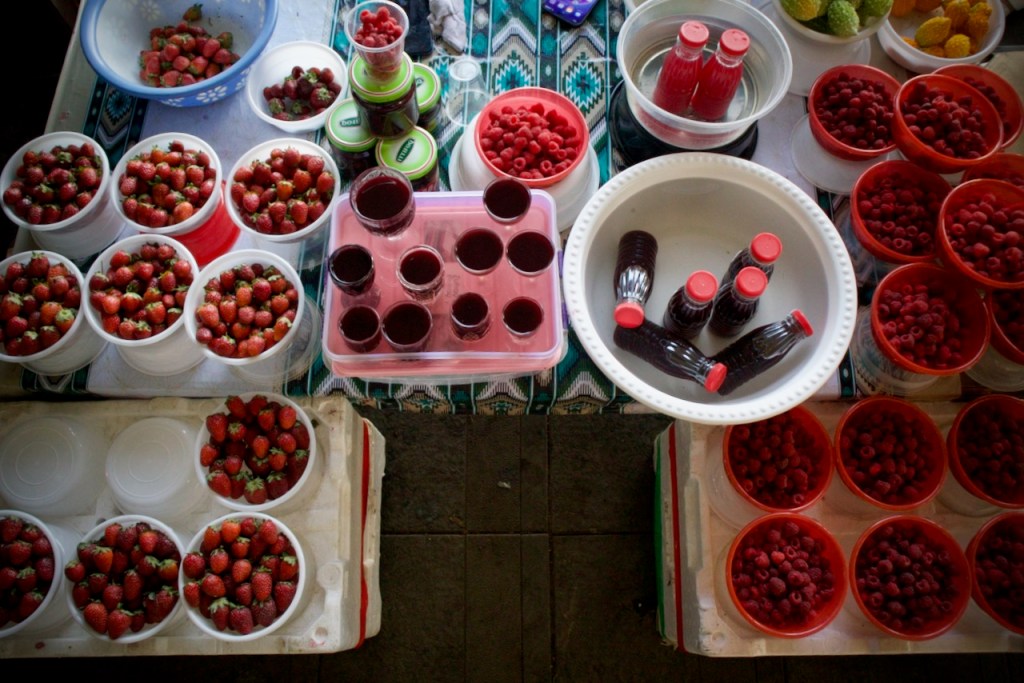
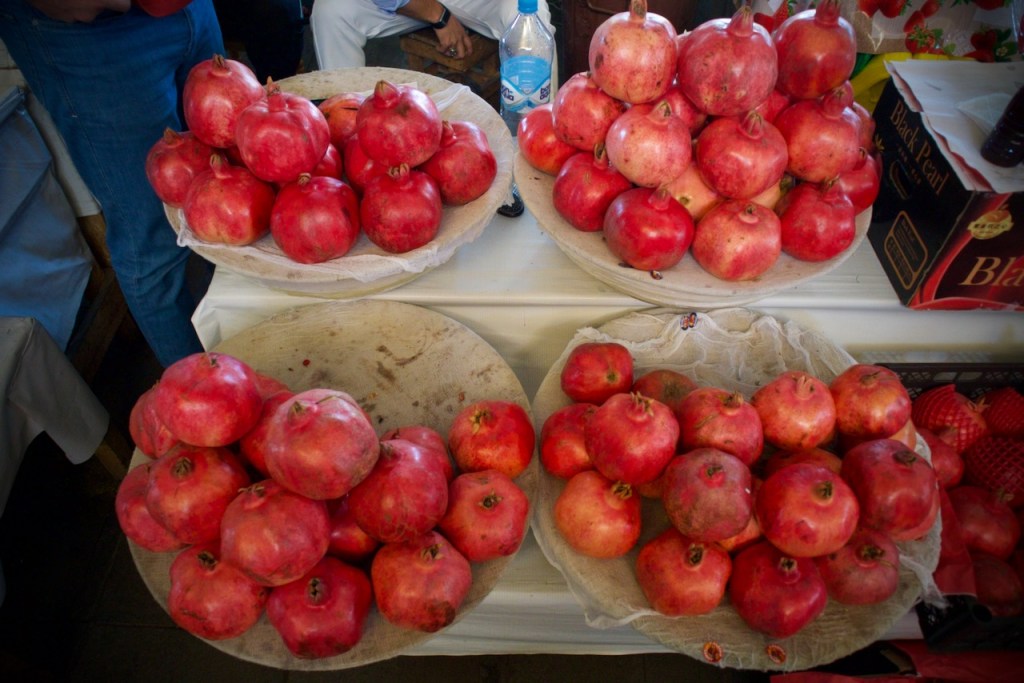
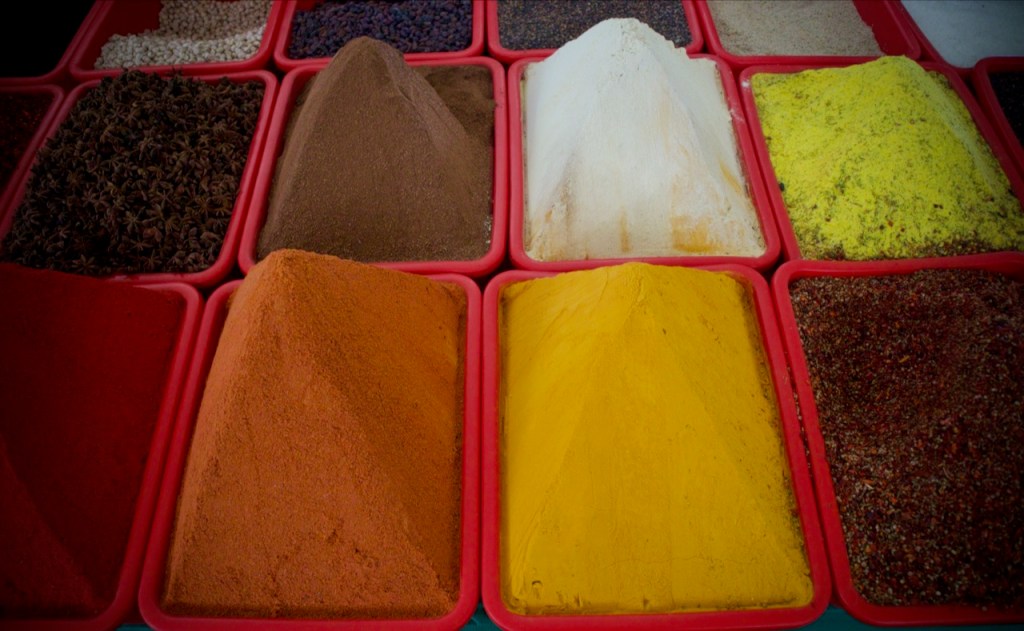
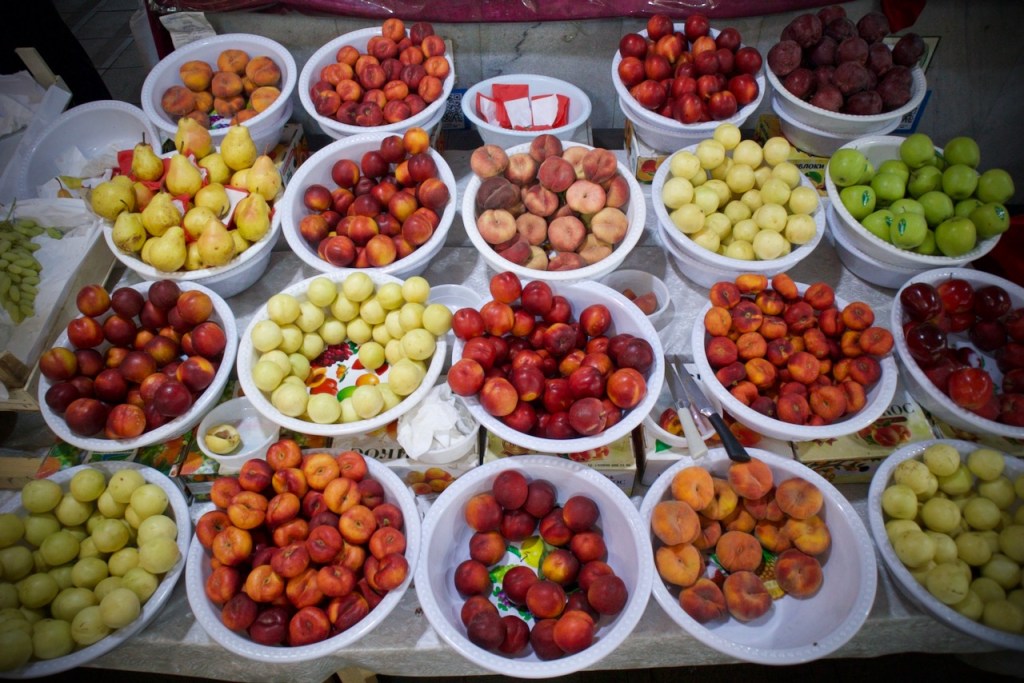
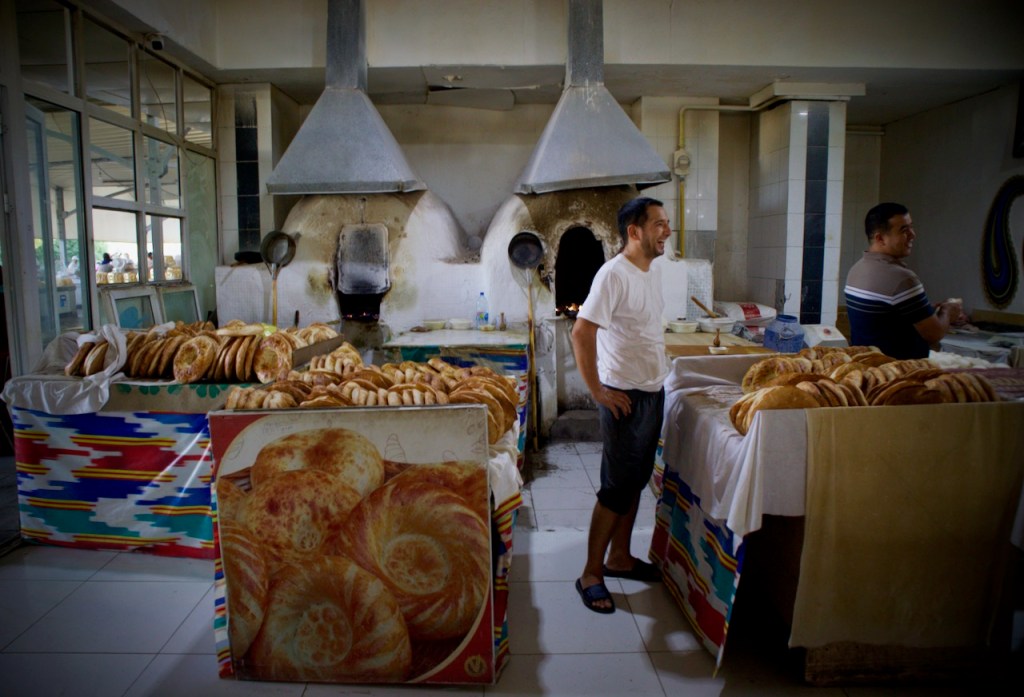
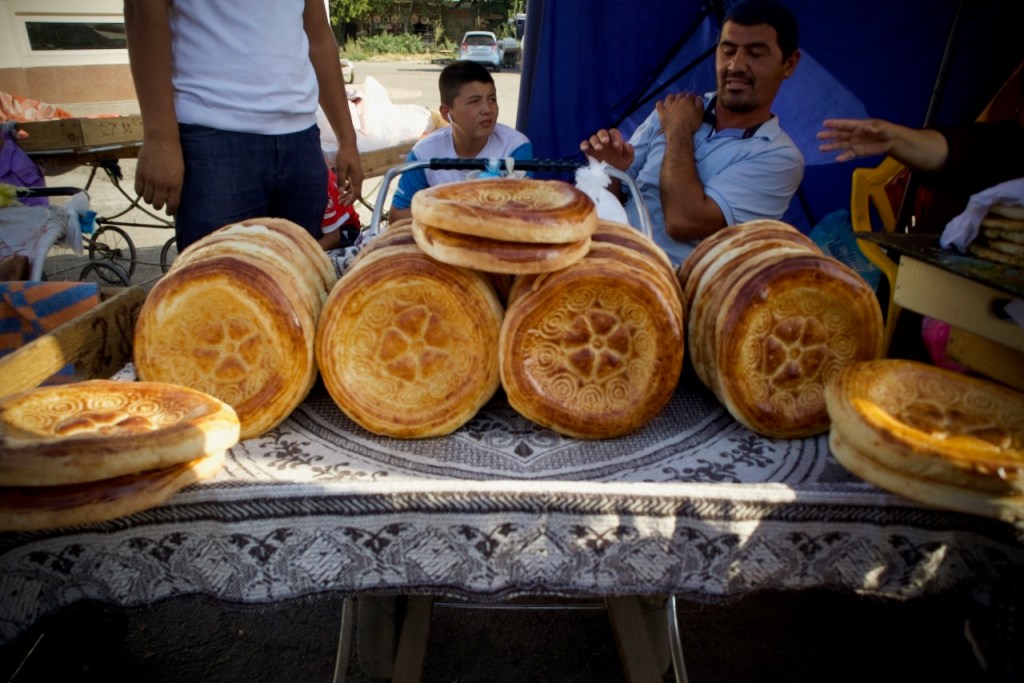
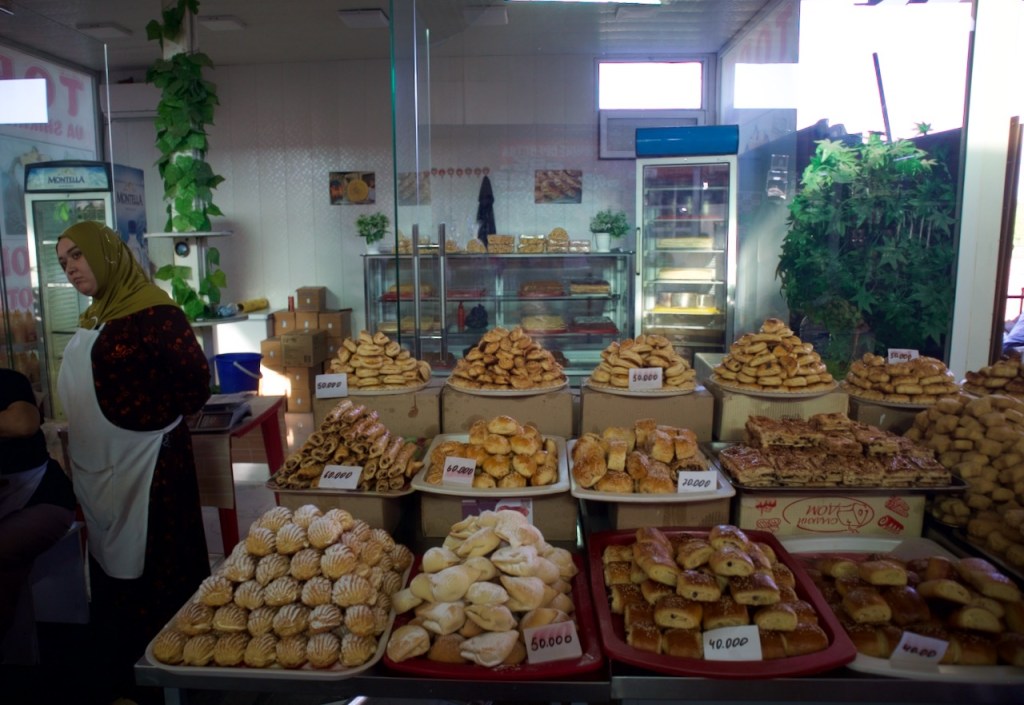
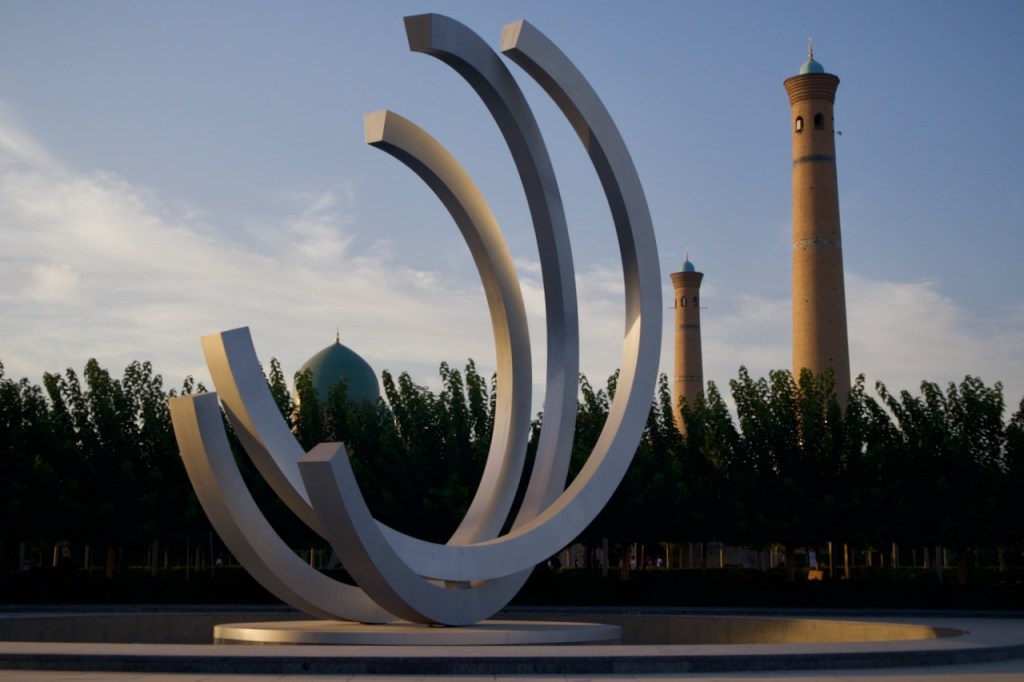
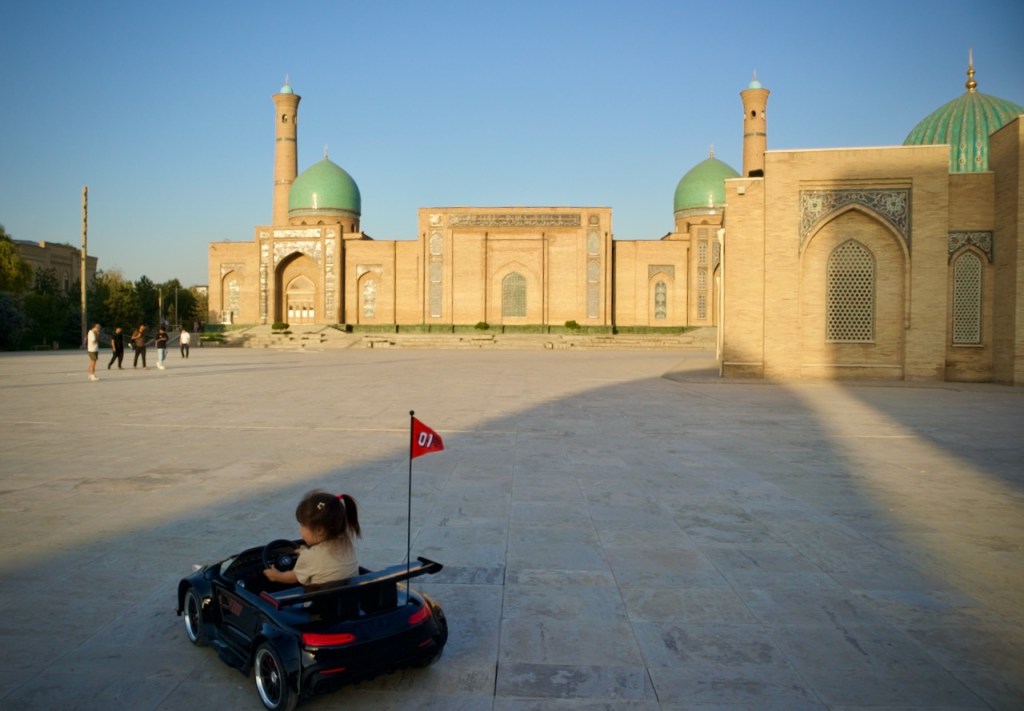
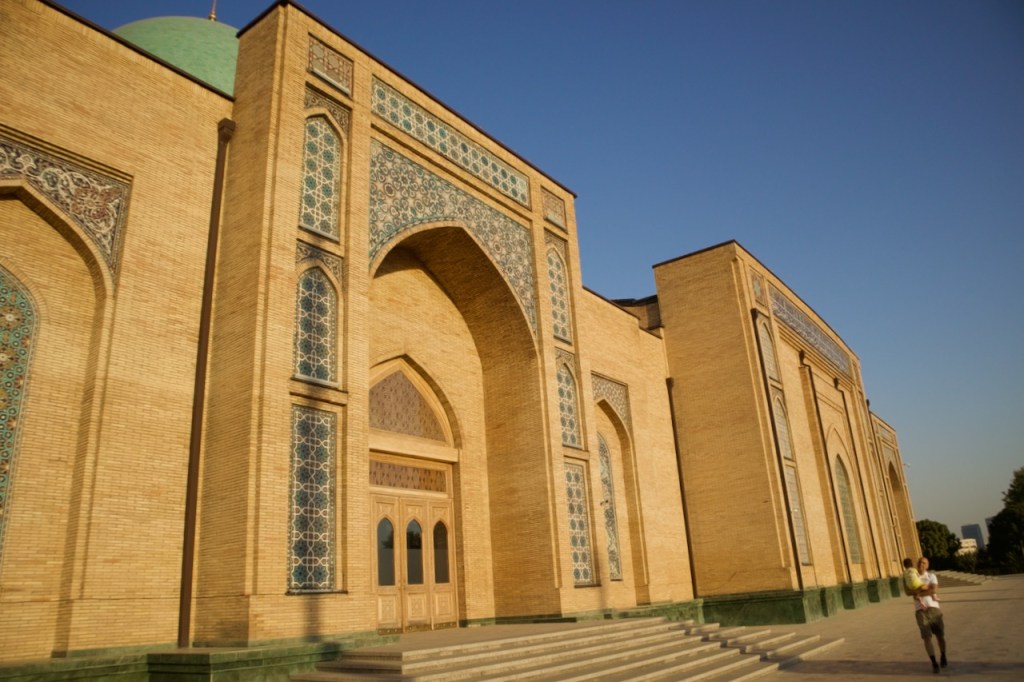
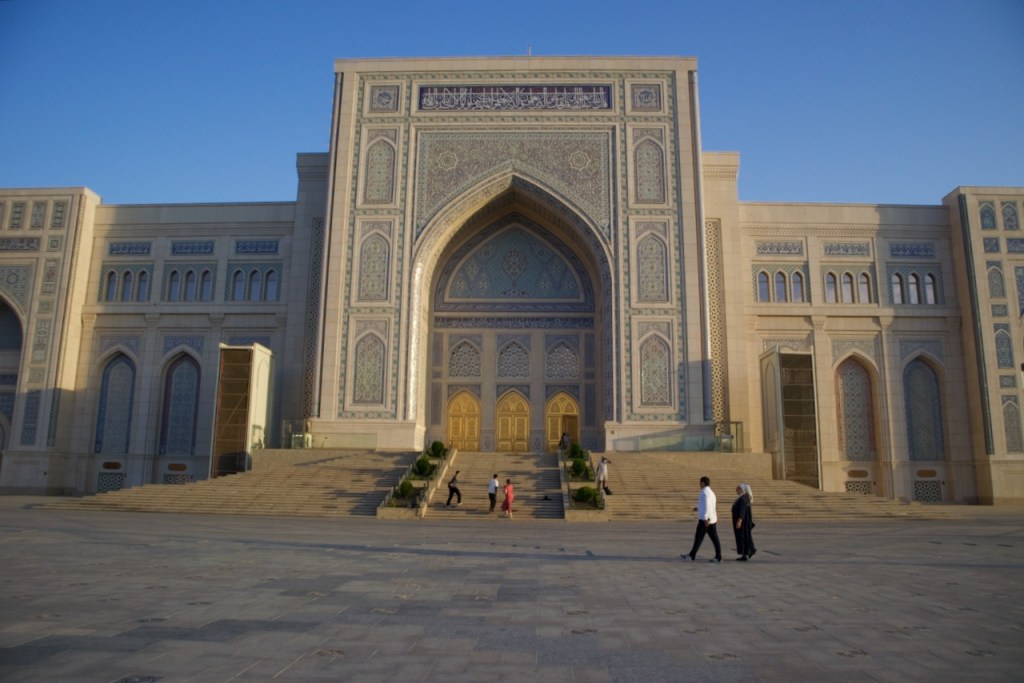
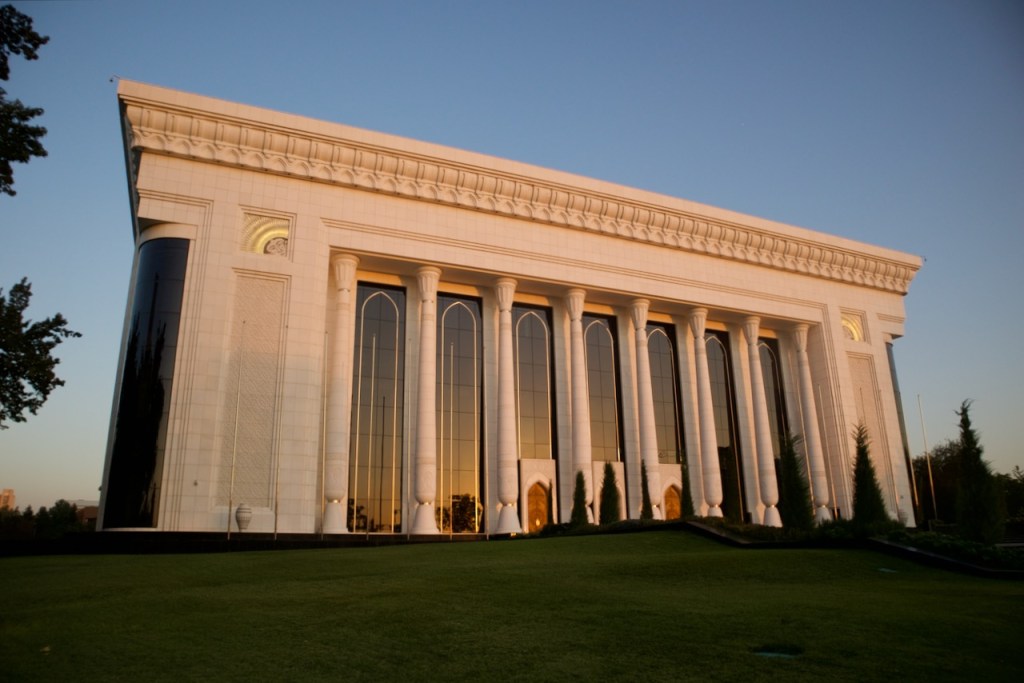
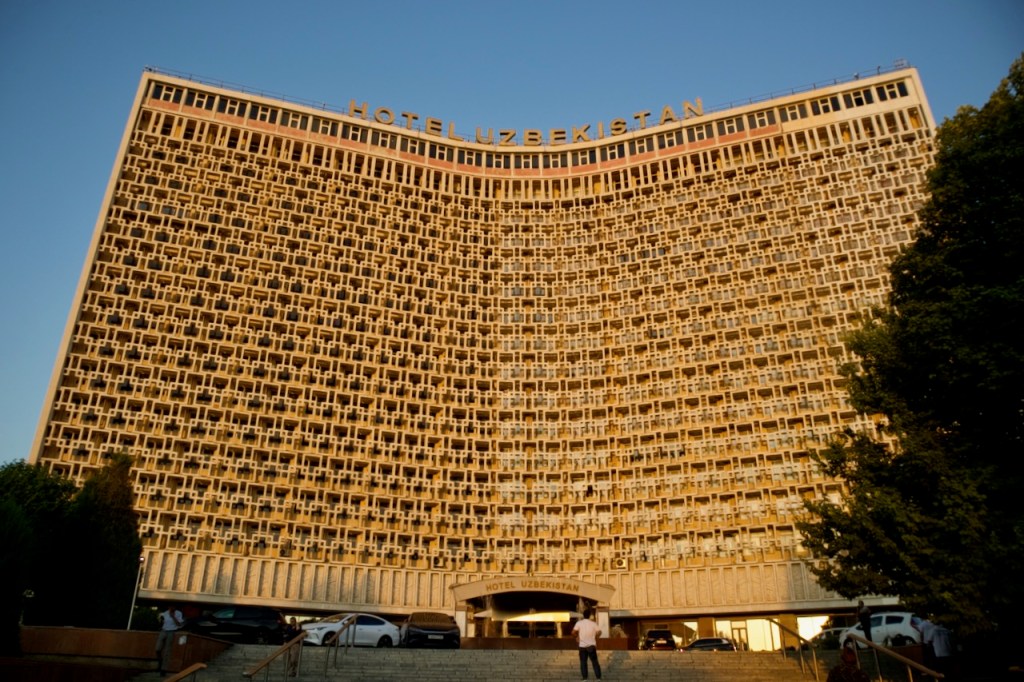
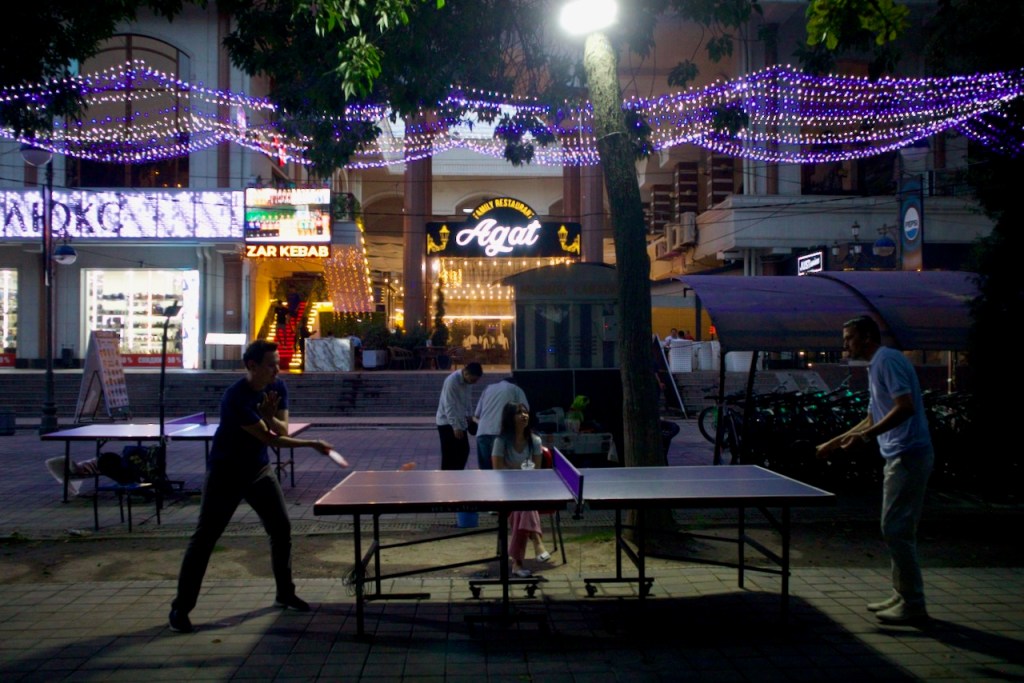
I walk towards the Amir Timur Square with a massive equestrian statue of the 14th-century conqueror set against a backdrop of fountains and take a few snapshots of the monumental Palace of International Forums and the iconic Brutalist Hotel Uzbekistan, still standing tall and strong, basking in crimson. The night is still young; locals play ping pong and chill by the fountains in large squares in this beautiful summer evening.
Bukhara where Time Stands Still
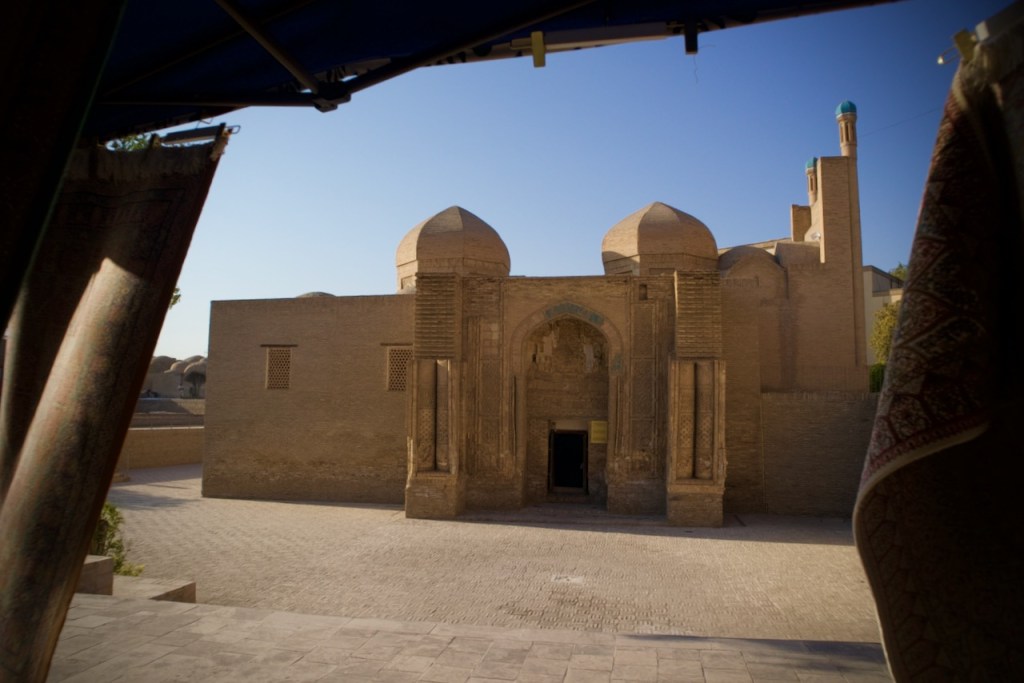
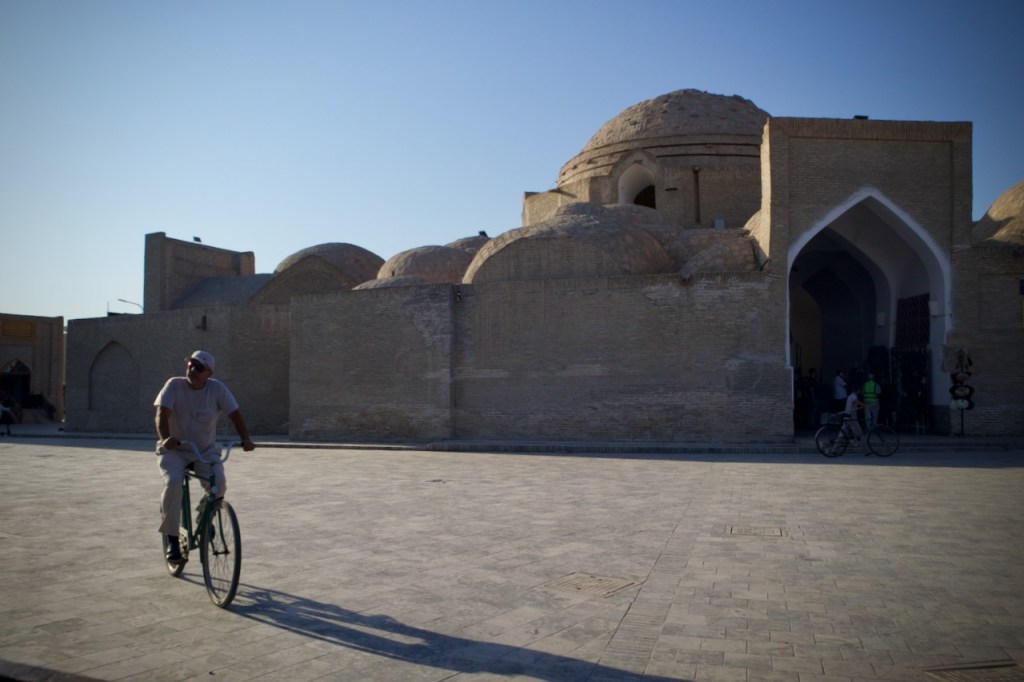
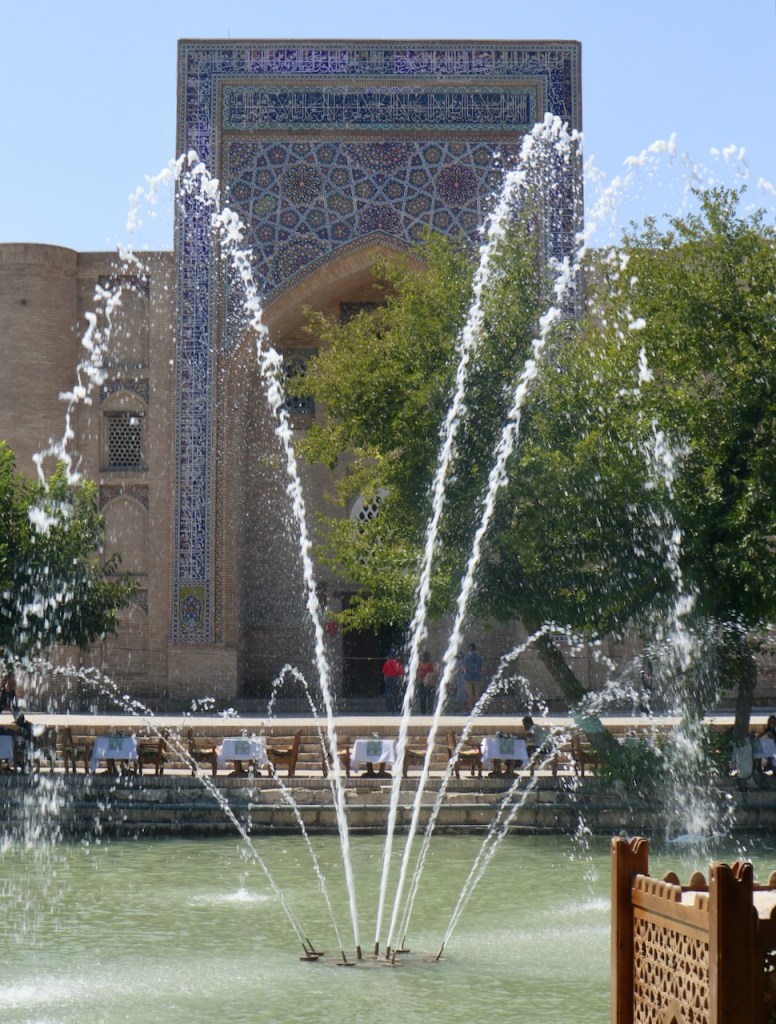
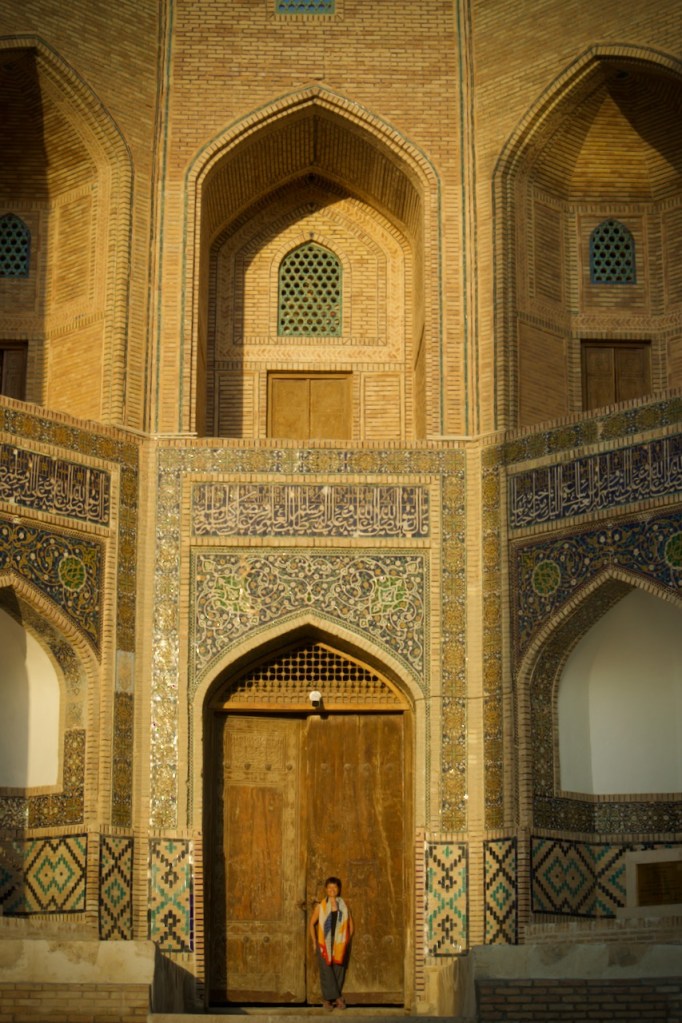
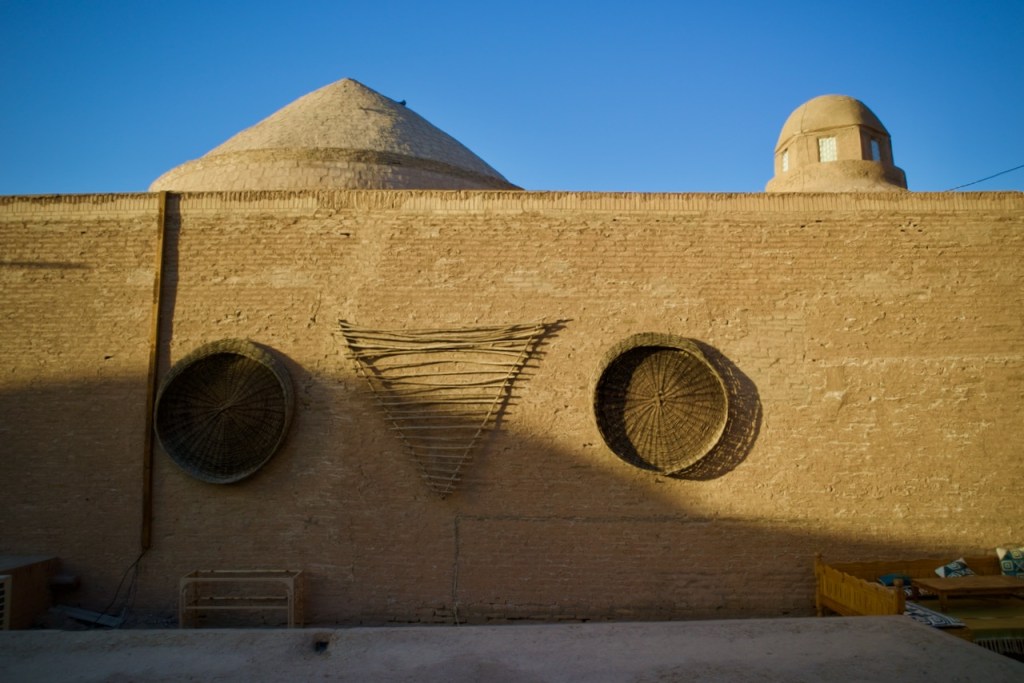
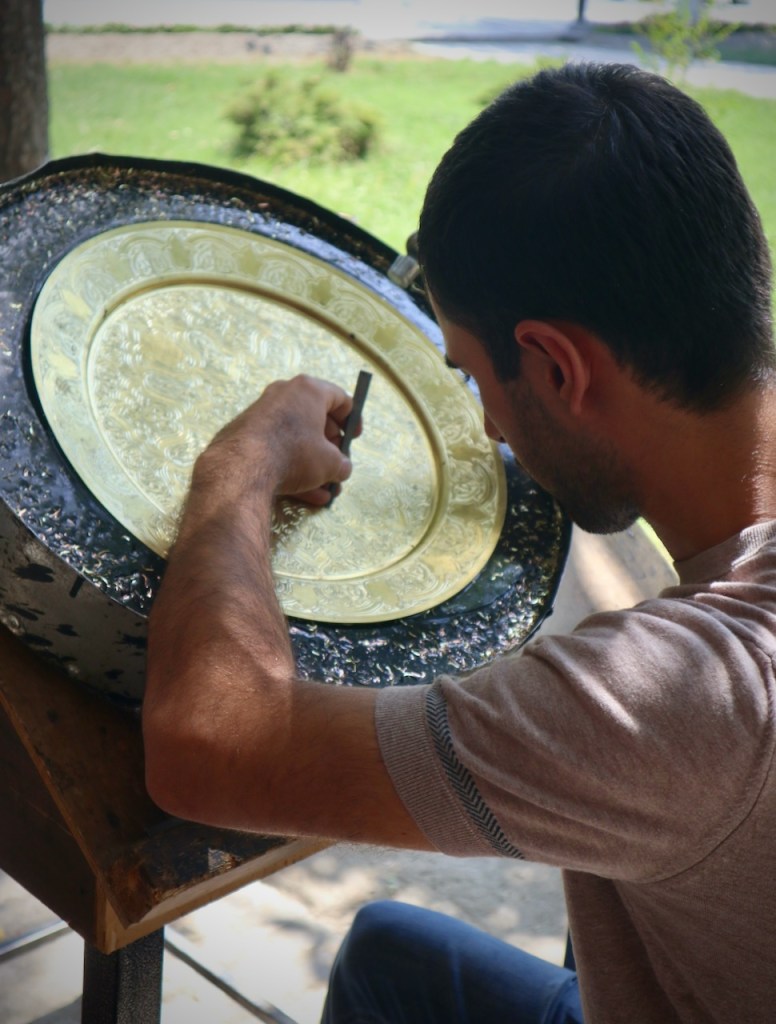
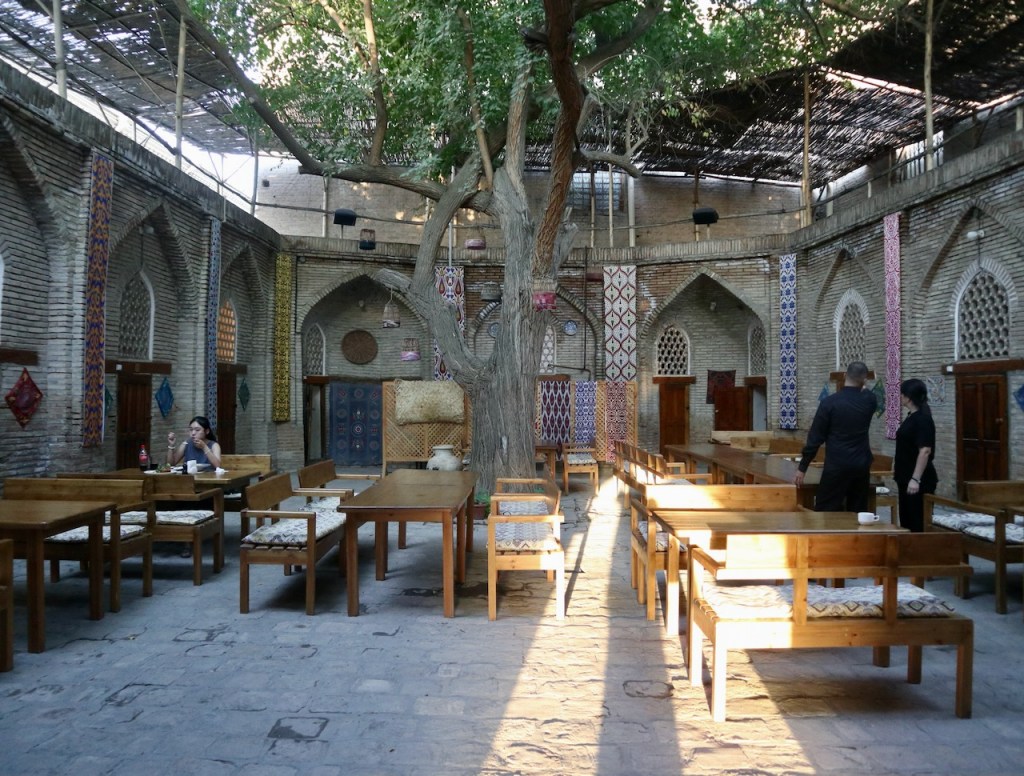
The Uzbek train online platform being notorious to use – mostly in Russian – I used the Kazak counterpart that somehow booked me a first class express from Tashkent to Bukhara. What a difference from the Soviet trains that transported me through vast tracts of Kazakstan! It has been fifteen years since my last visit and I am excited to see Bukhara again. With over 140 protected monuments, 40 bazaars, and at least twenty caravanserais, the city is unparalleled even in Uzbekistan. Already a trading post in the Persian Empire in 500BC, then the capital of the Samanid Empire in the 9th and 10th century, prospered under the conqueror Amir Timur in the 14th- and 15th-century, and finally a permanent capital of the Uzbek Khanate of Bukhara under the Shaybanid dynasty, the city is a well preserved Silk Road gem that breathes history as a spiritual and learning centre of the medieval Islamic world. Large public plazas surrounded by jaw-dropping mosques and madrasas, enchanting pools and fountains shaded by ancient mulberry trees, unique trading domes where light gracefully enters, casting shadow on passers-by, and all flanked by a massive 5th-century fortified citadel, Bukhara is one of the most beautiful and romantic cities in the world. As I meander through its narrow streets, admiring each turquoise dome and wooden pillar, tiled facade and old clay wall set against a perfect desert sky, I am so awed by its grandeur and beauty, feeling like I have won a lottery to be able to return for a second visit.
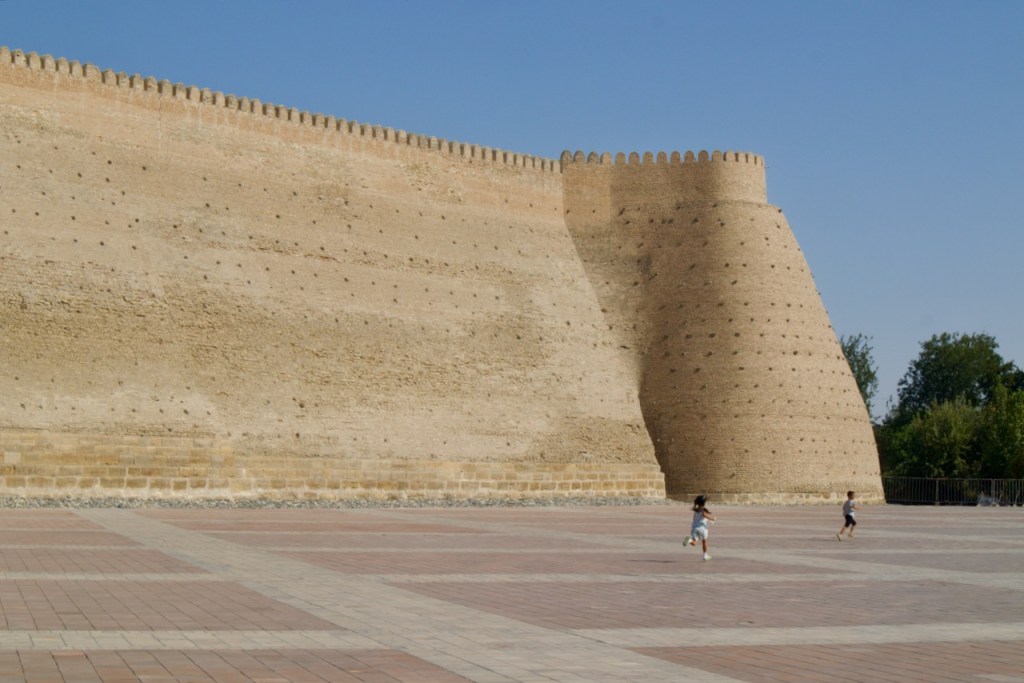
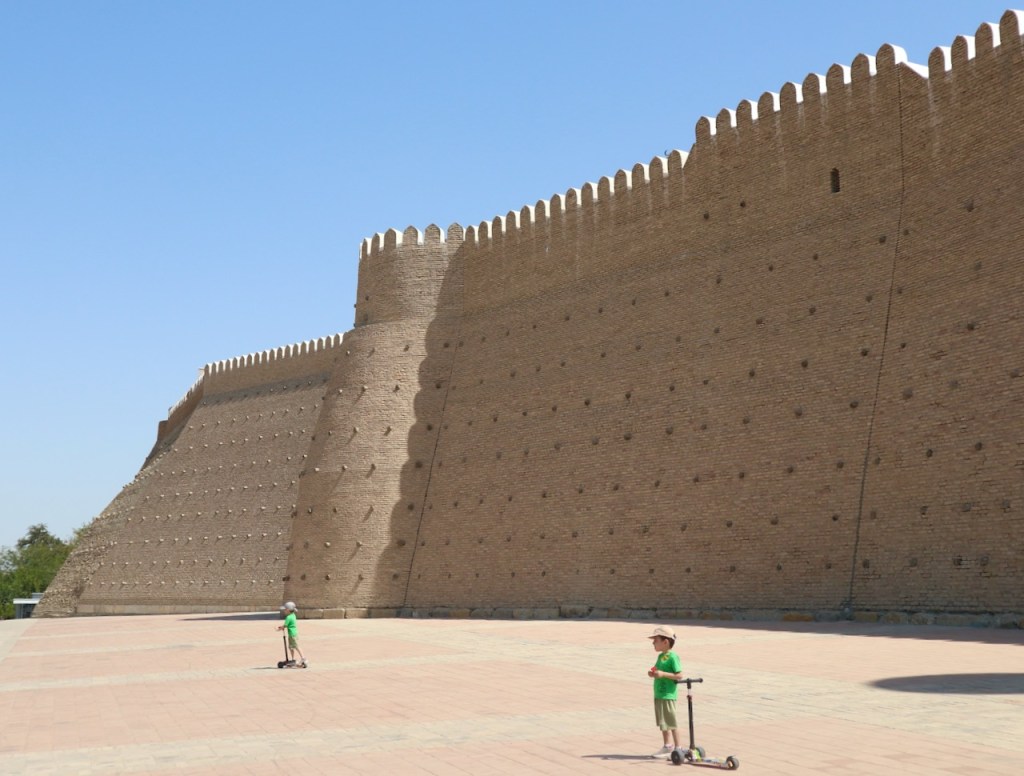
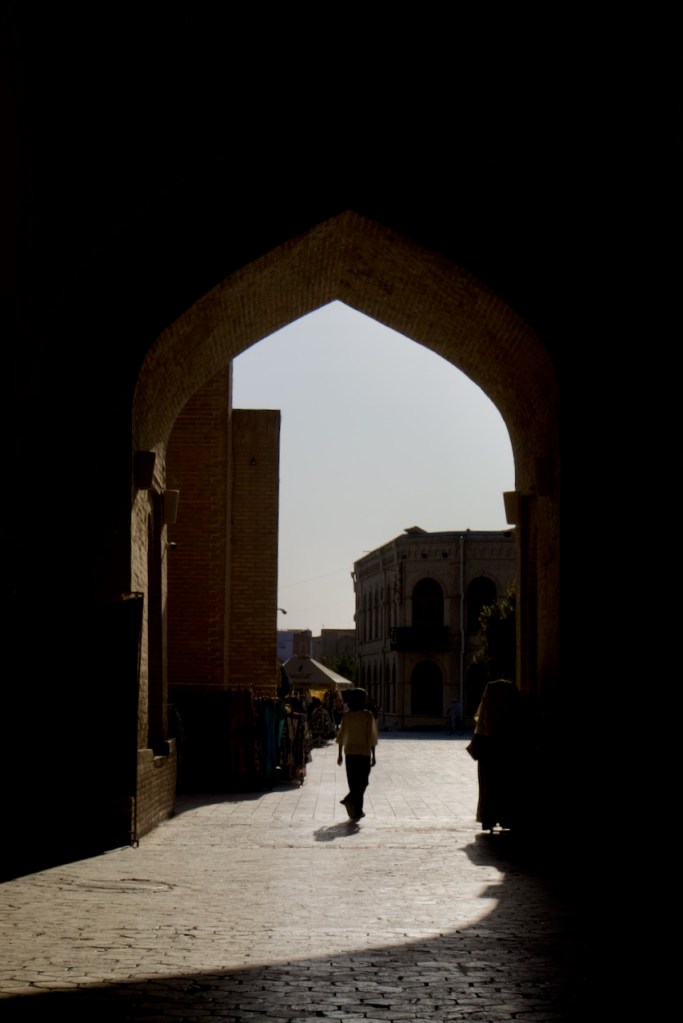
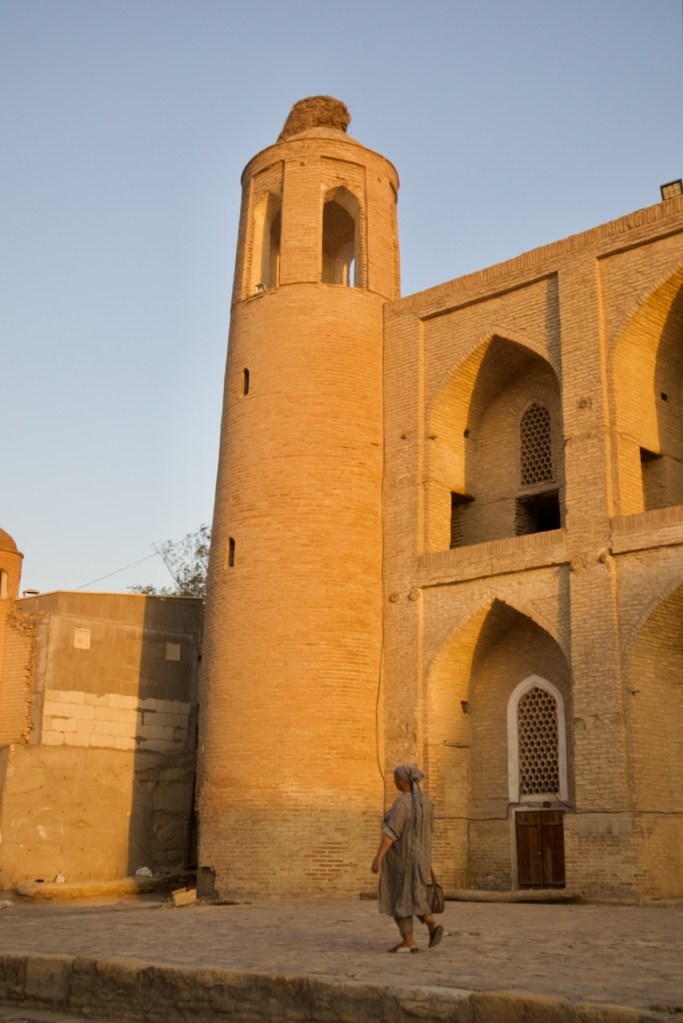
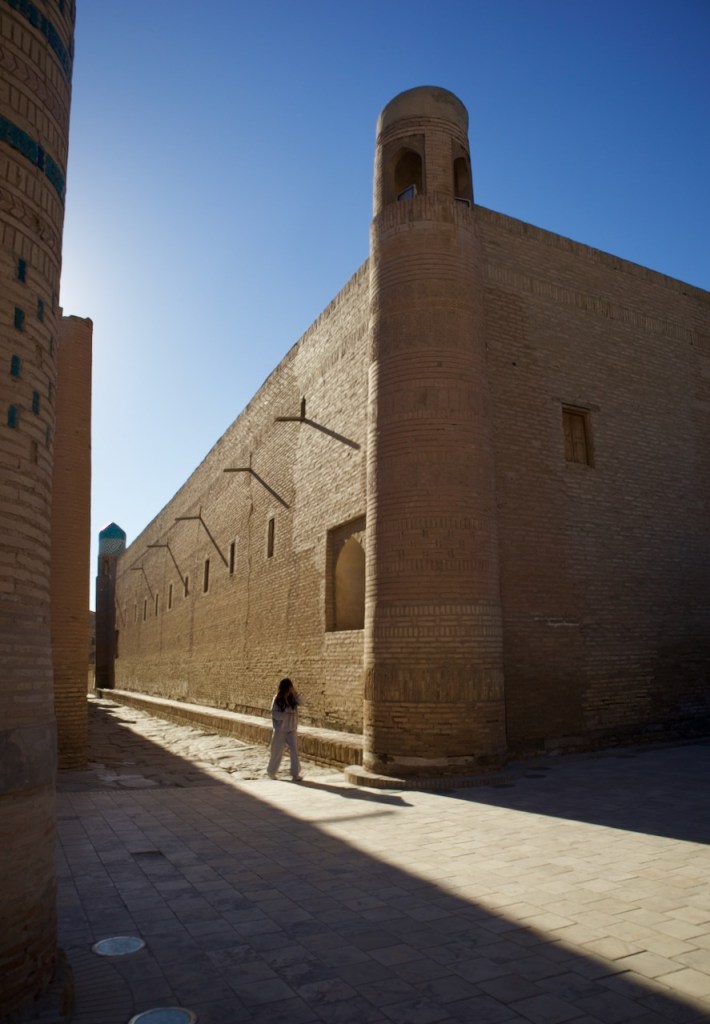
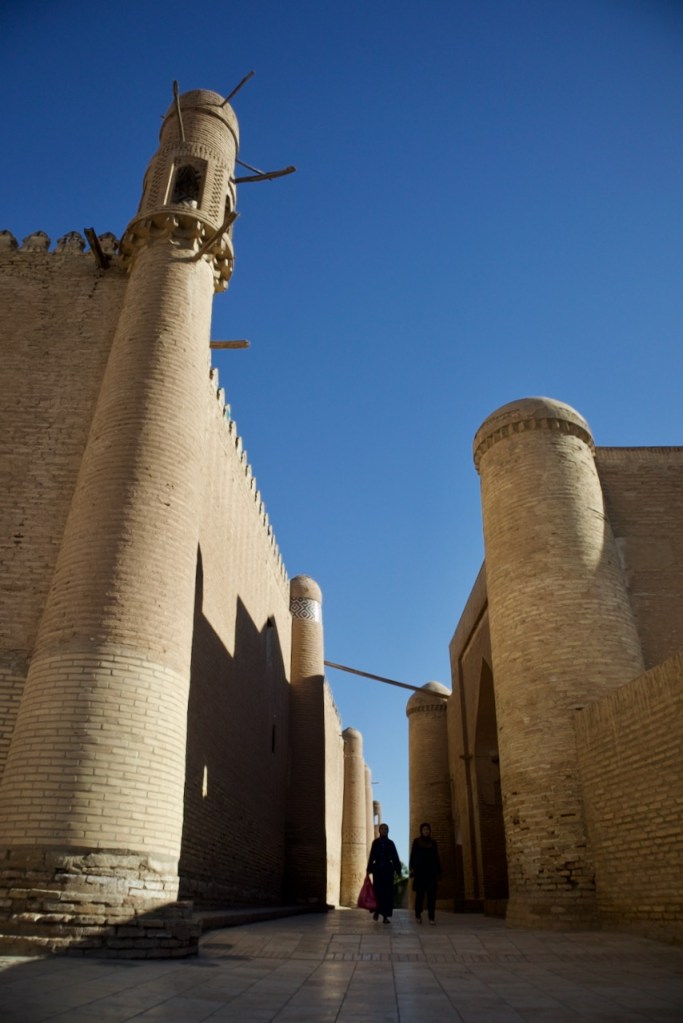
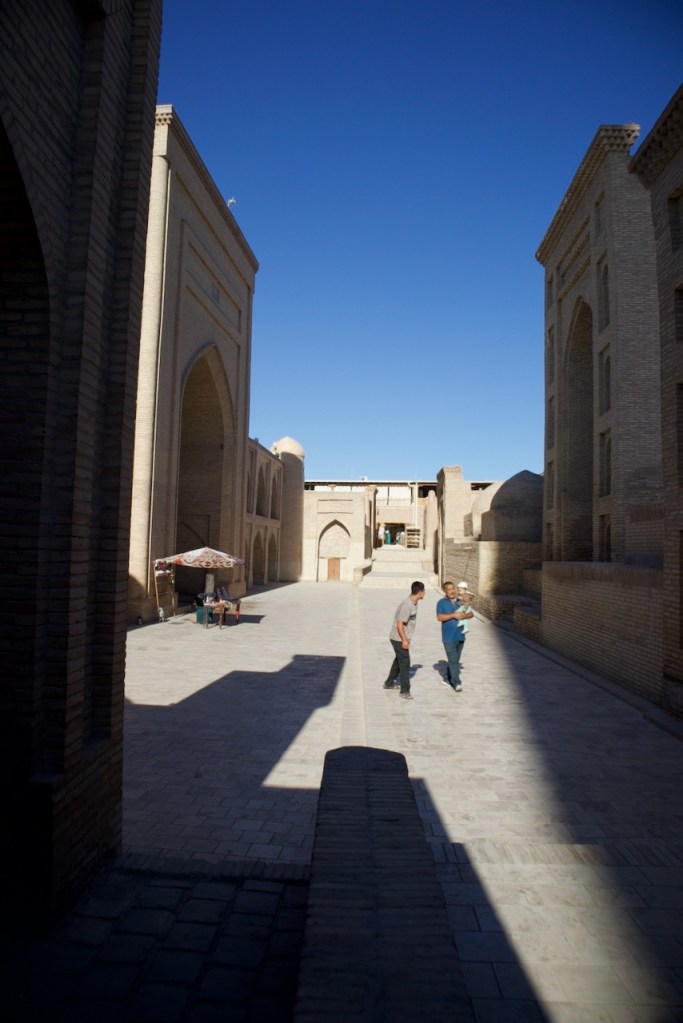
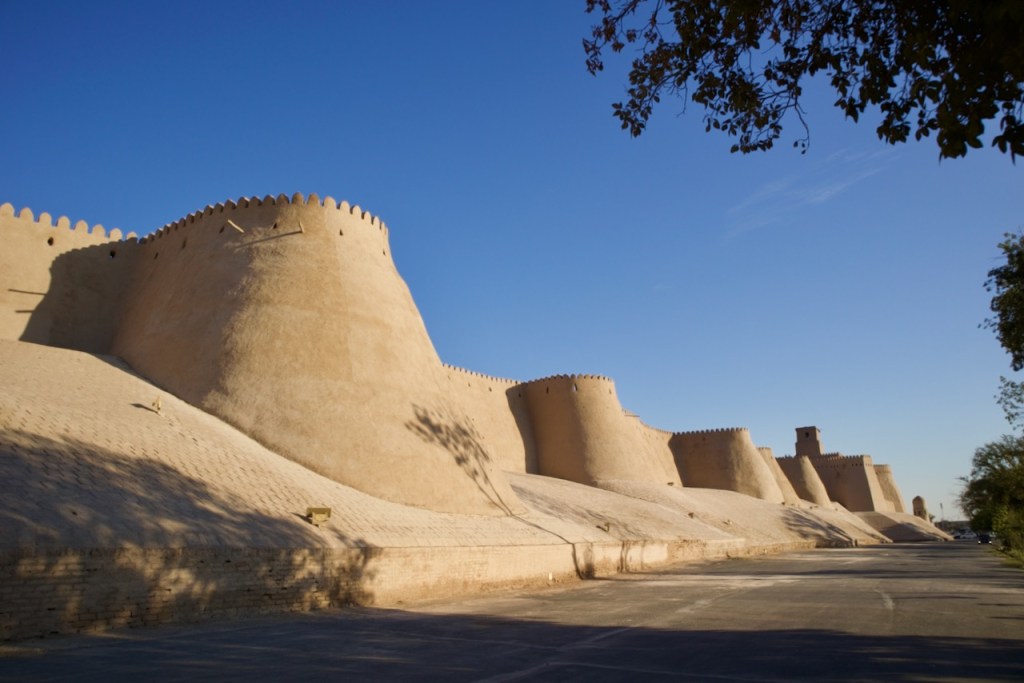
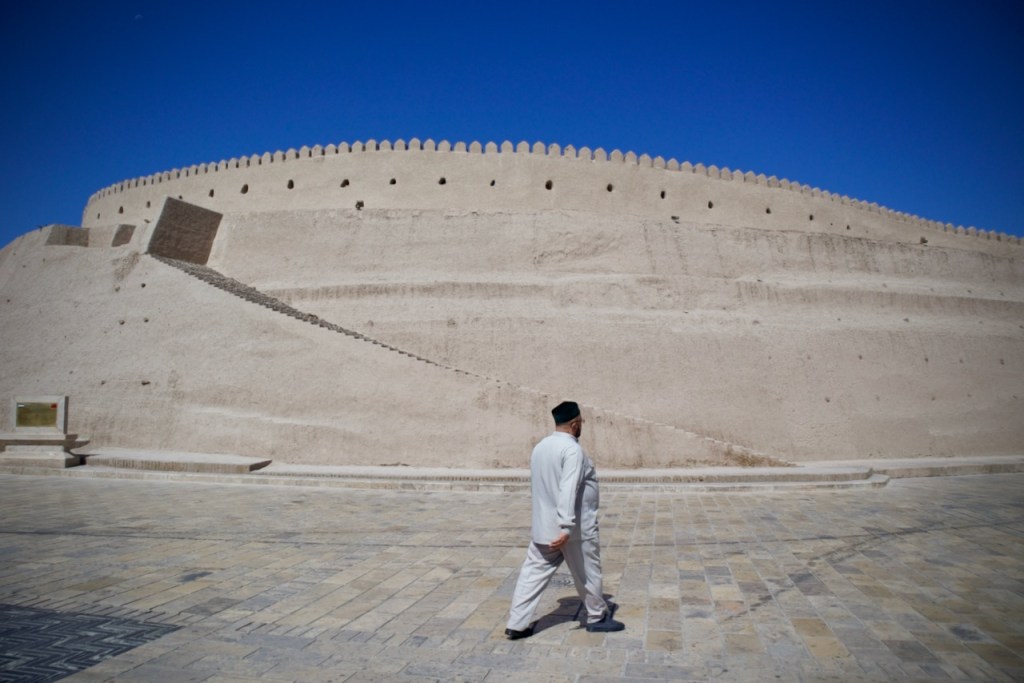
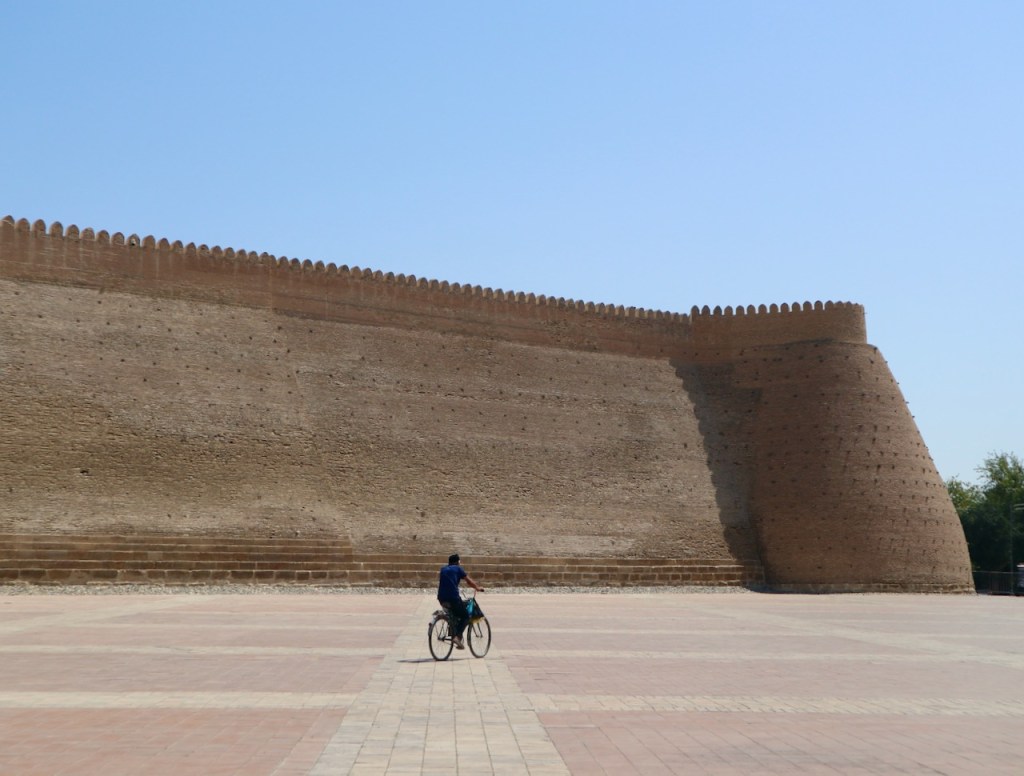
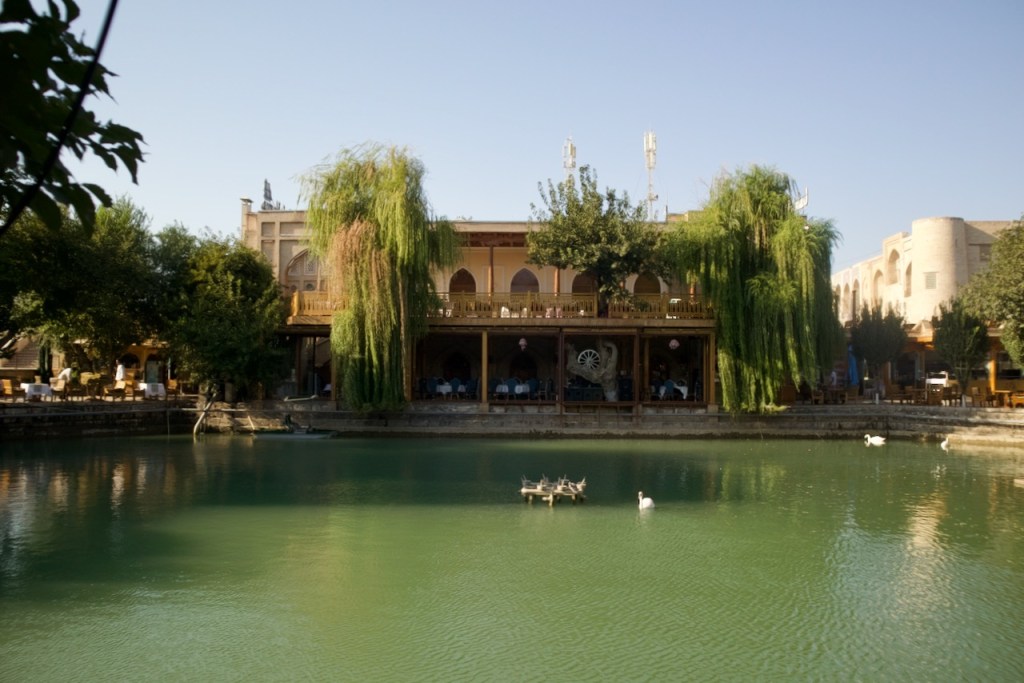
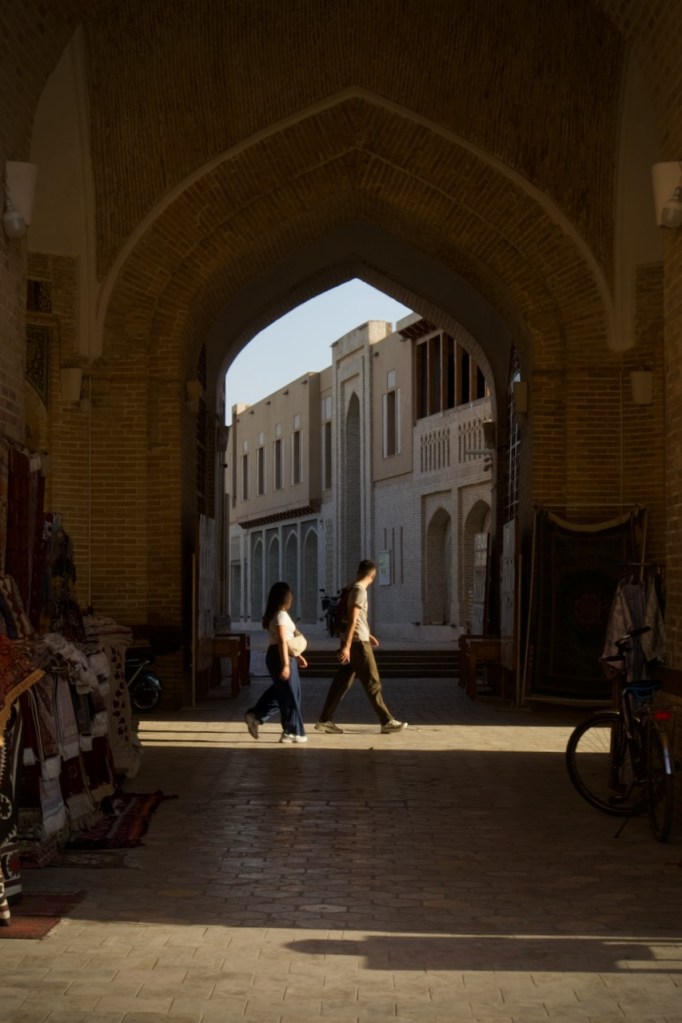
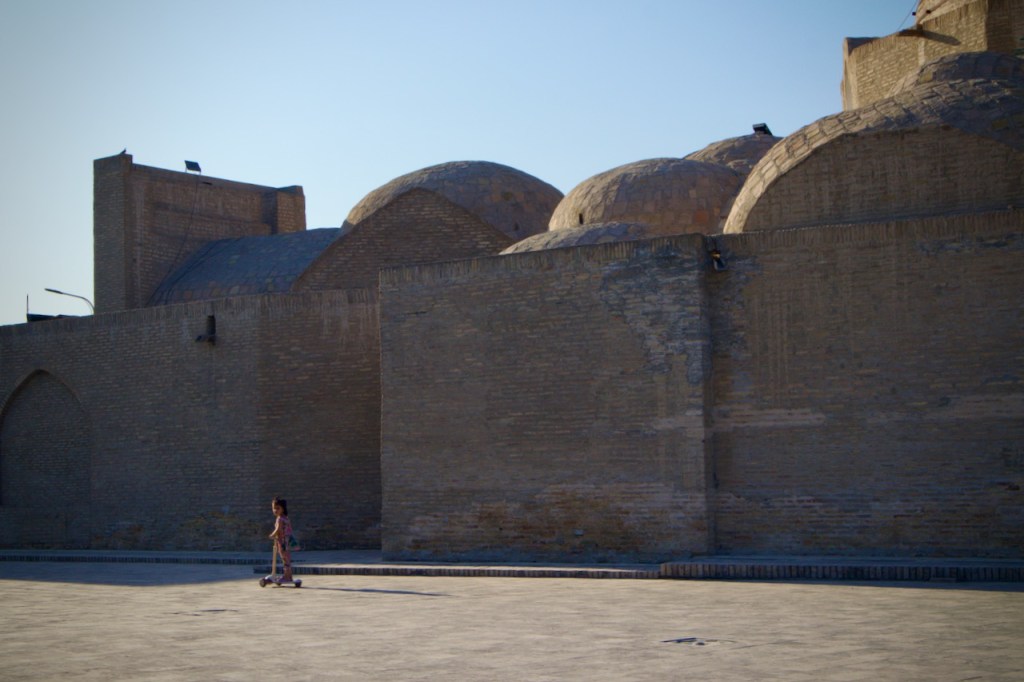
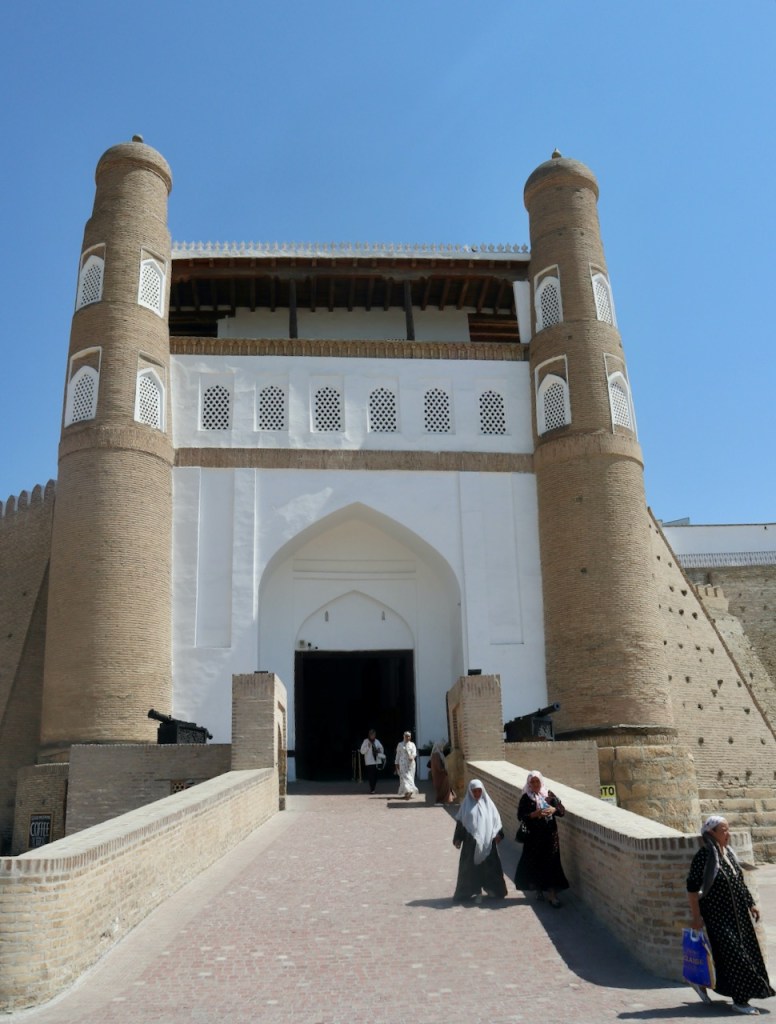
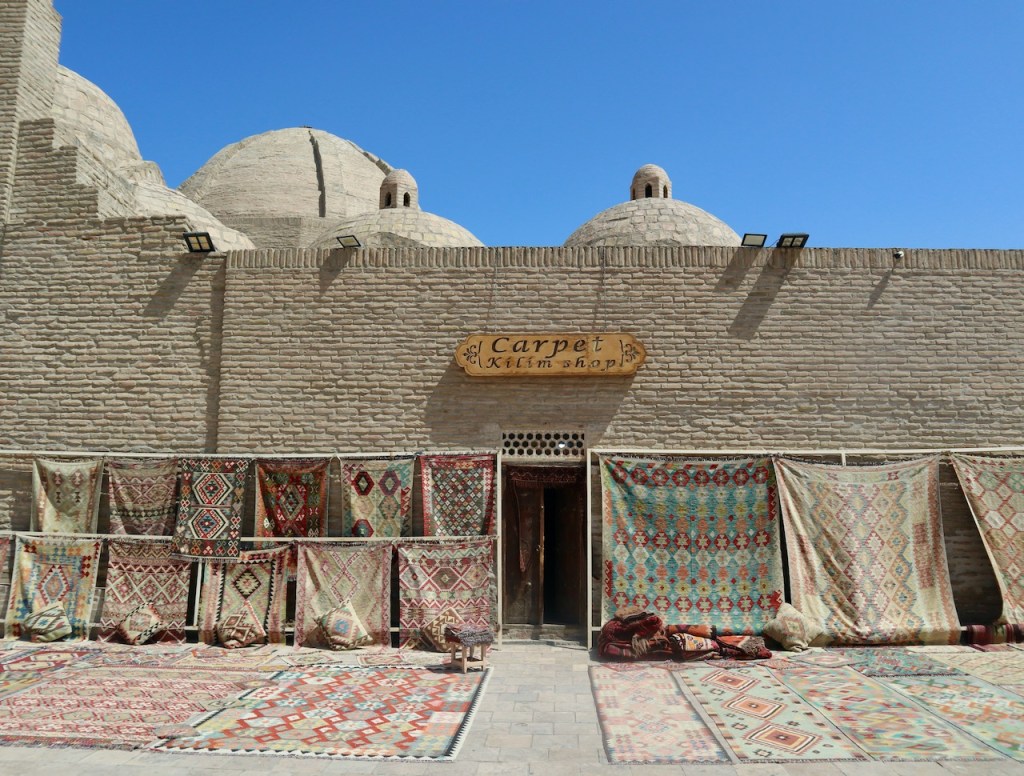
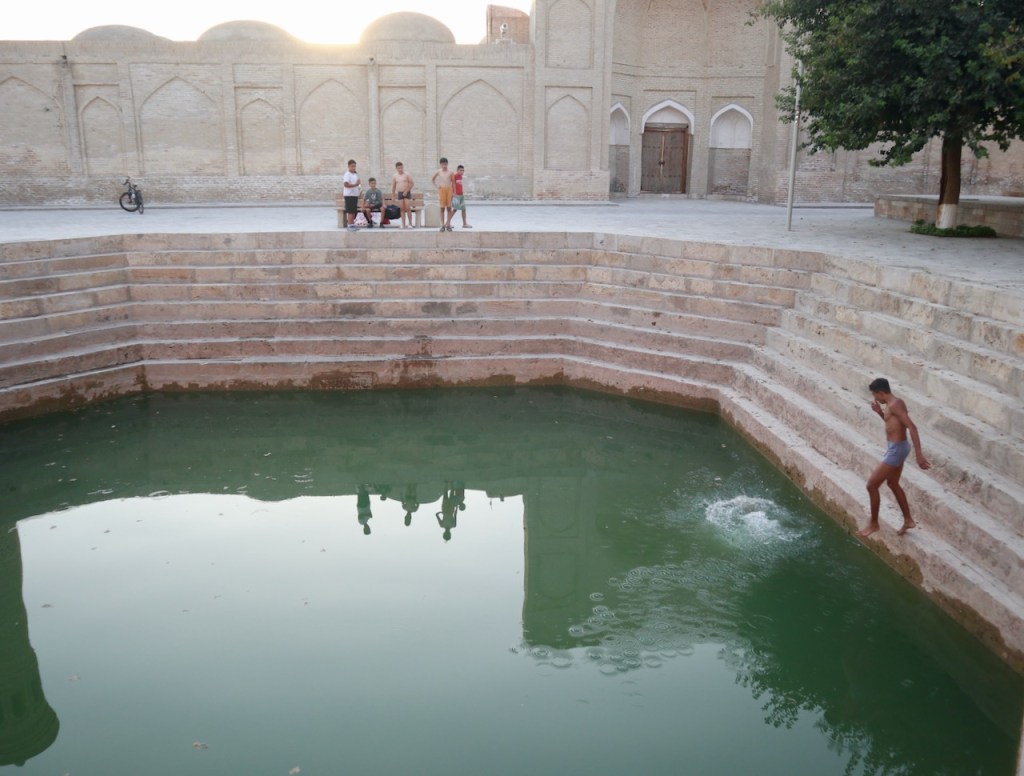
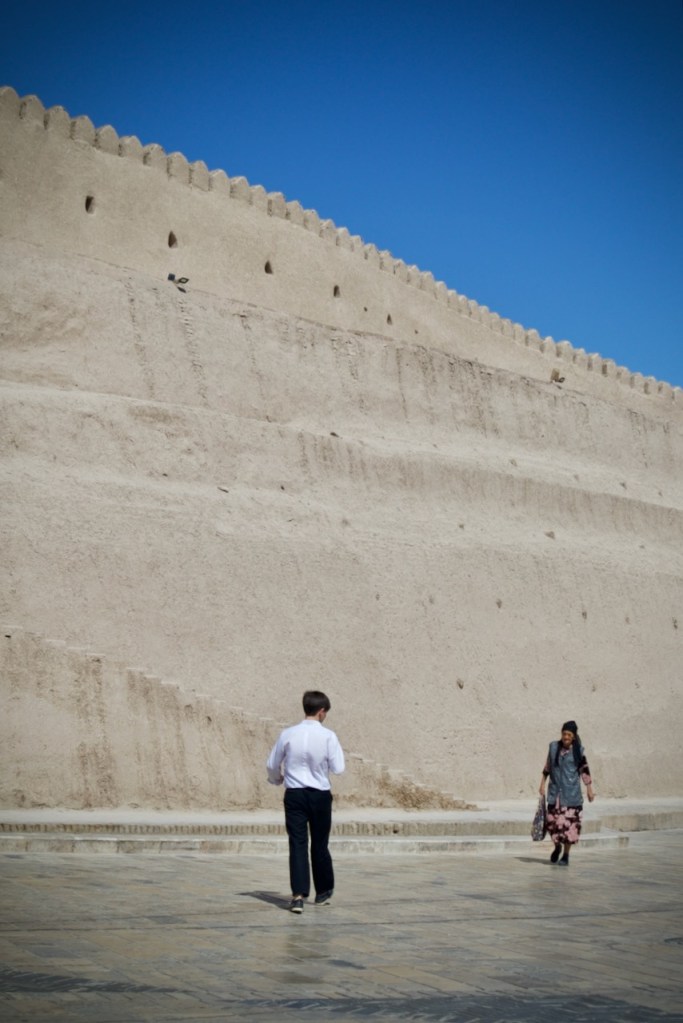
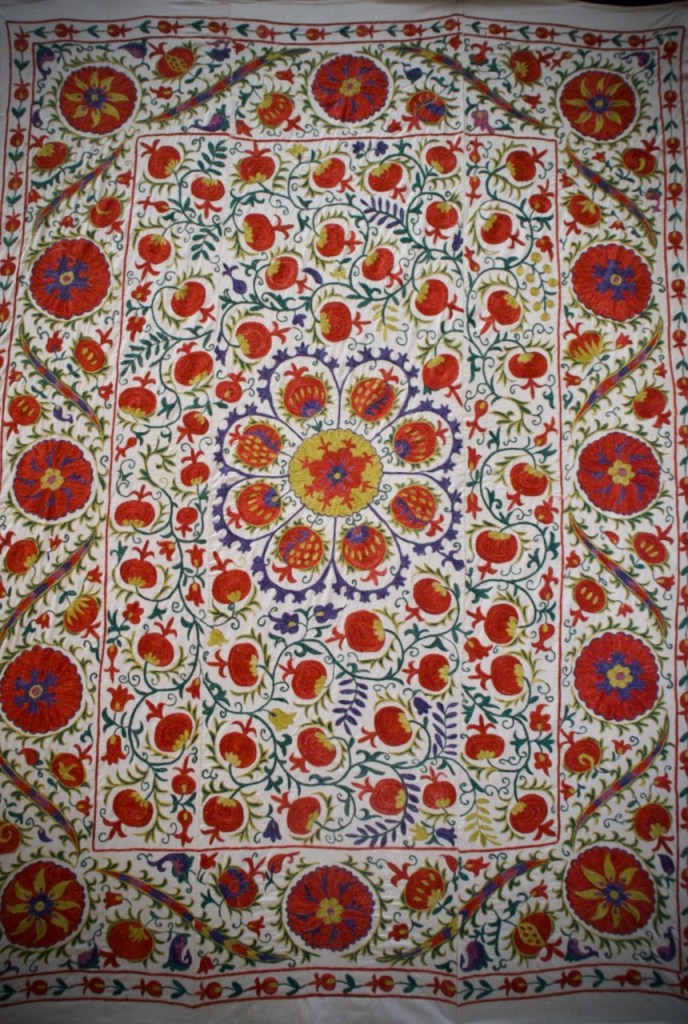
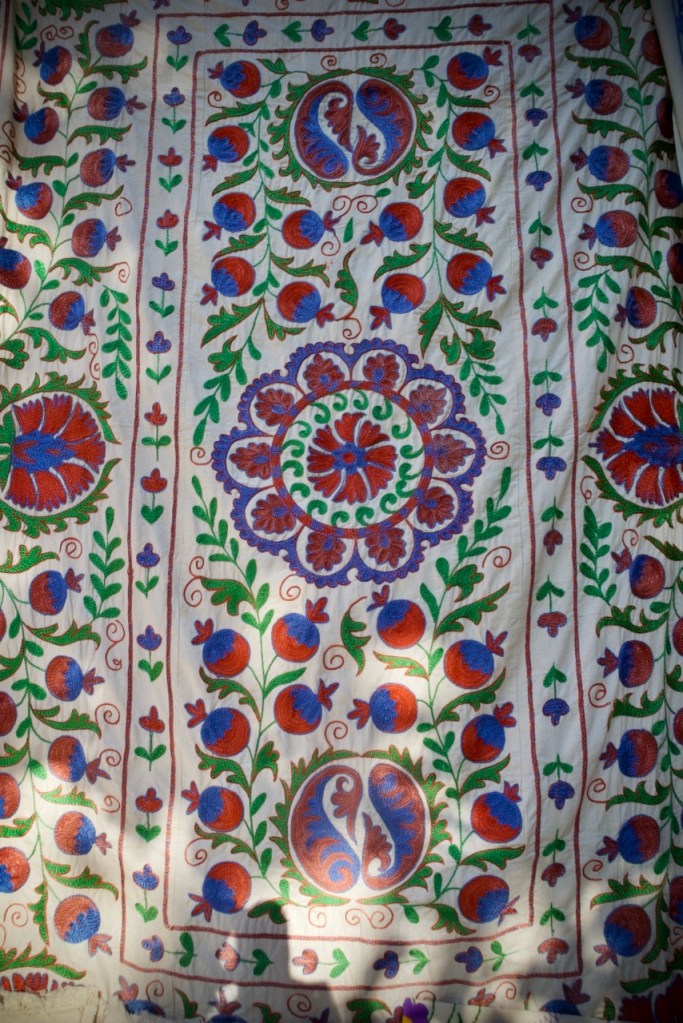
The minivan drops me right in front of the Ark Citadel, the royal residence for the rulers of Bukhara for over a millennium. The wall is so massive that whatever is moving through – a cyclist, a visitor, or a running child – becomes just a speck on my lens. All paths lead to the Lyabi Hauz Pool – who can forget this very iconic heart of the city – encircled by the Nadir Divan-Begi Khanaka, a 17th century Sufi sanctuary, and the magnificent Kukeldash Madrasa, largest in Bukhara. Strolling around the old town is traveling down memory lane, passing through the signature trading domes where I last bought a gorgeous black and red suzani with pomegranate motifs still hanging in my home. Here I pause and let light filter through the clay domes as visitors move into my viewfinder.
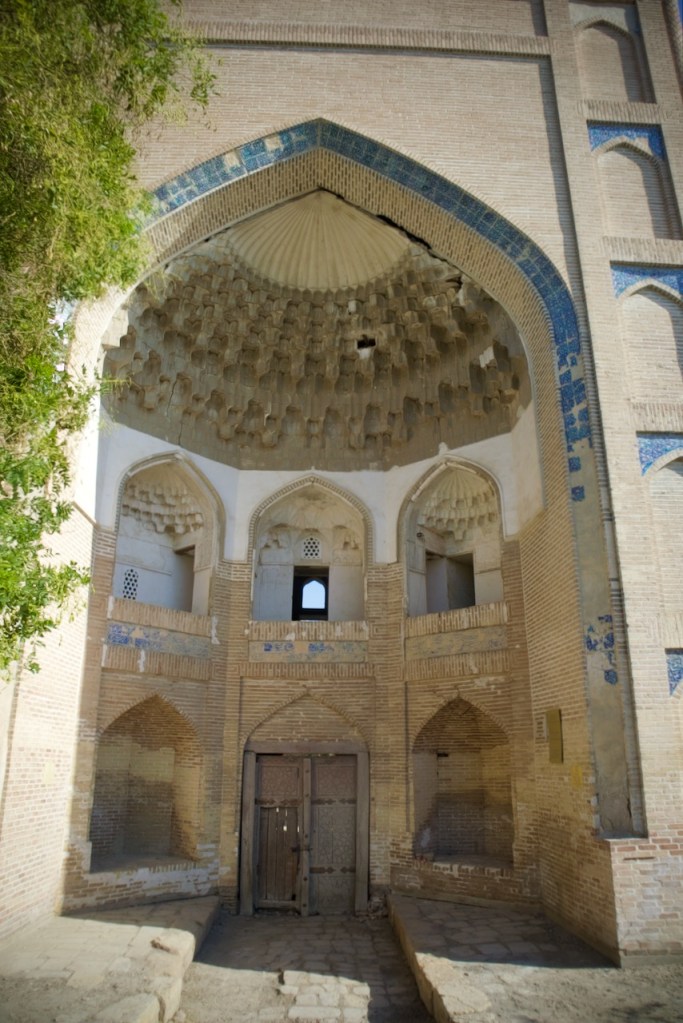
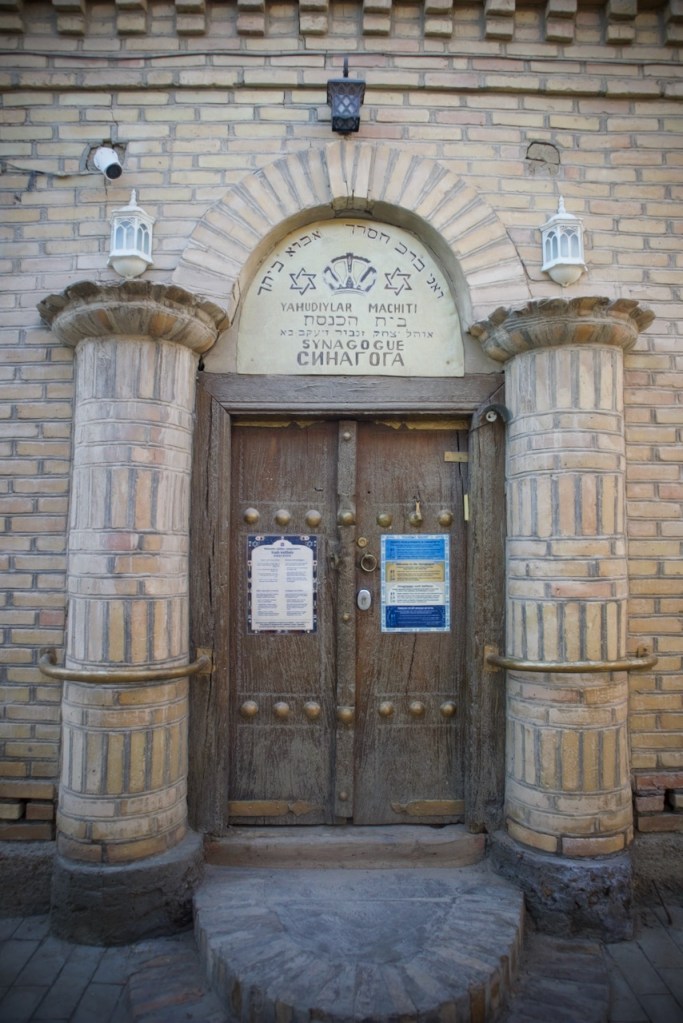
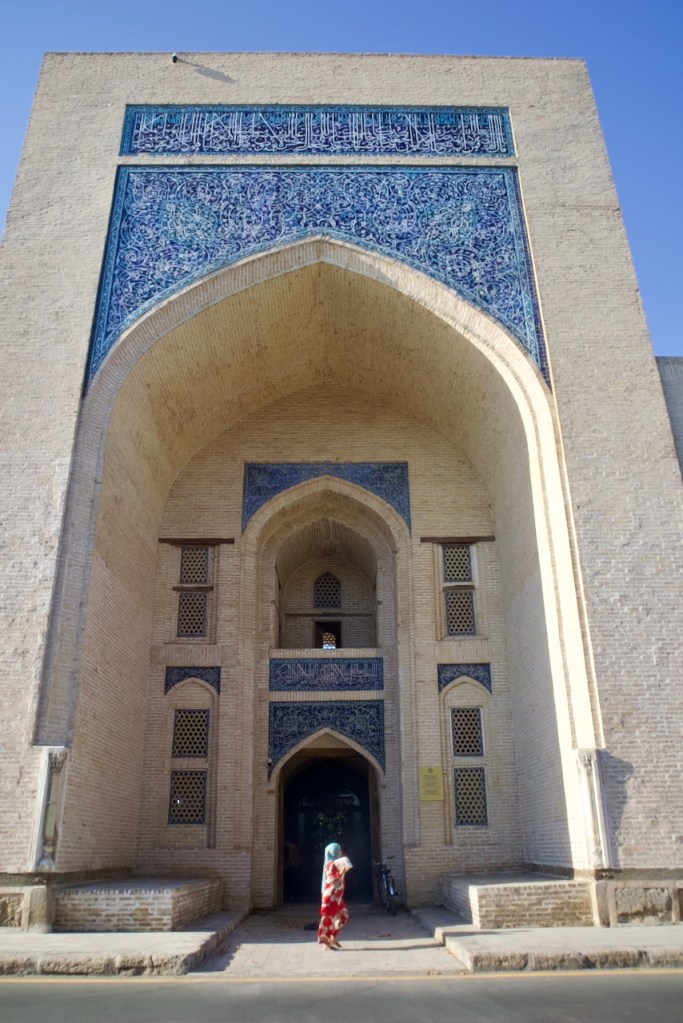
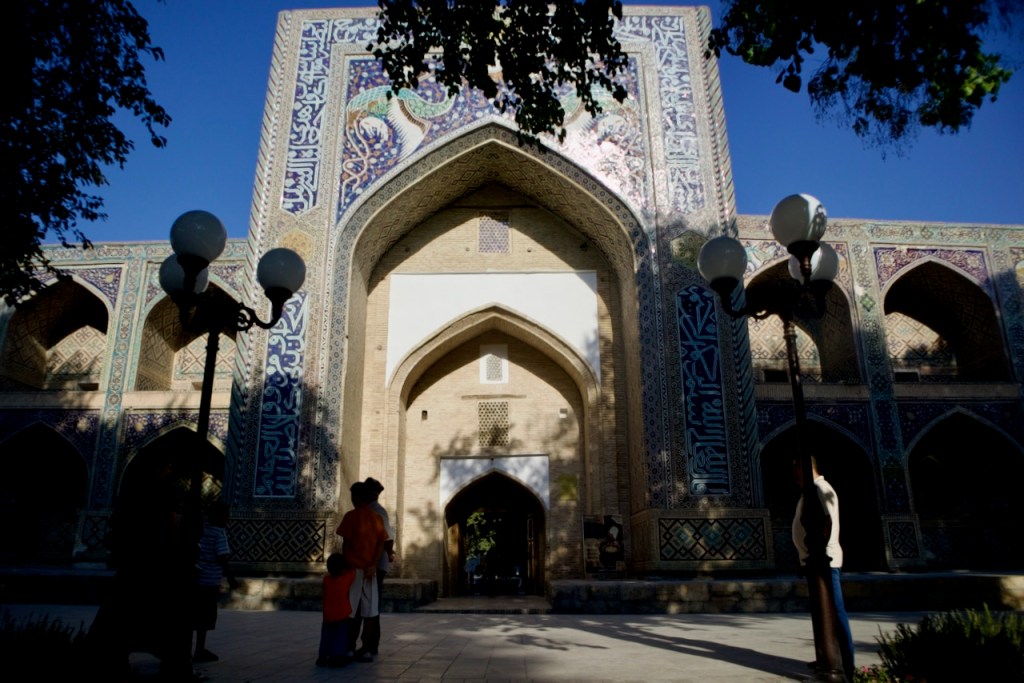
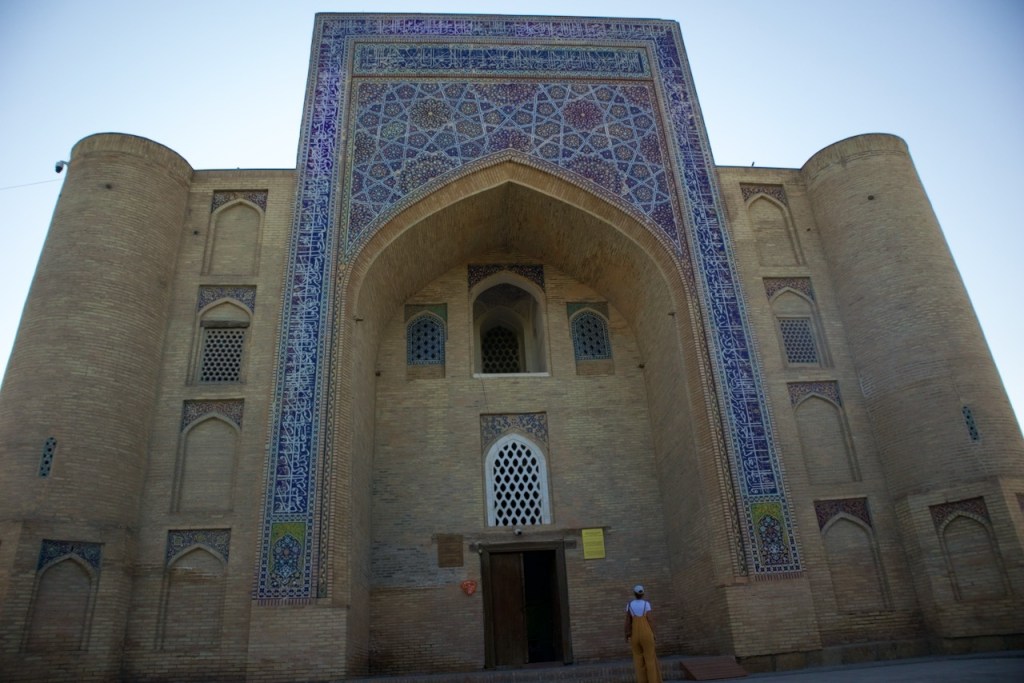
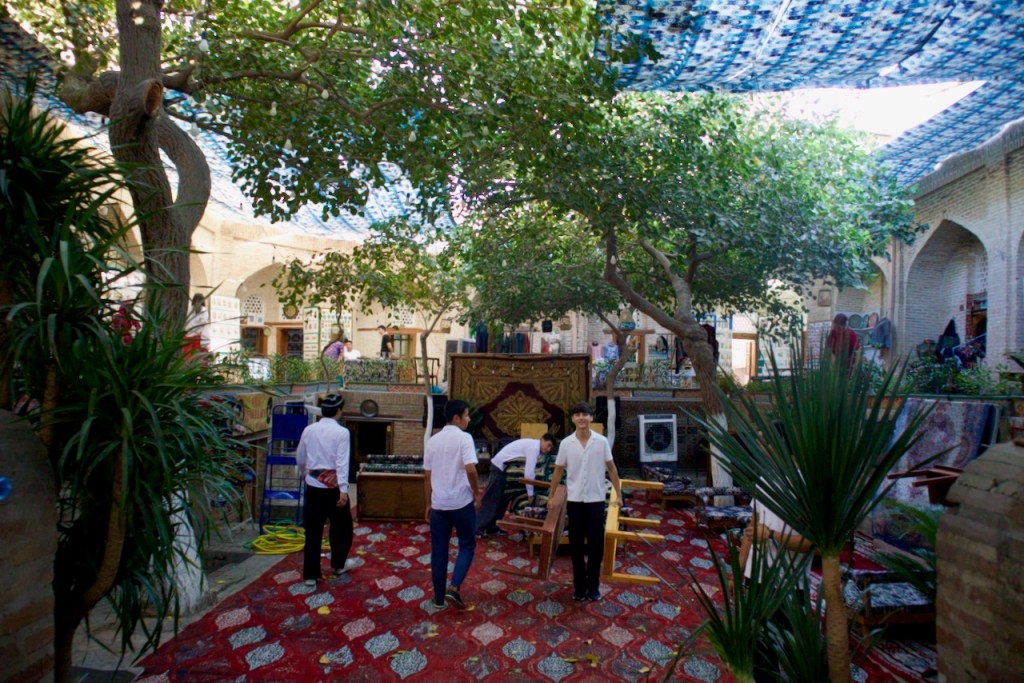
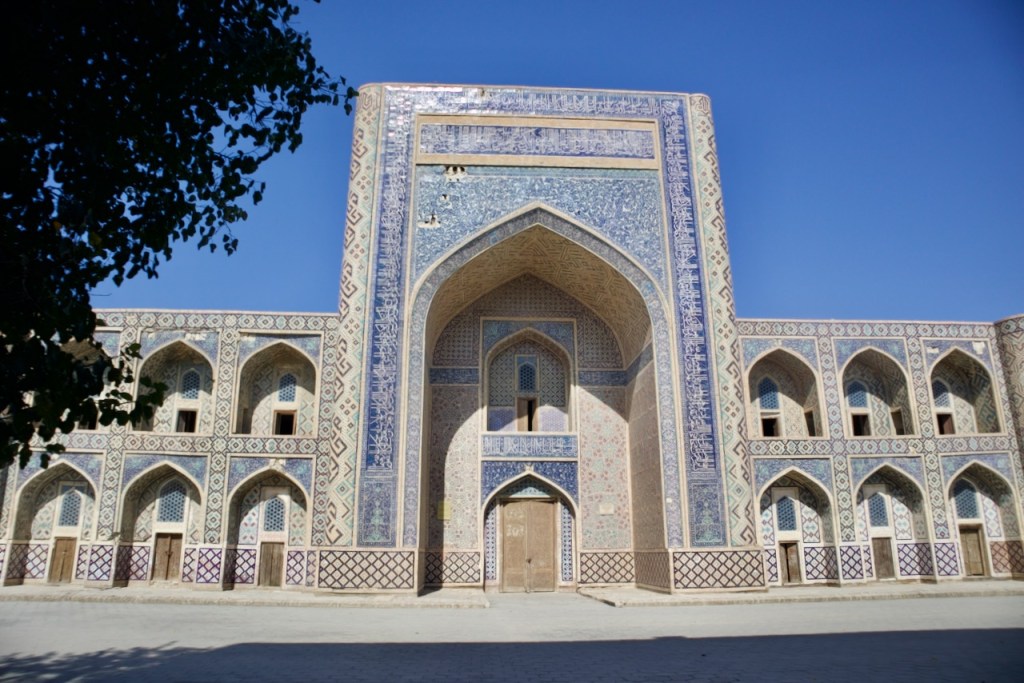
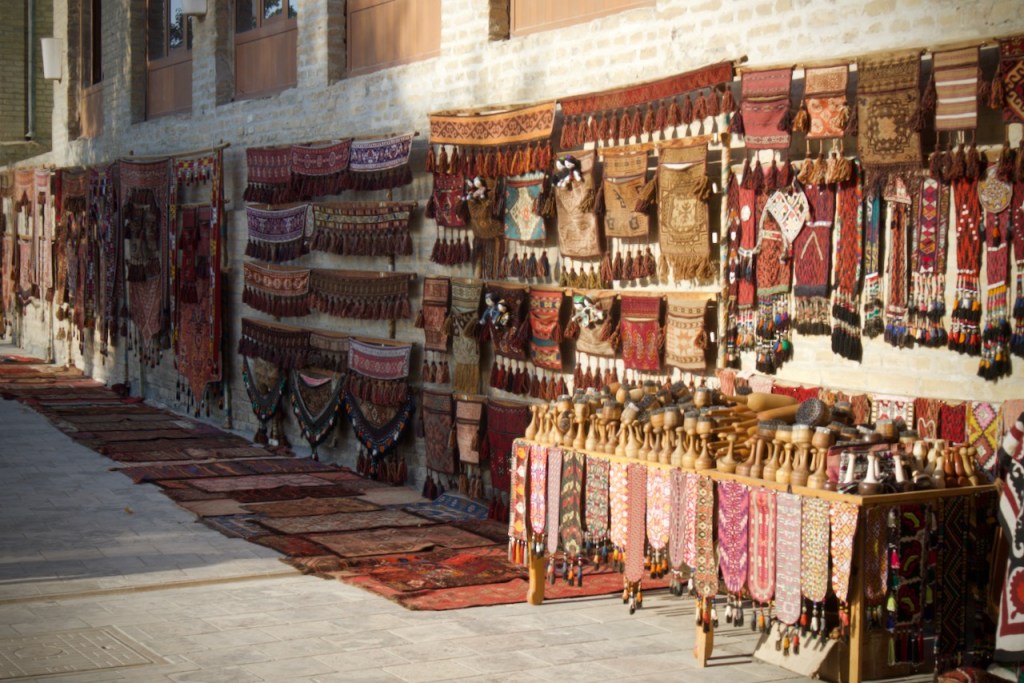
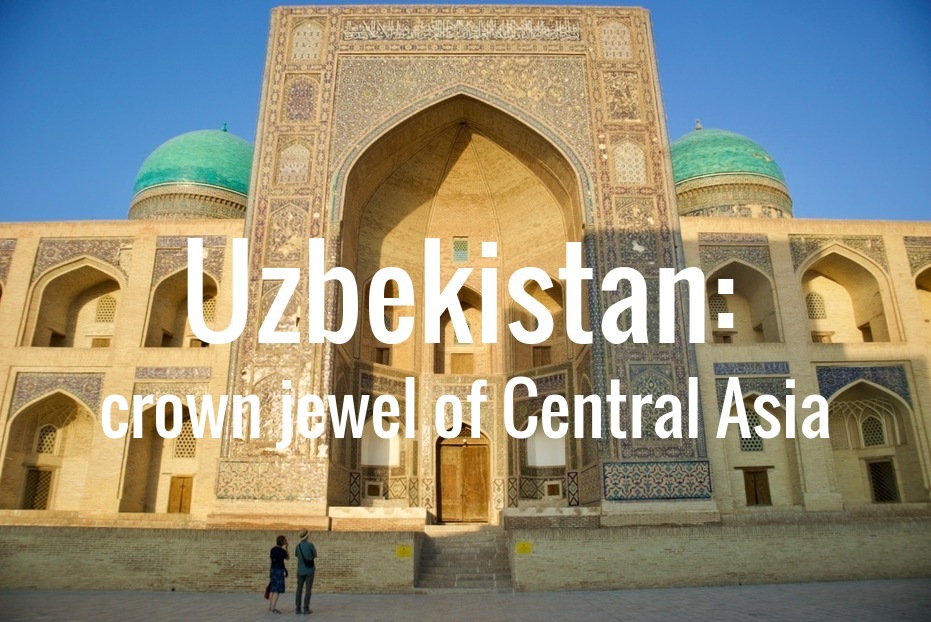
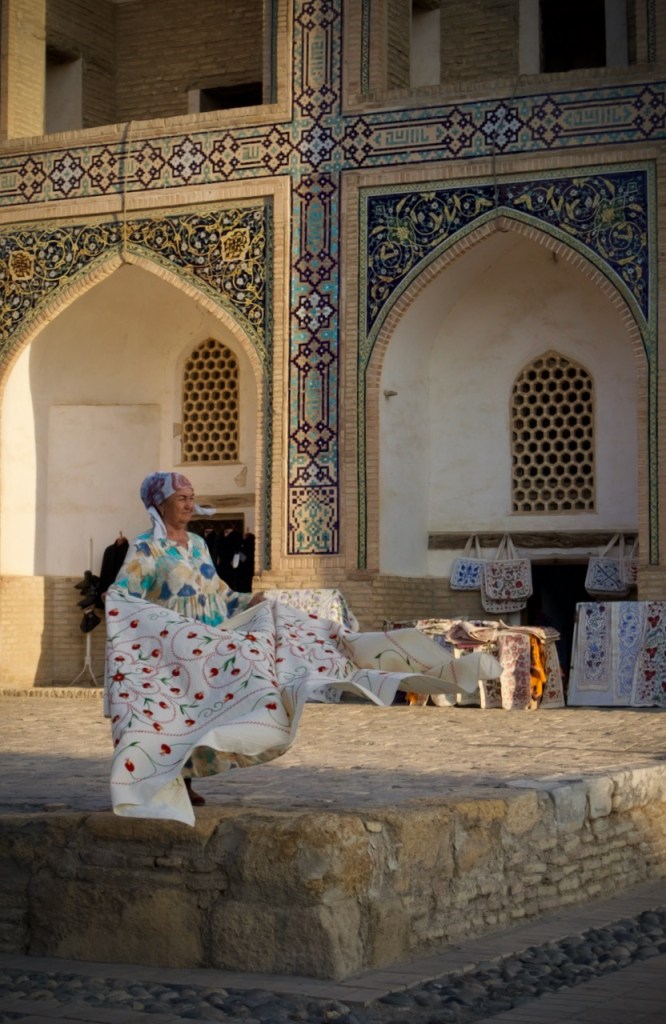
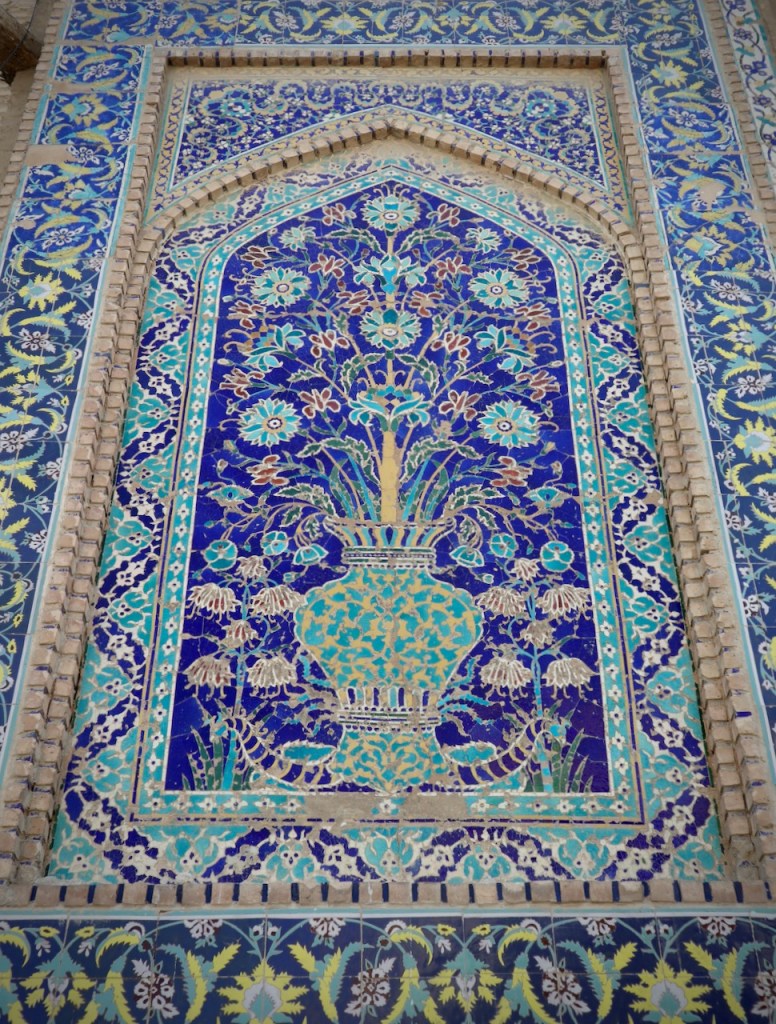
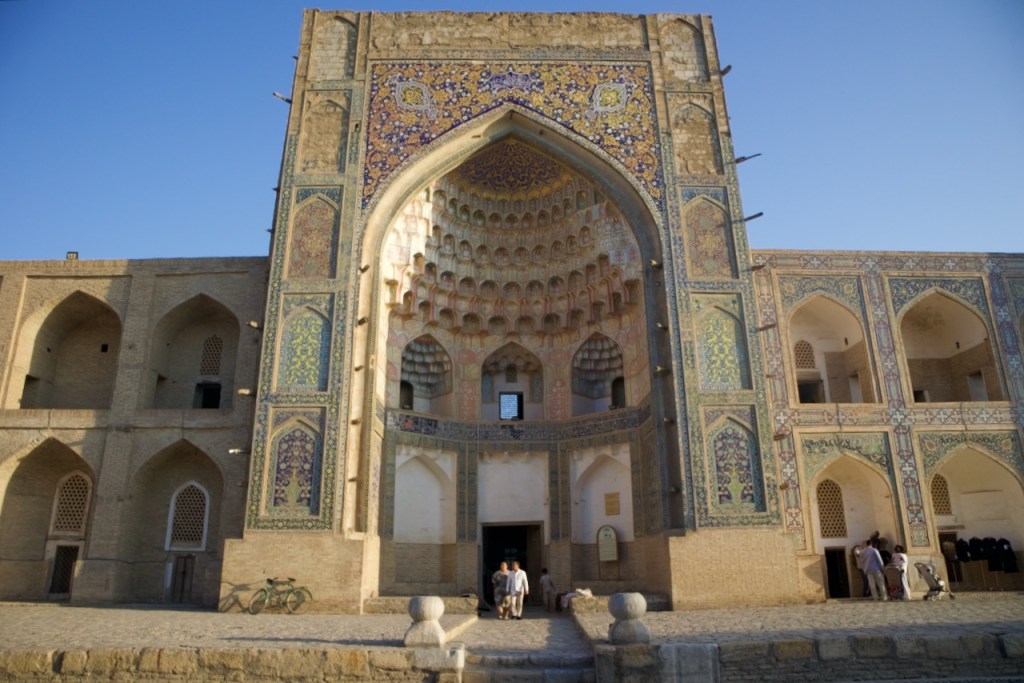
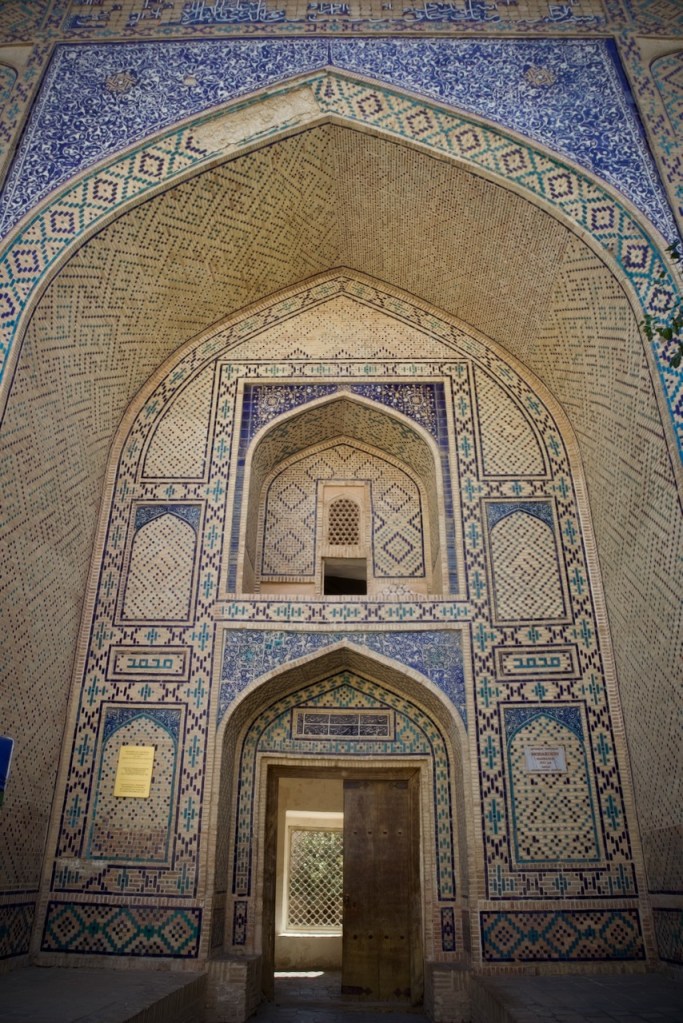
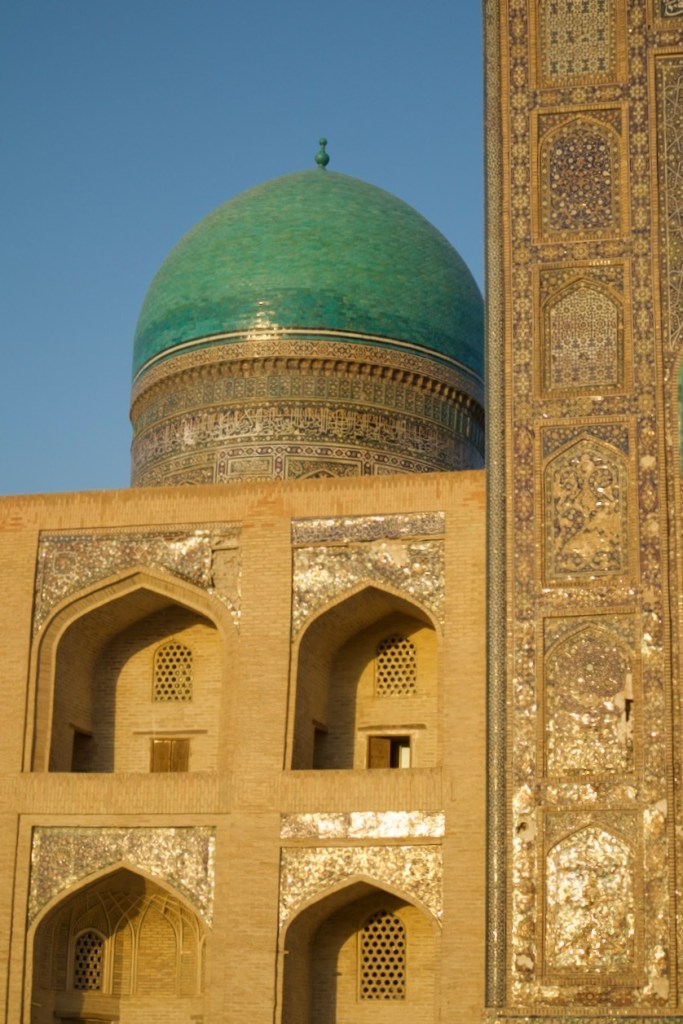
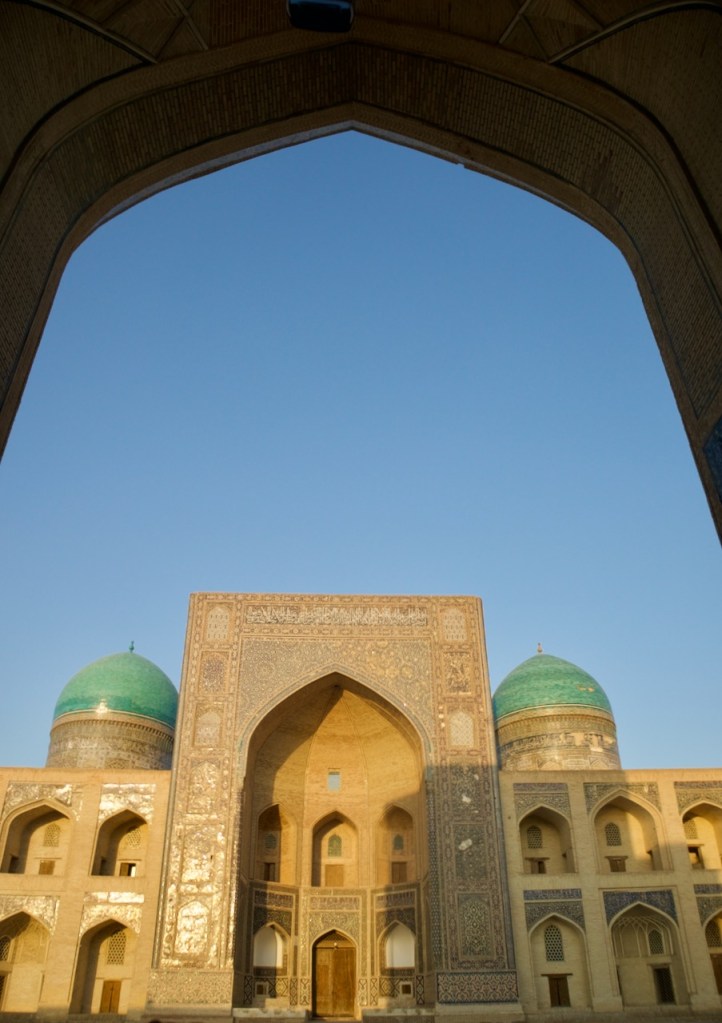
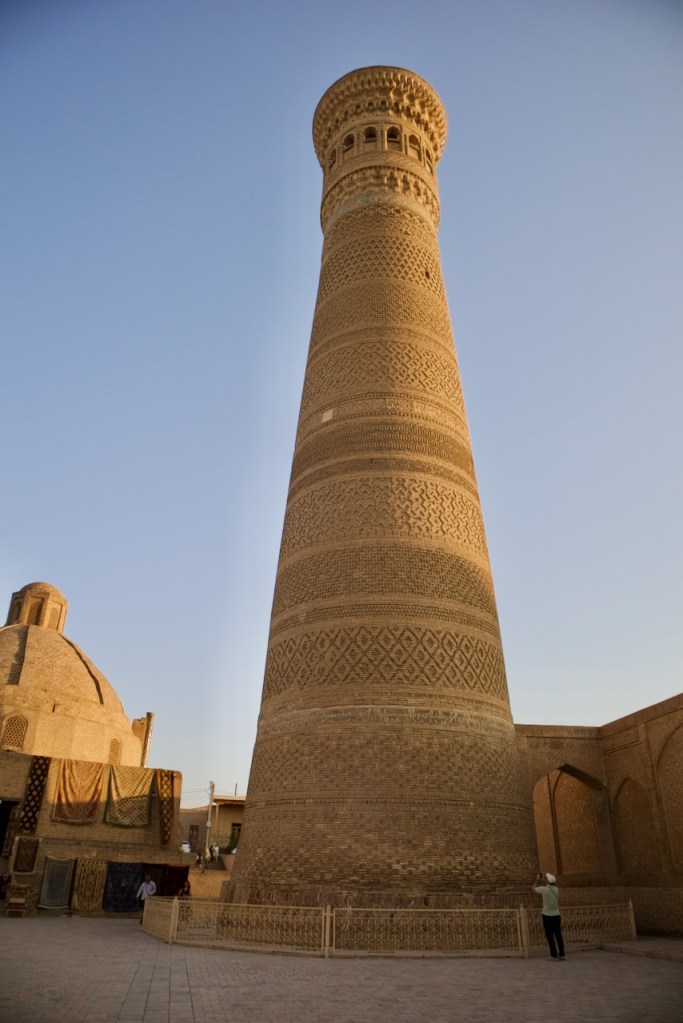
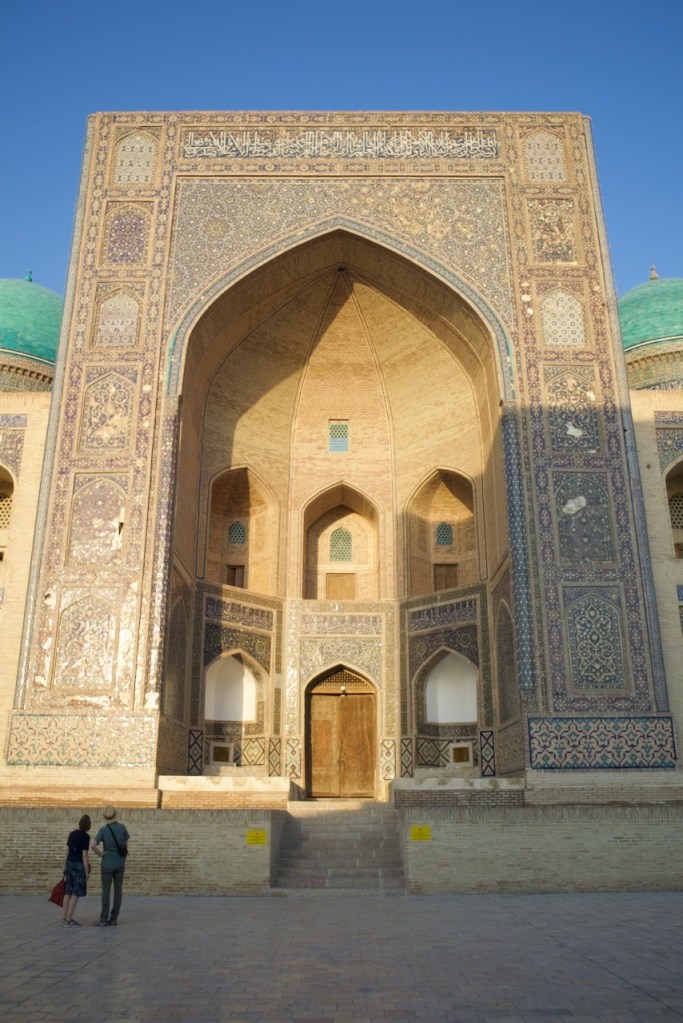
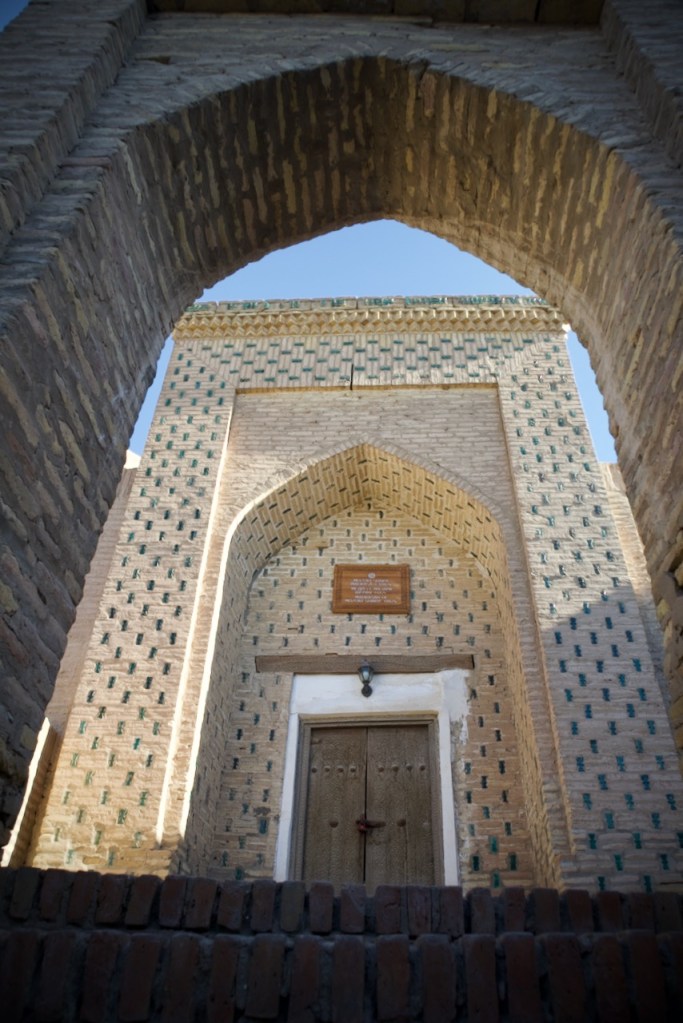
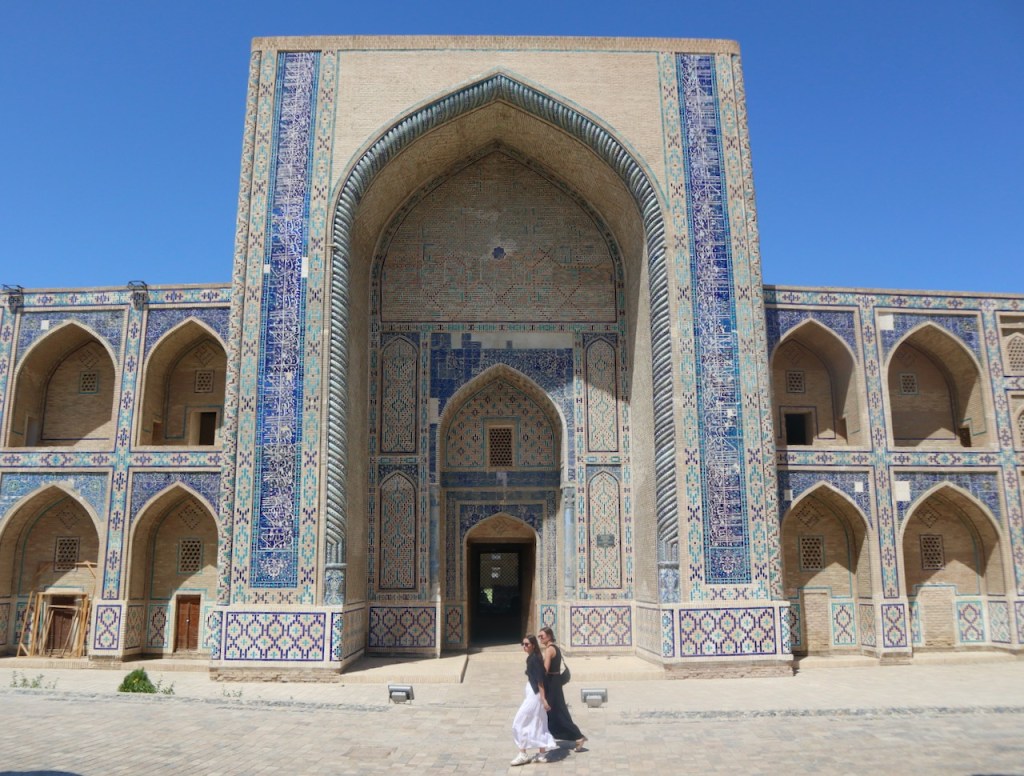
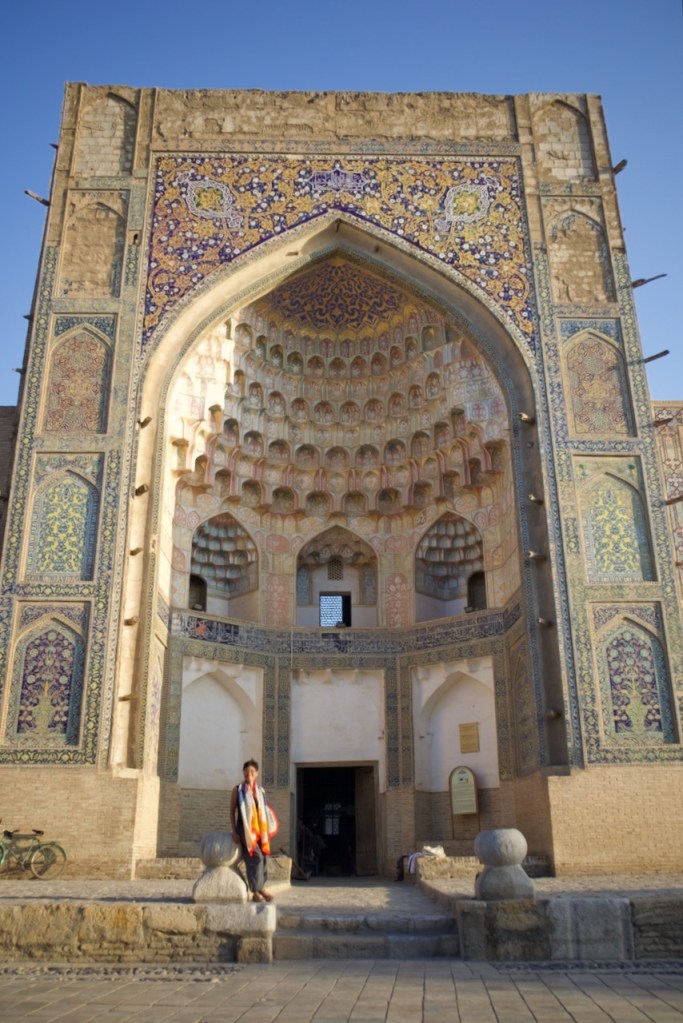
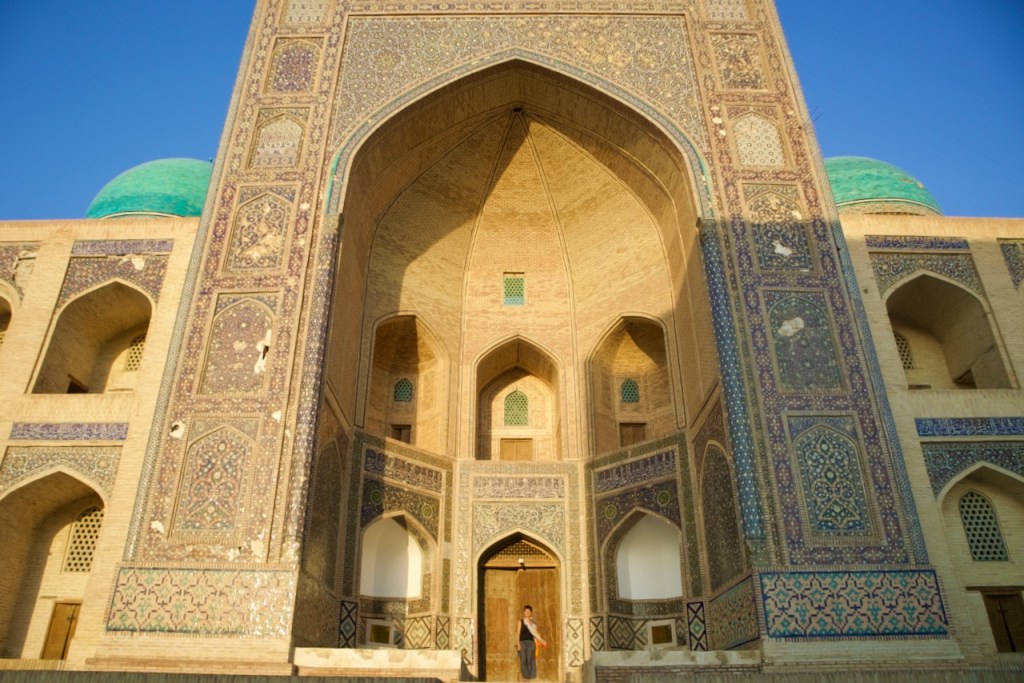
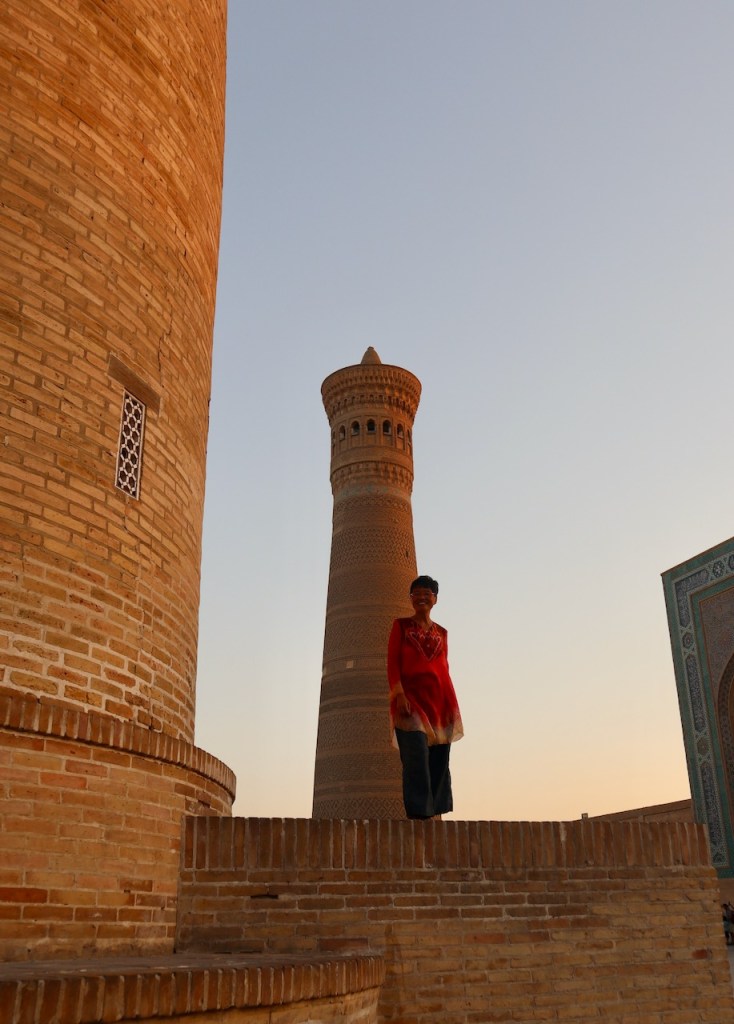
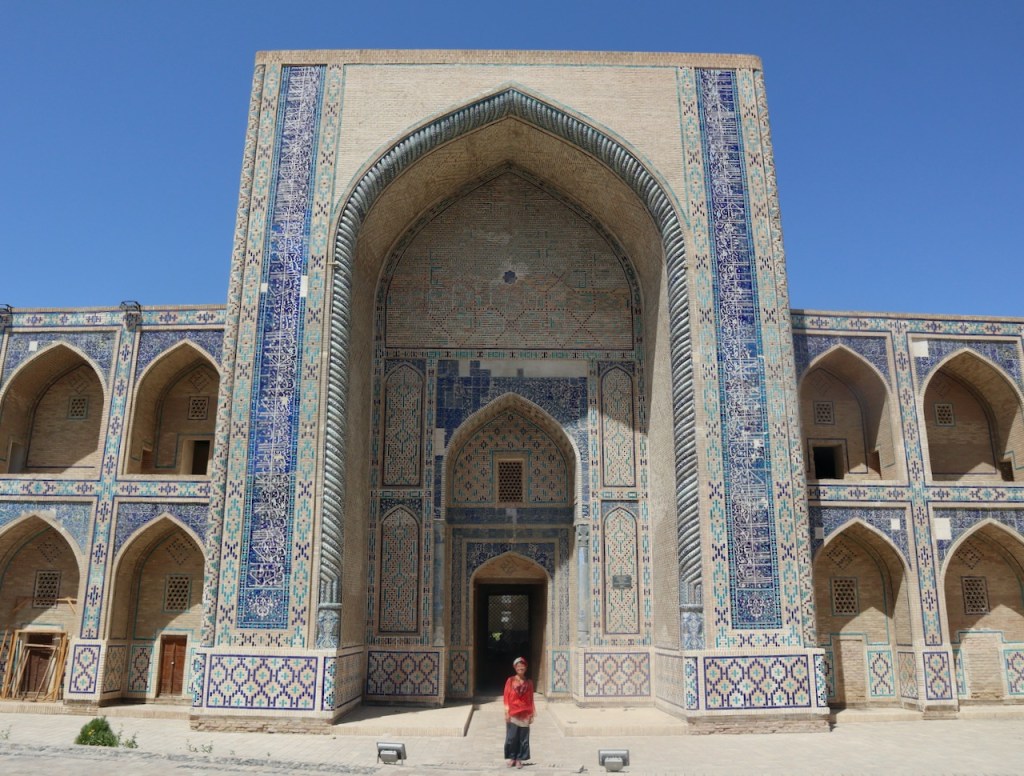
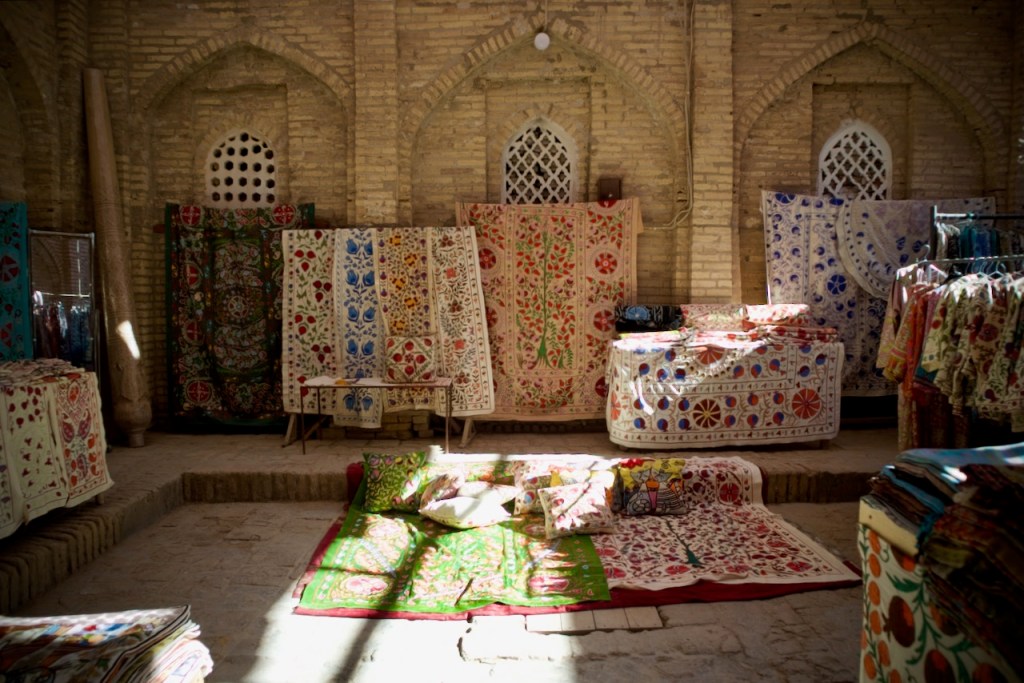
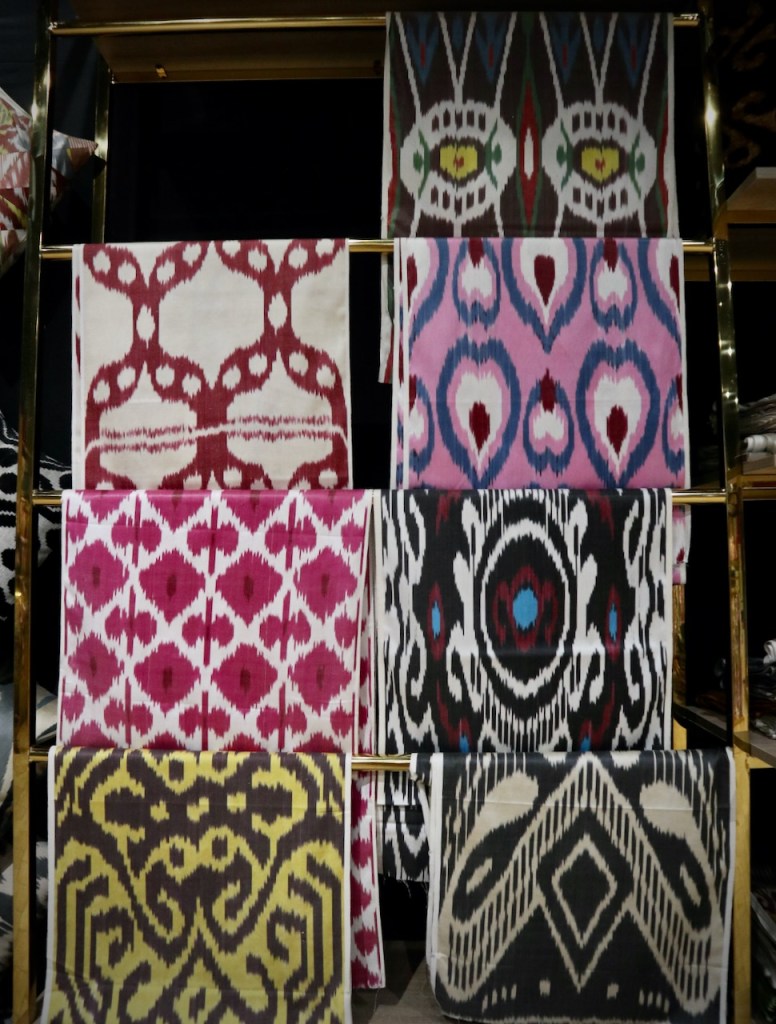
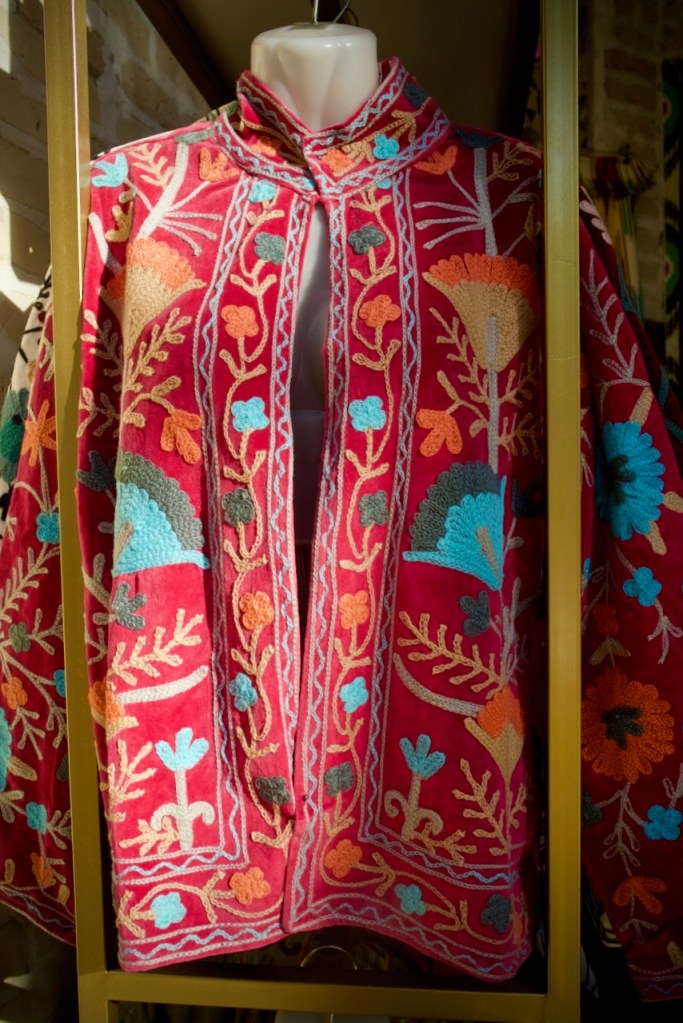
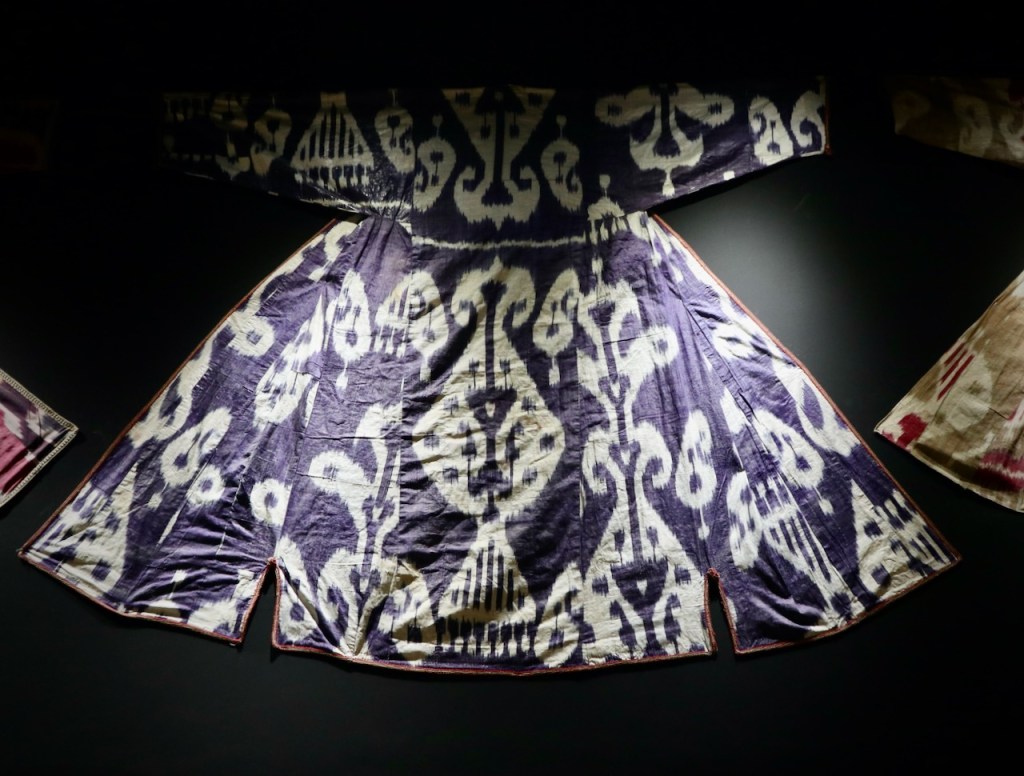
The Ulugbek and Abdullahziz Khan Madrasas always draw a crowd. Here tour guides explain the rich, colourful history of the learning centres, ornate cupolas and elaborate vaulting, bright yellow and indigo tiles, stalactite pendentives and even the technique behind the dome craftsmanship. Locals ply their trade with delicate silk scarves and stunning embroidered suzani. Just as you are already thoroughly impressed, you walk further and reach the Poi-Kalyan Ensemble with the towering Kalon Minaret (that even the almighty Genghis Khan spared), the vast Kalon Mosque, and the majestic Mir-i-Arab Madrasa with its two massive turquoise-blue tile domes in the golden hour. I still remember watching sun down from the rooftop cafe in my last visit. Seeing Poi-Kalyan in twilight again feels like a dream.
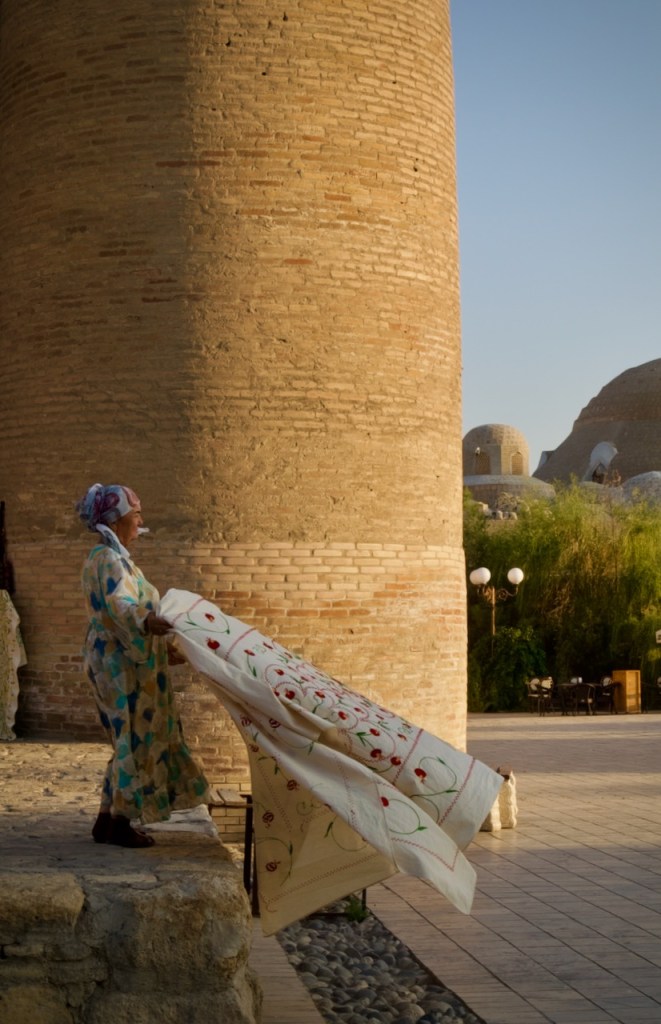
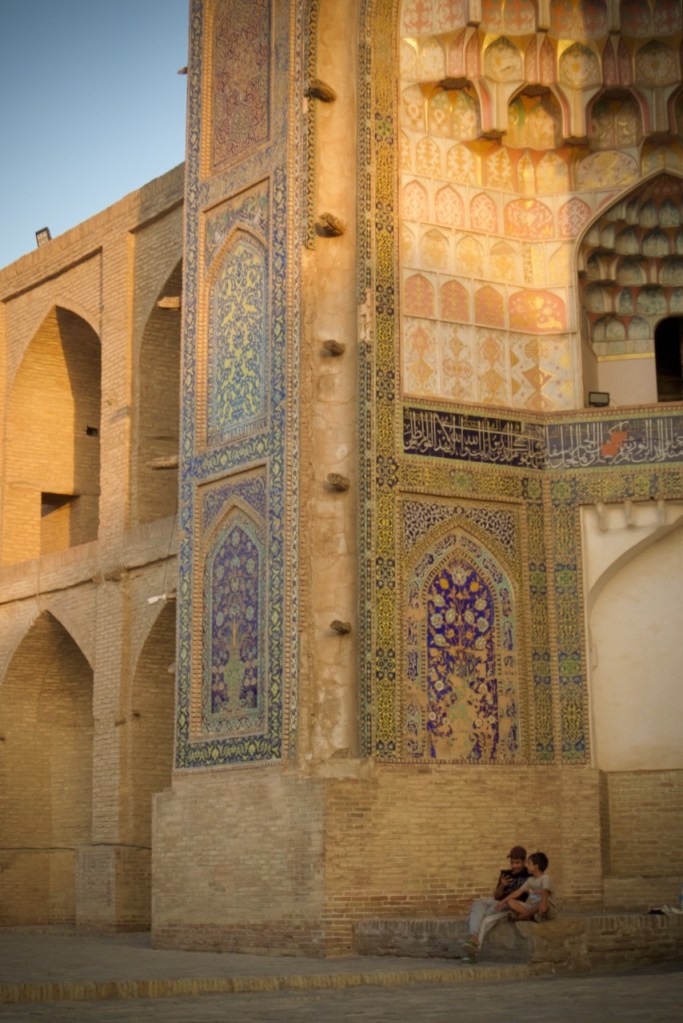
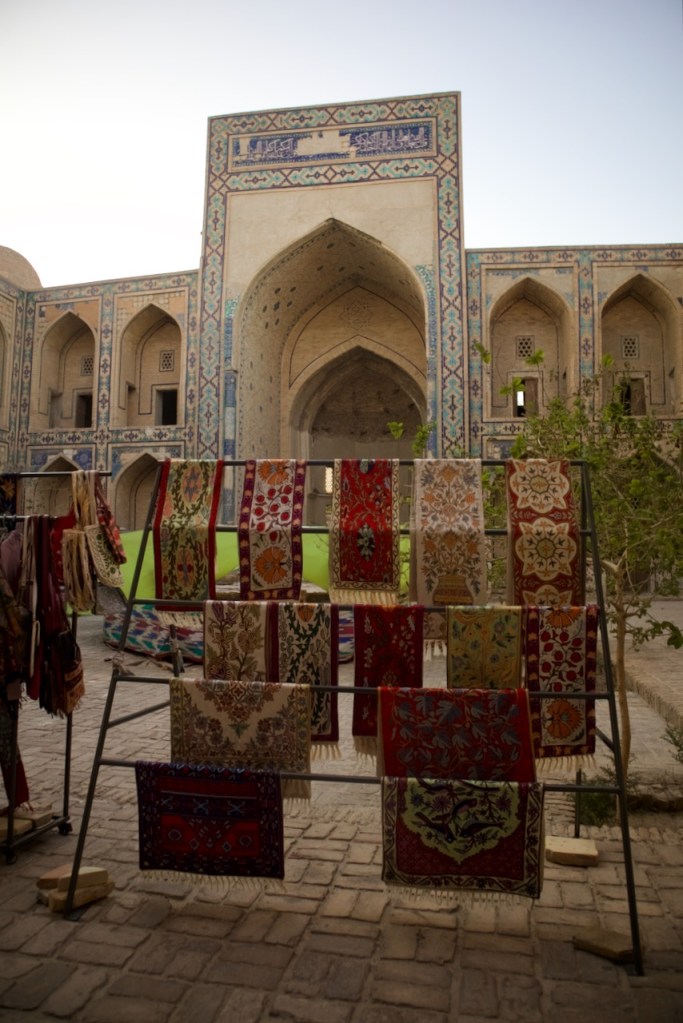
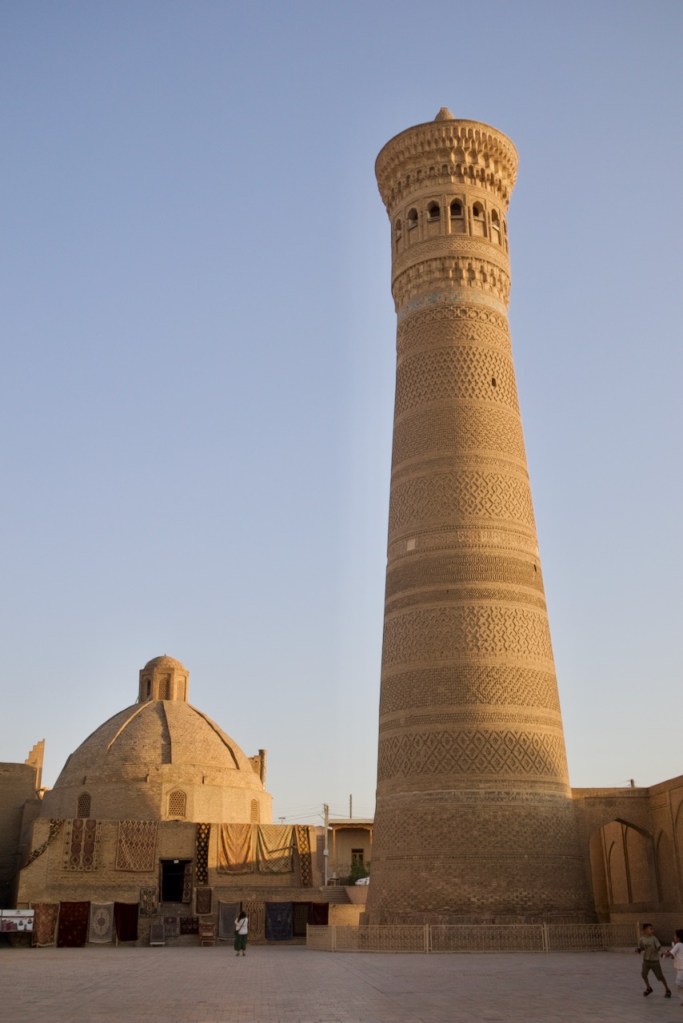
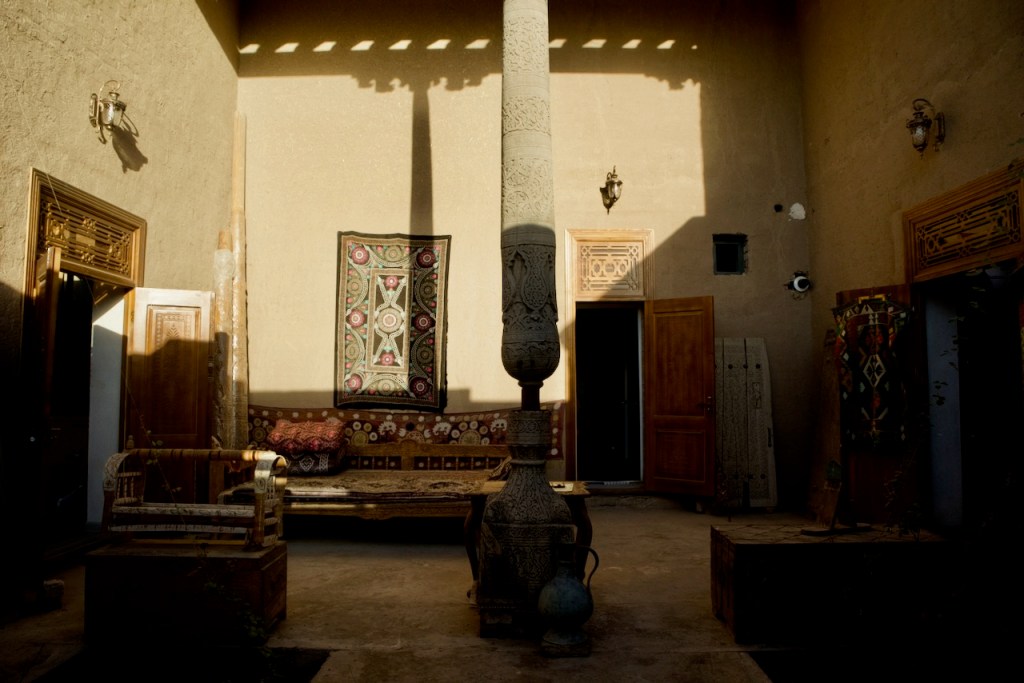
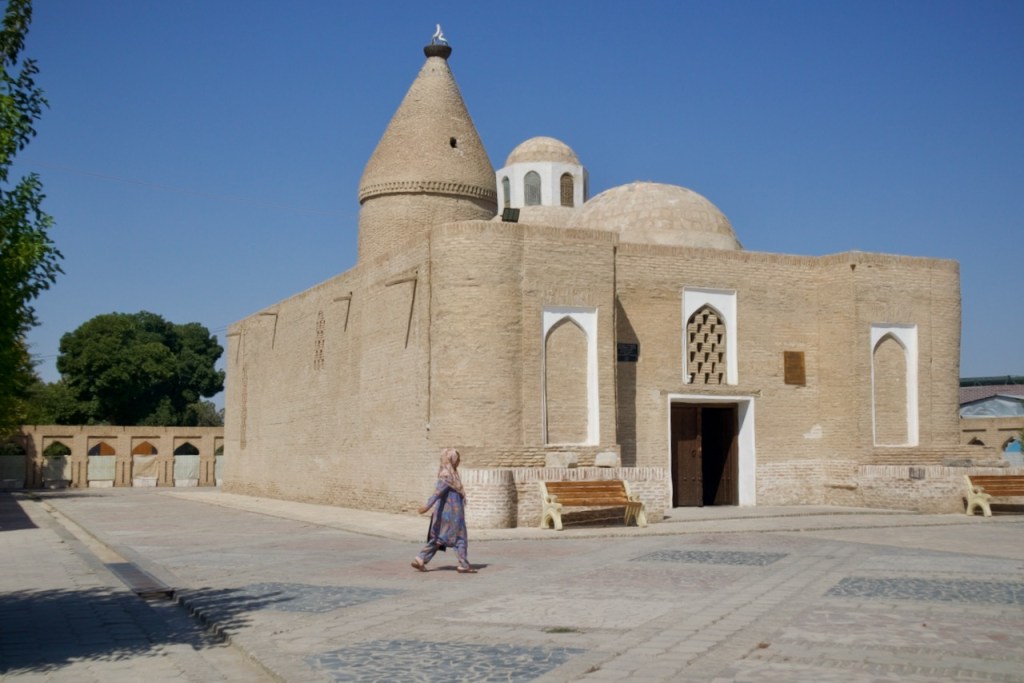
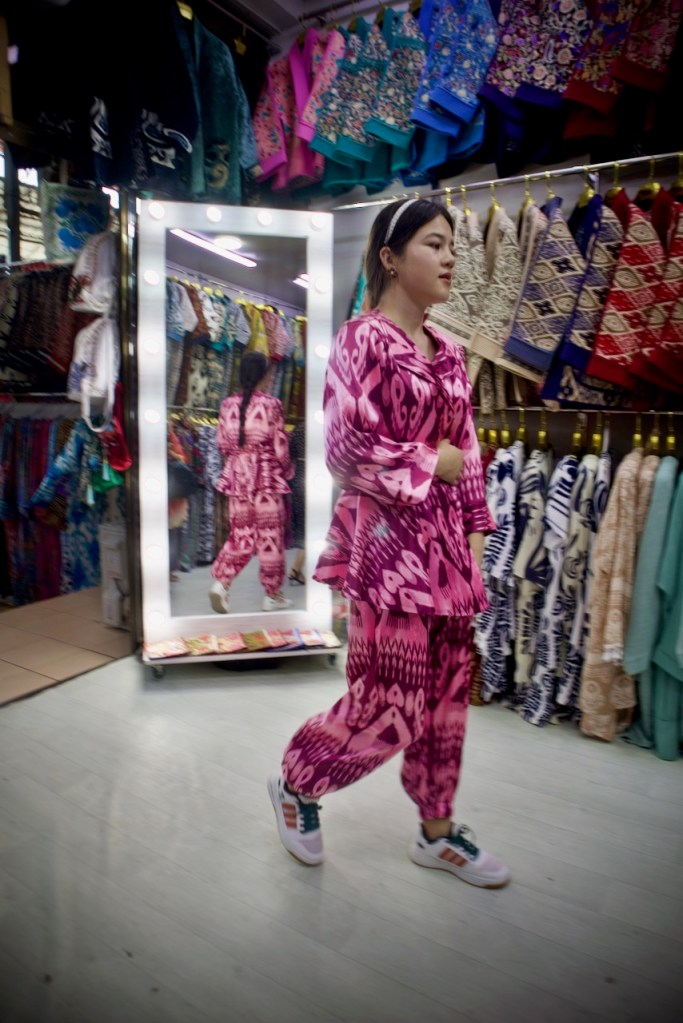
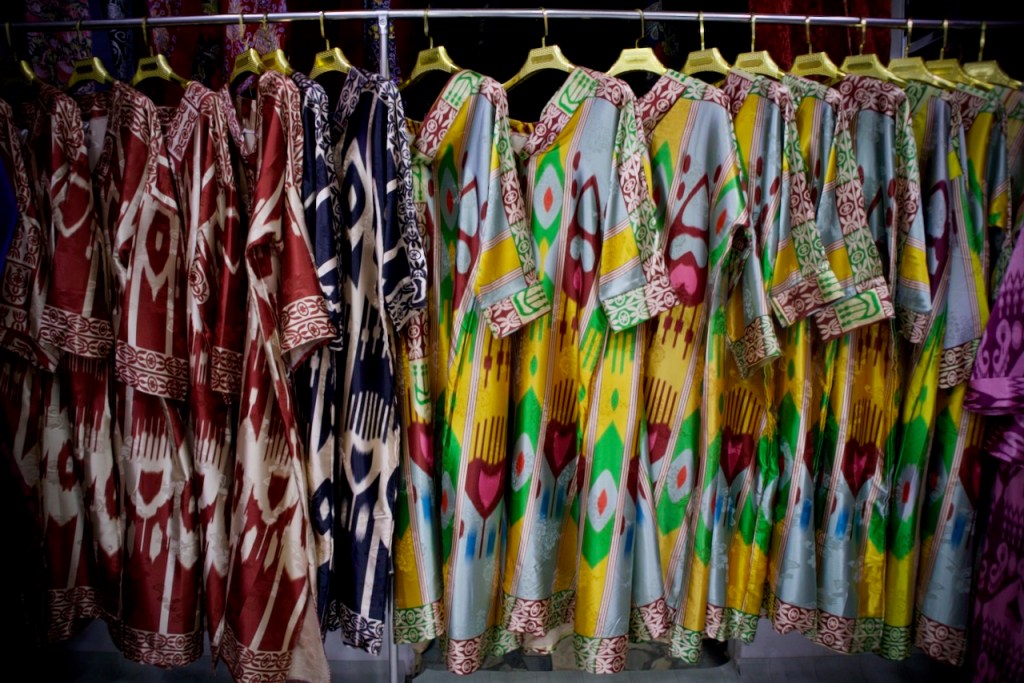
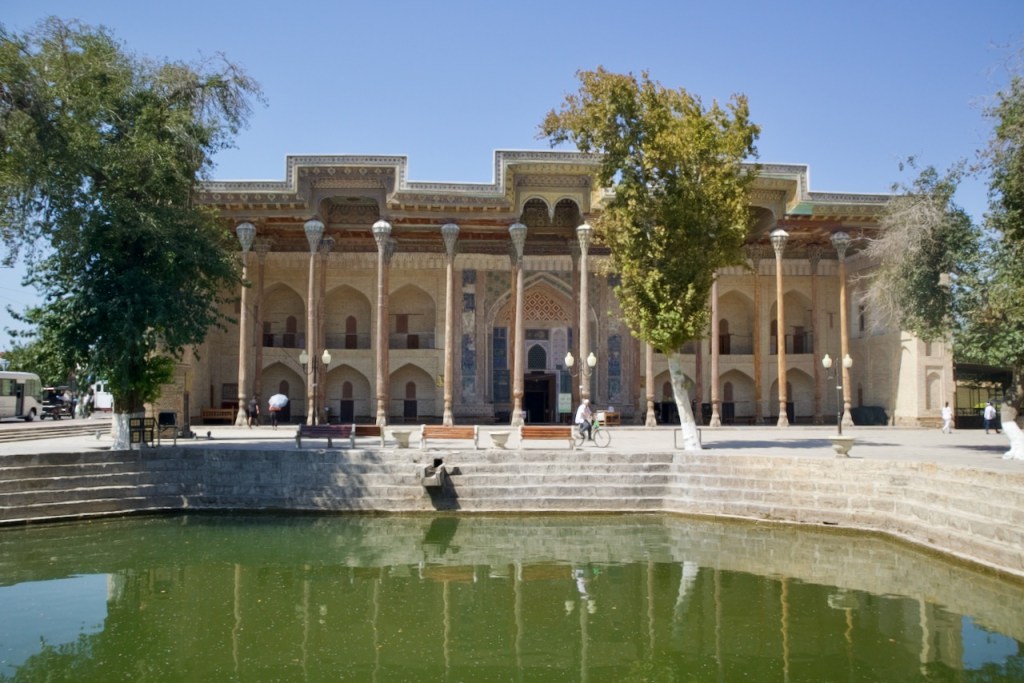
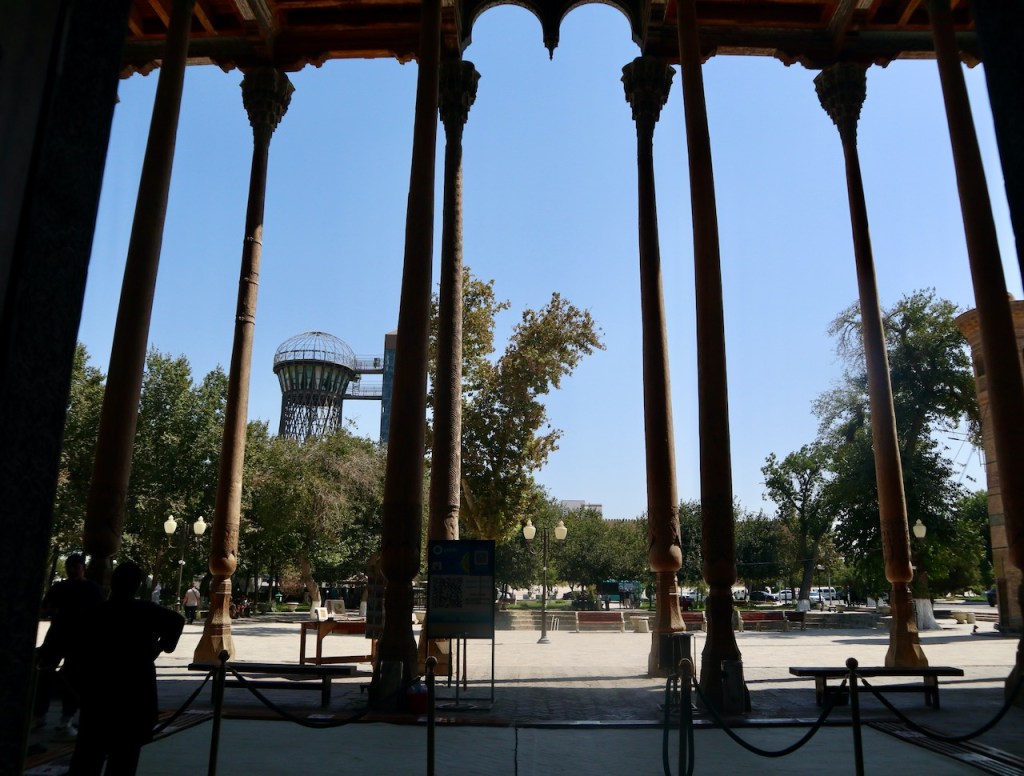
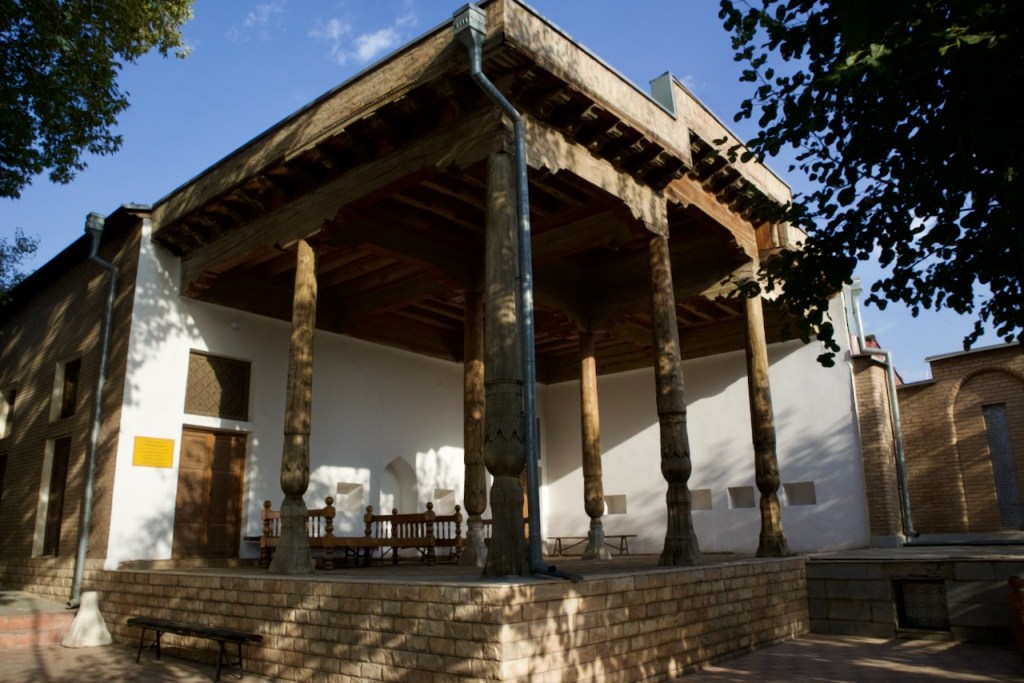
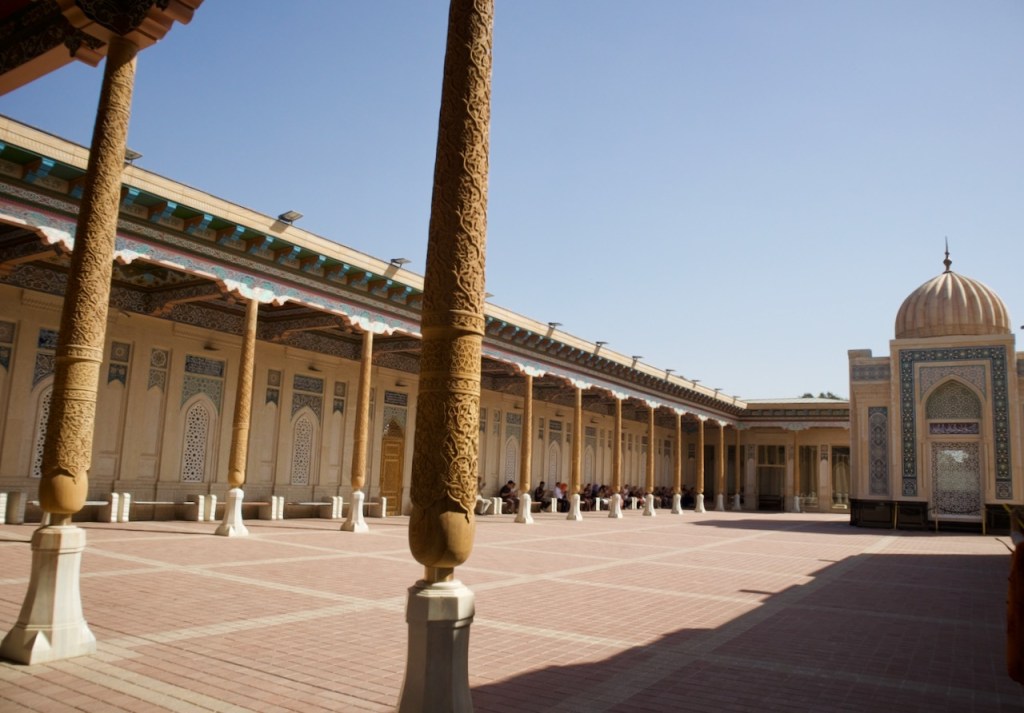
The following morning I visit the holy site of Chasma Ayub Mausoleum where, according to legend, a millennium before Islam, the Prophet Job struck the ground and a spring miraculously burst through, saving his followers. I make a pit stop at the bustling Kalkhoz Bazaar next door to check out the fancy silk kuylak (dress) but end up buying just tomatoes and cucumber instead. The Bolo Khauz Pool in the Register Square has a stunning reflection of a miniature minaret and the mosque’s exquisitely carved wooden pillars. I retrace my steps to the Ark, the madrassas, and the Kalyan Minaret, passing again through the caravanserais and trading dooms like in a loop, feeling sad to leave this gorgeous city, but Ashgabat is calling me.
Khiva: A Living Fairytale
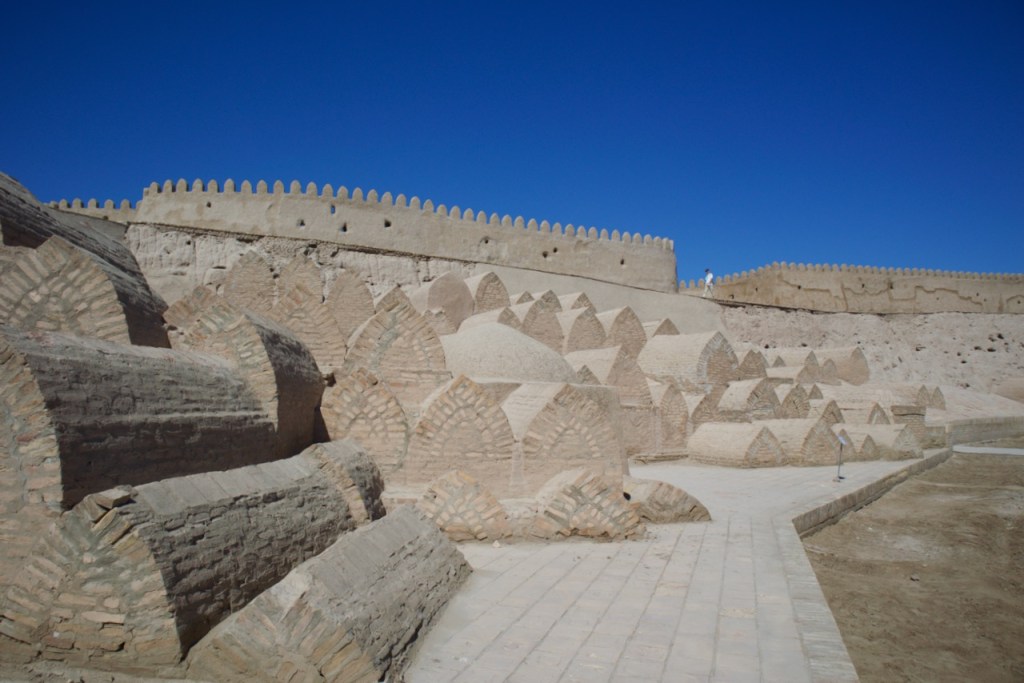
After a four-day whirlwind tour in Turkmenistan, I cross back the border and reach Khiva that I had missed in my 2011 visit to Uzbekistan. The oasis town might have grown into prominence out of sheer luck, becoming the capital of Khorezm Empire in 1598 when the Amu Darya river shifted course, leaving Konye-Urgench in today’s Turkmenistan high and dry, but the successive nomadic Uzbek rulers spared nothing to develop the desert city into a major trading post and spiritual centre.
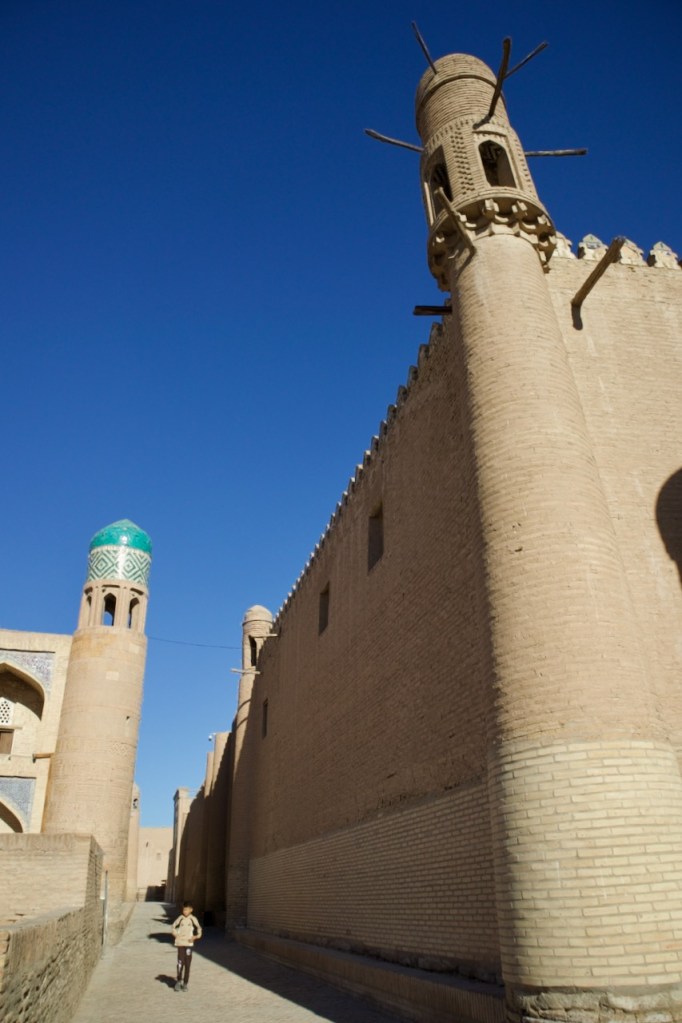
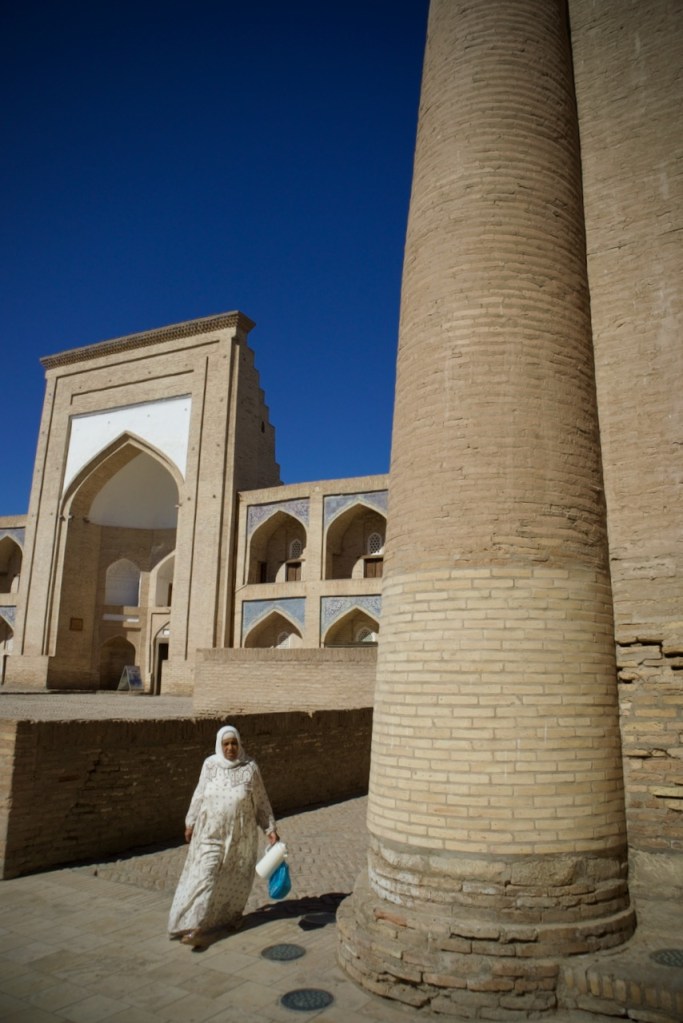
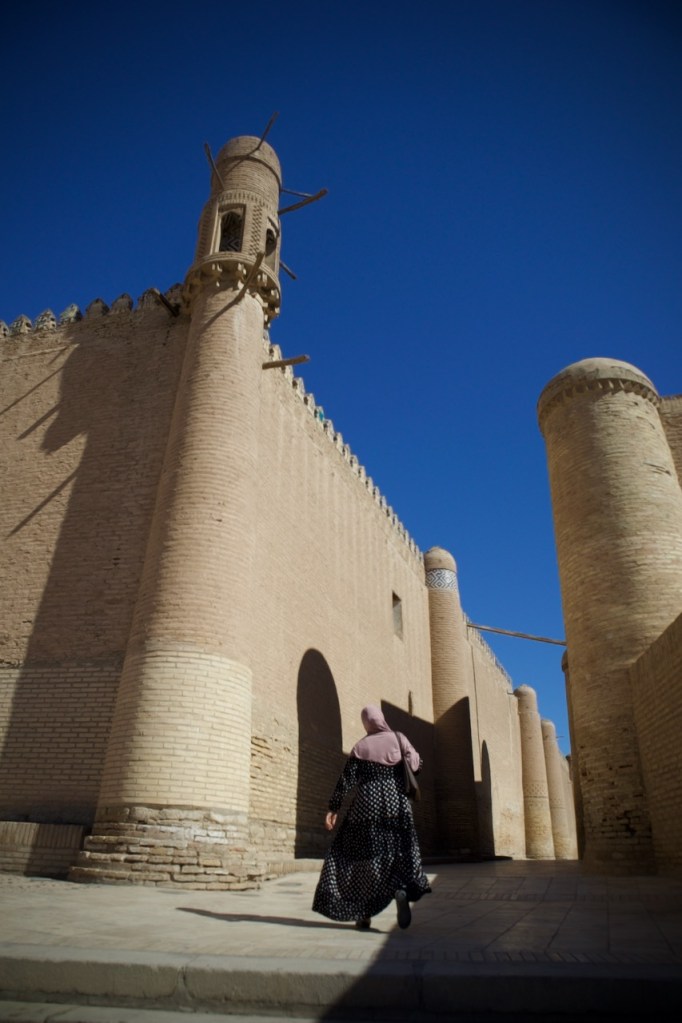
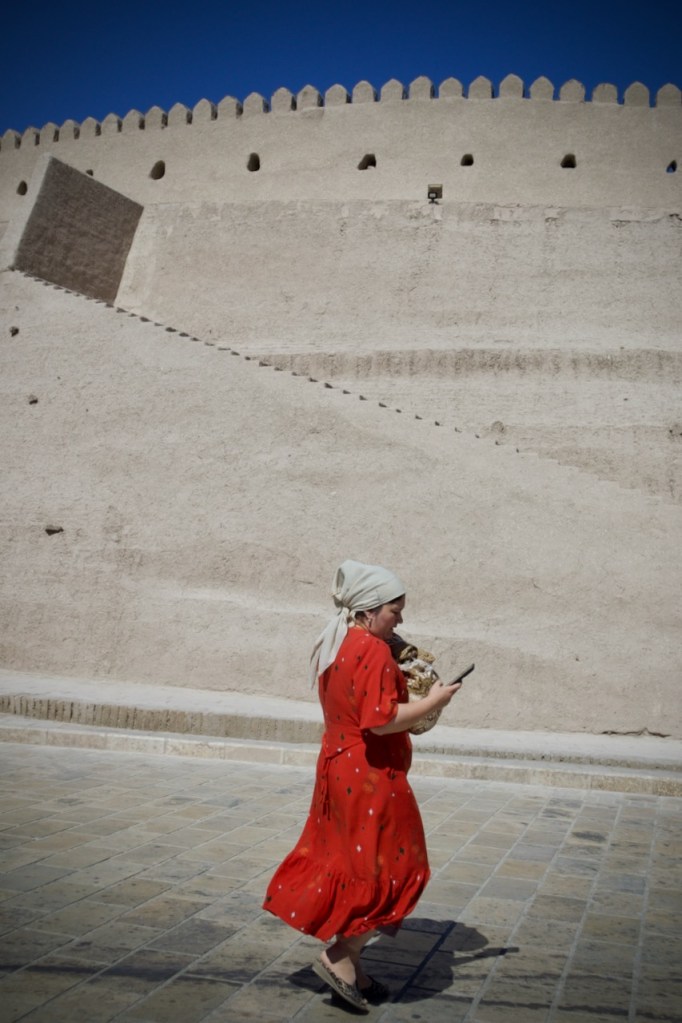
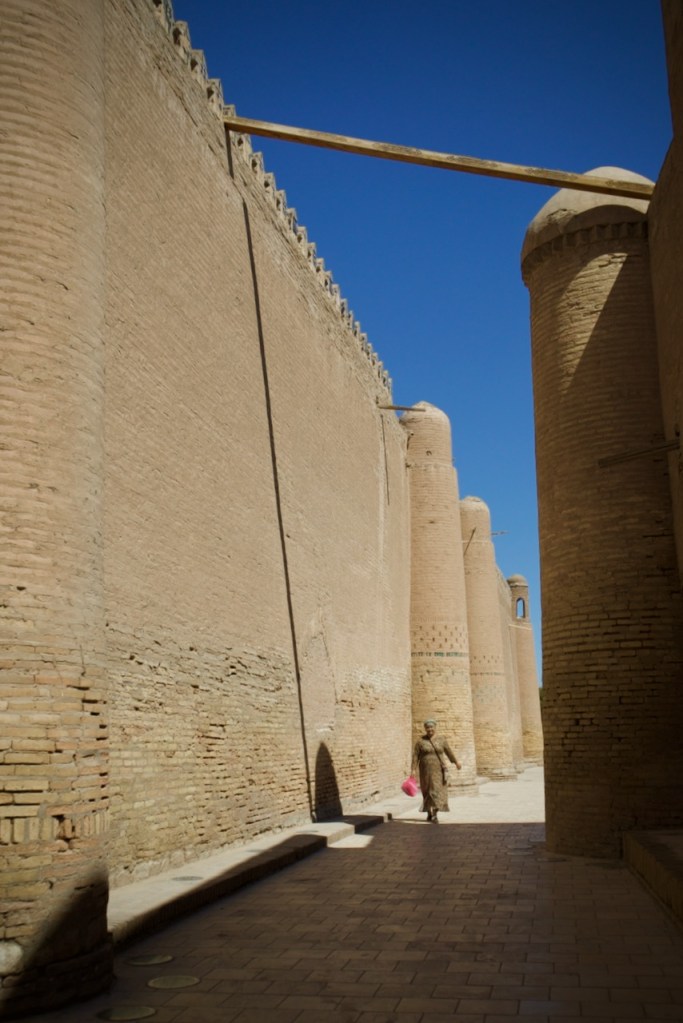
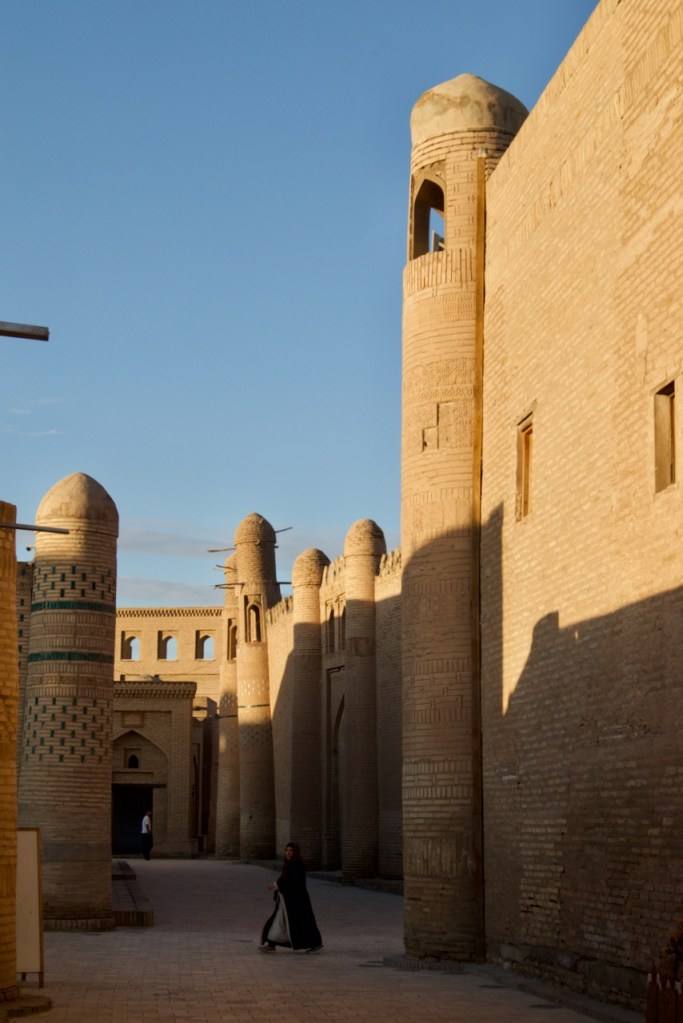
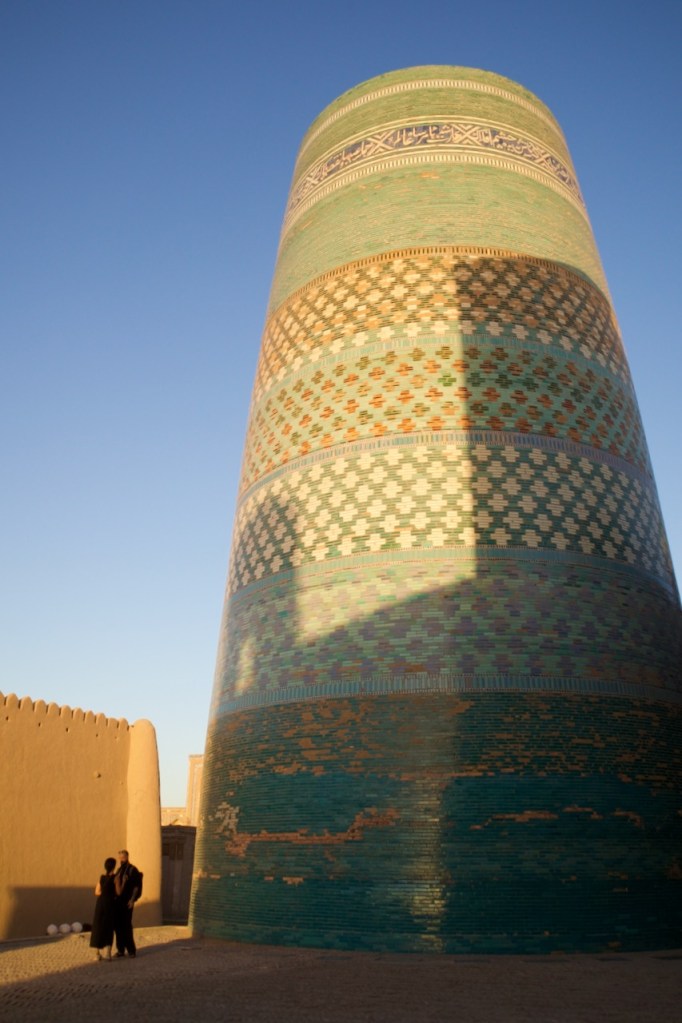
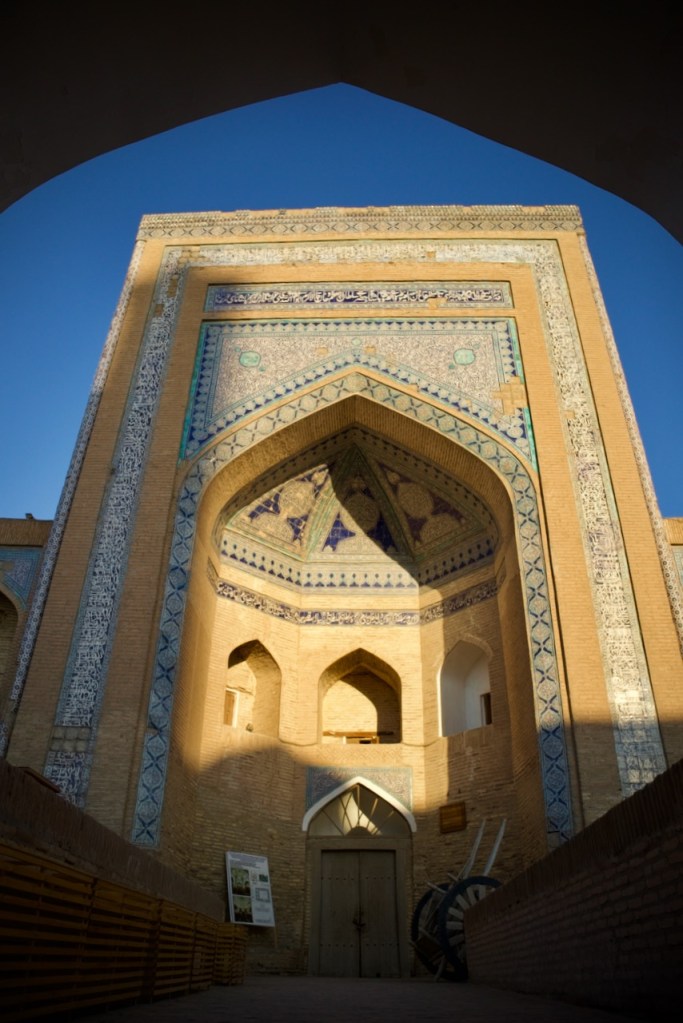
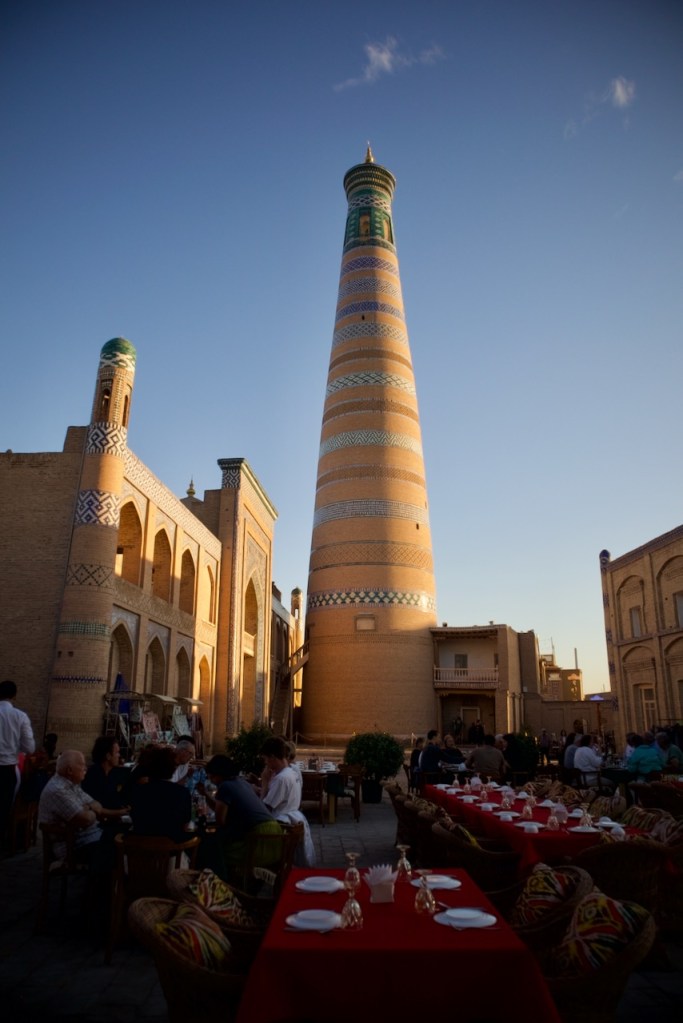
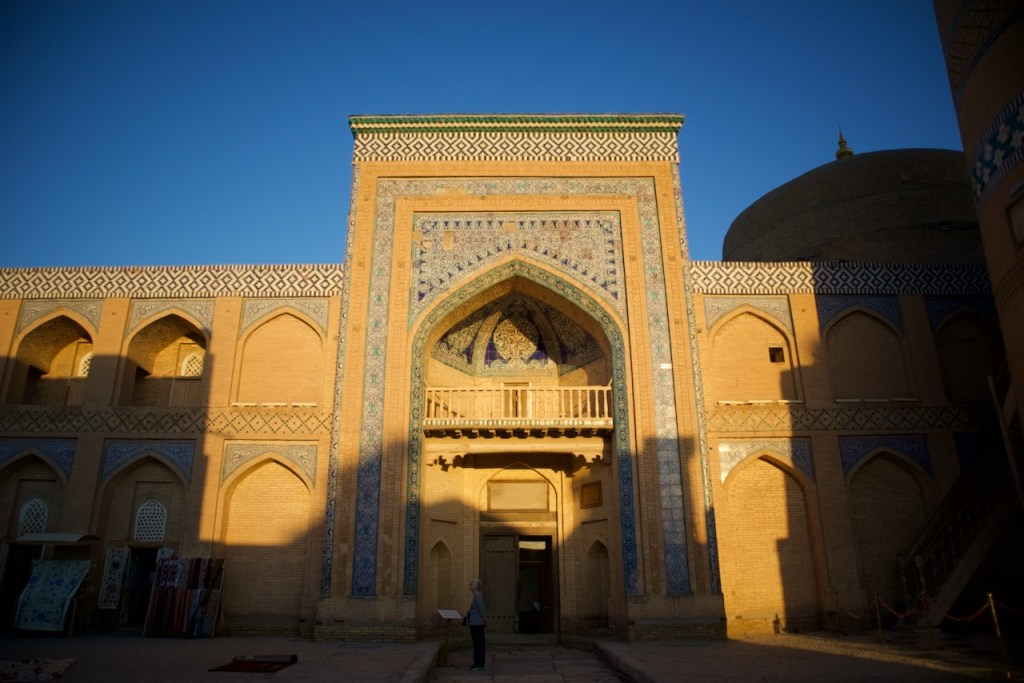
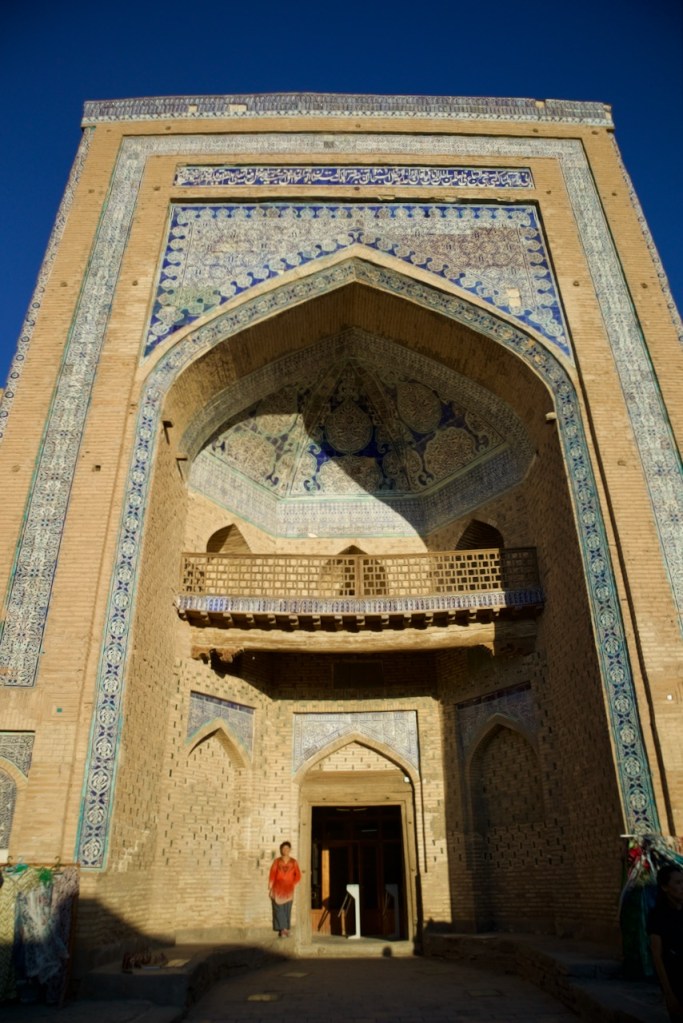
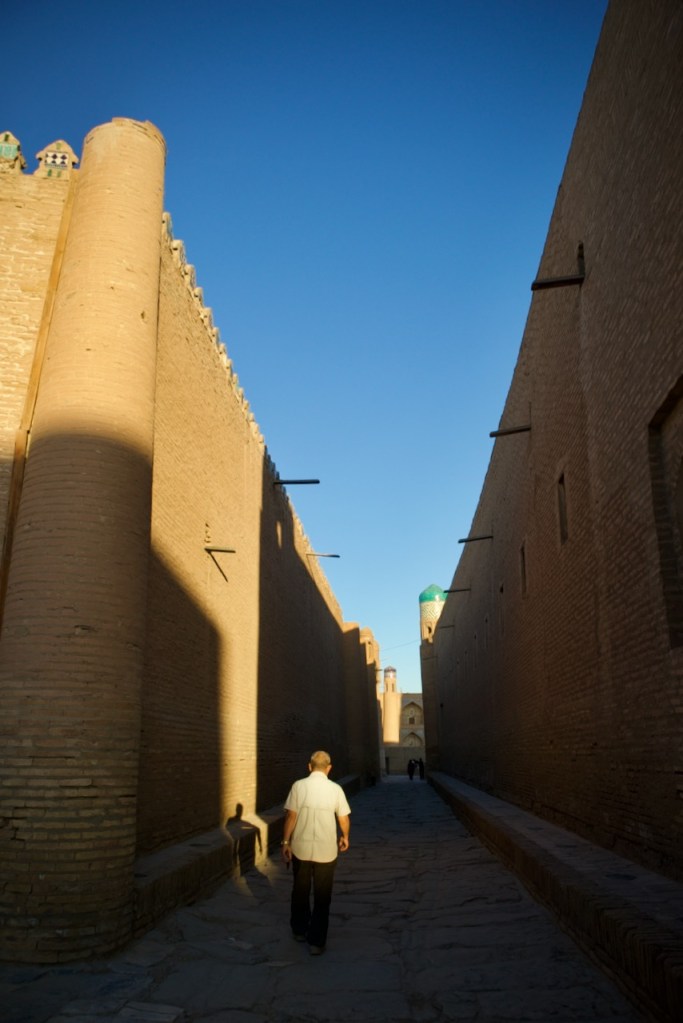
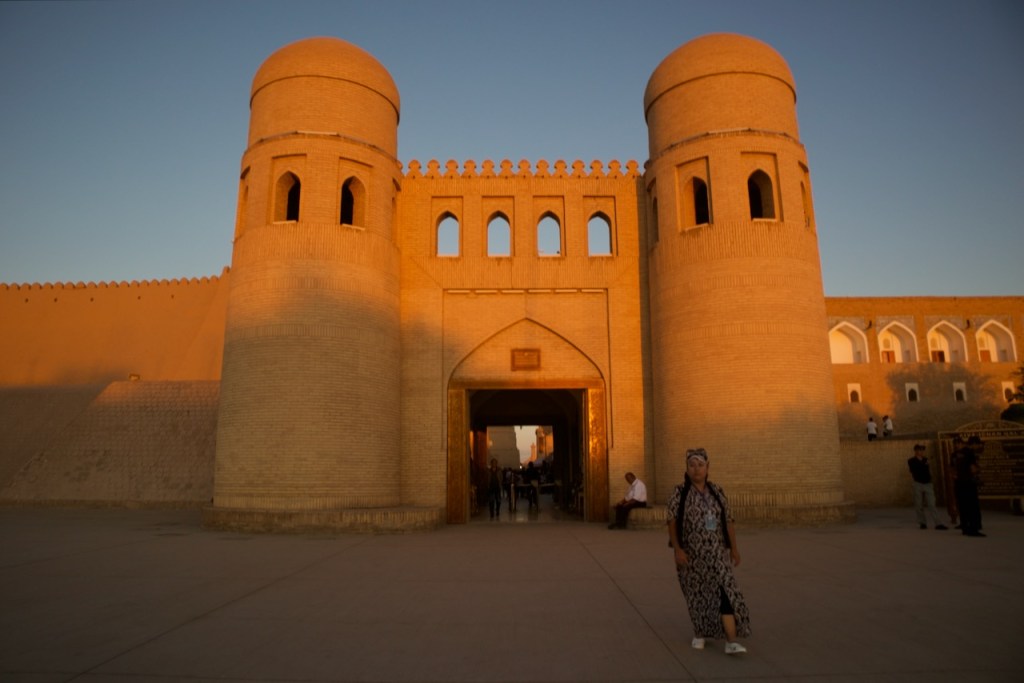
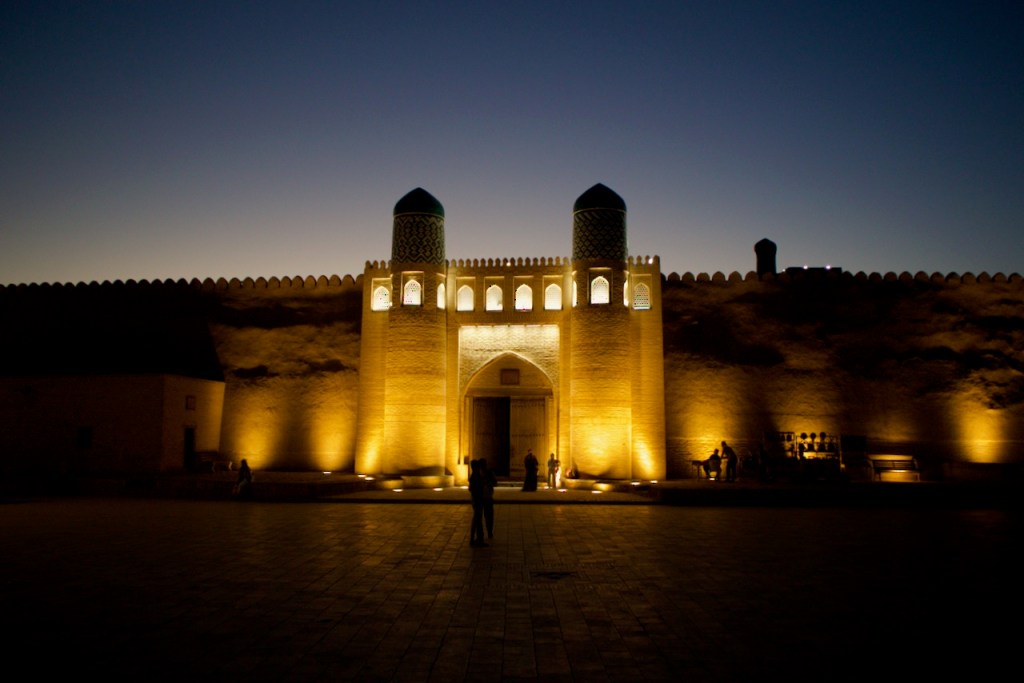
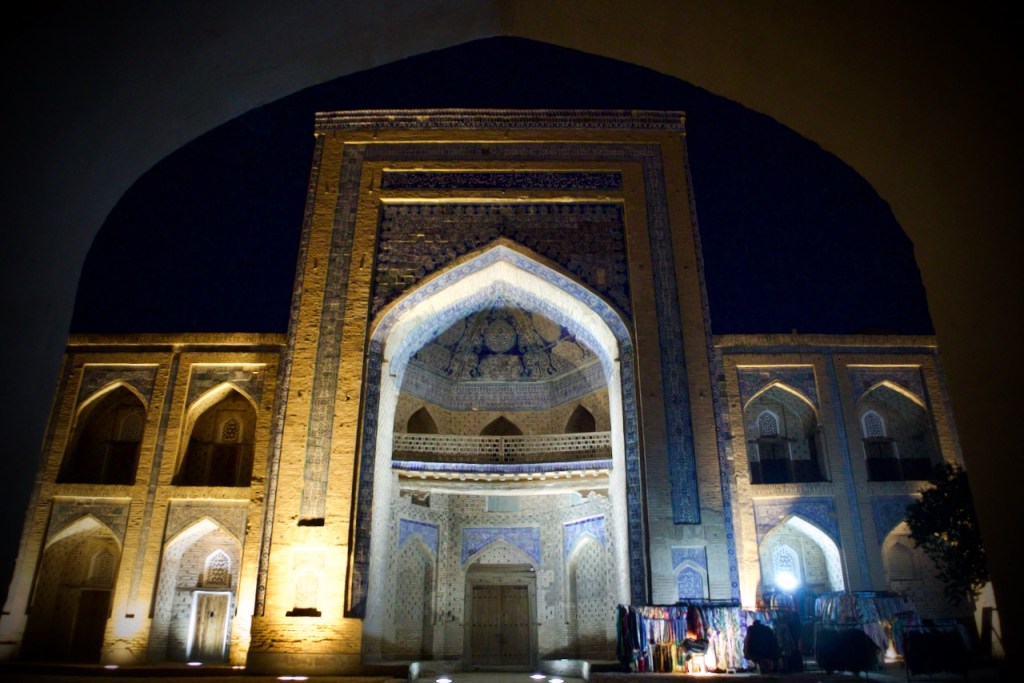
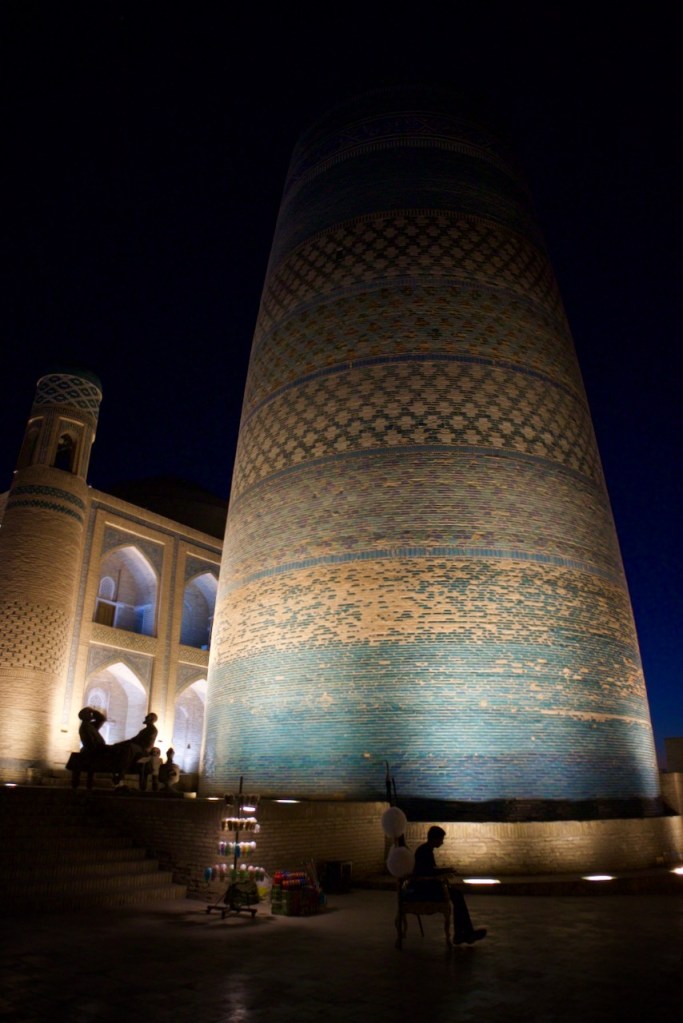
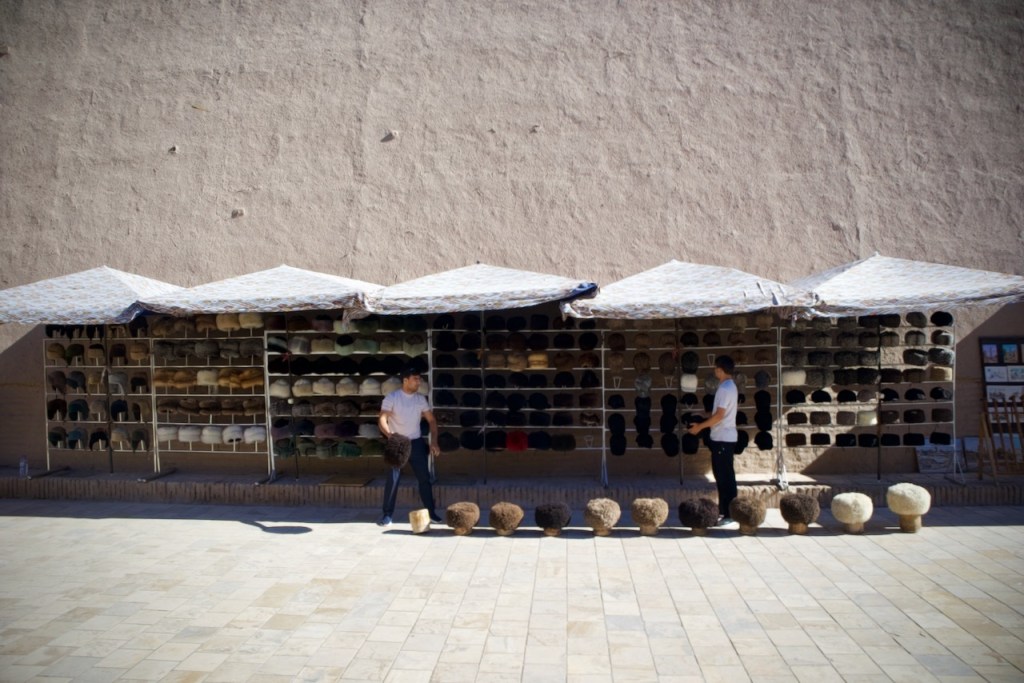
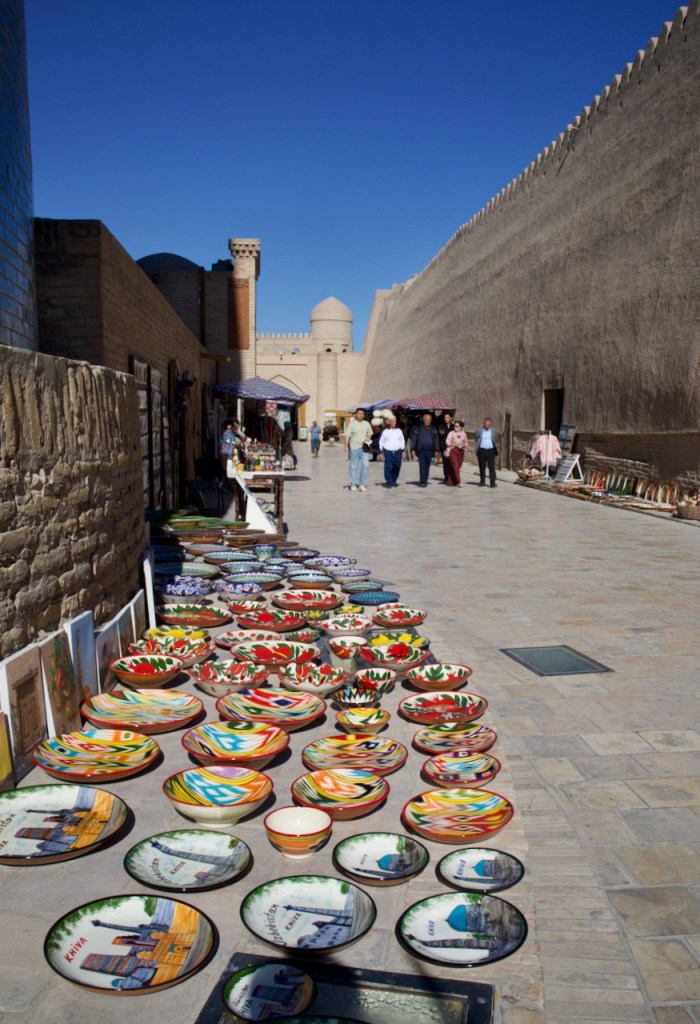
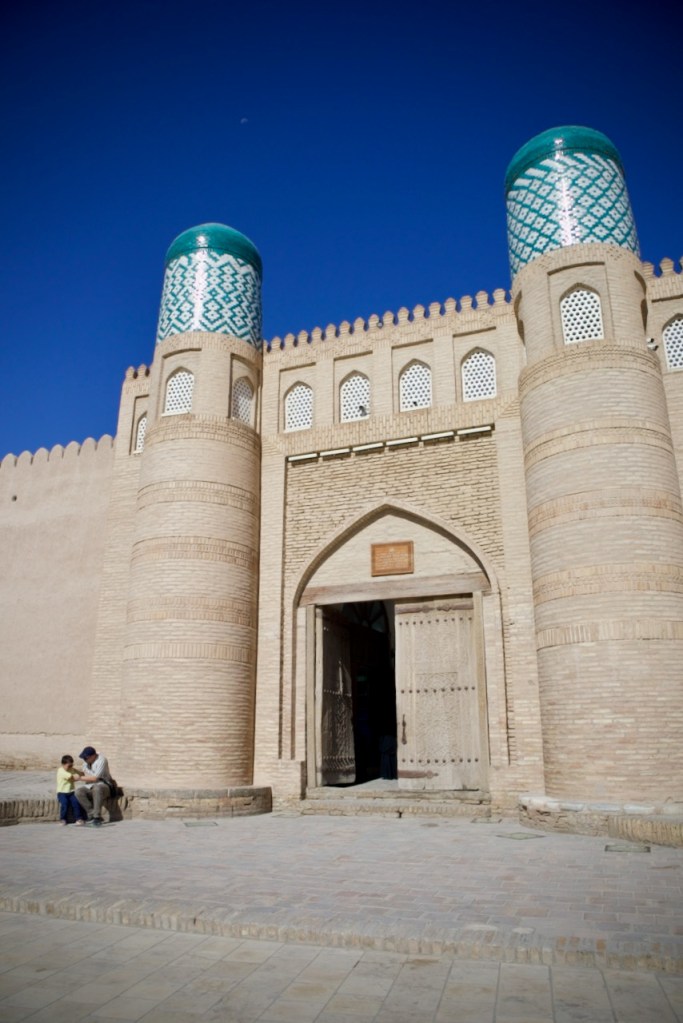
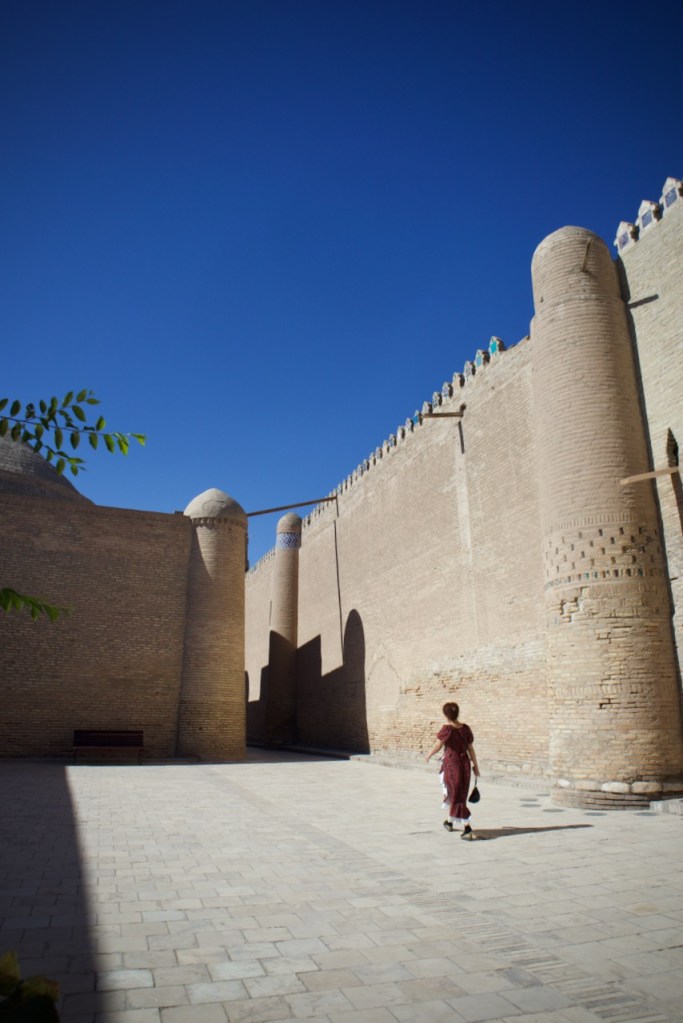
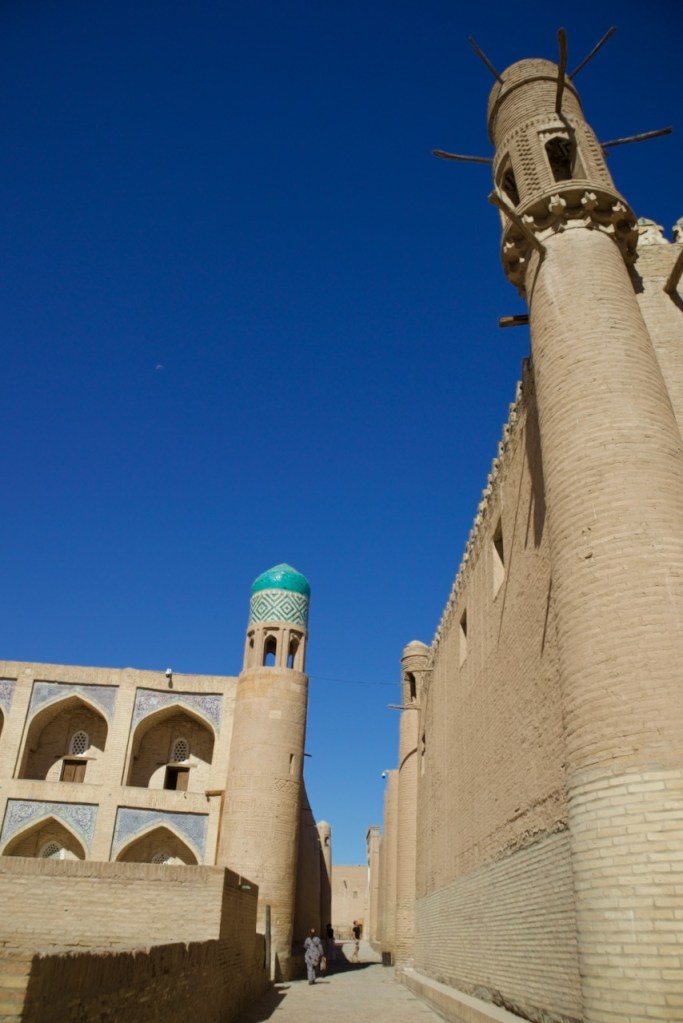
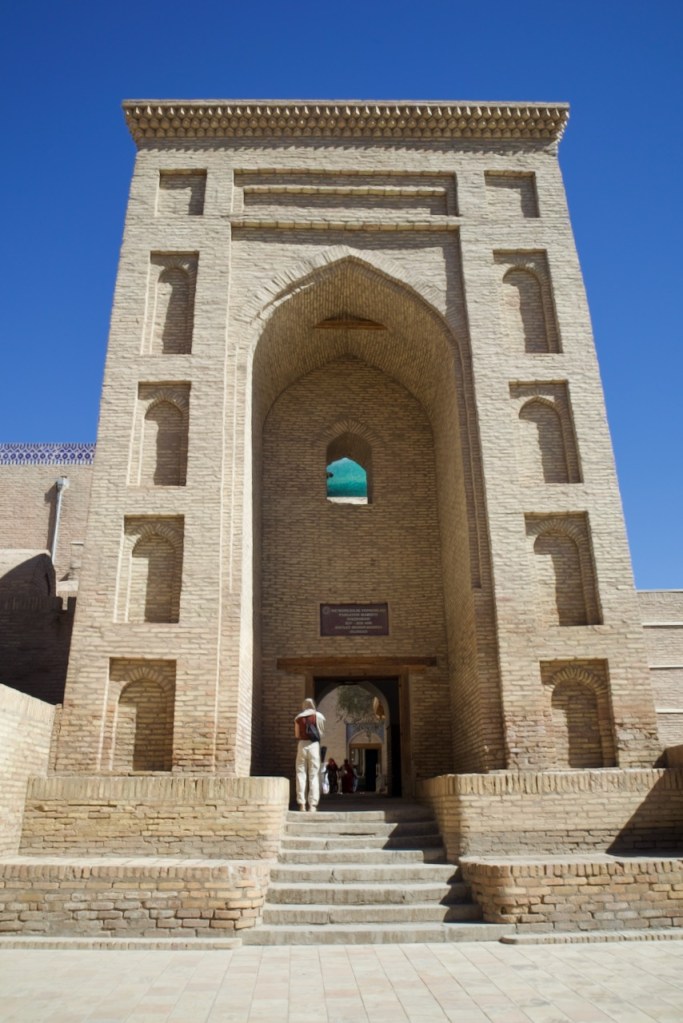
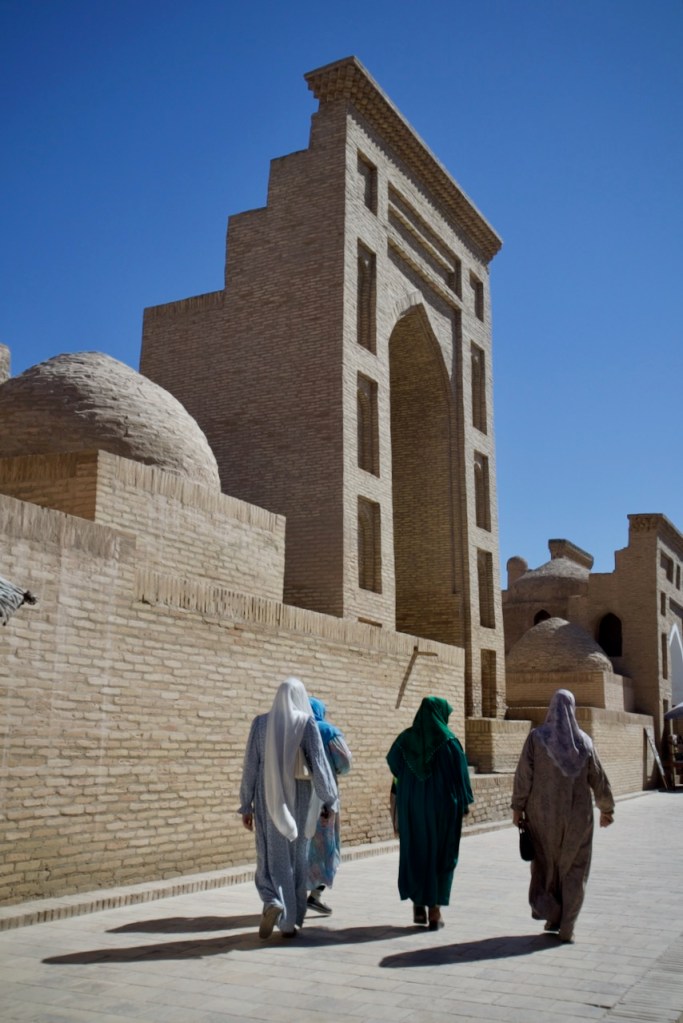
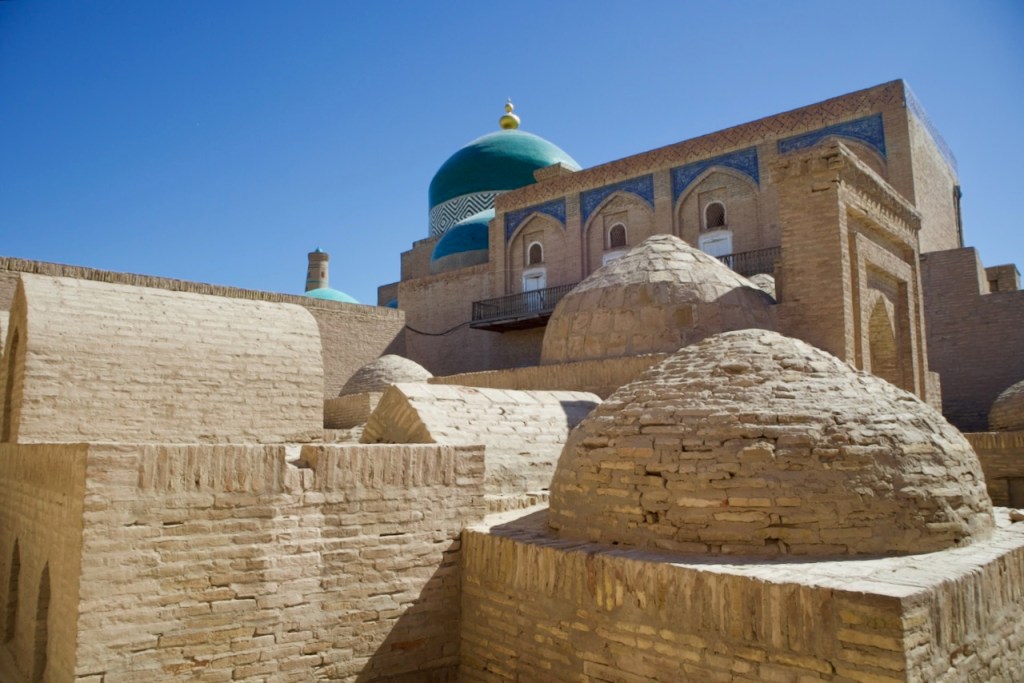
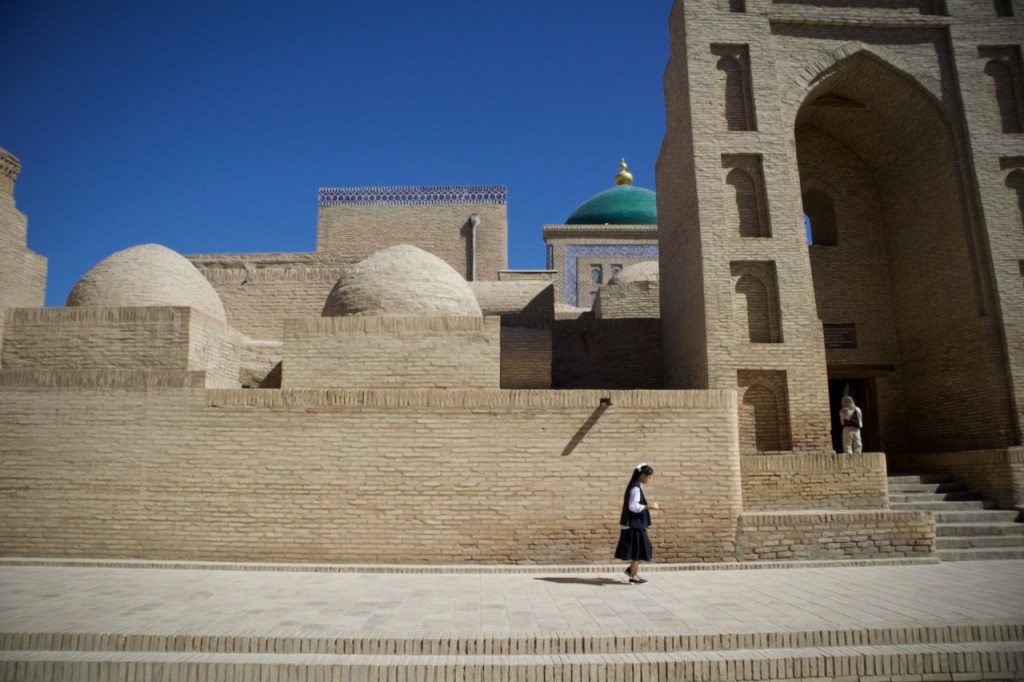
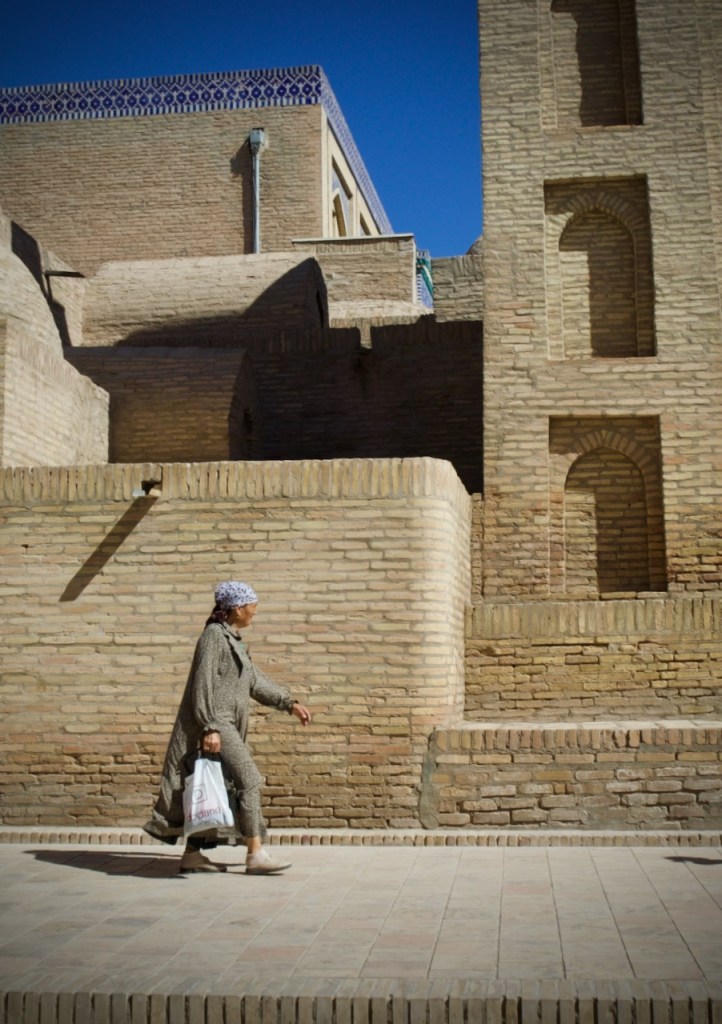
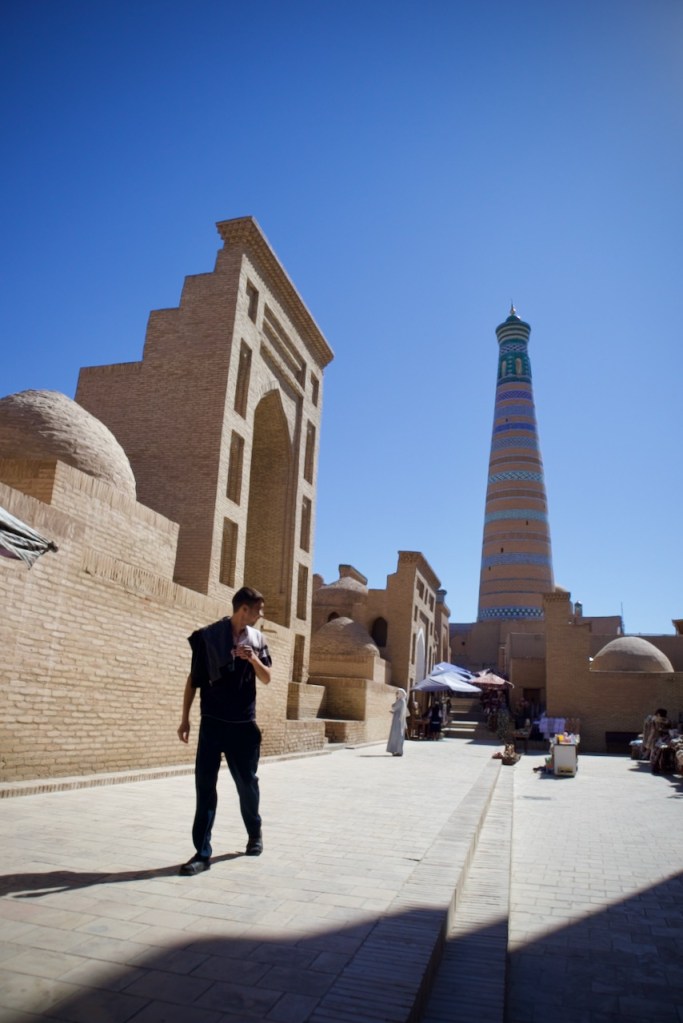
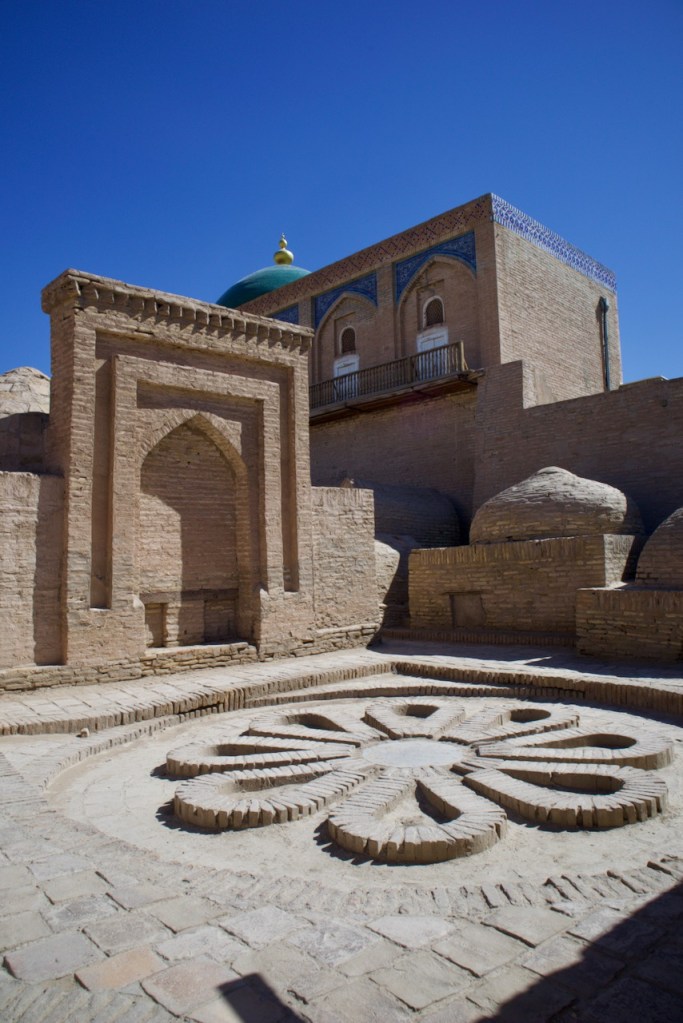
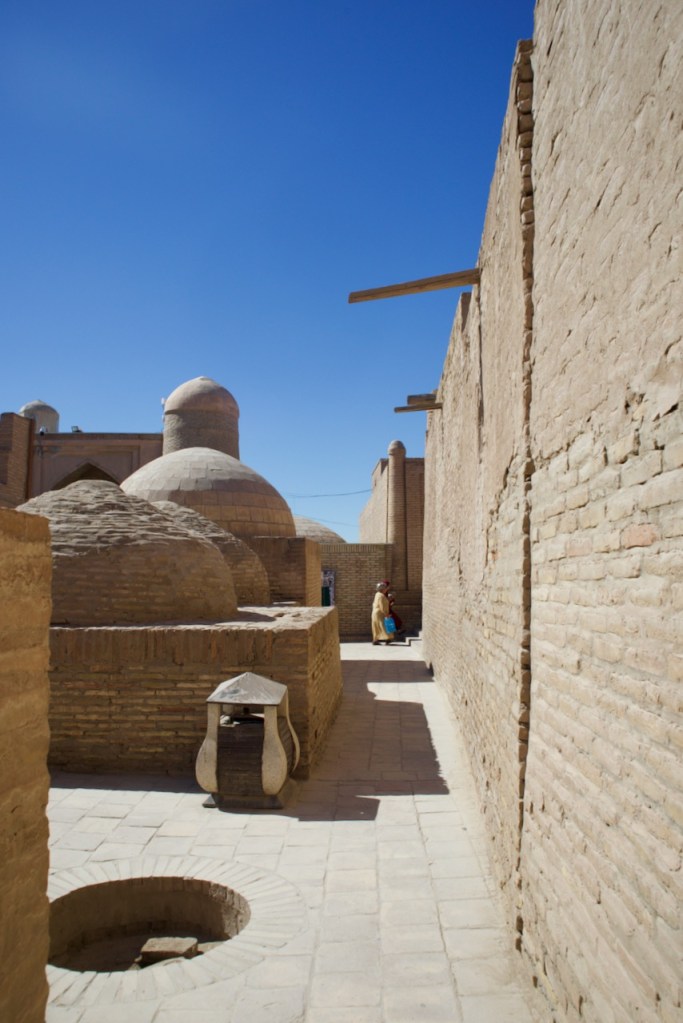
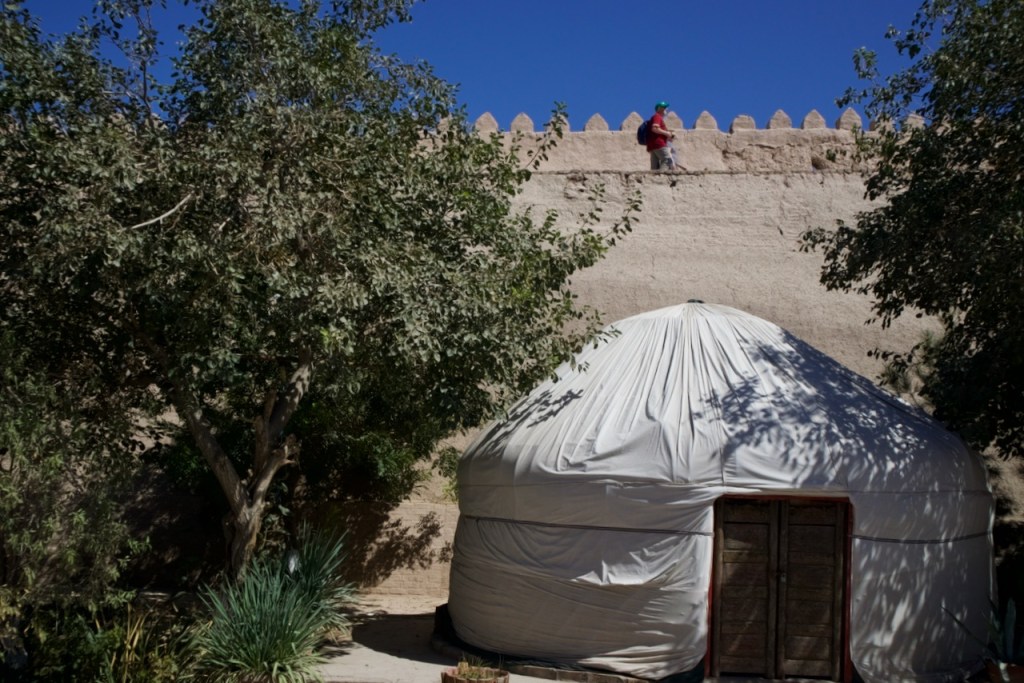
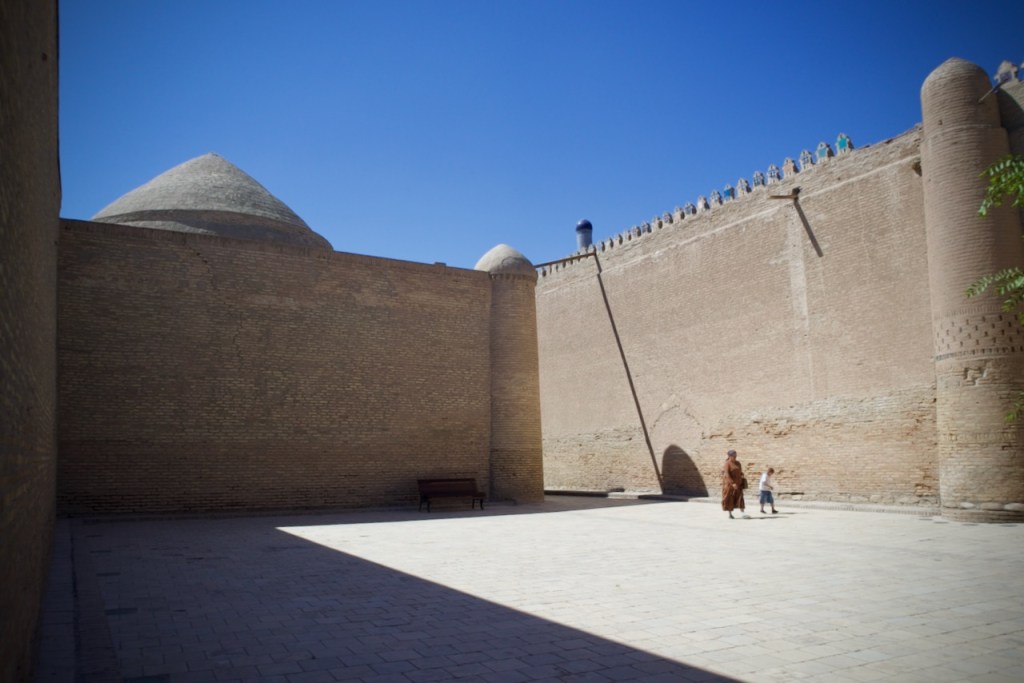
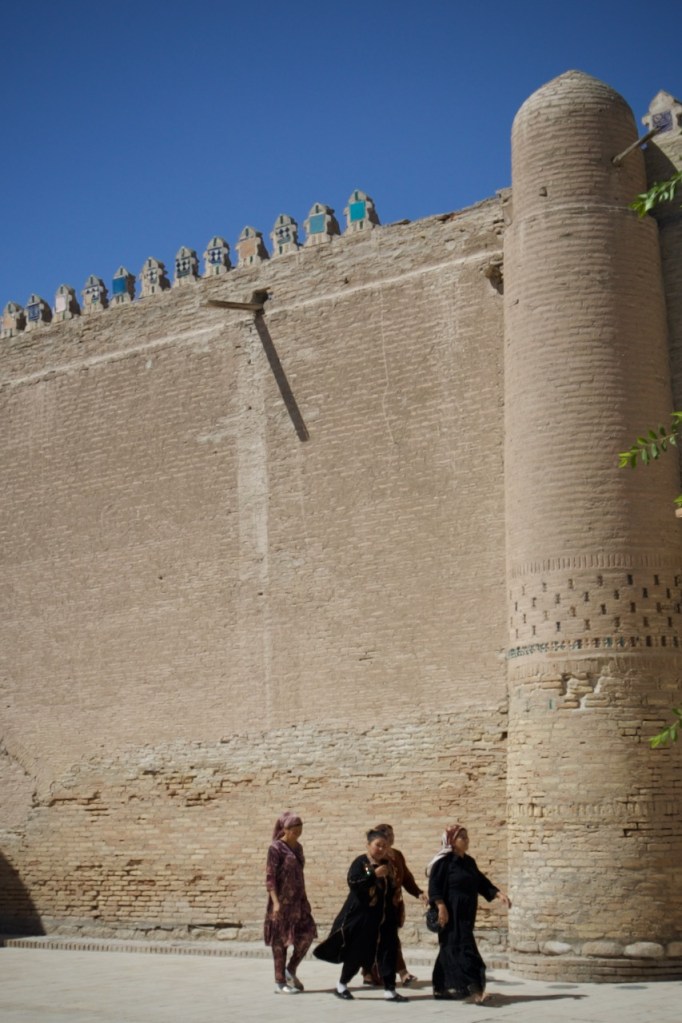
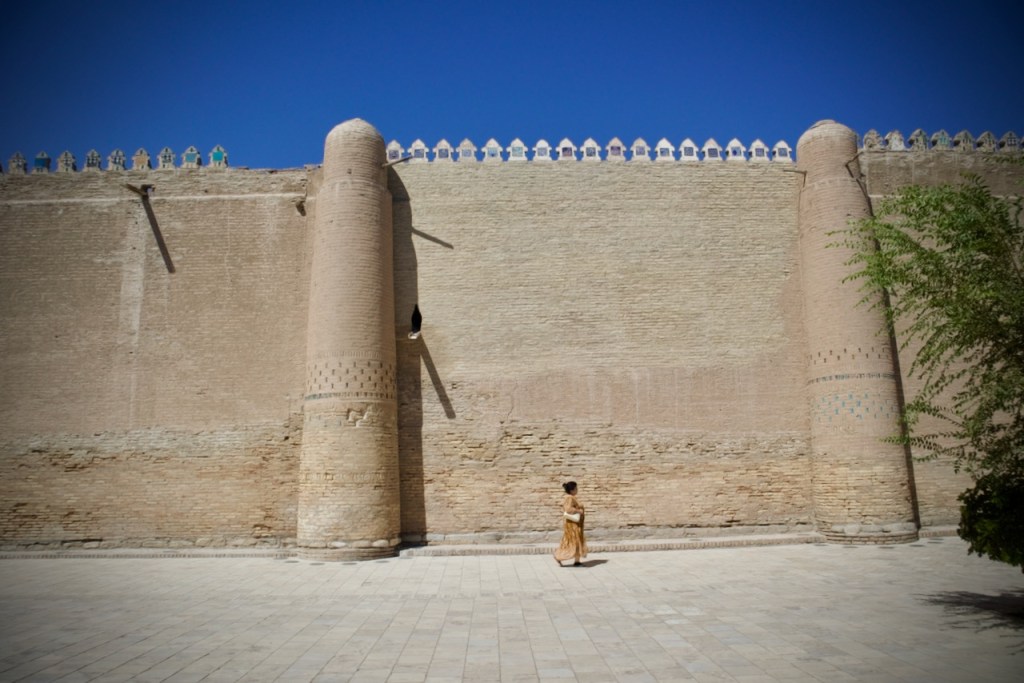
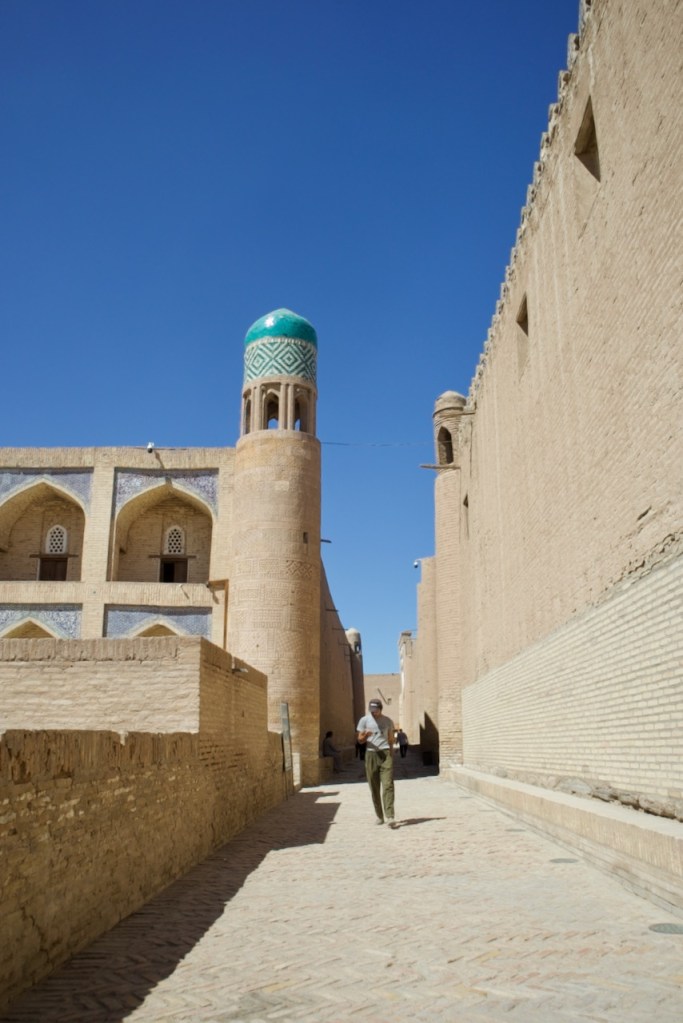
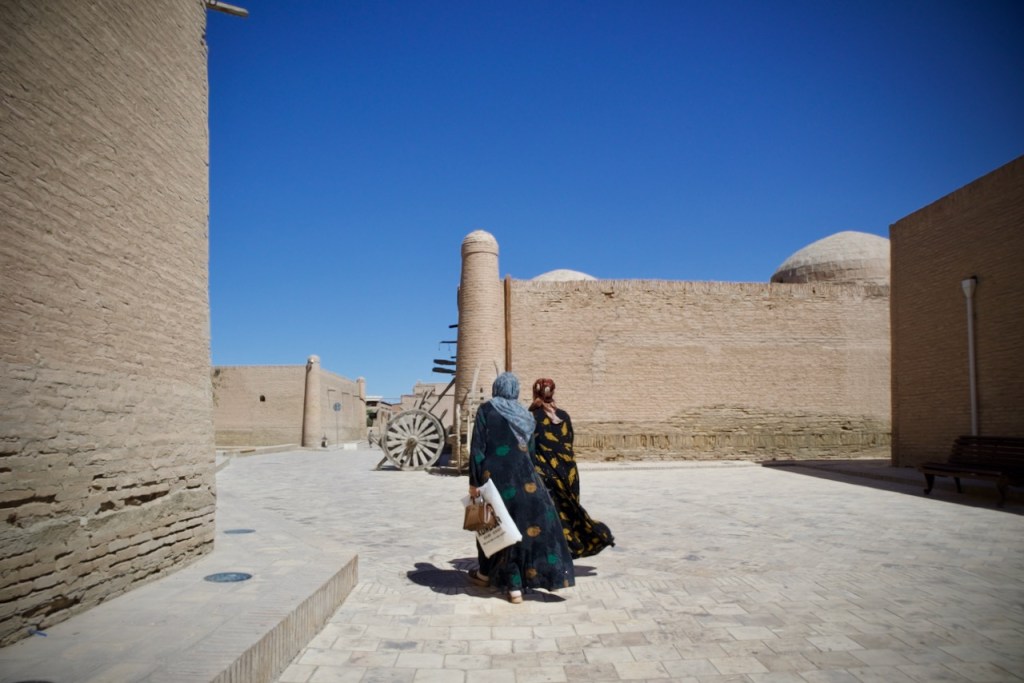
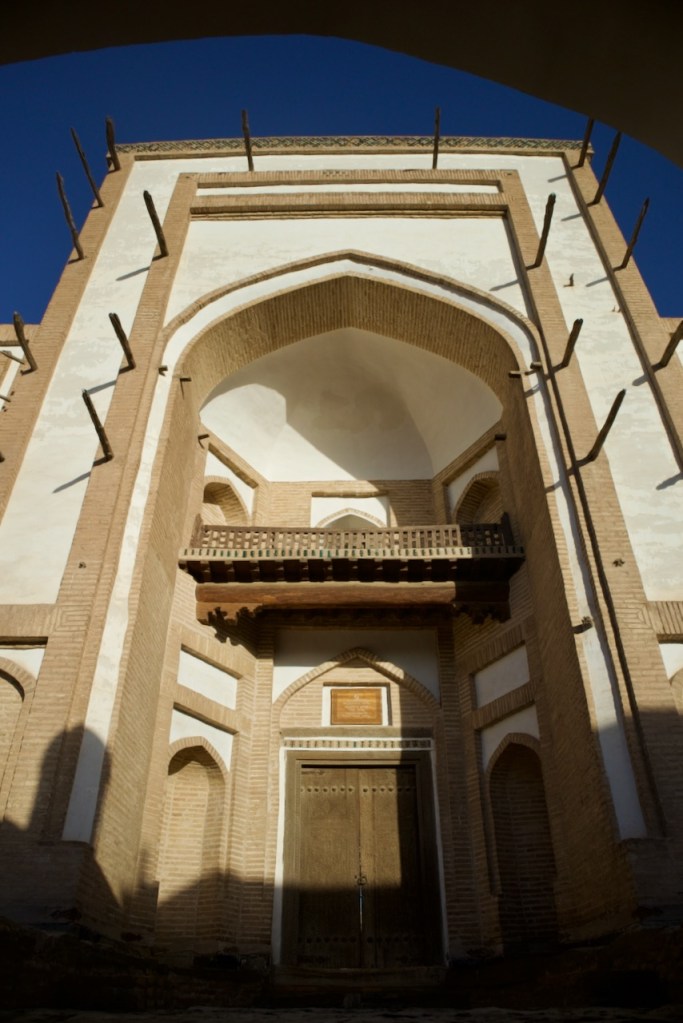
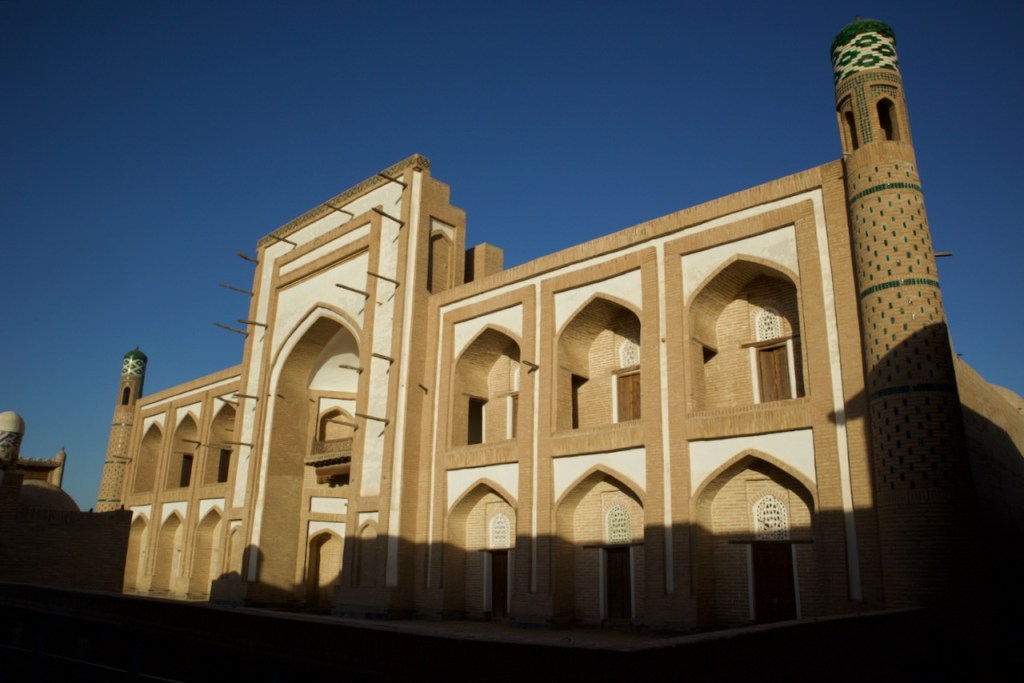
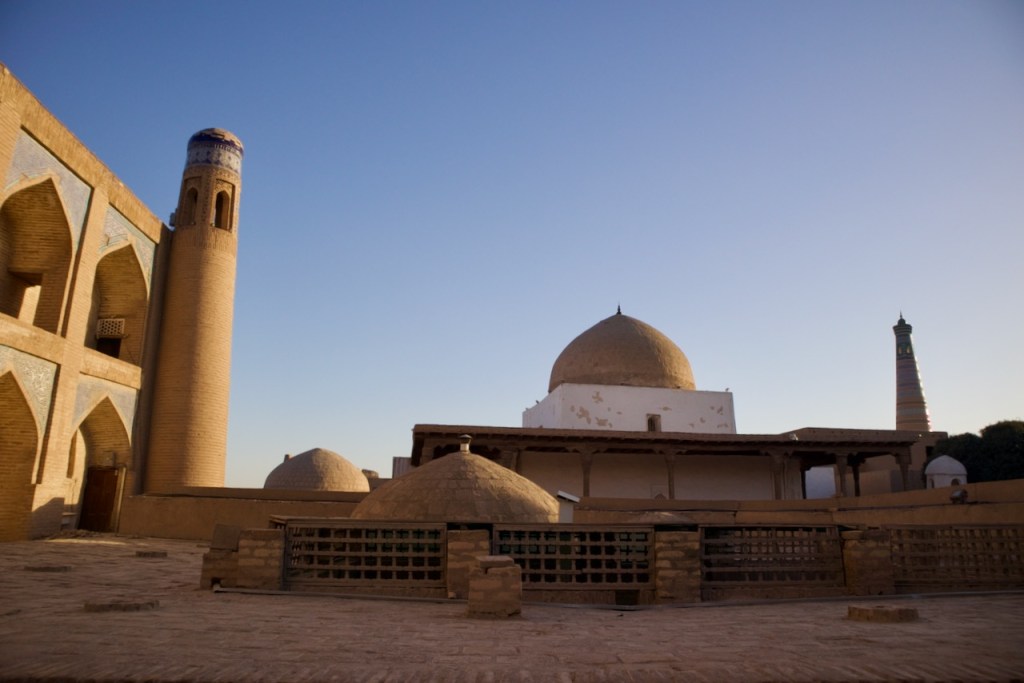
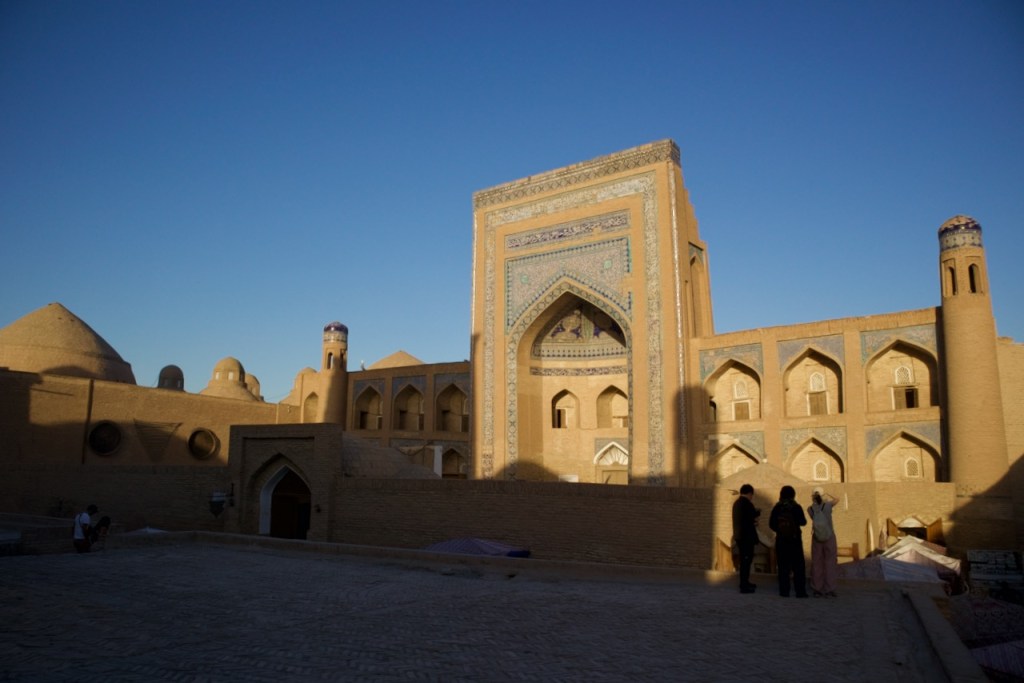
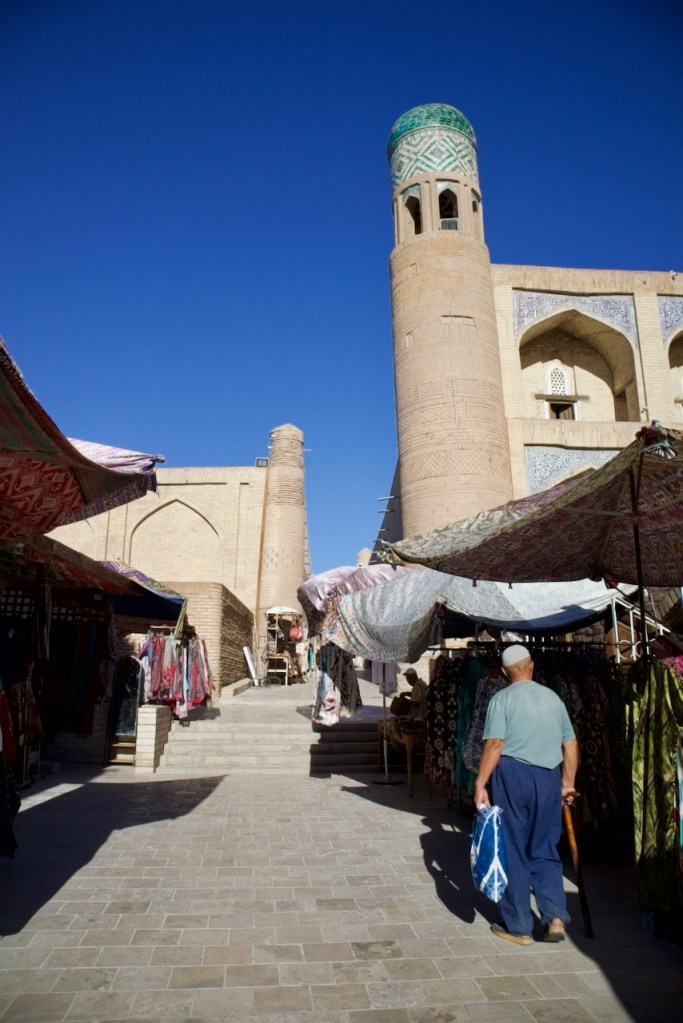
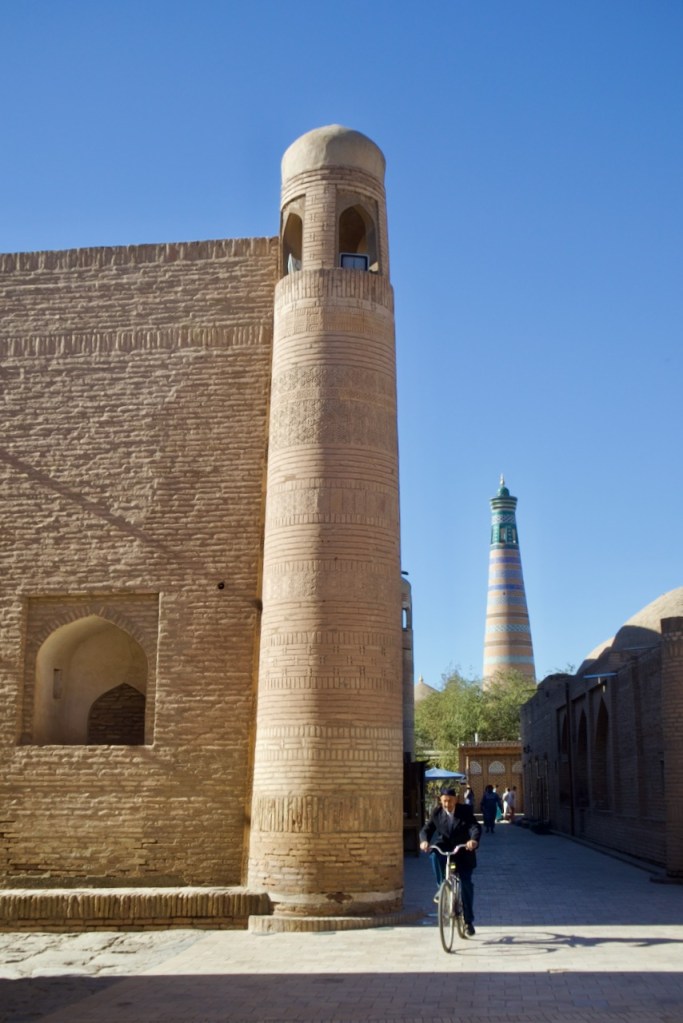
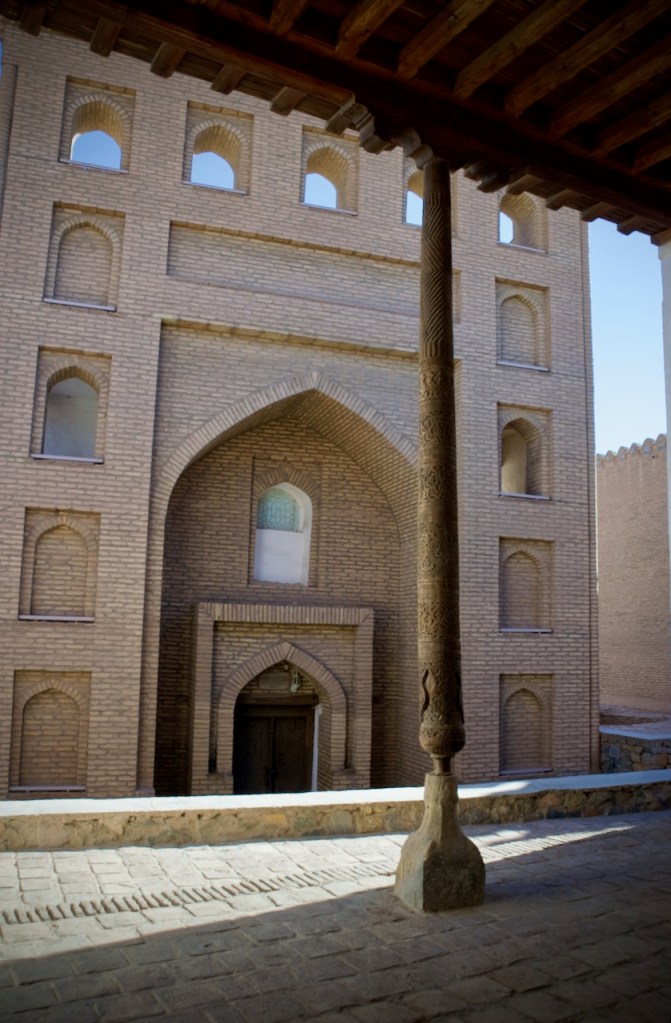
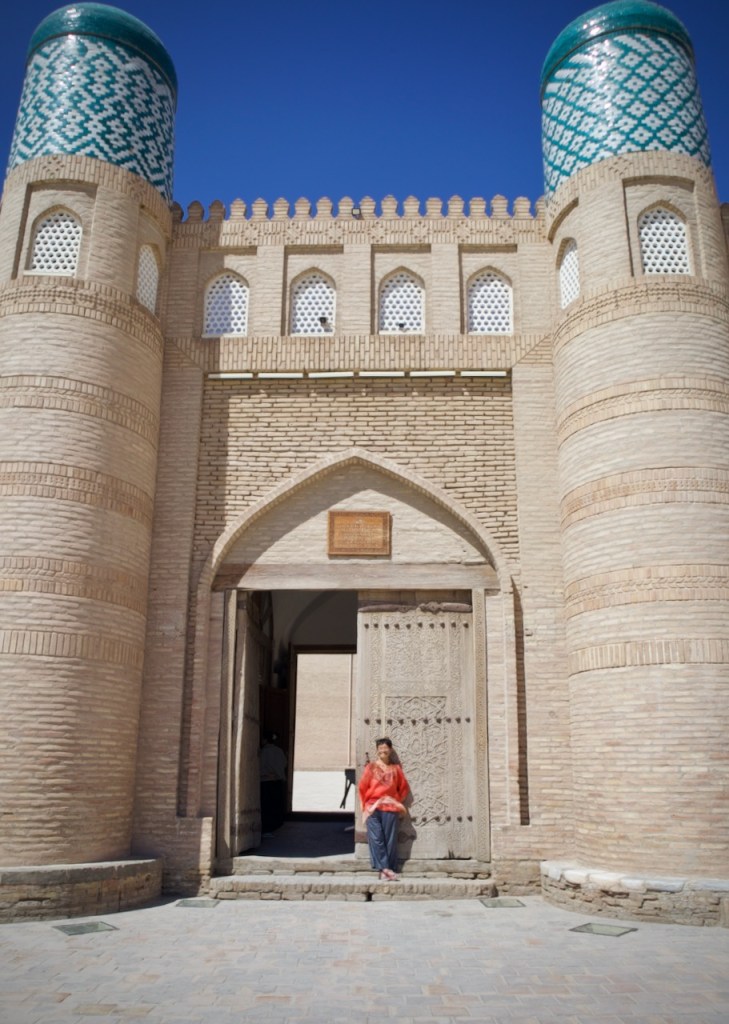
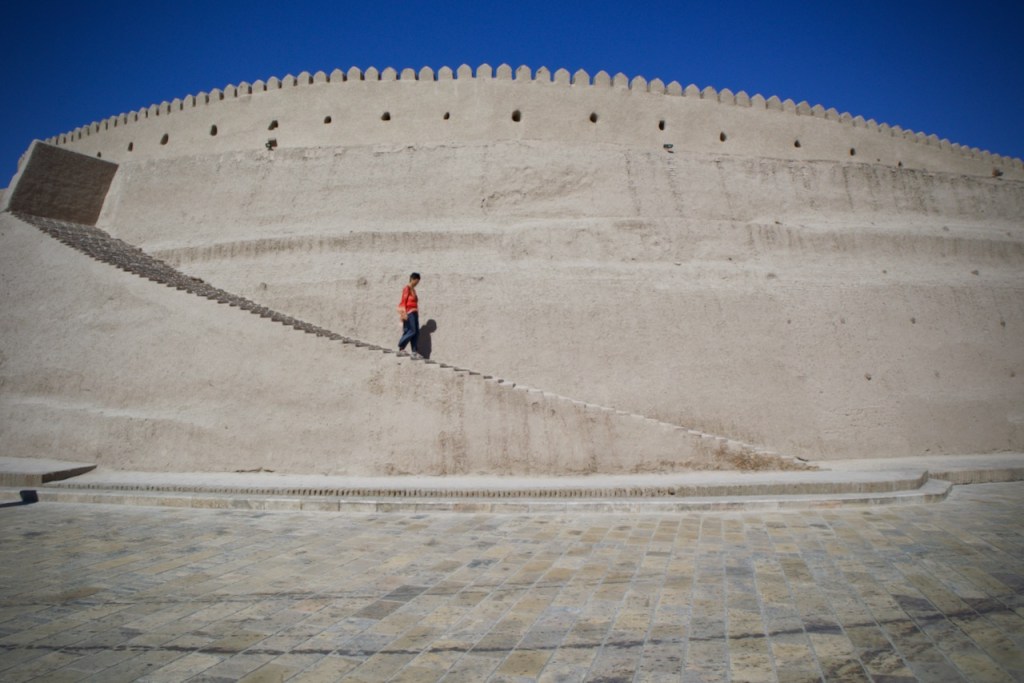
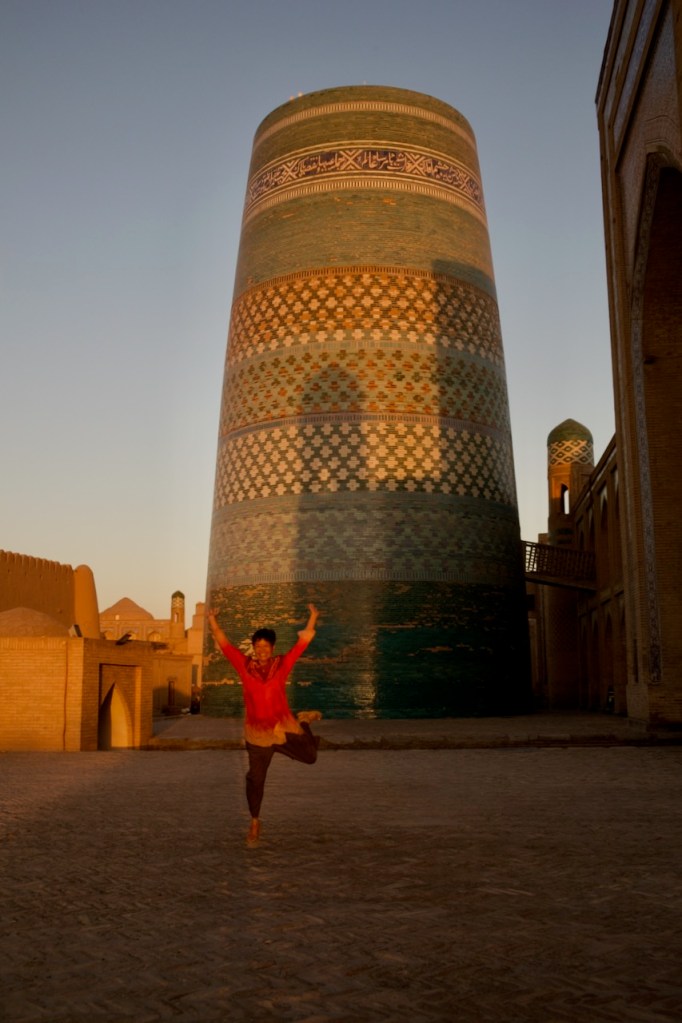
Arriving in Itchan Kala in sundown is like stepping into a Hollywood movie set, complete with medieval mud brick walls, traders in embroidered skullcaps, and towering blue-tiled minarets glowing in fading desert light. Entering by the Western Gate, one’s eyes are met with the strikingly stubby but glamorous Kalta Minor Minaret, glimmering in indigo blue, bequeathed by ruler Muhammad Amin Khan who wanted to build the tallest minaret in the world, aiming for 80m, but perished in battle in 1855 when it was a third way through. You follow the domes or the walls or both and soon fall into the Ark Fortress, the royal residence and centre of power, with its massive entrance portal before entering the summer and winter mosques in dazzling blue and gold. On the opposite side of the large plaza is the Muhammad Rahim-khan Madrasah, one of the largest in Central Asia (with 72 rooms!) revered as a centre of enlightenment in honour of the scholar who introduced secular education in Khiva. Standing prominently in the main corridor is the Juma Minaret, leaning like Pisa Tower, towards its sister mosque supported by over 200 carved wooden pillars. But everyone is holding her breath for the ultimate Islam Khoja Minaret, the tallest and most dramatic in the city, with its striking mix of turquoise-blue and white glazed ceramics alternating with ochre bricks and
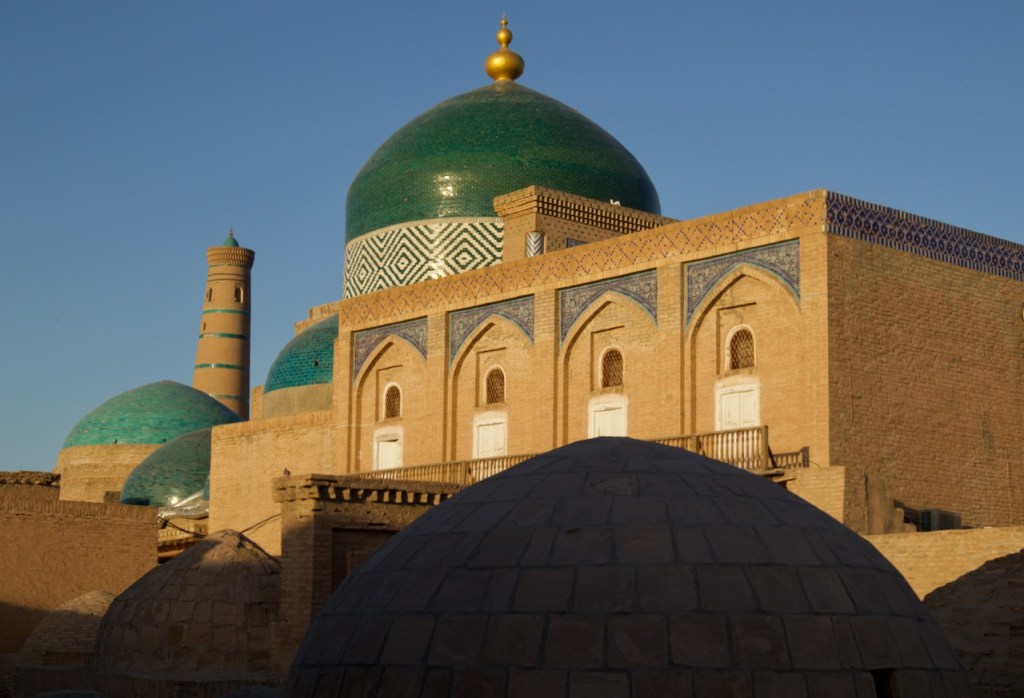
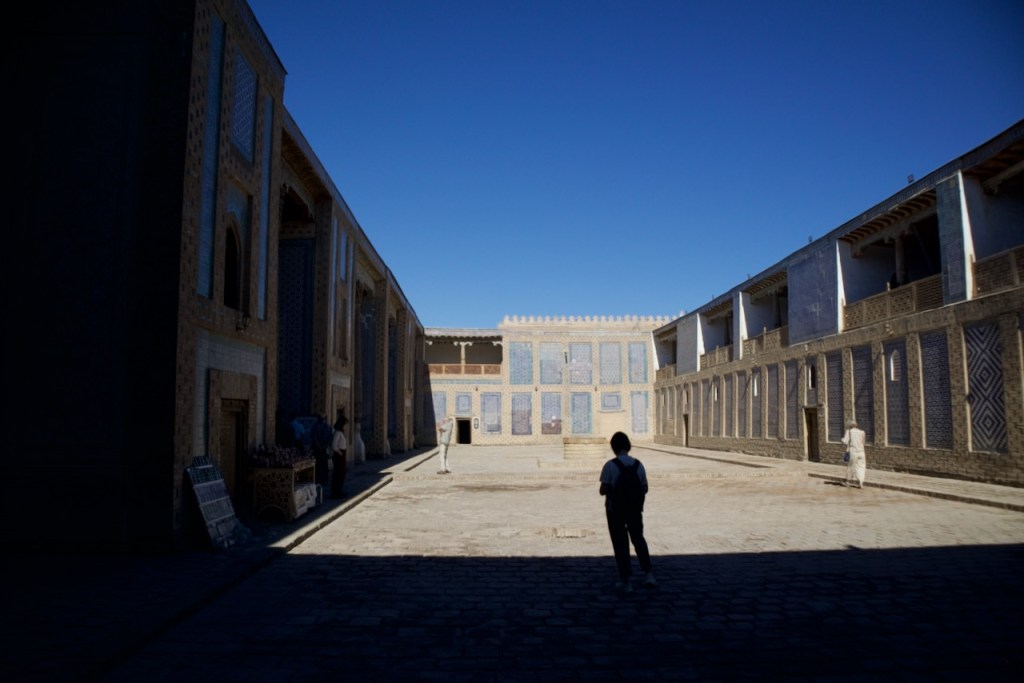
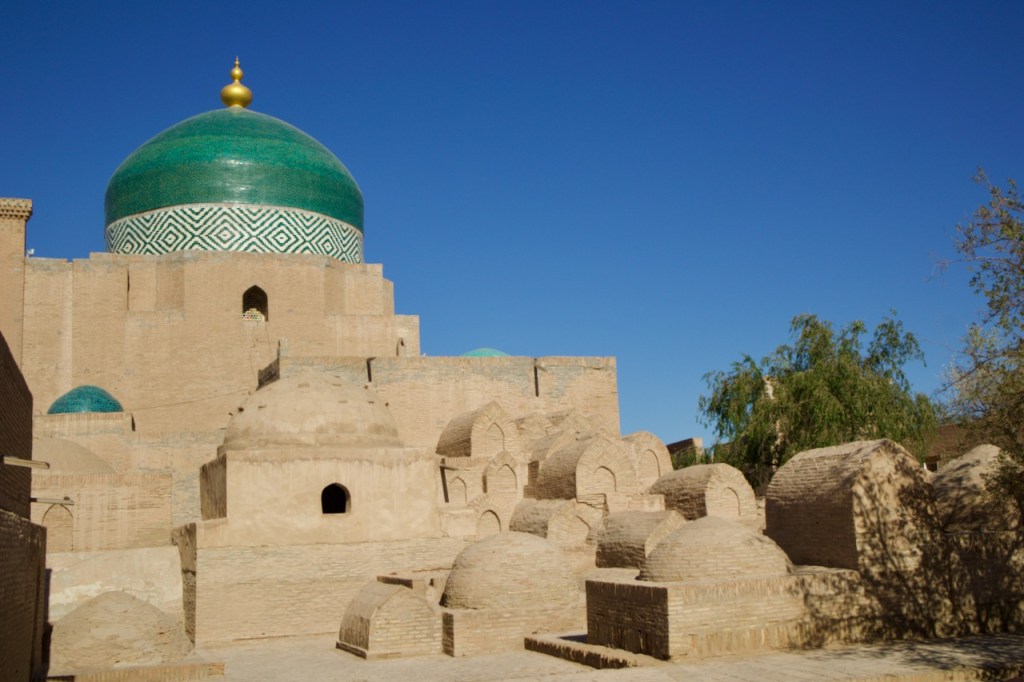
a top finished with a lantern and a golden dome. Then there are still the Pahlavon Mahmud Mausoleum dedicated to Khiva’s poet-saint with its stunning green dome and the Tash Khauli Palace with the most lavish decorations in its 270 rooms, especially the harem with the most delicate majolica tile work, that make the Buckingham Palace pales in comparison.
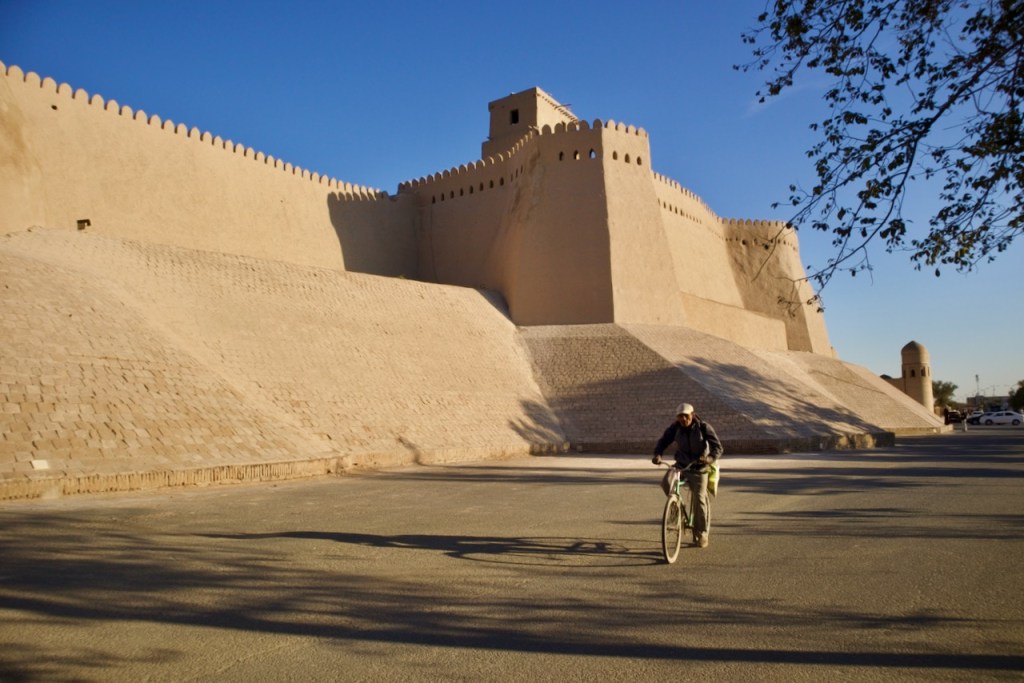
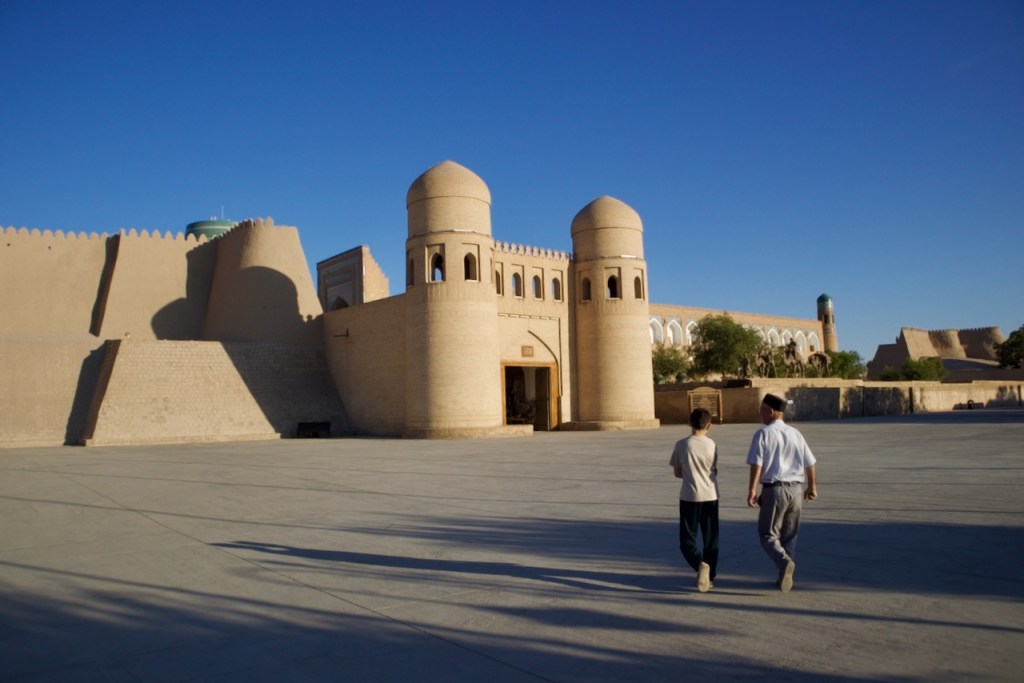
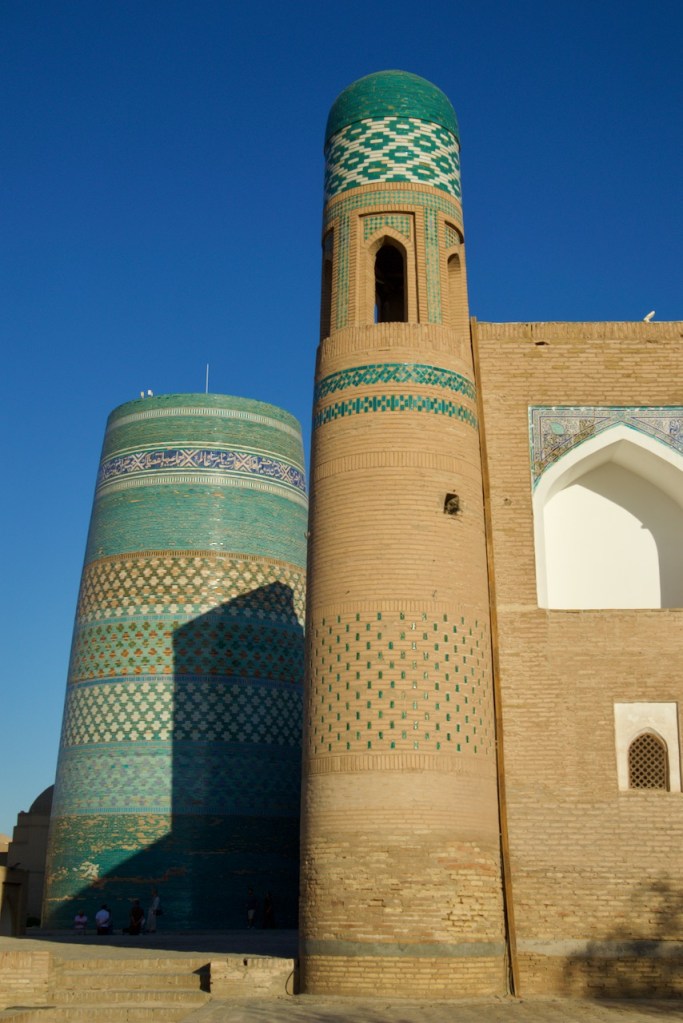
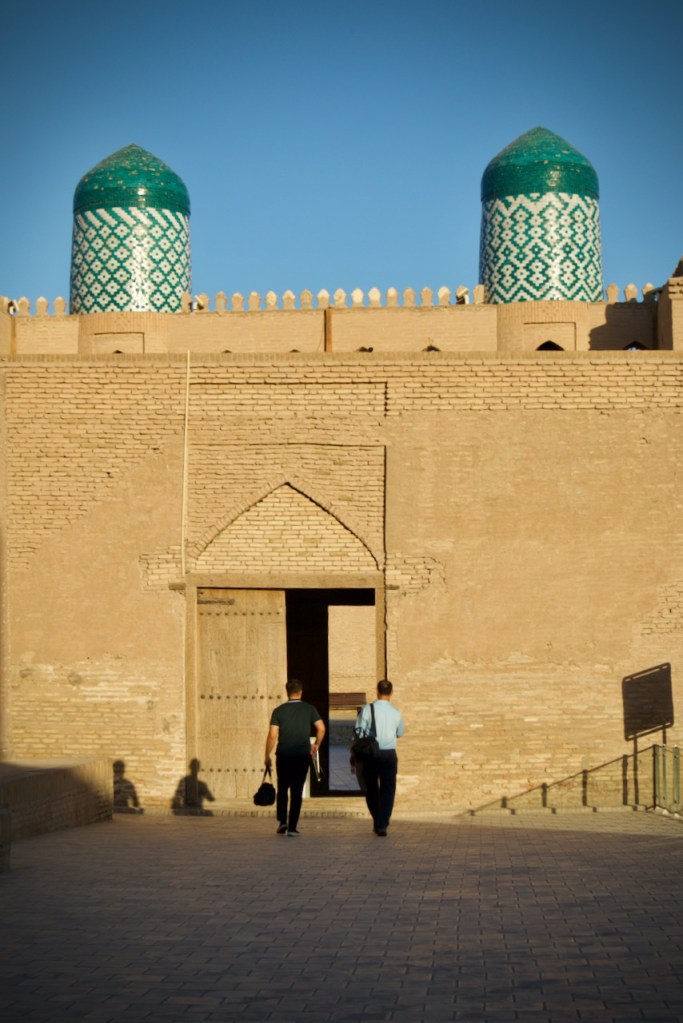
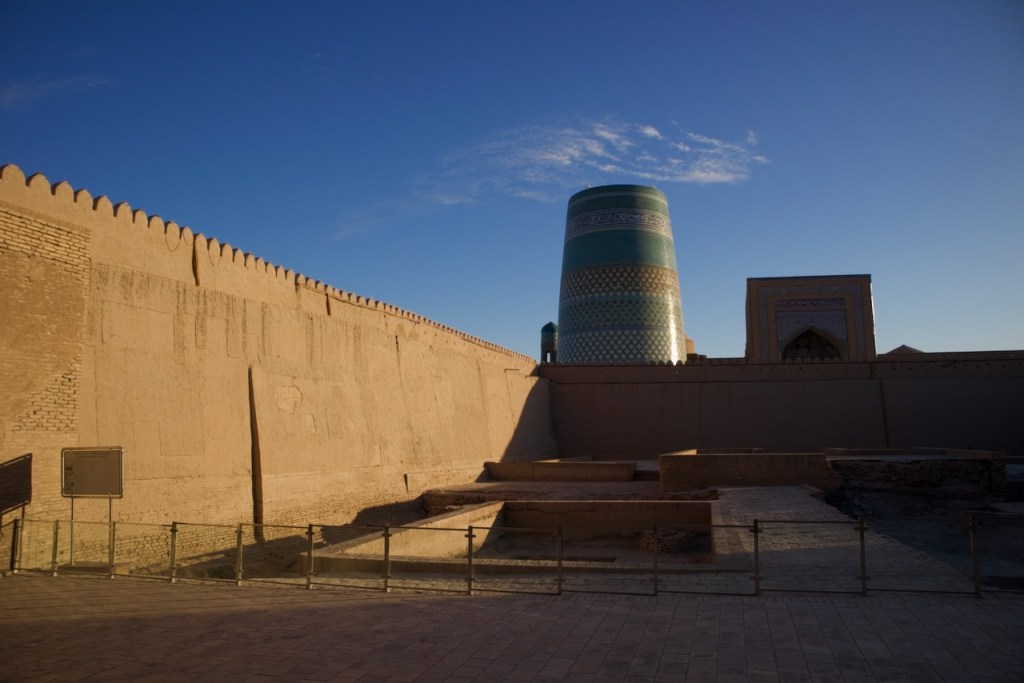
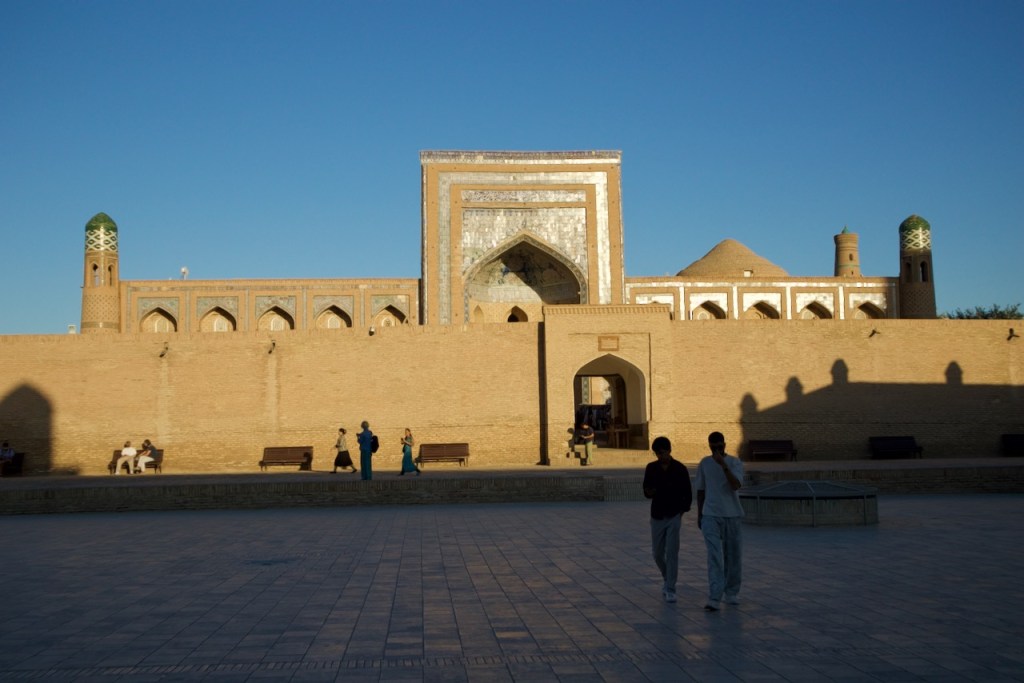
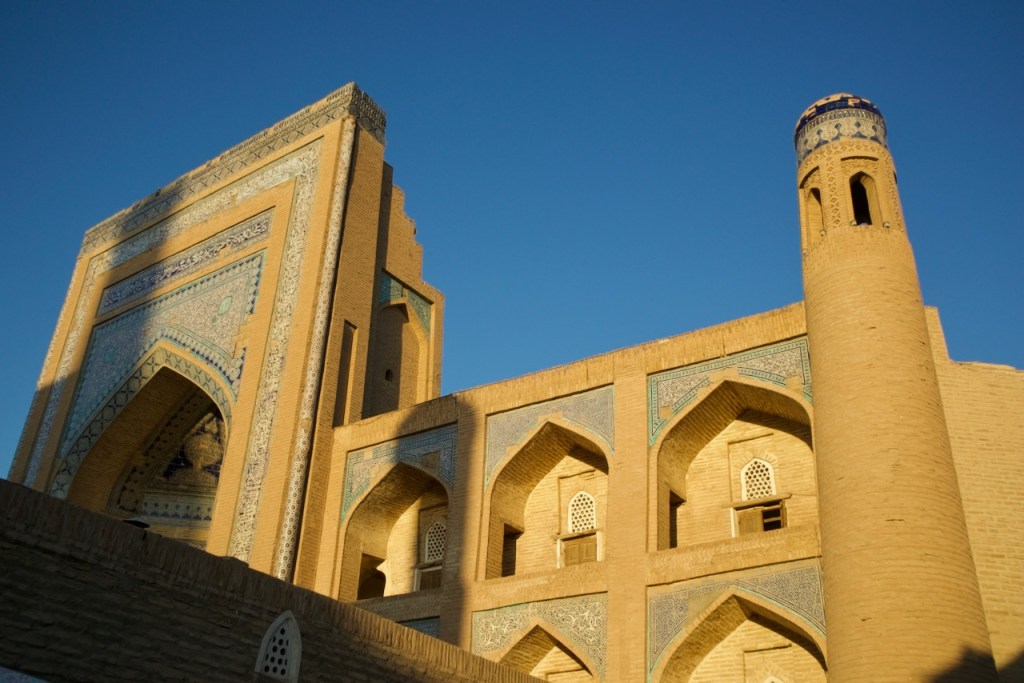
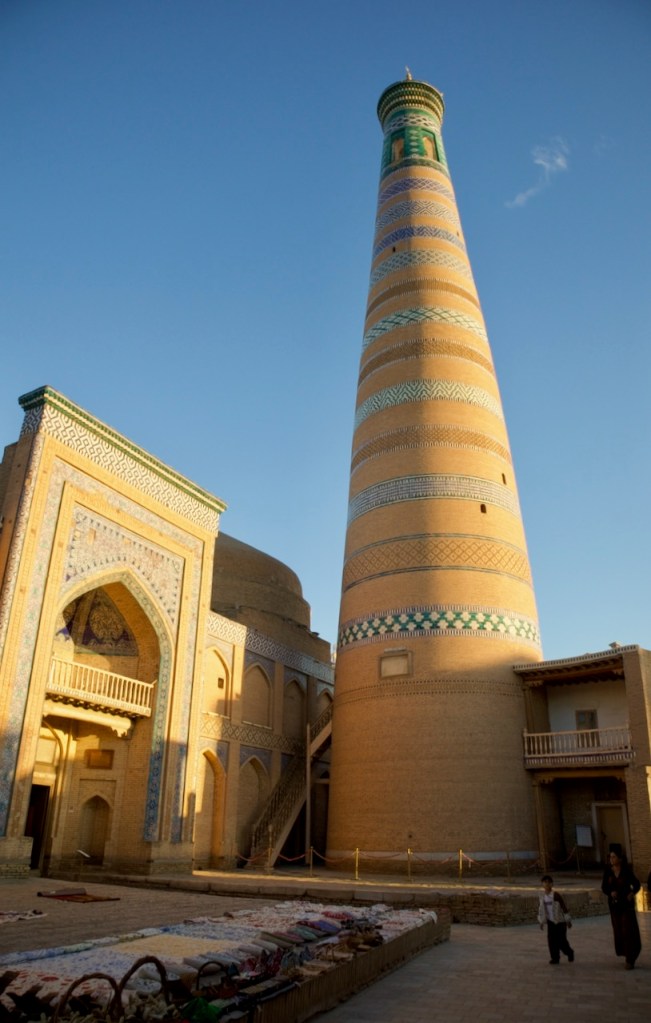
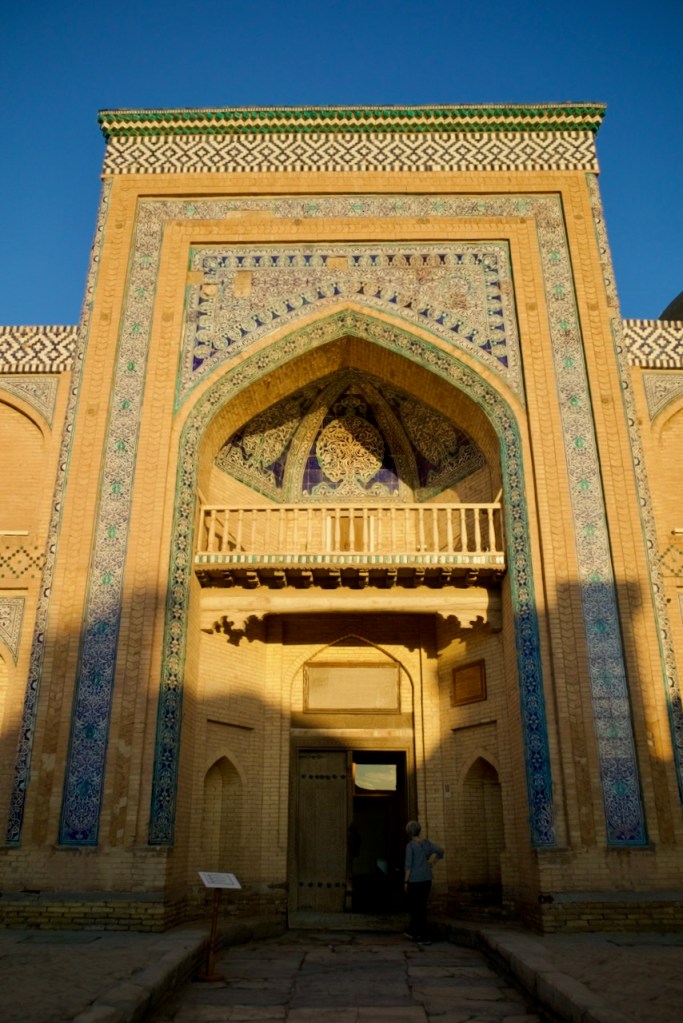
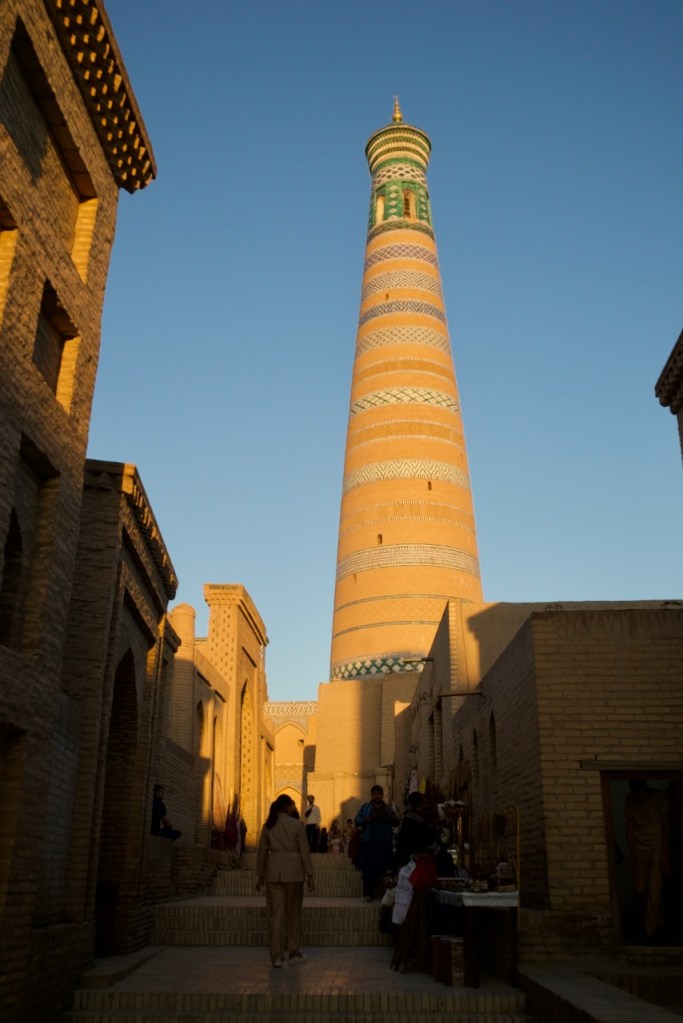
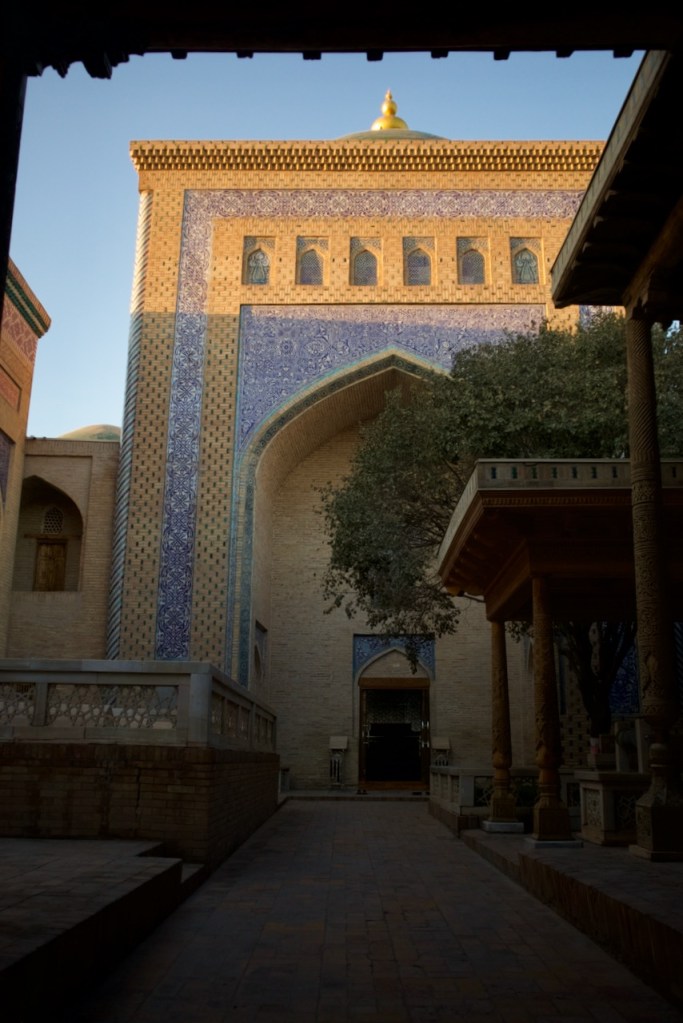
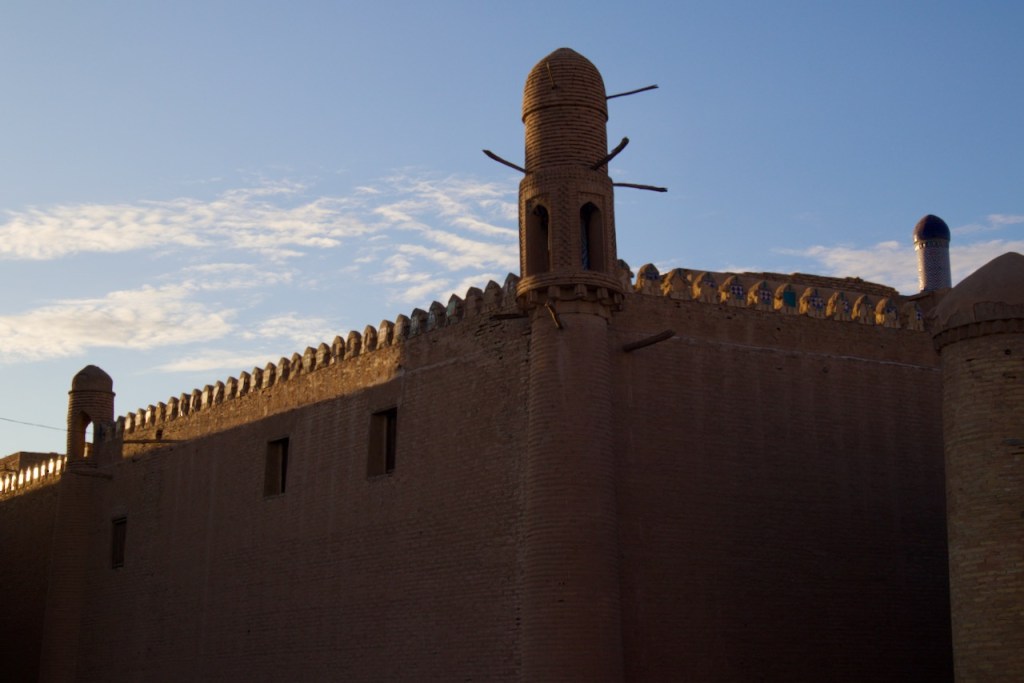
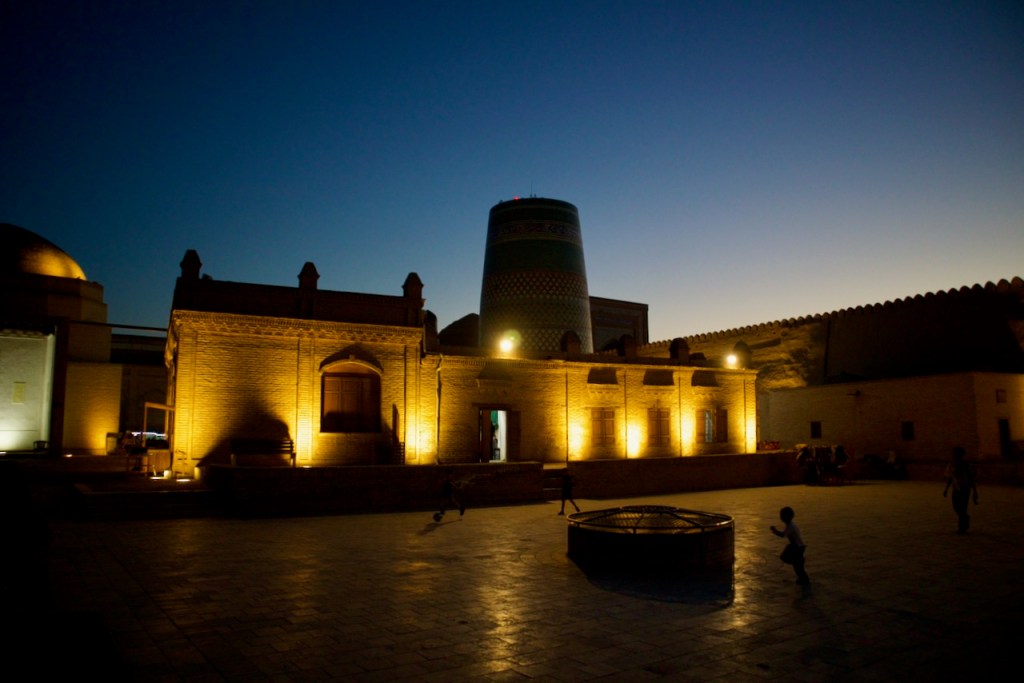
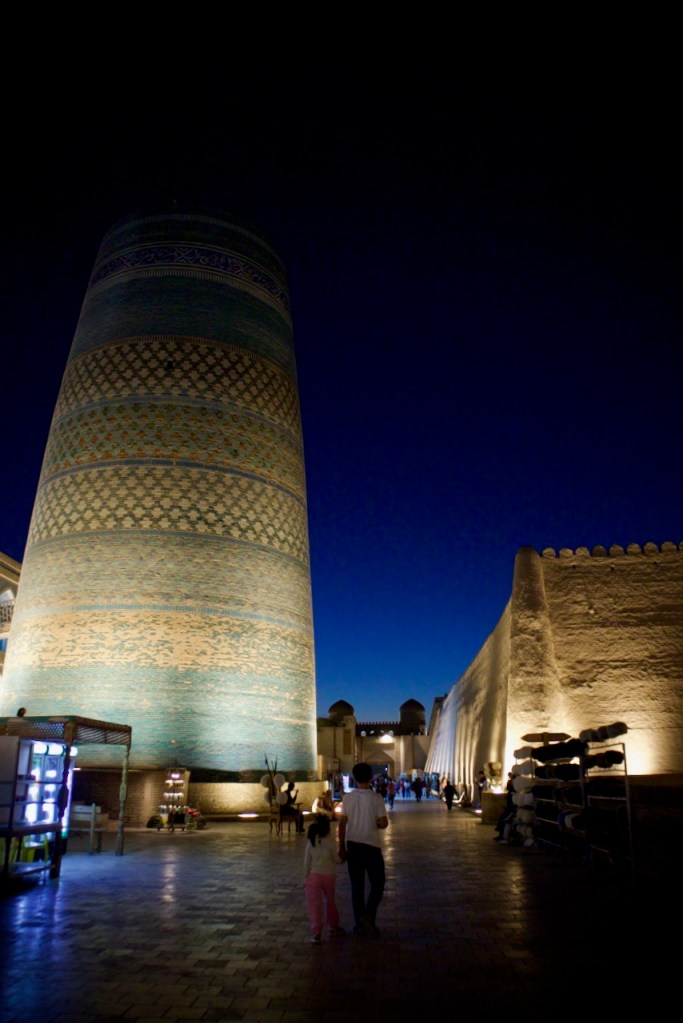
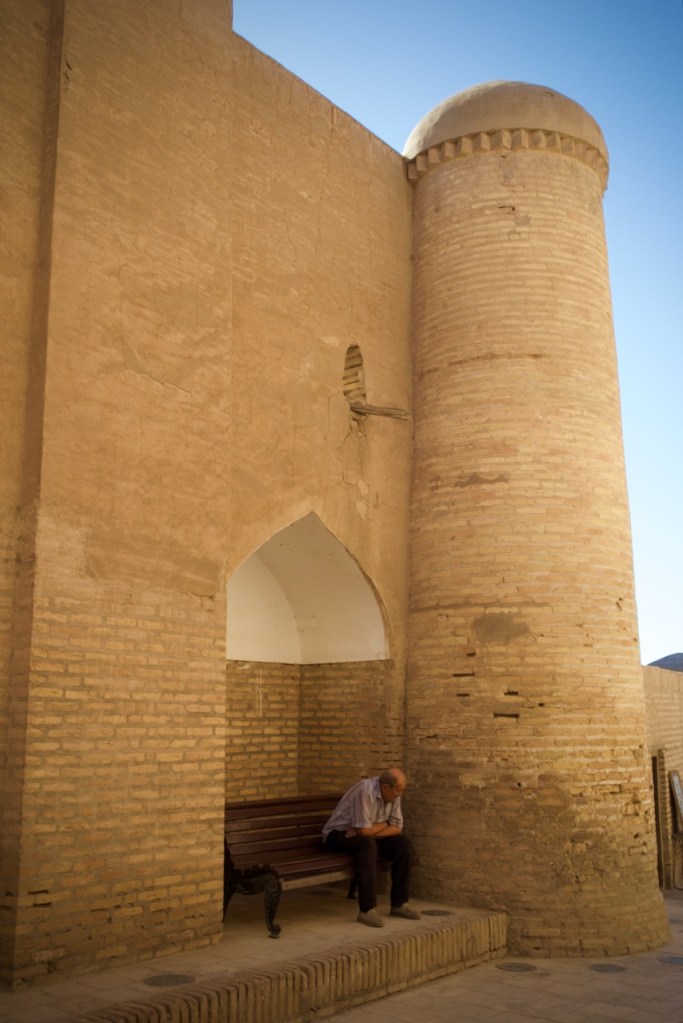
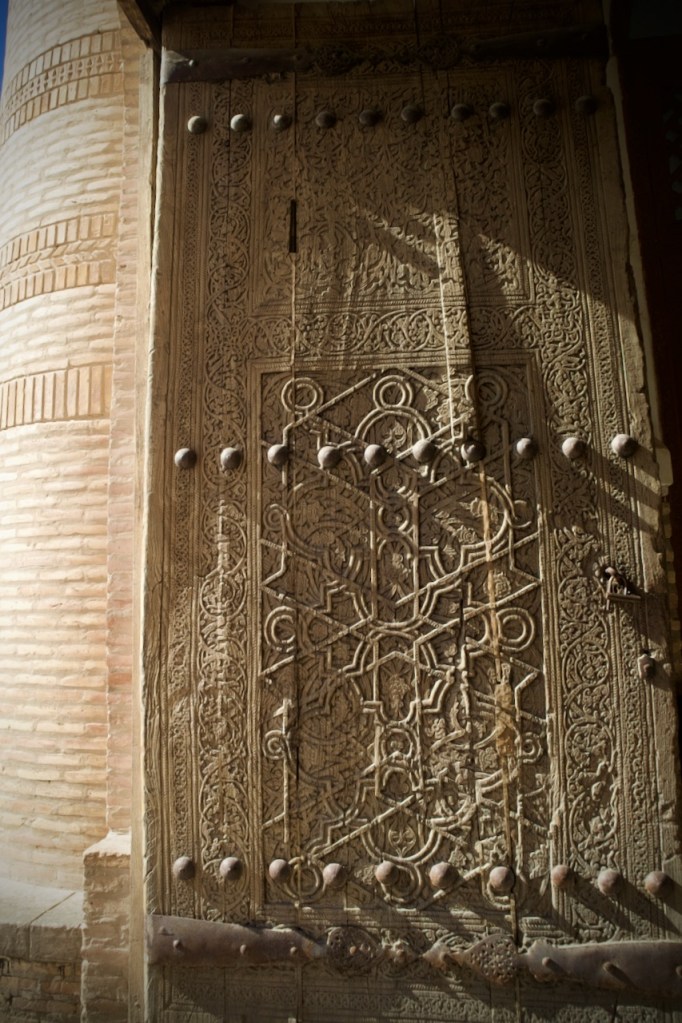
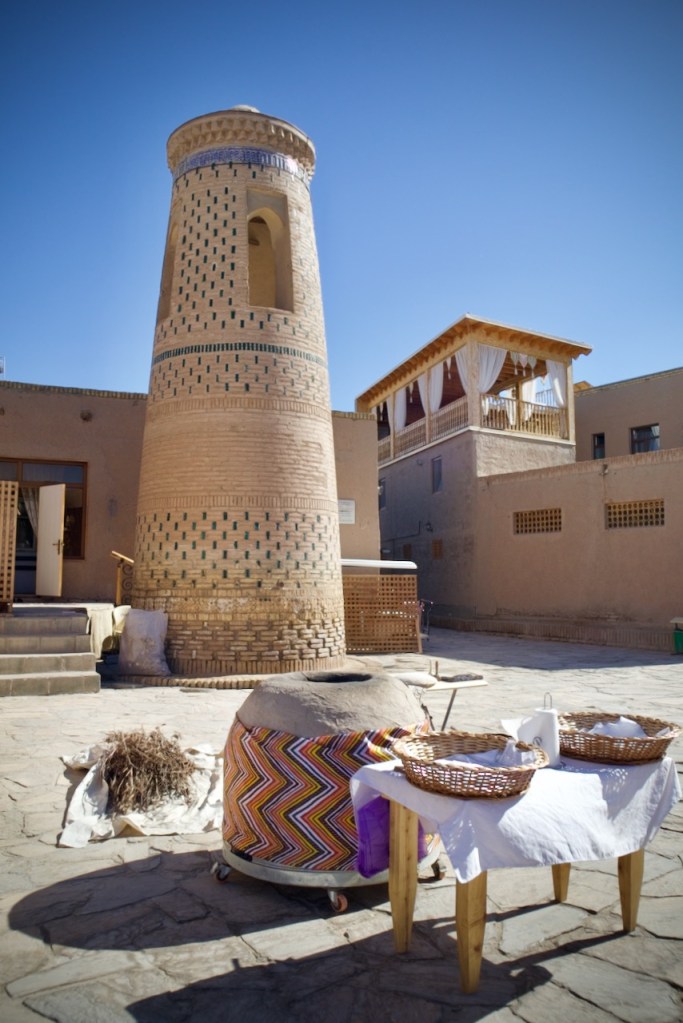
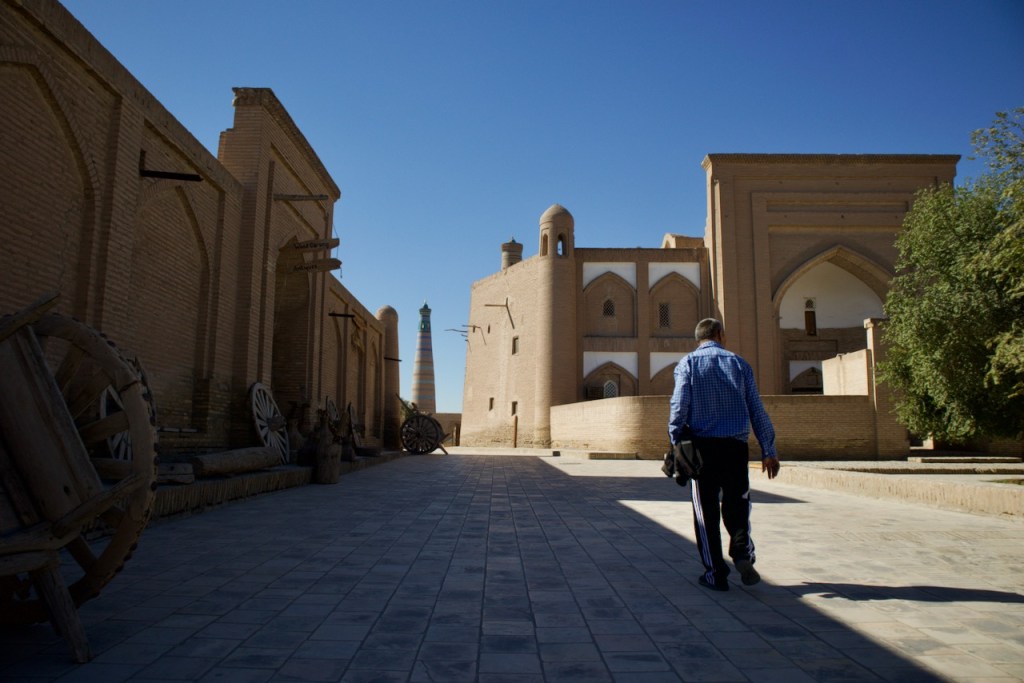
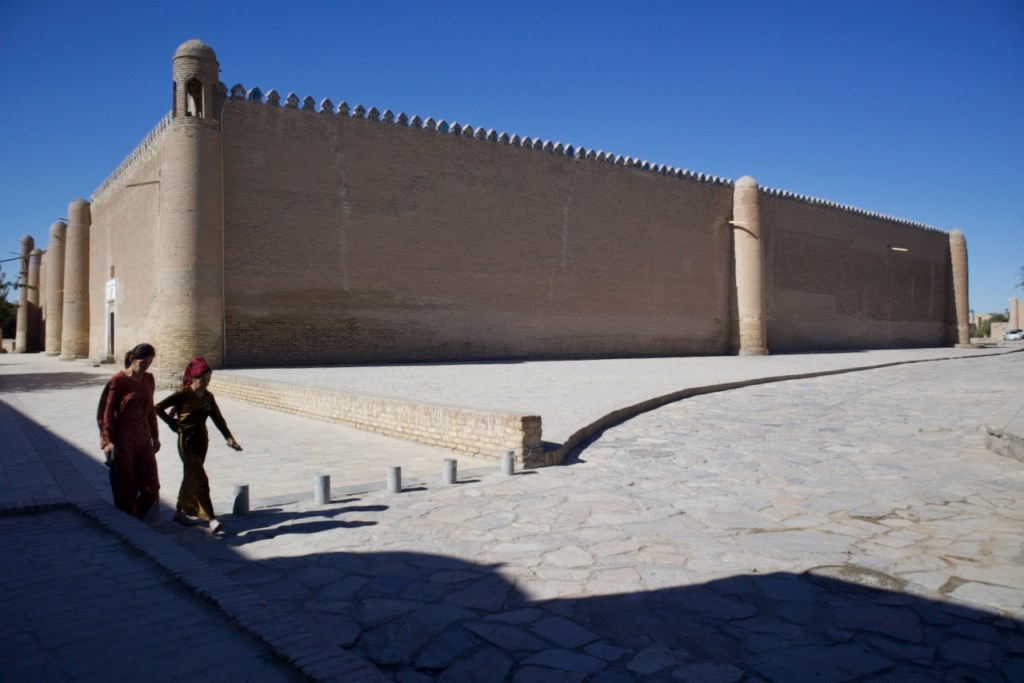
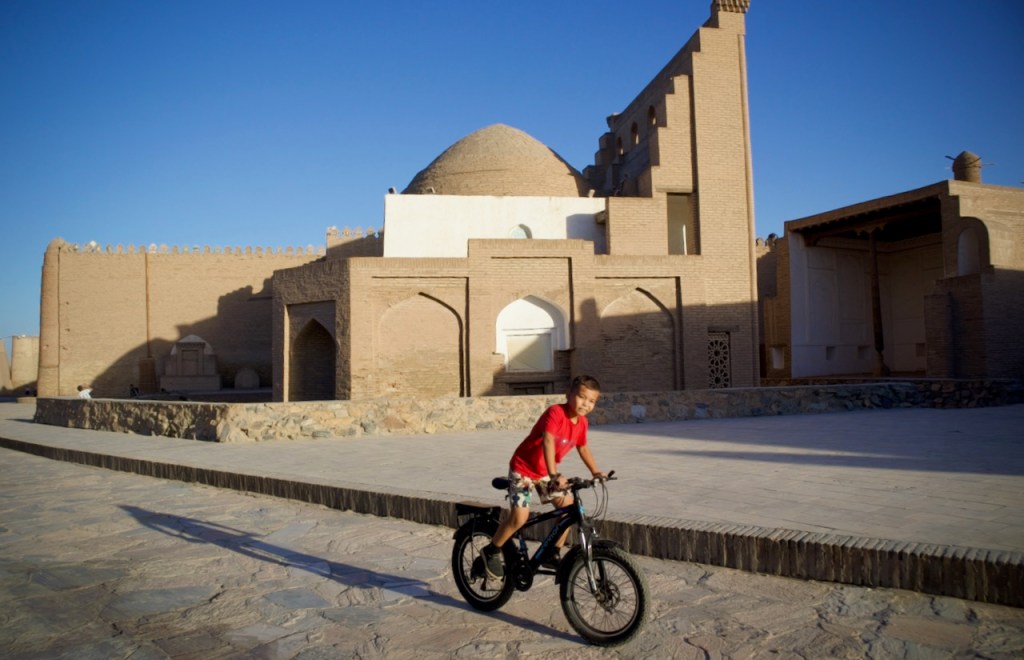
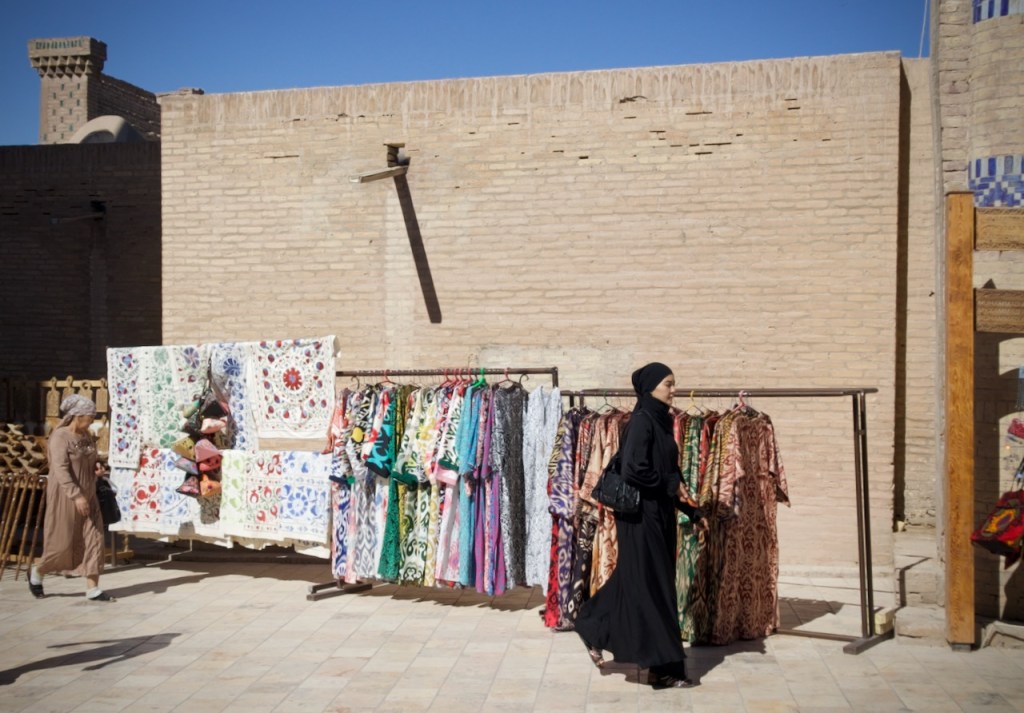
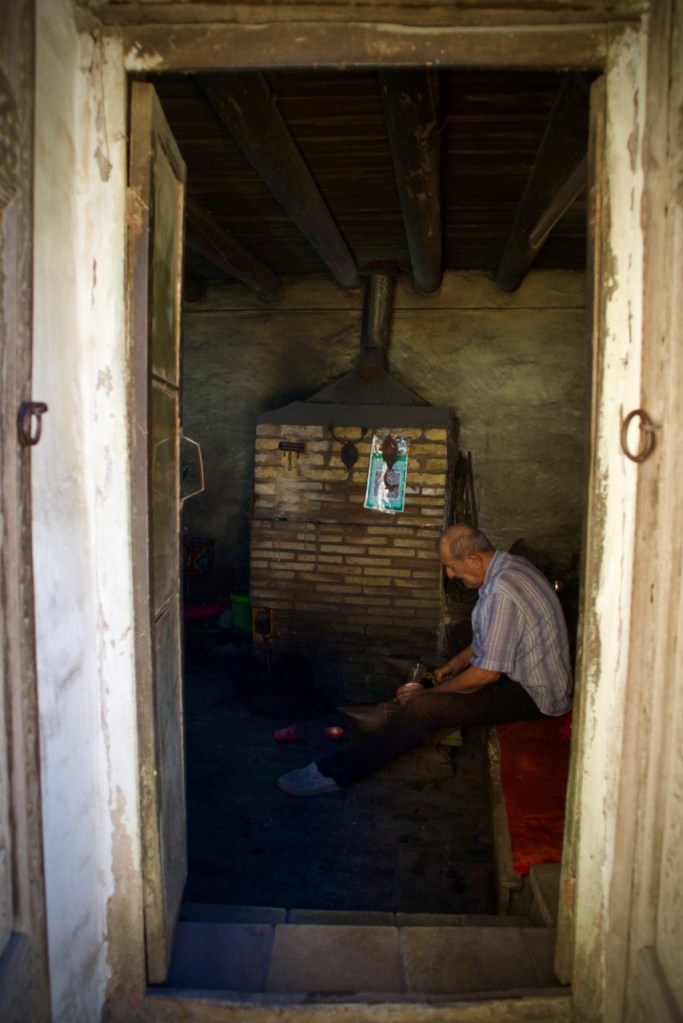
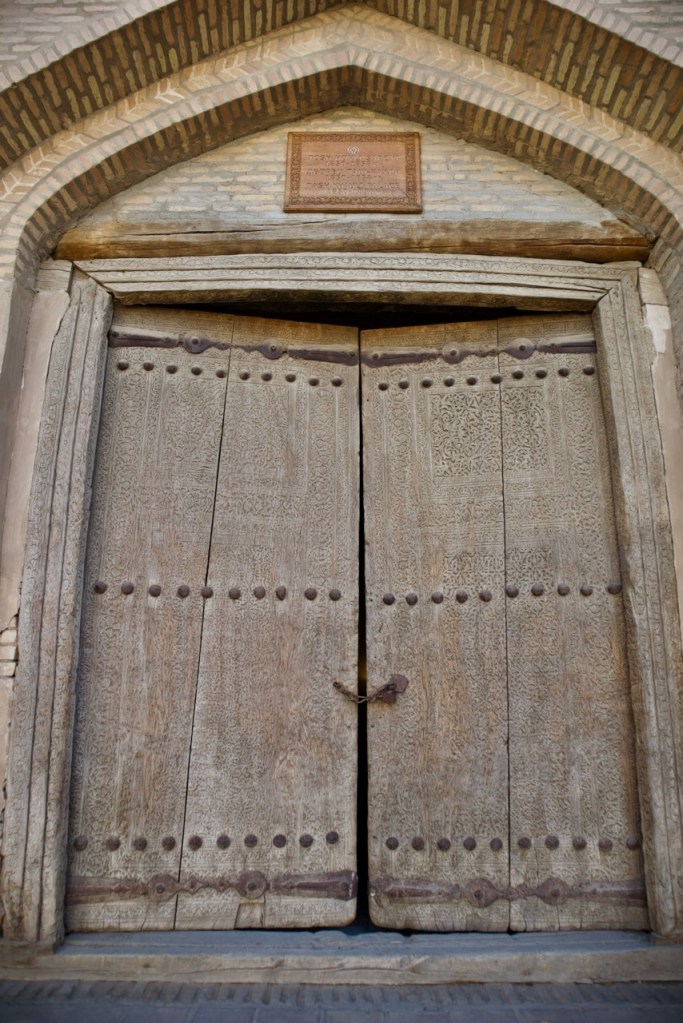
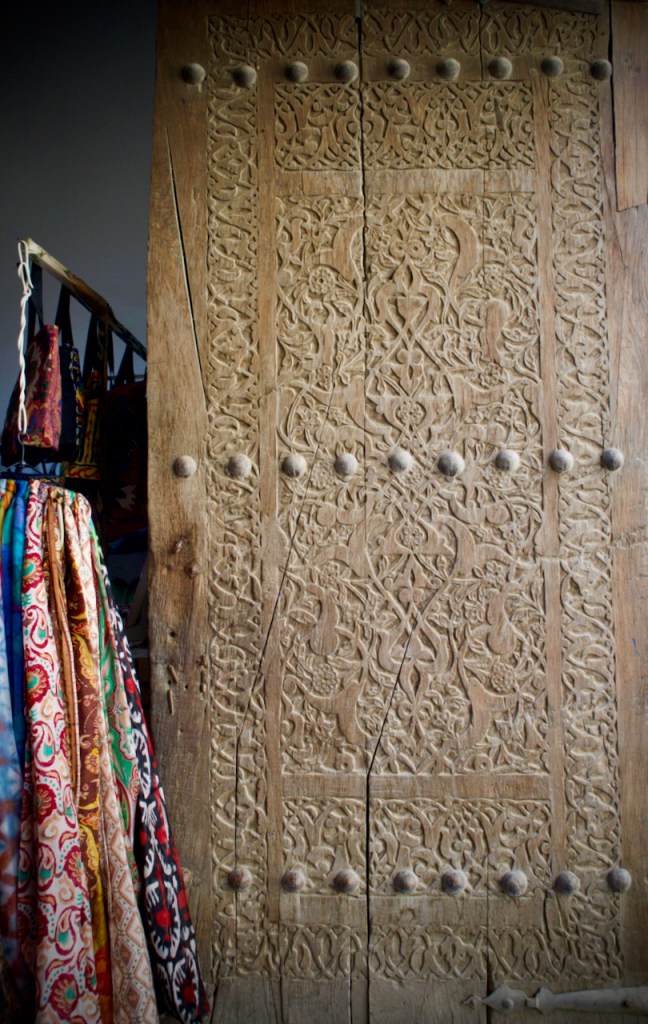
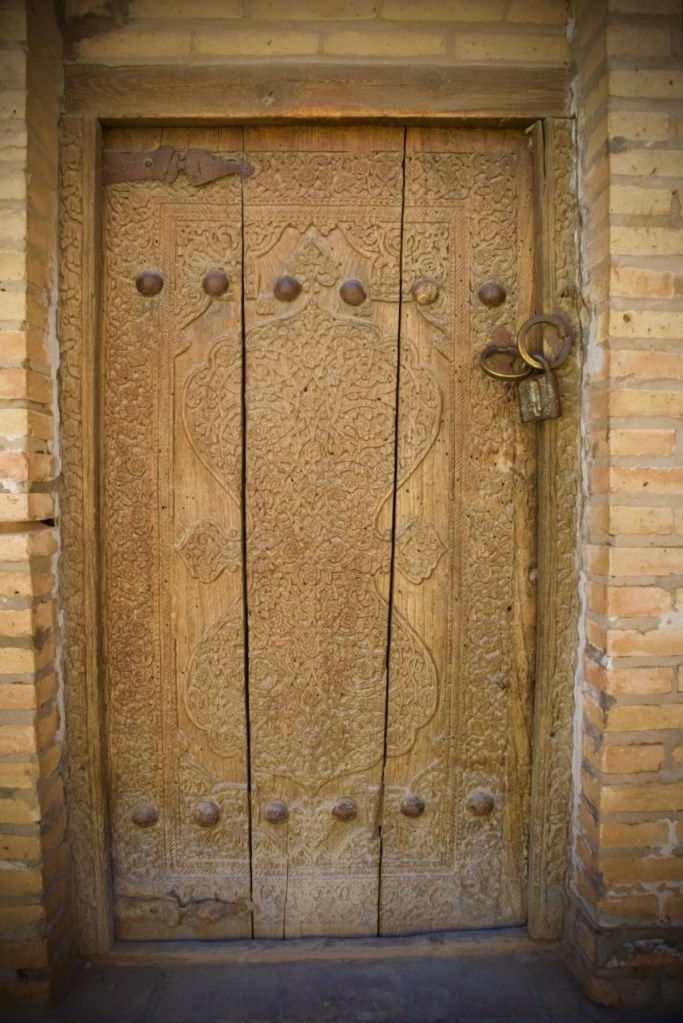
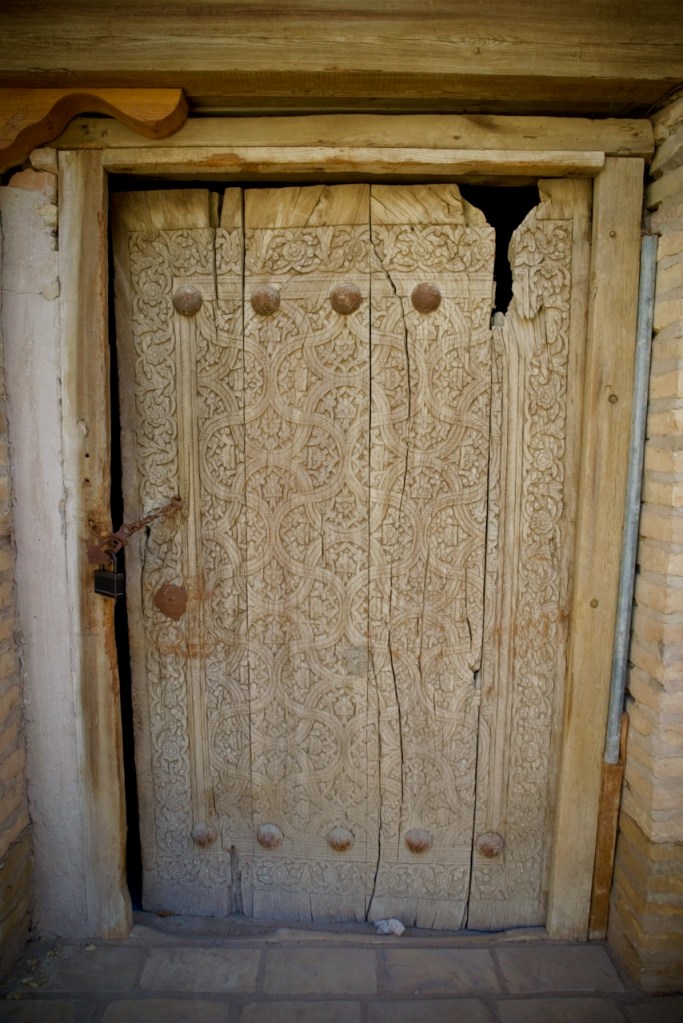
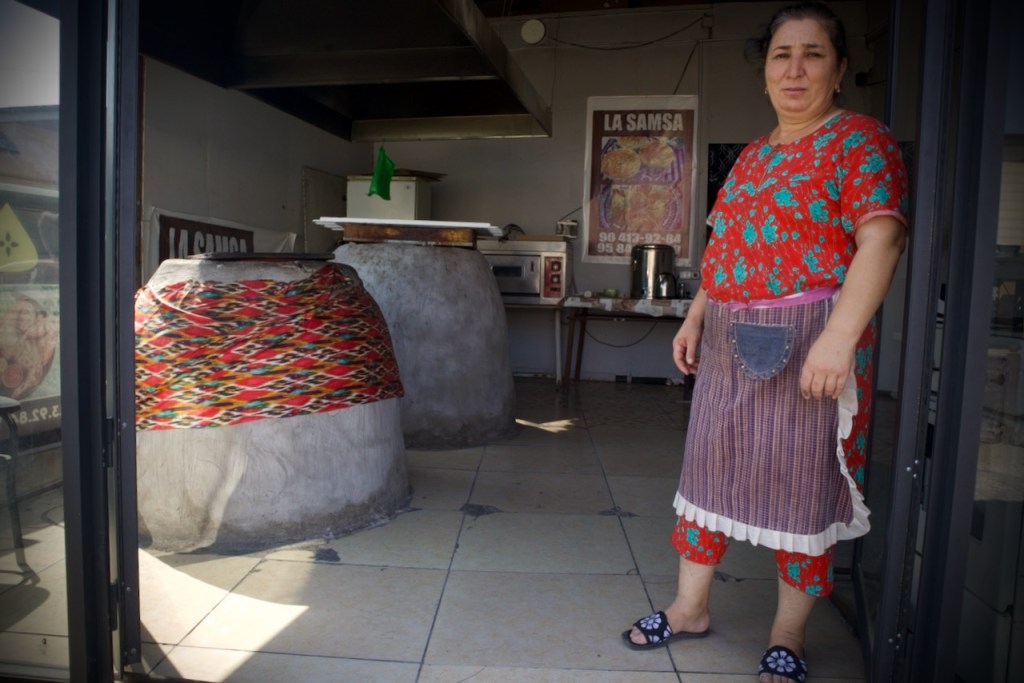
I have the luxury of four days to return each morning and late afternoon for leisurely strolls, enjoying especially the calm and the empty city before the crowd gathers. An old wooden door here and a serene mosque there, a tandyr heating up by a minaret and shadows of residents passing through… There are places that you are happy to visit once and then others where you want to stay. The cat is out of the bag, from behind the walls: Khiva is one of the most beautiful cities and most memorable photographic moments in all my travels. I can hardly wait to return…
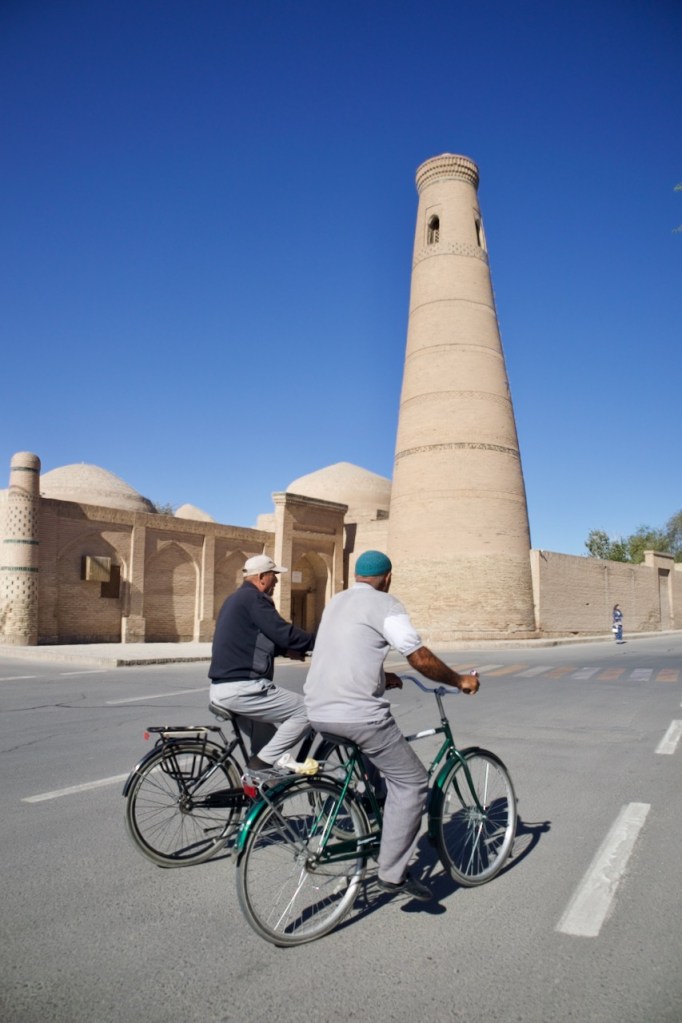
The Road to Samarkand
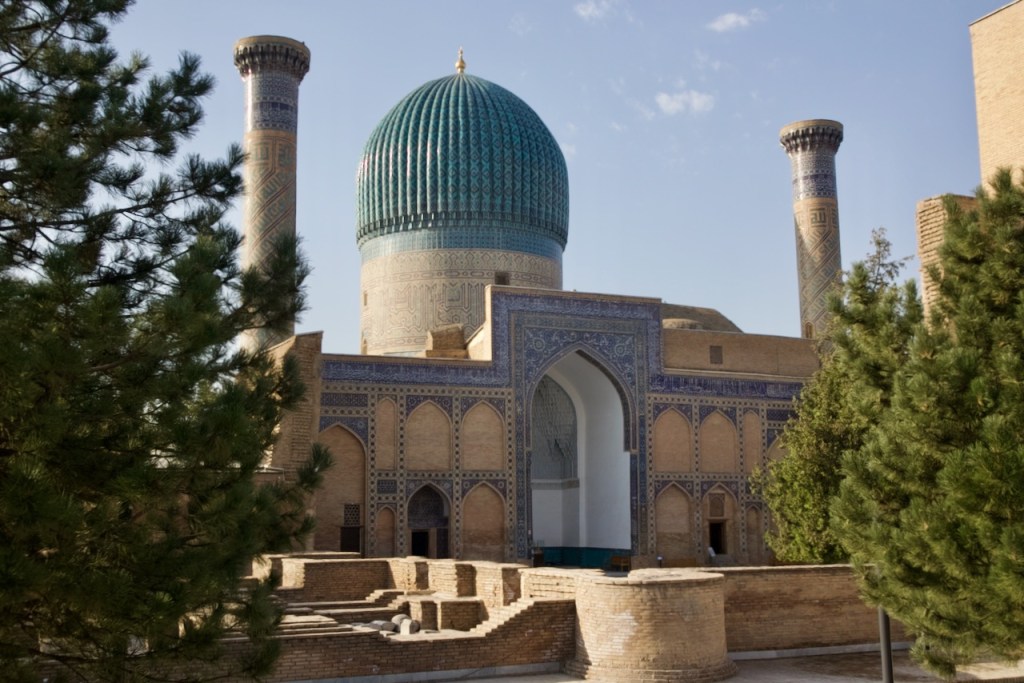
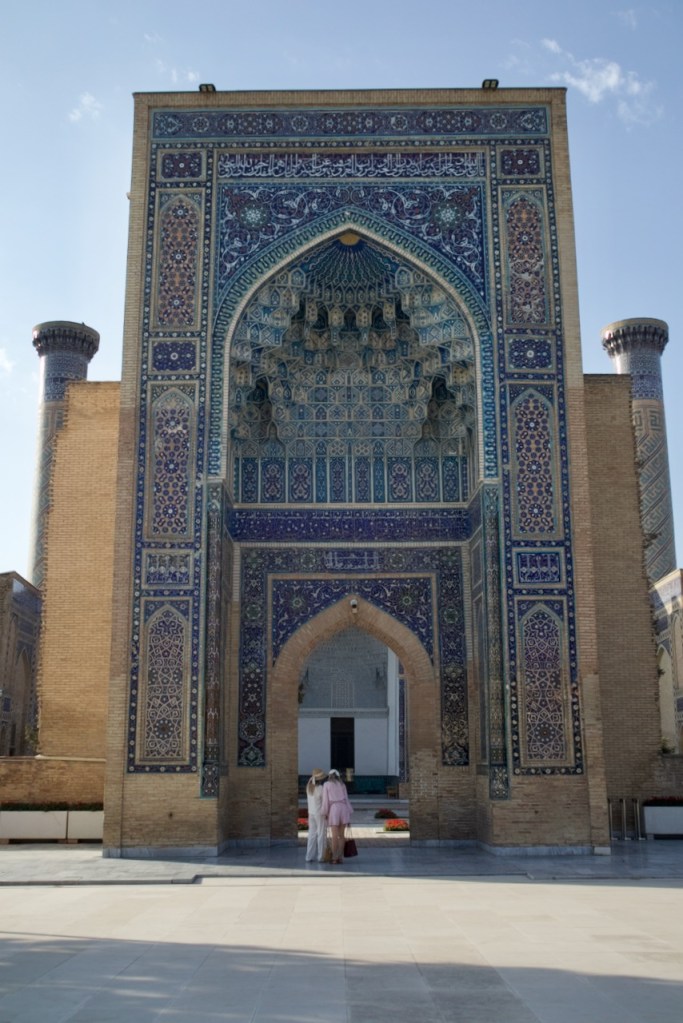
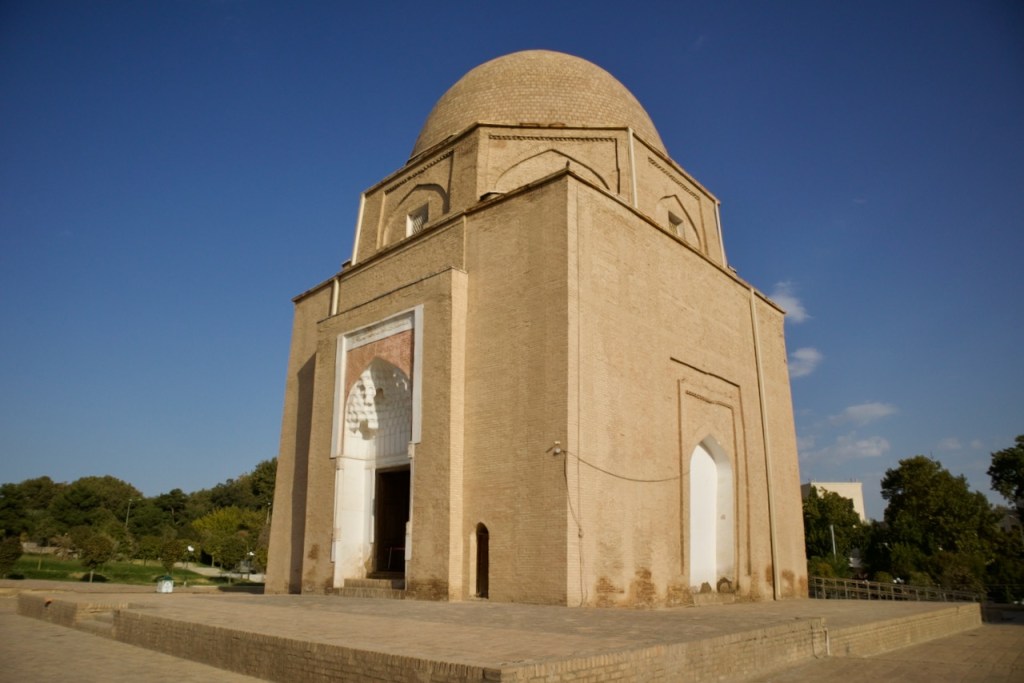
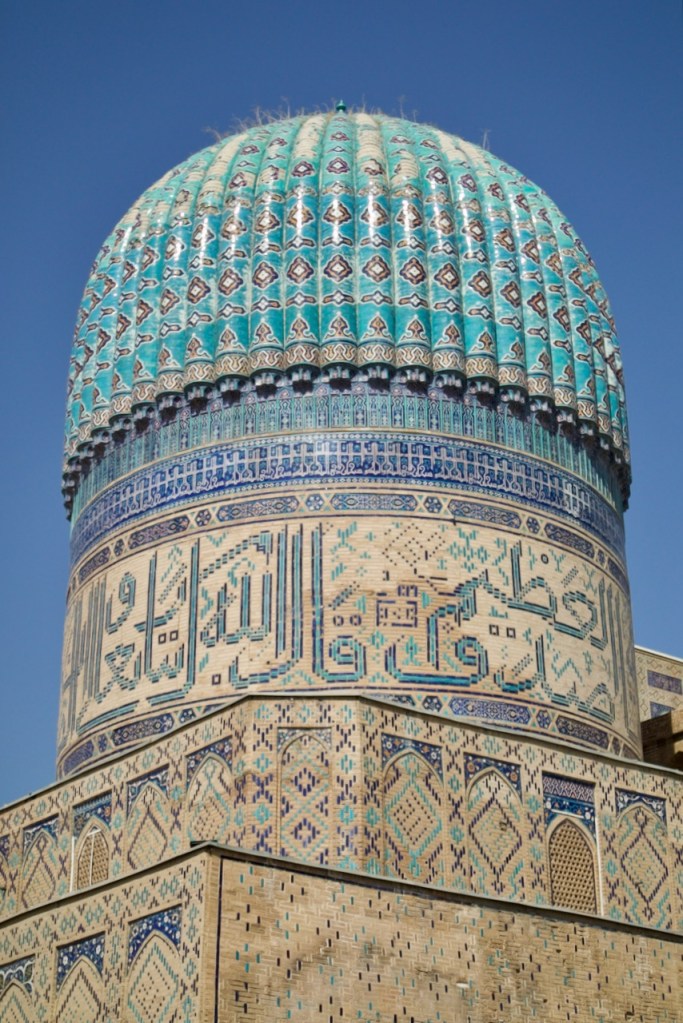
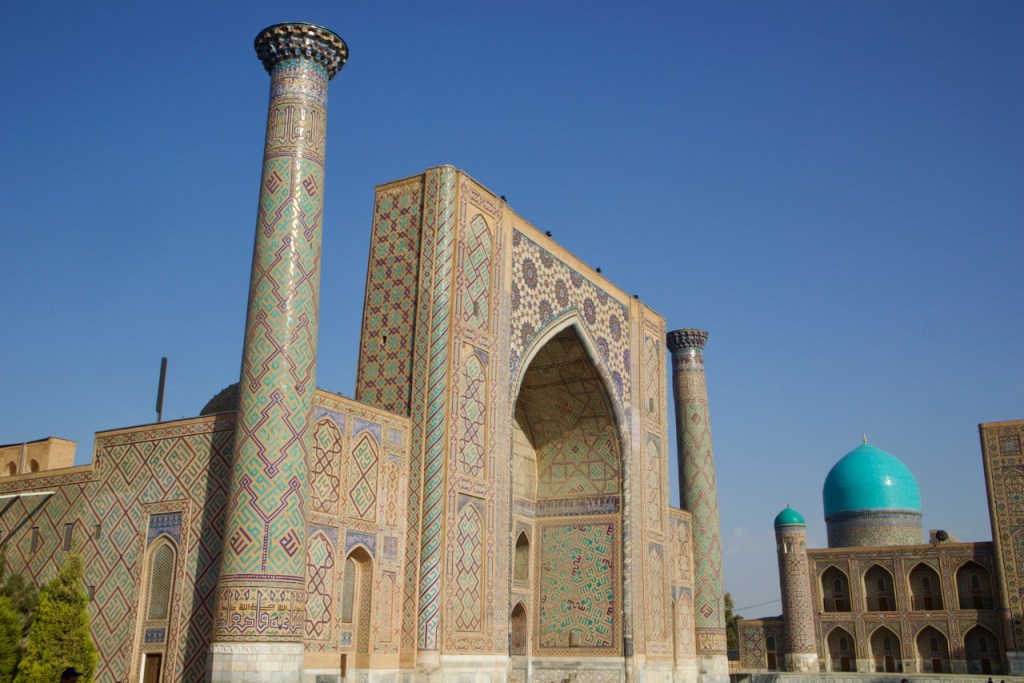
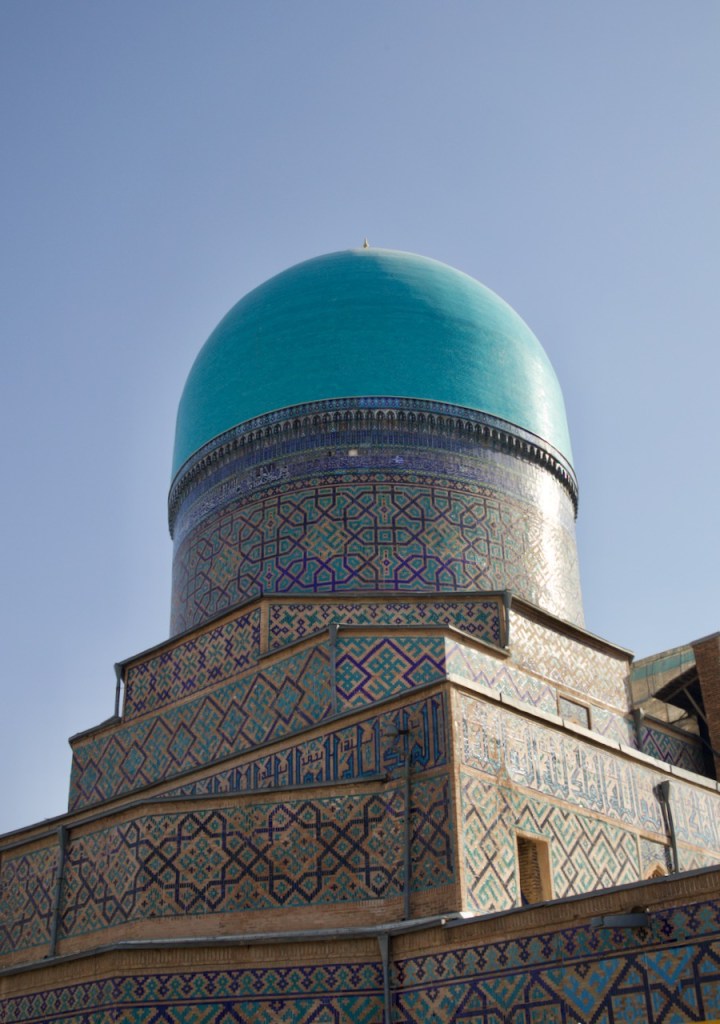
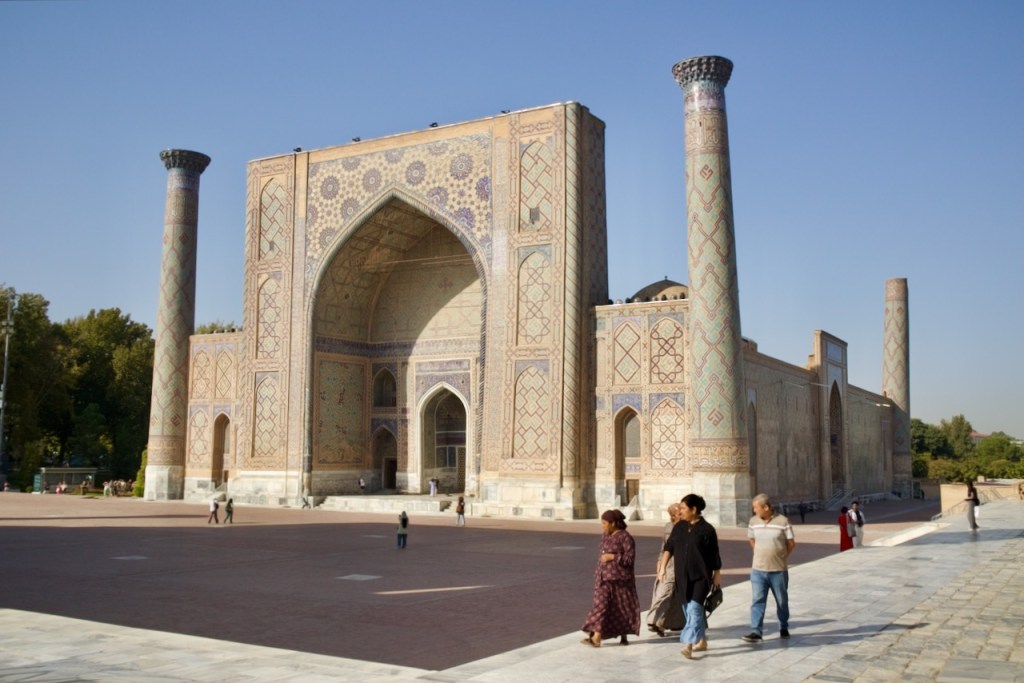
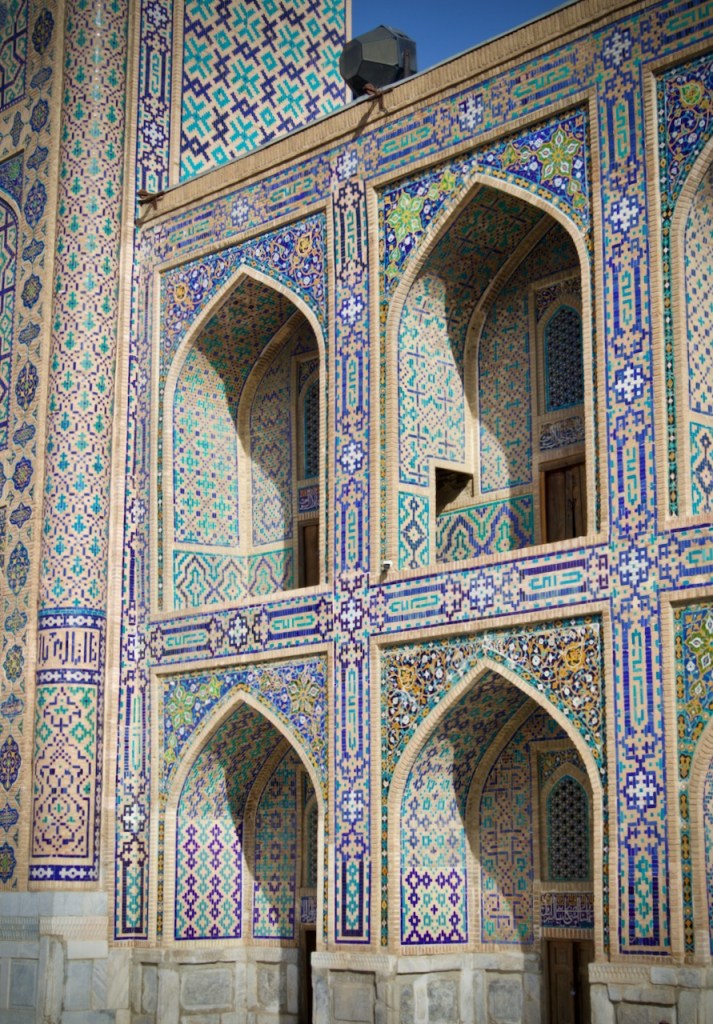
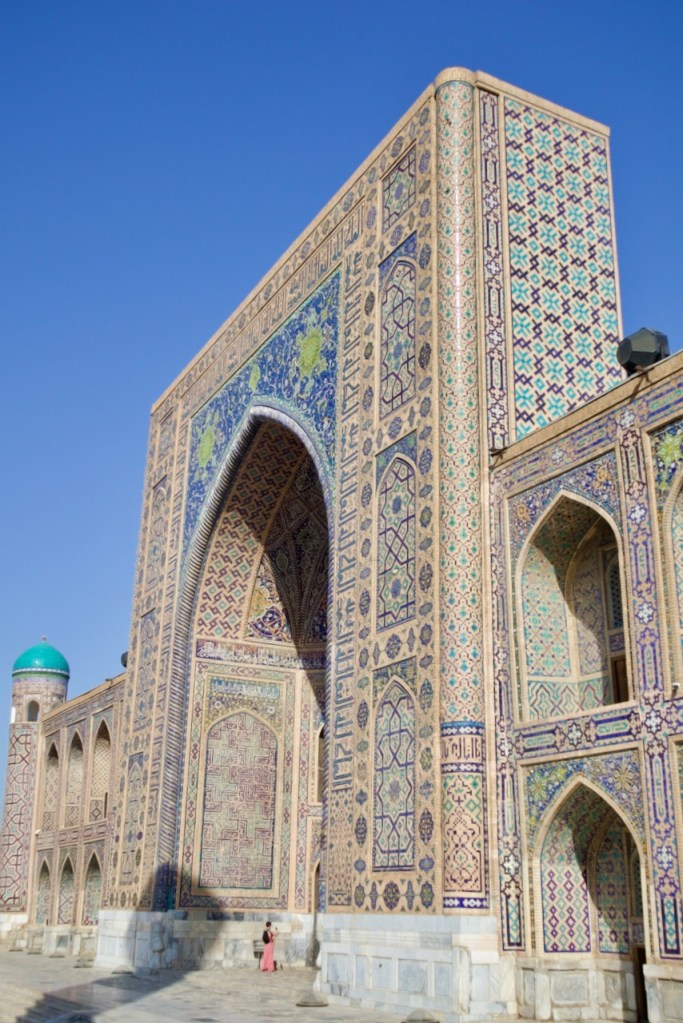
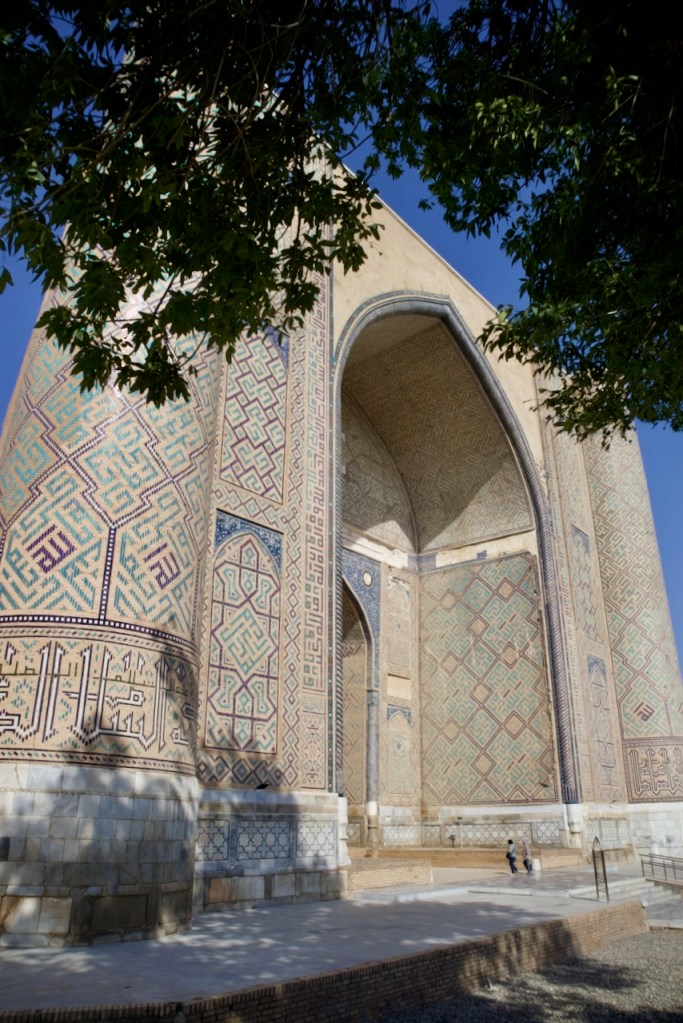
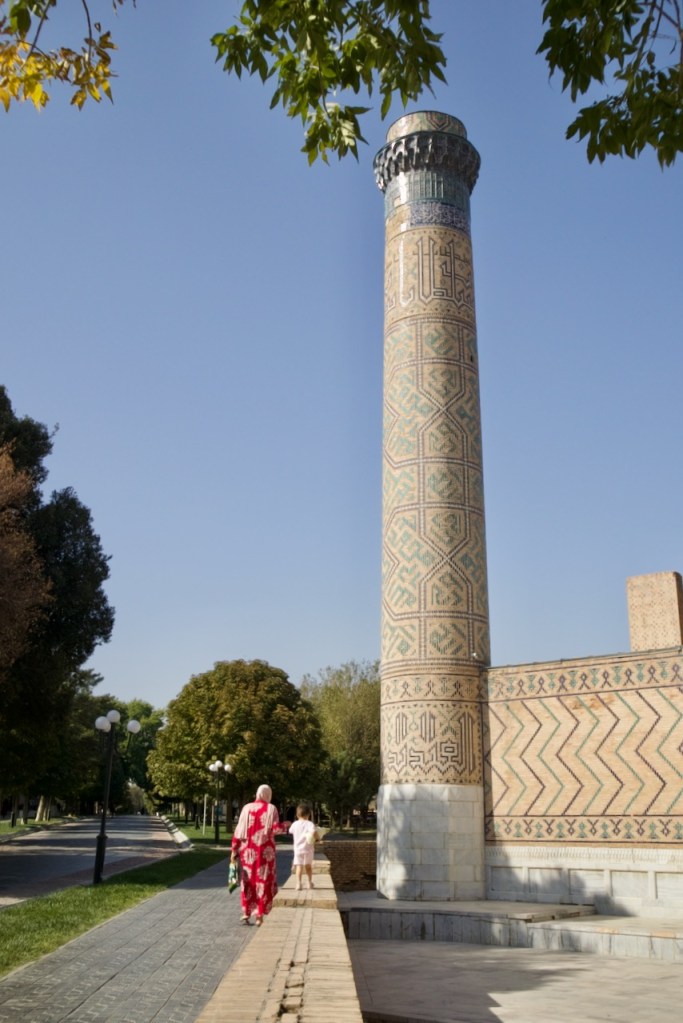
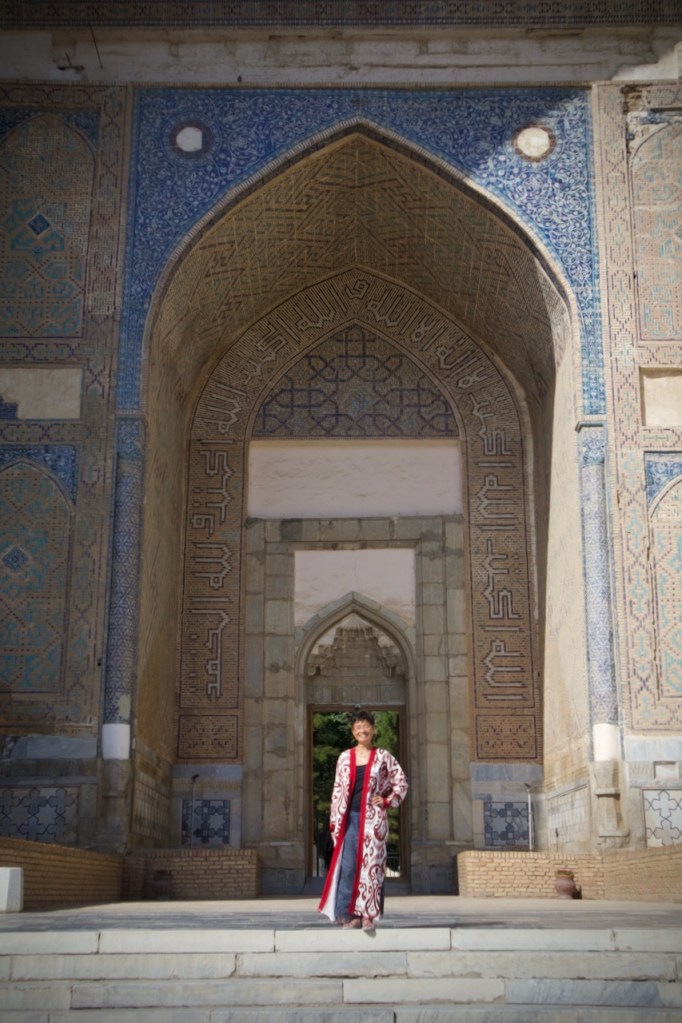
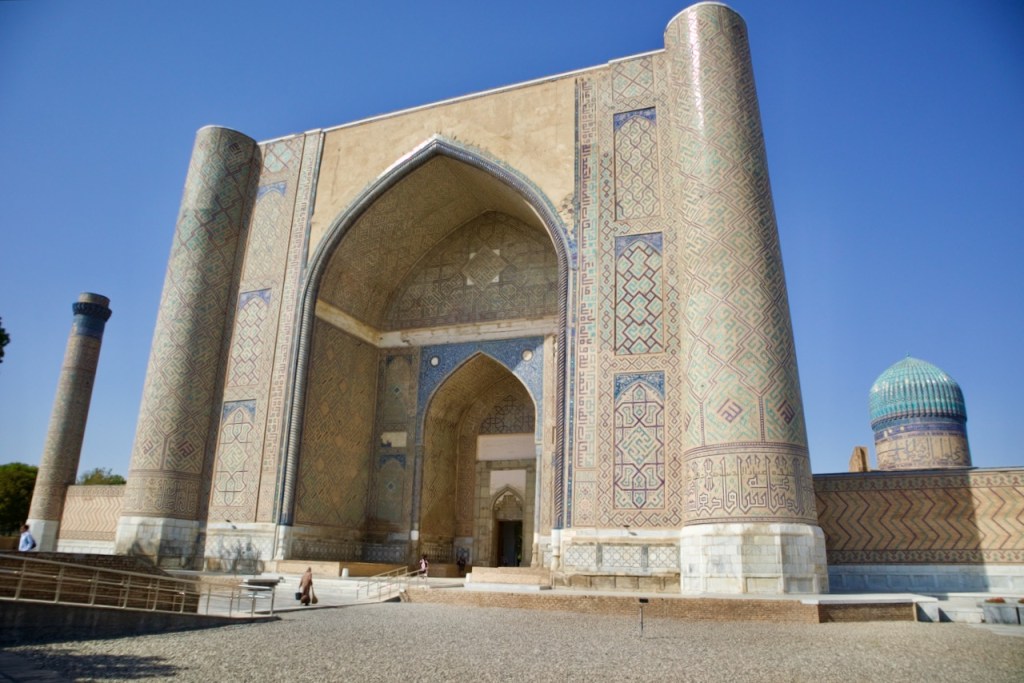
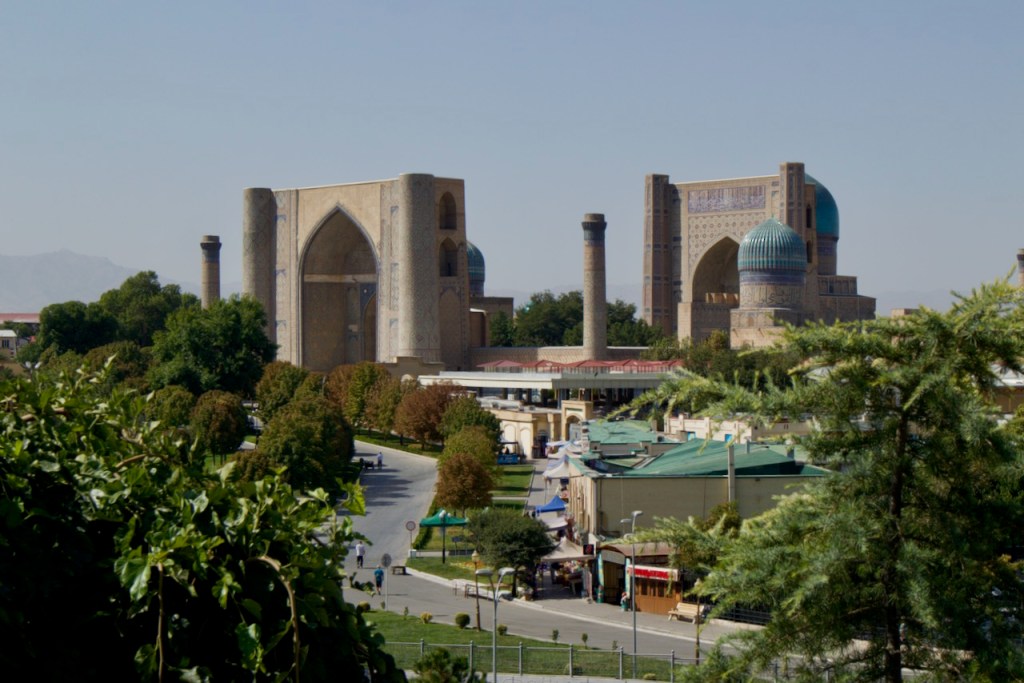
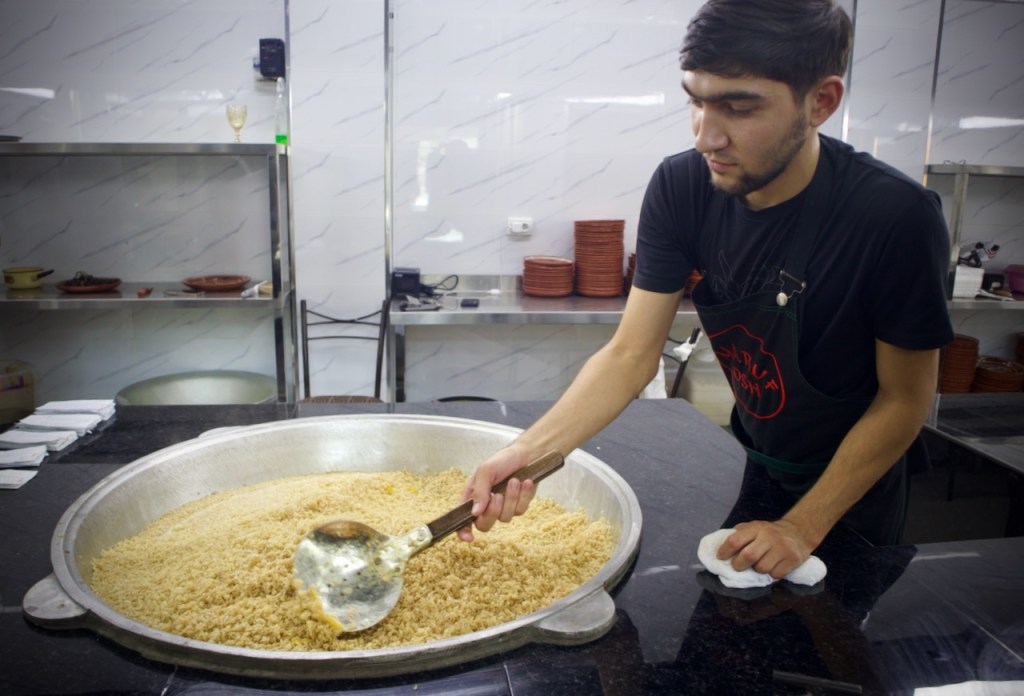
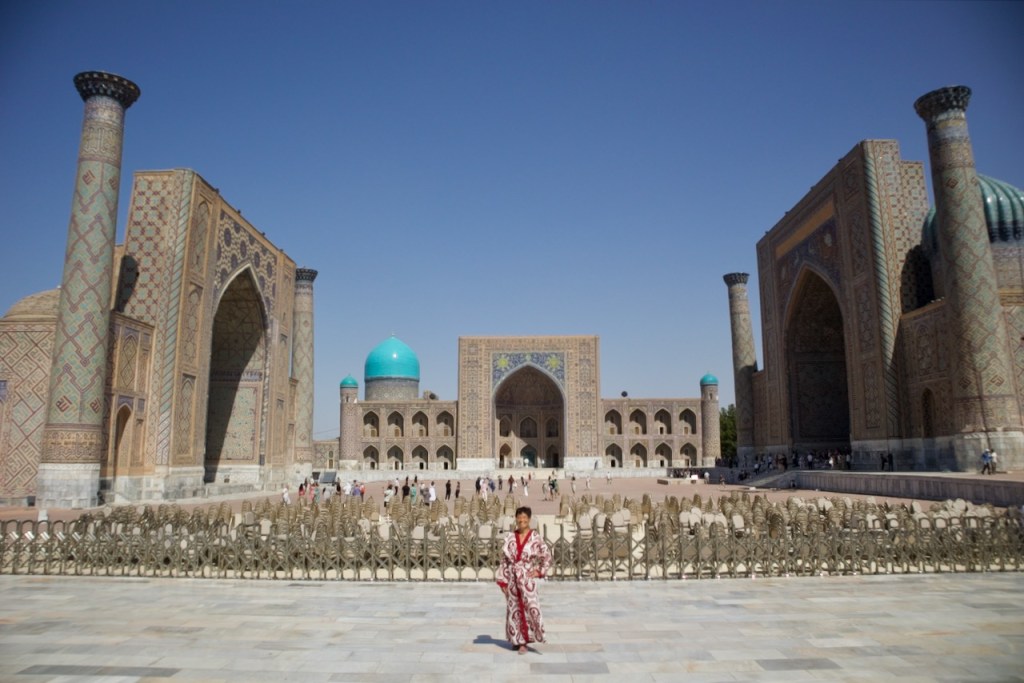
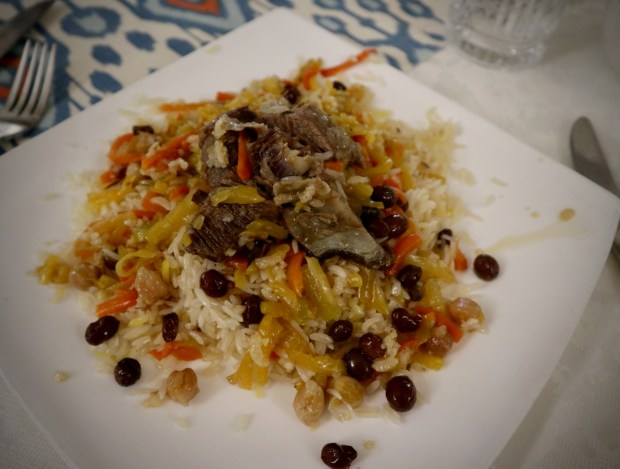
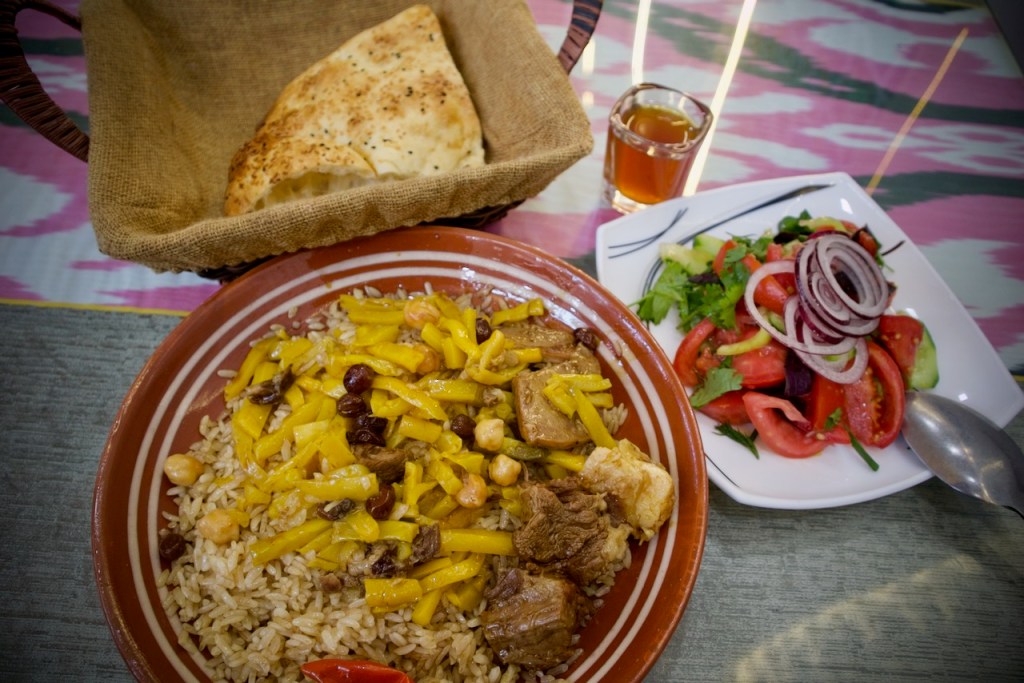
The overnight non-express train from Khiva drops me in Samarkand at the vipassana hour of four in the morning and I decide to take a long detour to the Registan. The sheer scale of the three monumental madrasas flanking the square – Ulugbek, Sherdor, and Tilyakori – with their dramatic front portals and massive entrance arches, soaring blue domes and impressive gold reliefs make it one of the most impressive in the world. Founded in the 7th century B.C., Samarkand is considered the crossroads of world cultures for over two and a half millennia. As the capital of the Timurid Empire under Amir Timur, masterpieces were built that became seminal in the development of Islamic architecture over the entire region. Like everyone else, I look up and down, left and right, feeling in awe by the grandeur, recalling the iconic tiger and rising sun mosaics on the portal of the Sherdor Madrasa before following the short path towards the Gur-Emir Mausoleum and Bibi-Khanym Mosque. All of a sudden, I remember the early morning bread delivery at the mosque entrance in my last visit. Ah, the Proust effect in Central Asia! Even if Samarkand has lost its city walls and citadels compared to Bukhara and Khiva, the historic town is testament to the extraordinary development in art, architecture, and urban structure in the region’s cultural and political history for the past 700 years. Famished by the long train ride and city walk, I sit down to a legendary Samarkand plov. Wow, the explosion of flavours from cumin to onions, caramelized carrots and raisins under the fatty beef in just a humble dish of rice. To digest all those calories, I walk along University Boulevard swarming with students in this beginning of a new academic year, feeling so fortunate that I am touring in Central Asia rather than returning to the classroom…
For now, my epic journey has come to an end. From Iceland to Andorra, Marseille to the Cote d’Azur, Liechtenstein to Belarus, Moldova to Kazakstan, Uzbekistan to Turkmenistan. No photos can even begin to capture the stunning beauty and all the enriching experiences in the endearing region of Central Asia overflowing with history, culture, and hospitality. If Kazakstan has wealth, Kyrgyzstan nature, Tajikistan her rugged mountains, and Turkmenistan her singularity, Uzbekistan has class. One time lucky, twice blessed, and forever changed by the roads and people who have brought me here. Rahmat!
This is part of my 193+ project with the goal to visit all countries in the world, beginning with Europe and Central Asia, bringing the current country count to 128!
Liechtenstein: Small is Beautiful
Turkmenistan & the Modern Silk Road
All Content © 2026 by Jennifer Chan

